Some places are so spectacular they deserve to be named twice: Bora Bora and Pago Pago come to mind. Ngorongoro – it means “cowbell” in Maa, the language of the Maasai – certainly earns its reduplicative name. It’s the “world’s largest inactive, intact and unfilled volcanic caldera” (Wikipedia) and it is massive, sitting 2000 feet (610 meters) below the rim of the volcano and covering 100 square miles (260 square kilometers).
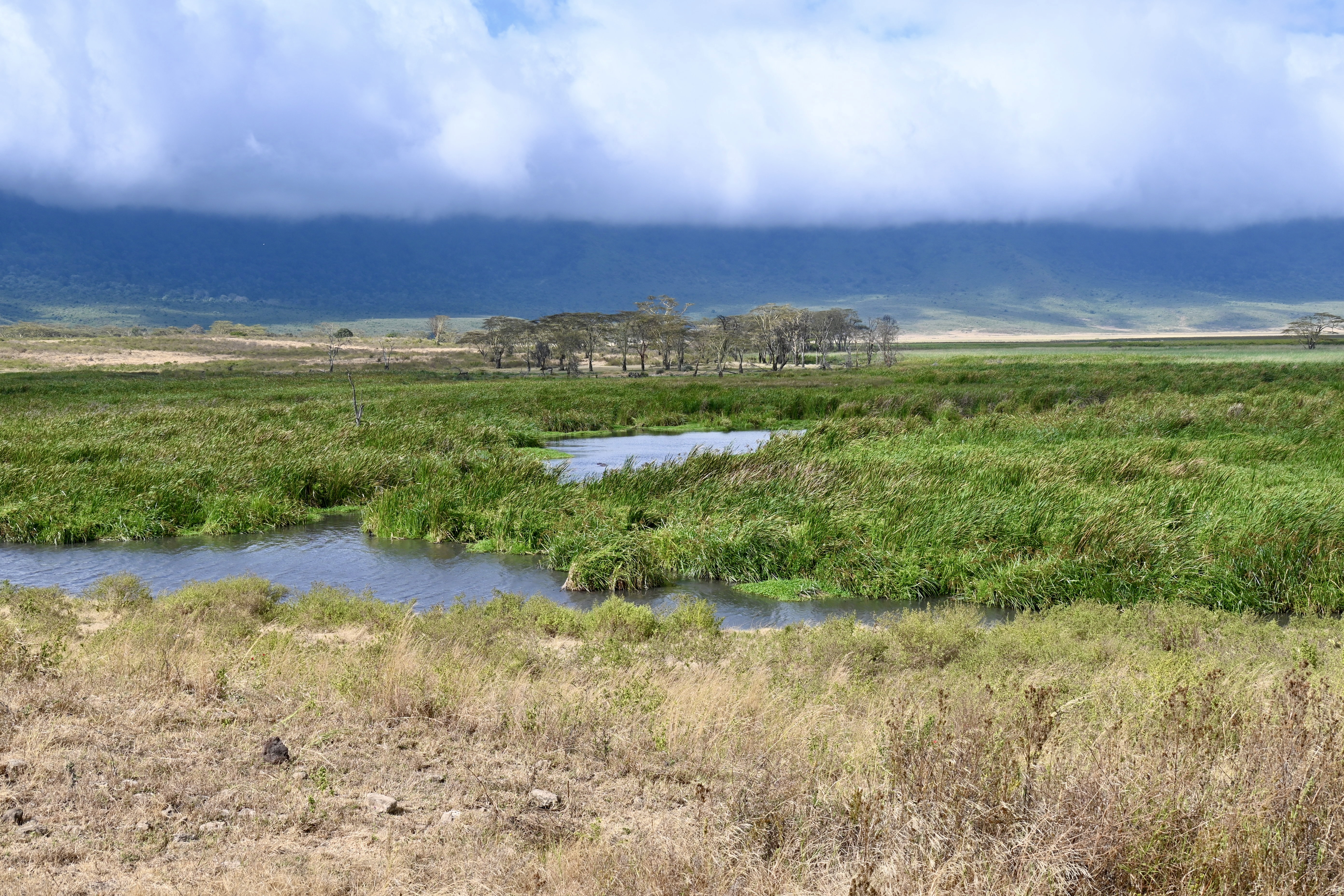
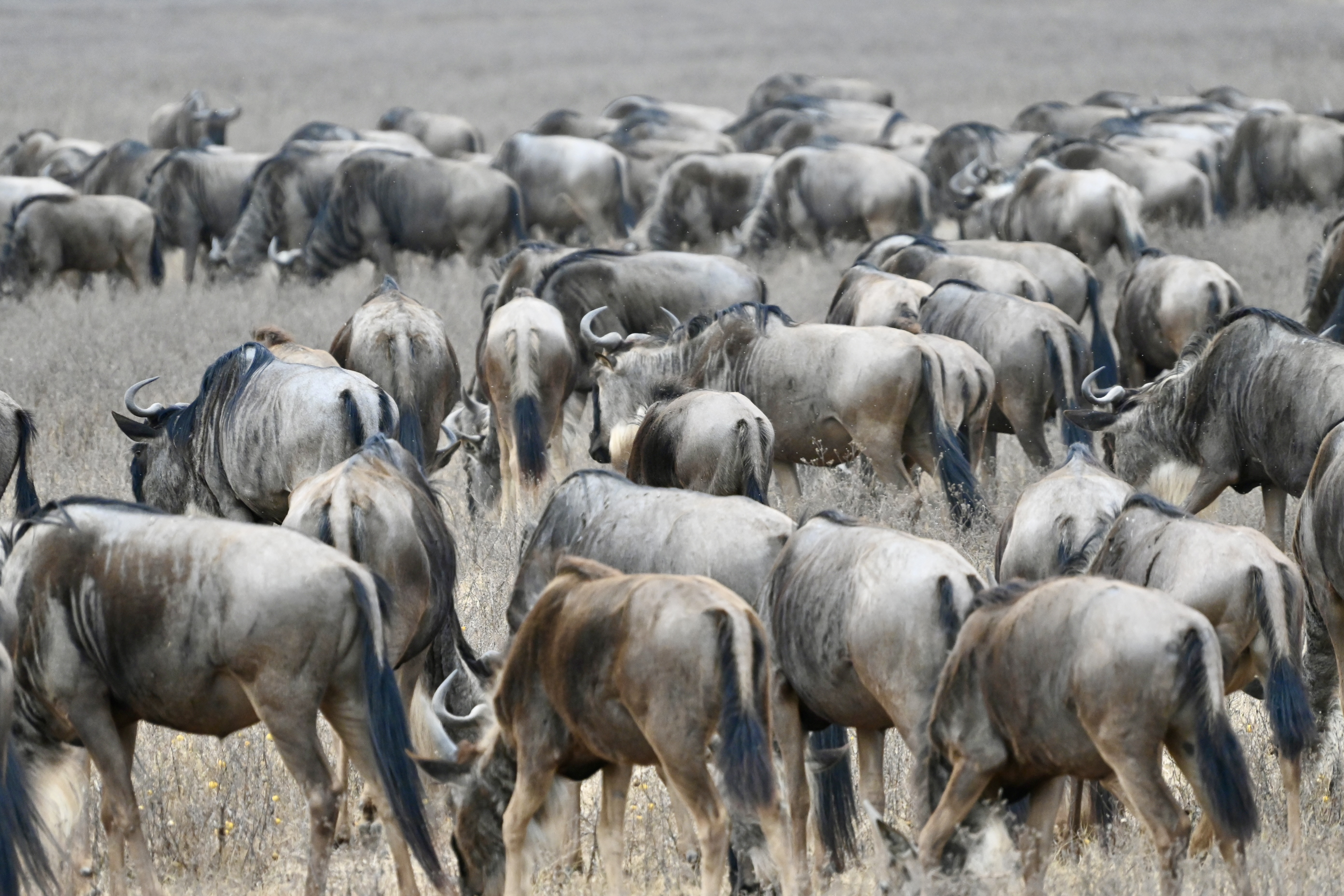
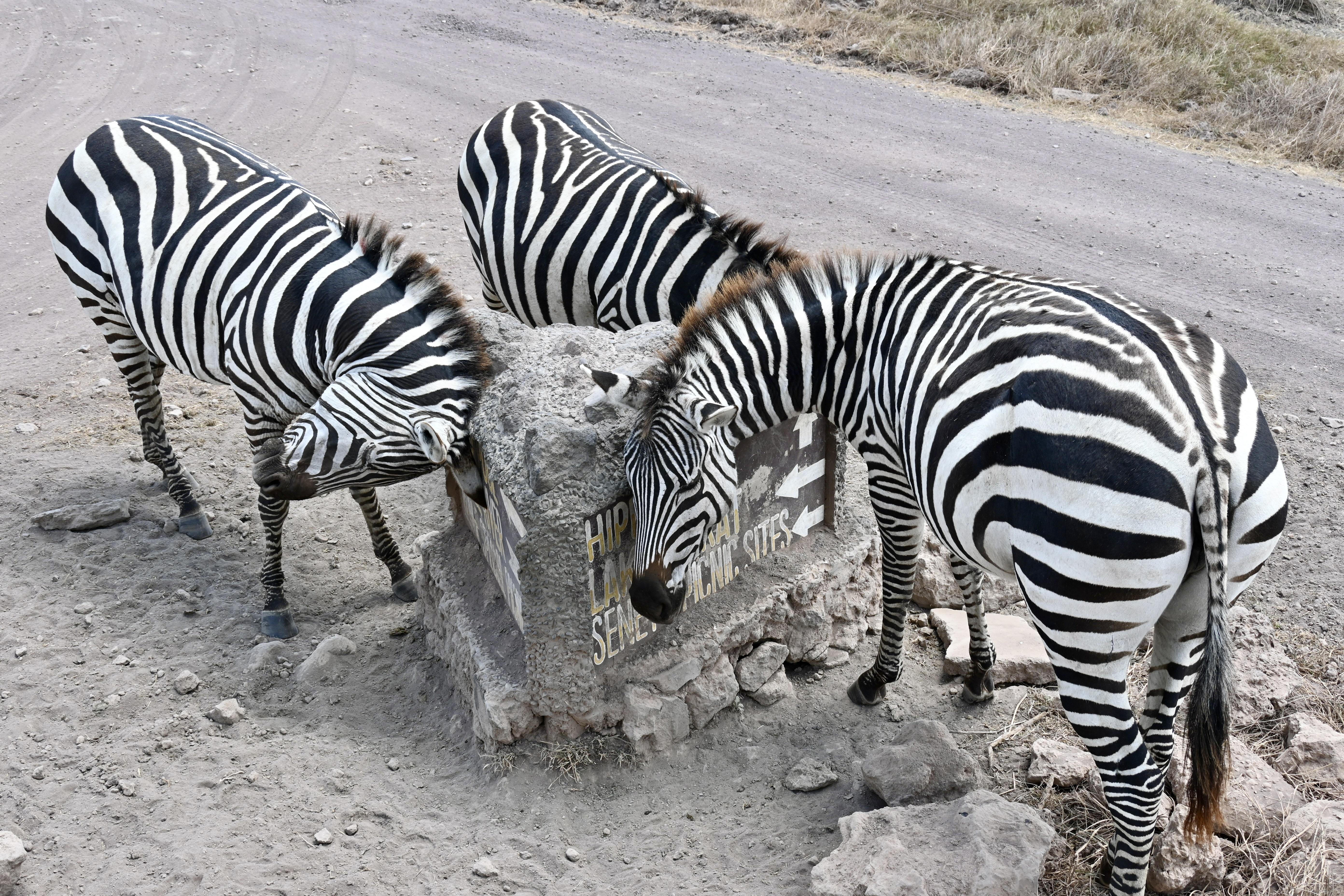
The floor teems with wildlife. Thousands of wildebeest and zebras ramble through the grass, accompanied by sizable herds of gazelles and cape buffalos.

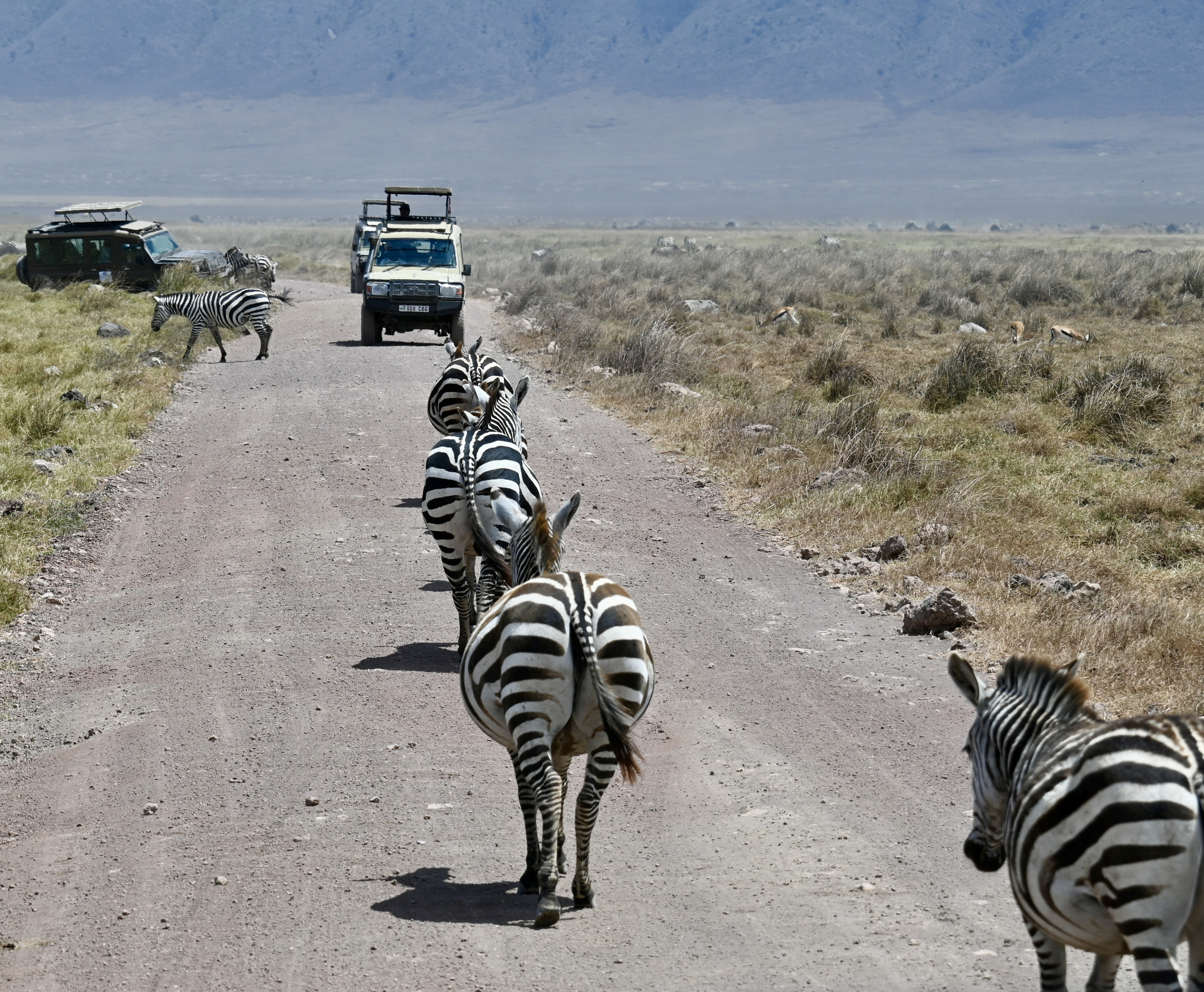
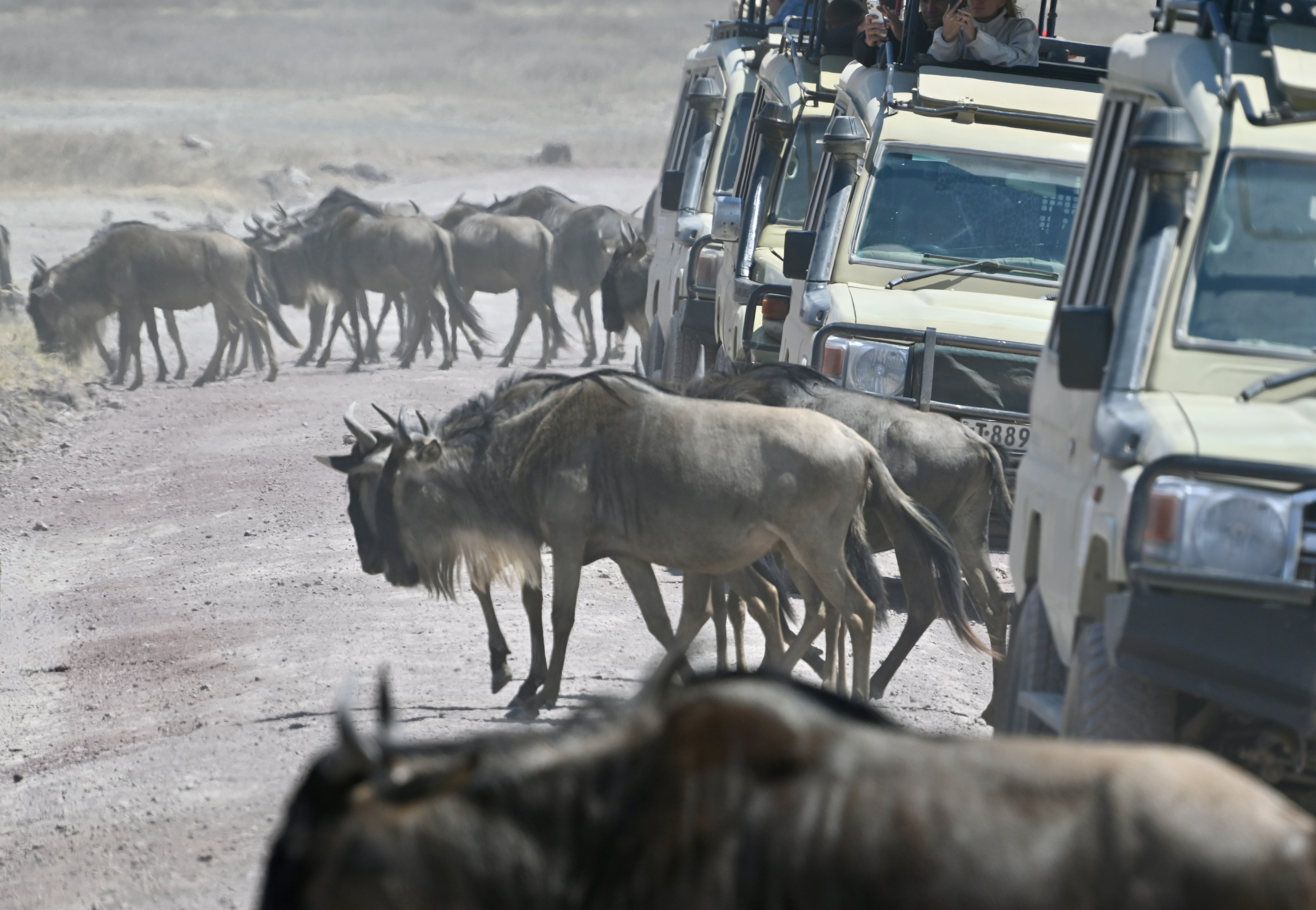
Indeed, there are so many animals that the traffic was beastly (or beestly) at times!
We left our lodge at 6:30 this morning and wound our way down to the caldera through dense fog shrouding spectral acacias.
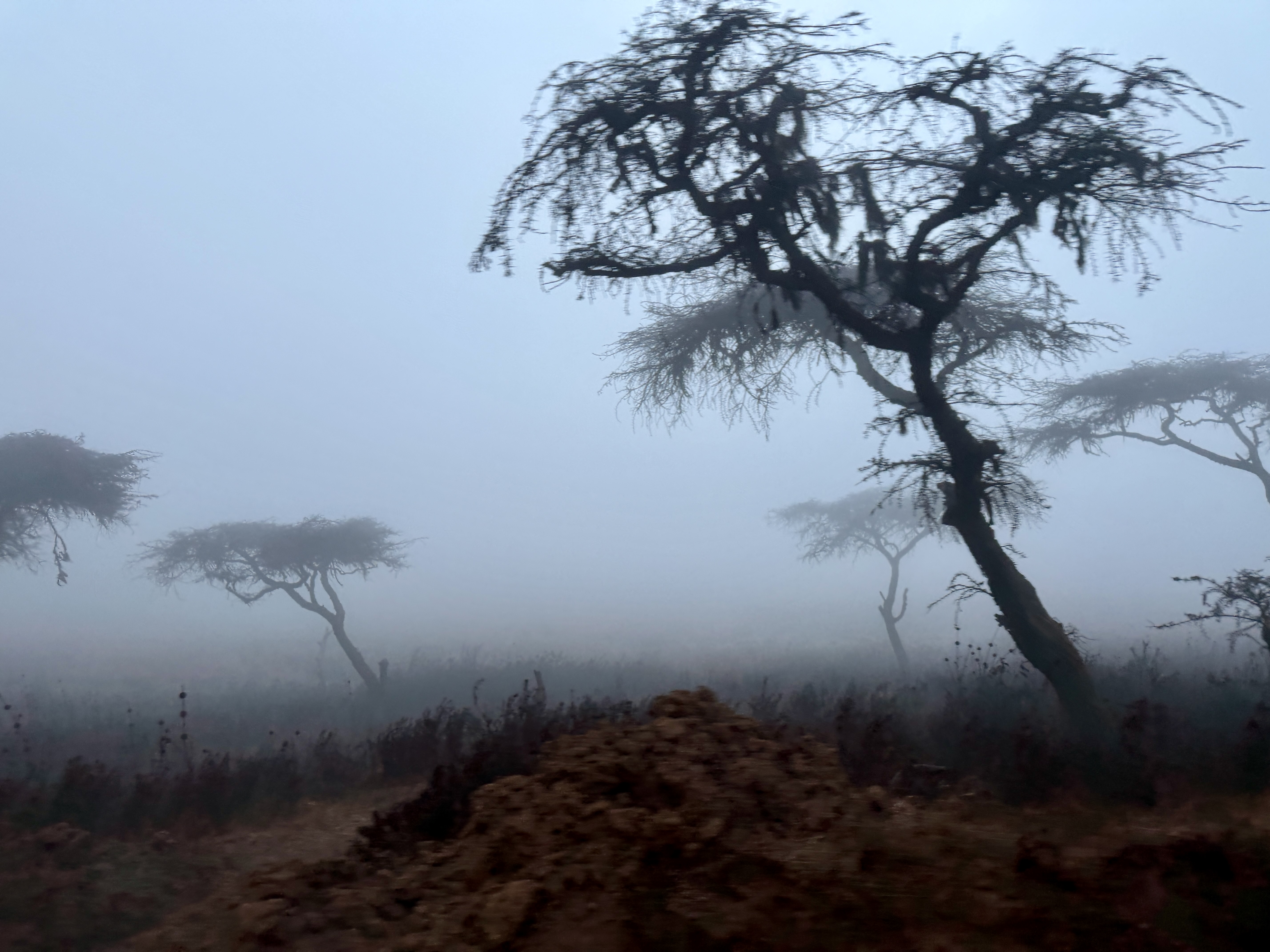
By the time we reached the floor, the sun had begun to burn through, and soon all was clear, giving us far-reaching views.
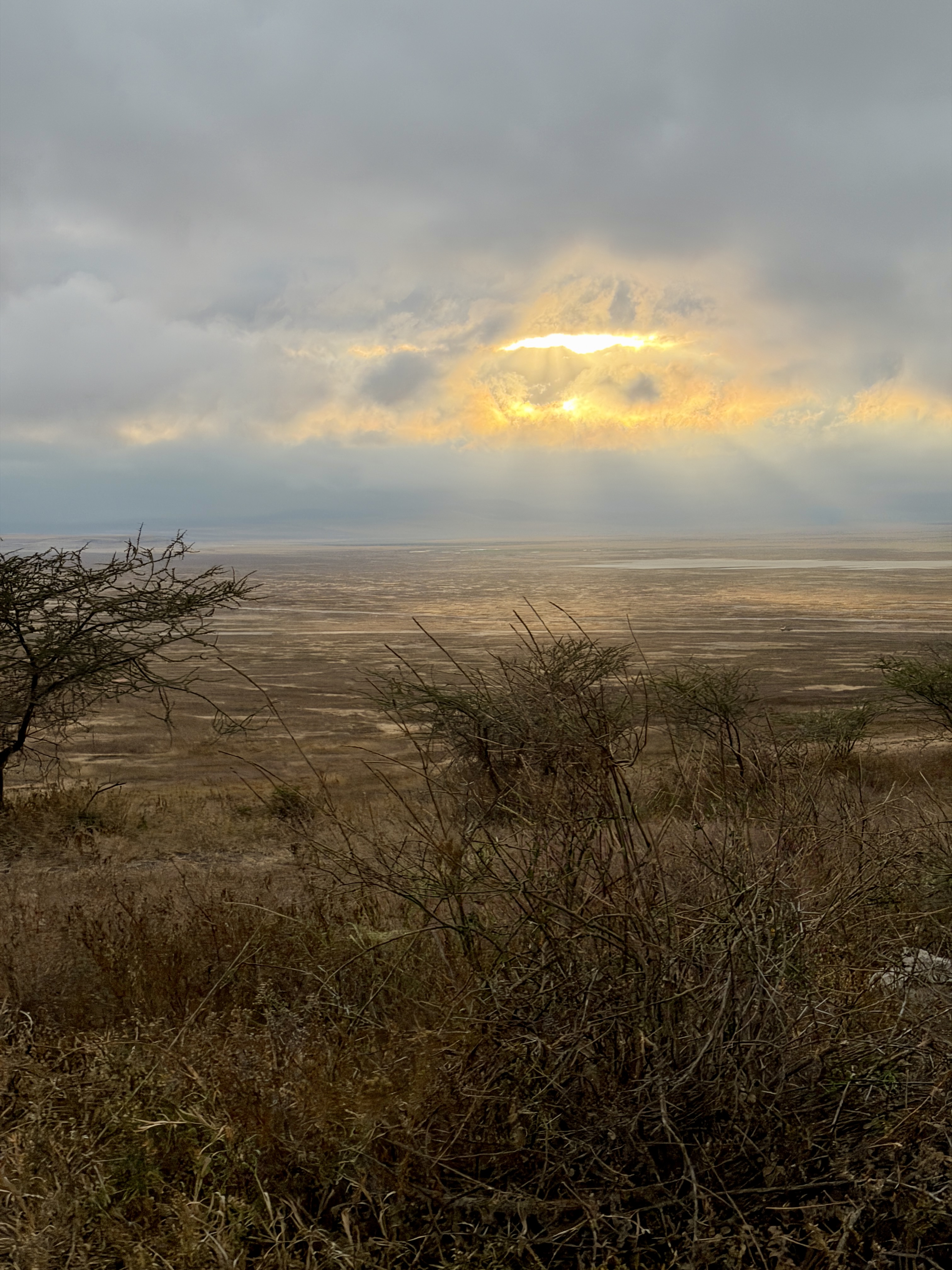
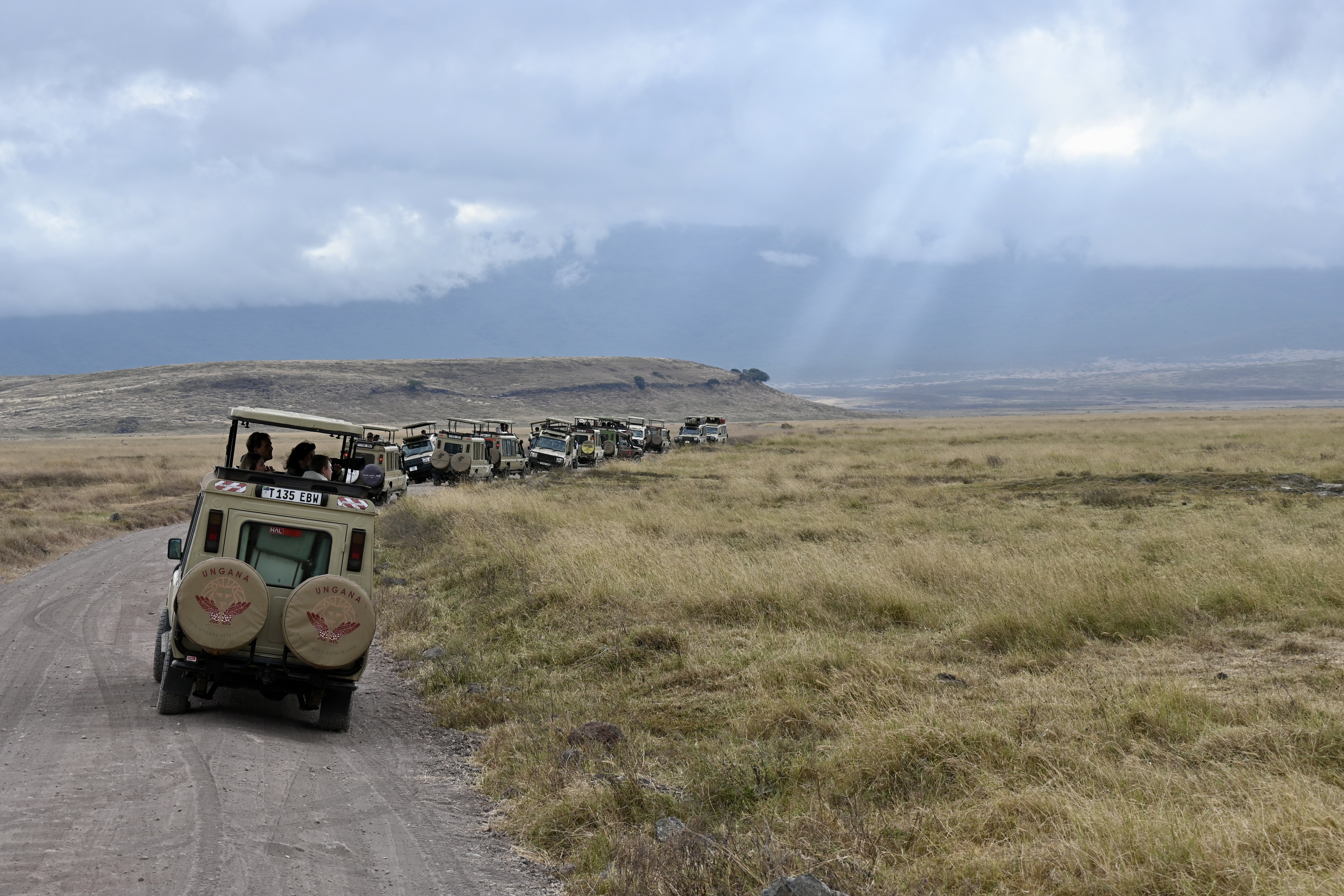
As we drove along, we saw many of the animals we’d seen in Amboseli as well as several new ones, including rhinos and various kinds of birds.


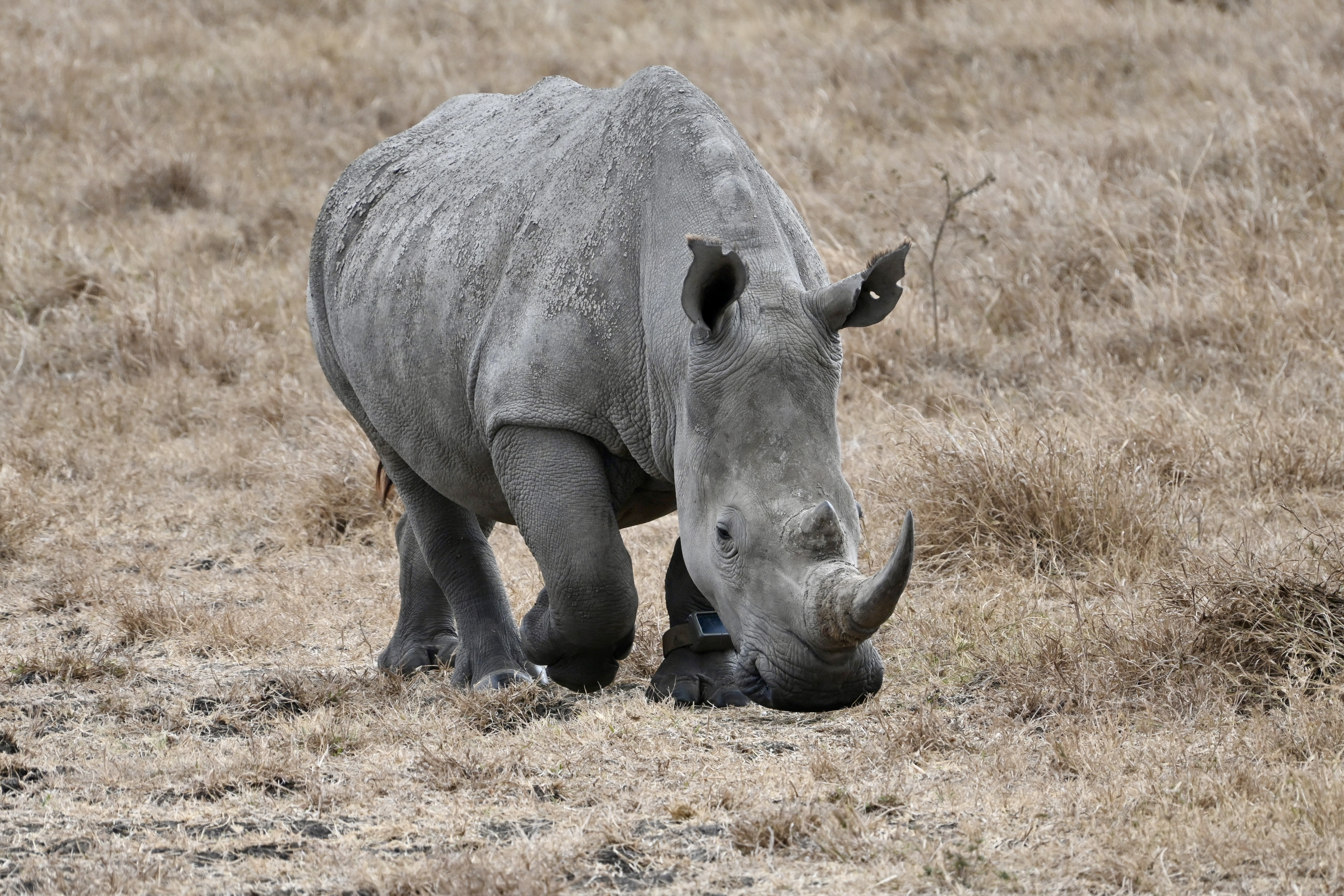
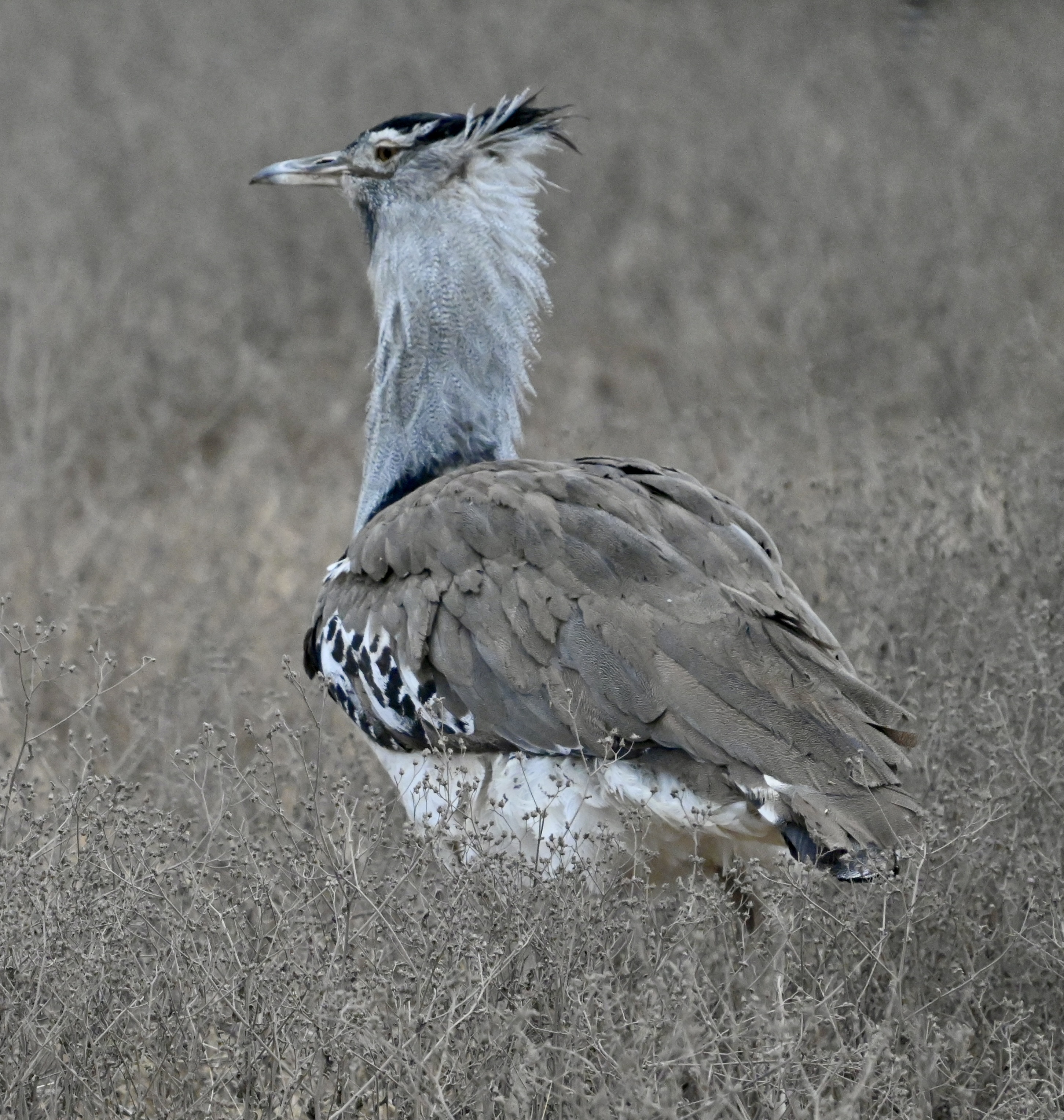
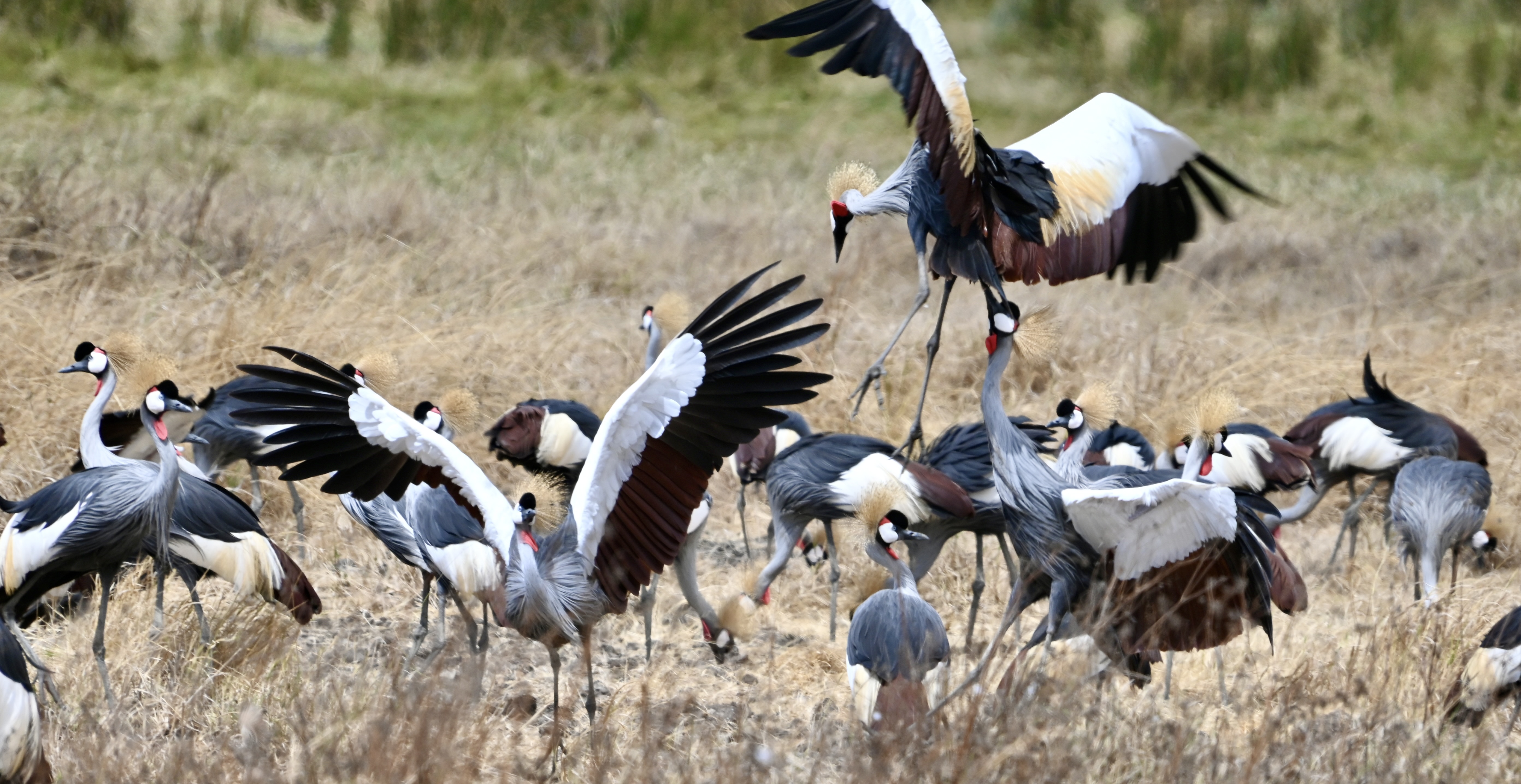
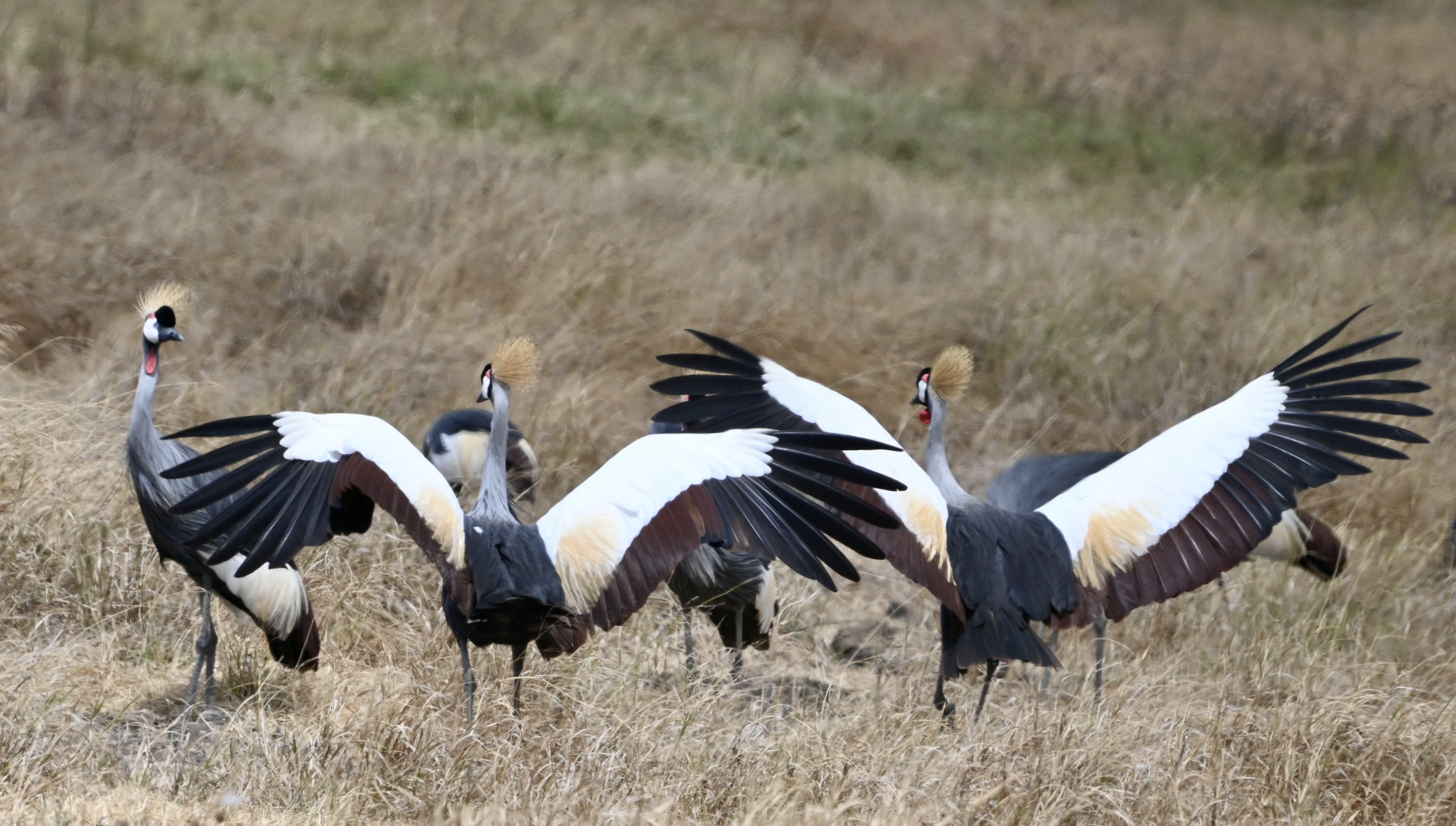
Given the abundance of prey animals, it’s no surprise that some 70 lions live in Ngorongoro, along with hyenas and jackals. Early on, we saw a lion in the distance having breakfast, with a couple of spotted hyenas at a respectful distance awaiting their turn at the carcass.
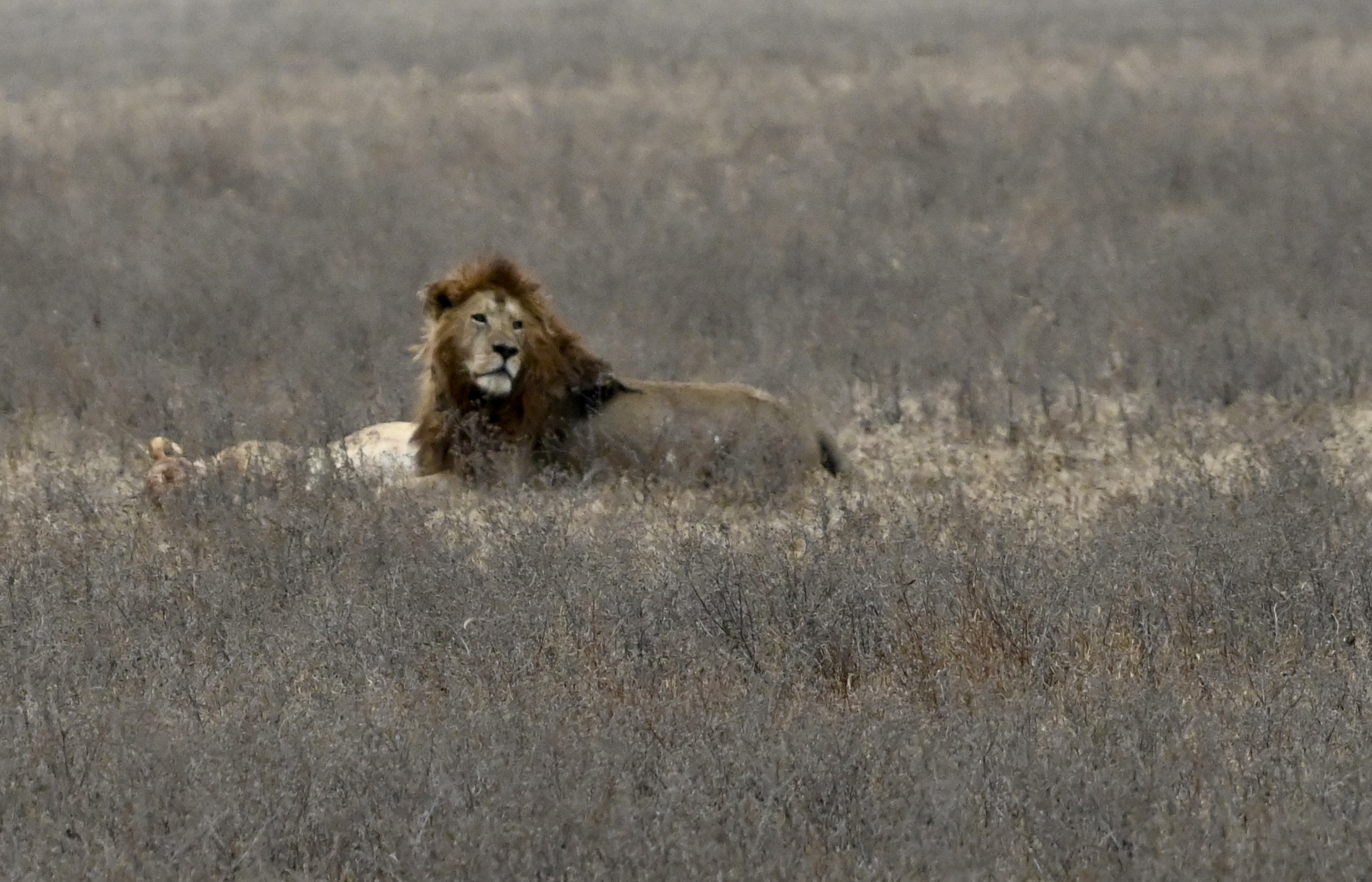

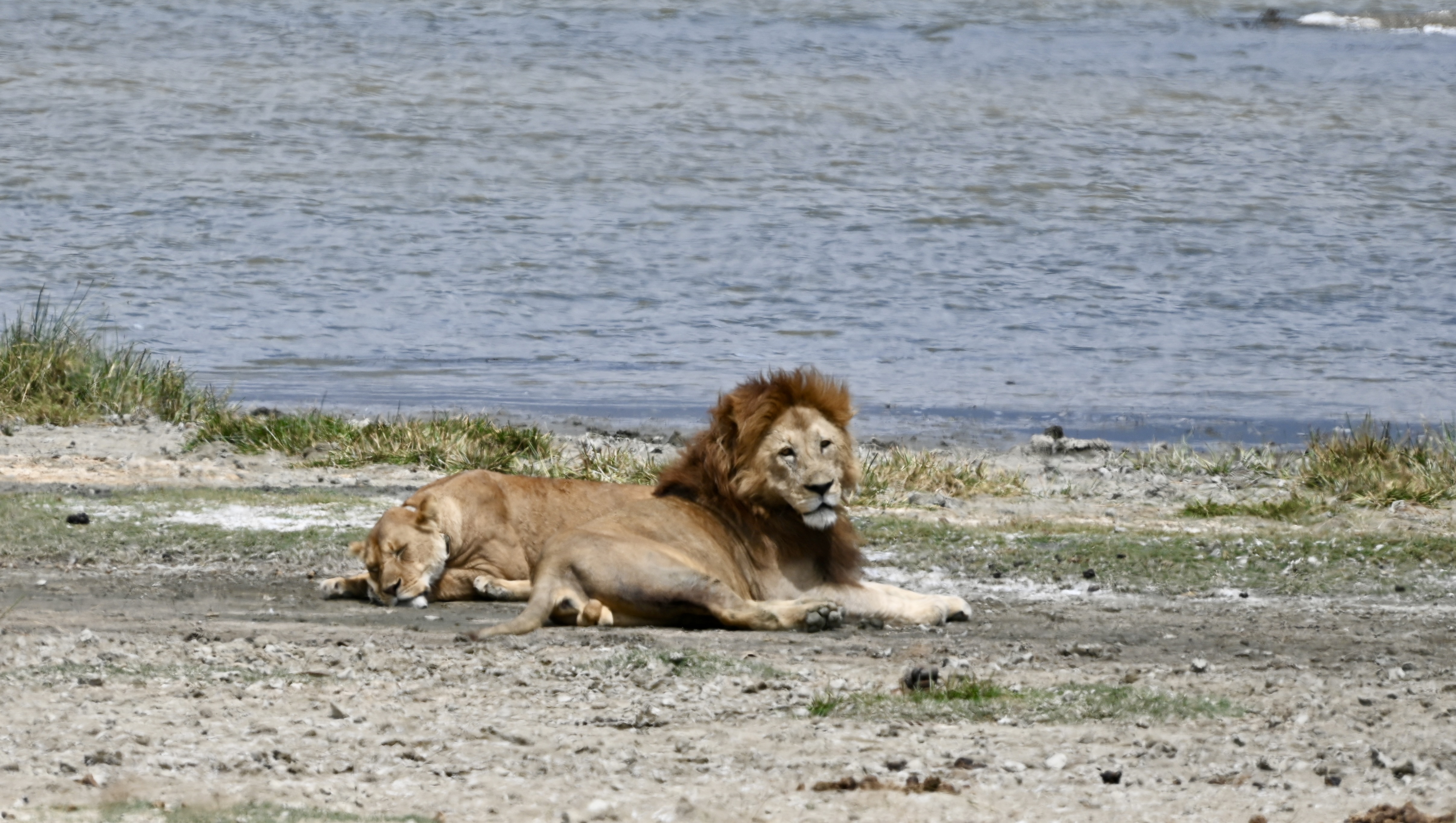
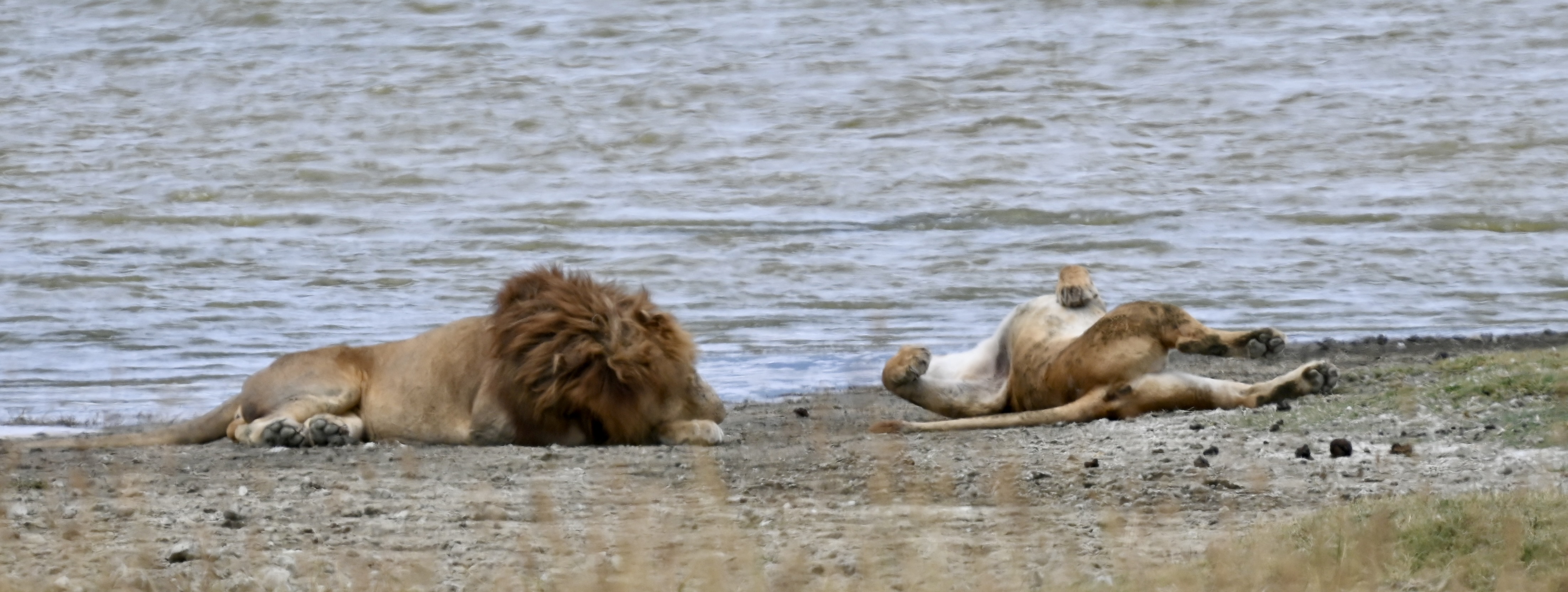
As the morning wore on, animals gravitated to the various lakes in the area, including a pair of lions lazing on the shore.
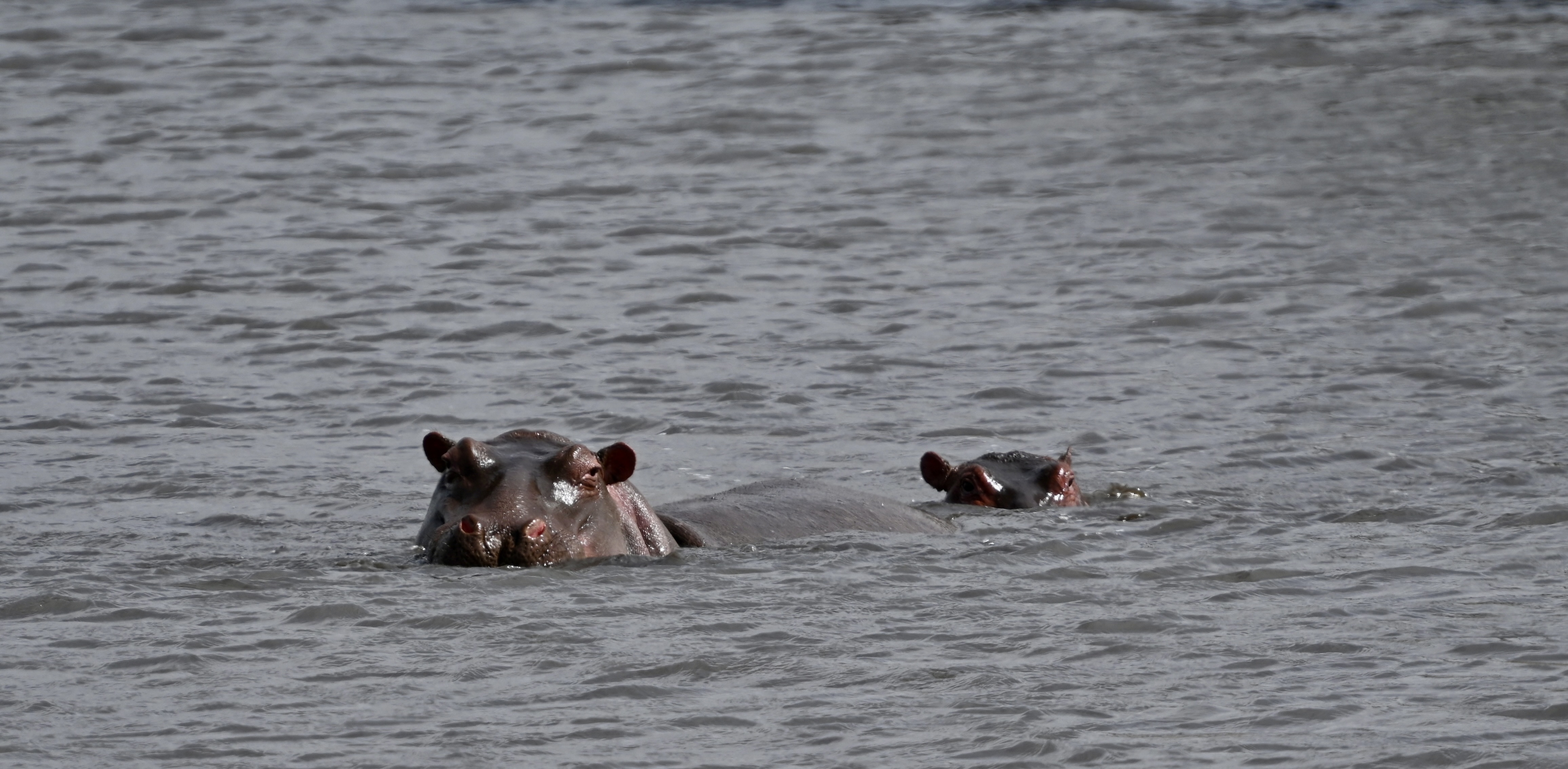
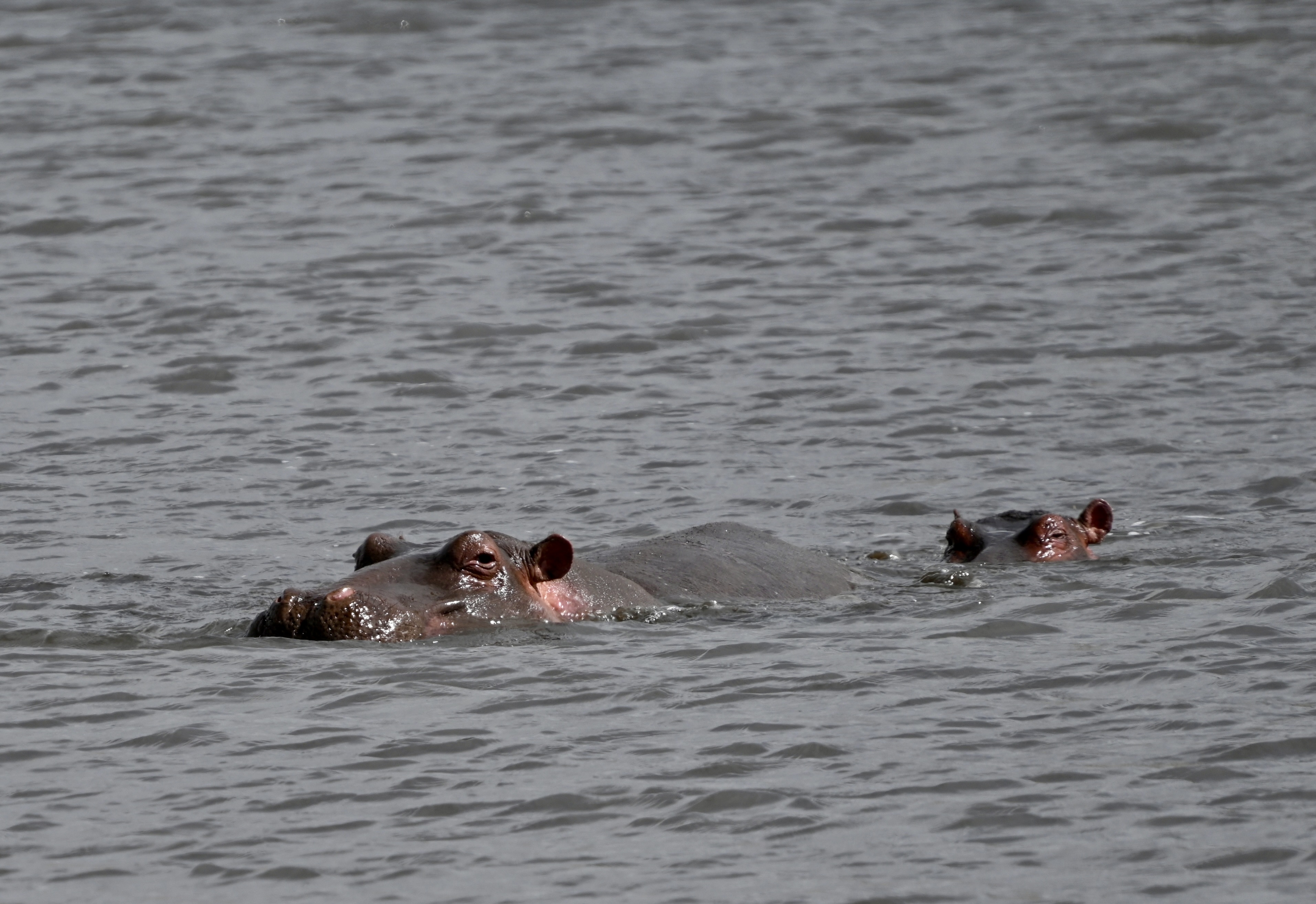
At one lake, hippos peered at us from the shallows.
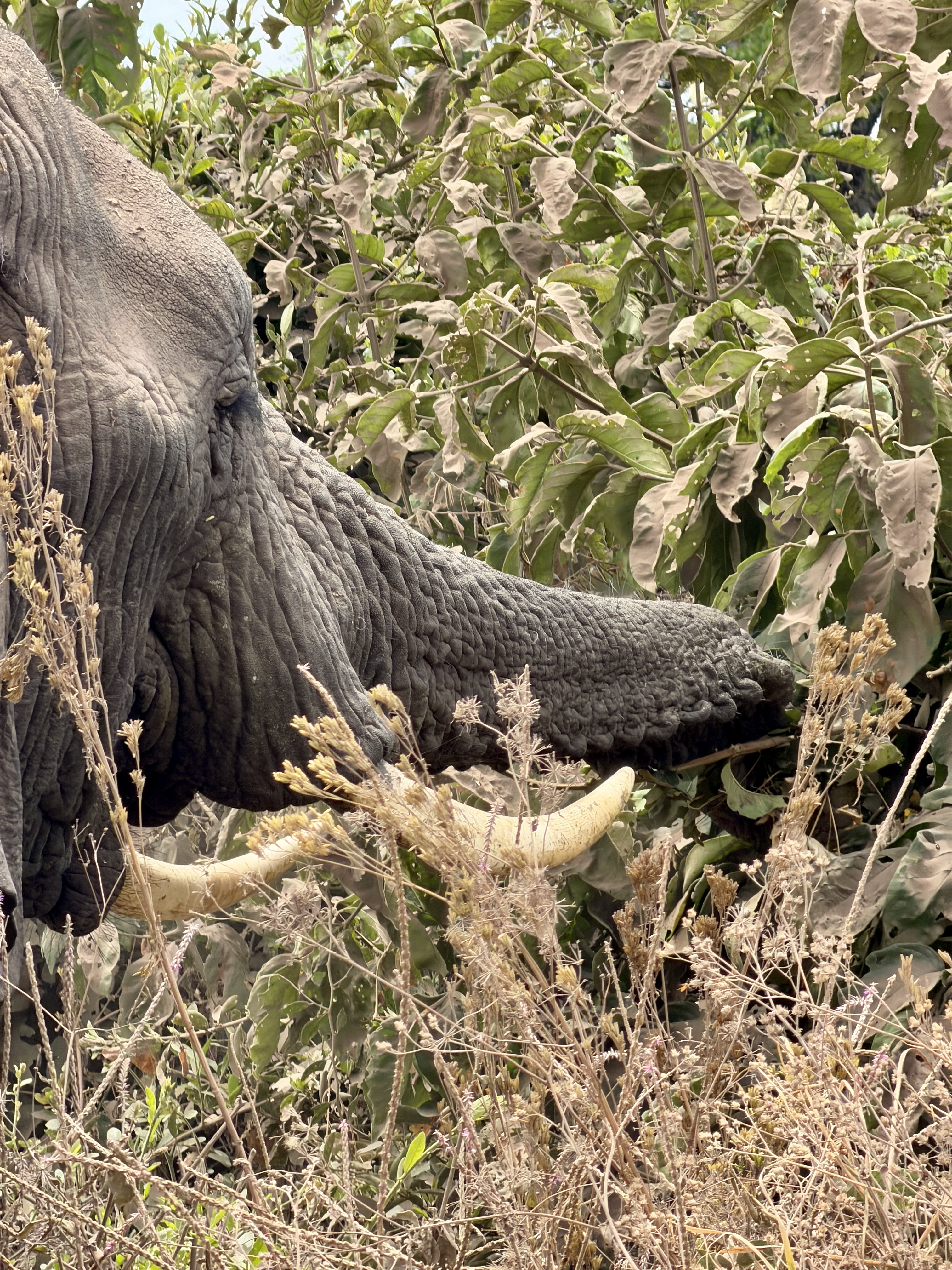
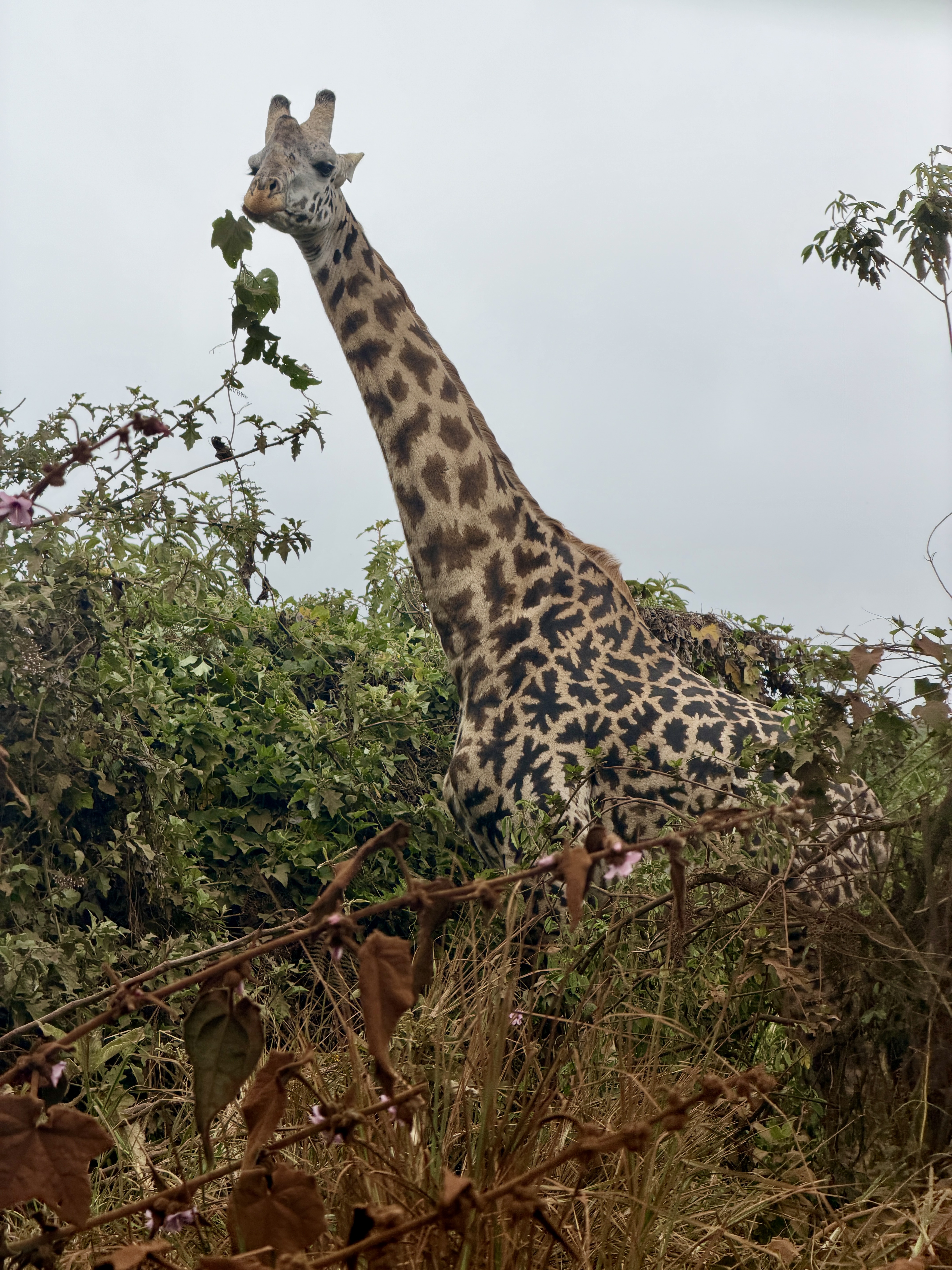
We began making our way back to the lodge several hours after we’d arrived, passing a roadside elephant and a giraffe with strikingly unusual markings.
Ngorongoro is among the most remarkable places we’ve been. I hope you have the opportunity to come here at some point. After all, to paraphrase Christopher Walken in a classic SNL skit, we could all use more cowbell!

 PuffinlessTravel
Some truly spectacular shots! I like the zebras availing themselves of a head-scratching stone. And I see the rhino has a tracking bracelet. Probably a good thing; I’ve read awful stories about poachers tracking them and cutting off their horns.
That is the coolest giraffe pattern I’ve ever seen. Wow.
It’s like a jigsaw puzzle.
With no edges and no picture on the cover of the box…