Selam! (That’s “hello/peace/how are you” in Amharic, Ethiopia’s most widely spoken language.) I’m here in Ethiopia for the weekend, before I fly to Nairobi tomorrow to begin what I’m sure will be a spectacular safari with Odysseys Unlimited, along with my sister, brother-in-law, and a couple of their and my friends.

Why did I decide to go to Ethiopia? A couple of reasons:
First, I’ve never been, which is reason enough! When I was talking to my wonderful travel agent, Lauren Clark, about a place to visit on my way to Nairobi, she found a reasonably-priced business class flight to Addis Ababa on Ethiopian Airlines. Once I heard that, the decision was a no-brainer – the kind of decision I feel particularly suited to make these days.
Second, Ethiopia is the source of three of my favorite things:
- People: the first fossils of modern Homo sapiens, dating back more than 200,000 years, were found here.
- Coffee: this particular nectar of the gods (others include single-malt Scotch and Diet Coke, though not together) was first cultivated here a thousand or so years ago, supposedly after pastoralists noticed their goats leaping around frenetically after eating berries from certain bushes. I’m no goat expert, but I’m not sure that’s any different than normal caprine behavior, so there are grounds to doubt the story, so to speak.
- Ethiopian food: I’ve taken advantage of my time here to consume a great deal of one of my favorite cuisines. It’s a teff job, but someone has to do it!
Flying Ethiopian Airlines
Excellent food and service distinguish business class on Ethiopian Airlines. The lunch/dinner and breakfast were among the best airplane meals I’ve had, and service was friendly and attentive.
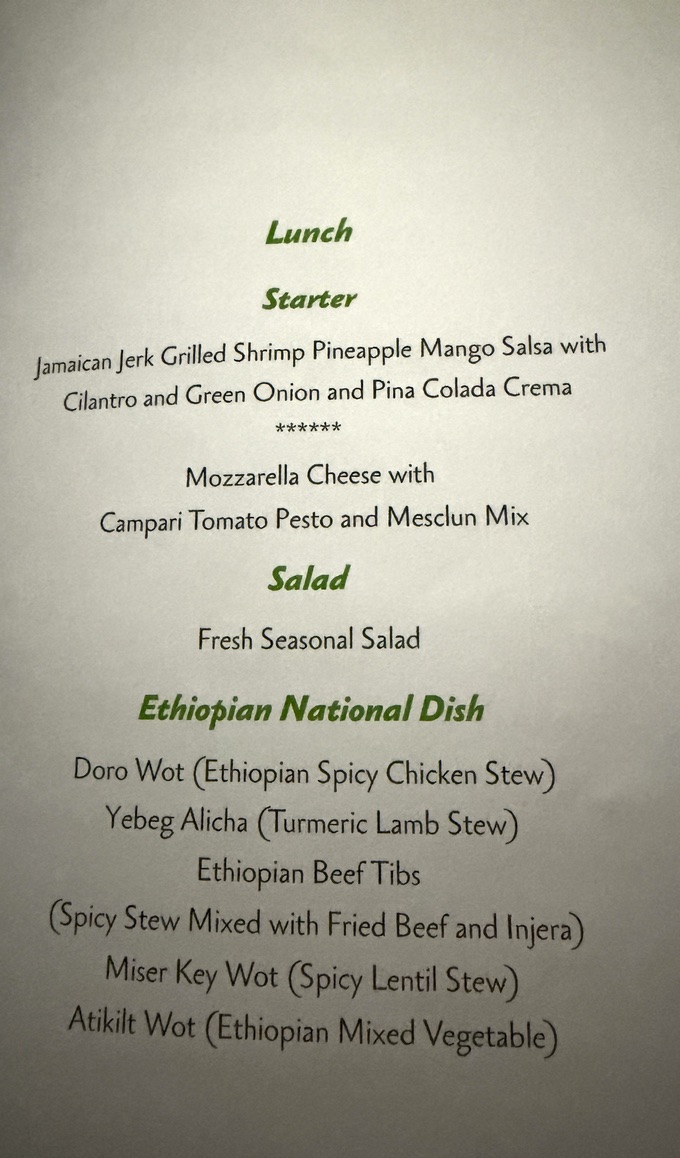
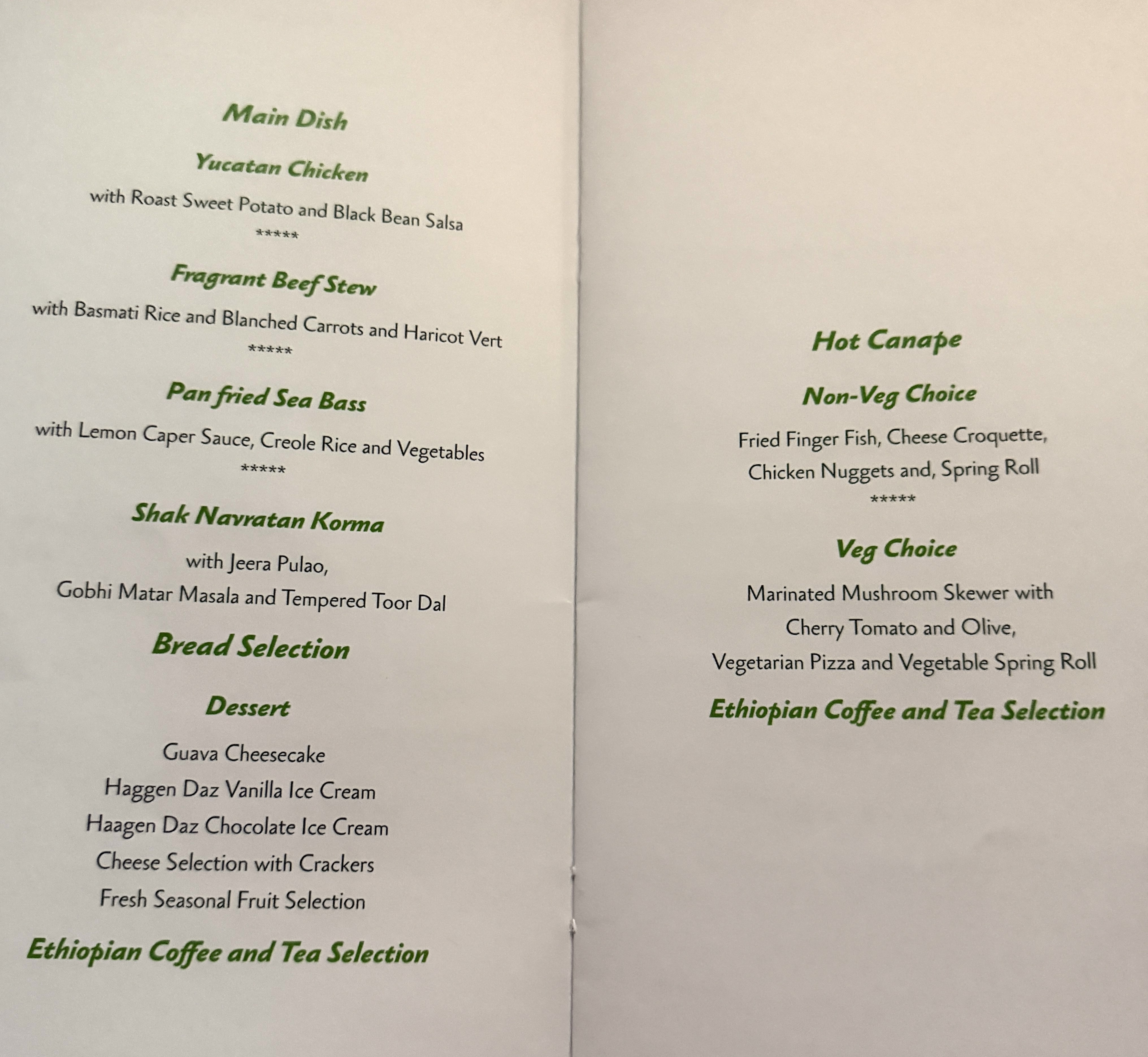
Another plus: the airline offers decent, complimentary WiFi in business class. Get with the program, United! Seats are in a 1-2-1 configuration, with enough width and legroom for me, but larger people might find it slightly cramped.
Entering Ethiopia
United States citizens need a visa to enter Ethiopia. There are two choices: obtain an eVisa online or purchase a visa on arrival. The cost is the same – USD 62 – but if you wait to get the visa on arrival, chances are you’ll face long lines.
The Addis Ababa airport is either bustling or overrun by heaving masses of humanity, depending on whether you are eu- or misanthropic. Fortunately, there were perhaps a dozen immigration agents, so I only had to wait at passport control for ten minutes.
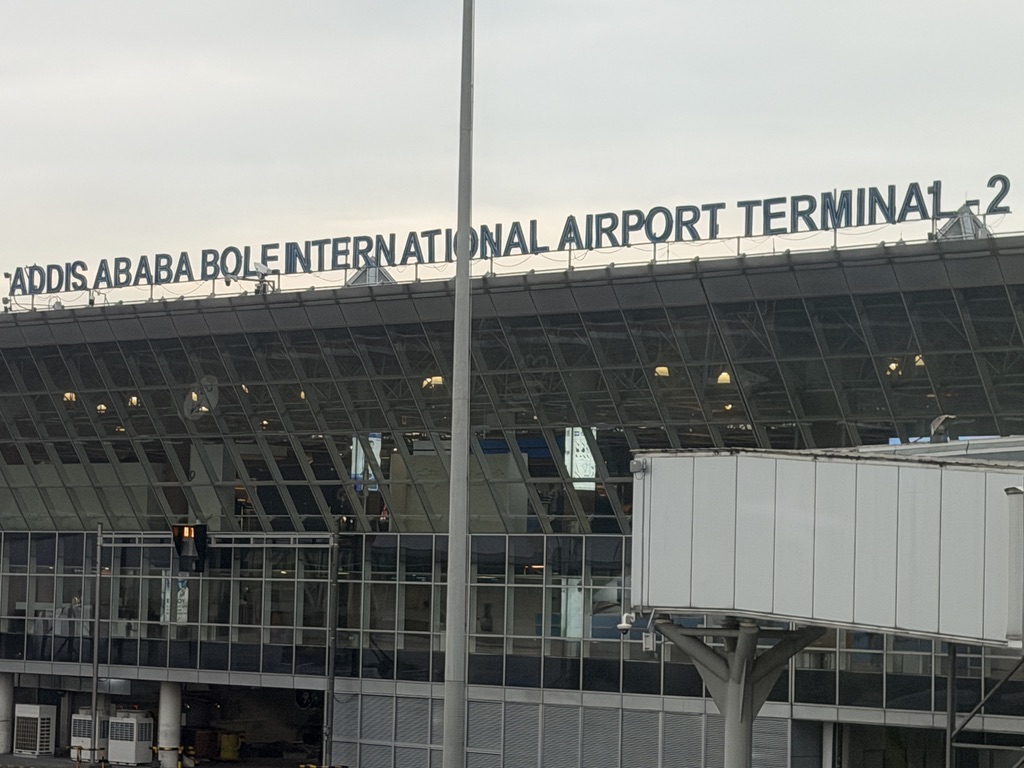
Just when I was thinking the airport experience would be a breeze notwithstanding the throngs, I got to baggage claim and waited. And waited some more. Bags didn’t start arriving until half an hour after our plane landed, and unbeknownst to me, business class luggage wasn’t placed on the main baggage carousel.
Presumably this is intended as a convenience for business class passengers, but I saw no signs indicating where the bags would be. With my bag failing to appear after thirty minutes of watching the carousel, I had almost resigned myself to spending the afternoon buying replacement clothes. Then a helpful porter asked if I had flown business class and found my bag for me, leading me to believe this is an everyday problem (and perhaps, if I were being cynical, a way to supplement the porters’ tip money).
Having been reunited with my luggage, I headed toward the exit, only to find that arriving passengers are required to place all their bags in an x-ray machine at Customs. That involved another twenty minutes of queuing, so I finally exited the airport almost ninety minutes after deplaning.
The Sheraton Addis
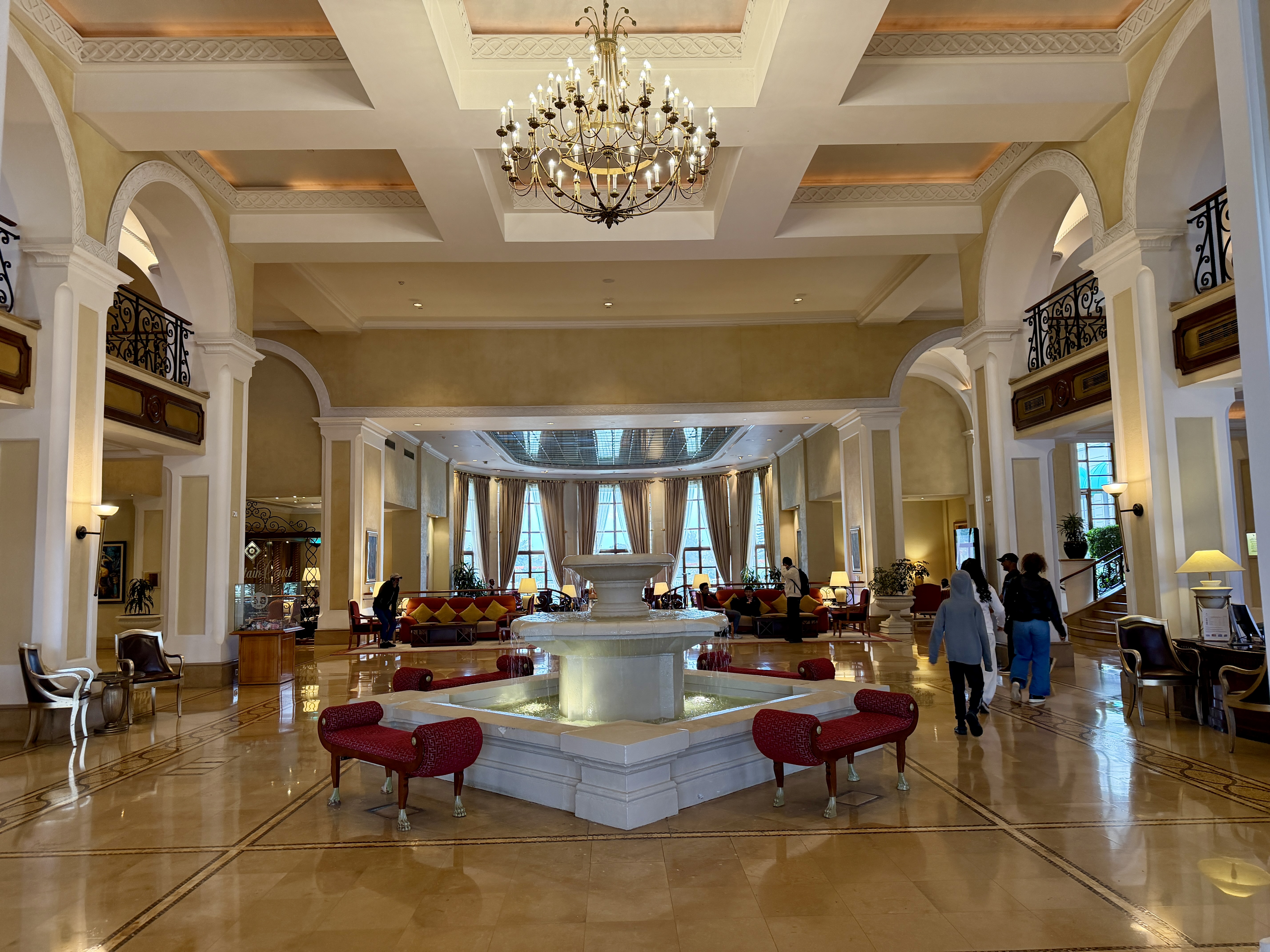
I’m staying at the Sheraton Addis, a lovely hotel between the Presidential Palace and the Prime Minister’s Palace.

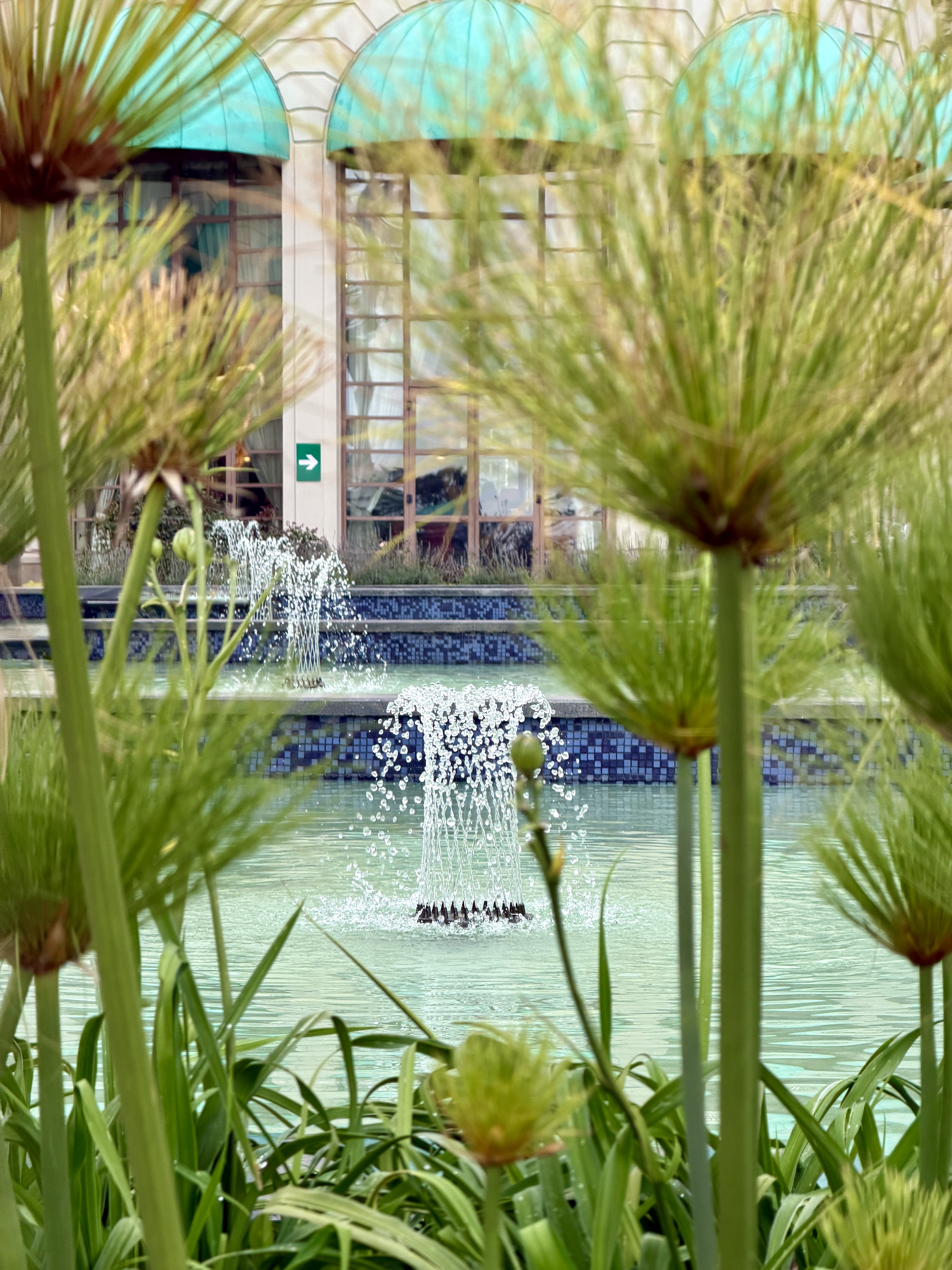
It’s a beautiful property, with an elegant lobby, good-sized rooms, manicured grounds, and a marvelous staff.
Seeing Addis Ababa
When I arrive at a new place, I generally hit the ground running (OK, walking), jet lag be damned. Yesterday was an exception: I got no sleep on the plane, thanks to the stentorian snores of the gentleman in front of me, and the afternoon was chilly (mid-50s) and wet. With apologies to Toto, I did not “bless the rains down in Africa.” Instead, I opted for dryness and an afternoon nap.

This morning dawned rainy as well, but the precipitation petered out after a couple of hours, allowing me to enjoy a terrific and moisture-free tour of the city. My travel agent, Lauren, booked the tour through Viator, but it was run by Addis Ethiopia Tours; if you find yourself in Addis Ababa at some point, you can contact them directly. The guide, Teshome, and the driver, Henok, were excellent, and the tour was incredibly reasonable: USD 80 for a private, five-hour excursion. (Addis Ababa is inexpensive: I treated Teshome and Henok to lunch, and our meal for three, including honey wine for Teshome and me, Sprite for Henok, and bottled water, came to USD 25 with a nice tip.)
A key component of my philosophy of life – and I do have one – is that any day when I learn something new and interesting is a good day. Any day when I learn several new and interesting things is a very good day. And any day when I learn several new and interesting things, drink outstanding coffee, consume delectable food, and enjoy wide-ranging, intelligent conversation is an excellent day. Thanks to Teshome, today was excellent!

Teshome and Henok picked me up at the hotel a little after 9 a.m., and we headed straight to the National Museum. (The tour normally stops first at St. George’s Cathedral, but today being Sunday, the Cathedral was otherwise occupied.) We arrived around twenty minutes before the museum opened, and Teshome treated me to a coffee at the adjacent café.
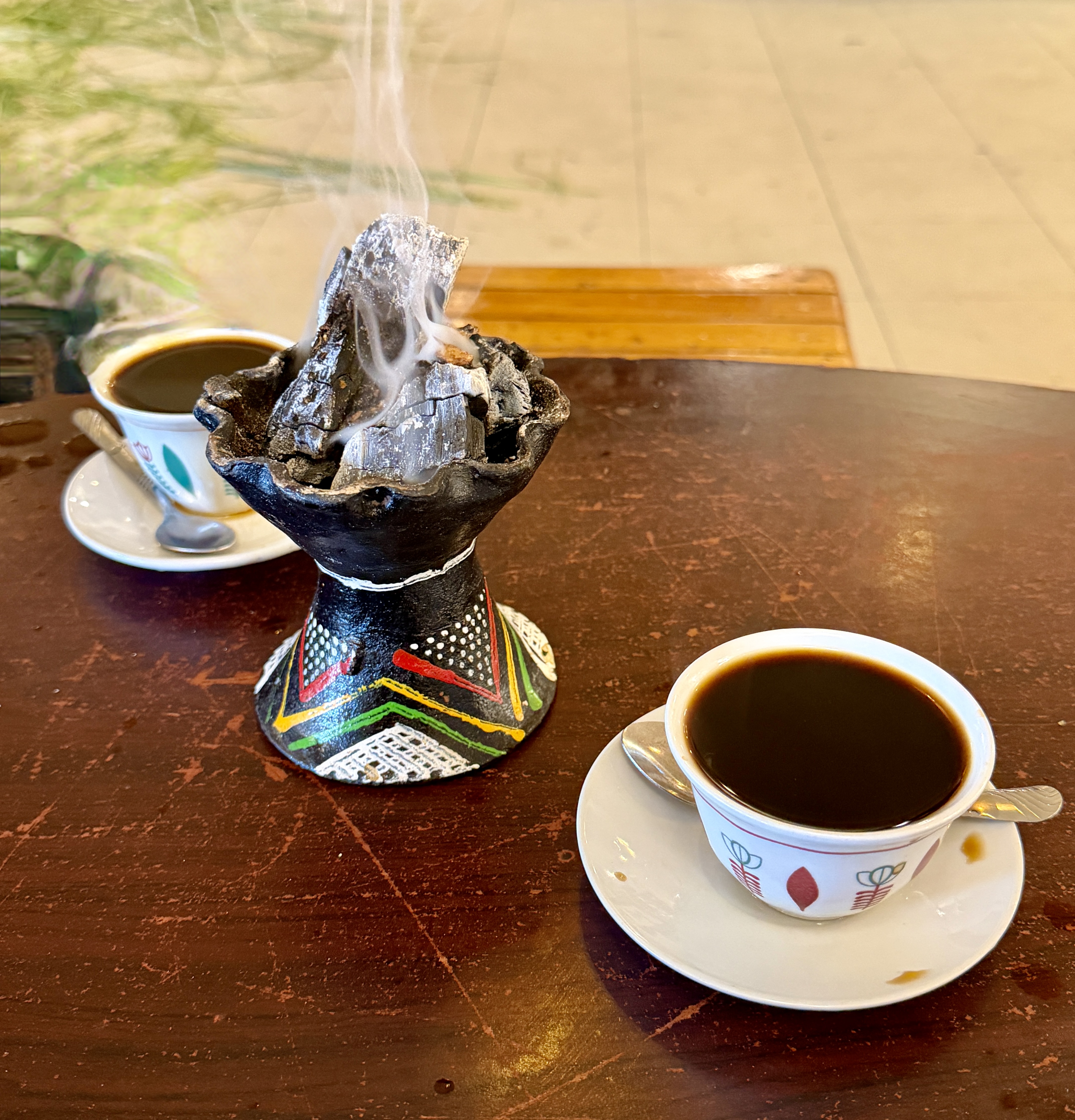
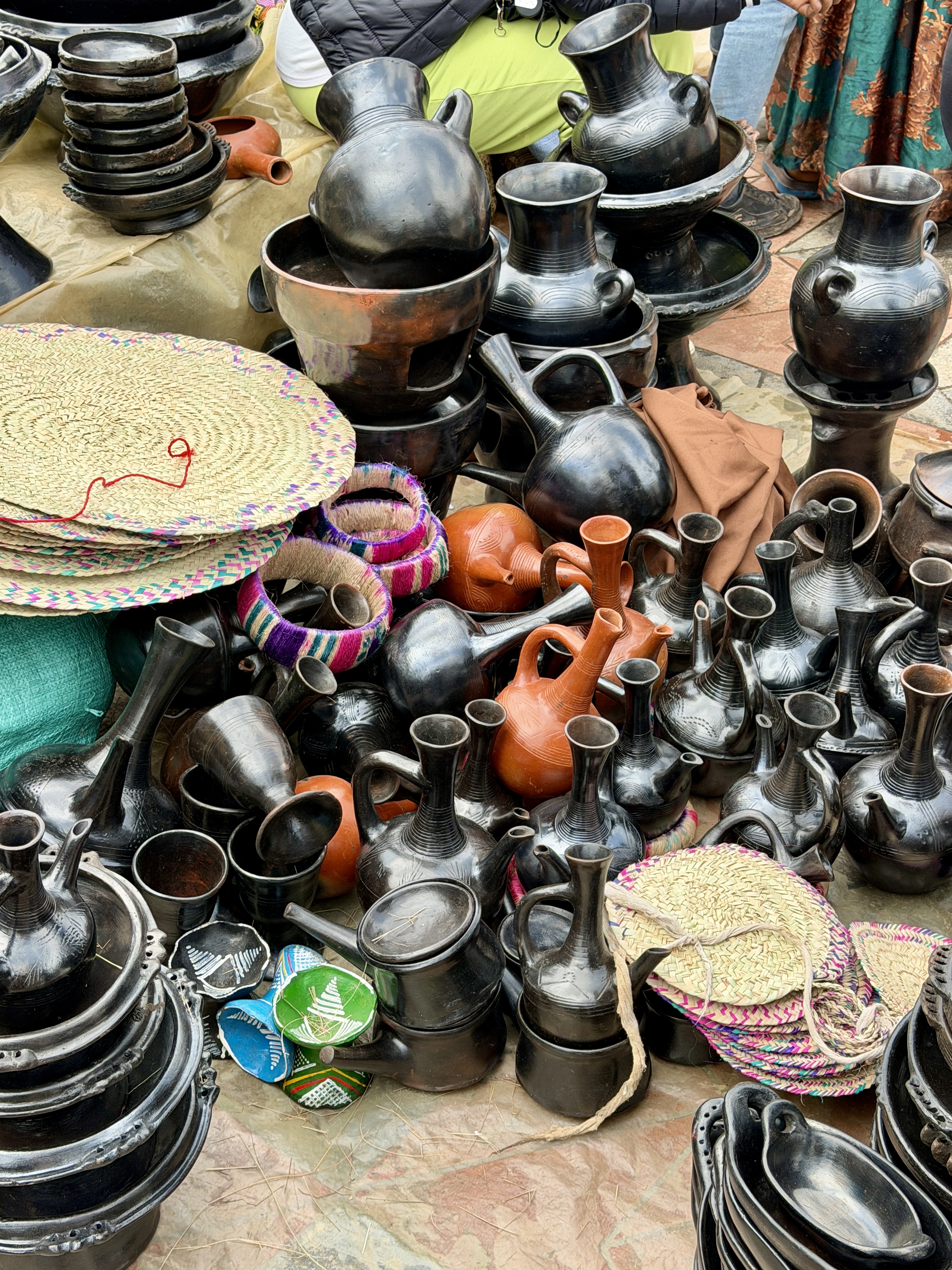
Coffee is to Ethiopia what tea is to Japan: a sacred part of everyday life. As Japan has a cherished tea ceremony, Ethiopia has a treasured coffee ceremony. It’s always run by a woman, who grinds the beans using a mortar and pestle, brews them over hot coals in a special clay pot called a jebena, and serves the coffee accompanied by frankincense or myrrh. In the traditional ceremony, three cups are drunk; this morning at the café we didn’t go through the whole ceremony and we only had one cup, but we did take time to appreciate the frankincense. Sure beats a quick dash into Starbucks, and the coffee is far superior as well!
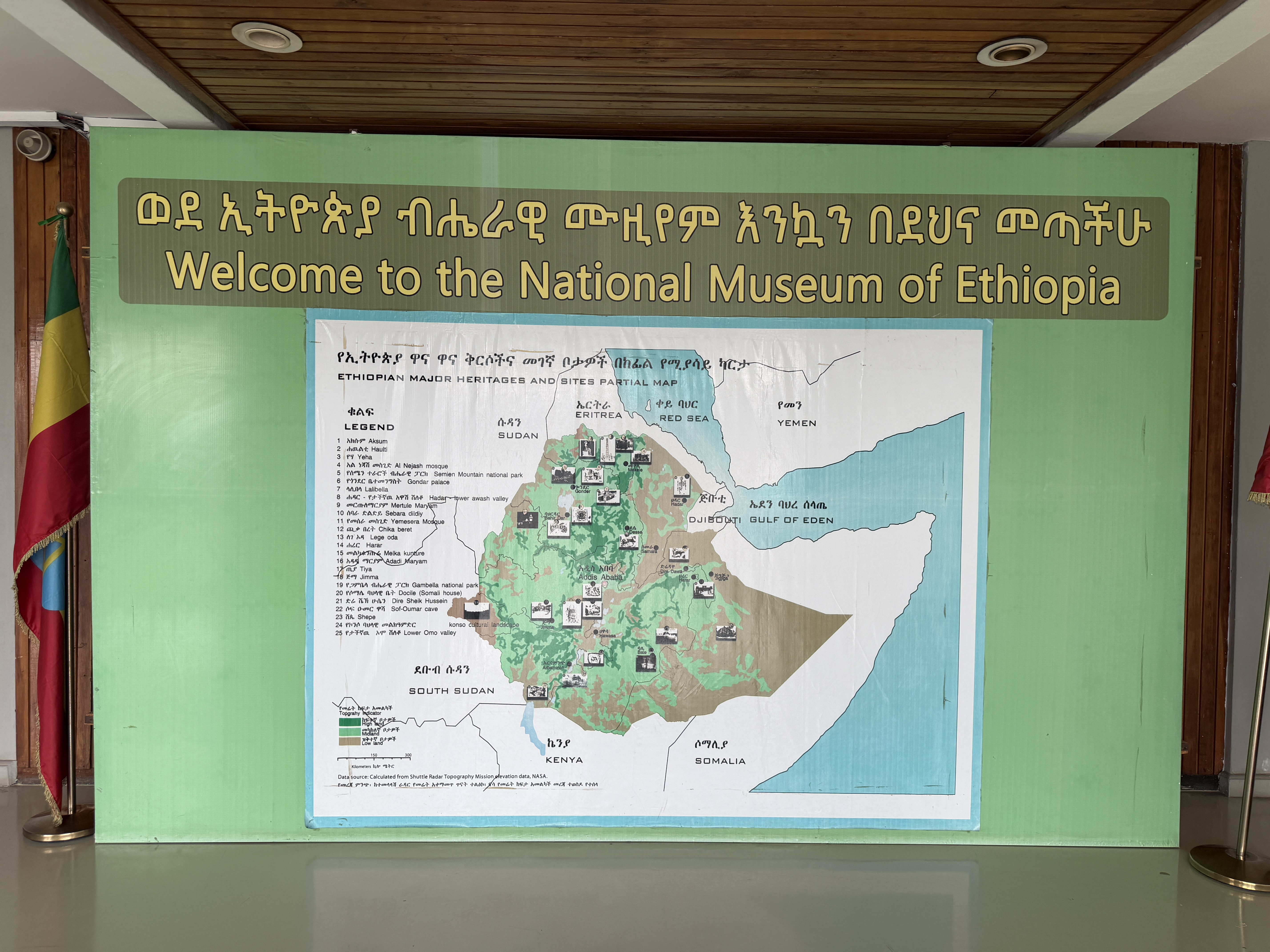
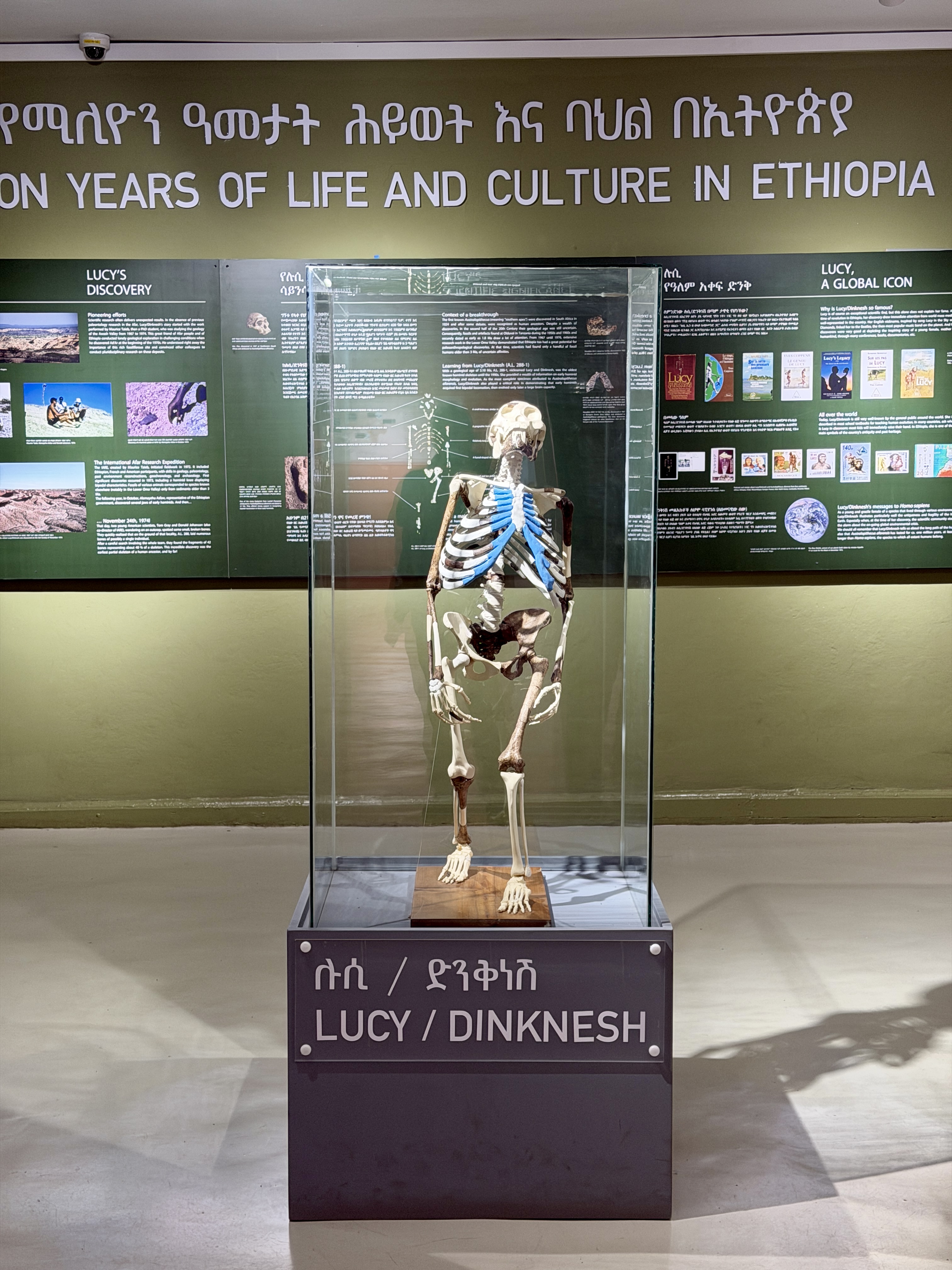
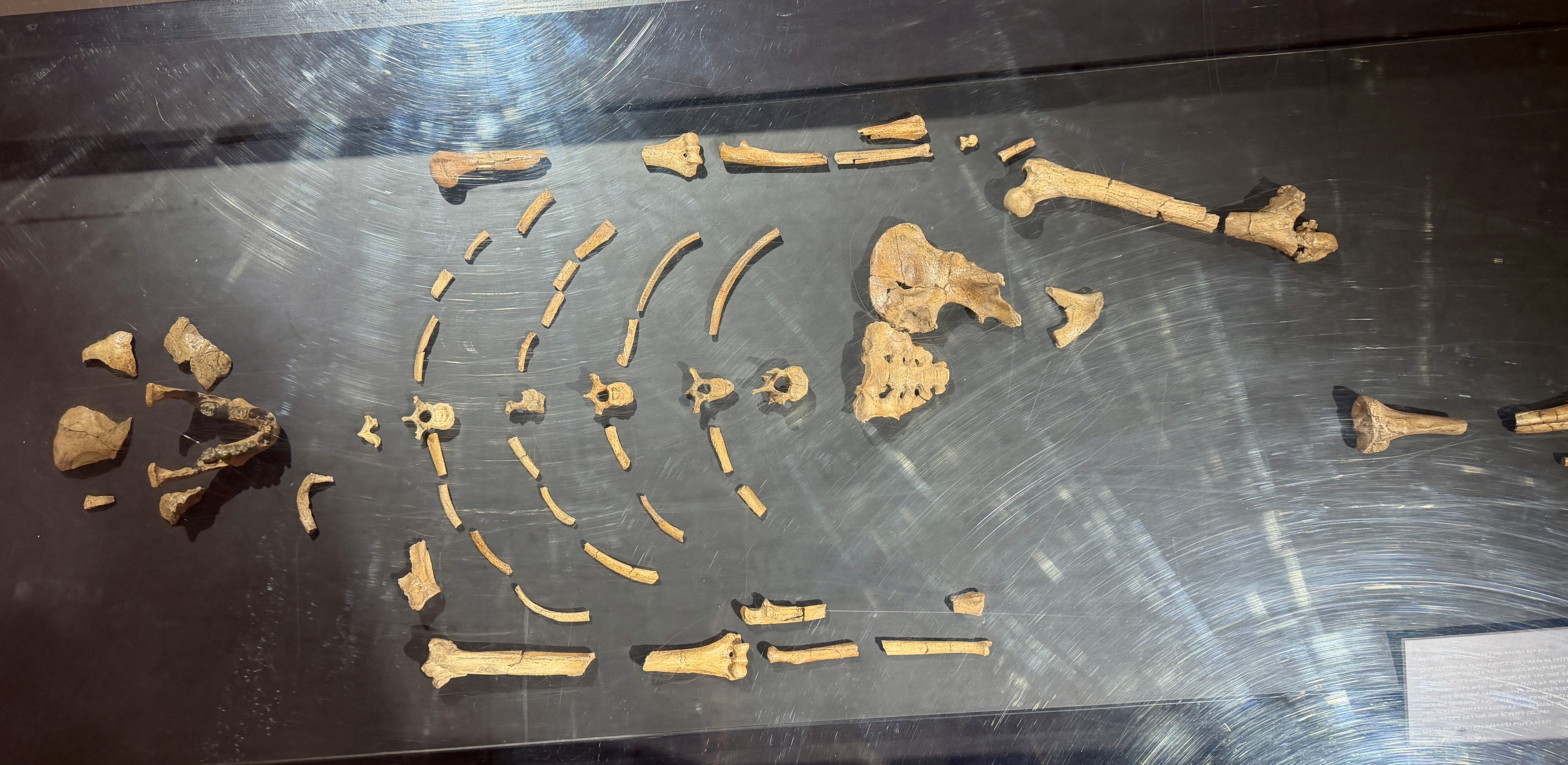
Suitably caffeinated, we headed into the National Museum. As a long-ago physical anthropology major, this was a pilgrimage for me because the museum houses the partial skeleton of “Lucy,” a 3.2 million year old Australopithecus afarensis that provided the first evidence of bipedal locomotion among human ancestors. Lucy, by the way, was named after the song “Lucy in the Sky with Diamonds,” which was played repeatedly at the excavation camp. She also has an Amharic name, Dink’inesh, which means “you are wonderful”. (She was discovered by anthropologist Donald Johanson and his team in Ethiopia’s Afar region; twas Afar, far better thing they did than they had ever done before.)
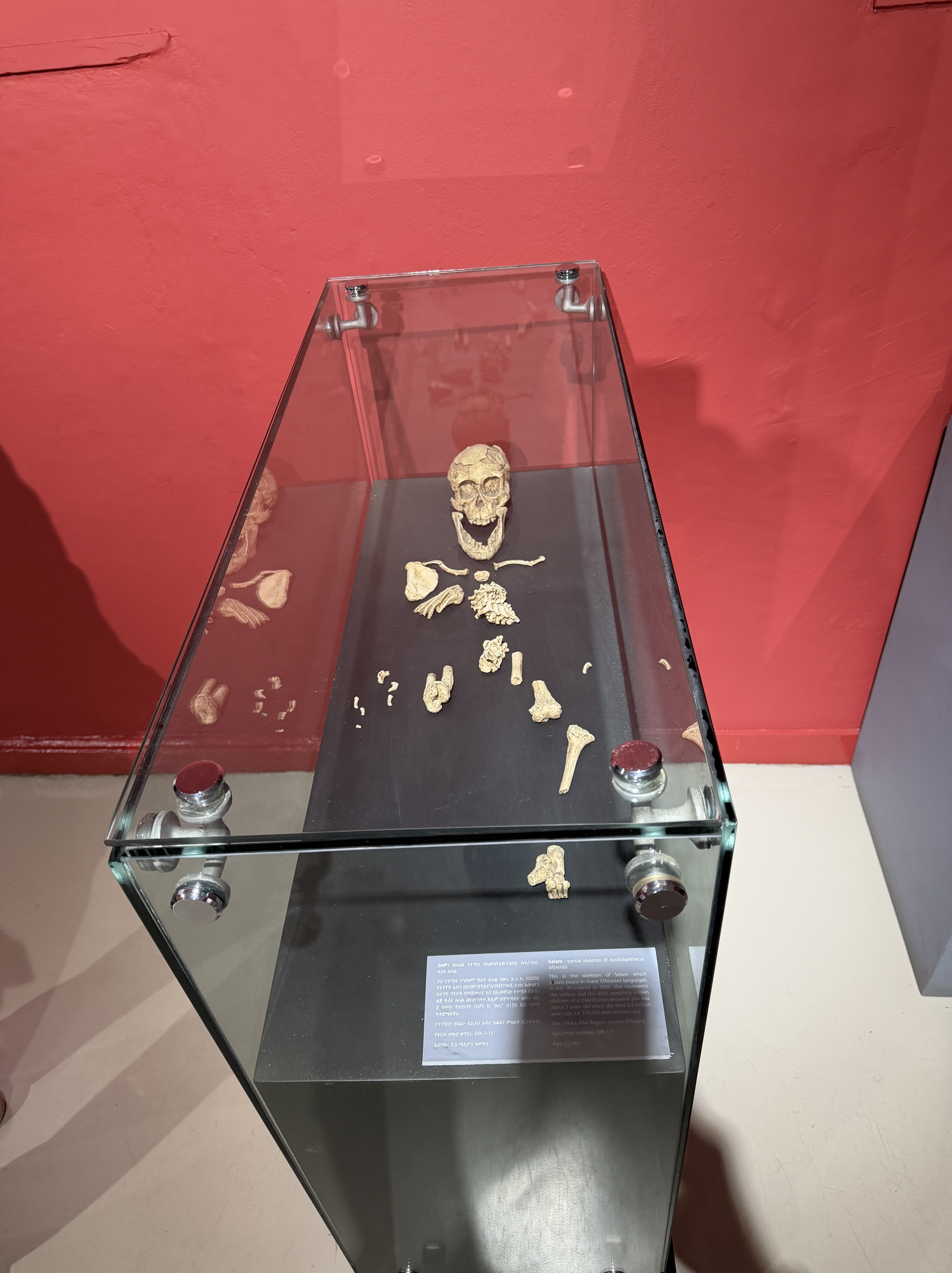
The National Museum also houses other significant remains, including the skeleton of an australopithecine child (“Selam”) who lived 150,000 years before Lucy. Everything is well-displayed and clearly explained.
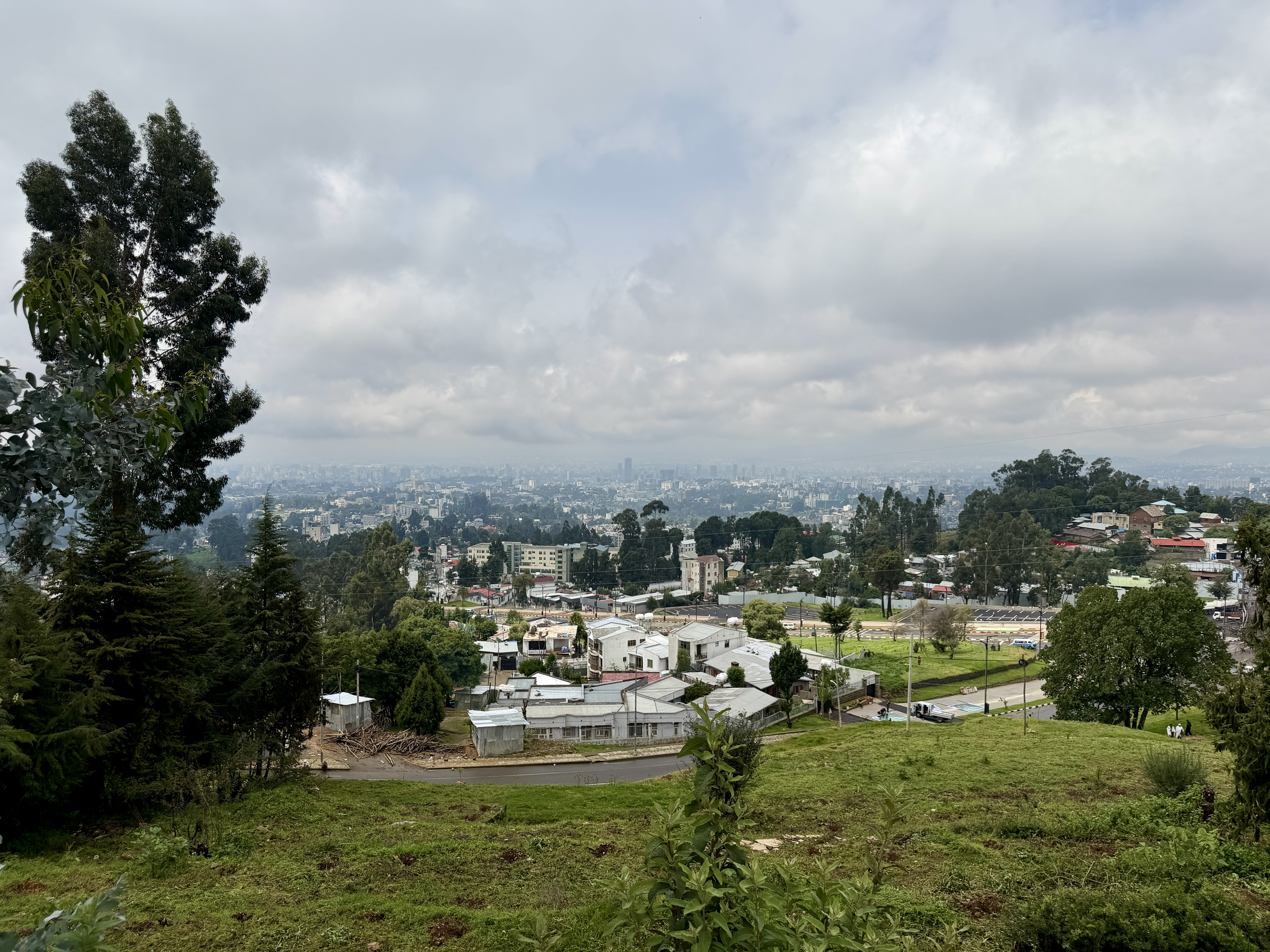
From the museum, Henok drove us to the top of Mount Entoto (3200 meters), which is important for both sightseeing and historical purposes. It’s where Emperor Menelek II, father of Haile Selassie, built his palace in the late 19th century before founding Addis Ababa in 1886 in the valley below. Menelek II was a member of the Solomonic Dynasty; the original Menelek is held to have been the son of King Solomon and the Queen of Sheba and to have ruled Ethiopia in the tenth century BCE. Whether or not this is true, his namesake was a pivotal figure in Ethiopian history, expanding the Ethiopian Empire to its greatest extent and, along with his wife, Empress Taytu, leading the Ethiopian army to a decisive defeat of the invading Italians in the battle of Adwa in 1896.

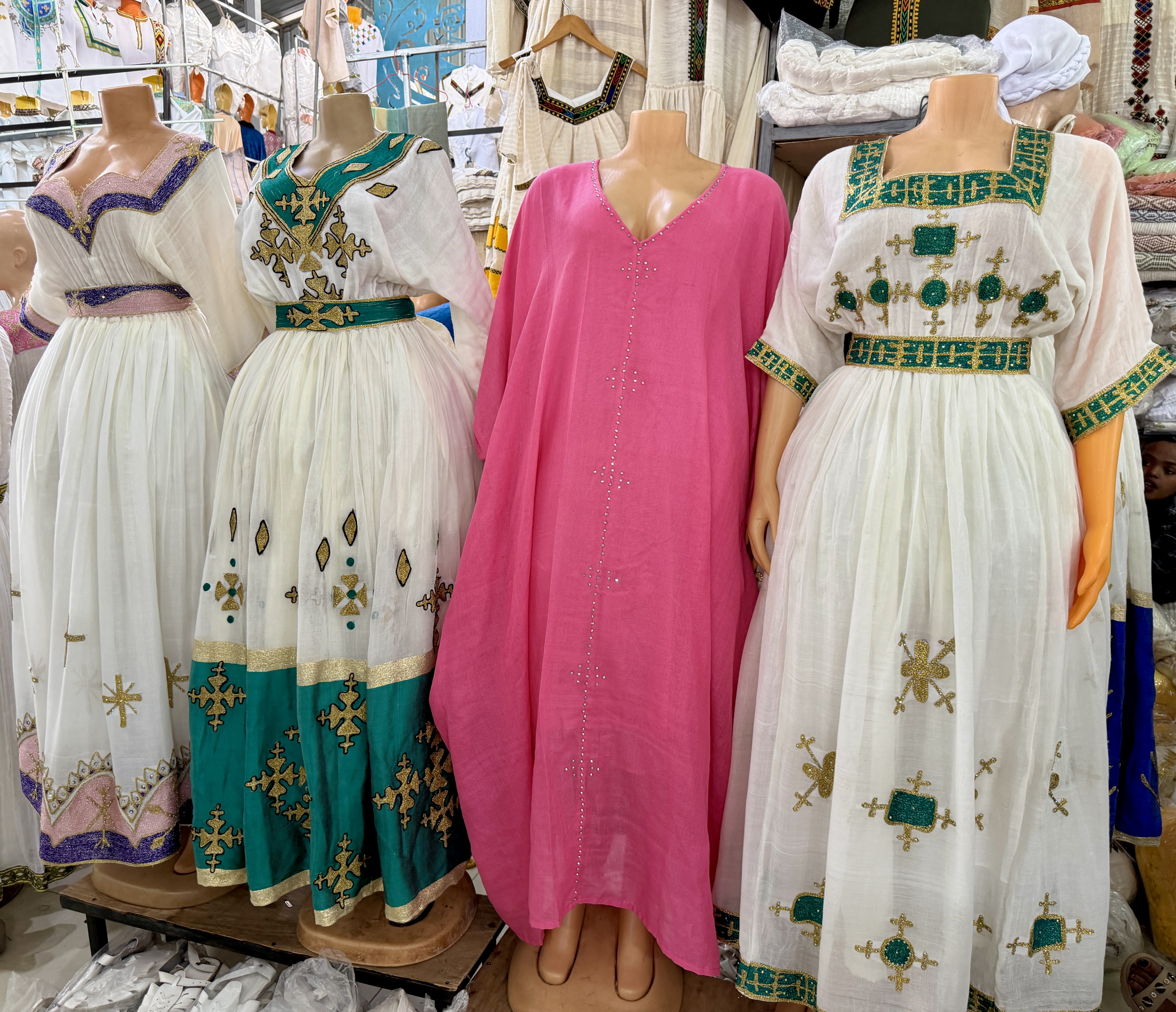
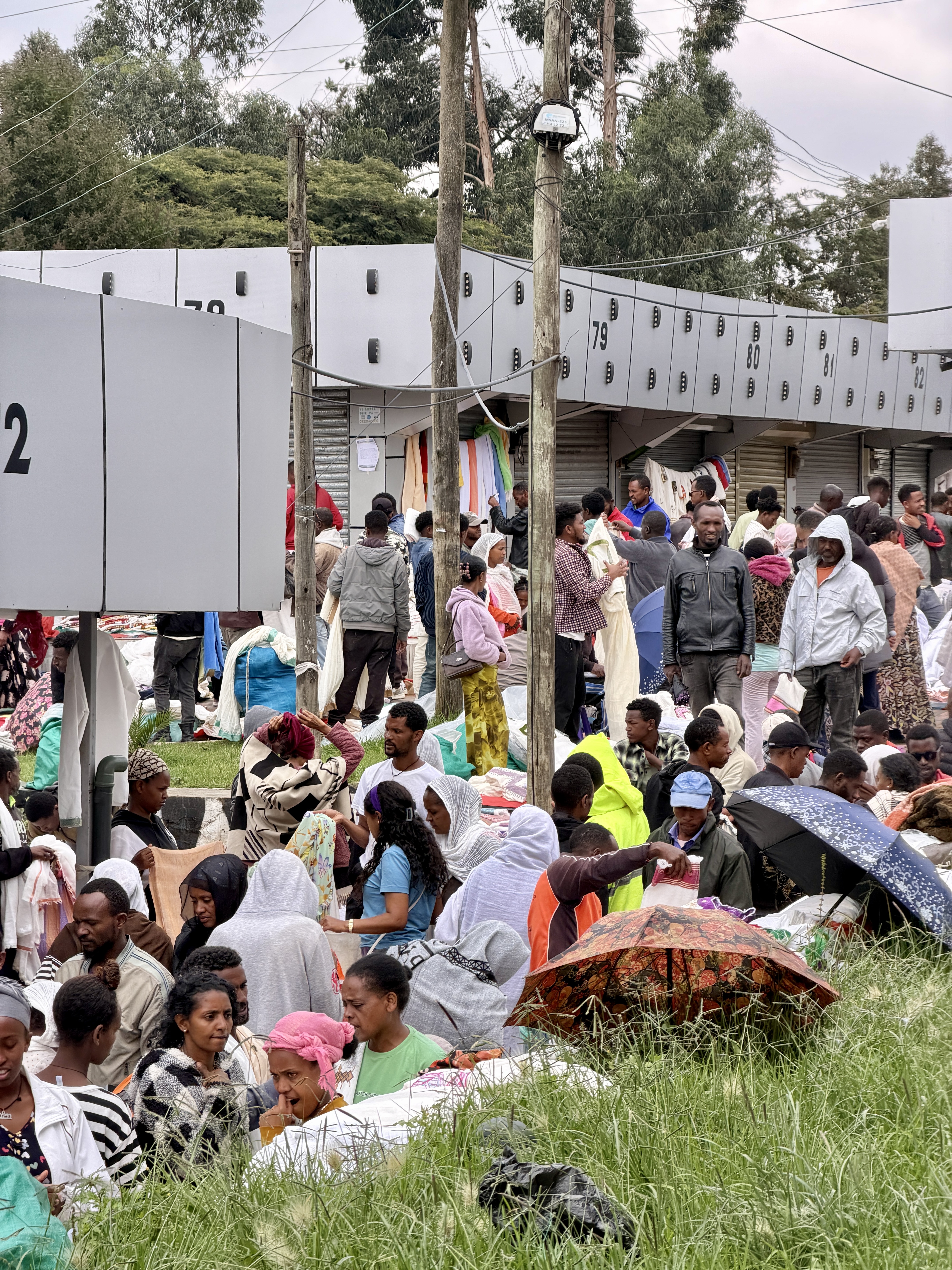
After returning to the relative lowlands of Addis Ababa (at 2355 meters, the fourth-highest world capital), our next stop was the Shiro Meda traditional clothing market. Almost all the clothing sold there is for women. Outside the market, there were throngs of people shopping at stalls. I’m a sucker for a good market – for people-watching and photography rather than purchasing purposes – and Shiro Meda did not disappoint.

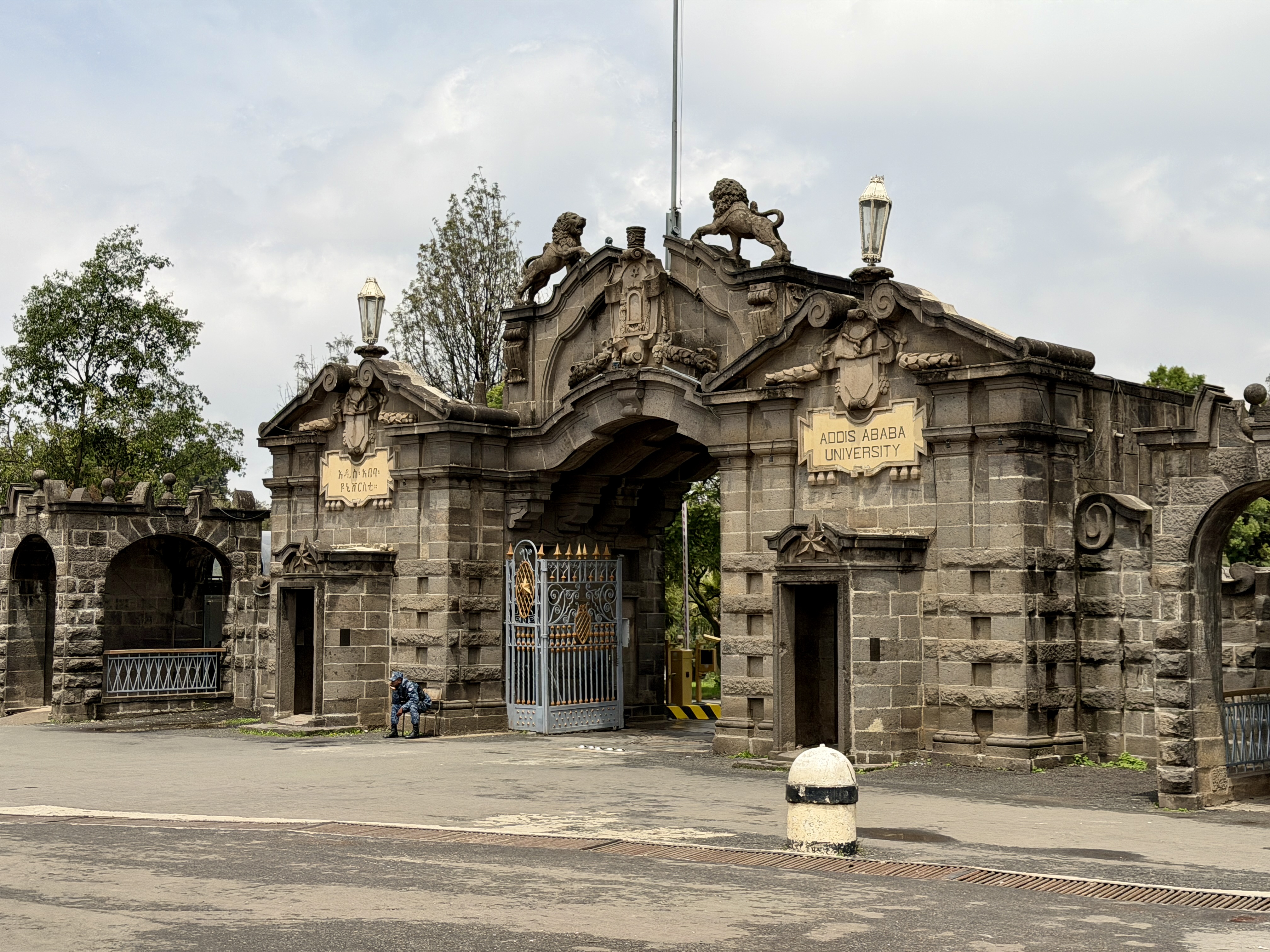
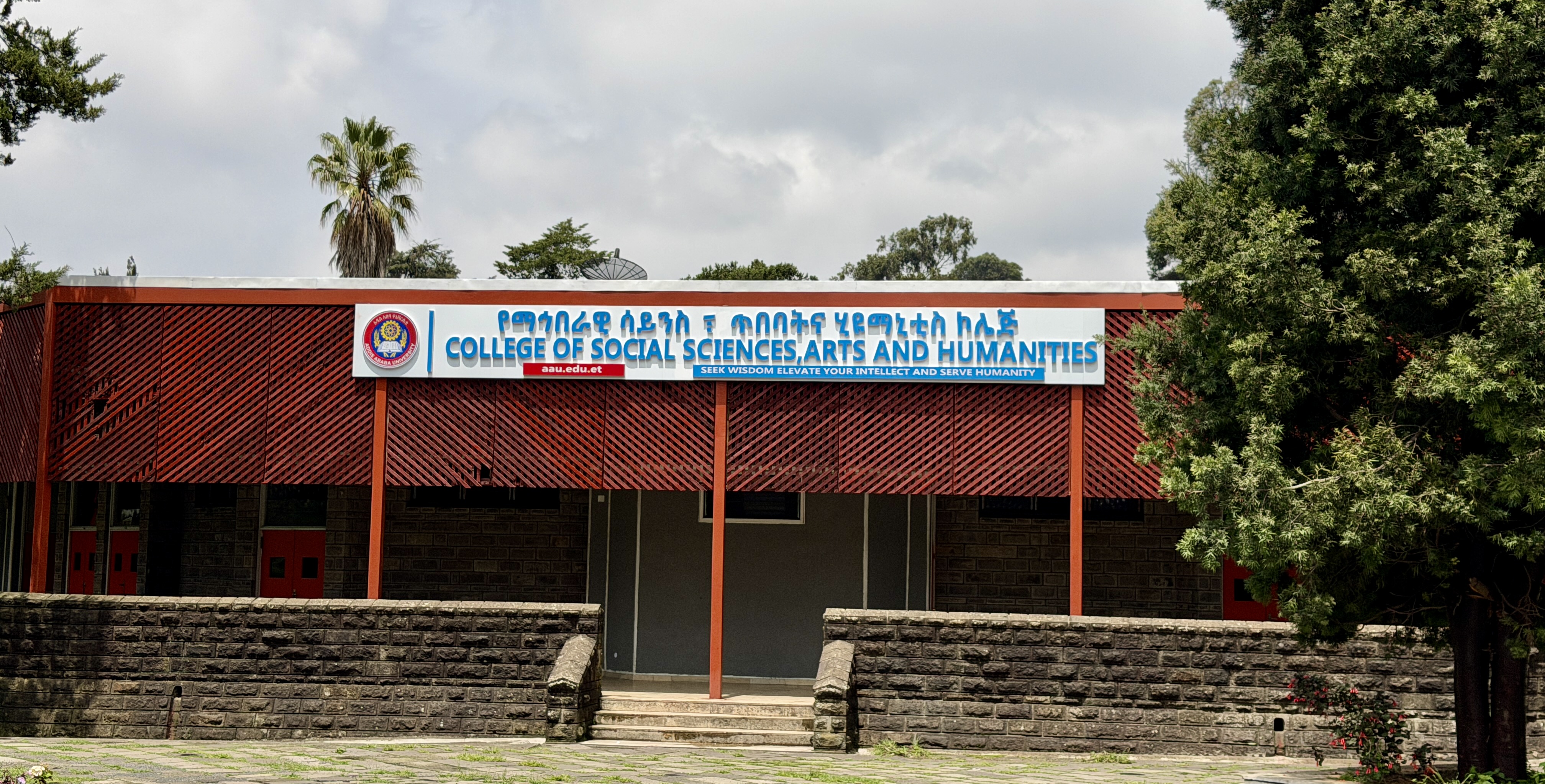
Not far from the market lies the Ethnological Museum, on the grounds of Addis Ababa University. This museum was Haile Selassie’s palace until 1961, when he gifted it to the university.
In just a few rooms, the museum does a terrific job showcasing key elements of Ethiopia’s military, political, and cultural history (complete with the preserved body of one of Emperor Selassie’s pet lions, Gillo).
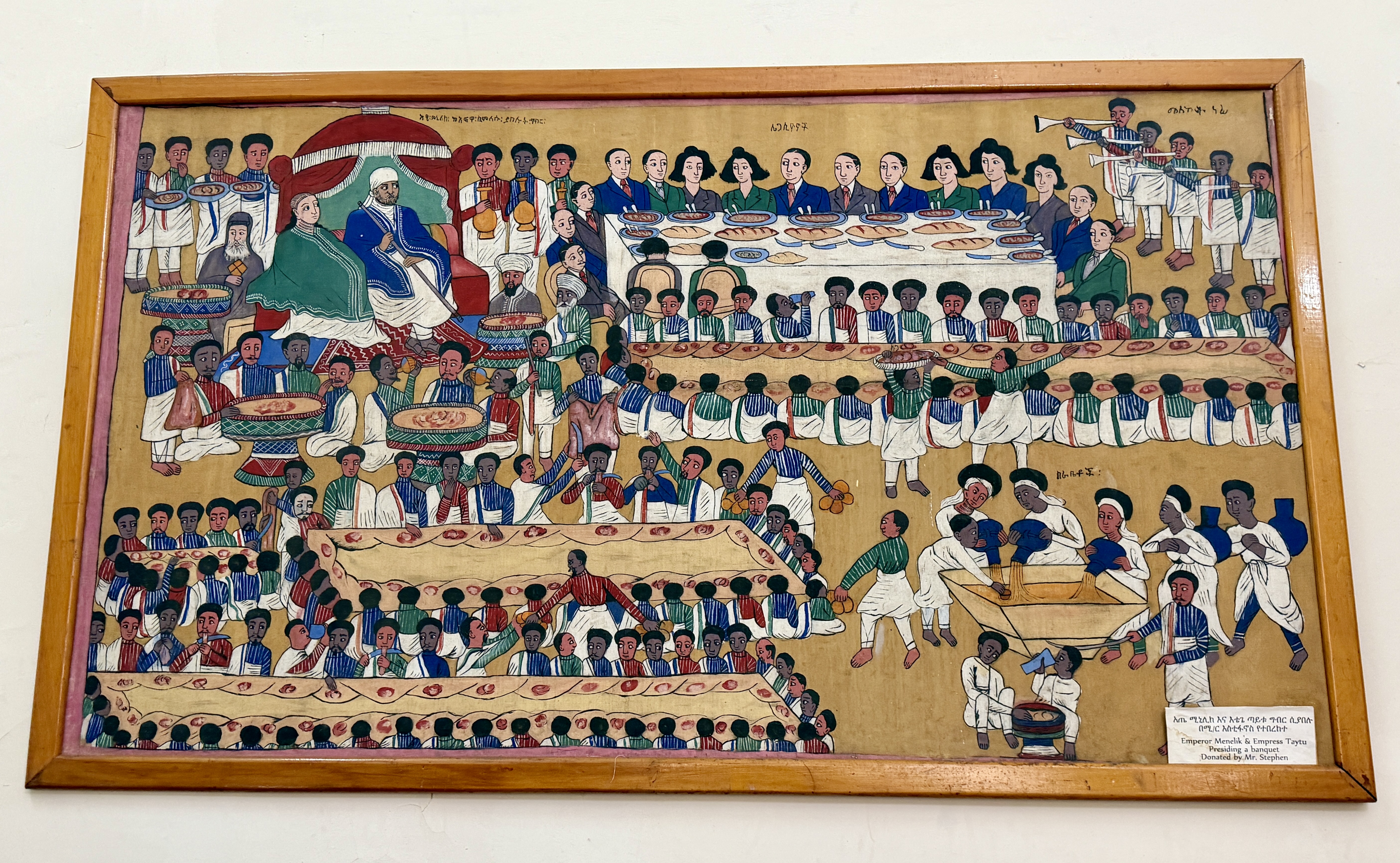
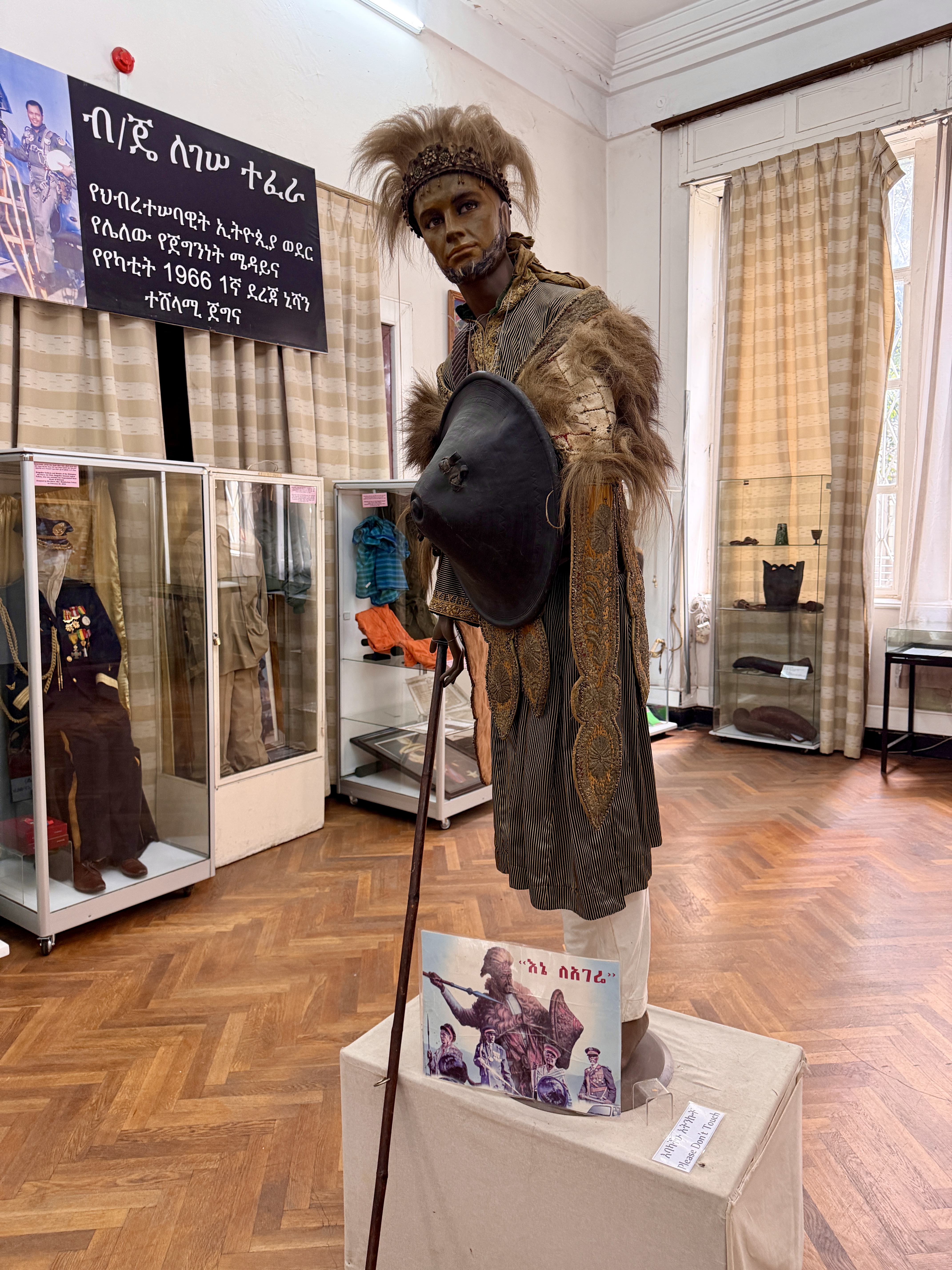
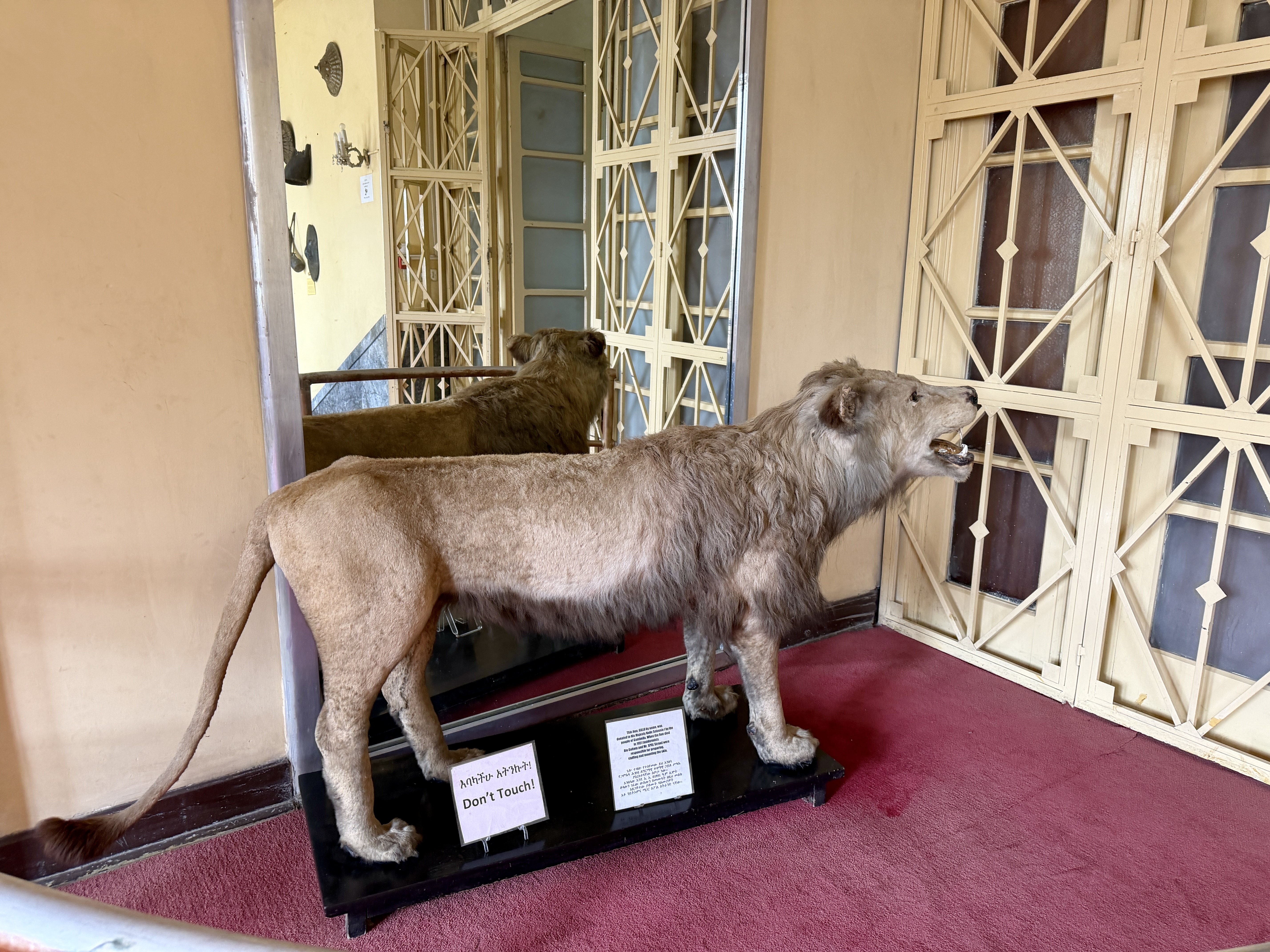
By this point it was 12:30, and we headed for lunch at Addis Ababa Restaurant, where I learned several interesting things. First, the restaurant occupies the one-time residence of Menelek II’s daughter, Empress Zewditu, the only female head of the Ethiopian Empire (one of her official titles was “Queen of Kings”). Fittingly, after her death the building was transformed into a restaurant run by and for the benefit of Ethiopian women.
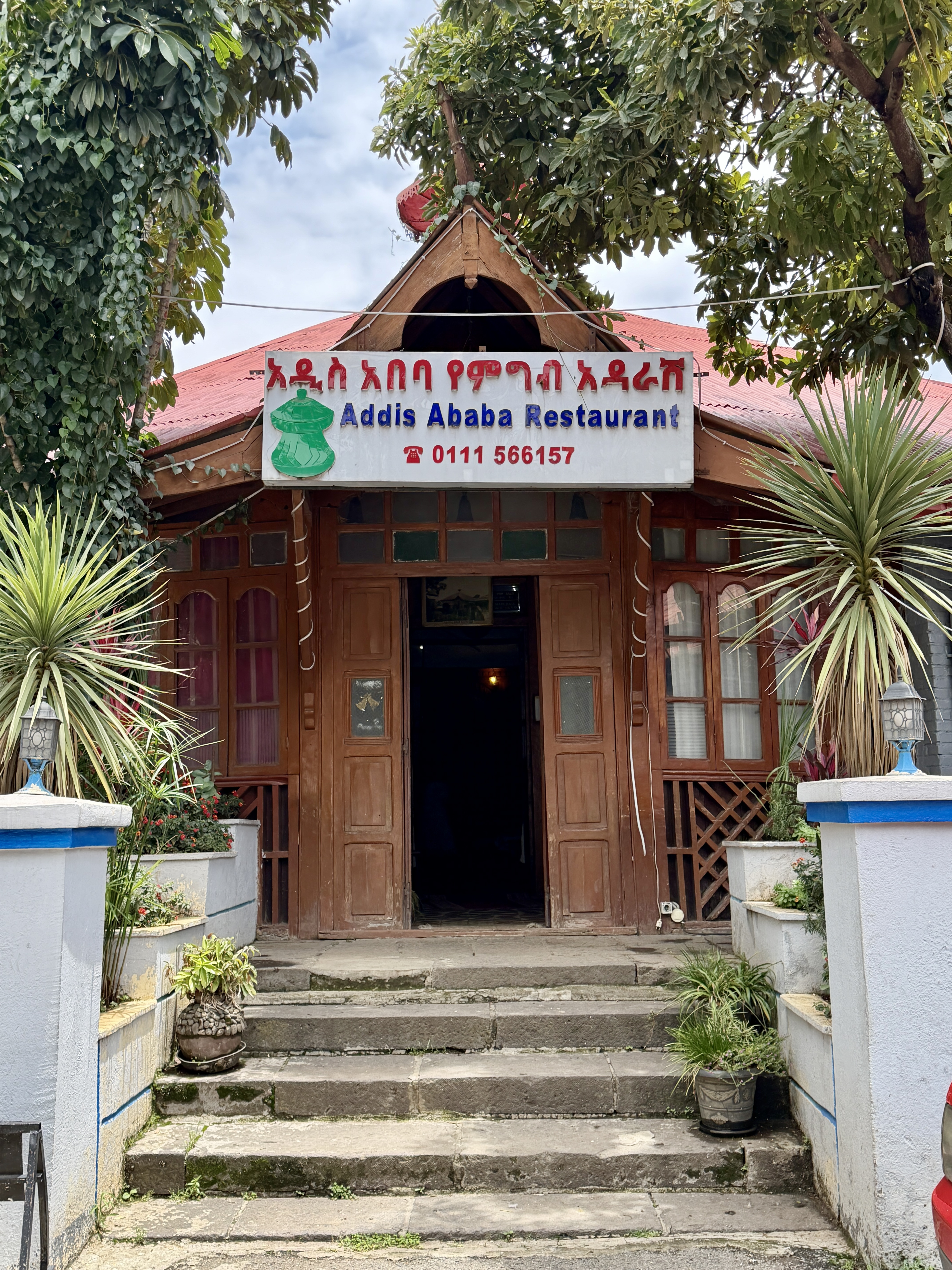
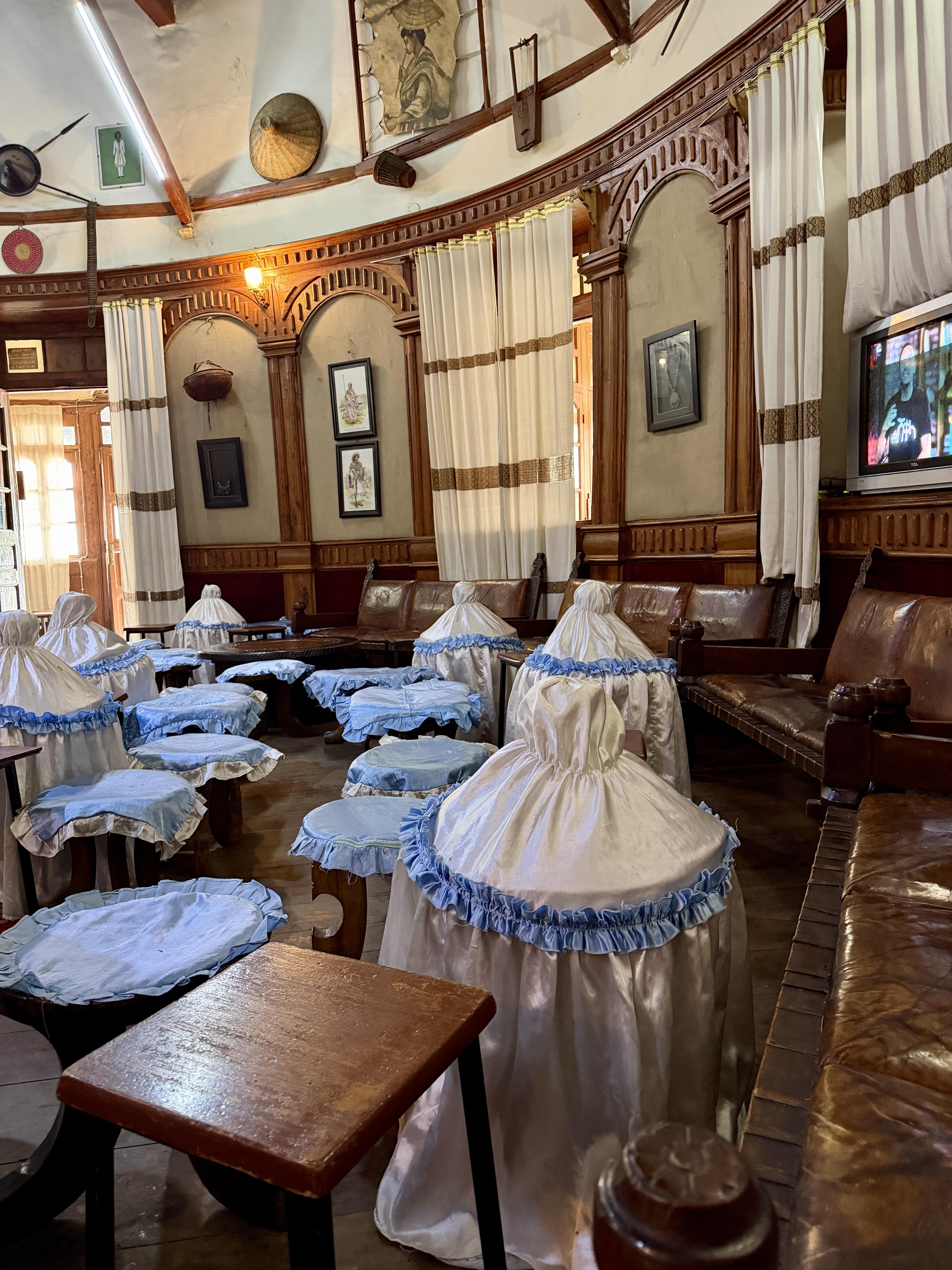
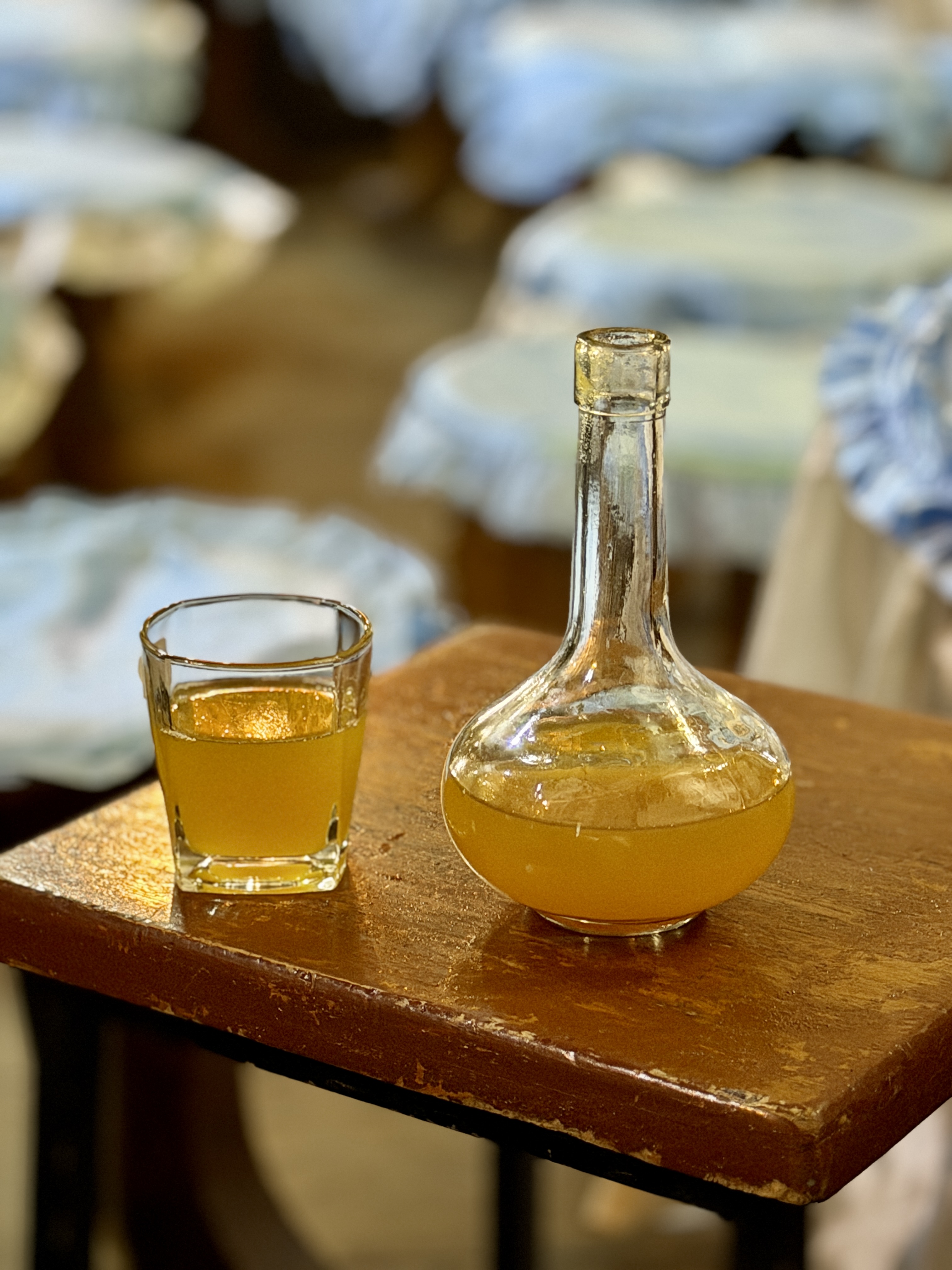
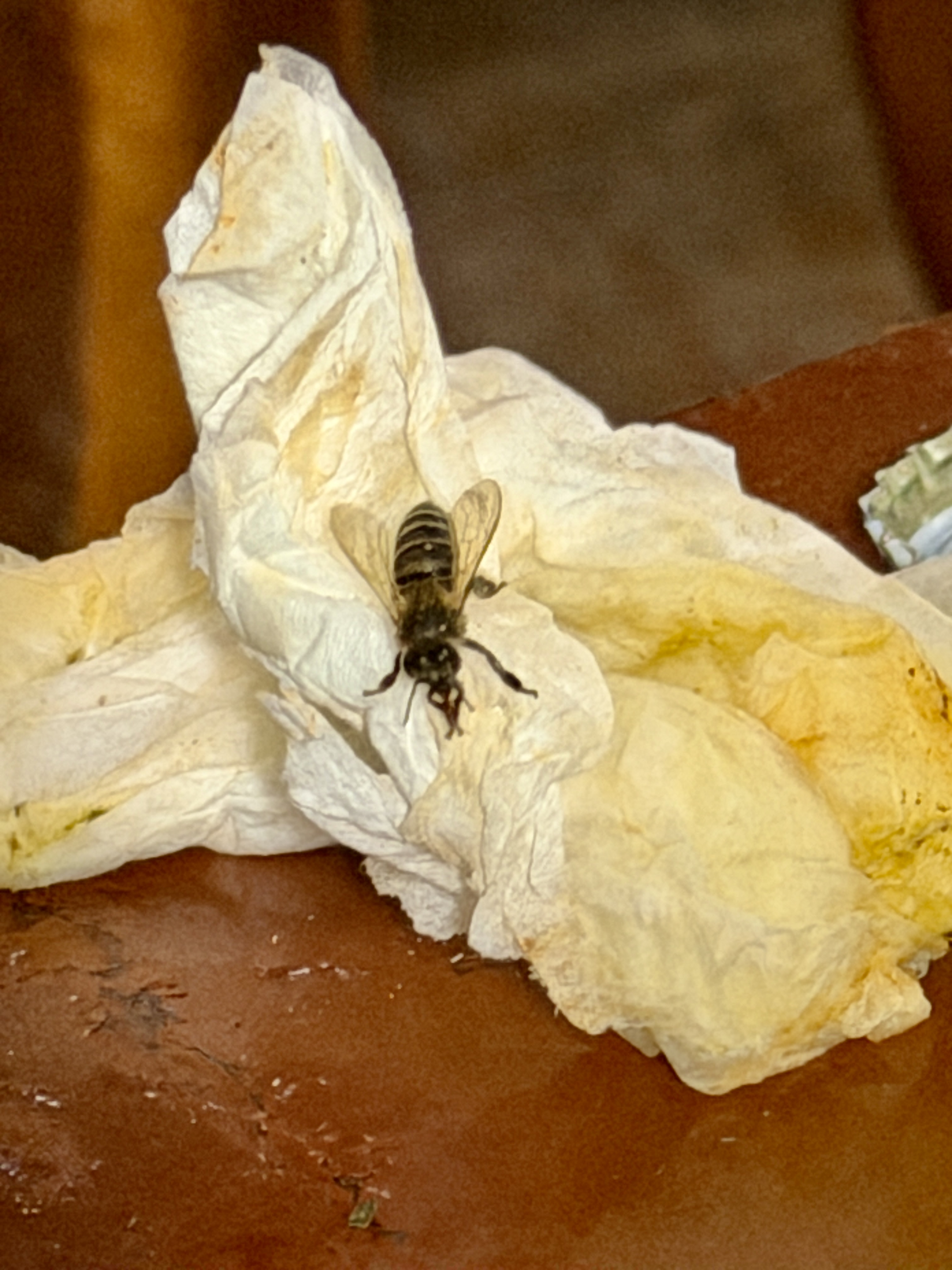
Second, and less historically weighted but more quirkily charming, if a bee lands in your tej (traditional honey wine), it is considered good luck to save the bee and then drink the wine. (If it’s a fly instead of a bee who trespasses, it’s bad luck and the wine is discarded.) I learned this because a bee landed in Teshome’s wine glass; it seemed pretty mellow after being rescued. Another bee landed in the narrow-necked wine carafe, and with heroic efforts, Henok saved that one as well.
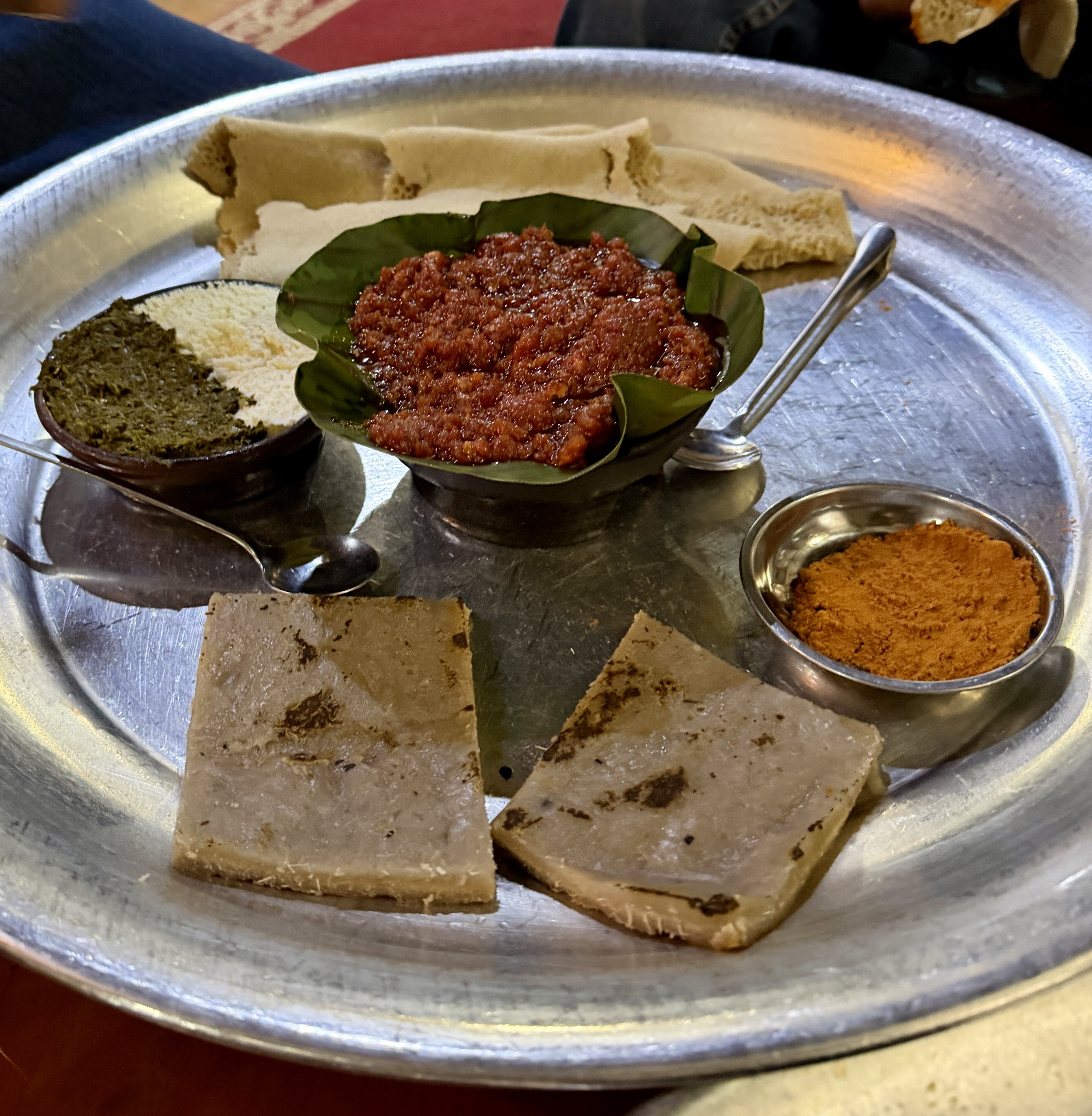
Third, any dish described as “Fasting” on an Ethiopian menu is vegan. It’s called this because Ethiopian Orthodox Christians (roughly 50 percent of the population) eschew all animal products on Wednesdays and Friday (they chew them on other days); a meal without meat, dairy, or eggs is considered “fasting.”
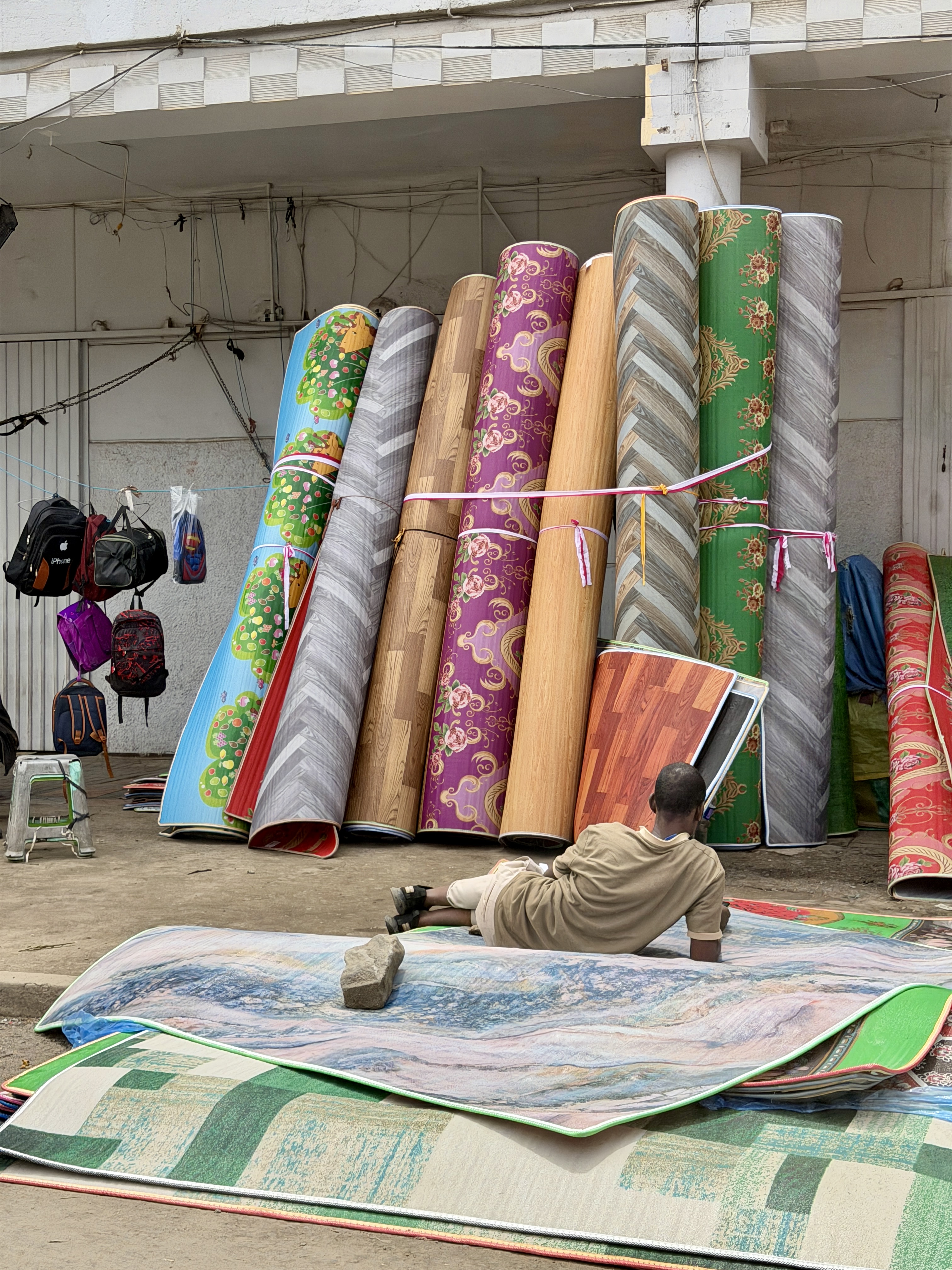

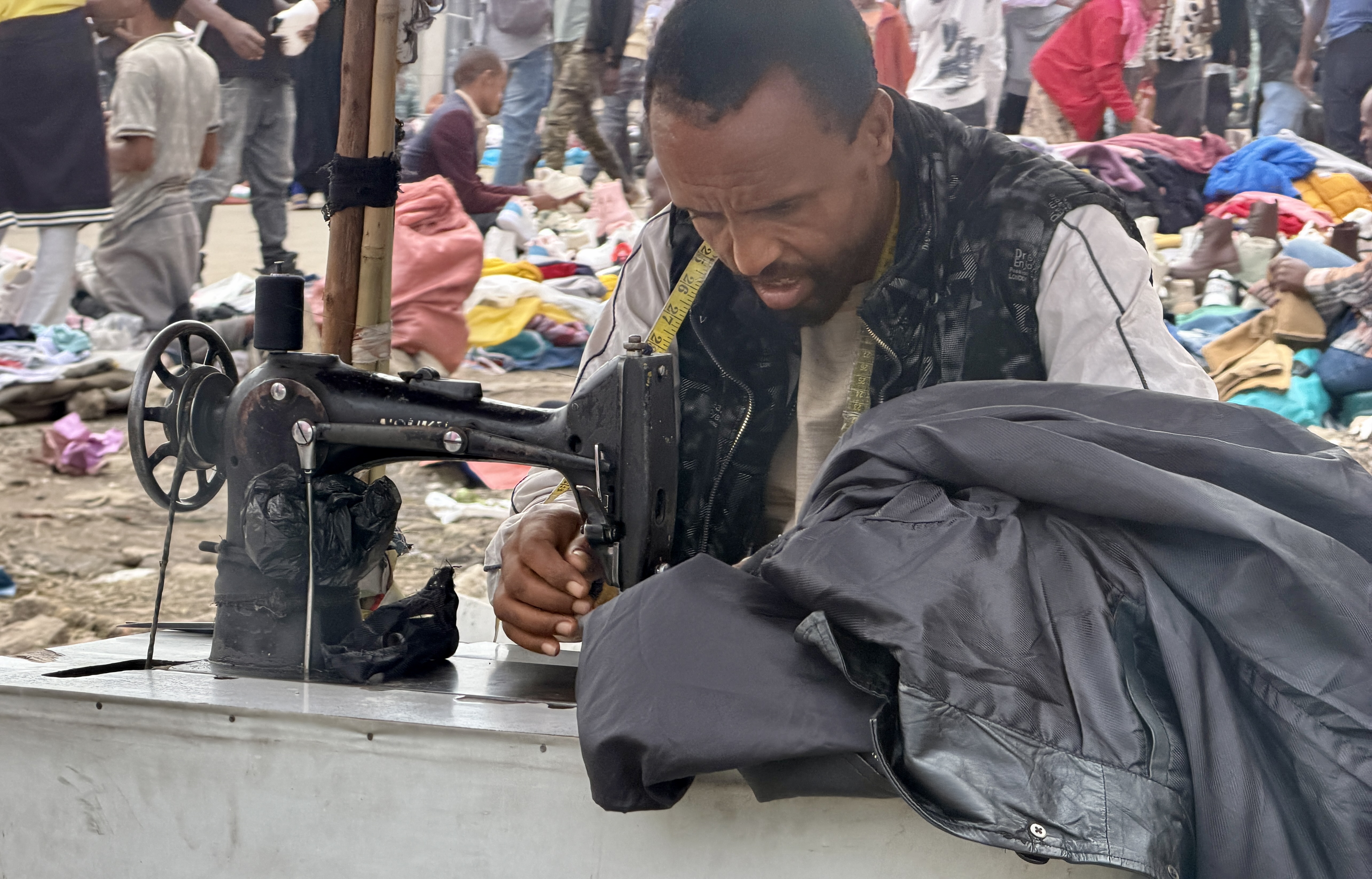
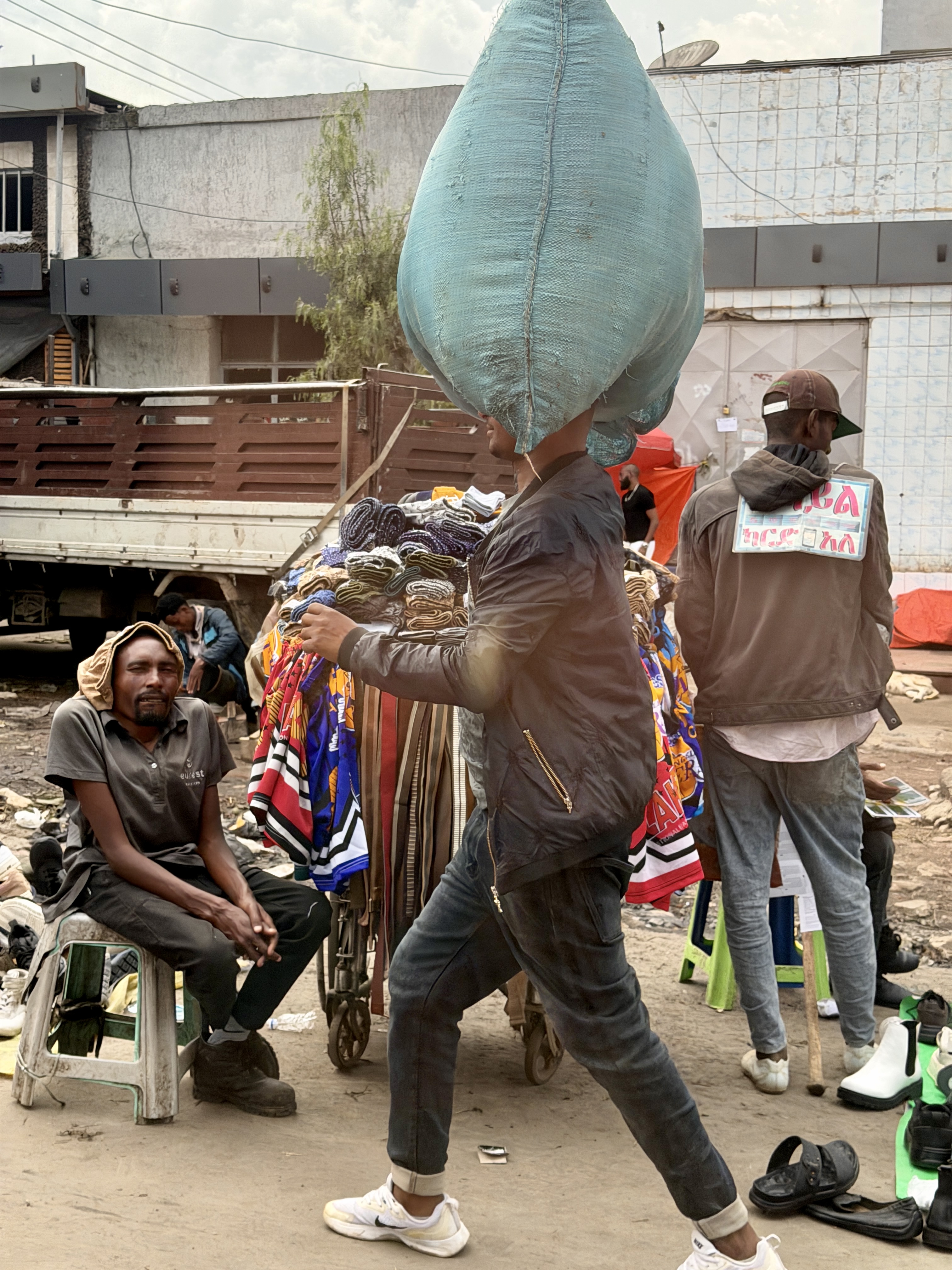
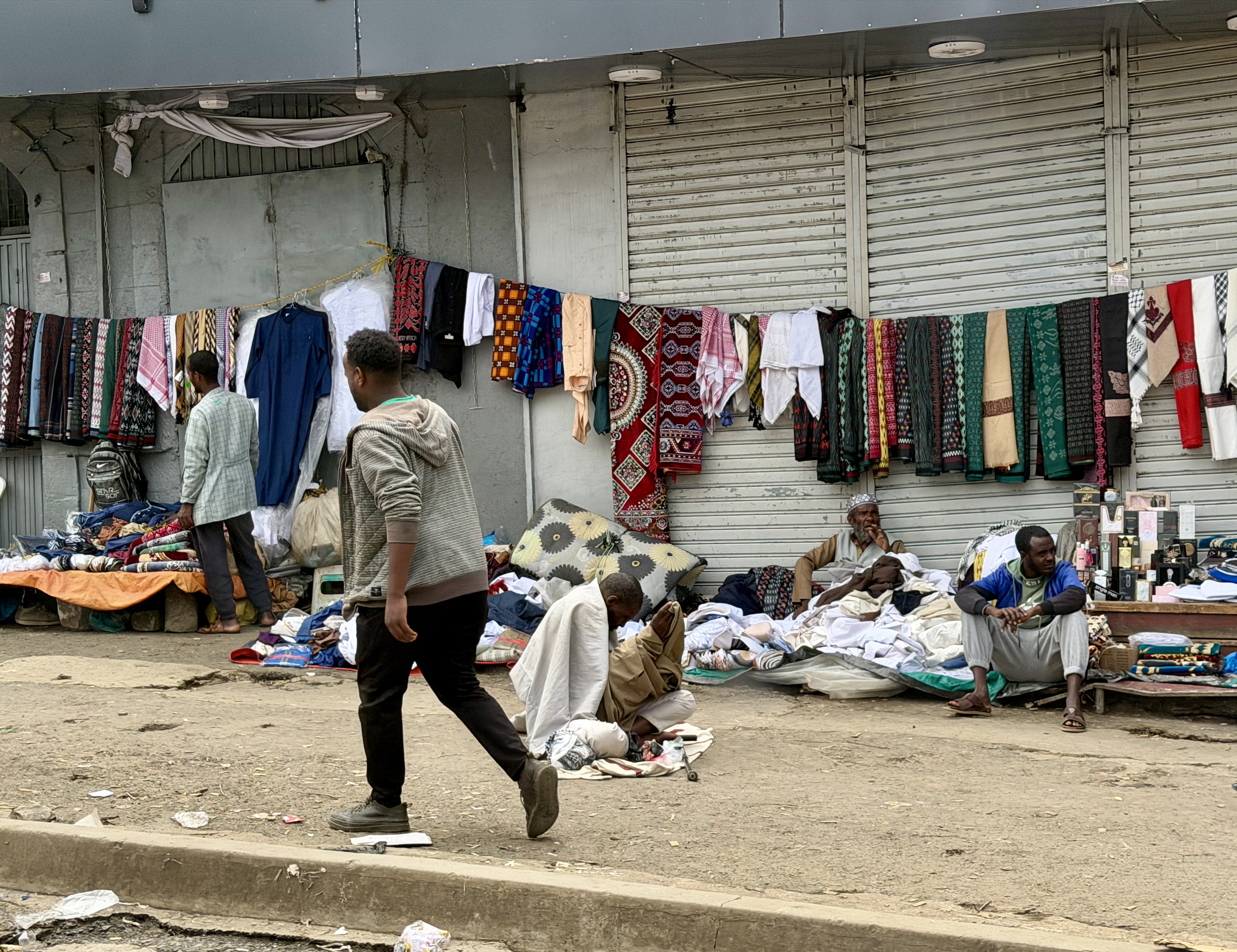
After lunch, Henok expertly drove us through the crowds at the Merkato, an expansive open-air market where, Teshome says, you can buy pretty much anything. From what I saw, he’s right!


Final Impressions of Ethiopia
I’m thrilled to have had the opportunity to visit Addis Ababa. There’s a large Ethiopian ex-pat community in the DC area, and those whom I’ve met have been uniformly warm, kind, and gentle. The same holds true for the people I’ve met here. Granted, they’re mostly part of the hospitality industry, but Addis Ababa genuinely seems like a friendly, welcoming place.
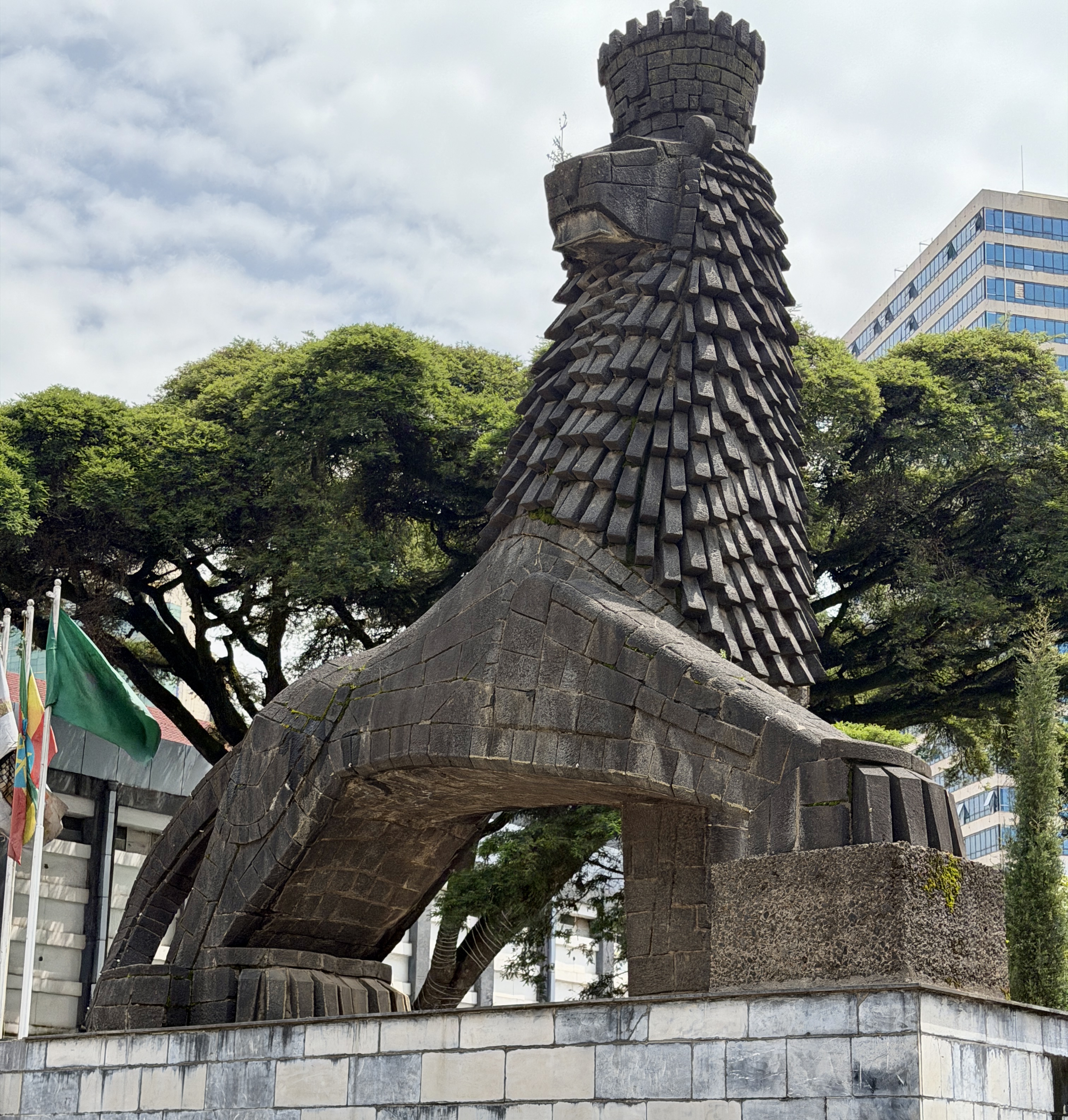
Itt’s true that the city has a significant petty crime problem, I never felt unsafe. Unfortunately, other parts of the country, particularly the north, are experiencing a great deal of violence. I hope this situation resolves peacefully and that all Ethiopians can enjoy peace and security.
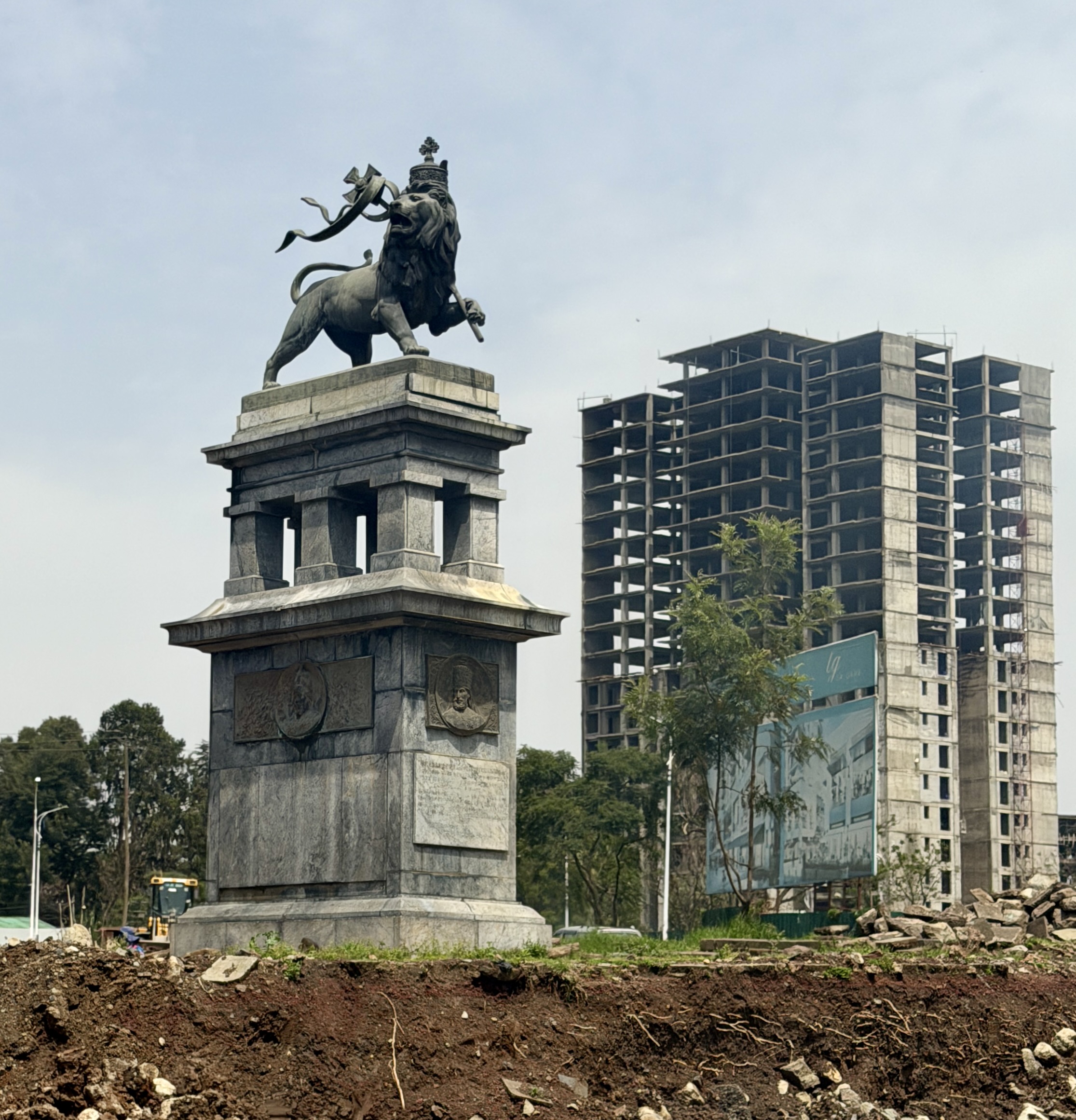
I fly to Nairobi tomorrow to begin the safari portion of my trip. So, for now, amesegenalo (thank you) for reading this post and chaw for now. (Chaw comes from the Italian ciao; as you can see from “merkato” and “chaw,” while Italy’s would-be colonization of Ethiopia failed, linguistic imperialism lives on.)

 PuffinlessTravel
What a wonderful start to your trip. I love that frankincense and myrrh are included in the coffee ceremonies!