Over the past few years, I’ve visited several spots that played a transformative role in world history: the D-Day beaches, the Galapagos Islands, and Hiroshima immediately come to mind. Yesterday, in the sleepy town of Wittenburg, I stood in front of a door where a single act by a single man triggered global repercussions that continue today: the door where, half a millennium ago, Martin Luther posted his 95 Theses.
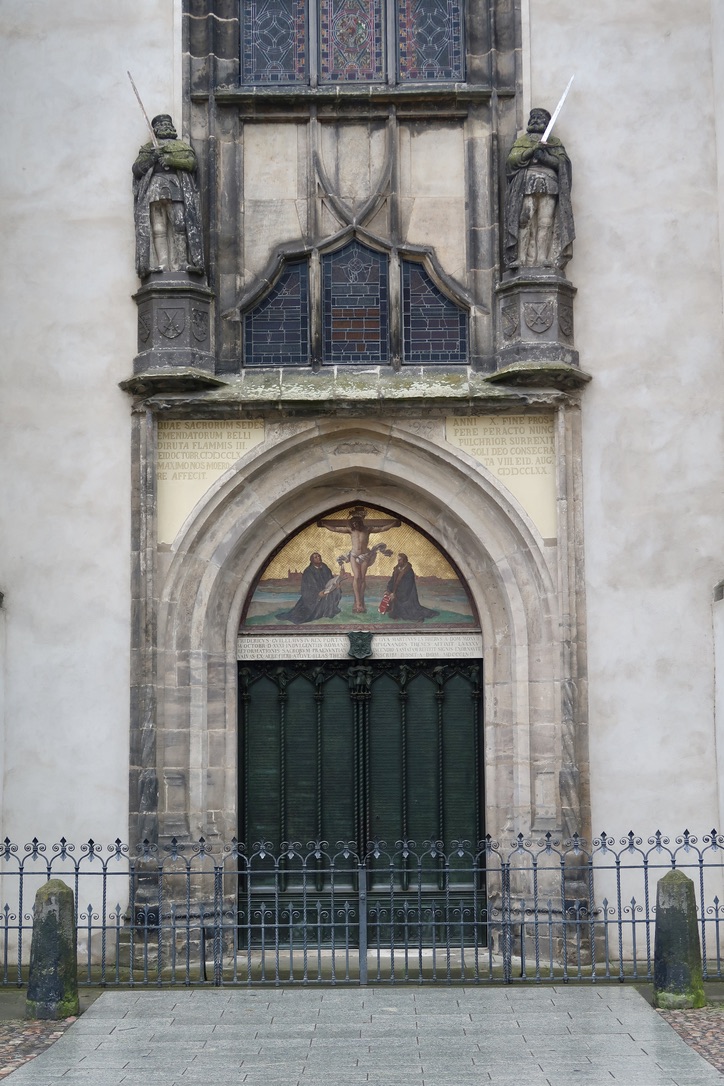
That act – a theology professor’s protest against the sale of indulgences by the Church – lit the fuse of the Protestant Reformation, spawned countless religious wars, redrew the map of Europe, and ultimately resulted in the profusion of Christian denominations existing today. And Luther himself, who became viciously anti-Semitic after Jews did not join his new movement, provided fodder used centuries later by the Nazis to justify the Holocaust.
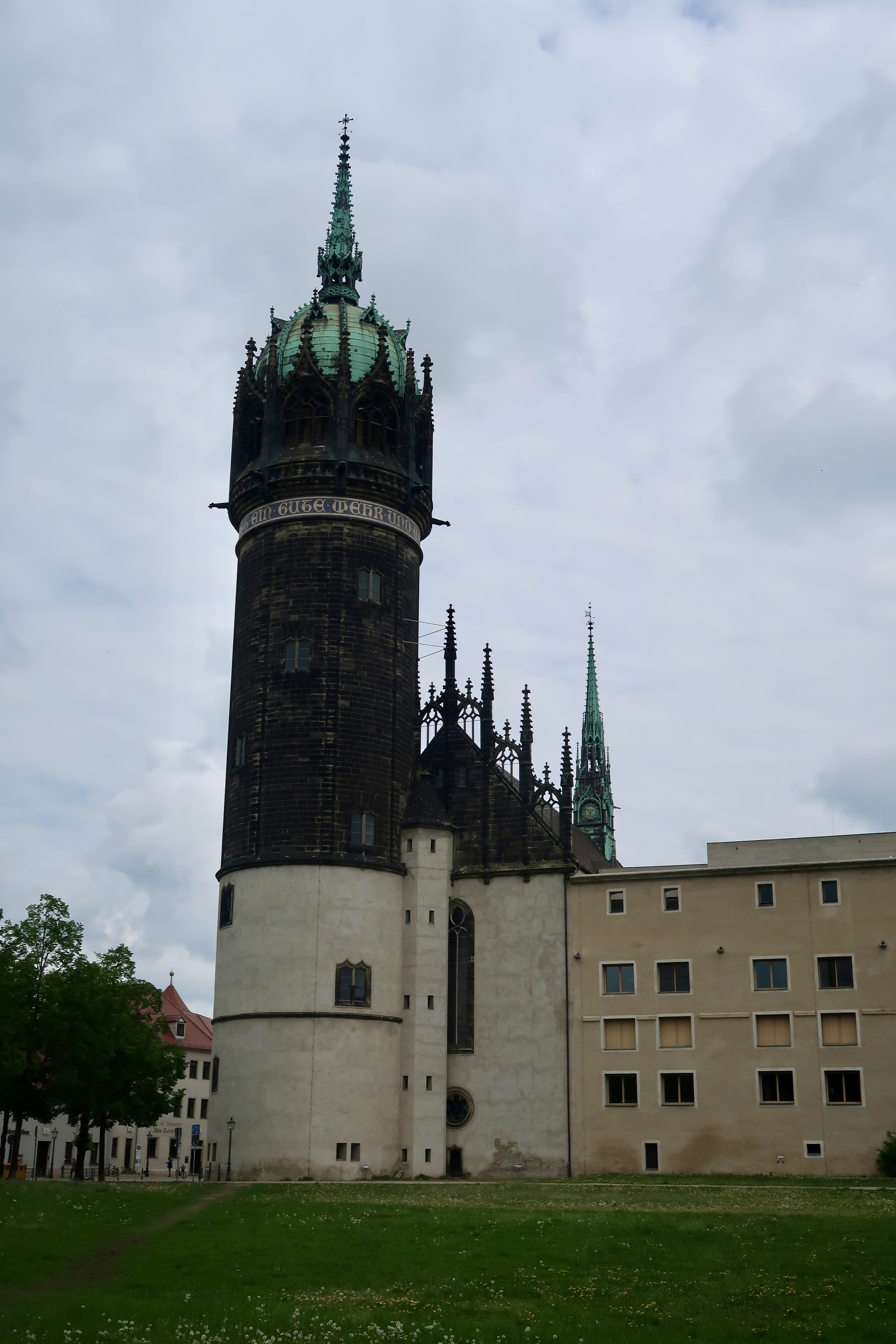
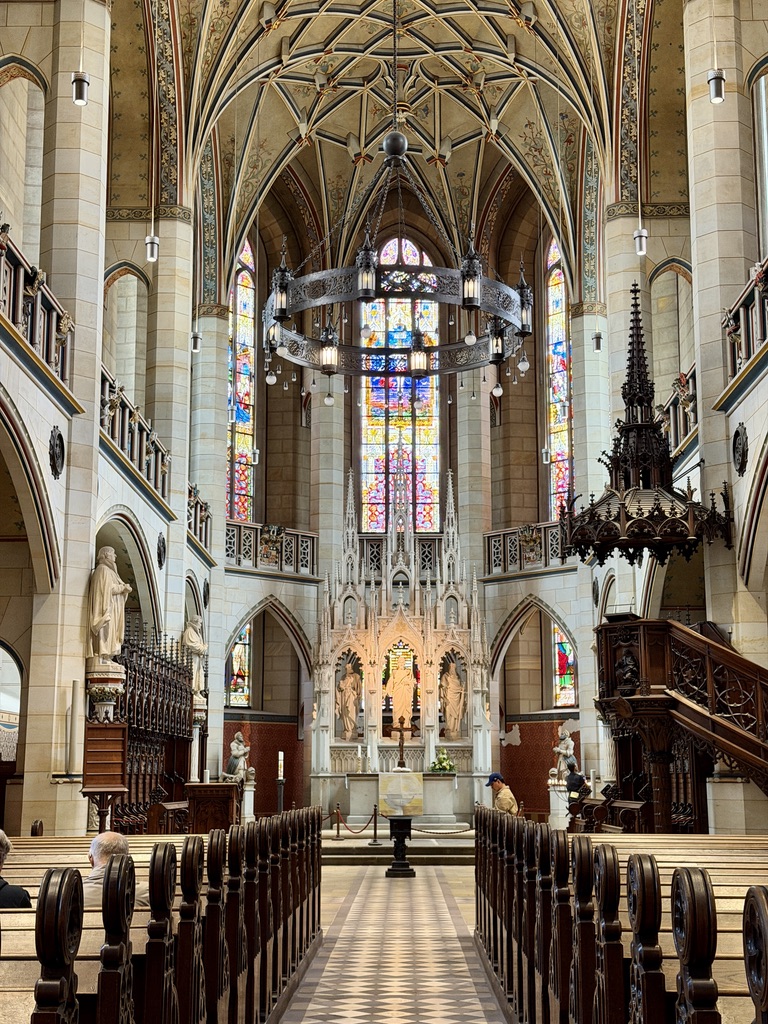
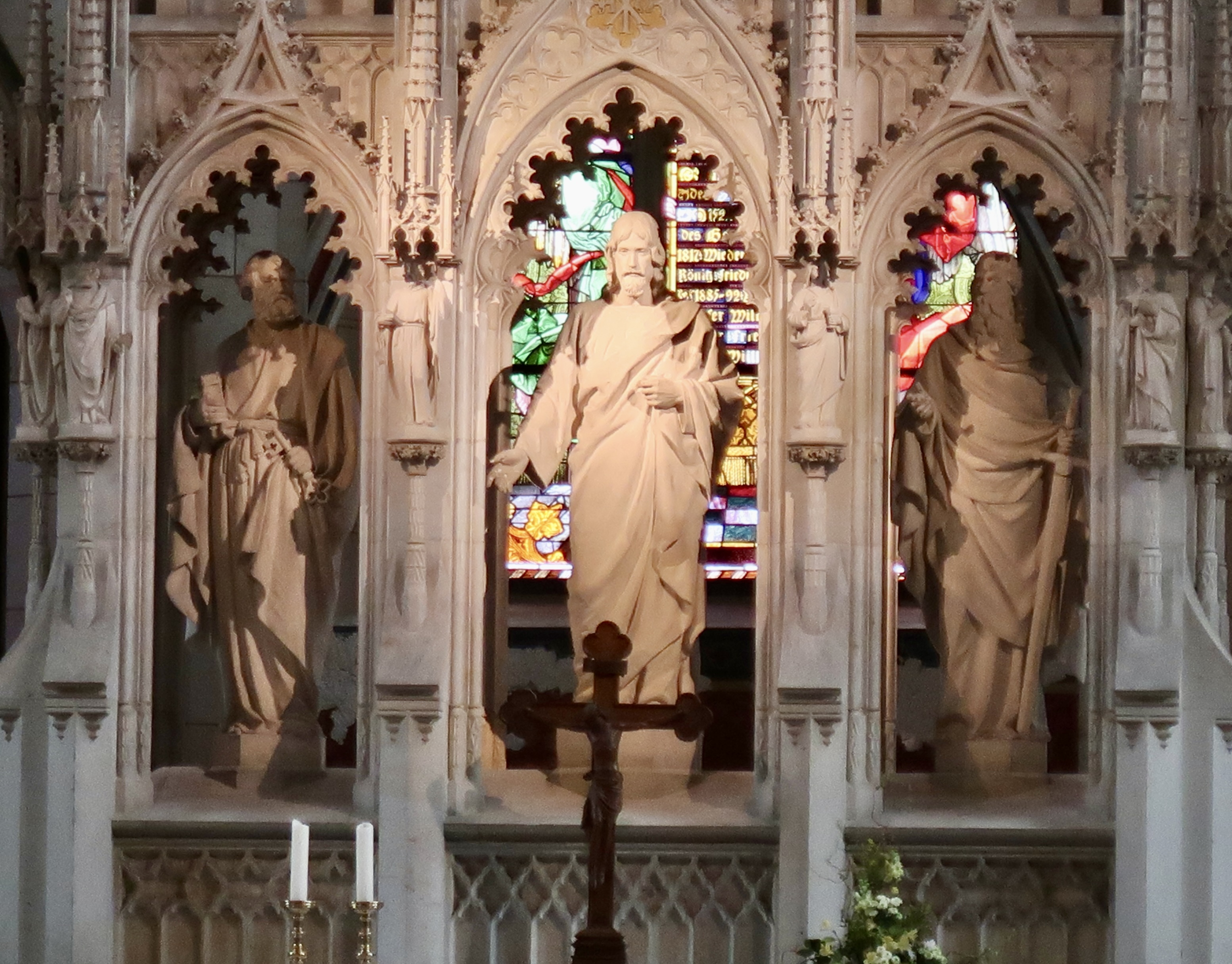
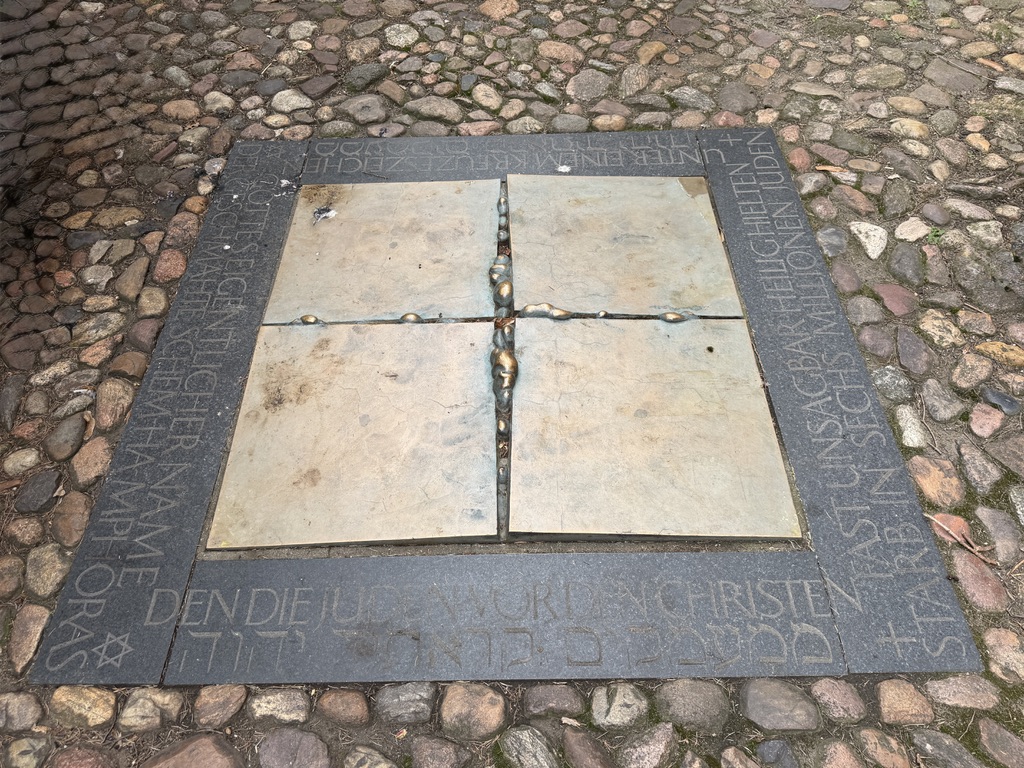
The door in question – today a brass portal – hangs on the side wall of the Schlosskirche (opened in 1511), where we began our tour yesterday. It’s a cavernous building lined with statues, plaques, and coats of arms memorializing people and places that supported the Reformation. Luther’s tomb is inside, as is that of Philip Melanchthon, a collaborator of Luther’s who was the intellectual leader of the Reformation.
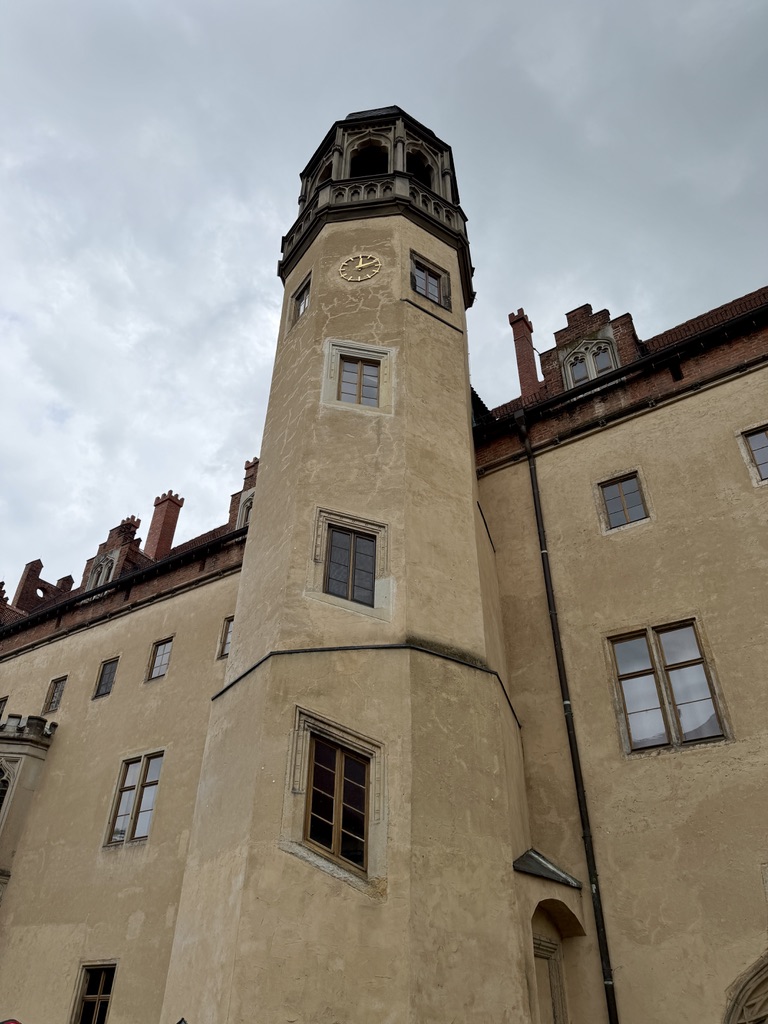
Luther’s residence, a former monastery, is not far away, as are the houses of Melanchthon and the celebrated painter Lucas Cranach the Elder, who portrayed the leaders of the Reformation in oil and canvas.
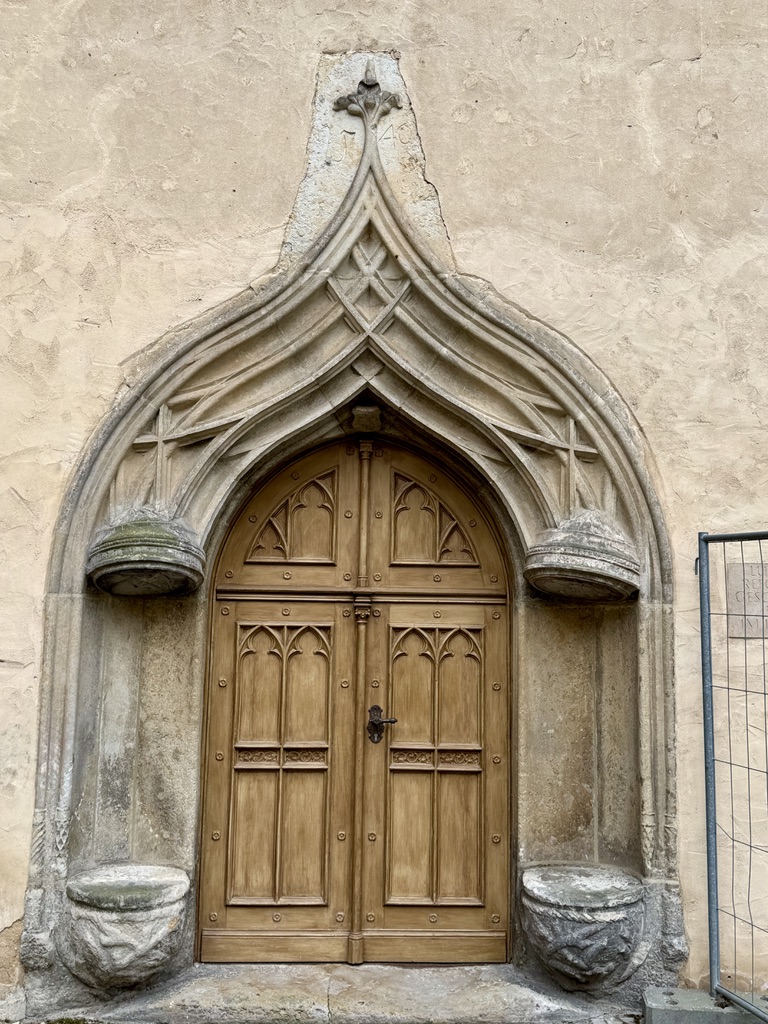
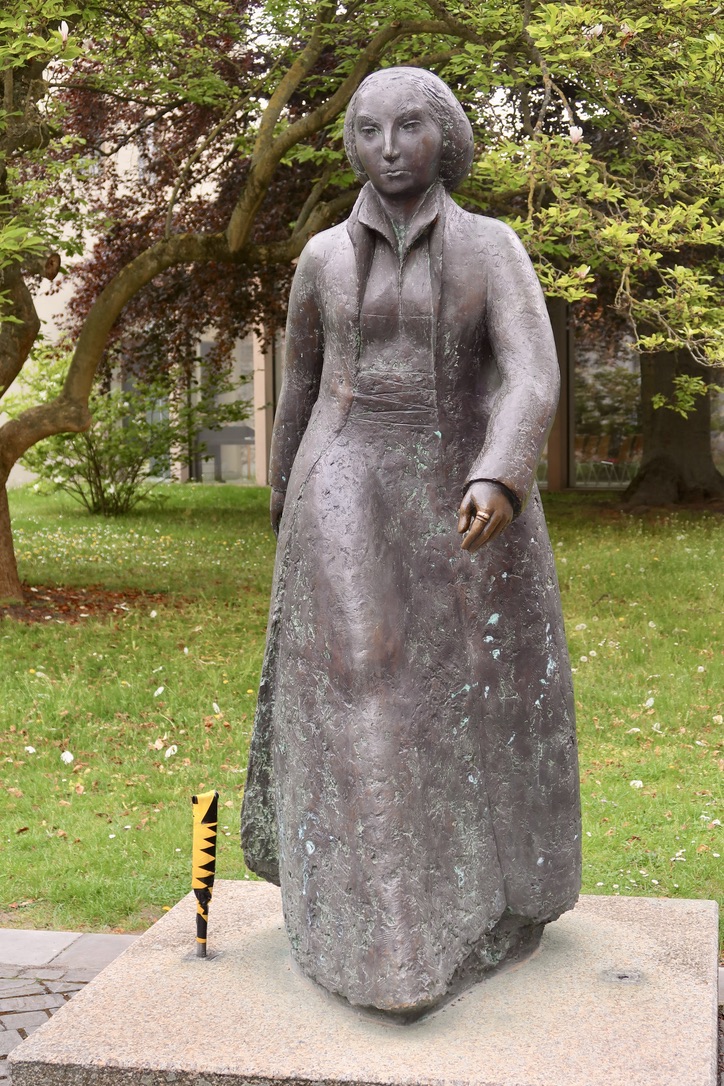
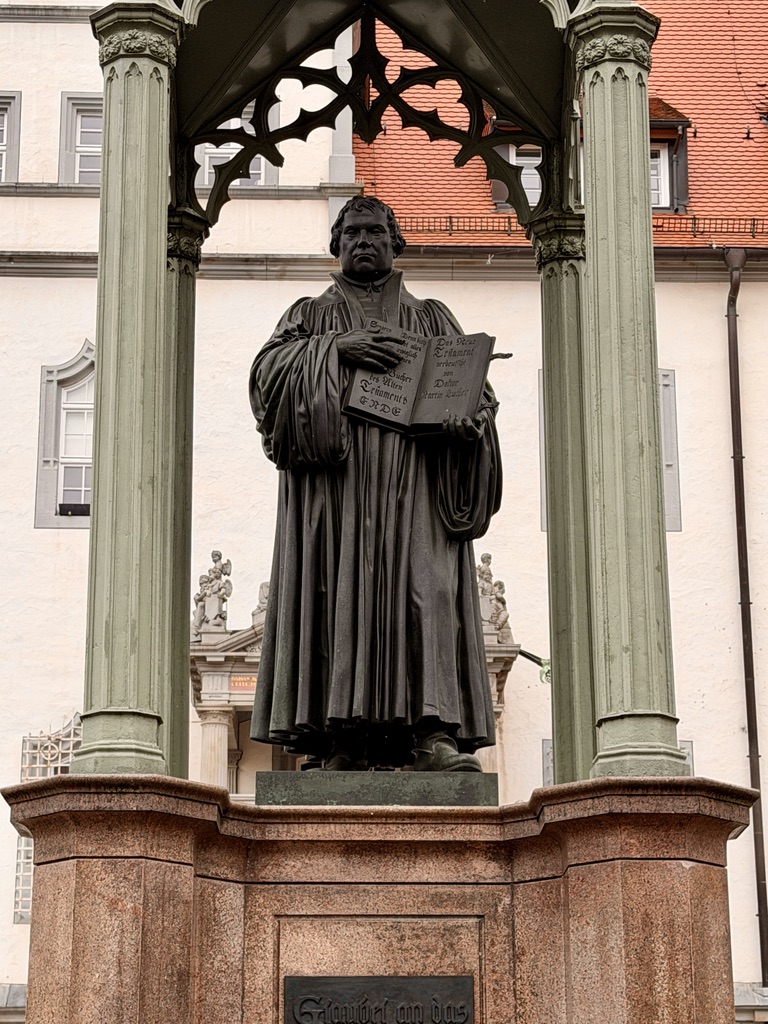
We also visited the Town Church (13th century), where Luther preached 2000 times and where he married his wife, Katharina.
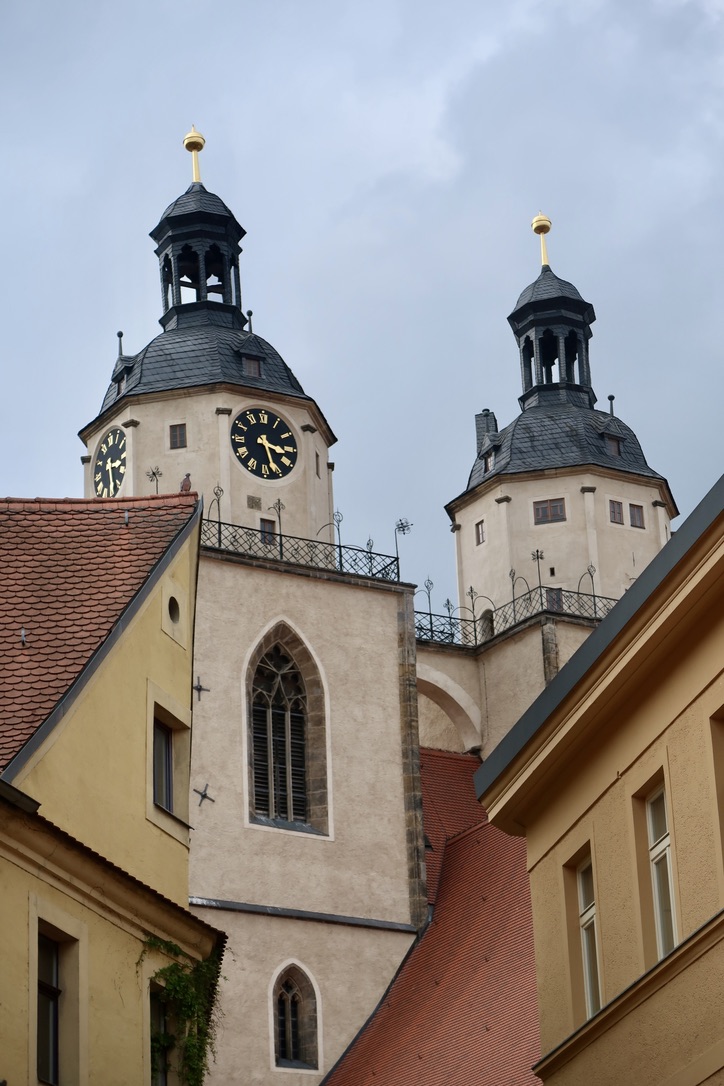
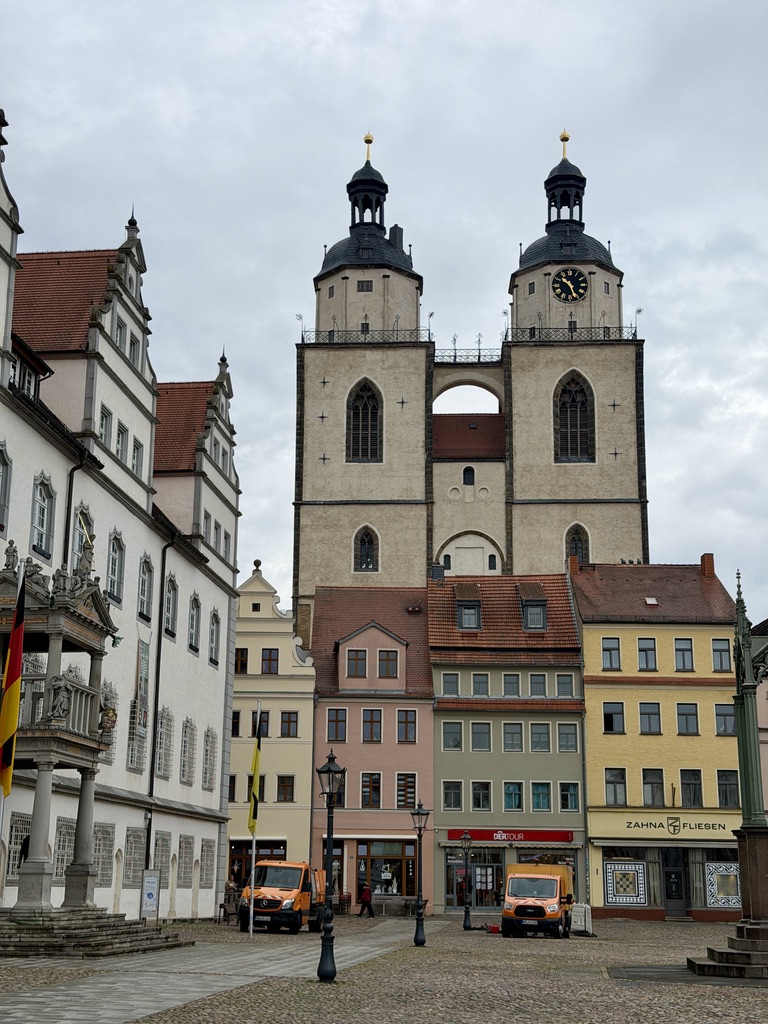
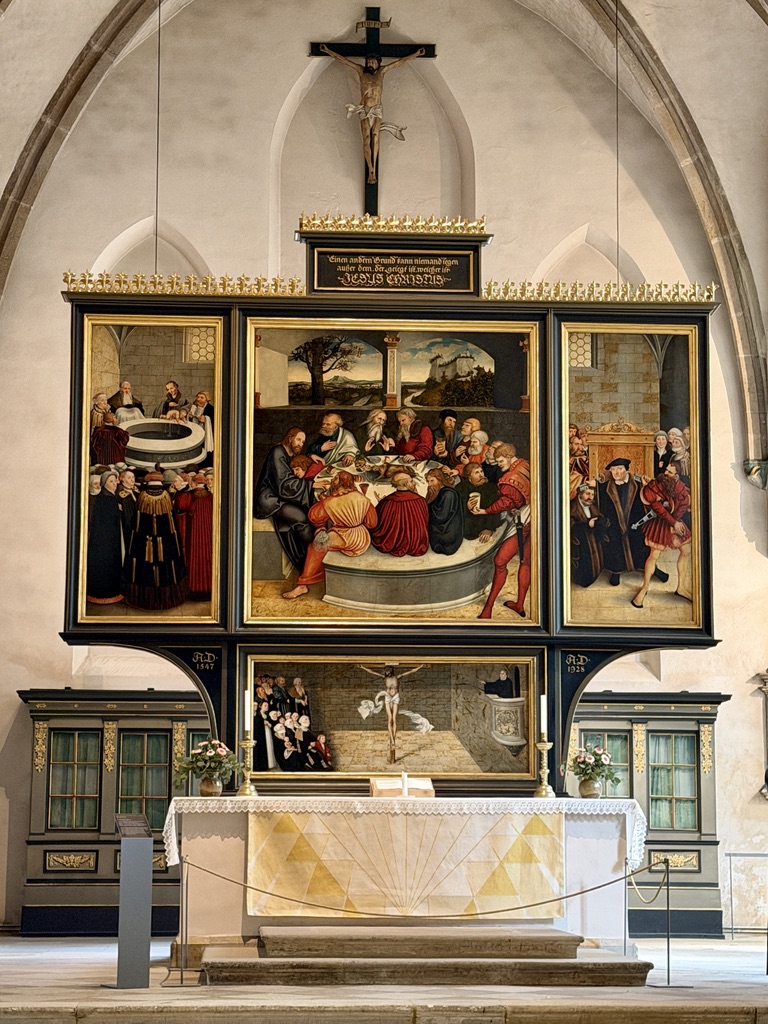
On the south exterior wall of the Town Church, there’s a Judensau, a highly offensive image of a Rabbi looking under a sow’s tail while Jewish children suckle from its teats; the image became an emblem of anti-Semitism that persisted through the centuries. Today, a plaque in the ground in front of the image acknowledges that, during the Holocaust, six million Jews were murdered “under the sign of the cross.” In 2022, Germany’s highest court rejected calls to remove the Judensau, noting that the Church had placed it in historical context and condemned it. Personally, I do not understand how such a hate-filled symbol can be explained away in this manner, particularly as anti-Semitism is once again burgeoning worldwide. It should be removed and, if not destroyed, then placed in a museum of tolerance where it, and perhaps similarly destructive tropes against other ethnic groups or religions, can be displayed in a context that emphasizes the need for respect and brotherhood.
Enough said for now.
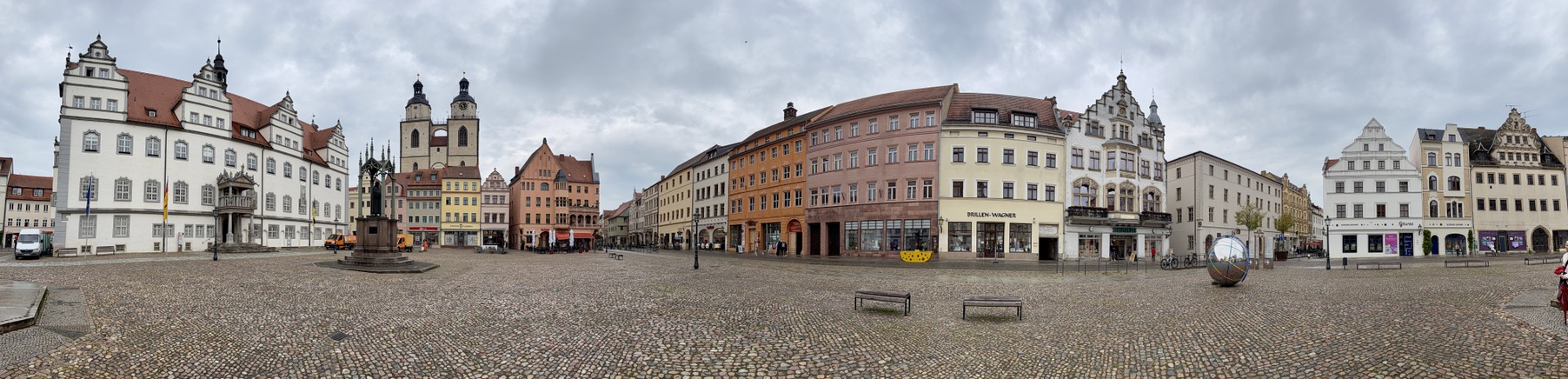
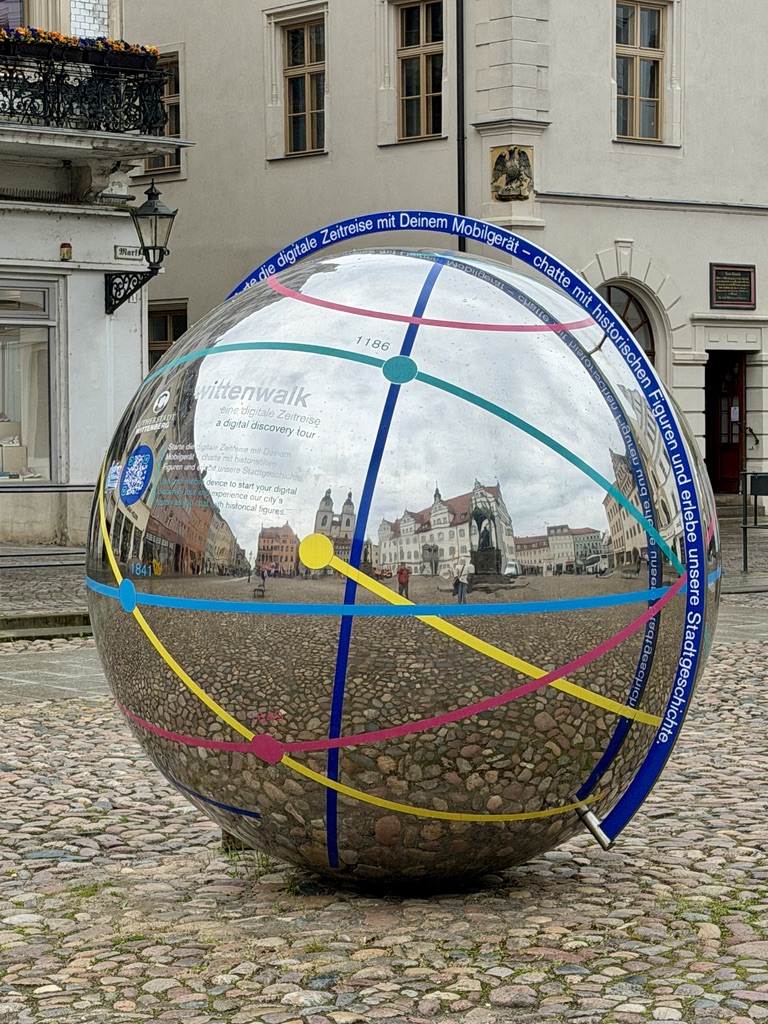
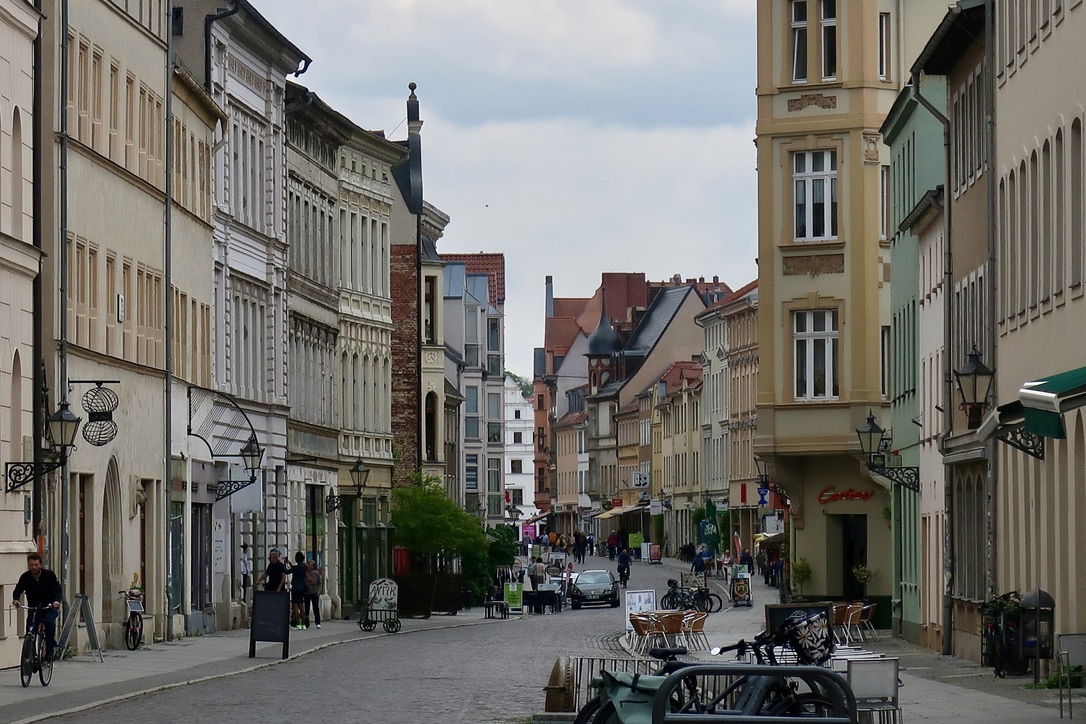
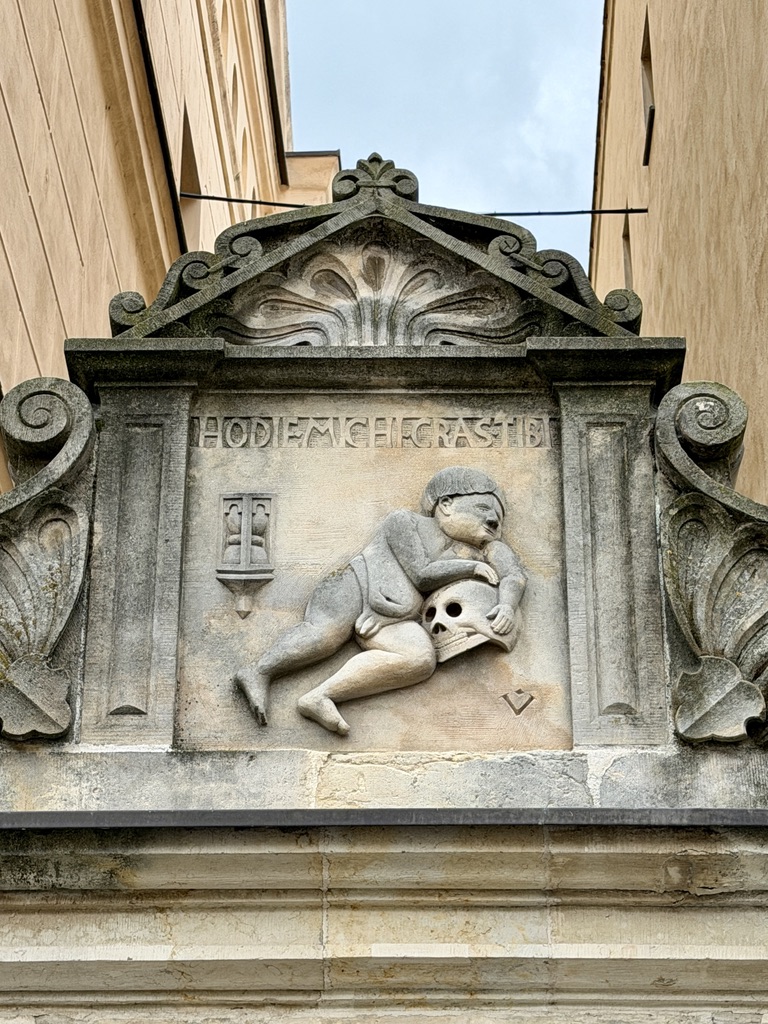
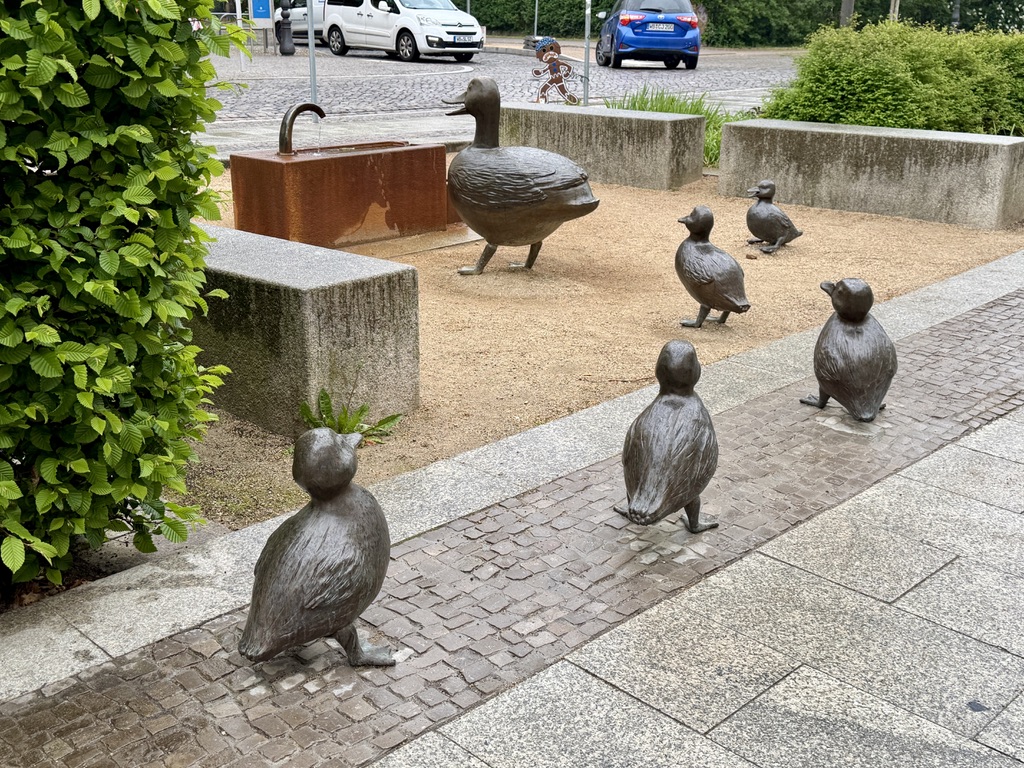
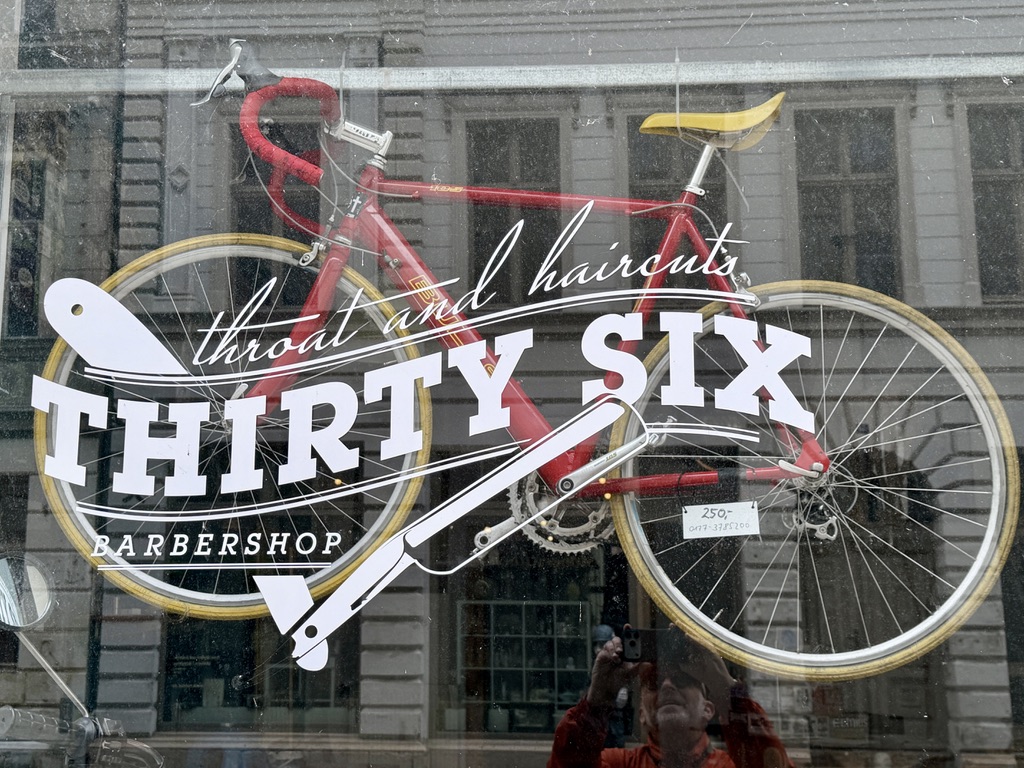
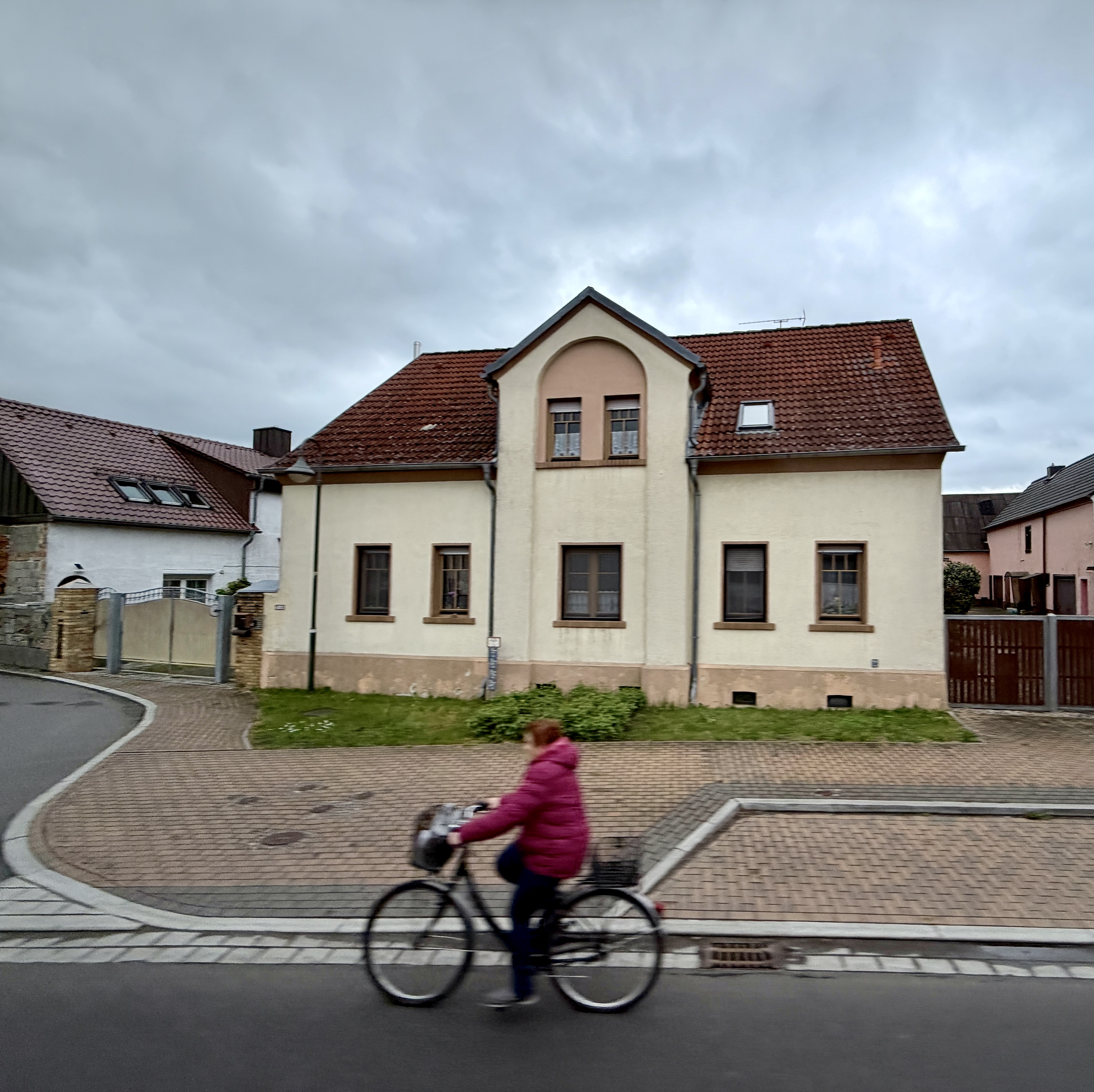
Despite Wittenburg’s outsized role in world history, it’s a tiny, quaint, frequently picturesque town. I’ll conclude this part of the post with some photos taken while walking the town’s cobblestoned streets.
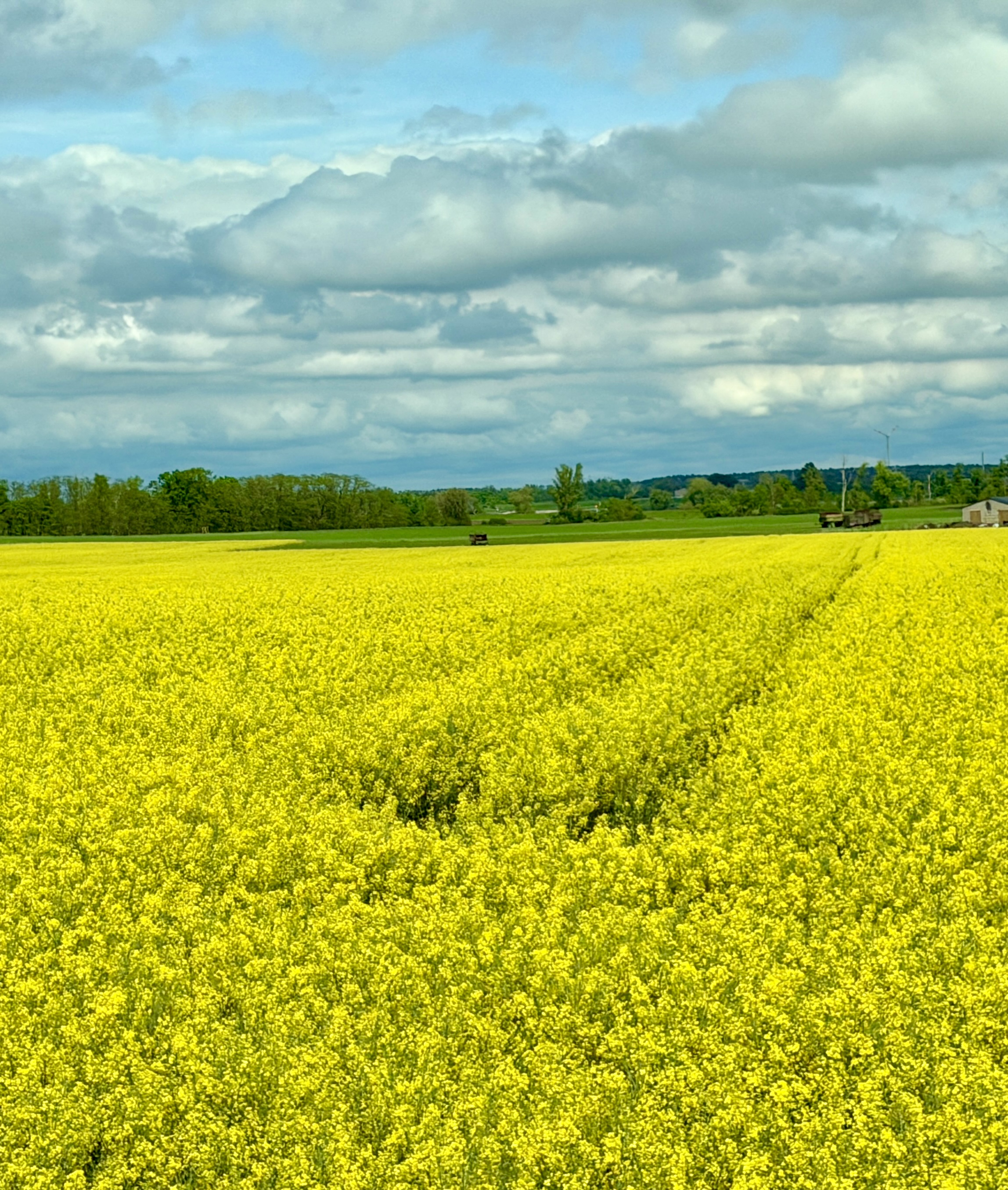
After a leisurely morning on Wednesday, including an excellent presentation about modern Germany by CJ, our cruise director, we headed to Torgau this afternoon. Along the way, we passed golden fields of rapeseed, postage stamp-sized villages, and ancient woods.
If not for one historical event, Torgau would be just another charming, tidy Renaissance-era town with a stunning castle and starkly majestic Lutheran church: worth visiting if you’re in the area, but not a draw in its own right.
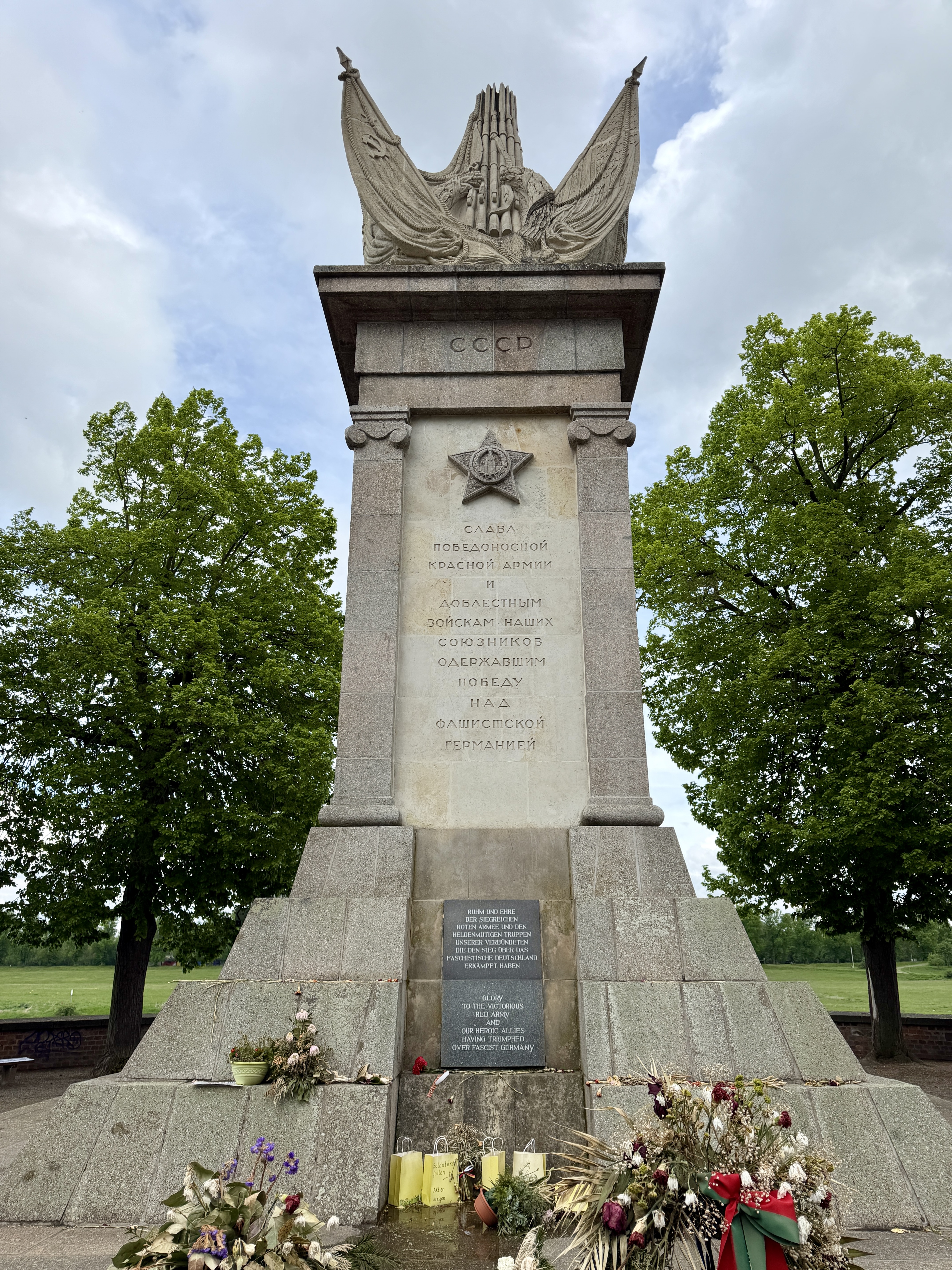
Specifically, Torgau is where US and Russian troops met in April 1945 during their respective marches through Germany. There’s a monument marking the occasion – erected by the Russians – which celebrates the Red Army and, if you look closely, gives a nod to the American forces.
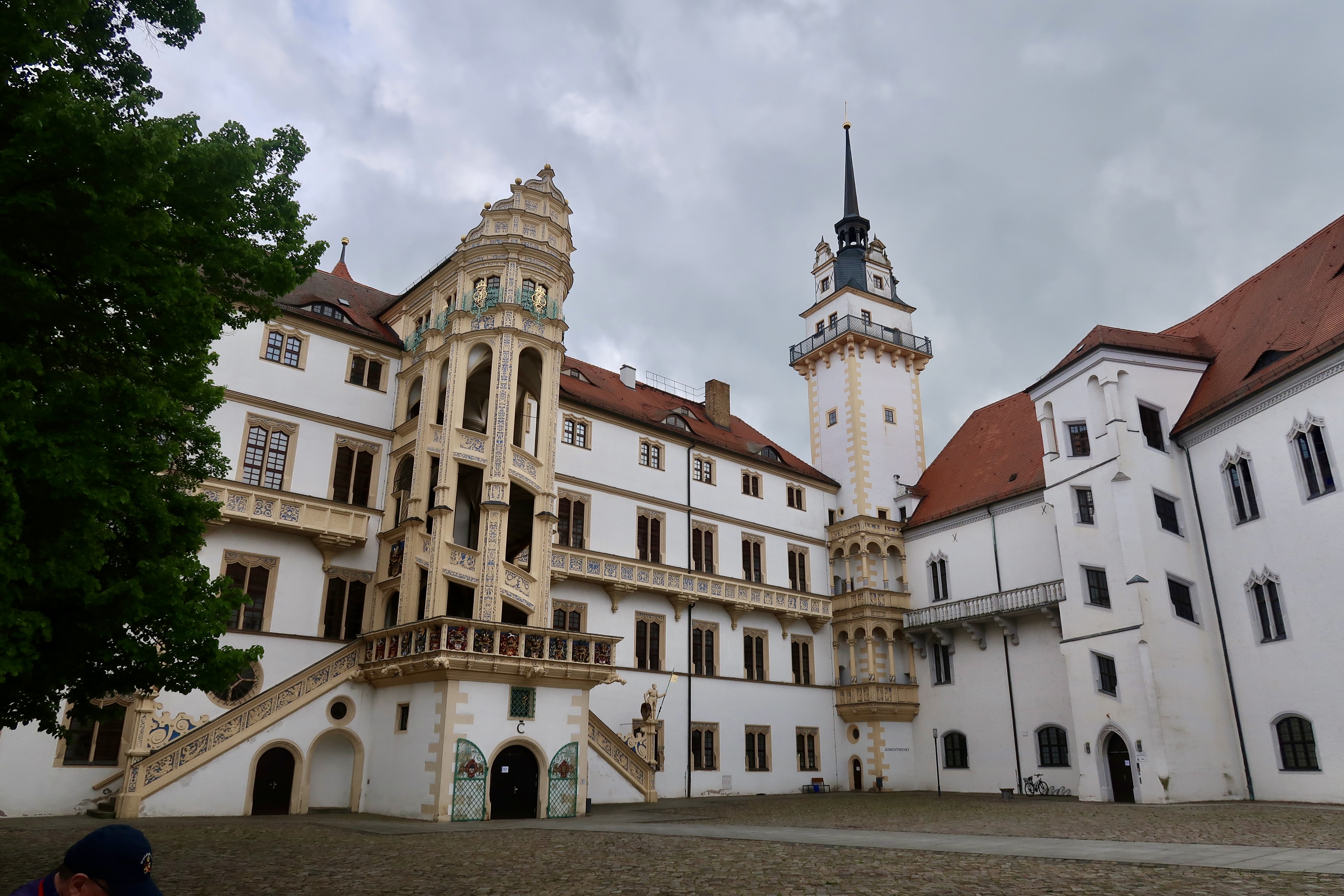
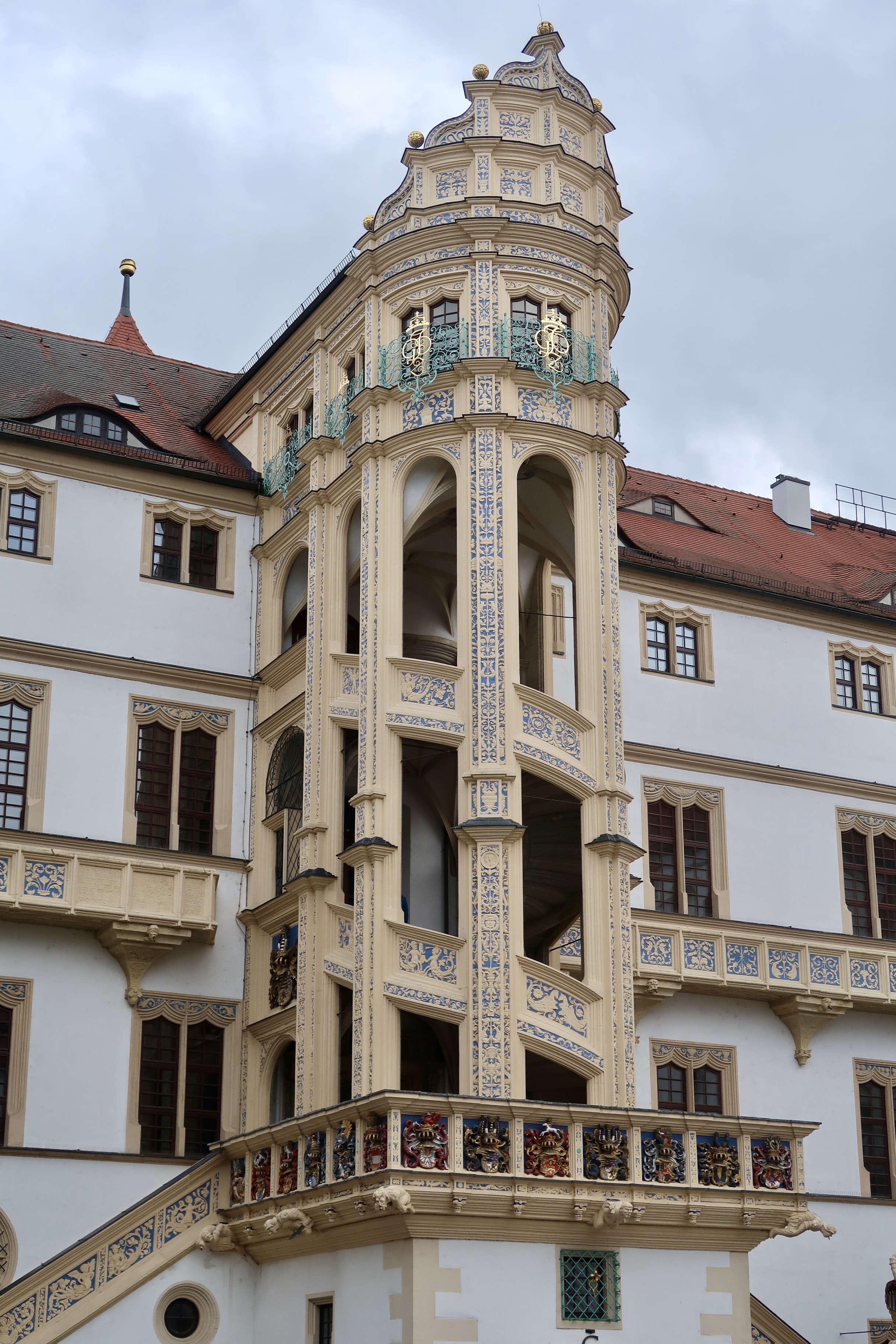
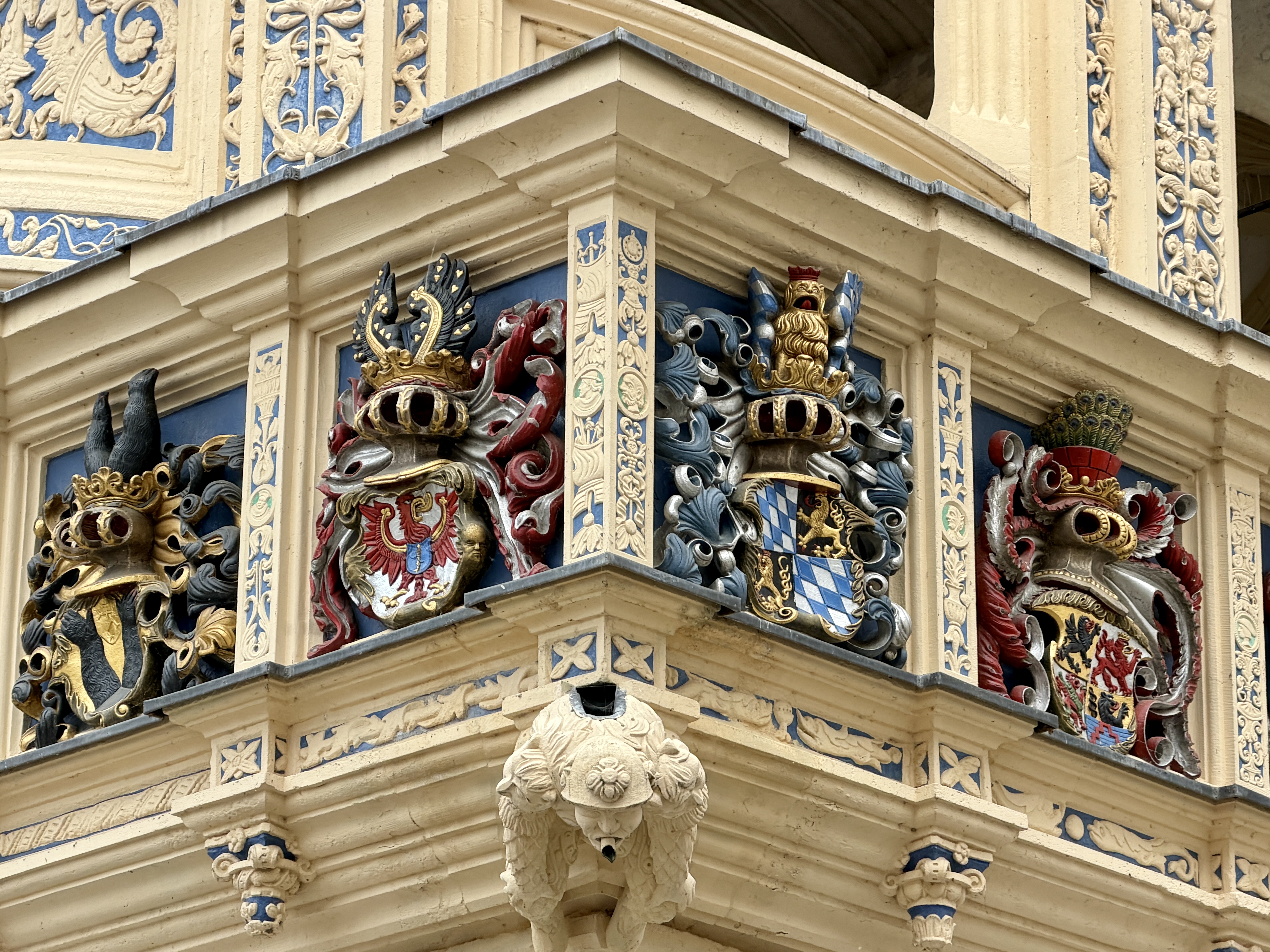
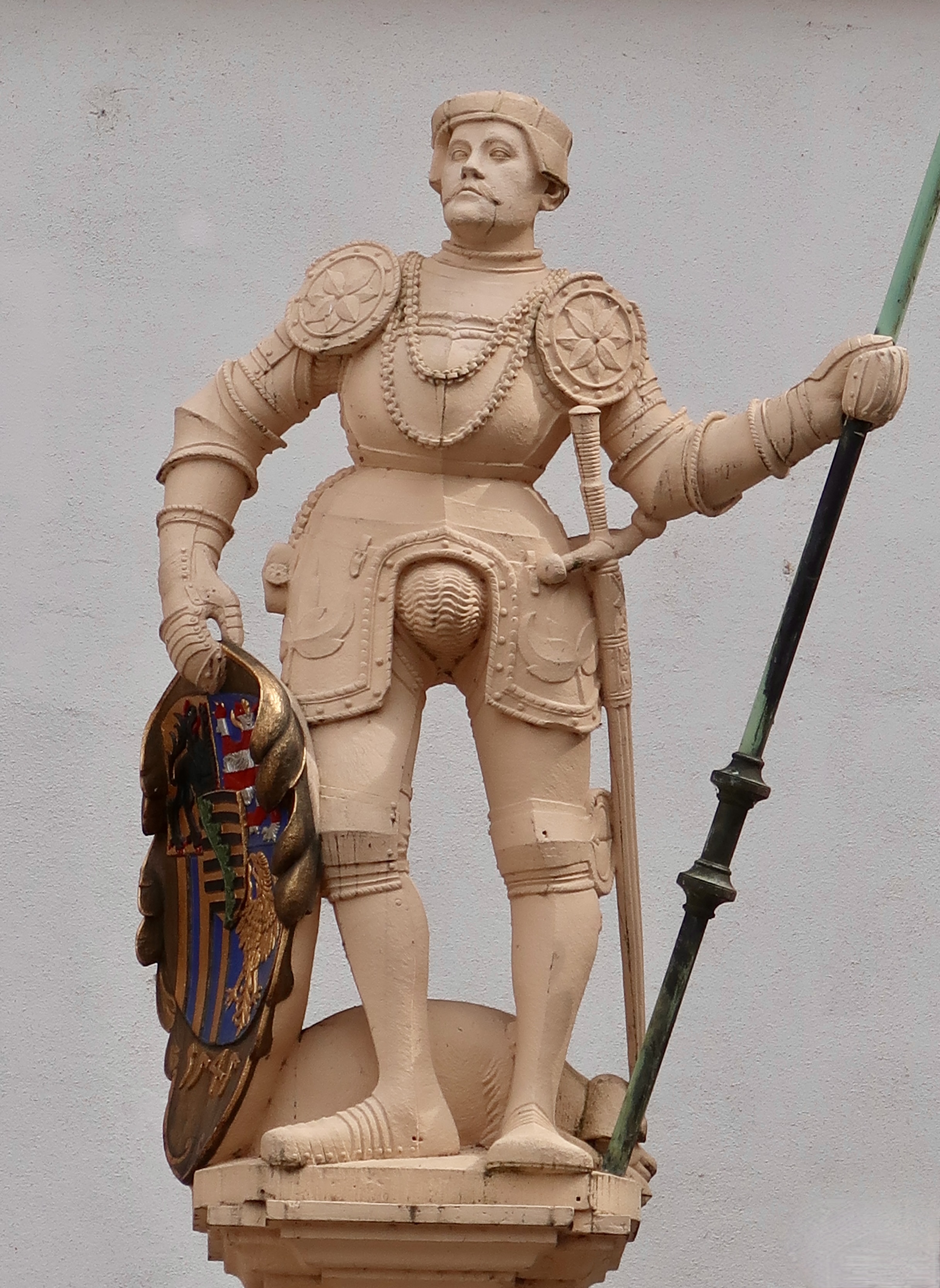
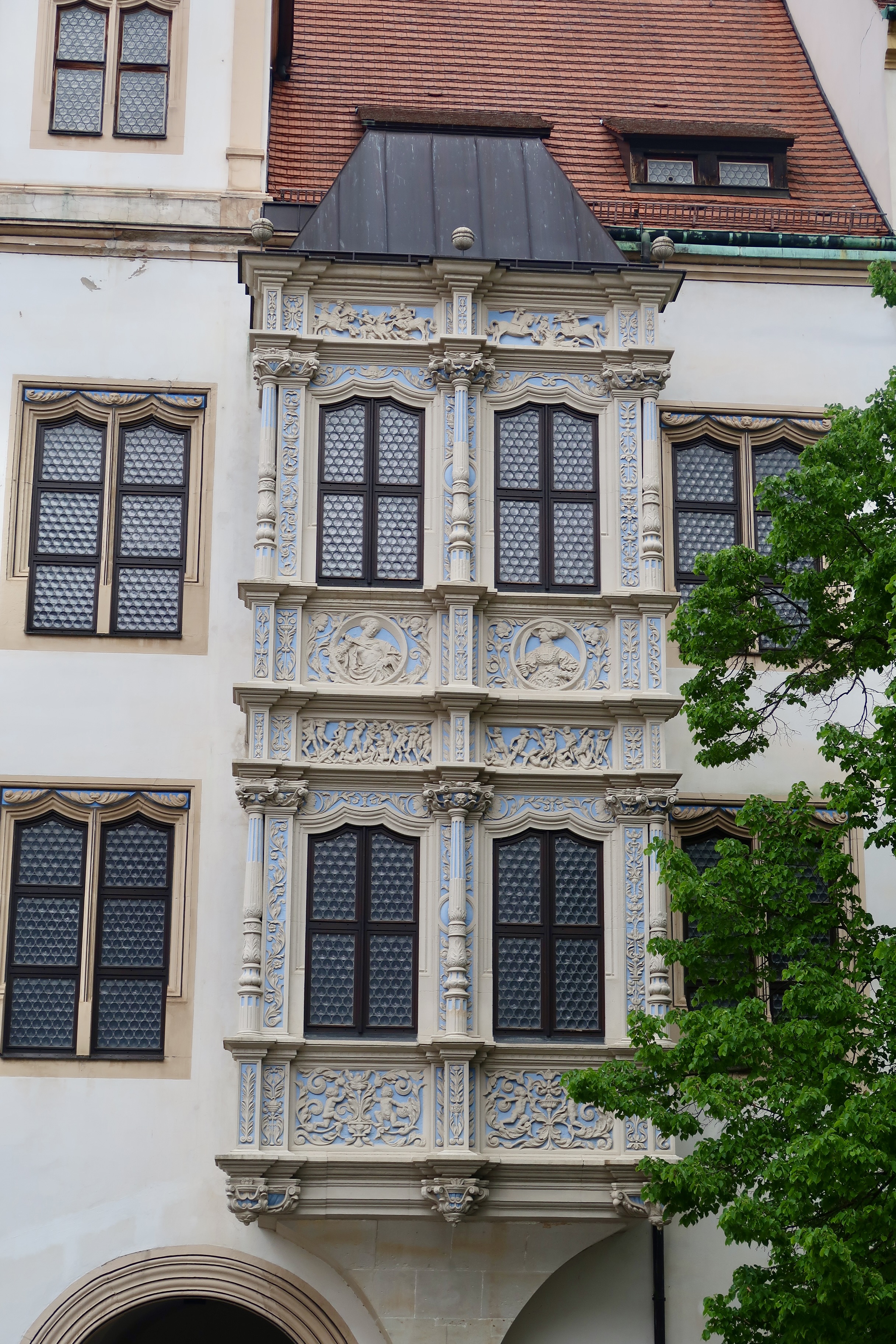
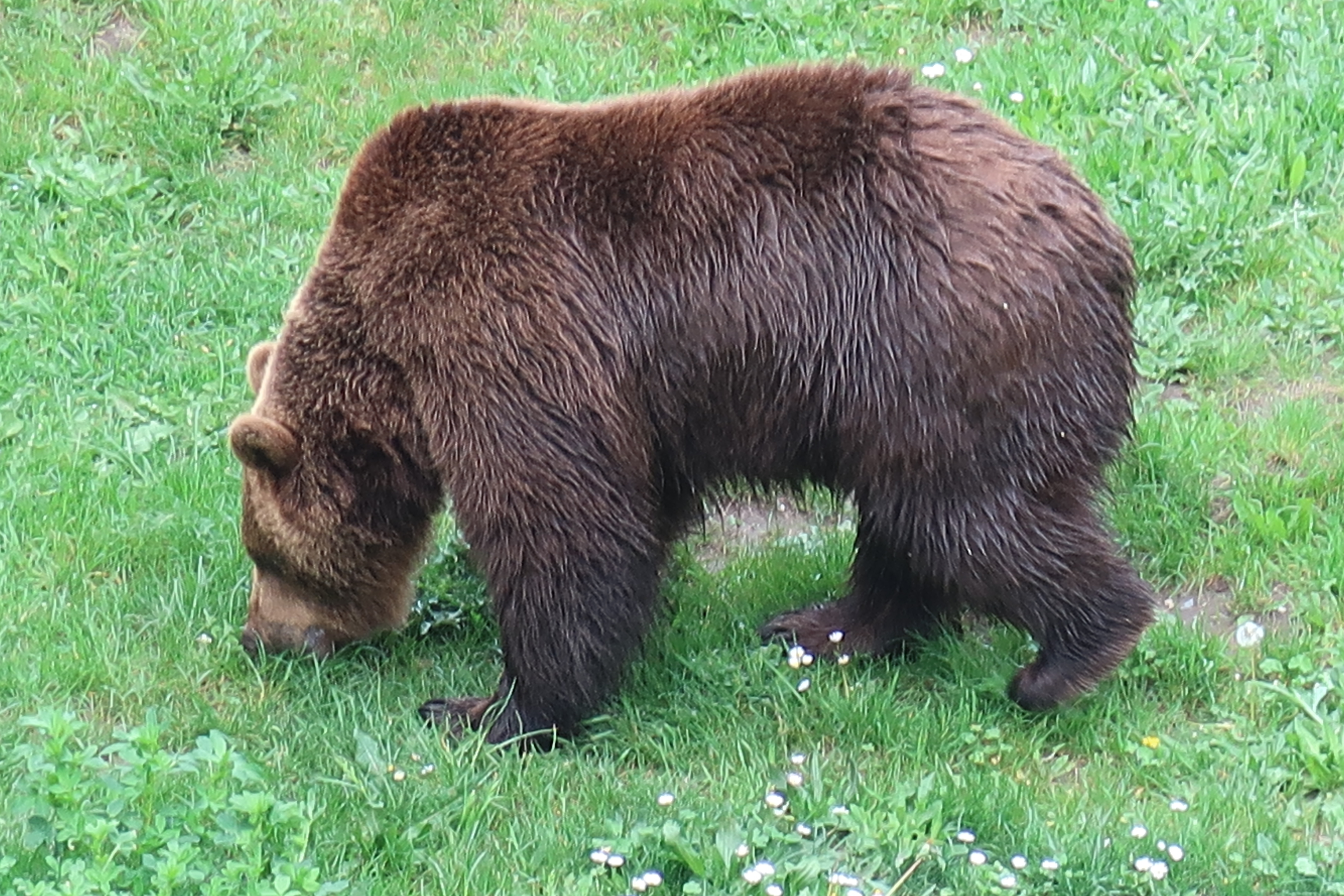
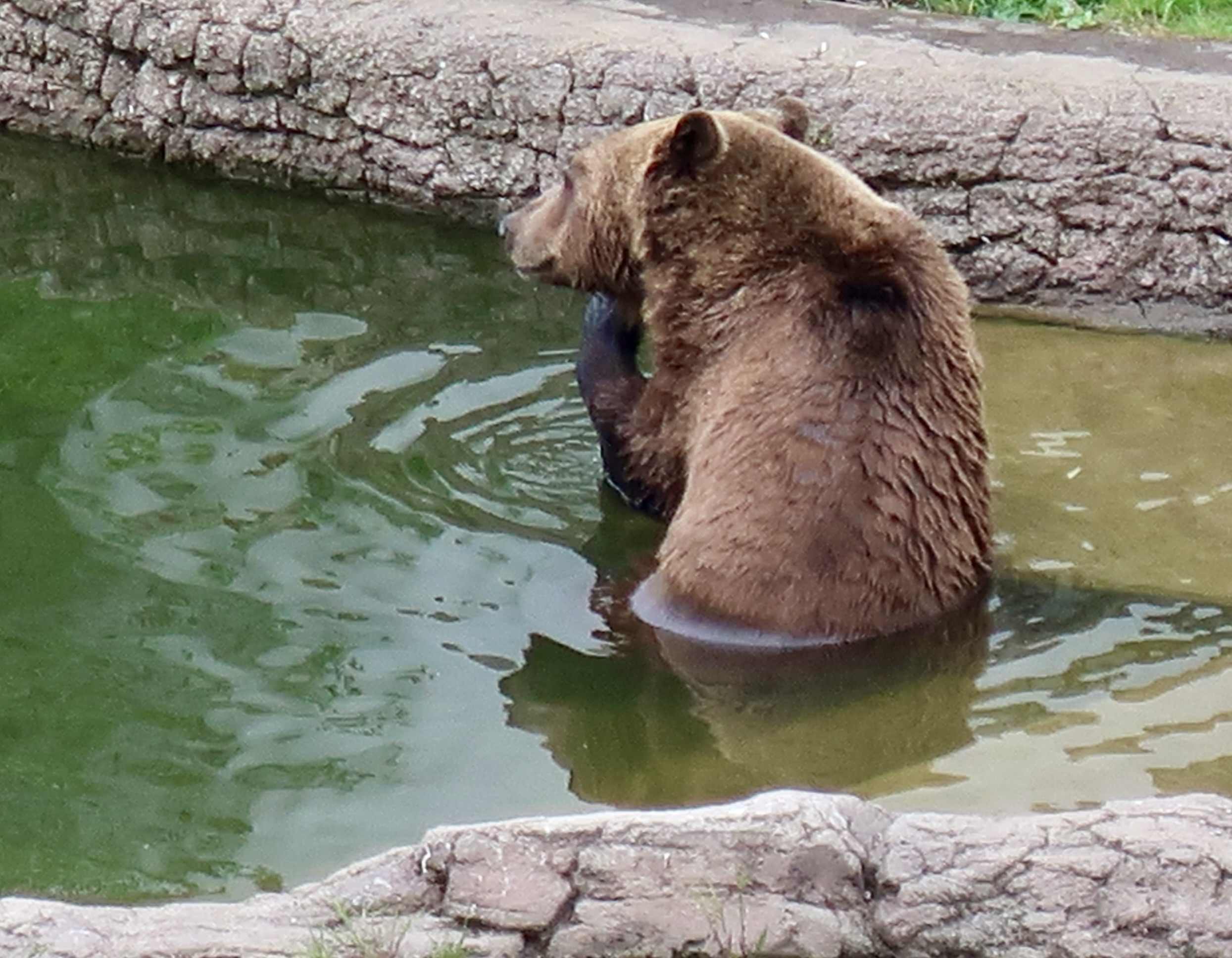
The monument stands across from Schloss Hartenfels, a 15th century castle with a gorgeous winding staircase, decorations reminiscent of Wedgewood, and … two brown bears hanging out in what I assume is an old moat. (Brown bear, brown bear, what do you see? I see an orange-clad, bespectacled old guy looking at me. If that doesn’t ring a bell, you haven’t read a certain book to your grandkids a few thousand times in recent years.)
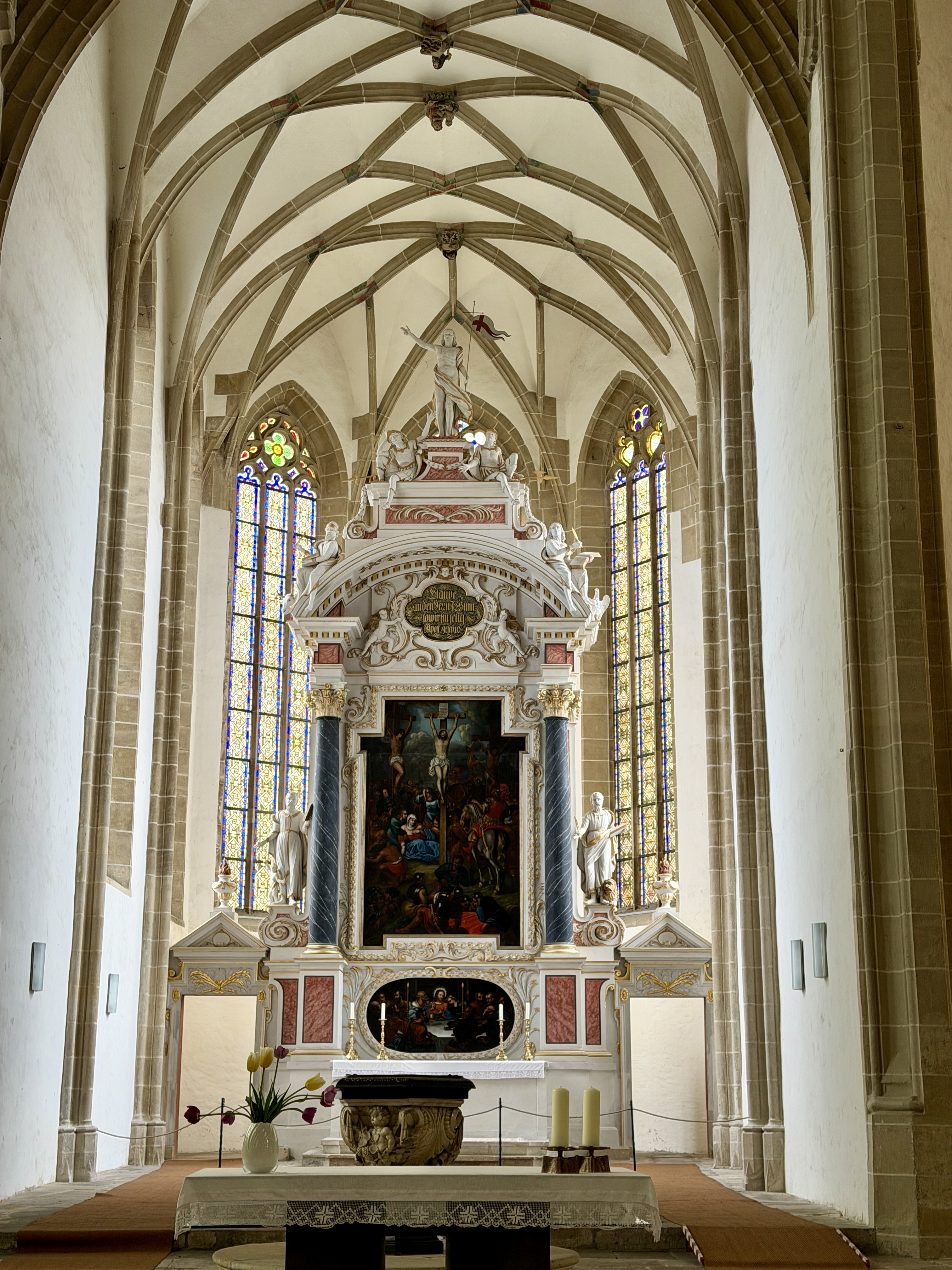
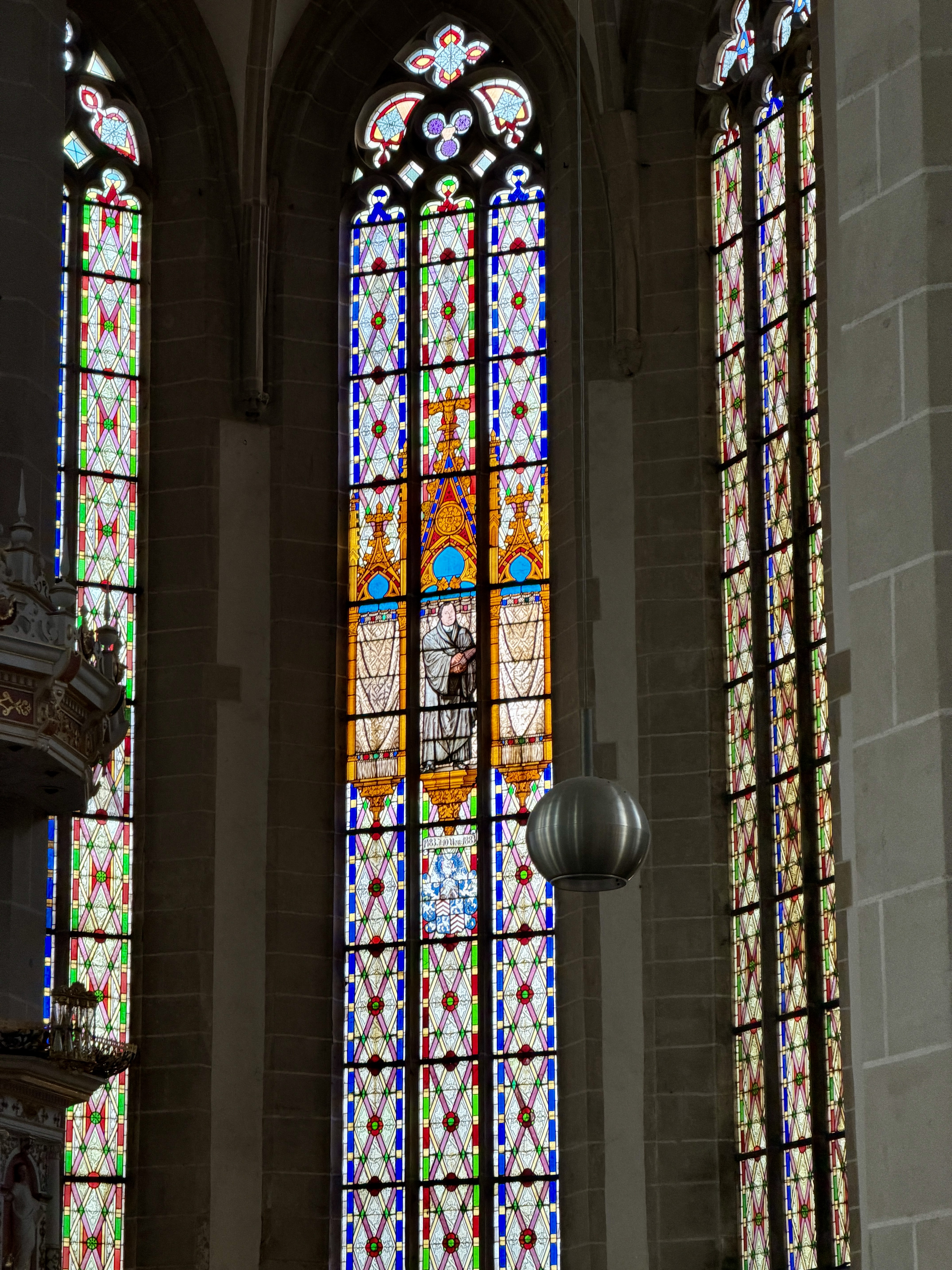
Half a block from the castle, the Stadtkirke St.-Marien looms imperiously over the cobblestoned streets. Although austere, as is de rigueur for a Lutheran Church, the interior features paintings by Cranach and gorgeous stained glass windows.
Back on the ship, we had a scrumptious farewell dinner, after which I received a wonderful surprise: I was made an honorary member of a Roman Legion. Not the let’s conquer Gaul kind – even better, there’s a group of people from Rome, Georgia (including relatives and friends from St. Louis and Dallas) whom I’ve befriended, who are among the kindest, most genuine, most interesting people I’ve ever met on a trip, or anywhere else for that matter.
As I walked through the dining room, they asked me to join them in a group photo. Although I usually save my thanks for the final post of the trip, I just can’t wait. Being asked to pose with these wonderful folks truly touched my heart! (Fortunately, one of them is a cardiologist.)
That’s all for today. We head to Potsdam tomorrow, followed by a few days in Berlin. I’ll be back in a bit.

 PuffinlessTravel
I share your “No thanks” re: the barbershop sign. Something was definitely lost – or inadvertently gained – in the translation!