Thank you, music. And thank you, Viking, for a well-planned, ultimately uplifting day.
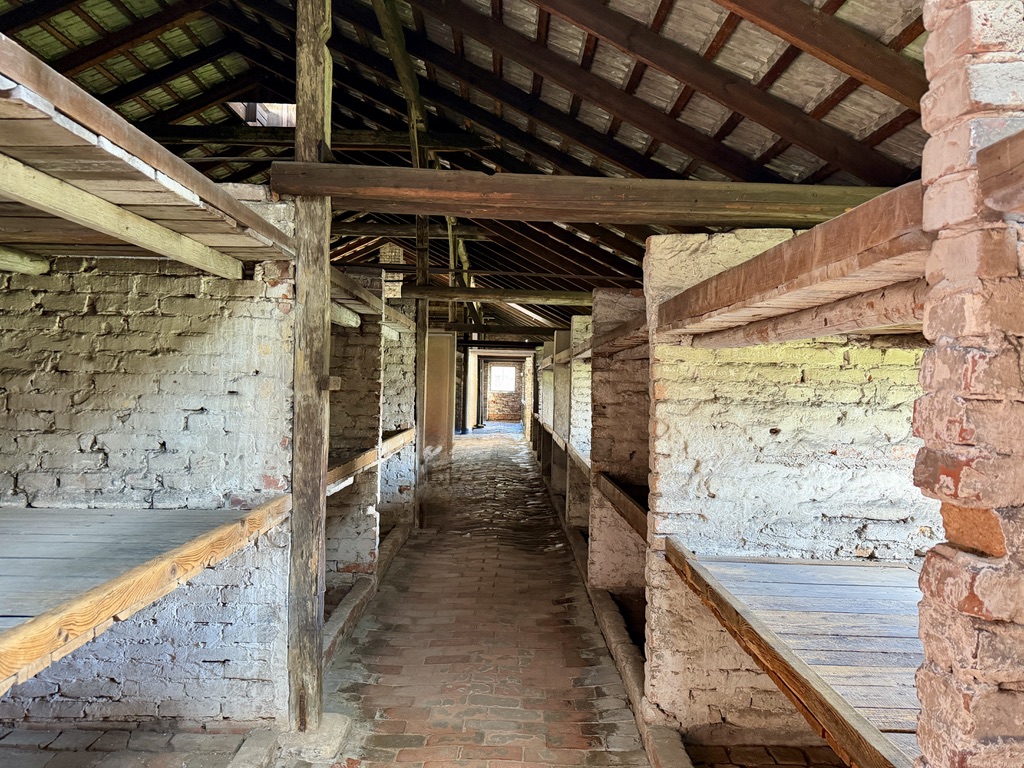
We began the day touring Auschwitz and Birkenau, where a combined two million innocent people – mostly Jews, but also non-Jewish Poles, homosexuals, Roma, and other whose purity or loyalty was deemed insufficient – were murdered by the Nazis.
We ended the day in Krakow’s one-time Jewish ghetto – which the Nazis had intended to preserve as a museum of an eradicated race – eating in a Jewish restaurant across from Poland’s oldest synagogue and listening to buoyant, life-affirming klezmer music. In a nutshell: we began with darkness and ended with light.
I made countless false starts trying to write about today. Nothing new can possibly be said about Auschwitz and Birkenau. Finally, I just decided to reflect on my own reactions.
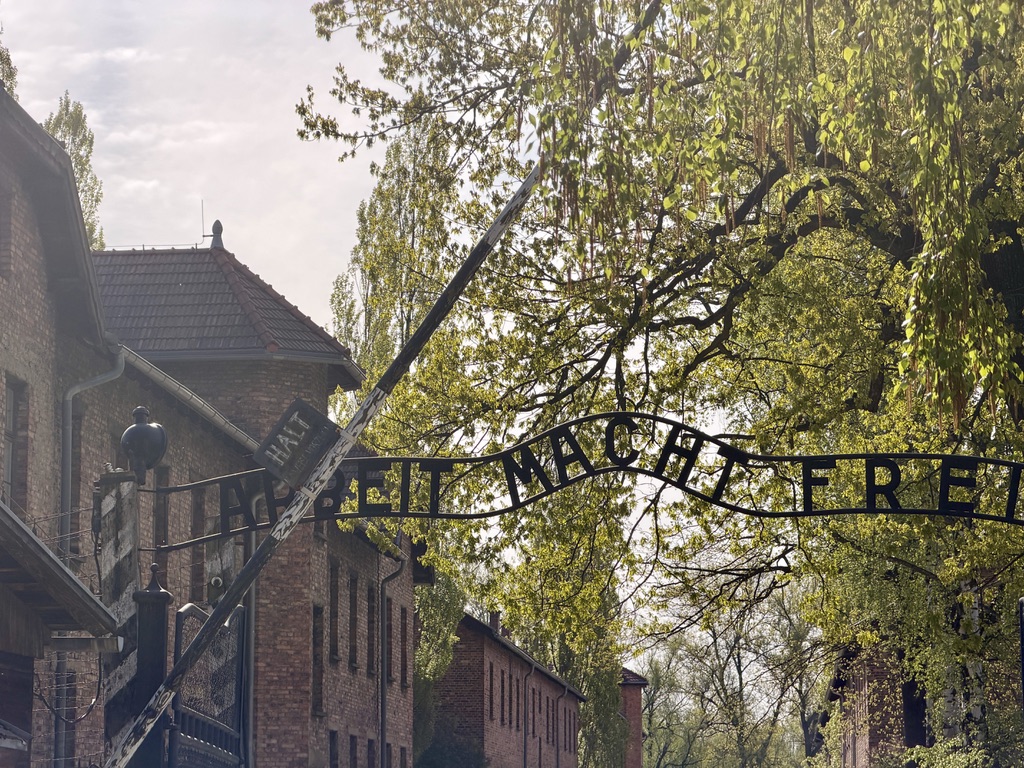
I expected to be devastated from the start, but I was curiously numb through the first part of the tour. We’ve all seen the photos of emaciated corpses, the piles of shoes, the bags of human hair, the dentures and watches and eyeglasses once worn by living, loving human beings. Seeing all that again was sickening, but did not shake me as much as I expected it to.
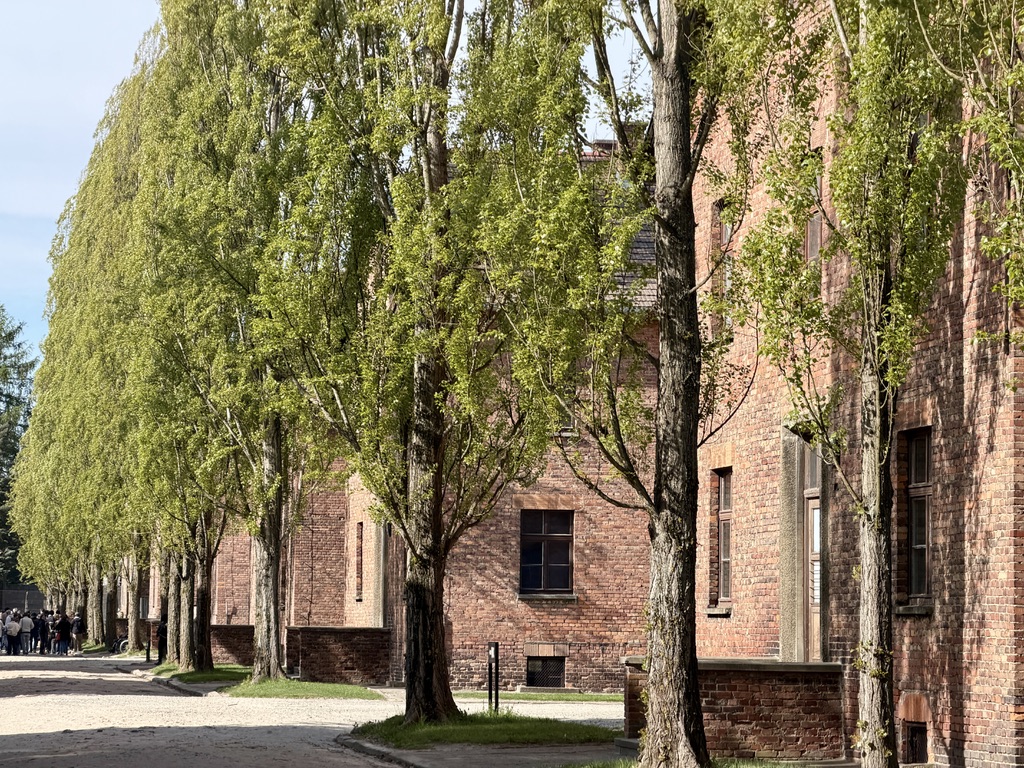
As the tour went on, though, my composure crumbled. The sunny, crisp morning, the vibrant green grass, the newly-leaved poplars, and the merrily chirping birds began to grate on me. We could have been walking through a college campus with tidy brick buildings and manicured lawns. No shots, no screams, no moans, no shouts, no tears.
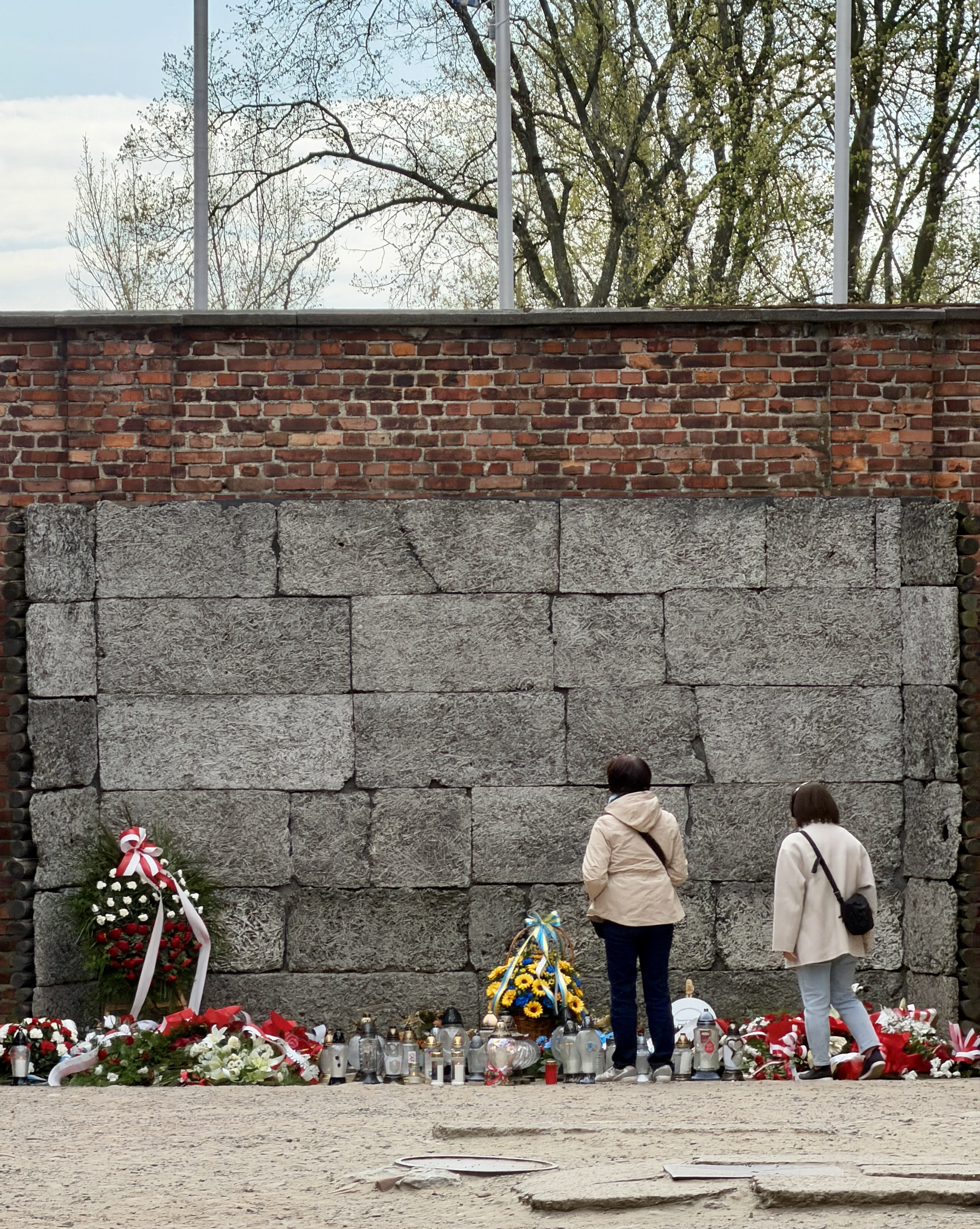
Then we stopped in front of the execution wall, where minor infractions were punished by firing squad. One of my fellow travelers asked if I would say the Mourner’s Kaddish with her. I’m not religious – I consider myself an atheist – but I agreed. Halfway through, I could barely go on.
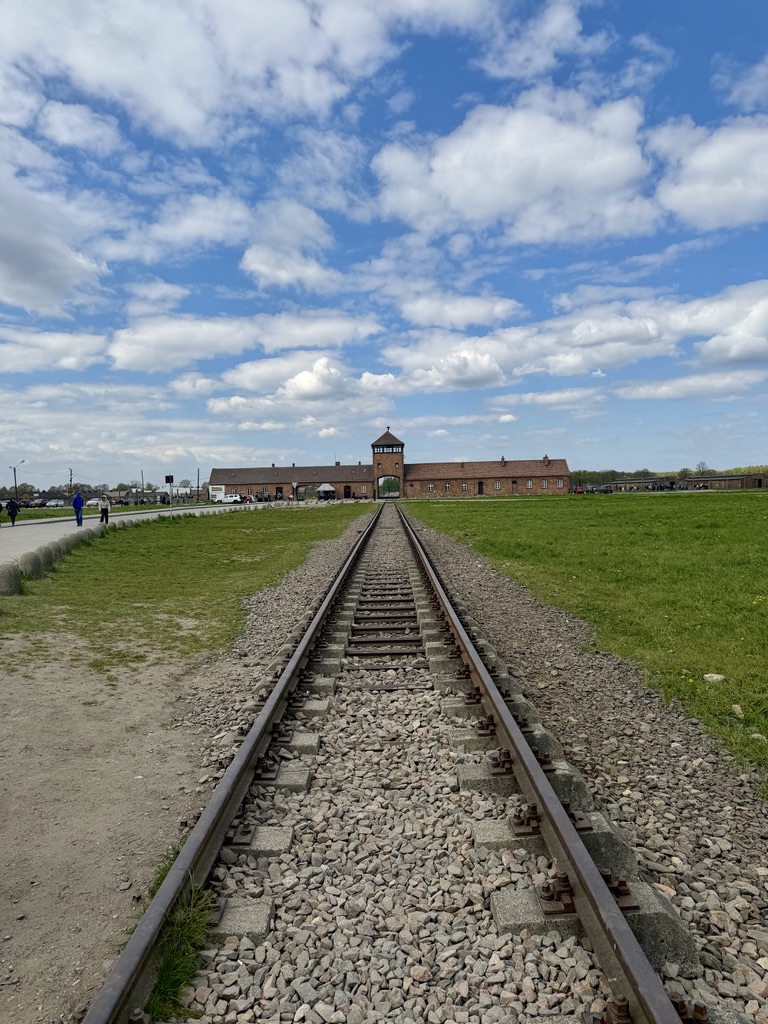
I’ll leave it at that, except to plead, Never Again. Never Again for Jews. Never Again for Muslims. Never Again for Christians, or for Hindus, or Buddhists, or atheists, or homosexuals, or Roma, or those with brown or black skin. Never again for any people, anywhere.
We are all the same family, cousins of one degree or another. We must respect one another’s dignity and dreams. When we see persecution, we must speak out. When we see emerging fascism, we must resist. We must think for ourselves and fight against evil, whether directed at one’s own group or others.
Never Again.
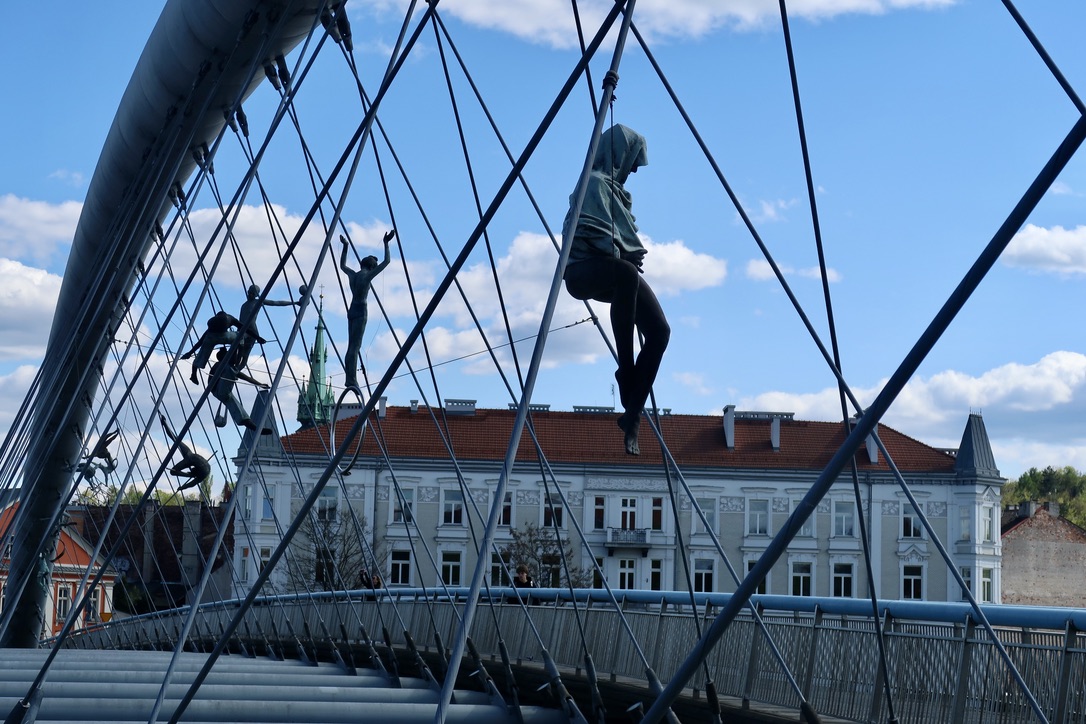
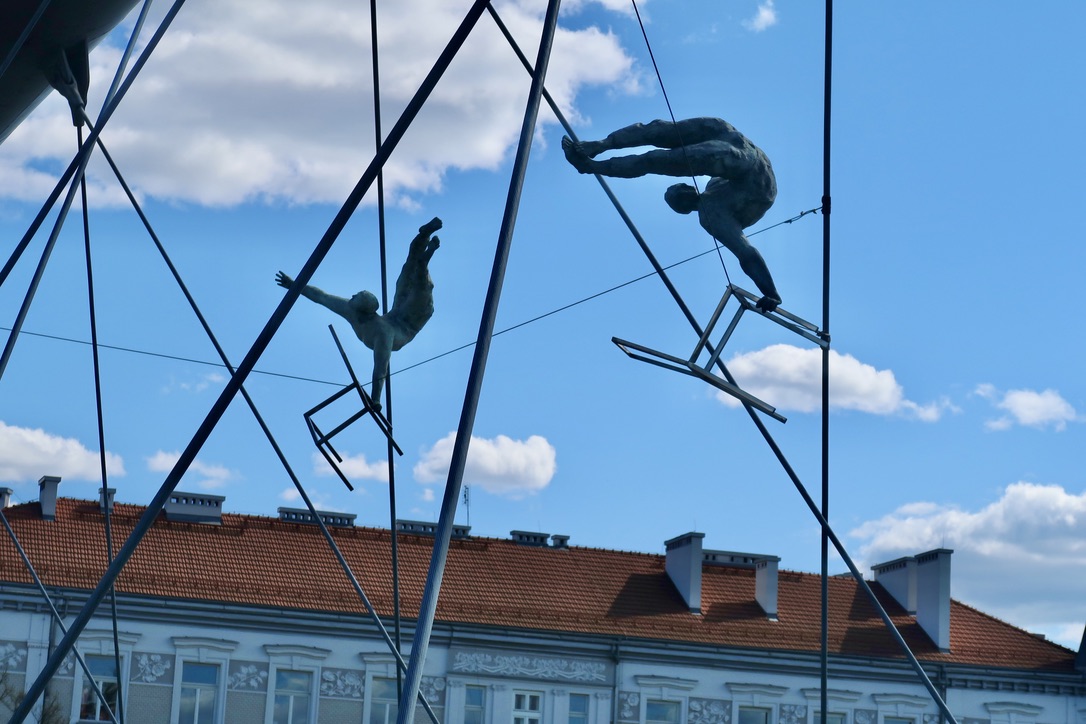
To clear my head after the tour, I went out for a walk. A long walk: two hours striding along the Vistula, crossing a bridge adorned with acrobatic sculptures, and ambling aimlessly through regular, working-class neighborhoods before finding my way back to the hotel, mind calmed and feet sore.
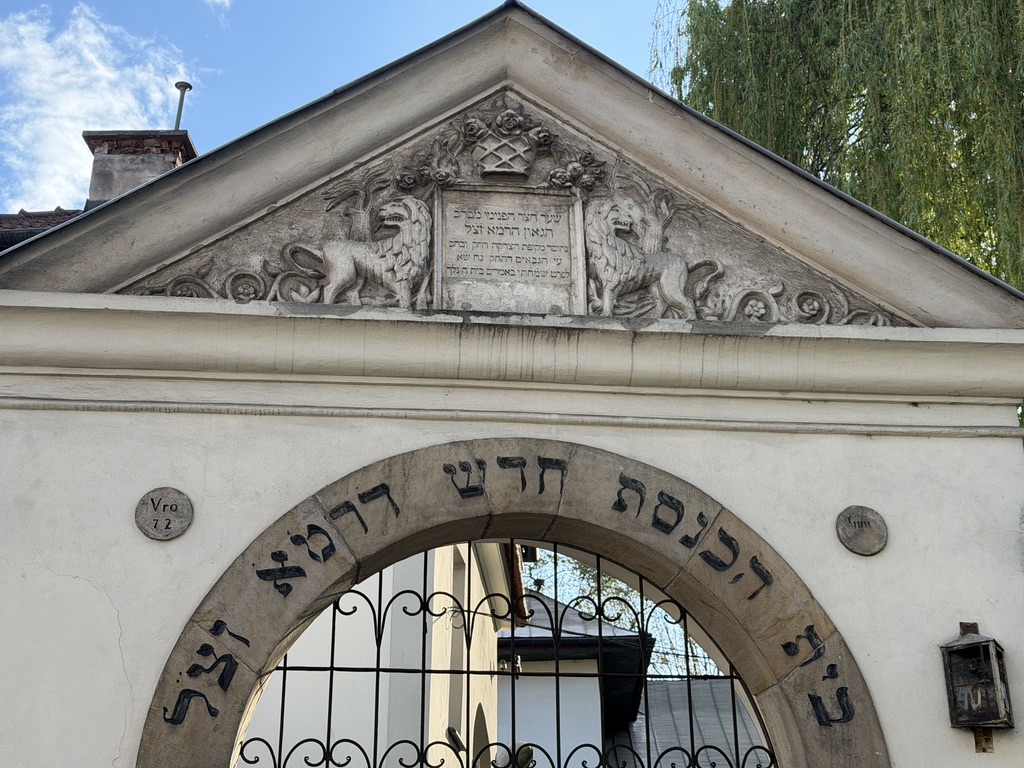
By then, it was almost time for dinner at Ariel (Szeroka 17/19), a Jewish restaurant in a former rabbi’s house. There, across from Remuh Synagogue (built in 1557), I clapped my hands and stamped my feet to the music of Di Galitzyaner Klezmorim, a smile on my face and joy in my heart.
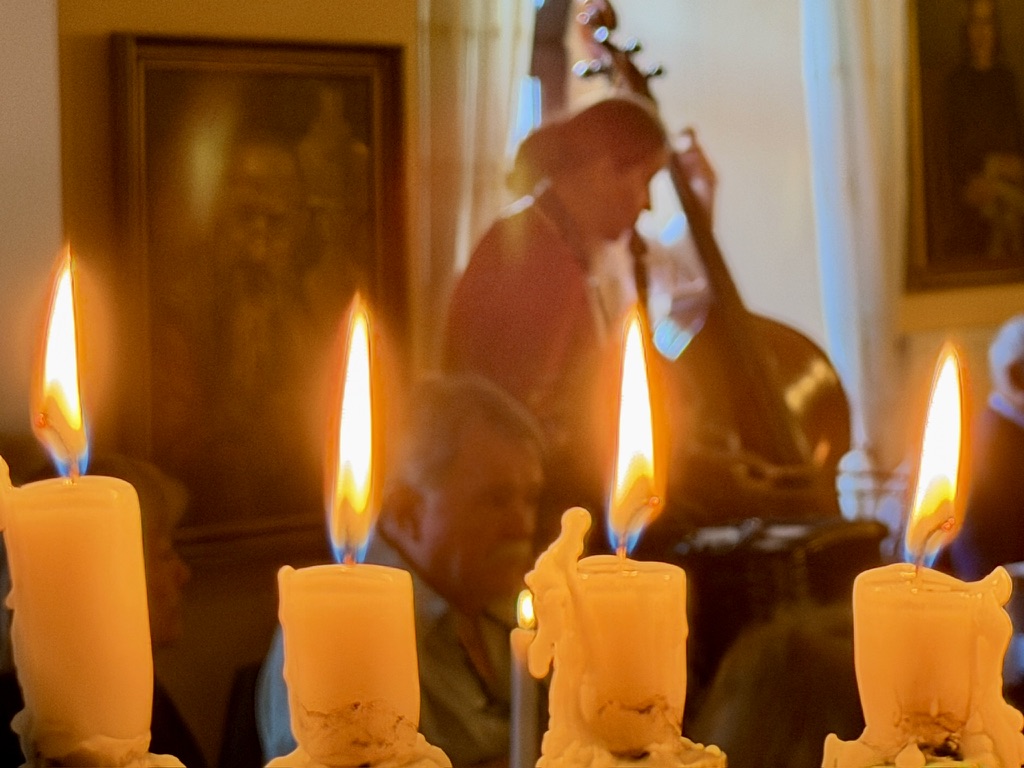
Thank you, music, and thank you, Viking!


