My stock of superlatives has been sorely depleted on this trip. The Giza pyramids, the Sphinx, King Tut’s treasures, Abu Simbel, the Necropolis – there are only so many adjectives available to describe these triumphs of human artistry and achievement. Today, we visited perhaps the most impressive of all the sites we’ve seen: Karnak Temple, located on the east bank of the Nile across from the Necropolis. (Ancient Egyptians associated the east with birth and the west with death; they euphemistically called the dead “westerners.”)
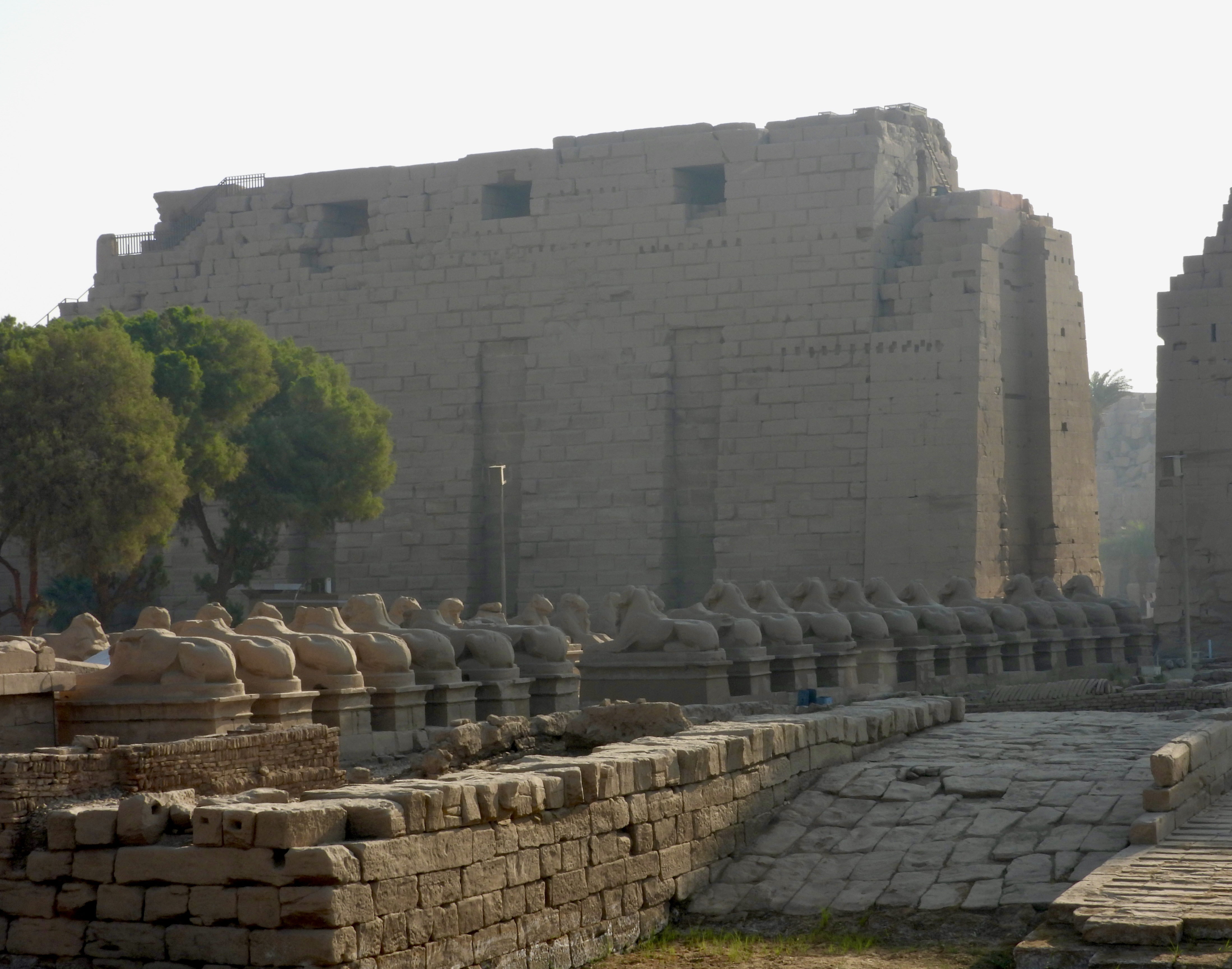
So rather than recycling lots of the same superlatives, I’ll just refer to Karnak Temple by its ancient name: Ipet-isut, the “Most Select of Places.” With Thebes (modern-day Luxor) as the seat of government during the Eighteenth and Nineteenth Dynasties, what had previously been a regional temple expanded into unified Egypt’s largest and most important religious center. A who’s who of Egypt’s most famous rulers (Amenhotep I, Thutmose I, Hatshepsut, Thutmose III, and Ramesses II, among others) added the features that so captivate visitors today.
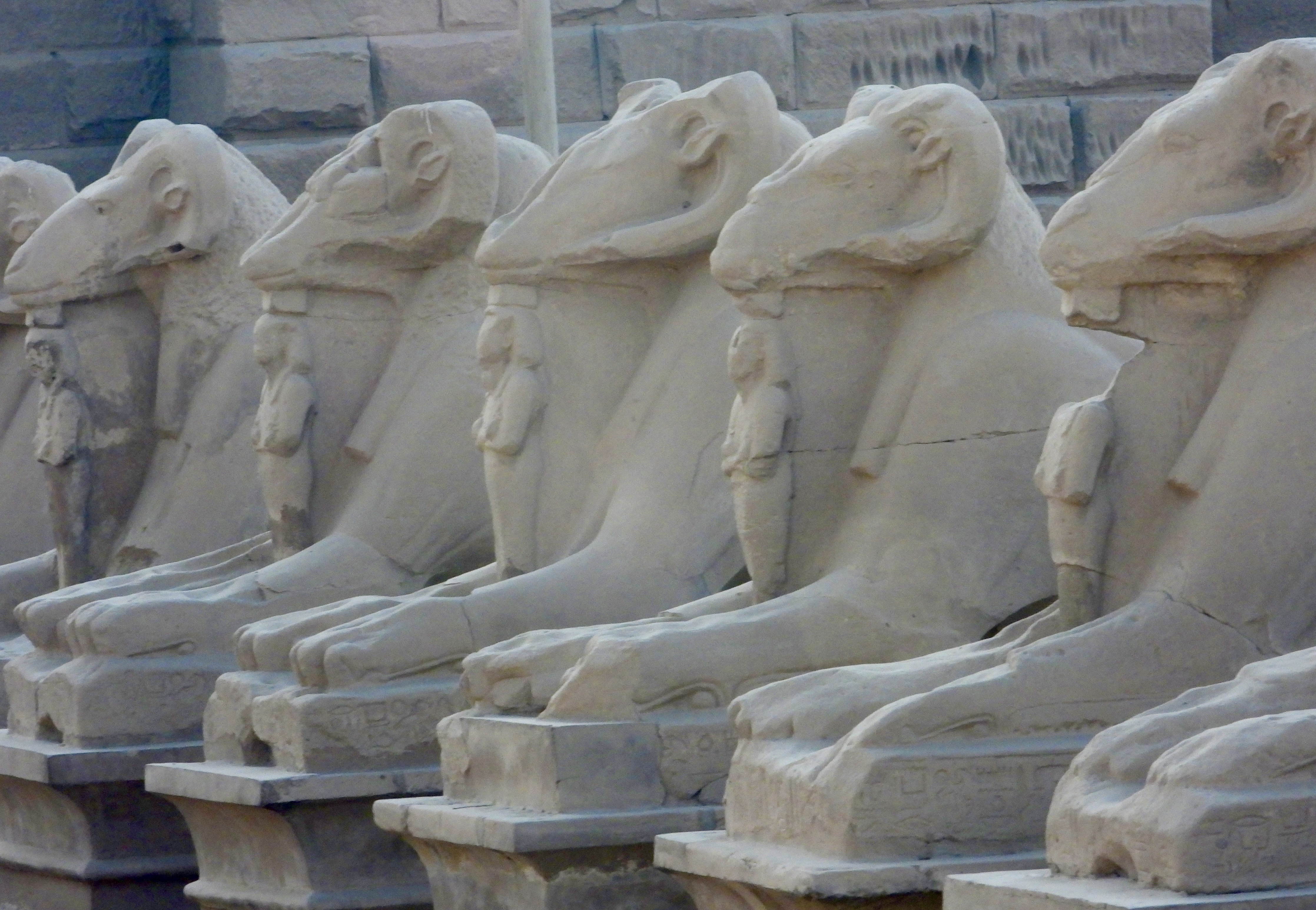
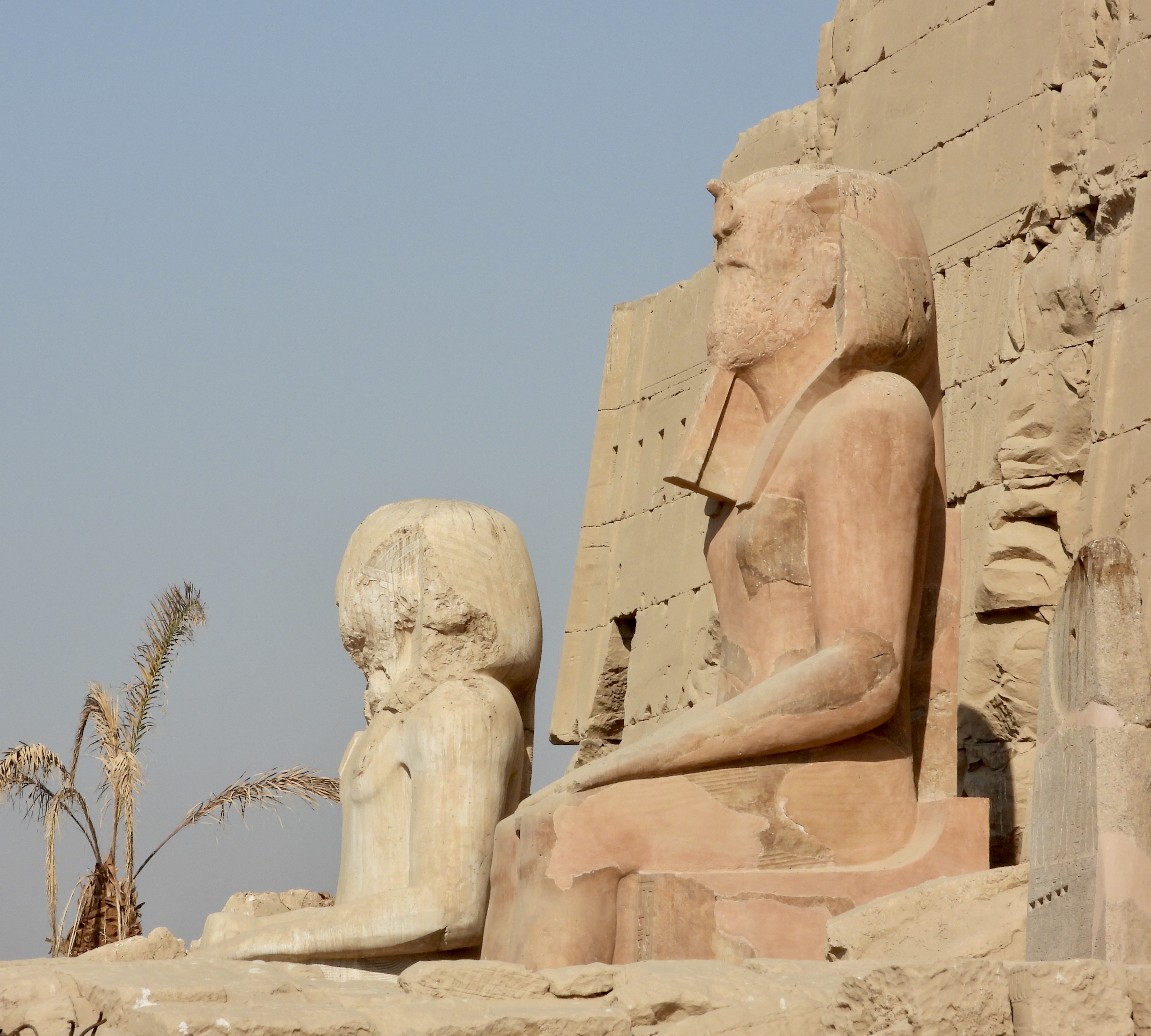
Parallel rows of rams-headed sphinxes lead to the entrance of the temple; each ram (representing the god Amun) has a small statue of Ramesses II at its front. (Ramesses II usually wasn’t one to settle for small statues, but I guess even his divine self was subordinate to Amun, requiring a statue of limitations.)
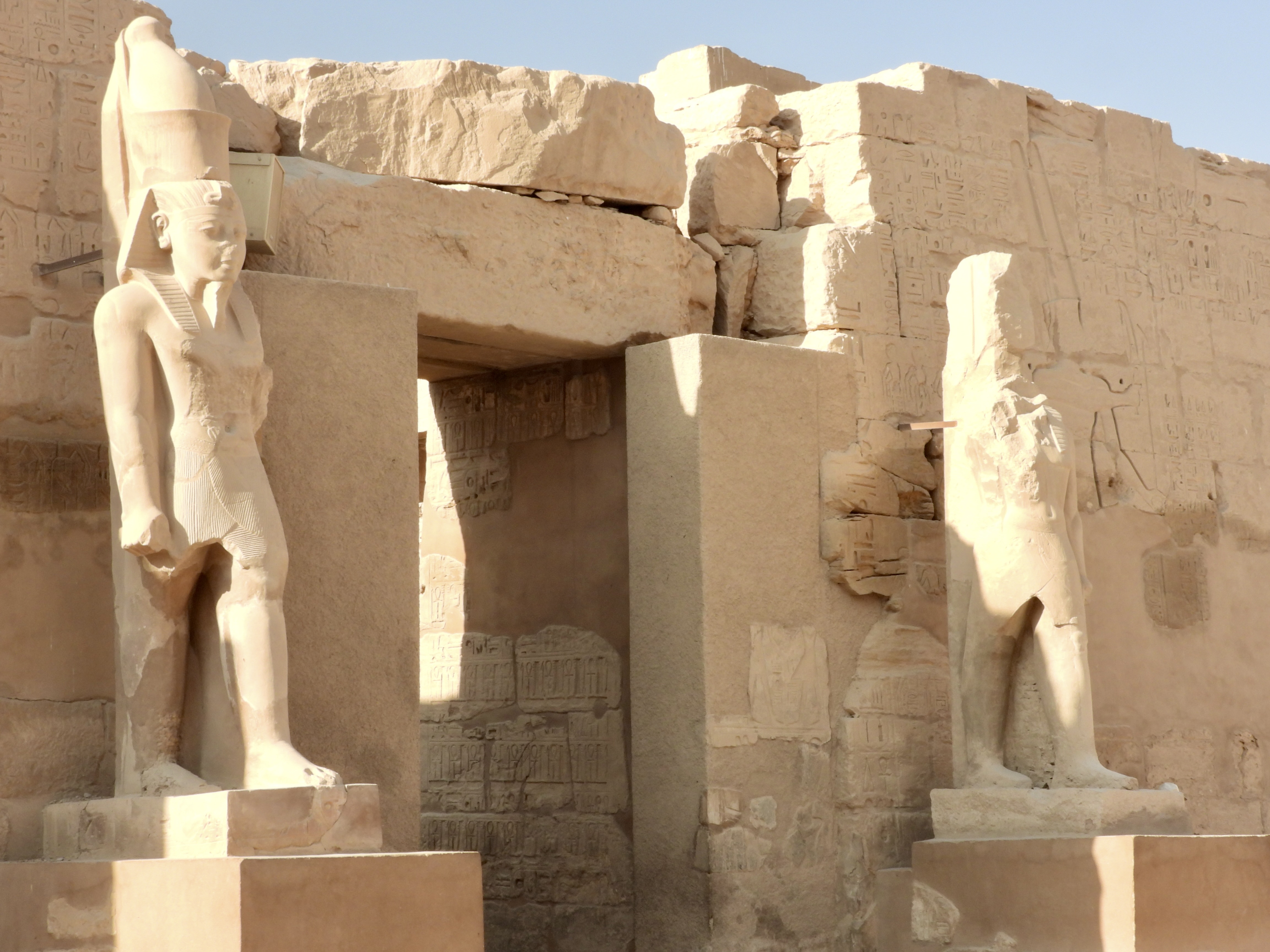
I’d be willing to bet that there are more statues of Ramesses II than any other potentate in history – I don’t think we’ve visited a single site where he wasn’t literally set in stone, often multiple times.
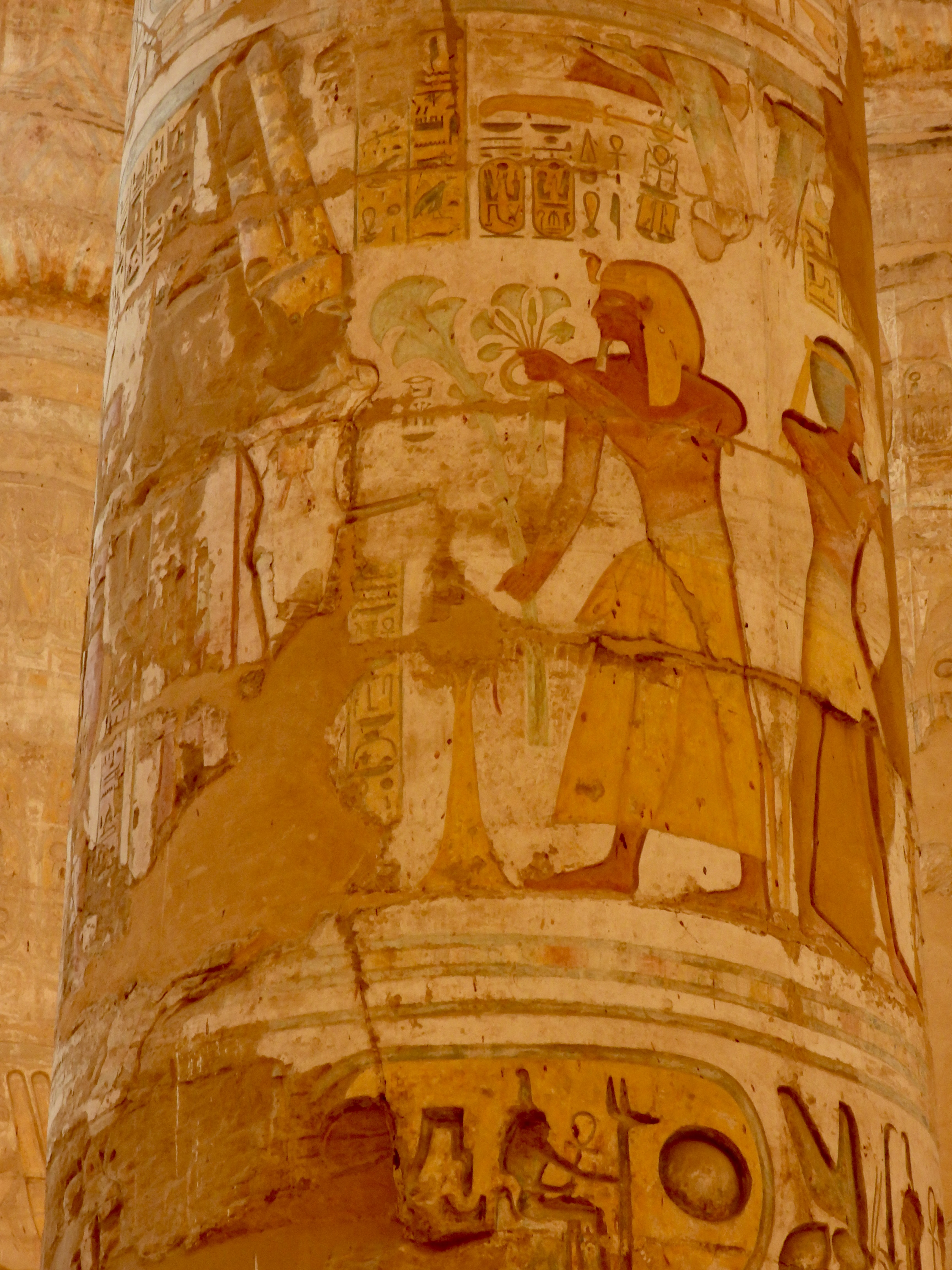
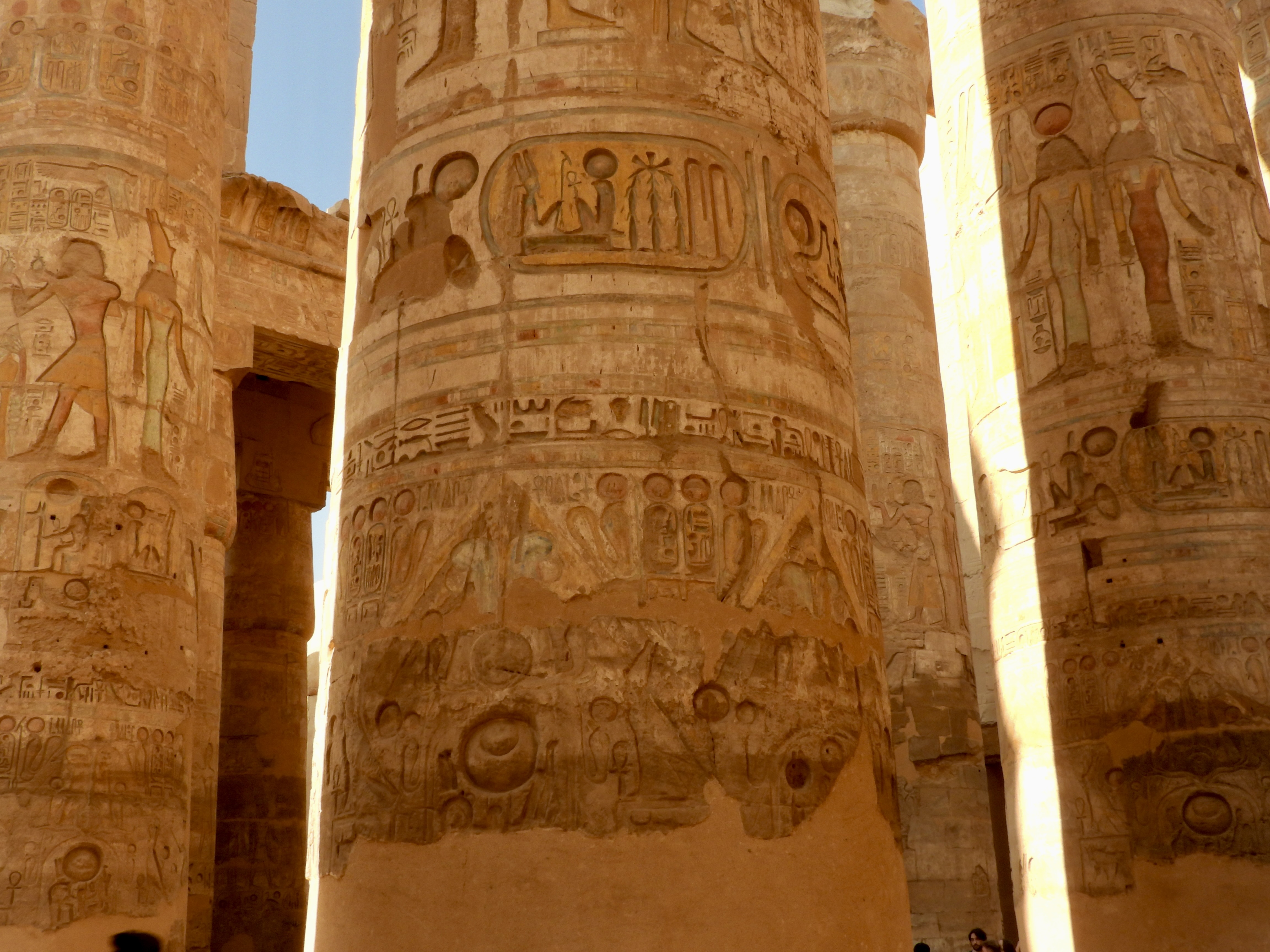
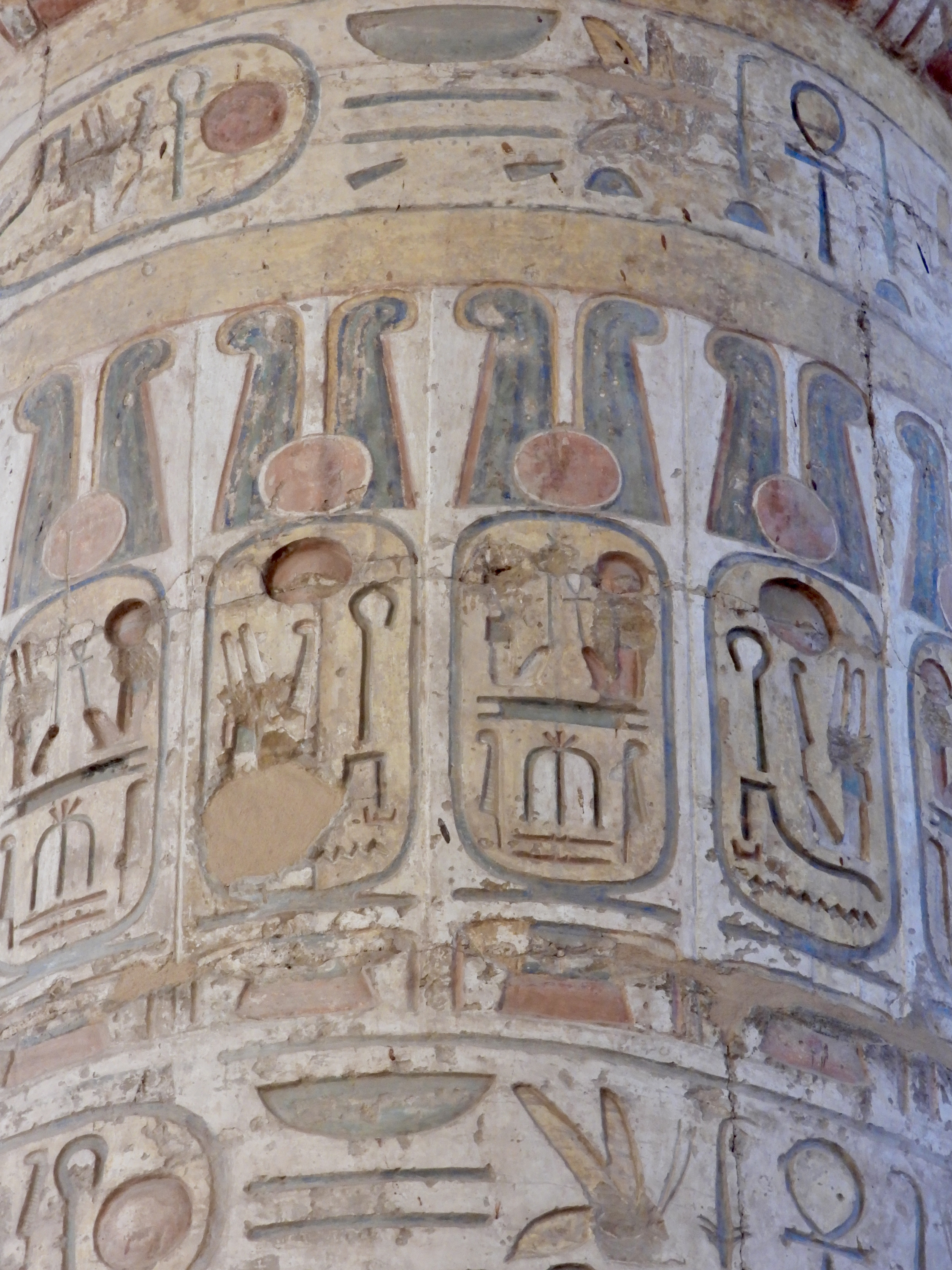
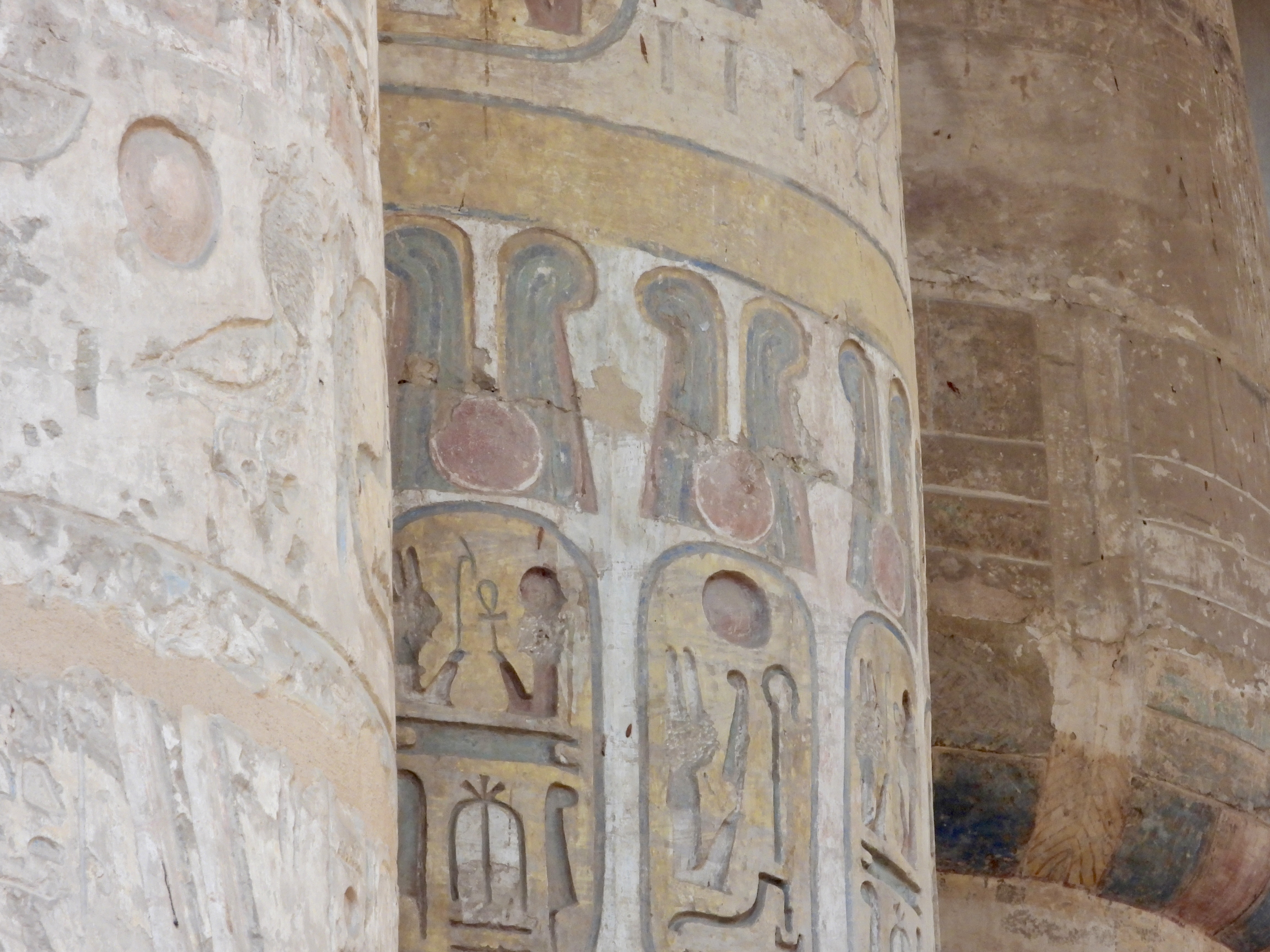
Shortly after entering the temple proper, you reach the Hall of Columns, a densely packed array of 134 ornately decorated pillars, many of which retain their original colors.
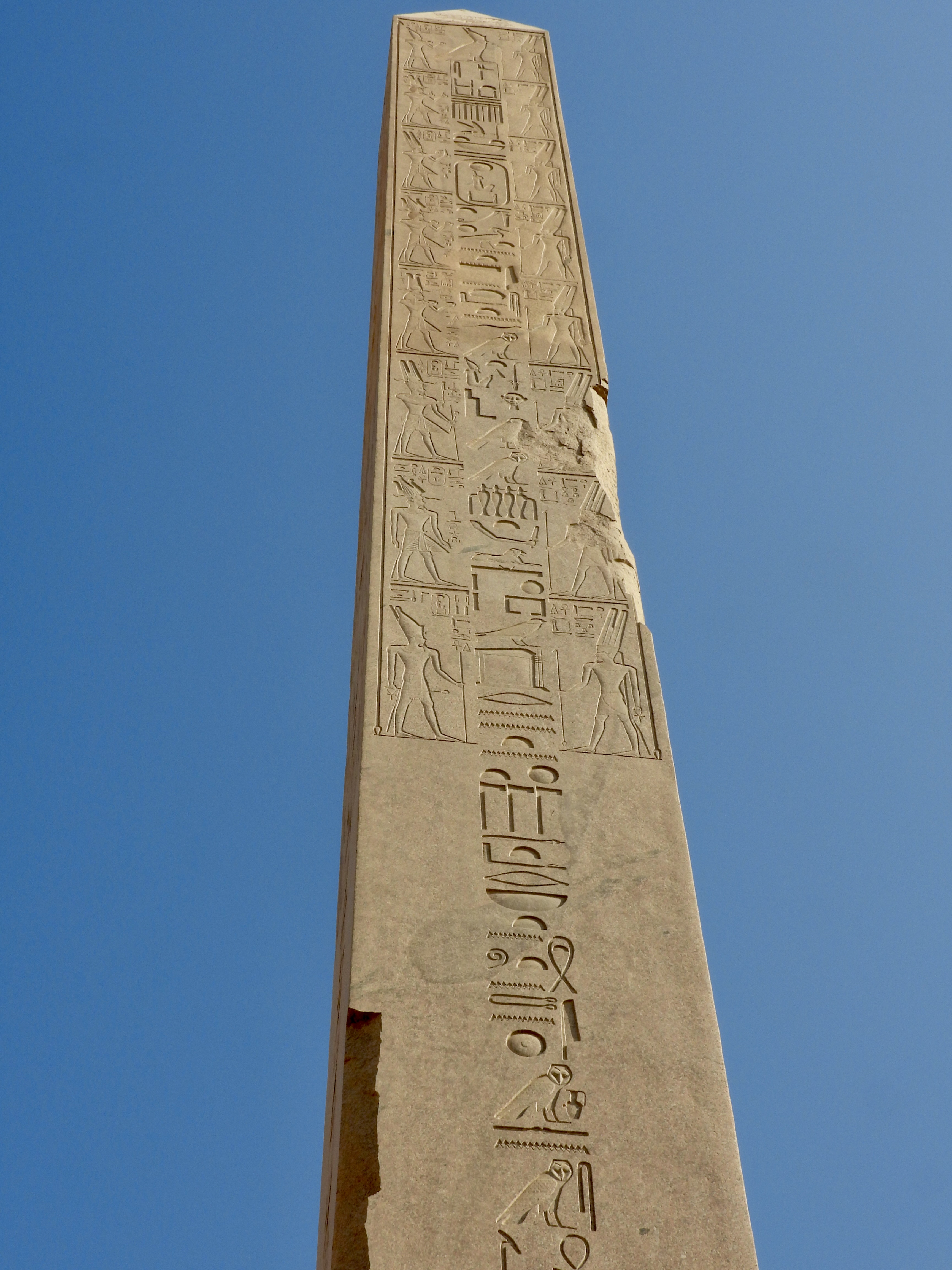
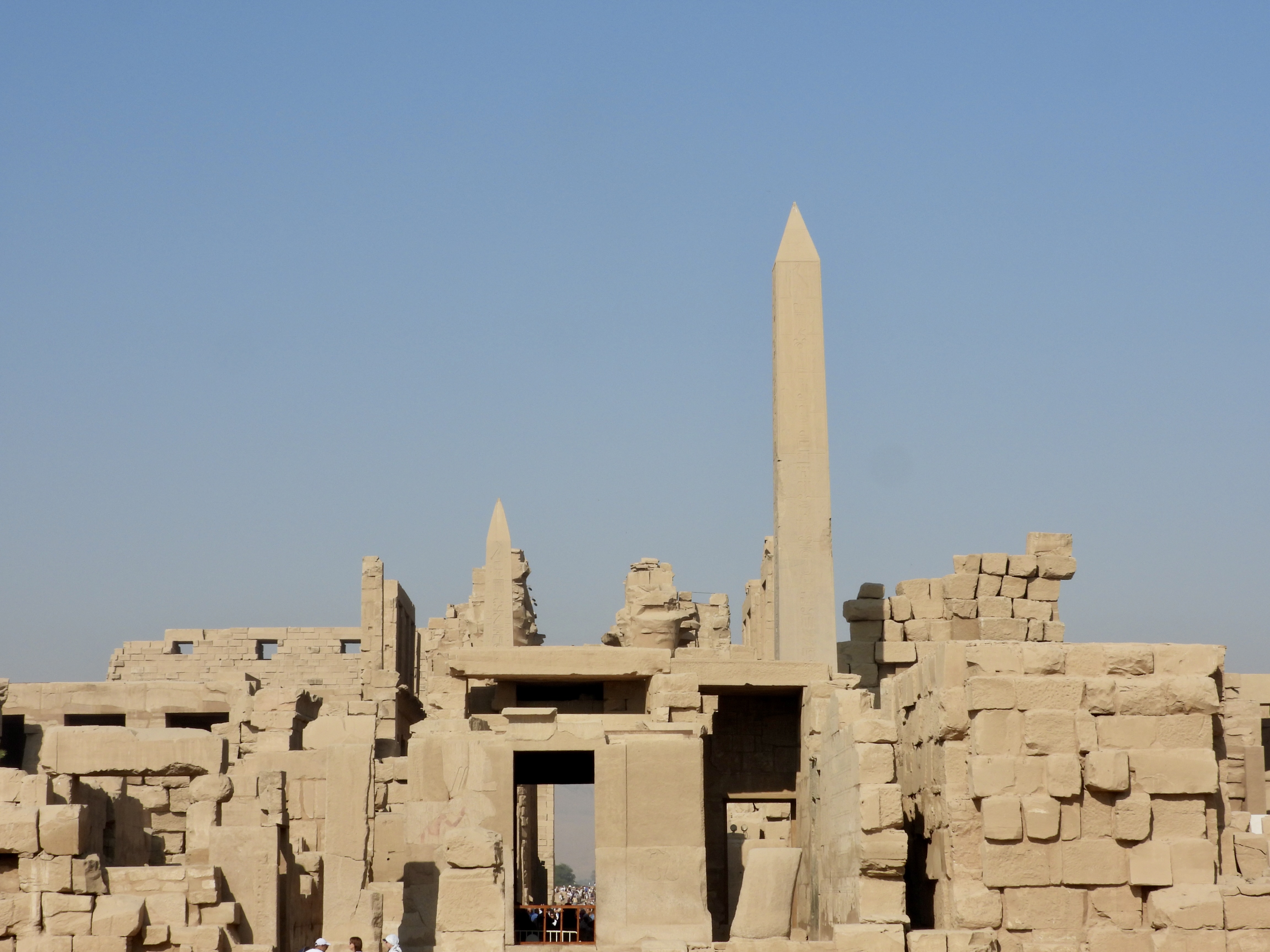
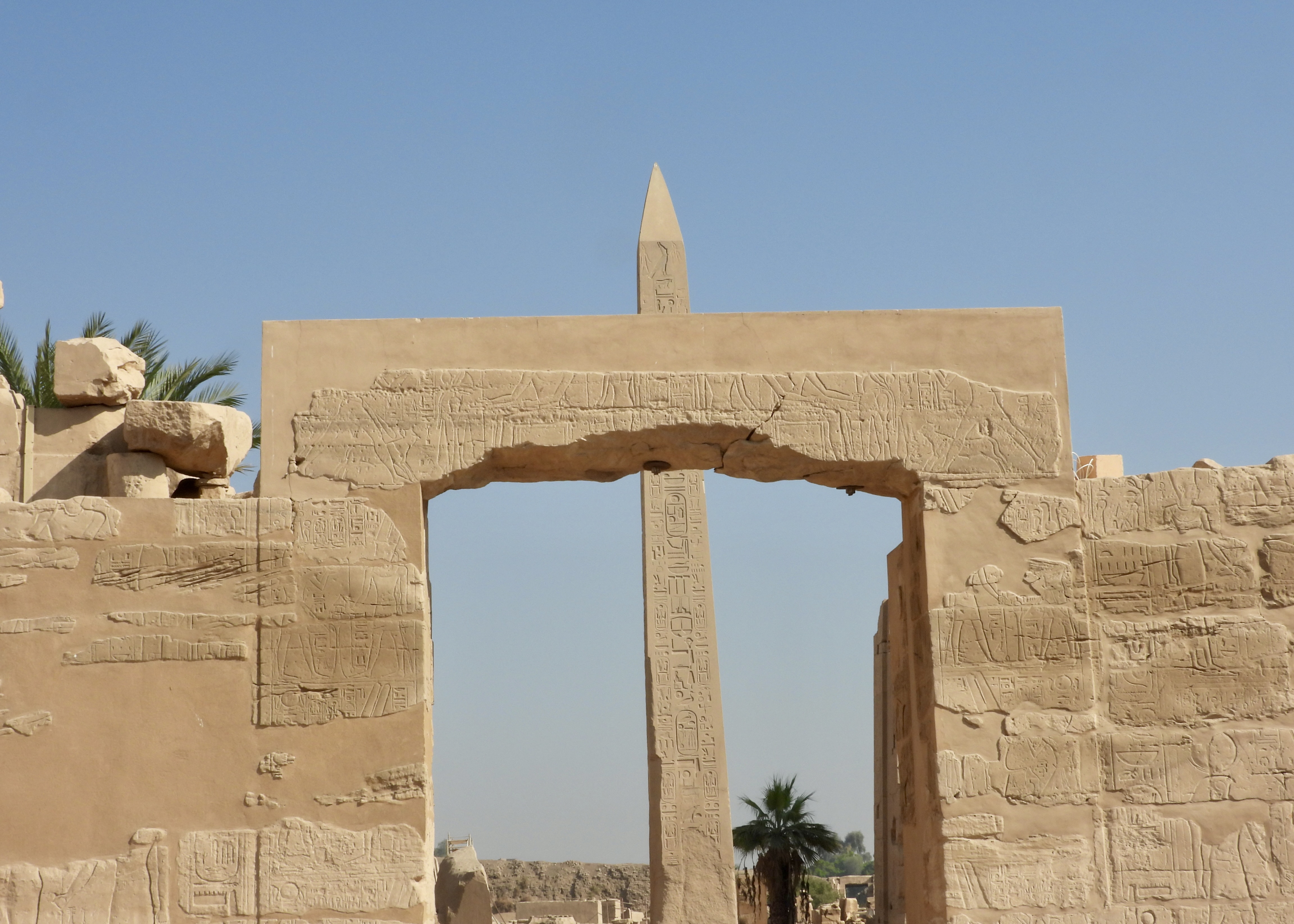
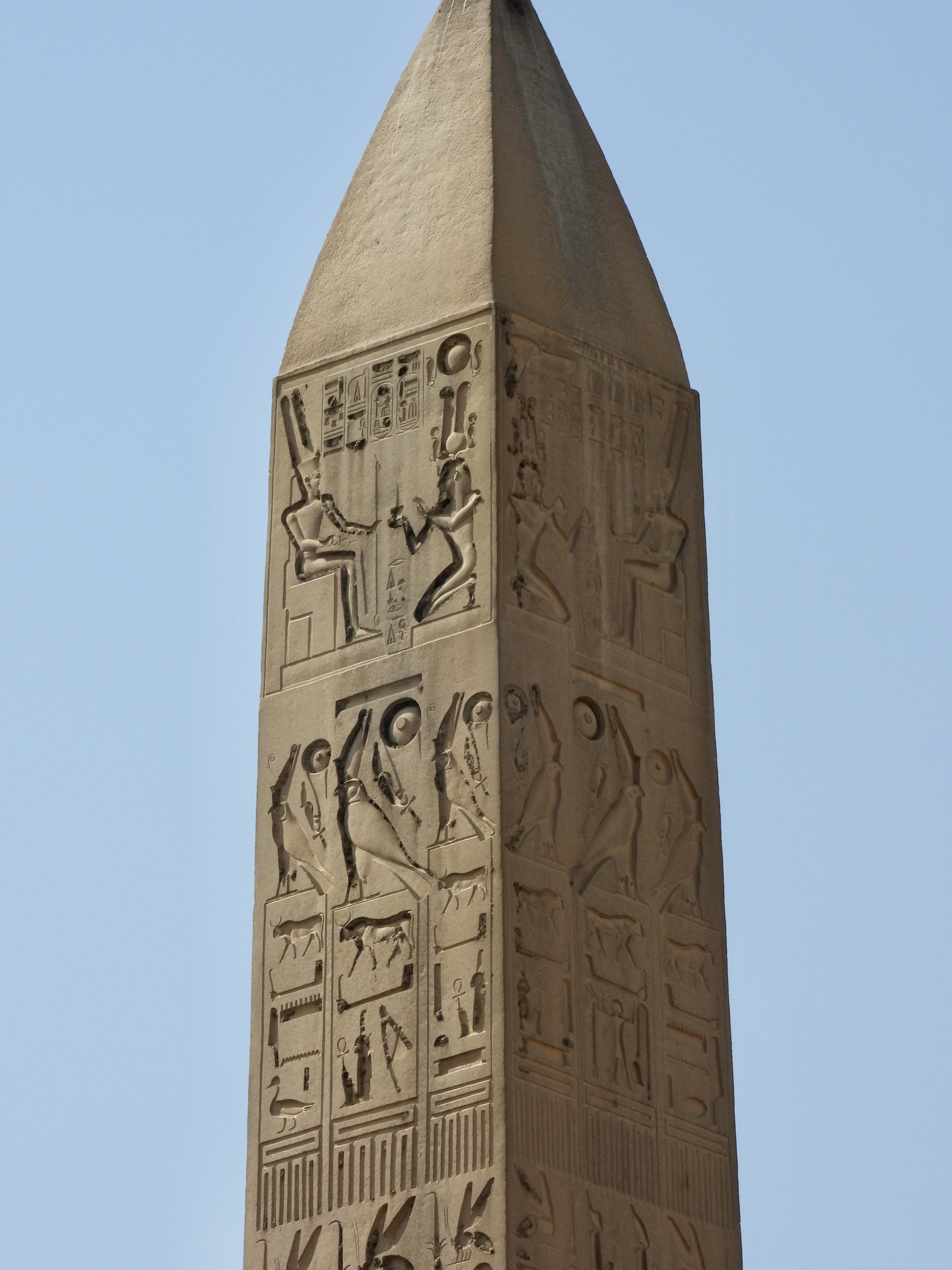
A bit farther on, there are two obelisks, the taller of which, dedicated to Hatshepsut, was the second-highest such structure in the ancient world.
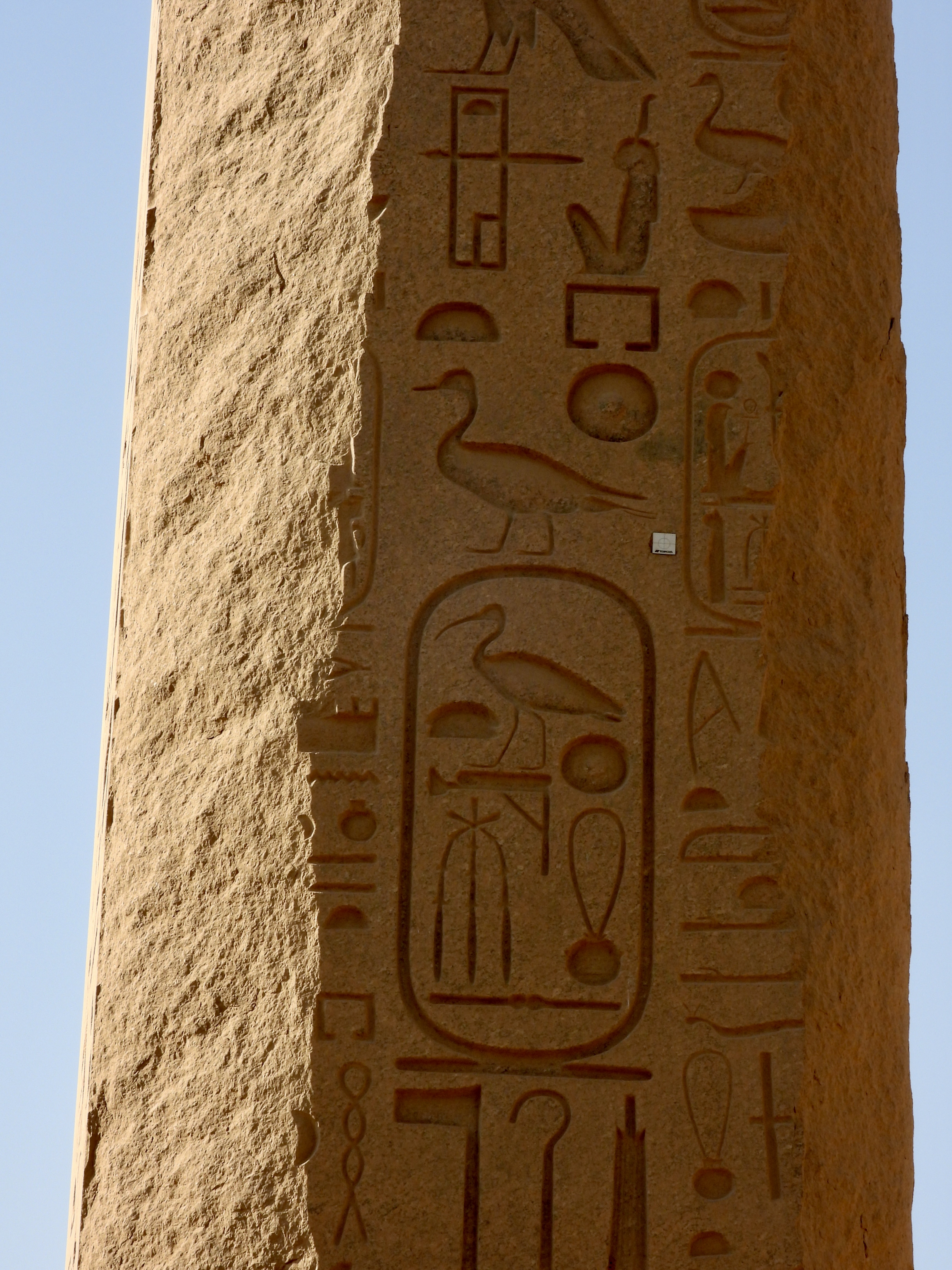
Thutmose III, under whose military leadership the Egyptian Empire reached its greatest extent, added several large areas to Karnak.
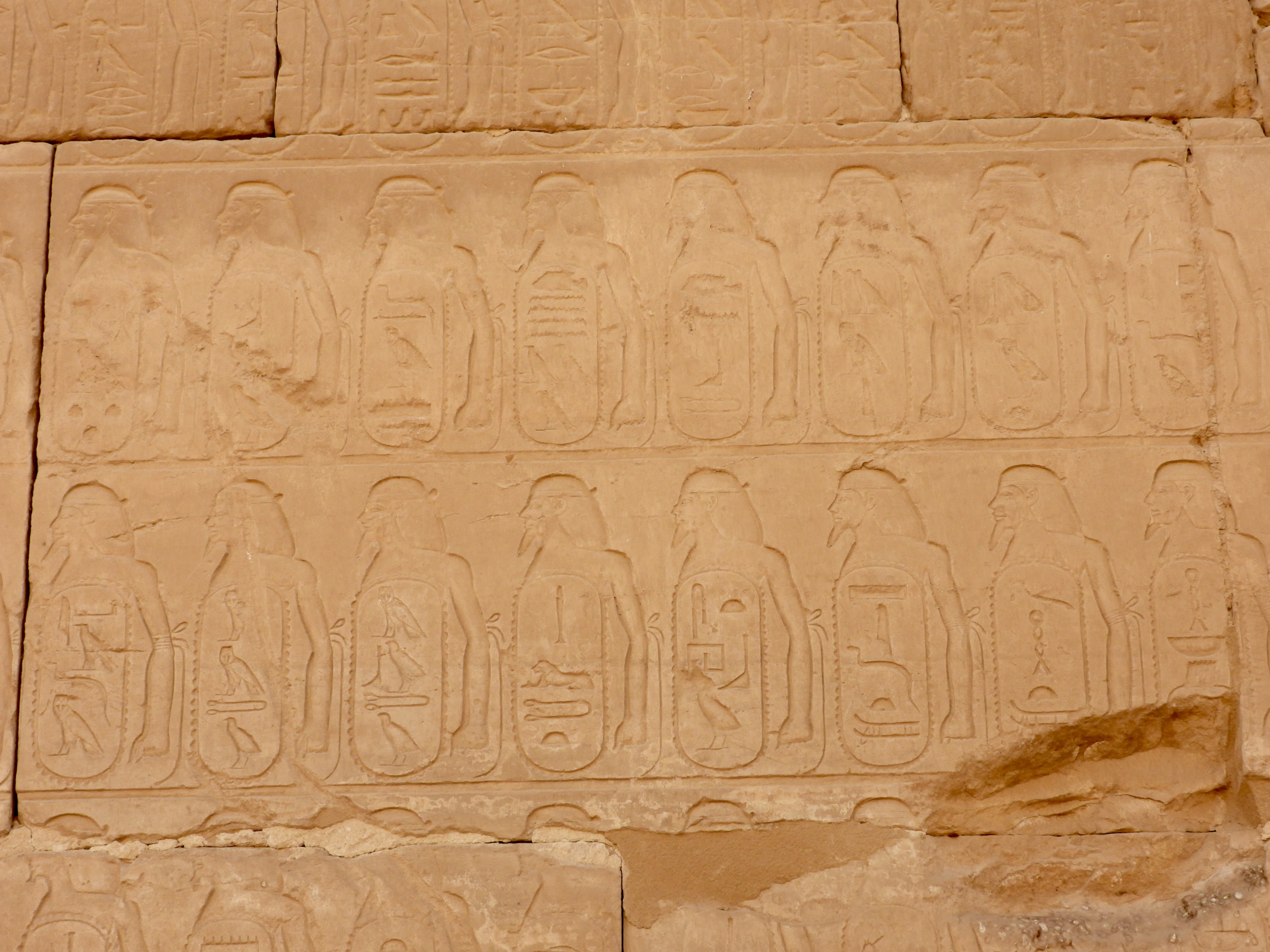
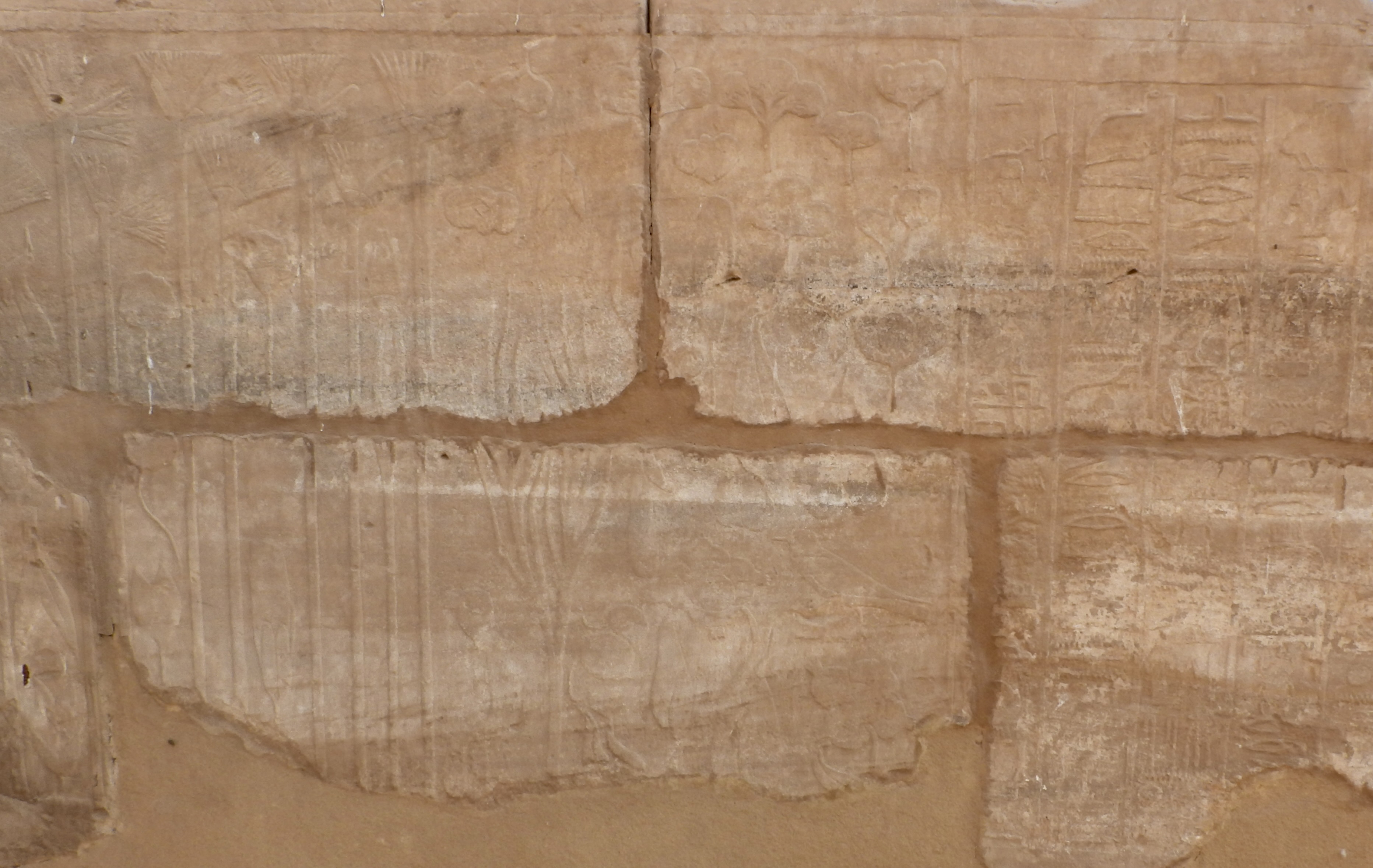
Most notable are the Festival Hall, with chained figures carved into the walls depicting all the places he’d subjugated, and a “Botanic Garden” with carvings of various plants and animals he’d brought back from his conquests.
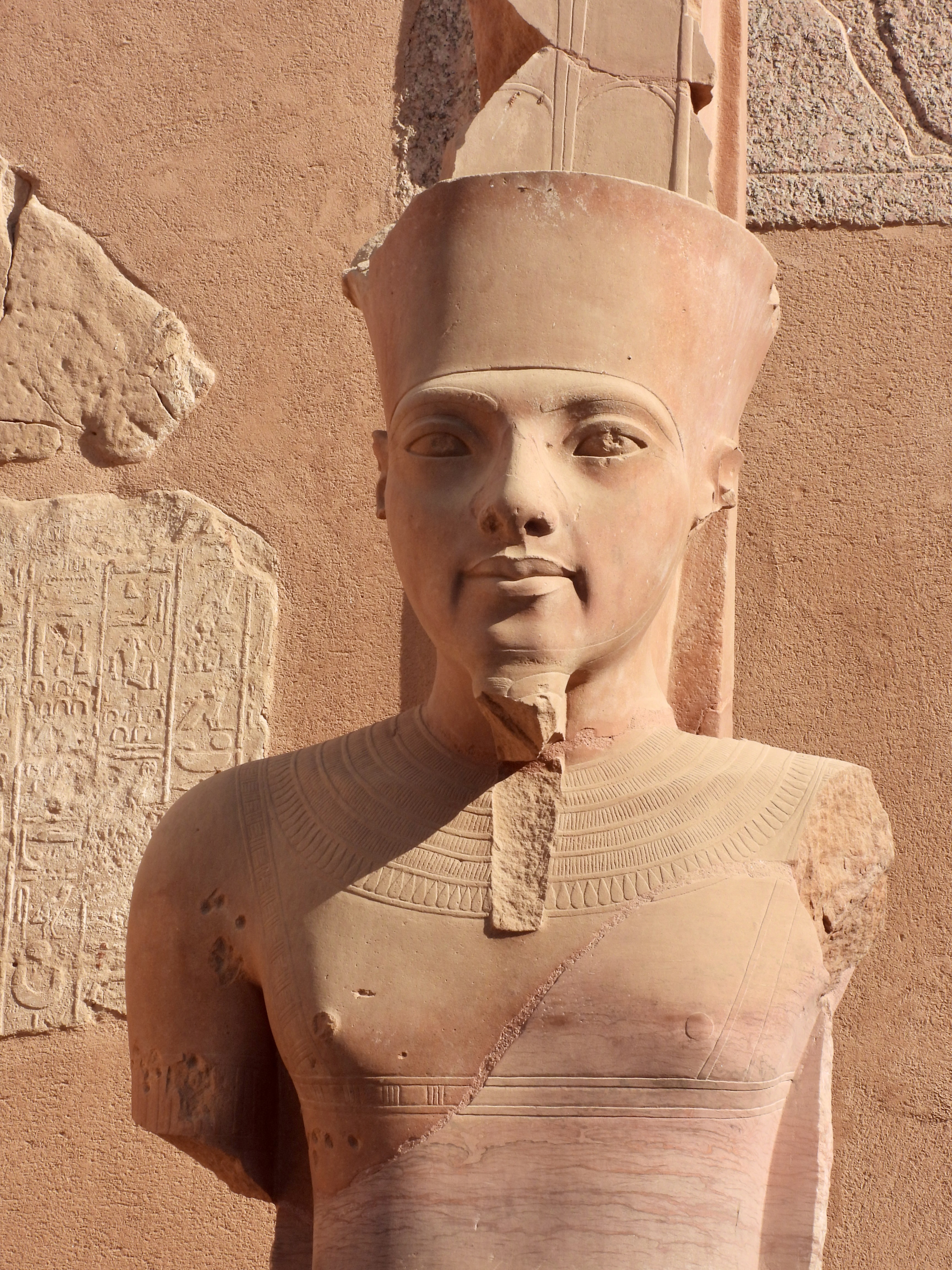
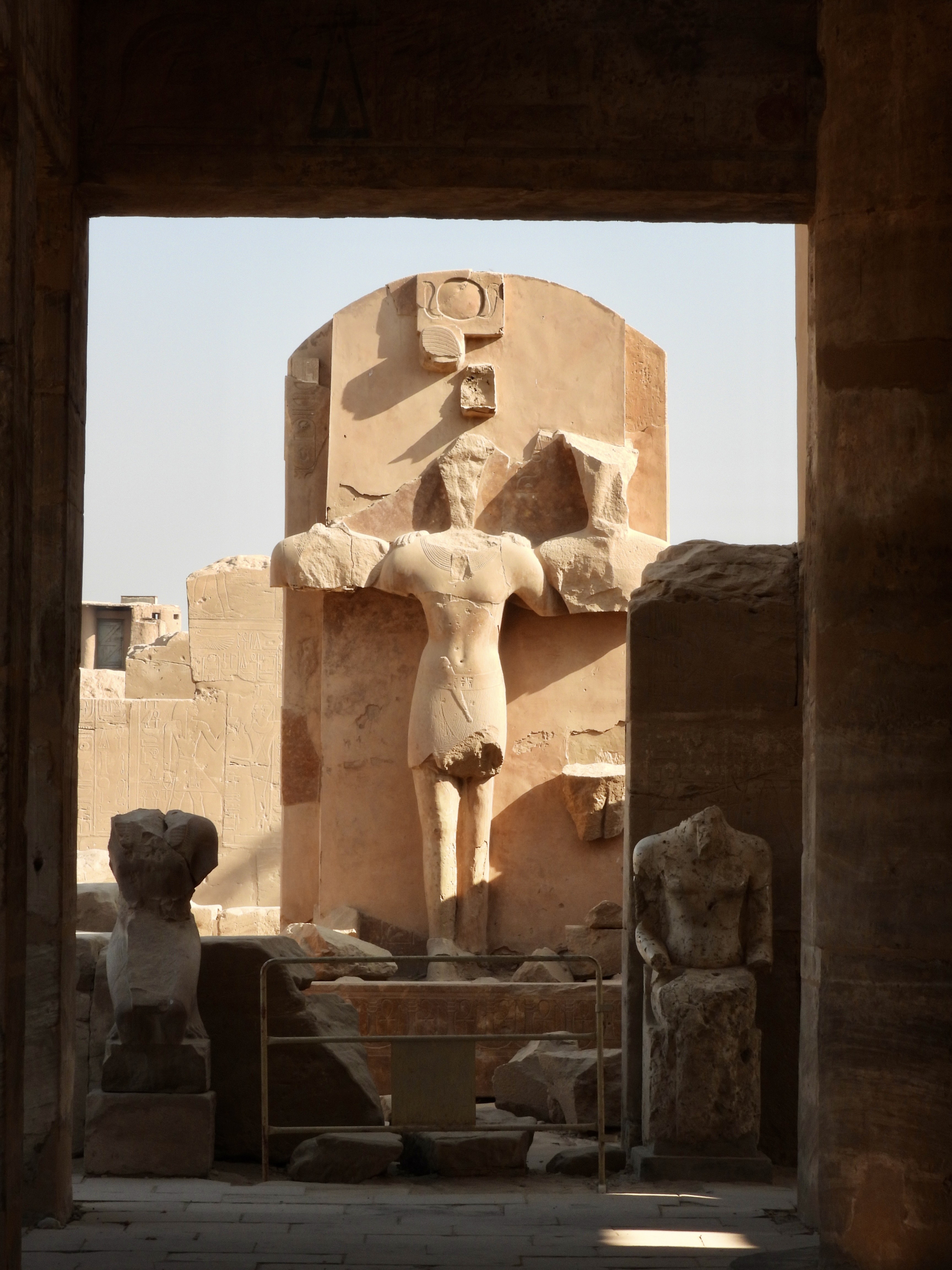
There’s also an interesting statue of Amun in human form, which bears a striking resemblance to Tutankhamun. After the death of his father, Akhenaten, who had established a cult of the sun god (Aten) and temporarily moved the court elsewhere, Tutankhamun restored the worship of Amun and the other traditional Egyptian gods and ordered that a statue of Amun be erected at Karnak. Given that his name means “living image of Amun,” the resemblance isn’t exactly surprising.
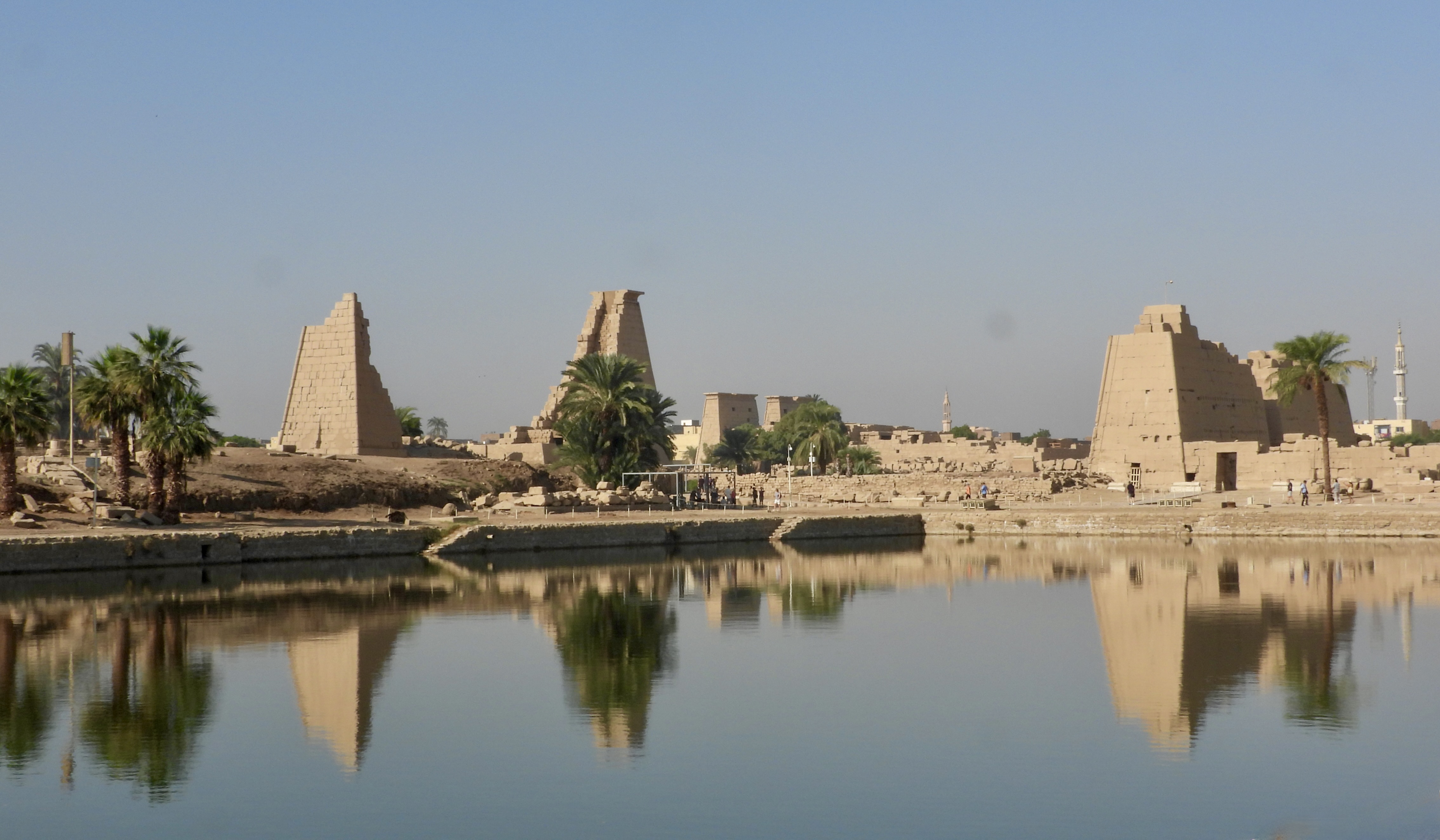
Near the rear of the Temple, there’s a large Sacred Pool in which some of the temple’s structures are reflected.
If you go to Karnak, visit as early as you can. When we arrived at around 7:45, there was room to view the sights with little interference. By the time we left around two hours later, there were throngs of people. Once again, we owe our thanks to Amr for structuring the day for maximum enjoyment and minimum time spent as a sardine.
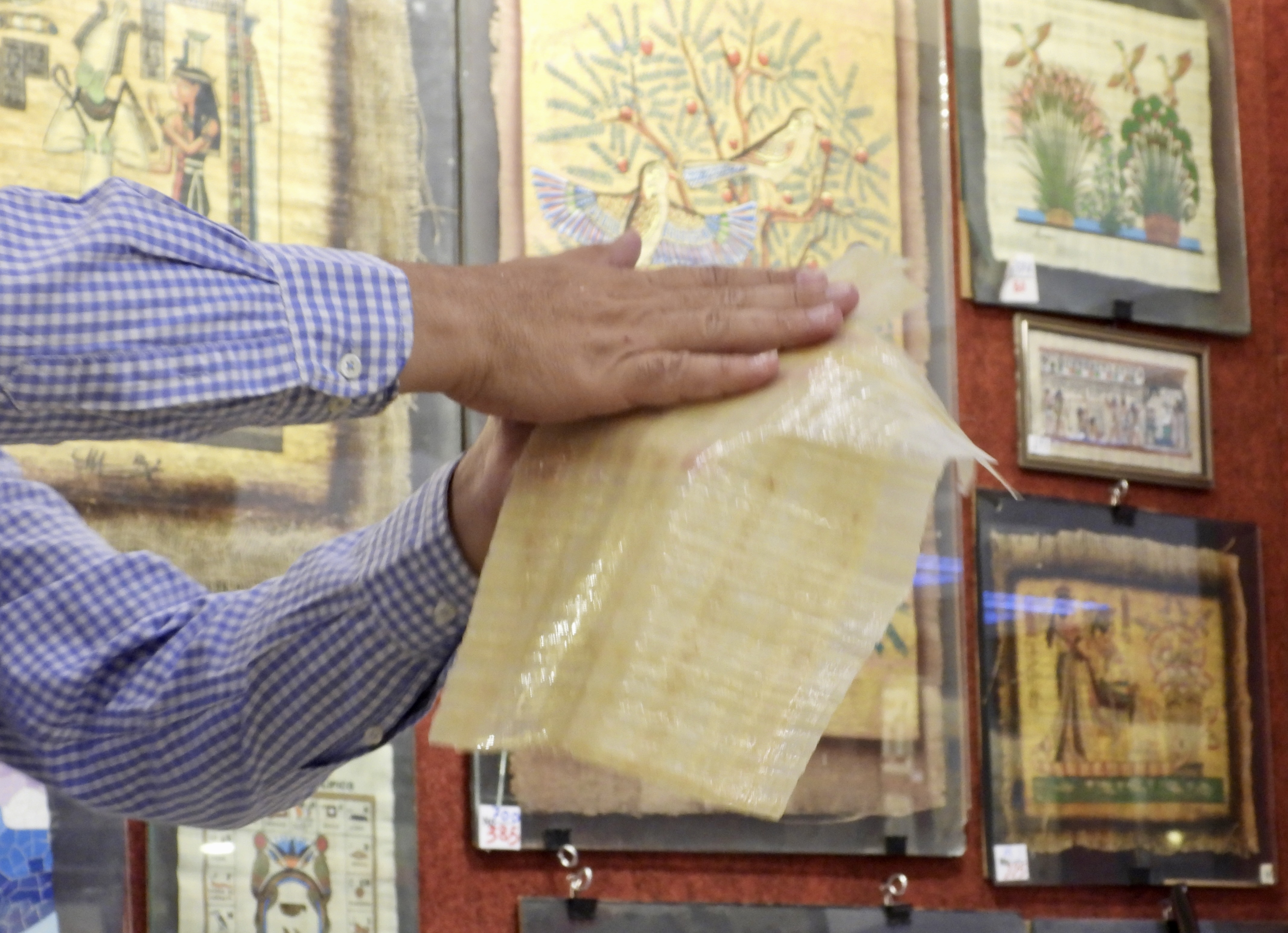
Five minutes from Karnak, we stopped for an interesting papyrus-making demonstration at the New Isis Papyrus Museum. It’s not a museum in the sense of displaying ancient documents. Rather, it’s home to the works of thirty artists who paint on papyrus. Their subjects cover a range of Egyptian themes: ancient deities, well-known scenes from tombs, colorful skylines of old Cairo, and much more. I think at least three-quarters of our group (including me) purchased something.
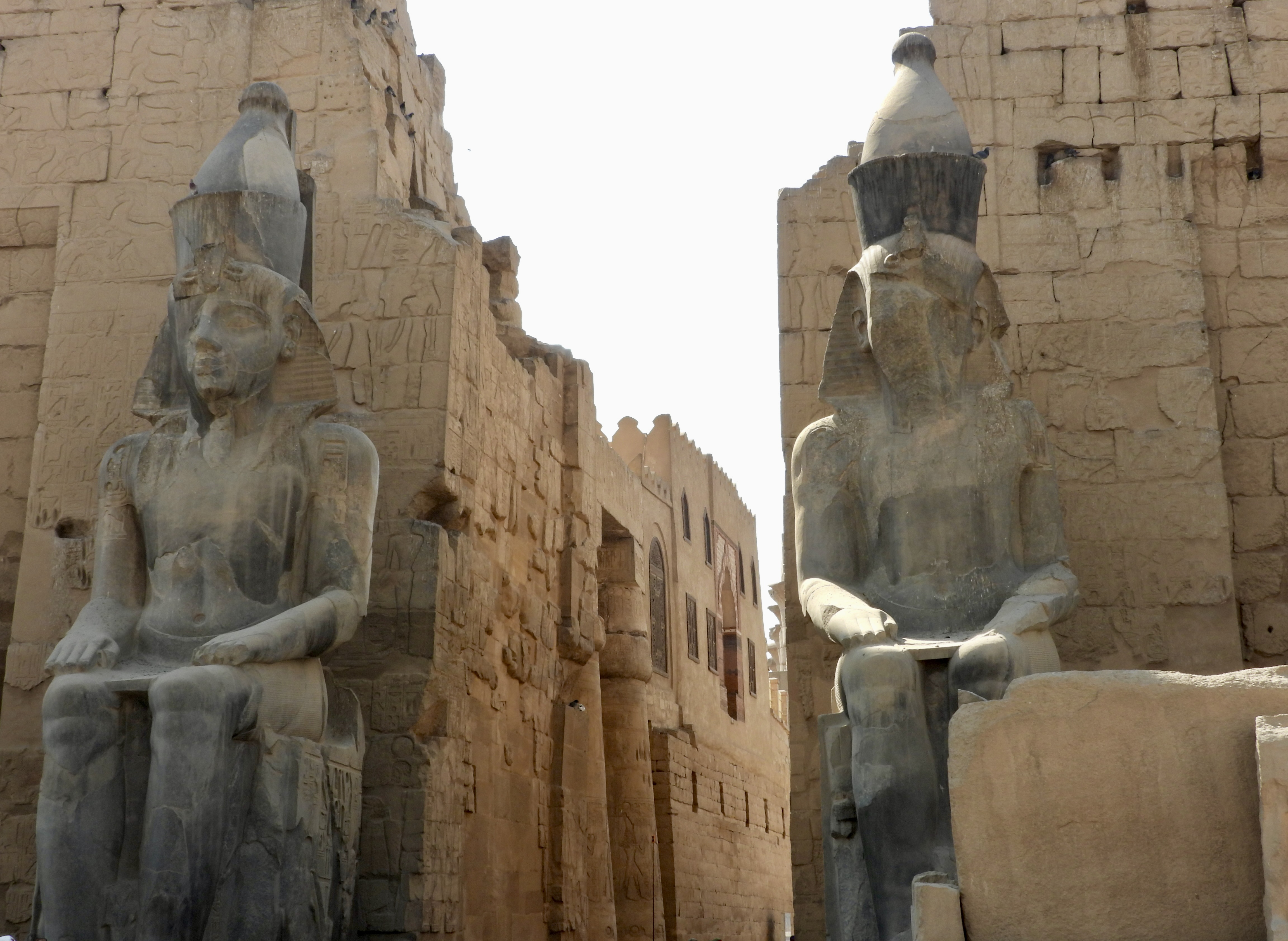
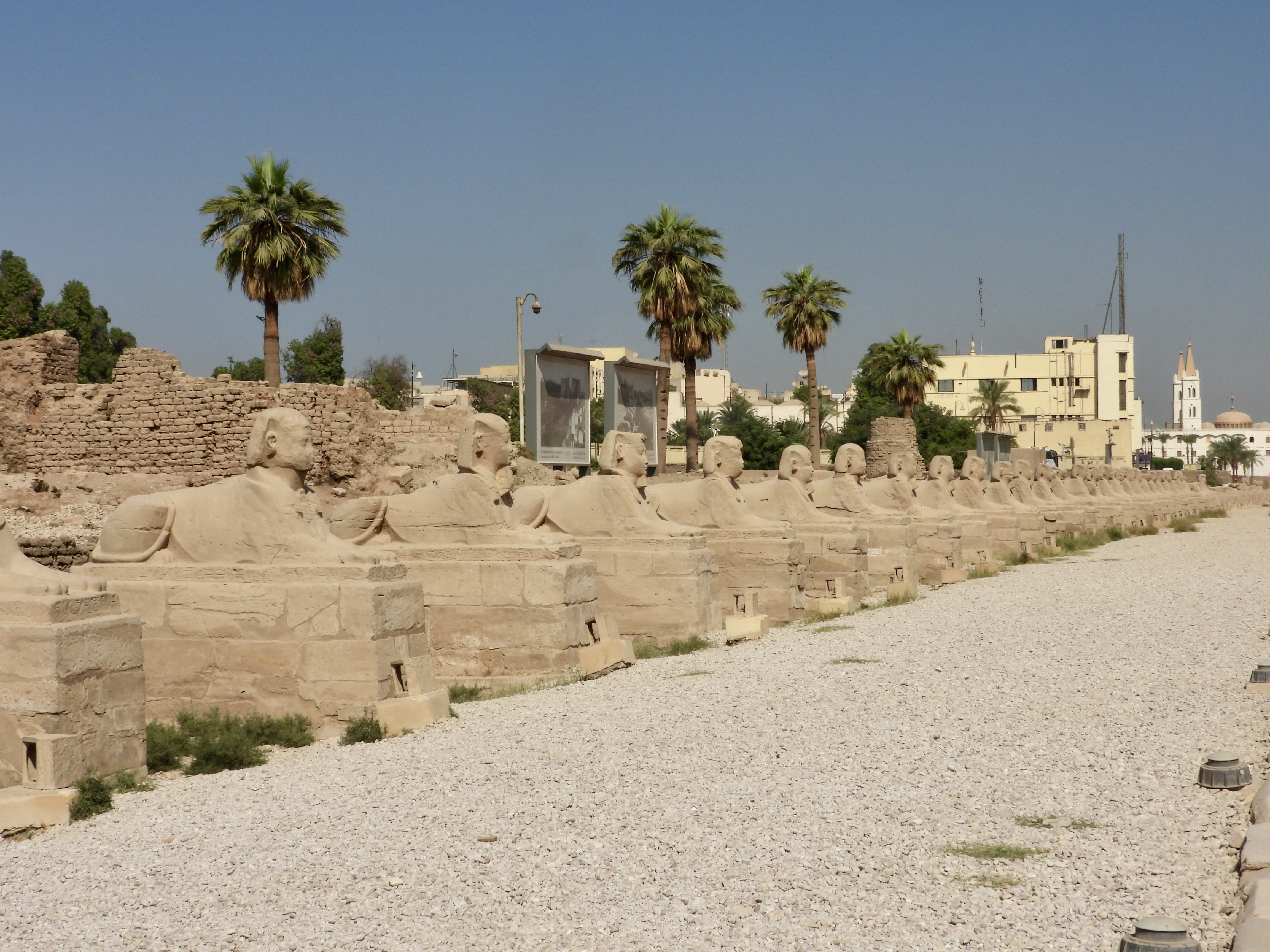
Our final stop for today was the Temple of Luxor, which is connected to the Karnak Temple by a 2.7-kilometer-long avenue lined with sphinxes. The Avenue of Sphinxes has been undergoing excavation since the 1940s.
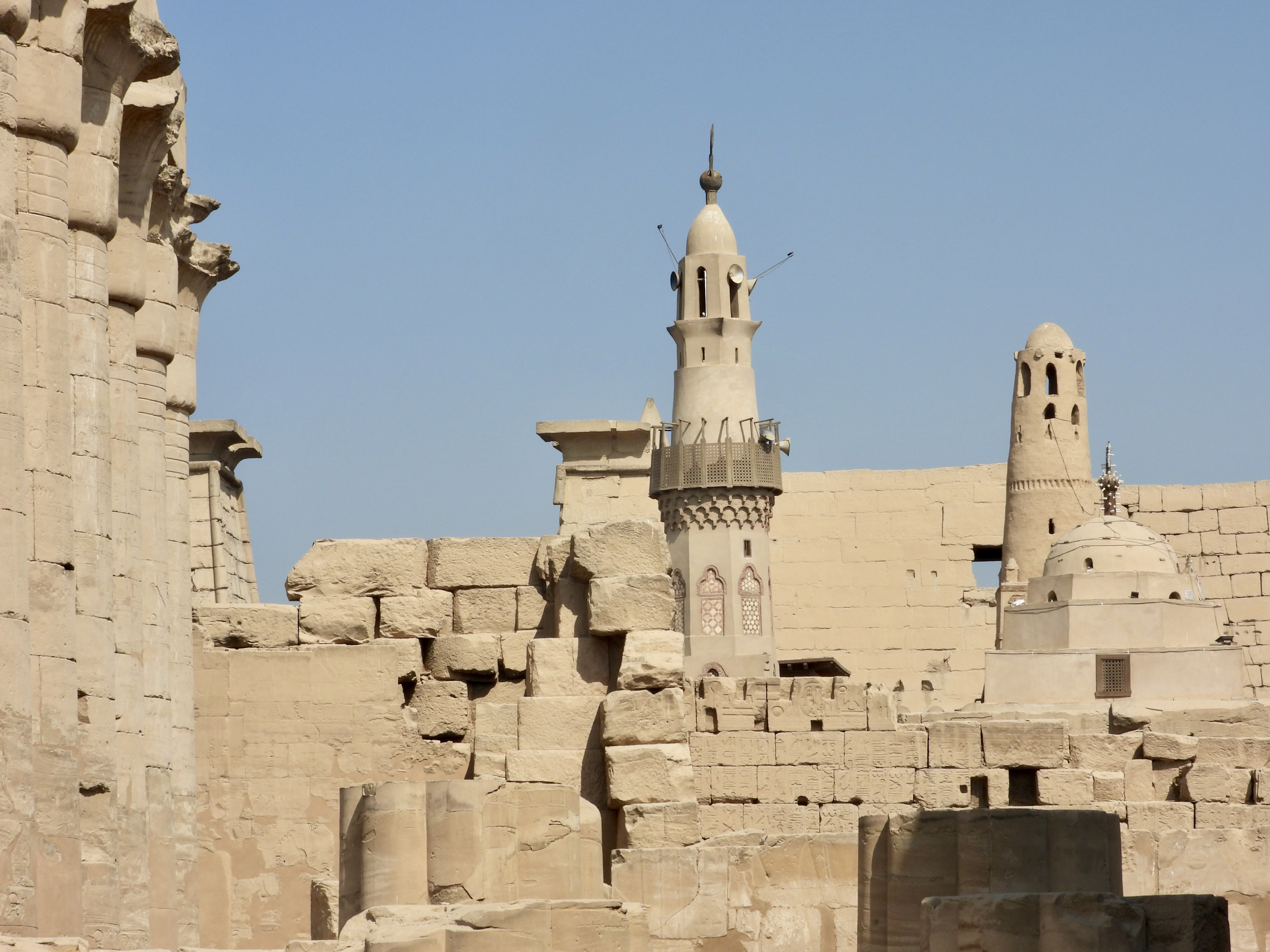
The temple itself is architecturally impressive, but what struck me most was how it had been reused by different religions over the centuries following the fall of ancient Egypt.
In Roman times, it became a cult temple; there are even pictures of Roman faces high up on one of the walls.
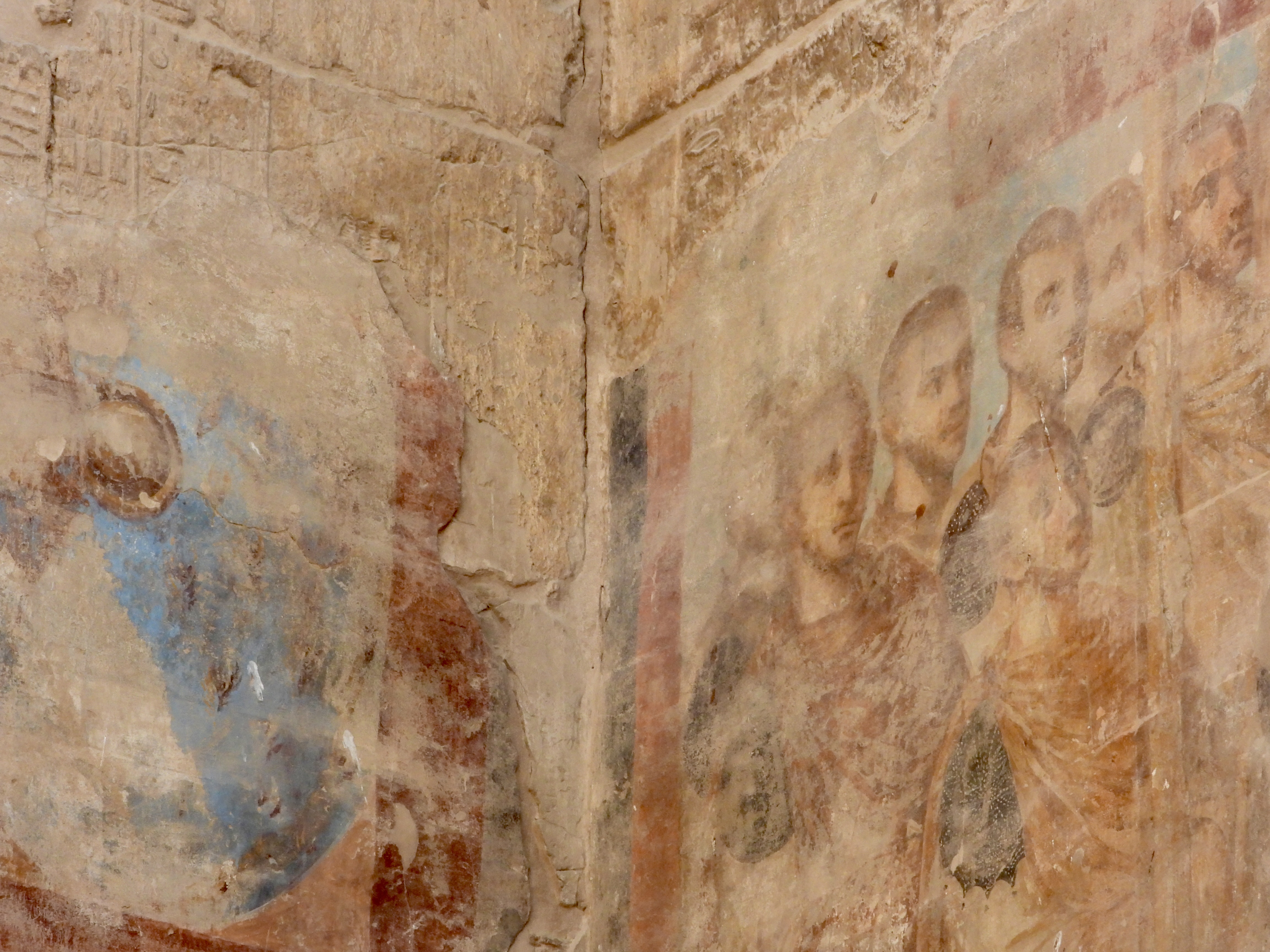
With the arrival of Christians, it was used for churches. In the 11th century, after Islam had taken root, a mosque was built on the temple’s walls using stones from the temple’s ruins; that mosque remains in use today.
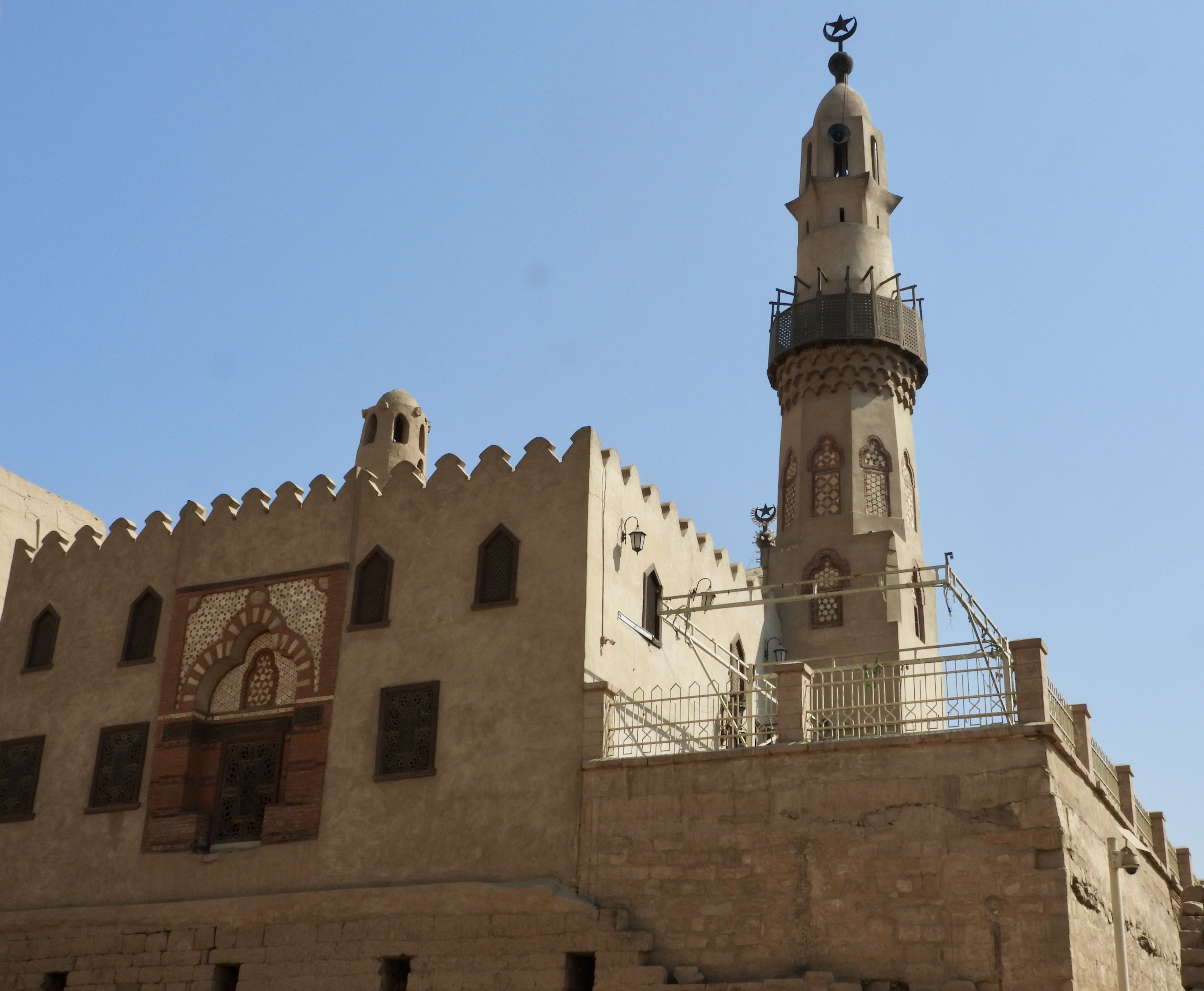
The mosque shows that by the 11th century, the temple had been buried. A village existed on the temple site, and what’s now the window of the mosque used to serve as the door. Excavation of the temple site began in the late 19th century, but didn’t really get going until the 1960s. Indeed, excavation work continues today.
Tomorrow will be our final day in Luxor. Bye for now!


A fabulous account!
We’re of the same mind when it comes to the Temple of Karnak. I looked back at my journal entry from that day: “For me, the highlight was the Great Hypostyle Hall, a “forest” of 134 gargantuan papyrus-shaped pillars. I was overwhelmed by the spectacle and actually found myself misting up. Superlatives of any kind just don’t do it justice.”
Great minds think alike, as they say!