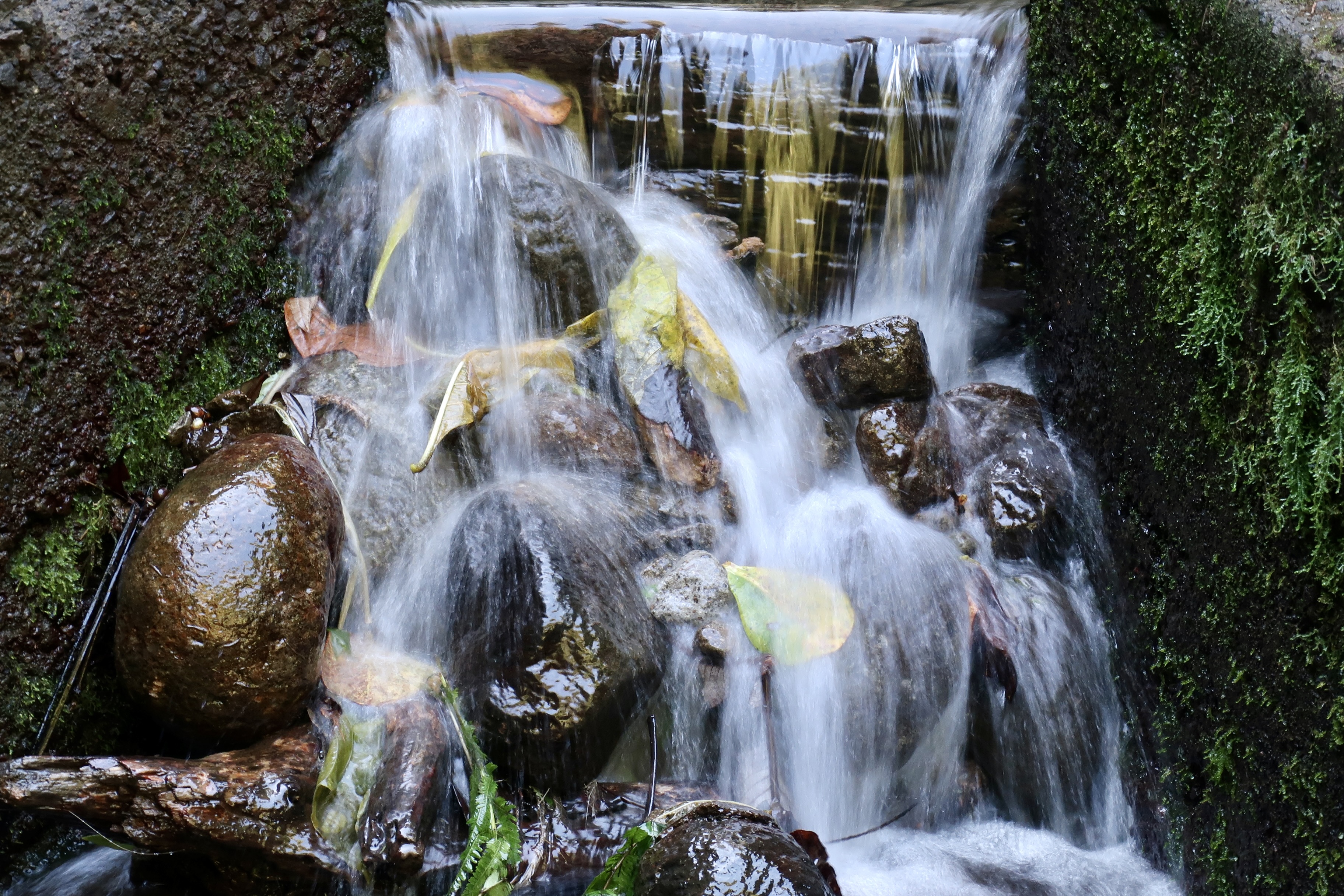
I disregarded TLC’s advice today, and once again went chasing waterfalls. I can’t help it: like waves breaking against the shore, waterfalls thrill me both aurally and visually. Some tinkle gently, forming braids and tendrils as they trickle their way down the rock face. Others plummet thunderously in sheets and stinging spray. I love them all.
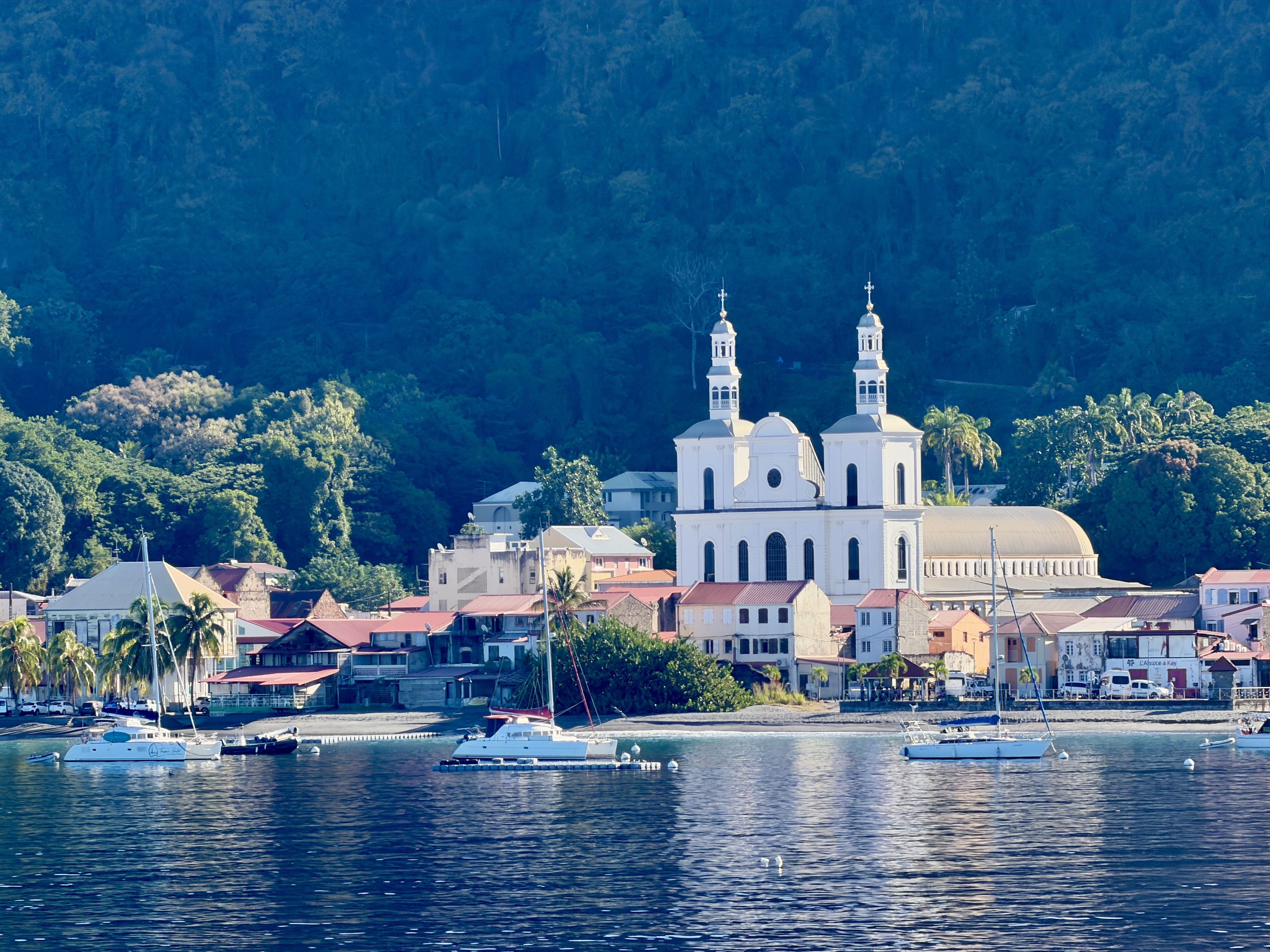
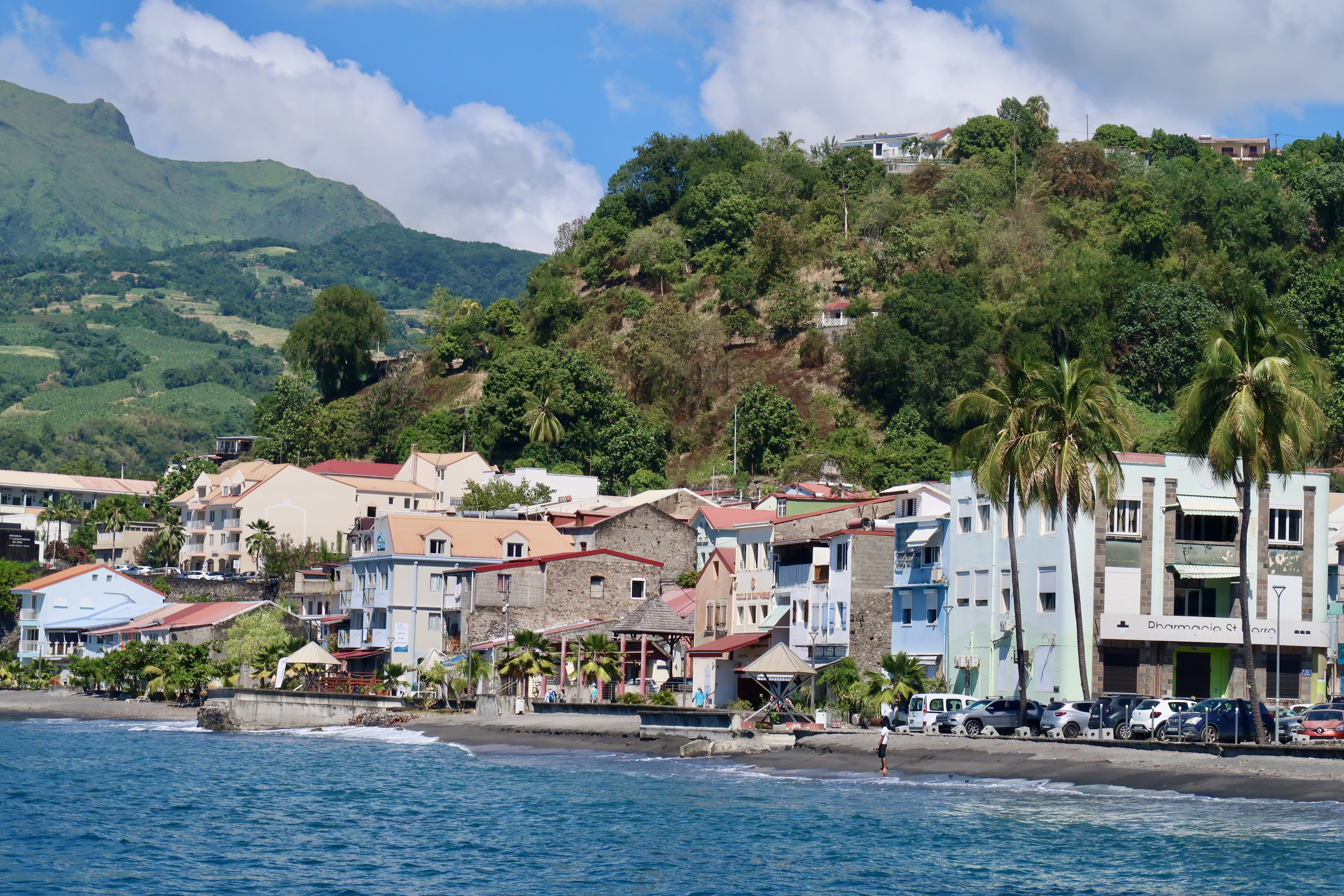
We anchored this morning off Martinique’s northwest coast and tendered to Saint-Pierre, a small town known as “Little Paris of the Caribbean” until it was buried by the catastrophic eruption of Mount Pelée in 1902. That eruption killed all but three of the town’s 28,000 residents, and Saint-Pierre’ sobriquet changed from “Little Paris” to “Little Pompeii.”
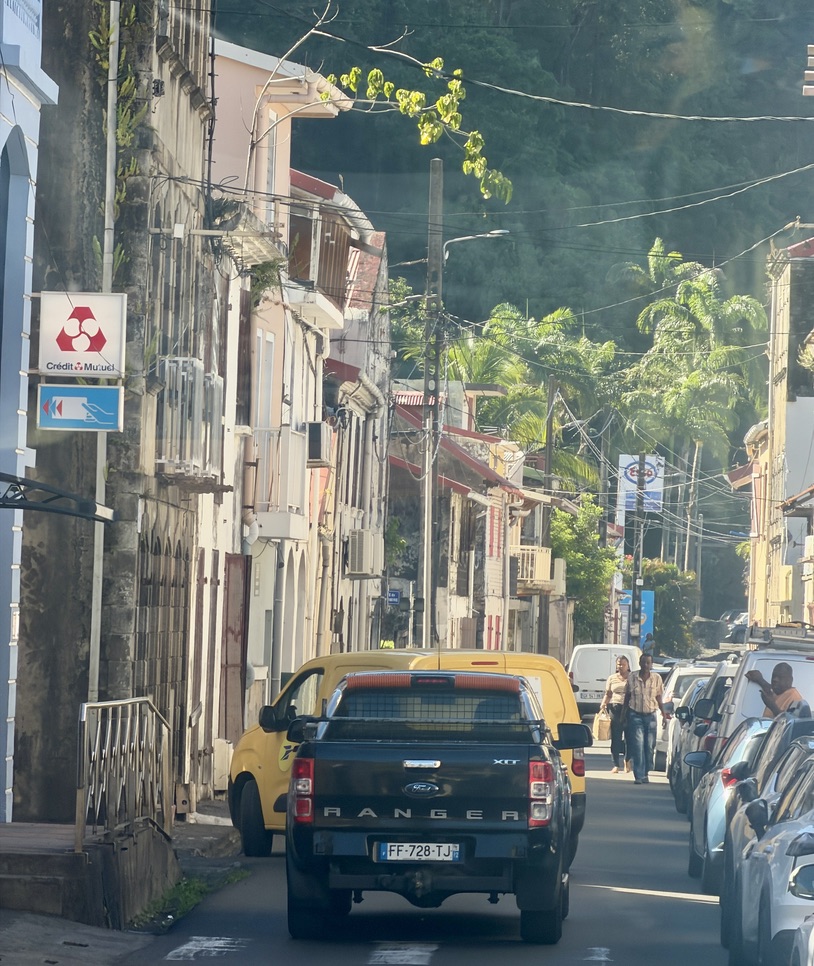
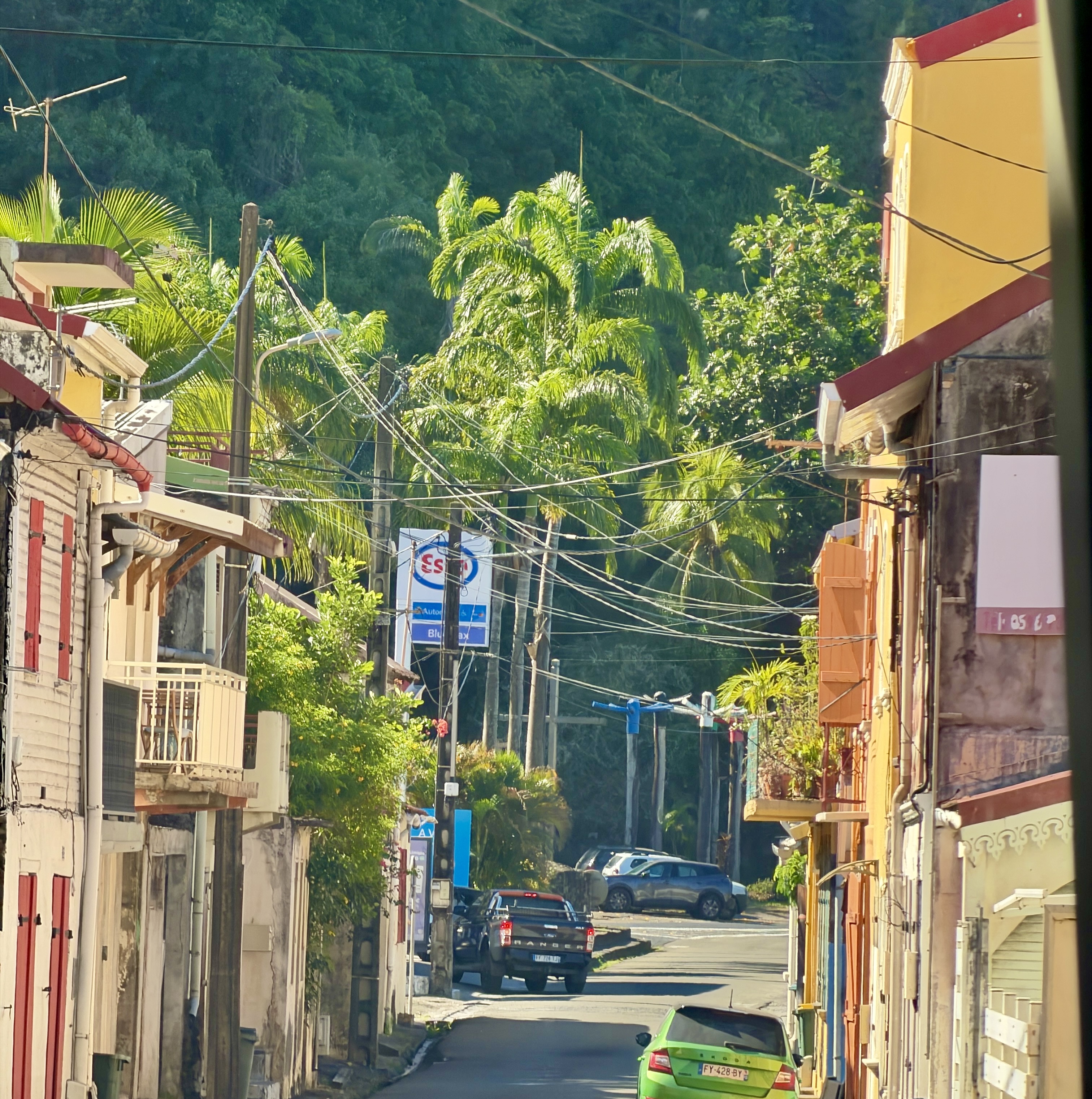
More than a century after the eruption, Saint-Pierre has been rebuilt into a town of narrow streets lined with narrow buildings, anchored by the twin towers of the gleaming white Co-Cathedral of Our Lady of the Assumption and seemingly held together by spaghetti strands of overhead electrical wires. It has an unpretentious, ramshackle charm.
After driving through Saint-Pierre on the oceanfront road, my tour headed inland to our first stop, a waterfall named Cascade du Saut du Gendarme. Reaching the waterfall requires a short climb on uneven ground and the crossing from rock to rock over a small stream. The water level was low today, so the stream wasn’t much of an impediment.
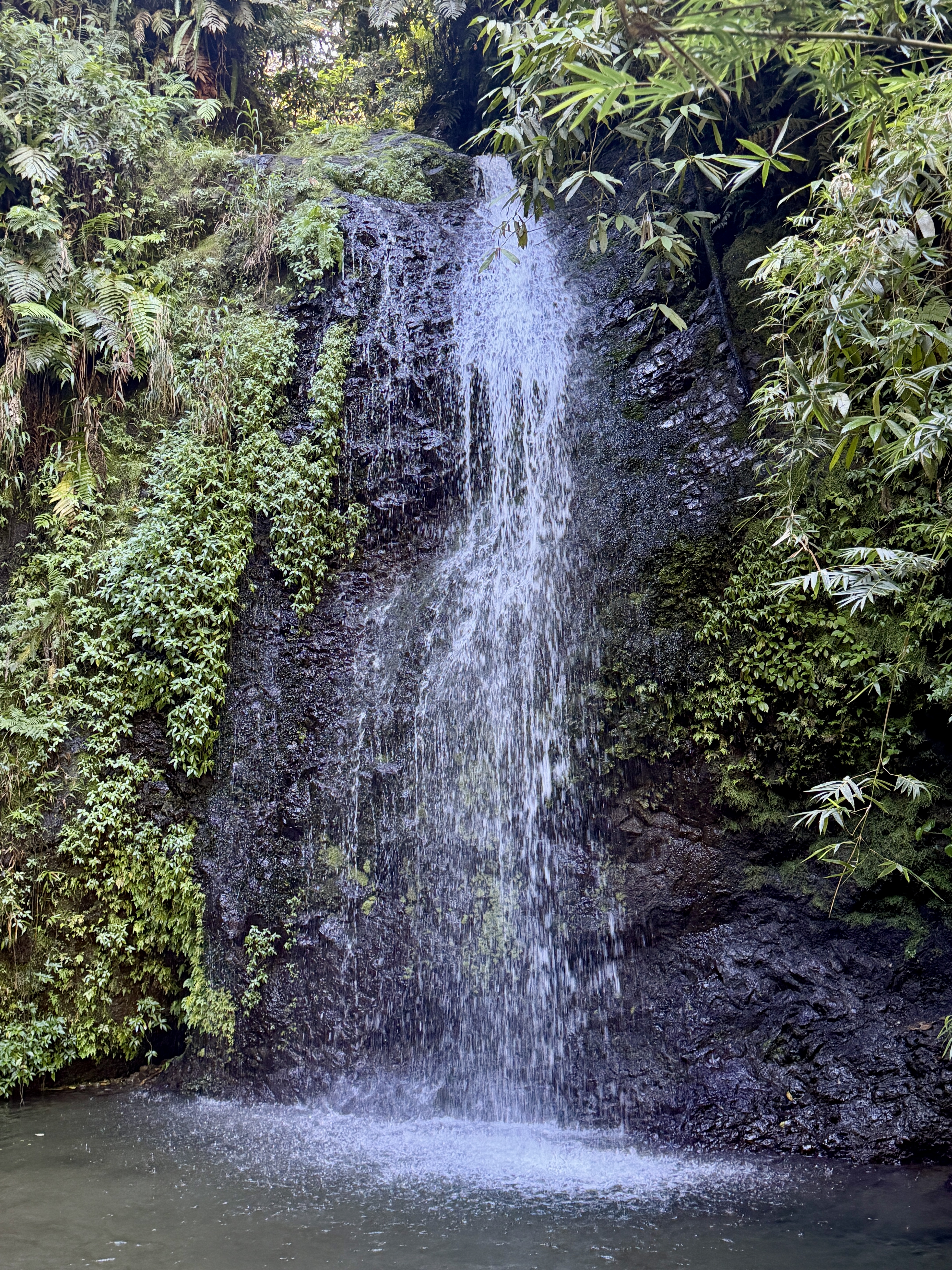
Cascade Gendarme is on the smaller, gentler end of the waterfall spectrum, with a ten-meter drop and a soundtrack closer to a whisper than a roar. But the setting is beautiful: it’s surrounded by lush forest and there’s a small pool at the base where people can dip their feet or, during the rainy season, swim.
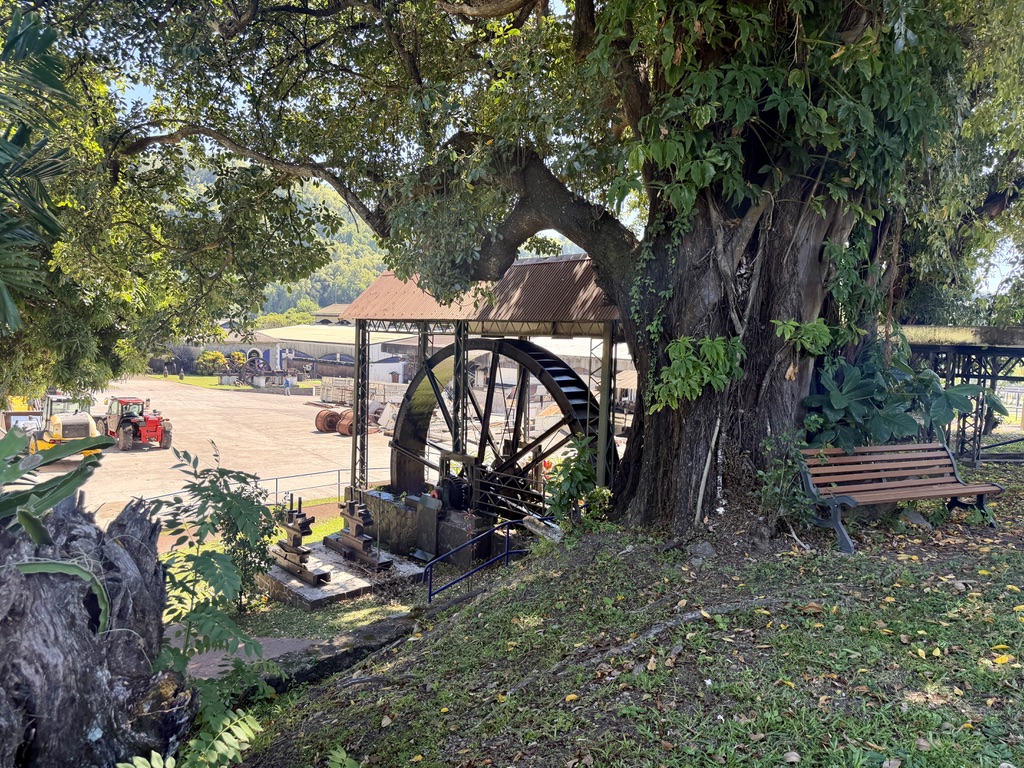
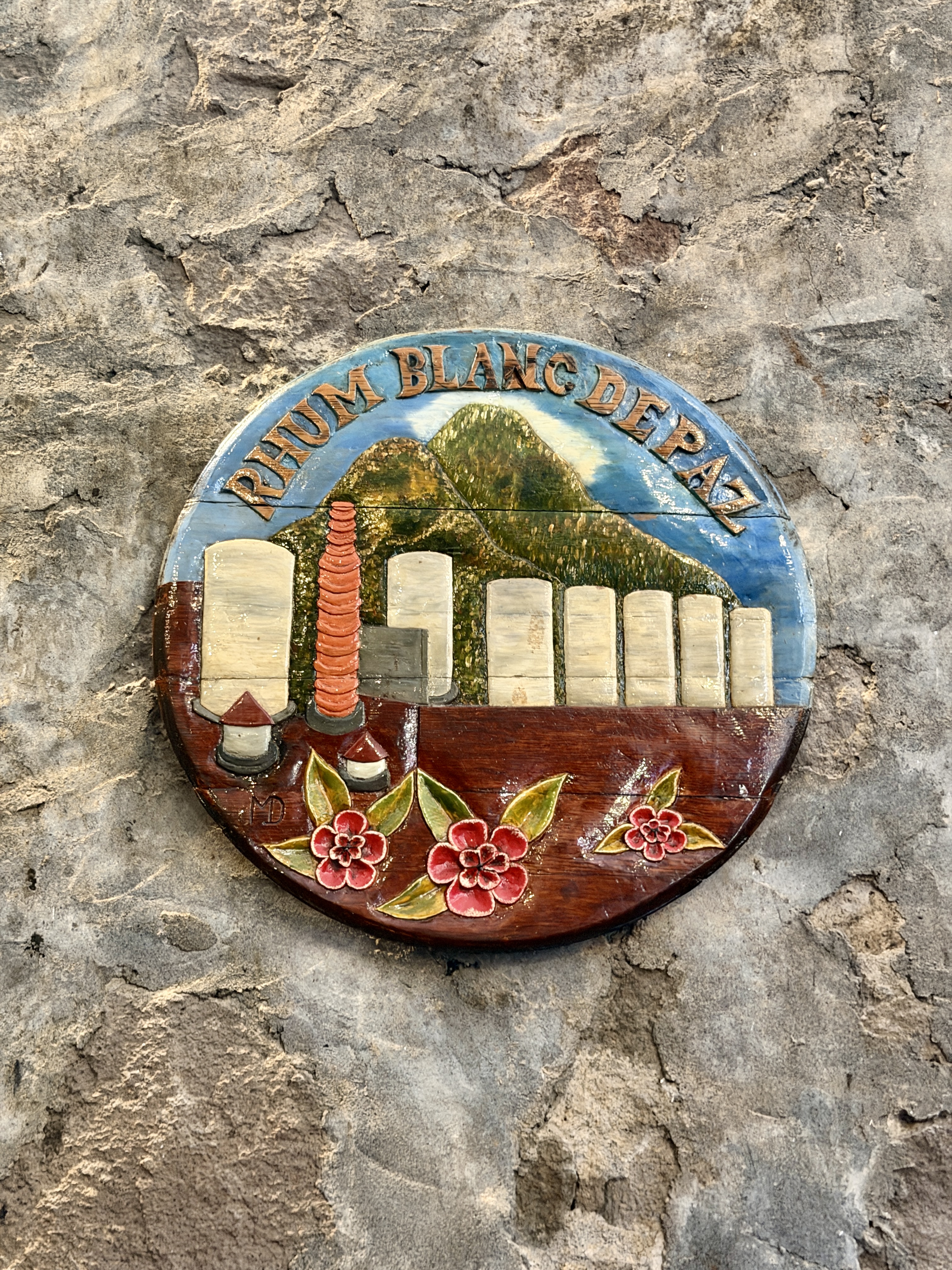
From the waterfall we headed to Rhum Depaz, a rum distillery rebuilt on its current site in 1917 by the only survivor of a family that was otherwise wiped out, along with the preexisting distillery, by the 1902 eruption. (The surviving son, 17 years old in 1902, was studying in France when the rest of his family was killed.)
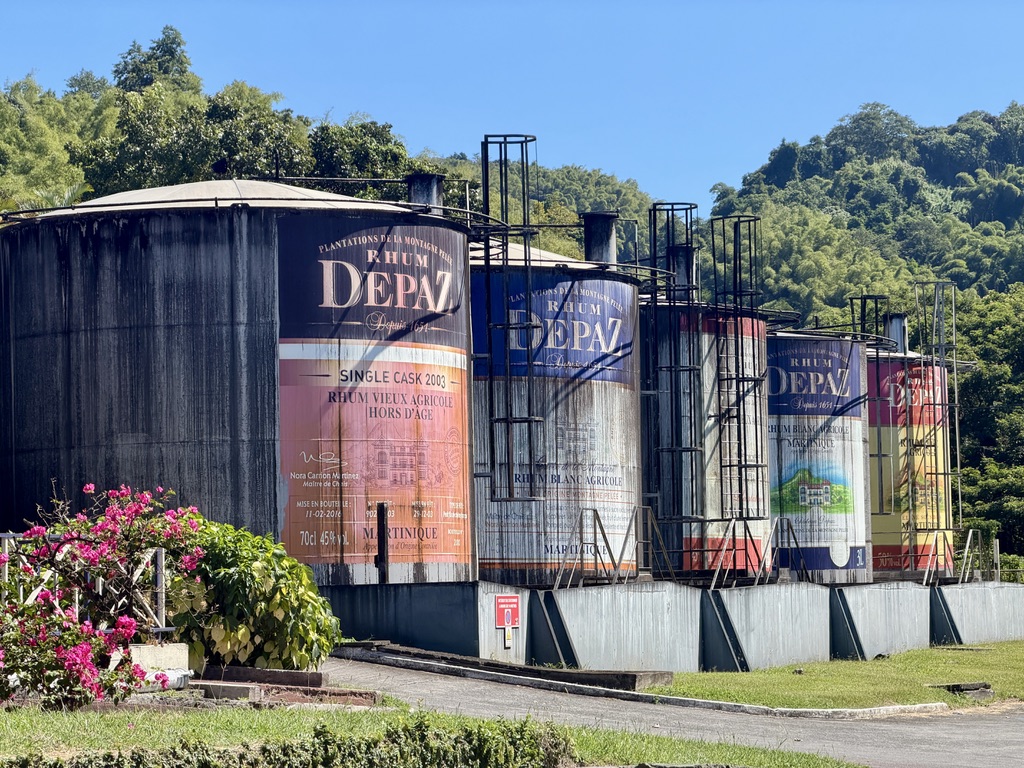
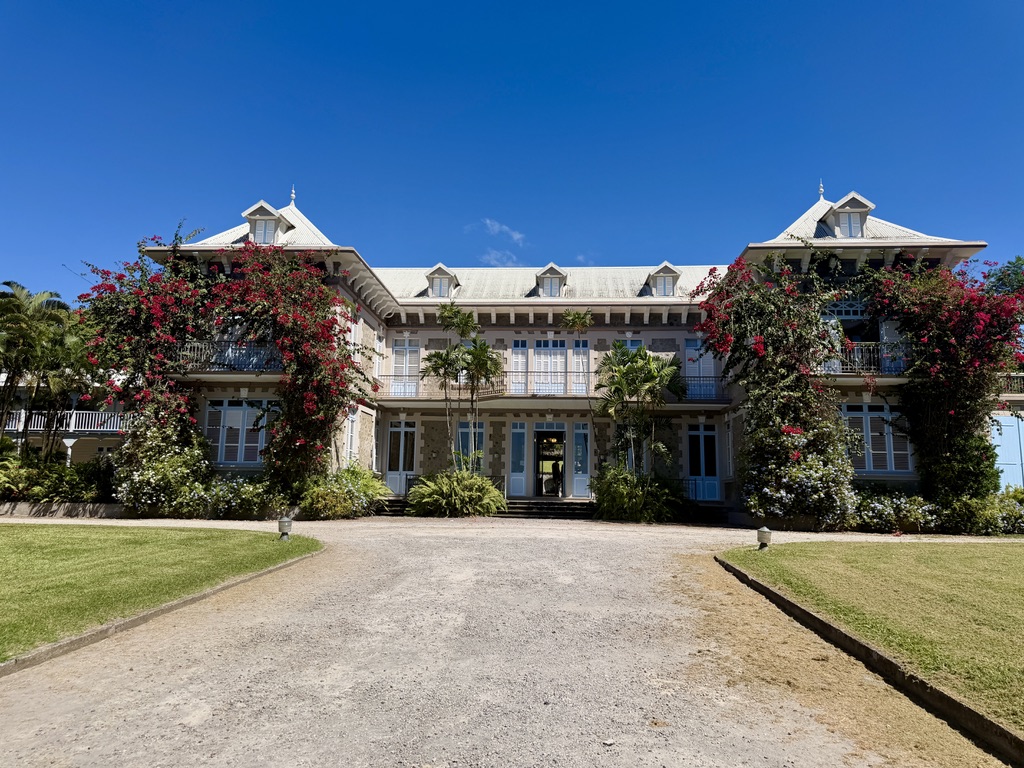
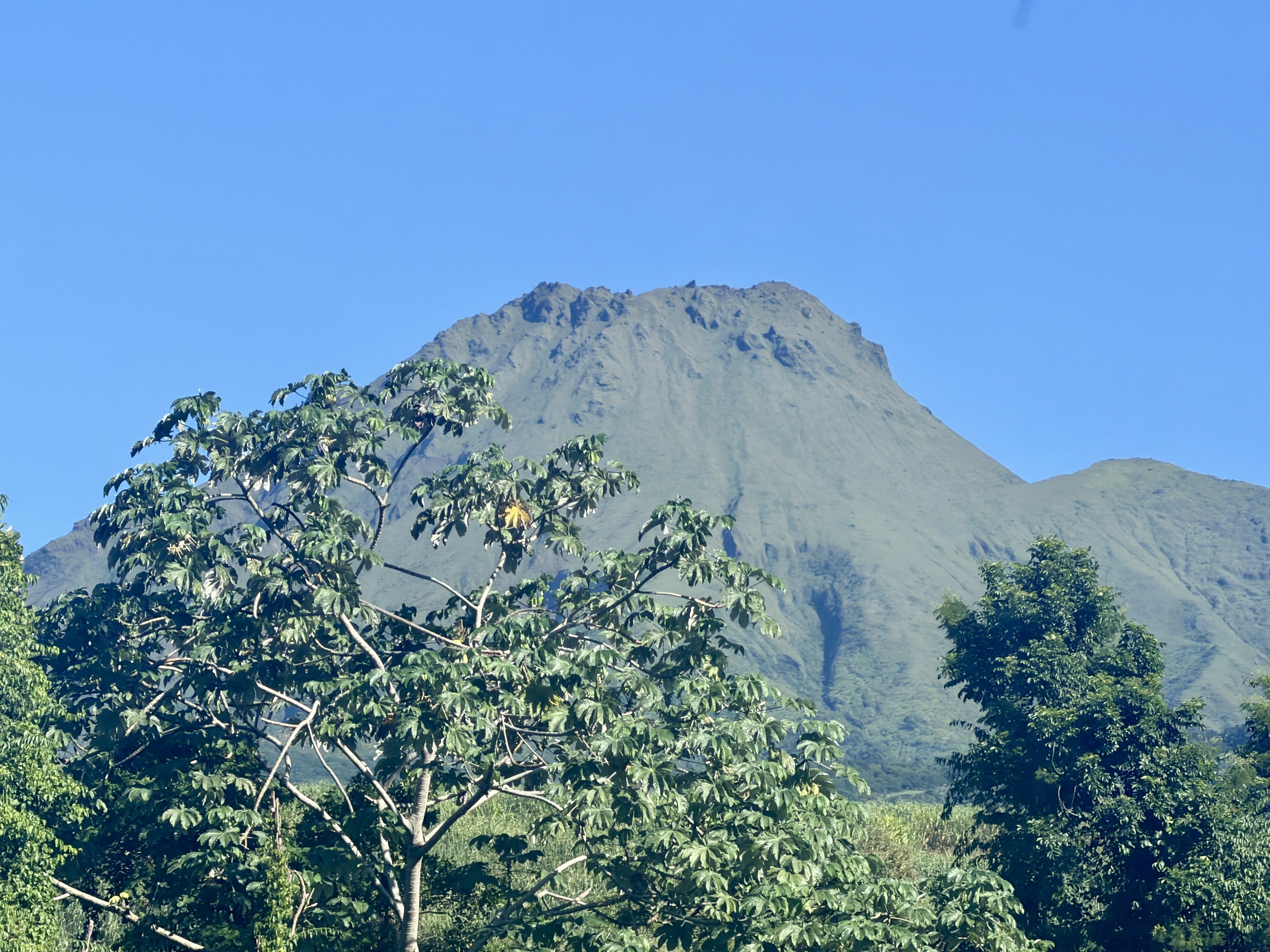
The grounds are immaculate, offering stunning views of the ocean and Mount Pelée. The Depaz mansion, a graceful, sprawling building, sits atop a small rise. Touring the inside, I had a clear sense of the lifestyle of the most privileged colonial families during the first half of the 20th century.
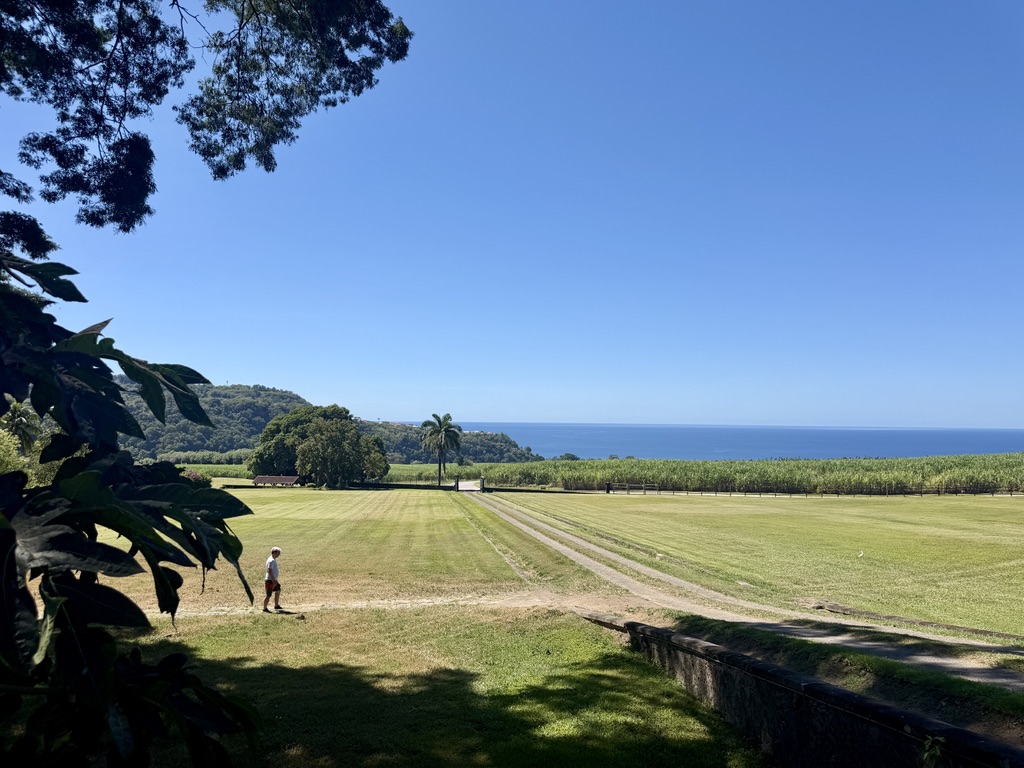
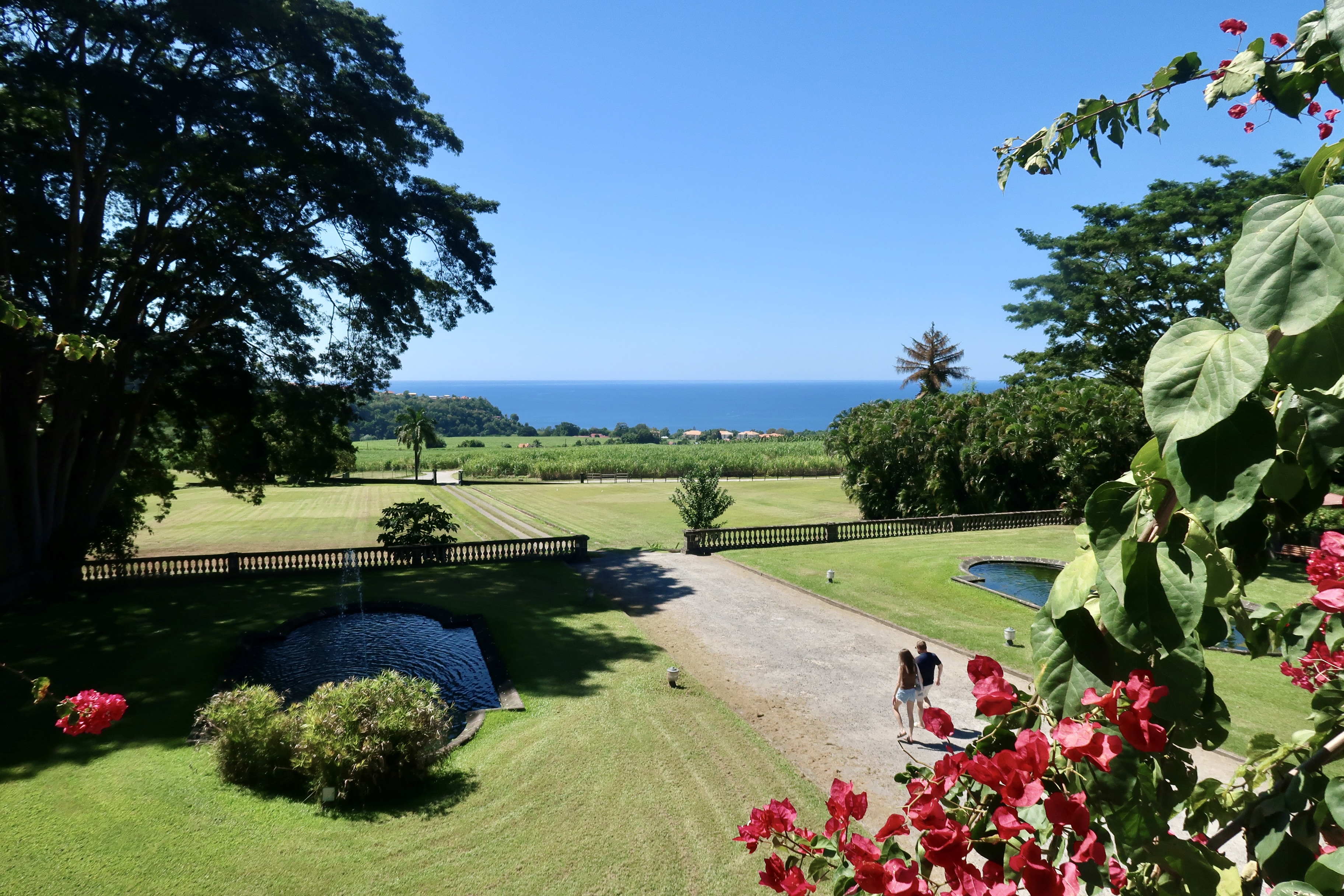

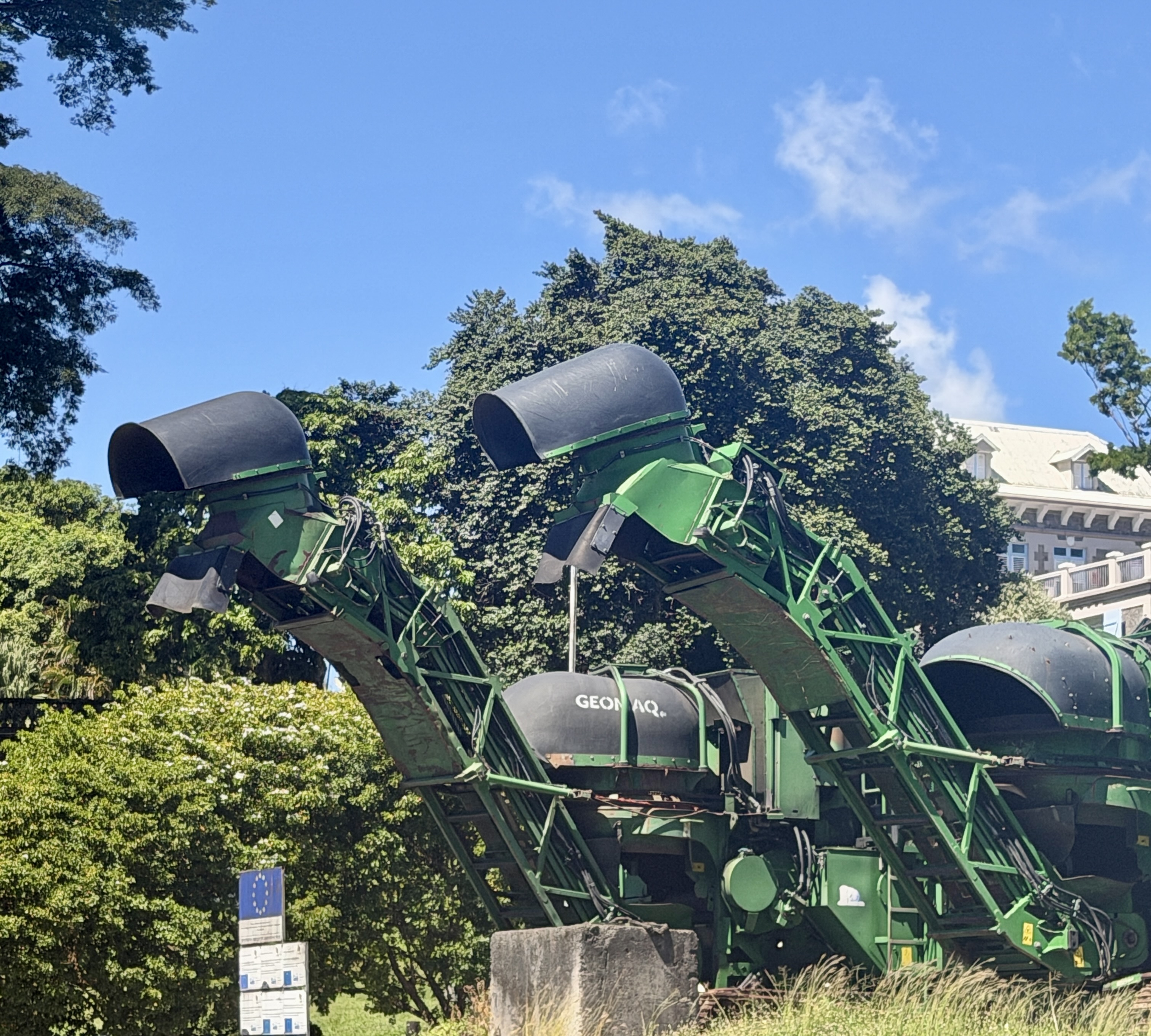
Following a sampling of the label’s offerings – and with a new appreciation for the subtleties of rum tasting, aided by our genial host, Fabrice – we wandered past equipment from the distillery’s former and present operations, some of which was as evocative as the mansion’s elegant décor. I’ve been on several distillery and winery tours during my travels; this one, thanks to the mansion, was above average.
I haven’t said anything yet about entertainment aboard the Journey, but now’s a good time to start. At five this evening, the ship’s dance leader, James Wolburg, gave an autobiographical ballet recital. Wolburg, who hails from Puerto Vallarta, is a graduate of the Joffrey Ballet School. At age twelve he weighed 220 pounds and, looking for a way to become healthier, he started doing tae kwon do. He quickly took to it, dropped half his body weight, and was accepted to train with Mexico’s national team. At age seventeen, the mother of one of his friends suggested he try ballet to supplement his tae kwon do. He was immediately captivated, dropped tae kwon do, auditioned for the Joffrey, and got a full scholarship. He has now danced leading roles all over the world. The talent on Azamara is always exceptional, but Wolburg truly stands out!
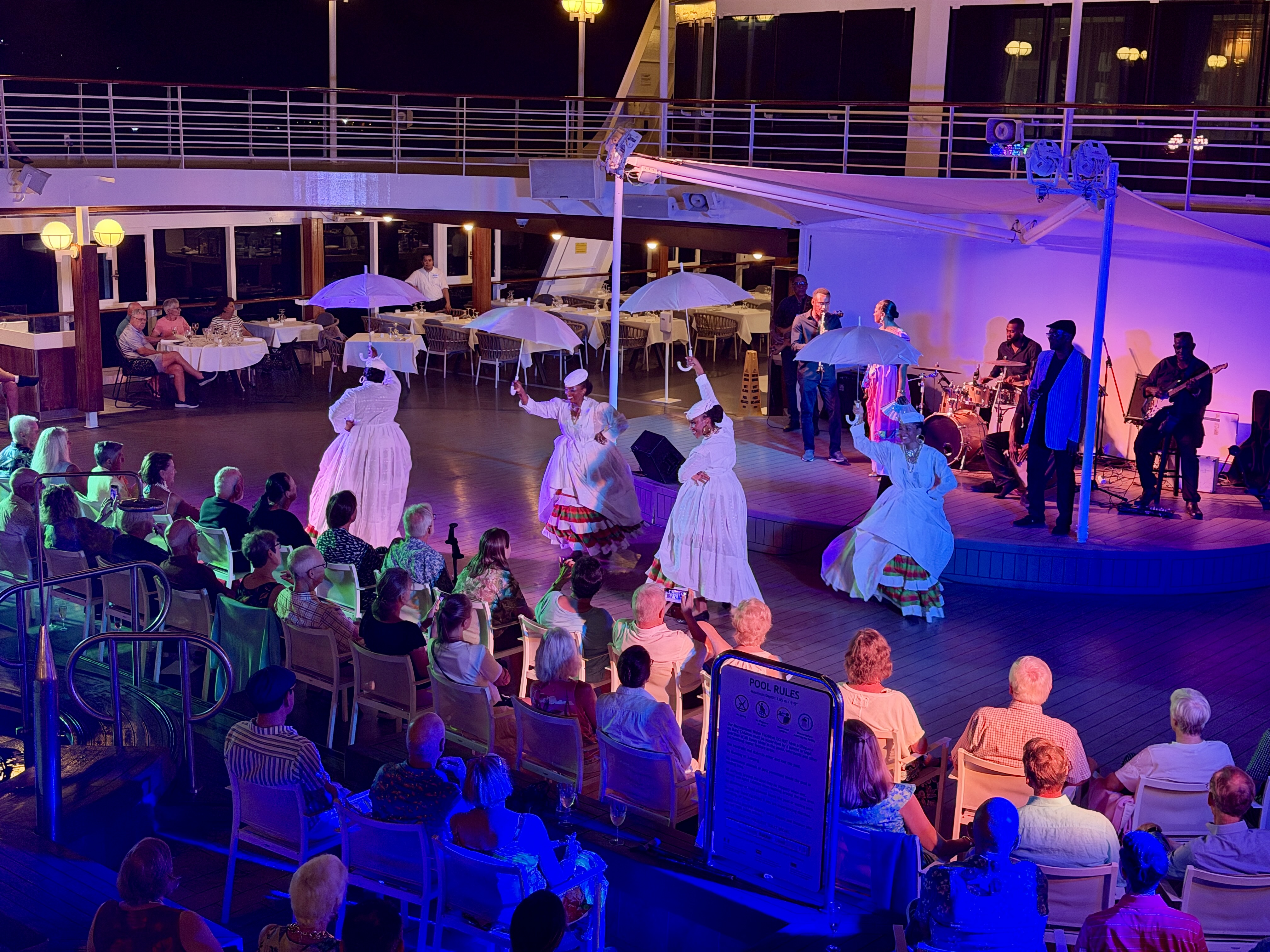
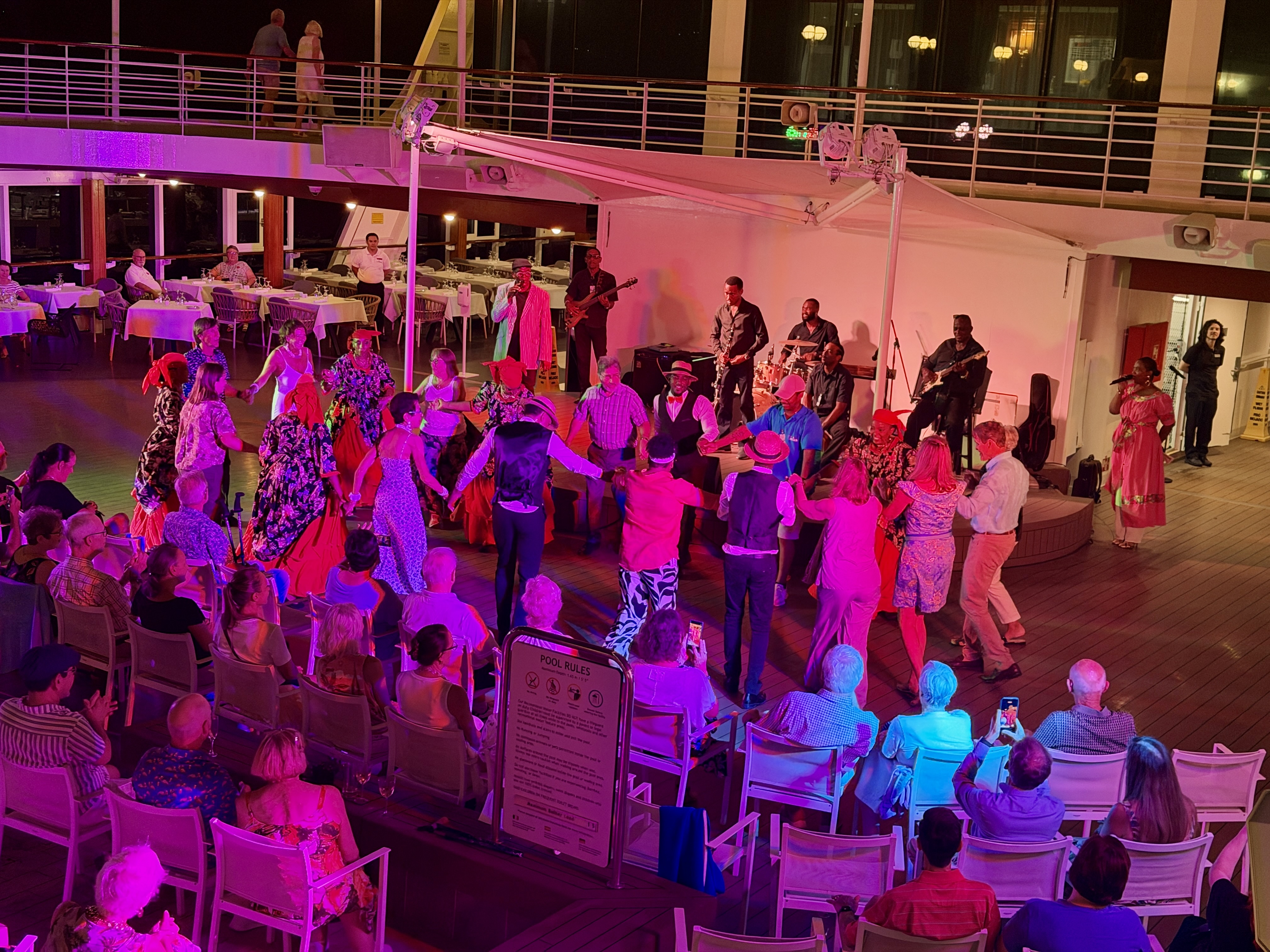
Finally, tonight was an “Azamazing Evening,” an Azamara tradition involving some kind of cultural immersion event. Often these events are held on shore, but given the lack of suitable venues on this itinerary, tonight’s show by singers and dancers from Martinique took place on deck. It was a high-energy, visually exciting performance that ended with passengers dancing with the artists. Kudos to Azamara for another terrific event.
I’ll leave things there for now and retire to dreams of waterfalls, which hopefully will not induce more than the usual number of late-night trips to the facilities.


