Warsaw saw war.
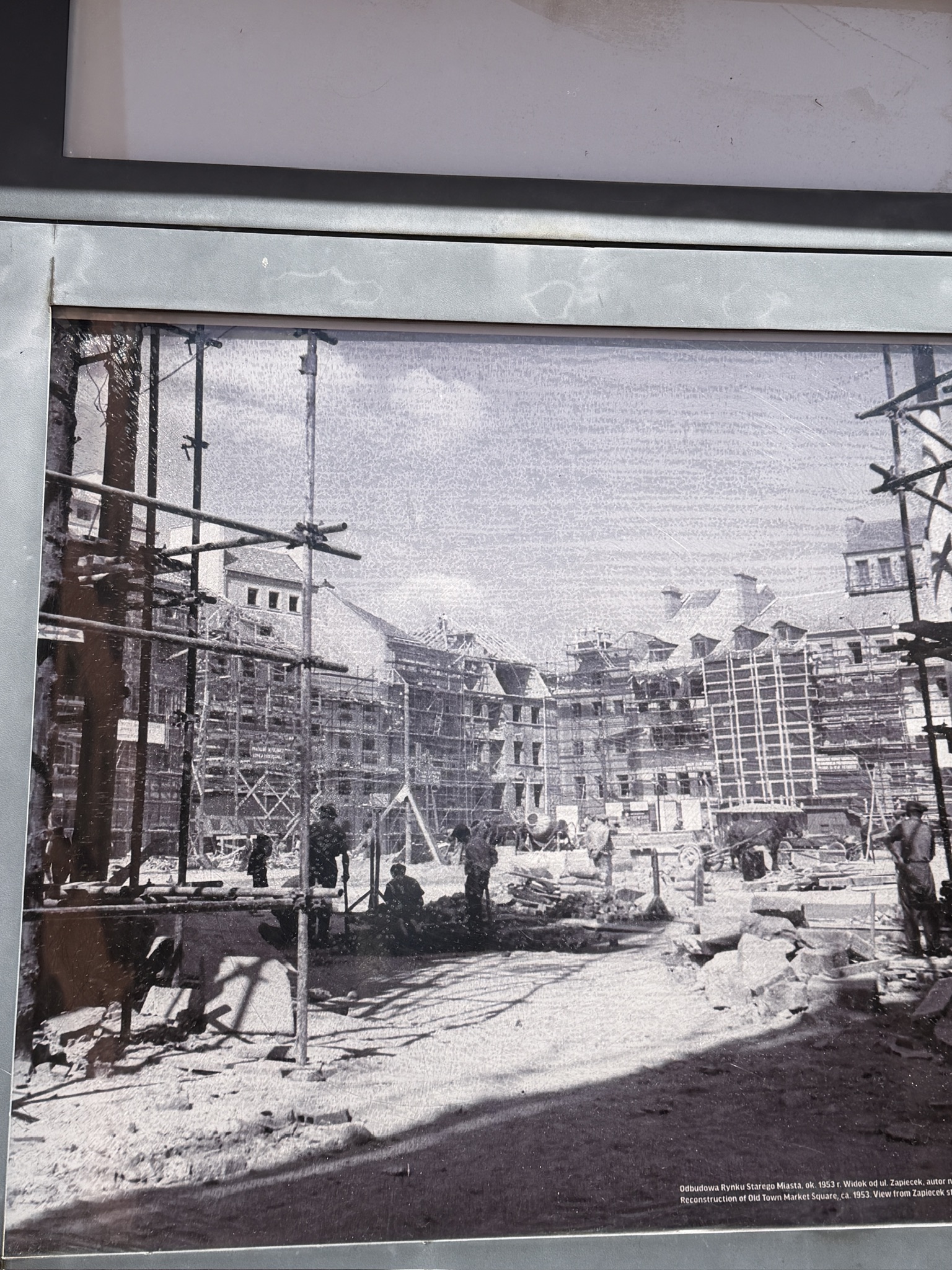
Of course, all of central Europe saw war from 1939-45, but the destruction in Warsaw – close to 90 percent of its buildings were reduced to rubble – rivals that in Dresden (where I’ll be in a few days) and Hiroshima.
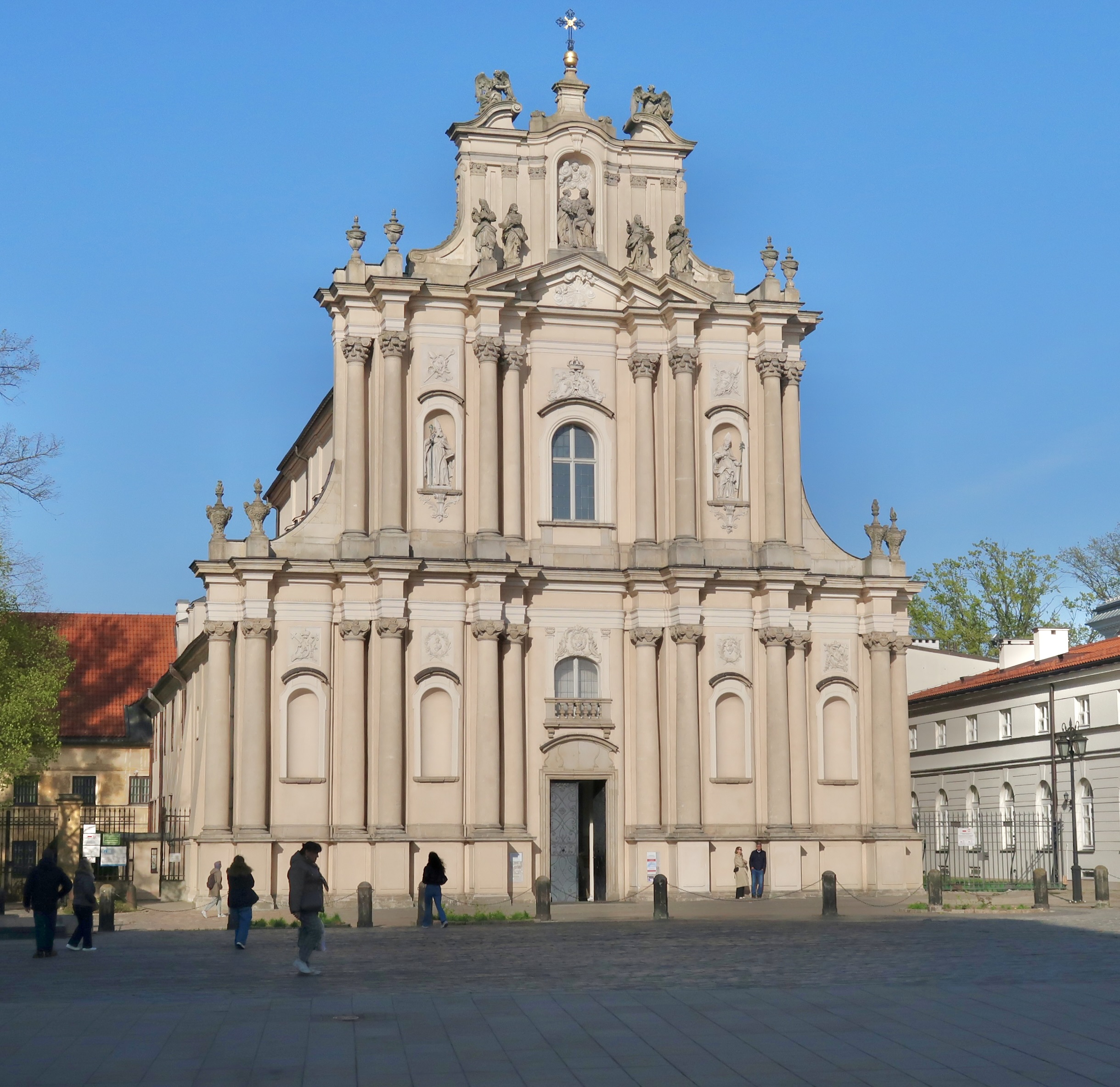
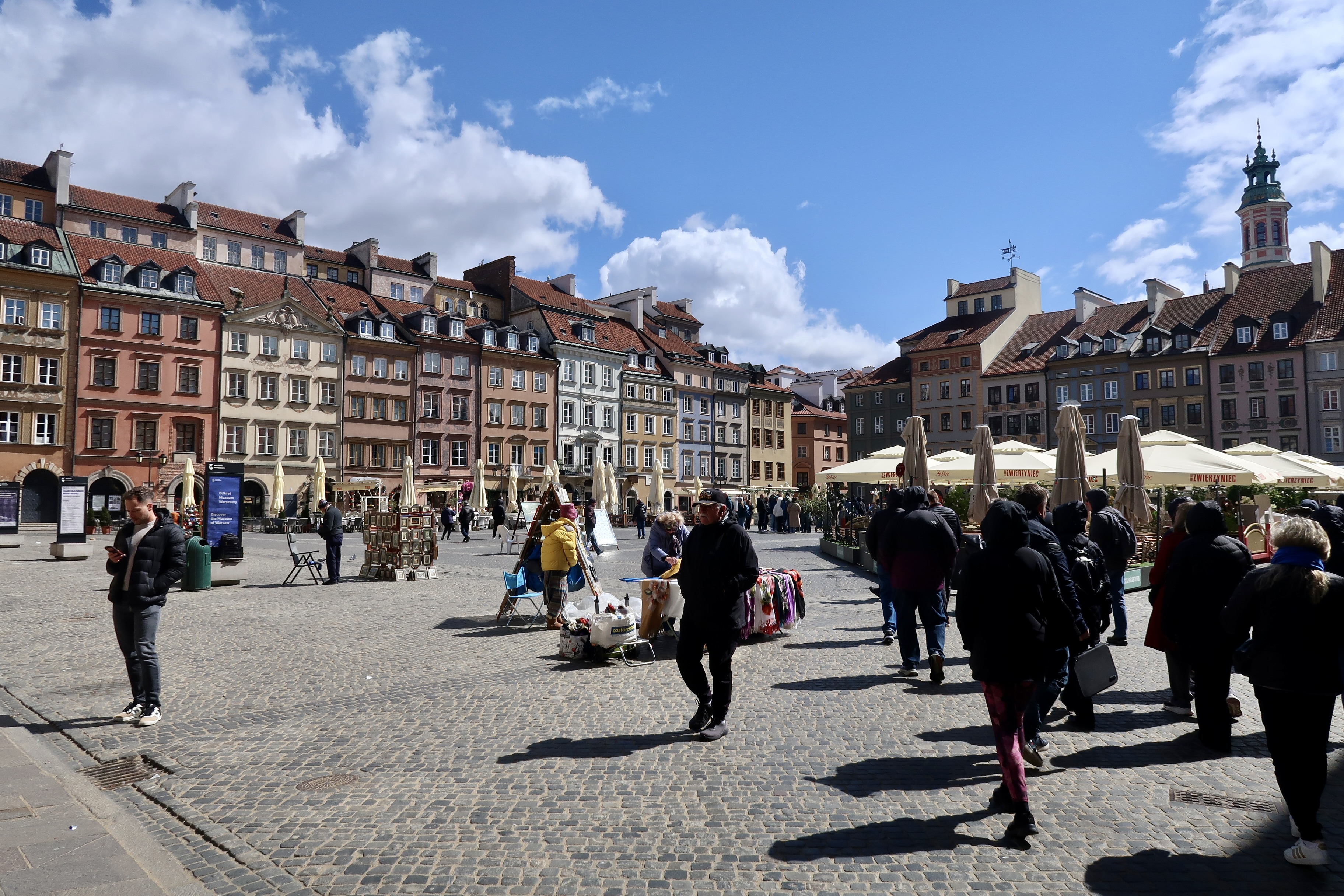
Walking around the city eighty years later, you wouldn’t know it. The old city (Stare Miasto), which was most heavily hit, was rebuilt within a few years after the war ended. To the extent possible, the reconstruction used original materials salvaged from the debris, a technique (so Wikipedia informs me) called anastylosis, which frankly, sounds like an unfortunate medical condition. Today, the old city looks much like it did in the centuries leading up to World War II, thanks to detailed paintings of the city done by Canaletto in the 1700s and the heroic efforts of the Polish people.
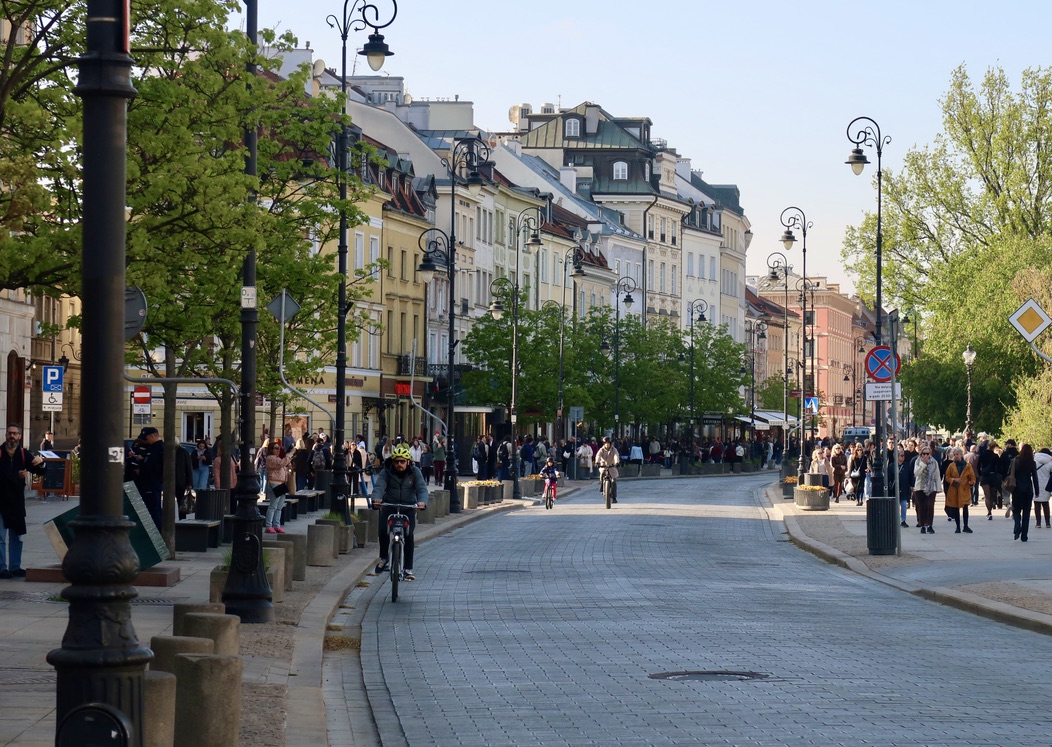
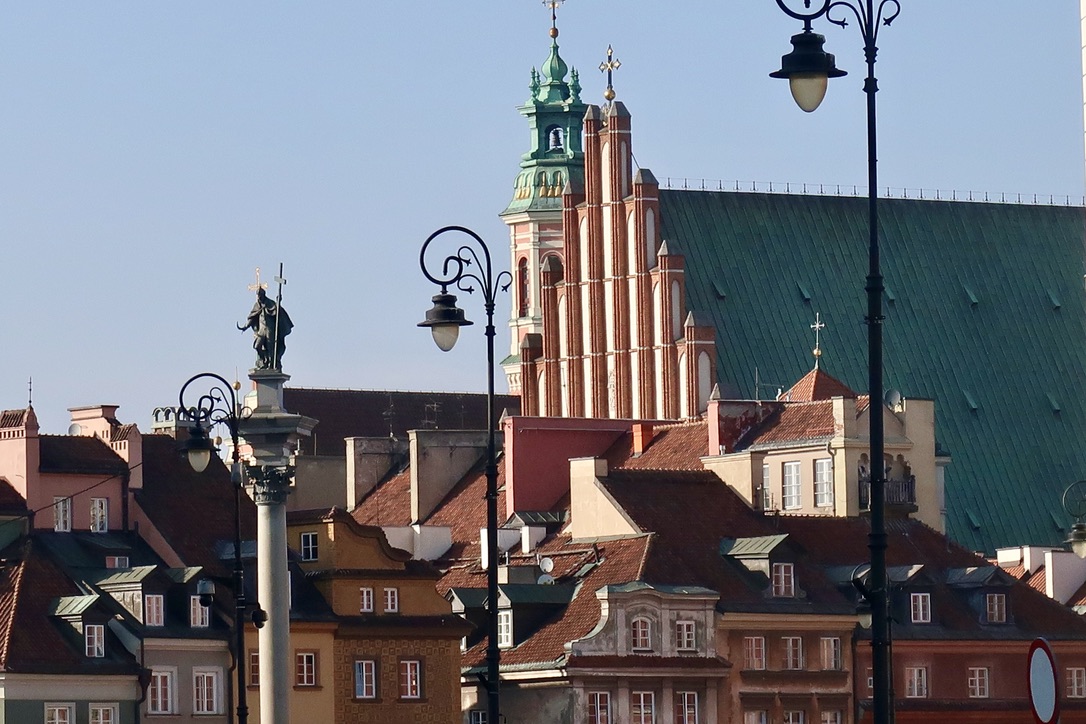
Of course, despite outward appearances, Warsaw was changed dramatically by the war. The once-thriving Jewish community, which accounted for one-quarter of the city’s pre-war population, was obliterated. And the Soviet takeover assured not just privation and denial of basic rights, it also meant that outside the Stare Miasto, most newer buildings are typical Communist-era monoliths. (One such monolith, the one-time headquarters of the Polish Communist Party, now has a Mercedes and Maybach dealer on the ground floor. To quote Ms. Morissette, isn’t it ironic?)
By the way, historians debate whether FDR and Churchill could have prevented Poland from falling to Stalin. For an excellent discussion of the ways the Allies disappointed the central European resistance, check out Lynne Olson’s “Last Hope Island.”
Talk about a heavy start to a travelogue! I’ll begin again on a lighter note.
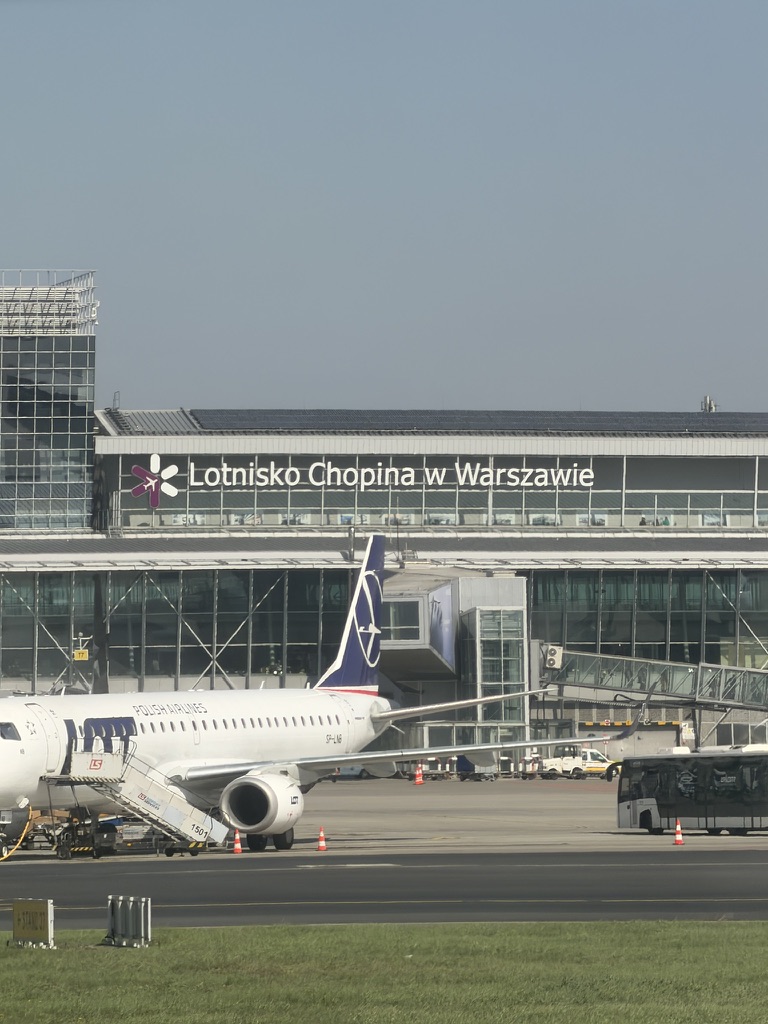
I landed at Warsaw’s Frederic Chopin airport mid-afternoon yesterday. Anyone can name an airport after a politician or military hero. To me, honoring a musician or cultural icon says something different and important about a city’s priorities. Chopin’s name appears throughout Warsaw – there are even park benches that play his compositions at the touch of a button – even though he lived much of his life in Paris and is buried in that city’s Père Lachaise cemetery. Or at least most of him is buried there: his heart was brought back to Warsaw, where it is sequestered inside a pillar of Holy Cross Church, around the corner from my hotel.
As a further aside – if you’ve read this blog for long, you know that tangents and I go way back – I was curious how many other well-known cities have airports named after musicians. It’s a small list: Salzburg, Austria (Mozart), Budapest (Liszt), Rome (da Vinci – not a musician, though I’m sure he could have been a great one if he weren’t so busy painting, sculpting, and inventing), Rio de Janeiro (Jobim), Buenos Aires (Astor Piazzola), New Orleans (Louis Armstrong), and Liverpool (John Lennon). Makes for a pretty good playlist, if you ask me.
As I’ve mentioned before (see my April 2025 post, “Thoughts on TWA: Traveling While American”), I like to learn a few words of the native language when I visit a new place. I found a list of Polish words and phrases, as well as a pronunciation guide, and at the end of my Uber ride to the hotel said dziękuję (“thank you”) to my driver. Or at least I thought I did; after eliciting a blank stare and showing her my google translate page, she laughed and repeated dziękuję in a way that perhaps bore a distant resemblance to my version, in the same way that my effort to play a Chopin etude bears at most a distant resemblance to the real thing. I’m just relieved that whatever word I did say wasn’t offensive!
After checking into my hotel (the Sofitel, which is airy and comfortable but falls short in the character department) and meeting other Viking passengers who signed up for the Poland pre-extension, our guide for the week (Sandor, a Hungarian with a sly sense of humor) took us for a walk into the old town.
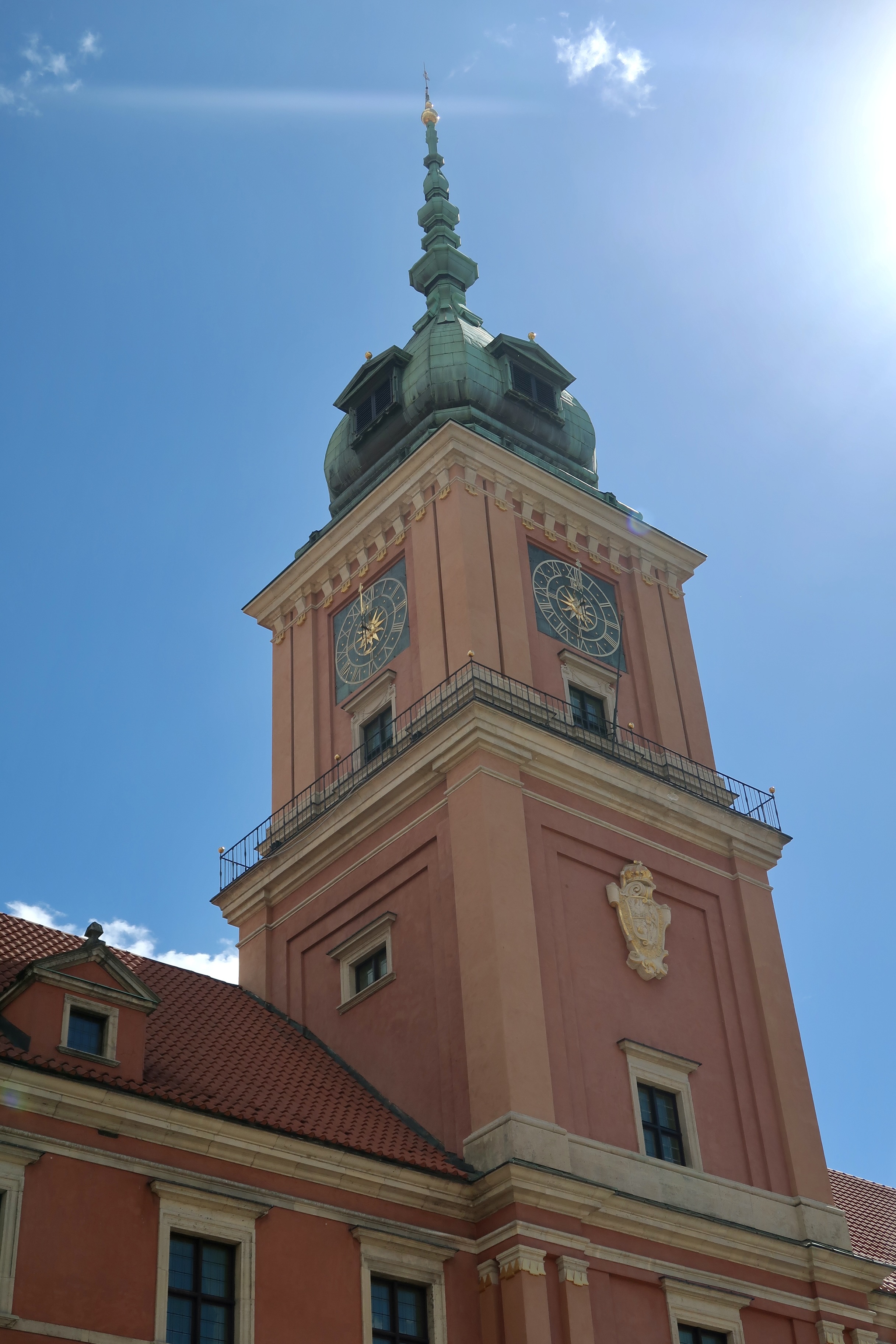
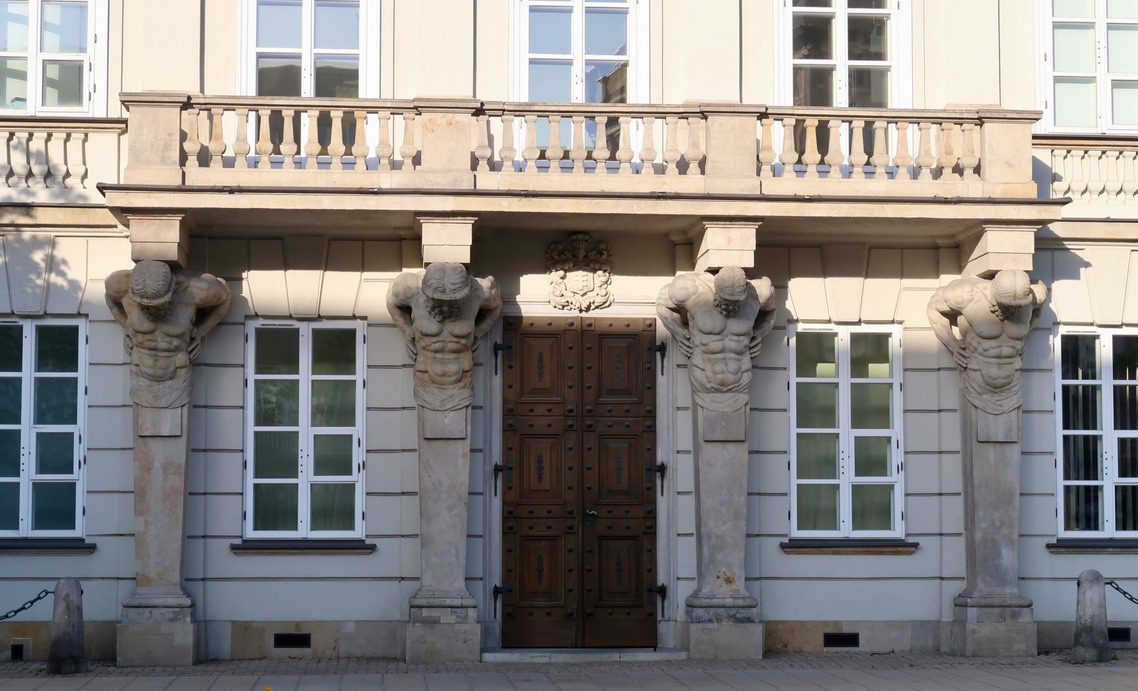
Here’s where I find my way back to the trail marked at the beginning of this post. The “Royal Road” into Stare Miasto is lined with stately palaces, churches, and hundreds of other pristine buildings from the 17th and 18th centuries – all of which were destroyed by the Nazis and rebuilt after the war, rising Phoenix-like (more accurately, Warsaw-like) from the ashes. Sandor pointed out several highlights, including the Presidential Palace, Church of the Carmelites, and Royal Palace.
After Sandor returned to the hotel, I continued strolling randomly, relying on my sense of direction to lead me back to the hotel. Alas, I’m forced to conclude that my sense of direction has joined my hair, my ability to sleep, and many of my inhibitions in abandoning me in my dotage. Thank you, Google Maps, for reorienting me!
Several thousand steps later, I ate at an informal restaurant behind the Sofitel, called … InFormal Kitchen, on Małachowski Square. Sandor recommended it, and he did not steer me wrong. (By the way, the “ł” is pronounced like a “w” in English. The Polish “w” sounds like a “v” in English.) Then it was off to bed, if not to sleep (see above).
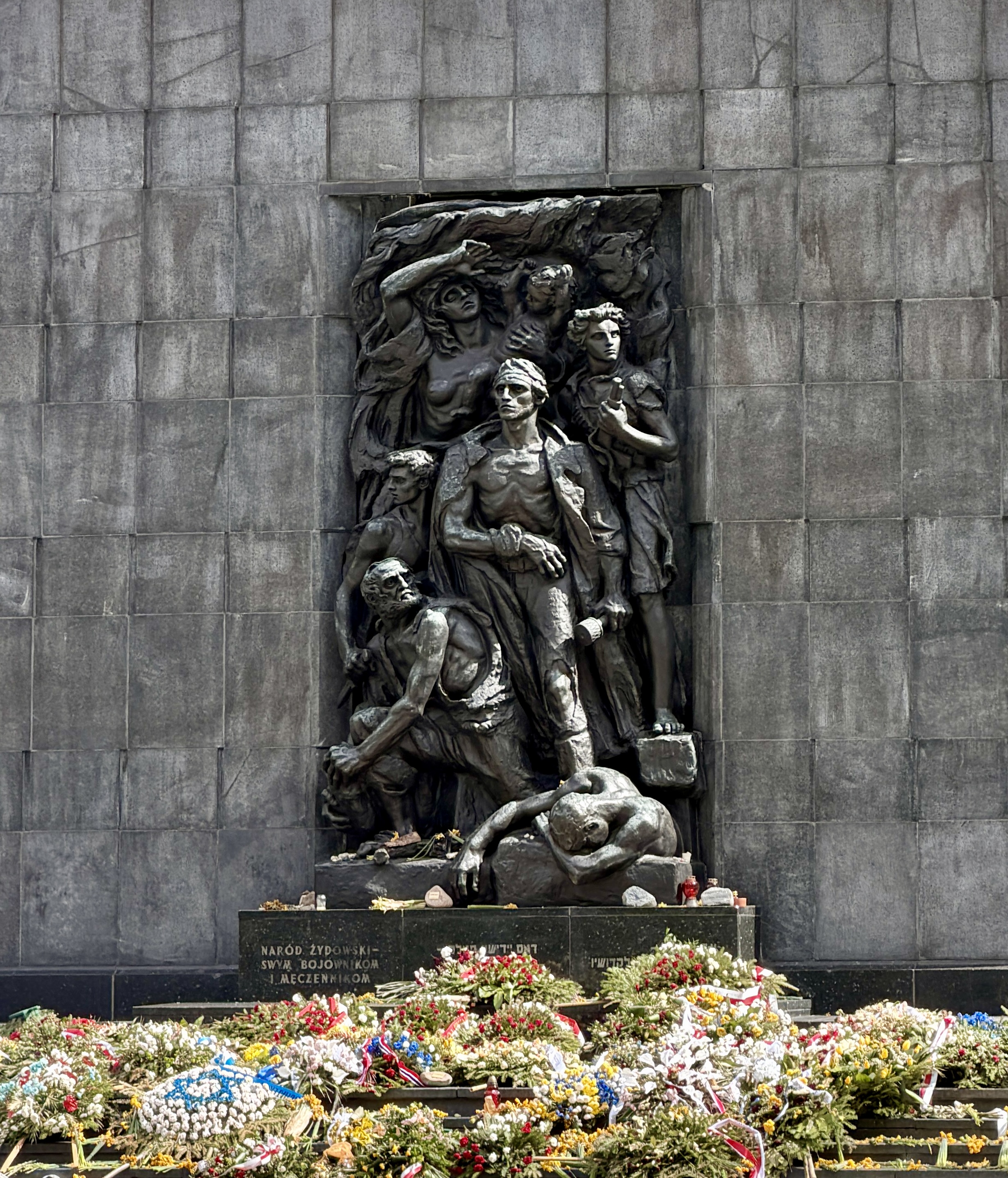
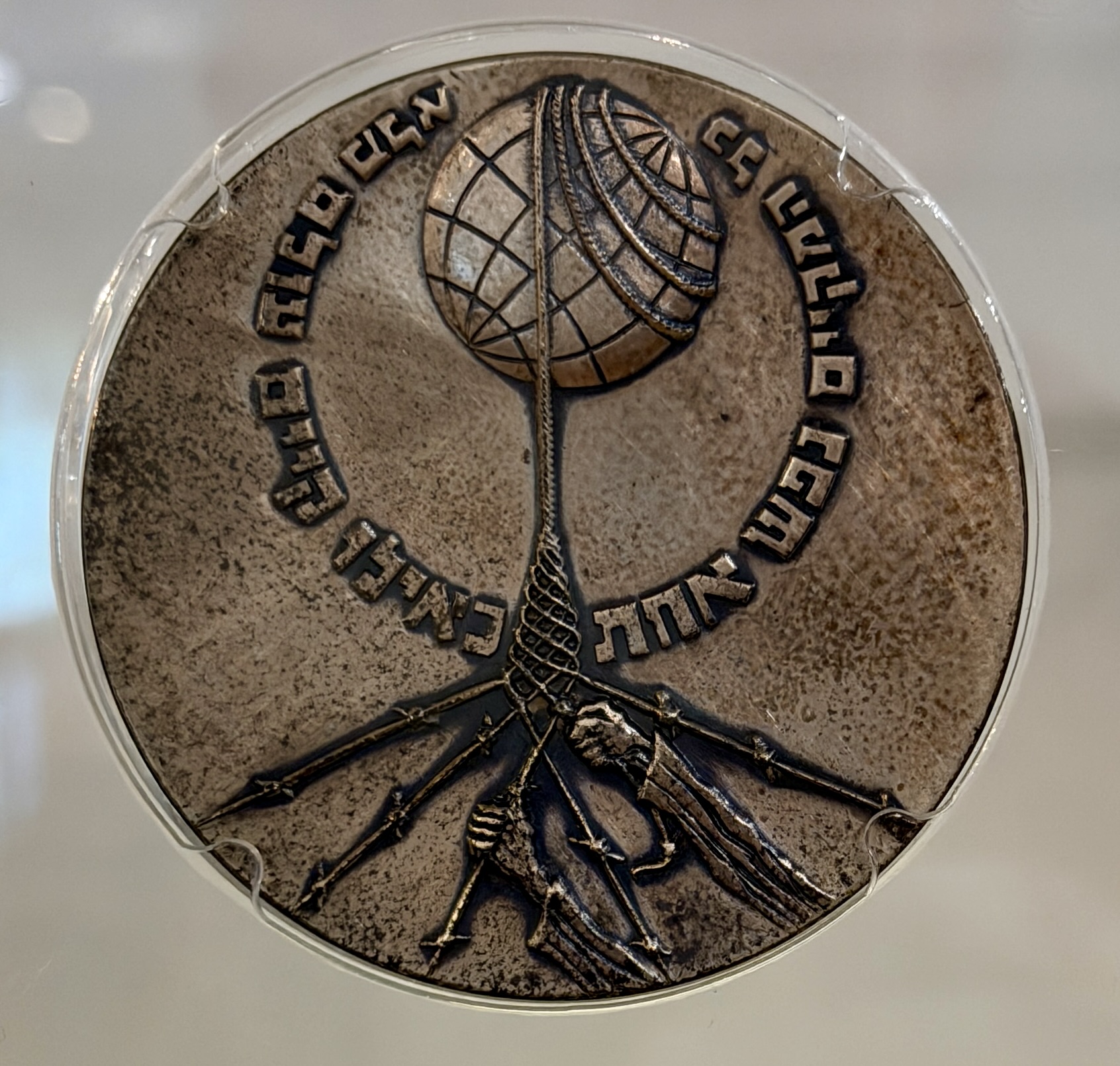
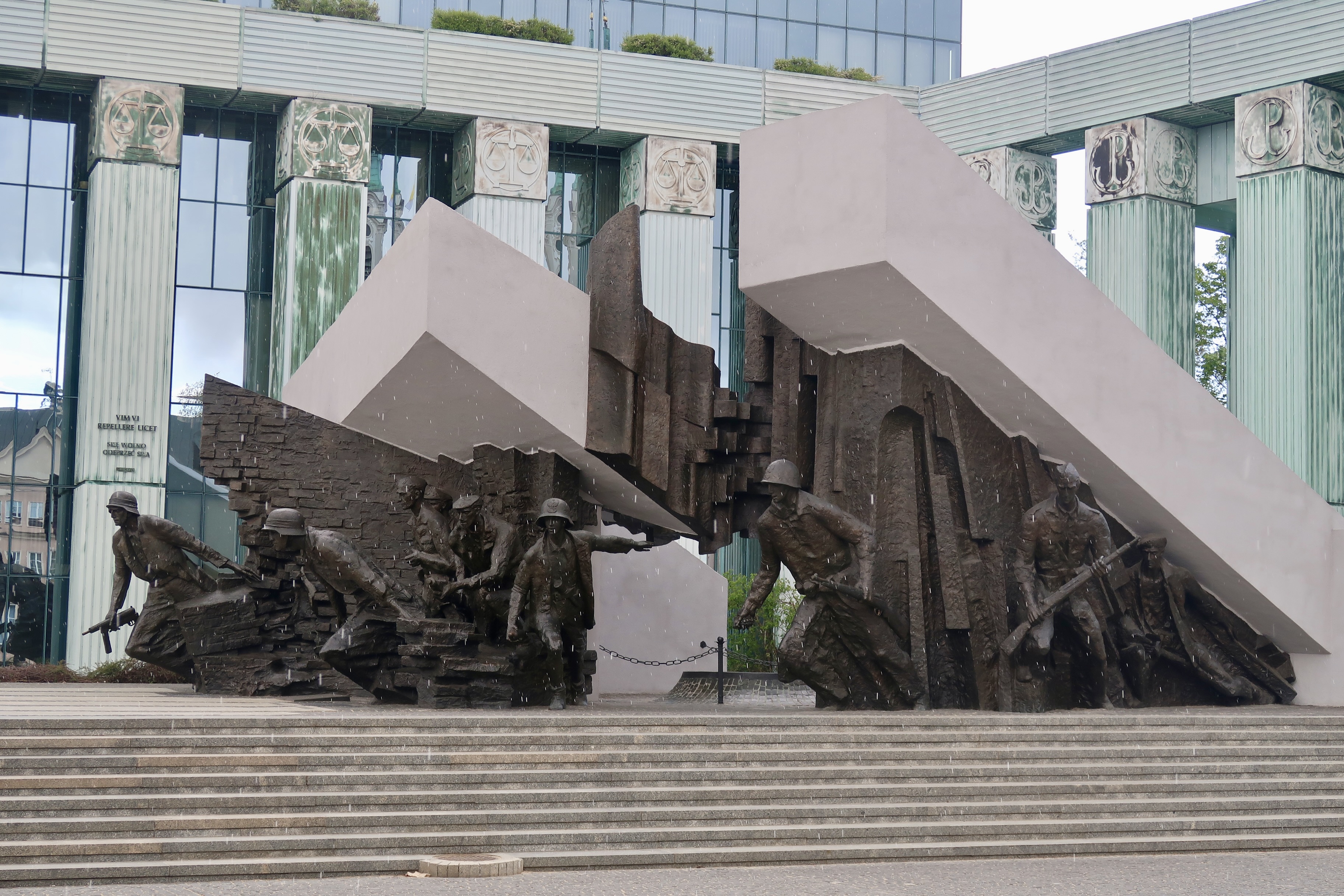
This morning, Sandor and our local guide, Marek, took us on a combination bus/walking “highlights of Warsaw” tour. The Poles are justifiably proud of their history of resistance to the Nazis and to Communism, and we saw several monuments and memorials honoring that history.
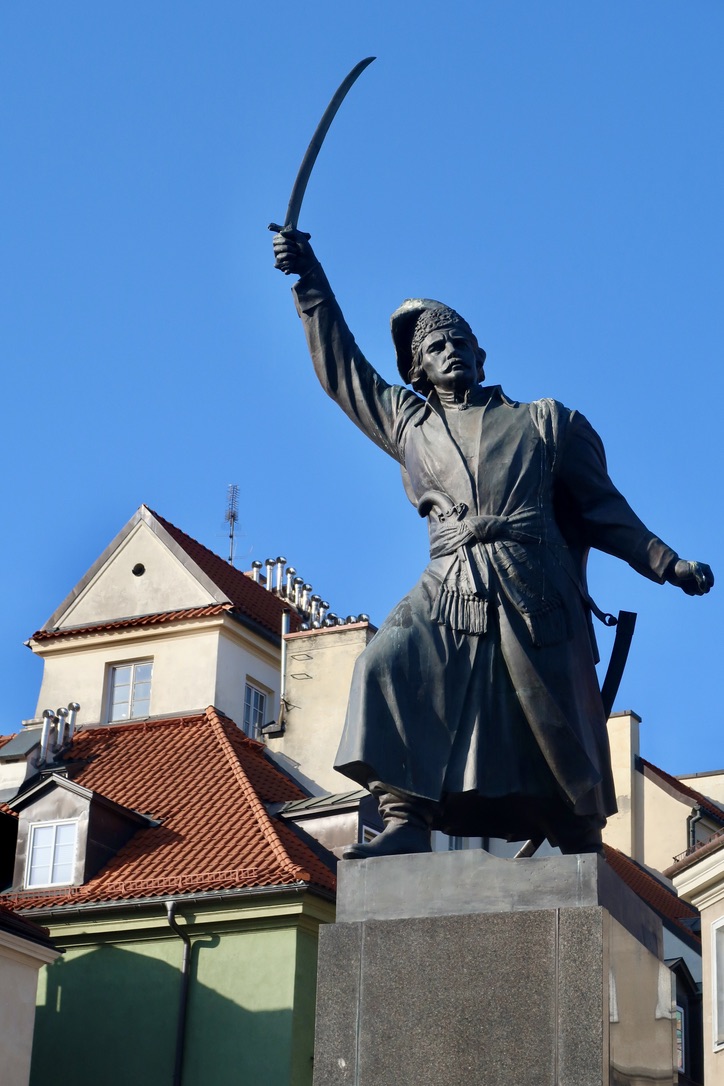
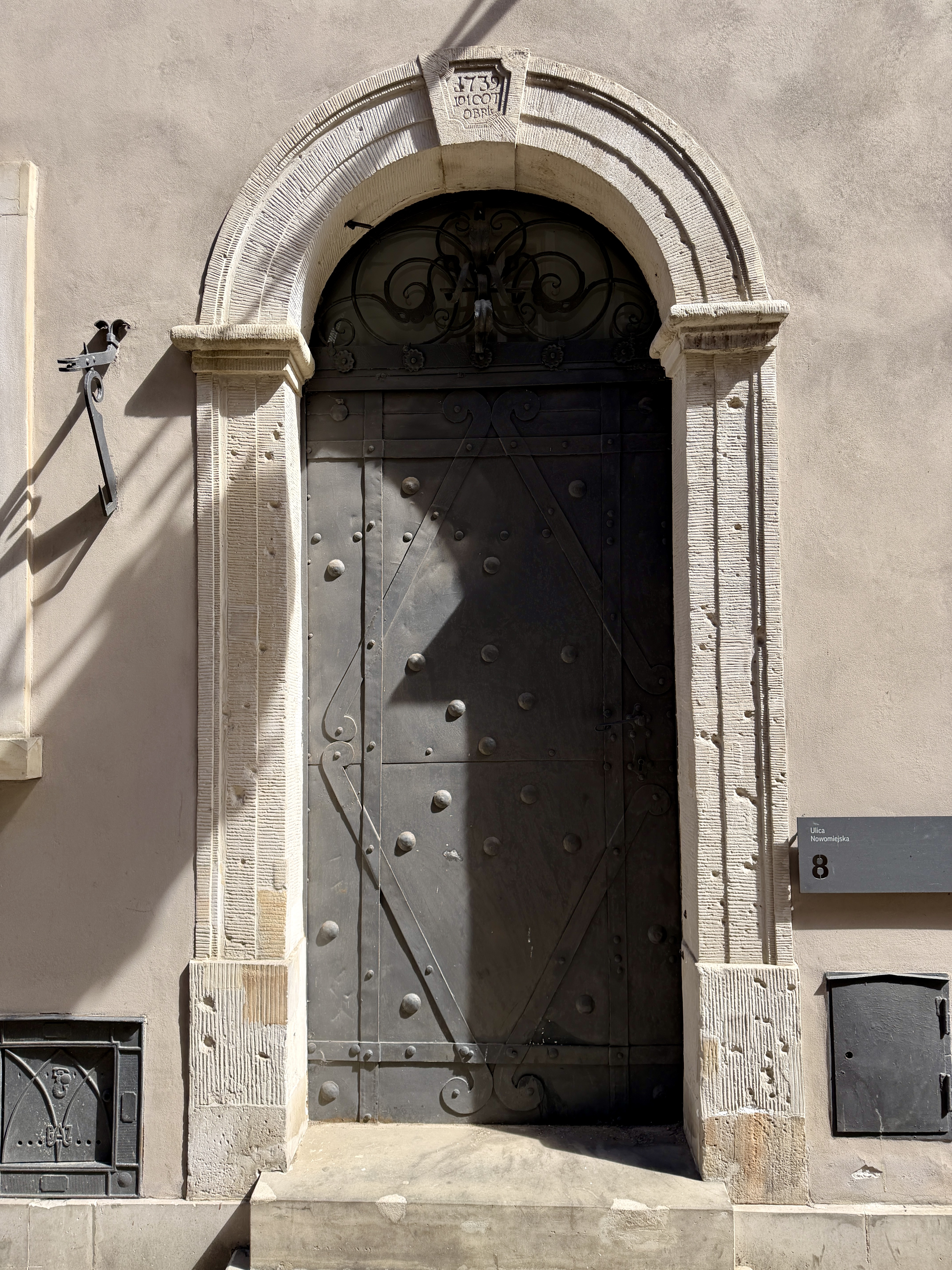
Marek loves Warsaw, and he enthusiastically shared countless stories about the city’s history and culture.
Unfortunately, much of his presentation took place outside, where the weather included snow showers, hail, and wind gusts of more than 30 miles per hour. I absorbed what I could while trying to keep my hood from flying off my head, but my patience and comprehension are directly correlated to the wind chill.
After our tour, I went in search of warmth and sustenance, and quickly found both at a restaurant called Zapiecek (there are several in Warsaw). They’re known for their pierogis – I believe “pierogi” is Polish for “don’t worry about these being deep-fried, loaded with cheese, and slathered in sour cream, just enjoy them.” So I did.
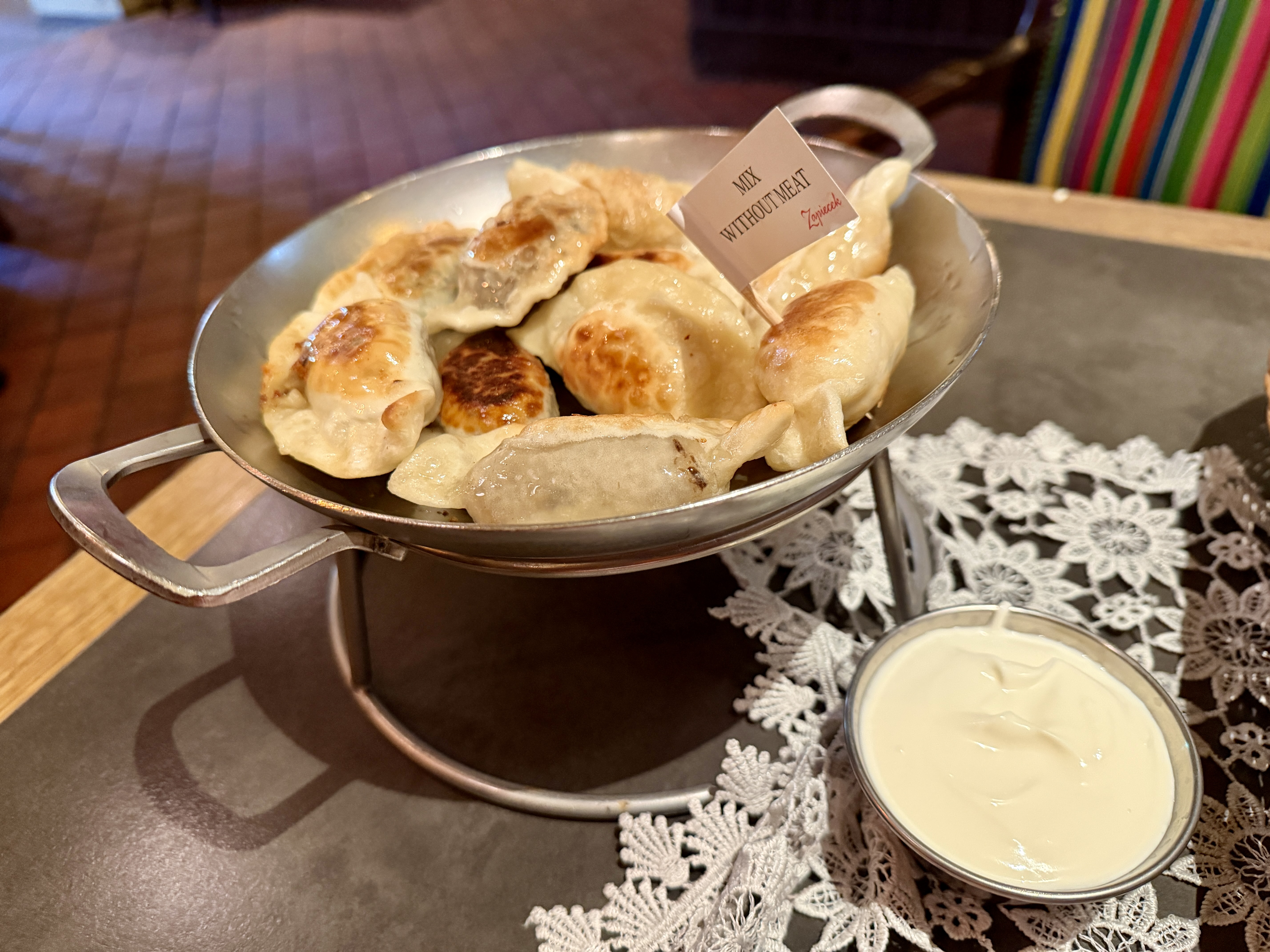
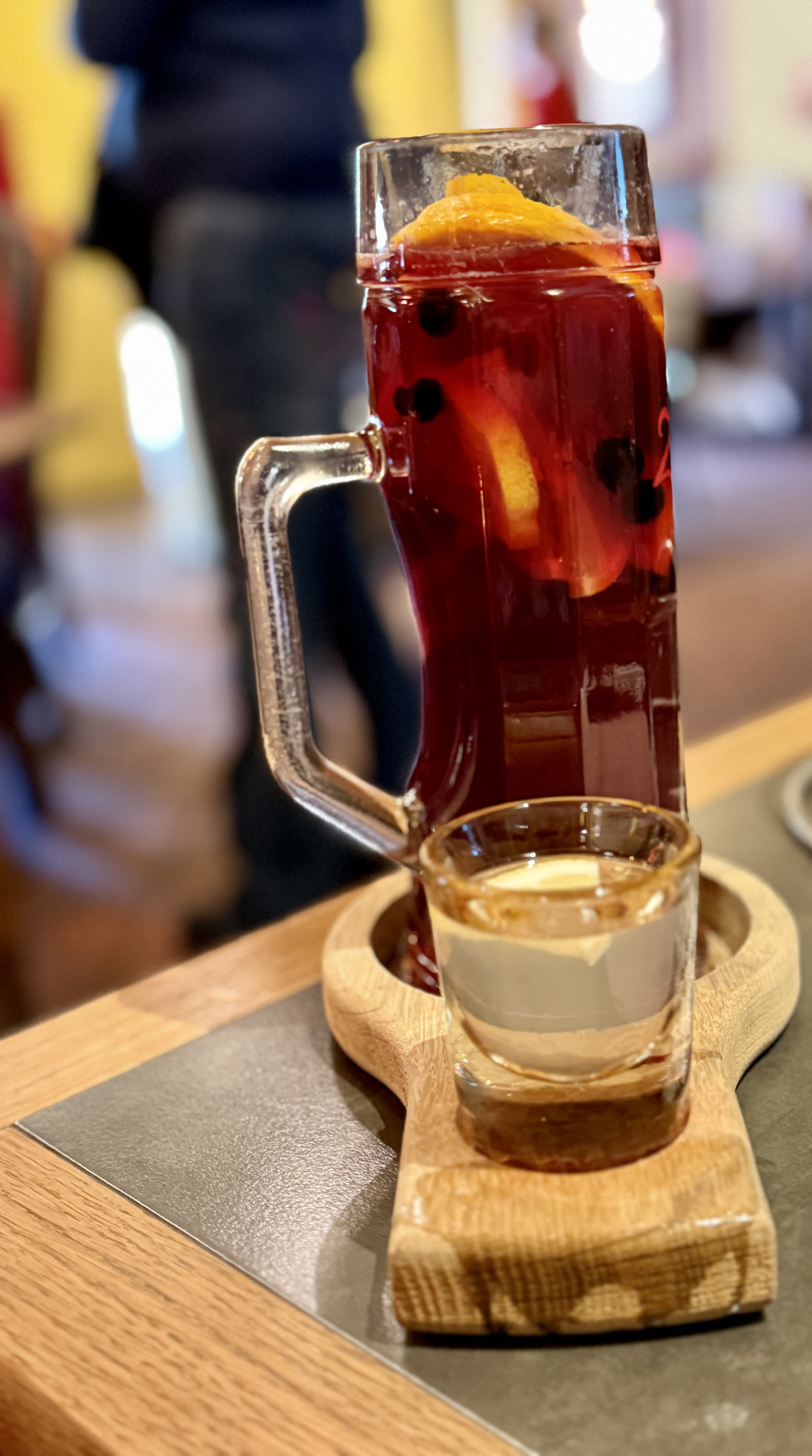
I got a vegetarian sampler of ten pierogis stuffed with various combinations of potato, cabbage, cheeses, lentils, and – the highlight – the best mushrooms I’ve ever tasted. At the waitress’s recommendation, I also ordered a delicious hot fruit punch with a vodka chaser.
Thawed and sated, I headed back to the Sofitel for an attempted nap. No dice. Faced with a choice of returning to the cold and wind or people-watching in the hotel lobby while writing a blog post, I opted for comfort. Please don’t take away my frequent traveler card!
***************************
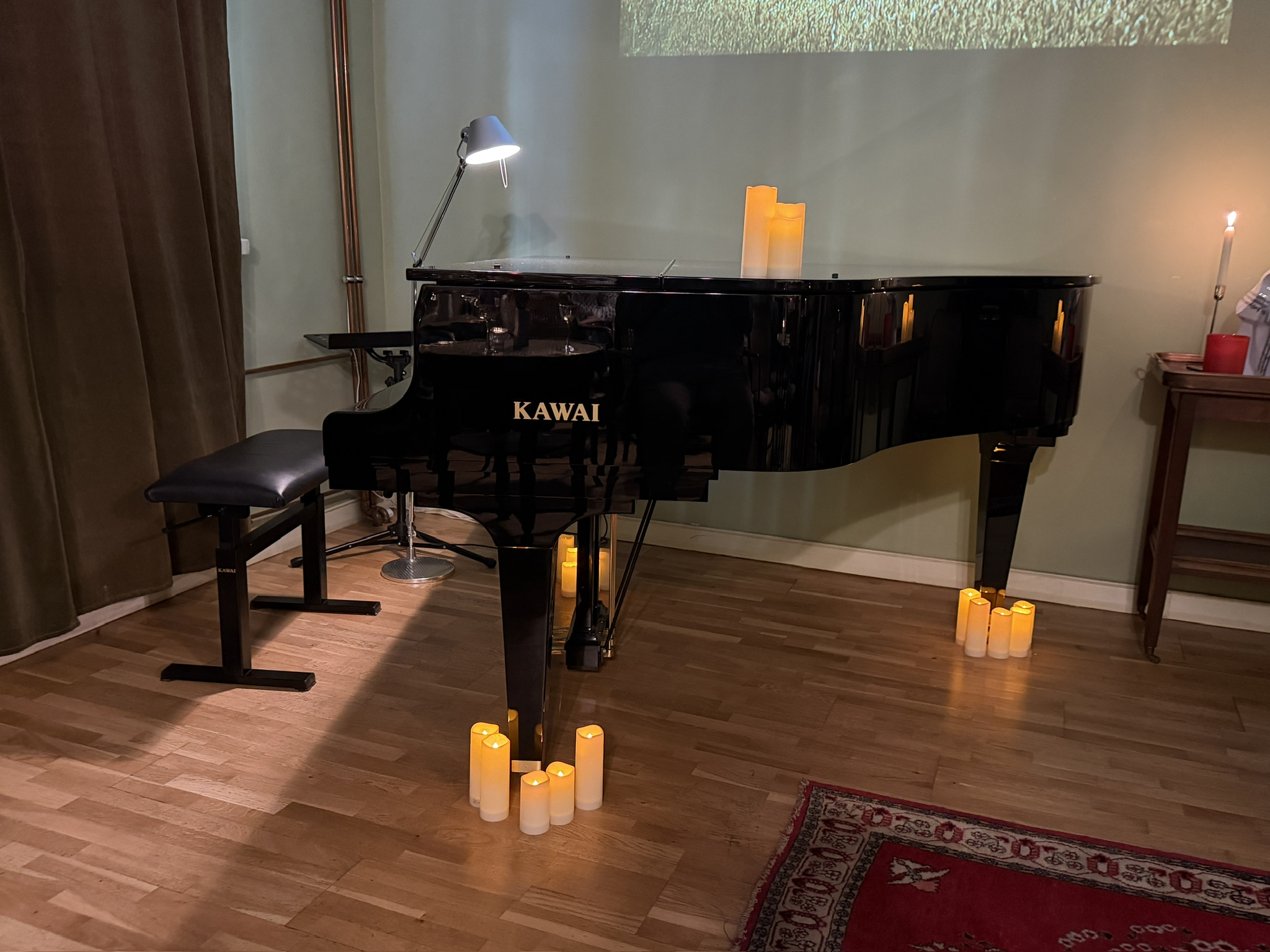
What a way to end the day! I just got back from the Chopin Salon, where I and two other people from the Viking group joined around twenty other people for an intimate solo piano recital of Chopin mazurkas, preludes, nocturnes, etudes and a ballade.
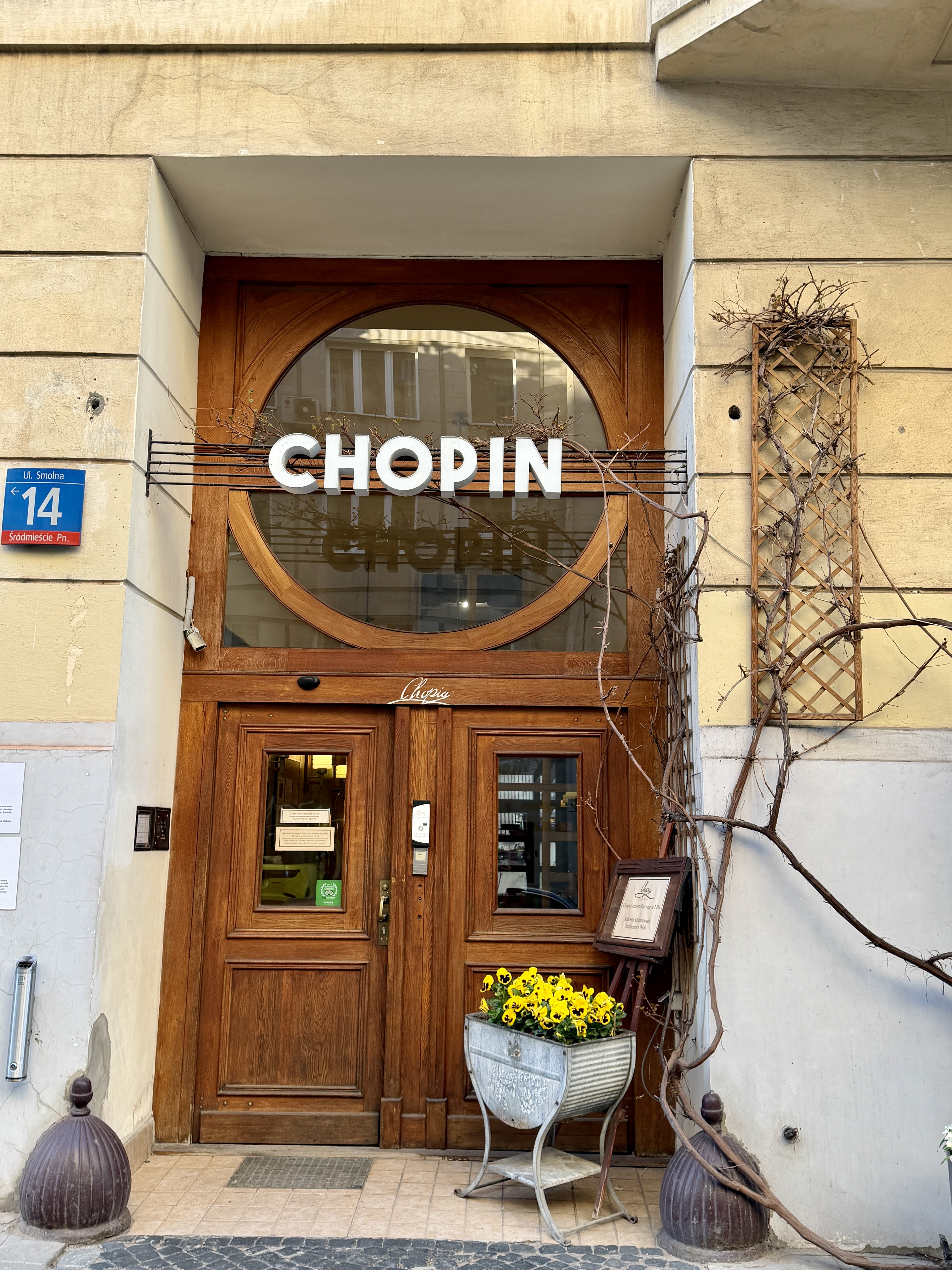
The setting and the music were both spectacular. Many thanks to Viking for offering this as an optional tour. If you’re a classical music lover visiting Warsaw, don’t miss it: Here’s a link to the salon’s web site.
We leave early tomorrow for Krakow. Do widzenia for now (it’s way easier to write than to say).

 PuffinlessTravel
Wonderful! Those pierogis look delicious! Have you seen the movie “A Real Pain“? Filmed at many sites in Poland, including Warsaw (and that striking resistance monument).