What better way to end a trip to Egypt than heading to where it all began? Saqqara, our first stop today, is home to the Step Pyramid of Djoser, the first royal tomb in pyramid form and the earliest large-scale cut stone structure in human history. (Earlier large edifices generally were made of mud brick.)
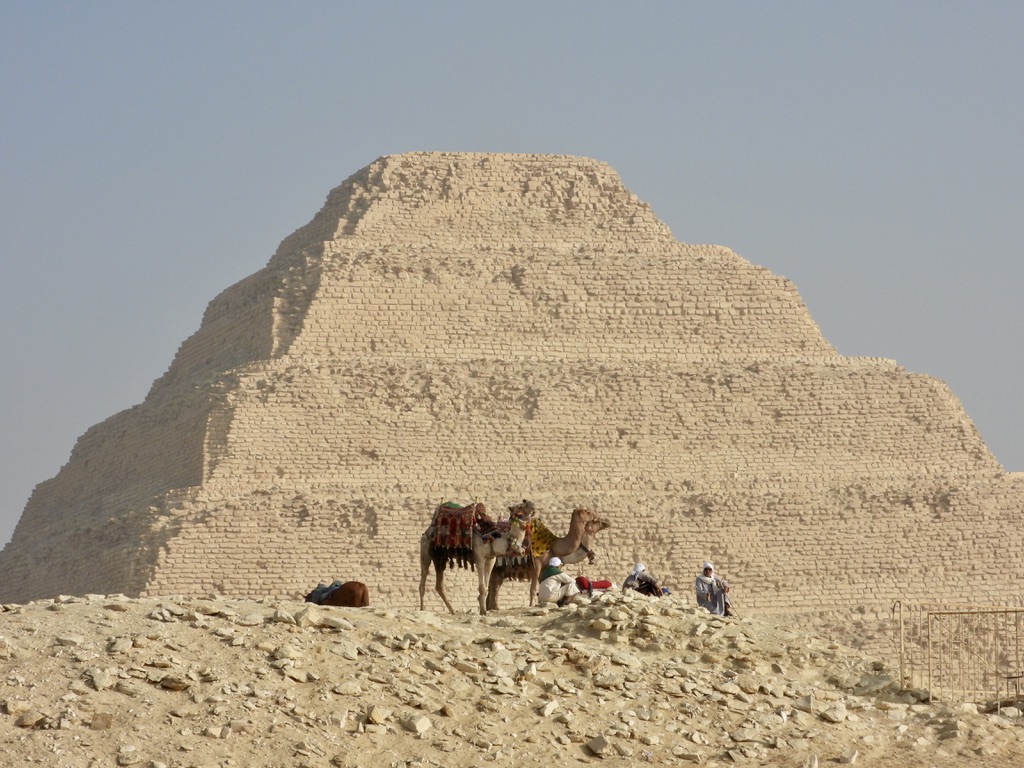
Djoser ruled Egypt nearly 5000 years ago, in the 27th century BCE (Third Dynasty). Think about that for a moment: halfway between his reign and today, Plato and Gautama Buddha lived and died. London was a swampy village of a dozen or so huts surrounded by an earthen wall. Keith Richards was taking lute lessons.
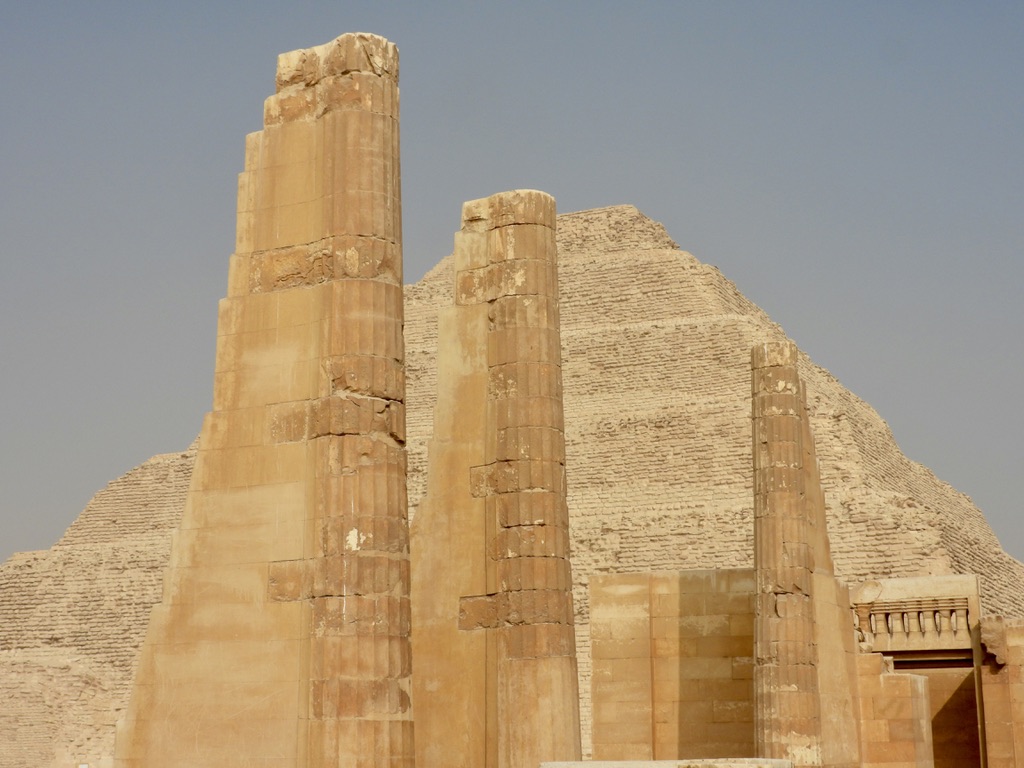
The design and construction of Djoser’s pyramid were overseen by his vizier, Imhotep, who was later deified. (Imhotep’s name lives on today as the antagonist in The Mummy, where he was played by Boris Karloff.)

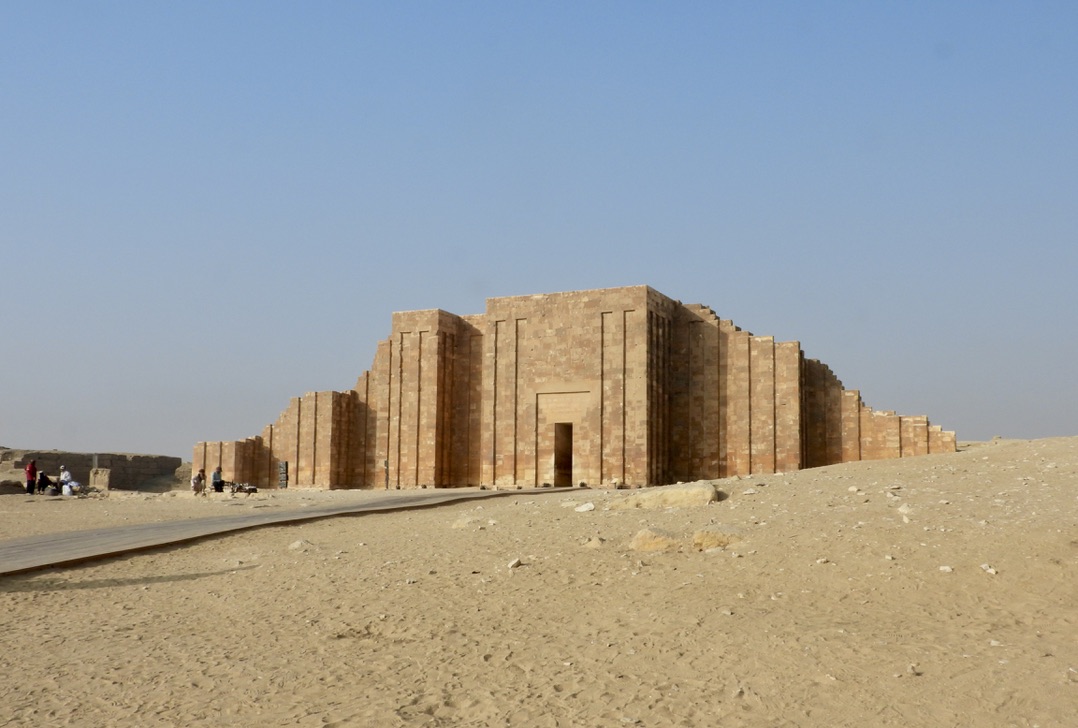
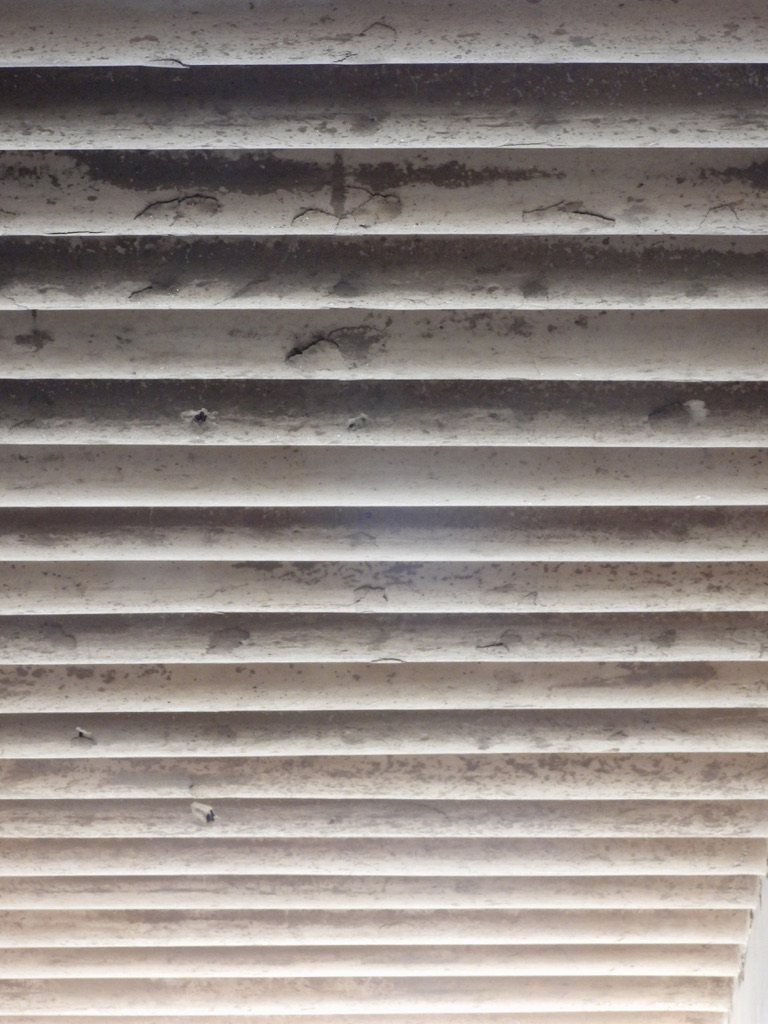
Djoser’s funerary complex contains an equally innovative entrance colonnade. This structure contains stone roof beams (cut to resemble logs, which were used in earlier buildings) and stone columns designed to resemble sheaves of reeds.
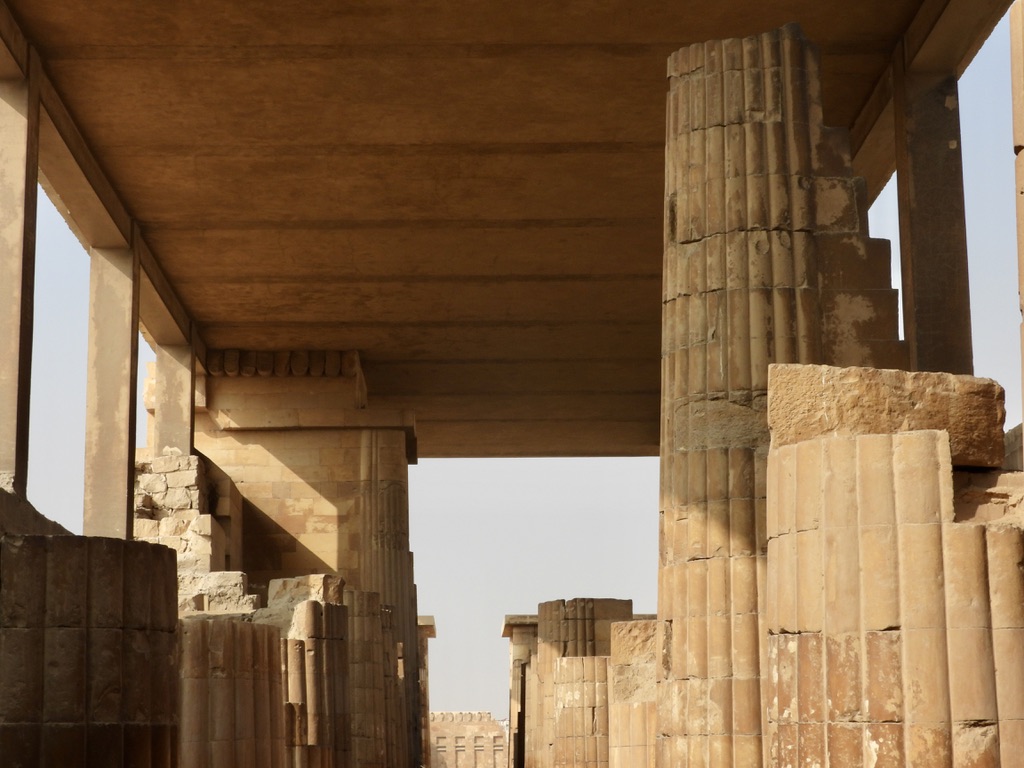
The architects were unsure if free-standing columns would remain stable, so they attached each column to the wall.
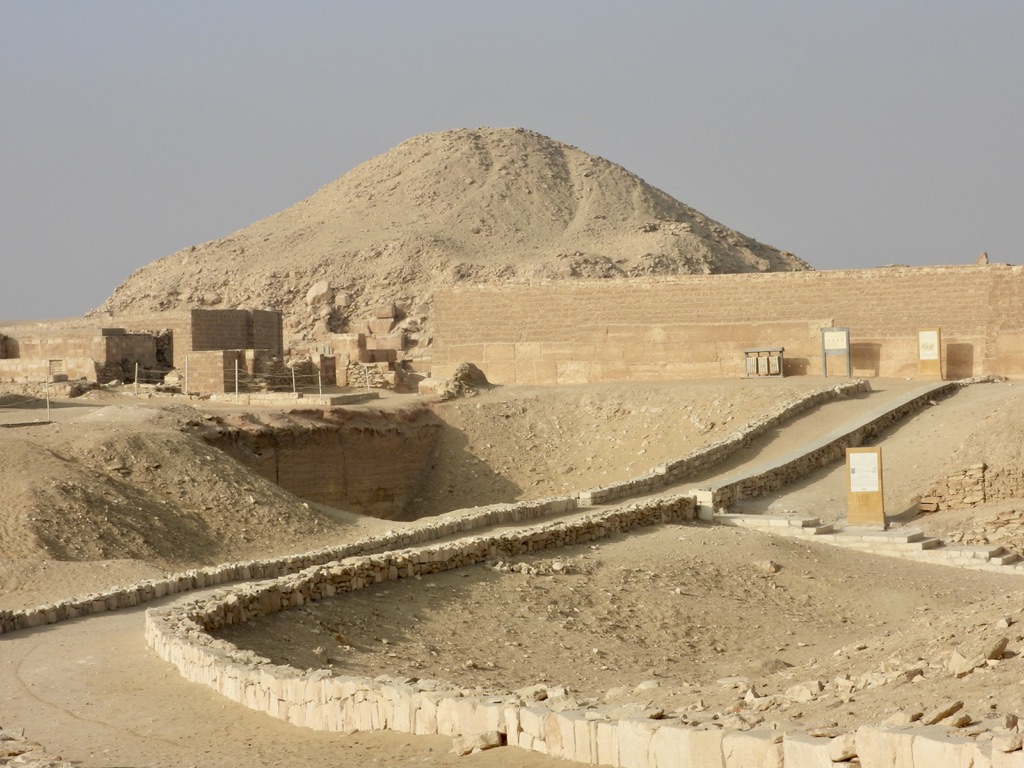
Elsewhere in the complex, there’s the pyramid of Unas, a Fifth Dynasty king, which built some three hundred years after Djoser literally broke new ground. This pyramid is important because, for the first time, it includes inscriptions containing spells for the king’s afterlife. (You may remember from an earlier post that the Great Pyramid of Khufu in Giza, built during the Fourth Dynasty, had no inscriptions.)
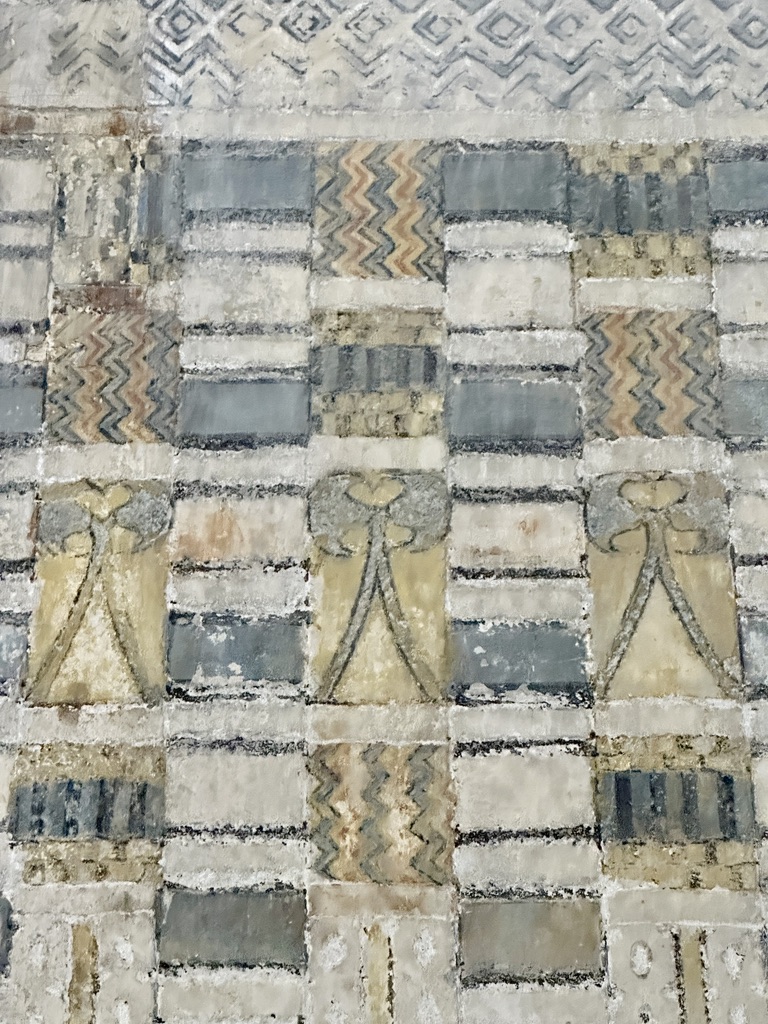
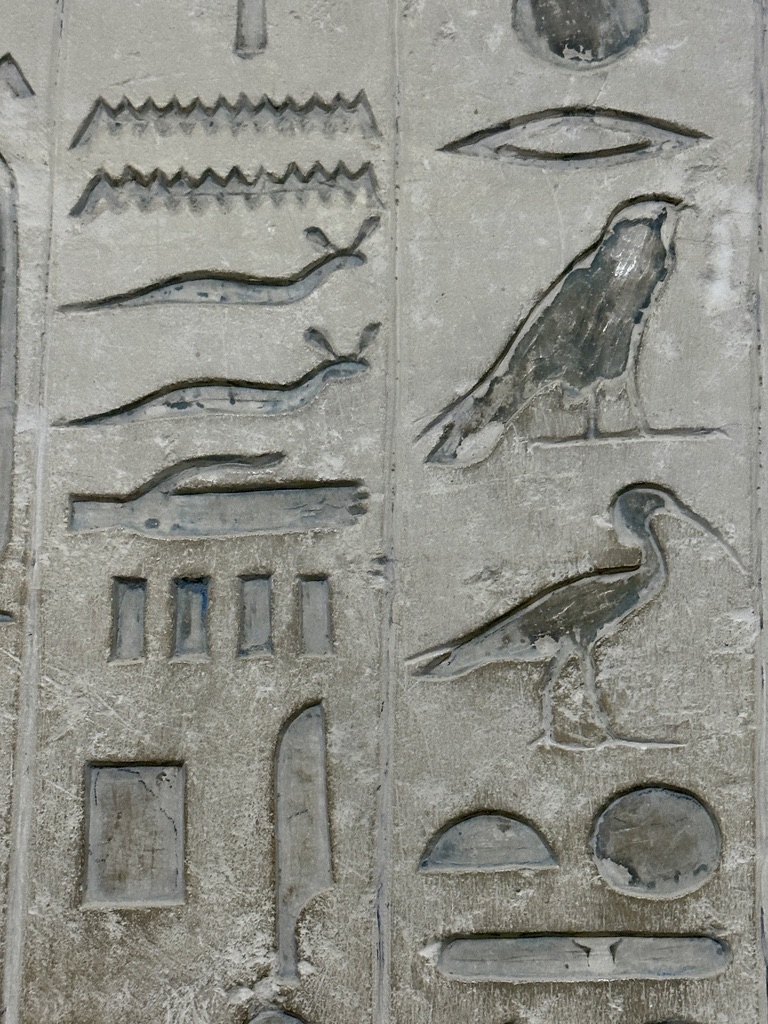
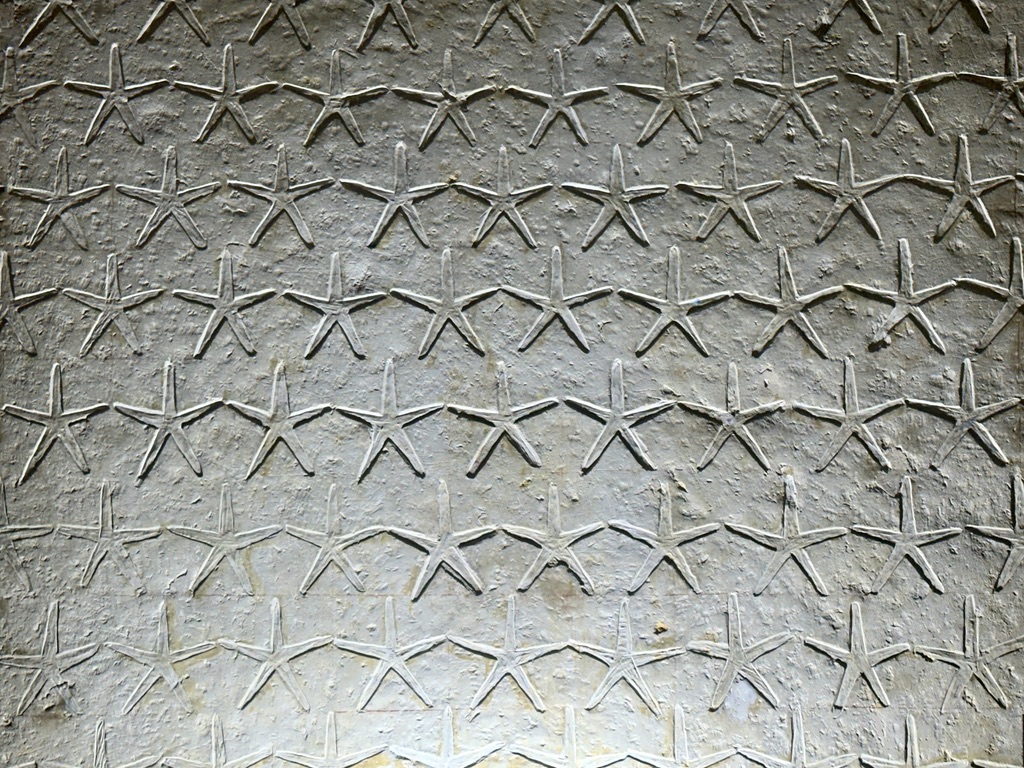
Accessing the burial chamber of Unas’s pyramid does require some bending and squatting, but it’s a much easier trip than the slog to Khufu’s burial chamber, after which I could have used a Cairo-practor. (Sorry, I had to.)

To wrap up our visit to Saqqara, we explored the tomb of Kagemni, a vizier to King Teti of the Sixth Dynasty (c. 2330 BCE).
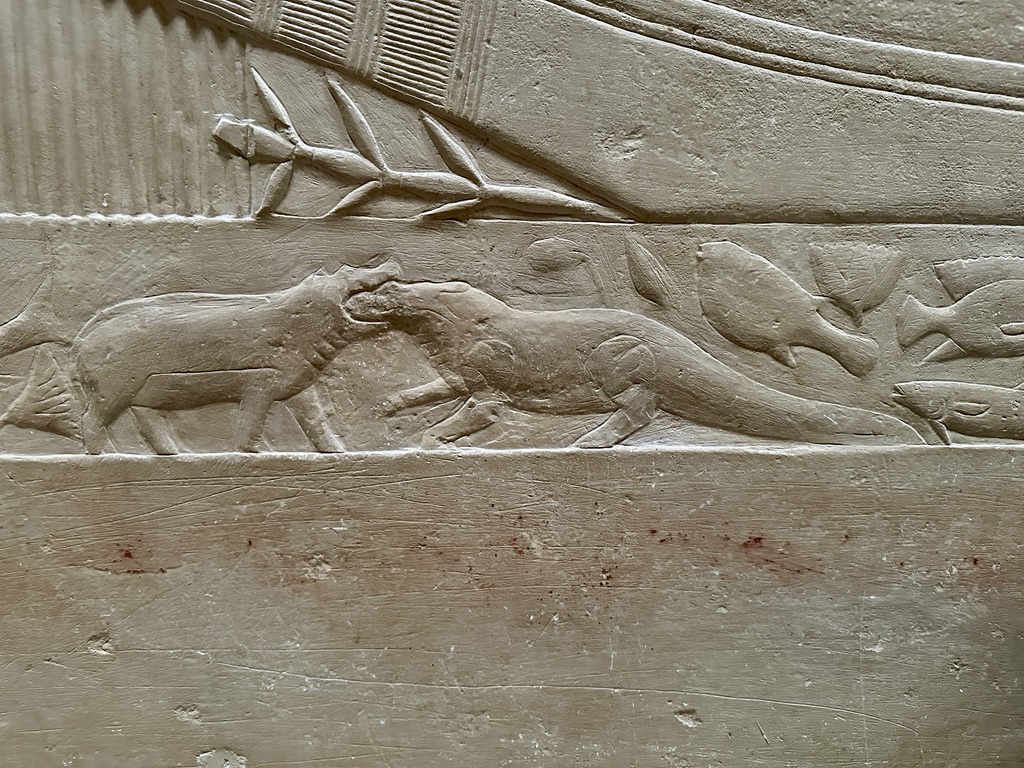
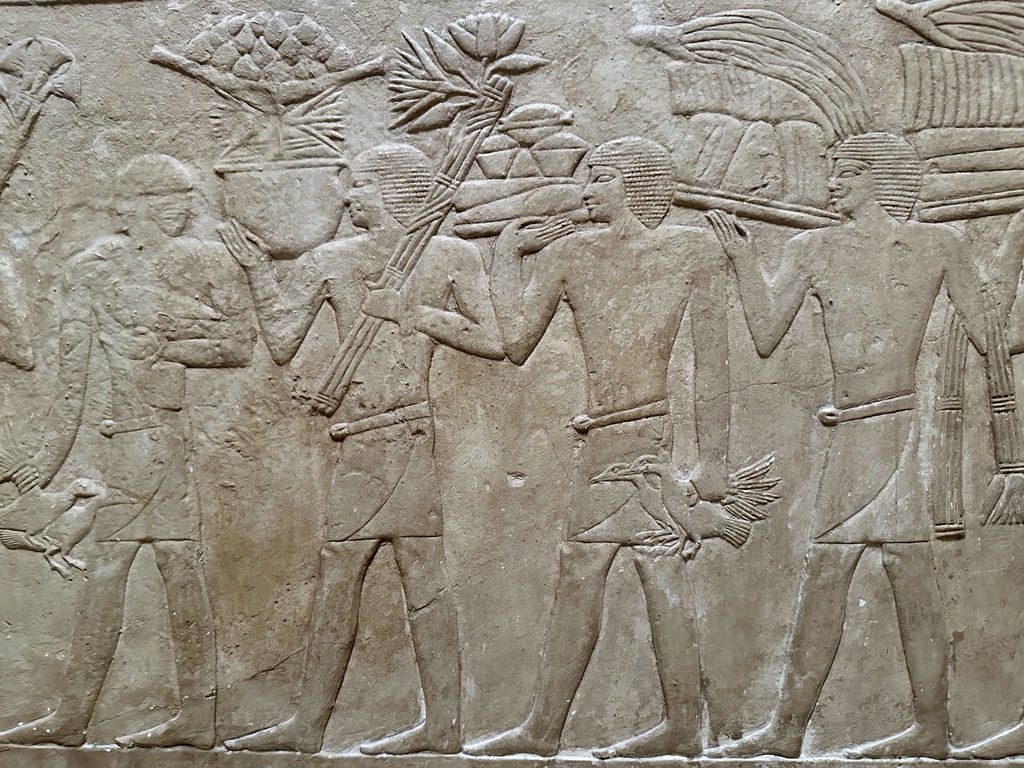
While not as gaudy as the tombs in the Valley of the Kings, or as colorful as the tombs at Deir el-Medina, it’s a fascinating tomb to visit because of its depictions of daily life.
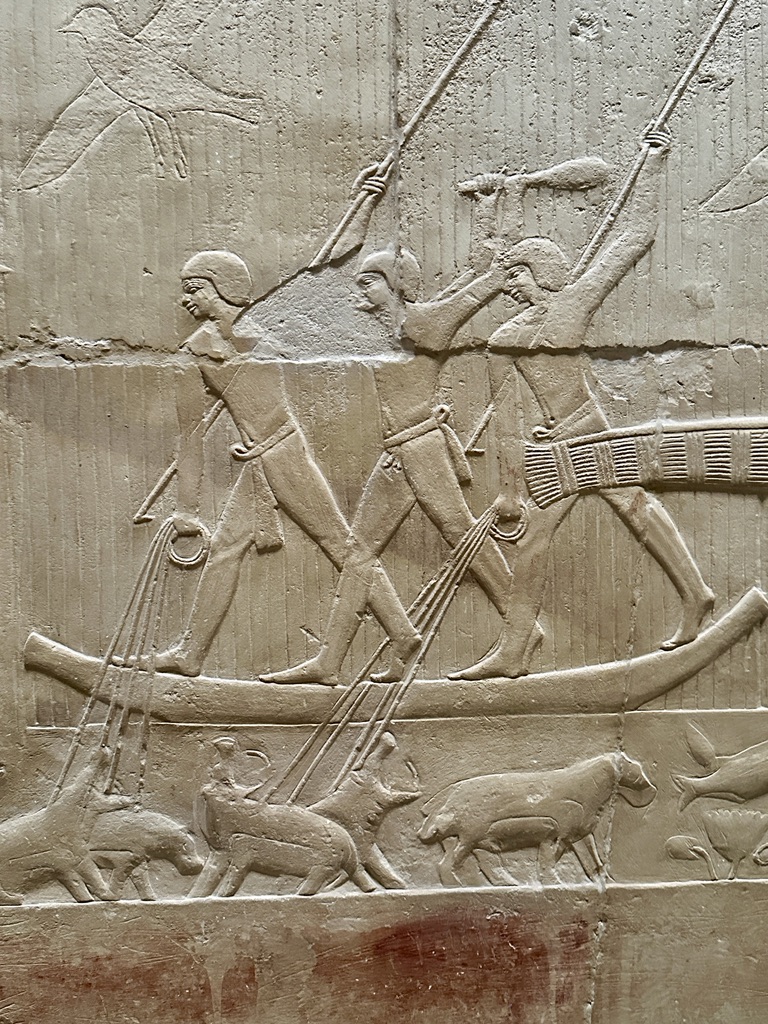
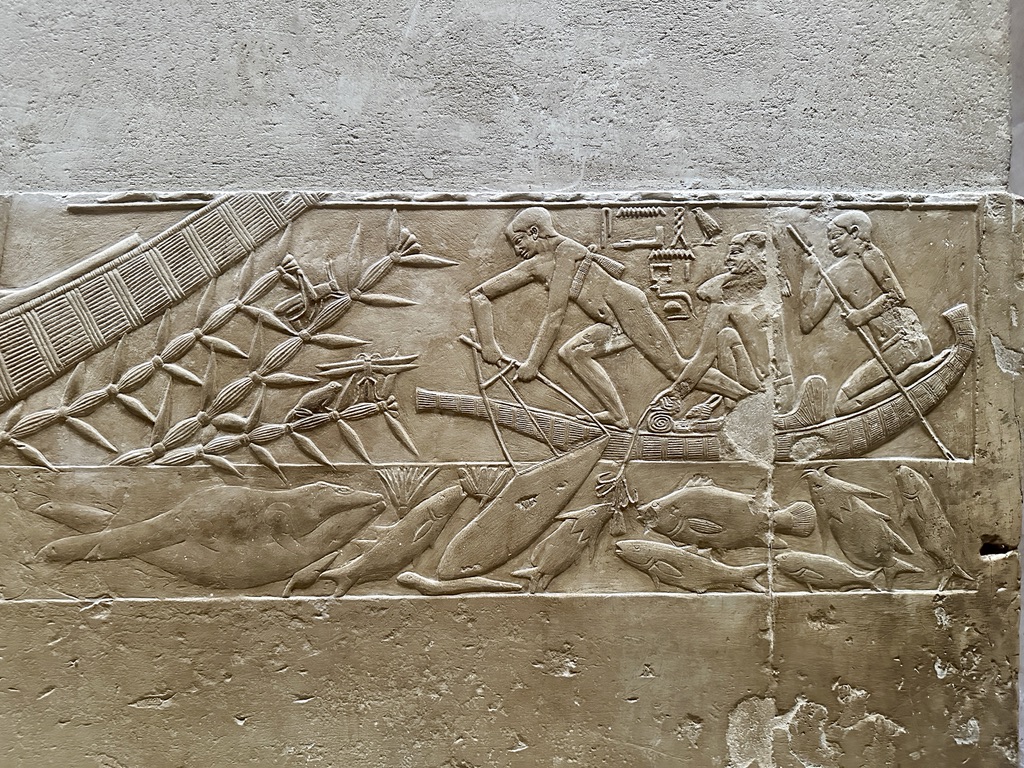
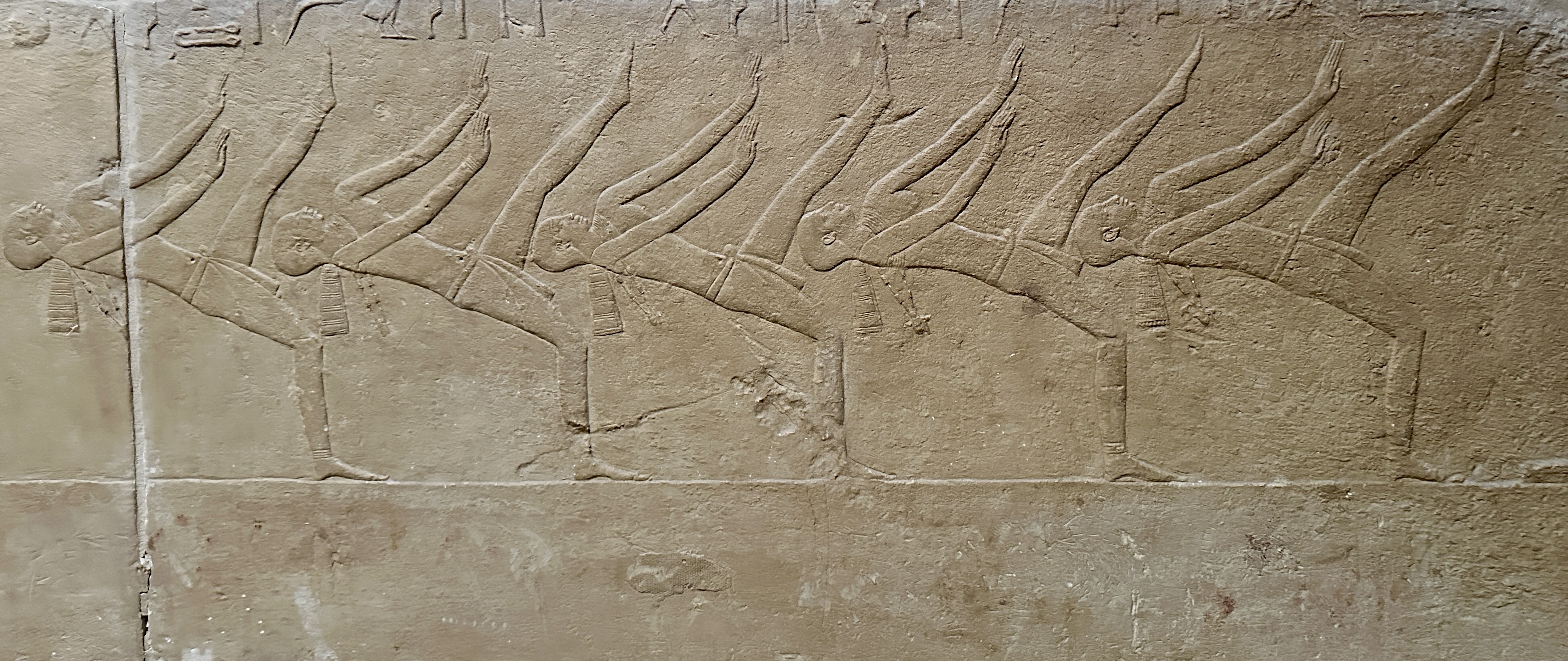
There are scenes of hunting and fishing, preparing offerings for the vizier in the afterlife, and ceremonial dancers who performed at his funeral.
After Saqqara, we headed to the lesser-known site of Dahshur. The pyramids there, built by King Sneferu shortly after Djoser’s step pyramid, show how Egyptian architects learned, through trial and error, to transition from step pyramids to smooth-sided pyramids.
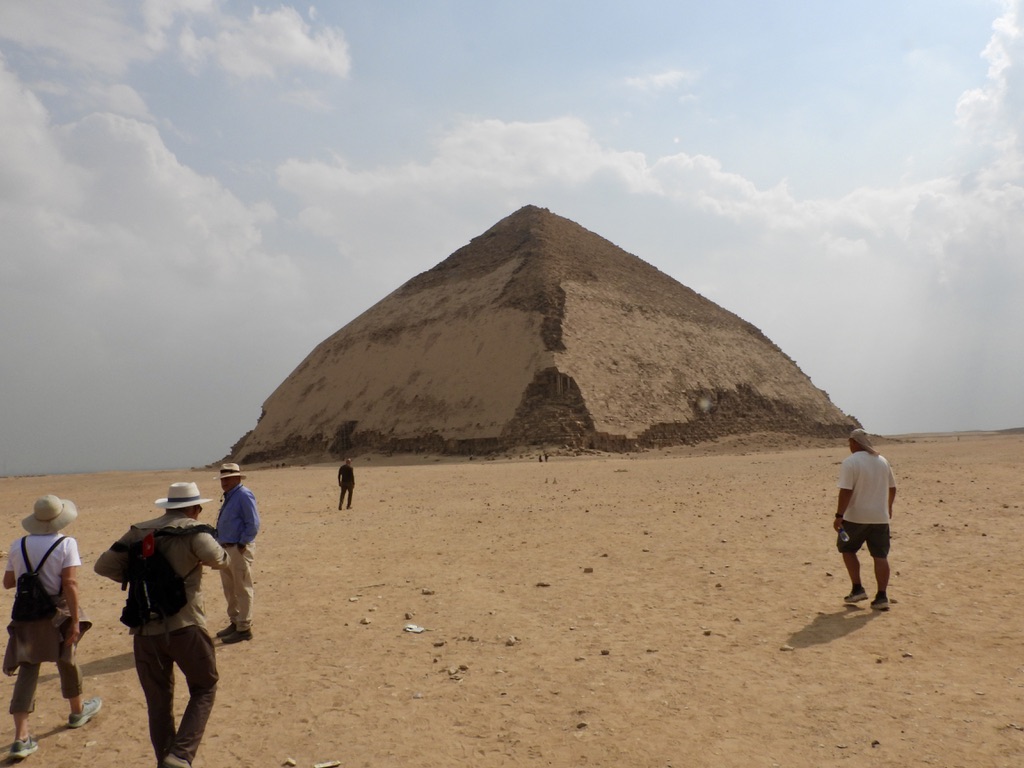
Sneferu’s first attempt collapsed in antiquity. His second try, the “Bent Pyramid,” started out with sides that were too steep (54 degrees) to be stable given the soft ground beneath. As a result, the builders had to create a shallower angle (43 degrees) for the top part of the pyramid, giving the structure a bent appearance.
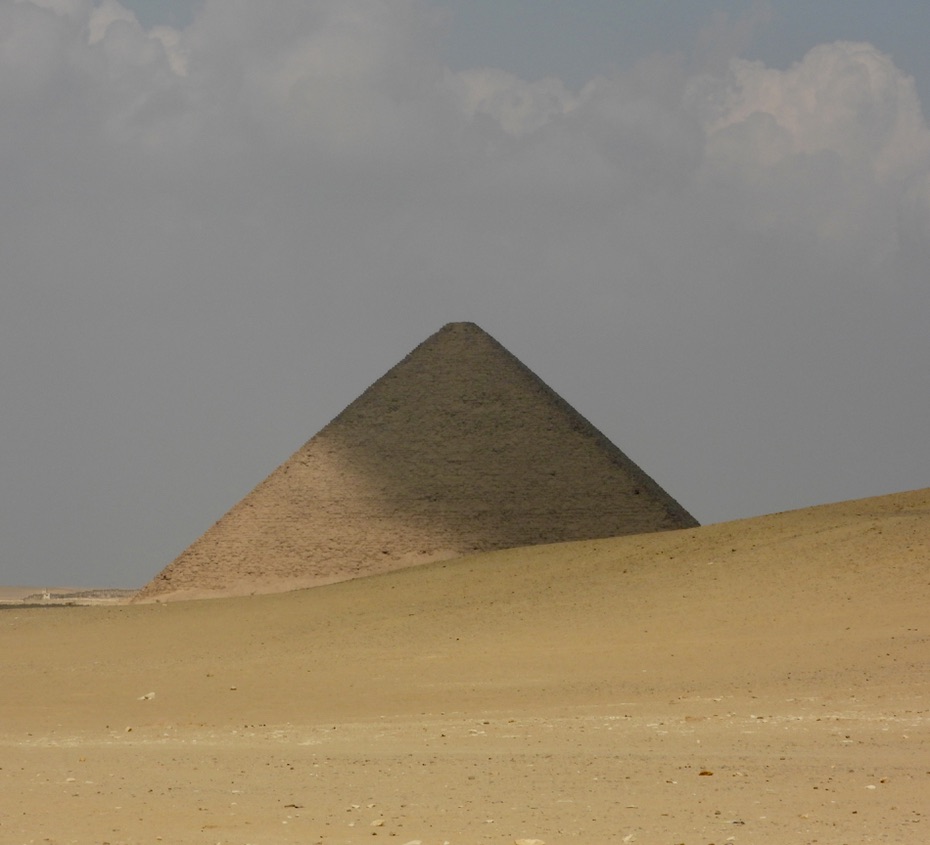

In a Goldilocks moment, Sneferu then ordered construction of the “Red Pyramid” (made of red limestone), which was a successful smooth-sided pyramid with 43-degree sides, but the shallower angle resulted in an appearance that was deemed too squat.
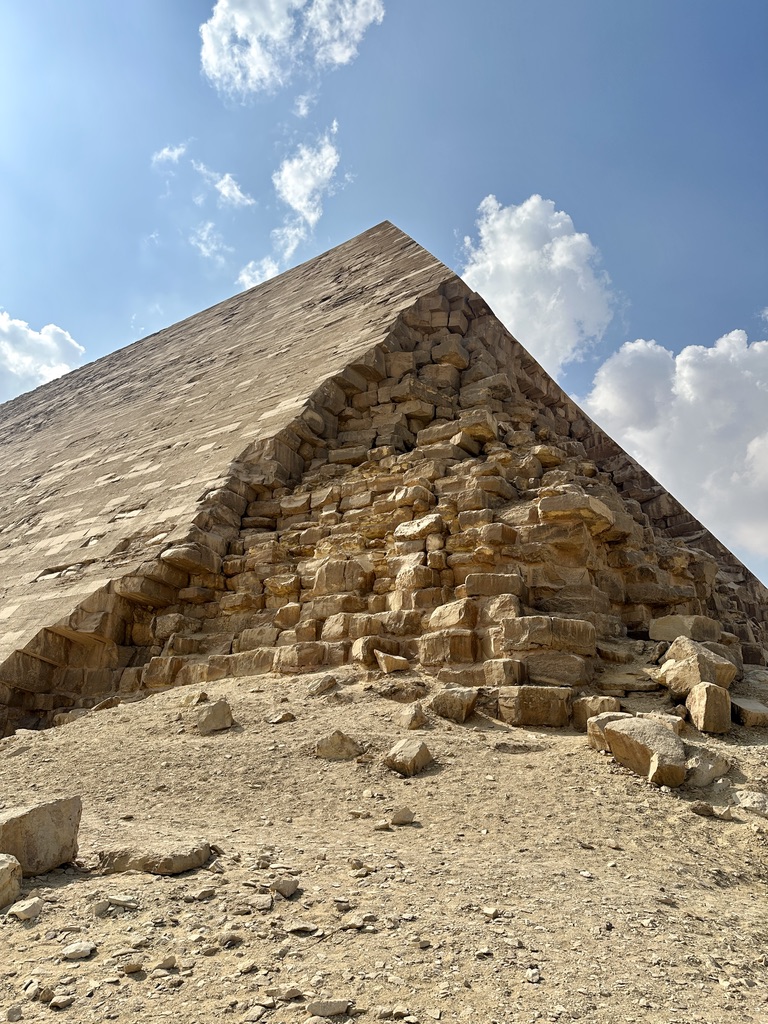
With the experience gained in Dahshur, Sneferu’s son, Khufu, was able to construct the massive Grand Pyramid of Giza, which – daddy issues, anyone? – used almost as much stone as all of Sneferu’s pyramids put together.
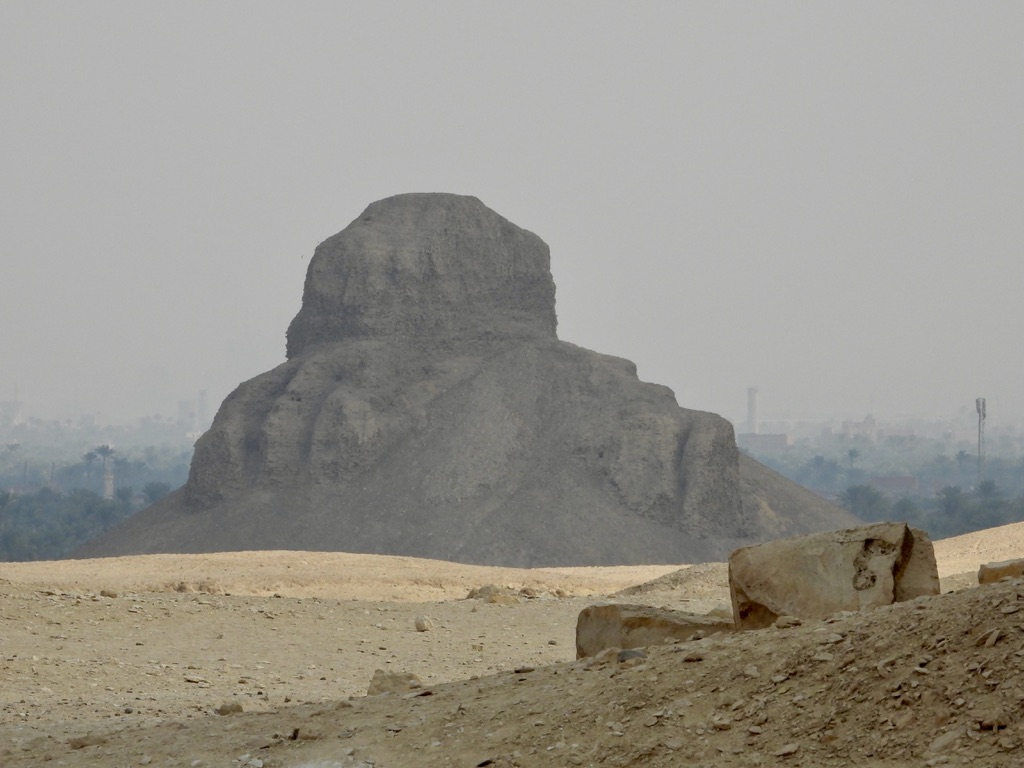
Dahshur also is known for the “Black Pyramid,” built by King Amenemhat III in the Middle Kingdom. Much of it has collapsed, giving it a shape that reminded me immediately of the butte (Devil’s Tower) in Close Encounters of the Third Kind.
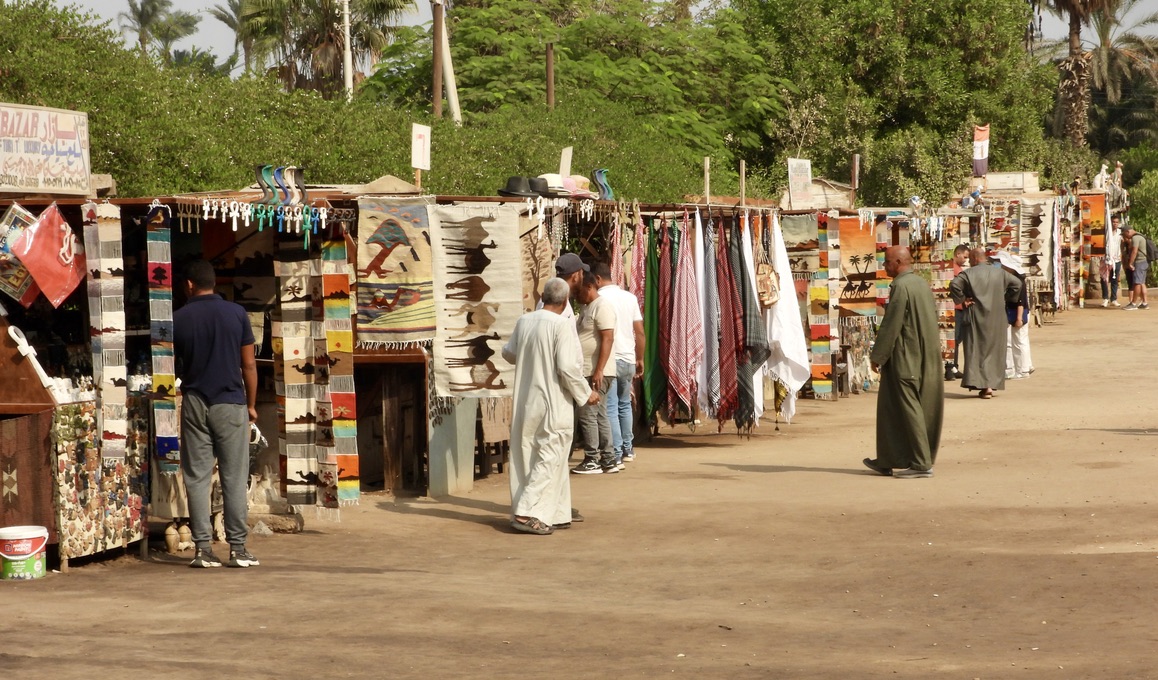
Our final stop for today was the open-air museum at Memphis, a small complex occupying the site of the capital of ancient Egypt from the early dynastic period (c. 3100 BCE) to the founding of Alexandria twenty-eight centuries later.
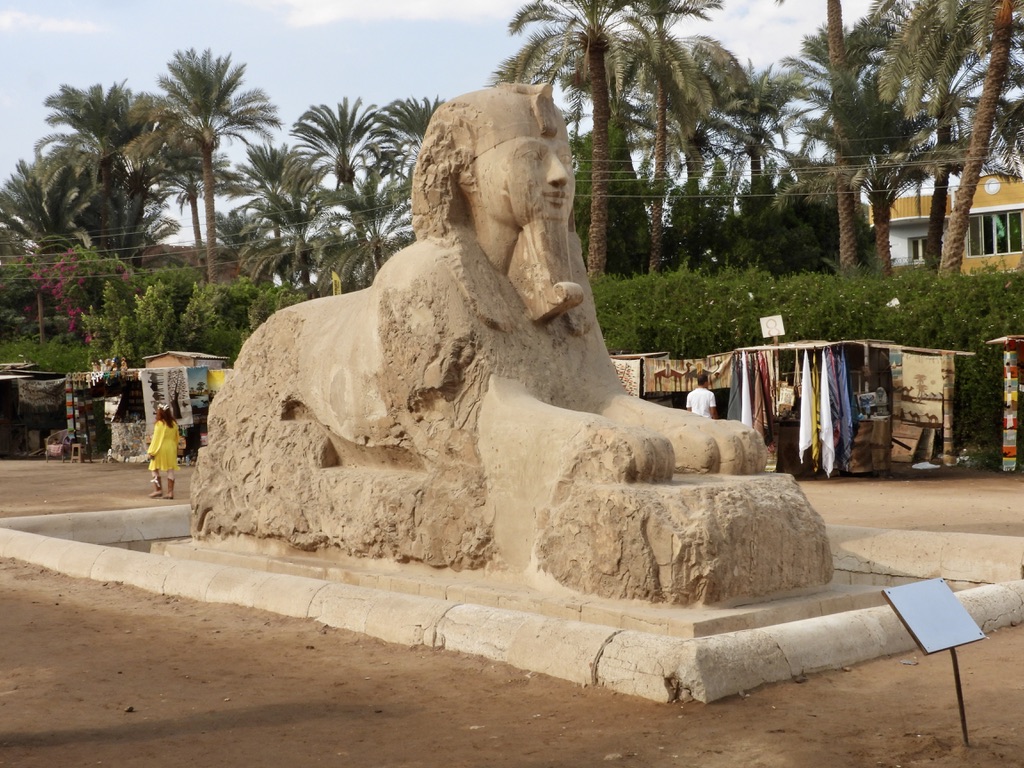
What a comedown for Memphis! The museum contains just three statues of note: an alabaster sphinx (either Ramesses II or Hatshepsut, depending whom you ask), a colossal statue of, you guessed it, Ramesses II, which is displayed lying down because the feet and base are missing, and a large standing statue (likely Ramesses II as well).
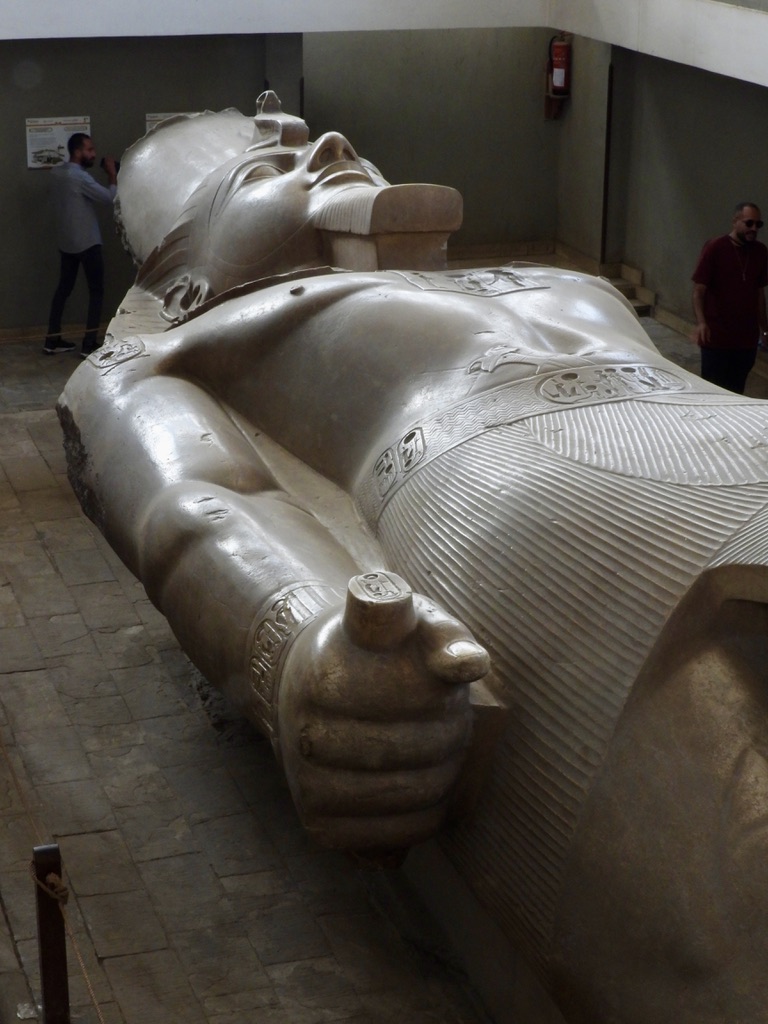
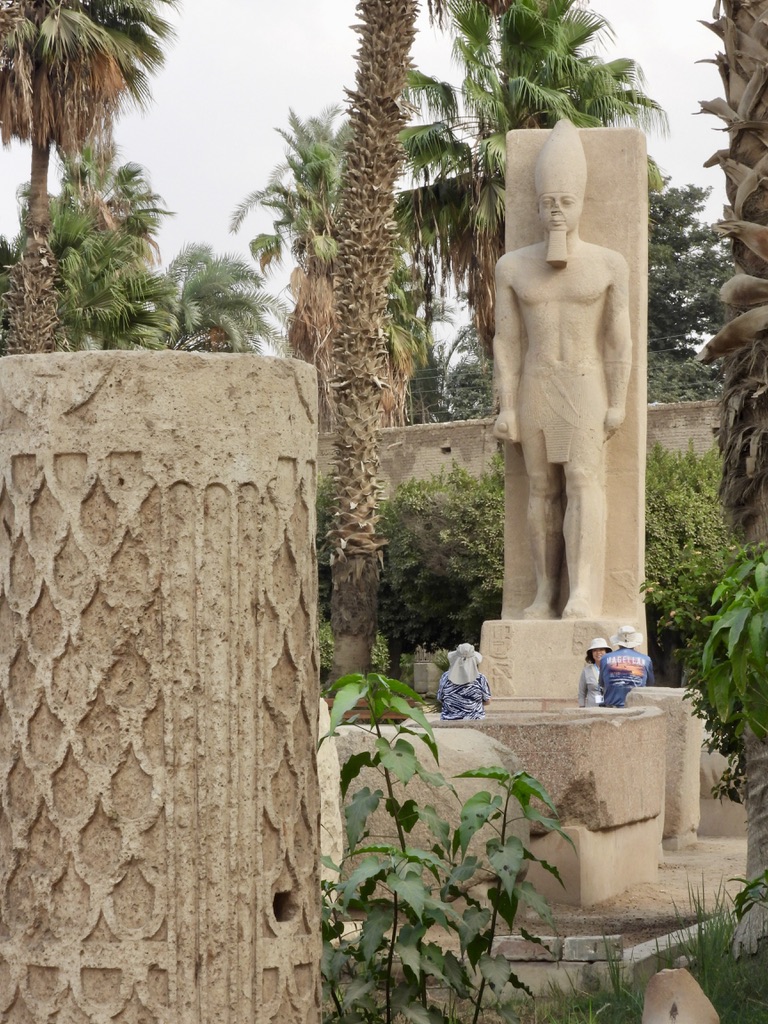
As one of my fellow travelers said, the rest of the items on display look like they’re misfits or rejects from other museums.
Our trip draws to a close tonight with a farewell dinner. I’ll make one more post in a couple of days summing things up, offering tips on travel to Egypt, and thanking all concerned. Habibis, I hope you’ve enjoyed traveling through Egypt with me!

 PuffinlessTravel
Cairo-practor!! 🙂
Keith’s lute lesons!! 🙂
The second paragraph of this post (“Think about that for a moment…”) speaks to what was, for me, so humbling about being in Egypt: thousands of years before American exceptionalism, great civilizations were humming: building monuments, honoring their gods, living their lives, making beautiful things.
Safe travels home–
Thanks, Jeanne. I got back last night after an uneventful flight, my favorite kind. Unfortunately, I brought back two unwanted souvenirs: the runs and a bad cough. The silver lining is, I dropped 5 pounds on the trip. I’m at the doctor now, and I’m sure I’ll be fine in a couple of days.
Welcome home. I’m sorry to hear about the maladies. (You may have contracted a lesser-known variant of Montezuma’s revenge: Ramesses’ revenge…)