What’s the oldest of the Seven Wonders of the Ancient World, the only one that remains largely intact, and was the tallest manmade structure on Earth for nearly four millennia, until the Lincoln Cathedral was completed in 1311? If you answered “the Great Pyramid of Giza,” you just finished reading the same Wikipedia article that I did. I’m not sure why you were reading it; I did because I visited the Giza Plateau this morning and even crawled and clambered my way inside the Great Pyramid to Khufu’s burial chamber.

Some triumphs of human engineering – Machu Picchu comes immediately to mind – smack you in the face with their magnificence. Others take a moment longer and a modicum of imagination before the magnitude of their majesty sinks in. To me, the pyramids of Giza fall into the latter category.
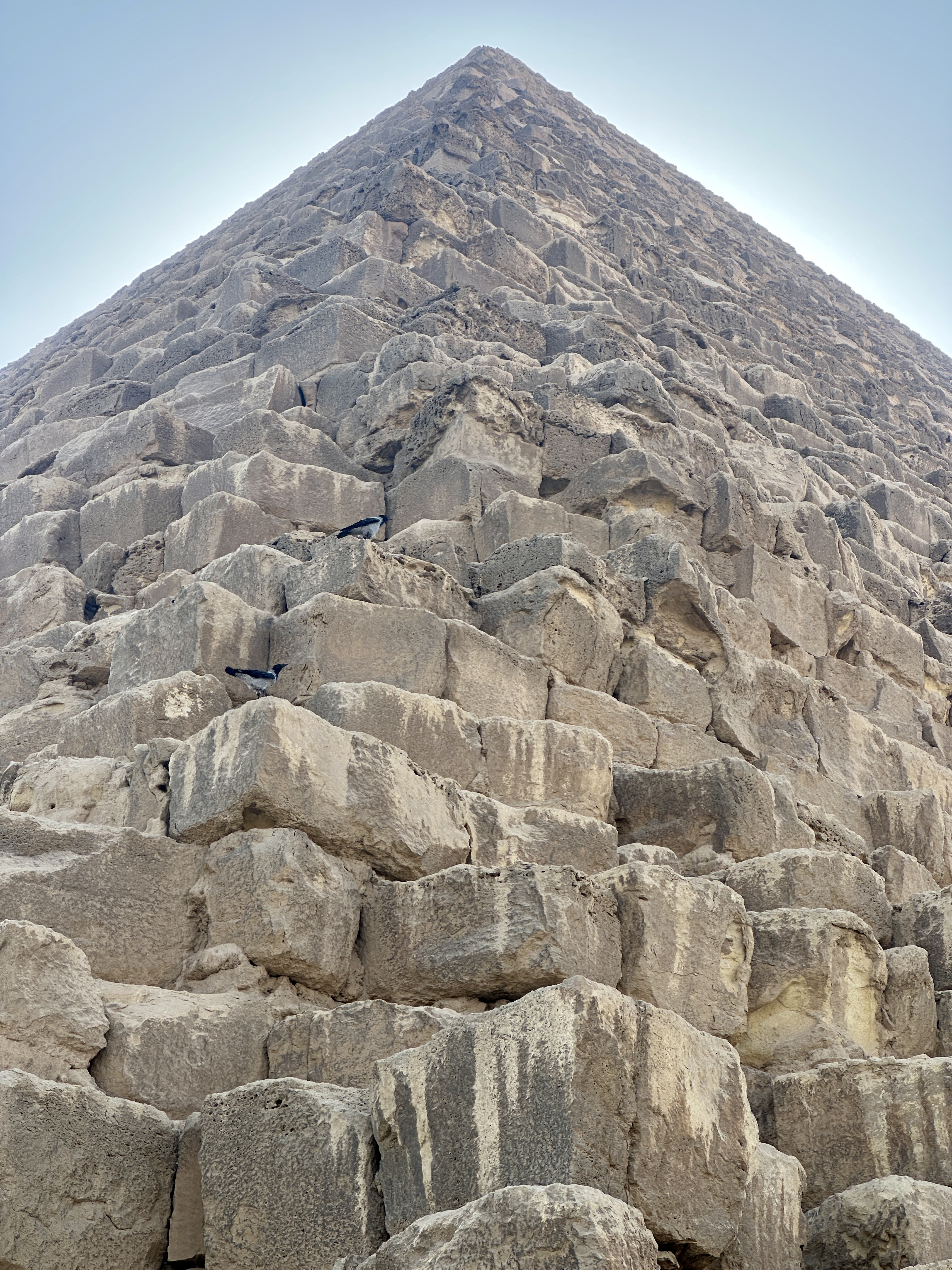
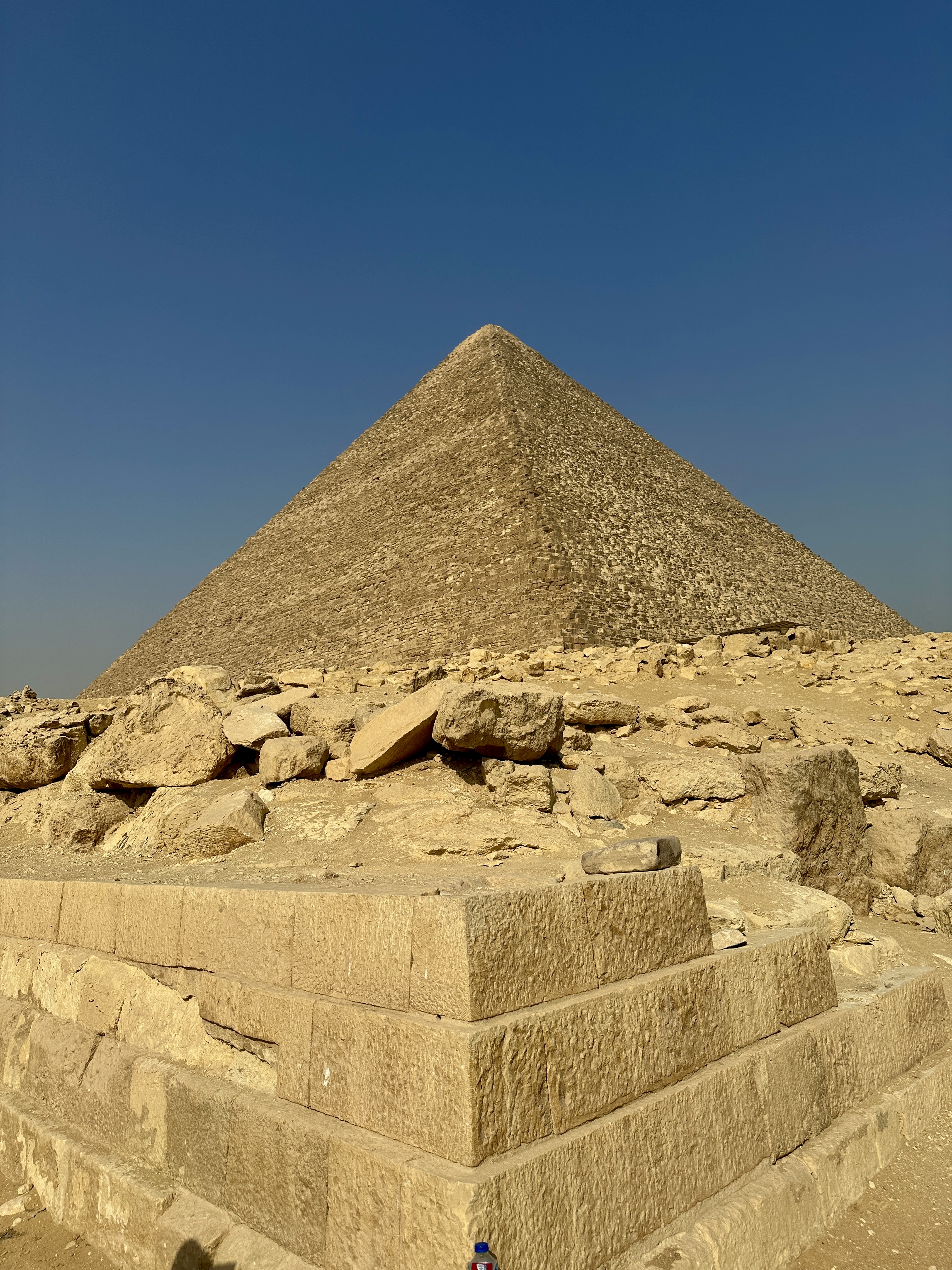
The three large pyramids of Giza and their neighbor, the Sphinx, sit in the middle of a dusty plain surrounded by highways and apartment buildings. The setting, in other words, is underwhelming.
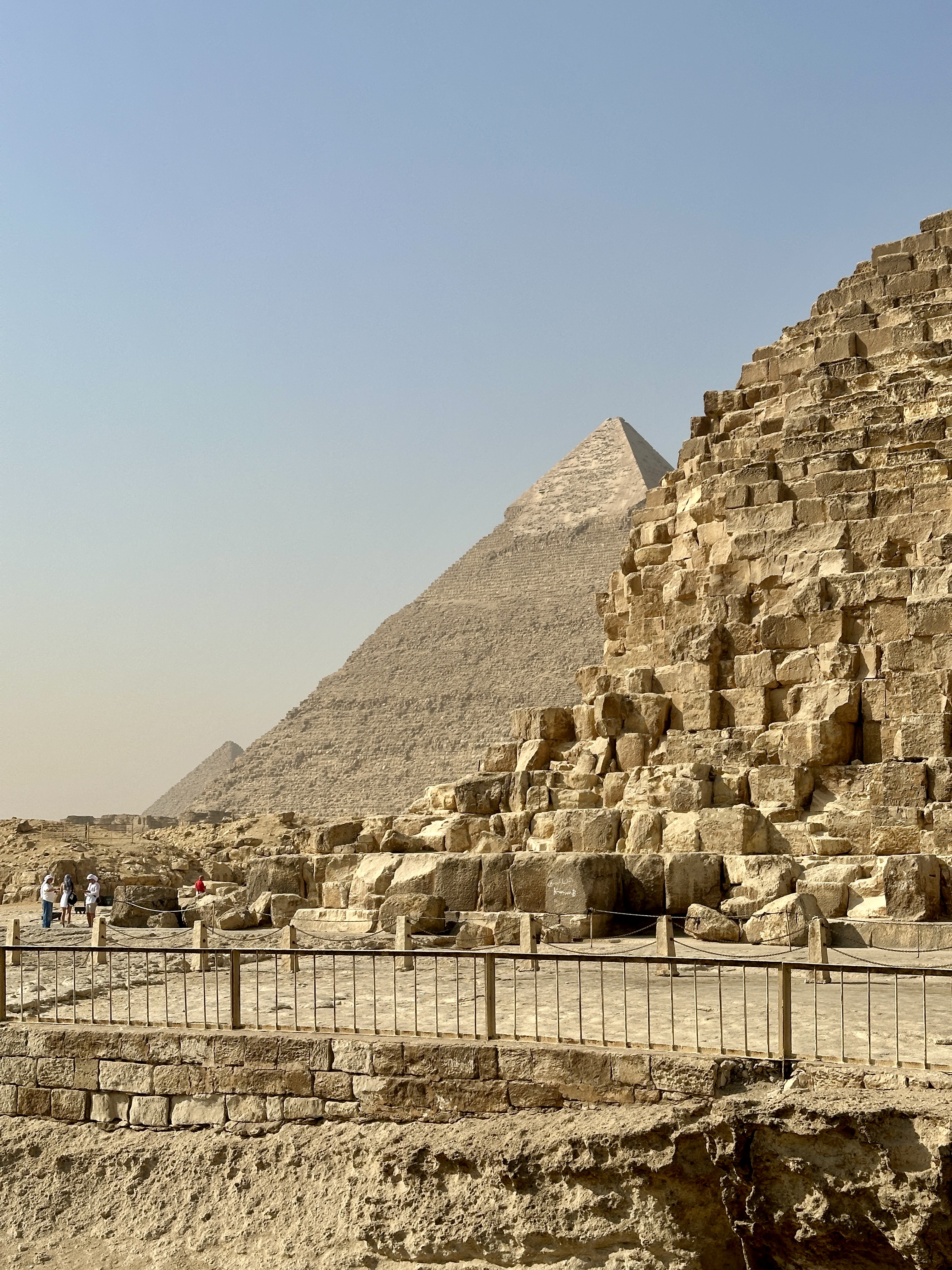
To be properly “whelmed,” you have to consider the gargantuan effort that was required to cut, move and place millions of limestone and granite blocks weighing an average of almost three tons each. Then, consider that some of these blocks came from quarries hundreds of mile upriver.
Most importantly, you need to picture the site as it was in 2600 BCE: the land was verdant, there was a harbor close by, and the pyramids were accompanied by lavishly decorated temples and many other subsidiary buildings. The Great Pyramid is plain inside – its construction predated the custom of inscribing text in a pyramid’s interior by a couple of centuries – but it would have been clad in white limestone gleaming brightly in the hot sun, almost all of which was removed for use in other building projects in subsequent centuries.
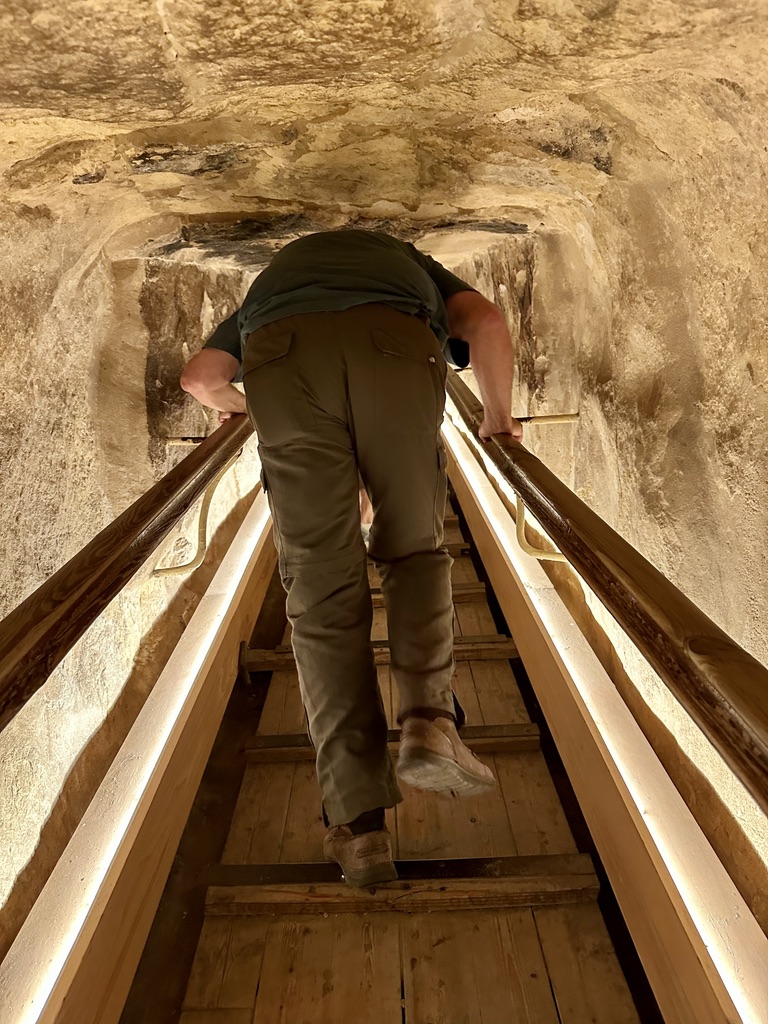
Suitably impressed, I joined a group heading inside to see the king’s burial chamber. The experience is uncomfortable and not for the claustrophobic, but I’m glad I did it. After a short entryway, you walk up a steep wooden ramp for around 100 meters, crouching low to avoid hitting your head on the ceiling.

At the top of the ramp, there’s a small set of stairs, followed by another ramp (with no need to duck) and a short hallway with a very low ceiling, which leads to the burial chamber. All that’s left in the chamber is Khufu’s granite sarcophagus; as mentioned above, there are no hieroglyphs or decorations. (By the way, it’s also hot and humid inside, with no air movement.)

Even having said all that, I thought going inside was worthwhile, simply because I got to enter a structure that’s been around for nearly 5000 years, where a great king of antiquity once lay while awaiting his transportation to the afterlife. The psychic rewards of doing so, coupled with the feeling of accomplishment at meeting a physical challenge without incurring a concussion or any sprains and strains, easily outweighed the moderate discomfort.

After emerging, we walked around the rest of the complex, stopping to admire the colossal Sphinx (Khufu’s head on the body of a lion).

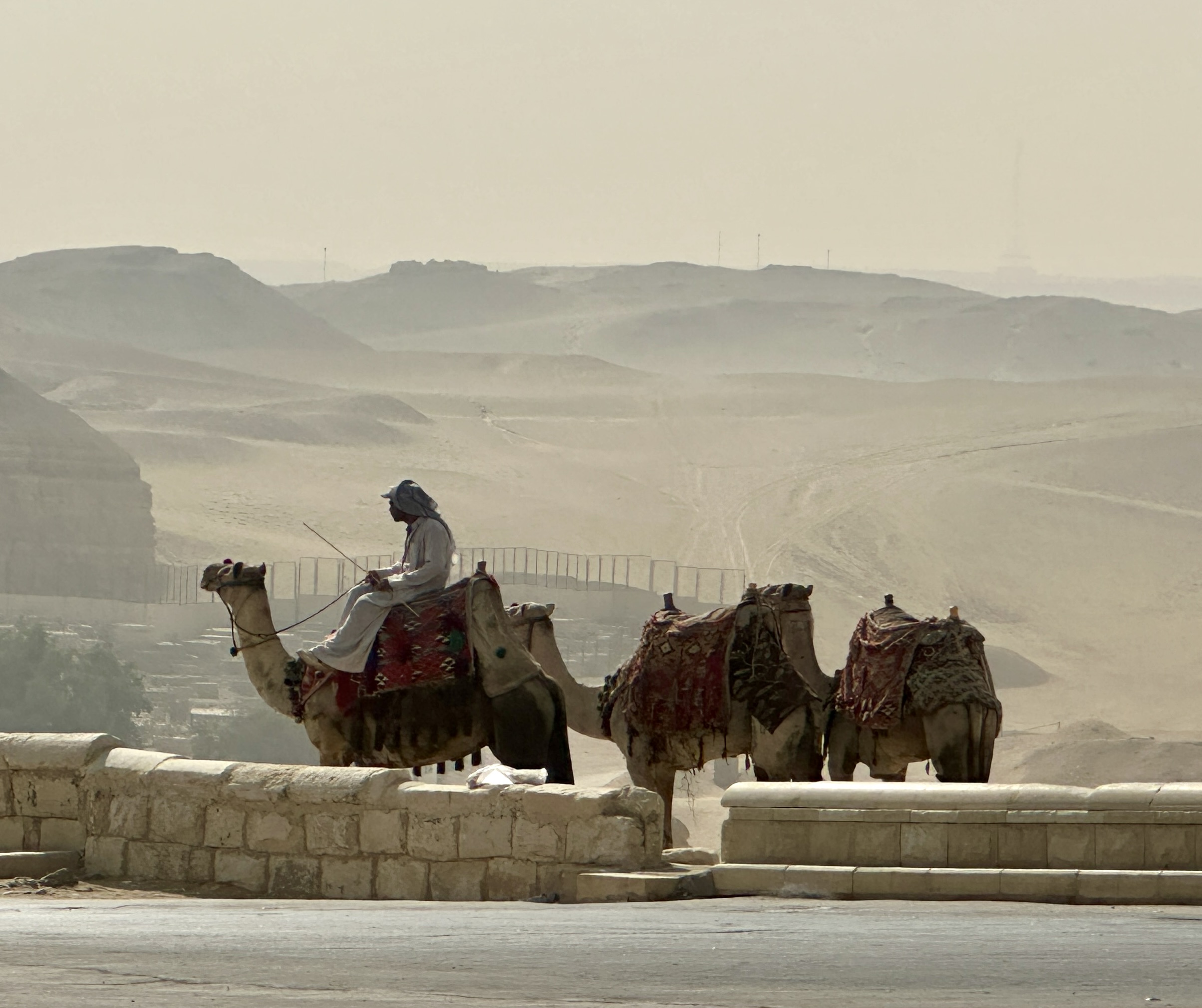
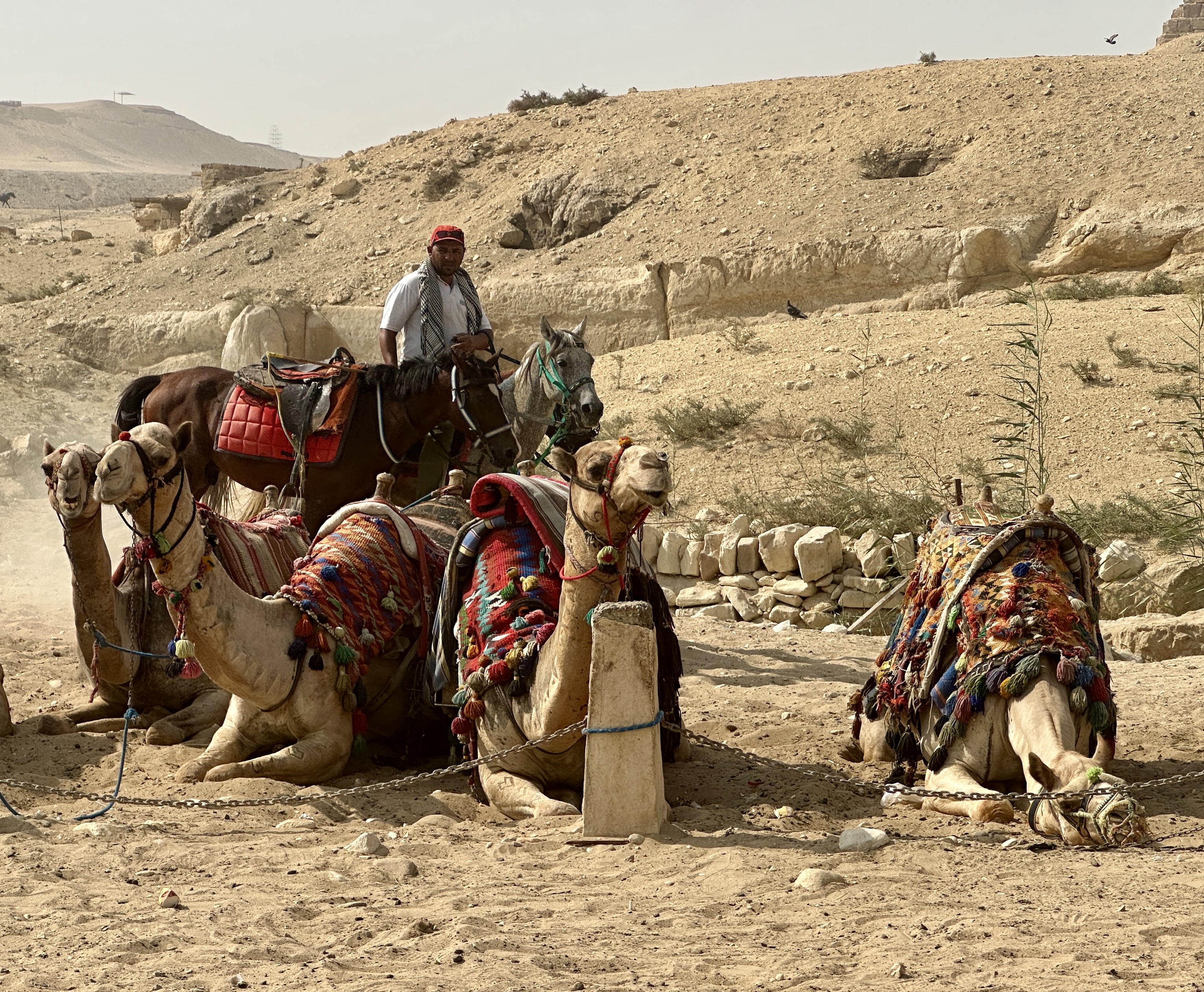
Nearby, there were camels available to rent. For around $20 (I think), you can secure the services of a camel and guide for an hour. I had no time to do so and would have steered clear in any event; I have possibly exaggerated memories of a jarring ride on an ill-tempered camel in Morocco when I was around 15 years old.

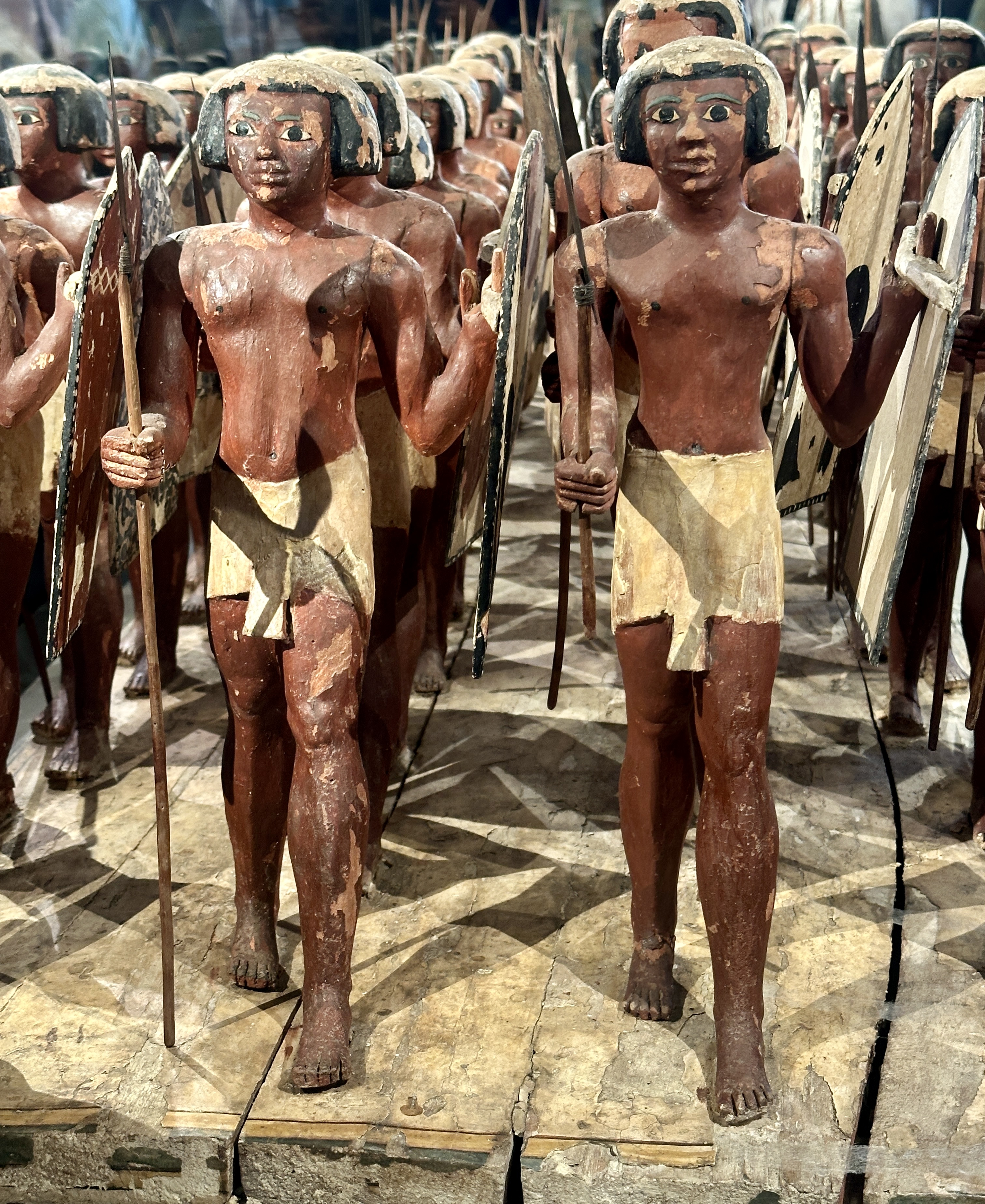
From the pyramid complex, it’s a short bus trip to the Grand Egyptian Museum. The GEM had a soft opening last year. Since then, the public has been able to view a staggering collection of artifacts from ancient Egypt, including massive statues, stela, coffins, and even an army of spear-carrying soldiers.

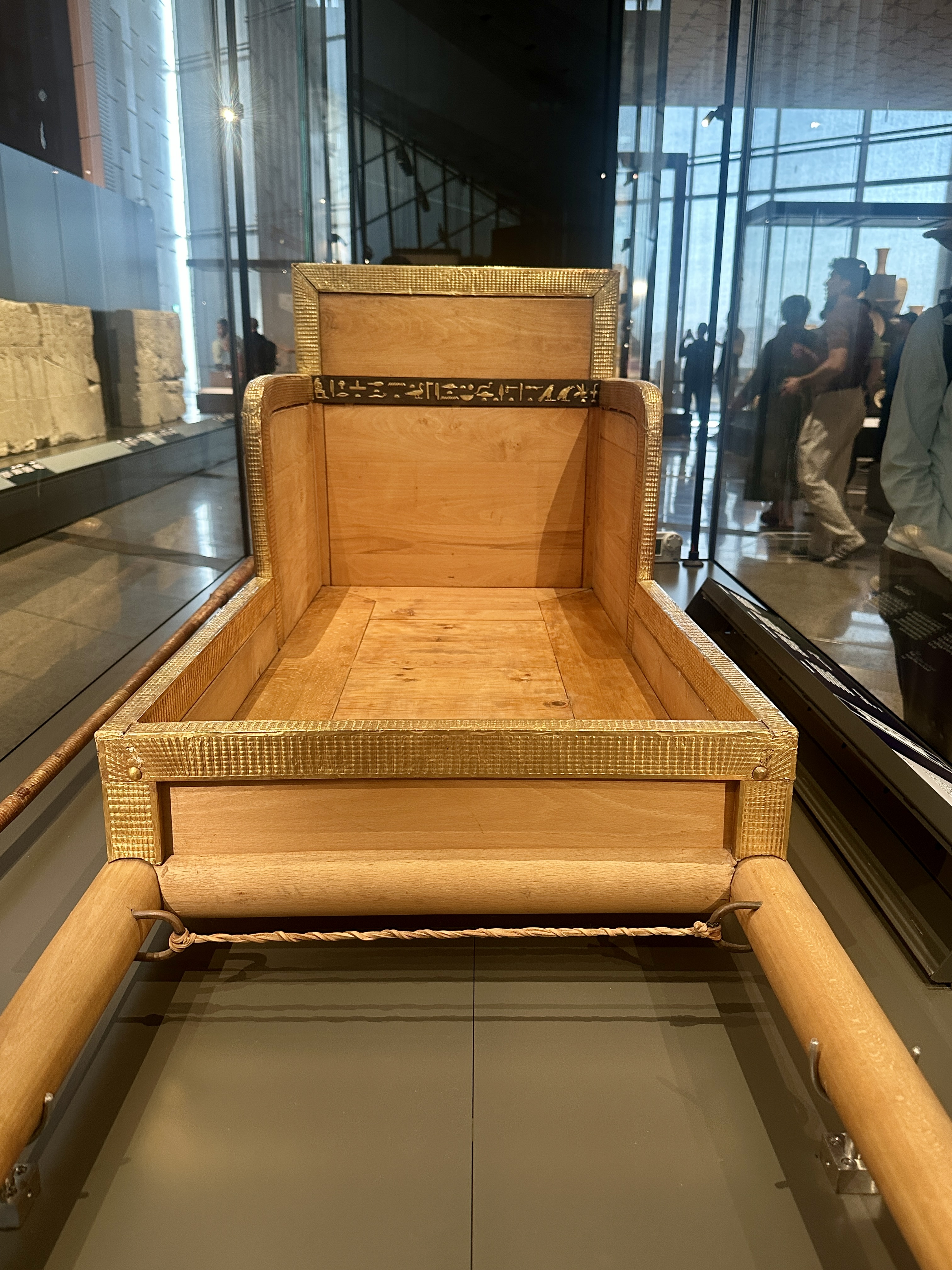
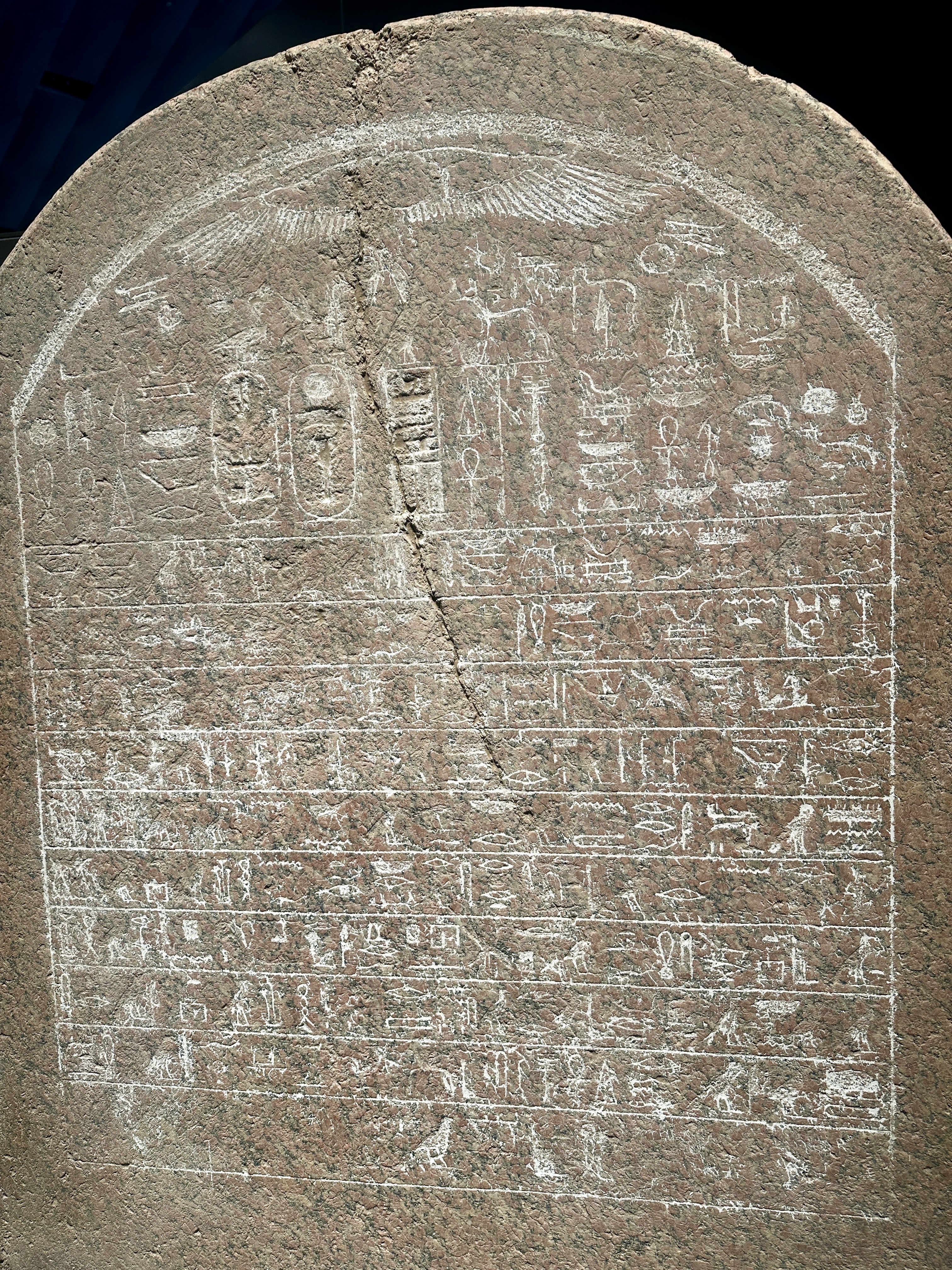

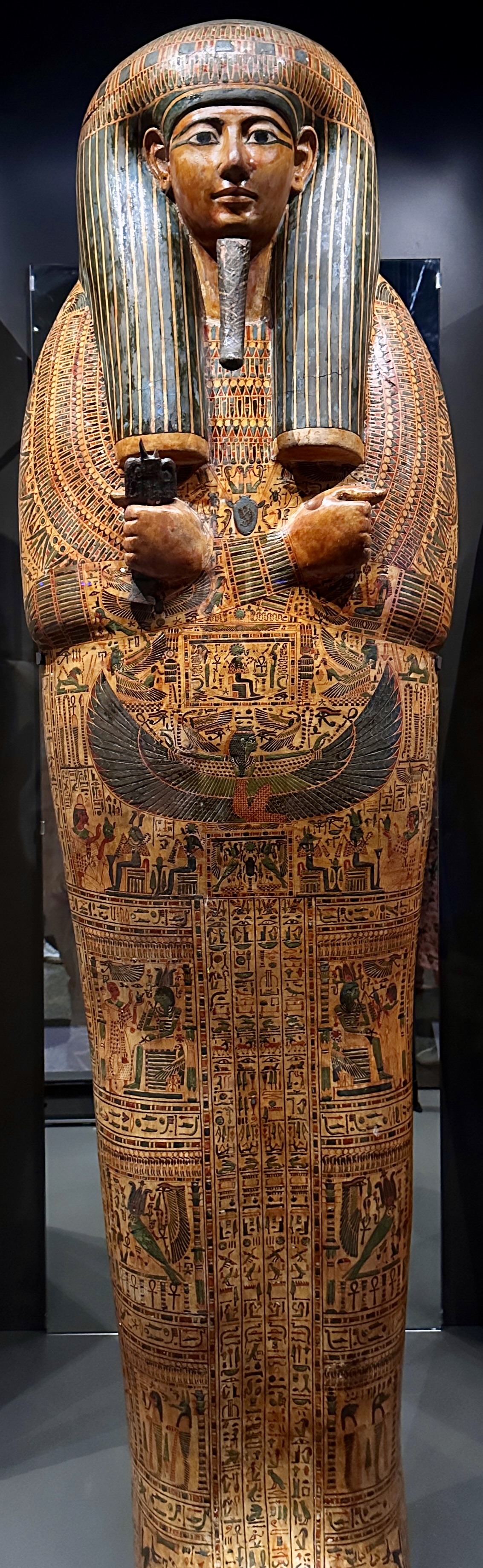
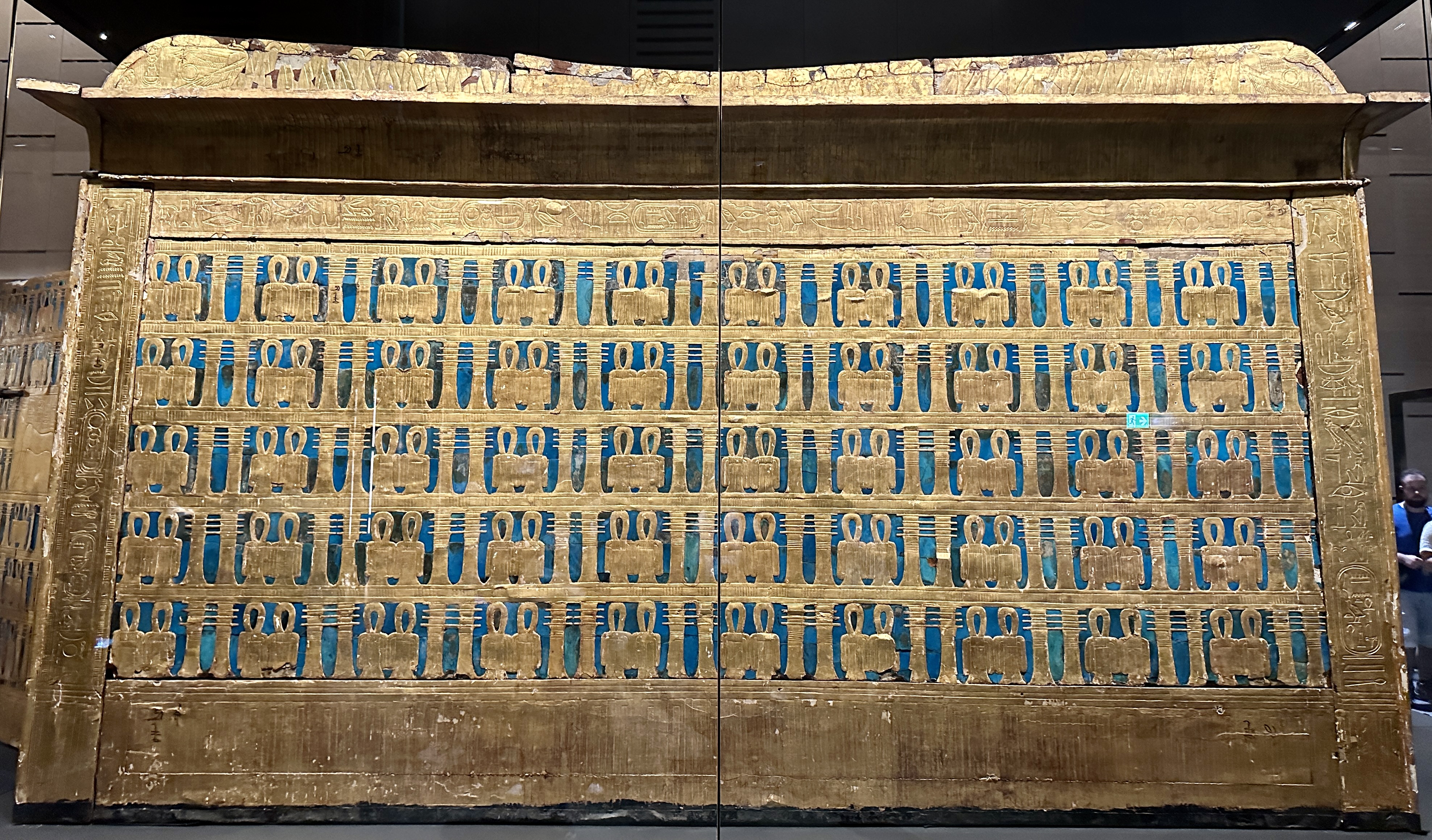
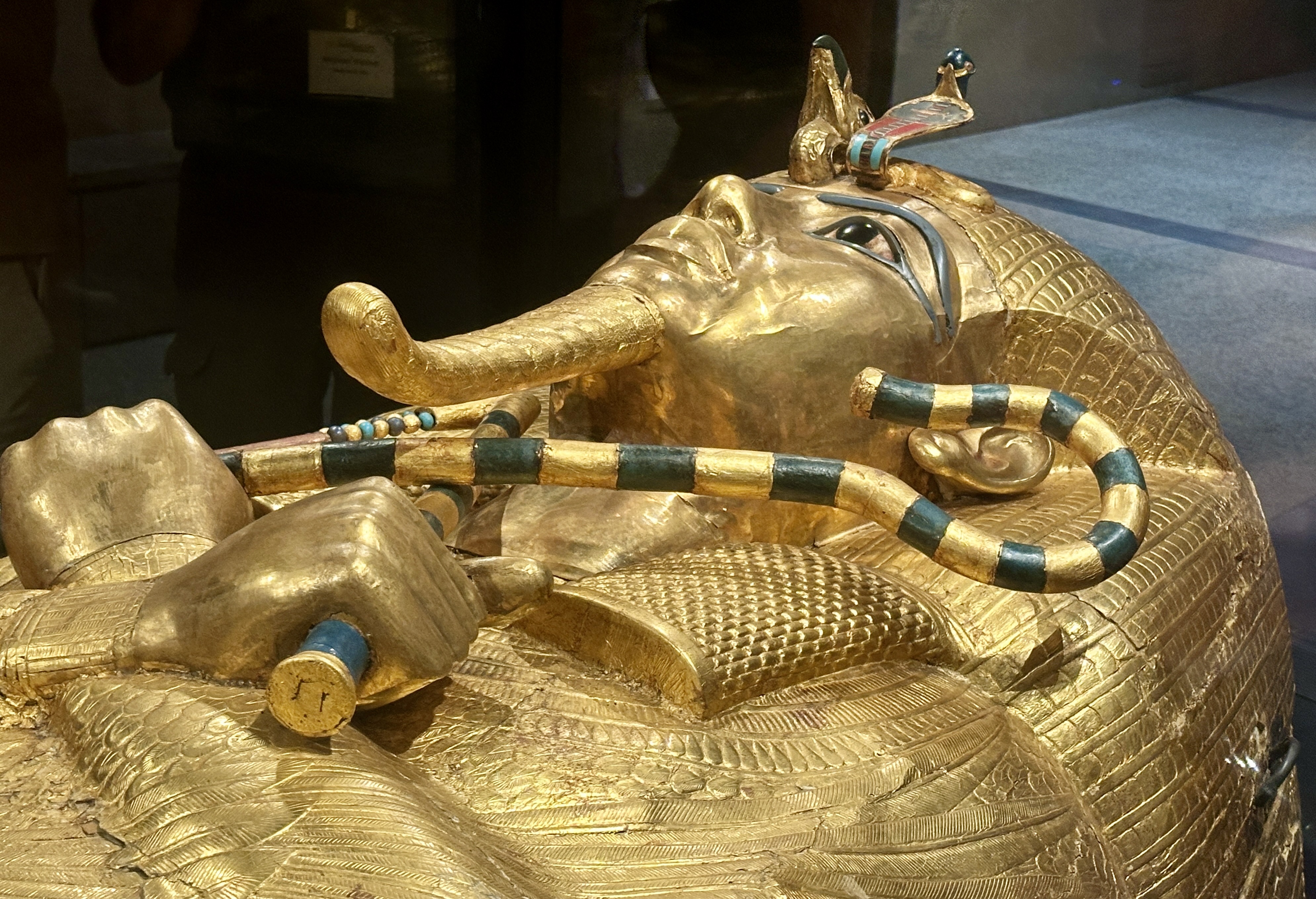
Just two days ago, GEM had its grand opening, marking the unveiling of an enormous hall housing thousands of items from King Tutankhamen’s tomb. Rather than trying to describe the vast array of treasures, I’ll let the pictures speak for themselves.

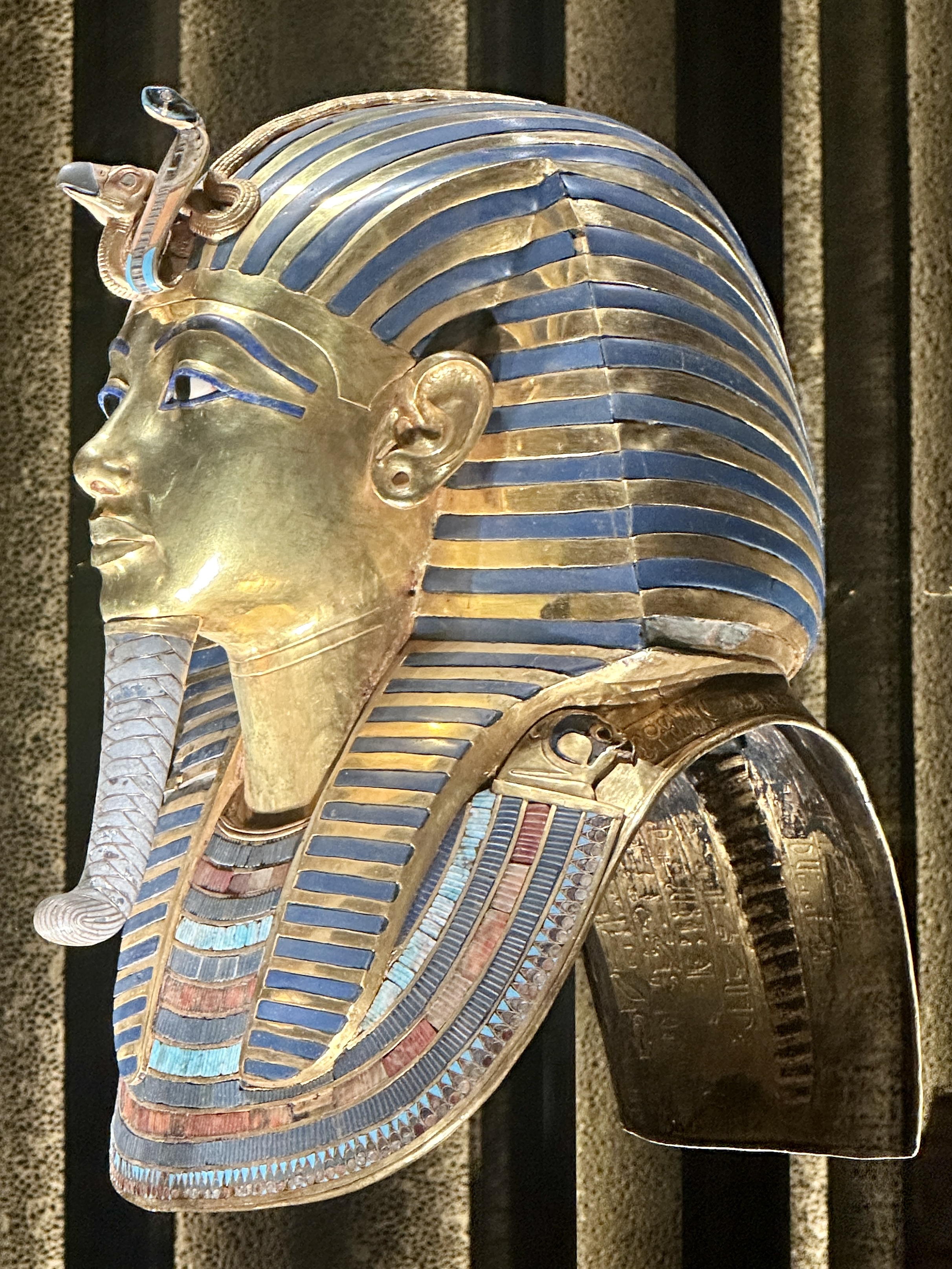
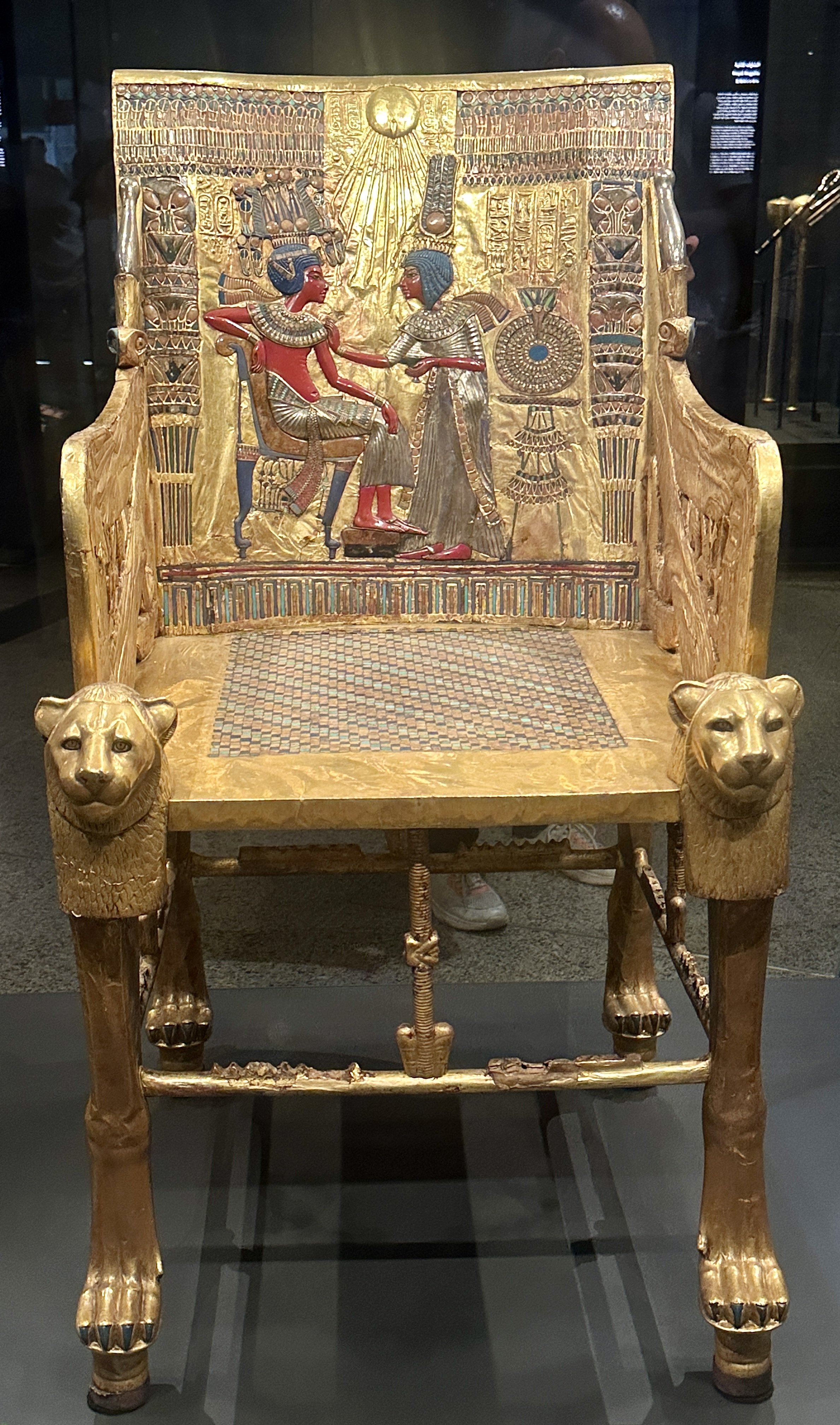
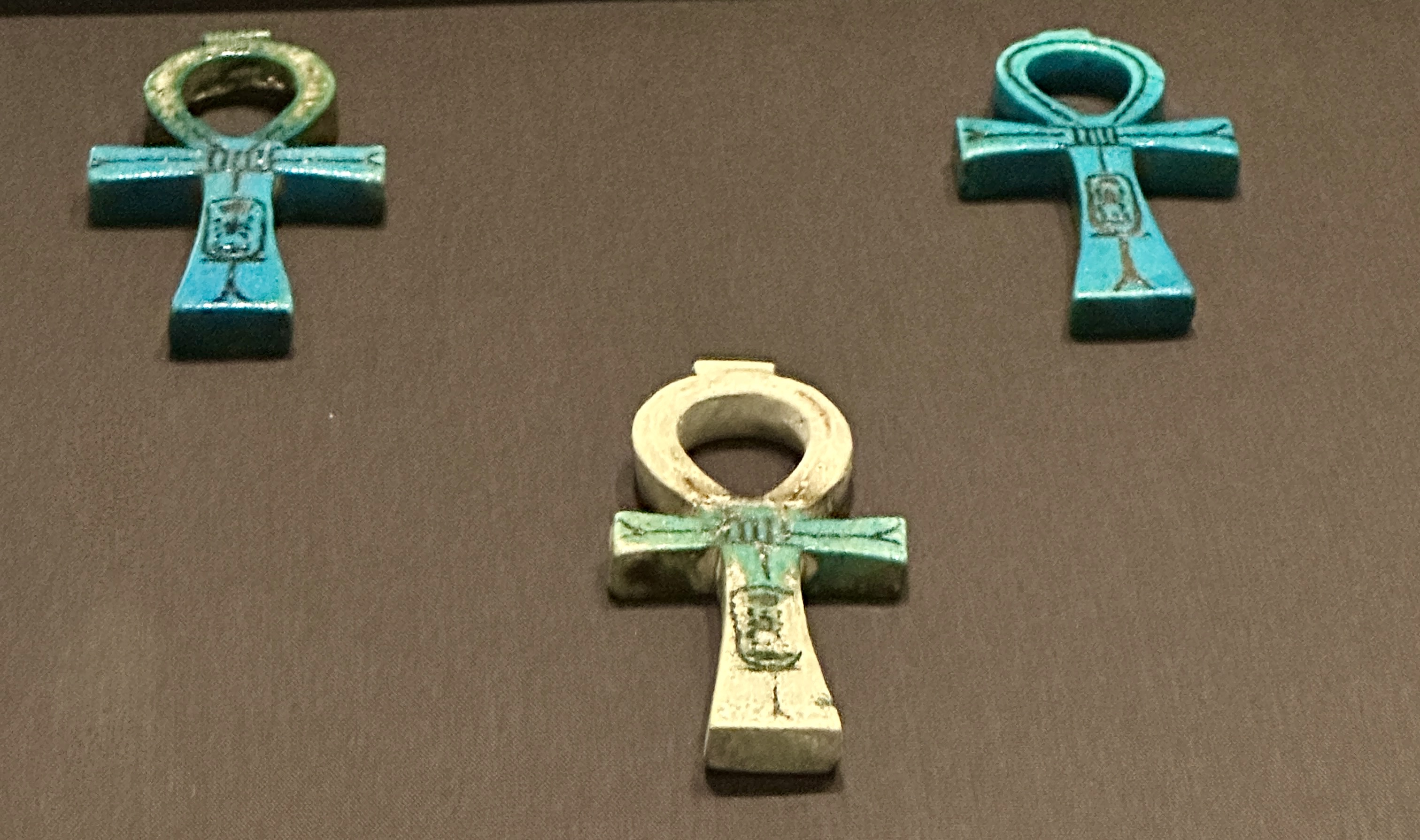
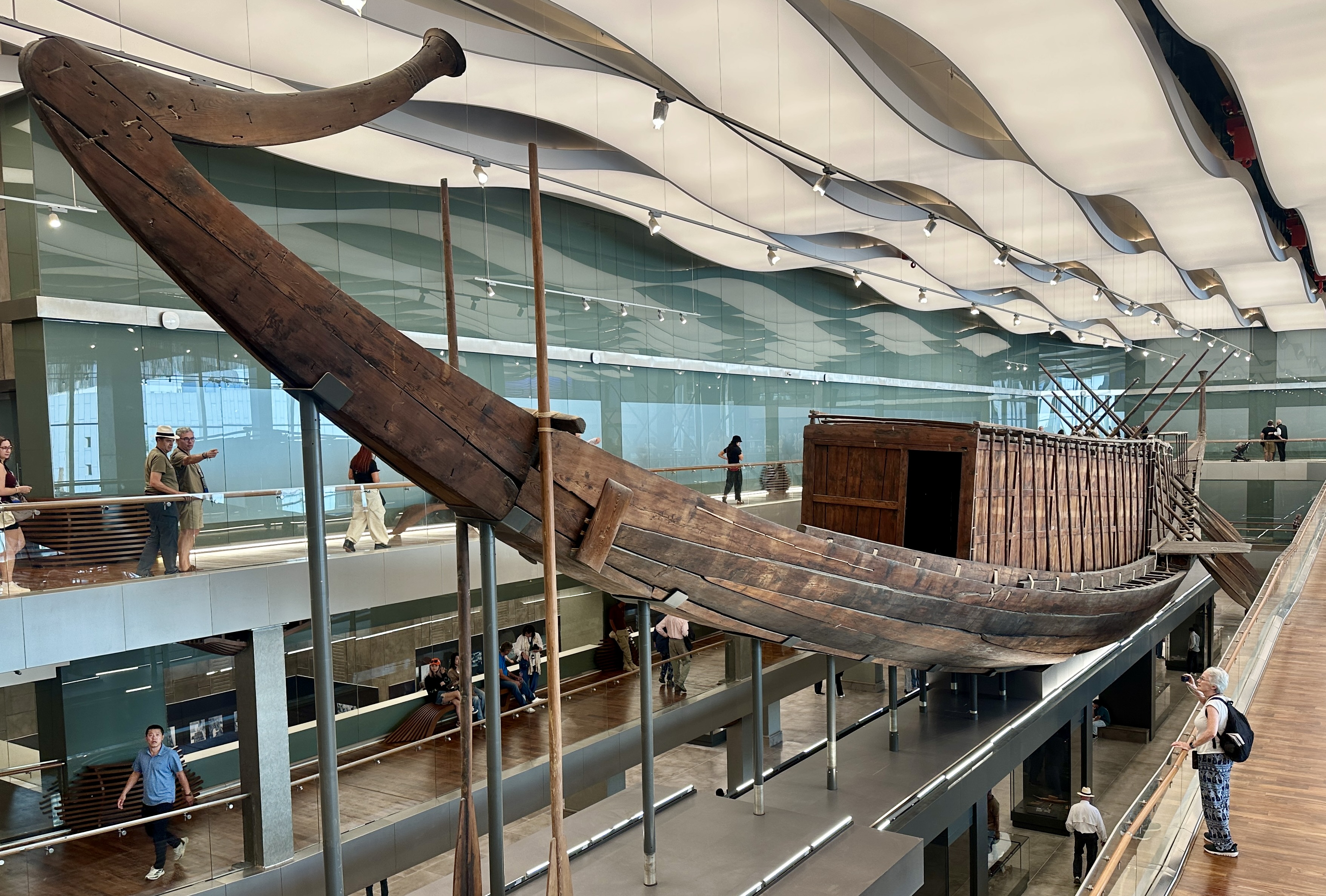
A separate building within the GEM complex, the Boat Museum, houses a boat that was buried near the Grand Pyramid to take Khufu to the heavens. The boat had been carefully disassembled before it was buried – presumably the various statues of servants that would have accompanied Khufu in the pyramid would have put it back together. Lacking statues of servants, a group of modern-day experts carefully preserved, reassembled, and transported the boat to its new home.
We have an early flight to Aswan tomorrow – so early that it requires a 2:15 a.m. wake-up call – followed by a visit to the famous dam and a nearby temple. More to come!

 PuffinlessTravel
What a timely post! Would you believe it’s exactly 103 years since Howard Carter discovered Tutankhamun’s tomb (4 November 1922)?! When asked if he could see anything, Carter said “Yes, wonderful things!” I’ll say! The mask and the throne are particularly spectacular. I have vivid memories of how hot and oppressive it was inside the pyramid. I’m thinking you’ll see Abu Simbel tomorrow; safe travels!
I can’t believe no one pointed out that coincidence! Yes, Abu Simbel is tomorrow (Thursday).