Rather than taking a tour of Chalon sur Saône today, I chose an excursion to Beaune (as in c’est si bon, which it was).

Chalon sur Saône is notable for several reasons – it was one of the fortified towns (oppida) established by Julius Caesar (c. 52 BCE); it formed part of the dividing line between Occupied France and Free France during World War II, and it was the birthplace of the inventor of photography, Nicéphore Niépce.
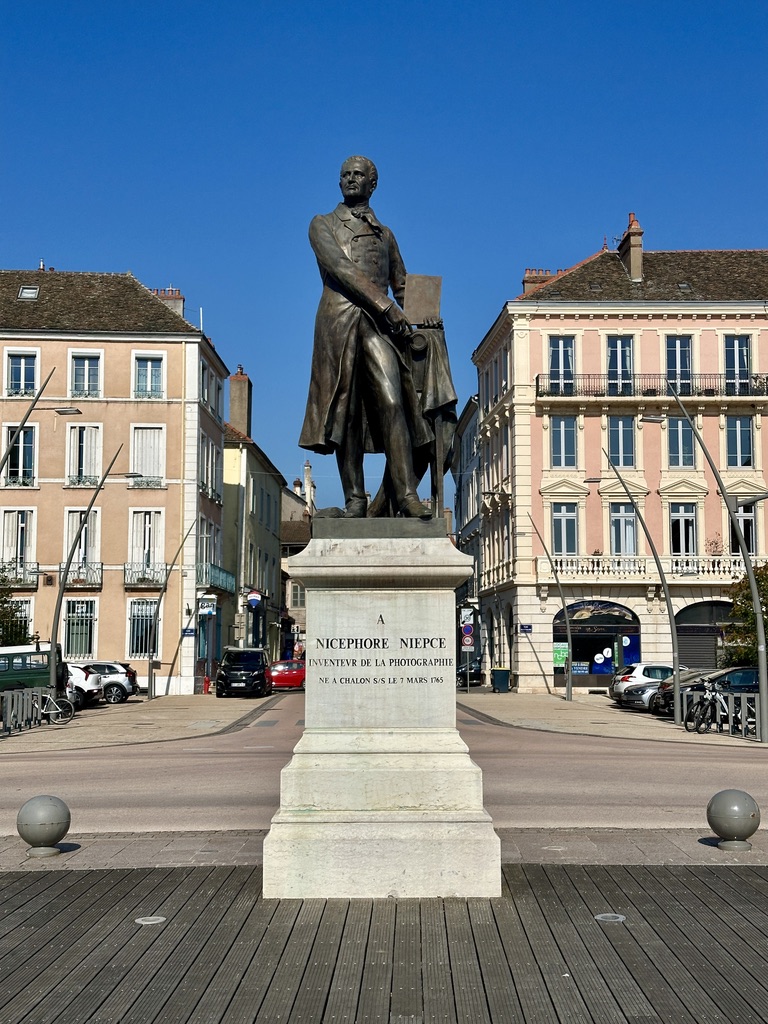
Niépce’s first picture was of the courtyard of his home, which required an eight-hour exposure. I can only imagine what he would have thought had he seen me taking a picture of his statue using a tiny rectangle that also allows me to play music, talk to people, and obtain disinformation from millions of sources. When Louis Daguerre heard of Niepce’s success, he asked to go into business with him; shortly after they did, Niépce died and Daguerre got credit for the new technology.
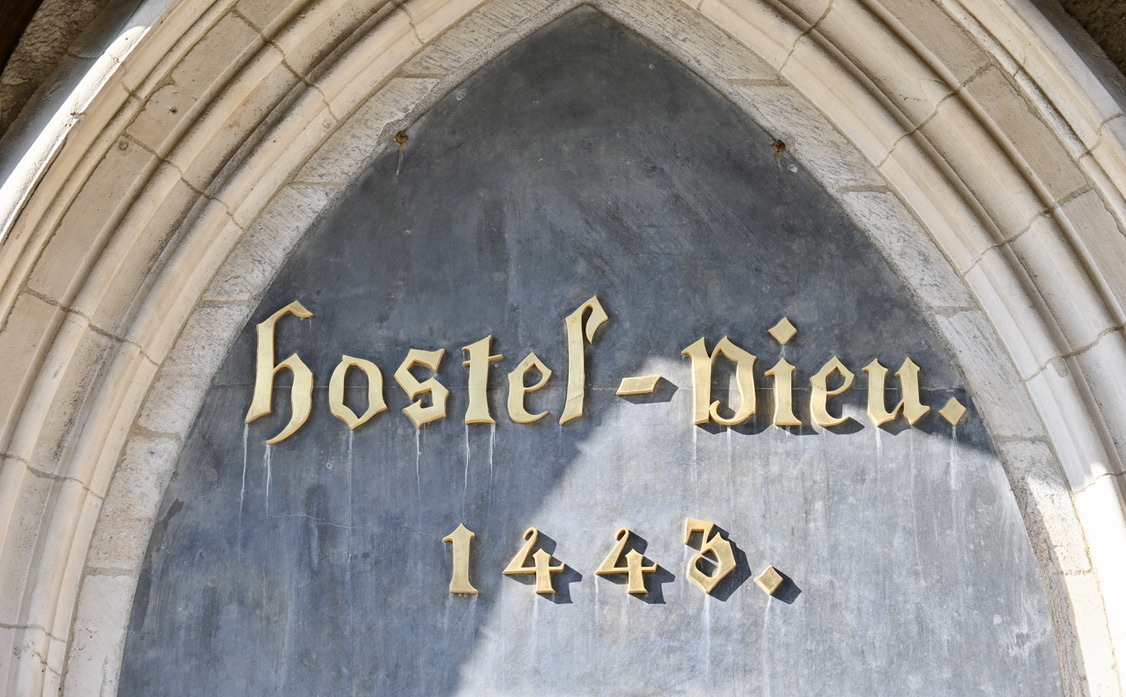
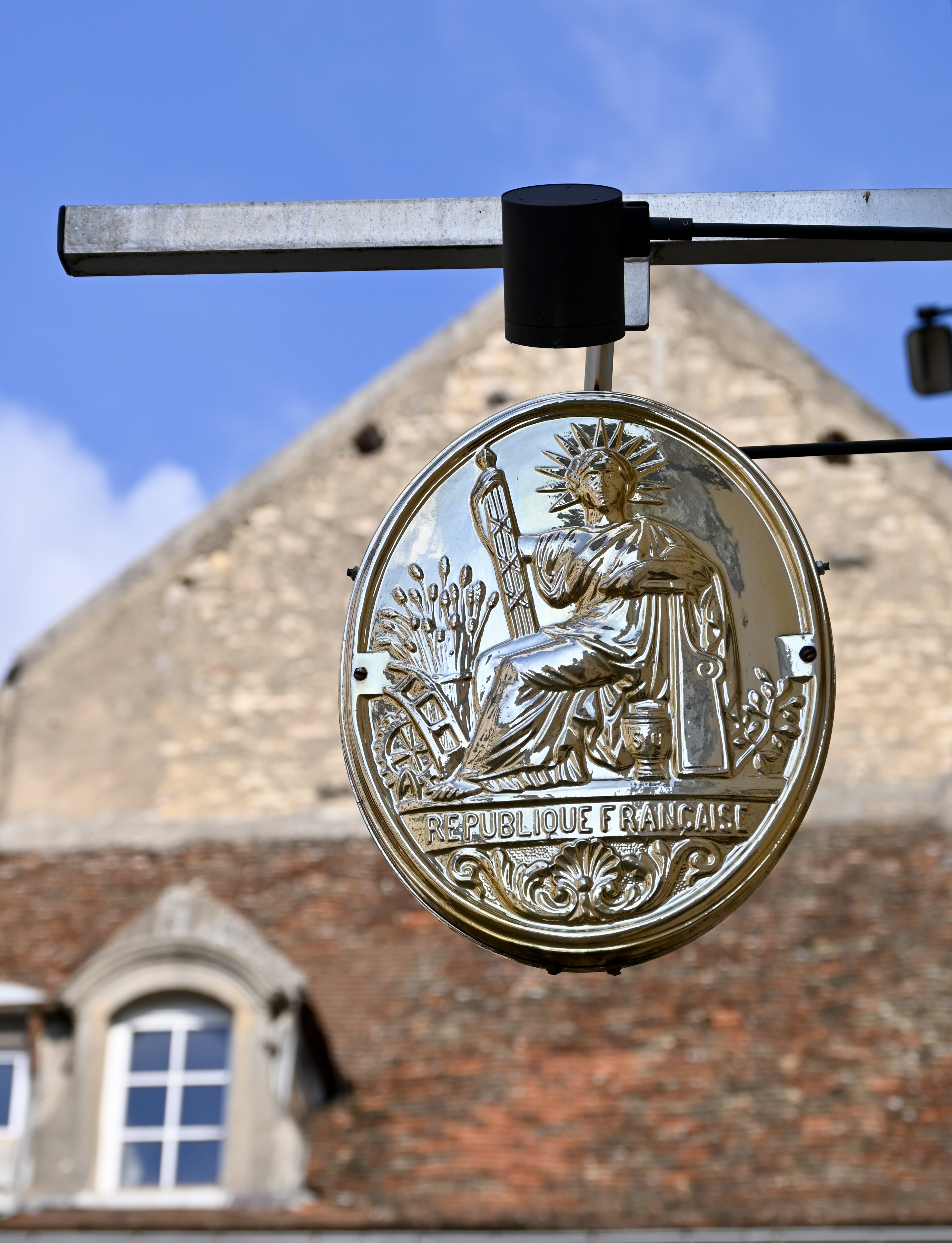
Beaune is famous for the Hotel Dieu, a hospital for the poor founded by Nicolas Rolin, Chancellor to Phillip the Good (Duke of Burgundy) and Rolin’s wife, Guigone de Salins. (As an aside, Phillip the Good’s grandfather was Phillip the Bold and his father was John the Fearless; his son, less gloriously, was called Charles the Reckless after he went to war against the French King and got killed in battle, ending Burgundy’s status as a separate duchy and merging it into the Hapsburg dynasty, not that the fresh genes ultimately helped.)

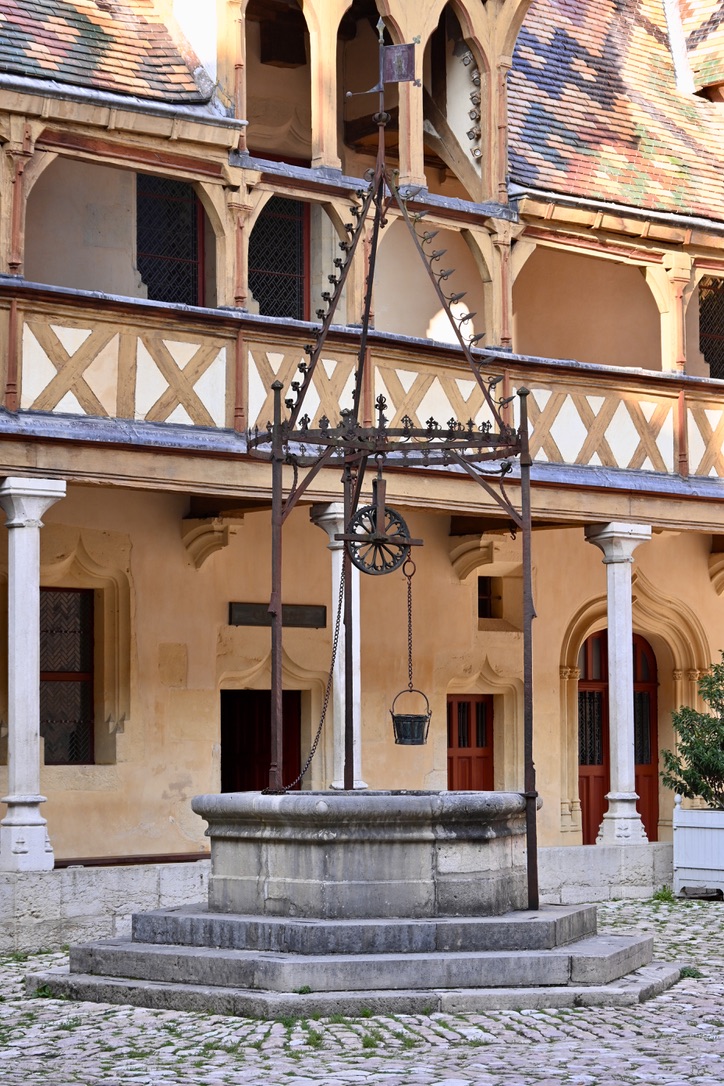
Completed in 1443, the hospital remained in operation until 1971, then continued as a nursing home until 1985, five-and-a-half centuries after it opened its doors. The hospital’s work continues today in a modern health care facility and nursing home close to the original building.
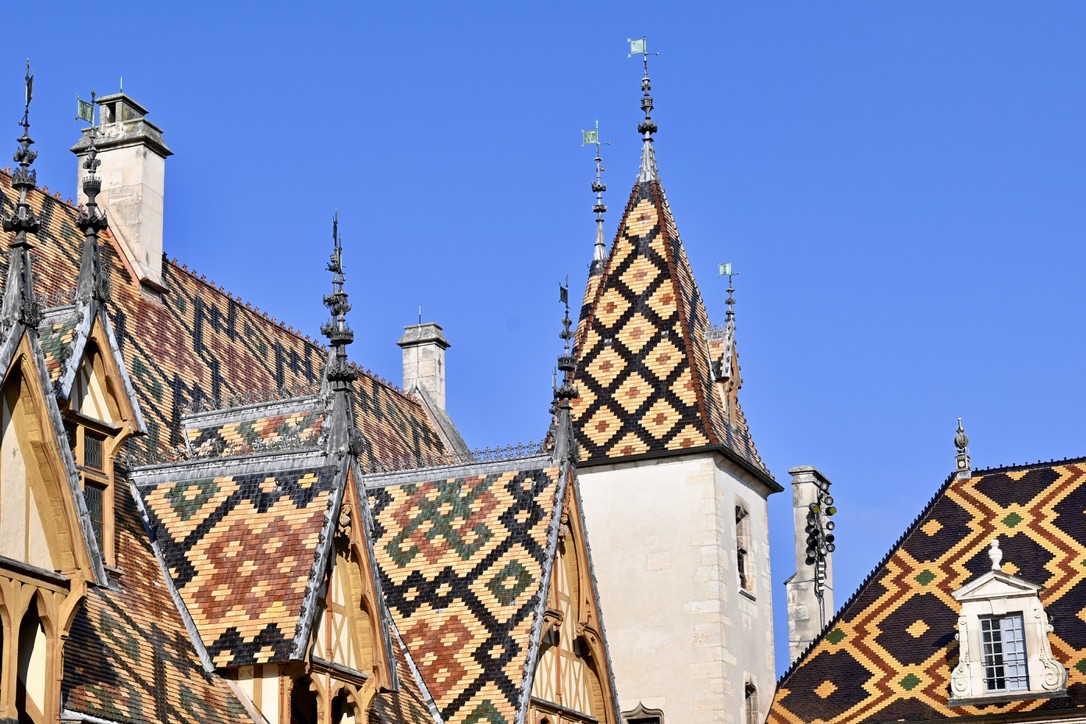
The back story of the Hotel Dieu’s founding is both entertaining and inspiring. Nicolas Rolin, in the mold of formidable politicians through the ages, was fond of power, wealth, and women. He outlived his first two wives and, at the ripe old age (for the time) of 47, married Guigone, the 18-year-old daughter of a wealthy family.
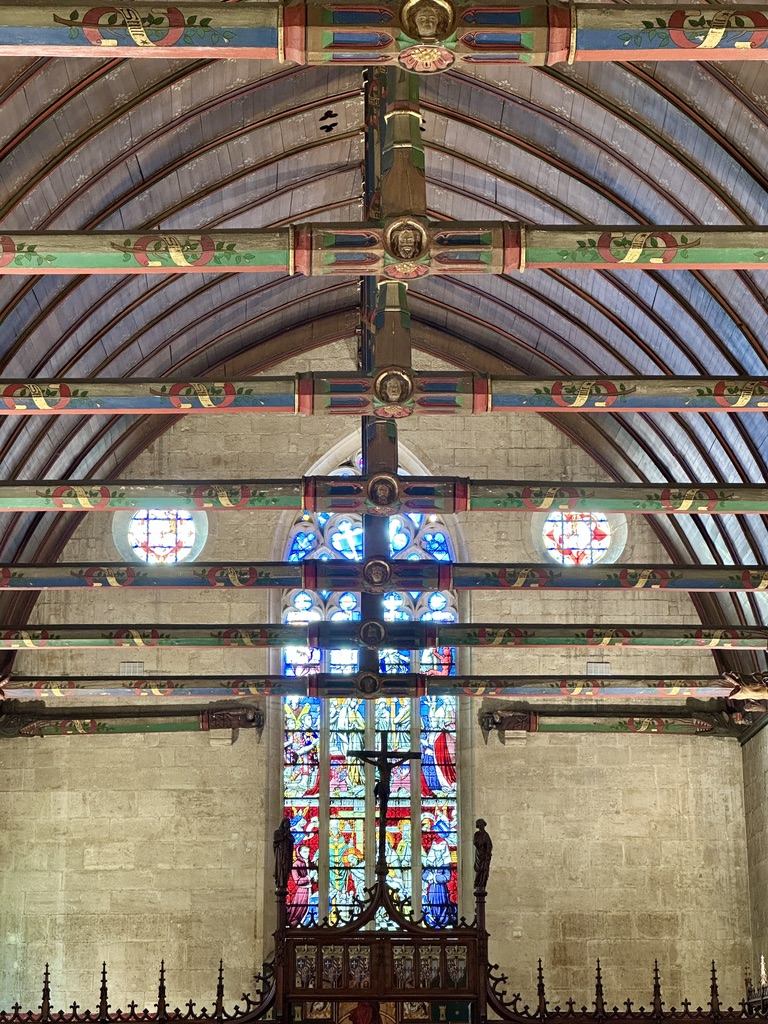
Guigone was inordinately devout and feared for her husband’s afterlife; in her view he was probably going to die soon and then take up residence in hell. She came up with the idea of establishing a hospital for the poor (i.e., pretty much everyone) as a way of addressing a critical need – the Hundred Years War had just ended and the area was ravaged by plague and famine – and concurrently giving Nicolas a shot at passing through the eye of the needle.
I imagine a conversation along the following lines, but in medieval French:
G: My darling Nicolas, thou hast spent thy life and fortune in pursuit of power, wealth, and nookie.
N: Quite so, my dear, and I daresay I have done well on all three counts.
G: In truth, that be my point. Thou hast attained the august age of 47.
N: And yet I am as hale as men of half my age.
G: Aye that be true. But live we now in parlous times of war and plague, of famine and potentially rebellious peasants, and actuarial tables, if such things there were, would prophesy thy erelong passing. Dost thou not fear damnation’s fires?
N: Still more reason to revel whilst still I can!
G: I have in mind a plot to save your soul.
N: Prithee hasten to speak, then, for I well love a well-thought plot!
G: Let us found a Hotel Dieu to treat the poor and lavish ‘pon them comfort they have never known.
N: Dost thou think the Pope shall grant his leave?
G: Thou shouldst so inquire.
N: My messengers shall hie to Gene [Pope Eugene IV] forthwith.
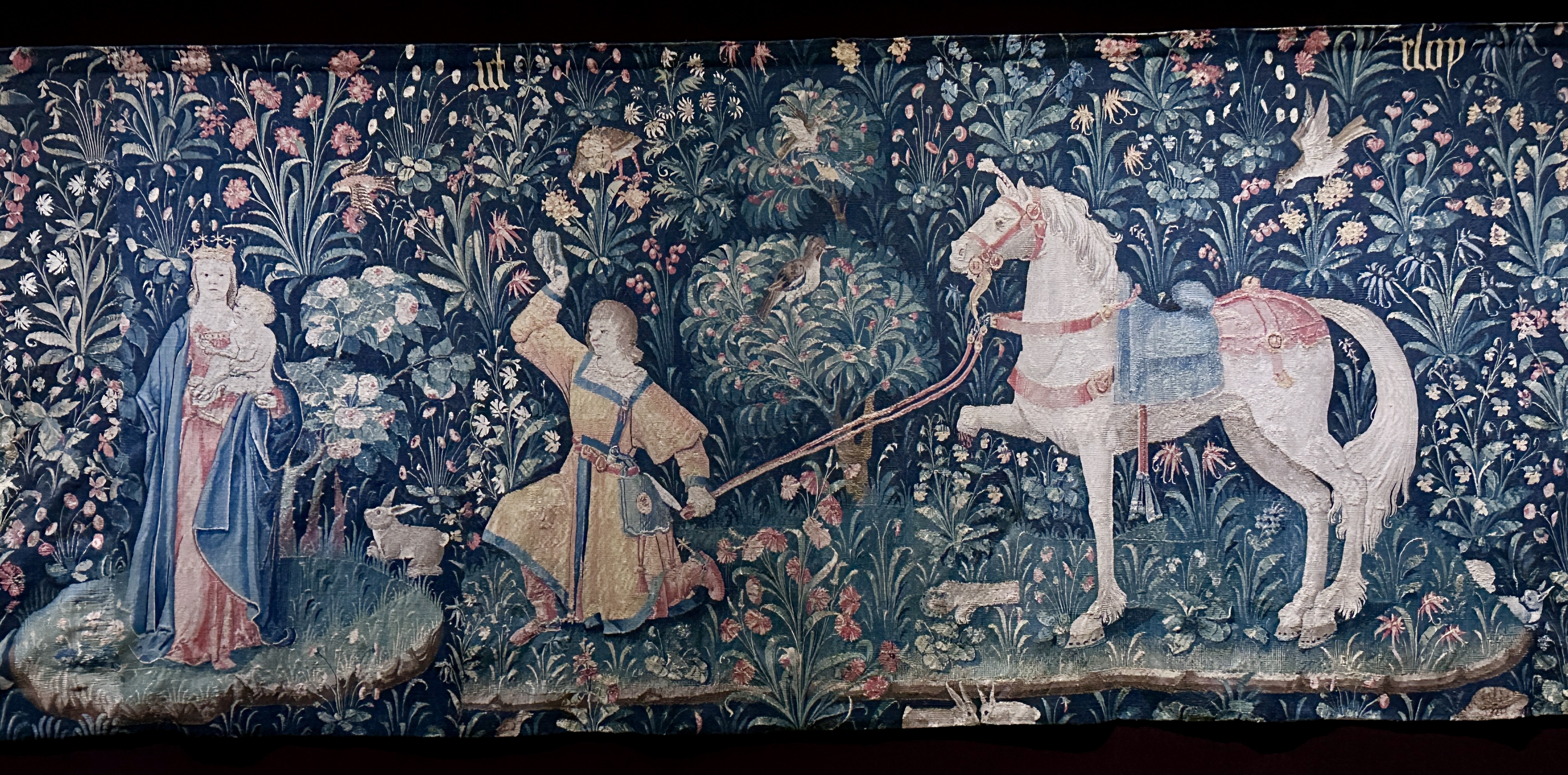
Well, maybe not exactly like that, but … at any rate, the Pope gave his sanction and the Hotel Dieu of Beaune was built, with no expense spared, including a gorgeous tile roof and art by Flemish masters. Nicolas, rather than expiring anon, lived to the almost unheard-of age of 86.
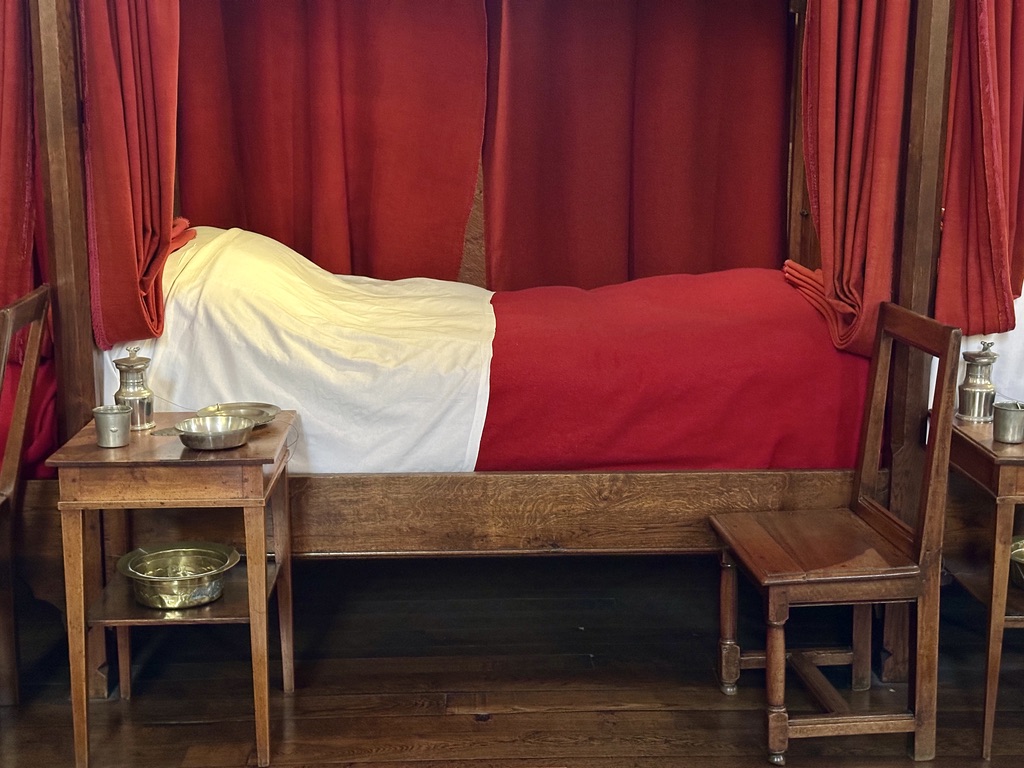
The poor were treated with dignity. Simply having beds was probably new to most of them; while two patients shared each twin-size bed, these were people who likely had slept on straw mats on dirt floors at home. Each resident had pewter dishes and cups. Most important, they enjoyed the devoted attentions of a new religious order, Les Sœurs Hospitalières de Beaune, whose treatment focused on the patient’s physical and spiritual well-being.
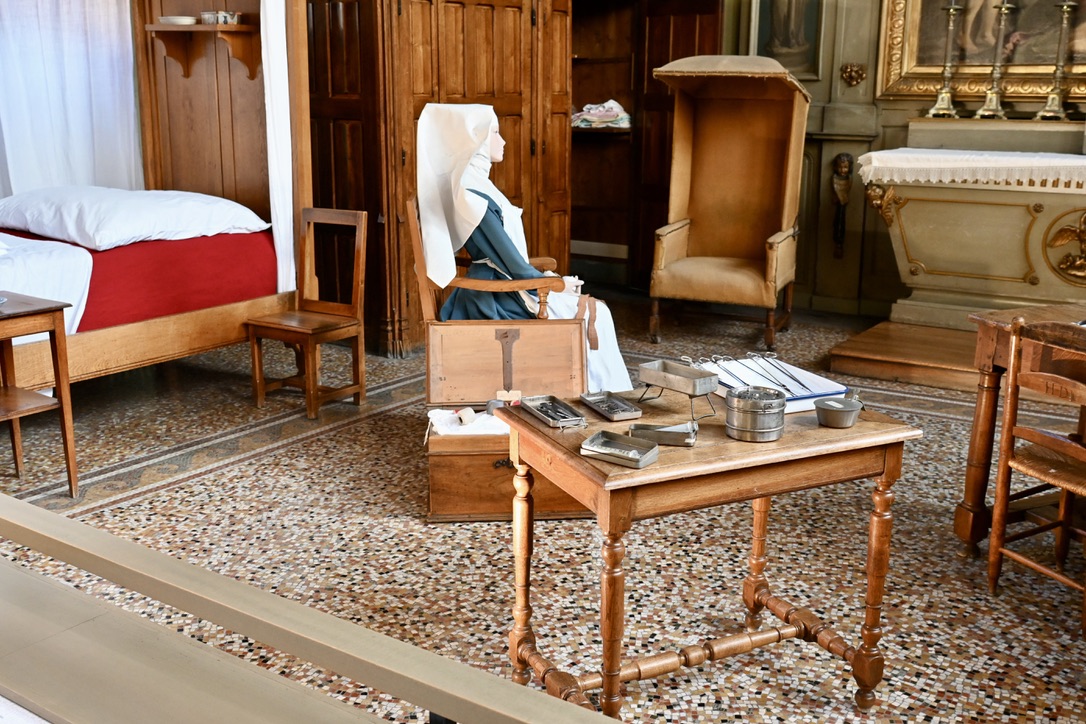
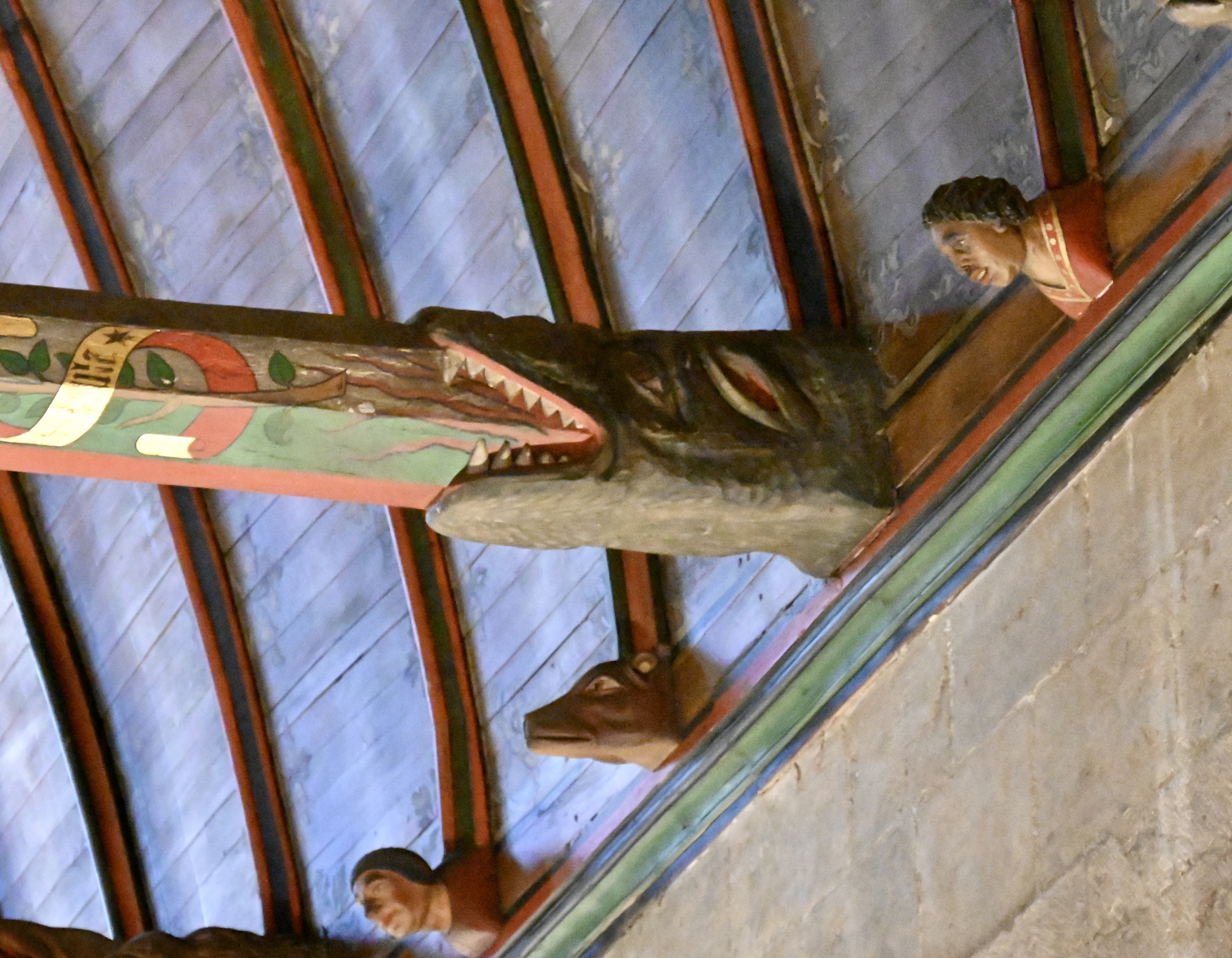
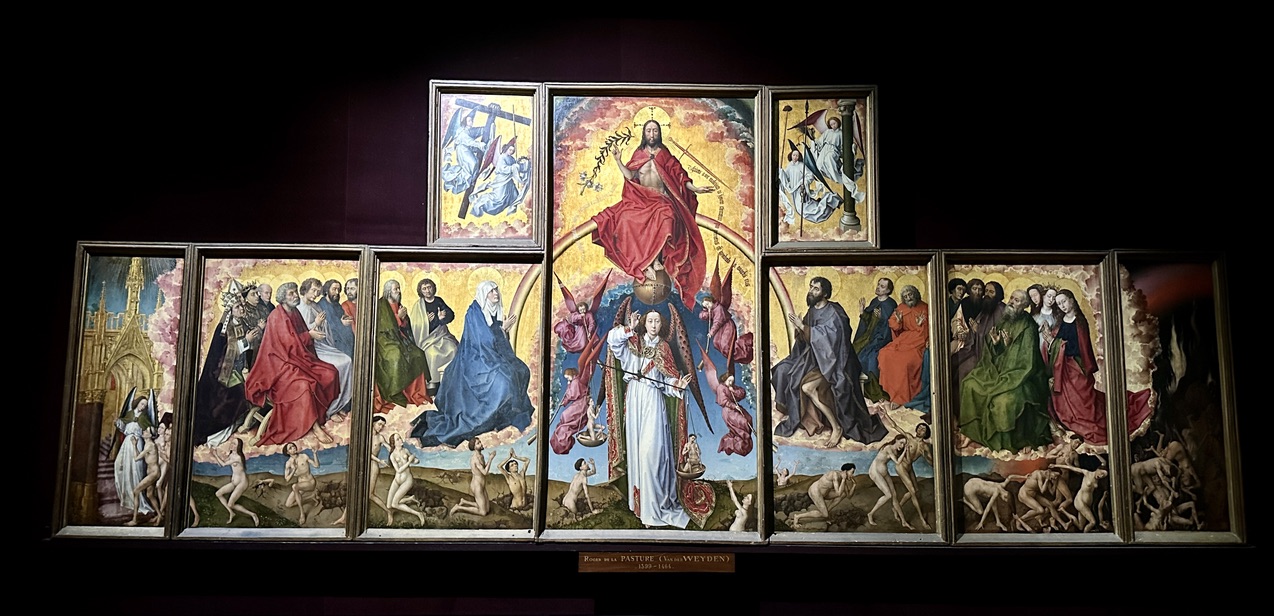
With respect to the latter, the ceilings above the beds depicted dragons to warn patients what awaited sinners in the afterlife, and a chapel was installed at the end of the ward (“La Salle des Pôvres”). The chapel featured a magnificent “polyptych” showing the Last Judgment. The original is in a climate-controlled room elsewhere on the premises; the chapel contains a replica.
Conditions were uncharacteristically humane for the times. In addition to the beds and pewter, the papal charter instructed that patients be given roast meat and white bread each day.

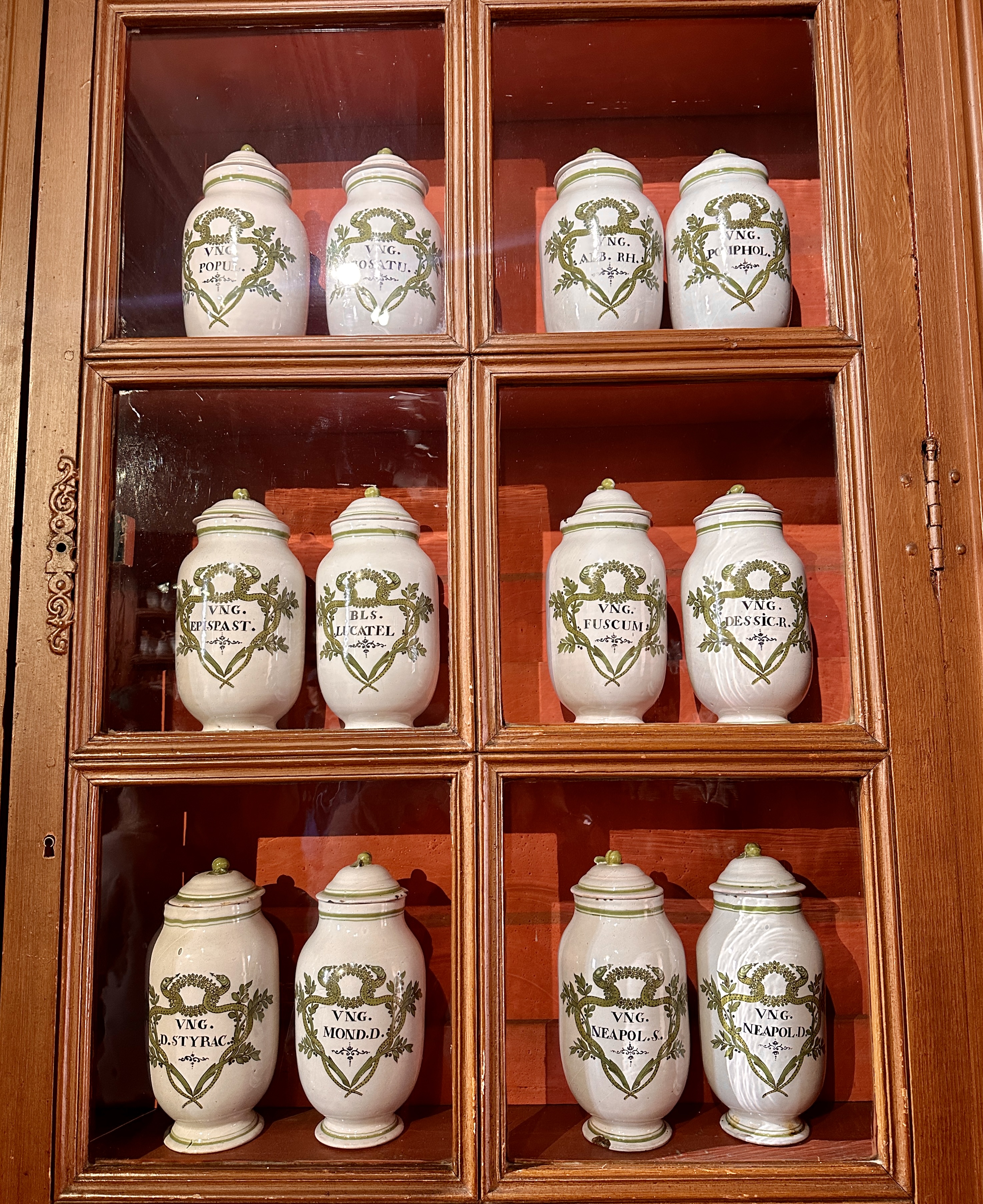
A medicinal herb garden provided raw materials for apothecaries, who stored their medicines – including both the usual herbal mixtures and more exotic ingredients such as dragon’s blood – in a large pharmacy. If you find yourself near Beaune, the Hotel Dieu is a must-see.

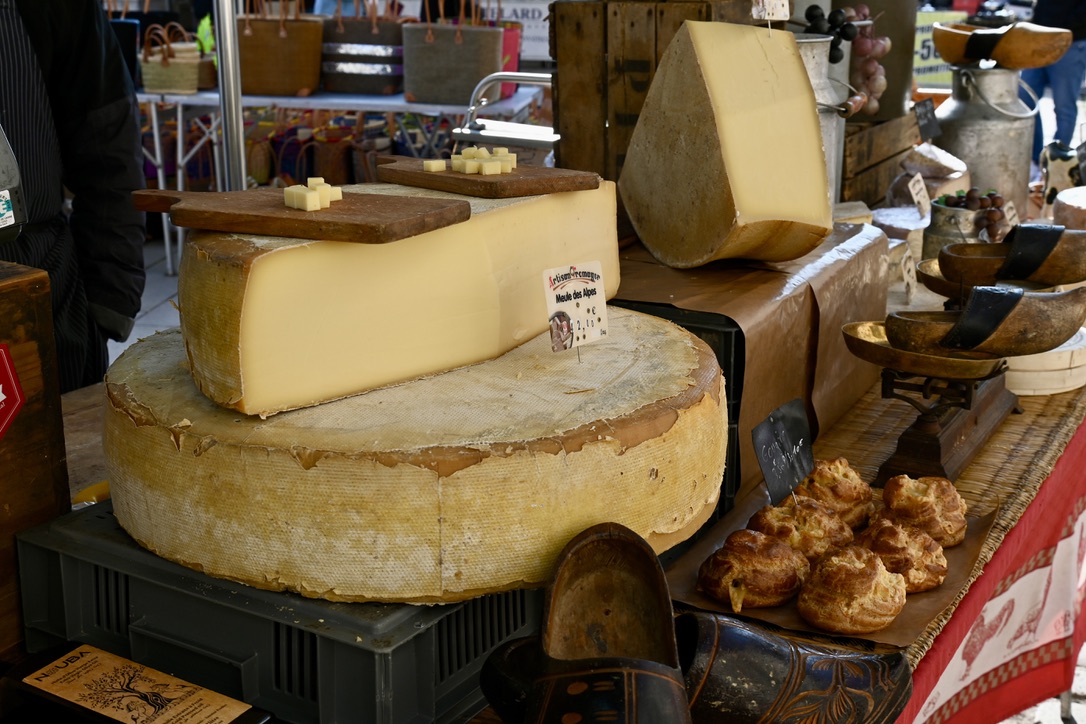
Today, the cobblestoned streets surrounding the Hotel Dieu are filled with purveyors of cheeses, wines, meats, wines, chocolate, wines, breads, and more wines.
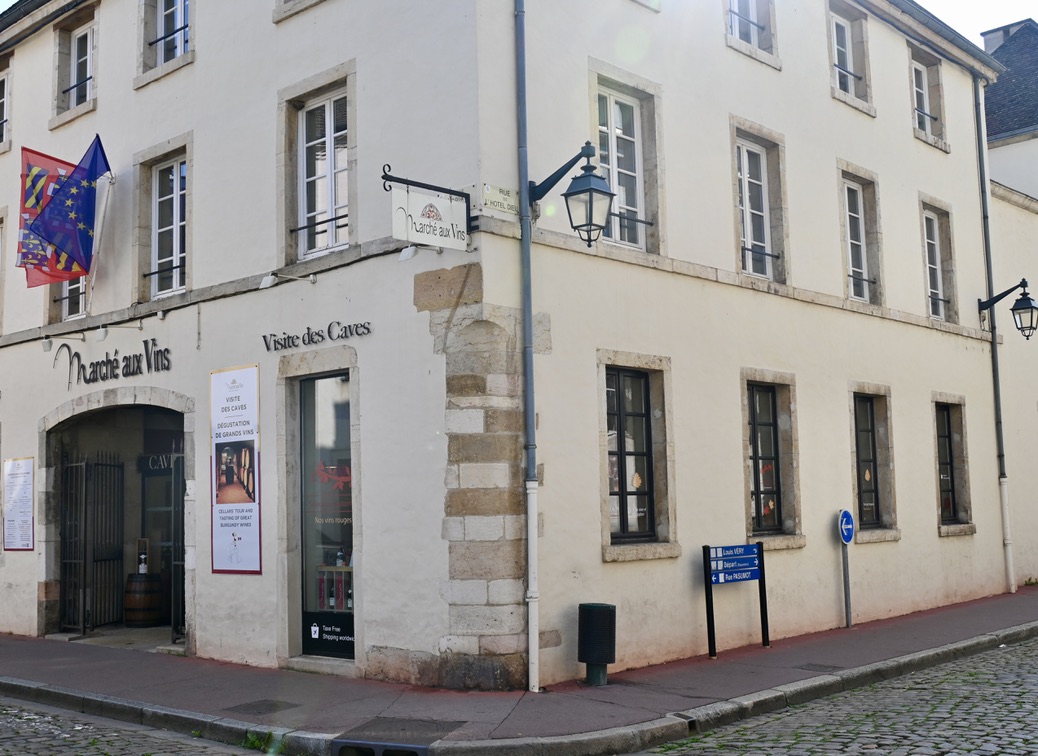
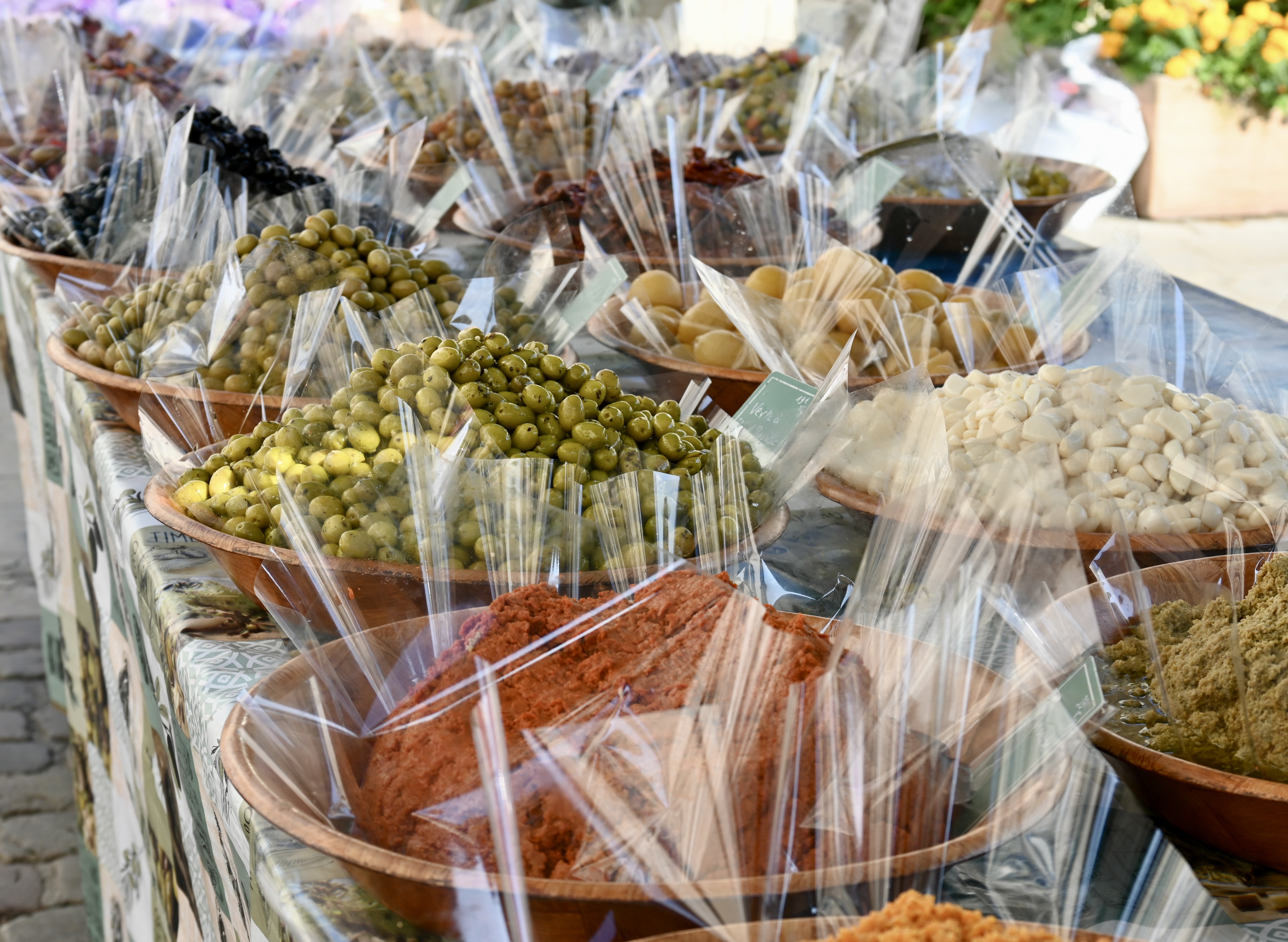
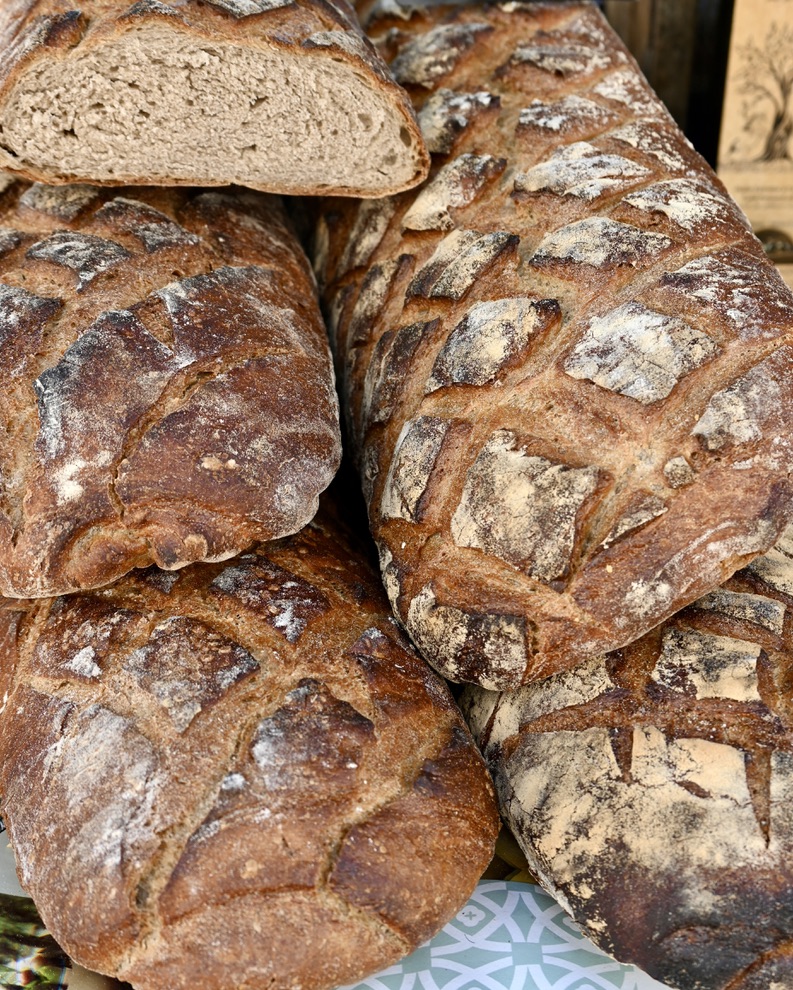
We were fortunate to visit on a day when a small market occupied the square outside the hospital. I sampled some cheese and, in an ideal world, gladly would have eaten each stall’s wares til I could eat no more.
After returning to the ship, I decided to forego my scheduled afternoon wine tasting tour (you could say I tired of hiking the Appellation Trail), which means you will be spared further versifying.
Tomorrow I disembark. Andy, Char and I will tool around Dijon for a bit and then head to Switzerland for a few days. I look forward to reporting to you from our first stop, Montreux, including an overview of Dijon and my final (and favorable!) impressions of AMA Waterways.

 PuffinlessTravel
Great stuff, Jeff! I’d never heard of Nicéphore Niépce and imagine I’m one of the many who has thought of Daguerre as photography’s founder. The Hotel Dieu is spectacular, the polyptych in particular. Also spectacular: those loaves of bread in the market! It all looks and sounds like a wonderful trip thus far, including cooperative weather.
It’s been wonderful. The history, the scenery, the food, the wine, the weather … I couldn’t ask for more!