Arles: Ear Today, Gone Tomorrow
Around half a century ago, there was a magnificent exhibition at one of the major New York City museums entitled “Van Gogh in Arles.” I was either in high school or college, and knew and cared nothing about art (music was my consuming passion). Nonetheless, I tagged along with some friends to see the exhibition and was impressed enough that I spent some of my hard-earned savings from a minimum wage job at a local record store on a poster of “Starry Night.” (Note to chronologically callow readers: “records,” also called “vinyl,” were analog music storage devices.)
The poster is long gone, my art knowledge is now a few inches north of nothing, and my appreciation of art has blossomed, triggered by visits many years ago to the Hermitage in St. Petersburg and the Munch Museum and Vigeland Sculpture Park in Oslo. So when I saw that the ship offered a Van Gogh-focused walking tour in Arles, I quickly signed up.

Jackpot! Our tour guide, Jonathan, has a background in art history, 18 years’ experience as a guide, a good sense of humor, a comprehensive knowledge of Van Gogh’s life as well as the history of Arles and its surroundings, and heartfelt enthusiasm for his subject. If you’re ever in Arles or Avignon, Jonathan would be a terrific guide, not just for art, but for the region in general. His email is Jonathan.jeanvoine@hotmail.fr.
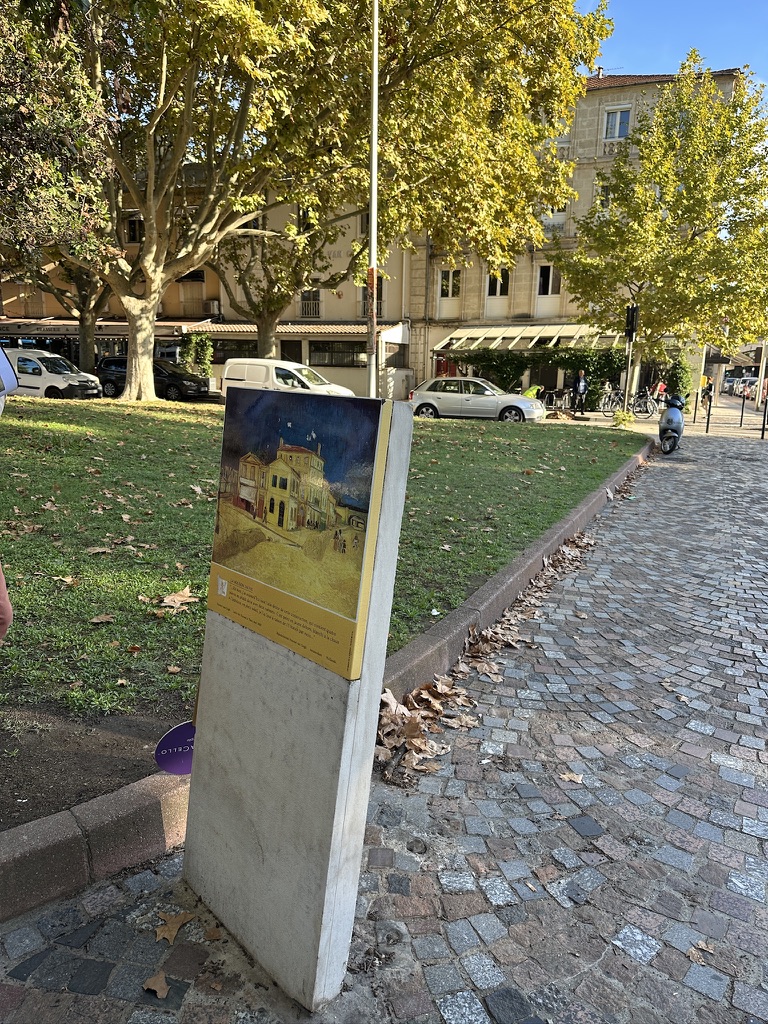
Our tour focused on locations memorialized in Van Gogh’s Arles paintings, including the site of the “yellow house” where Van Gogh lived with Paul Gaugin until Gaugin left, fed up with his unpleasant housemate. That departure precipitated Van Gogh’s decision to part with his ear. (I, in contrast, not being a troubled artist, am merely parting with my hair.) The house, unfortunately, was destroyed by bombing during World War II.
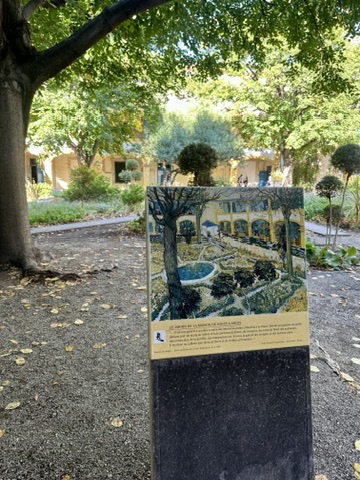
After walking through a park featured in some of Van Gogh’s art, we visited the hospital (“Hotel Dieu”) where Van Gogh was treated after his self-mutilation. During the walk, Jonathan described the sources of Van Gogh’s psychological fragility, starting with severe daddy issues and the fact that he was named after his deceased brother, who had been stillborn one year to the day before Vincent himself. I also learned that, at a time when people routinely consumed twelve glasses of watered-down absinthe daily, Van Gogh was vilified as a drunkard. (I’m sure that further depressed his spirits, so to speak.)
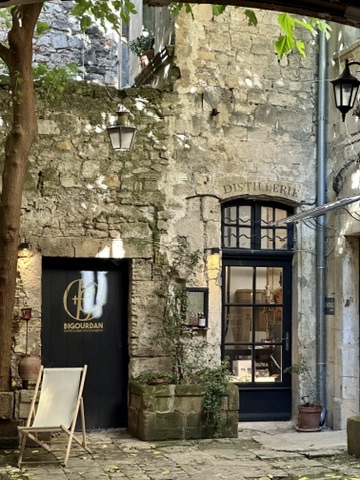
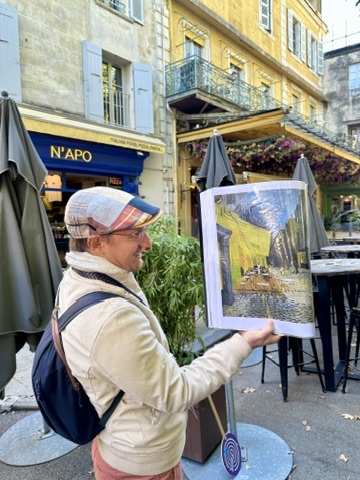
After the hospital, we walked to the famous “yellow café,” made famous in Van Gogh’s “Café Terrace at Night.”
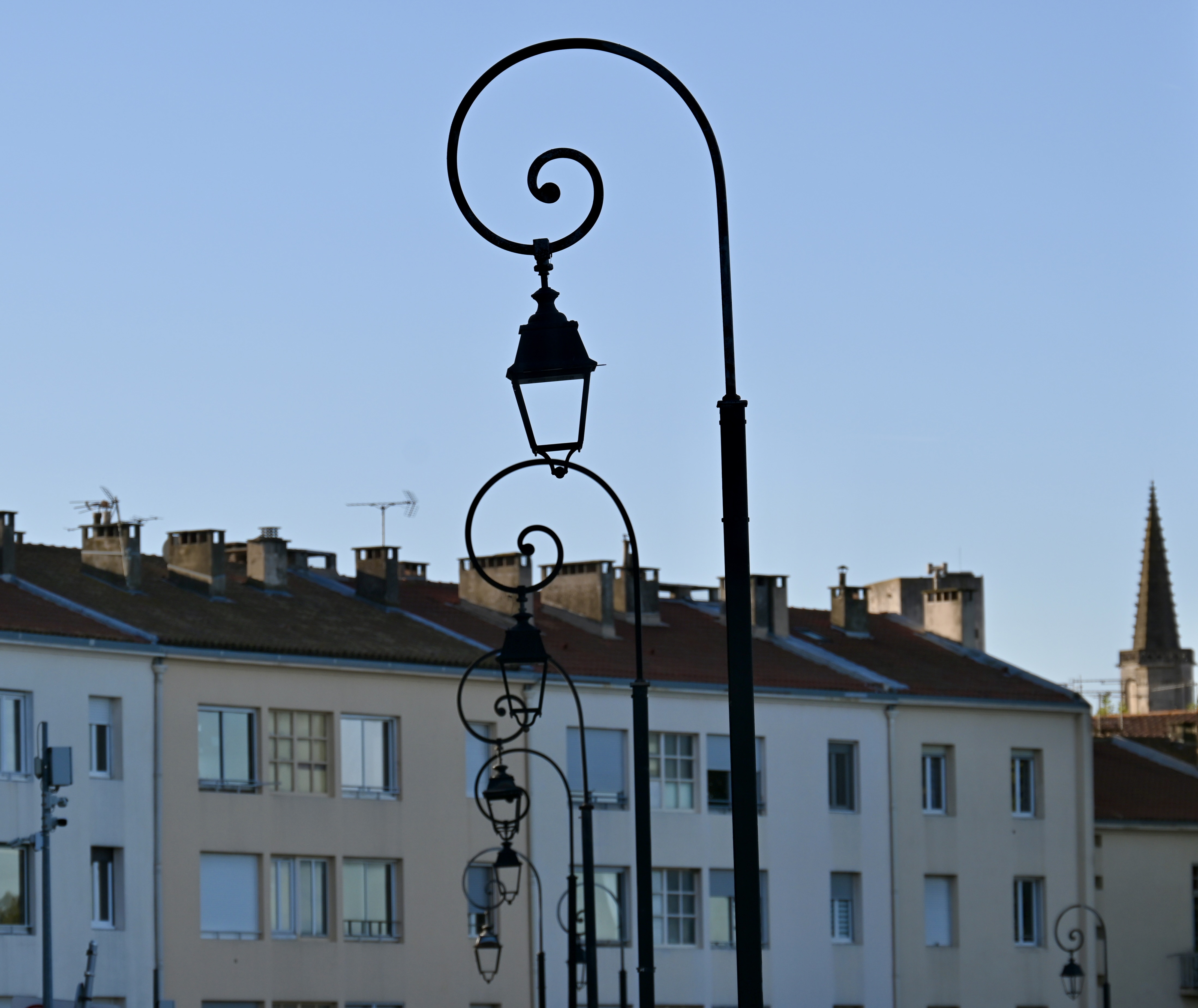
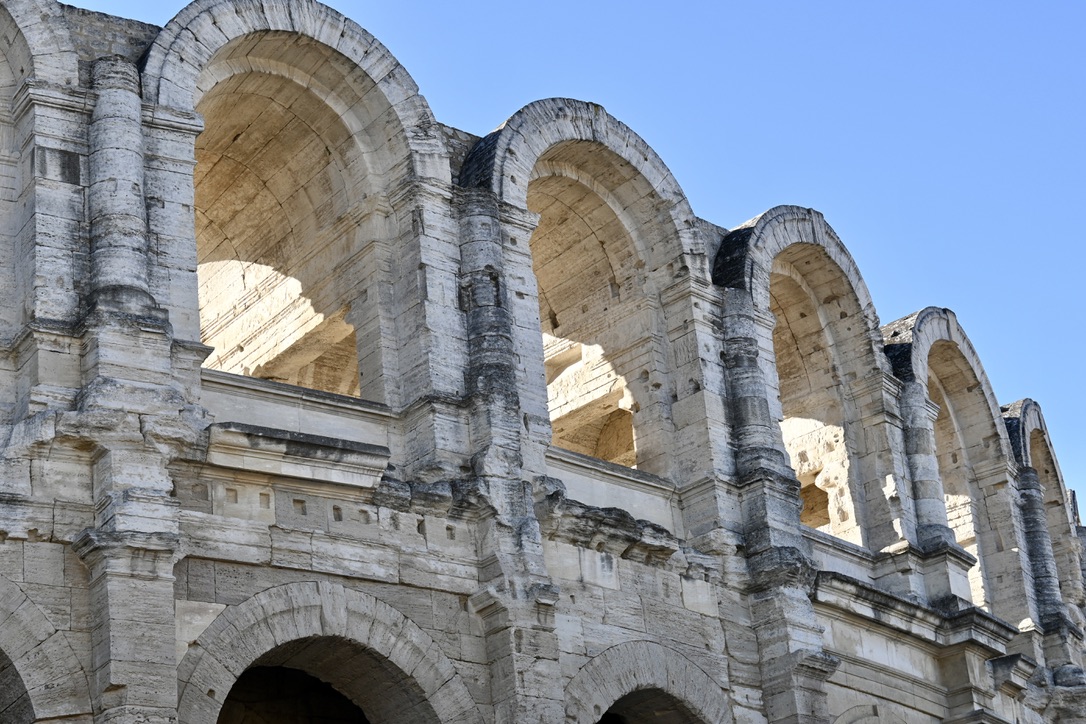
During the course of our walk, I had a chance to take additional photos of some of Arles’s highlights, including the Roman amphitheatre …
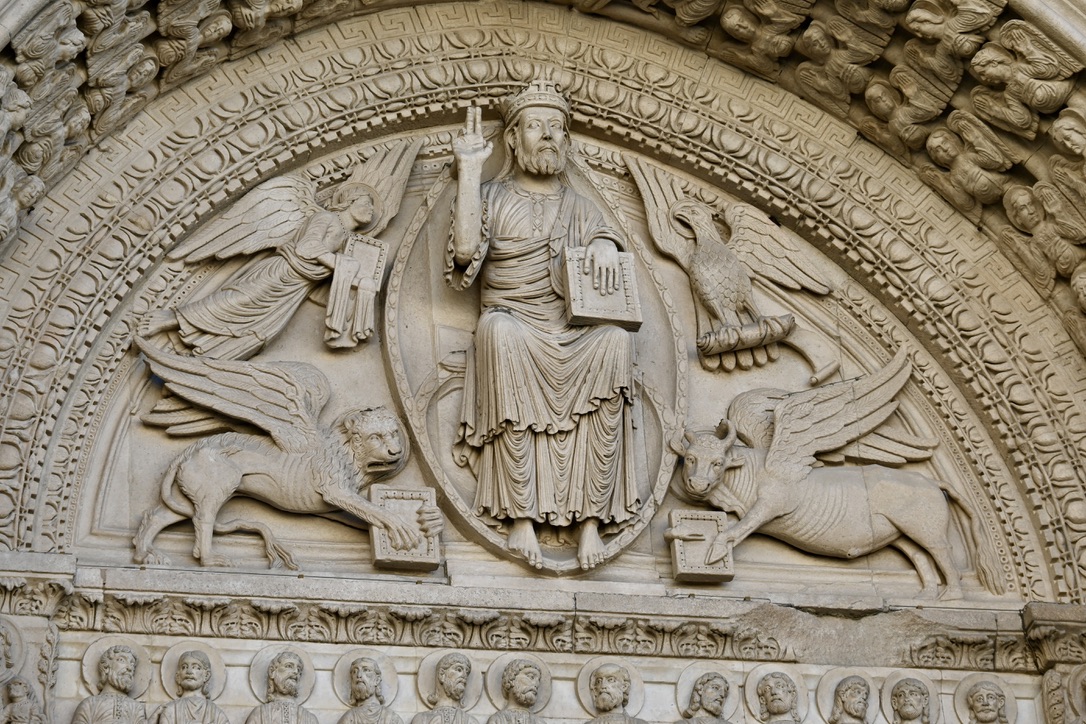
… the L’Eglise St.-Trophime …
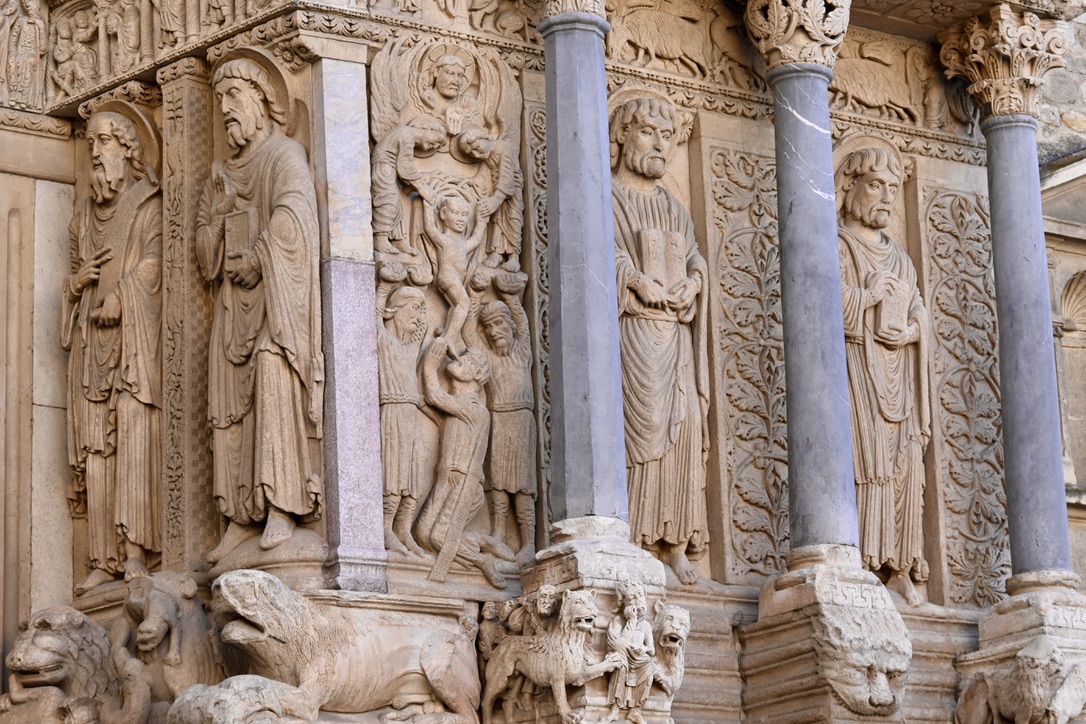
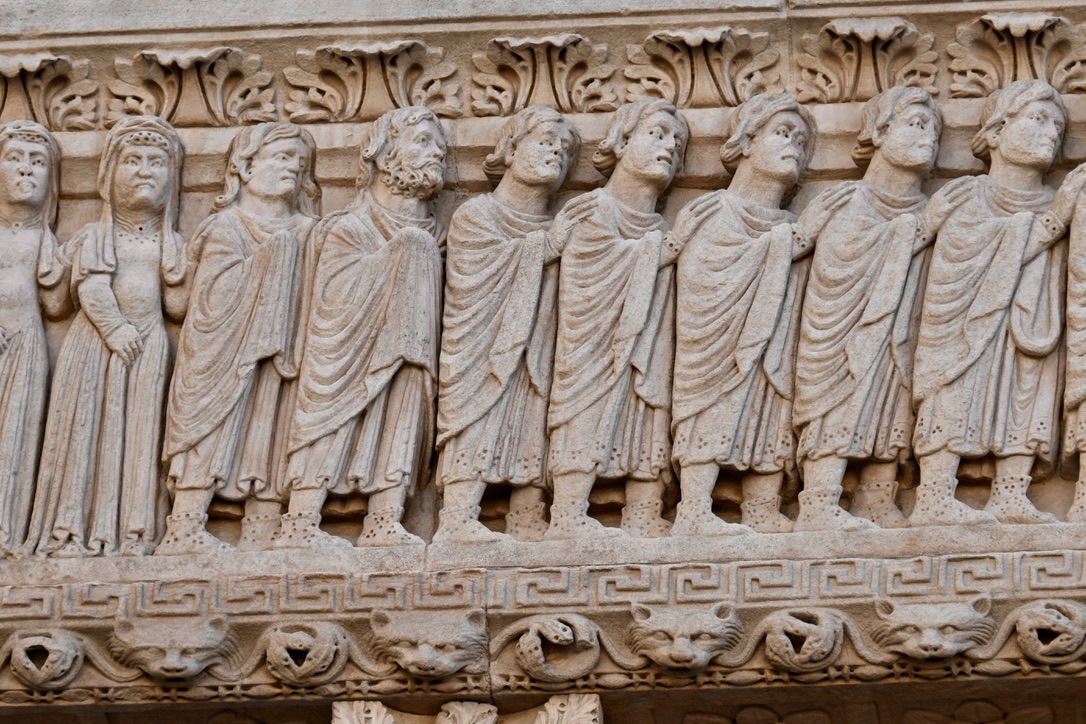
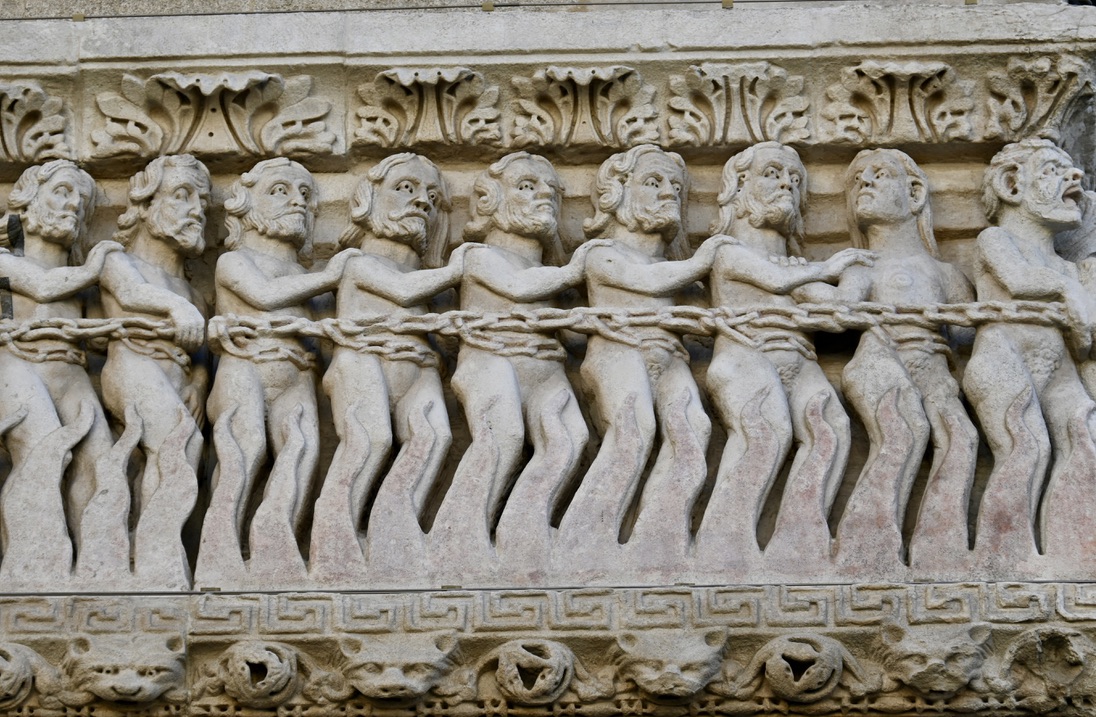
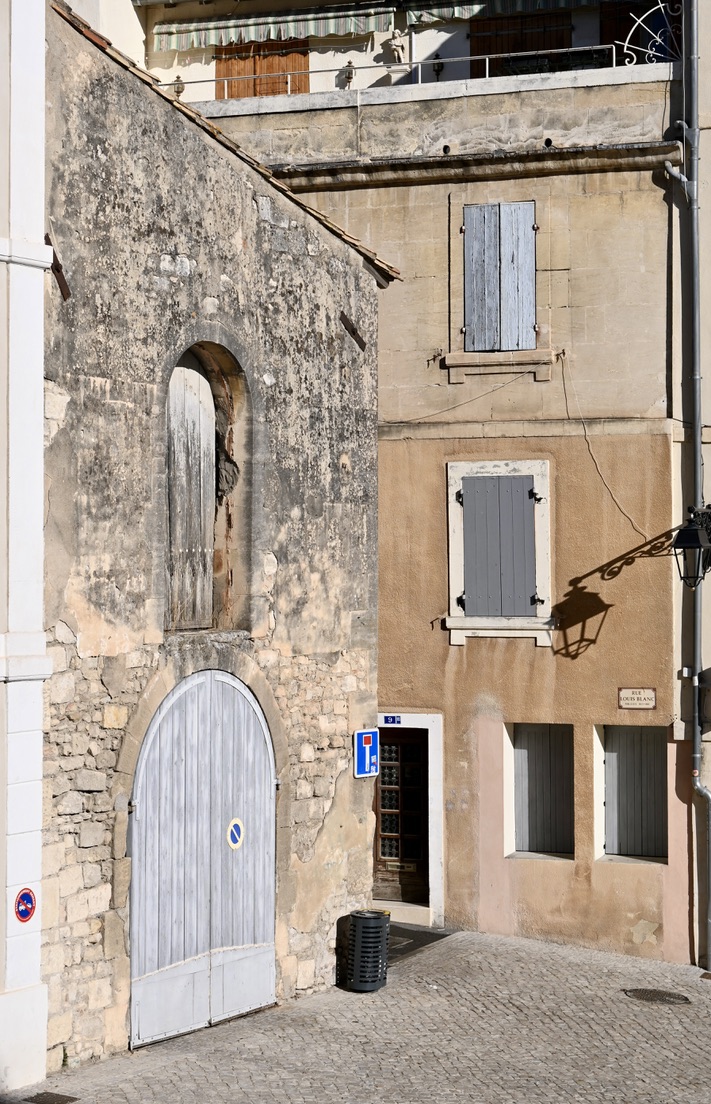
… and more Arles street scenes.

Avignon: Of Ponts and Pontiffs
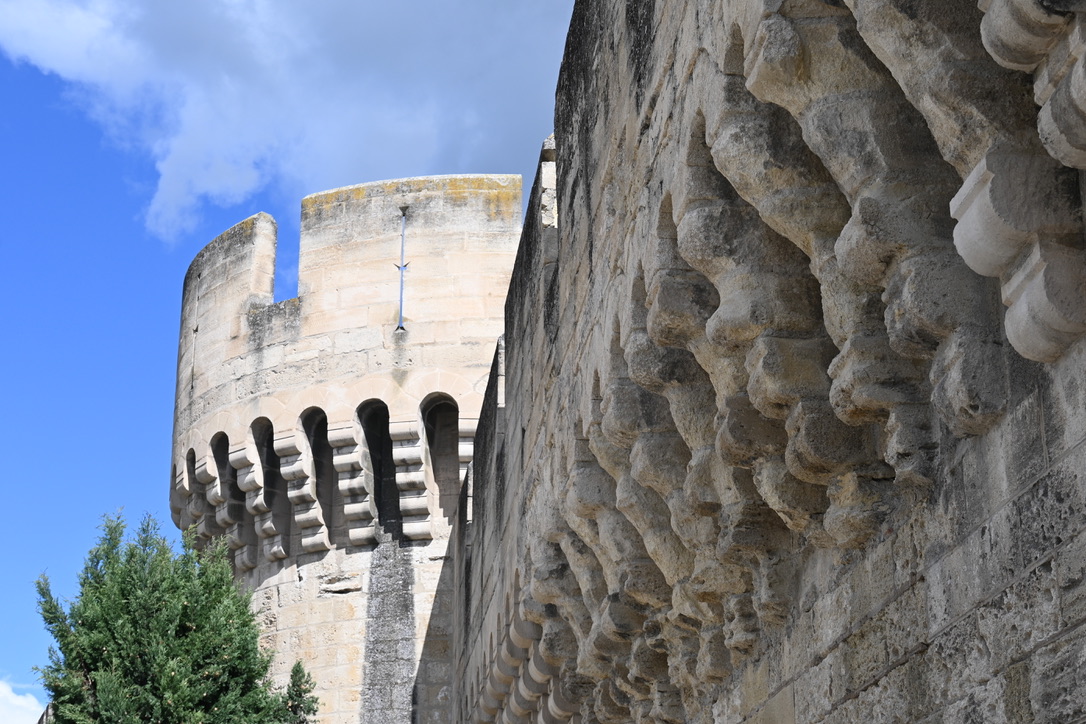
Following a quick lunch on the ship, we boarded a bus for Avignon, famed for the imposing Papal Palace, constructed during the years of the great schism in the Church, and for the song about its bridge over the Rhone (“Sur le Pont d’Avignon”).
Instead of another sightseeing tour, quite a few of us opted for a tasting tour. I’d advise reading the rest of this after a meal; otherwise the photos may trigger excessive cravings.

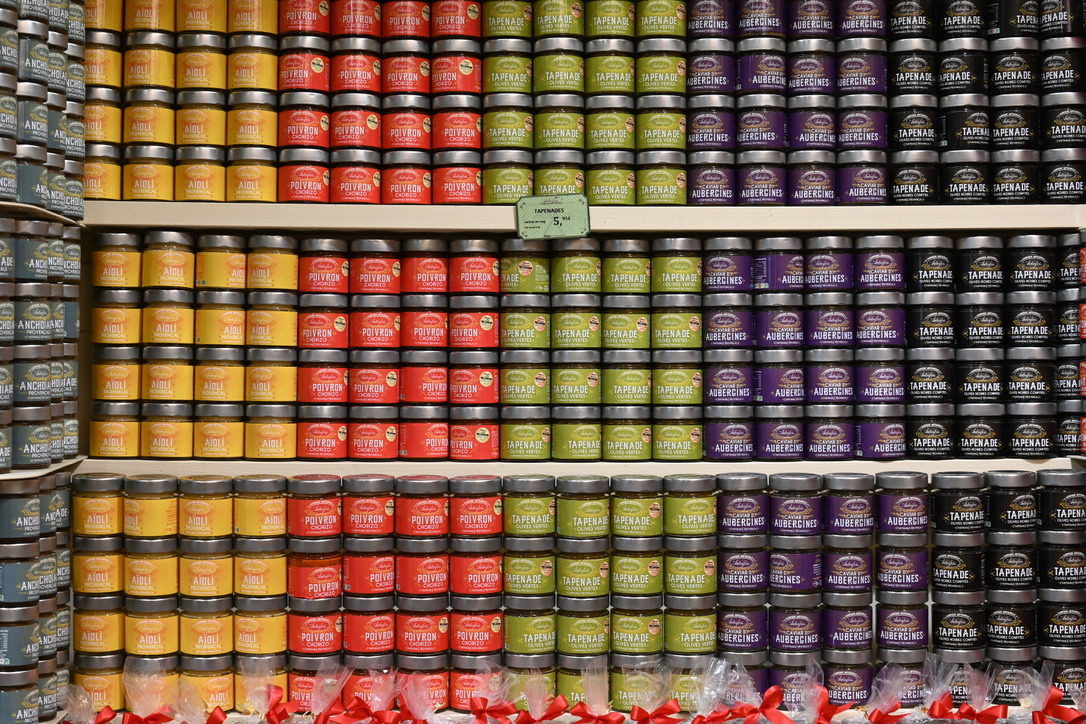
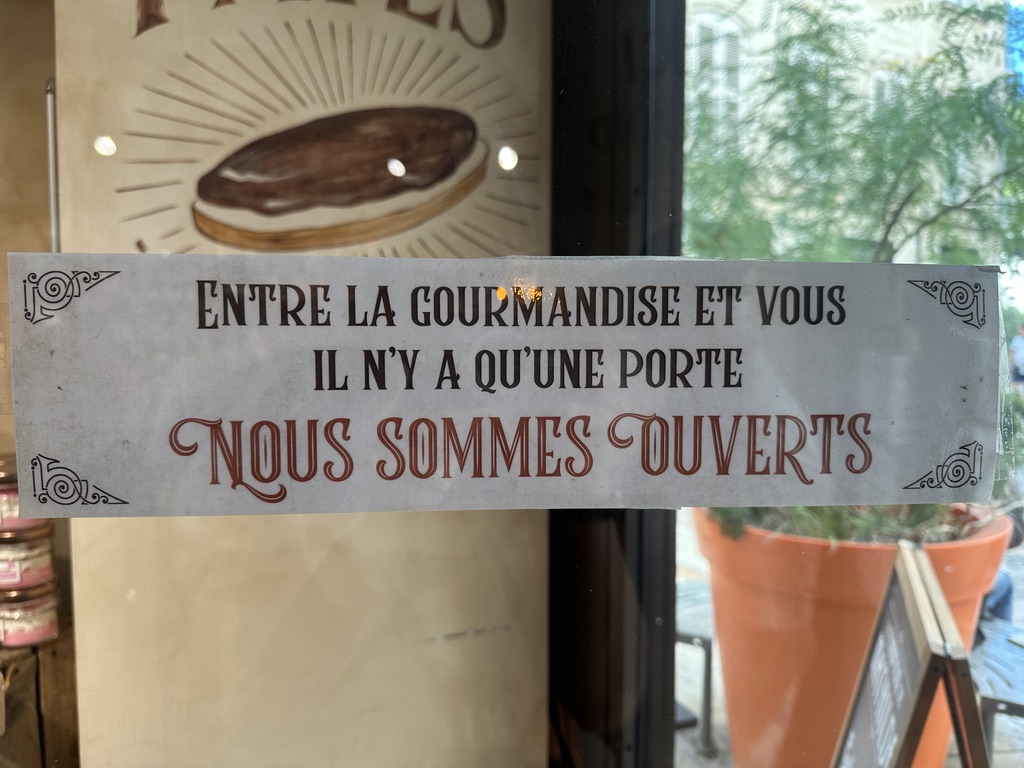
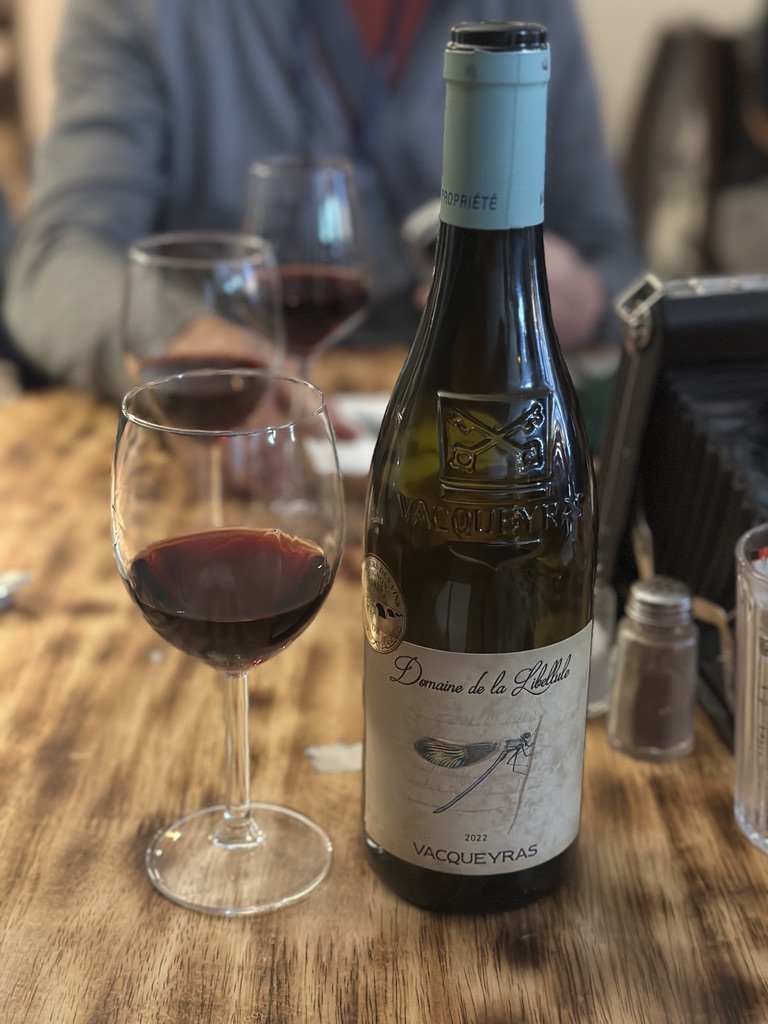
We visited a handful of shops, nibbling chocolate, cheese, olives, mustard, baba au rhum, and other delicacies, and enjoying a glass of local red wine. Everything was scrumptious and beautifully presented.

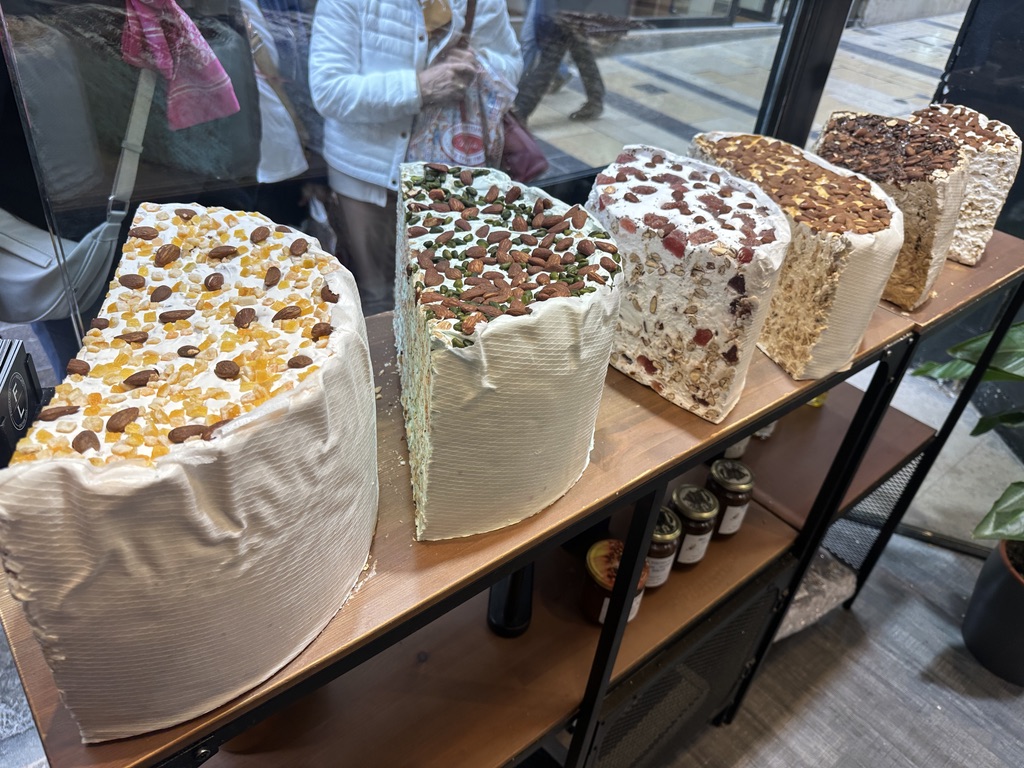
Of course, we didn’t have time to sample everything has to offer.
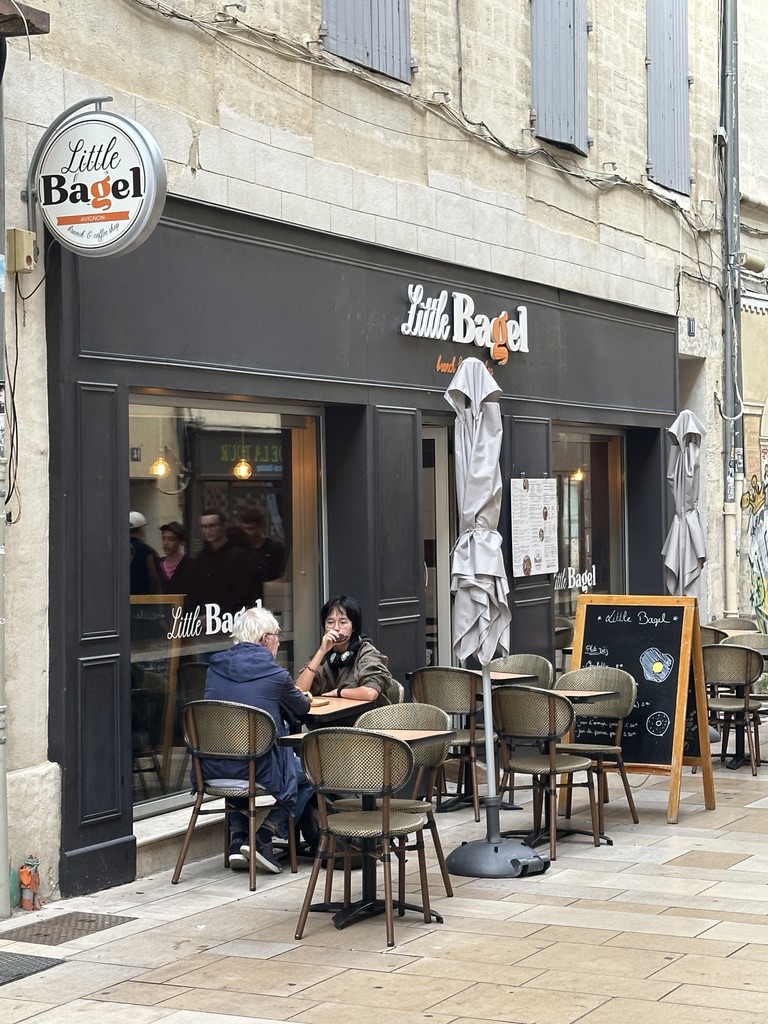
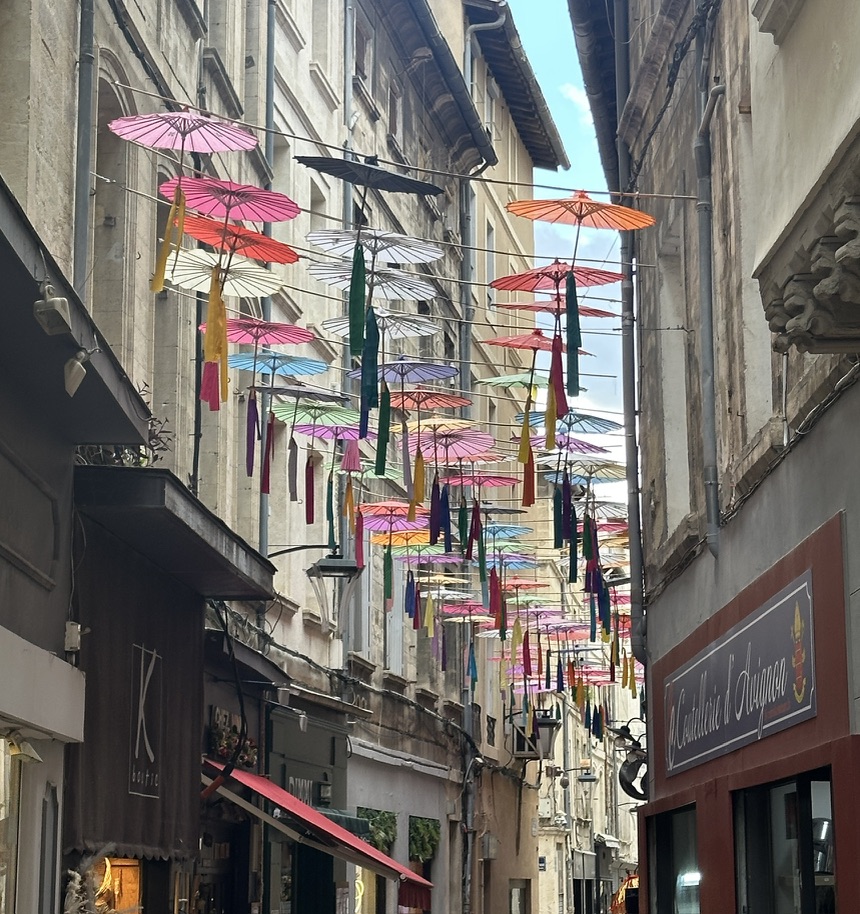
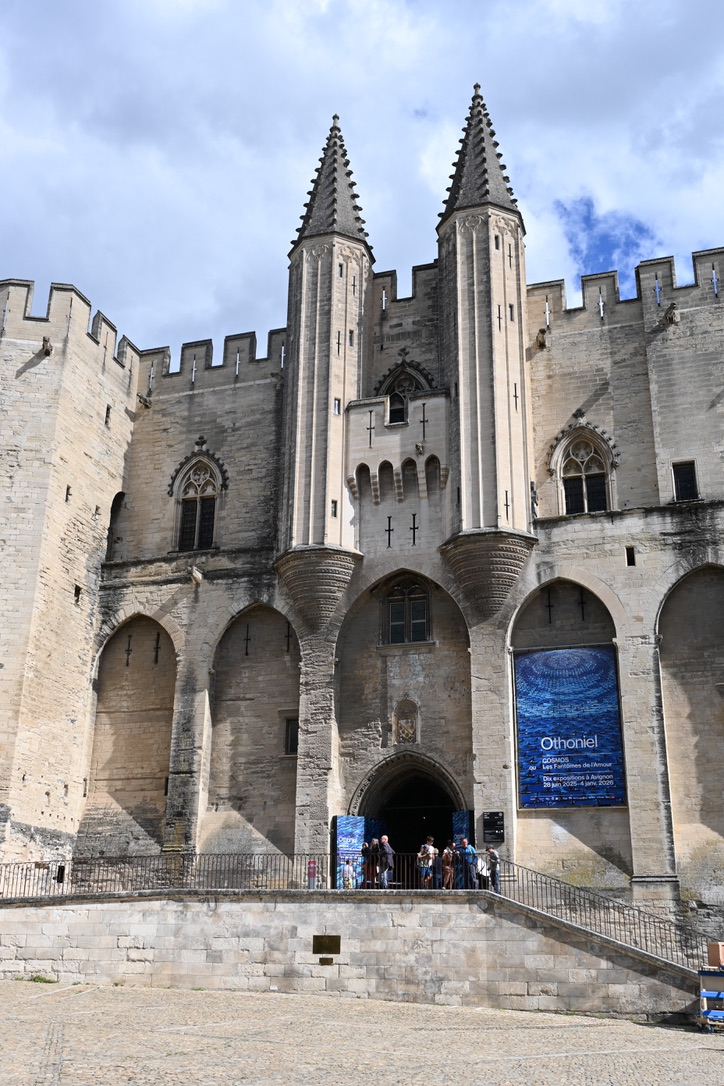
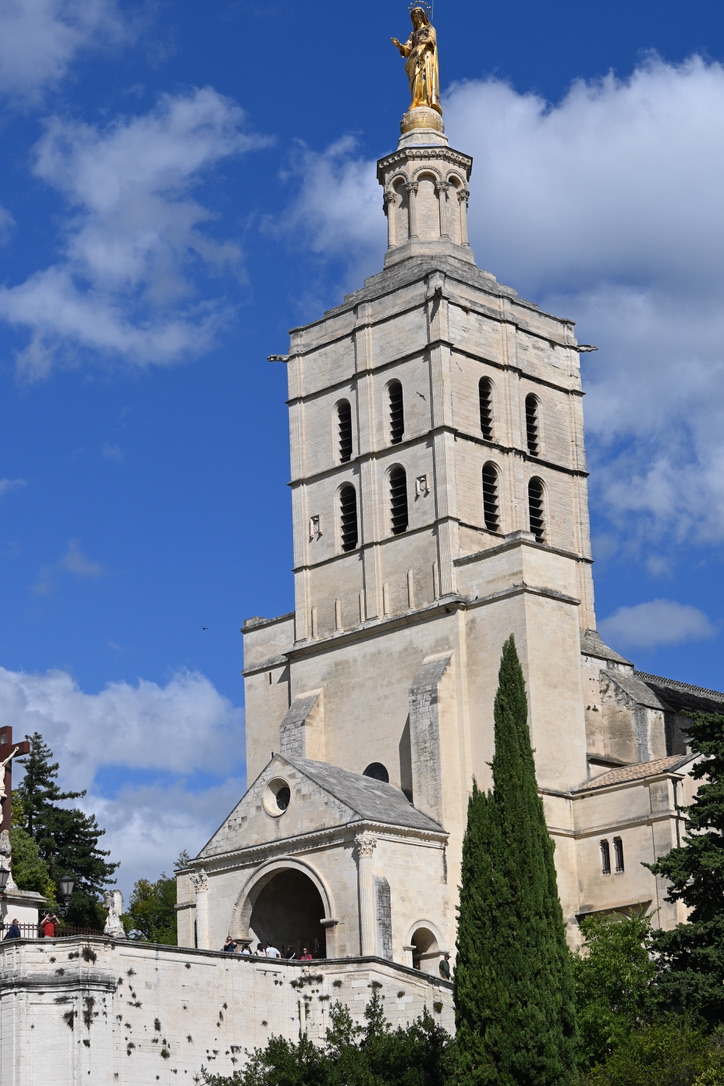
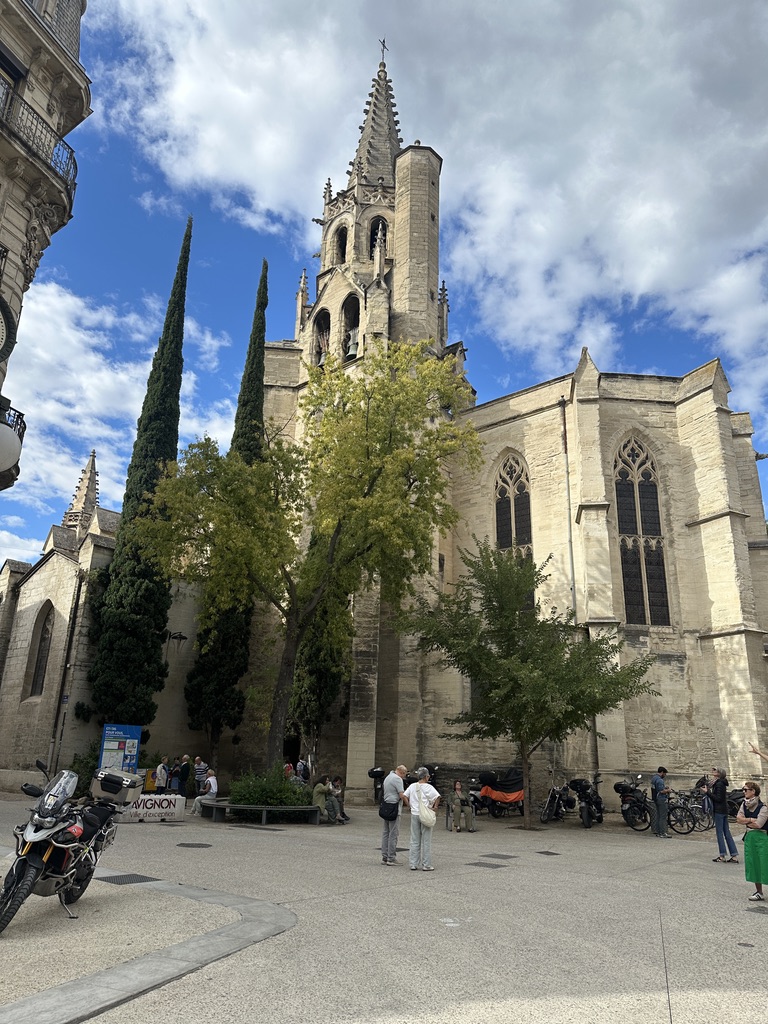
Interspersed with the tasting stops, we strolled Avignon’s elegant streets, taking in the Papal Palace and the Church of Saint-Pierre. Avignon is tidier-looking than Arles, for the simple reason that much of Avignon was reduced to rubble by Nazi bombing – it was the headquarters of the Resistance – and rebuilt after the war.
After dinner this evening, we were treated to a spirited performance by Les Guitares du Camargue, who played a mix of flamenco and rumba gitana, including that traditional Spanish favorites (don’t let the French name of the group fool you) “A Mi Manera” (My Way, made famous by Señor Francisco Sinatra).
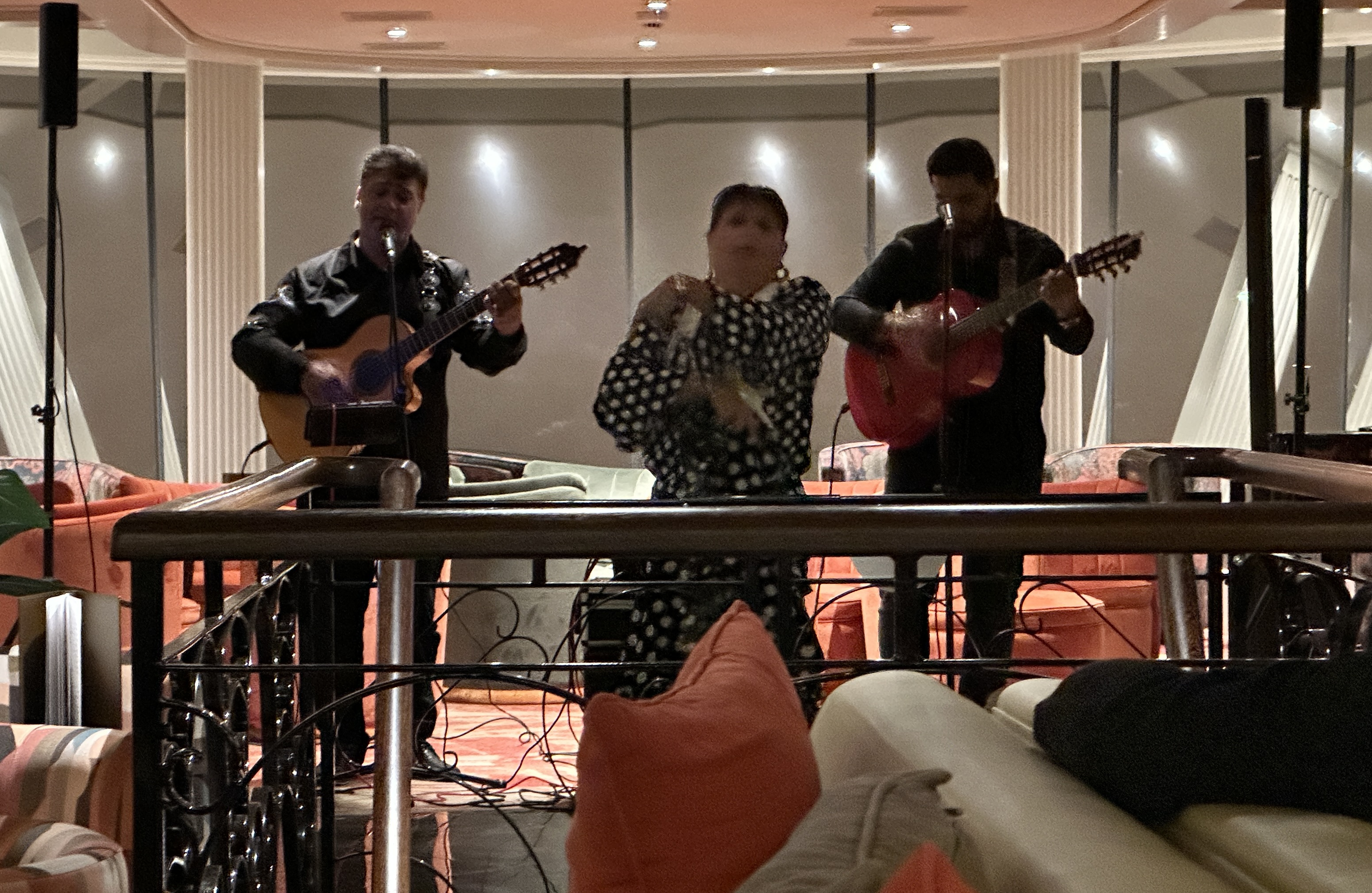
The group was fabulous: a lead guitarist/vocalist who once played with the Gipsy Kings, a rhythm guitarist/vocalist, and a woman who danced elegantly and evocatively.
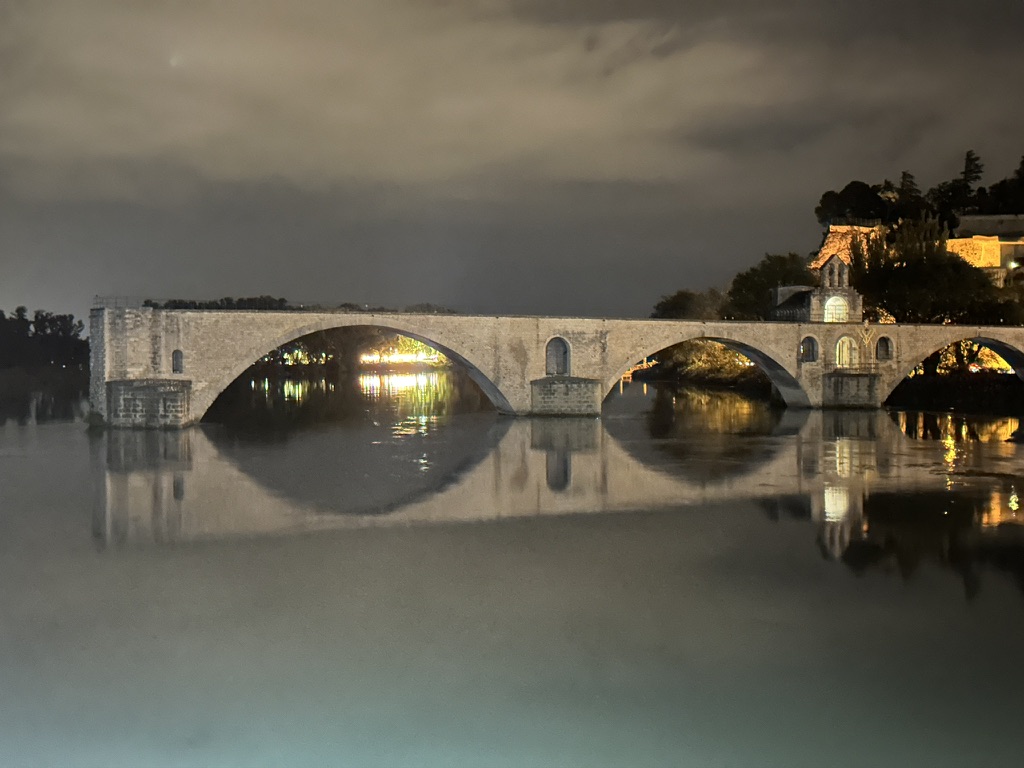
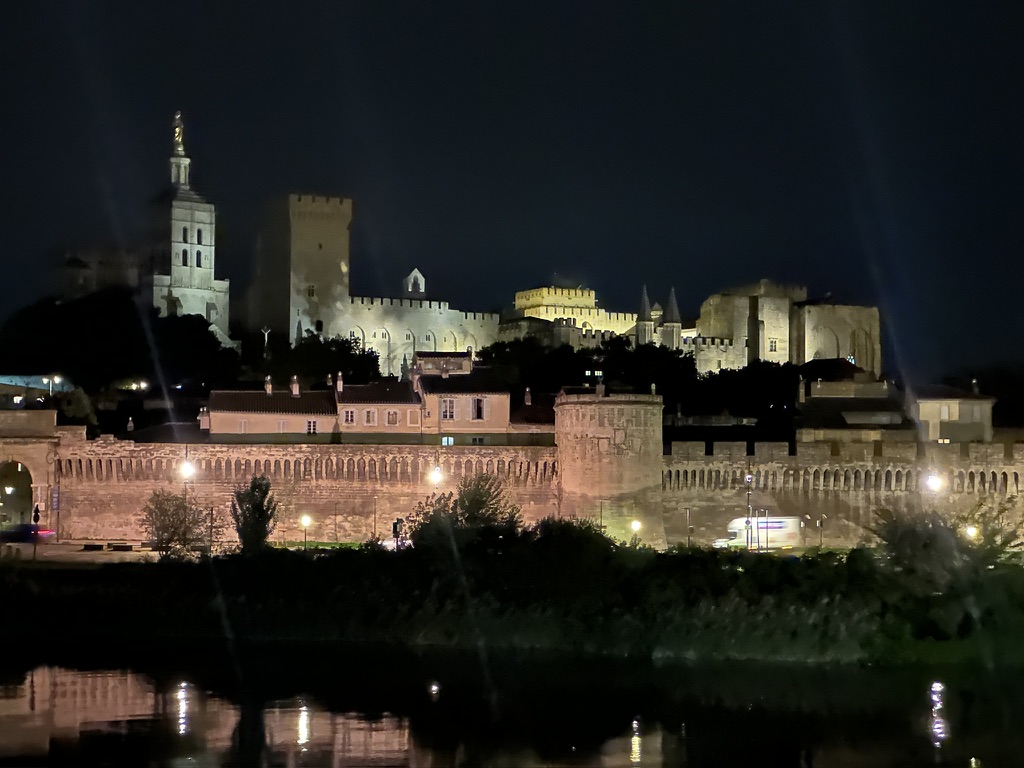
To cap off the day, we sailed close to the Pont d’Avignon (alas, incomplete and not that impressive, until you consider it’s 800 years old) and got a beautiful view of the Papal Palace and Notre Dame des Doms at night.
Tomorrow (Saturday) I’m doing a bike tour in the hilltop town of Viviers. A tout à l’heure!

 PuffinlessTravel
What a terrific day! (The “Van Gogh In Arles” exhibit was a favorite of my younger years; I still have a poster featuring the painting of his bedroom.)