Yesterday, we woke in Hakone to a snow squall that left the trees and hillsides coated in confectioner’s sugar.

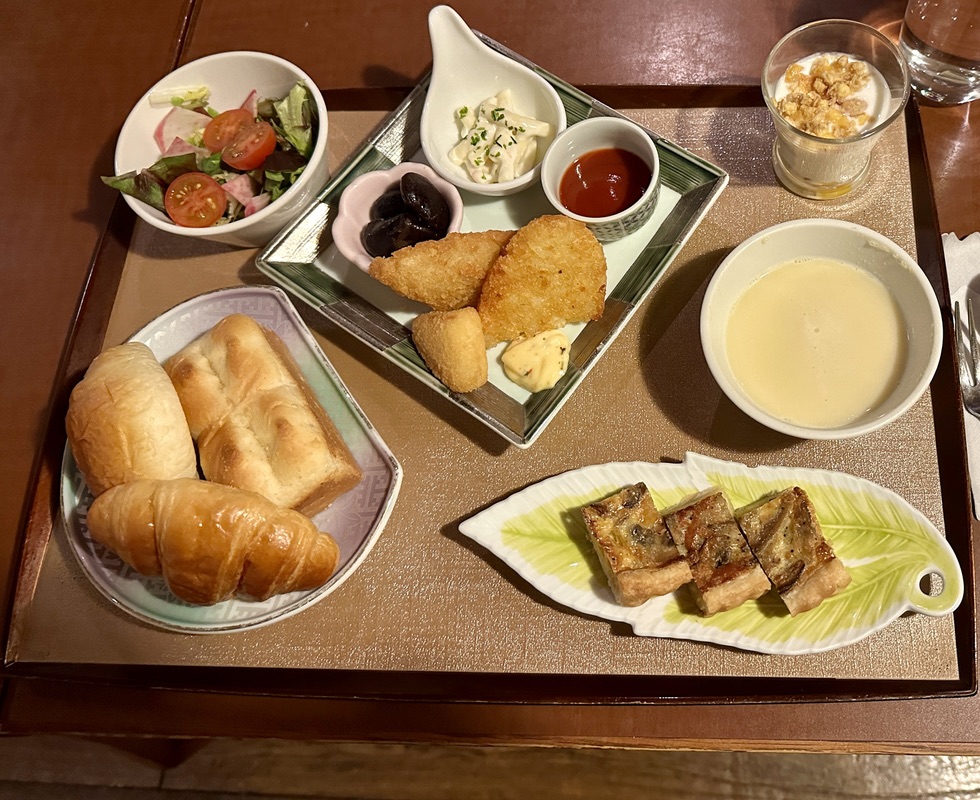
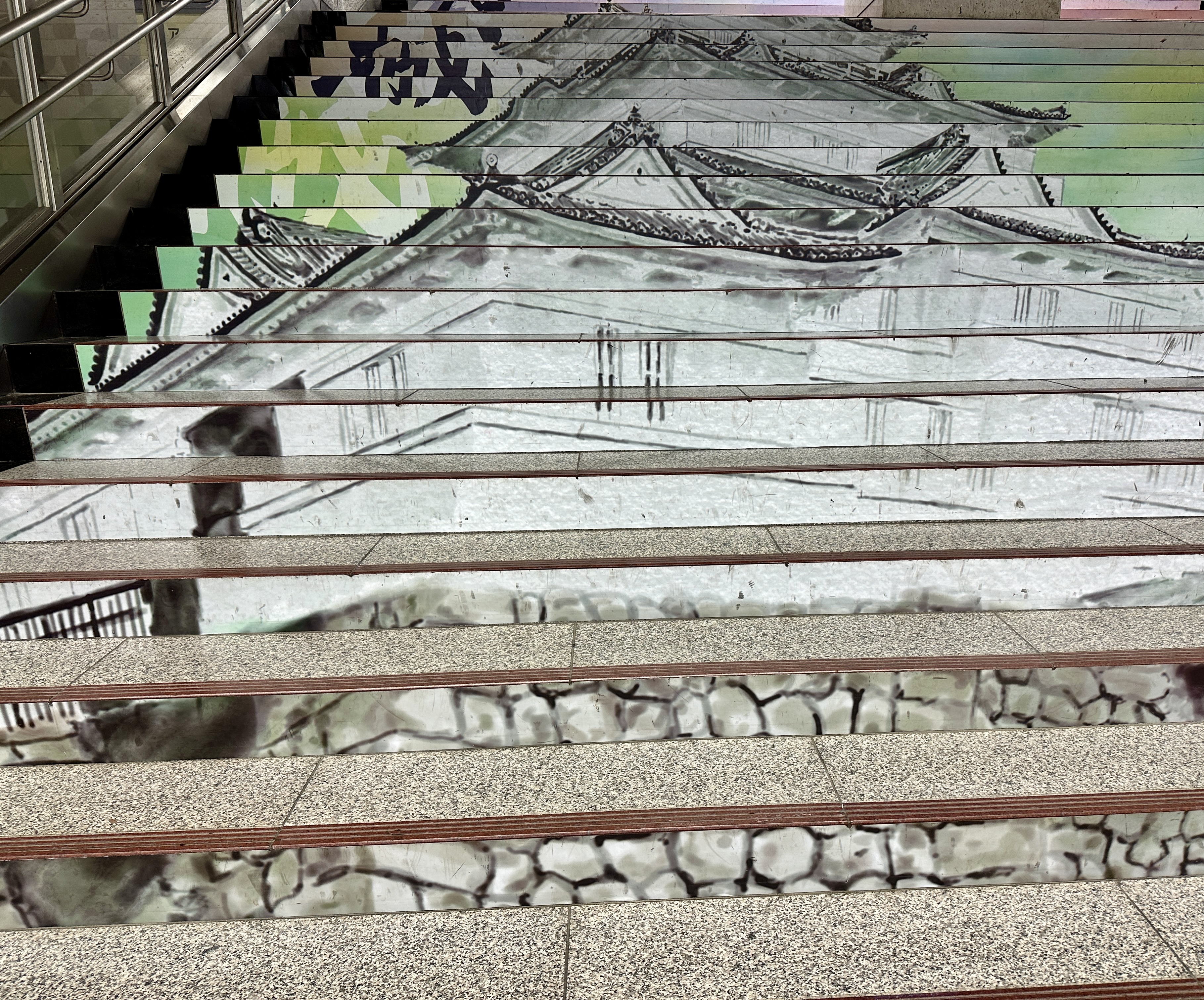
After a bountiful breakfast of mostly unidentified delicacies, we boarded a bus to the Shinkansen (bullet train) station in nearby Odawara, whose busy depot boasts a beautiful painting on the stairs leading to the upstairs shopping concourse. After only a few days in Japan, I already see that finding or creating beauty in the mundane is a cultural trademark.
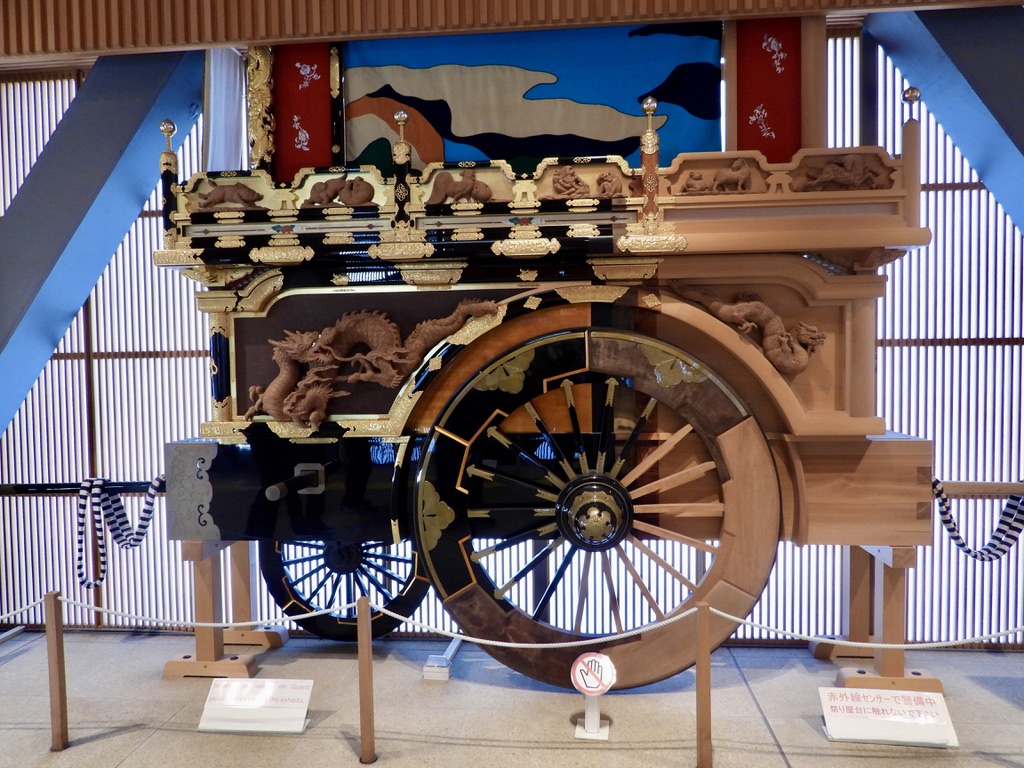
The Shinkansen sped us to Nagoya (Japan’s 4th-largest city), where we transferred to an express train to Takayama. (Fortunately, our track was operable; another main line out of Nagoya was shut due to wind-felled bamboo on the tracks.)
Takayama is a small, charming city of low buildings and narrow lanes, some of which boast buildings dating to the Edo period (1603-1868). The city is renowned for its preservation of traditional Japanese culture and craftsmanship.
Our introduction to the city’s charms came via a tea ceremony, a Japanese tradition dating back nearly a thousand years. Our hosts were a mother and son with a combined 90 years’ experience; the son is the fifth generation of family that has owned a local tea shop for 144 years.
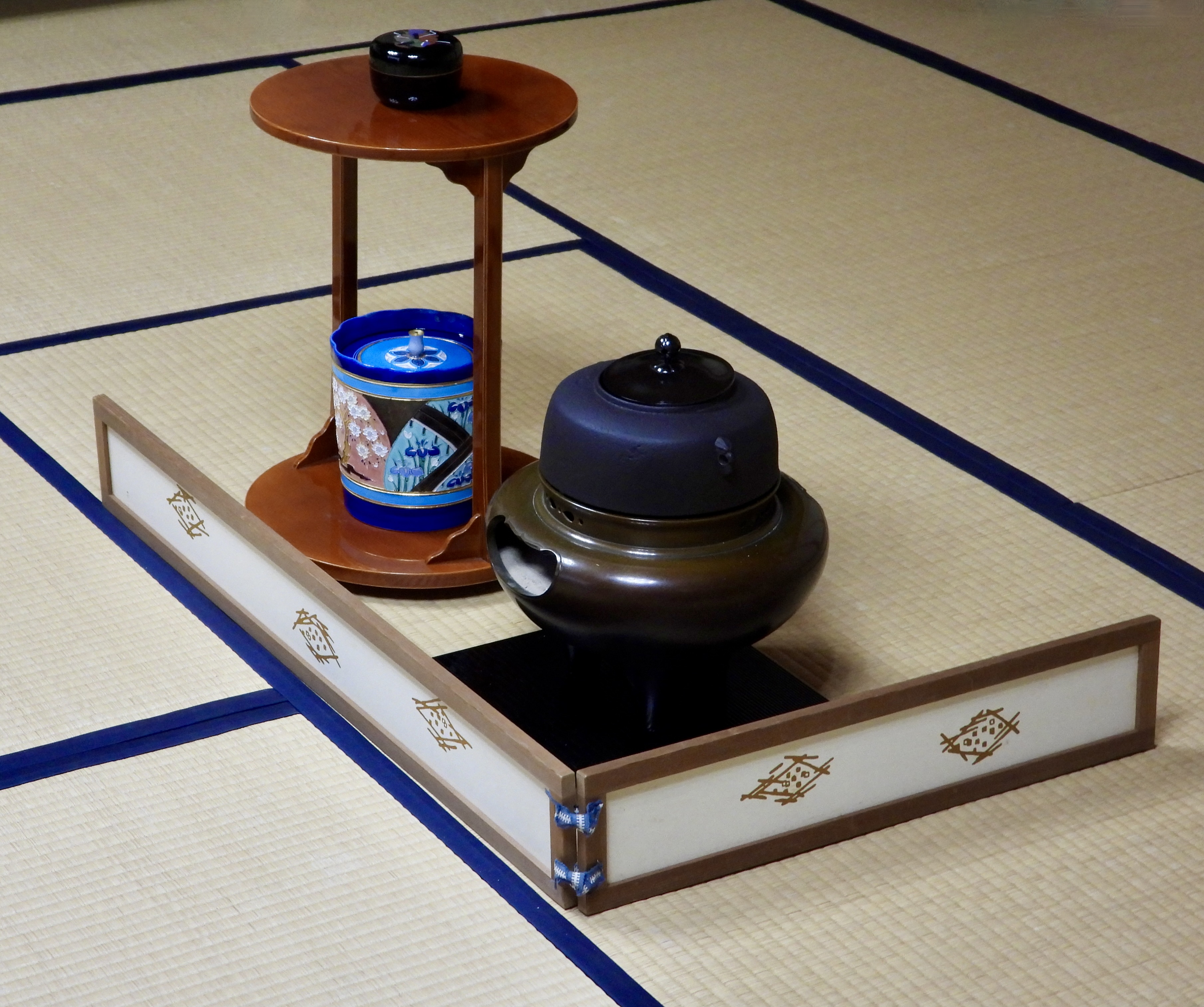
The ceremony embraces core Japanese values of harmony, civility, mindfulness, and serenity. Every movement by the celebrant is deliberate and elegant; one of my tour-mates likened the ritual to ballet. The brewing pot and serving bowls are delicate and evocative.
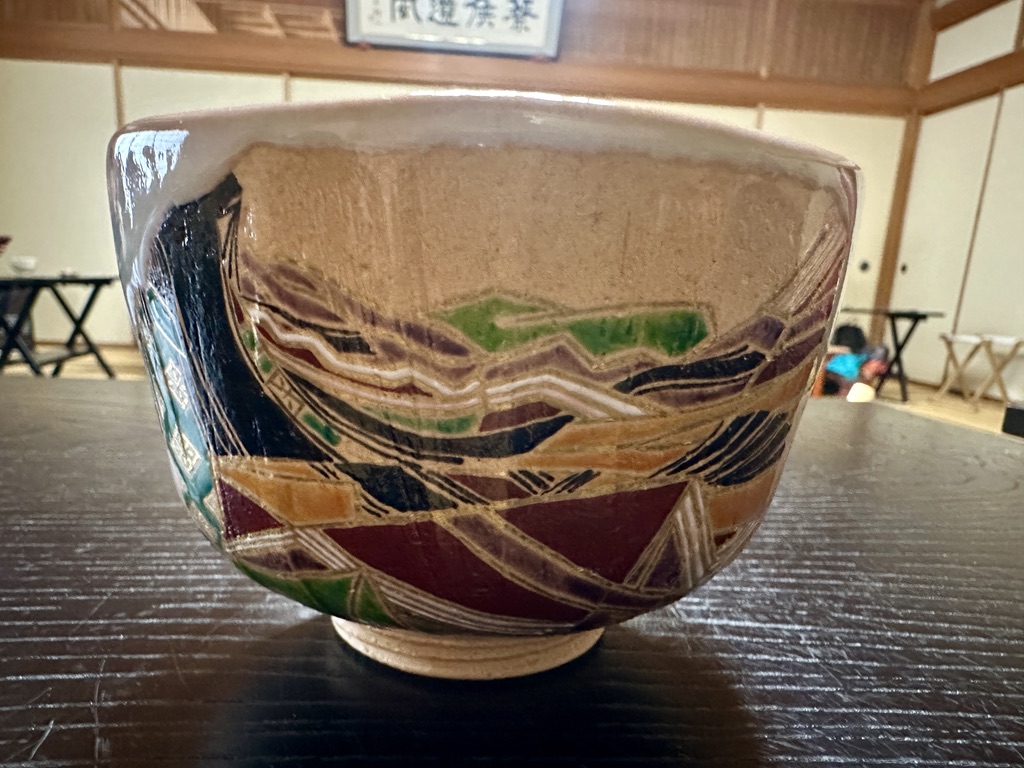
The room is spare. All attention is focused on the host, who treats the guests with great respect. In turn, the guests respect the ceremony by gently handling the bowls in a prescribed manner. The ritual is performed and enjoyed so mindfully that a blanket of calm settles over the room.
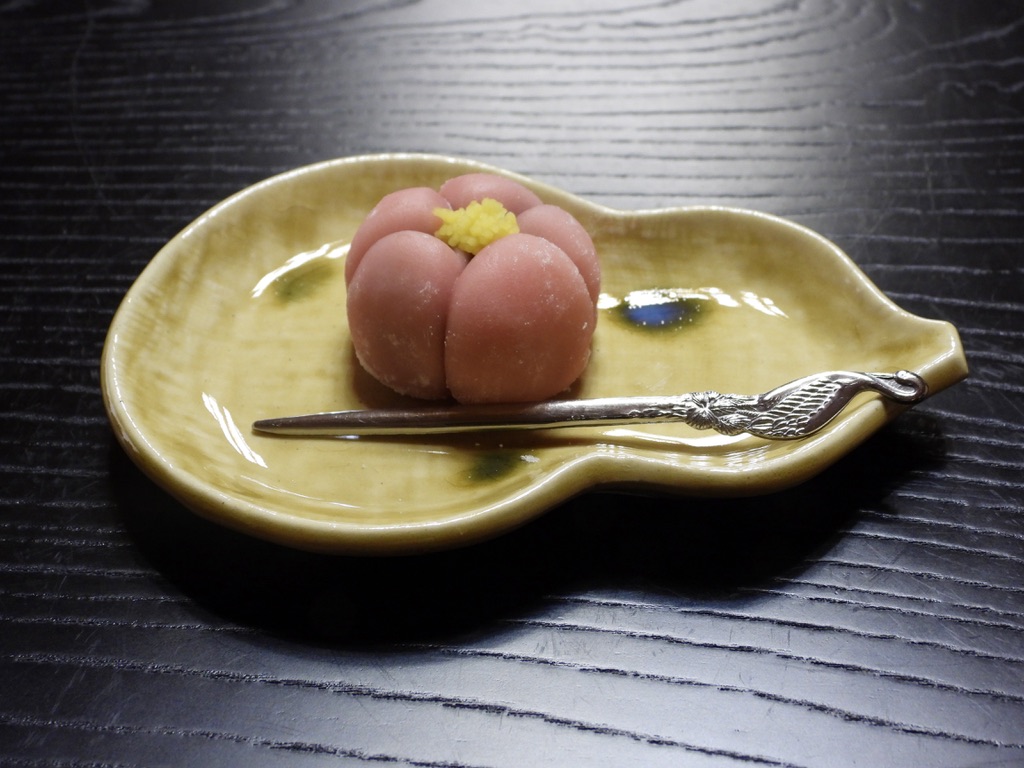
Harmony. Civility. Mindfulness. Serenity.
How old-fashioned can you get? And yet how revitalizing, and how necessary, in a world where most of us, most of the time, careen through life on autopilot.
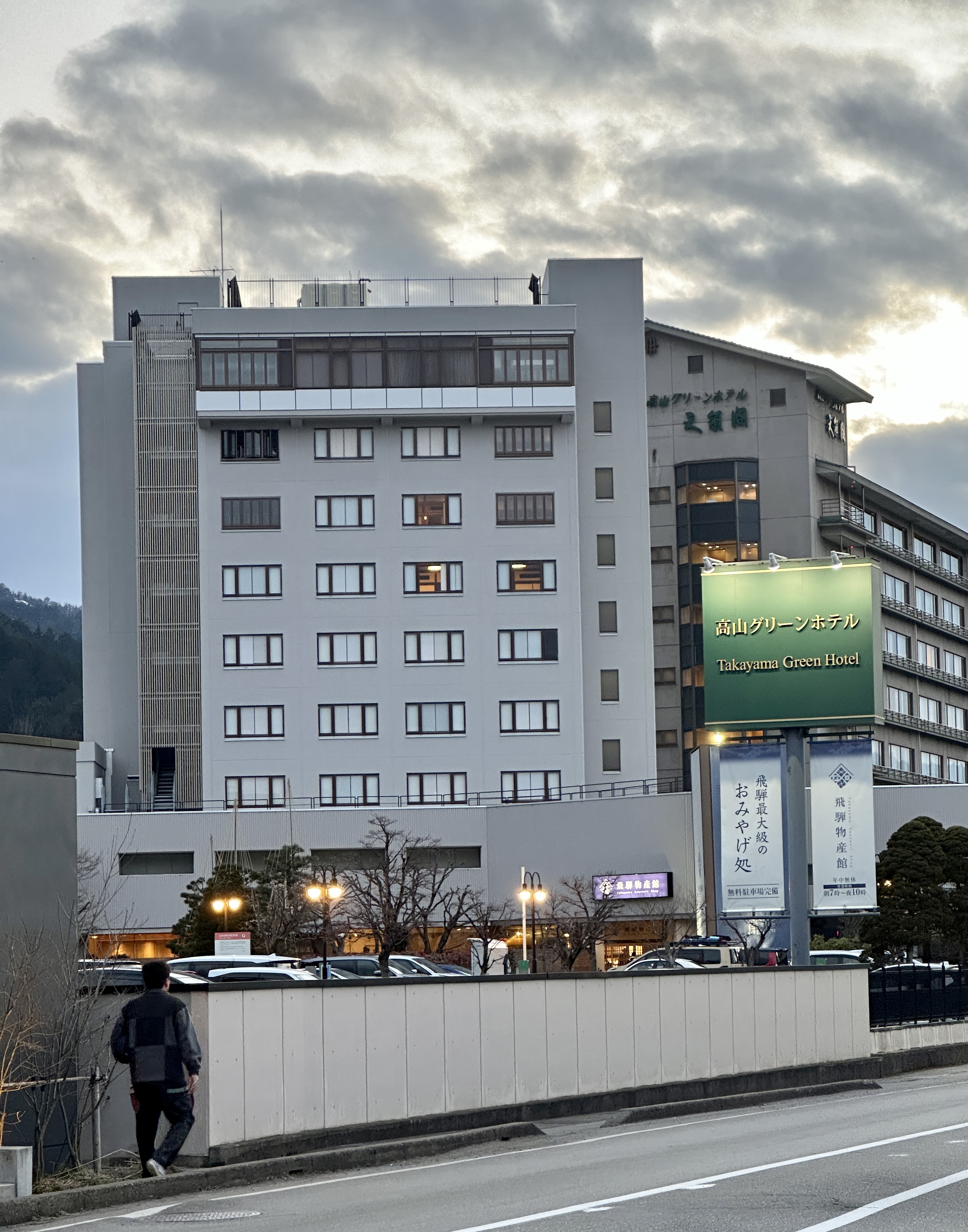
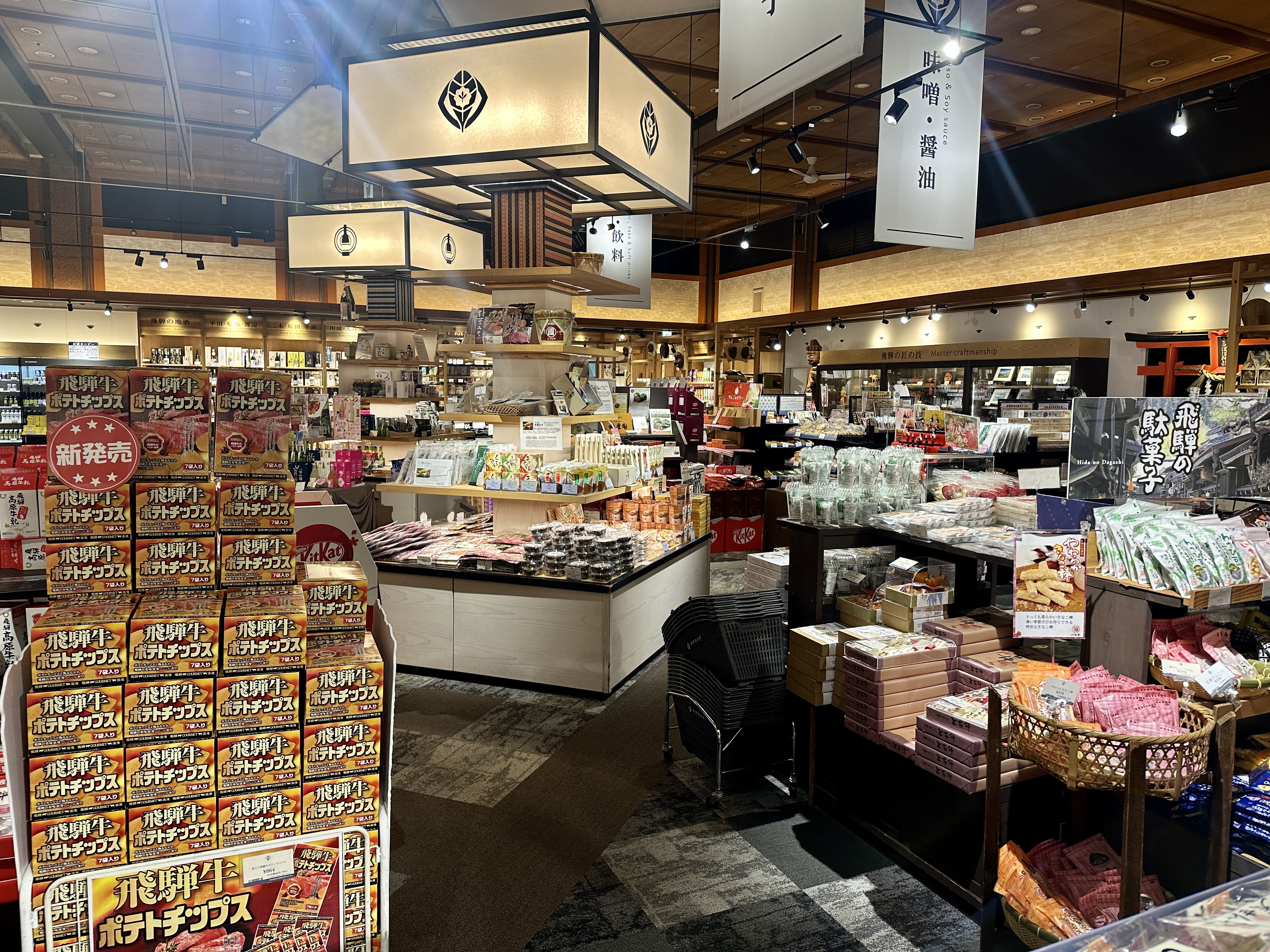
Enough philosophizing. After the tea ceremony, we checked in to the Takayama Green Hotel, a large, sleek establishment half a mile from downtown Takayama, where we enjoyed a buffet dinner before heading to bed. (The hotel has the largest gift shop I’d ever seen; in the US it would deserve its own zip code.)
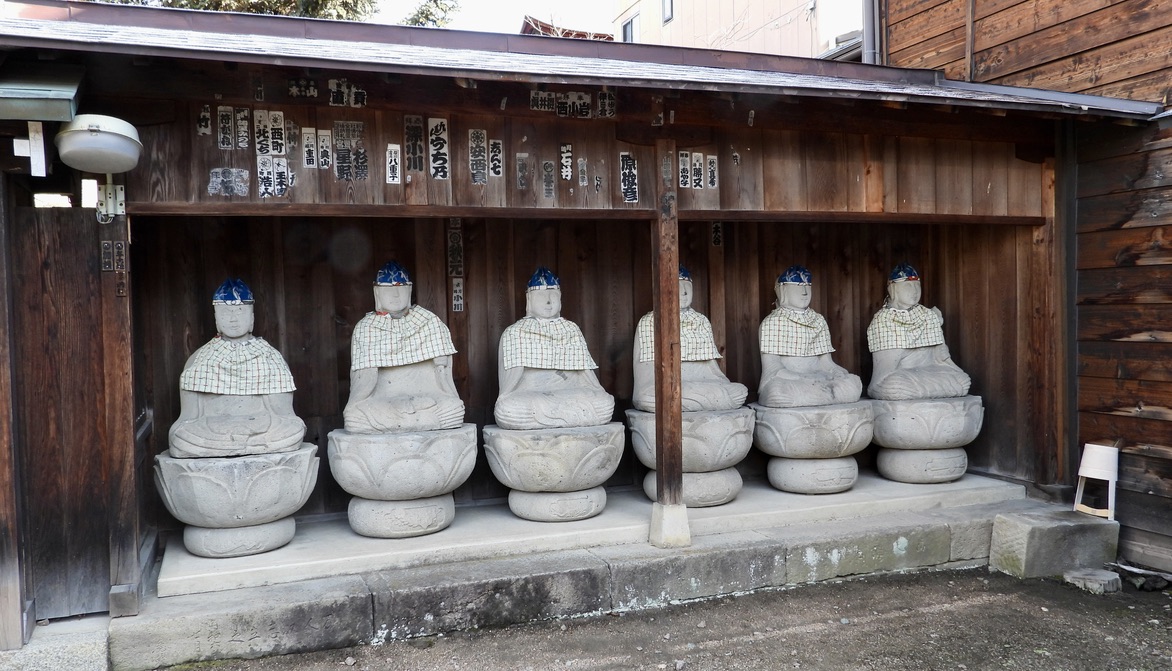
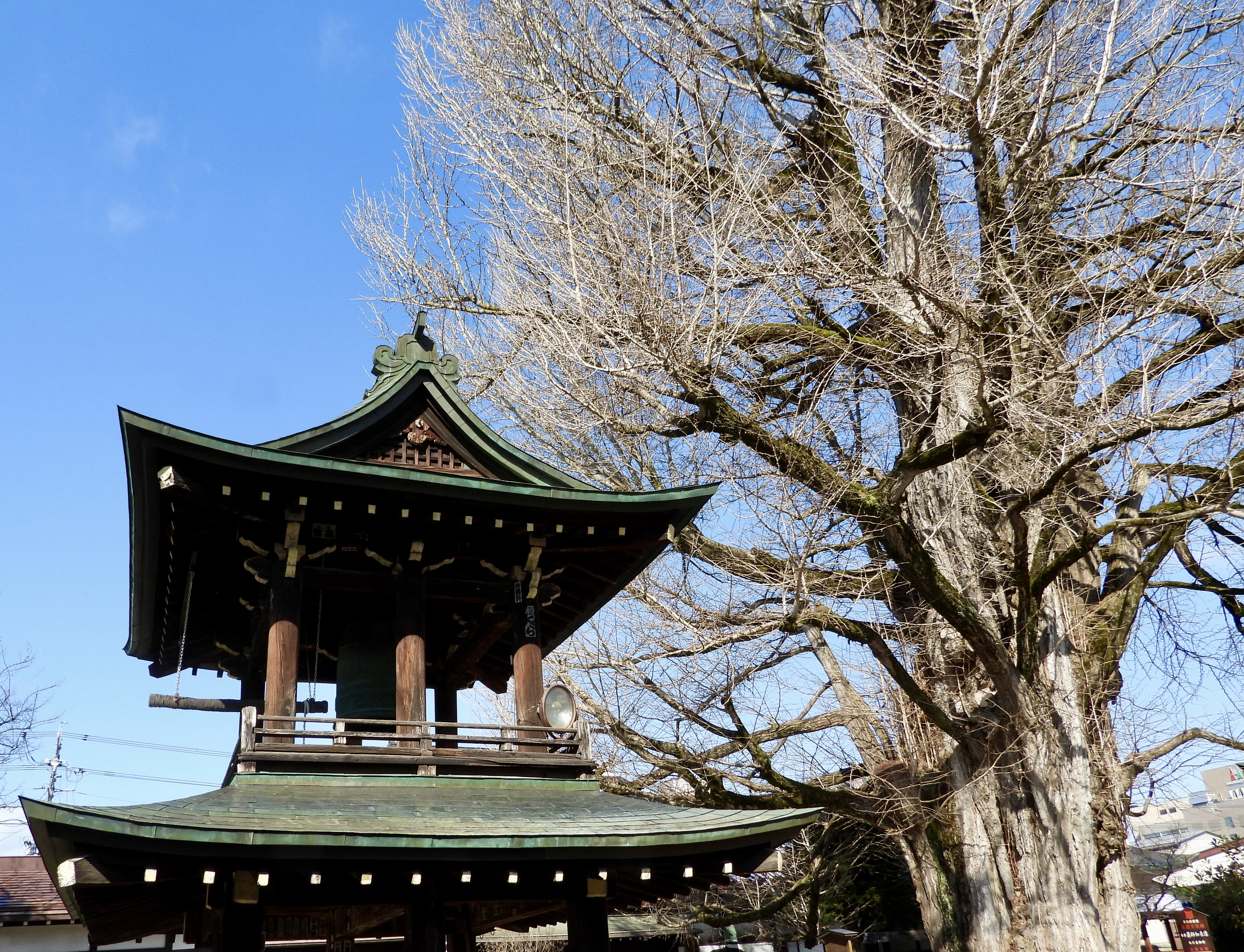
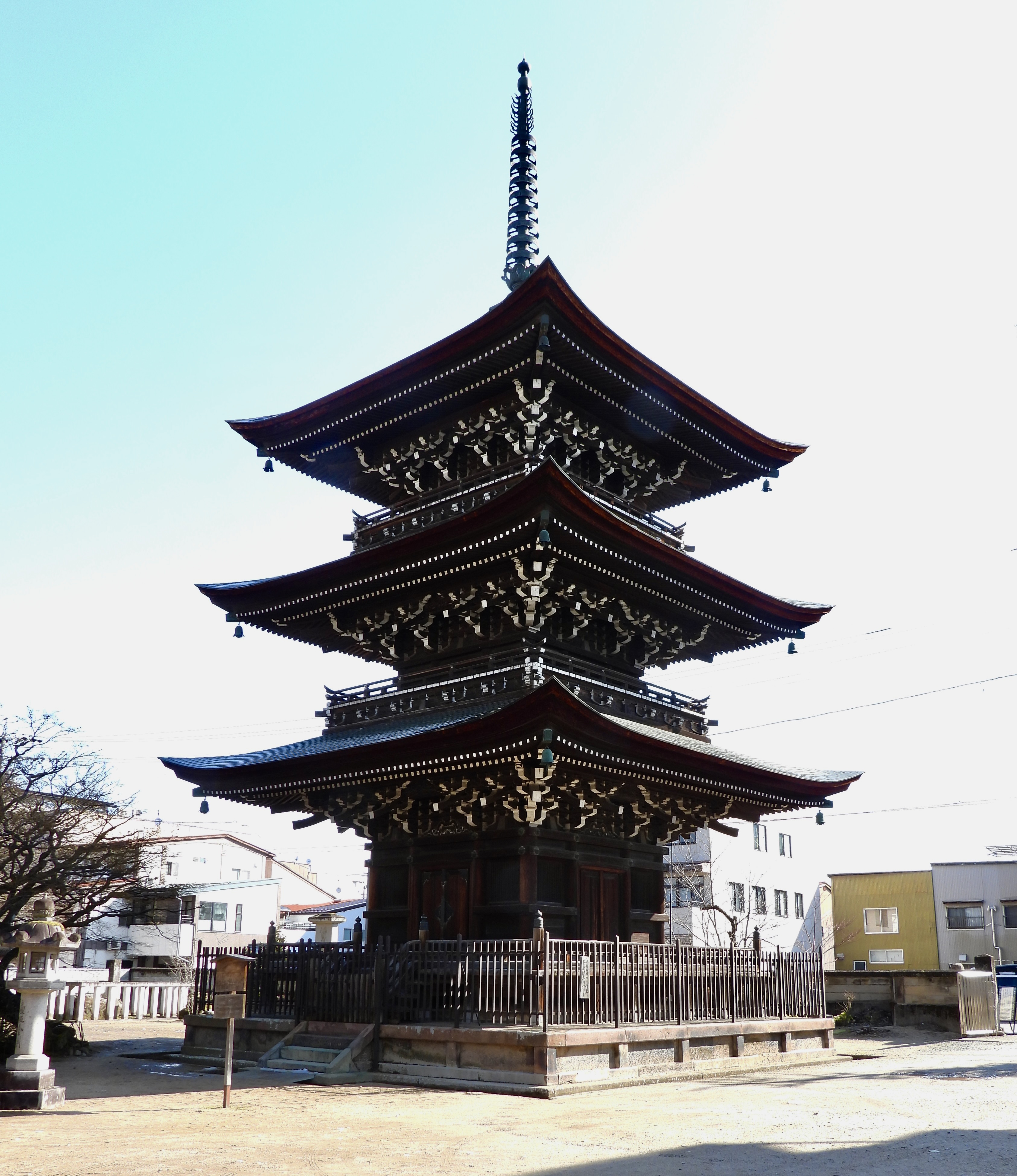
We spent our second day in Takayama walking through the city. From the train station, we strolled through the grounds of the Hida Kokubun-ji Temple, which dates to the year 746 CE and stands in the shadow of an equally ancient gingko tree.
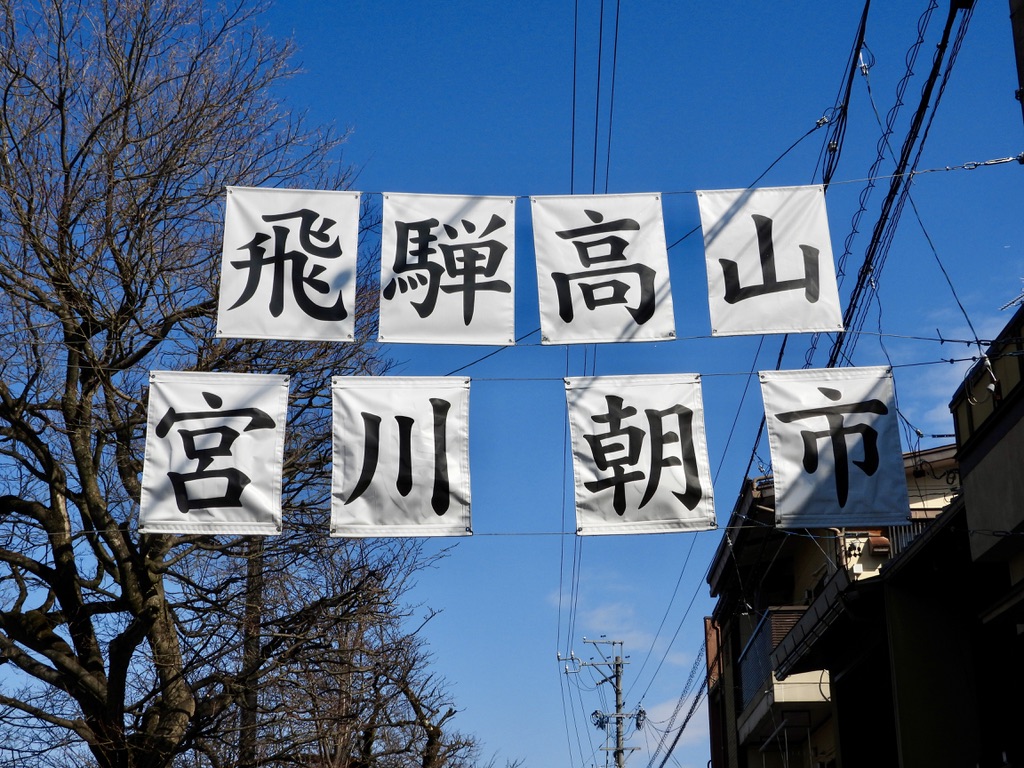
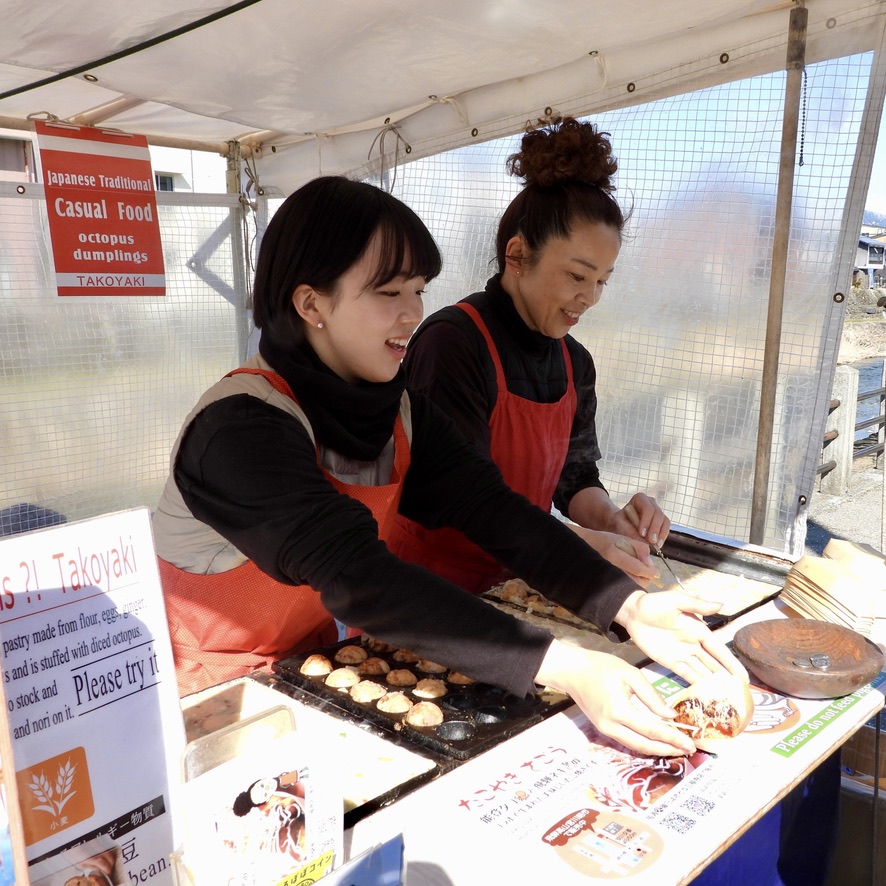
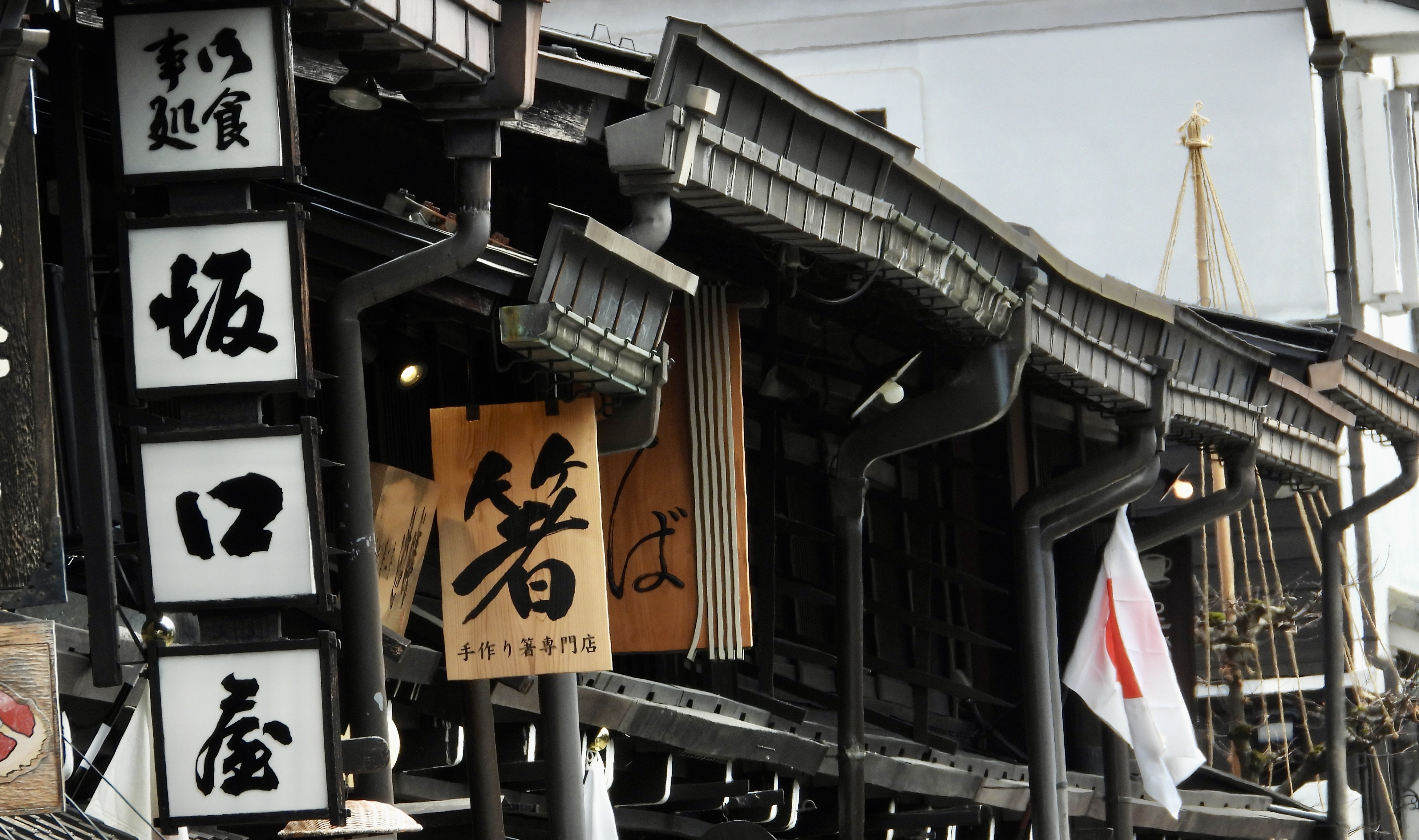
Our first stop was the Miyagawa morning market, which parallels the same-named river between two graceful bridges. The side of the market closest to the river features food vendors and craft-sellers.
Facing them, permanent stores peddle everything from cheap tchotchkes to chic chopsticks.
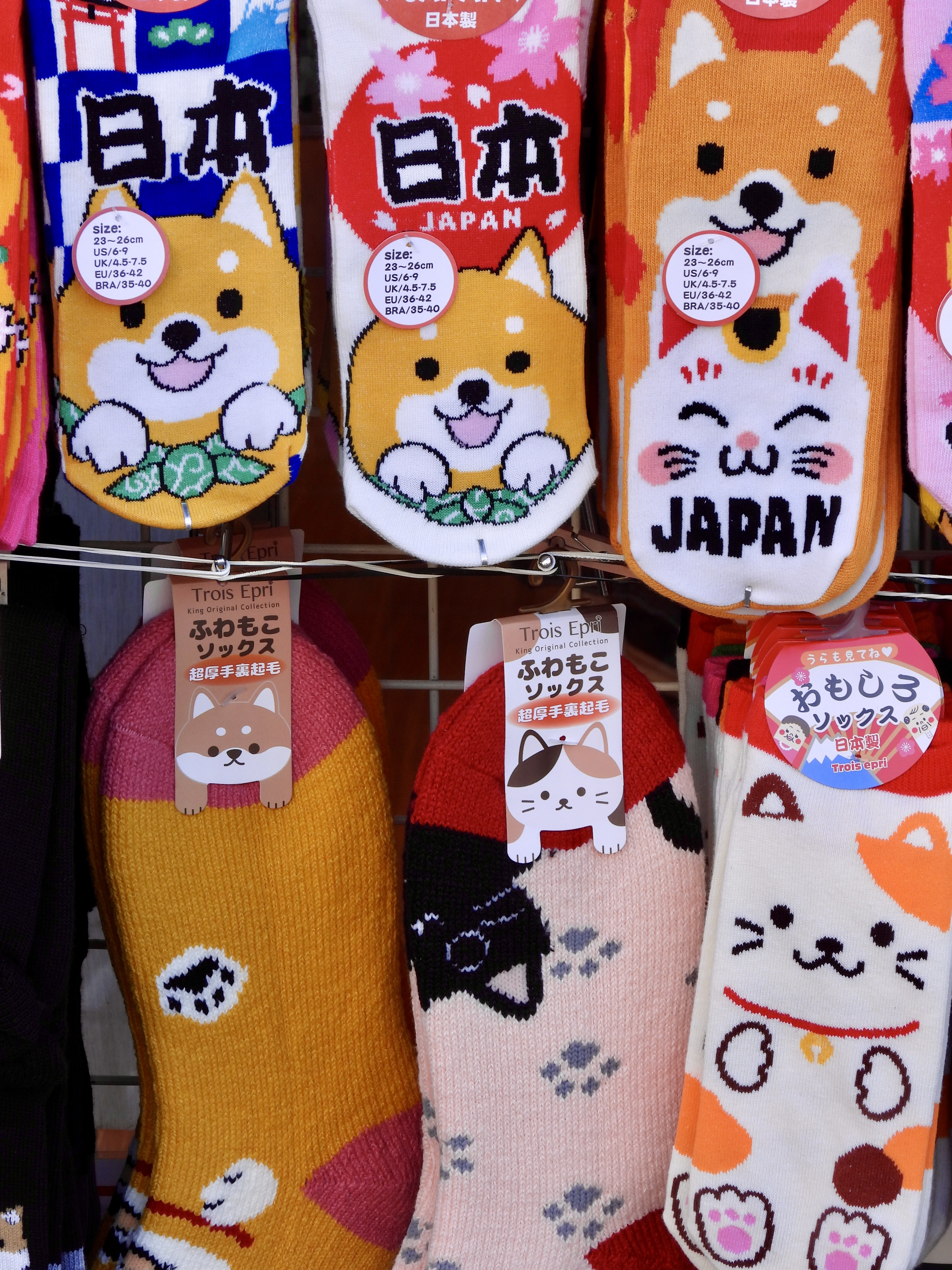
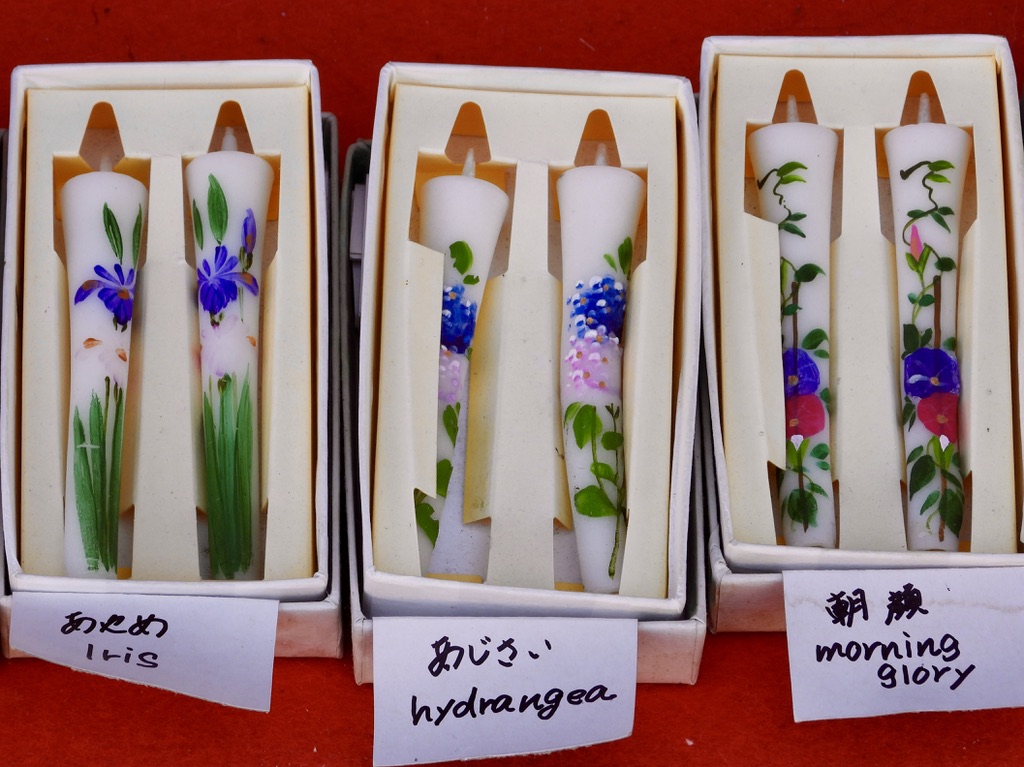
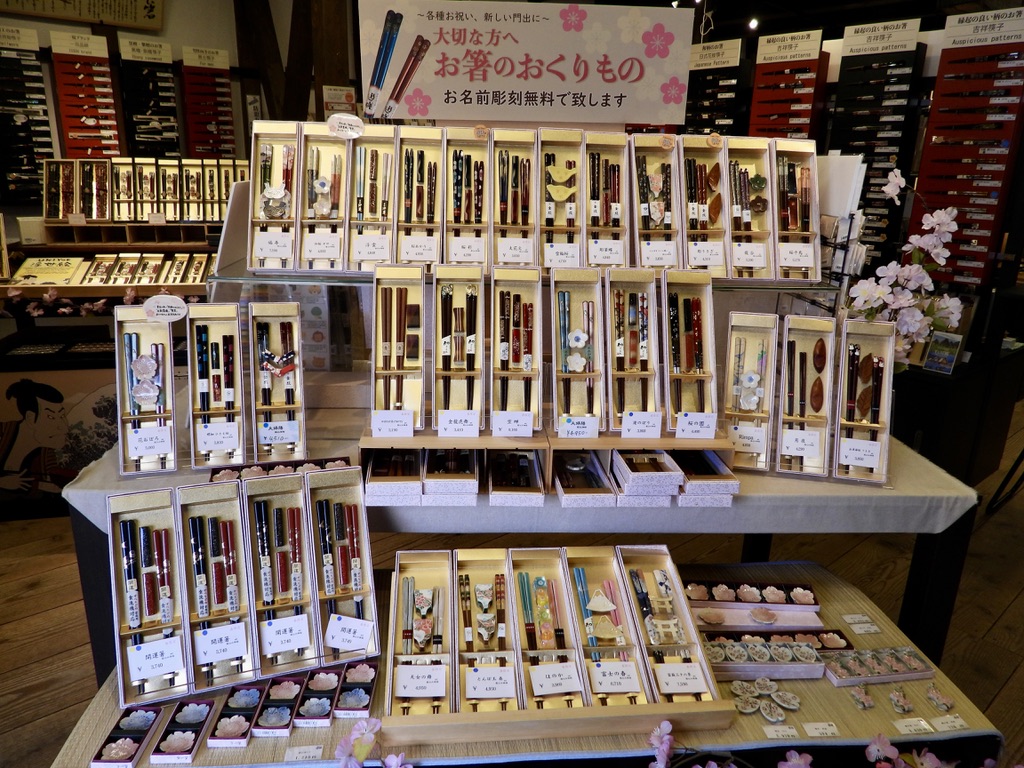
It’s a lovely spot to shop, window- or otherwise.

Then came my favorite part of the trip so far: lessons in traditional Japanese cooking given by the Hida Cooking Class (tel. 080-5297-9570).
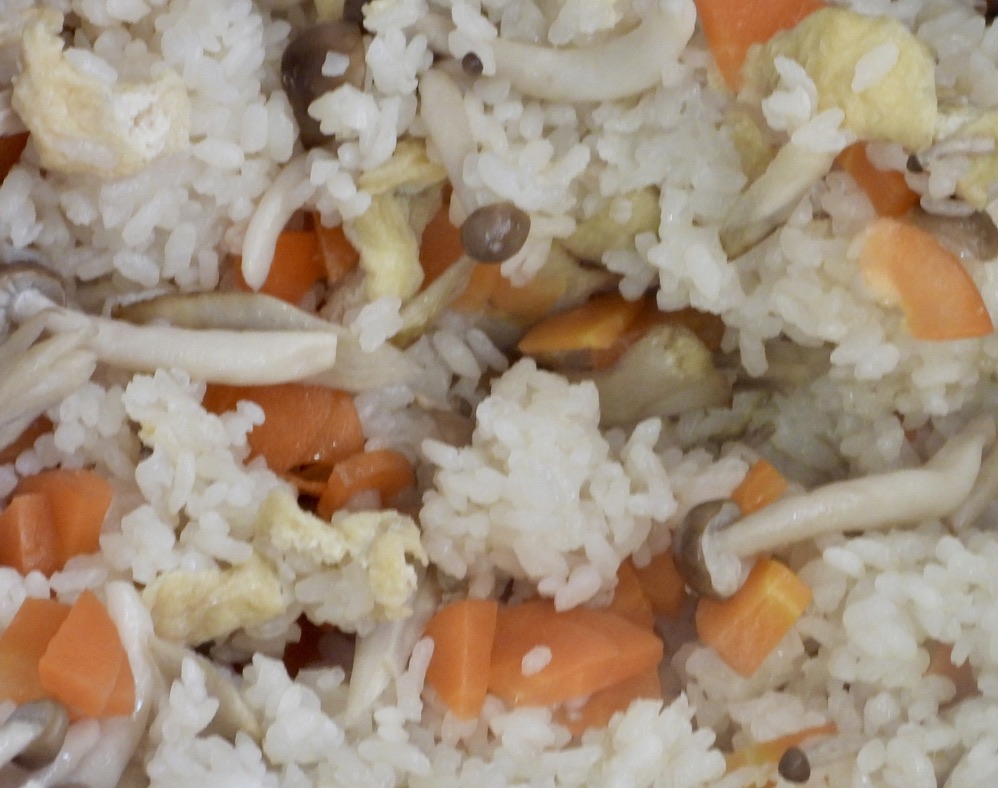
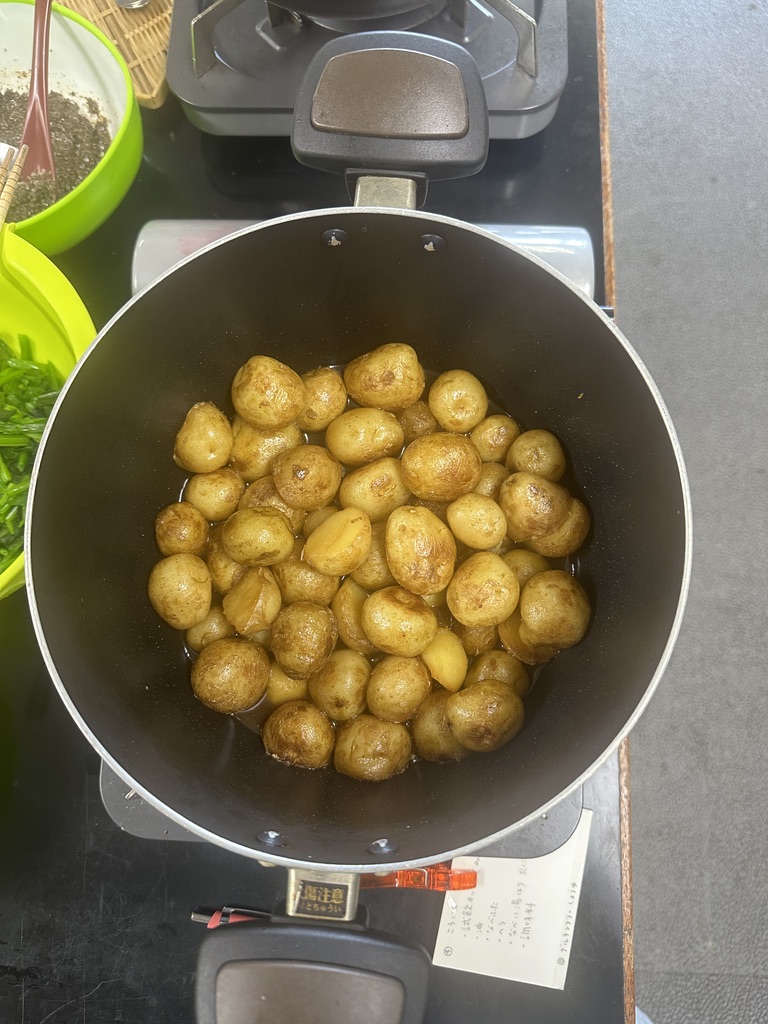
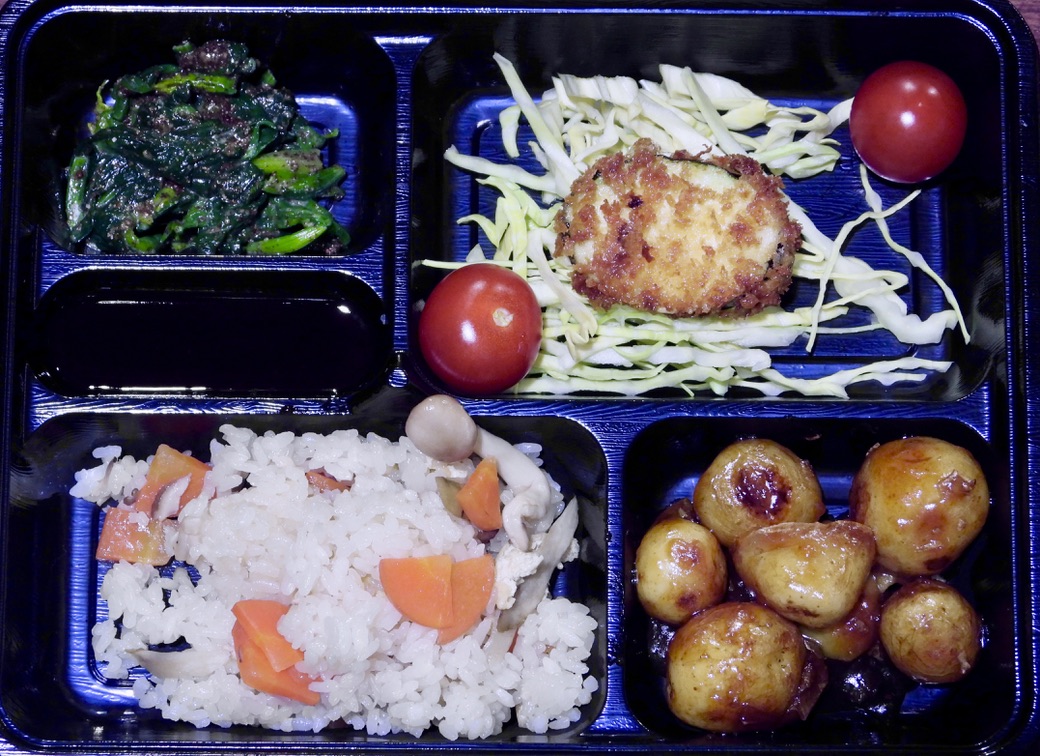
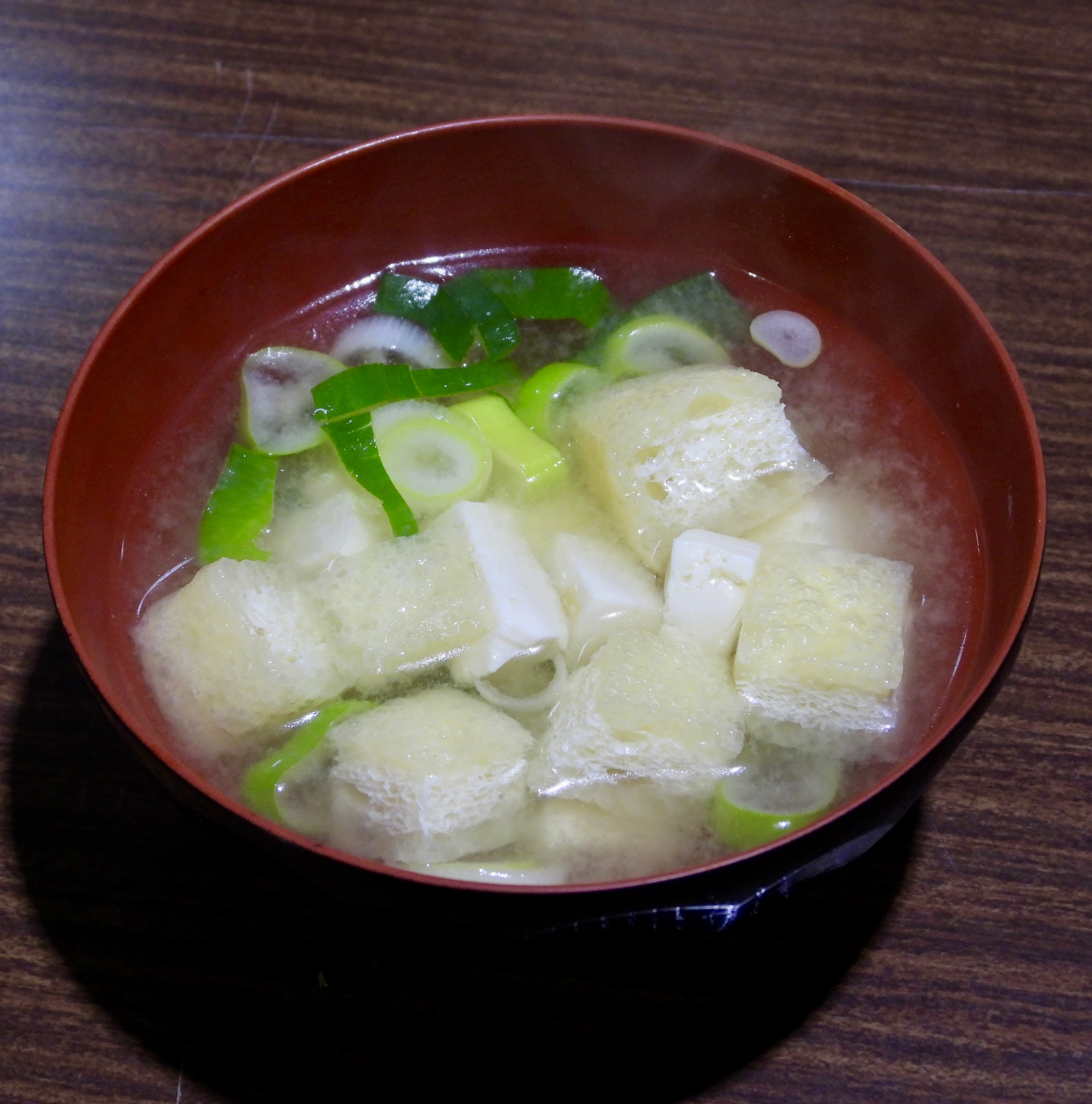
Set in a building on the grounds of the Takayama Betsuin Temple, the Hida Cooking Class is run by several local women who teach people to prepare such dishes as miso soup, ajigohan (rice with mushrooms, carrots, and deep-fried tofu), koroimo (scrumptious salty-sweet potatoes), spinach dressed with egomaI (tiny black sesame seeds), and deep-fried eggplant.
Our group chopped, diced, julienned, boiled, fried, and steamed our way to a truly delicious lunch! The teachers, all of whom spoke very good English, were fantastic.
If you’re ever in Takayama, count the Hida Cooking Class as a not-to-be-missed gem. (One word of caution: the building is not heated and you must leave your shoes at the door, so on a cold day, be sure to wear two pair of socks!)

After eating, we walked a couple of blocks to the Funasaka Sake Brewery, where our host explained how sake is made and gave us samples of two different brews: a daiginjo (made with rice that’s been highly polished, it’s considered a premium sake), and a sake mixed with juice of the yuzu fruit, producing a delicious citrusy concoction. Kampai! (Cheers).
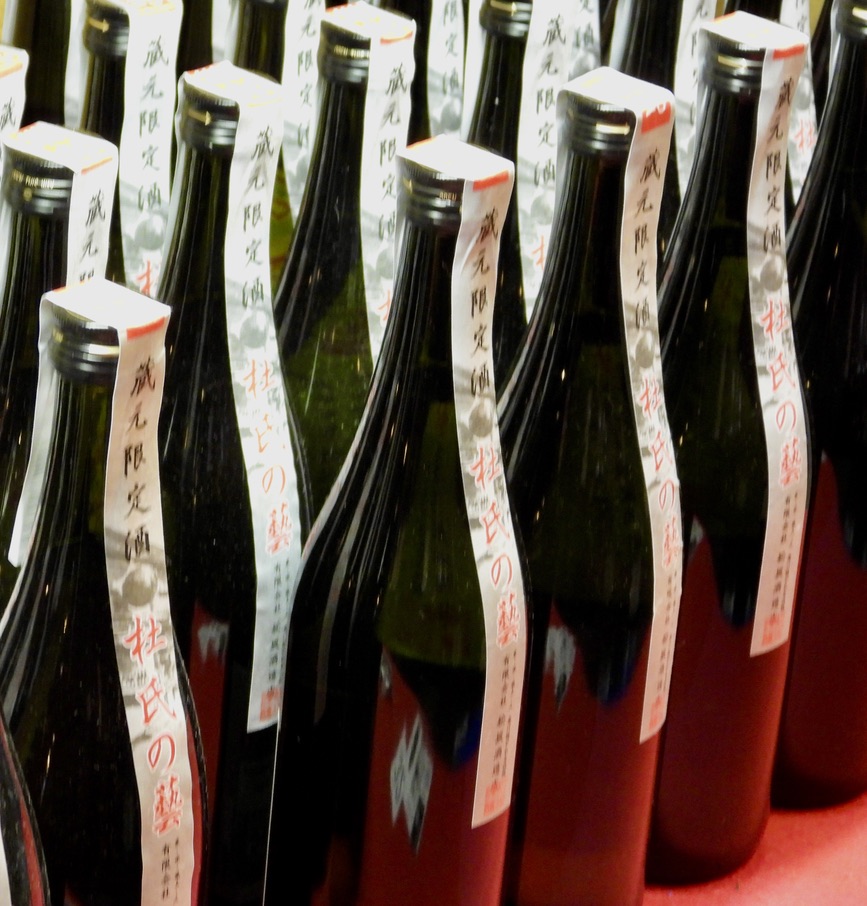
The Funasaka storefront is on a street called Kamisannomachi, part of the Sanmachi Traditional Buildings Preservation Area. This area has dozens of well-preserved, Edo-era buildings, most of which now house shops and restaurants.
Just around the corner from Funasaka is the Takayama Jinya, the final stop of our tour. Built in 1692, the Jinya served as the regional magistrate’s headquarters through the end of the Edo period. It’s the only remaining building of its type in Japan.
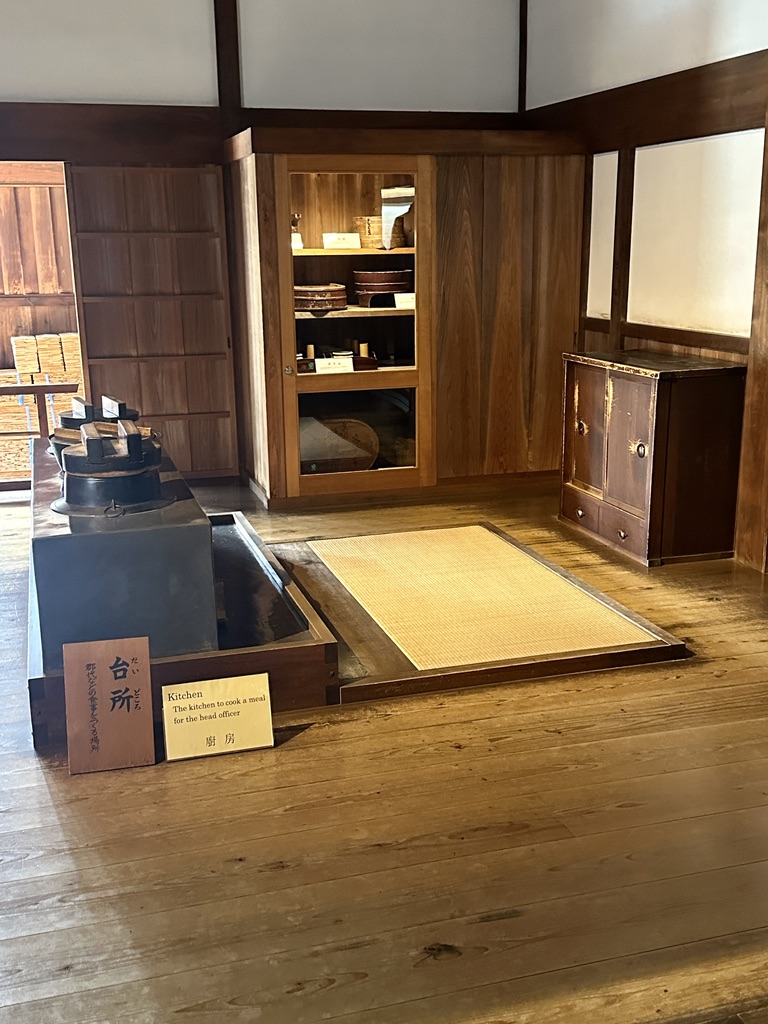
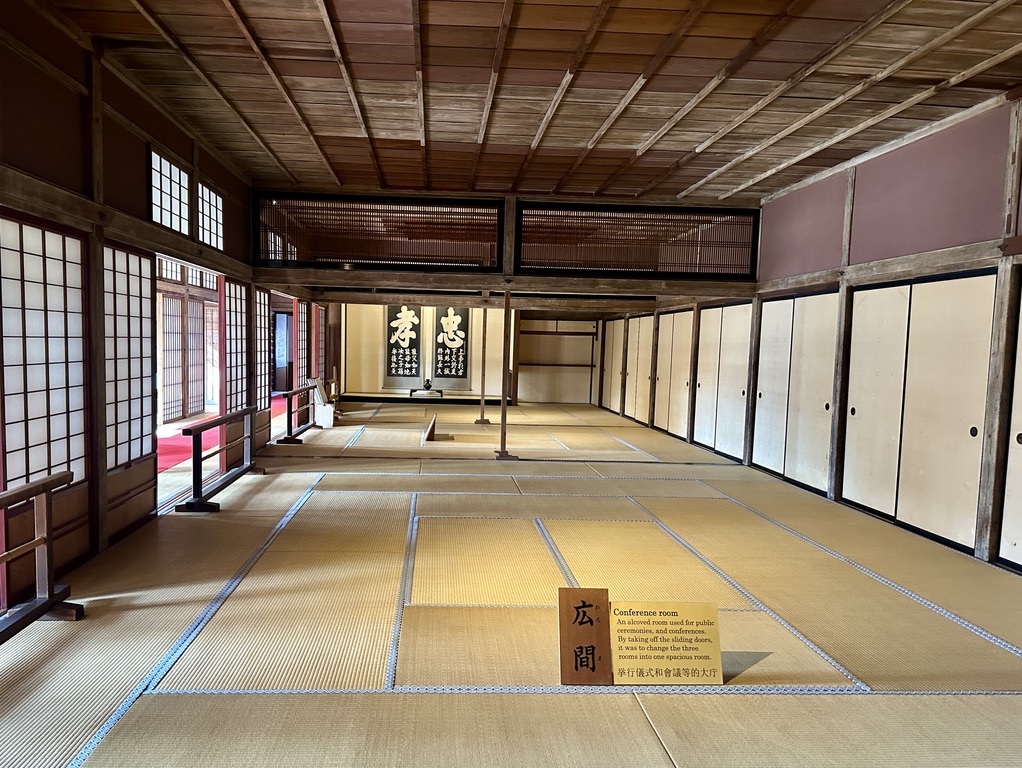
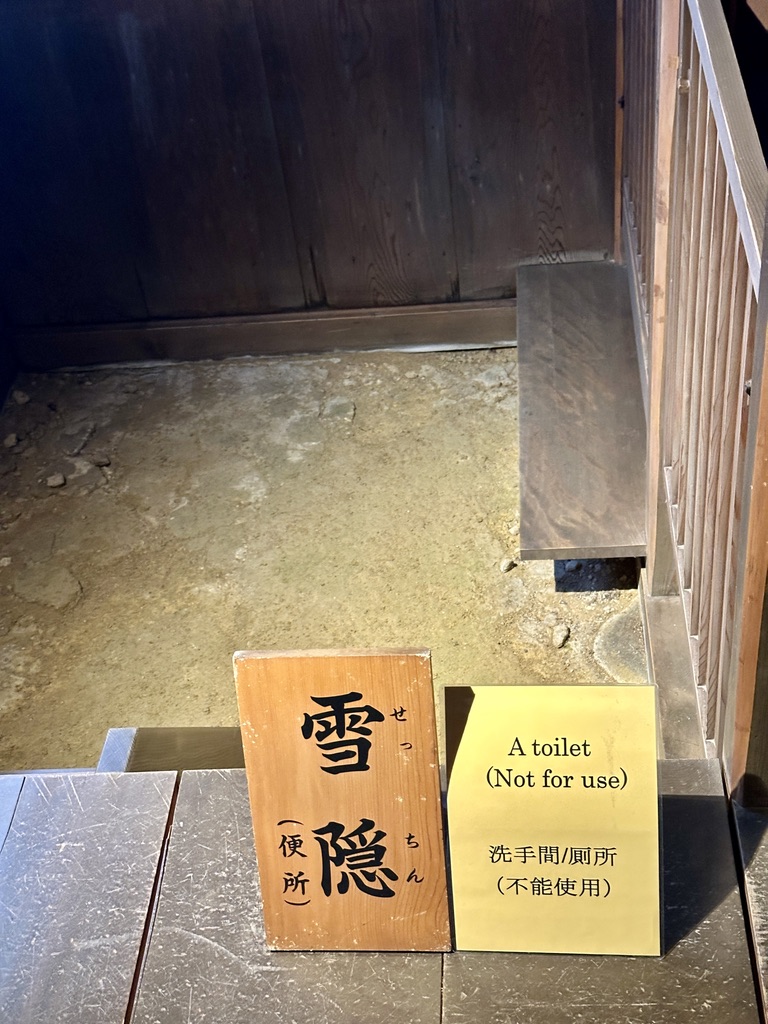
The Jinya’s spare, boxy rooms served as offices for functionaries, with office location and size tied to the occupant’s place in the hierarchy; reminds me of my law firm days. There’s also a residential section of the building.
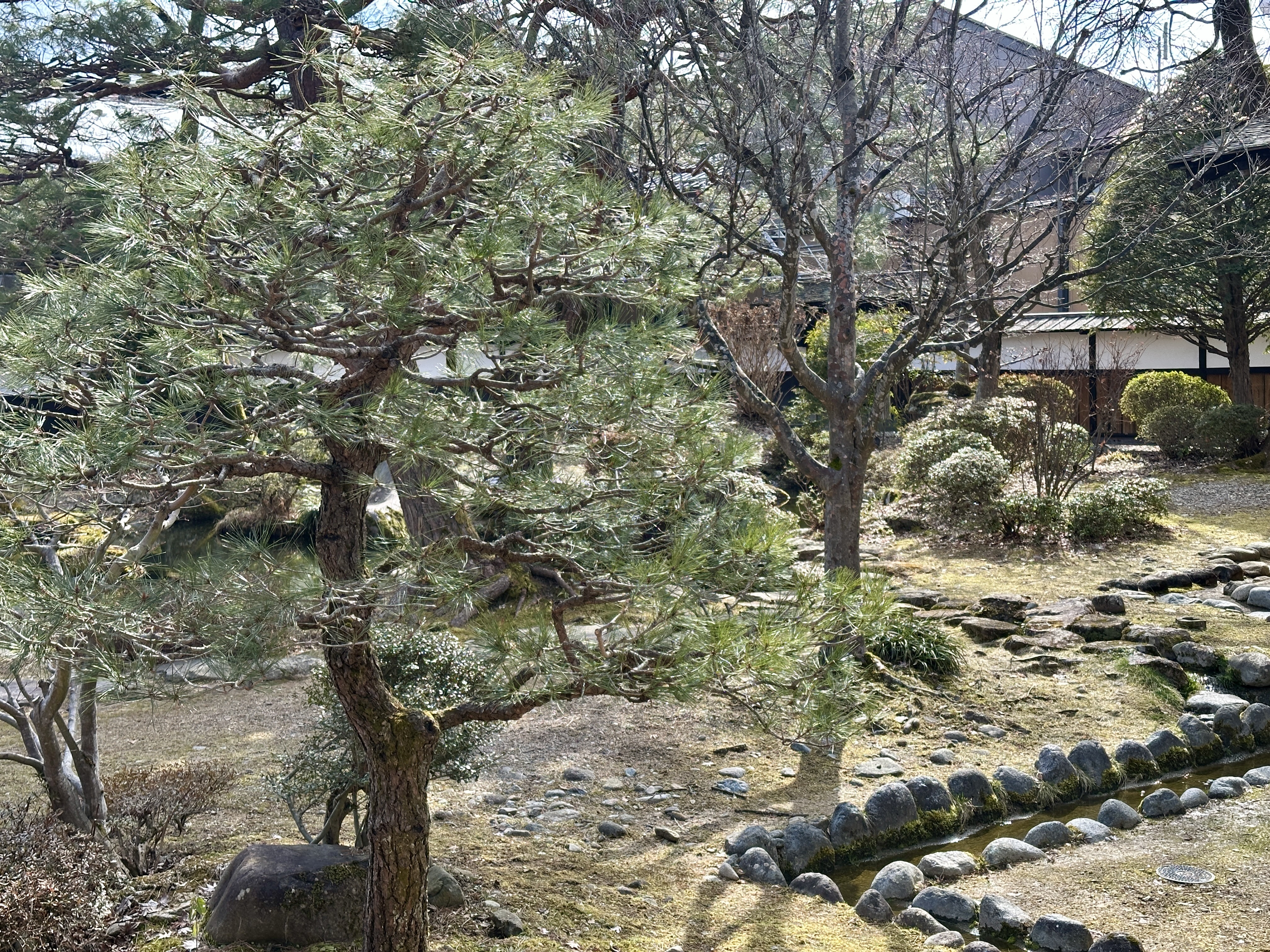
The building is unheated, and floors throughout are covered in traditional tatami mats, meaning – you guessed it – shoes must be left at the door and you should wear as much defensive hosiery as possible.
I’ll be sorry to say goodbye to Takayama, but we head tomorrow to another culturally and architecturally blessed city, Kanazawa. See you soon!

 PuffinlessTravel
Jeff, when I read your wonderfully crafted descriptions, I feel like I’m on the trip with you all. I could almost taste the miso soup. Sounds like you are seeing many beautiful and interesting sights.
Hi Margie! It’s been a wonderful trip. Japan is a fascinating country, and it’s refreshing to be in a place where civility is a core value.