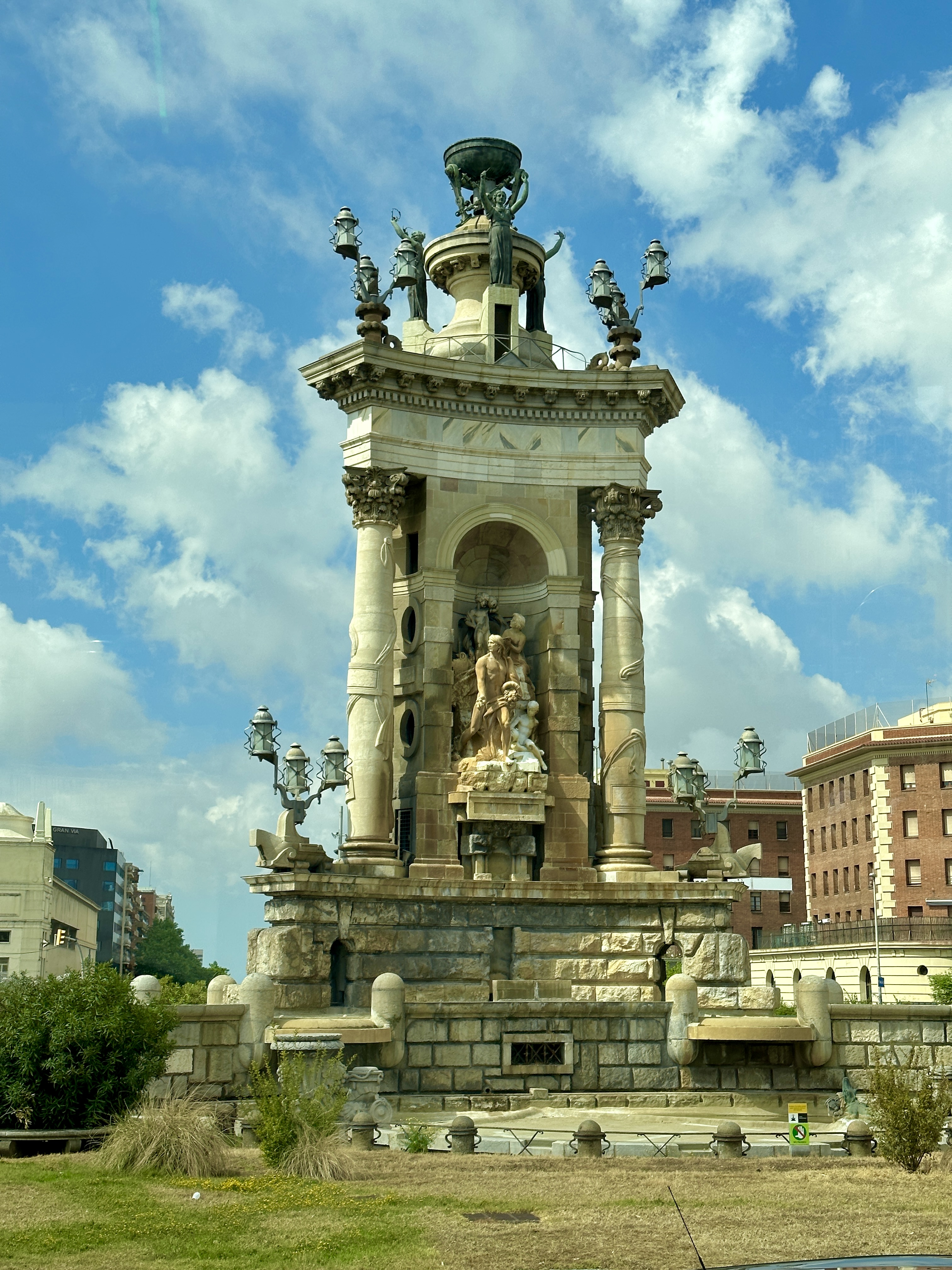
My introduction to the enigma of Andorra began with the inaptly named “Directbus” from Barcelona airport, which was anything but, including a tour of Barcelona’s ever-so-attractive red lights and a lengthy stop at Barcelona Sant train station.
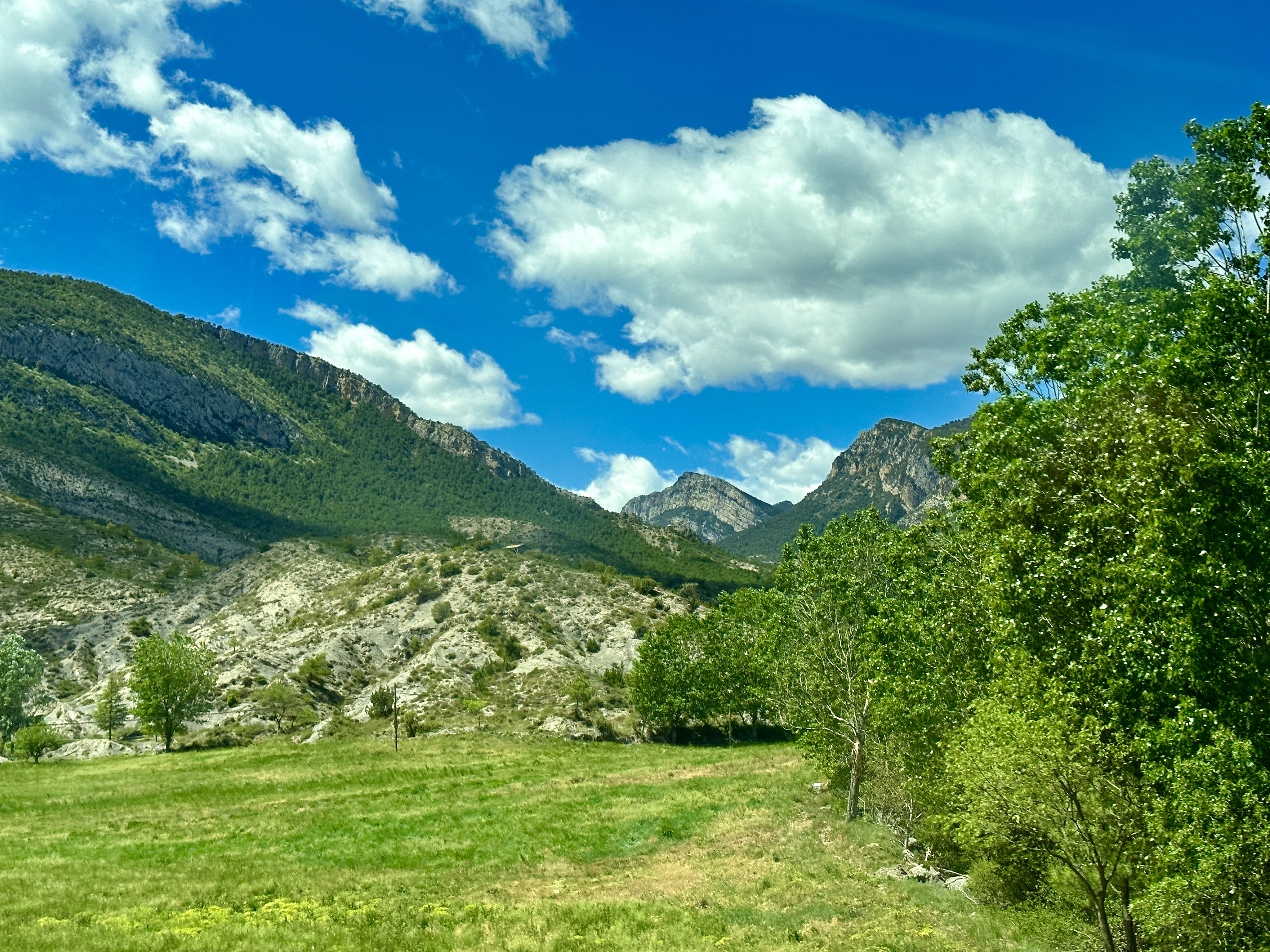
Still, after we left the city, the scenery transitioned gradually from pine-covered rolling hills to rocky scrubland as we gained altitude, providing a scenic backdrop for our ride (which arrived only an hour later than scheduled).
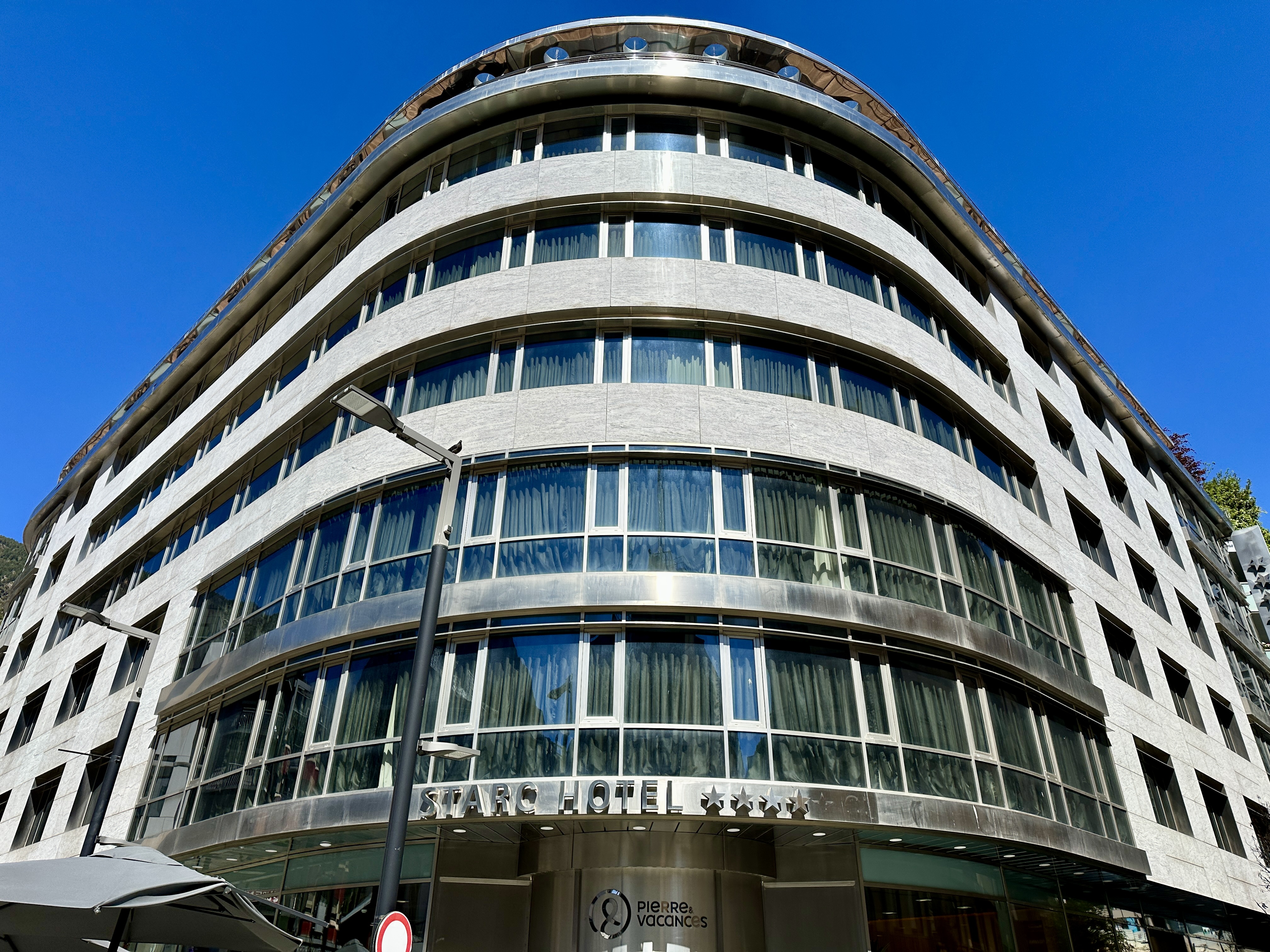
My hotel, the Hotel Starc by Pierre, is a brand-new, unabashedly modern structure in Andorra’s capital, Andorra La Vella, the principal city of Andorra for the past 750 years. How modern is it? When it came time to shut the lights last night it took me ten minutes to figure out how; when it came time to shower this morning, the process of keeping the rain shower on while shutting the side jets and hand-held wand took nearly as long.
The price for all this? Roughly 120 Euros per night, perhaps a third of what a similar hotel would cost in Paris. I added 15 Euros for the hotel breakfast and was treated to a feast of fresh fruit, eggs, yogurt, pastries, smoked salmon, and more.

Andorra is one of the wealthier nations in Europe, but it is reasonable beyond belief. Last night I strolled through a local supermarket, picking up some sushi, bread, and two cans of beer for dinner (as well as toothpaste, because I have been profligate in my dental care and have run out of what I brought). The total tab? 22 Euros; the two beers combined cost only one Euro and forty cents! You’d be hard-pressed to spend more than ten Euros for any of the wide selection of wines the store carried, and my go-to Scotches cost half of what they do in the U.S.
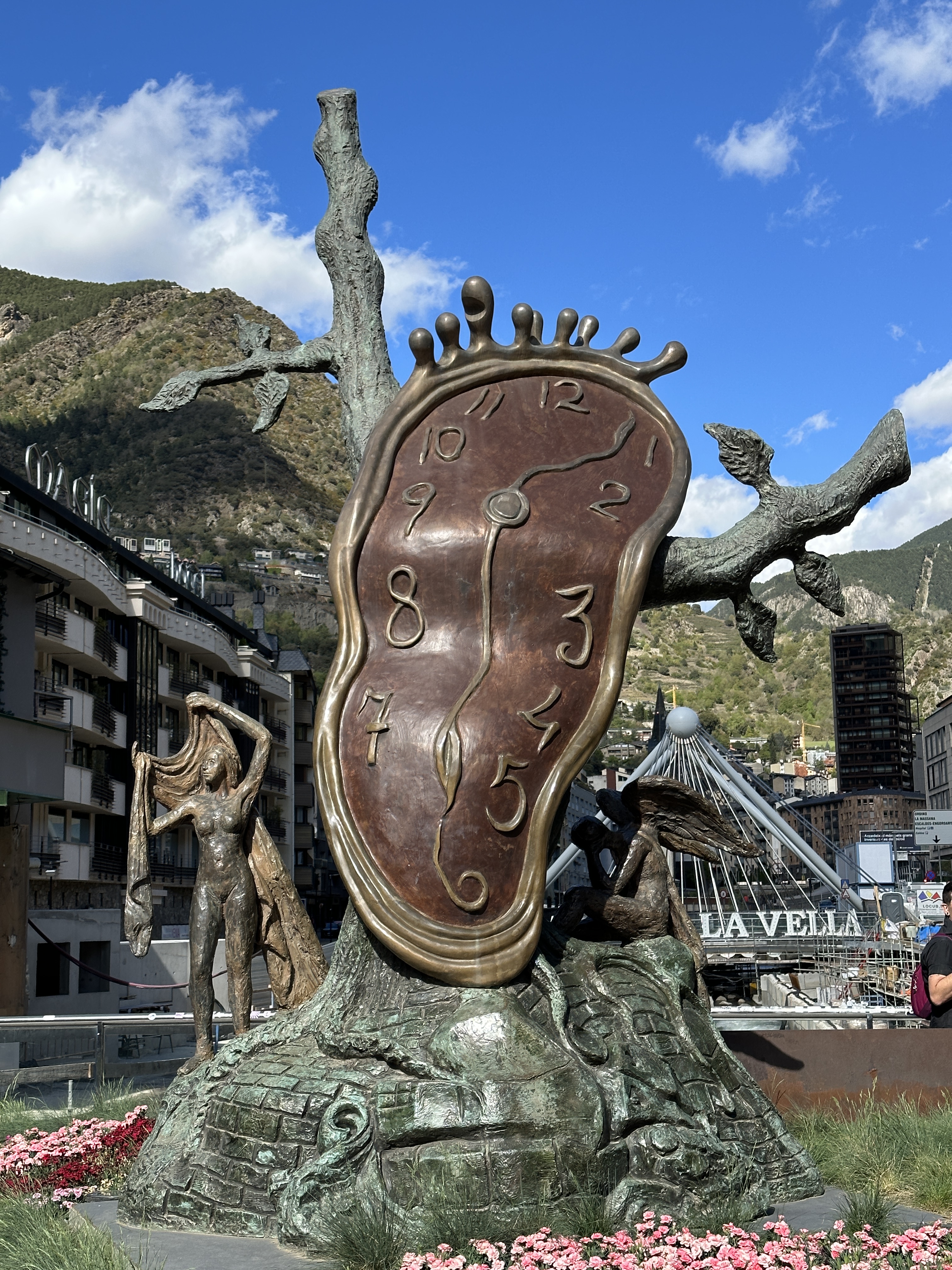
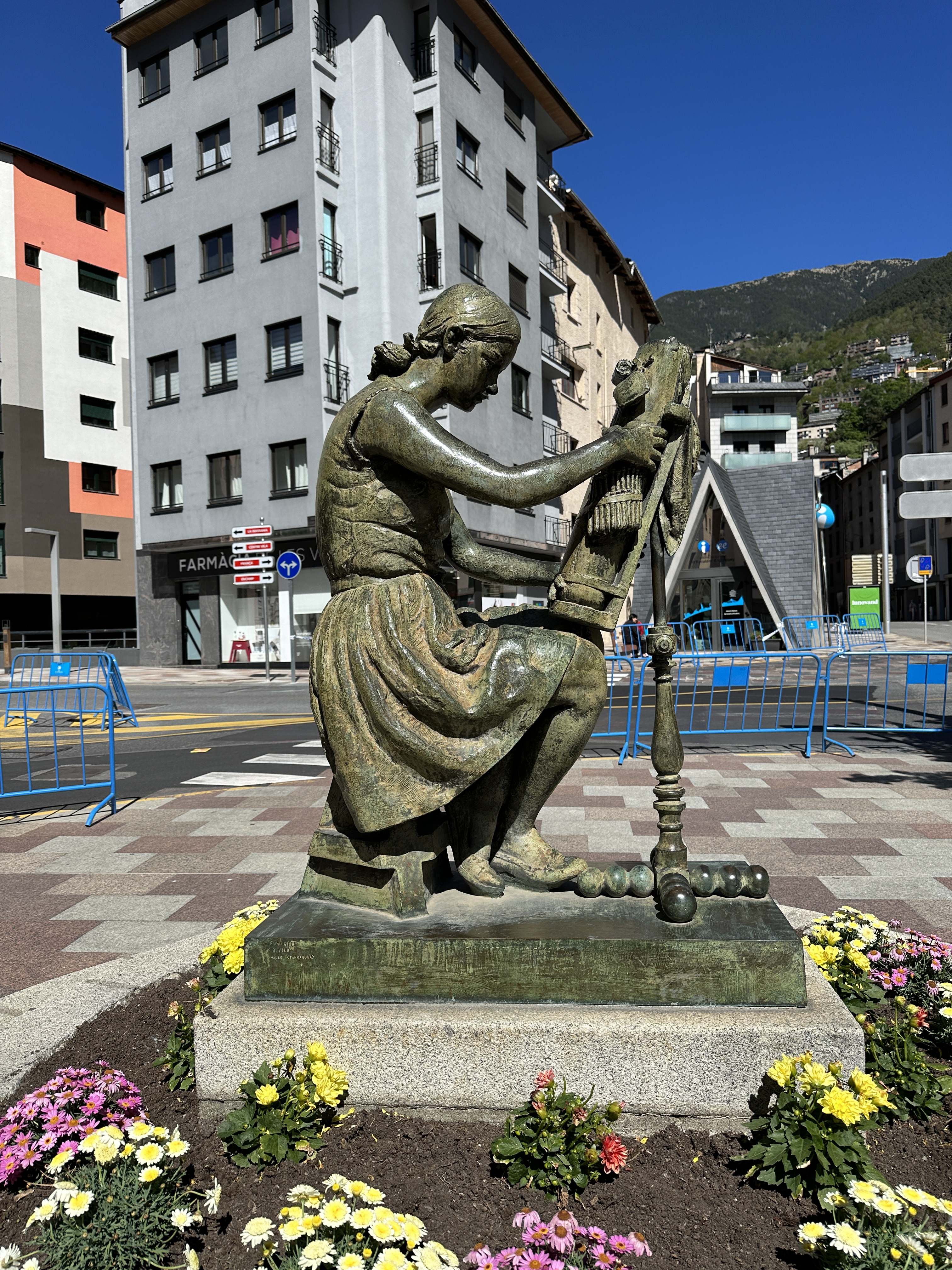
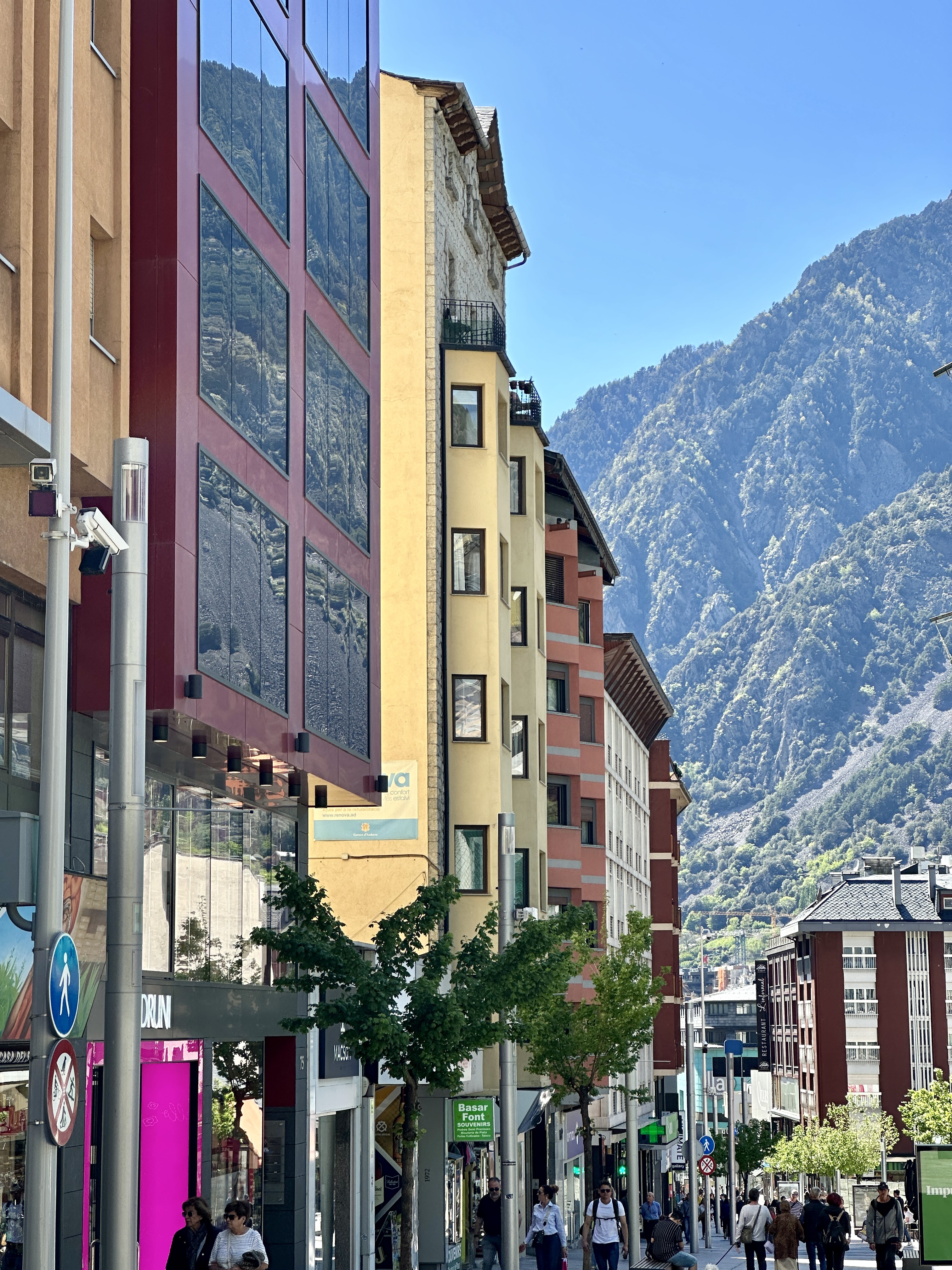
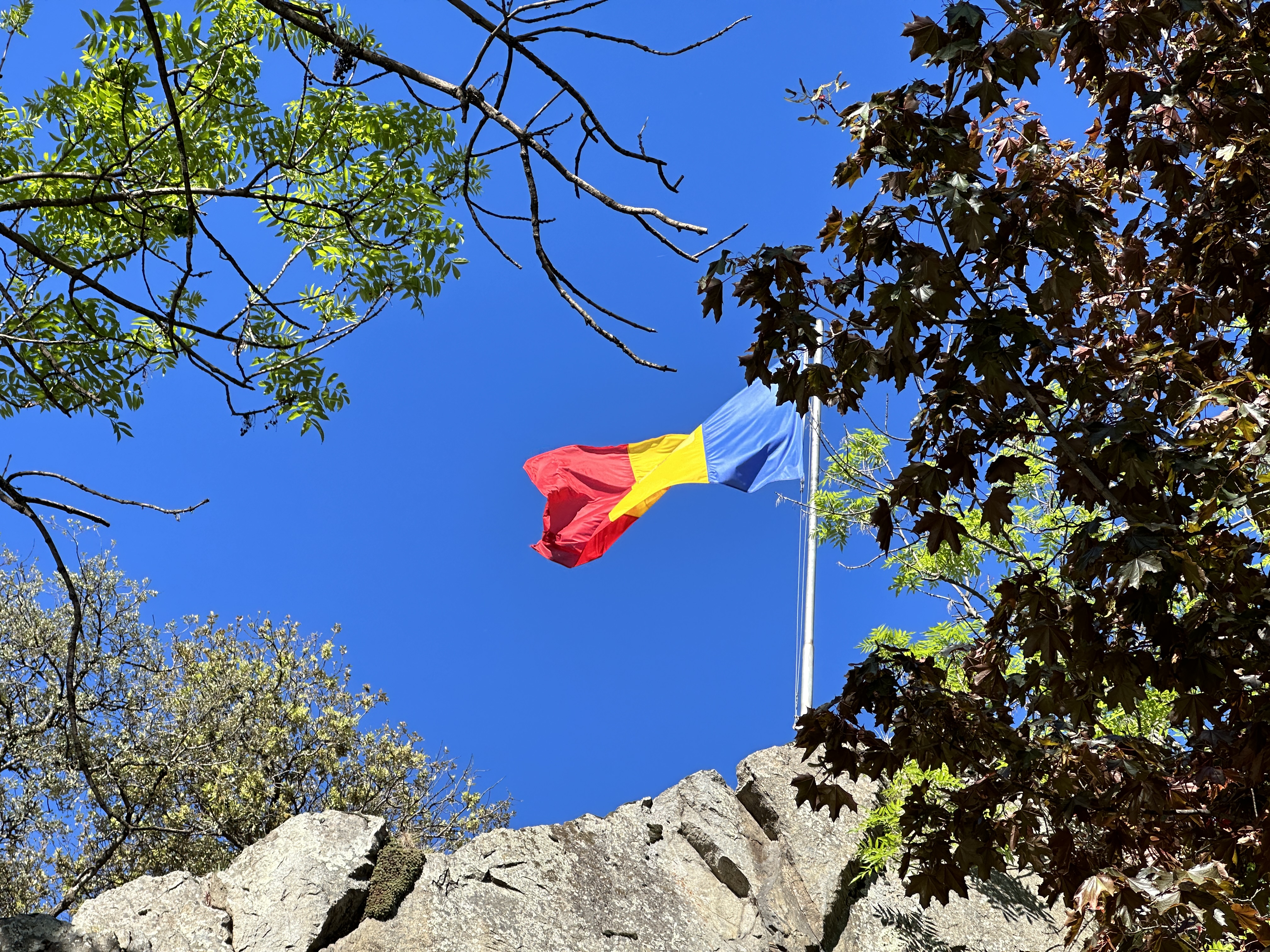
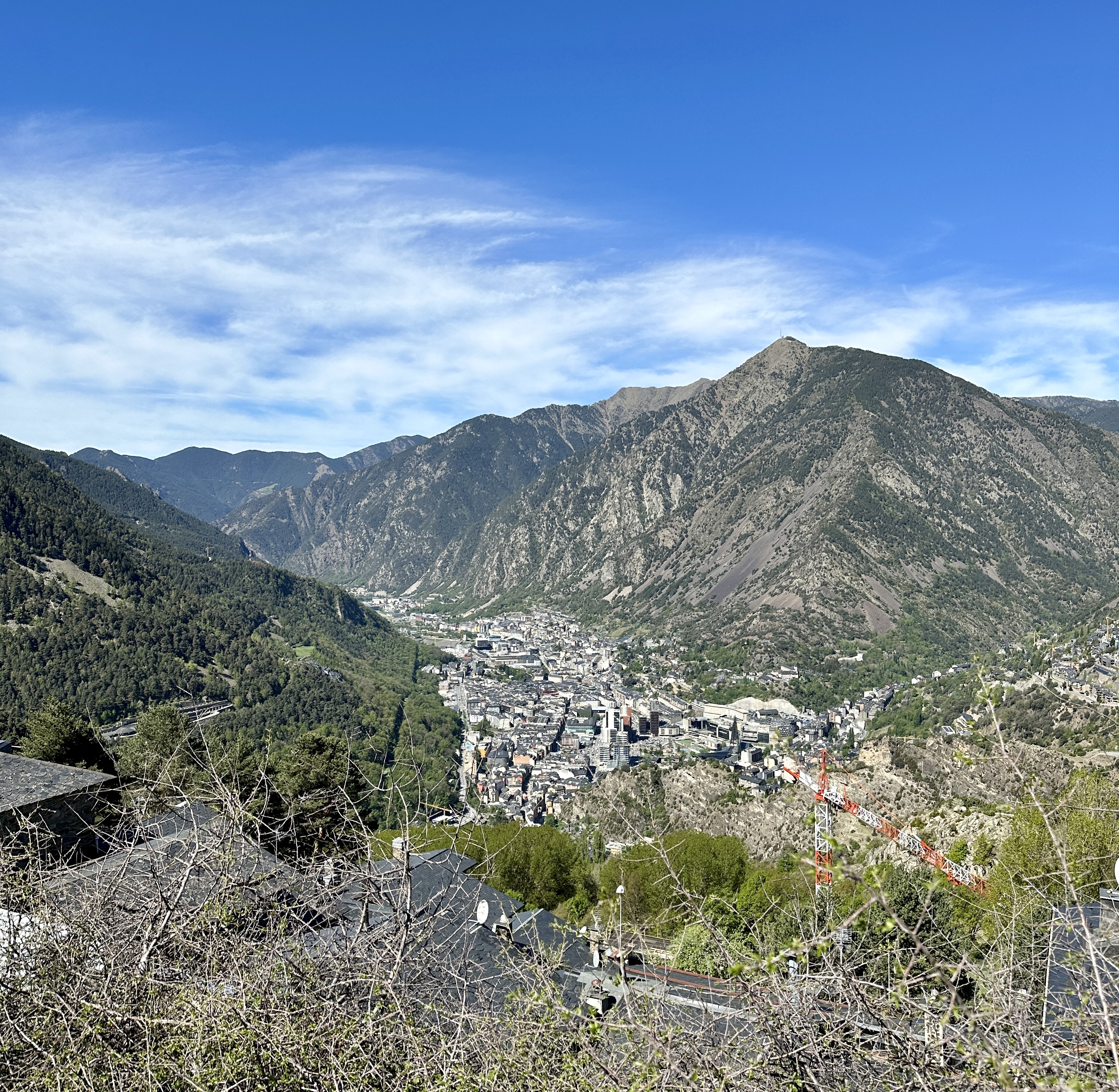
Andorra is a tiny nation and an enormous enigma: a Y-shaped set of valleys surrounded by mountains towering between 2000 and nearly 3000 meters. An independent country with its own legislature, where the leaders of France and Spain have the final say-so on policy. An ancient country with cutting-edge street art. A non-member of the EU that uses Euros and requires a passport check at the border. A country where Verizon thinks I have service (and shows lots of bars) but I can’t text, surf, or check email unless I’m using the hotel’s WiFi.
I toured Andorra today with Ramón, a guide from Tours by Locals who gladly shows tourists around the country while not-so-secretly wishing all the changes of the past fifty years (including tourism) would just go away. Despite his ambivalence, he was a knowledgeable guide who adeptly shared his expertise in English and can do so in seven different languages.

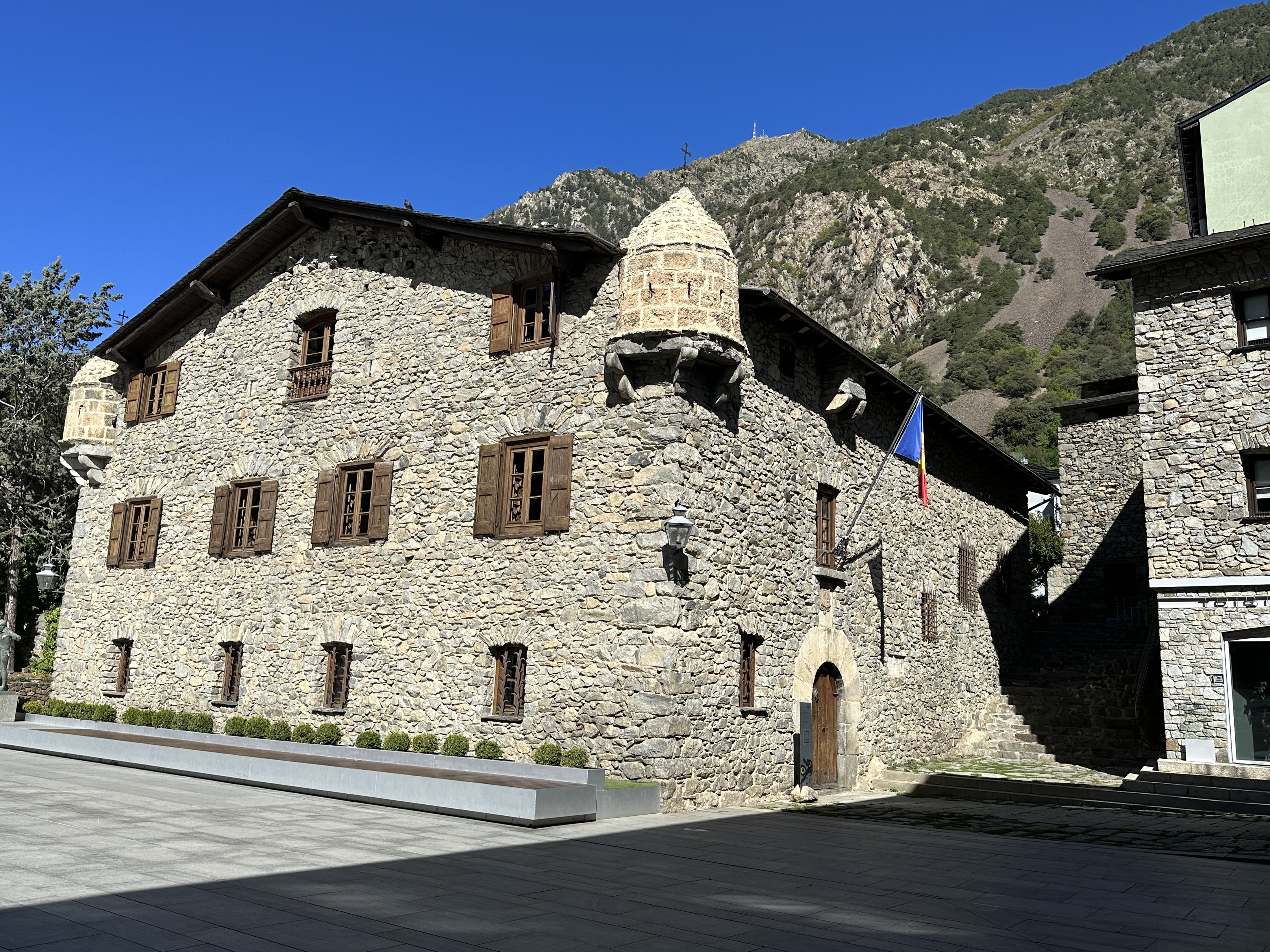
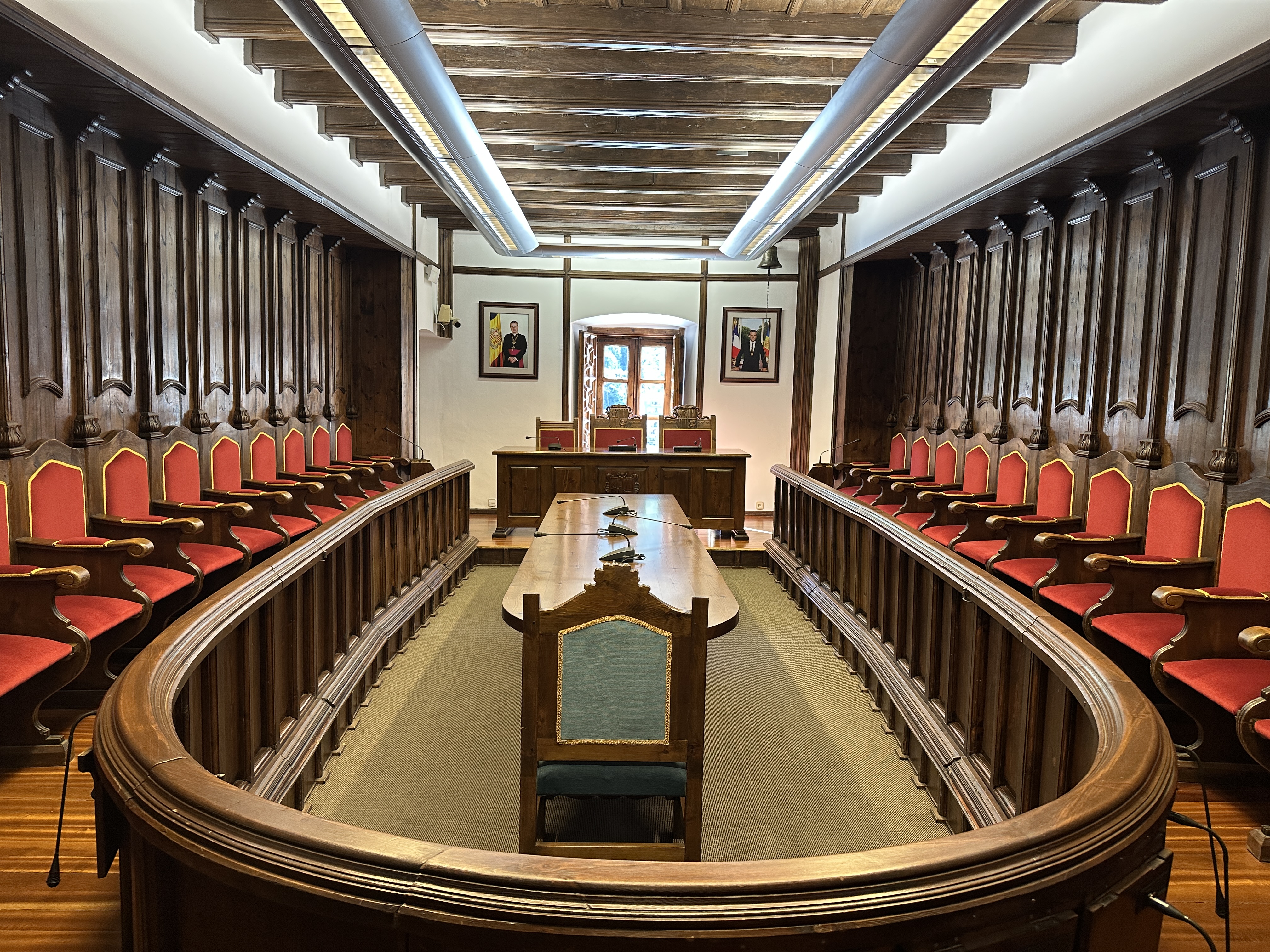
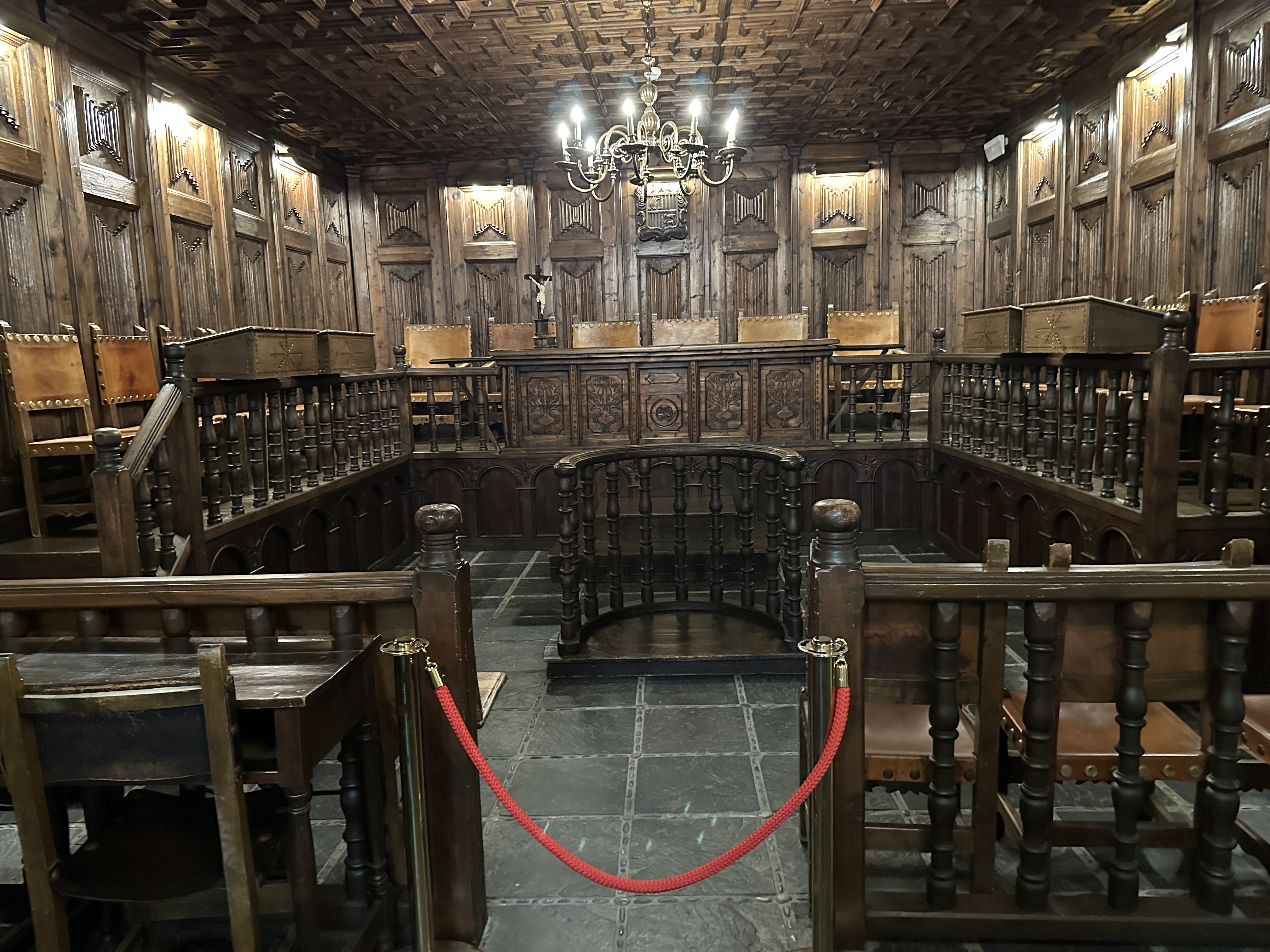
Our first stop was the old town of Andorra La Vella, which sits above the current main part of town (which, Ramón informed me, was farmland until perhaps forty years ago). It’s an atmospheric neighborhood with the obligatory winding lanes and ancient stone houses, including Castel de La Vall, the home until recently of the Andorran Parliament and well worth a visit. The new parliament sits next door in a boxy modern building that Ramón (and, I gather, many Andorrans) despises.

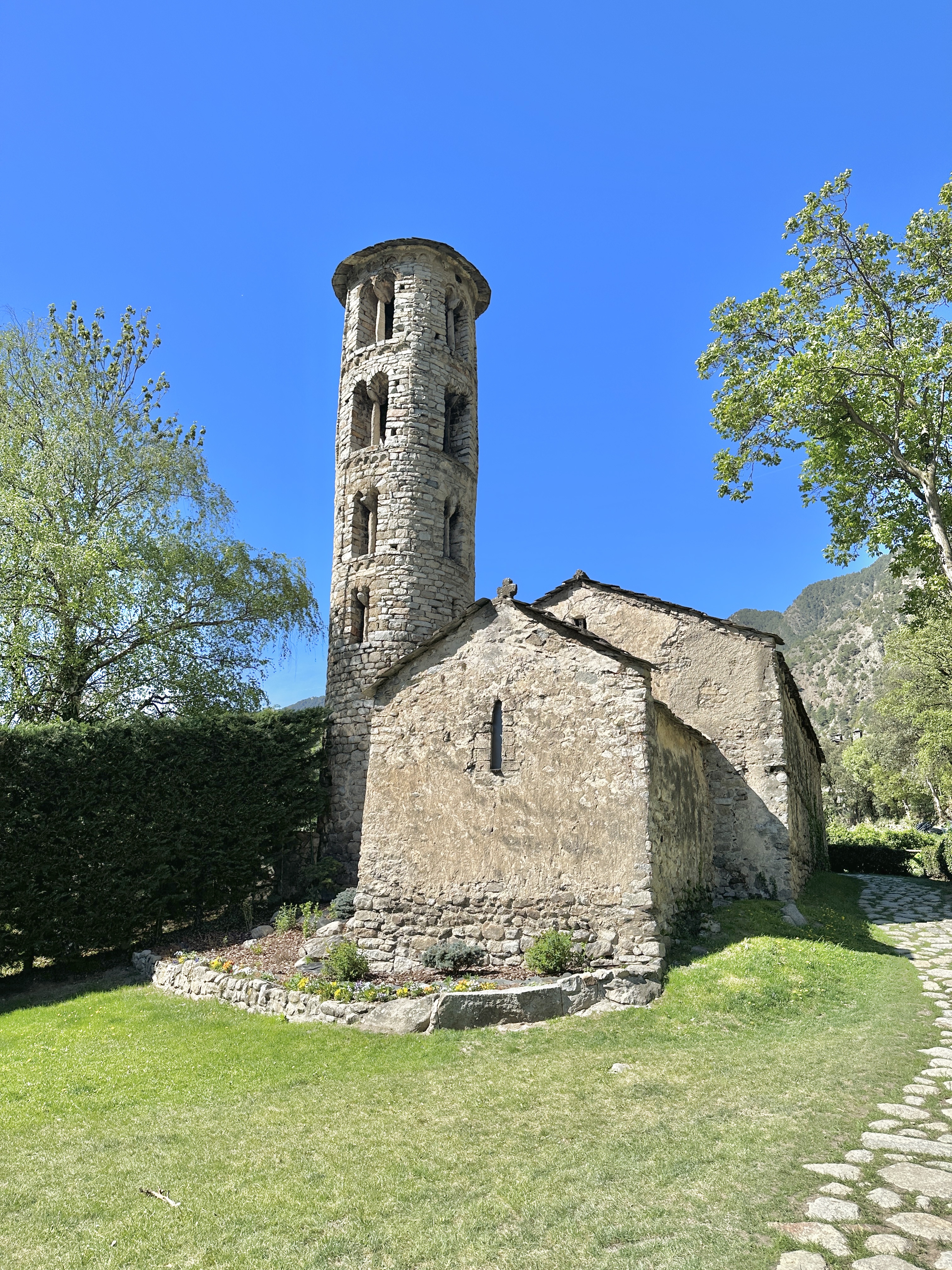
Just down the road, we stopped at Santa Coloma, a Romanesque church that was built in the 10th century and added to in the 12th. Like all such churches, it was built with the nave originally facing west so that congregants entered in darkness to be bathed in light from the east-oriented apse (i.e., light from Jerusalem).
From there, Ramón took me to into the mountains to another 10th/12th century church (Sant Miquel d’Engolasters) with astounding views of the valley below and a gorgeous fresco inside.

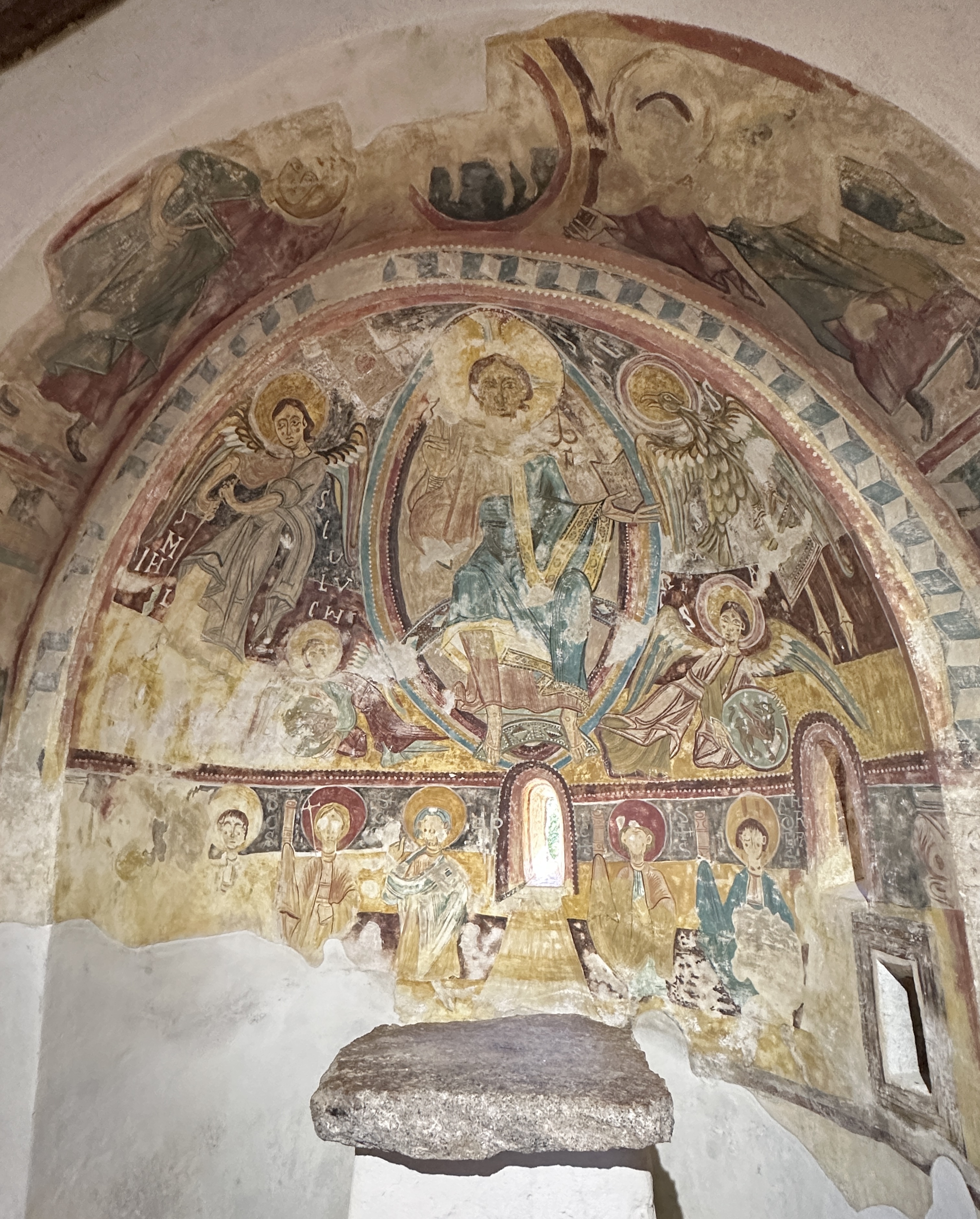
Alas, the fresco is merely a modern (1986) reproduction of the original piece, which was sold off in the early 20th century to raise money; the original now sits in a museum in Barcelona. Before the advent of hydroelectric power in the 1930s and tourism in the post-war era, Andorra was a poor country indeed.
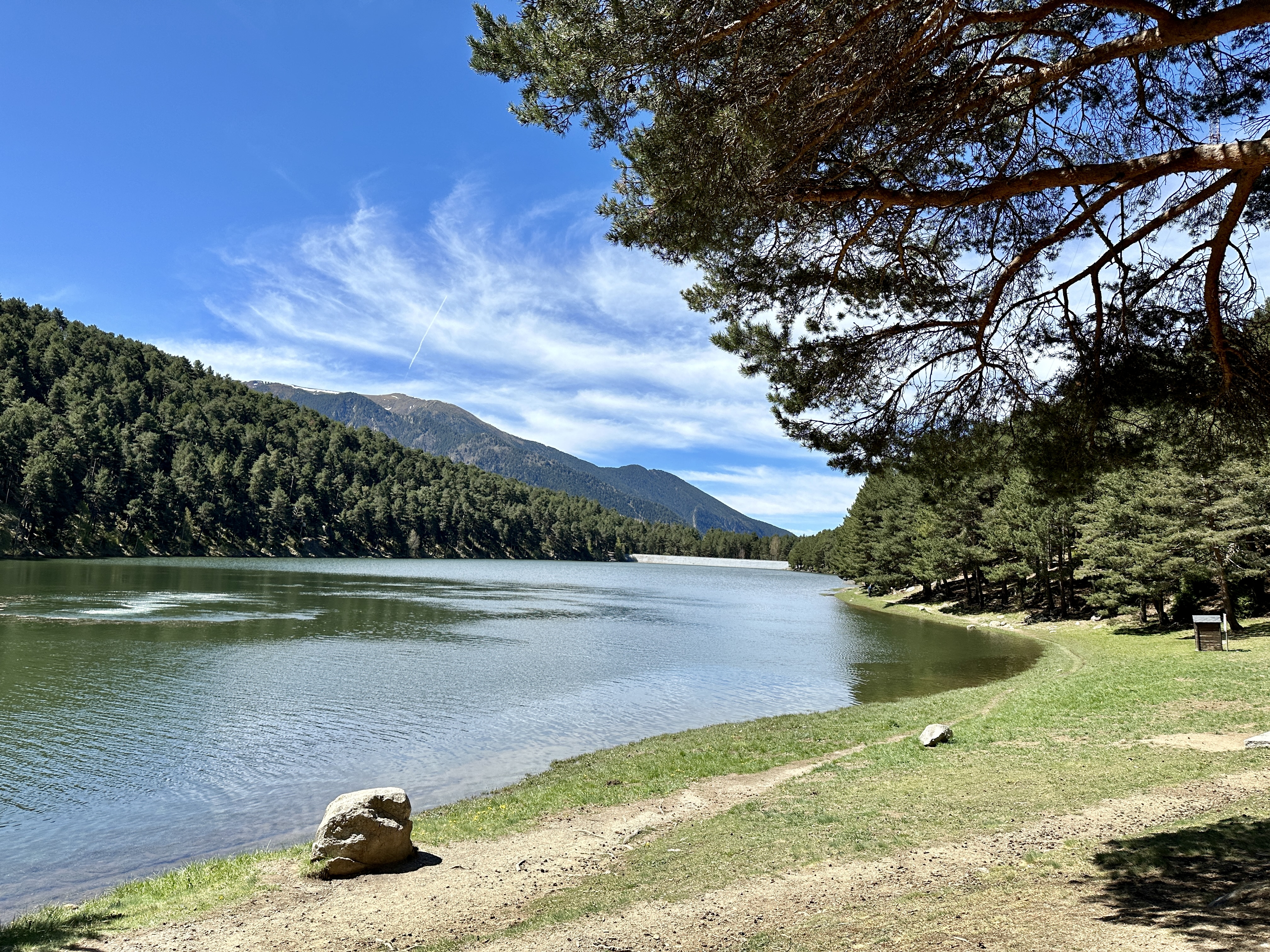
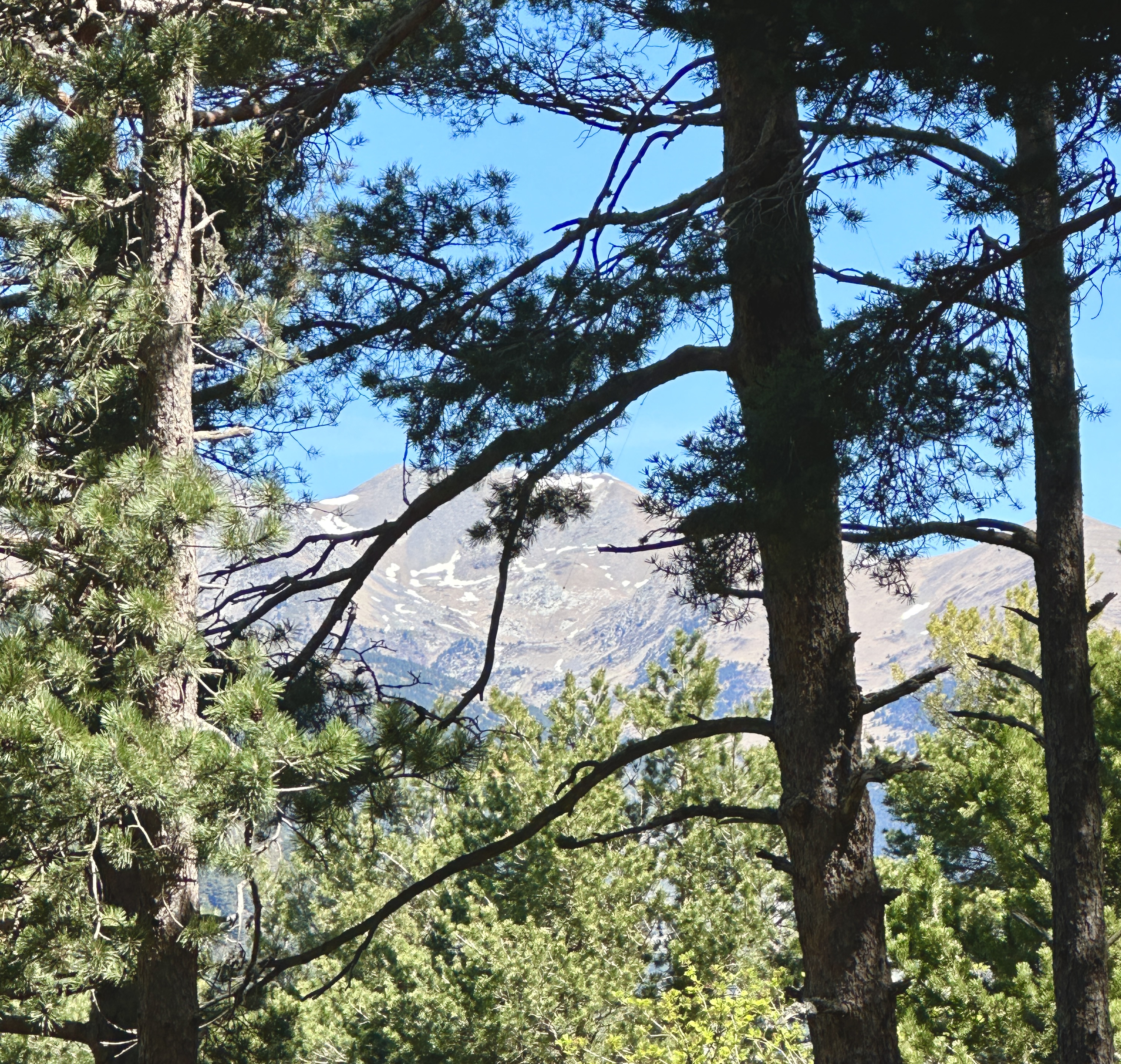
Close by Sant Miquel is a man-made lake (Llac d’Engolasters) surrounded by woodland and created during the aforementioned advent of hydroelectric power. It’s a serene setting with a beautiful 4 km path around the circumference, frolicking dogs chasing sticks, and skittering lizards. Through the trees, one can see snow-capped mountains establishing the northwestern border with Spain and the northeastern border with France.
Our next stop was a lookout opposite another 10th/12th century Romanesque church, Sant Cristofol d’Anyós, which offered more gorgeous mountain vistas, this time from the northeastern branch of the “Y”.

On the way back to my hotel, Ramón detoured into the northwestern branch, which has no direct connection to either Spain or France. In fact, until the 1930s, the only way from this valley to Andorra La Vella was along a narrow trail hugging the river, impassible in the winter. The construction of a series of tunnels cut travel time between the two locations from several hours to less than 10 minutes.

Having worked up an appetite during the tour (unfortunately, I can work out an appetite doing nothing), I stopped at a café near the hotel for an excellent pizza and two glasses of Andorran beer, which set me back all of 16 Euros. What a country!

 PuffinlessTravel
I finally caught up! Looking forward to more! I may have continued to read your blogs while I was at work ha, super interesting hearing your opinion and perspective on things! Great travel blog!
Thanks so much – I really appreciate it! Next trip will be early July, along the eastern Danube.
No problem! Looking forward to reading it!