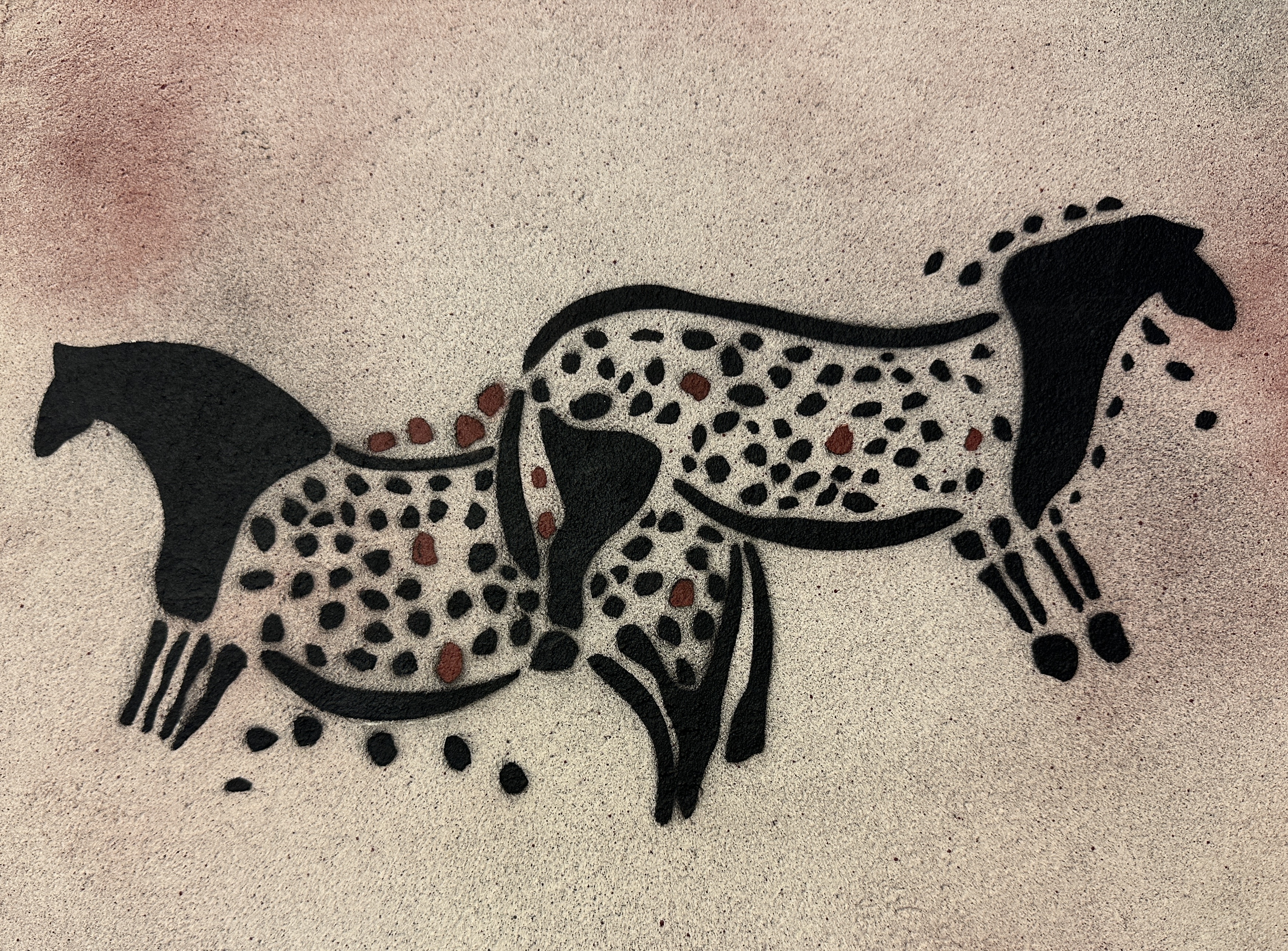
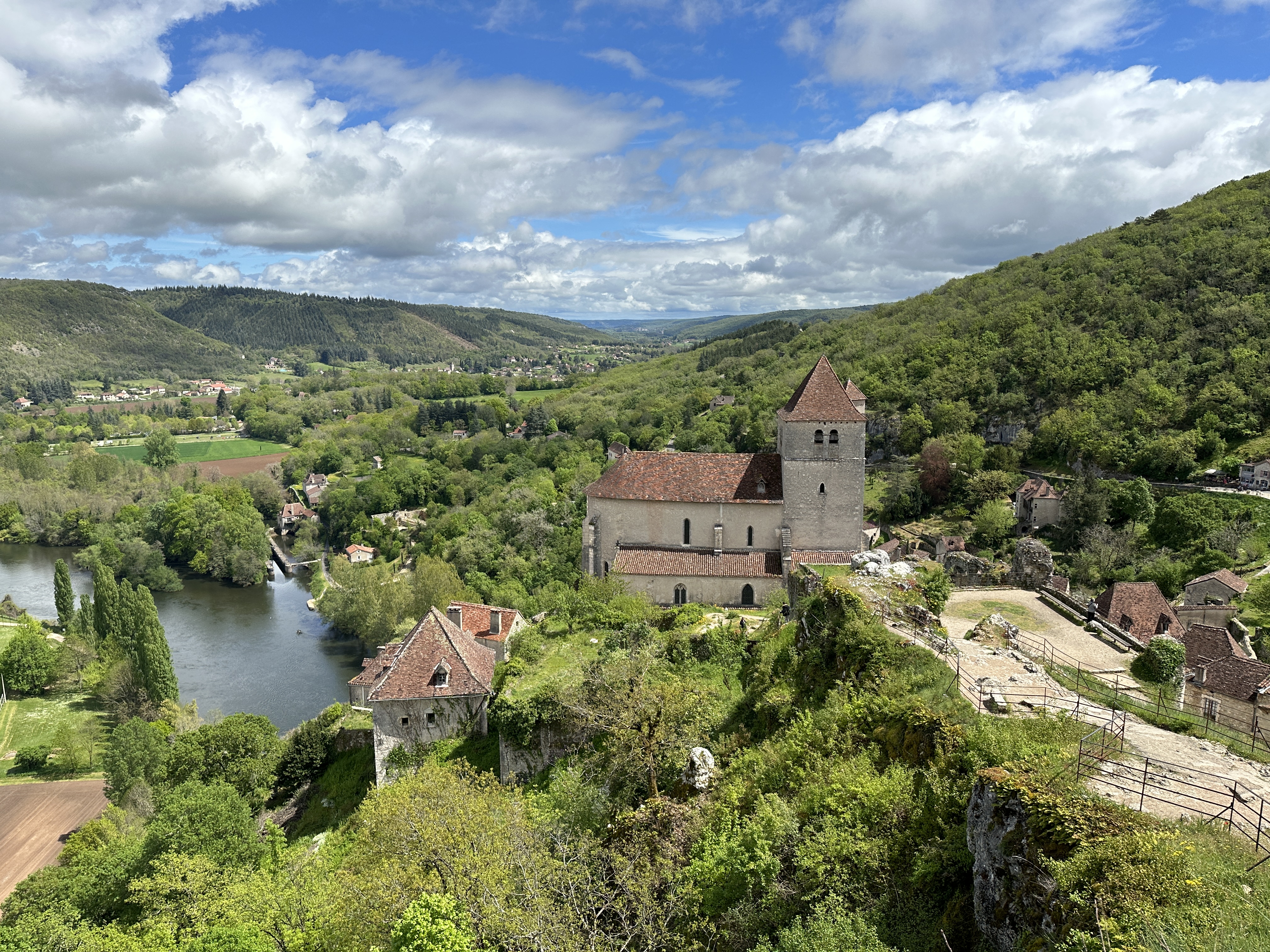
This is what I was waiting for! Pech Merle is a wonderland of fantastical stalactites and stalagmites, 30,000-year-old handprints on the cave walls, footprints left by a woman in the mud a thousand generations ago, and magical drawings of mammoth, bison, and horses. Once again, no photos are permitted, but the reproduction or the horses from the gift shop (below) capture a small part of the awe. (Because I can’t share any pictures from inside the cave, I’ll intersperse several photos from the surrounding countryside.)
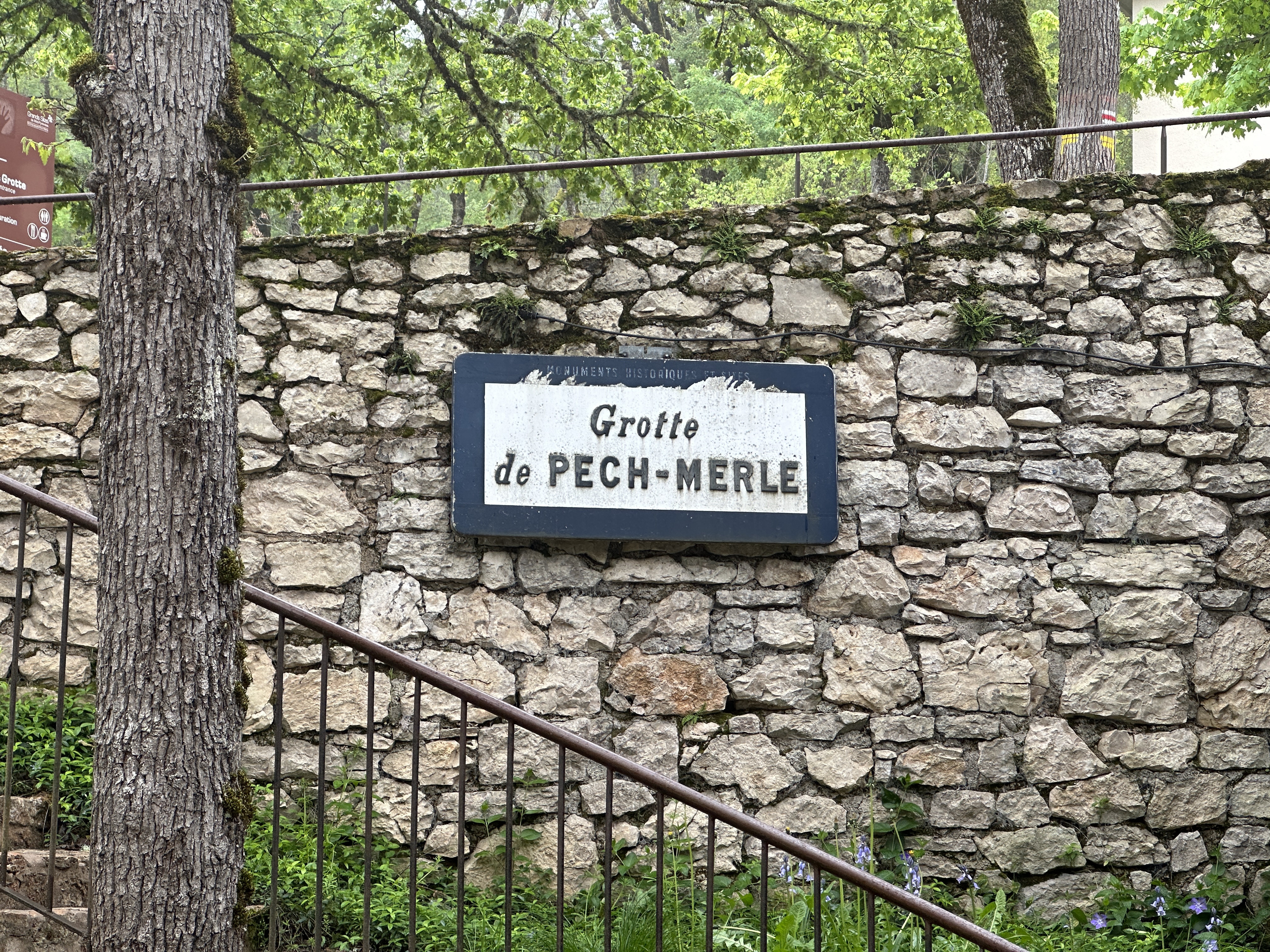
To reach the cave, you descend forty steps from the gift shop into a cavern where the roots of a 300-year-old oak tree (a mere hundredth the age of the drawings) stretch from the ceiling to the floor, having doggedly drilled their way through fifteen feet of solid rock. The path through the cave is almost a kilometer long, each step revealing lithic wedding cakes, organ pipes, Buddha statues, hobbits, aand stage curtains.
Stalactites and stalagmites (along with clouds) are nature’s Rorschach tests; others in our group saw animals, trees, and other objects. I can only imagine what went through the minds of the first humans to enter the cave with their flickering lamps of animal fat and twigs. In one part of the cave, evidence of an ancient waterfall is shown by “cave pearls” – perfect, gleaming white spheres ranging in size from marbles to ping pong balls, composed of calcite tumbled smooth on its journey along a subterranean river.
These features, of course, are found in caves worldwide. What sets Pech Merle apart is the depictions of ancient fauna and the multitude of handprints, each outlined in black manganese dioxide that likely is as dark today as it was when “spit-painted” onto the walls 30,000 years ago. (Spit-painting involves chewing manganese-containing ore and rapidly spitting it, like a paint gun, using the hand as a stencil. It is still practiced today among indigenous Australians.) You can’t help but feel the artist was saying “I was here. Remember me!”
In many cases, the artists used the natural contours of the cave wall to form a part of the animal they were painting – the head of a horse, the back of a mammoth, or the belly of a bison. What’s astounding is that any part of the cave not lit by the dancing flames of their lamps would have been utterly, impenetrably dark, precluding them from seeing the entirety of their “canvas.” When our guide killed the low-level cave lighting and rapidly cycled his flashlight on and off, the animals leapt to life.

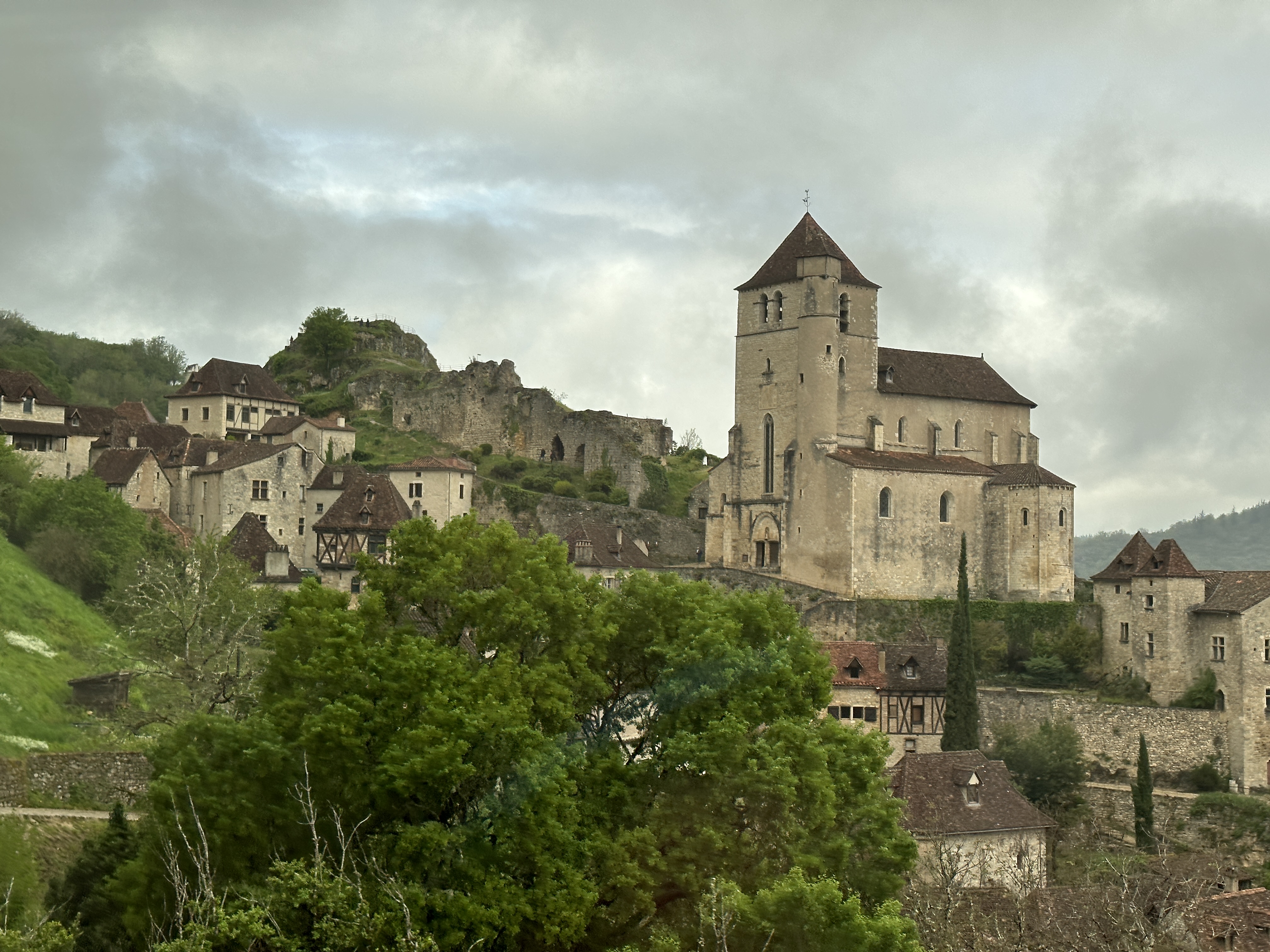
The remainder of our tour was spent in the storybook town of Saint-Cirq-Lapopie, a tiny spot with 200 permanent residents nestled high above the Lot River. Not surprisingly, the town is a member of “Les Plus Beaux Villages de France,” a classification containing the country’s most scenic hamlets.
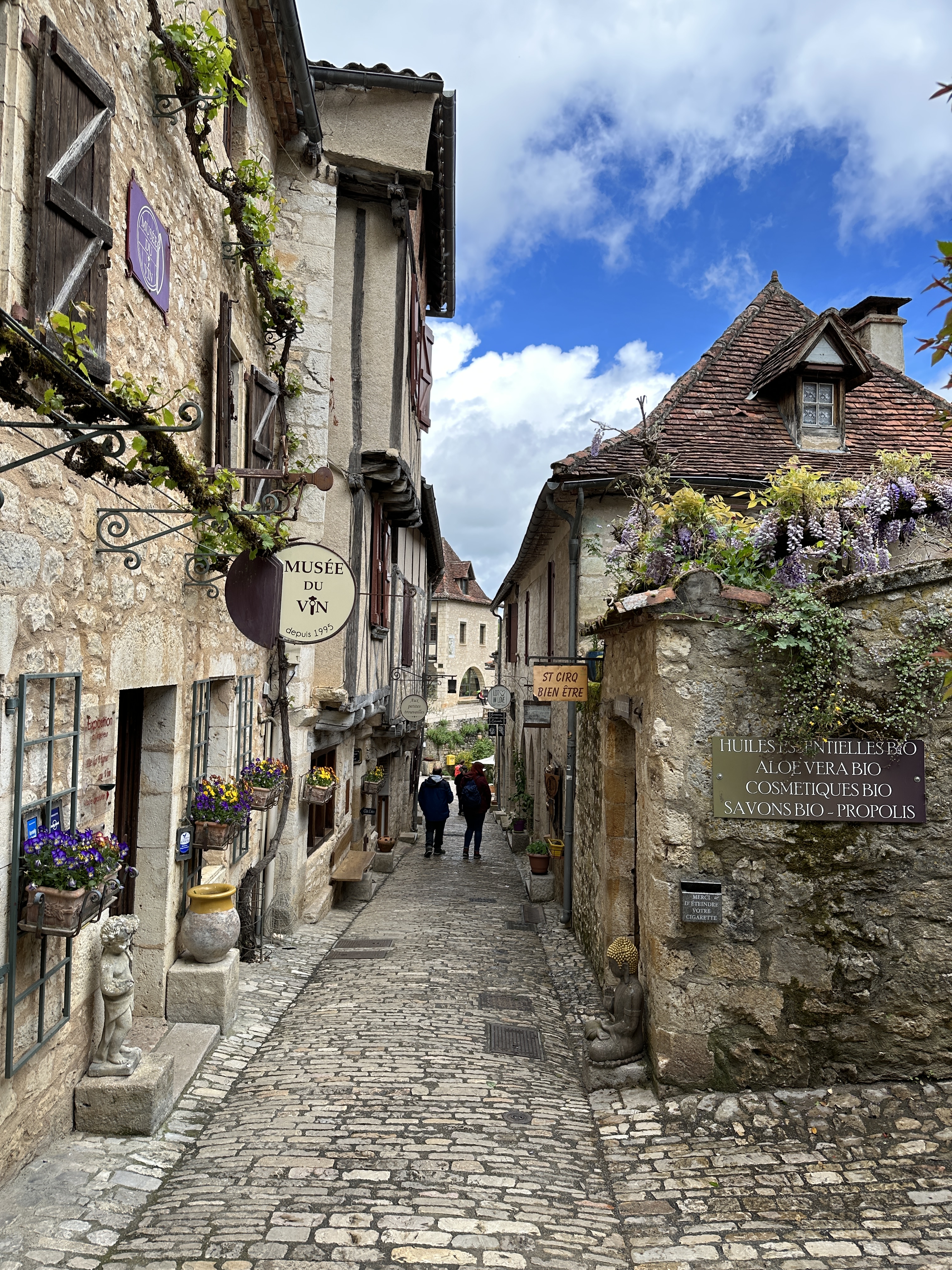
After savoring a colorful salad made with local vegetables (but declining the local specialty, duck gizzards), I hiked up a short trail to a point overooking the entire valley below, then walked back through the narrow, shop-lined lanes to our bus; I’m writing this in intervals between gazing out the window at the gorgeously green Spring countryside.

 PuffinlessTravel
I always loved history just the thought of how old those paintings are! It sounds like such a amazing experience!