Oslo is a ghost town in the best way possible: as modern as the city is, its deep, rich past permeates its present. This city celebrates and honors its history in scores of buildings, parks, and museums. (Below is the Nobel Peace Center.)

A short walk, metro ride, or ferry crossing encompasses everything from Viking relics to medieval pageantry to the native trio of great moderns, Ibsen, Munch, and Vigeland. (Admission of cultural ignorance no. 1: I’d never heard of Vigeland before, but after walking through the park dedicated to his sculptures – more on that below – I was profoundly moved.)
There’s much to see here, but we were constrained by our tour’s limited itinerary. The first stop was the National Gallery, where we were rushed through an exhibition of Munch’s paintings (a lifetime’s work in around 20 minutes). He’s undoubtedly a brilliant and versatile artist, but the Prussian rigor of the tour left little room for contemplation/appreciation. (Admission of cultural ignorance nos. 2 and 3: Munch painted four versions of “The Scream” (I only know the one that’s ubiquitously posterized), and the figure holding his ears with his mouth open is reacting to a scream, not doing it.)
Our second stop was Vigeland Park, home to scores of sculptures by Gustav Vigeland. What an experience! These granite (predominantly), bronze and iron creations explore the “circle of life,” with figures depicting every stage from birth through death and communicating joy, anger, shame, mischief, reverence, hate, love, and any other conceivable human emotion. (Below are pictures of Gustav Vigeland — with sea gull — and a self-portrait (self-sculpture?) of Vigeland being afflicted by nascent ideas for other sculptures.)
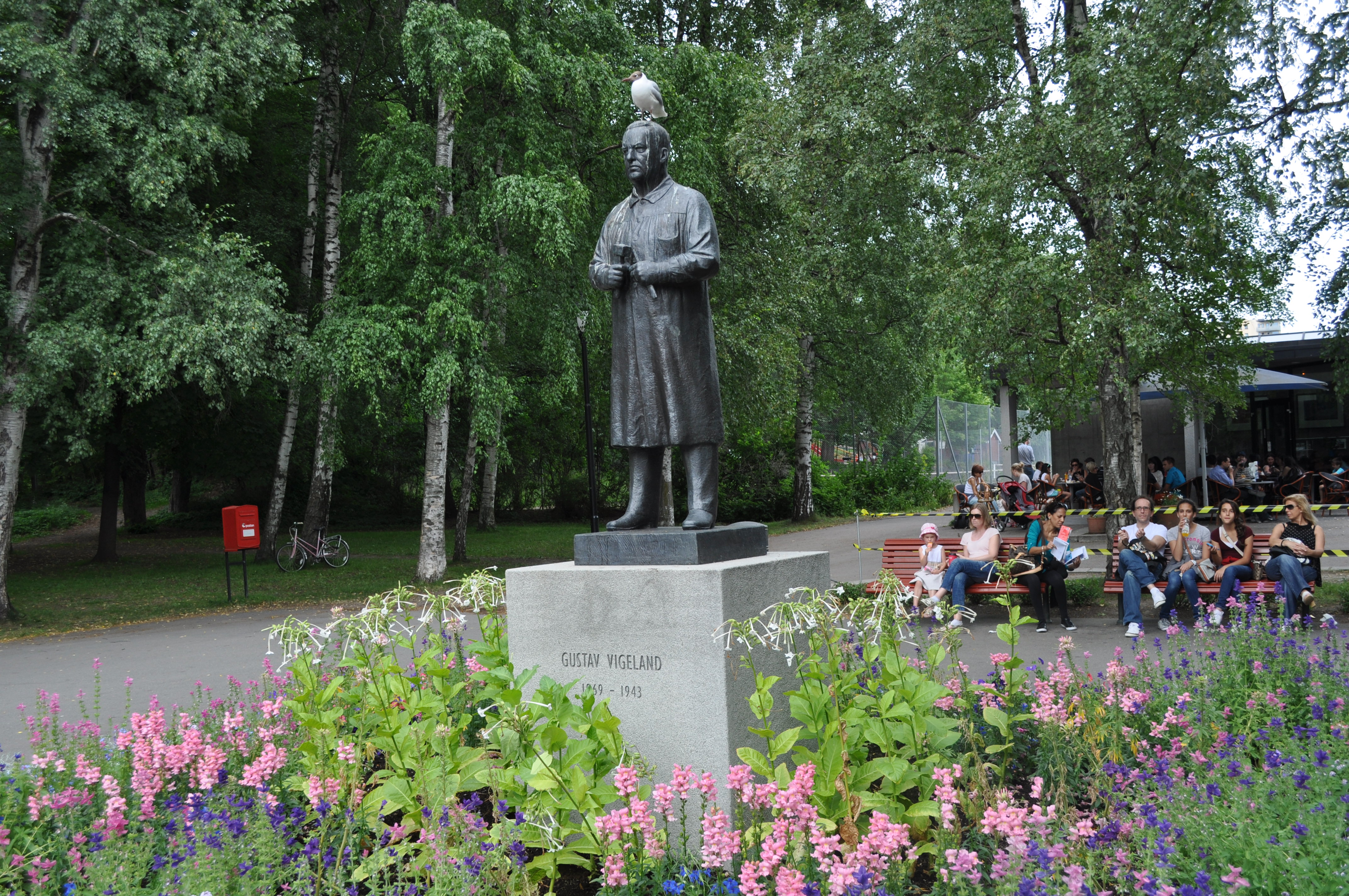
The culminating sculpture is a 17-meter tall monolith of writhing and intertwined bodies with death and the base and a newborn baby at the top, which apparently took three sculptors 14 years to carve from a single, massive block of granite.
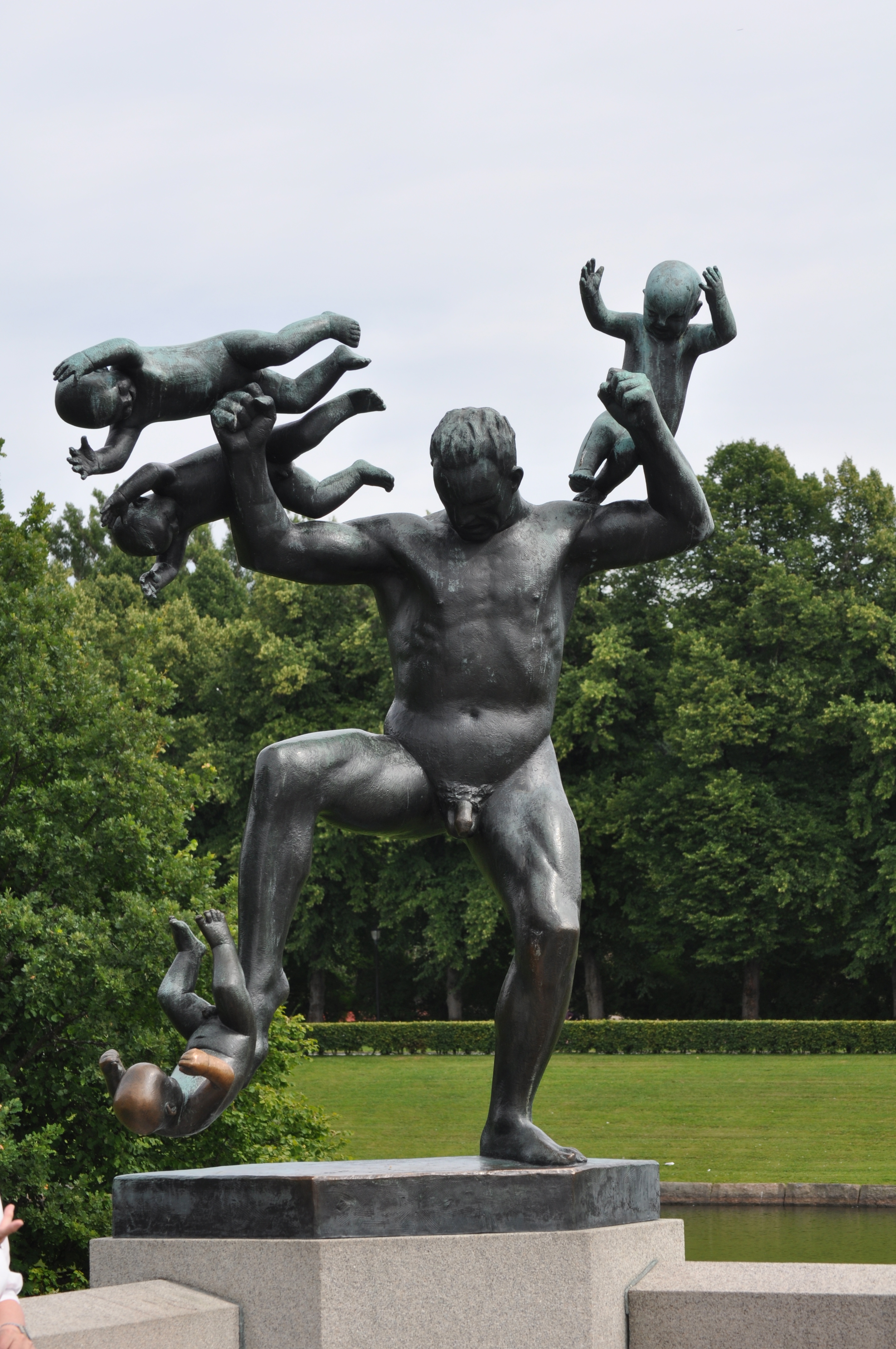
I have never felt so deeply affected by any other artistic experience. Even my 15-year old son, who stoically tolerated the march through the National Gallery, found Vigeland Park worthwhile and moving.
We ended the tour at the Hollmenkollen ski jump, an impressively high and swooping structure overlooking the Oslo fjord. Our guide insisted that ski jumping (along with anything else one can do with long blades strapped to your legs) comes naturally to Norwegians, but this is daredevilry of the most extreme sort.
Oslo quirks: on the less charming side, the street performers fell into two categories: statue wannabes, clothed entirely in gold and silver and standing perfectly still, moving robotically when given a few kroners (huh?), and accordionists playing either tangos or polkas, neither of which, to my knowledge, has any Norwegian genes. (And none of the accordion players could hold a candle to Weird Al.)
More charming is the approach to building renovations: much of Oslo seems to be undergoing reconstruction, and when a building is being worked on a plastic sheet showing the finished product is draped over the area being transformed. Below is a picture of the Stortings (the Parliament building), the left side of which is really a plastic trompe l’oeil.

 PuffinlessTravel
Were the Munch’s 2 and 3 very similar to the famous one we all know? I didn’t realize that it depicted a reaction to someone else’s scream.. How is one supposed to know that was Munch’s intention?