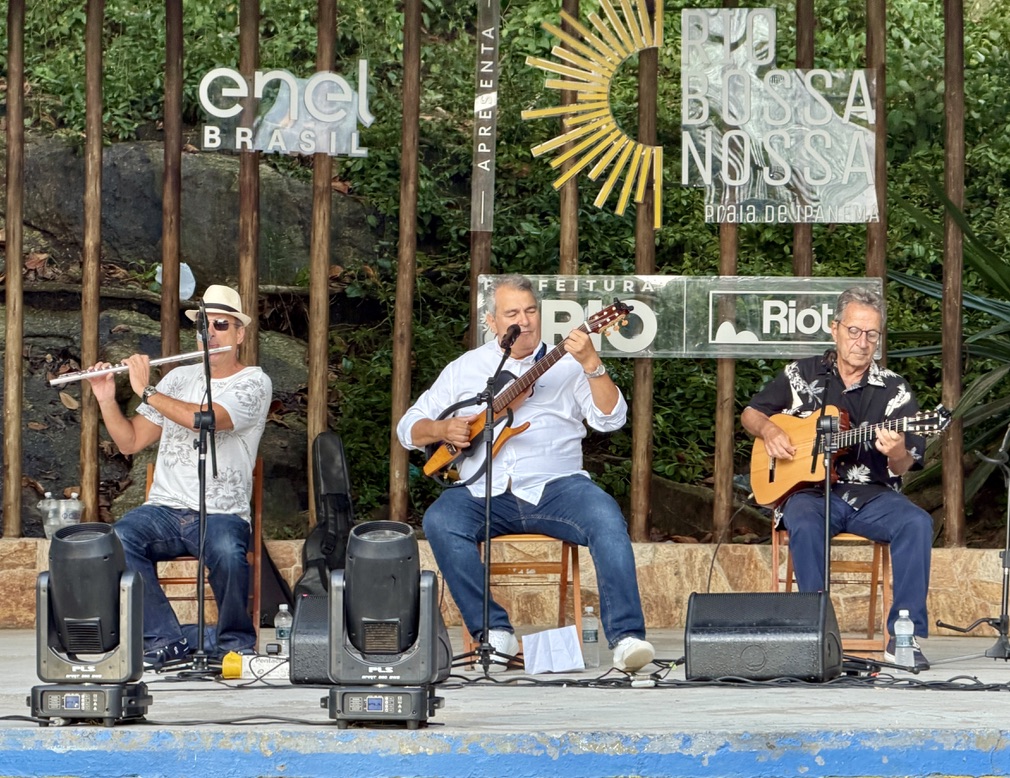
When I travel, I often get caught up in the sights and sounds of hitherto unfamiliar places. Saturday night, February 28, made me step back and consider just how fortunate I am: gaze at the sunset over Ipanema beach. Listen to a trio play bossa novas. Share a very good if not exactly healthy dinner with a friend I’ve known for more than six decades. Sip a refreshing local pilsner while listening to the surf break and watching dogs and kids frolic on Corcovado beach. Bliss and blessings!

Saturday, Feb. 28
Let me back up to this morning. We’re staying at the Buenos Aires Hilton, which fronts Corcovado beach.
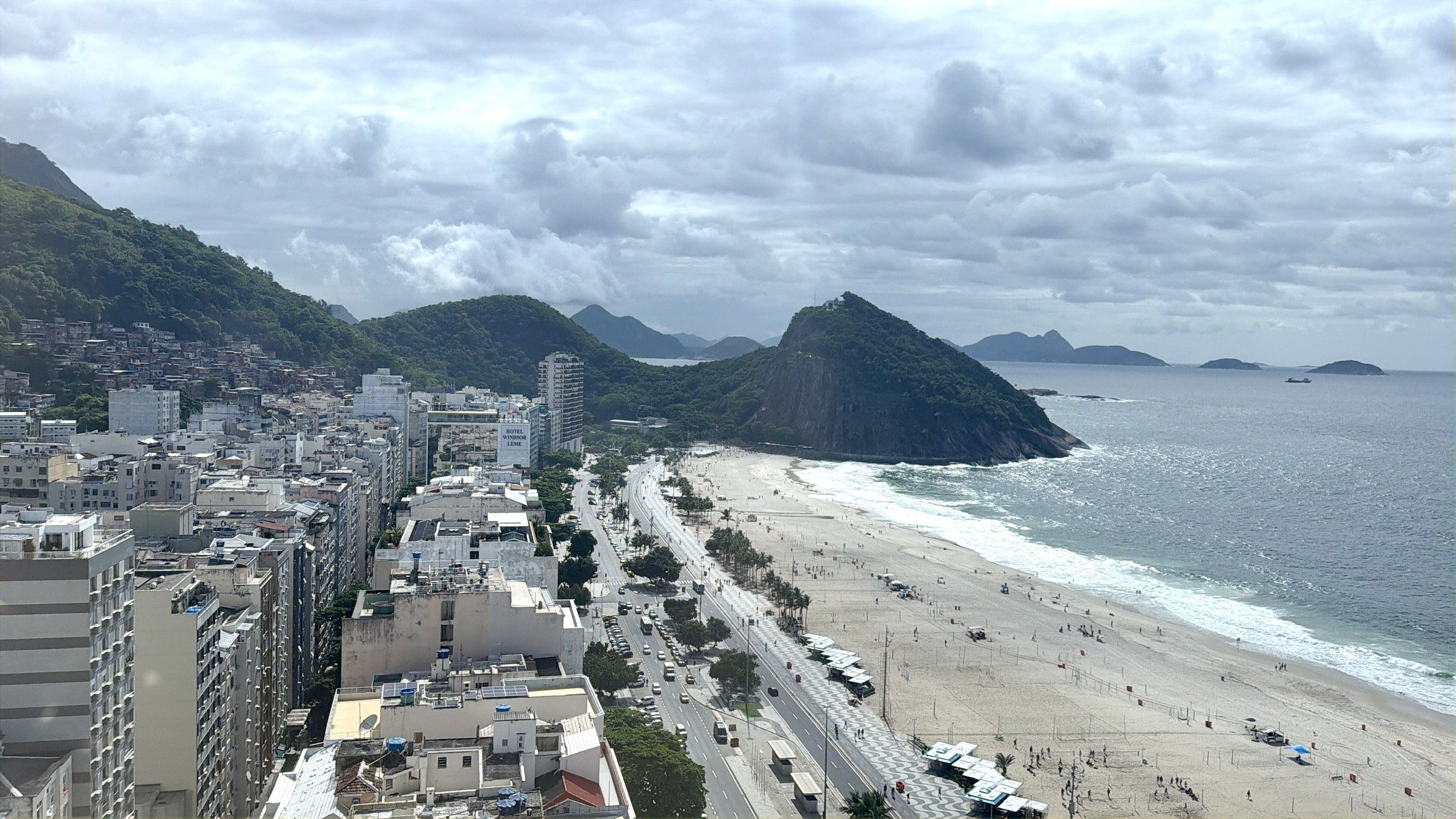
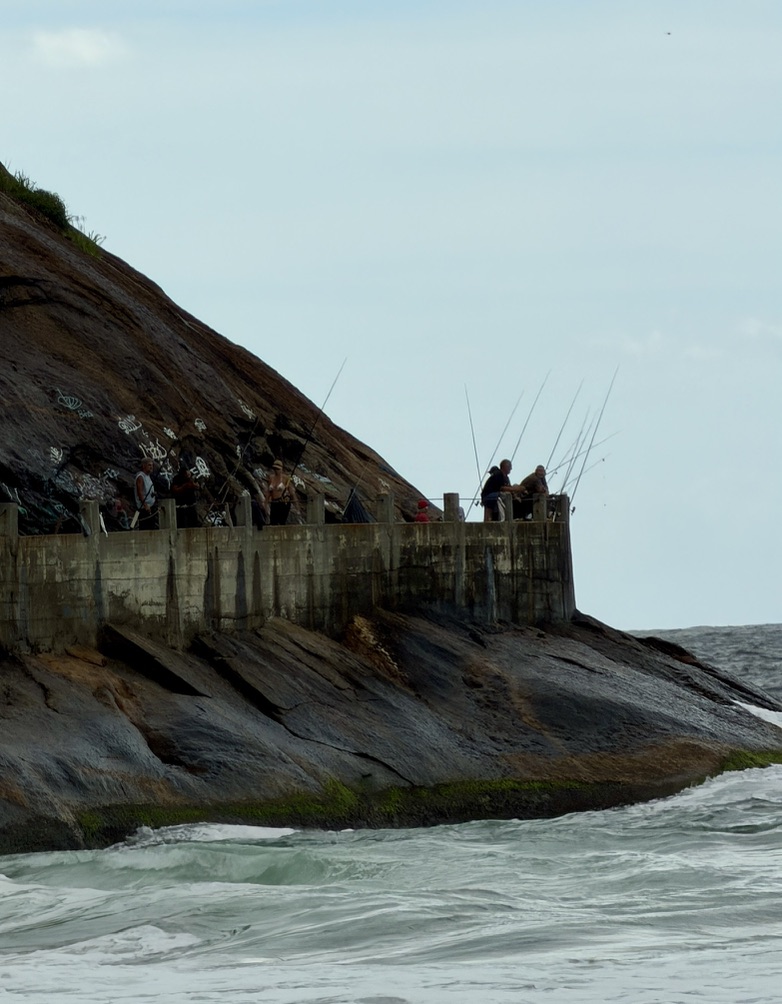
After breakfast, Shari and I wandered along the beach to Fishermen’s Walk, enjoying the dozens of well-behaved dogs out for their morning constitutionals/dips in the ocean.
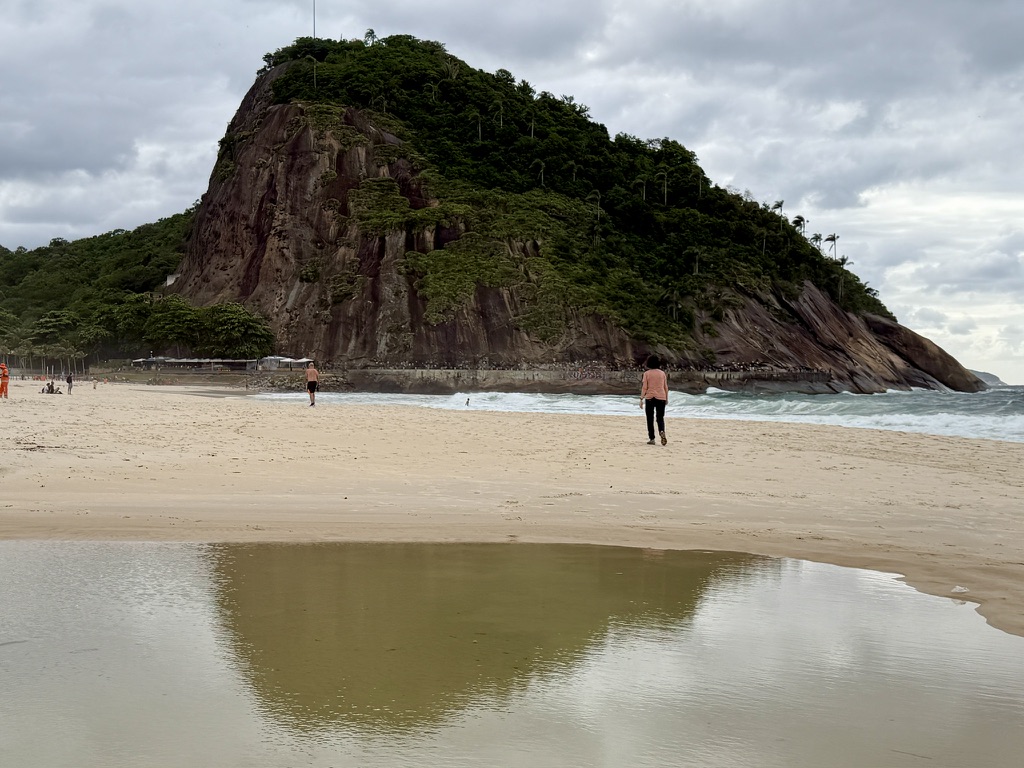
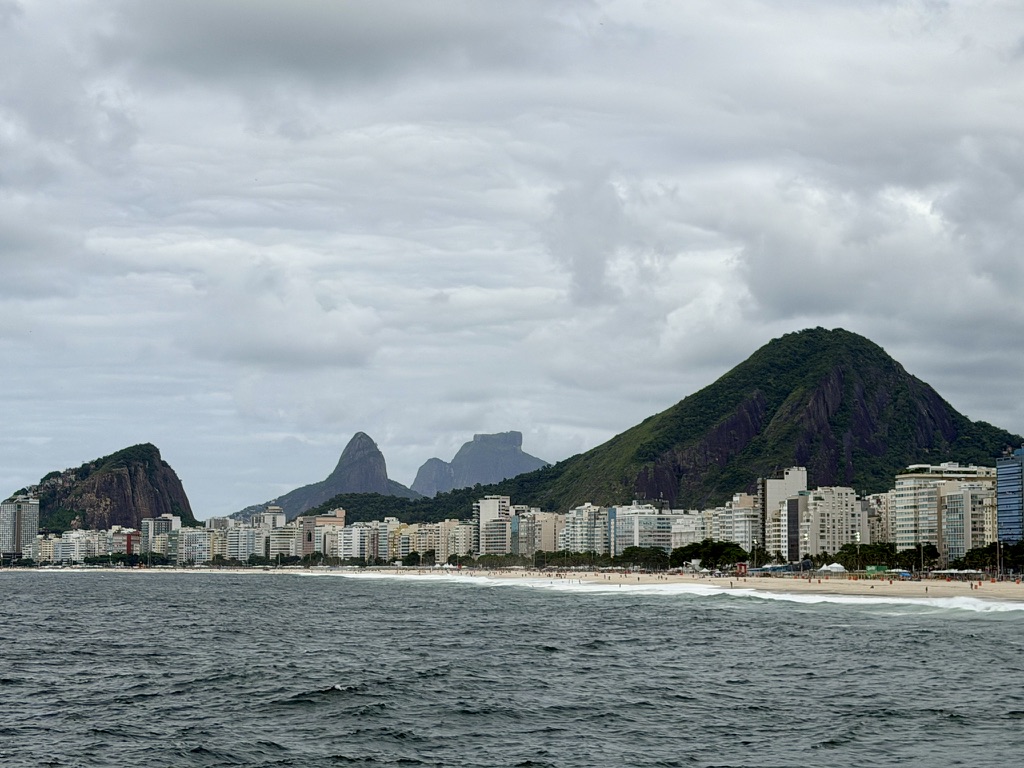
Looking back along the beach, there are wonderful views toward Ipanema, and we could see the Christ the Redeemer statue high up in the distance.
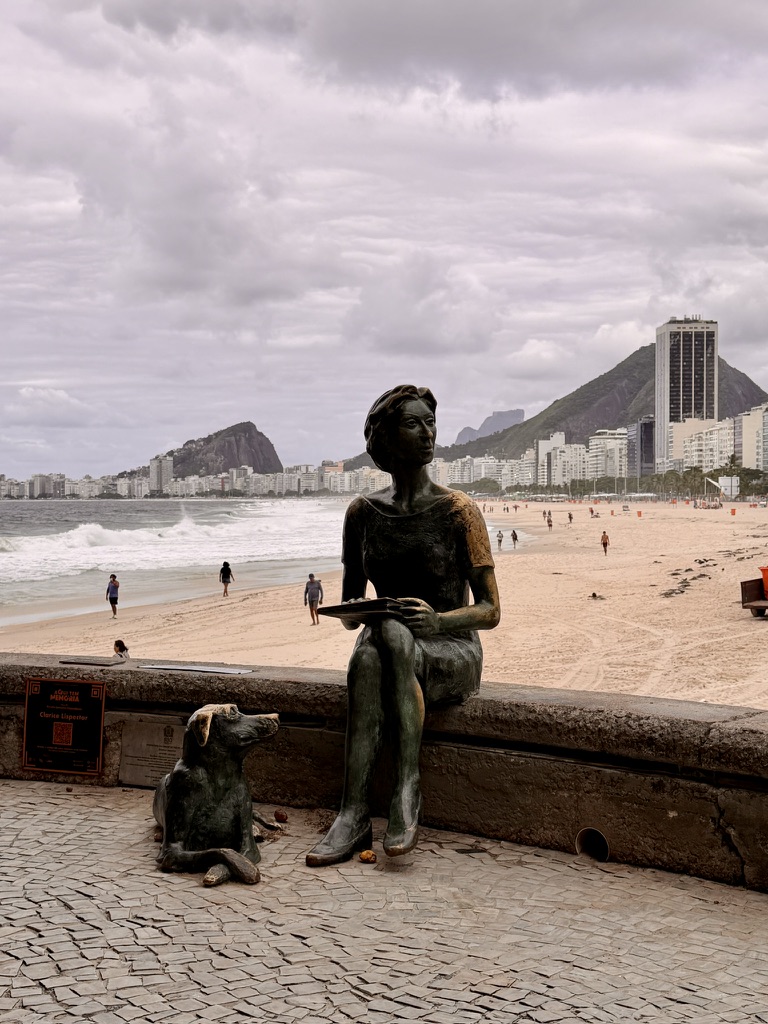

Our tour started at the civilized hour of 10 a.m. We drove into Ipanema and saw the bar where Antonio Carlos Jobim wrote “The Girl from Ipanema.” I found this particularly poignant because, back in my jazz-playing days, that song and many other tunes by Jobim were staples of our set lists. (By the way, “Ipanema” is an indigenous word meaning “bad water for fishing,” which kind of dampens the romance of the song.)

After that, we wound through other parts of Rio on our way to the Christ the Redeemer statue. That iconic structure, considered one of the “new seven wonders of the world,” sits 2000 feet above the city atop Corcovado mountain.
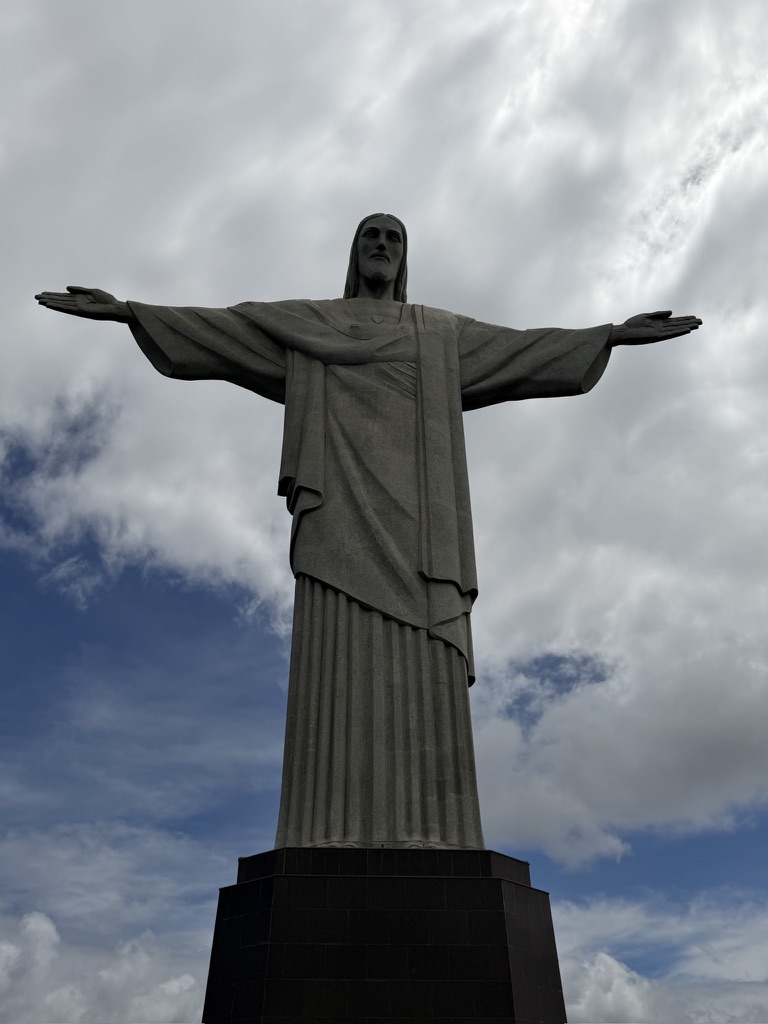
To reach the statue, you must take a 20-minute train ride up the mountain. Despite the setting, the crowds waiting to board the train displayed little in the way of Christ-like virtues; I came uncomfortably close to being knocked over and trampled while getting on the train.
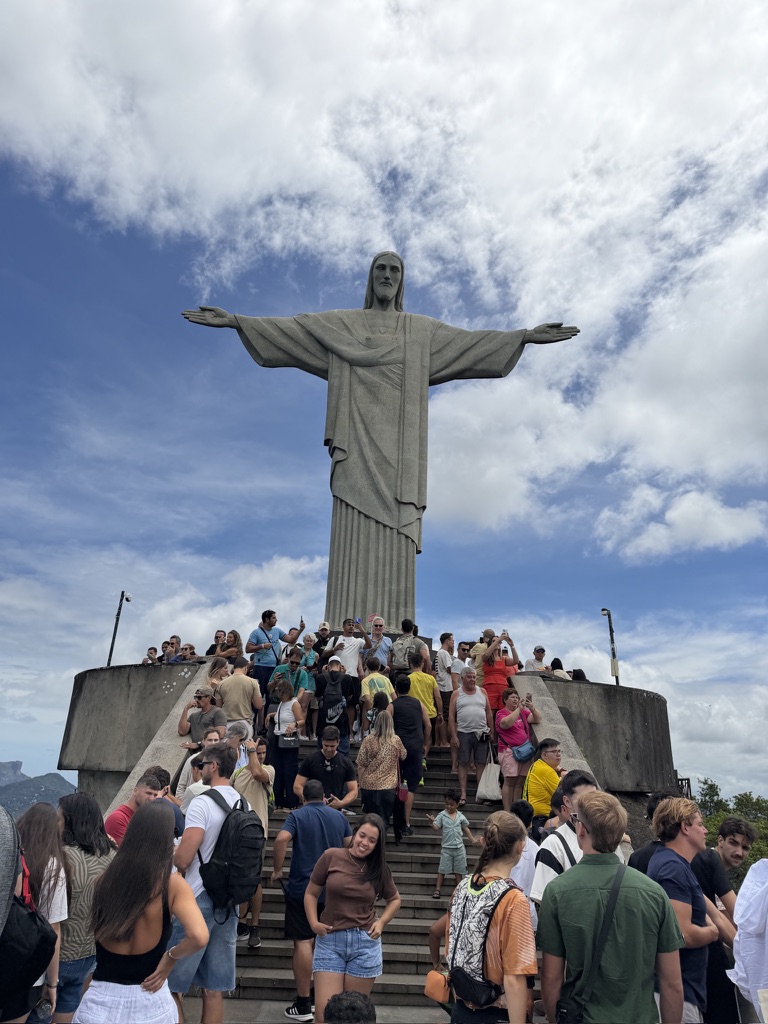
Once you get off the train, there are two choices to ascend to the statue: you can climb 220 steps (it’s not bad because there are frequent landings) or take an elevator halfway before riding an escalator to the top.

The statue itself is impressive, but the views of Rio and its surroundings are utterly astounding. Christ the Redeemer is a must-see if you’re in Rio; just gird yourself for the mobs and sharpen your elbows.
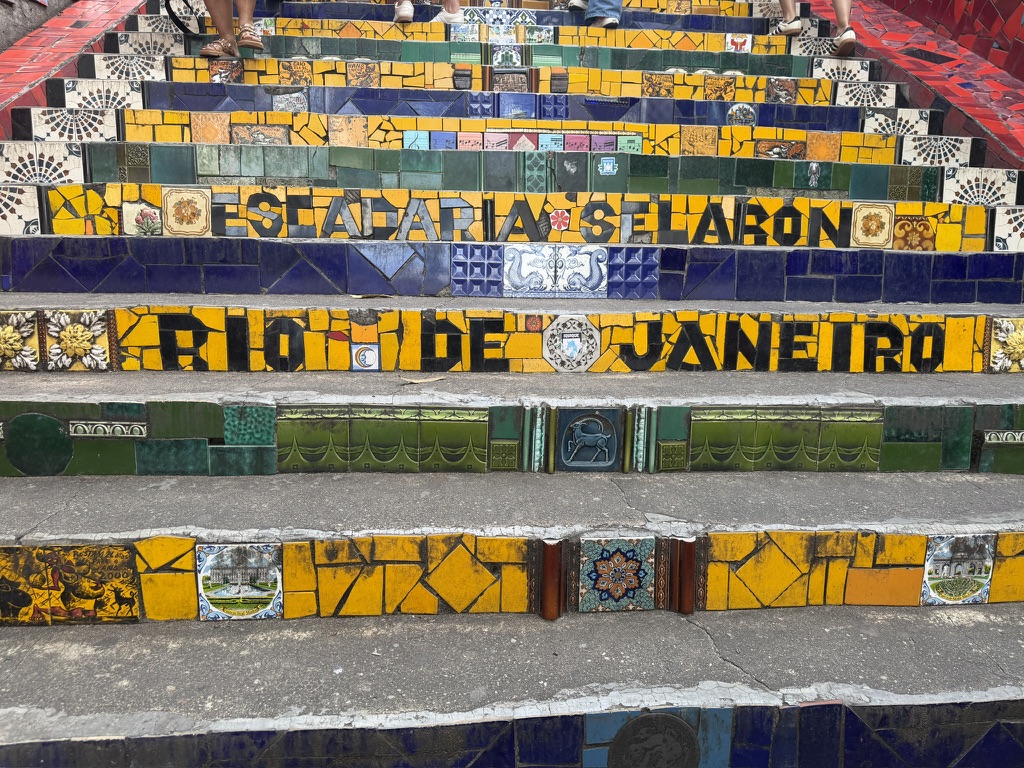
After returning to the hotel, Shari and I Ubered to the Escadaria Selarón, a series of colorfully tiled stairs leading up to Santa Teresa, a bohemian district atop one of Rio’s many hills.
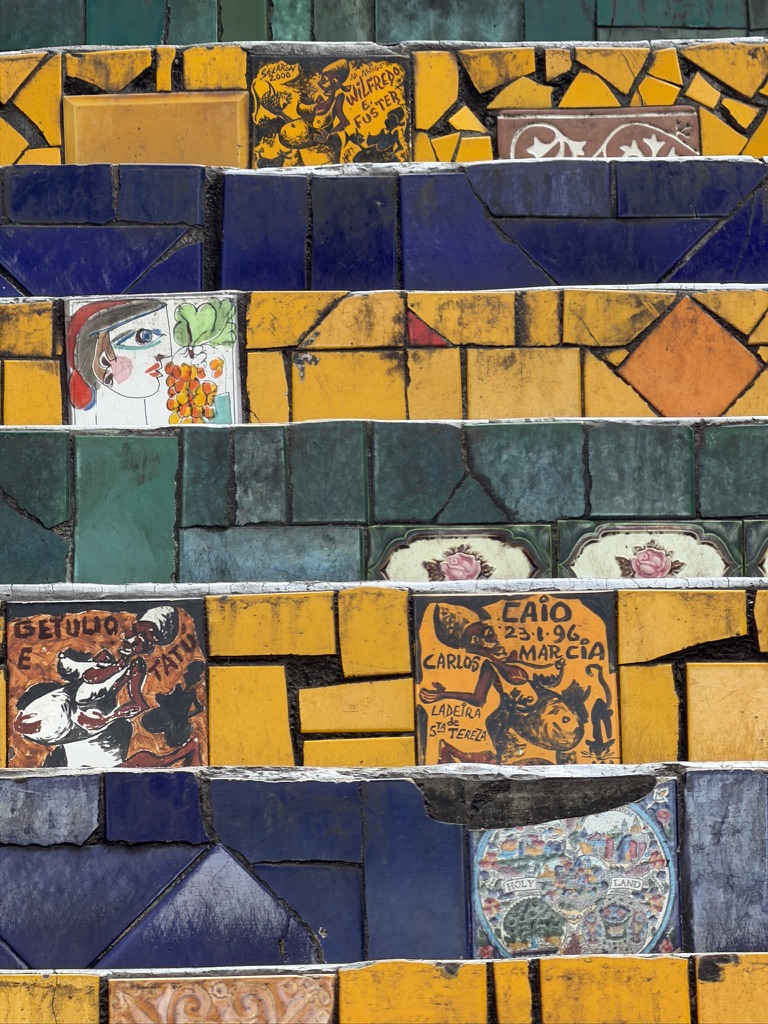
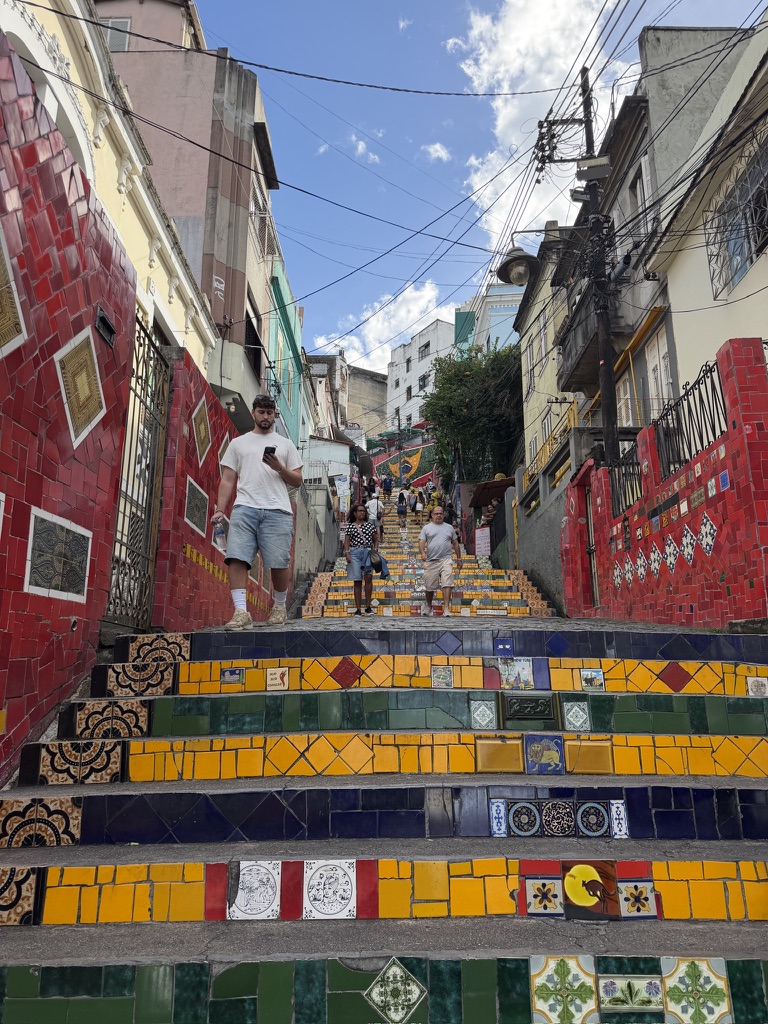
The lane leading to the stairs passes by vendors of all sorts of unnecessary but attractive things, and the crowd making the ascent is lively, happy, and nearly as colorful as the steps themselves.
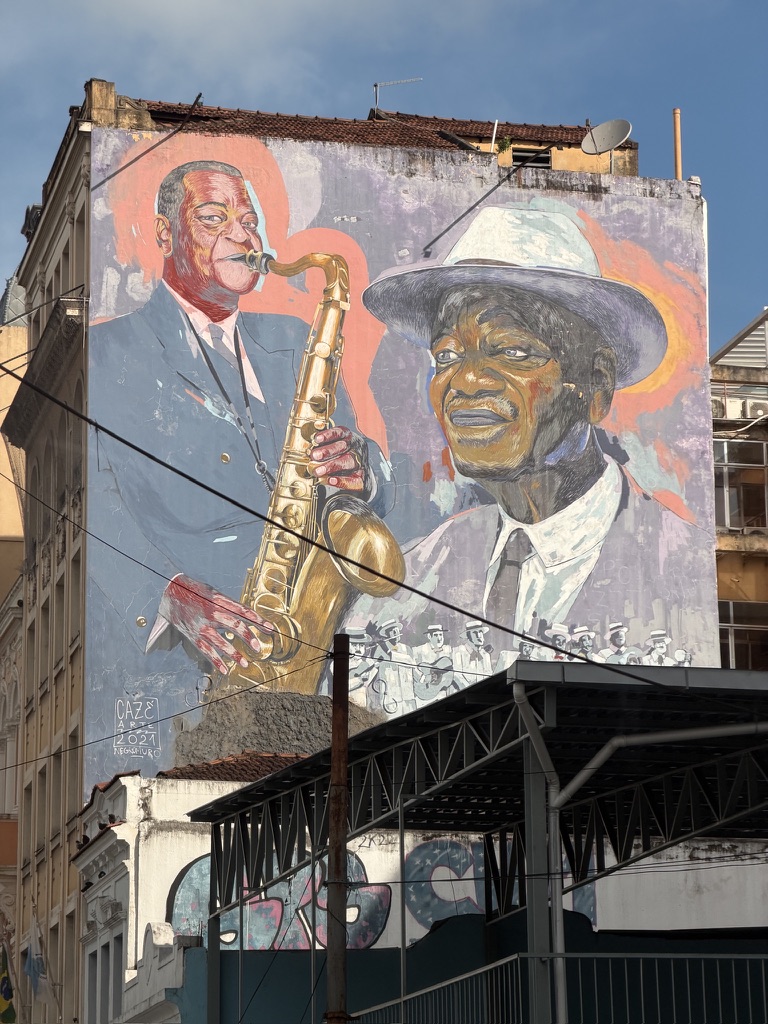
For the Escadaria, we Ubered to Ipanema and strolled along the beachfront promenade. As the song goes, the beach was filled with tall and tan and young and lovely people, most of them, male and female alike, wearing bathing suits apparently made of postage stamps and dental floss. (The beach is replete with butts, only five percent from cigarettes.)
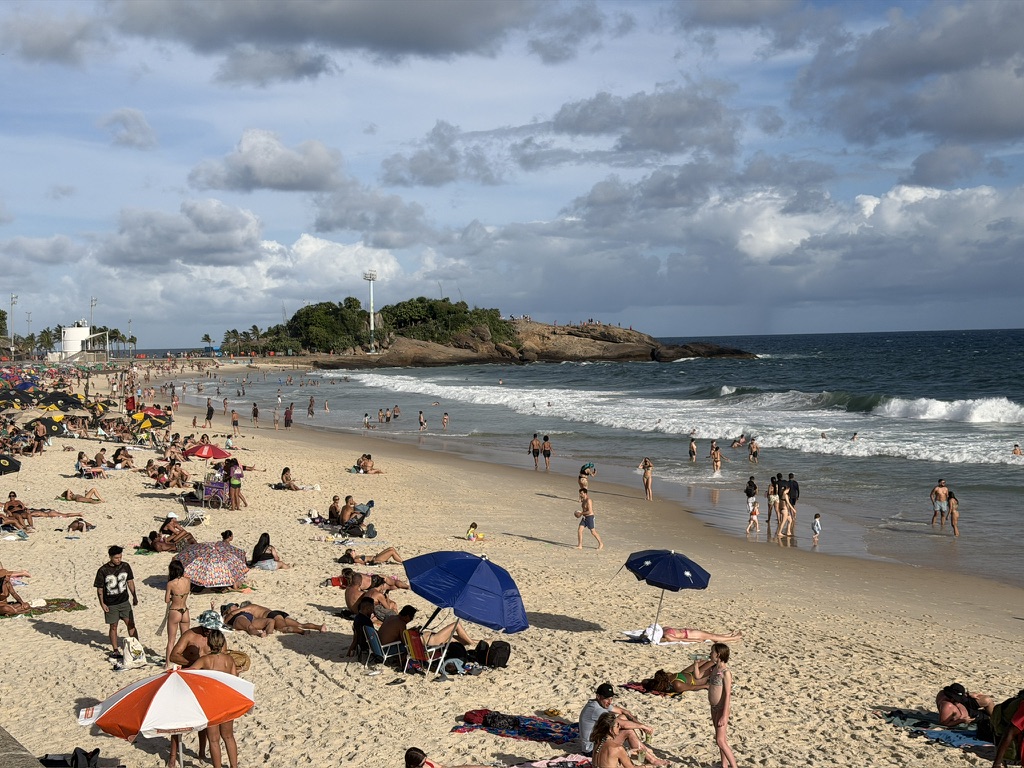
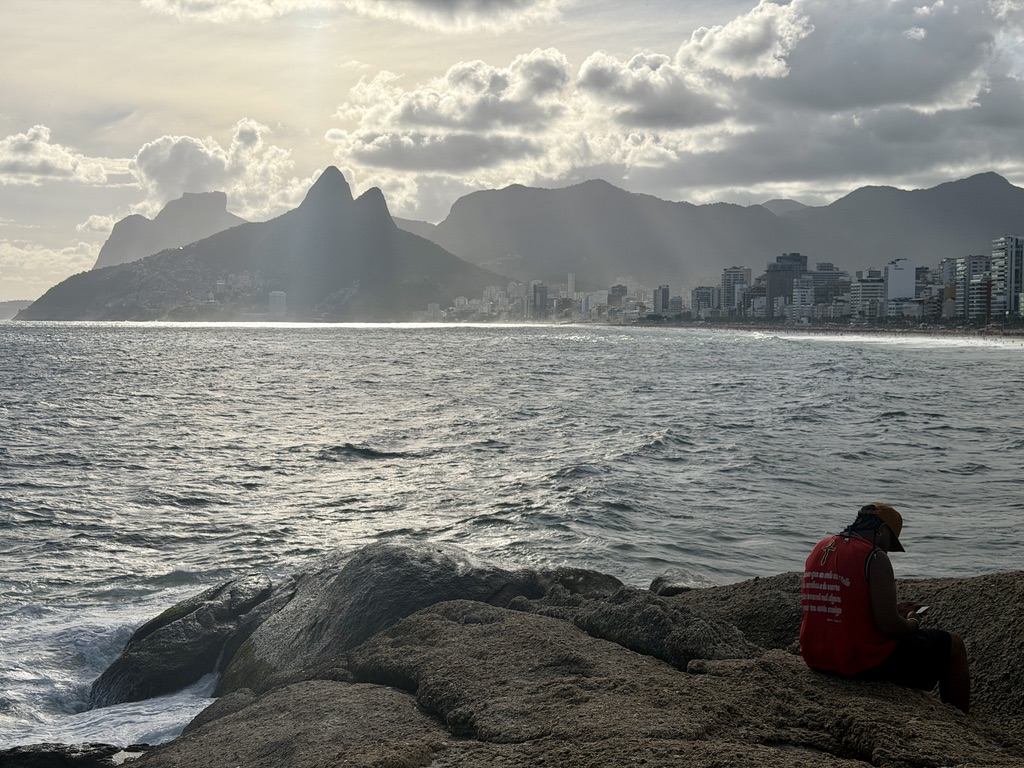

We ended our stroll at Pedra do Alpoador, a rock where Cariocas (as Rio natives are called) await the sunset and applaud if it’s spectacular. There was no applause last night due to some ill-timed clouds, but it was still a lovely and memorable evening.

Sunday, March 1
This morning, we visited another of Rio’s iconic sites, Sugarloaf Mountain (Pão de Açúcar). Thankfully, this was a more civilized process than yesterday’s ordeal at Christ the Redeemer. The lines were shorter, the boarding area was air-conditioned, and the cable cars to the top were spacious and ventilated.
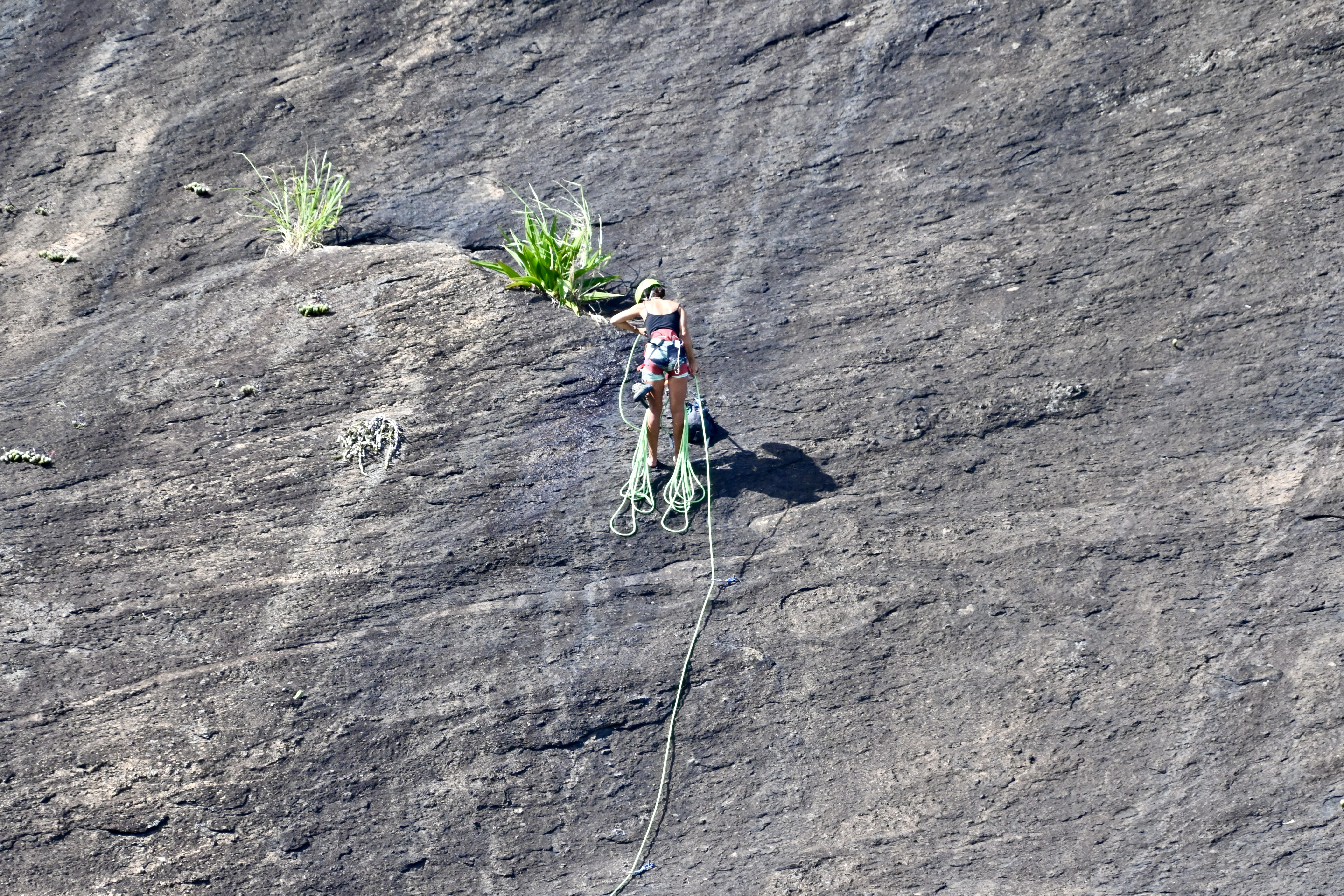
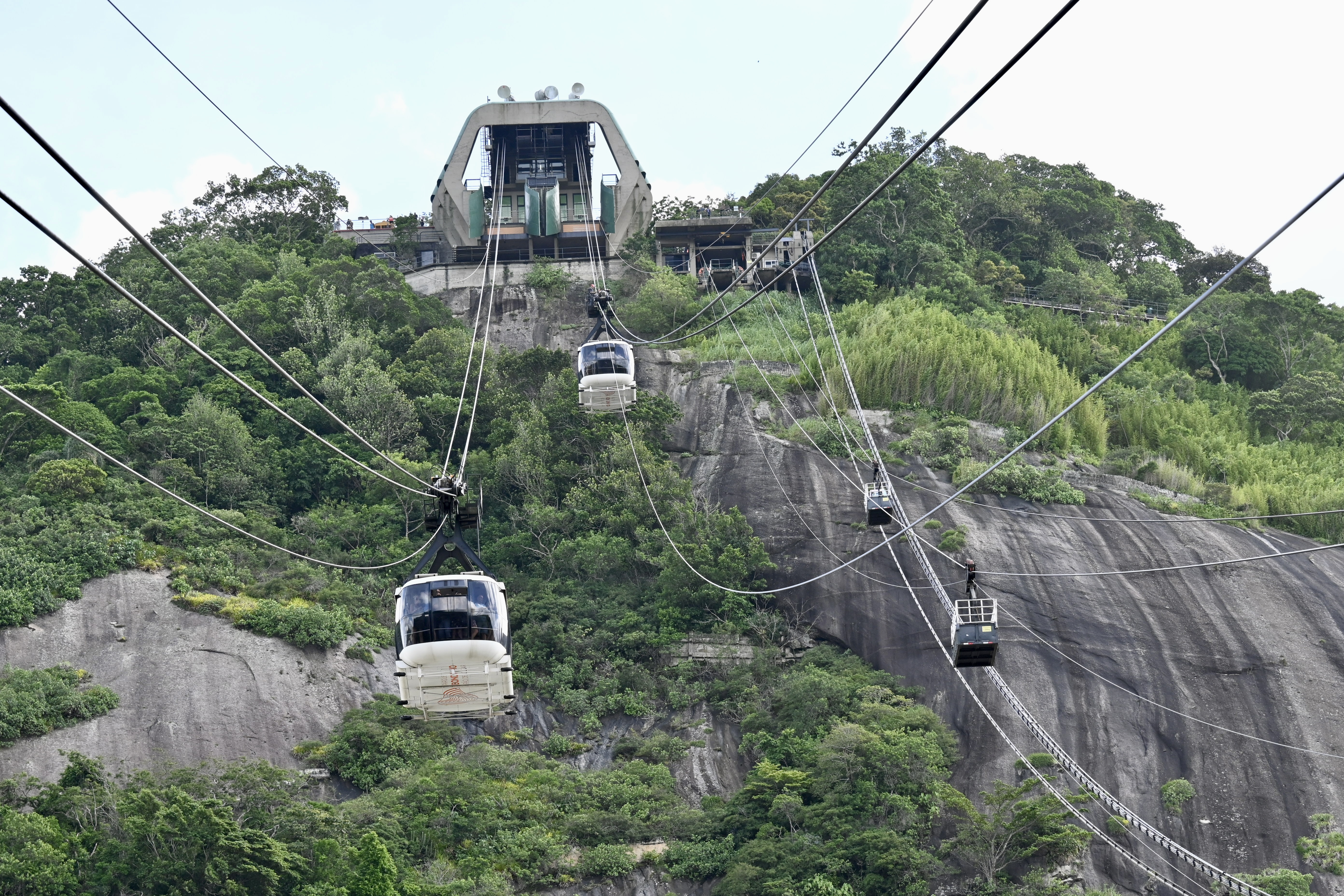
Ascending Sugarloaf is a two-step process. The first cable car lifts you 220 meters to Morro da Urca, from which there are panoramic vistas back over Copacabana and an eye-level view of planes approaching Rio’s local airport. (From inside the cable car, the best views are to the rear.)
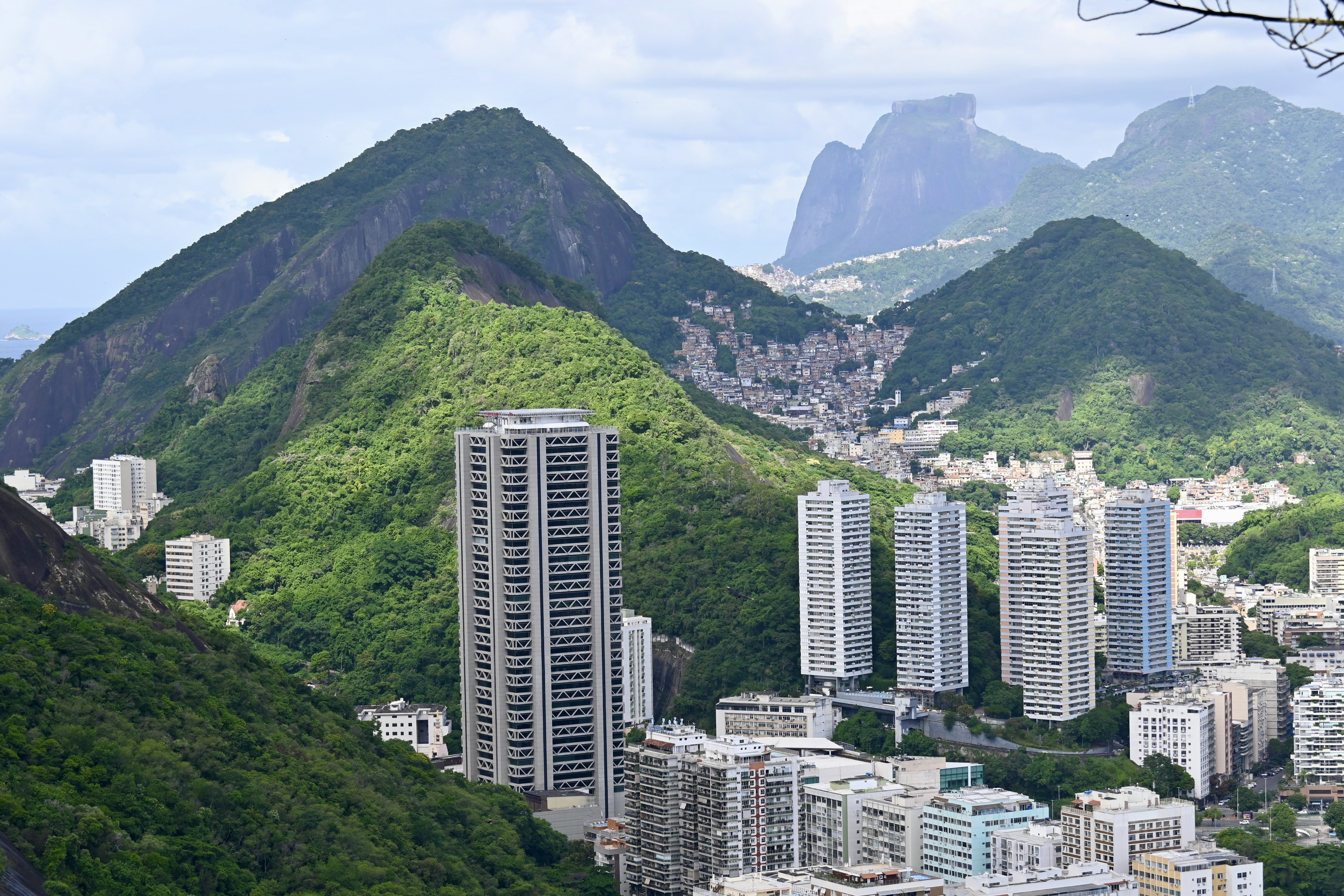

From Morro da Urca, you board a second cable car, which gains another 175 meters of elevation to the top of Sugarloaf, 1300 feet above sea level. The extra 500 feet or so of altitude afforded an even wider prospect, coupled with a much-appreciated refreshing breeze.
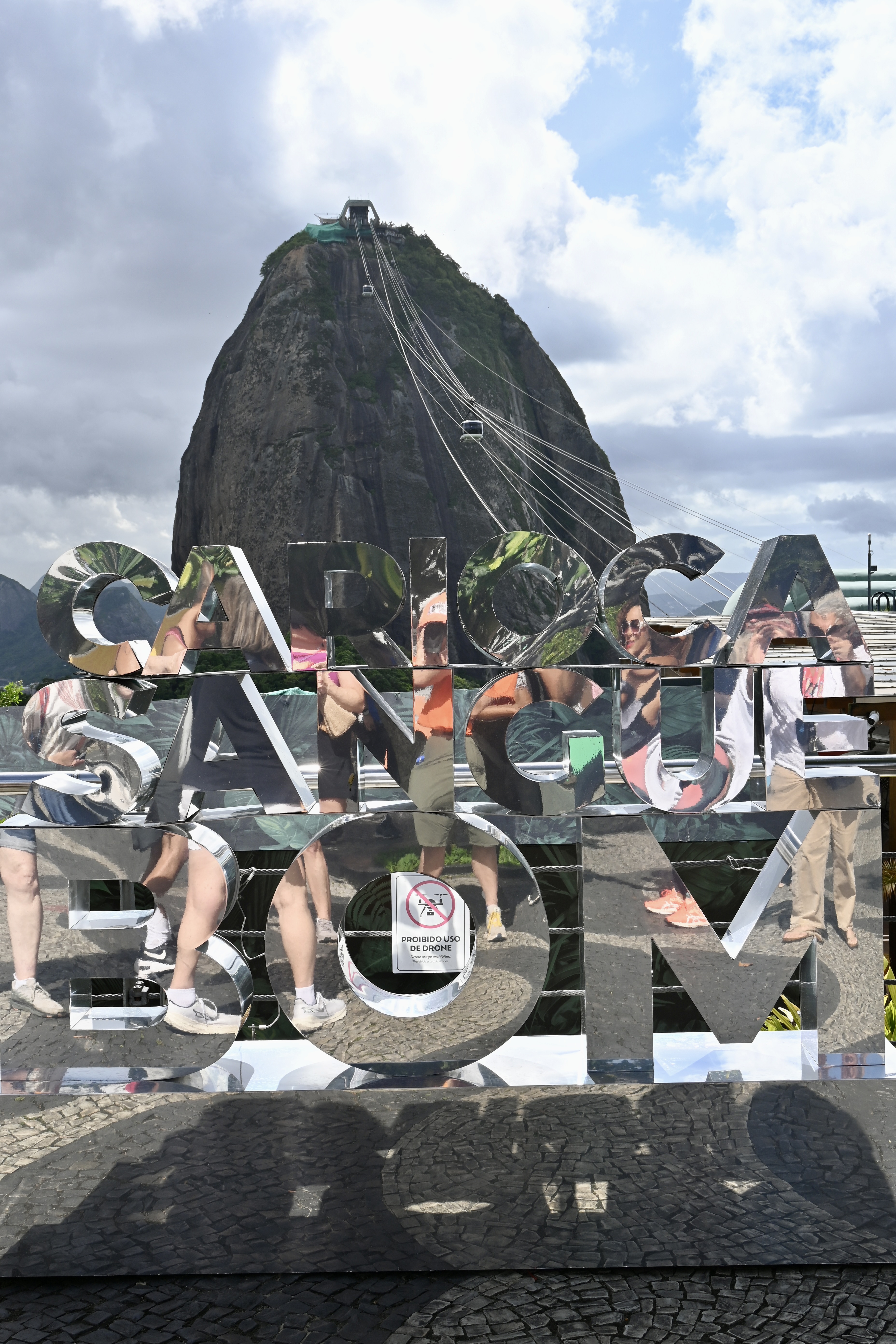
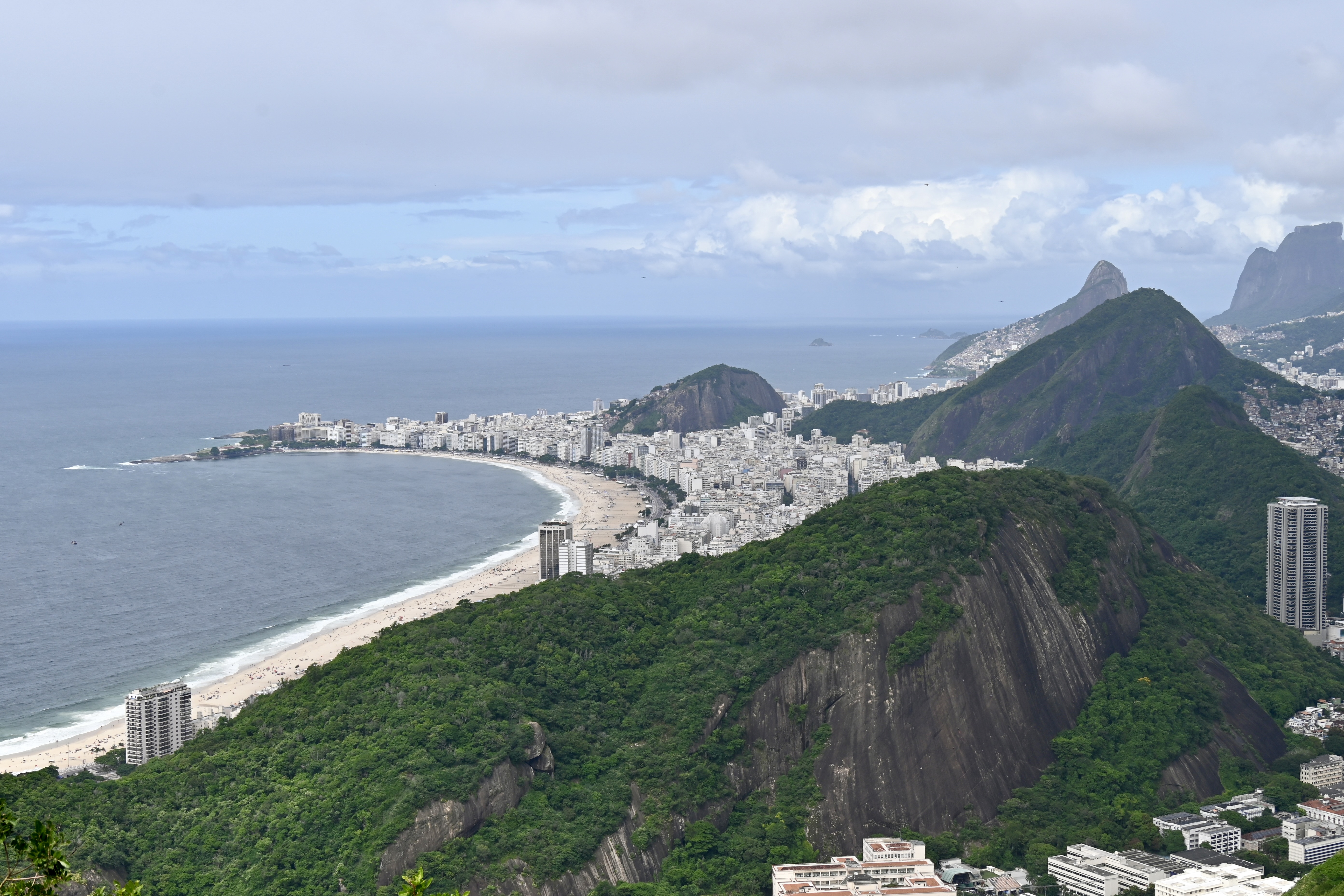
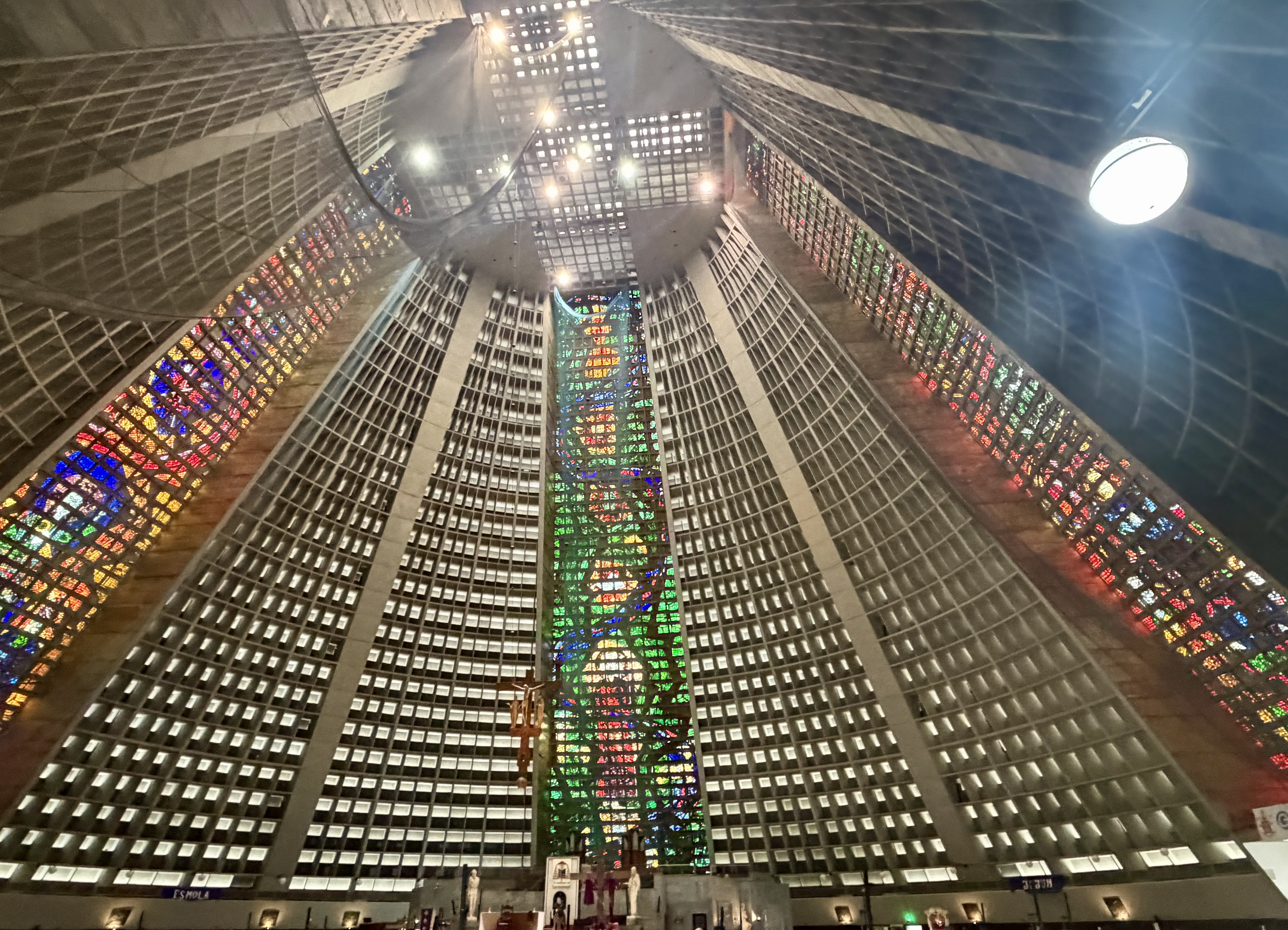
After returning to sea level, we made a quick stop at the Rio Cathedral (the Catedral Metropolitana de São Sebastião do Rio de Janeiro, if you want to be formal).
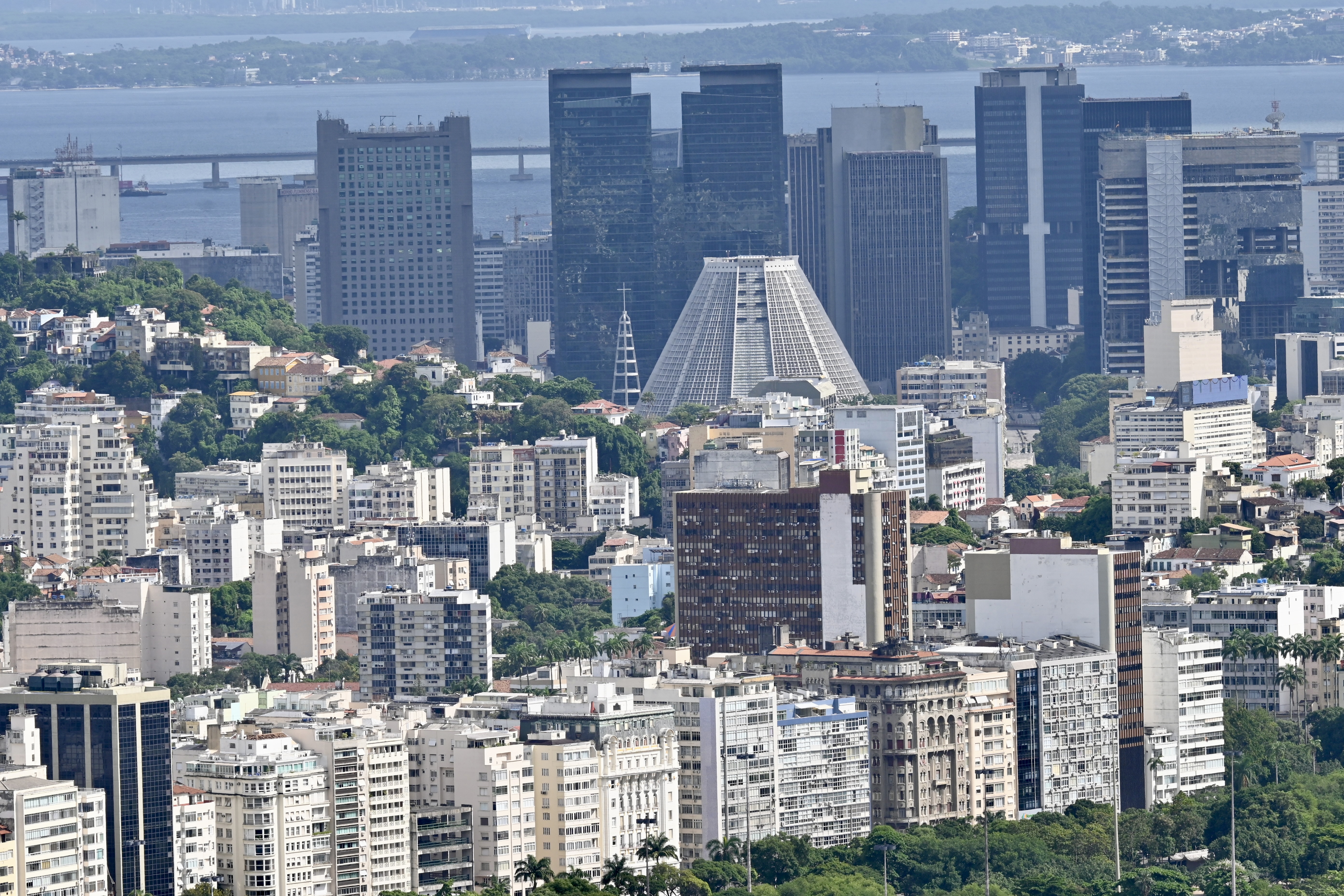
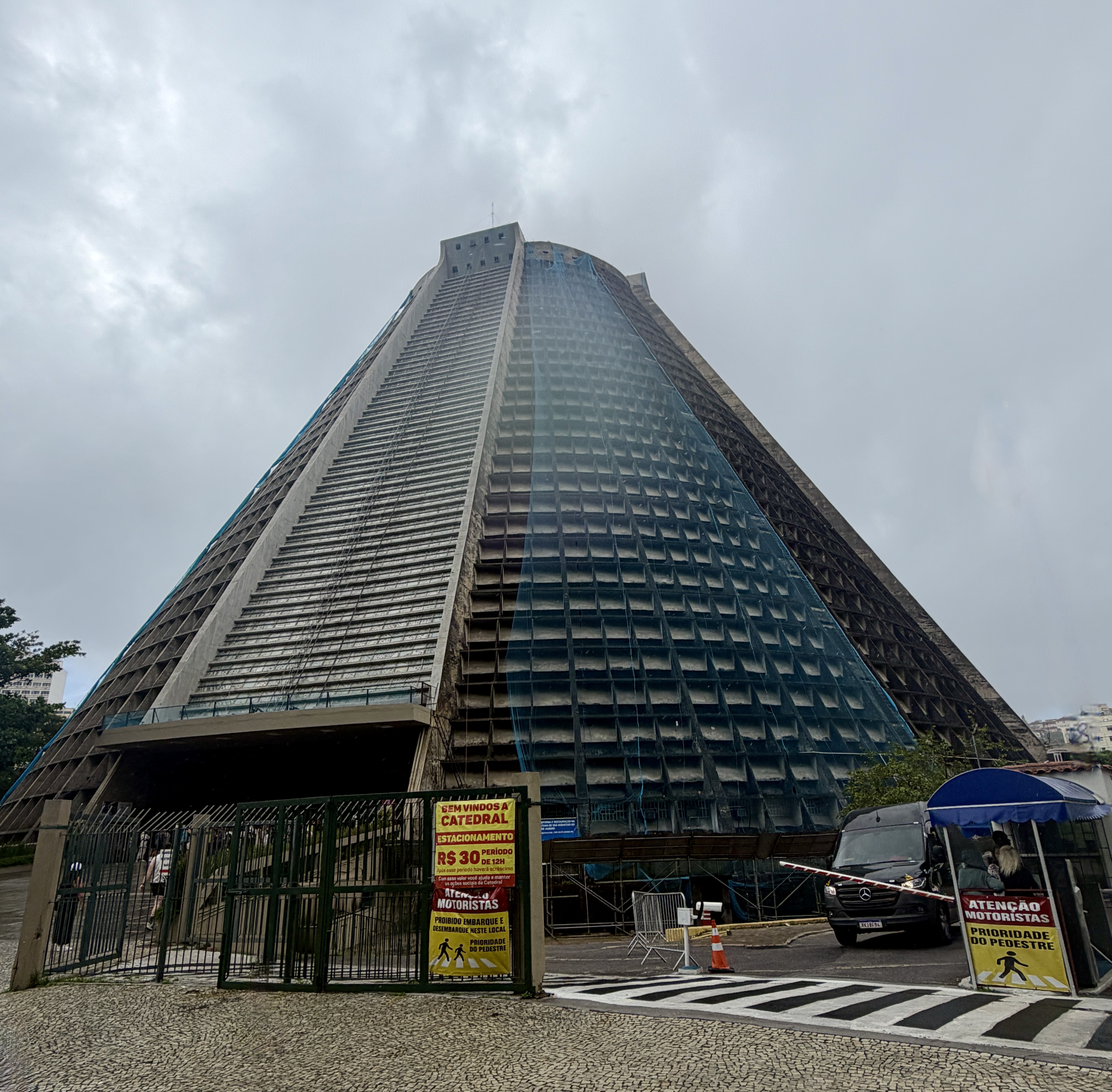
From the outside, this brutalist, pyramidal building takes the prize for the least attractive cathedral I’ve ever seen – and I’ve seen a few hundred – but the inside is redeemed by several majestic, floor-to-ceiling, stained glass windows.
Rio would be nothing without Carnaval, and this afternoon we took an optional tour of a samba school (basically a neighborhood samba club), Duque de Caxias, ranked as one of the best in the city.
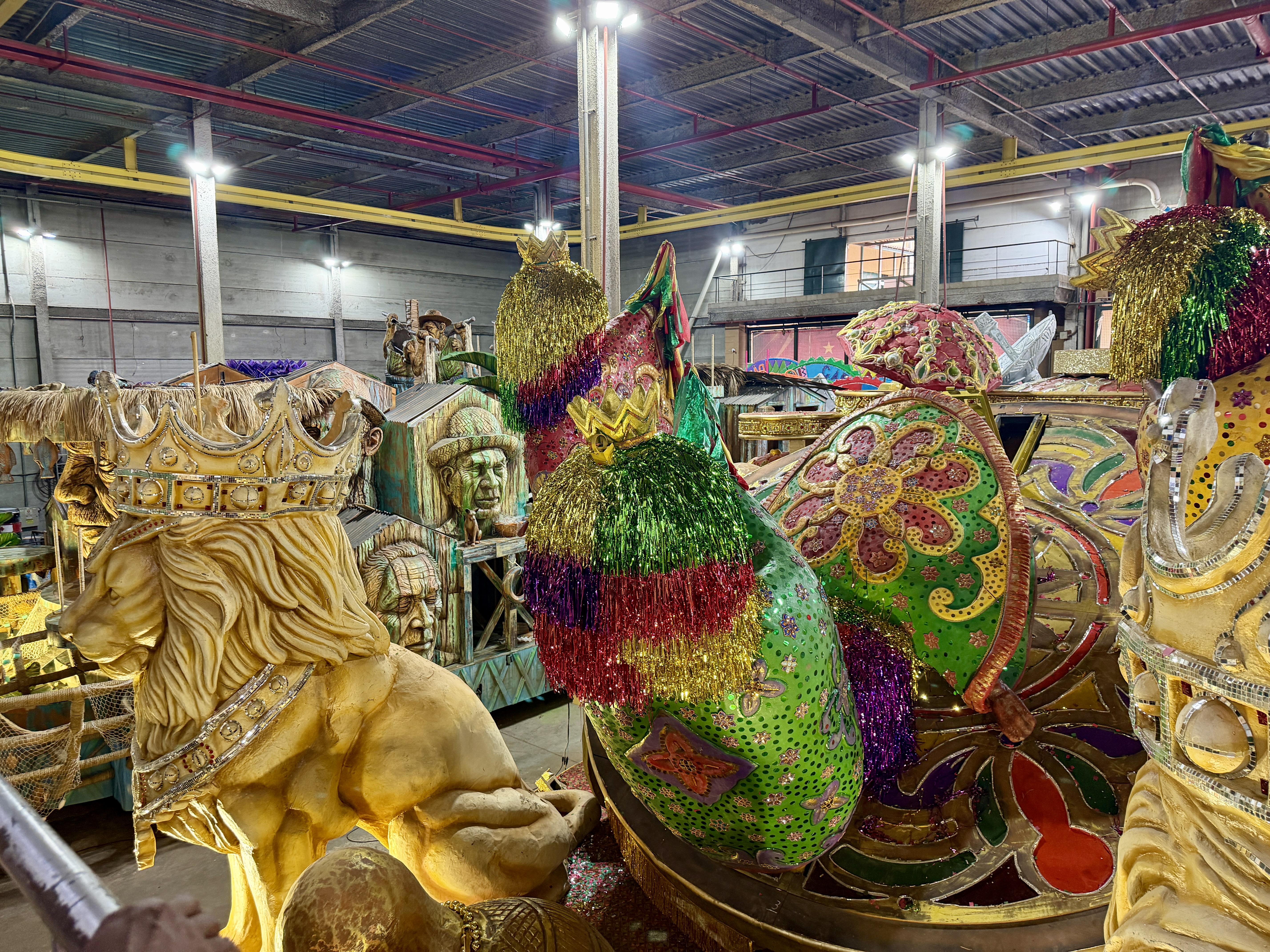

Located in a warehouse, the school consists of thousands of people who make floats and costumes, develop a performance consistent with that year’s theme, dance, sing, and play musical instruments for the annual Carnaval.
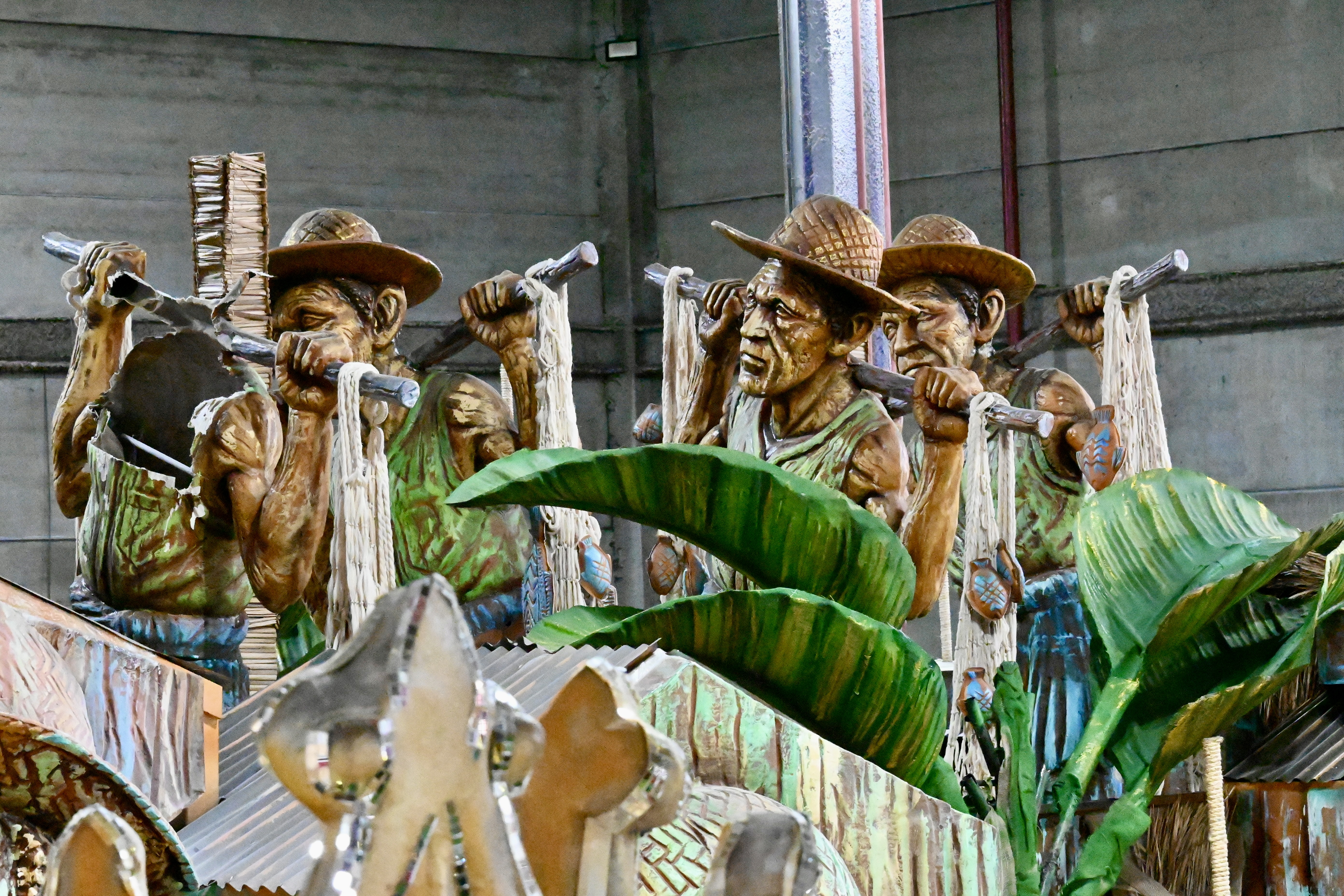

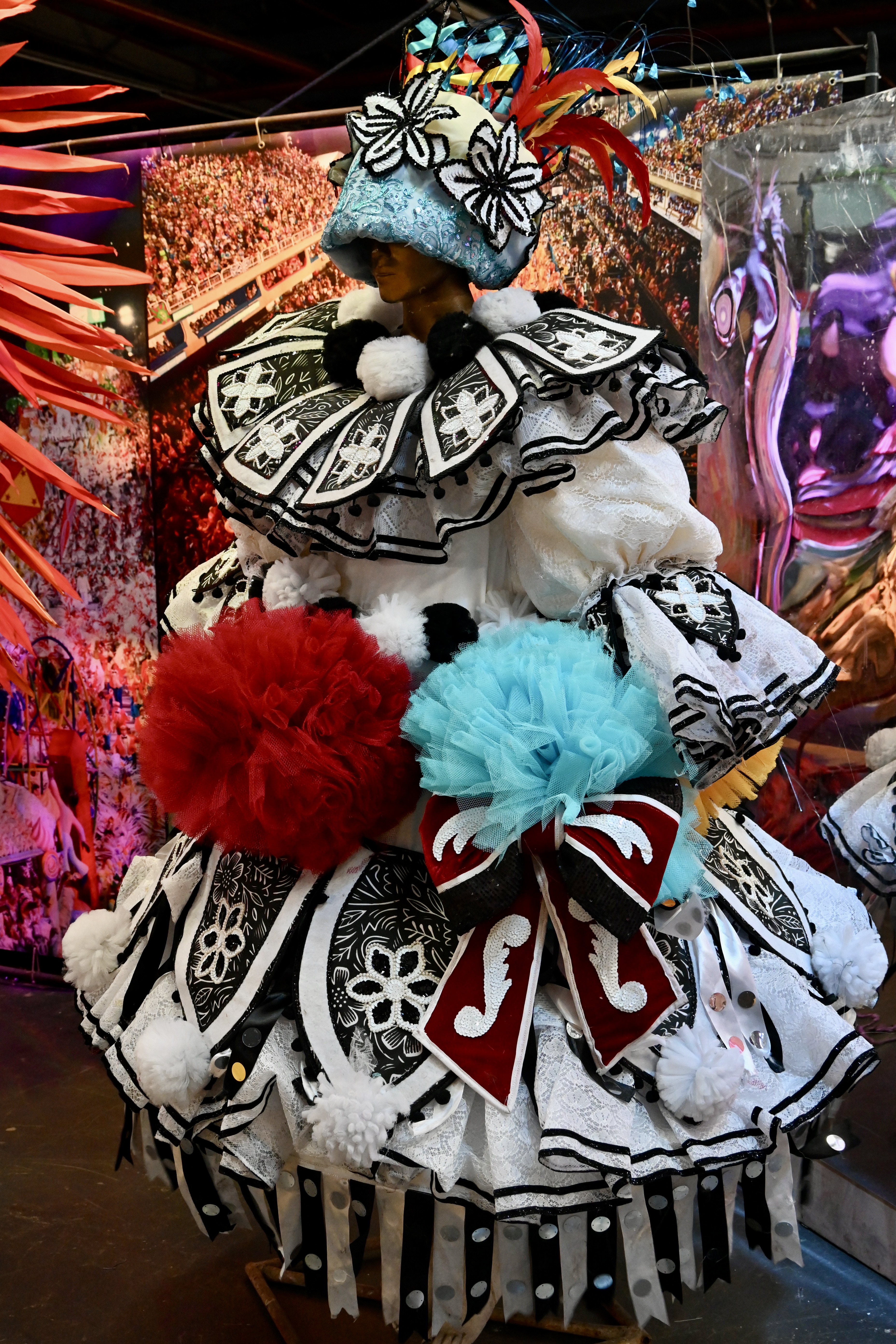
After admiring some of the floats and costumes from this year’s parade, we got to play dress up.

Then it was time for a samba lesson, led by a woman whose hips and arms swayed in ways that I’m pretty sure are anatomically impossible.
Tonight was our farewell dinner, closing out a wonderful sojourn through Chile, Argentina, and Brazil. I’ll make a final post about the trip in the next couple of days.

 PuffinlessTravel