With due respect to TLC, “don’t go chasing waterfalls” isn’t the best advice when you’re visiting this part of South America, home to the 275 separate cataracts known collectively as Iguazu Falls. Our trip to this site, designated one of the “new natural seven wonders of the world,” began Wednesday morning with a flight from Buenos Aires to Puerto Iguazu, Argentina.
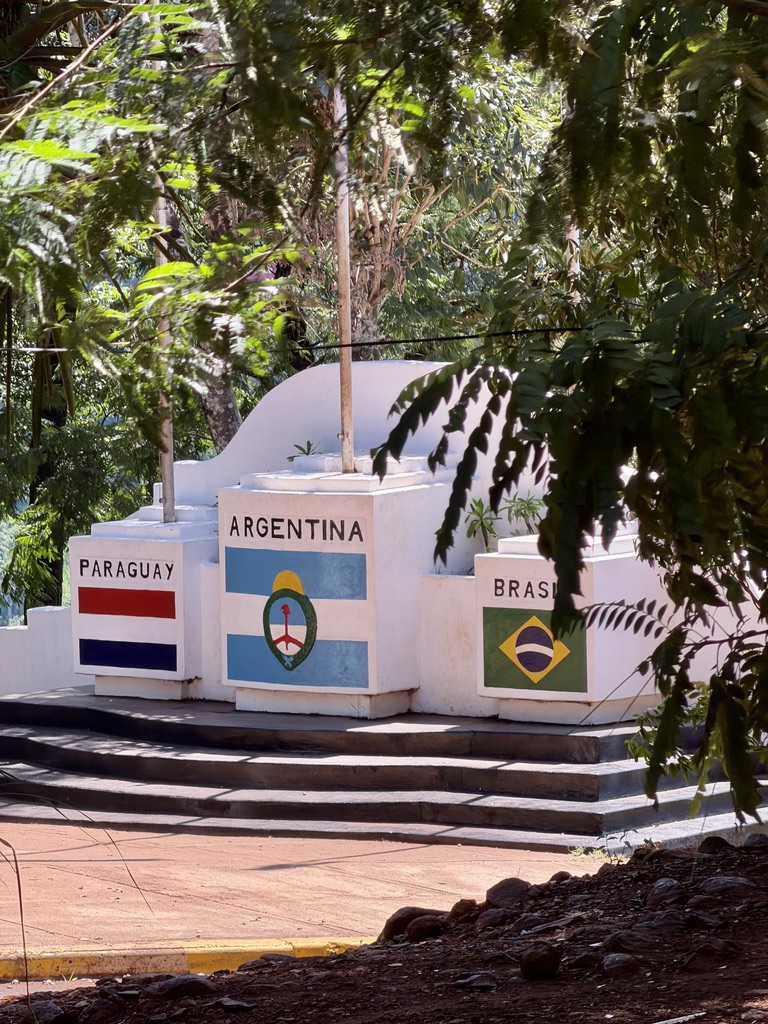
Puerto Iguazu is tucked into the northernmost reaches of Argentina, at the confluence of the Iguazú and Paraná rivers. That confluence forms a “triple frontier,” where Argentina, Brazil, and Paraguay come together. Eighty percent of the falls lies in Argentina, with Brazil claiming the rest.
Thursday: Iguazu Falls
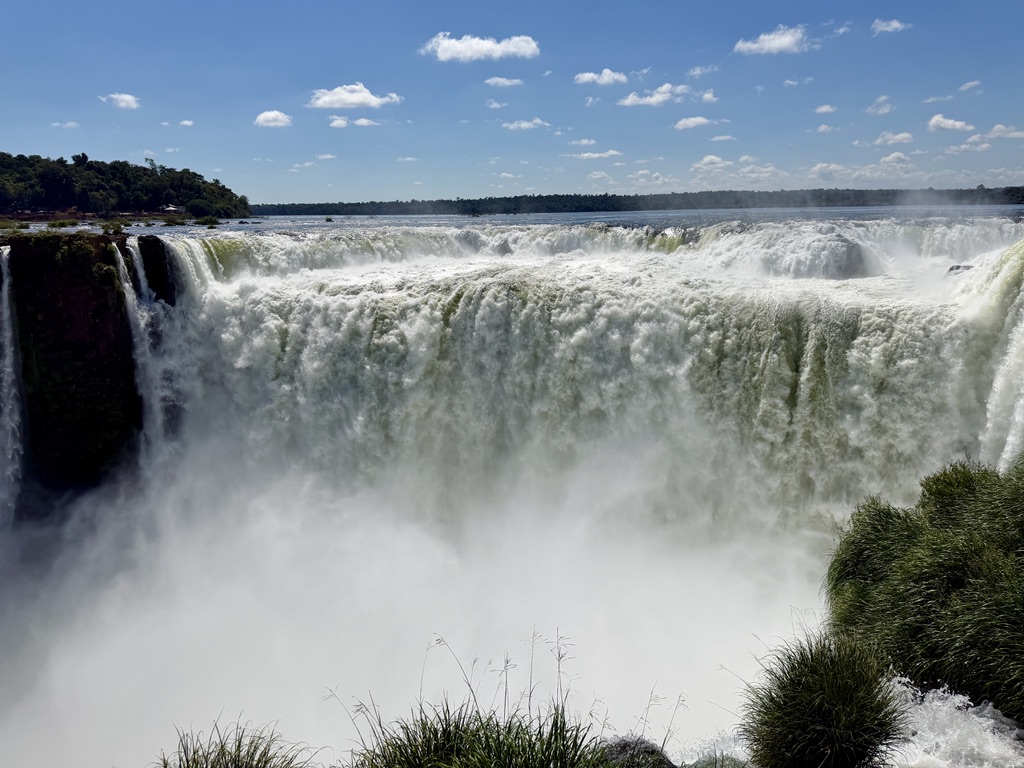
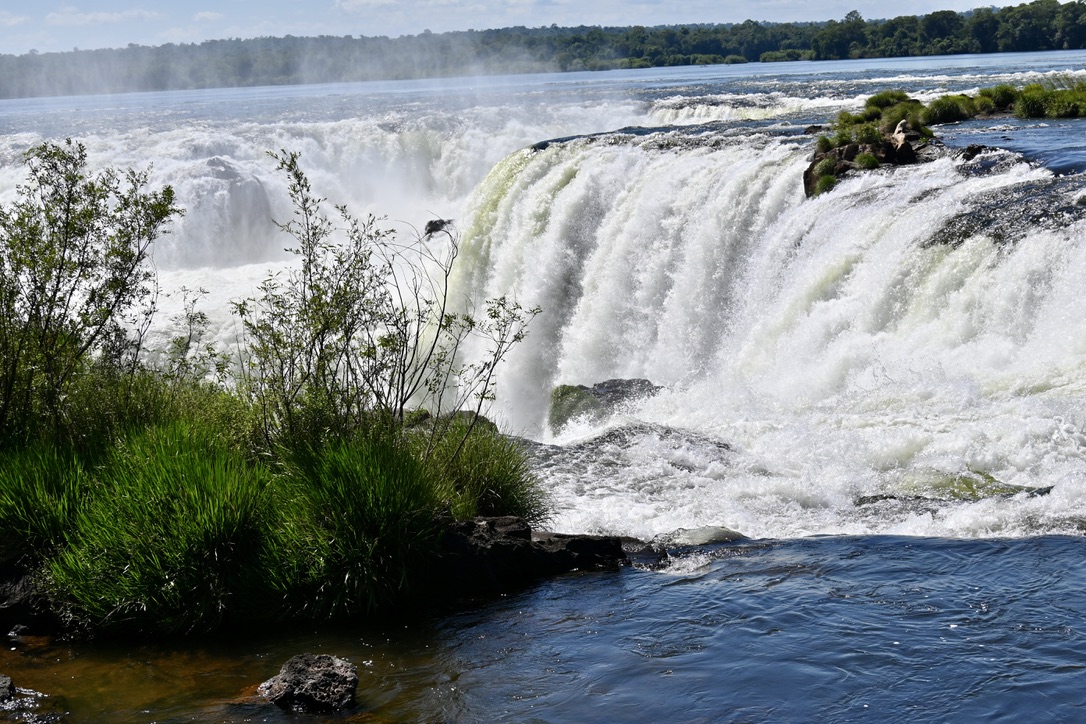
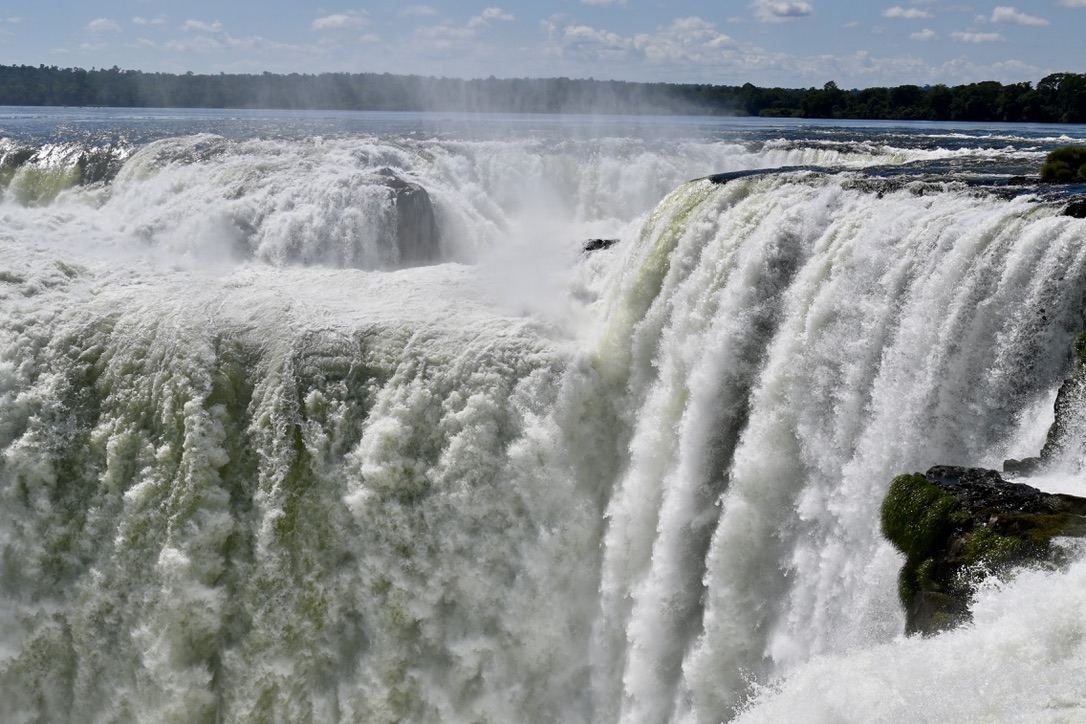
We found our quarry Thursday morning – frankly, waterfalls aren’t exactly elusive, what with all the noise and spray – and I’m happy to say Iguazu is one of those must-see sites that meets or even exceeds its reputation. Angkor Wat, Machu Picchu, the Giza Pyramids and Abu Simbel, Milford Sound, Ha Long Bay, Iguazu: for all the hype, these attractions all surpassed my lofty expectations.
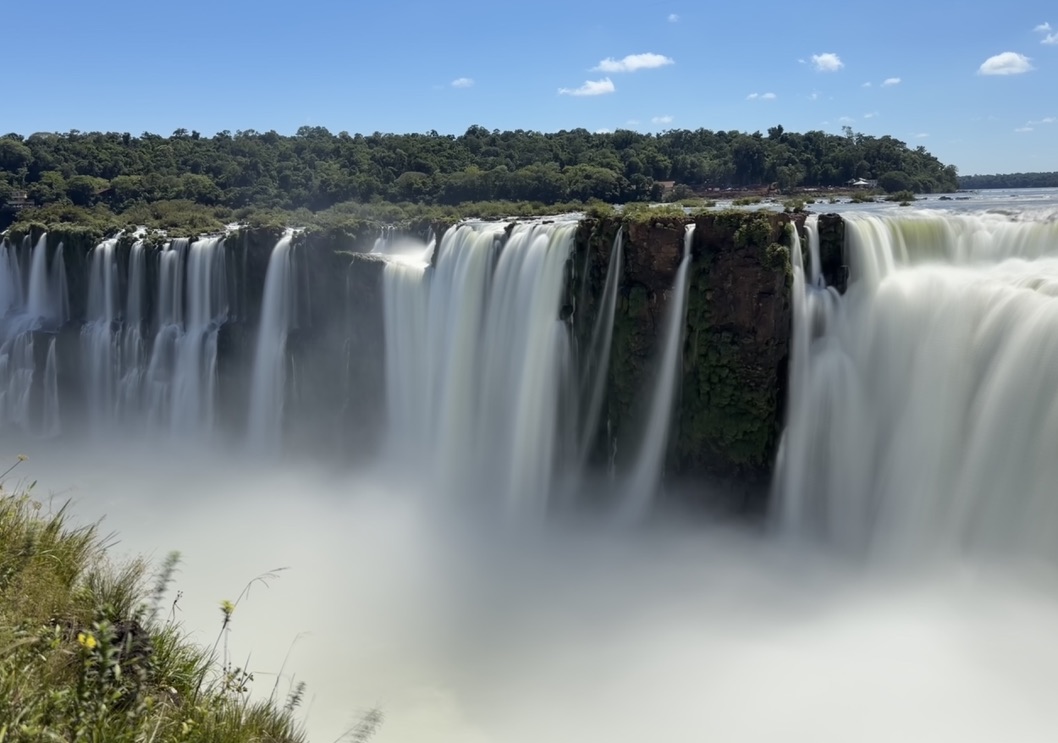
We started our tour with a narrow-gauge train ride from the park’s entrance to the highest of the cataracts, Garganta del Diablo (the Devil’s throat). To reach the viewpoint, you walk half a mile on a metal grid bridge that carries you and a few thousand other visitors over the river. There’s no shade on the path, so slather on the sunscreen, wear a broad-brimmed hat if you have one, and leave behind all expectations of personal space.
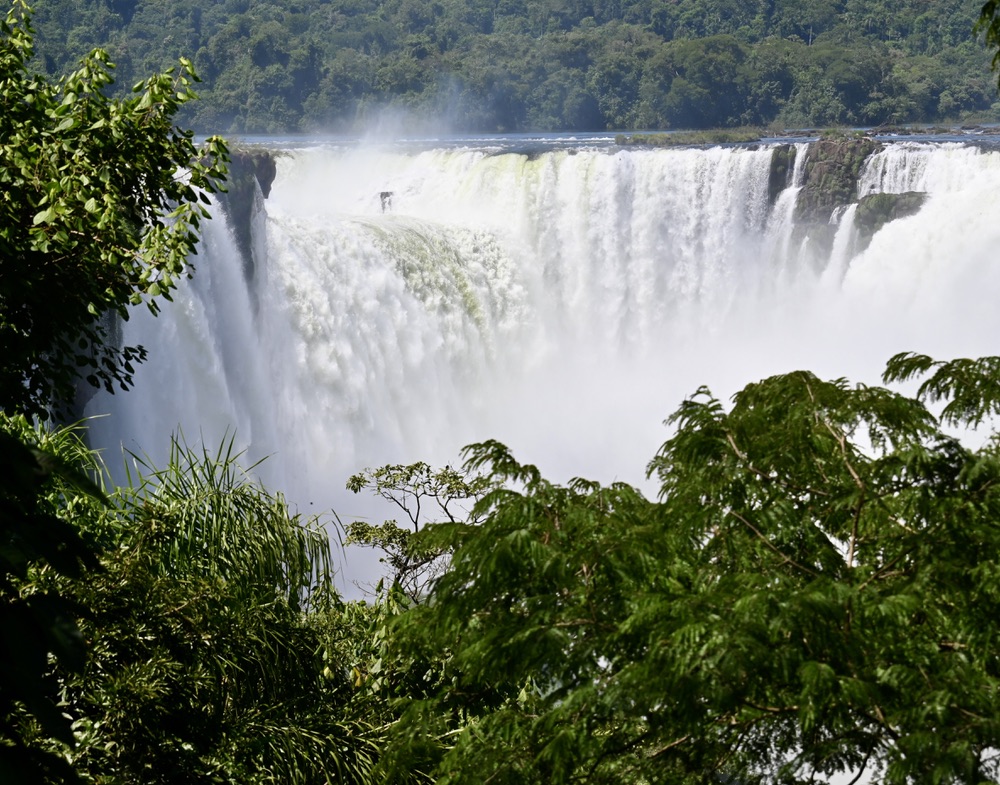
One hundred thousand gallons of water crash down Garganta del Diablo every second, looking in places as if the cataract sports Rasta braids. Vultures circle overhead while voyeurs below jostle and shove in search of the perfect place to strike a ridiculous pose in front of a sublime sight. (In case you can’t tell, I’m not a fan of selfie culture. You’ll find my selfie next to curmudgeon in the dictionary.)
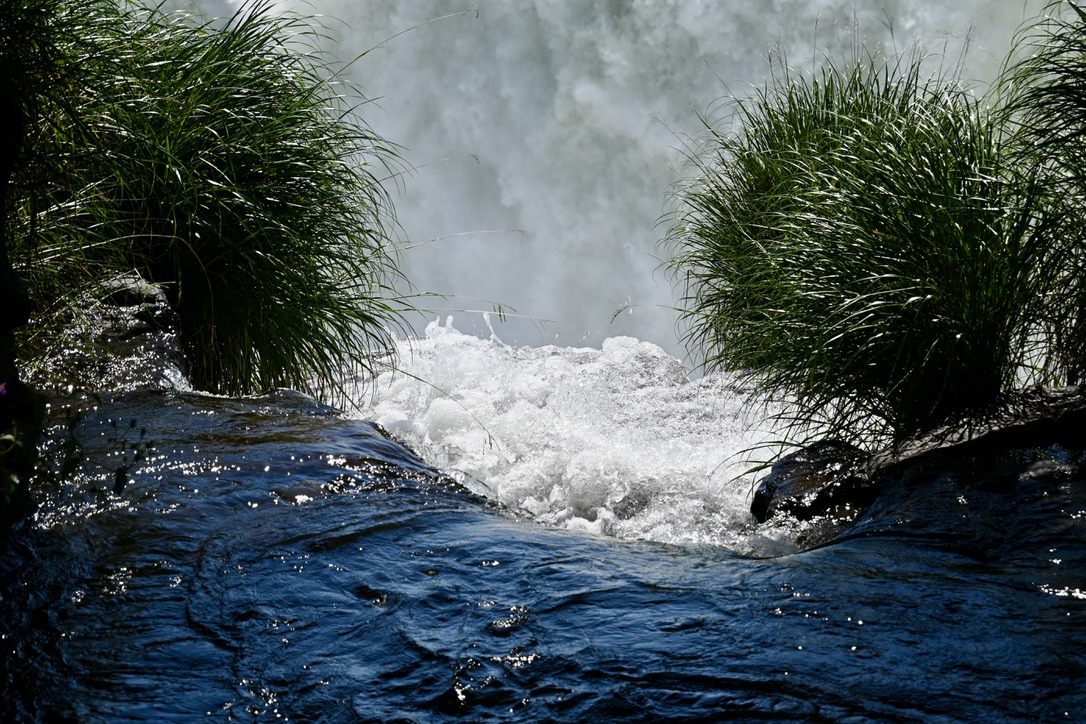
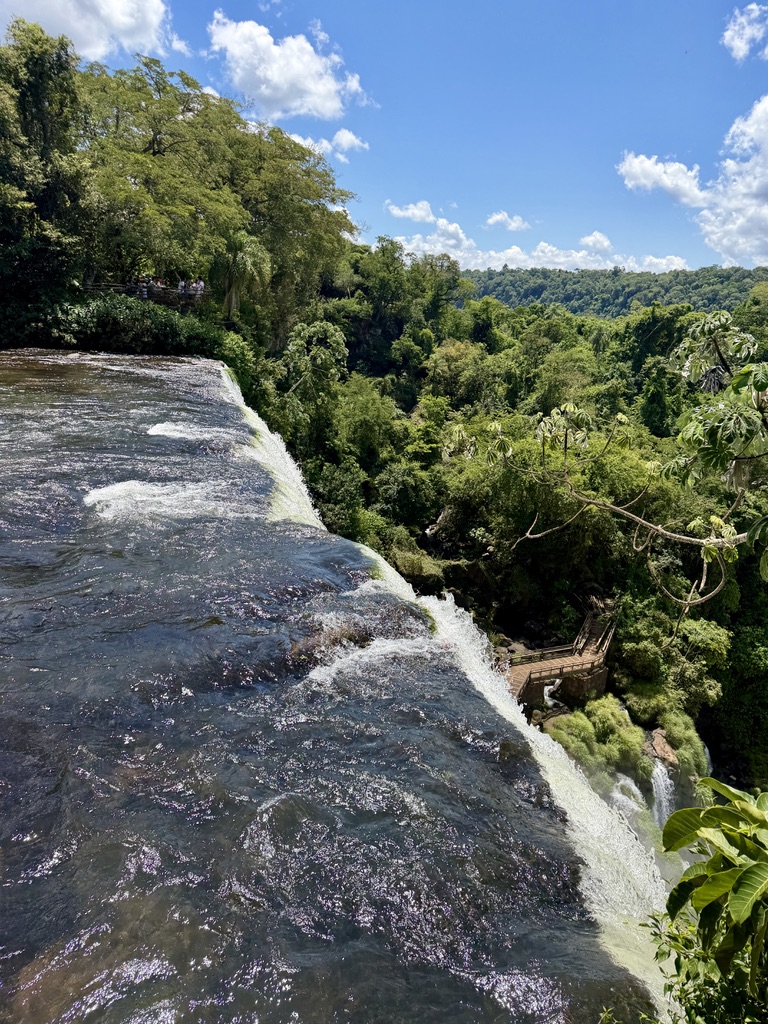
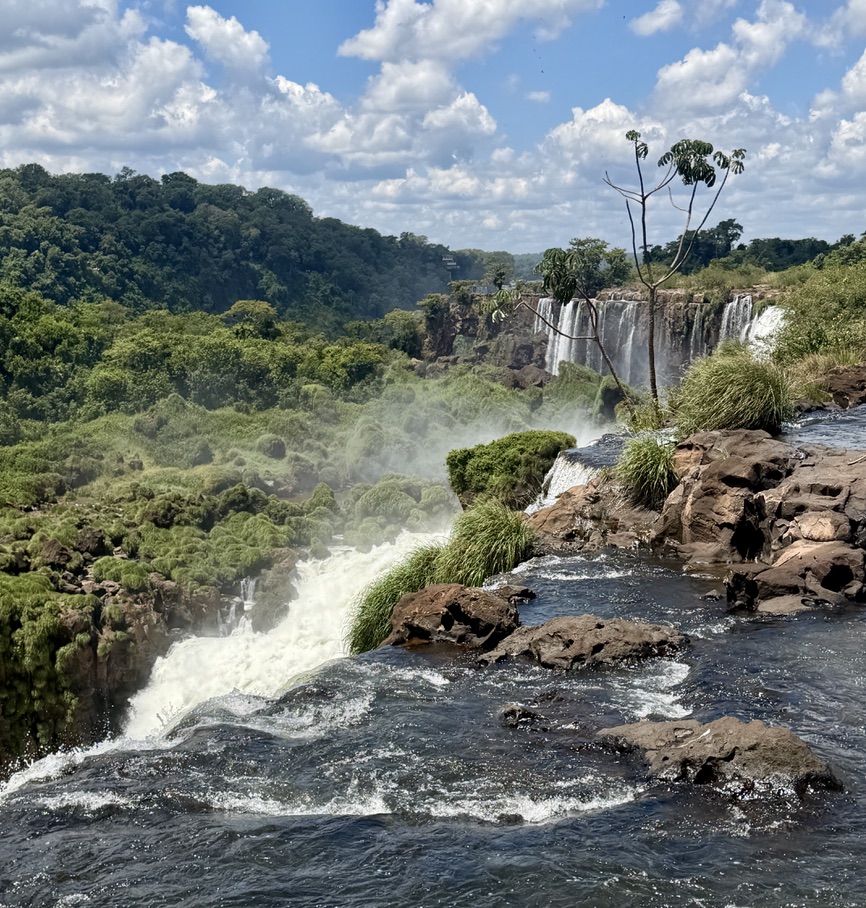
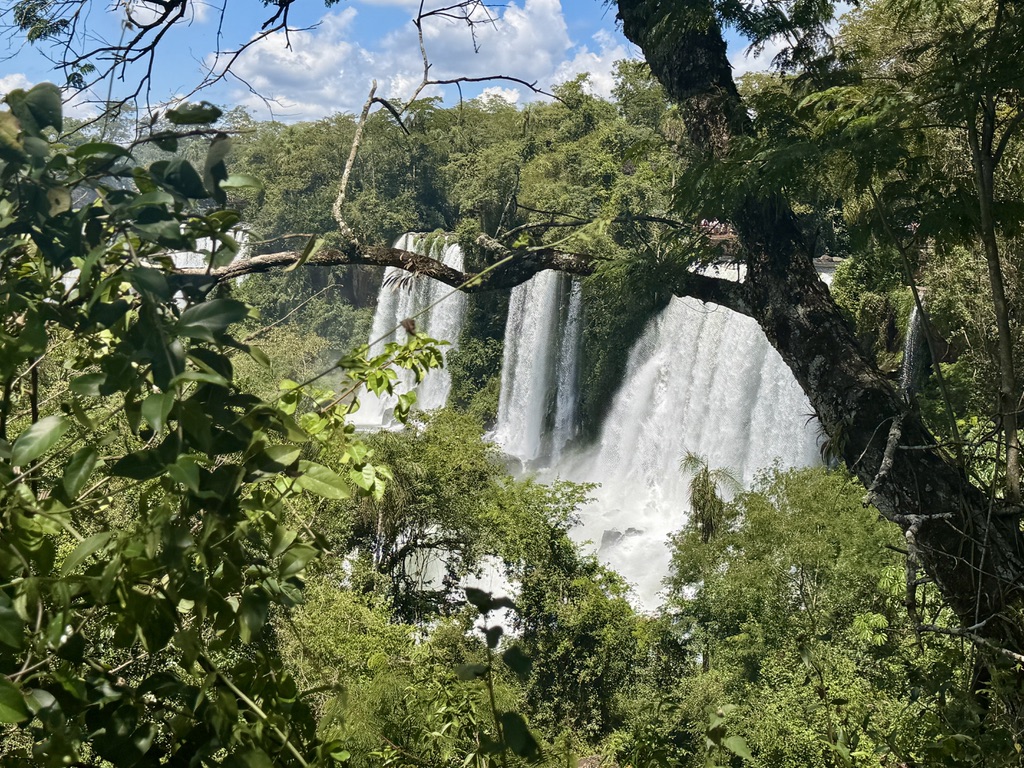
Our next hike took us on the Upper Circuit, a flat, mostly shaded one-mile loop past many of the park’s other falls, which offers breathtaking views up and down the Iguazú River. Thankfully, the Upper Circuit isn’t as crowded as the trail to Garganta del Diablo.
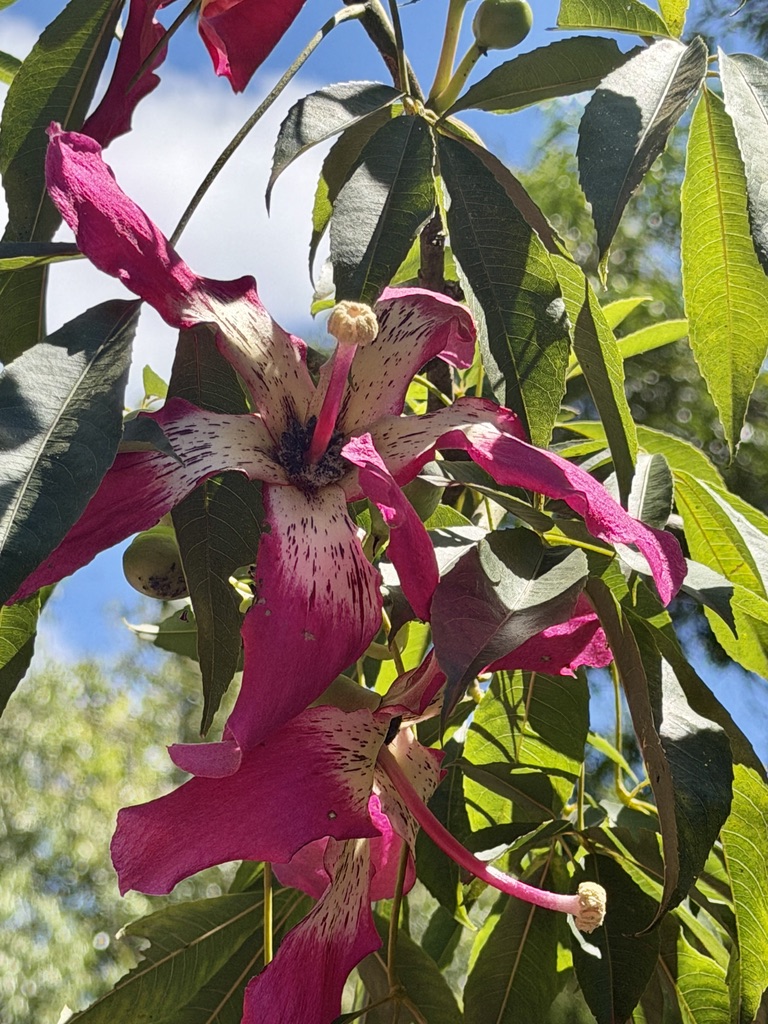
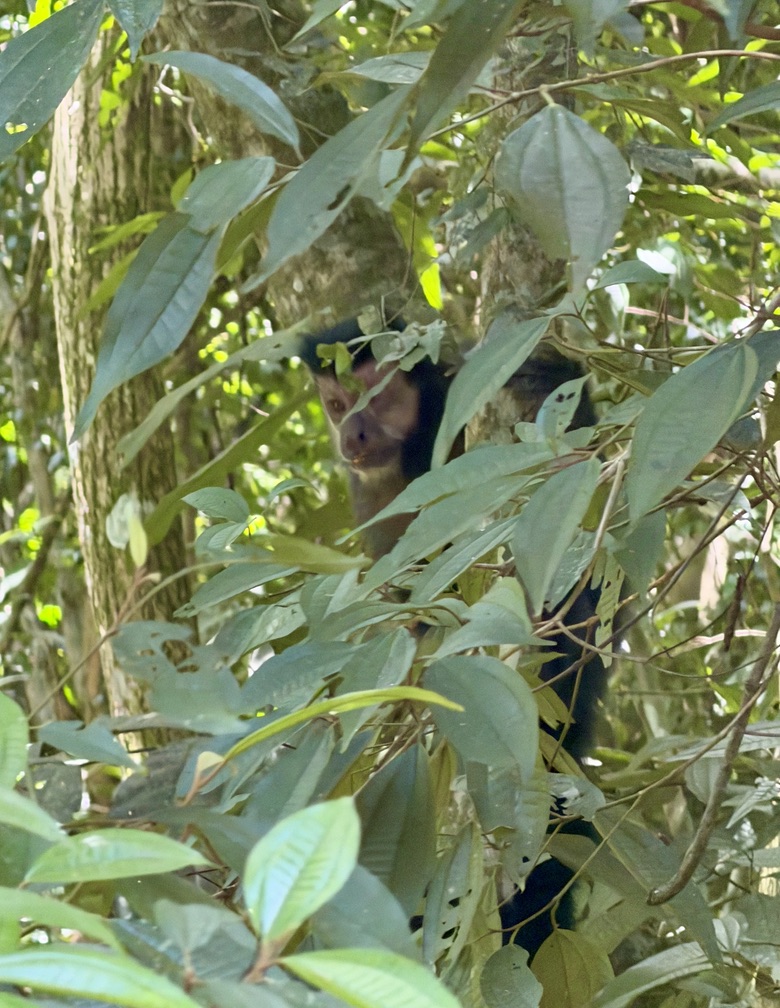
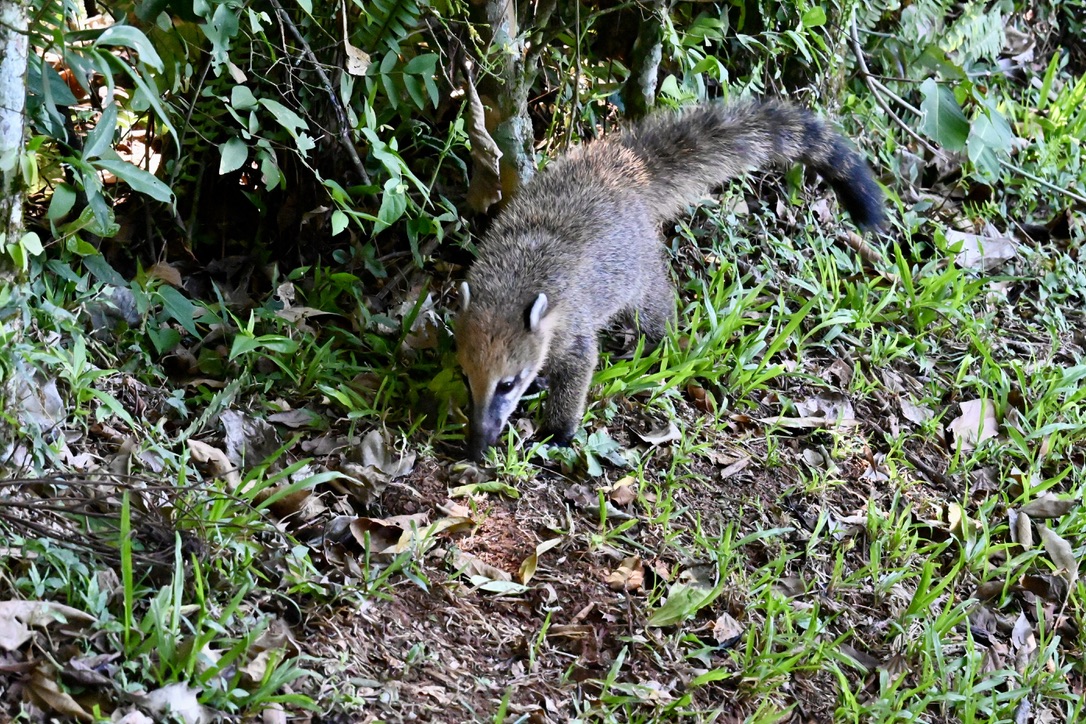
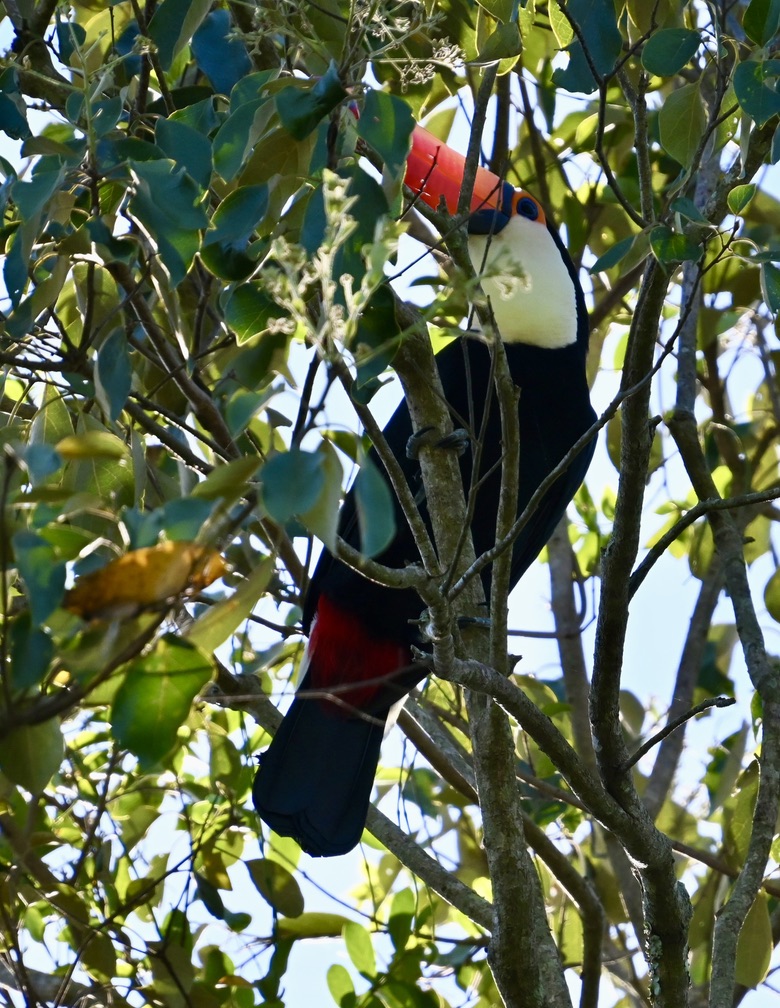
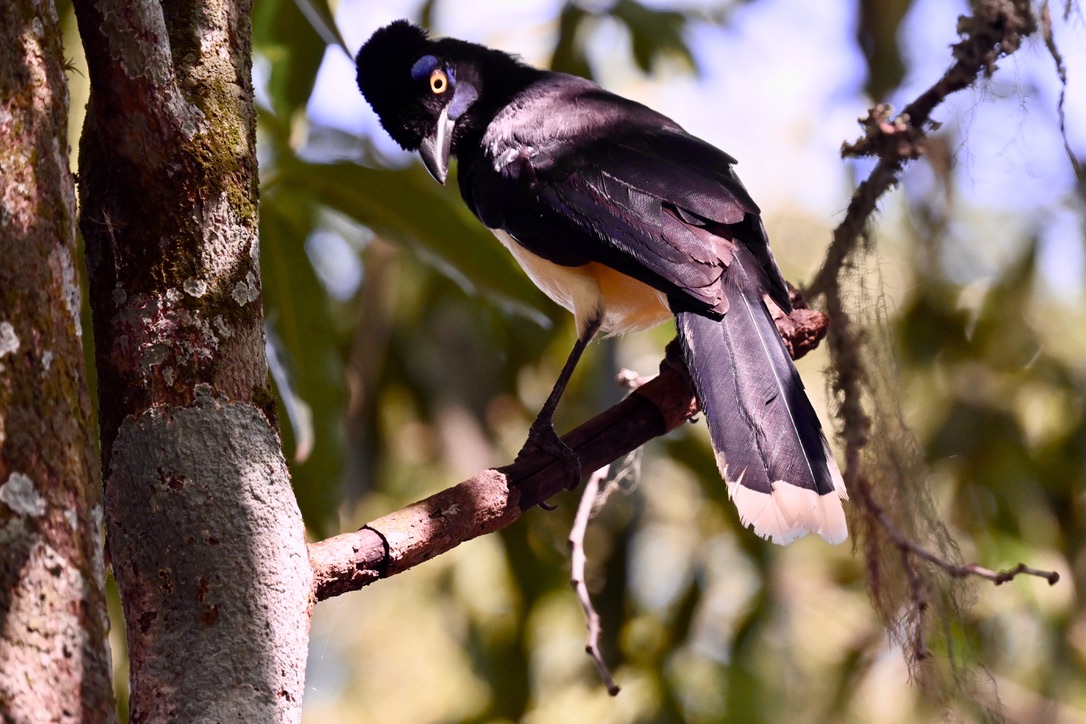
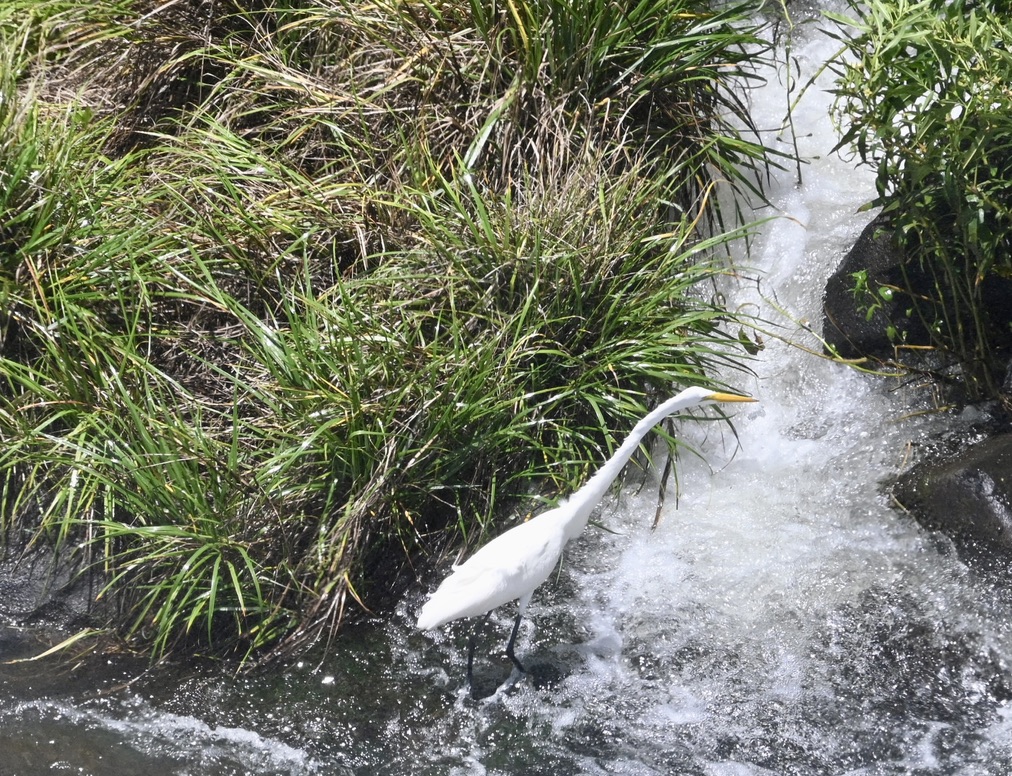
The national park surrounding the falls is home to coatis, capuchin monkeys, capybaras, jaguars, and oodles of butterflies and birds. I saw all of these except jaguars (they were probably in the shop).

Gate 1’s itinerary included a third hike along the Lower Circuit, but Shari and I opted to take a boat ride on the river (the Gran Aventura, costing approximately $65 US per person). The ride might have been the most fun I’ve ever had on an excursion.
After a 20-minute ride through the jungle, we descended 300 stairs to the dock. The crew handed us life jackets and rubberized dry bags, which fortunately were large enough to hold my overstuffed backpack.
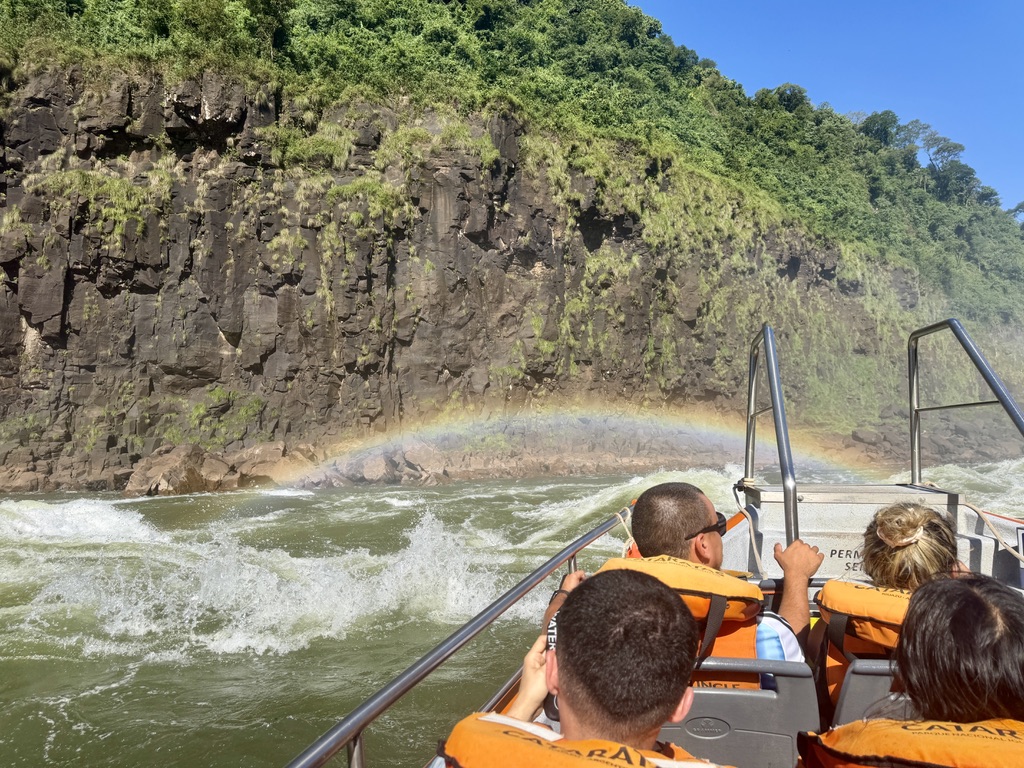
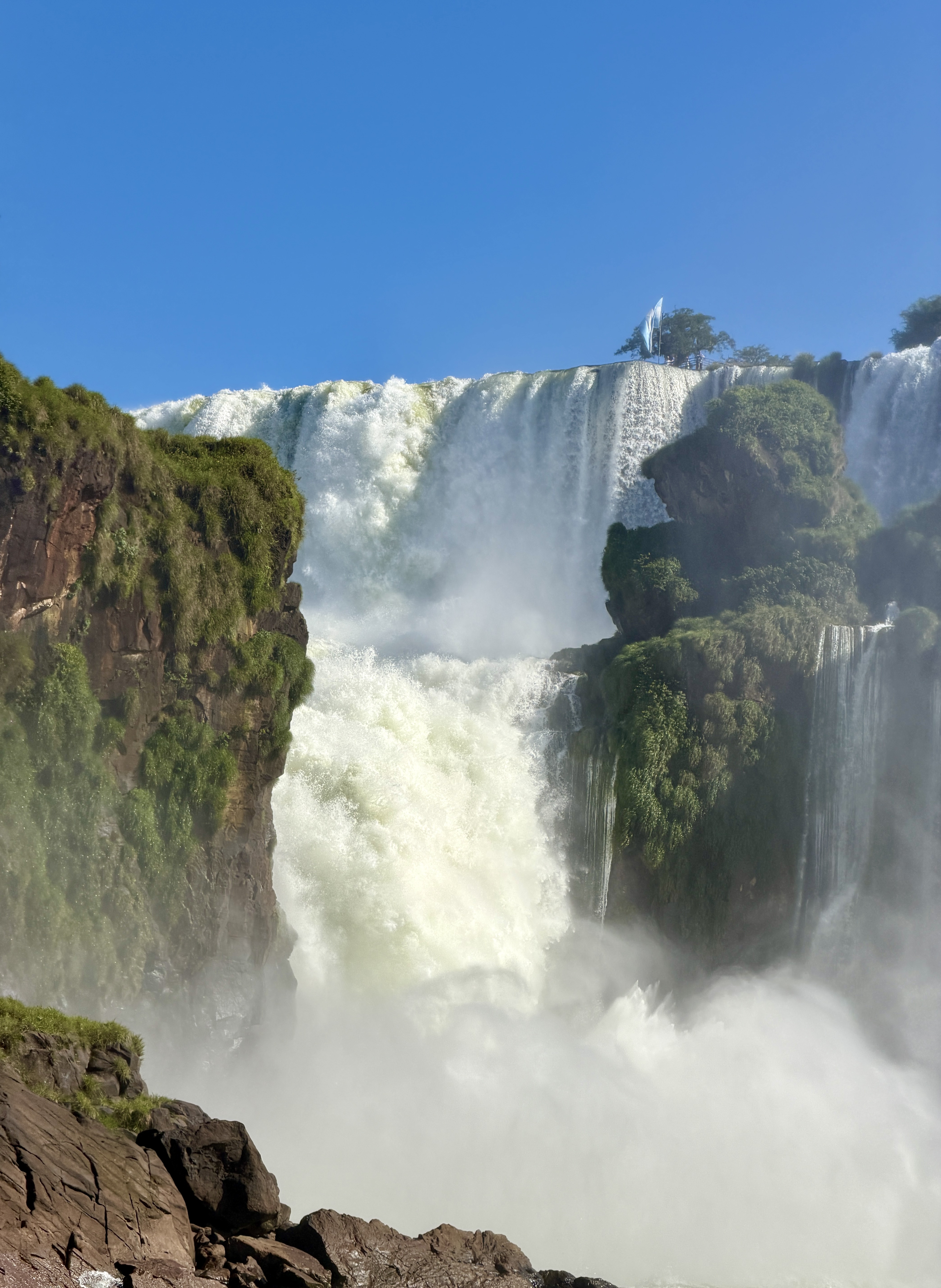
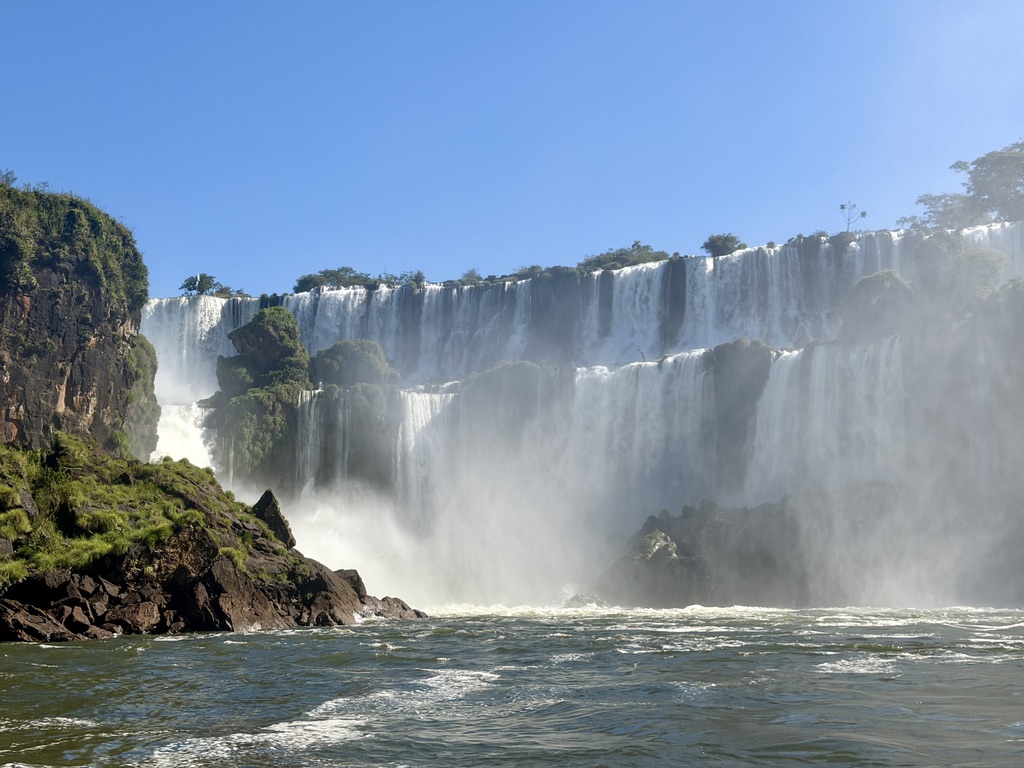
If you take this trip, try to sit near the sides of the boat – the right side has the best vistas – in order to enjoy an unobstructed view. We were seated in the middle, and many of my photos included the hats, hands, and heads of our shipmates.
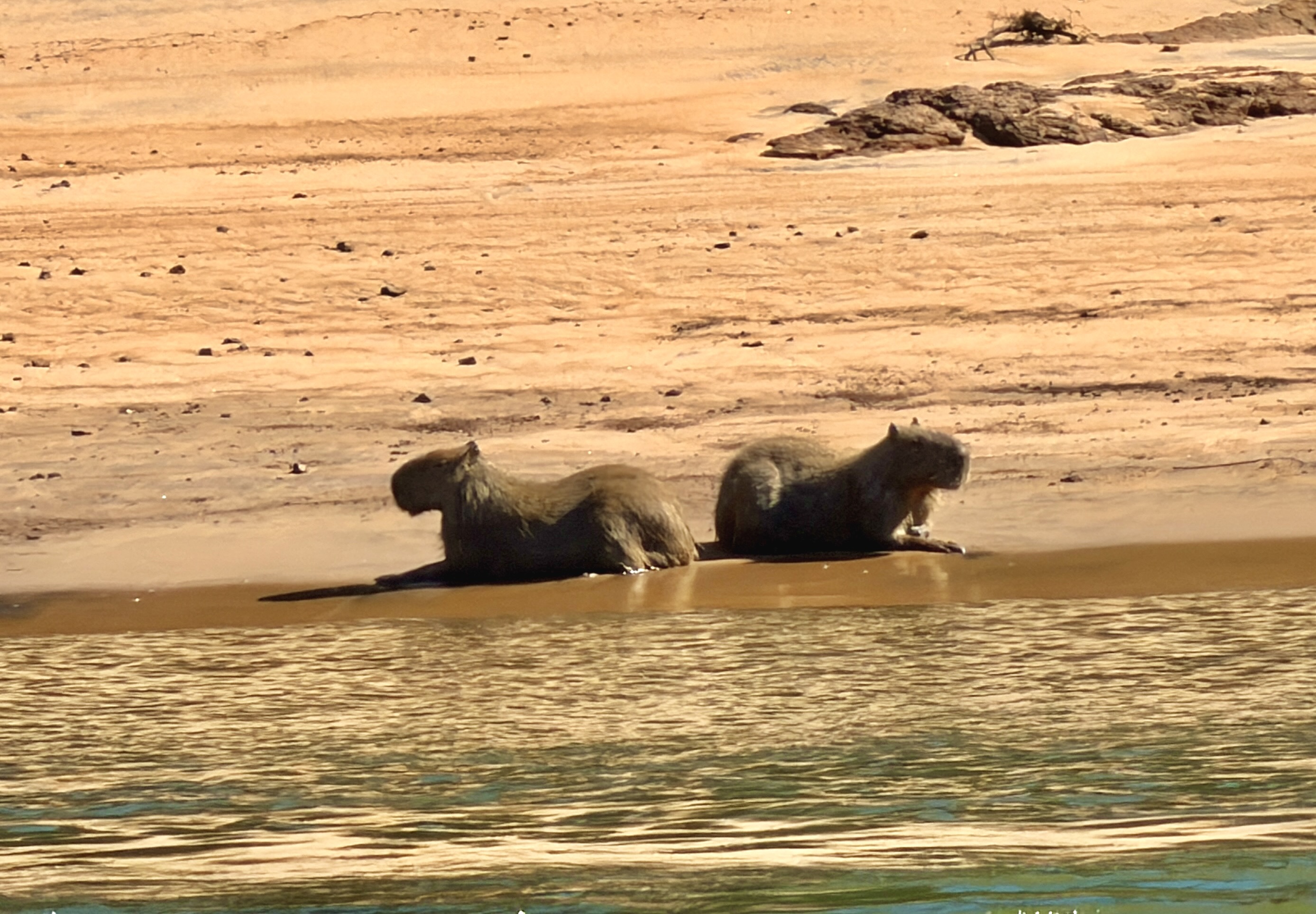
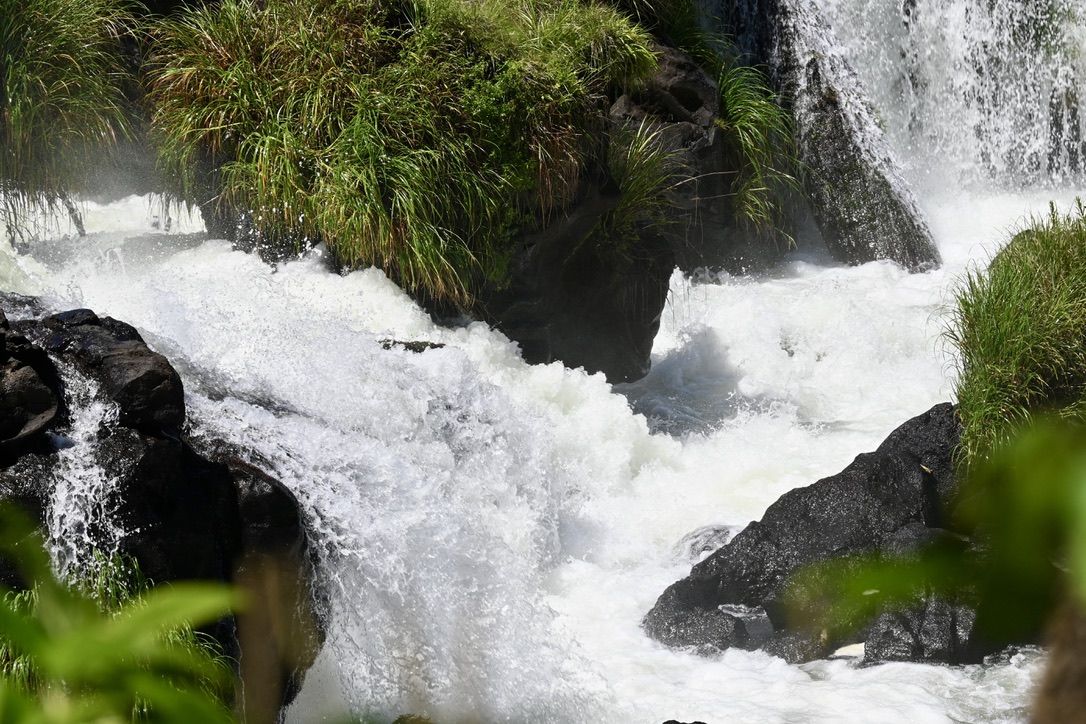
On the way to the falls we jounced over rapids, passed two capybaras who, as Shari said, seem to have had a marital spat, and gaped at the braided, beaded, and sheeted waterfalls all around us. From the top, you sense the power of the falls. From river level, you experience it in every fiber of your body.
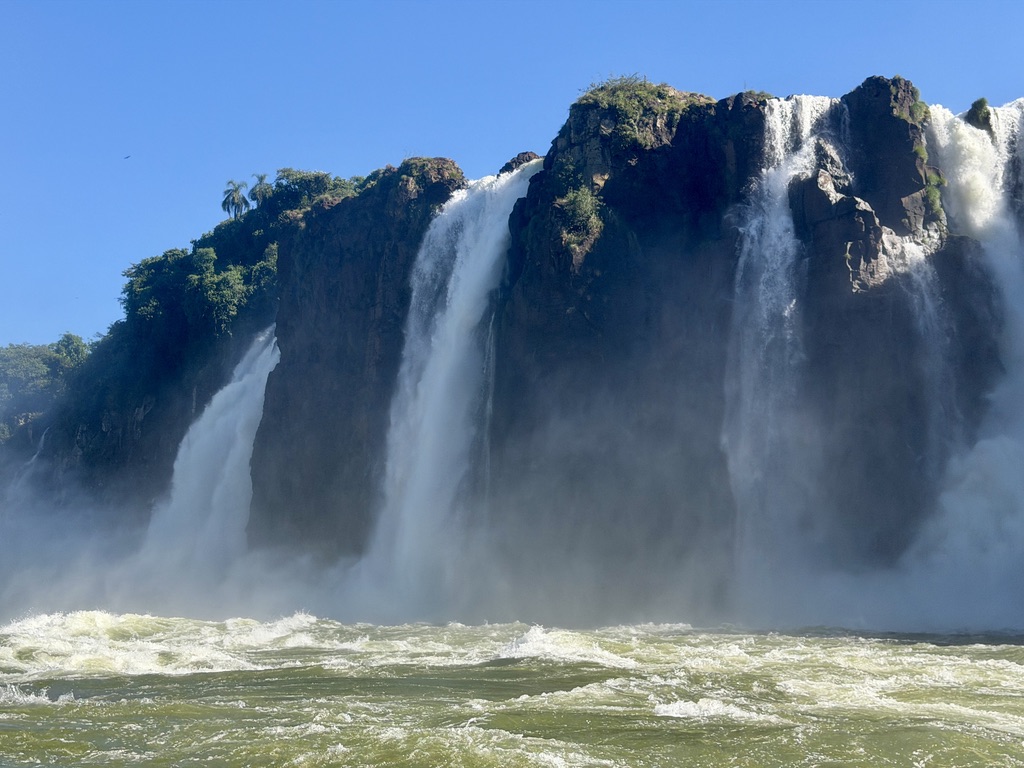
Then came the shower: after the crew warned us to put our phones in the waterproof bag, we edged closer and closer to the falls until we surrounded by a deluge of Biblical dimensions. It felt glorious!
We repeated the maneuver at another set of falls then raced back to the dock, flying over rapids and skirting boulders. (You must climb back up the 300 steps after the tour, but after the first 150 or so they come three or four at a time with flat areas in between.) If you visit Iguazu and are physically capable, the Gran Aventura is a must.
After dinner, a mandatory caipirinha, and a solid night’s sleep, we crossed the border on Friday to see the falls from the Brazilian side.
Friday: Iguaçu Falls
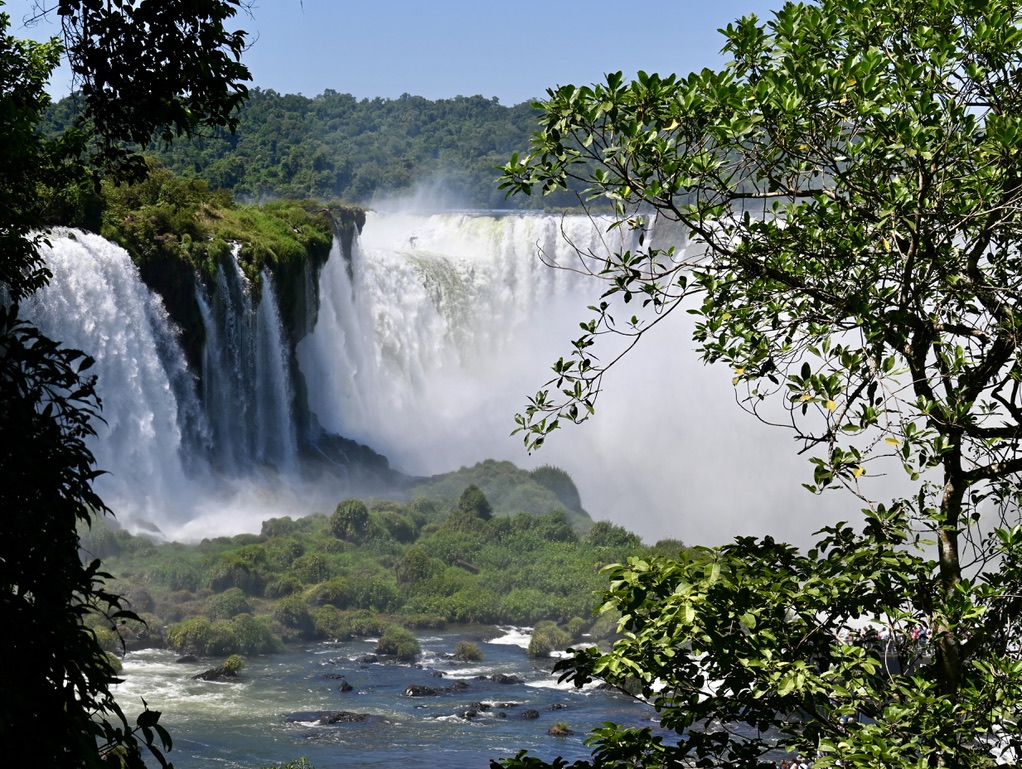
As our local guide put it, on the Argentinian side of the falls you are part of a painting. On the Brazilian side, you view the painting from without. I found both experiences essential: witnessing the majesty of the falls up close, then viewing a panorama of the cascades, the river, and the jungle.
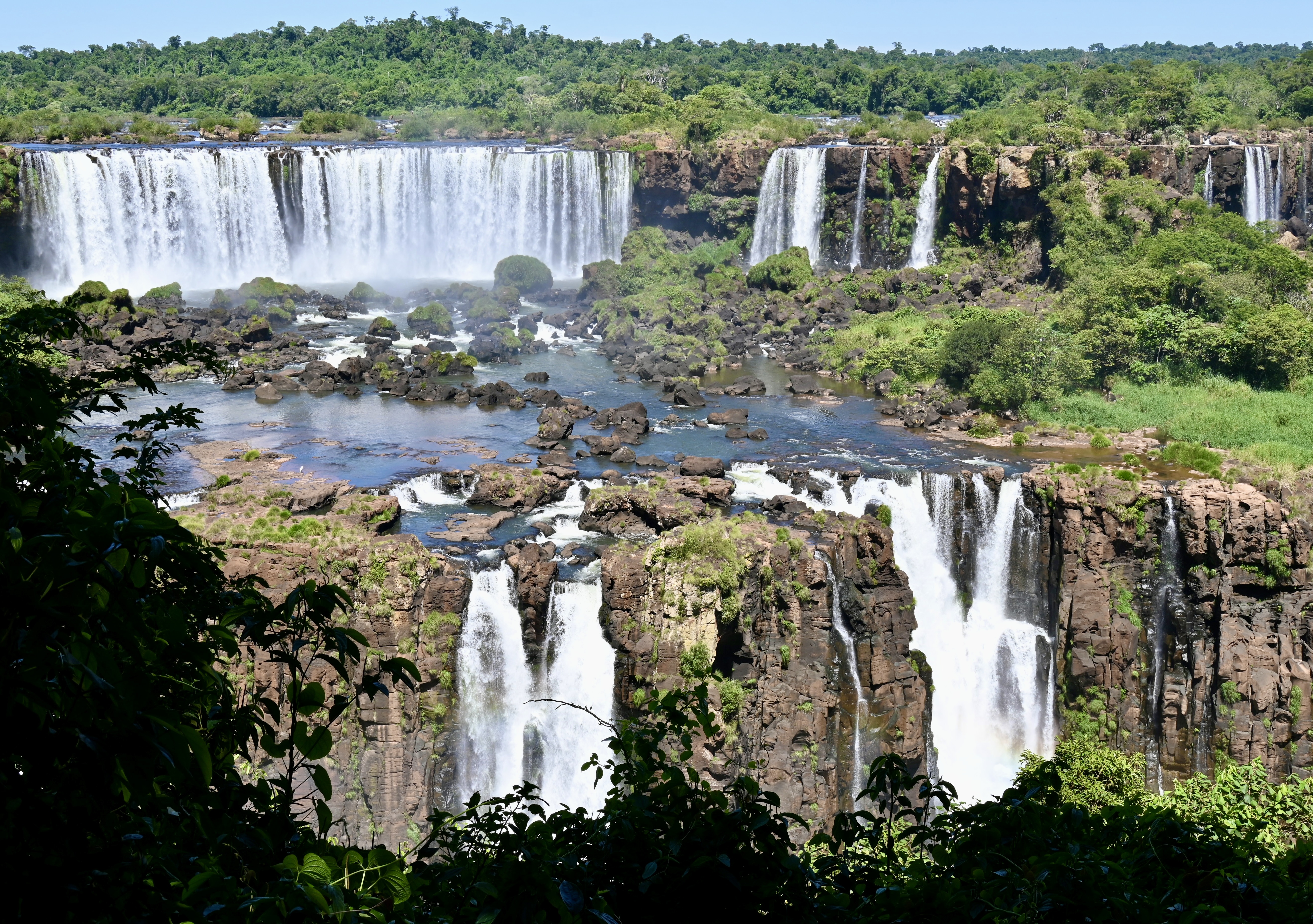
Our tour this morning took us down a mile-long, fully shaded, mostly flat path. The very first viewpoint is spectacular, and the scenery gets even more impressive as you proceed with the hike. The path ends just below Garganta del Diablo, with the mist and spray almost as dense as the selfie-taking tourists.
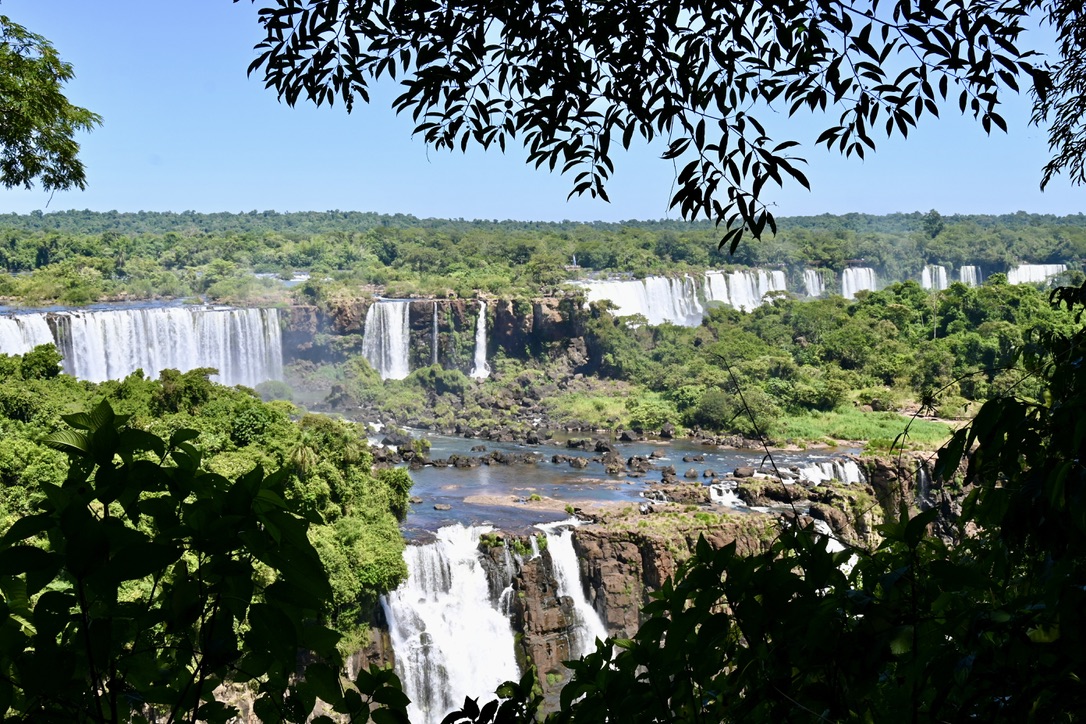
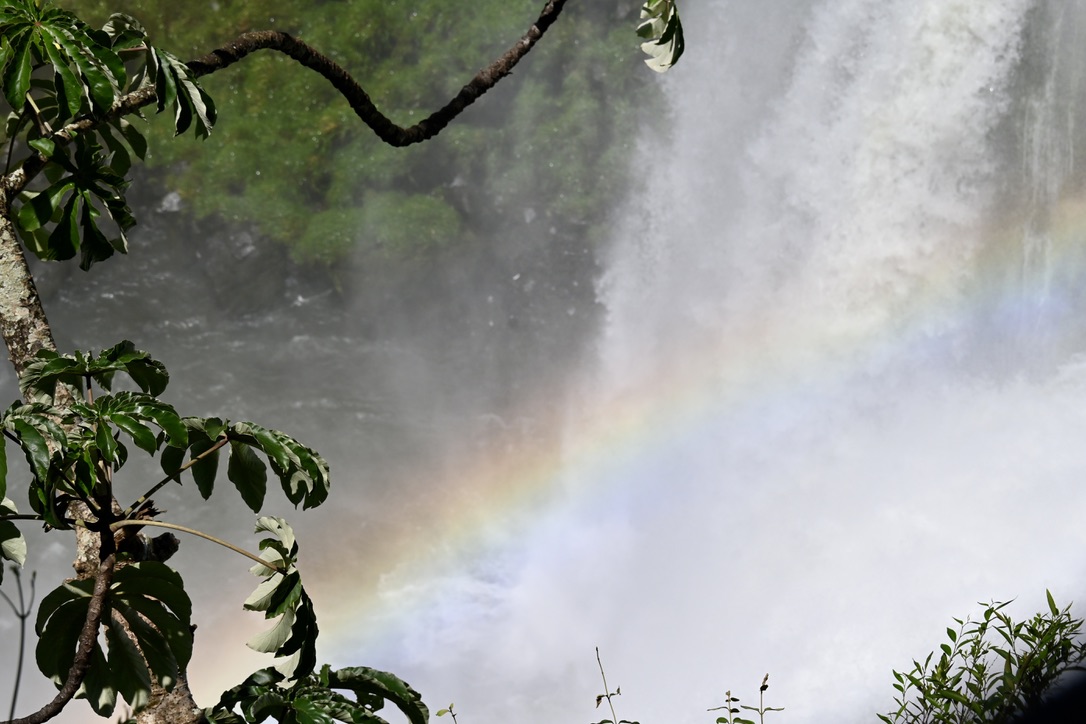
I’m tempted to (Brazilian) wax eloquent about the beauty of the cataracts, but I’ll wrap up this post with some photos: what you see Iguaçu get. Off to Rio!

 PuffinlessTravel