Today (Sunday) we traded rustic splendor for urban elegance. We left Argentina’s chocolate capital this morning and landed in its political capital two hours later. (As an aside, I’d much rather get my hands dirty with chocolate than with politics.)
Buenos Aires – the “Paris of South America” – is as stylish a capital as you’ll find. In the travel industry, lots of places have been called “the Paris of” this or that continent or region, usually because they have a fashionable neighborhood or two and are a bit more attractive than other contenders for the crown. (There’s even a book calling Pittsburgh “the Paris of Appalachia.” I like Pittsburgh a lot – in fact, I think it’s transformed itself into an exciting, often-striking city – but I mean, come on.)
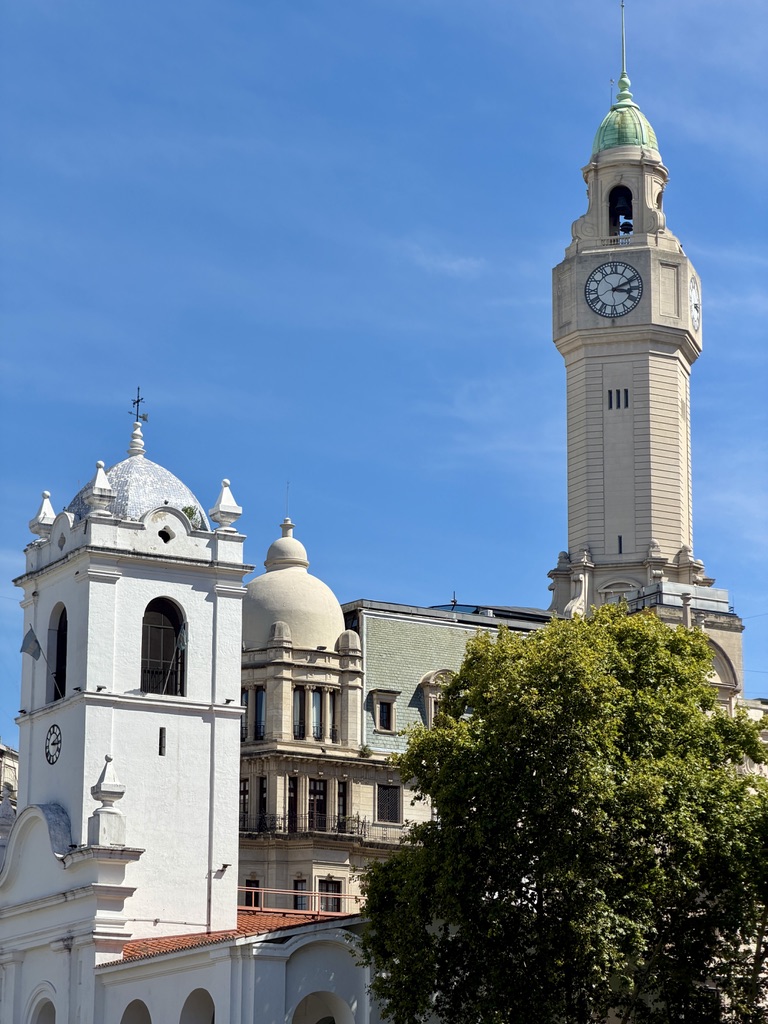
In contrast to these other pretenders, Buenos Aires might just give the jewel on the Seine a run for its euros. Its broad avenues, beautiful parks, stirring statues, and graceful architecture give me nearly the same aesthetic thrill I feel in the Paris of France.
Sun. Feb. 22
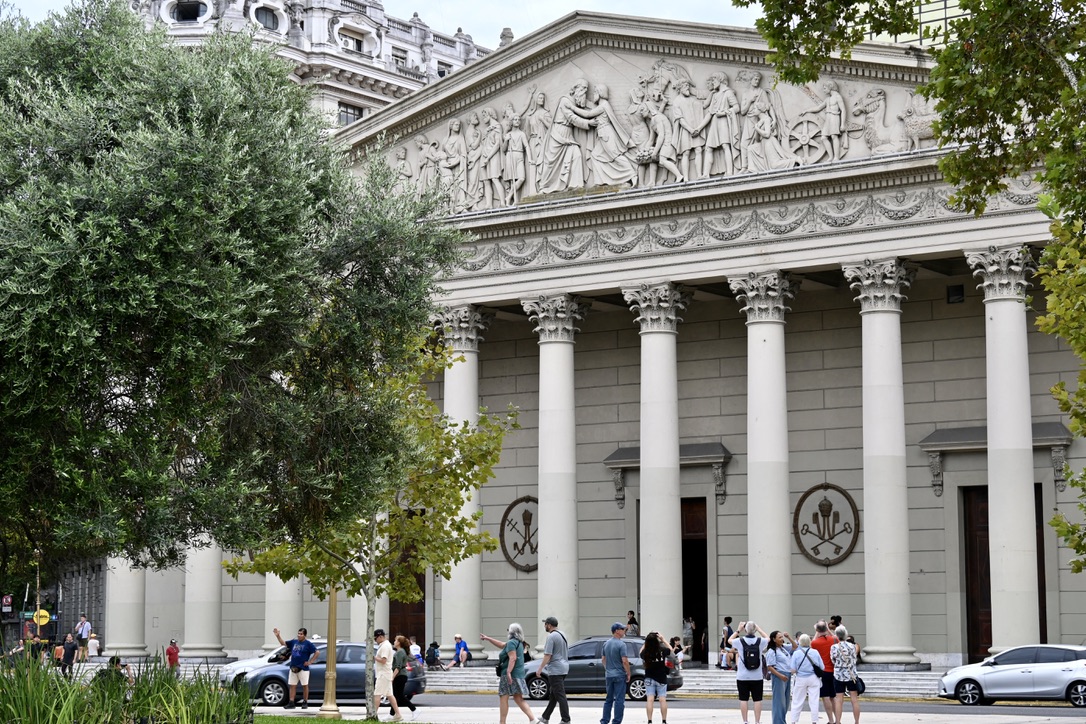
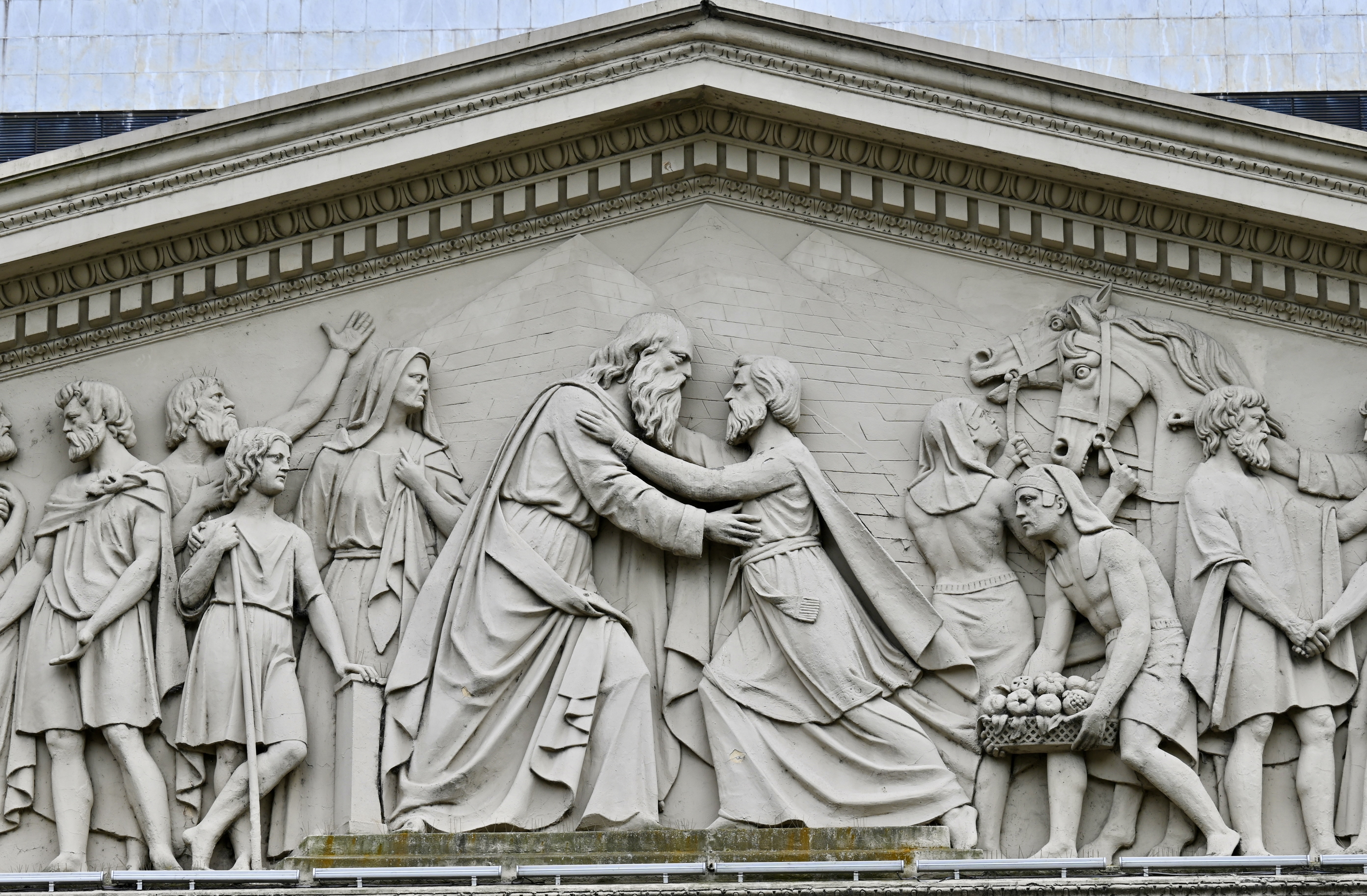
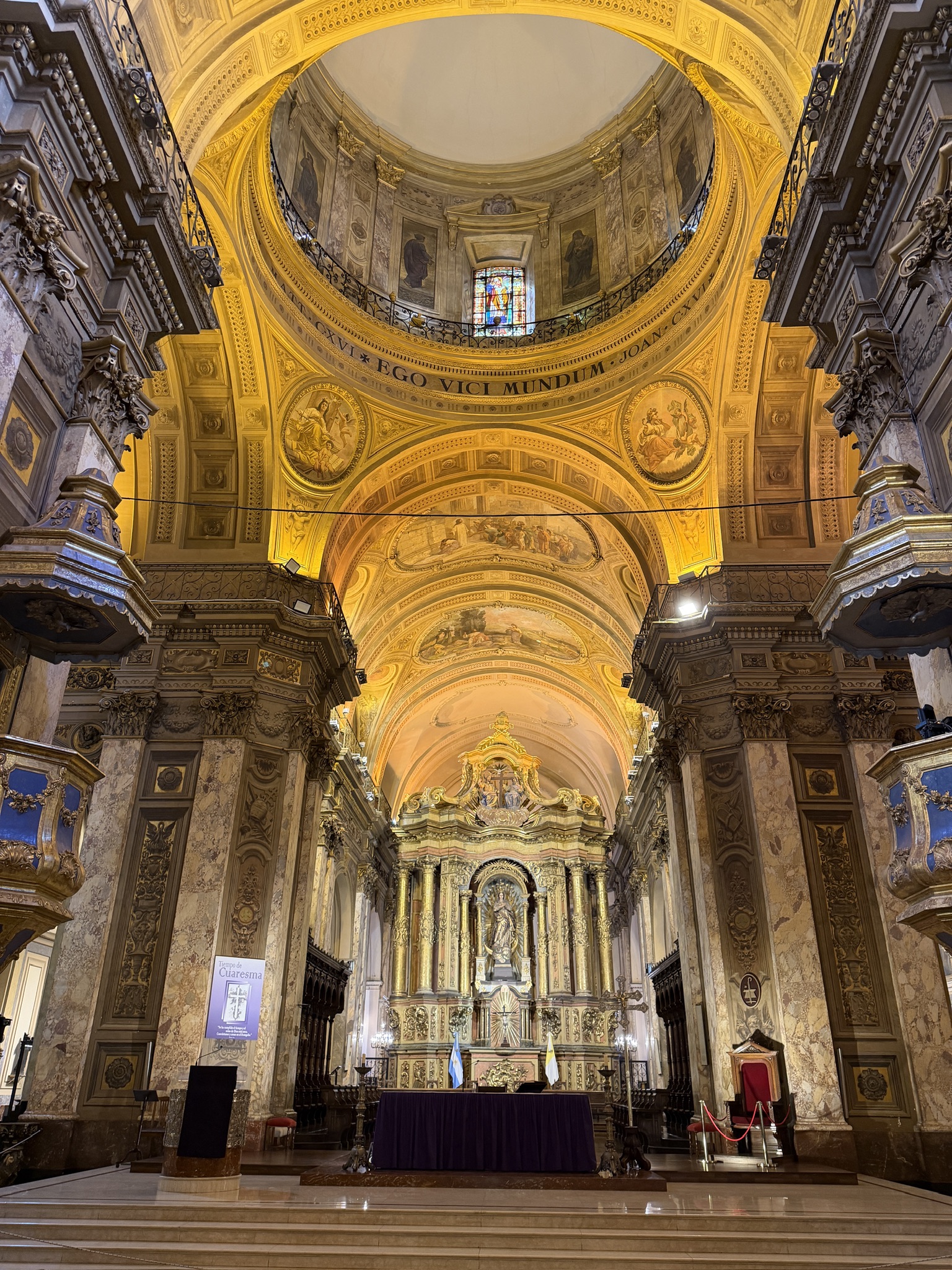
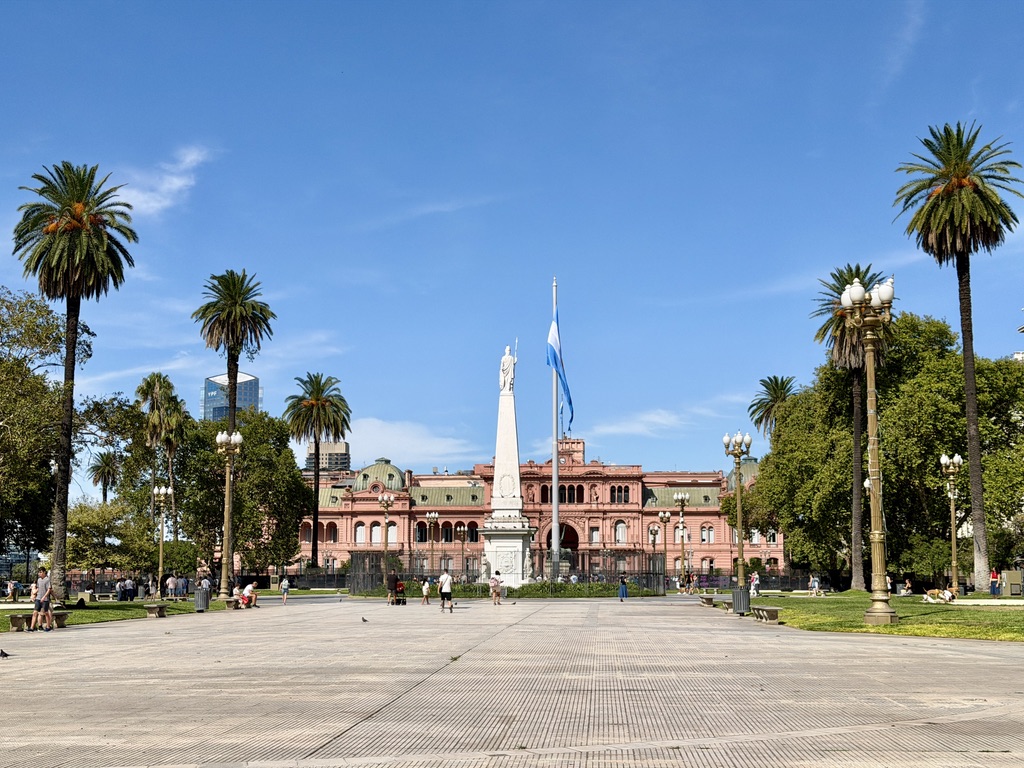
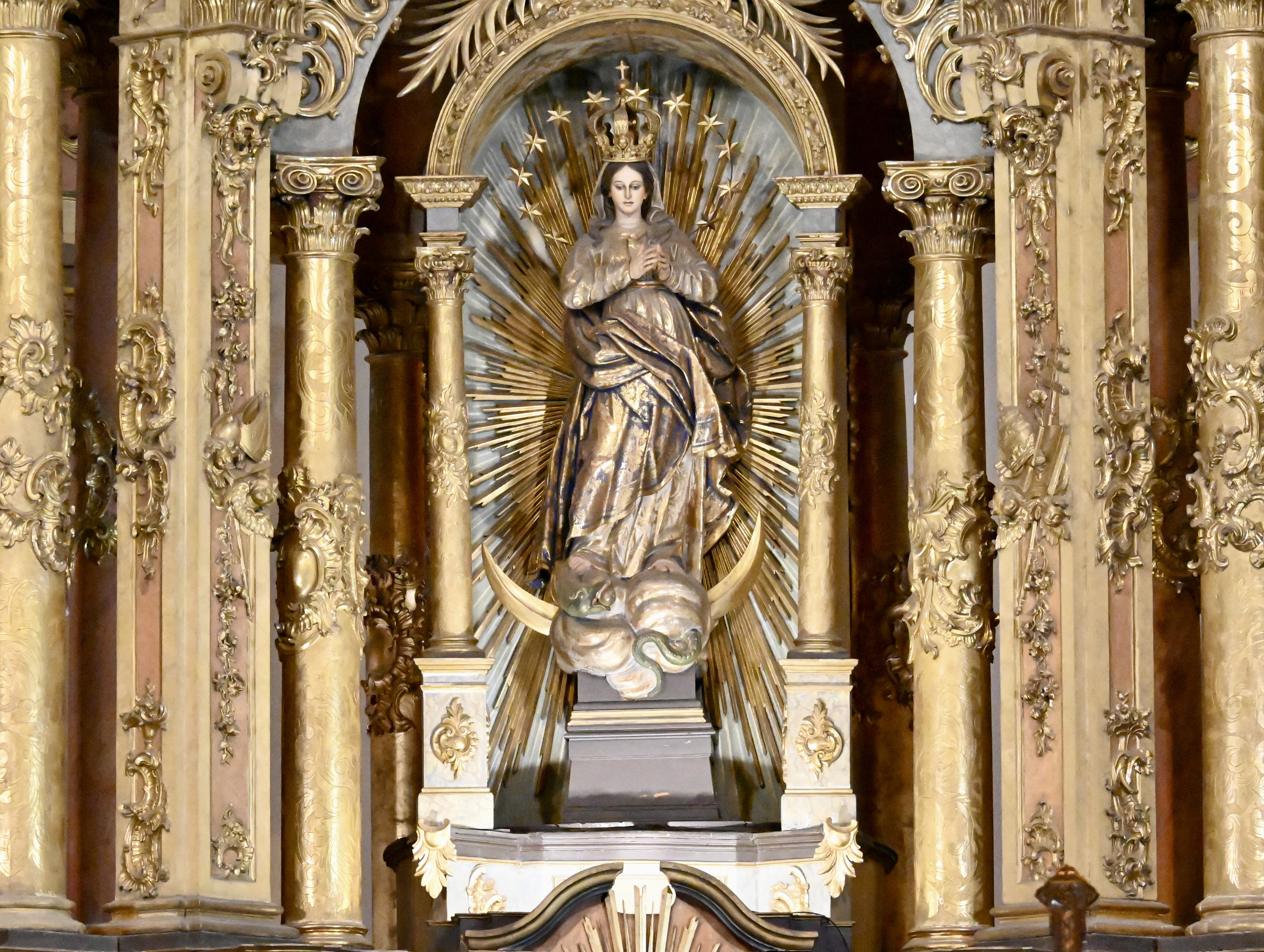
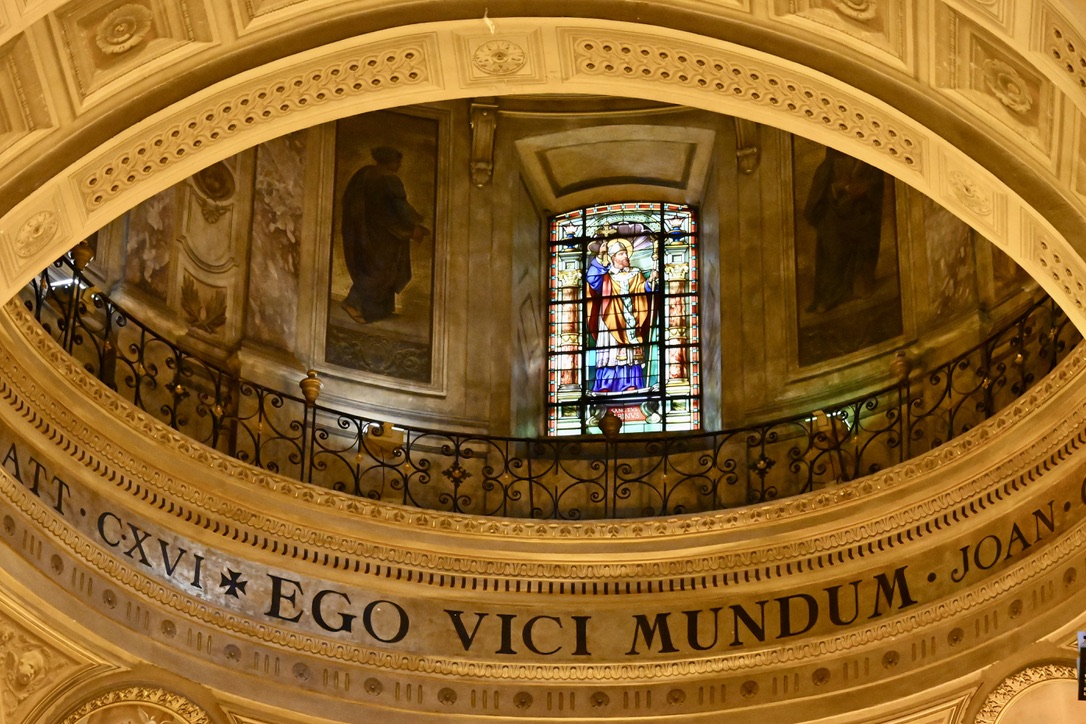
On our first afternoon here, Shari and I walked to the blocks-long San Telmo crafts market. Along the way, we stopped by the Buenos Aires Metropolitan Cathedral. From the outside, the Cathedral looks more like an ancient Greek temple than a church, with a columned portico facing the main square of Buenos Aires, the Plaza de Mayo. The inside is more traditionally cathedral-like, suitably awe-inspiring in its majesty.
Coming out of the Cathedral and looking to the left, we saw the Casa Rosada (also called the Casa del Gobierno), a pink-toned, stylistically ambiguous building that houses the executive branch of Argentina’s government. The pink hue, it turns out, comes from mixing cows’ blood into white paint, something I’d just as soon not have learned.
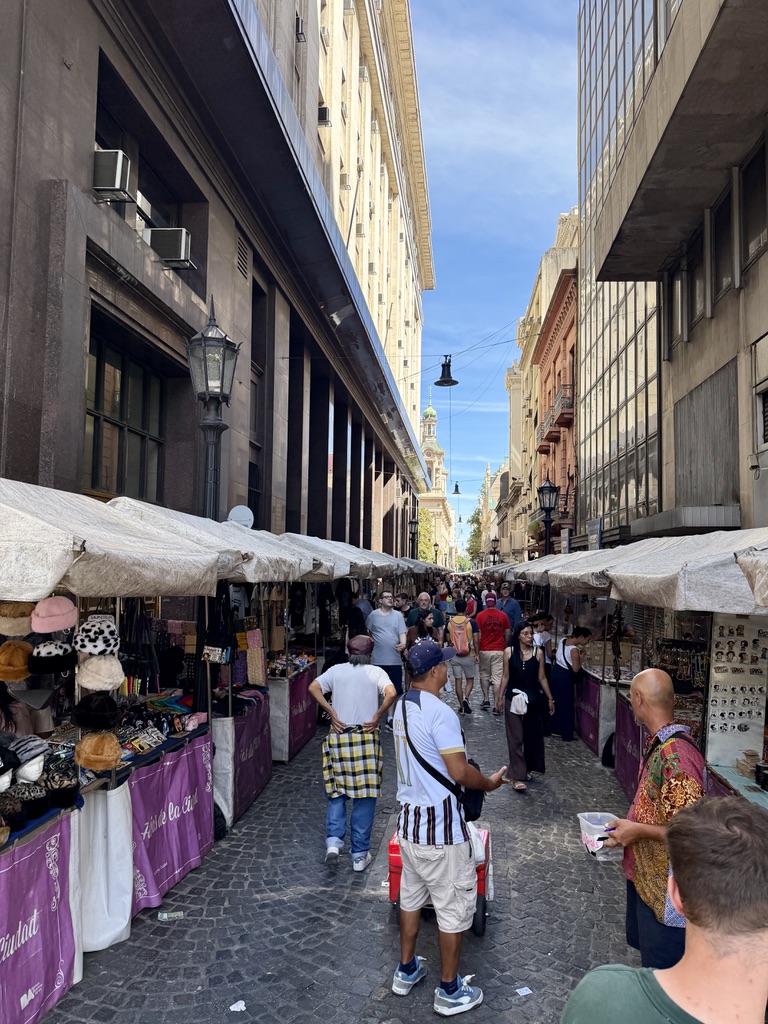
Calle Defensa, which is closed to traffic on Sundays in order to host the San Telmo market, lies almost directly across the Plaza from the Cathedral. The market is crammed with artisans selling leather goods, pottery, and other arts and crafts, while vendors of ices and other refreshments weave their carts through the crowds.
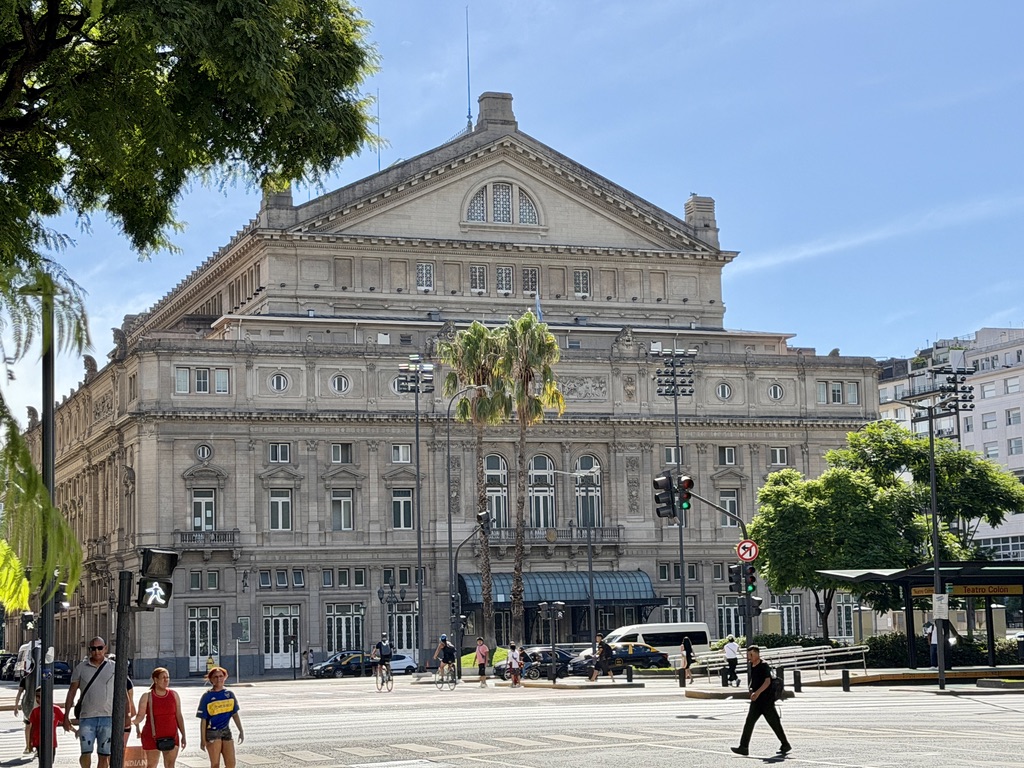
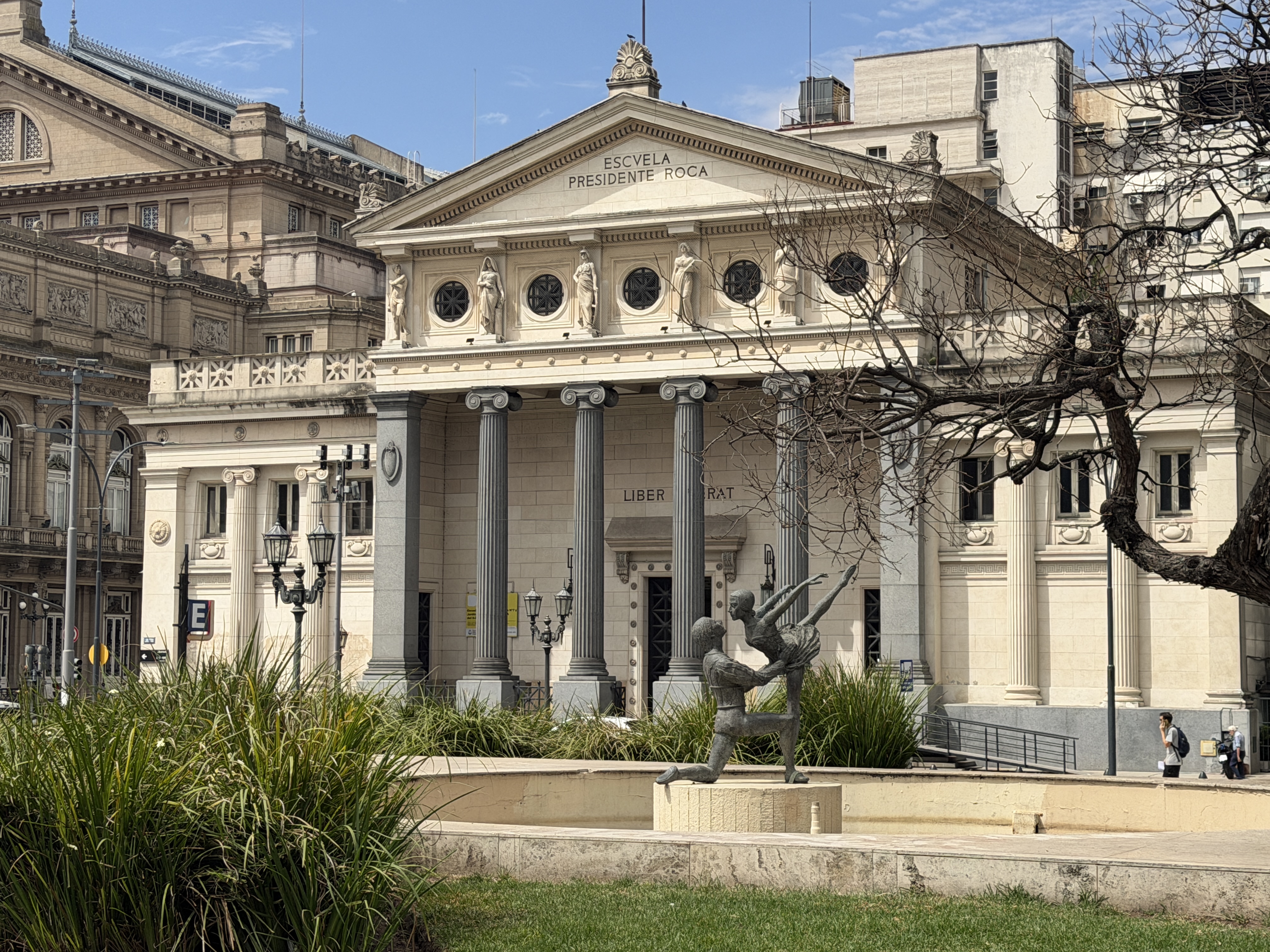
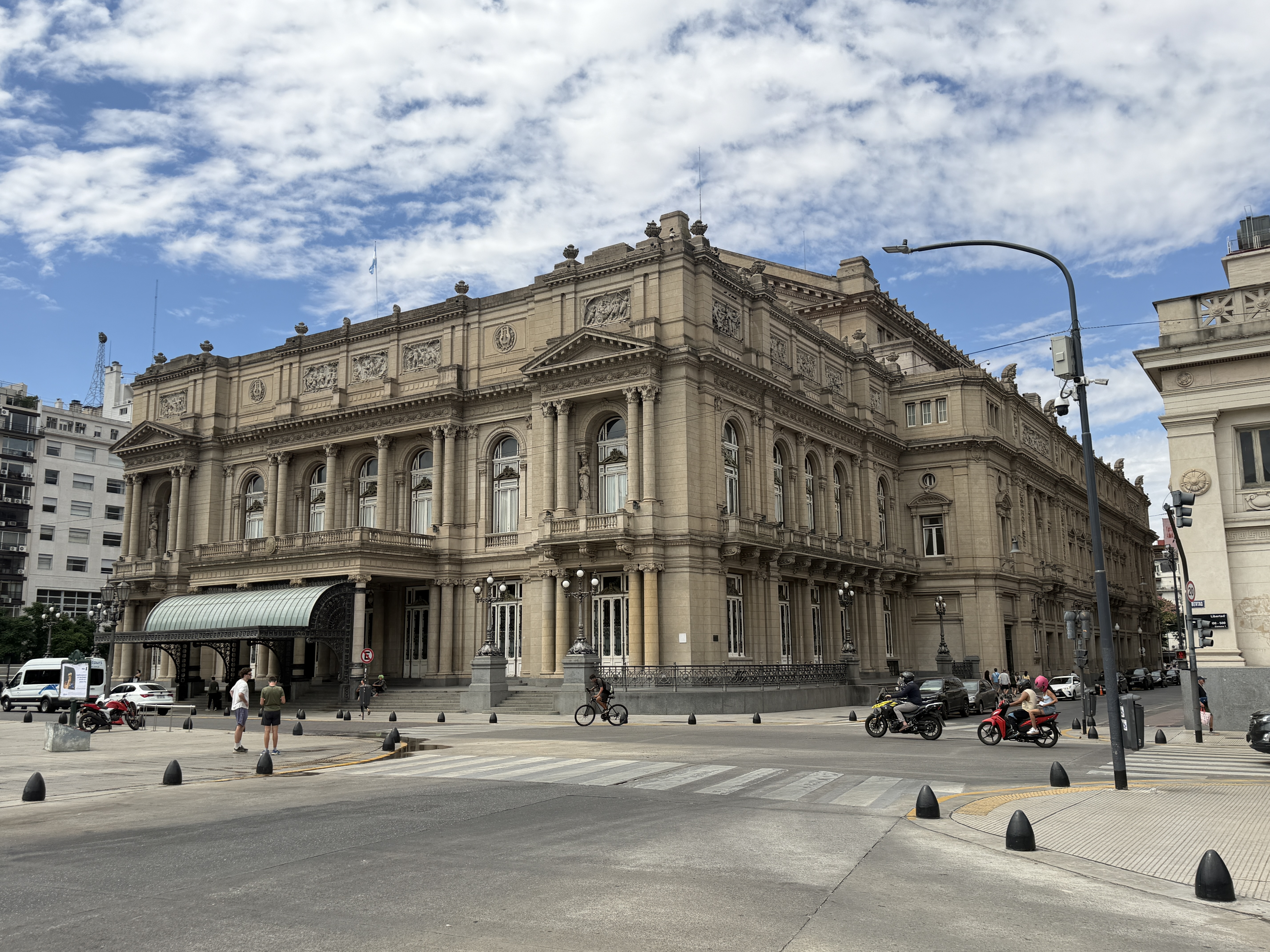
Our walk concluded back at our hotel (the Marriott), which fronts the 16-lane Avenida 9 de Julio (the date of Argentina’s independence from Spain) and sits diagonally across from one of the most iconic buildings in Buenos Aires, the Teatro Colón (the opera house).
Mon. Feb. 23
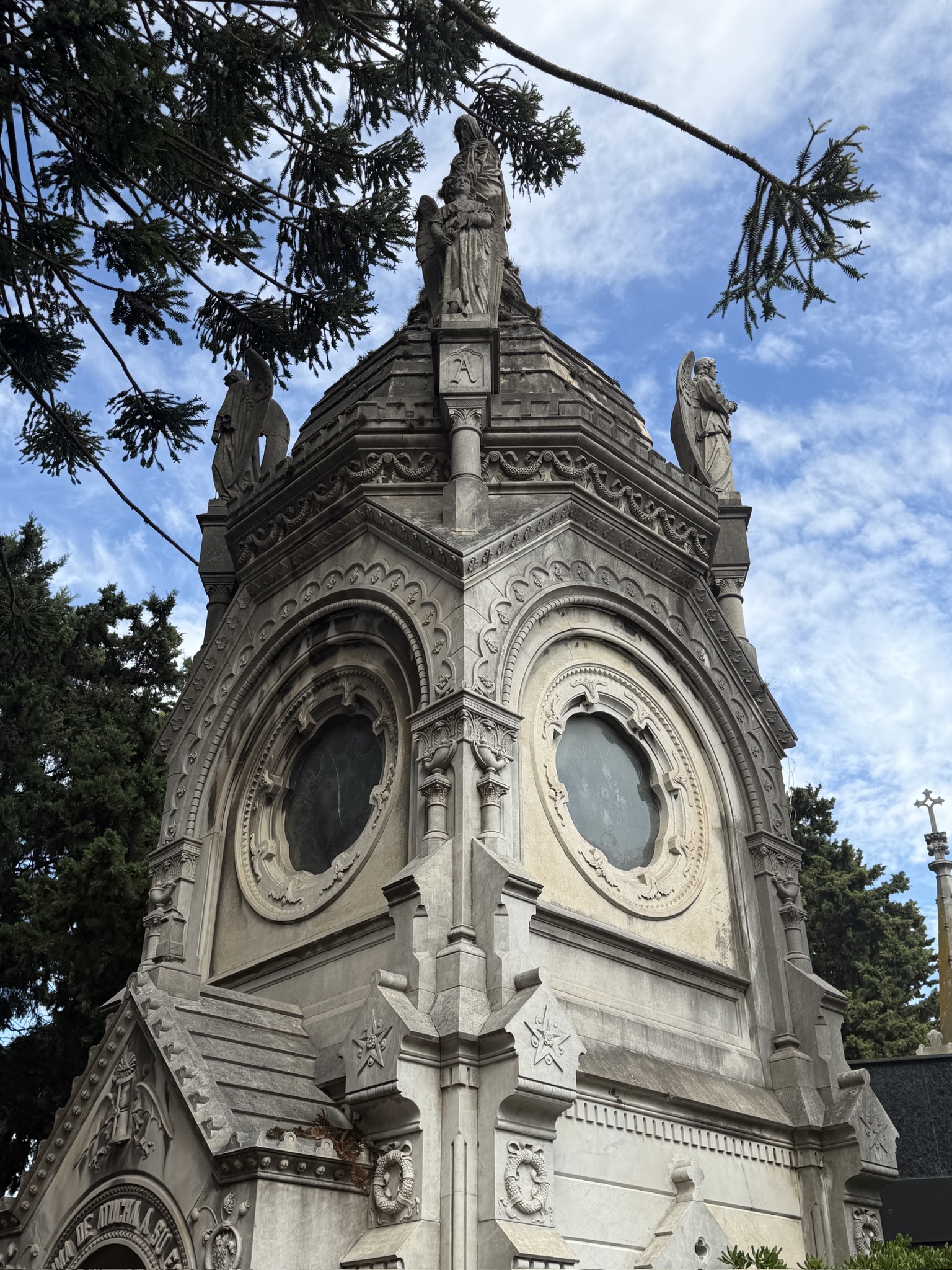
We headed out this morning on a four-hour “highlights of Buenos Aires” tour. Stop 1: the Recoleta Cemetery, where Argentina’s great and good, or at least wealthy, hang out after their time among the living has passed. I’m a big fan of visiting cemeteries, at least while I’m still alive. (I’m reserving judgment on their merits, if any, in the afterlife, if any.)
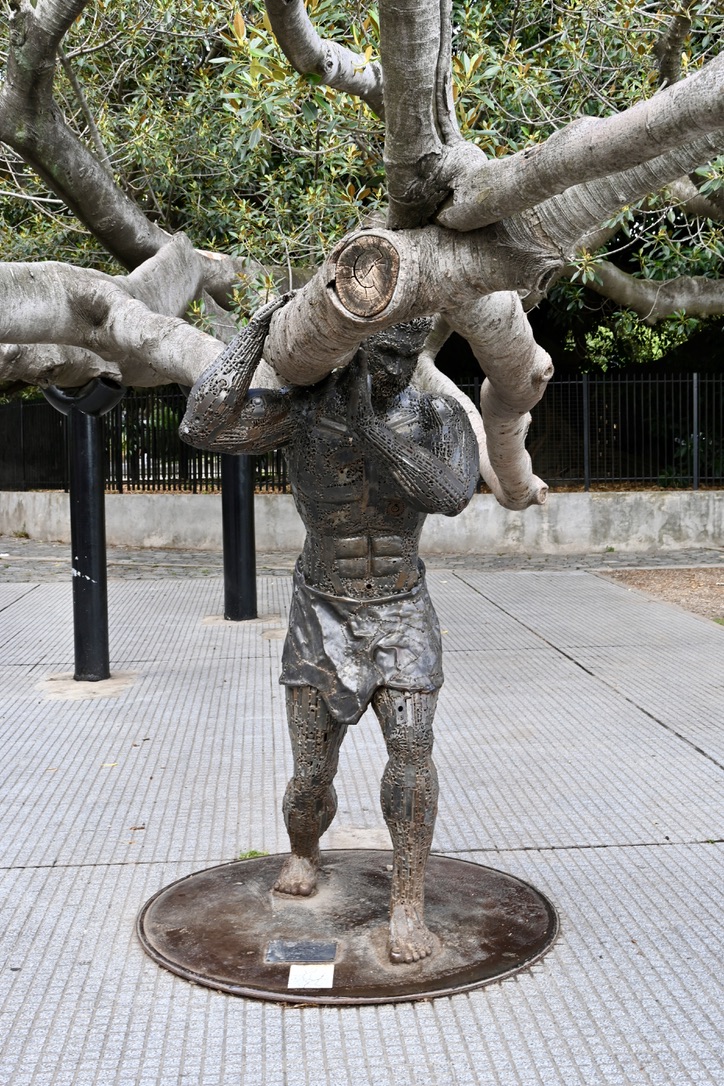
In addition to cemeteries being wonderful photographic subjects, “you can observe a lot by just looking,” as Yogi Berra said: what iconography is most common, how did people choose to be remembered, and so forth.
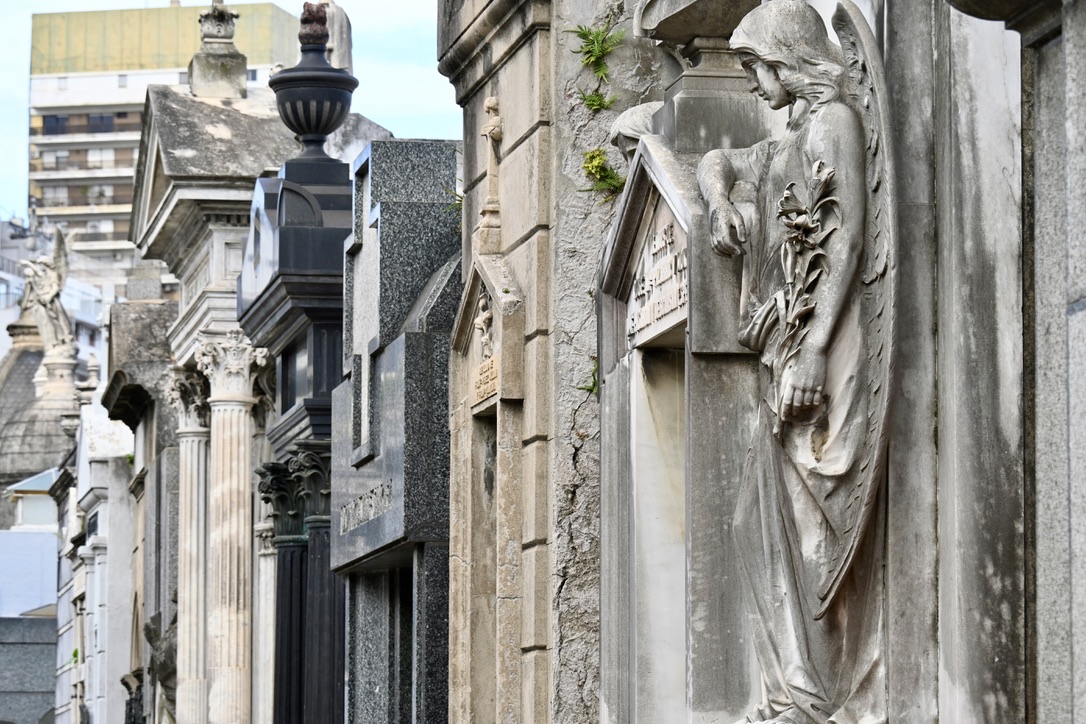
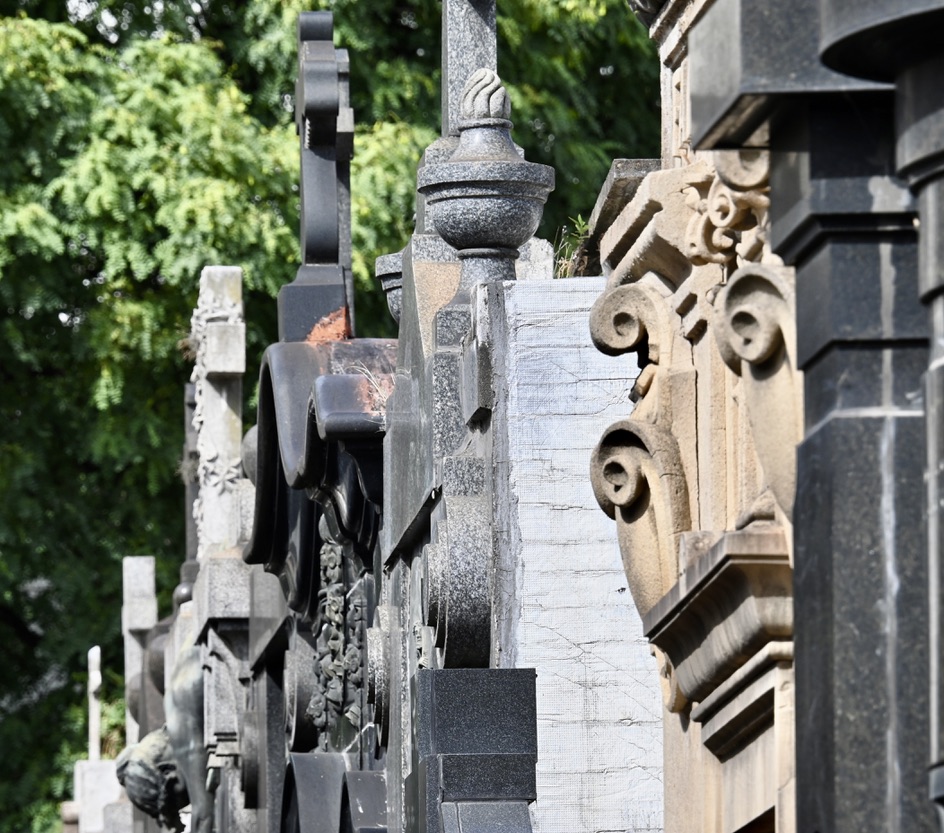
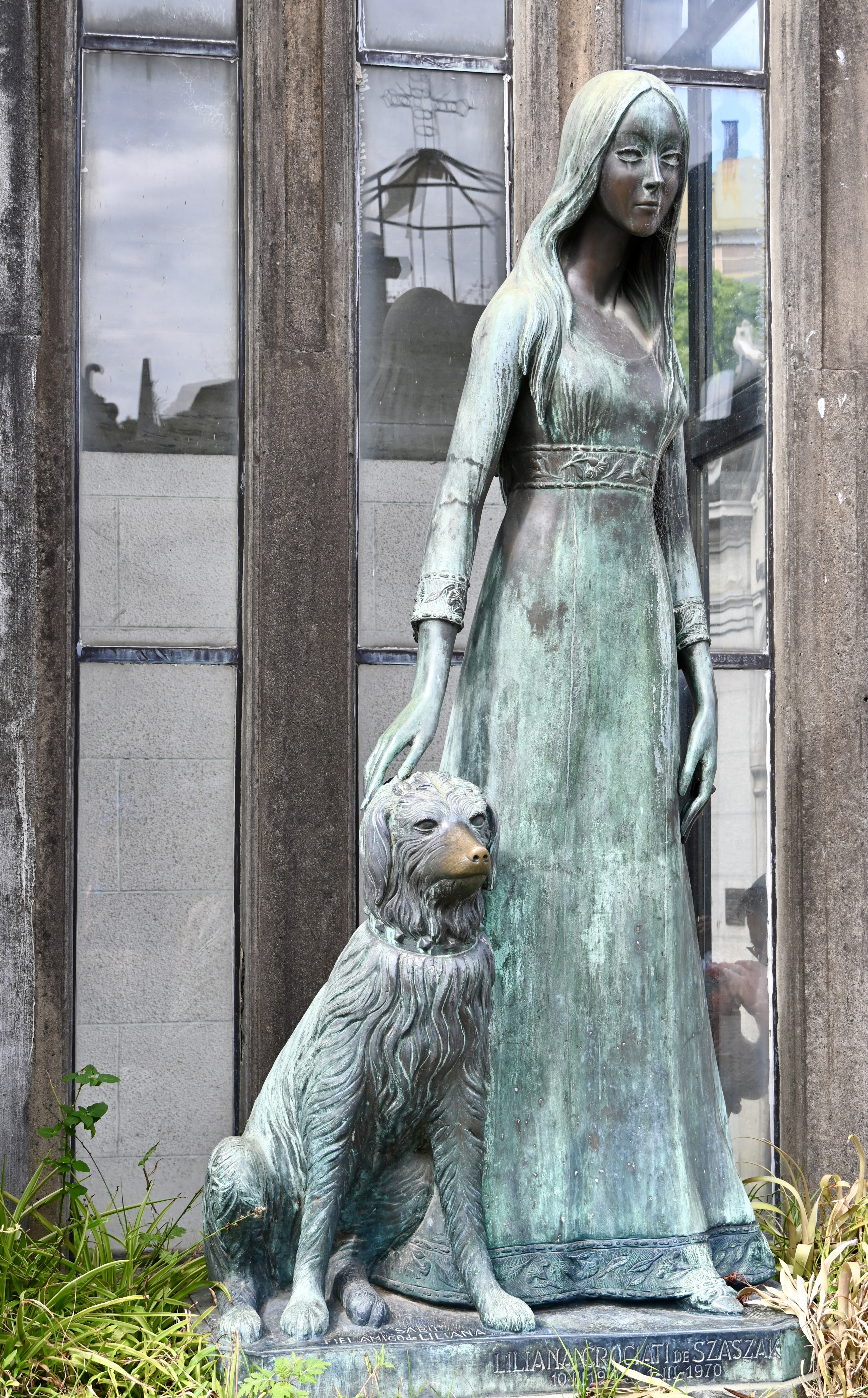
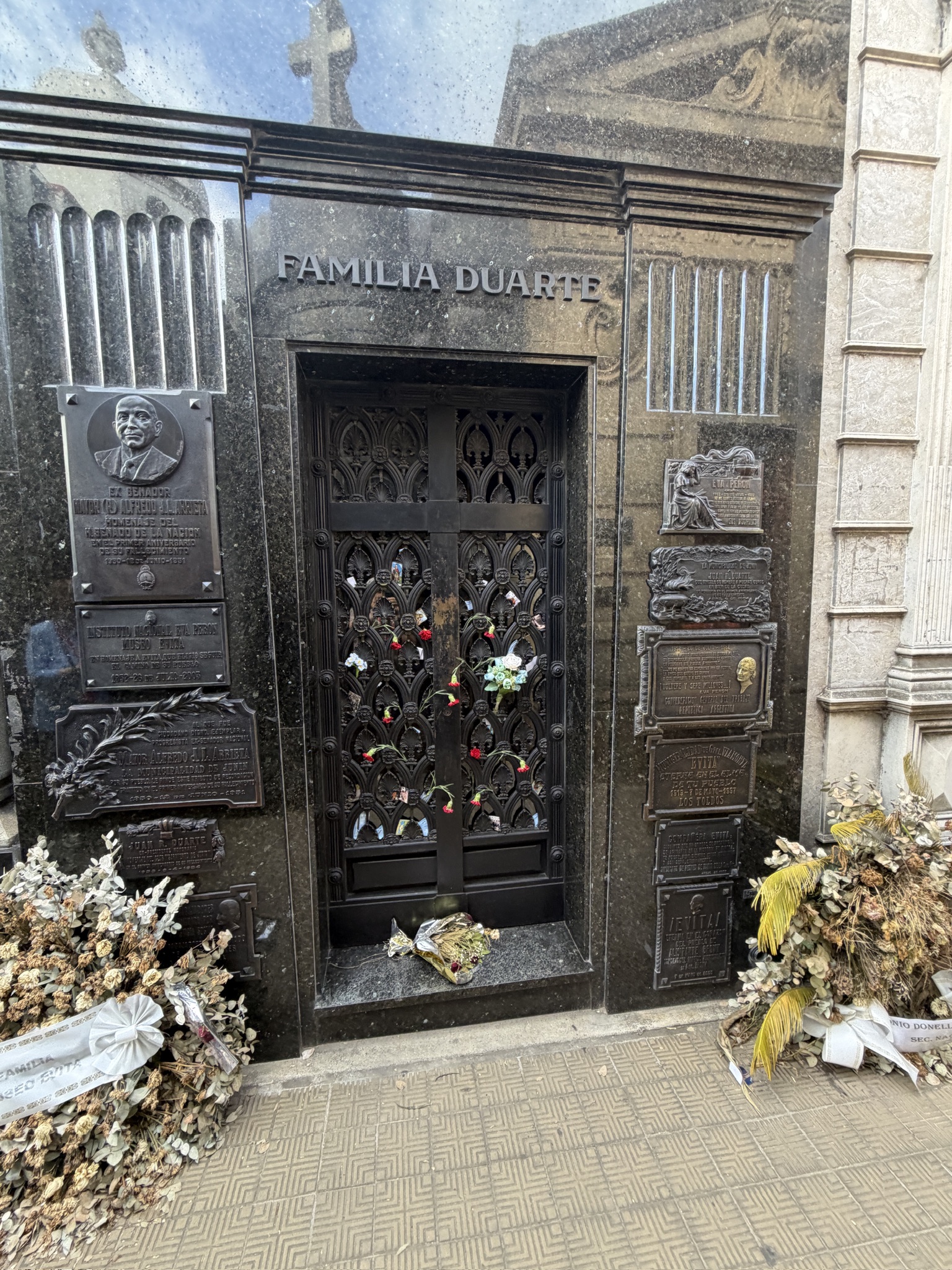
Recoleta is most famous for housing Eva Peron’s coffin, along with those of many of her relatives, in the Duarte family mausoleum. The Duarte crypt is far from the fanciest in Recoleta; in fact, it’s among the least ornate among the sometimes palatial vaults lining the cemetery’s lanes.
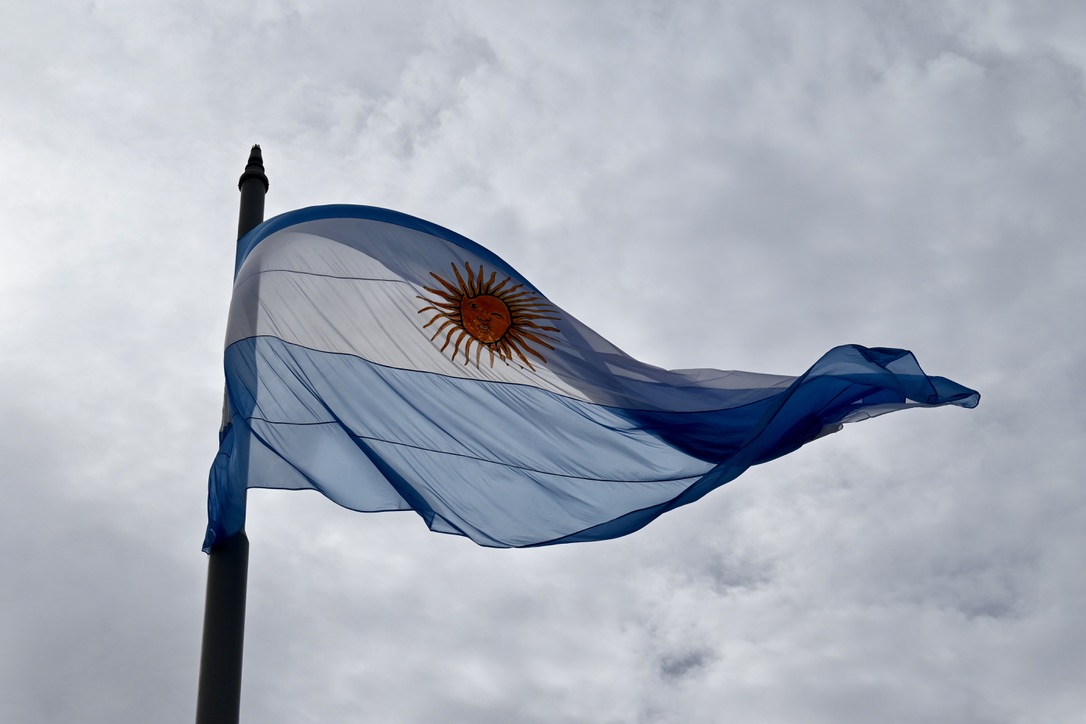
From Recoleta, we headed to the Plaza de Mayo (pronounced “maezh” by Porteños, as residents of Buenos Aires are called.
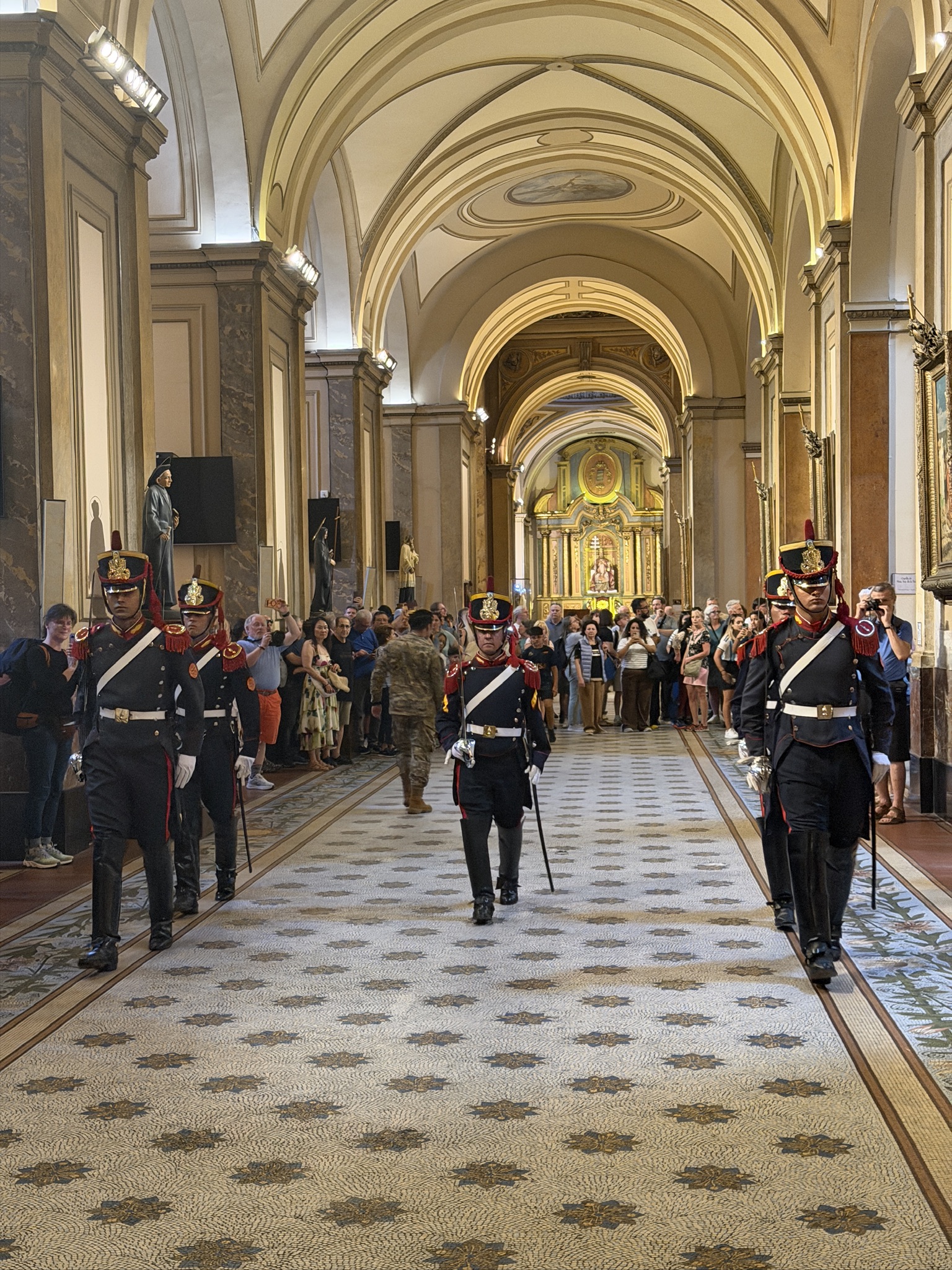
We revisited the cathedral that Shari and I saw yesterday, and got to see the changing of the guards.
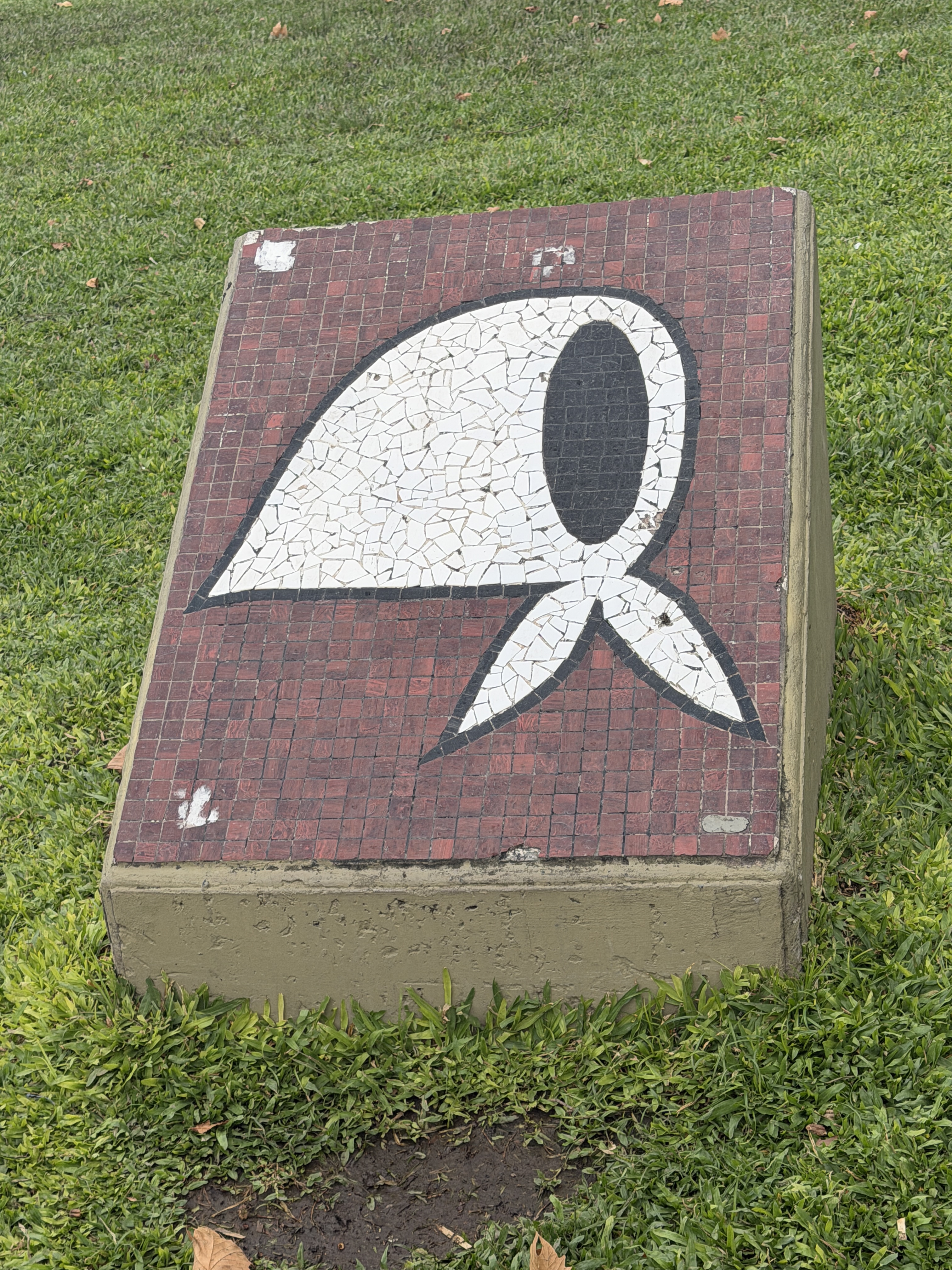
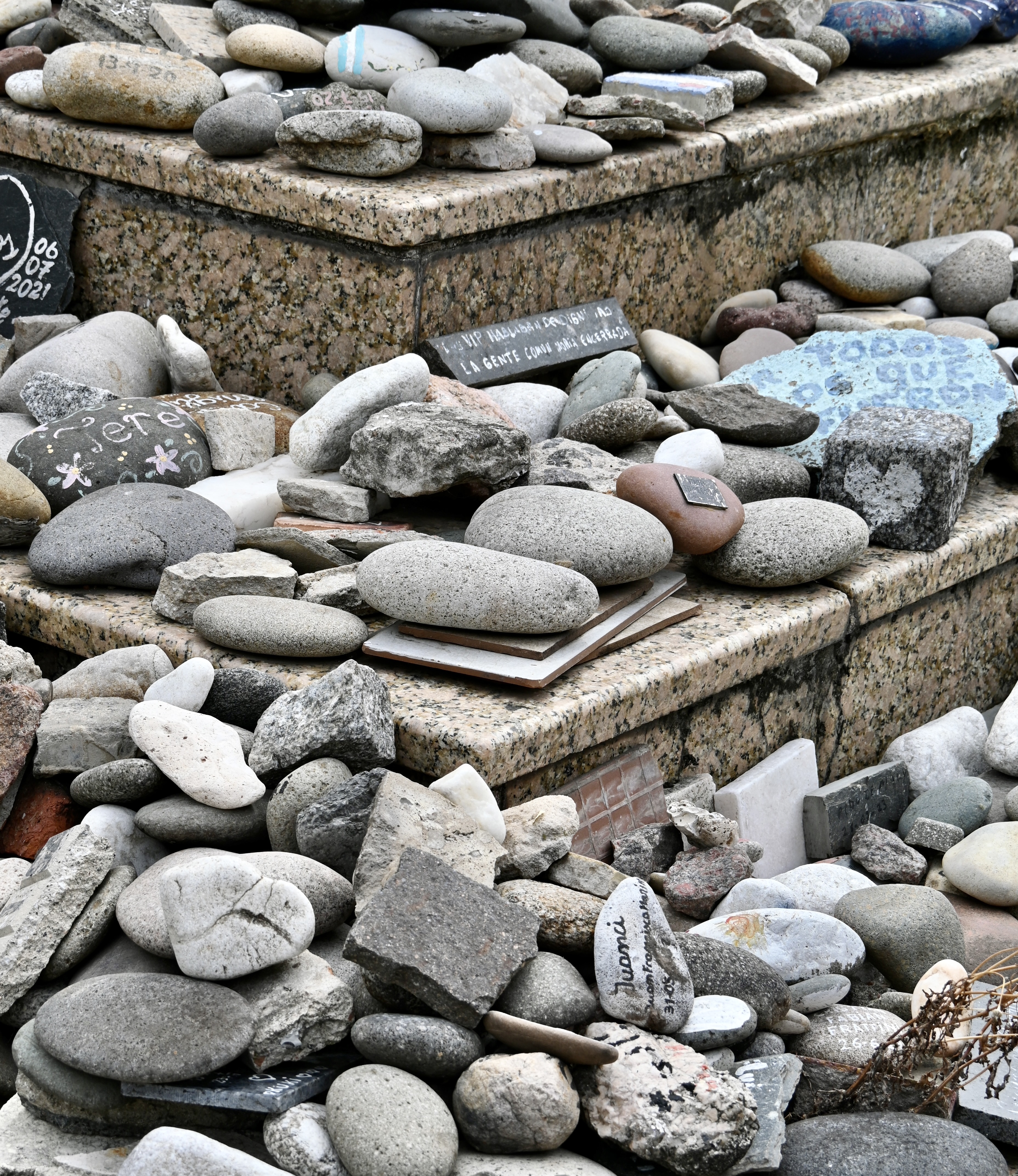
Elsewhere on and around the Plaza, we passed an unofficial memorial to people who died from Covid (rocks placed on the base of the statue of San Martín), and a small monument to the desaparecidas, the people who were “disappeared” under state terrorism between 1976 and 1983.
The final stop on our tour was the funky neighborhood of La Boca, where pretty much every stationary object sports the blue and yellow colors of the Boca Junior fútbol team.
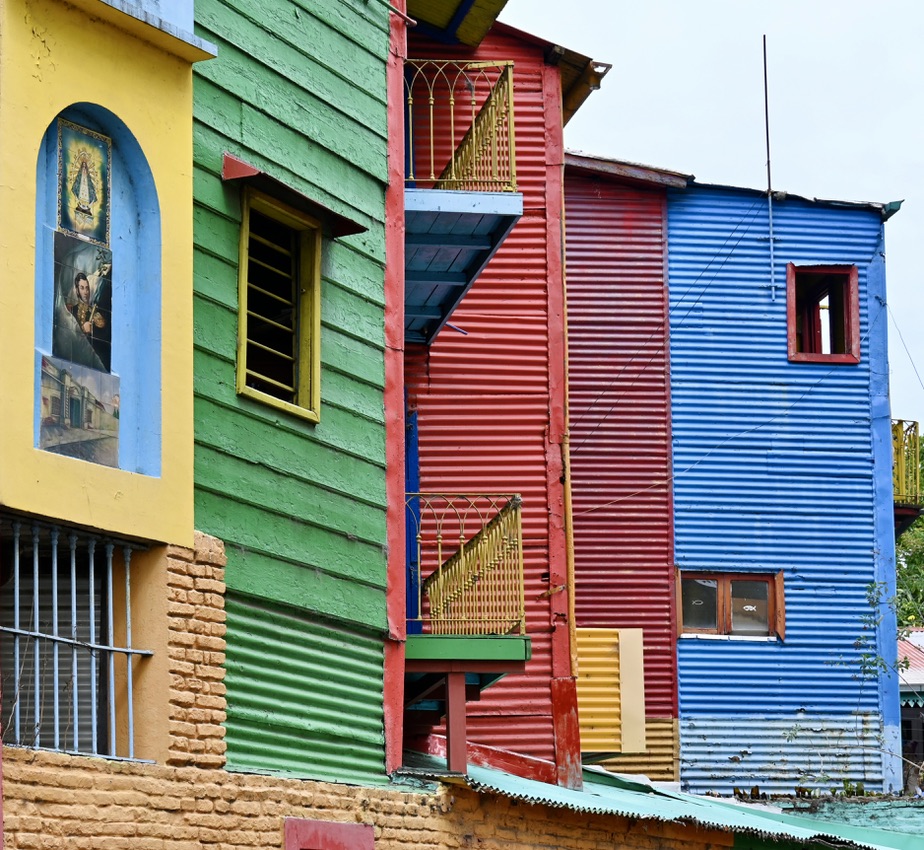
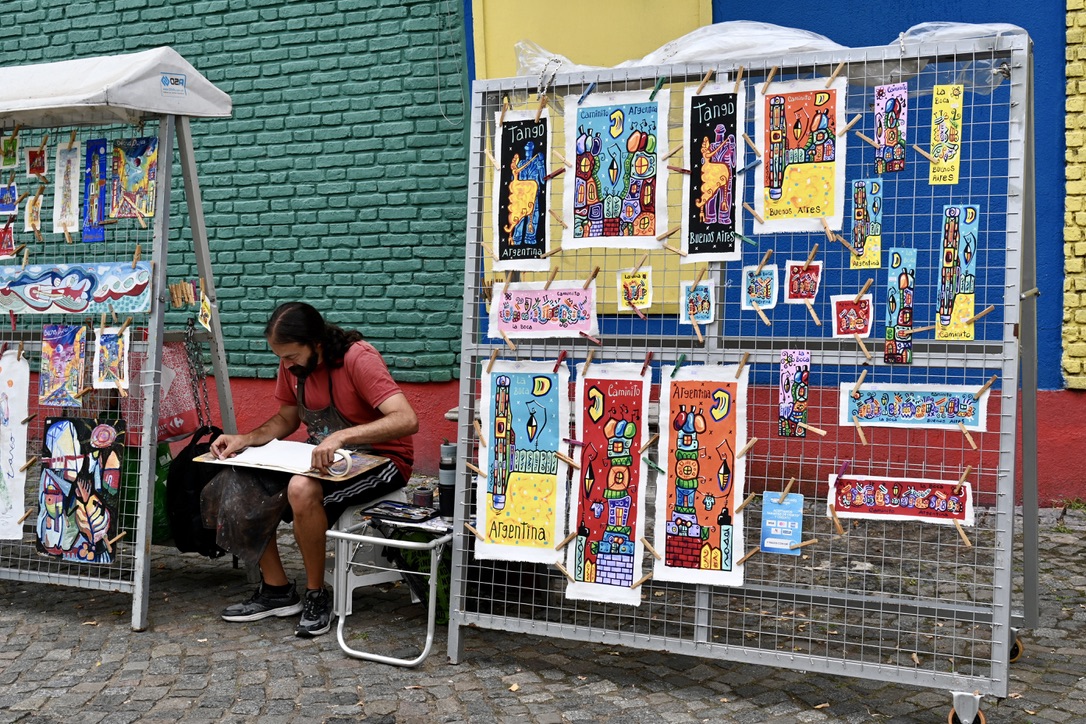
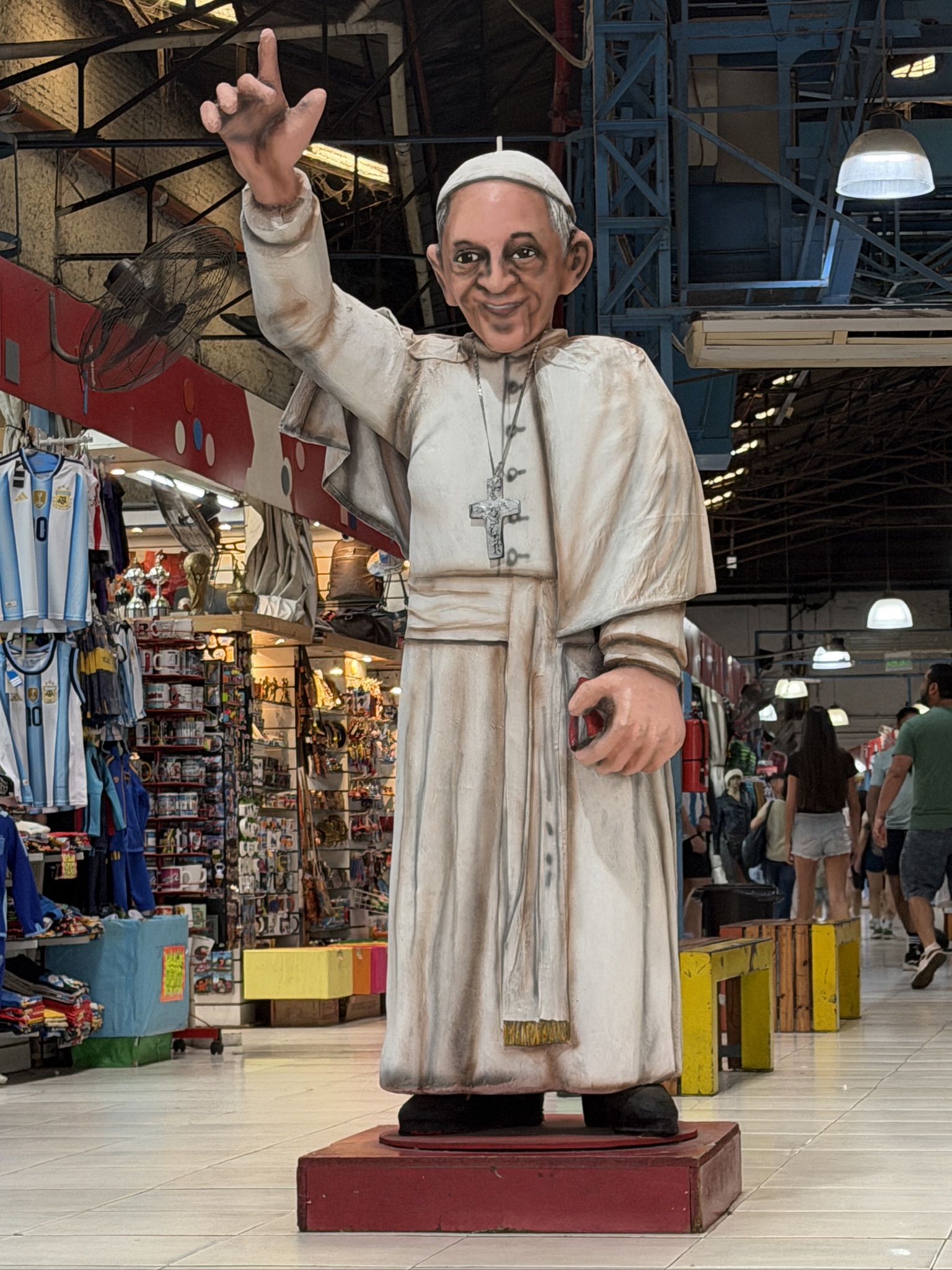
It’s touristy, but still fun: in addition to lots of souvenir shops, there are vibrant murals, cartoonish statues of Maradona, Messi, and Evita leaning out of windows and peering down from balconies, and pictures and statues of Pope Francis. (Pope Francis is roughly as popular in Buenos Aires as Shohei Ohtani is in Tokyo.)
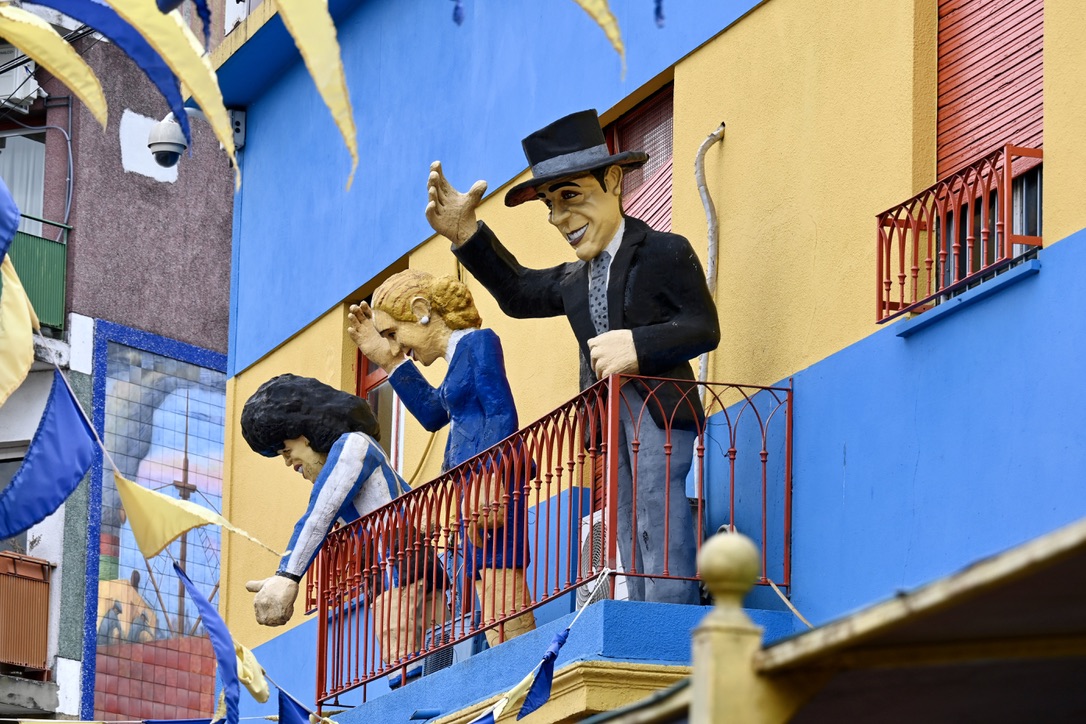
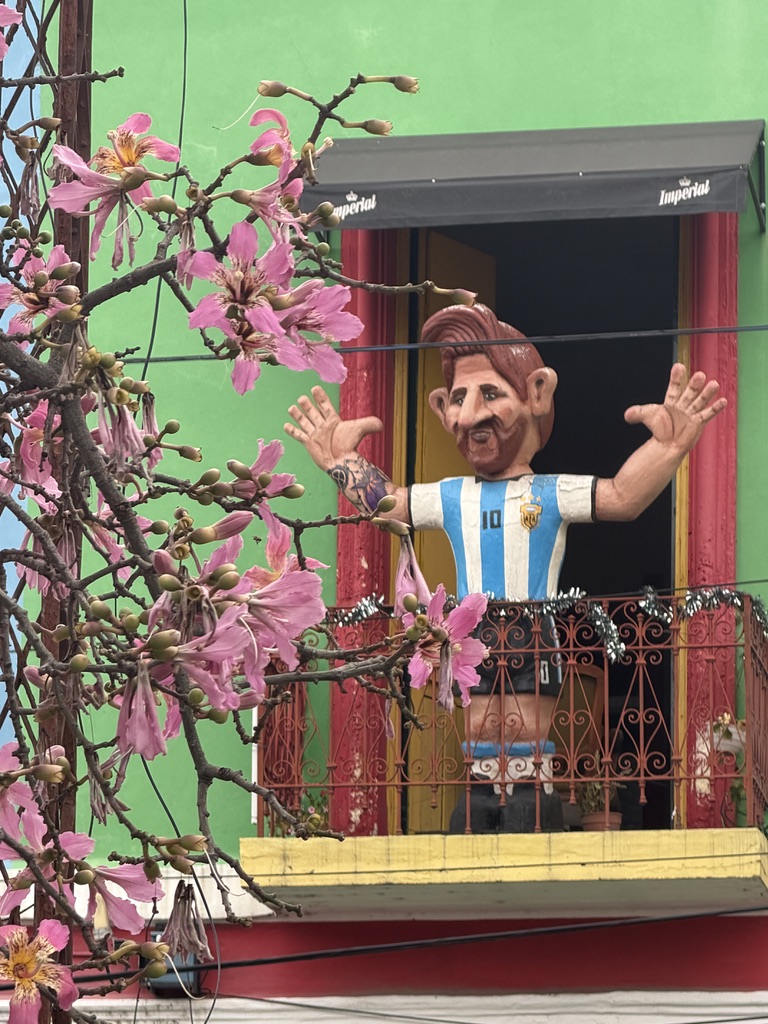
After the tour, at Sol’s recommendation, Shari and I headed to Pizzeria Güerrin (Av. Corrientes 1368) for lunch. Sol did not steer us wrong: it was excellent!
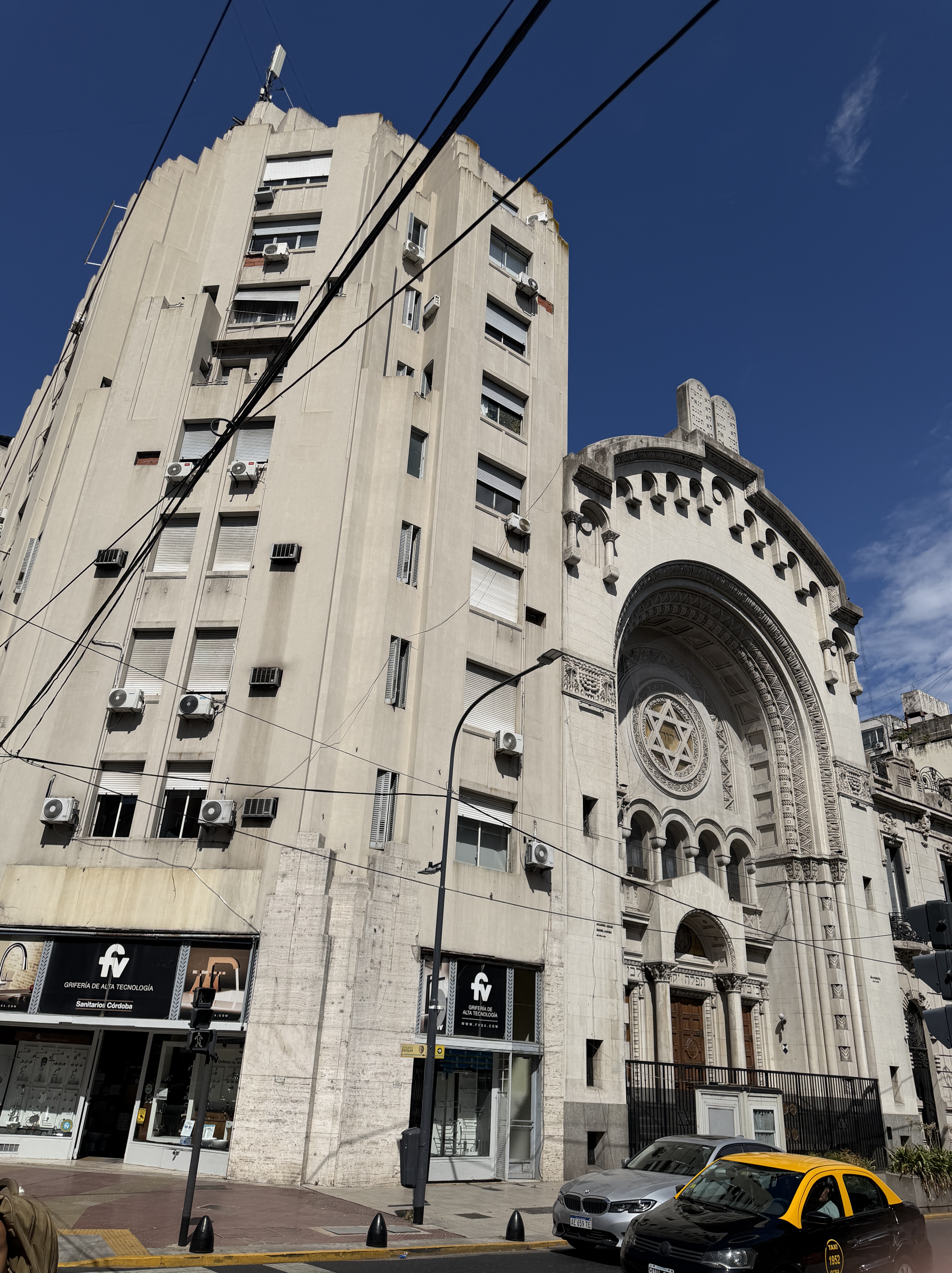
Then we did our own People of the Book tour. First up, a visit to the Jewish Museum and Templo Libertad (synagogue), which are collocated at Av. Libertad 769. (To visit, you must preregister online here, reserve a time, and bring your original passport. Upon arrival, there is a $15 US entry fee per person.)
The Museum has a permanent collection of prayer books, torahs, tefillin, and other Jewish religious objects, mostly from central and eastern European immigrants. There’s also a room to house temporary collections; the current one exhibits abstract impressionist by Eugenia Crenovich, known as “Yente.”
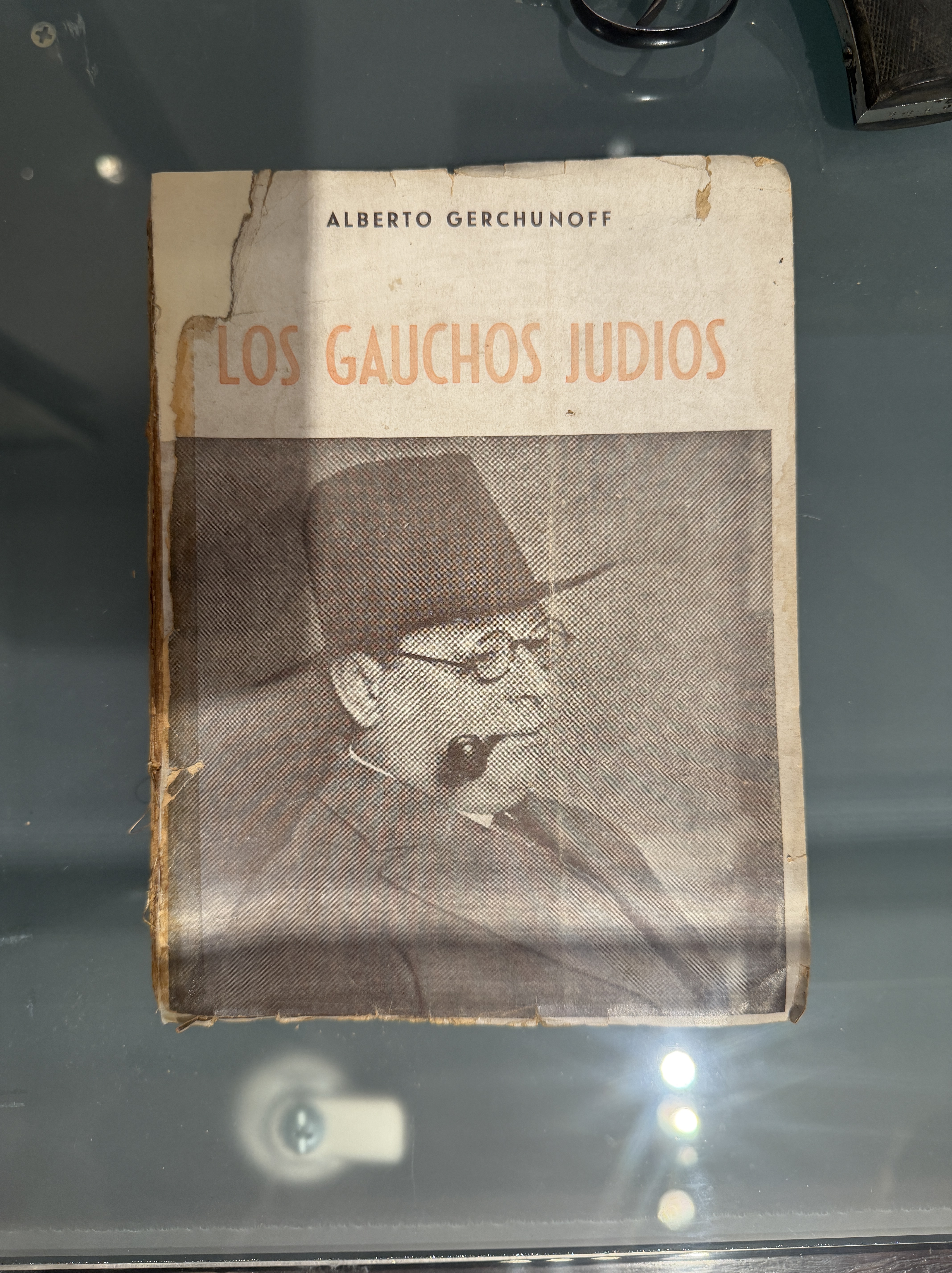
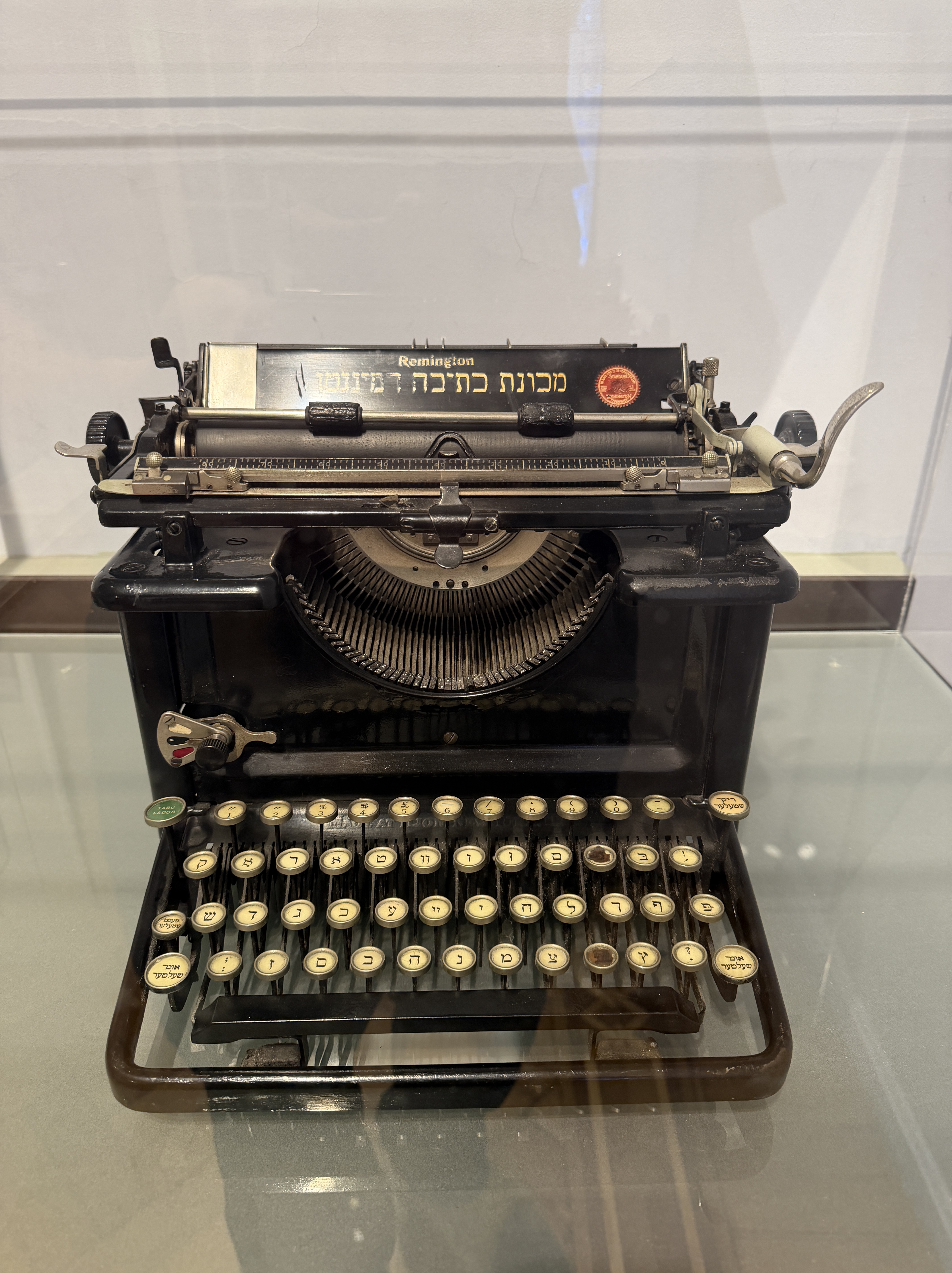
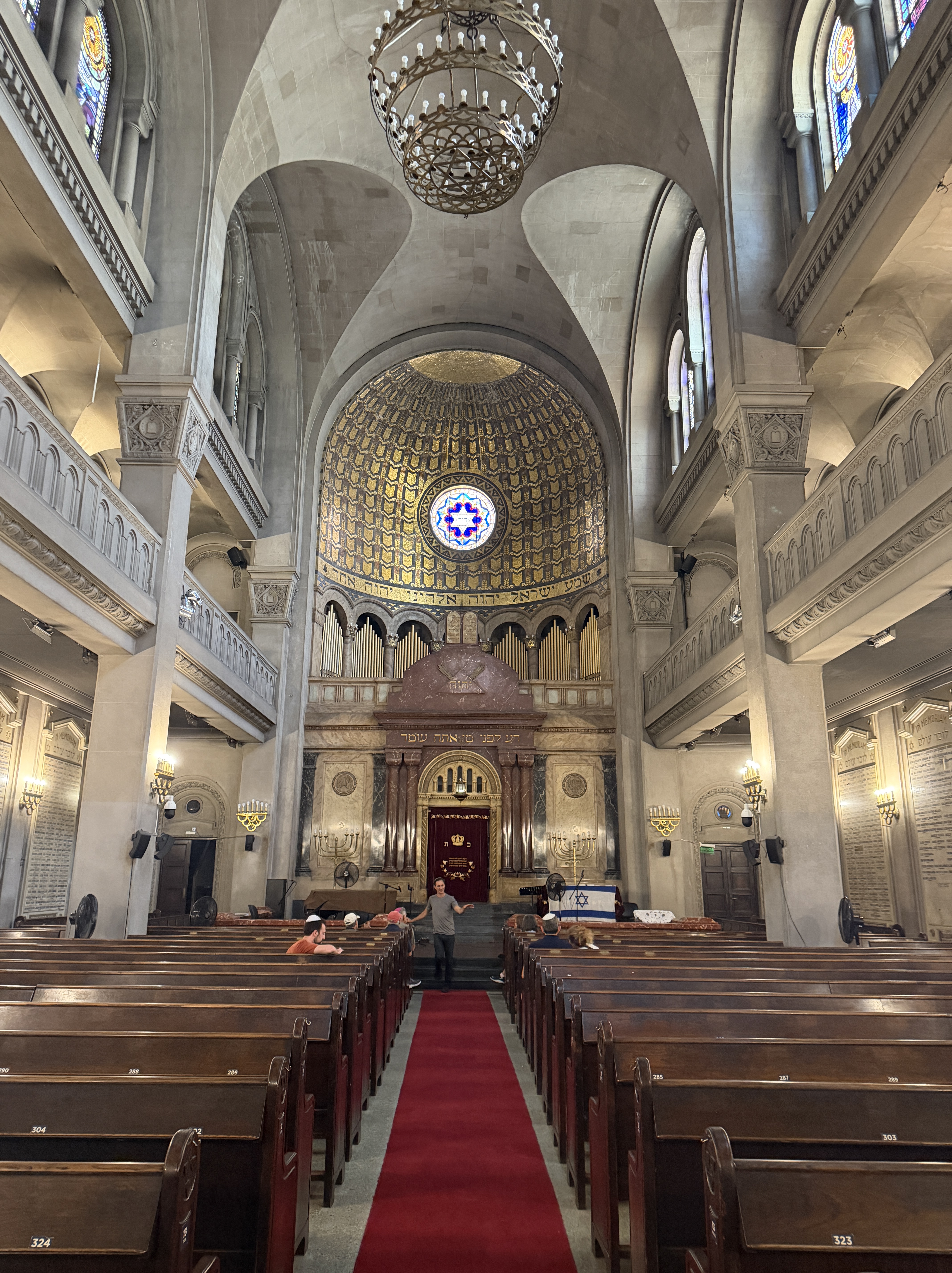
The Templo Libertad is a spacious, stately synagogue in the Ashkenazi tradition, although there are also Sephardic touches.
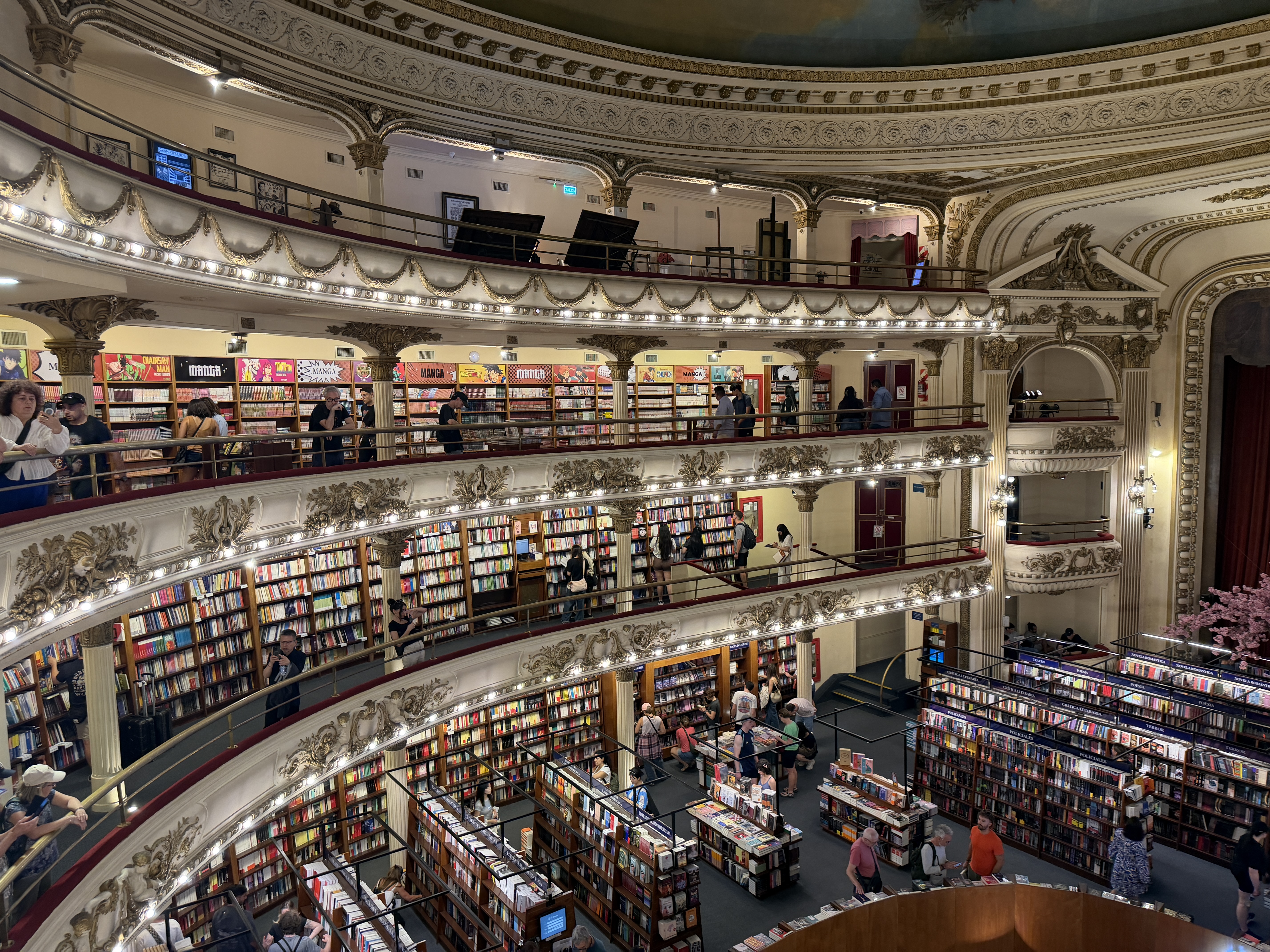
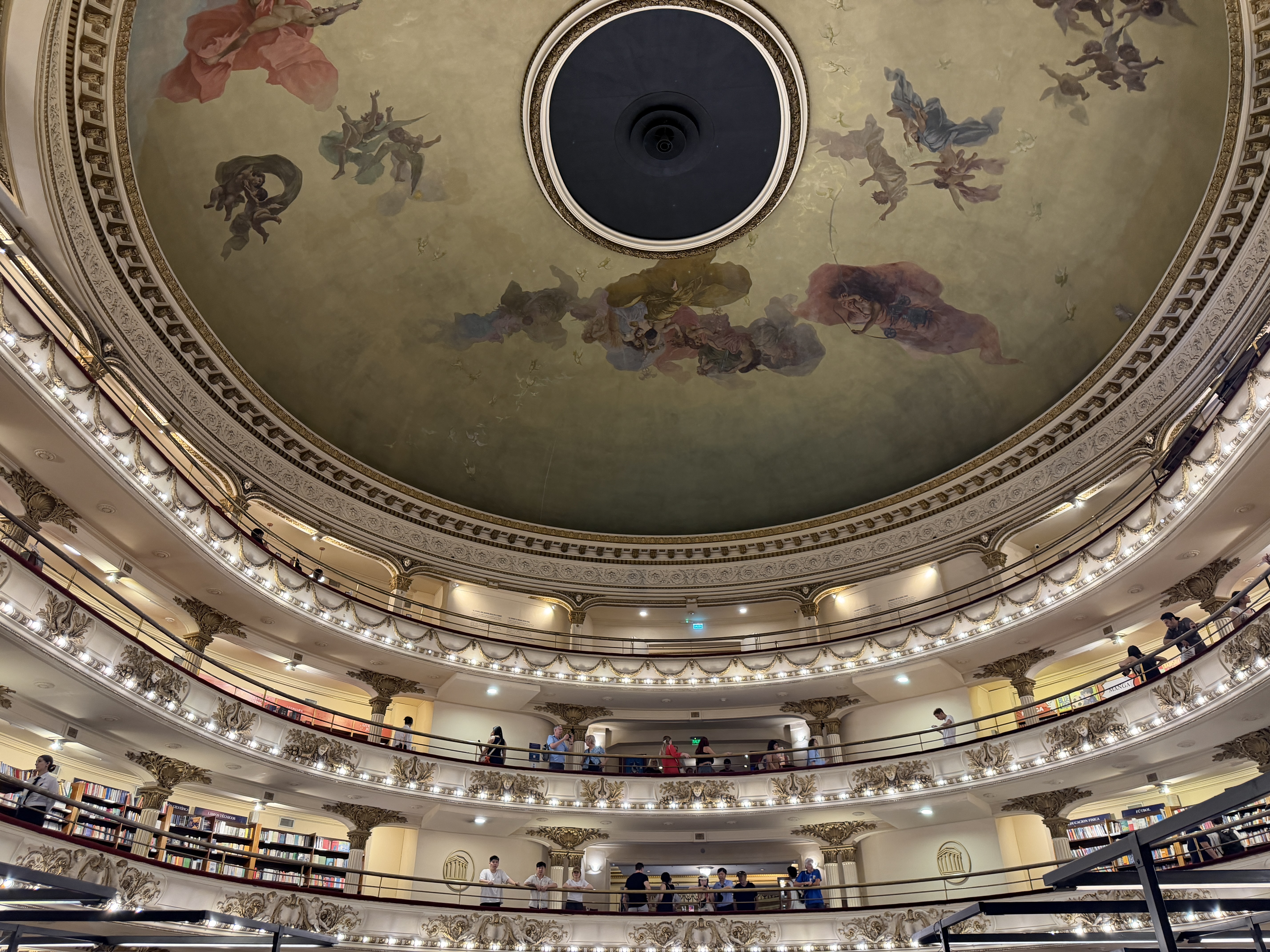
Following the museum/synagogue visit, we went to my preferred place of worship, a bookstore. Not just any bookstore, mind you, but El Ateneo Grand Splendid (Av. Santa Fe 1860), an enormous book shop/café housed in a converted theater. It’s regarded as one of the most beautiful bookstores in the world. I found it elegant and attractive, but I don’t think it has the character of bookstores I’ve been to in London and Porto.
Tomorrow, Gate 1 is offering an optional, full-day tour to a farm to view a gaucho show and consume lots of beef. As an alternative, several of us who are not meat-eaters booked a boat trip to the Tigre Delta, about which I’ll report in due course.

 PuffinlessTravel
I definitely need to go back to Buenos Aires!
A pleasure for the eye, the ear, and intellect. Great travelogue!
Thanks!