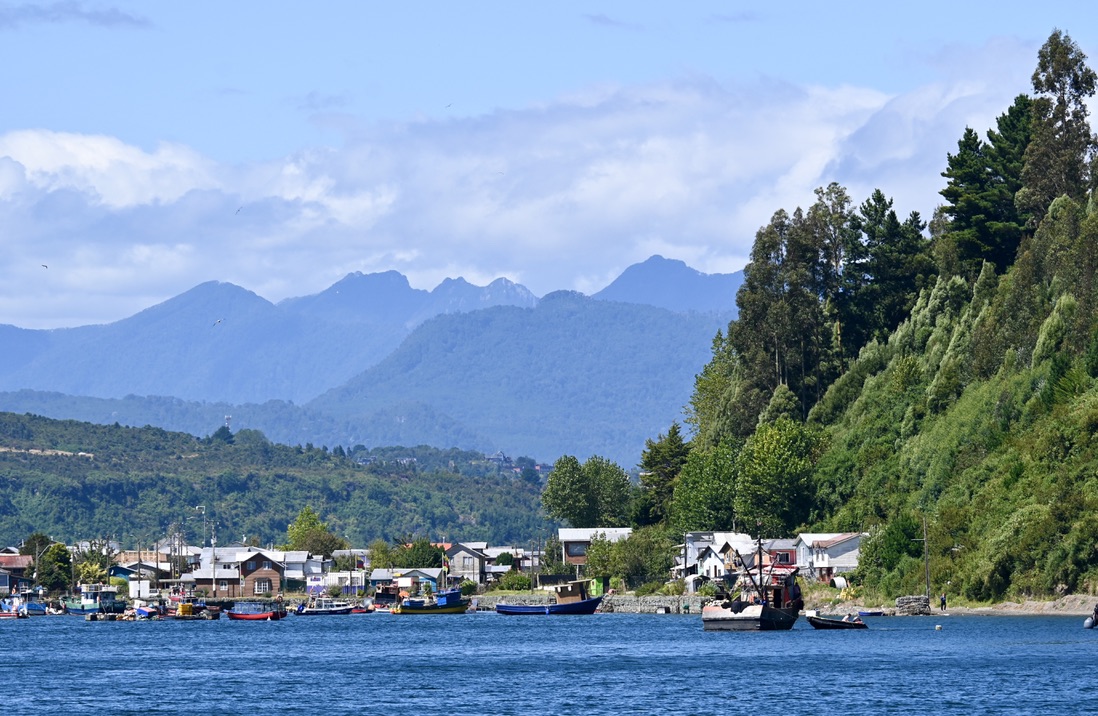
Puerto Montt is two hours by air and a world away from Santiago. We left the hot, dry capital late Wednesday morning and arrived in Chile’s cool, lush lake district in the early afternoon.
Wednesday, Feburary 18
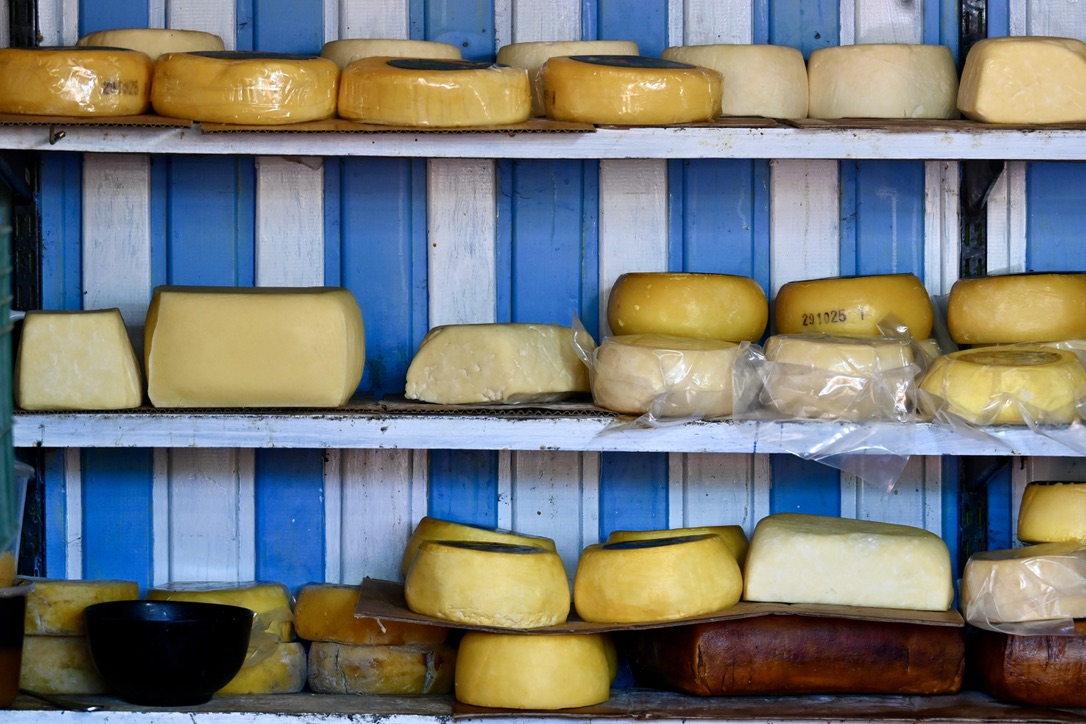
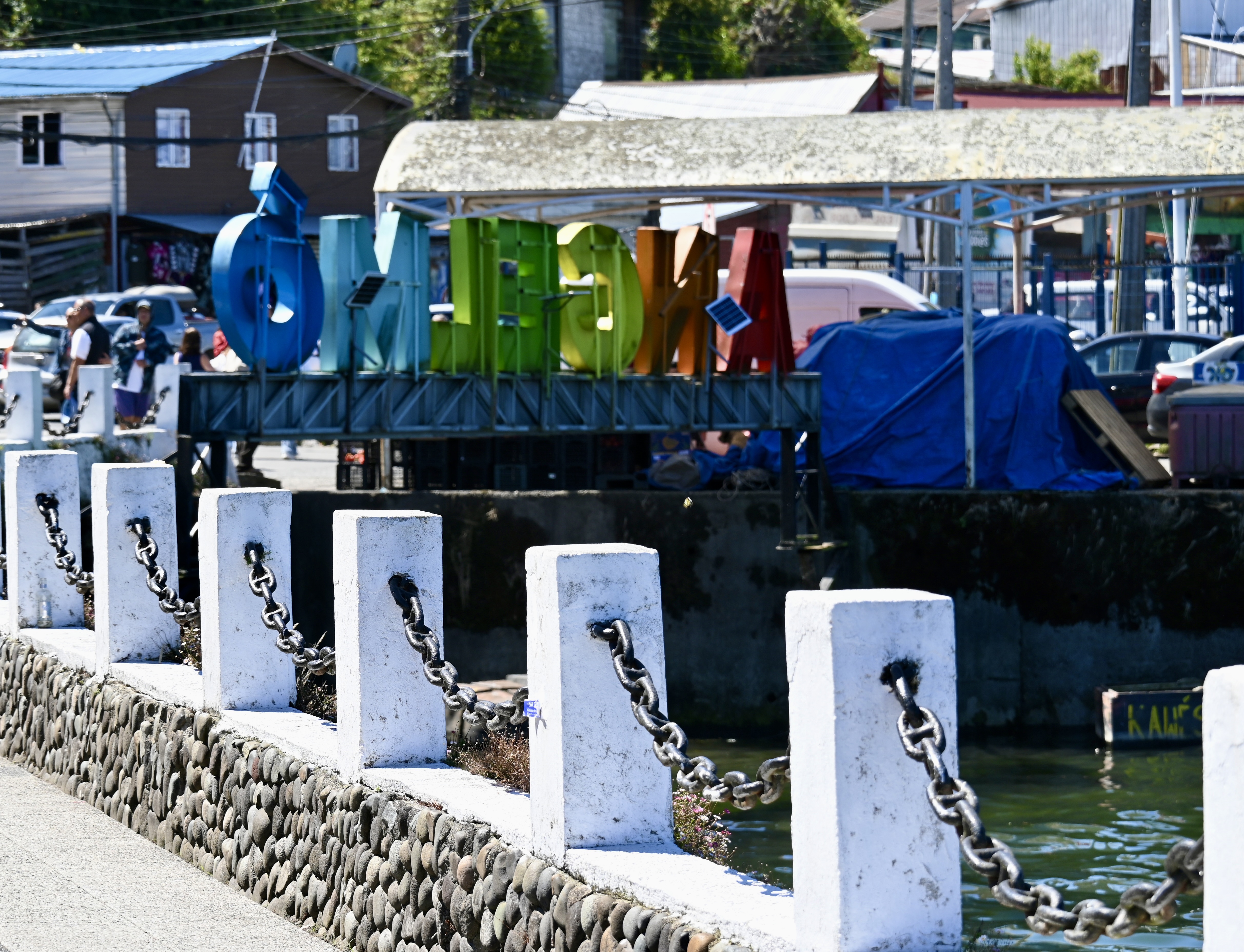
Before heading to Puerto Varas, our home for the next few days, we visited Puerto Montt’s Angelmo fish market, shopping list in hand. Why were we shopping? Our wonderful guide, Sol, made up a game in order to introduce us to the foods of Chilean Patagonia and have us converse with the people working in the market (none of whom spoke English).
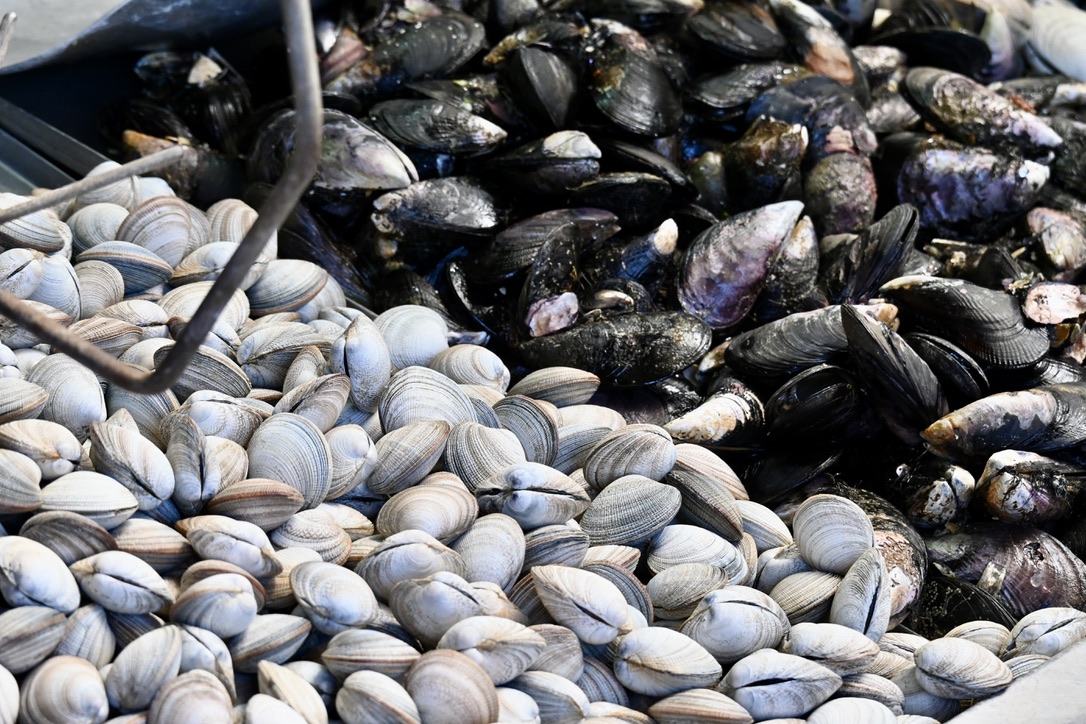
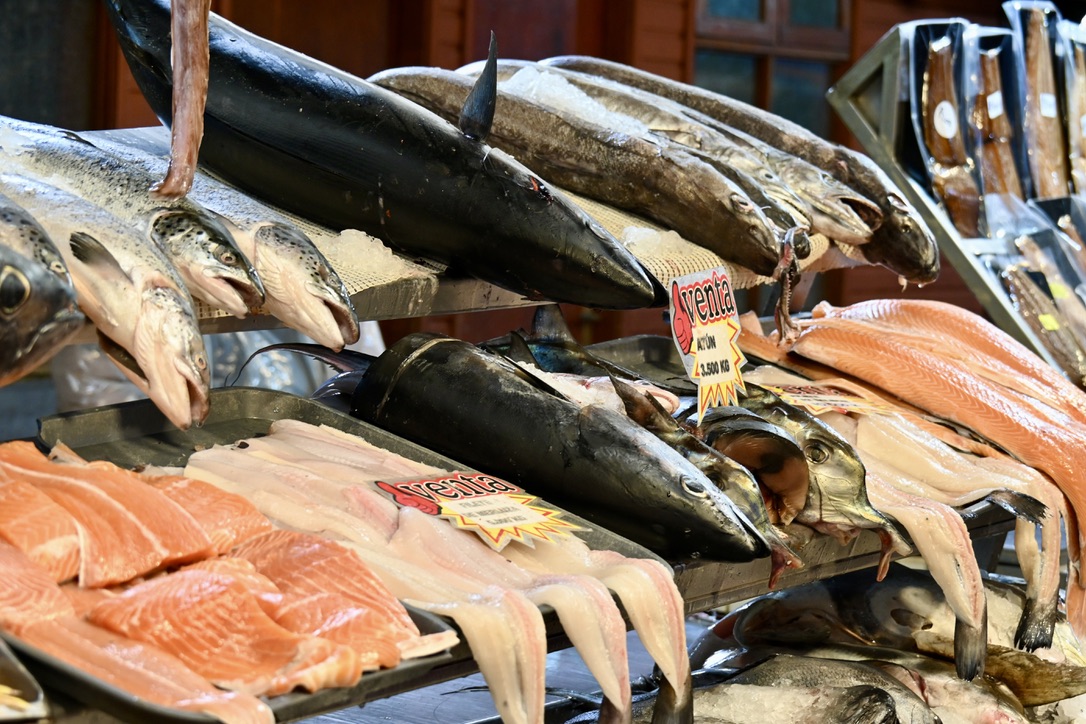
We were divided into teams, and each team was assigned a local ingredient or dish, with no idea what it was. Our task: to locate the ingredient, ask how it’s used, purchase it, and upon returning to the bus, make a presentation. We competed for prizes based on our presentation and the cleverness of the team’s name.
Our team – me, Shari, and four of our tour-mates – was assigned merkén, which turns out to be a traditional Mapuche (the local indigenous people) spice mix composed of smoked ahi pepper, cumin, coriander, salt, and various herbs. Finding it and determining its contents was easy. Discovering its uses was an iterative exercise:
Me: “Se usa en sopa [soup]?”
Shopowner: “Sí”
“Se usa con pescado [fish]?”
“Sí”
“Con carne [meat]?”
“Si”
“Con pollo [chicken]?”
“Si”
“Con todos alimentos [all foods]?”
“Sí.”
There you have it: a seasoning for all seasons.
Our team name, by the way, was “The Spice Girls and the Red Hot Chili Peppers.” I’m happy to report we were one of two teams chosen for best presentation, but we lost out on best team name to the Mamas and the Papas team, who had to find a certain potato dish. (“Papa” is the Spanish word for potato.)
I should add that, in the interests of research, I dabbed some merkén on my tongue. Turns out it’s also quite useful in promoting copious sinus drainage. (Granted, my tolerance for spice is as low as the current administration’s tolerance for facts.)
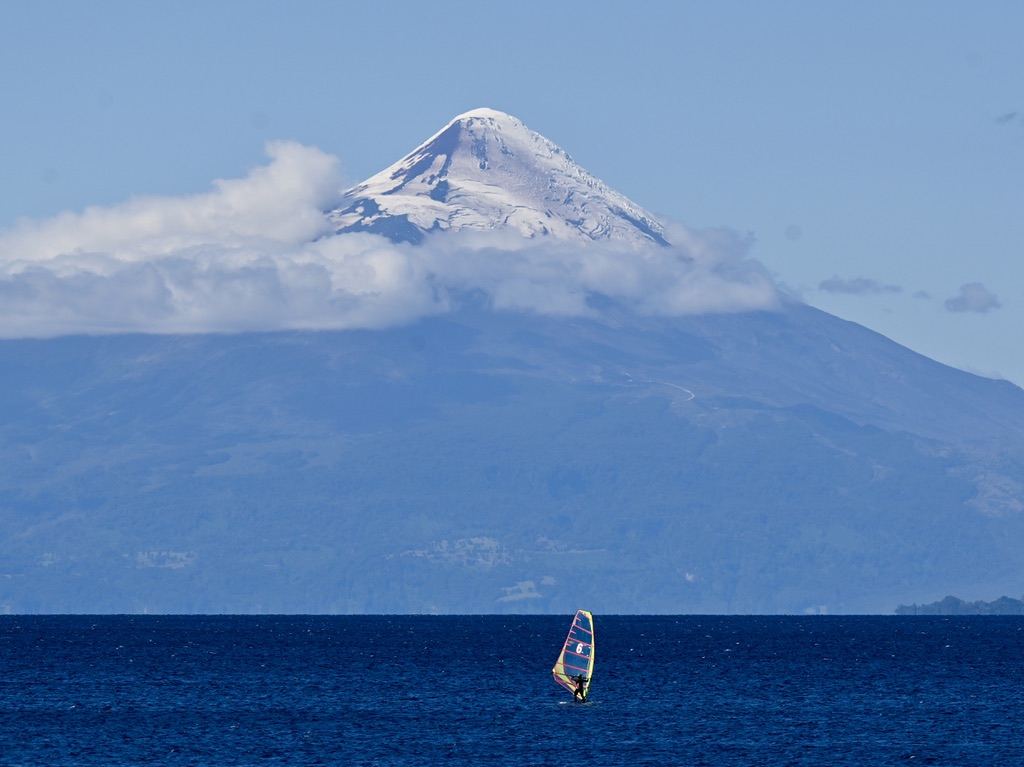
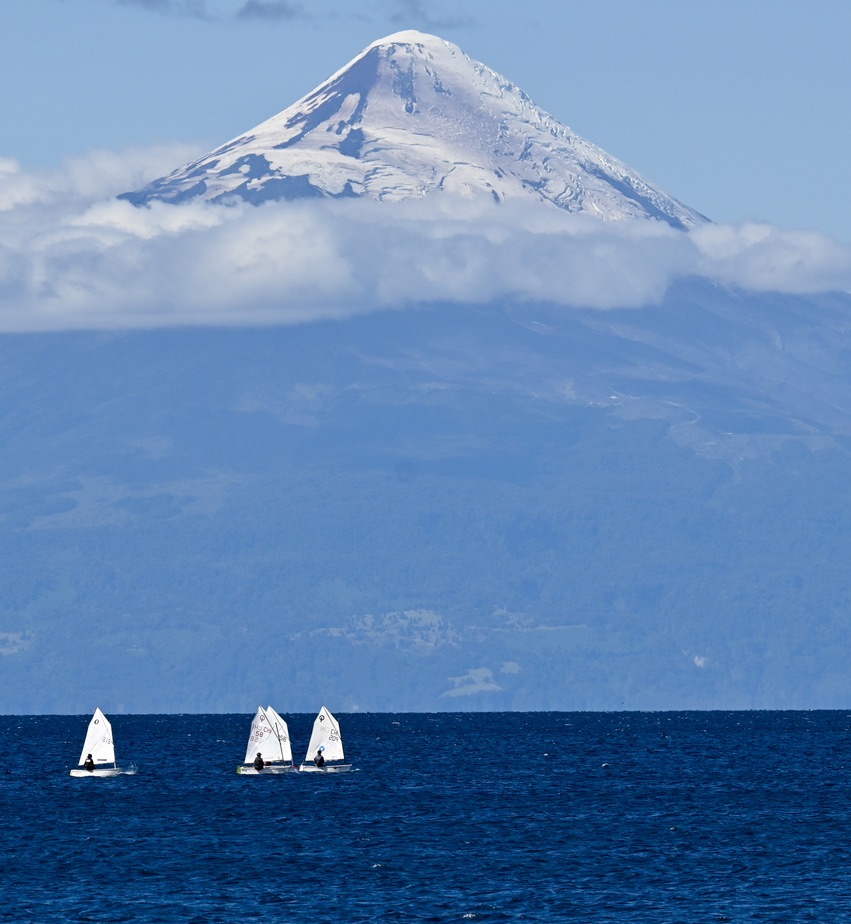
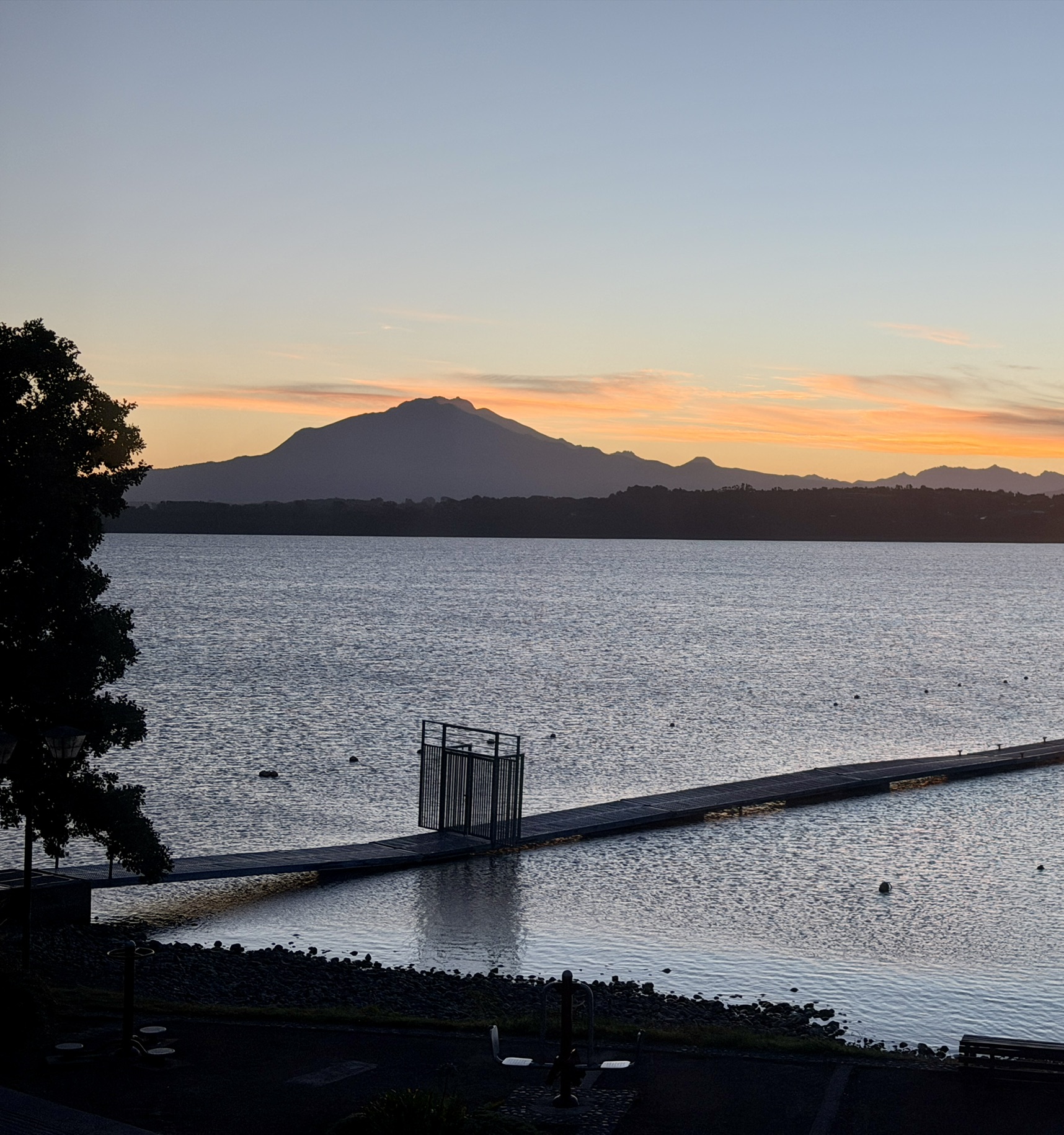
From Puerto Montt, we headed twenty minutes down the road to Puerto Varas, an enchanting town at the edge of Chile’s second-largest lake, Lago Llanquihue. Three volcanos tower over the impossibly blue water, including the symmetrical, snow-capped Volcán Osorno, seen in the pictures below.
We’re staying at the Hotel Cabanas Las Lago, a chateau-esque place perched on a hill above the lake. It’s comfortable, modern, and blessed with stunning views of the lake and distant mountains.
Thursday, February 19
When I travel, I love contemplating awe-inspiring architecture and natural splendor. Even more rewarding, though is experiencing diverse people and cultures, as I did on today’s tour.
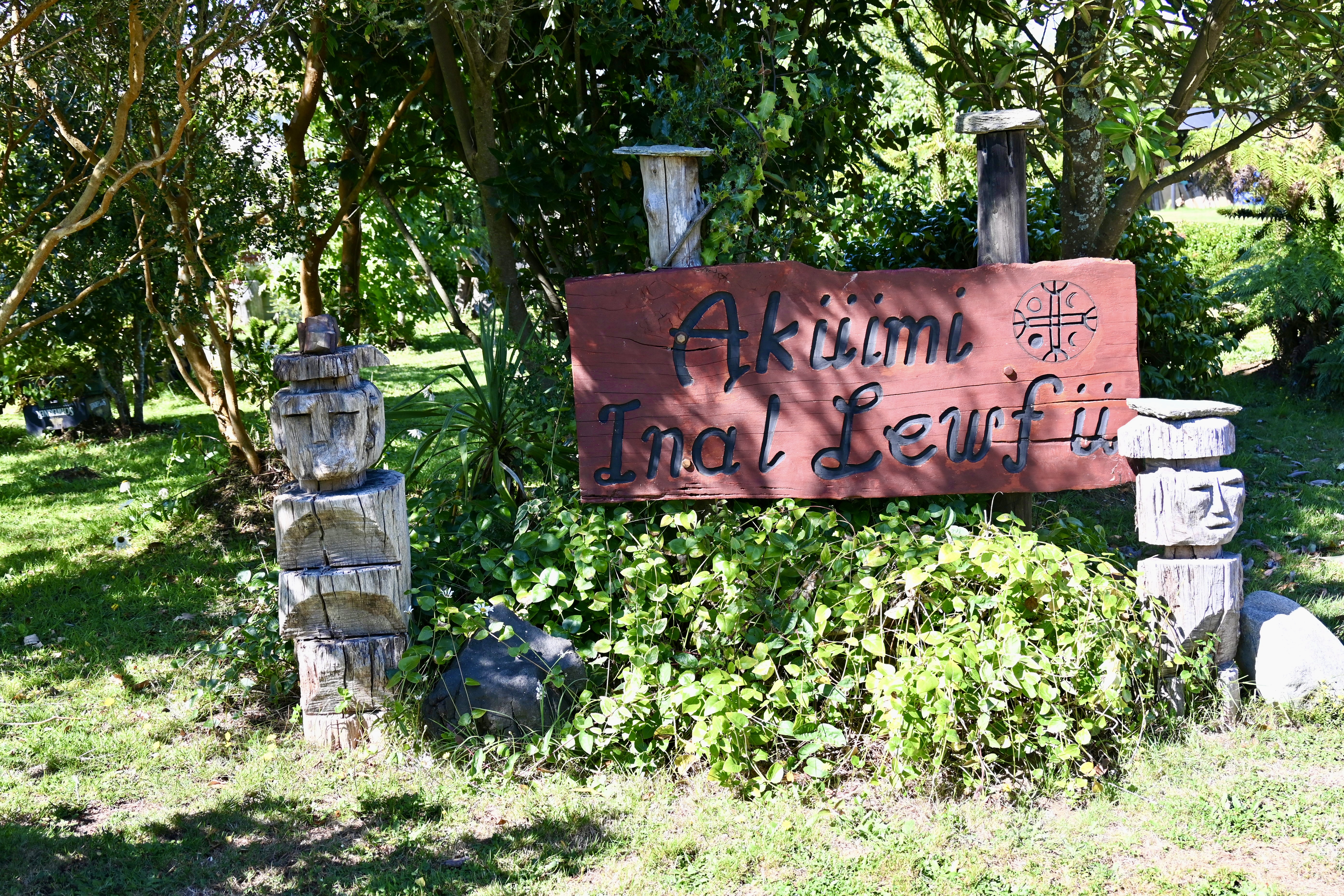
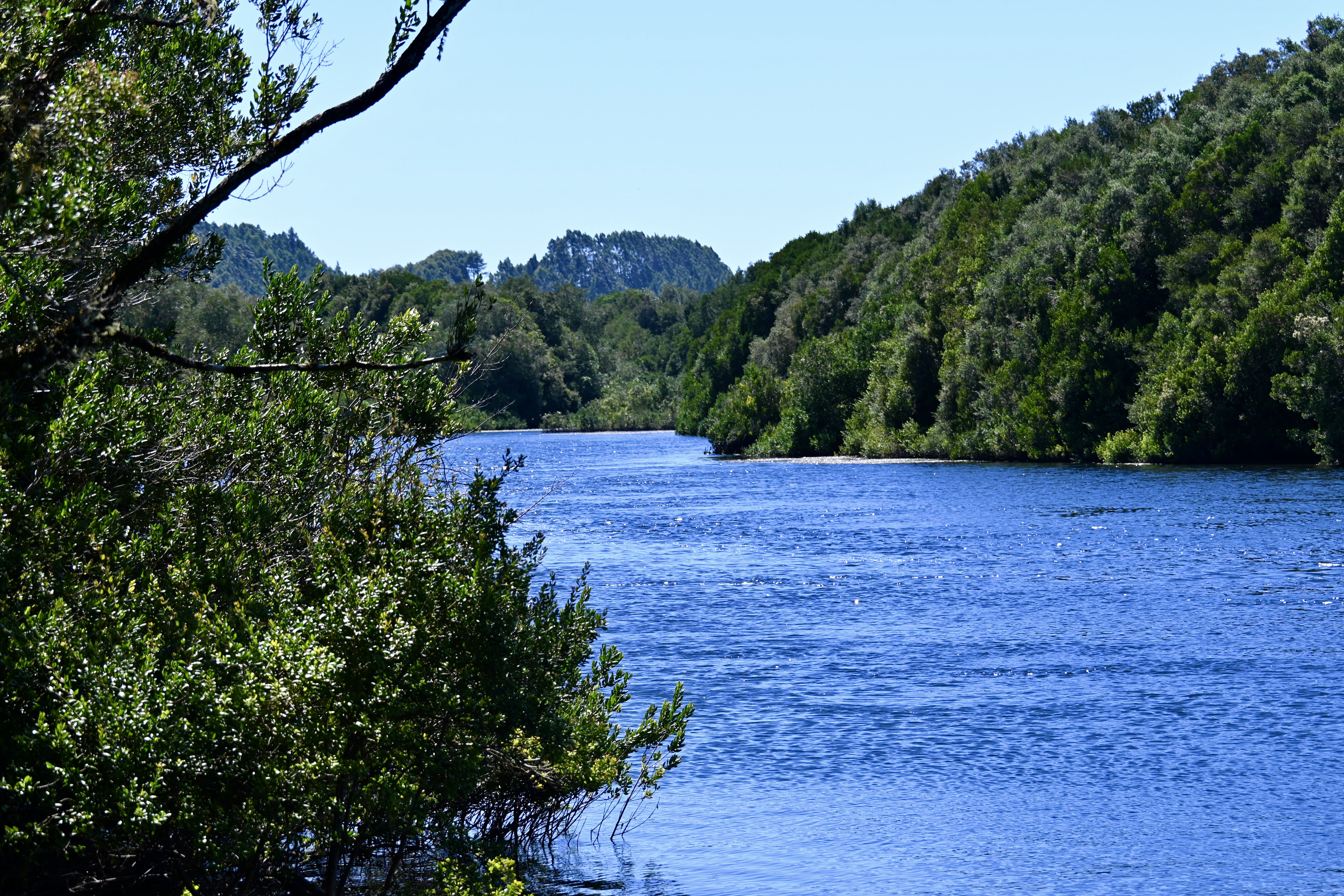
We visited a local “farm” owned by a man whose mother was Mapuche. Rather than growing things on his spread, the man seeks to preserve and explain Mapuche culture.
The centerpiece of the day was the preparation of curanto, an amalgamation of shellfish, smoked pork, sausages, chicken, and potatoes traditionally prepared over hot rocks (the meaning of the dish’s name). For the pescatarians among us, the alternative was smoked salmon, a medley of local vegetables, and a salsa of corn, onion, blueberries, tomatoes, and other yummy stuff.
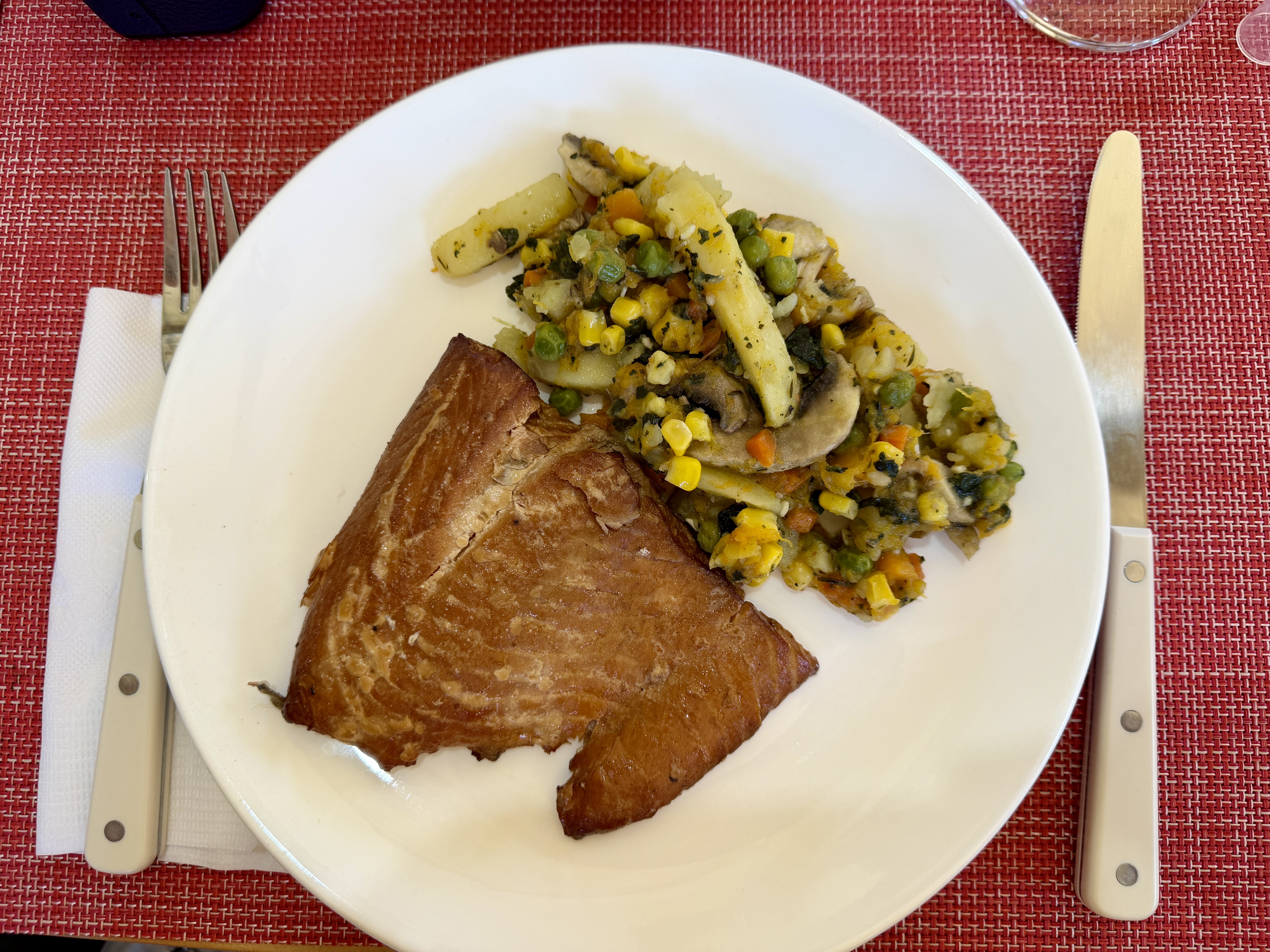
As an aside, Chilean fish names are not necessarily intuitive or strictly accurate: Chileans produce a great deal of Atlantic salmon, despite being on an entirely different ocean, and Chilean sea bass comes mostly from South Africa.
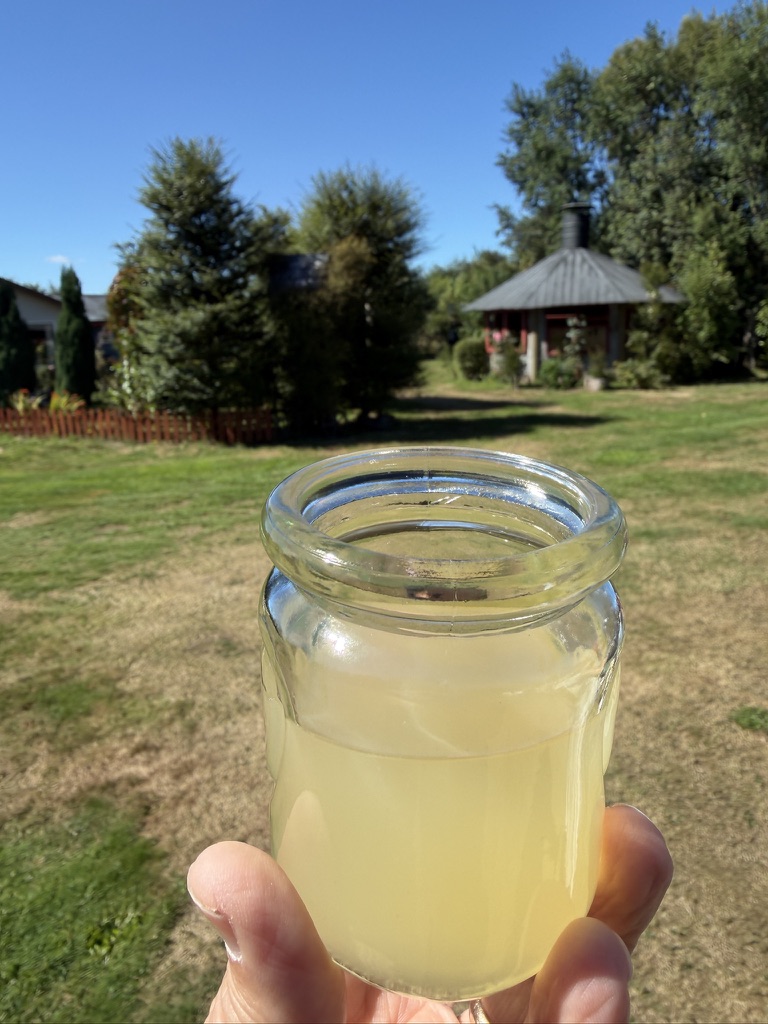
While the curanto simmered on a stove – hot rocks being passe, except for fans of the early Rolling Stones, a joke/reference that will be lost on almost all of you – our host talked about Mapuche culture. He explained that the name “Mapuche” means “people of the land” (as is true for the names many indigenous groups give themselves around the world) and that the names of Mapuche people always relate to nature. His name, Apocoche de Pangui-Puma means “spear puma” (I saw neither).
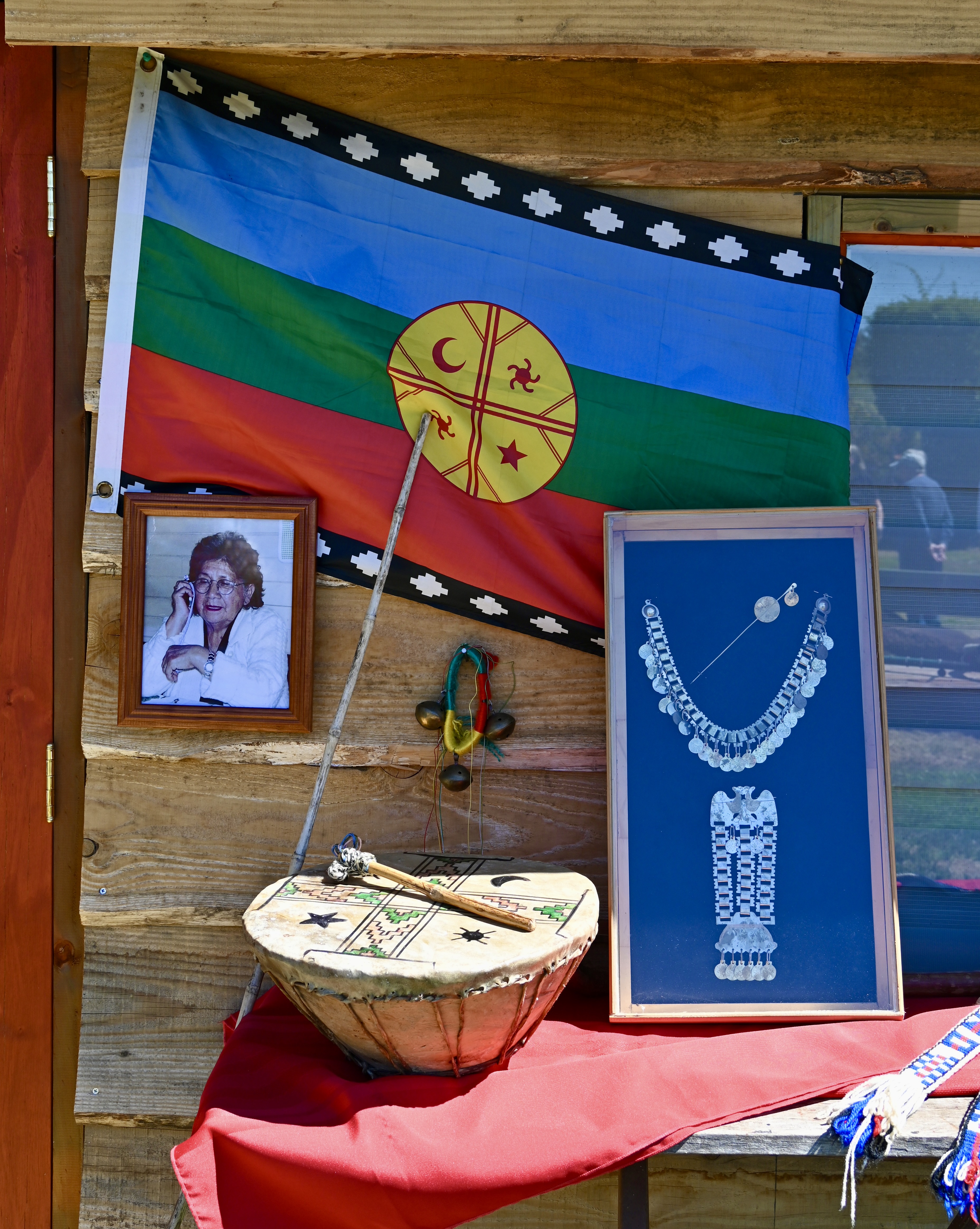
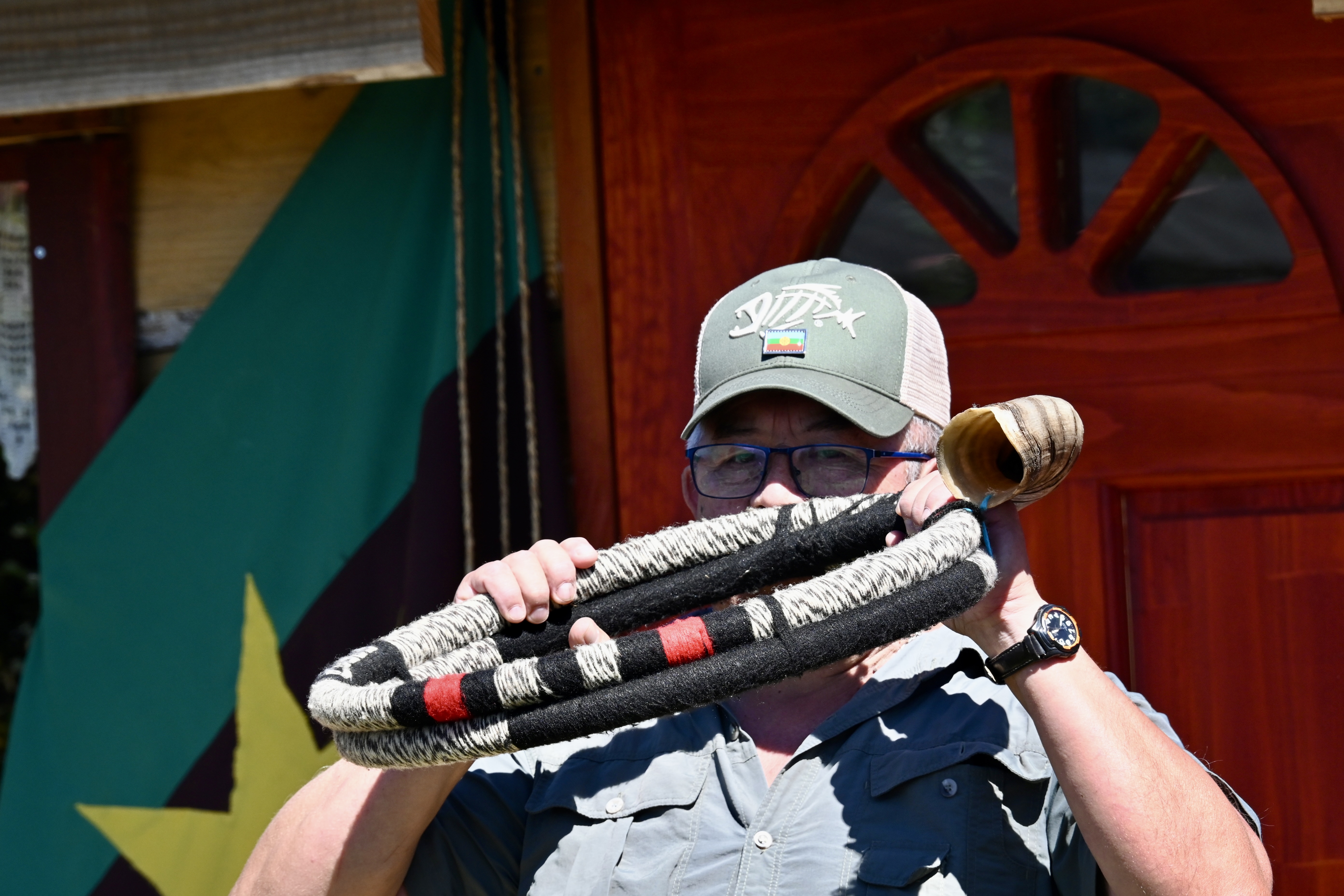
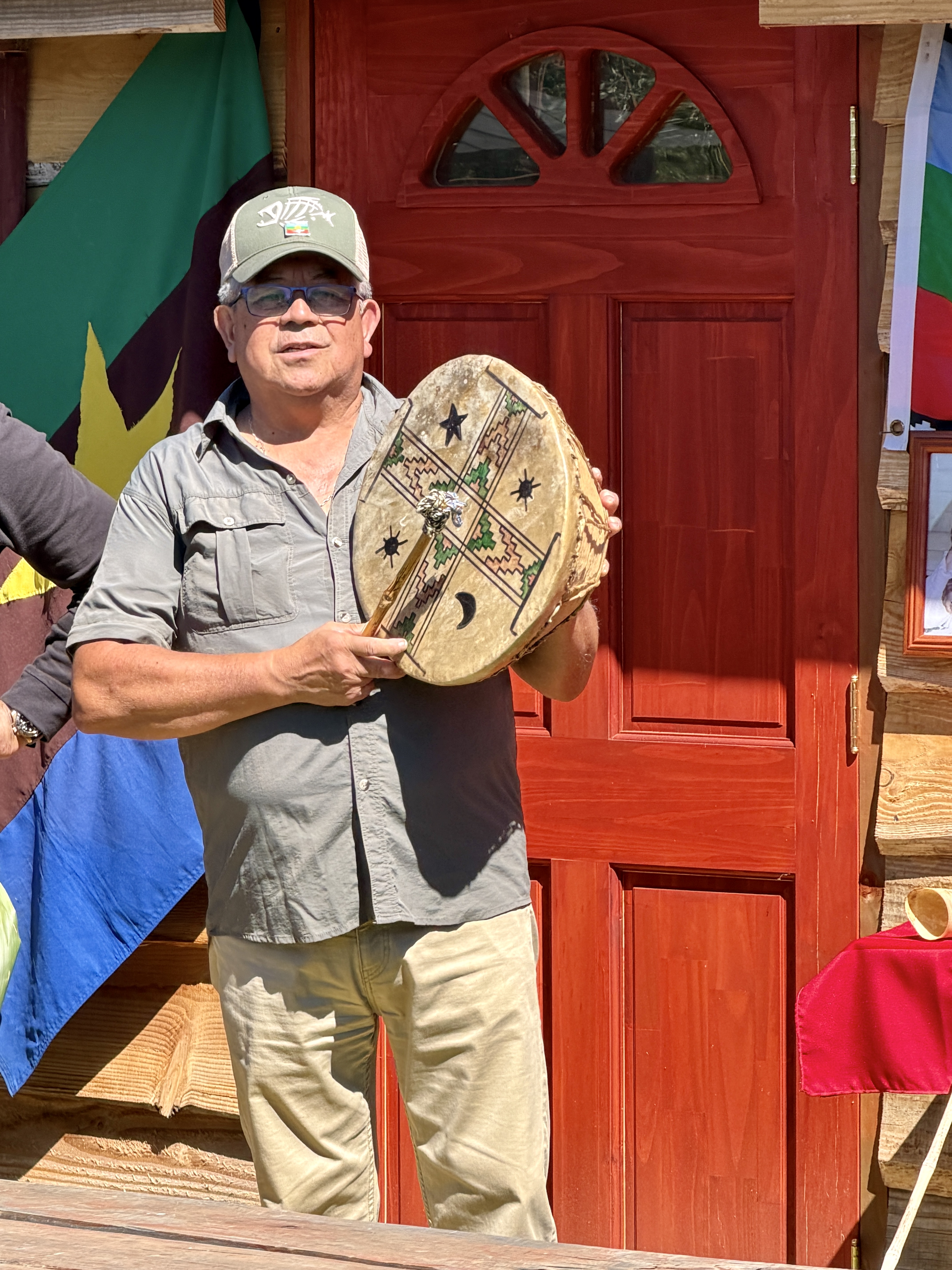
Our host also described the use and importance of various Mapuche tools and artifacts and played several musical instruments, beginning with a trutrucha, a horn used in battle. It’s a coiled tube made of a bamboo-like plant topped by a cow’s horn, with a sound similar to a shofar on steroids.
He also demonstrated a long instrument like an alpenhorn, which sounded like my mercifully discontinued attempts at learning trumpet several years ago; cascahuilla bells; and a drum filled with seeds and precious stones, which was played only by the Mapuche equivalent of medicine women.
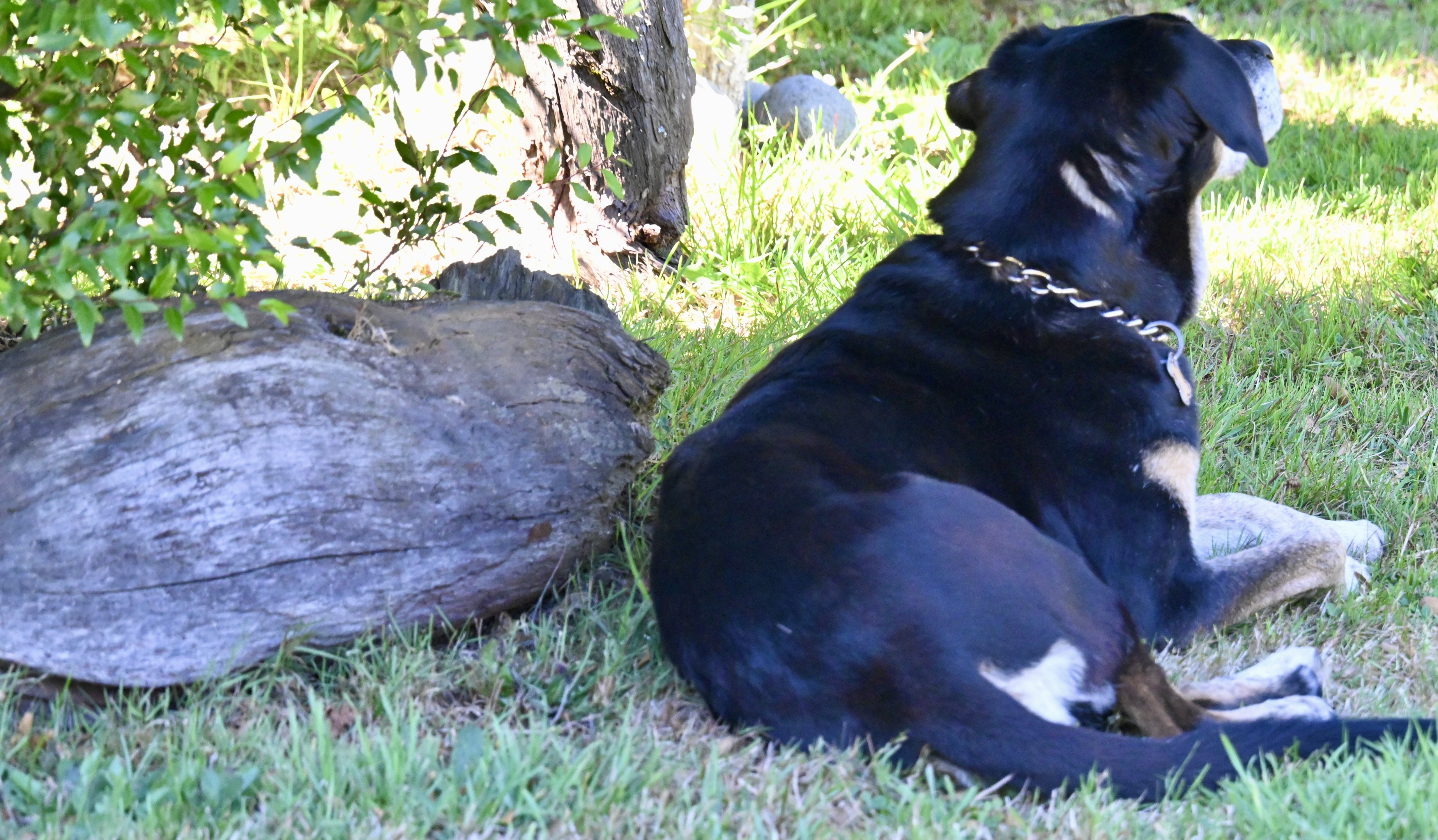
I believe he imparted other interesting information, but I spent some time on the ground petting one of his dogs, which demanded my full attention. I’ve been in pup withdrawal since leaving home.
Tomorrow we cross the border into Argentina, so I felt compelled to toast farewell to Chile with a local brew.
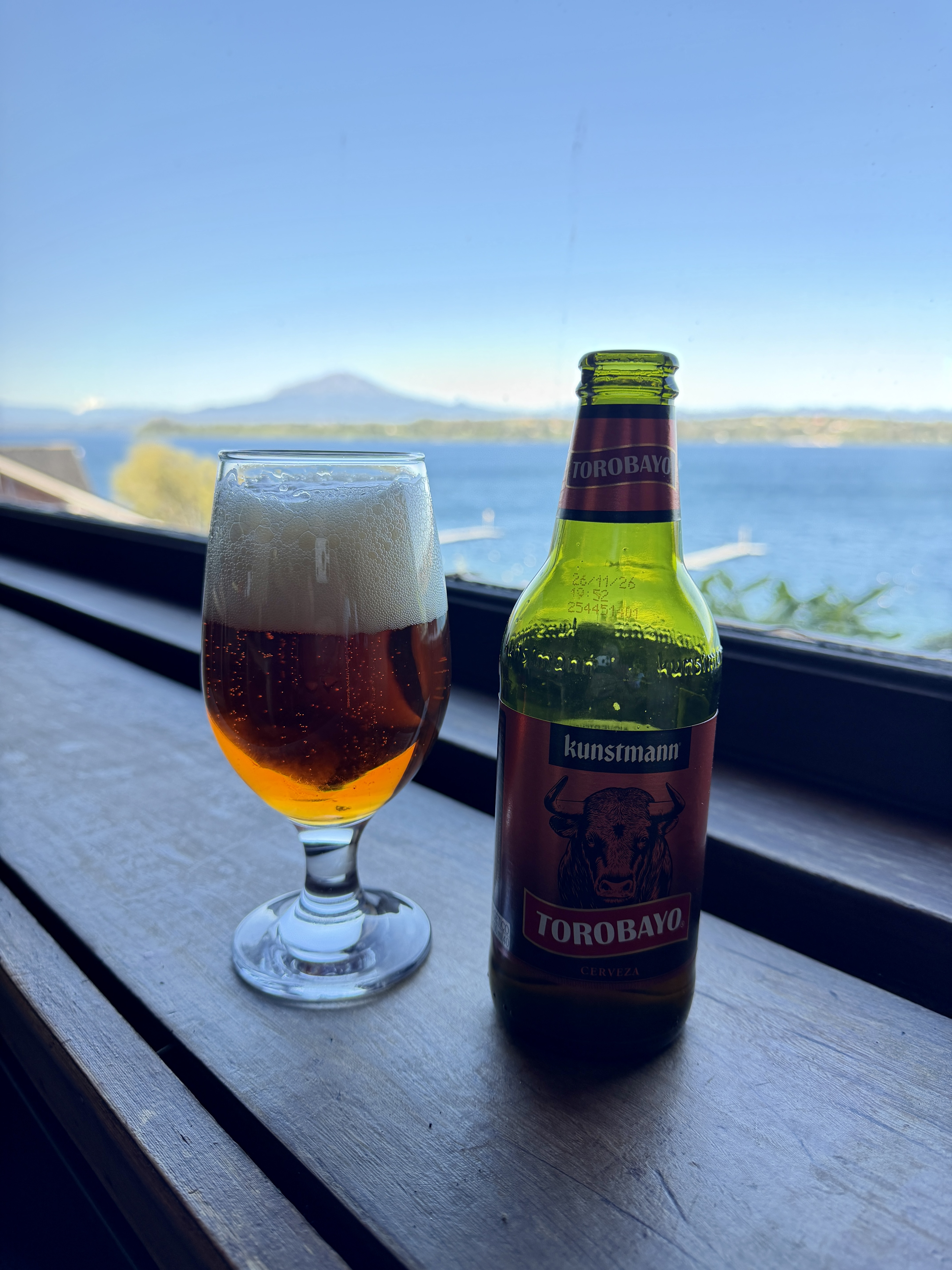
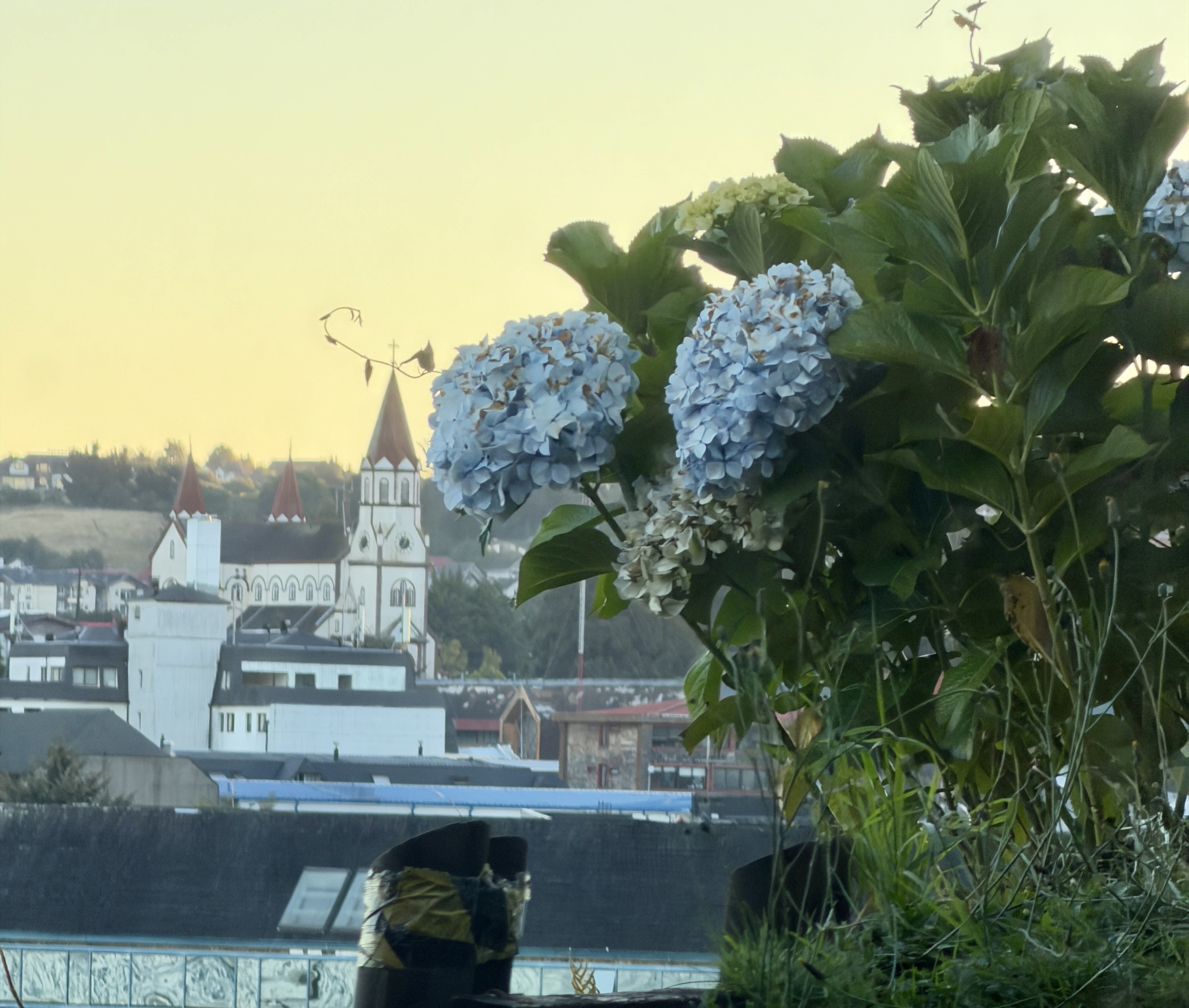
The German name on the bottle isn’t surprising in this part of Chile: Chilean Patagonia was a popular destination for German immigrants. I passed several businesses with “Alemán” (German) in the name, and even the architecture of some buildings shows a Bavarian influence.
And now I must repack before tomorrow’s 12-hour journey to Bariloche. I’ll be back in a couple of days. Hasta entonces.

 PuffinlessTravel
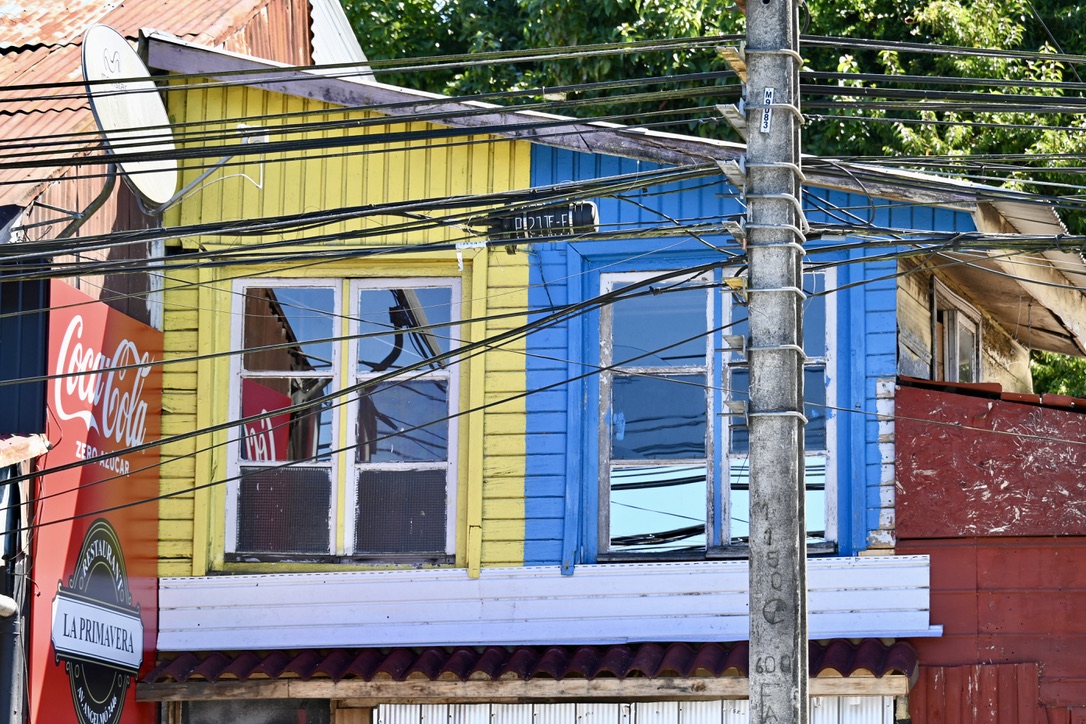
What a great two days! I love the game that Sol had everyone play; what a great idea! I’m struck by the vibrancy of the colors (e.g., the earlier street art/murals). Here, I love the brightly colored letters spelling out ANGELMO in that one Puerto Montt waterfront picture. The shots of Lago Llanquihu and the volcano are stunning. (Side note: I got your Stones reference. Hot Rocks was a favorite of my older siblings when I was a kid. 😊)
I loved your presentation😍
Thank you!