With apologies to the Andrea True Connection, today was “moai, moai, moai! How do you like it, how do you like it?” (If you’re in my demographic, apologies for the disco earworm. If the reference means nothing to you, ignorance may/may not be bliss depending on your musical tastes.)
Anyway, the answer is: I like moai, moai, moai muy mucho.
Today’s tours – one during the day and one at night – were expertly conducted by Yoyo, an engineer/agronomist with a wealth of knowledge about all things related to Rapa Nui and many other things as well. Yoyo works with Green Island Tours. I’m very impressed with the company: customer service (a/k/a Paulina) is outstanding, our guide yesterday (Hekii) was very good, and Yoyo is exceptional. You can reach Green Island Tours at gitourseasterisland.com/en, greentourseasterisland@gmail.com, or +56 962145884.
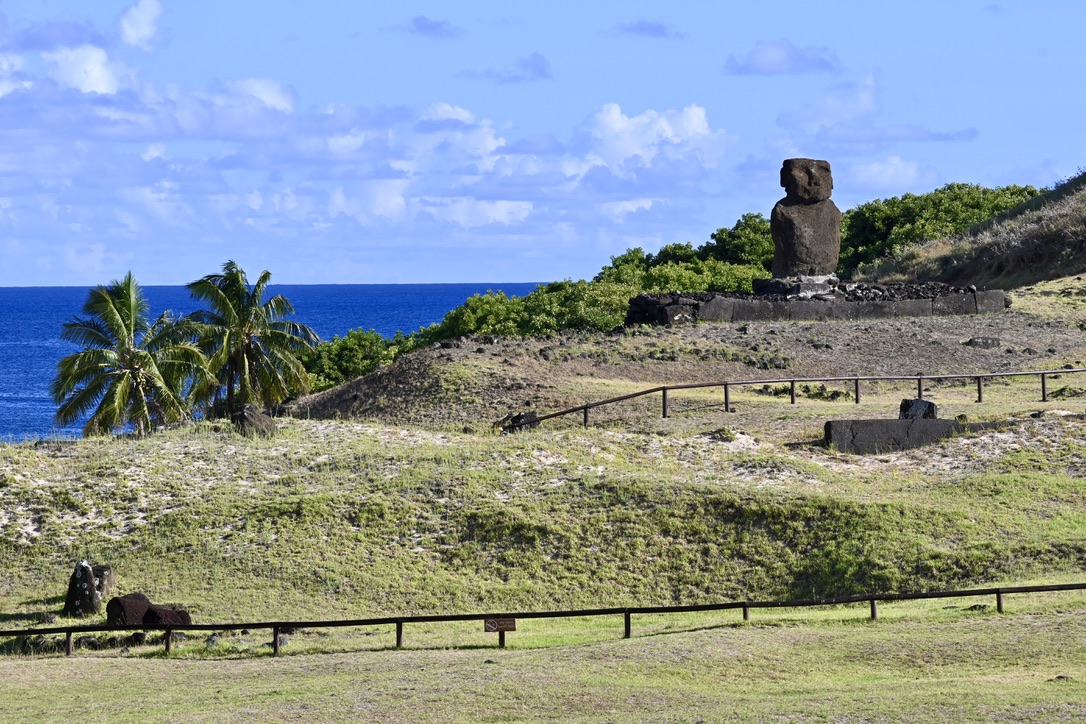
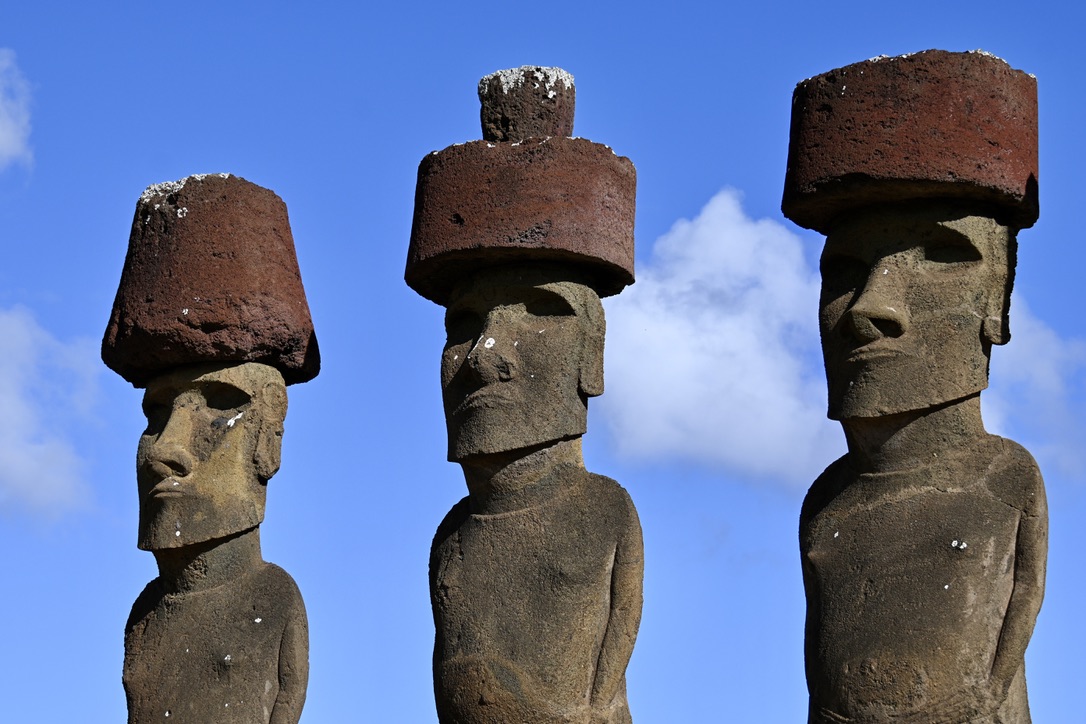
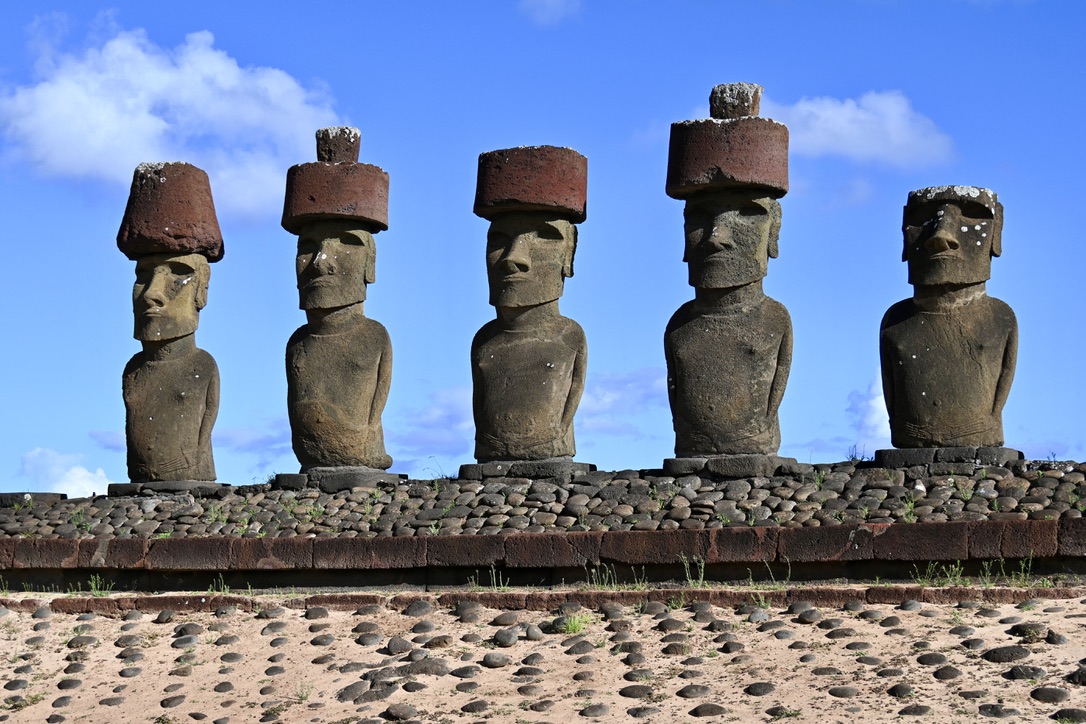
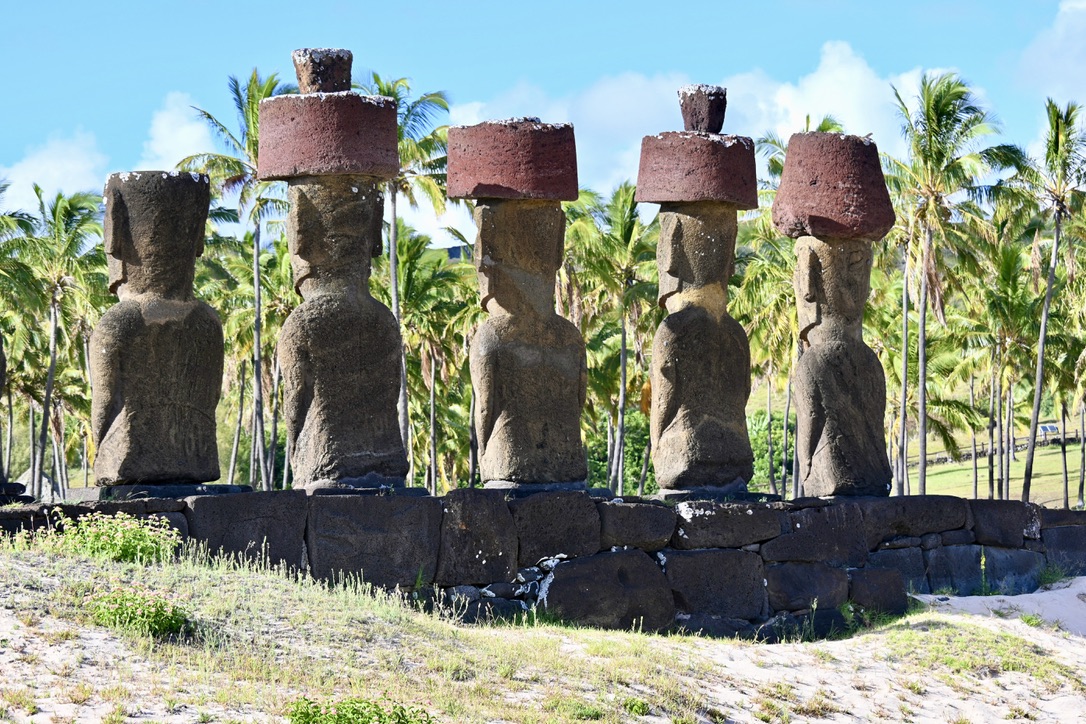
We began the day’s tour, and ended the night’s tour, at Anakena, a small, sandy beach (one of only two on the otherwise rocky-shored island) where Hotu Matu’a supposedly landed to establish the first human settlement on Rapa Nui. Seven moai (five of them intact) stand near the beach, with another one a bit uphill. It’s a lovely spot during the day and even lovelier at night, where the moai peer from the darkness under star-splashed skies. (I’ll have more to say about the nighttime tour later in this post.)
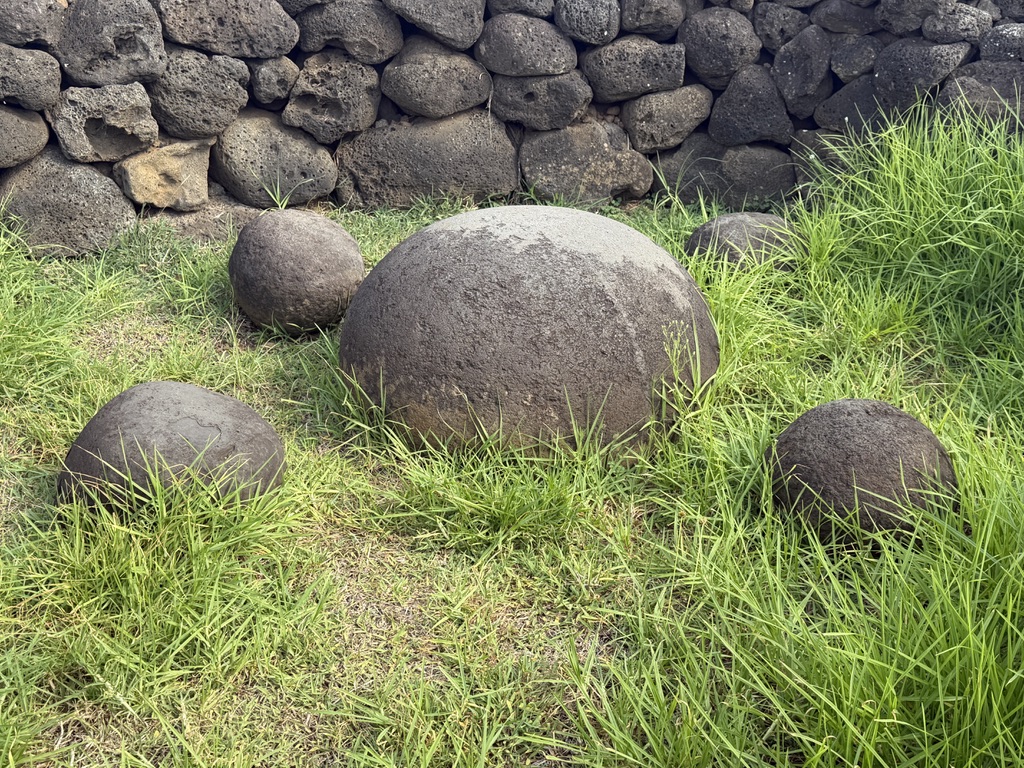
From Anakena, we headed to Te Pito Kira (roughly, “The Sacred Bellybutton”), home to a magnetite-rich stone used in coming-of-age rituals for ten- and eleven-year-old children, which was believed to confer special energy . The central stone is surrounded by four smaller stones marking the cardinal directions.
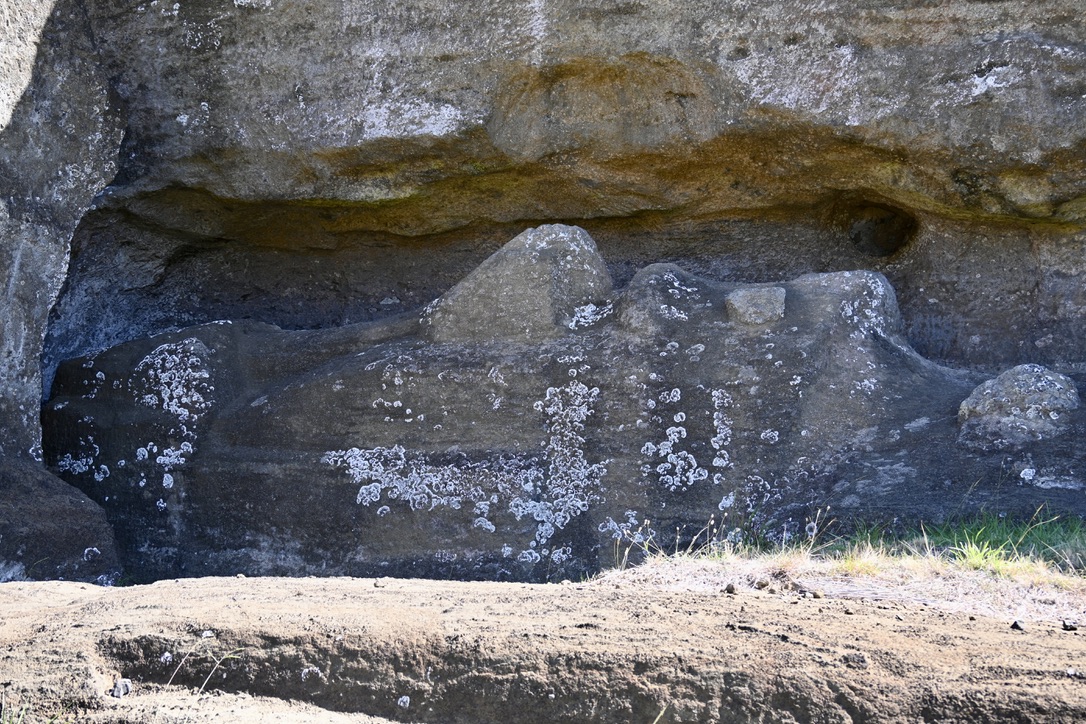
Our next stop, Ranu a Raraku, located on the slope of an extinct volcano, is where almost all of the island’s moai were carved. Nearly 900 moai, complete and incomplete, remain at the site.
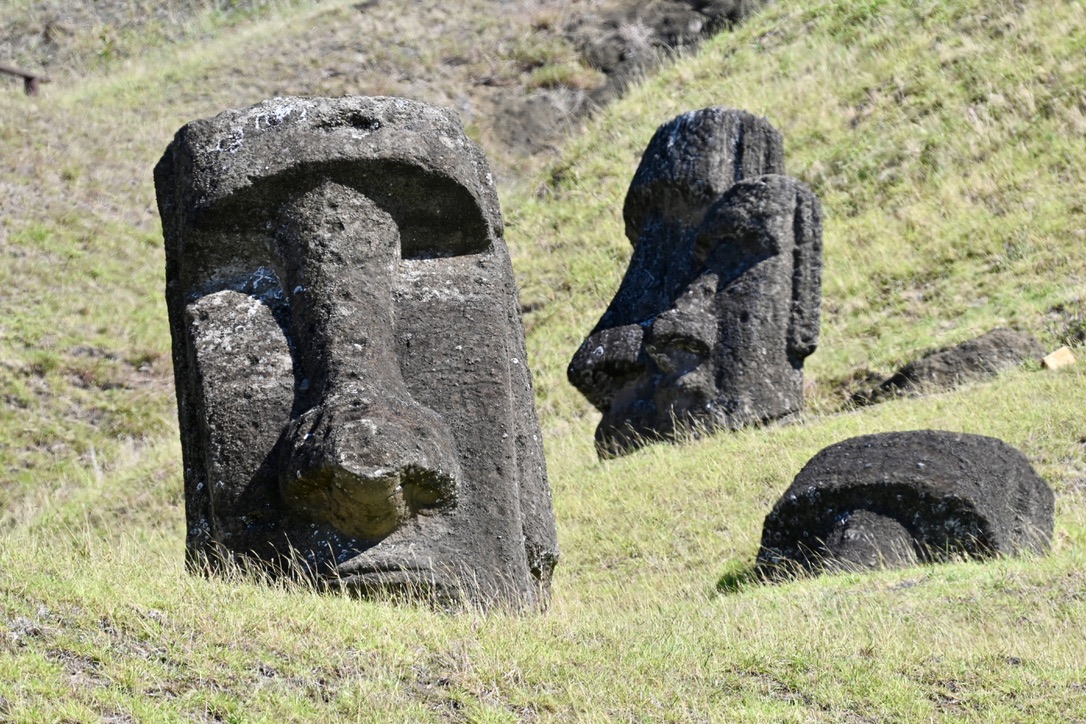
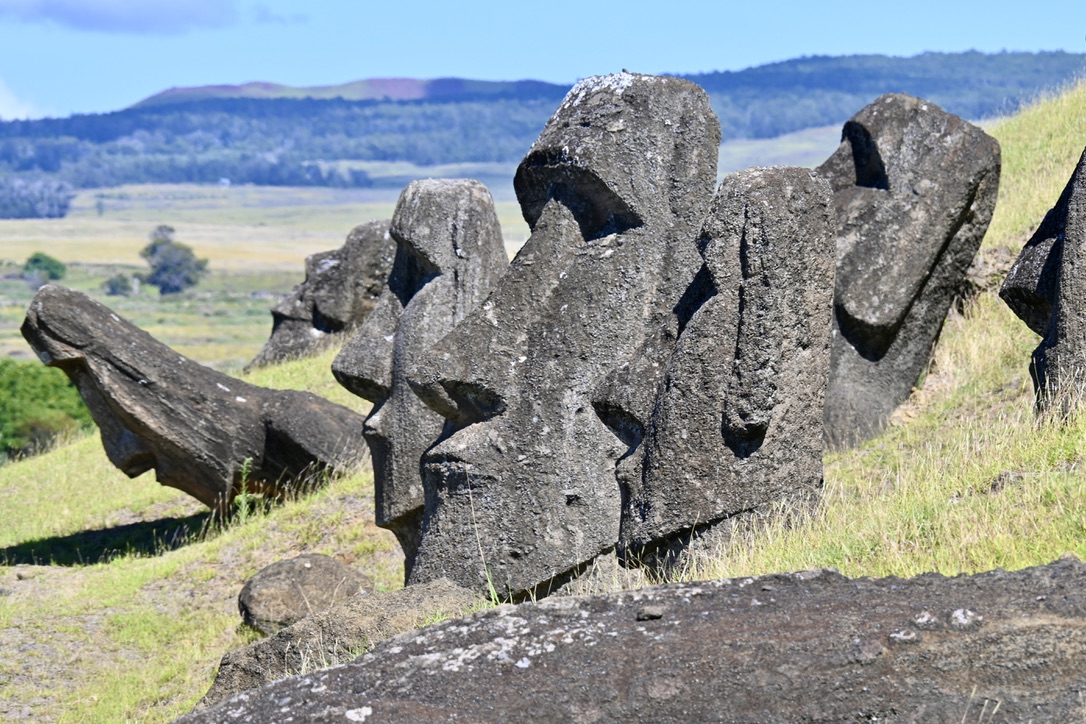
The path up the side of the volcano takes you past statues reflecting changing styles (shape of the head, nose, etc.) over the centuries, and also affords a bird’s-eye view of the final stop on the tour, Tongariki.
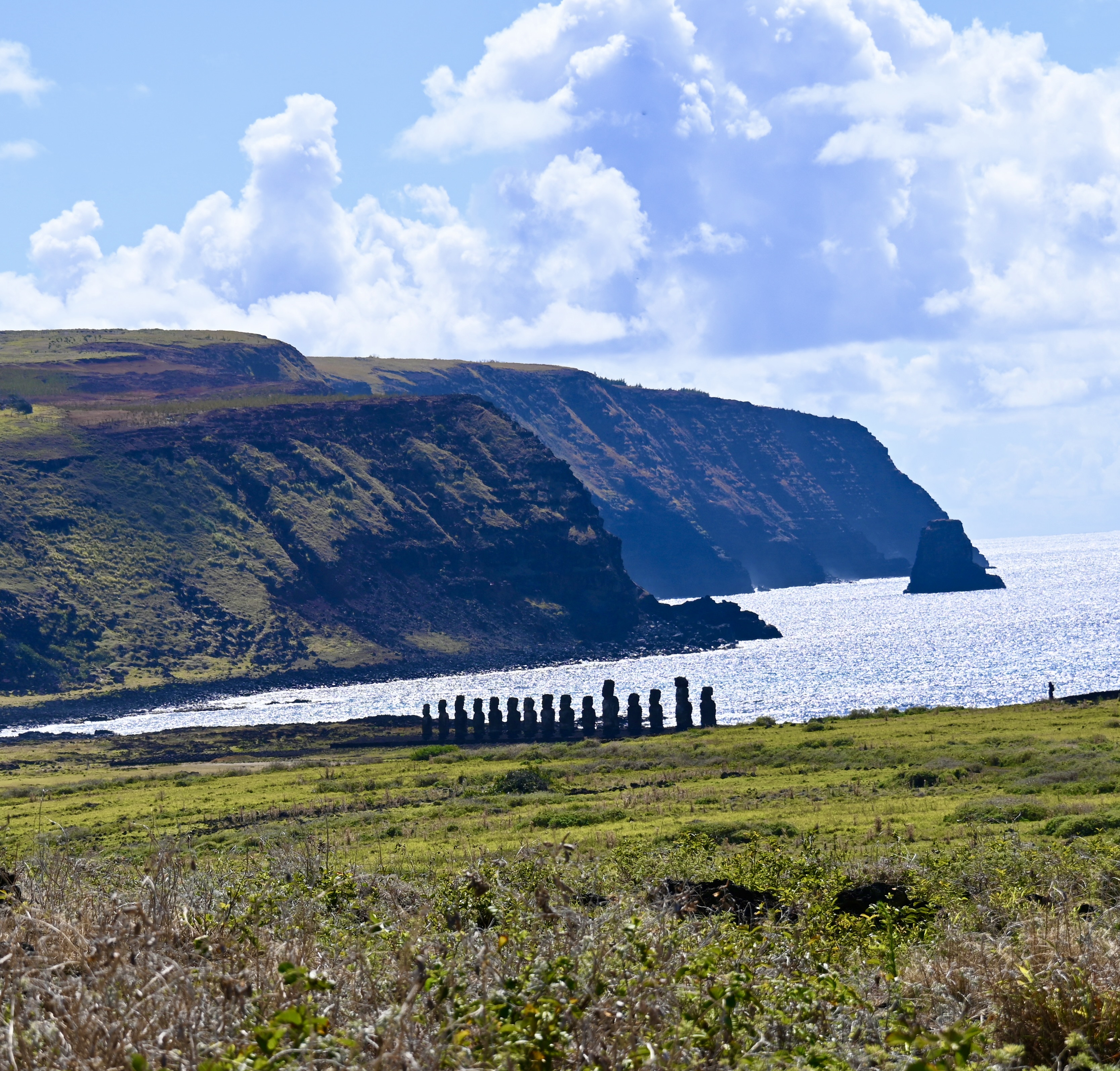
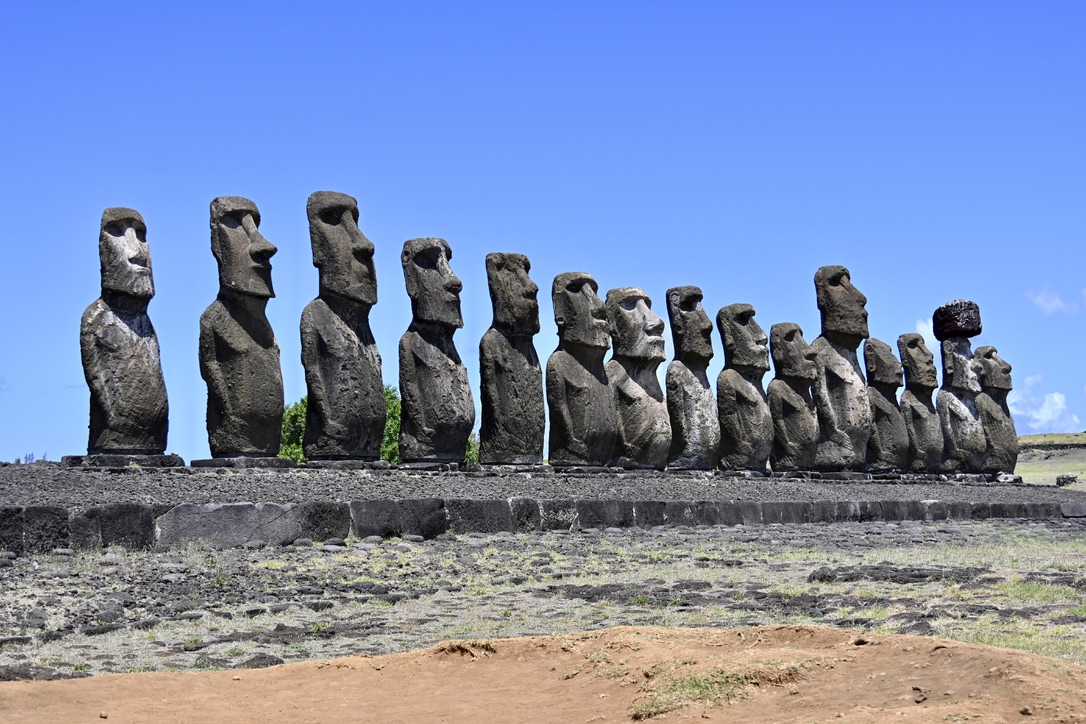
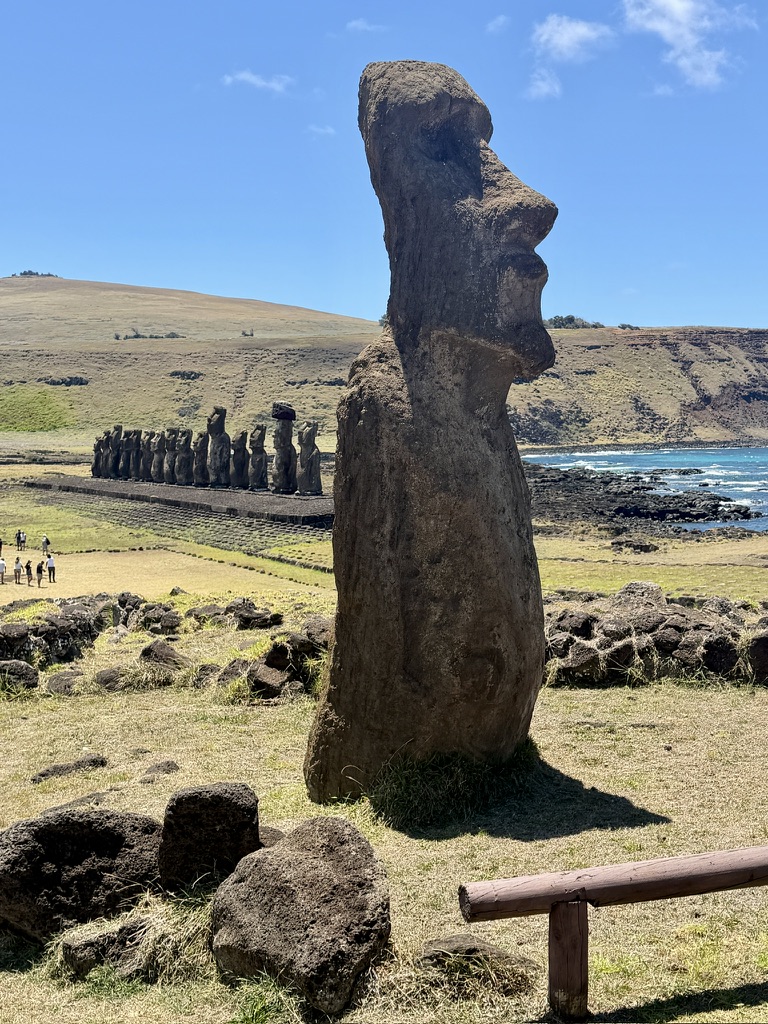
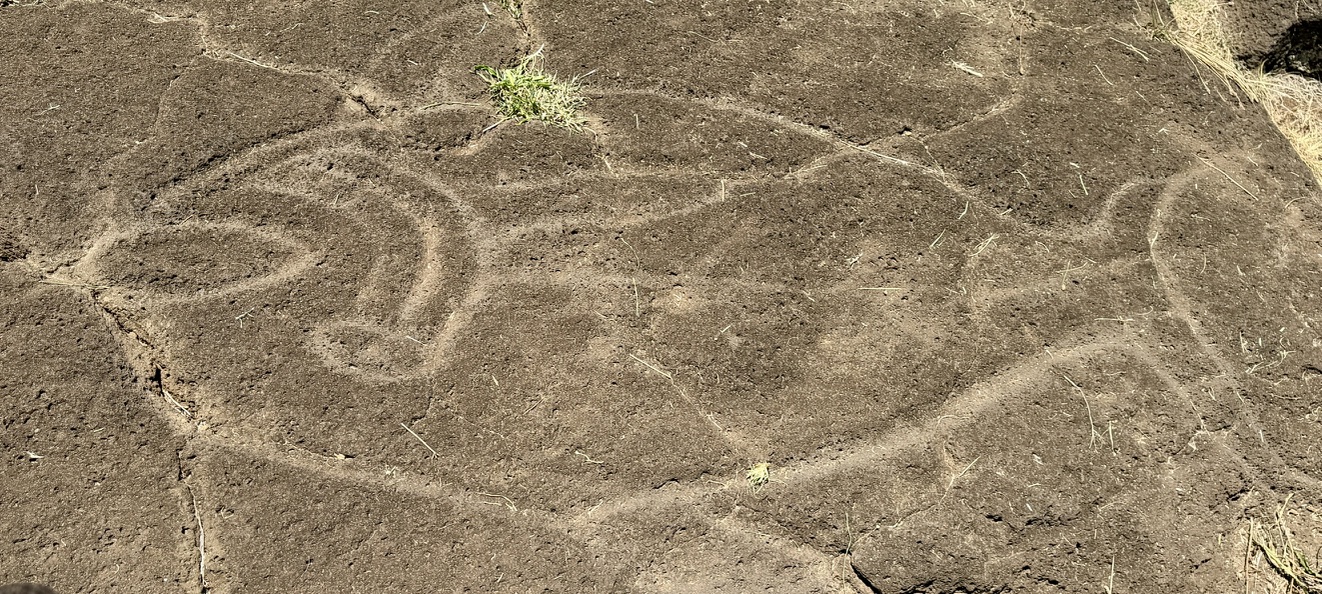
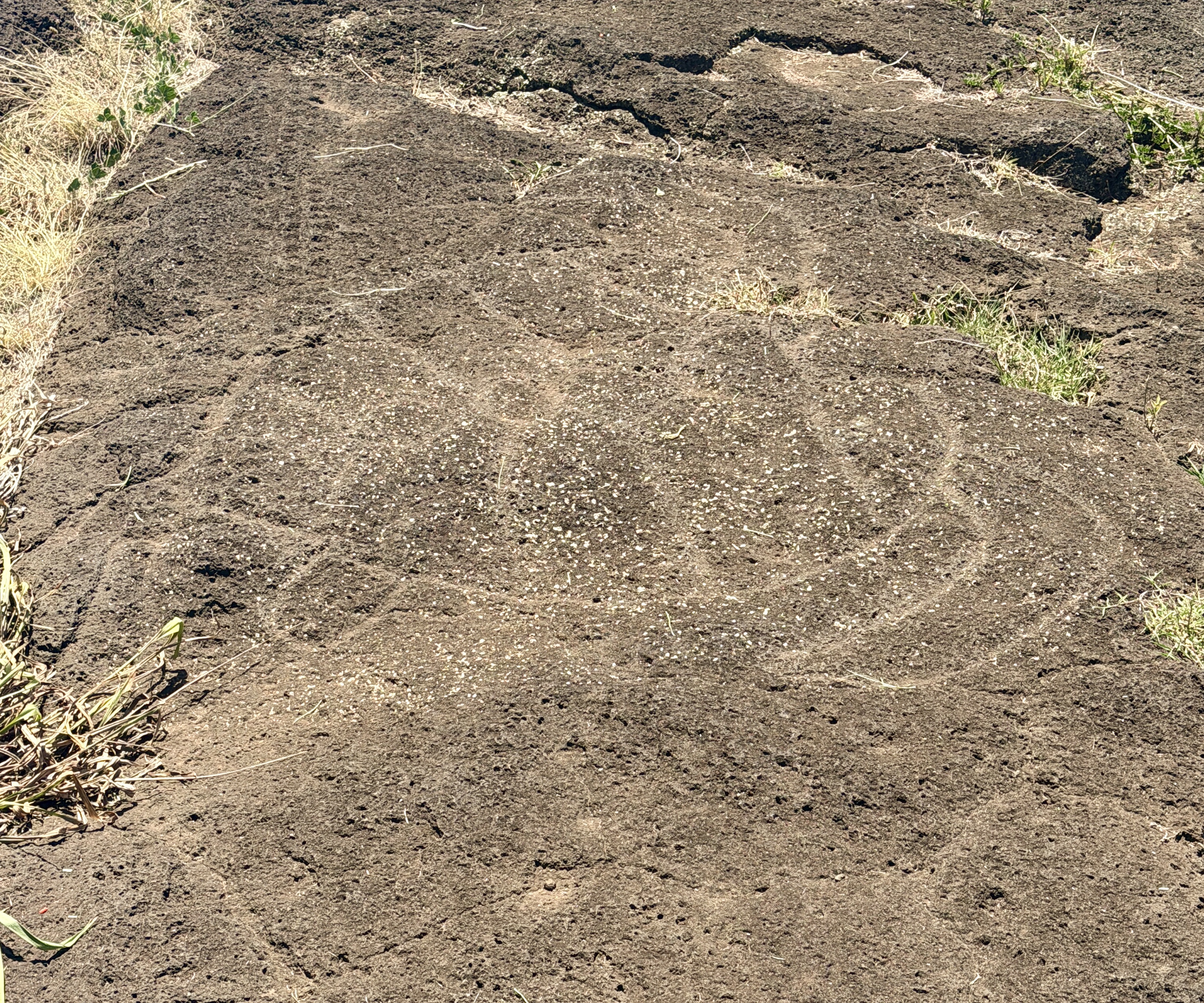
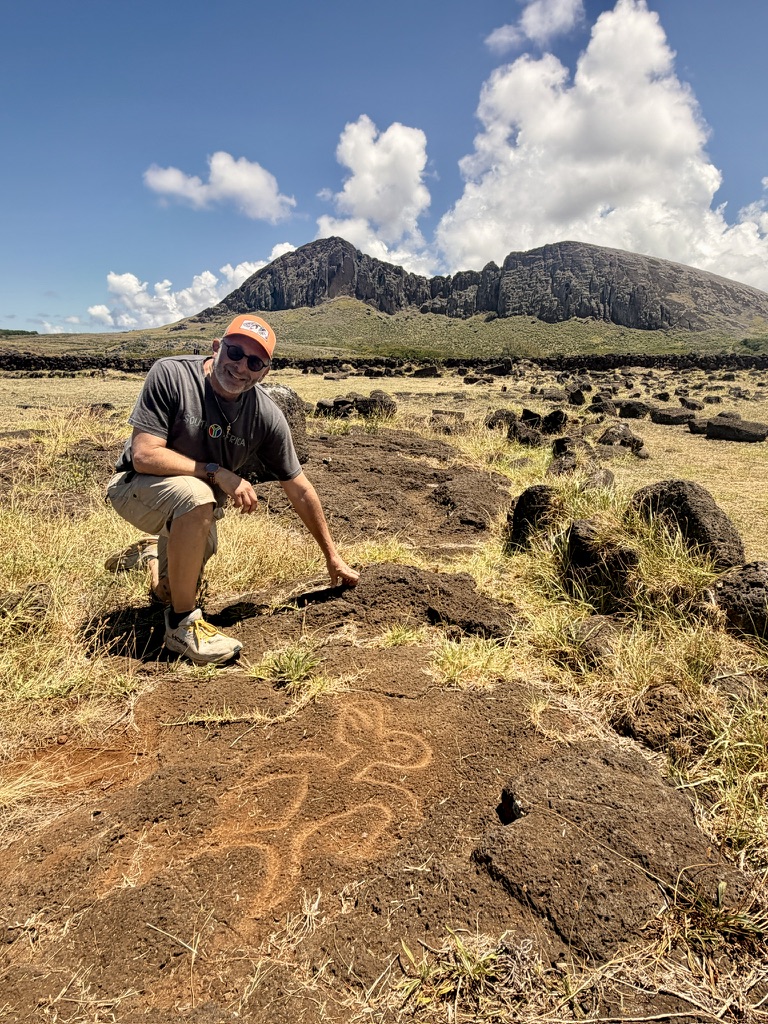
Tongariki is spectacular. Fifteen imperious moai stand parallel to the shore, and nearby petroglyphs depict turtles, birds (the sooty tern again), fish, and faces. It’s nothing short of astounding.
The nighttime tour focused on stargazing. The skies over Rapa Nui reminded me of the skies over rural Puerto Rico when I would visit there as a child. There is no light pollution, so the stars were countless and the Milky Way, Magellanic Clouds, Pleiades, a couple of nebulae, and Jupiter and Saturn were easily visible. Green Island Tours provided two powerful telescopes – using them, I could clearly see the disc of Saturn’s rings – and Yoyo taught us a great deal about how the Polynesians used the stars to navigate.
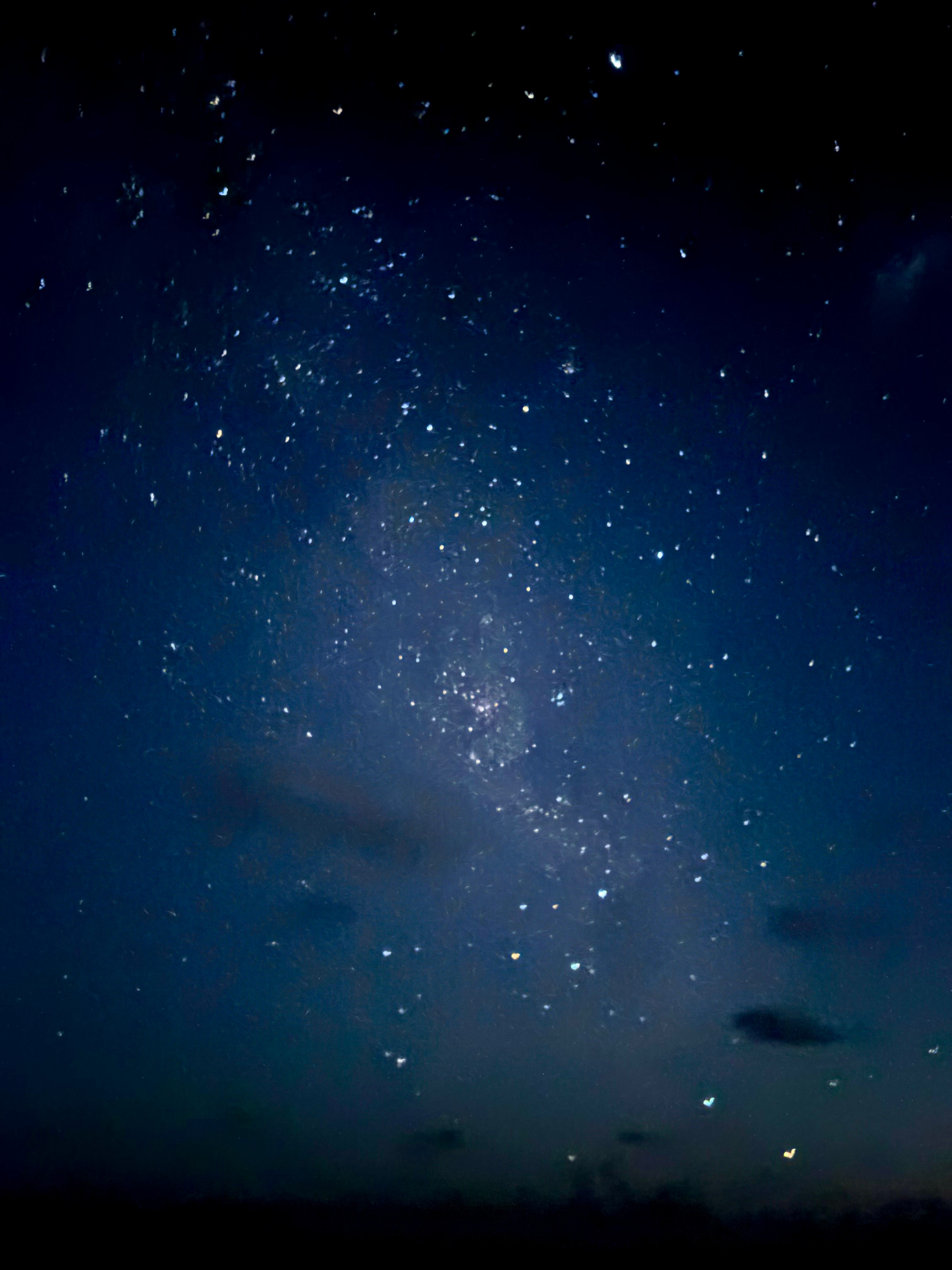
For example, he showed us how to determine where south is by holding your fingers against the Southern Cross then moving a certain number of finger-widths to the right; which stars were used to orient west or east; and how one’s hand can form a sextant to determine elevation from the horizon. (Several years ago, Yoyo and some friends flew to an island in southern Chile, built a catamaran, and sailed it using celestial navigation, first to Valparaiso (near Santiago) and then to Easter Island. He knows his stuff.)
Our first stop at night was at a deserted beach; our second, as noted above, was back at Anakena. In the pitch black, the moai seem to come alive – I’d had nothing stronger than hot chocolate, so there was no altered perception involved – and the backdrop of stars was stunning. Yoyo and a colleague took photos of us. I’ll share mine once I get it.
Iorana until tomorrow!

 PuffinlessTravel
Spectacular! Is it me or does that sooty tern bear a slight resemblance to ET?