I’m off again. Granted, lots of people would say I’ve always been a bit off, but I’m talking physically here, as in heading out to see more of the world, starting with Rapa Nui (Easter Island).
I’m taking this trip with my friend Shari, whom I’ve known for a mere sixty years or so. After four days in Rapa Nui, we’ll join a Gate 1 tour in Santiago, Chile then explore Chile’s Lake District before heading to Bariloche (Argentina’s chocolate capital, oh darn), Buenos Aires, Iguassu Falls, and Rio de Janeiro.
Nuts and Bolts of Entry to Rapa Nui
To visit Rapa Nui, you need a Carta de Invitacion a Rapa Nui, which is designed to assure that (1) you have a place to stay and aren’t going to just pitch a tent somewhere, and (2) you will eventually leave. The Carta is provided by your place of accommodation, specifying the dates you will be on Rapa Nui, the host entity’s contact information and address, and your passport number.
After dropping your bags off and getting your boarding pass at Santiago airport, you must bring the Carta to the Rapa Nui check-in desk, located at the entrance to the A gates on the left side of Terminal 1. The agent there will give you slip of paper granting access (Ingreso), which is collected just before you head down the ramp to the plane.
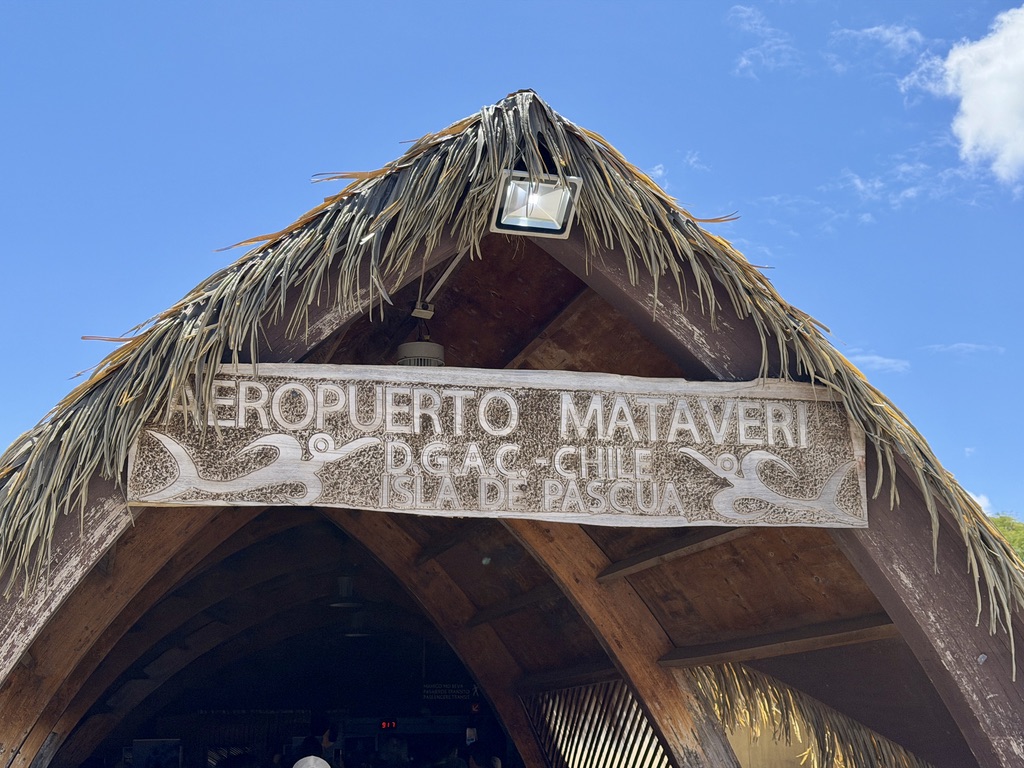
Poof! Five hours later, you land at the tiny and, in a throwback way, charming Rapa Nui Airport. There are no gates; we climbed down a set of mobile stairs from our plane, walked 30 seconds to the one-room terminal, and received our bags at the single, rather poky and bedraggled carousel.
Initial Impressions
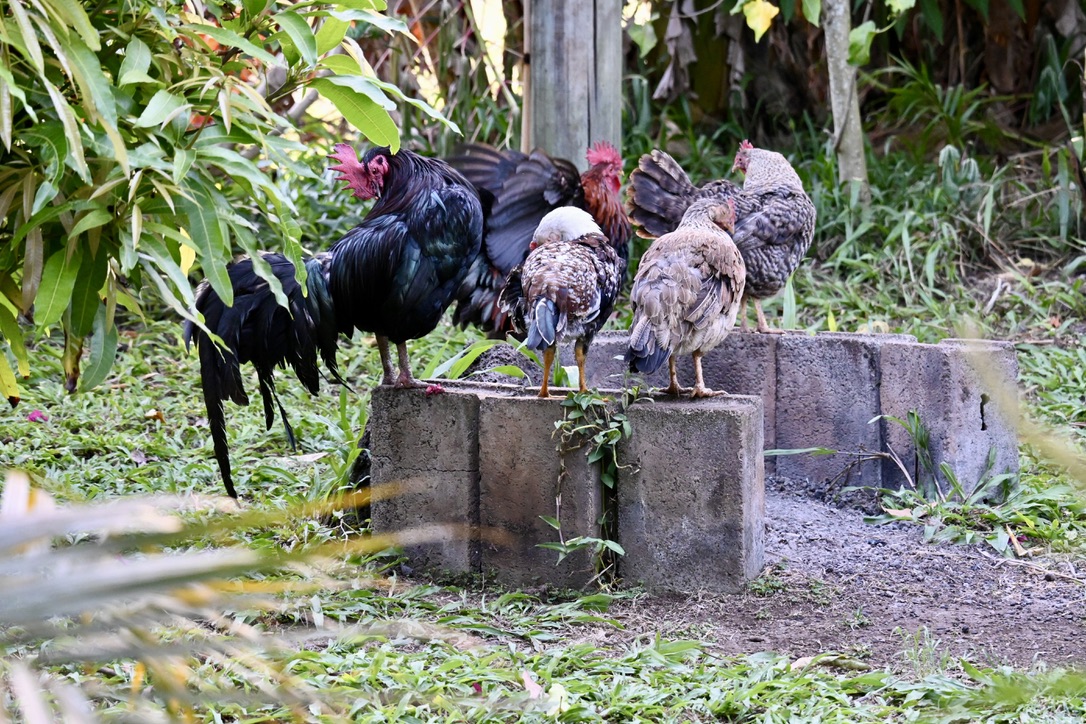
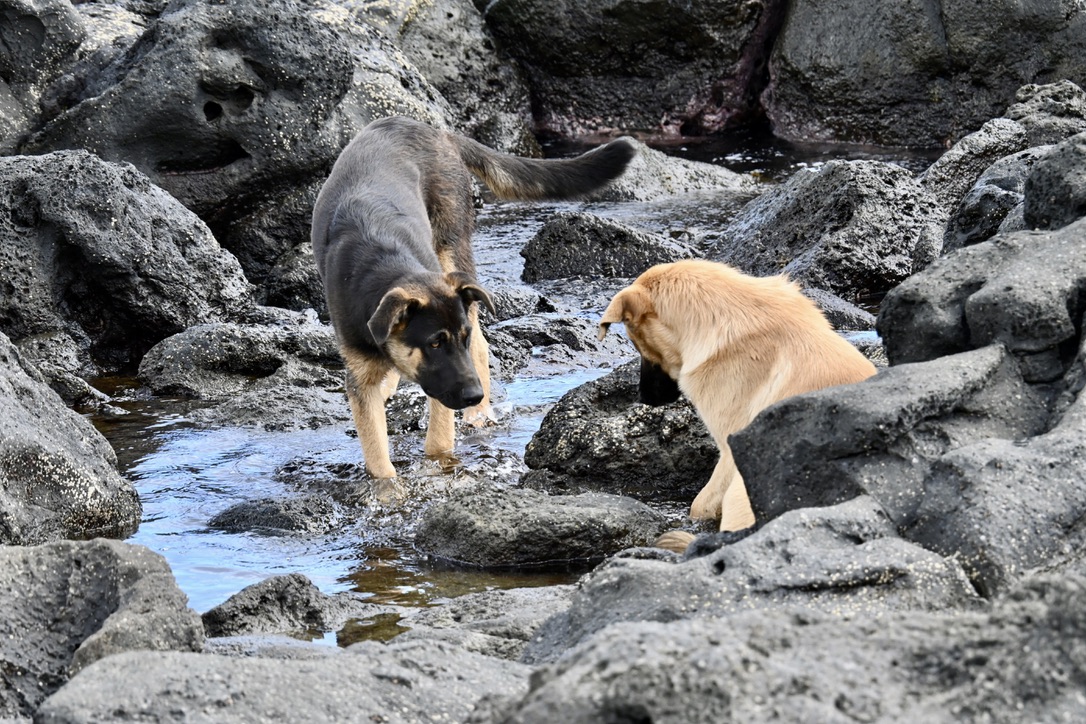
Rapa Nui teems with life and spirit. Roosters crow from every yard throughout the day, hens and chicks scurry about, minuscule lizards scamper over the walls, and well-fed and well-behaved dogs (the two probably are related) trot around on important business.
The plant life is even more riotous, with hibiscus, bougainvillea, and other showy blossoms splashing color wherever you look, bananas hanging upside down like sloths, and scrumptious small pineapples.
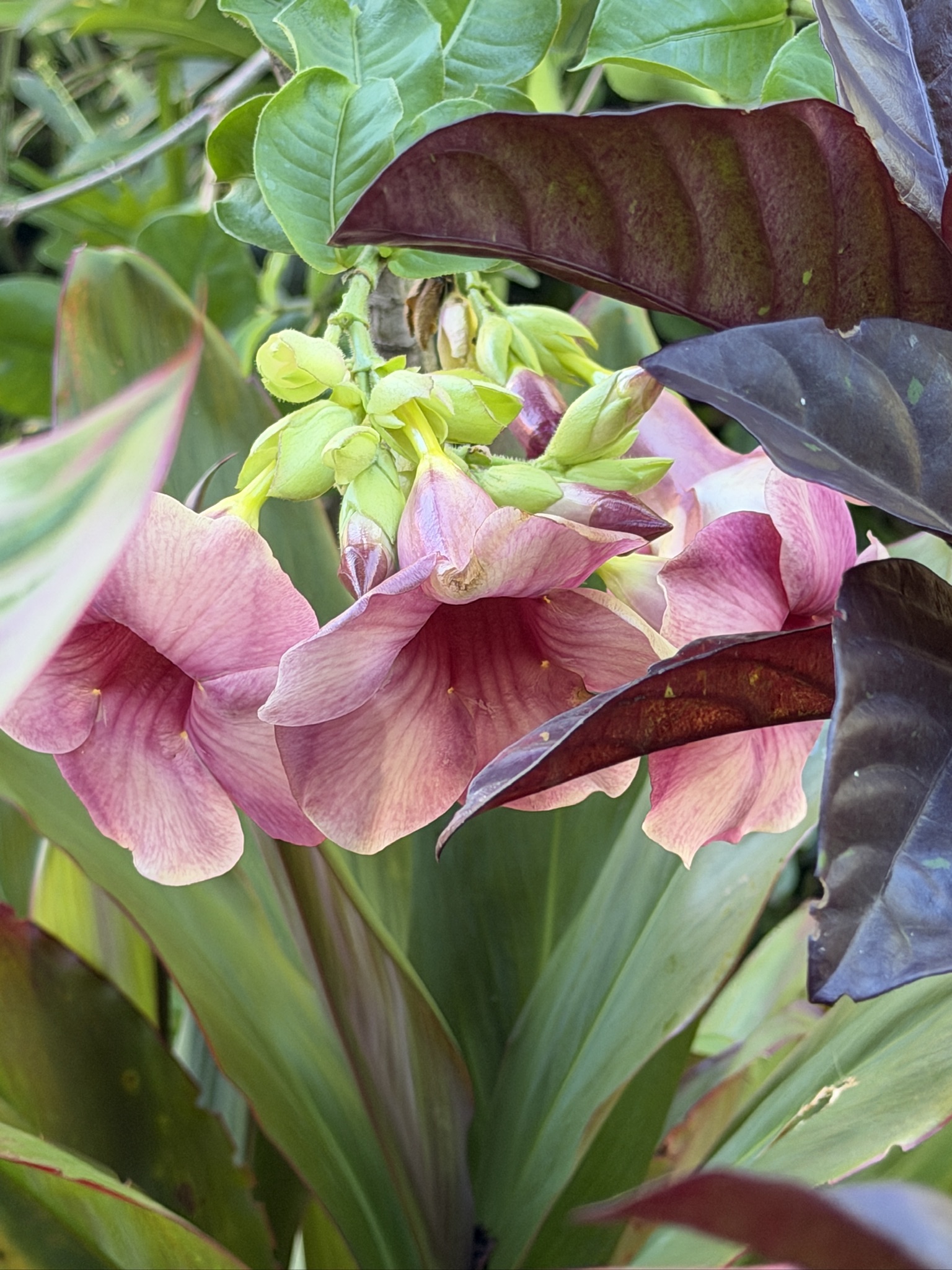
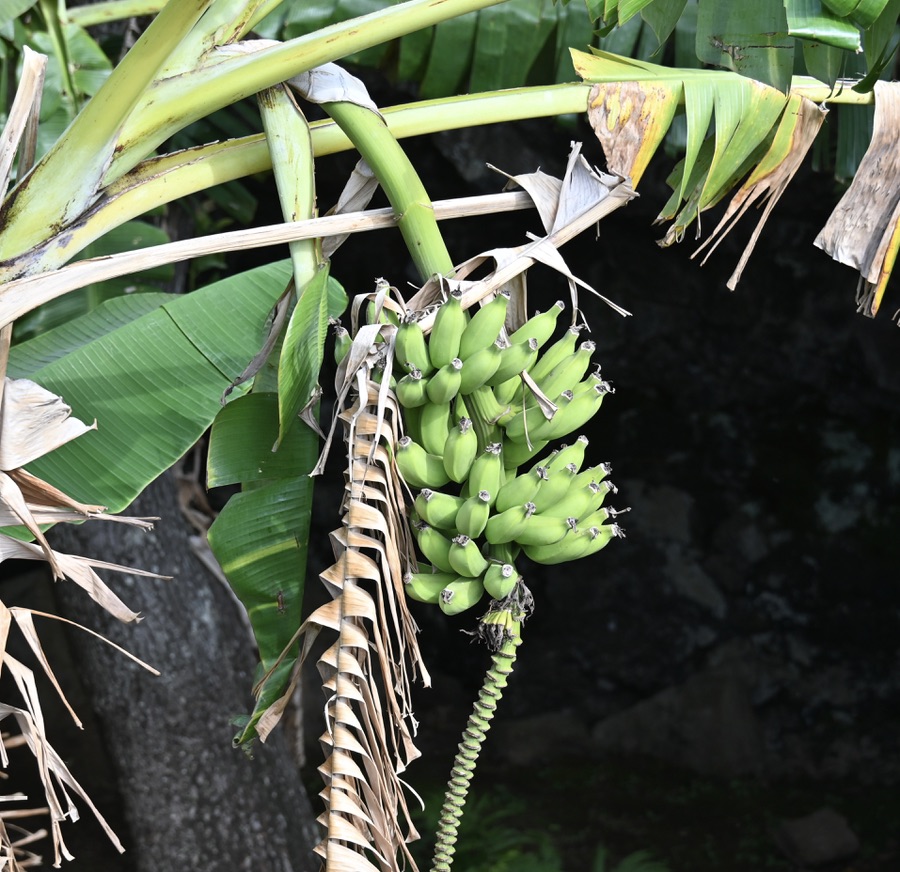
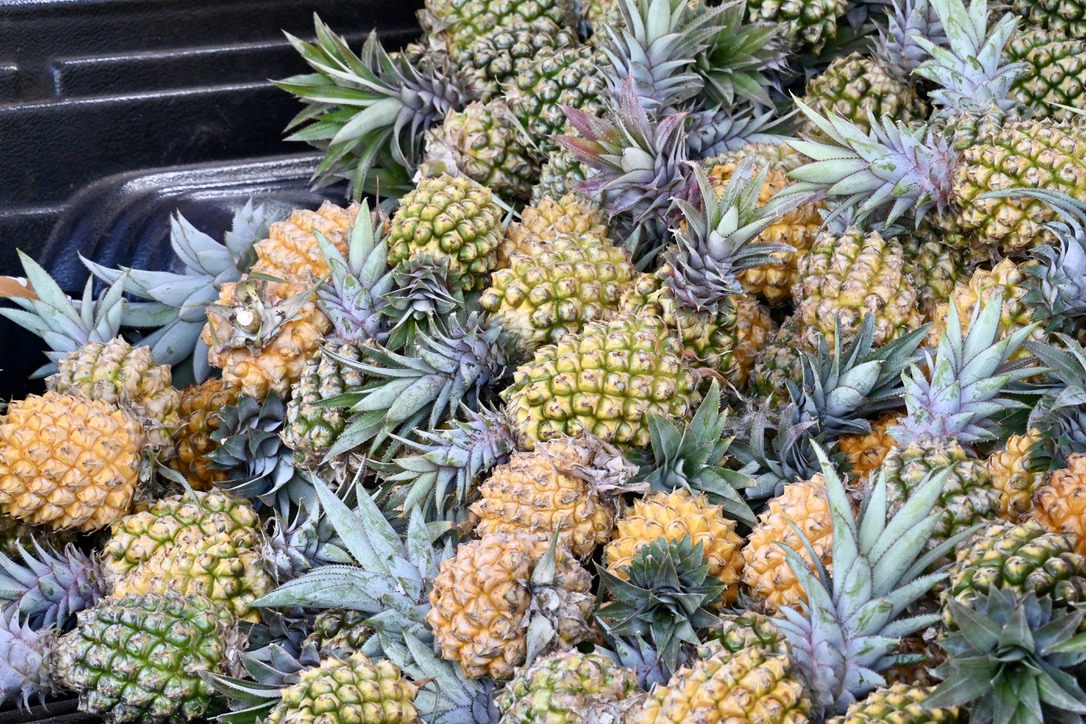
Two things Rapa Nui does not have in abundance are cell coverage and smooth roads. Much of the island has no coverage, and even where my phone showed a signal, I was unable to make phone calls, send texts, or go on-line. As for the roads, outside the main town of Hanga Roa and the road ringing the island, the ride ranges from boisterously bumpy to bone-jarring.
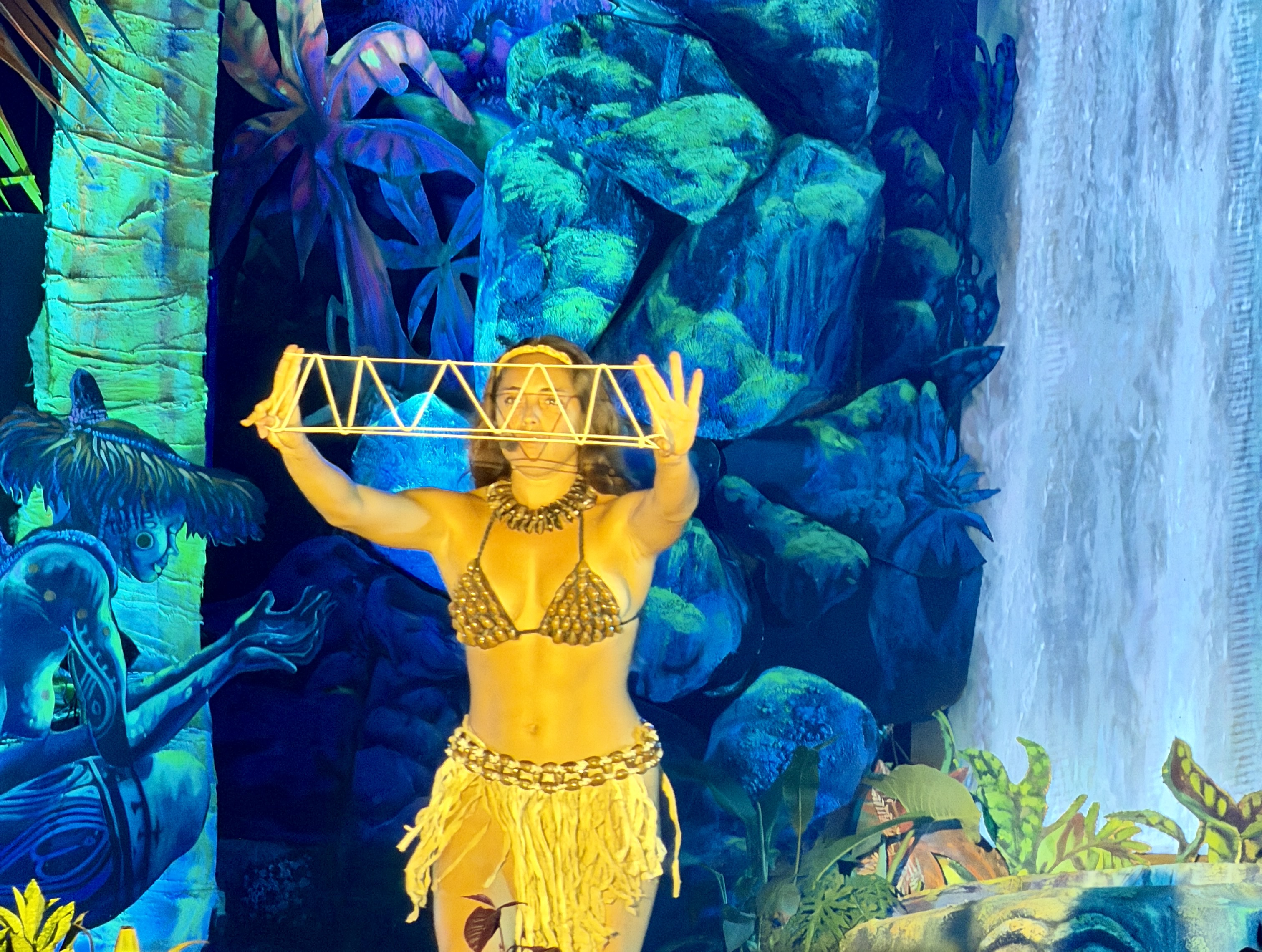
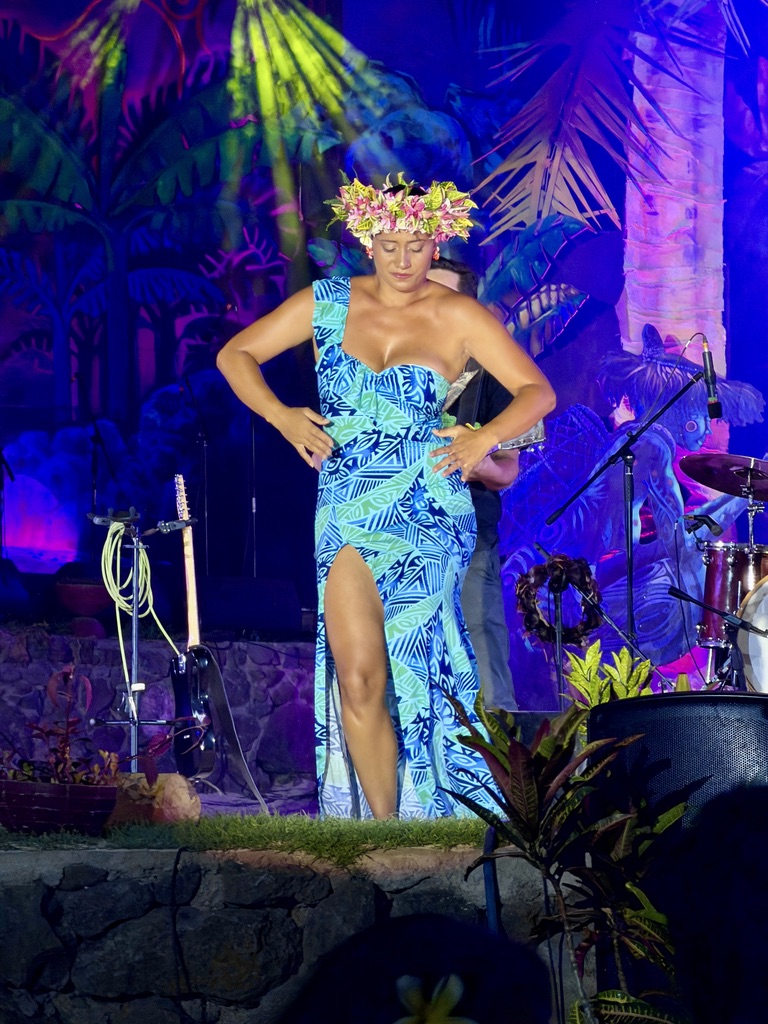
The spirit of the island beats to a Polynesian/Chilean hybrid beat, with the emphasis on the Polynesian. We arrived during the annual Tapati festival, which celebrates the island’s heritage with traditional singing, dancing, music, and artistic and athletic competitions. People here take their history, and their fun, seriously.
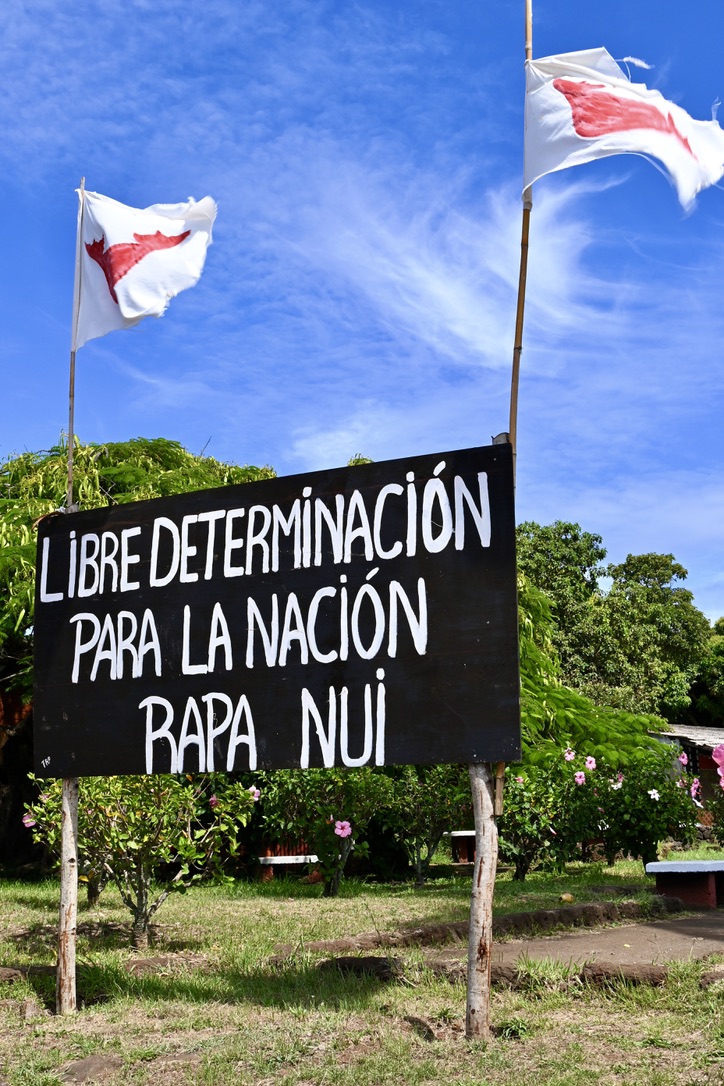
Rapa Nui has an uneasy relationship with Chile. I sensed considerable distrust of the Chilean government and a desire by many Rapa Nui to expand their control over the island’s affairs. It’s not exactly a separatist movement – things here are too laid-back for that – but it’s certainly an underlying theme in the community.
February 11: Of Moais and (Bird)Men
Most of Rapa Nui’s main attractions are located within protected areas for which you need an entry ticket purchased in advance and a local guide. You can buy a ticket at rapanuinationalpark.com/en. For adults, the price is 95,000 Chilean Pesos, roughly USD 110. Entry tickets also are available at the Rapa Nui Airport.
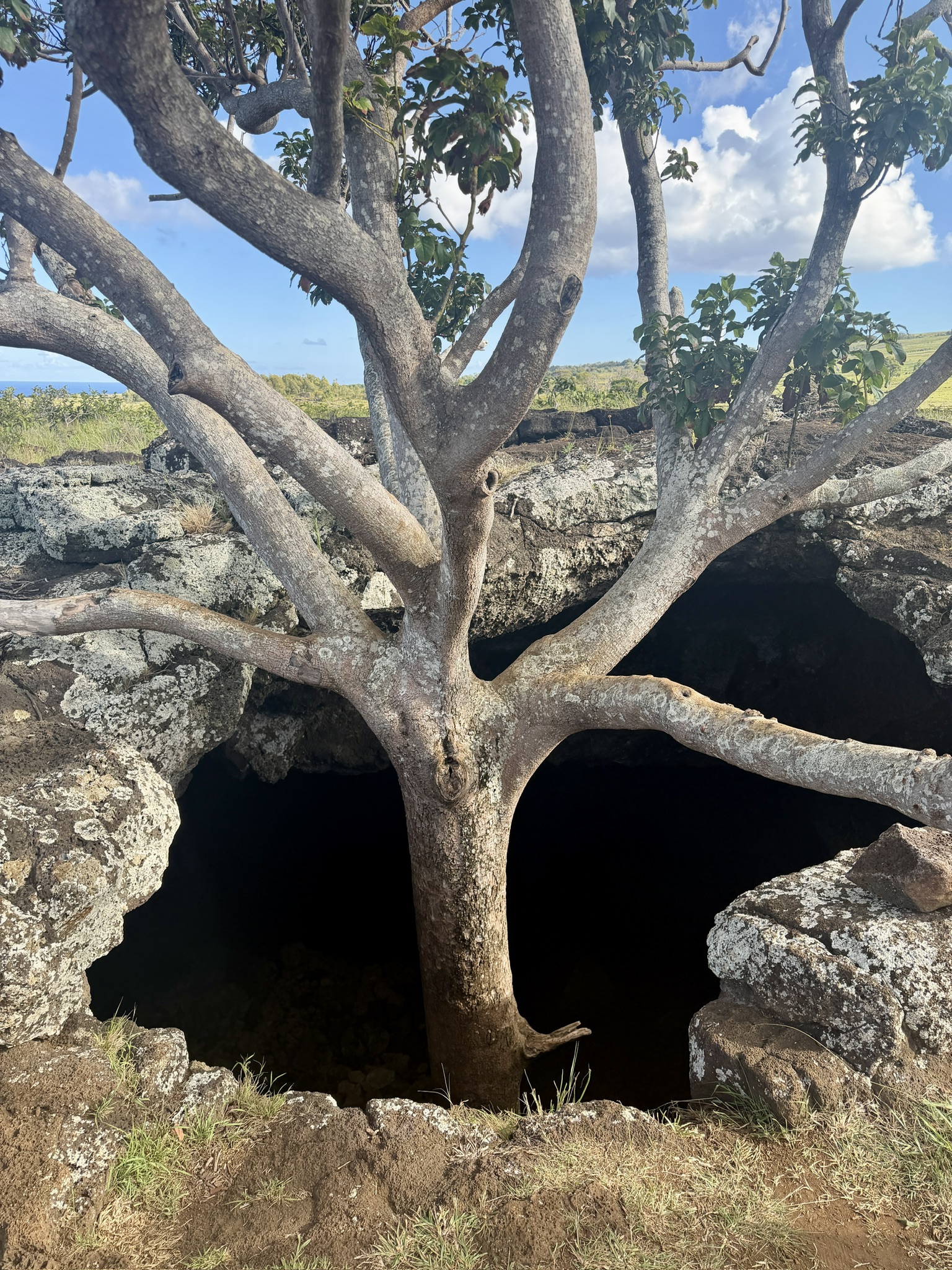
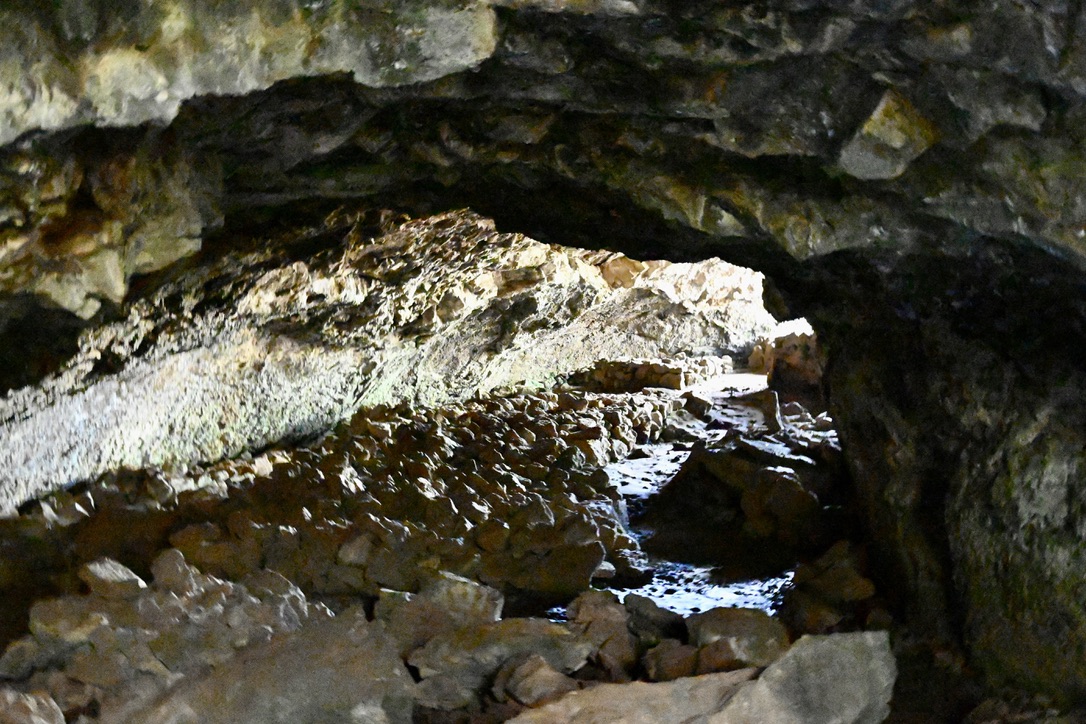
We booked a two-day tour through Tripadvisor with Green Island Tours. The first day’s itinerary began with a visit to Ana Te Pahu, where we crouched, shuffled, slid, and splashed our way through a lava tube which served as a hiding place during the frequent inter-tribal conflicts of centuries past.
Next up was a visit to Ahu a Kivi, a sacred site with seven restored moai (statues erected to worship and seek aid and protection from ancestors). Moai worship took place in Rapa Nui for roughly 400 years, ending in the late 17th century with the outbreak of a brutal civil war on the island during which all of the statues were toppled. They have been restored and re-erected only during the past 70 years (many at the instigation of Thor Heyerdahl).
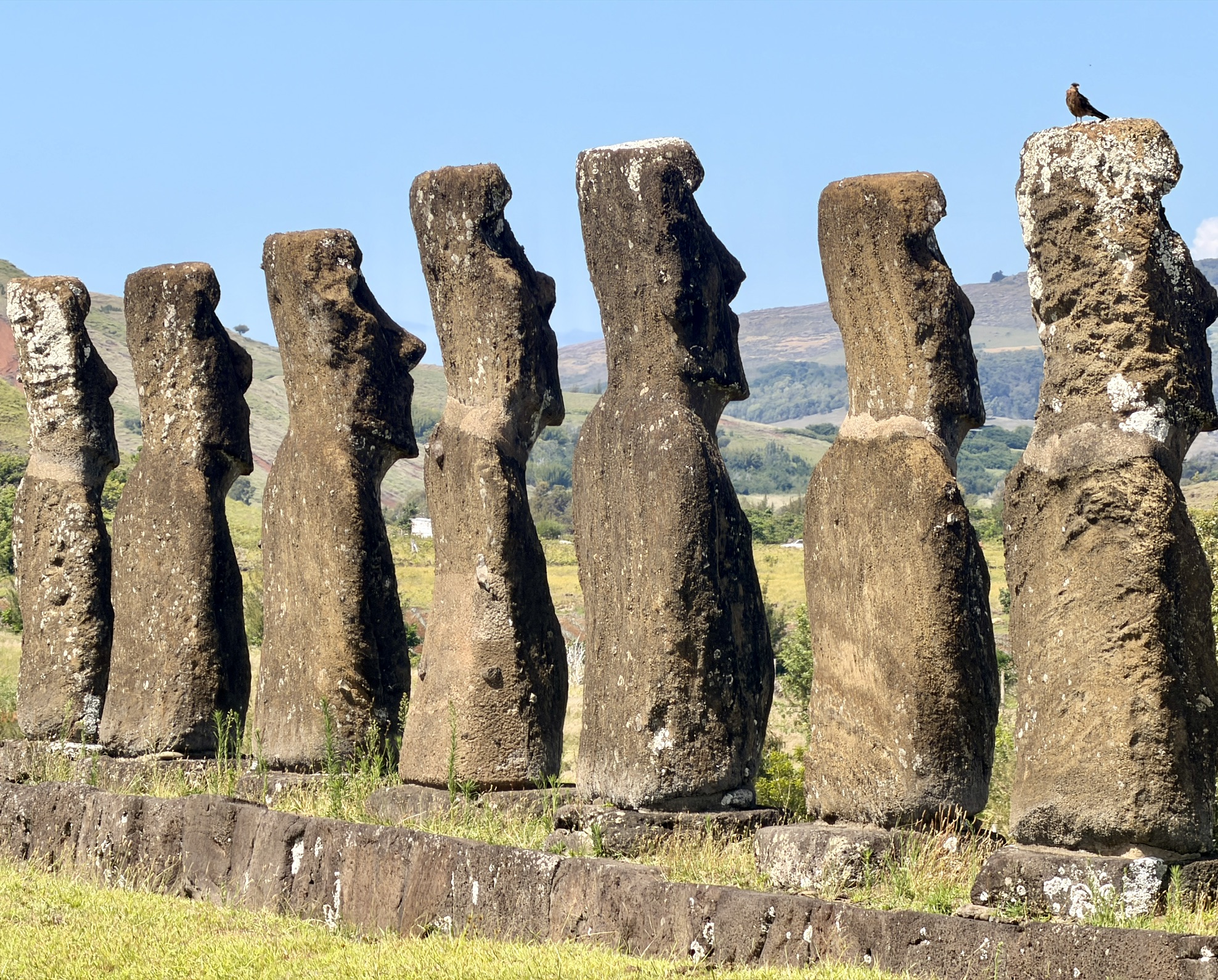
The moai at Ahu a Kivi are the only ones, of a thousand on the island, that face the sea. It is thought they represent the seven scouts who were sent to find Rapa Nui after a priest had a dream in which the soul of the king of a faraway island flew there.
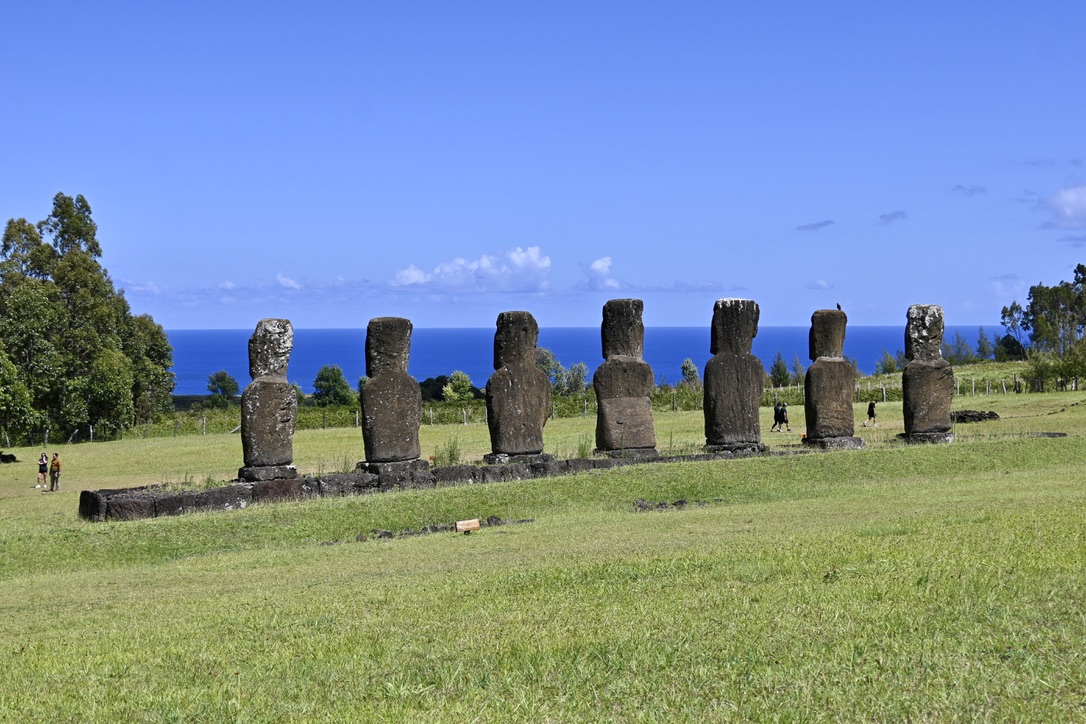
That king, Hotu Matu’a, is considered the original settler of Rapa Nui.
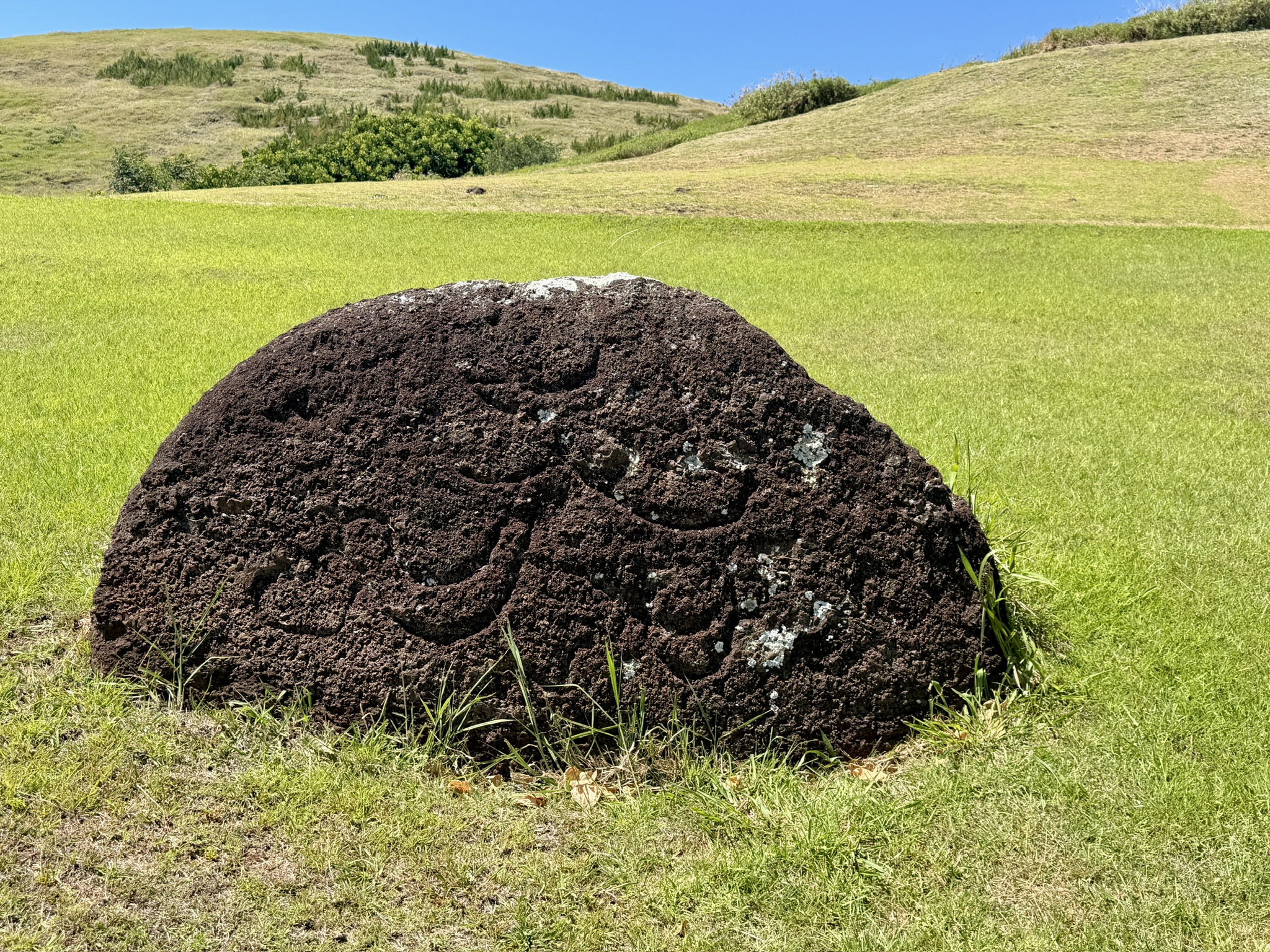
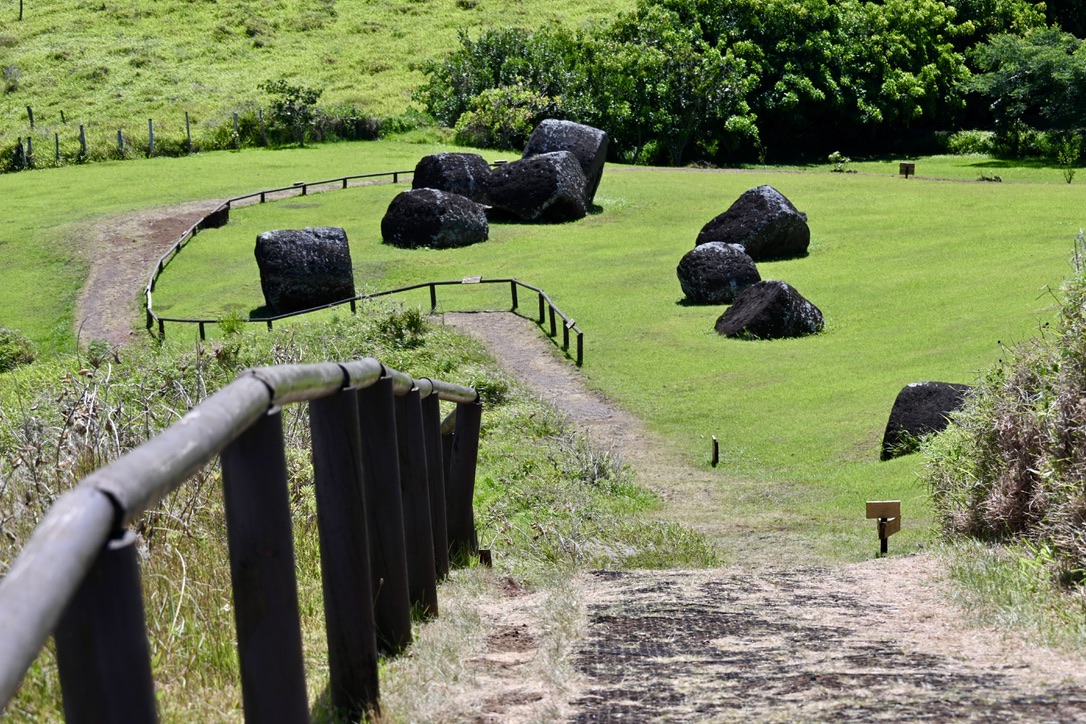
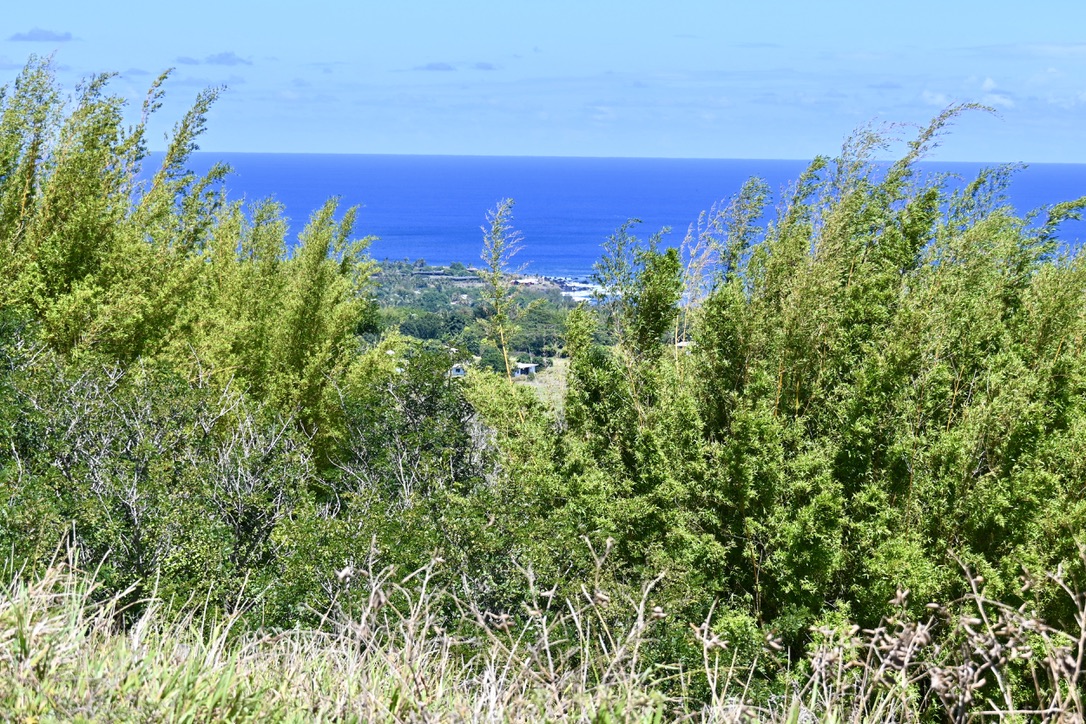
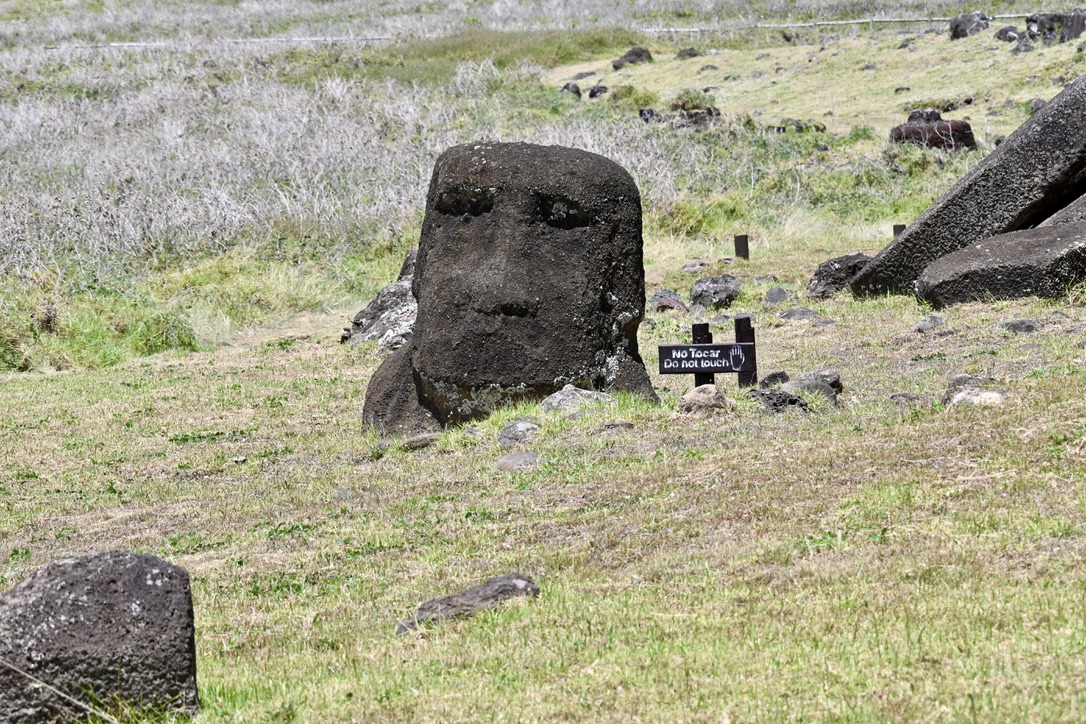
Statues of particularly important ancestors (tribal leaders and other VIPs) are indicated by top knots (pukao), and our next stop, Puna Pau, is where the stone used for the top knots (red scoria) was quarried. Several unfinished pukao lie on the ground, and there are beautiful views of the coast from site.
From Puna Pao, we headed to Vinapu to view the remains of platforms (bases for moai) unlike any others on the island. They consist of closely fitted slabs of basalt resembling construction along the Pacific coast of South America, even including small stones placed to disperse the forces generated by earthquakes. It’s unknown how the technology reached Rapa Nui – whether people from the island traveled to South America or vice versa – but the construction is indistinguishable from what you find in Peru’s Sacred Valley.
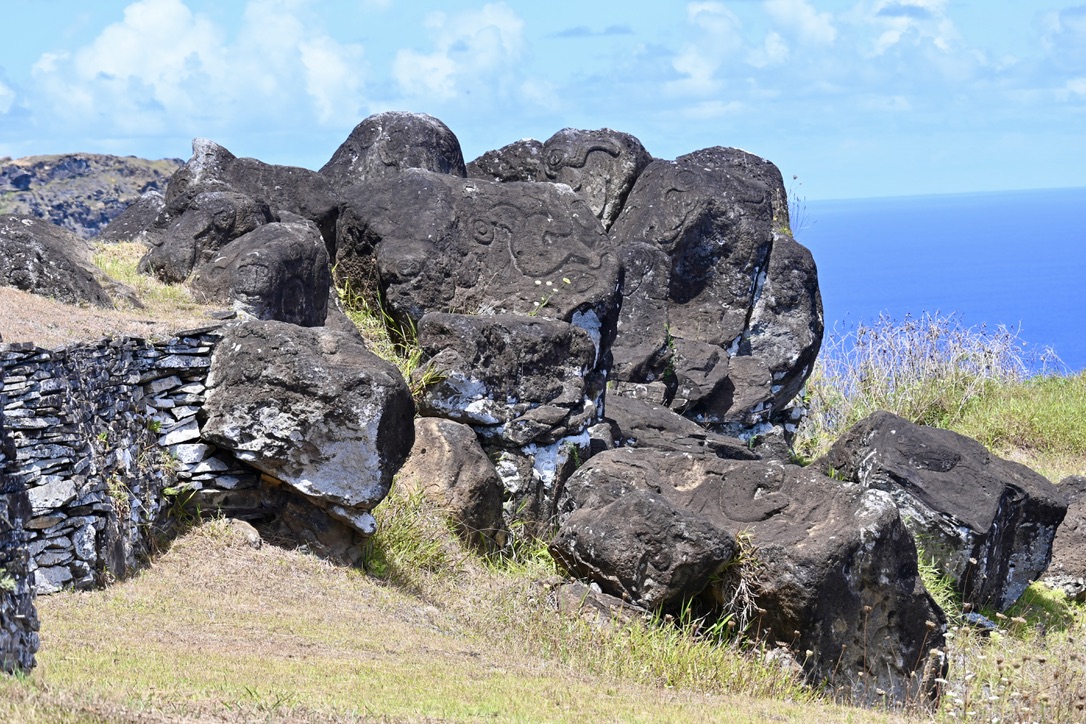
Our final stop on day 1, Orongo, was the most interesting of the day. It’s the site of an annual “Bird Man” competition. Developed after the devastating civil war, this competition sought to provide a peaceful means of conflict resolution; the winner would be king of the island for a year. (He also was given a young virgin, who of course had no say in the matter.)
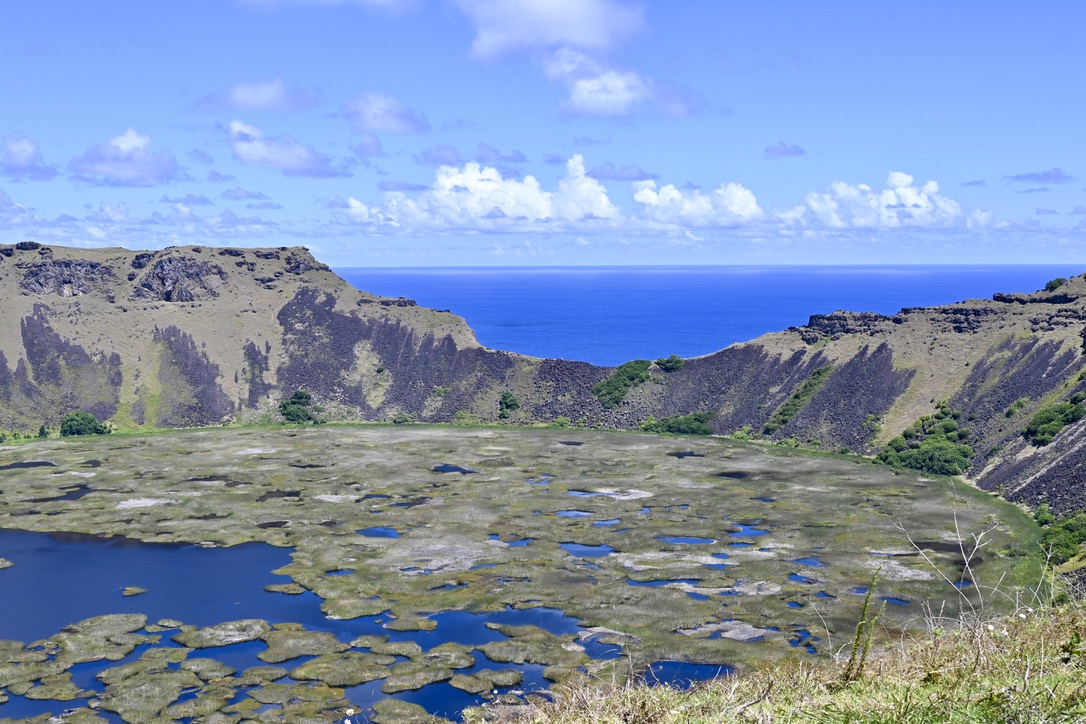
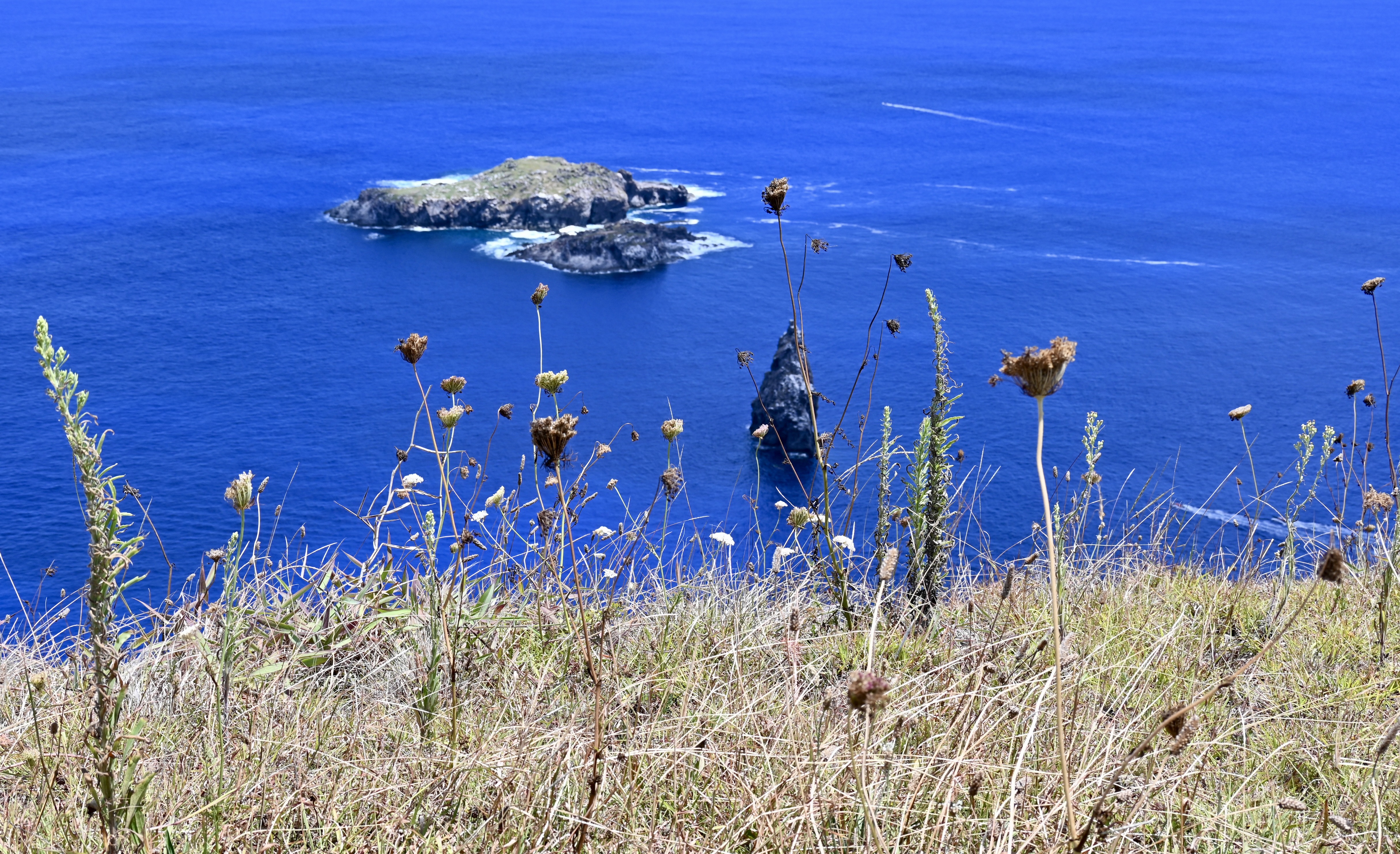
Adjacent to Orongo, there’s a caldera from which aspirants clambered down a nearly vertical cliff into the ocean, swam a couple of kilometers through shark-infested waters to a nearby island, and waited days or weeks in caves for sooty terns to arrive and lay eggs.
The first person to make the return swim with an intact egg and scale the cliff was declared the winner. (Christian missionaries put a stop to the competition in the 19th century; I can’t imagine what they found objectionable!)
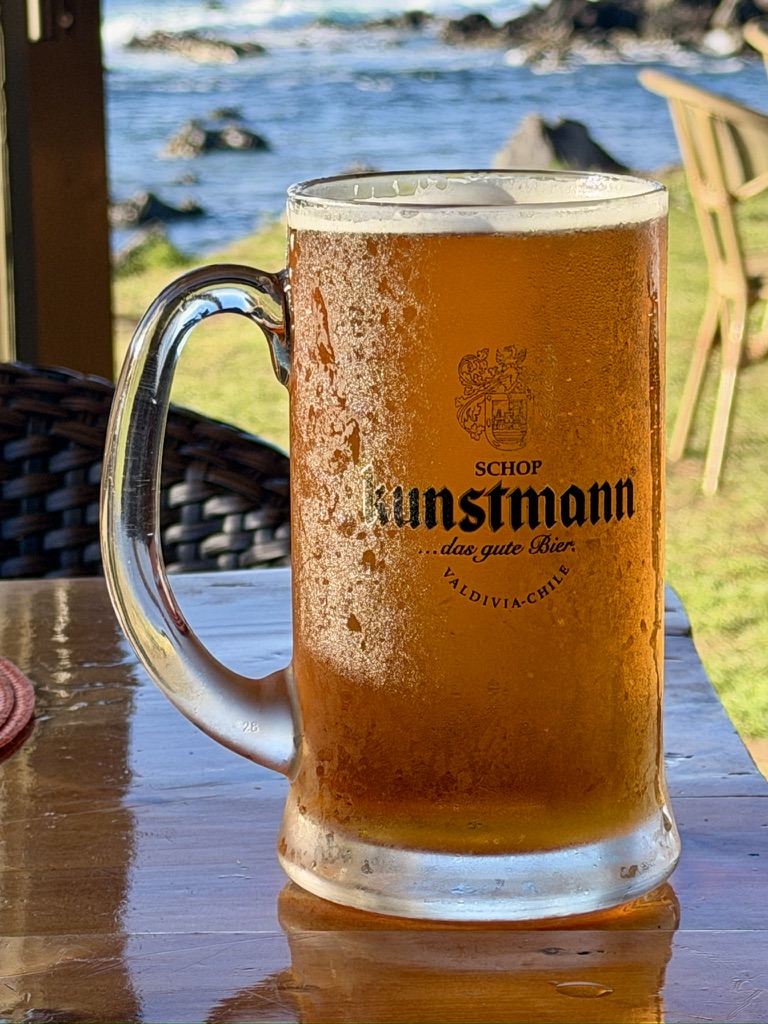
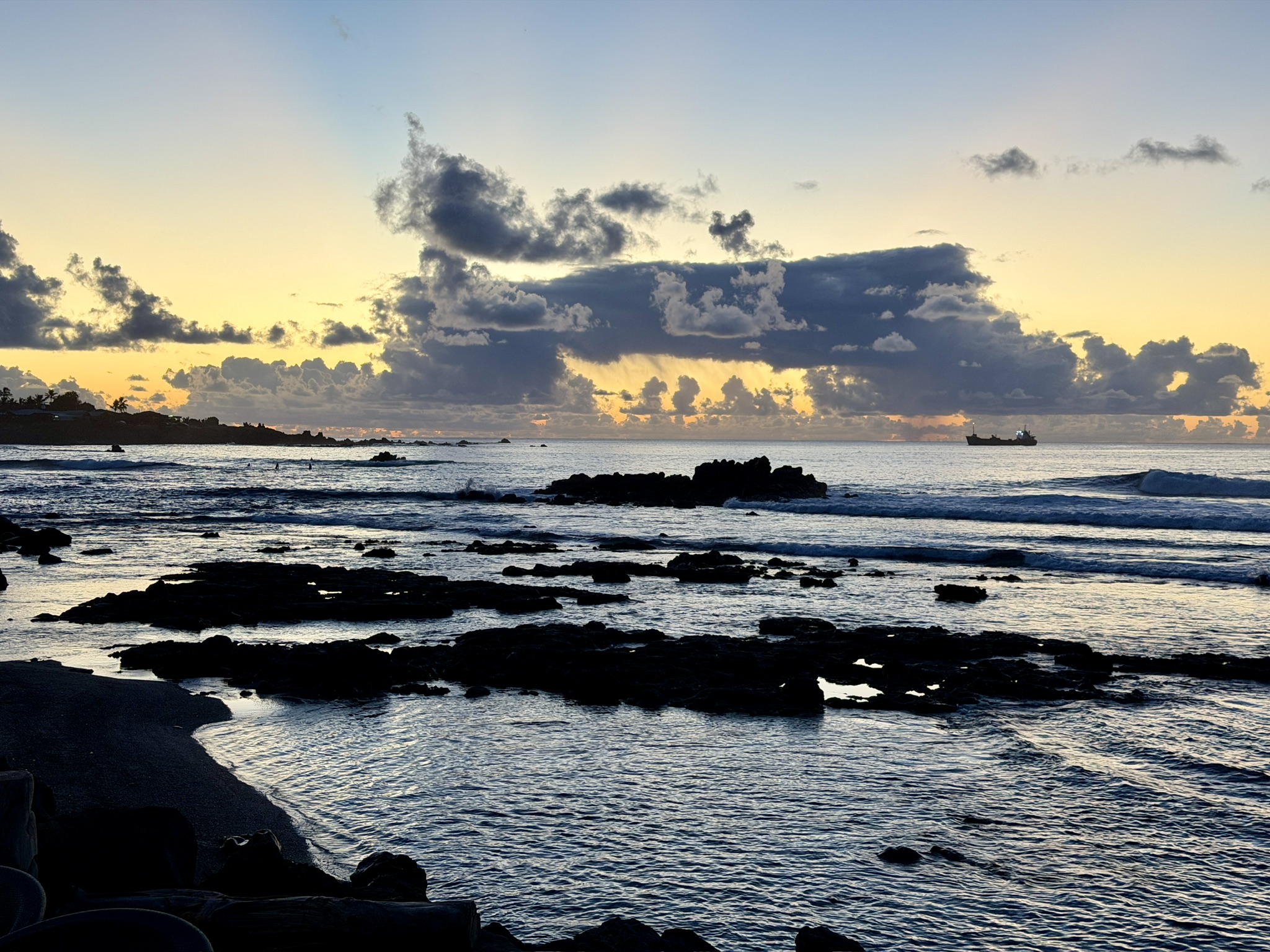
After our full day, Shari and I returned to our AirBnB, rested up, then went for a delicious dinner at Te Moana, a waterfront restaurant in Hanga Roa. I fell into bed around 11 and am happy to say I had no dreams of falling off cliffs, fending off sharks, or filching eggs from sooty terns.

 PuffinlessTravel
You’re off indeed! What a great start to your adventure. I hadn’t realized there were so many moai on the island. I’d only been familiar with the ones that are essentially all head and shoulders, sunk into a hillside.