There’s a great Mighty Mighty Boss Tones song called “A Jackknife to a Swan” (from the album of the same title). For obvious reasons, I wanted to use the song to humorous(ish)ly introduce today’s post. Unfortunately, it’s hard to come up with a suitable pun involving “jackknife,” but I figured I’d share the song anyway.
Like rivers, when one stream of ideas is blocked, others may flood forth, creating a veritable lake of possibilities. So I put figurative Pen to paper and Cob-bled together the following.
We left our hotel somewhere around 0 dark thirty and caught a 6:15 plane to Aswan for our first stop, a visit to the enormous but decidedly unphotogenic High Dam. It’s a long, massive structure set in a flat, dusty landscape just north of monochromatic. I took several photos, none of which is at all interesting.
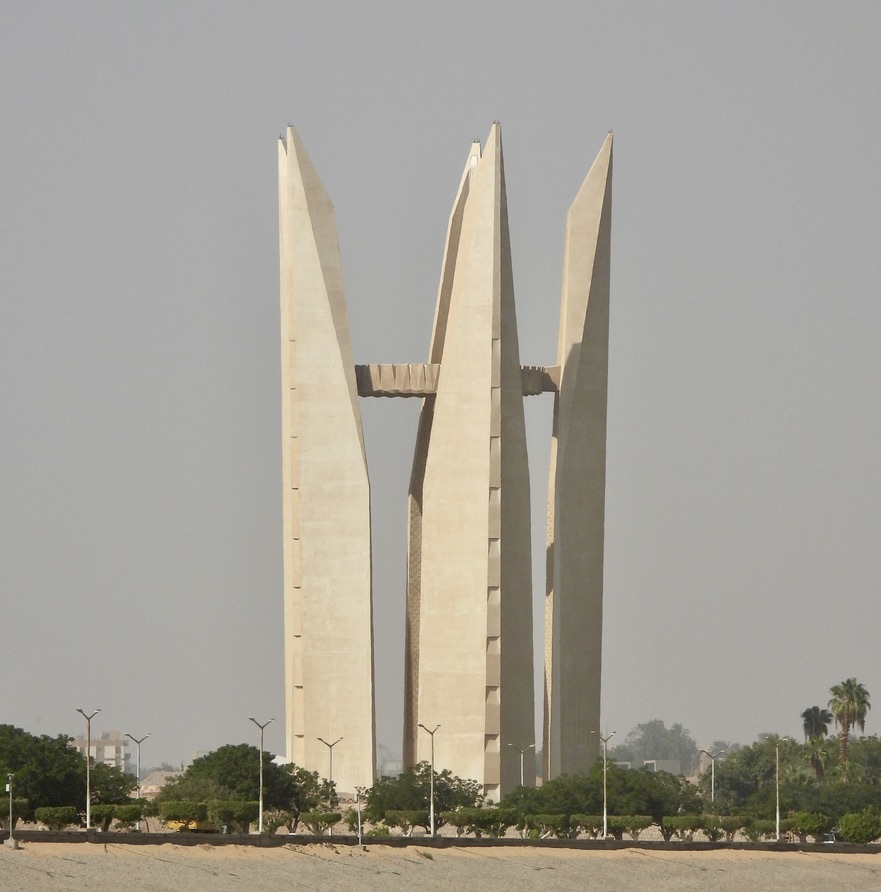
Damming the Nile to control seasonal flooding was first discussed roughly 1000 years ago, but it took until 1902 for a dam to be constructed (by the British). That structure, the – wait for it – Aswan Low Dam, was overstrained by the early 1950s, and after Egyptian President Nasser came to power, he approached both the US and the USSR to help fund and build a new dam that would both control flooding and generate a huge amount of power.
I’ll spare you the political machinations; suffice it to say the Soviets ended up helping with the project, and the High Dam was completed in 1970, flooding a huge swath of land, displacing more than a hundred thousand people, and creating 500-kilometer-long Lake Nasser.
Ironically, Egypt currently is in a dispute with Ethiopia about a dam that nation completed in 2020, showing that history is indeed “just one dam thing after another,” as Arnold Toynbee said. (Toynbee actually made the statement as a straw man to knock down, but I’ve never let accuracy stand in the way of wordplay, no matter how ill-advised.)
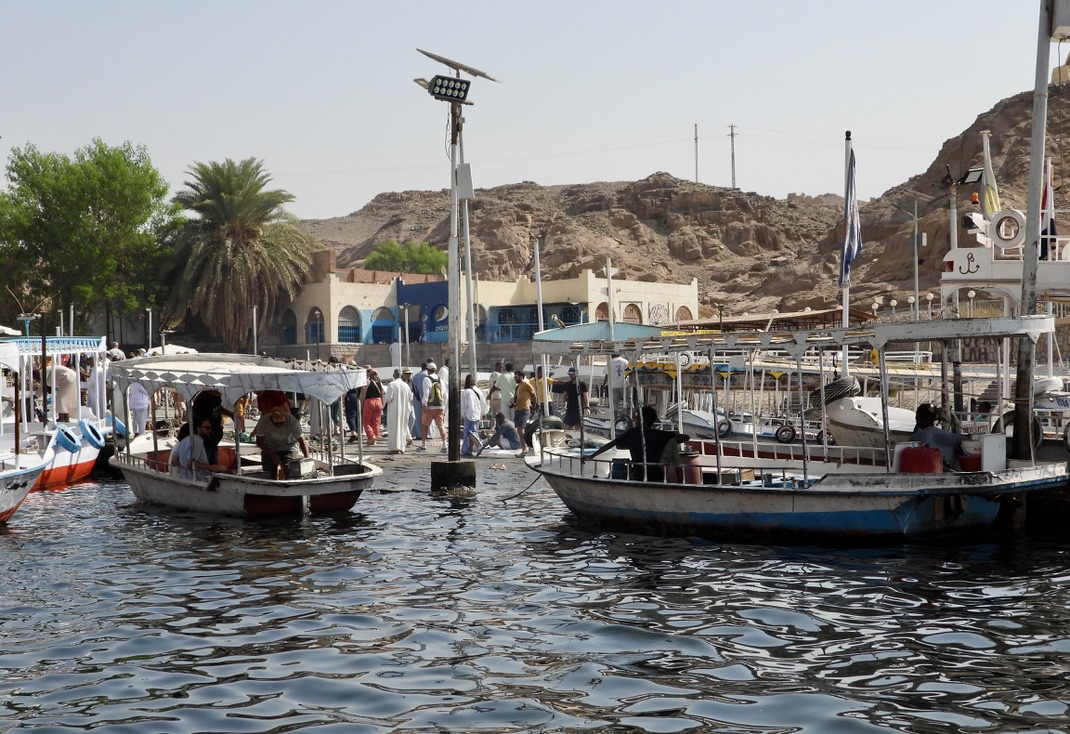
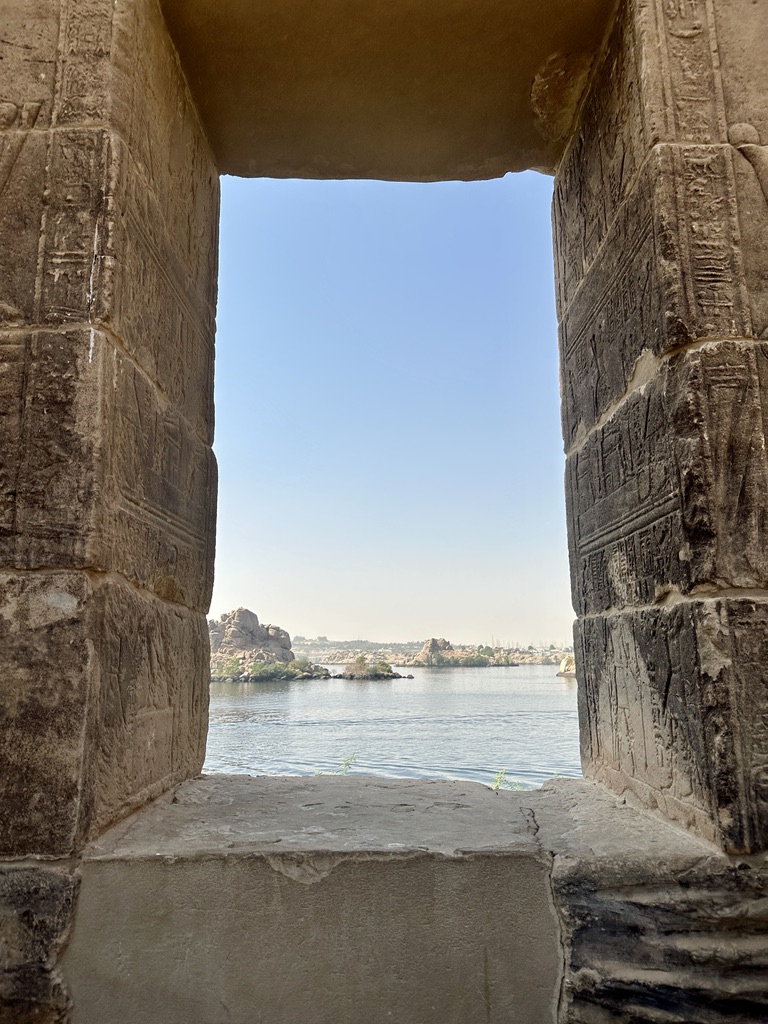
In addition to needing to relocate so many people, preservationists realized that the creation of Lake Nasser would submerge several important archeological sites, including the temples at Abu Simbel and Philae. Those sites, and several others, were removed block by block and reconstructed out of harm’s way. We’ll visit Abu Simbel tomorrow; today we headed from the High Dam to the Philae temple complex, which now sits on the islet of Agilkia.
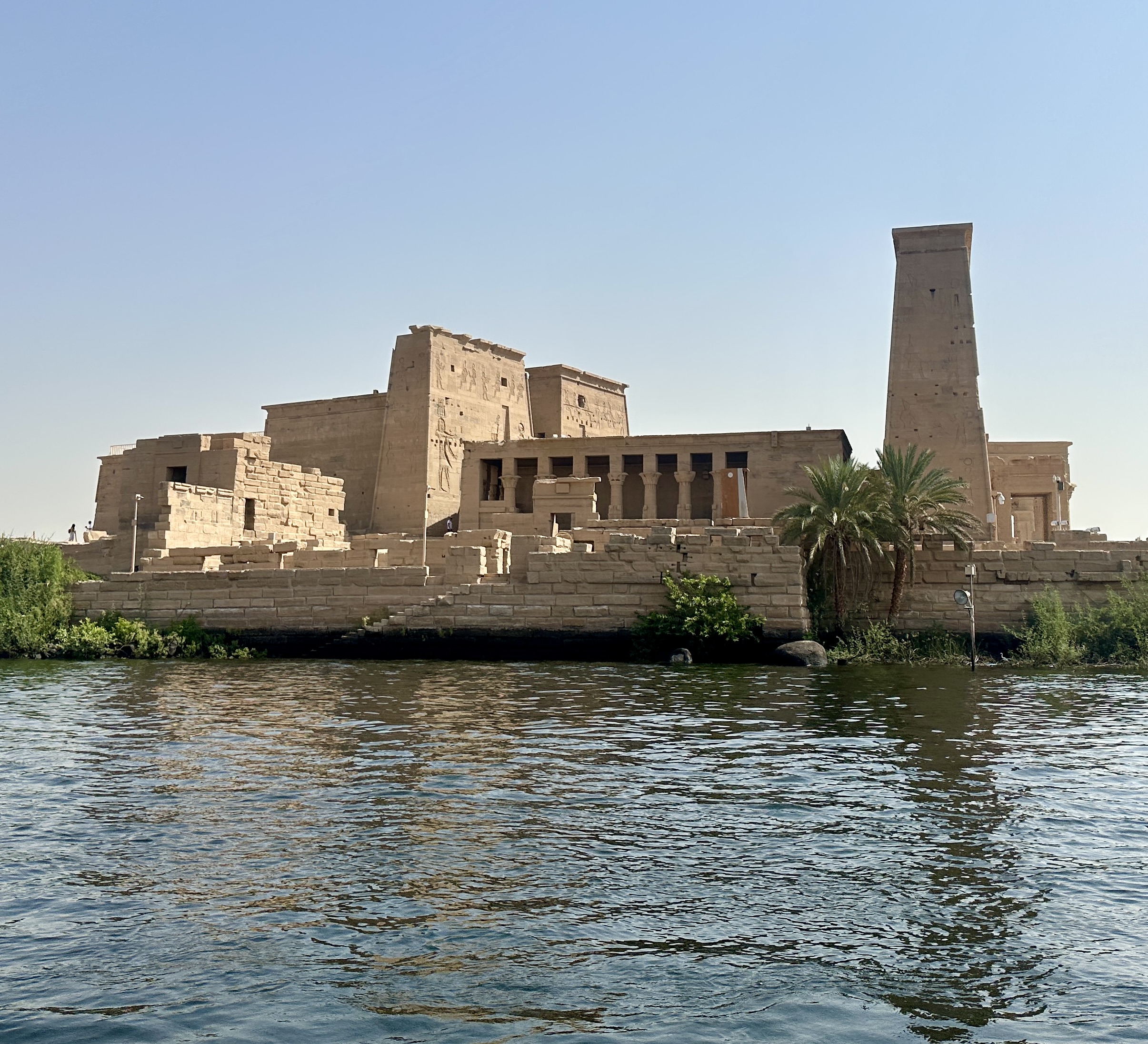

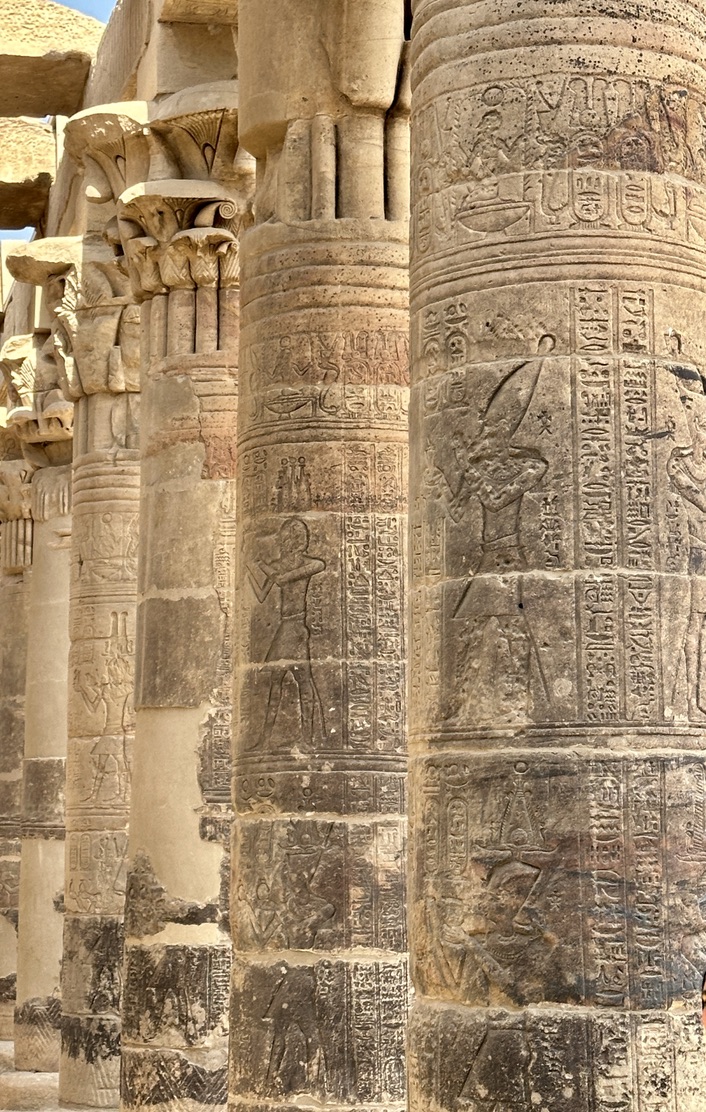
The focal point of the Philae complex is the temple of Isis, built starting in the 4th century BCE. Sitting at the end of a courtyard surrounded by inscribed pillars, the temple to Isis is a palimpsest whose hieroglyphics and depictions of Isis, Horus, and Osiris are occasionally effaced or overwritten by signs of its later conversion to a Coptic Christian basilica designated to St. Stephen.
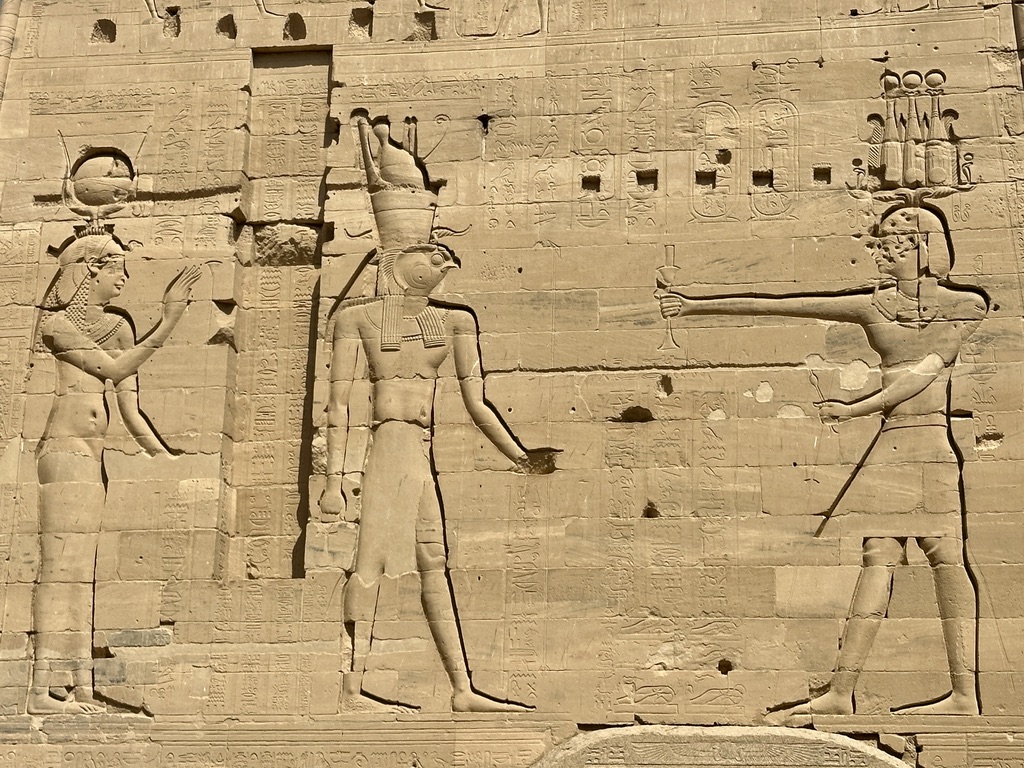
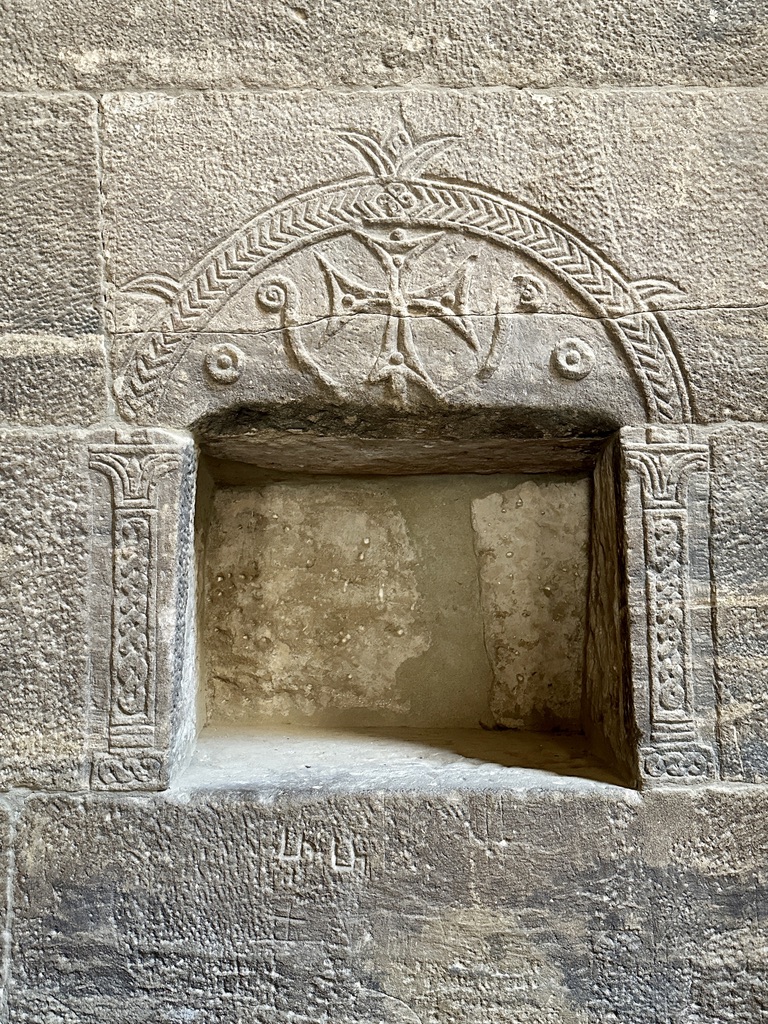
Many experts consider the site the last place where the traditional, ancient Egyptian religion was practiced before being expunged by Christianity in the late fourth or early fifth century CE.


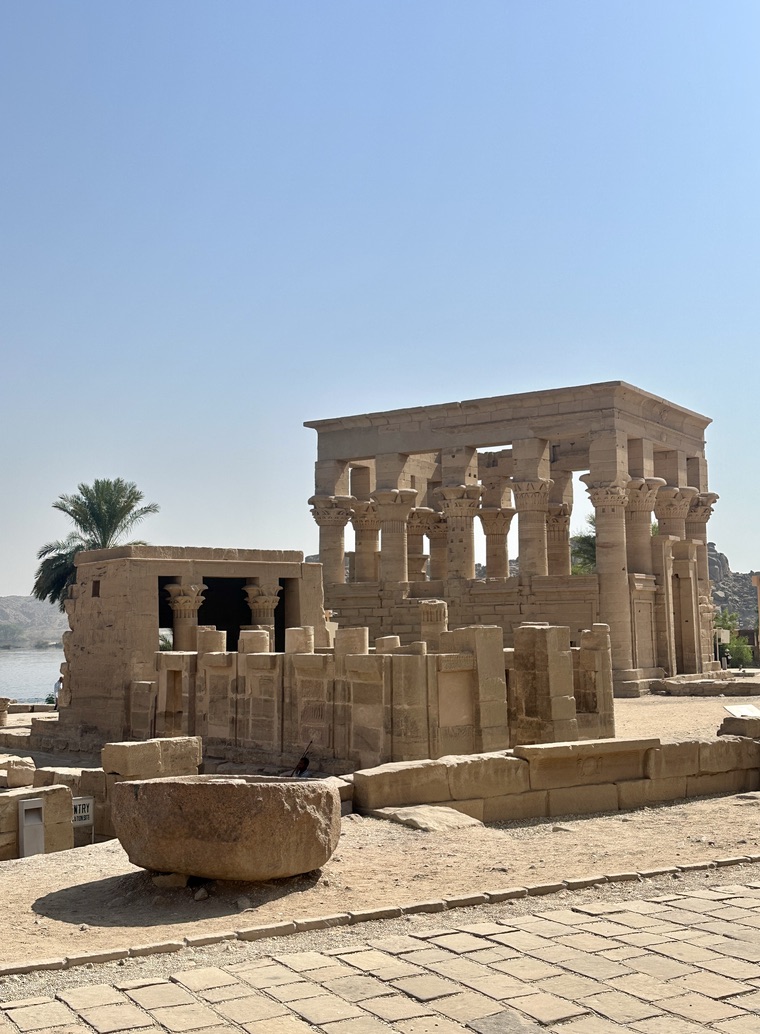
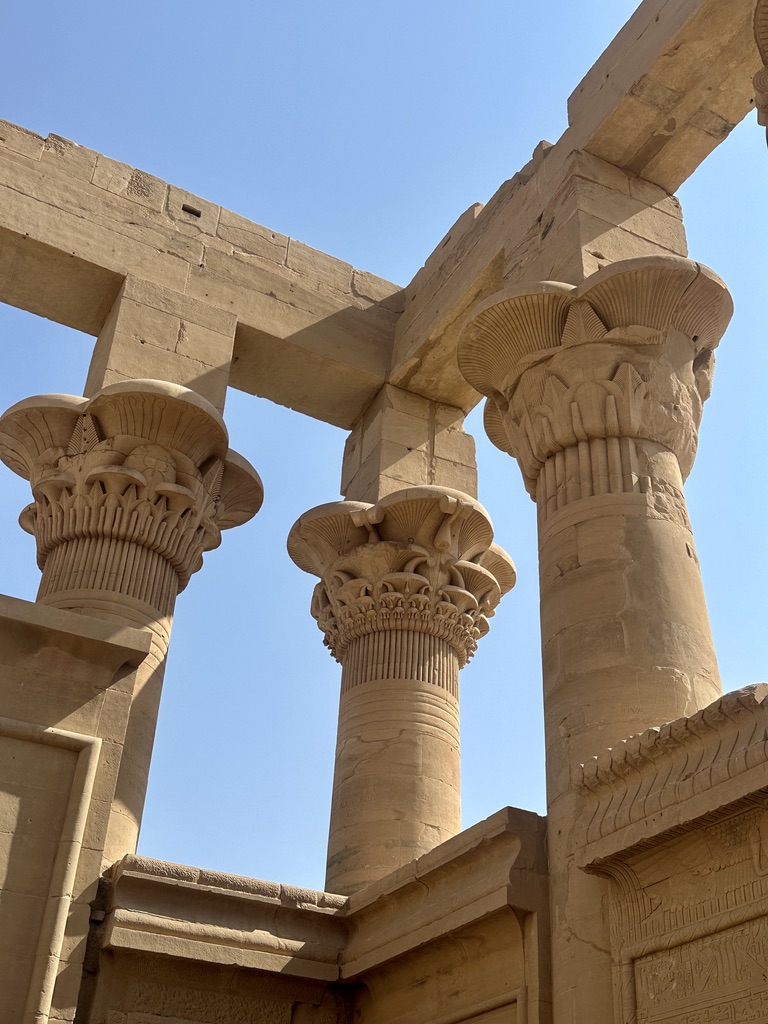
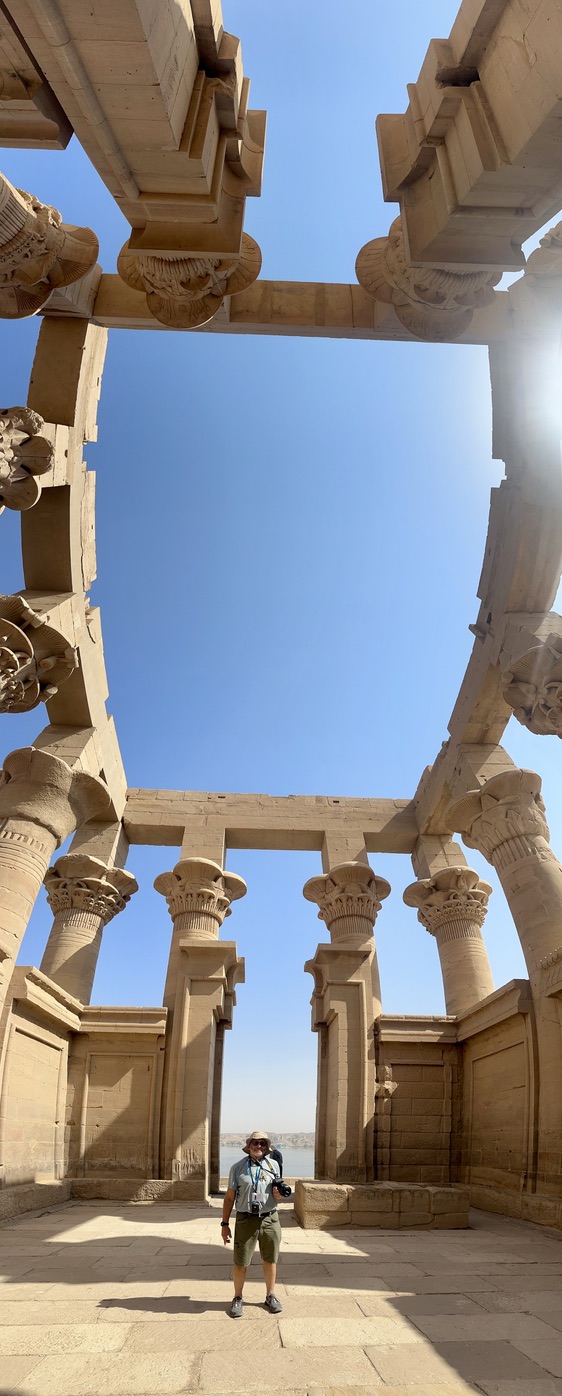
Although the temple to Isis is the largest structure in the complex, it shares the space with two other notable buildings, a temple to Hathor and the unfinished but still majestic Kiosk of Trajan, begun under Emperor Augustus. (Not sure if he intended to sell newpapers and coffee or fix iota-Phones. And yes, I know he was Roman, not Greek, but the joke doesn’t work otherwise. Artistic license.)
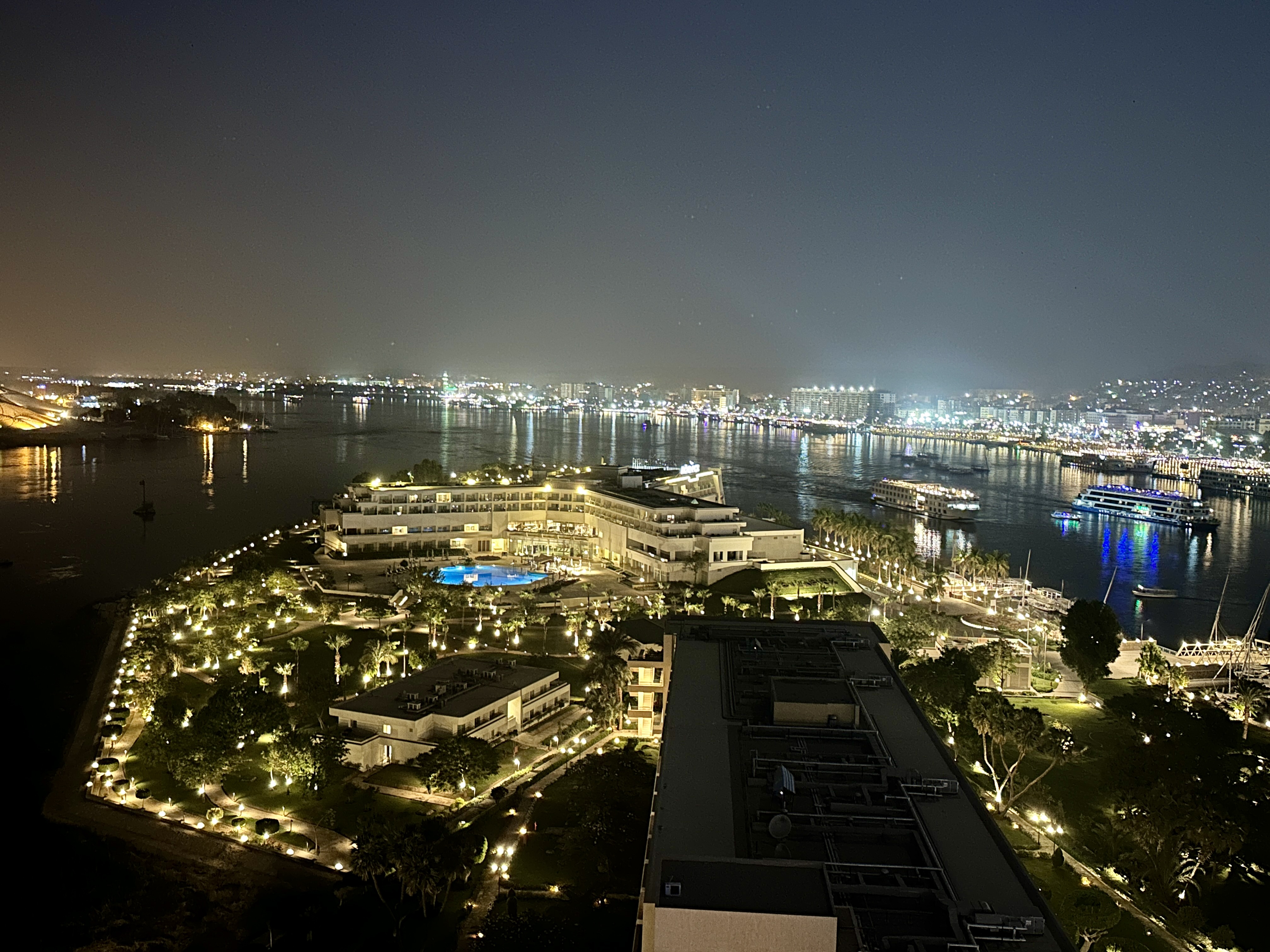
We’re staying tonight and tomorrow night at the modern Mövenpick Resort on Elephantine Island. The Resort shares the island with archeological excavations that have been declared a UNESCO World Heritage site. In addition to a necropolis and Egyptian temples, evidence has been found of an ancient Temple to Yahweh, established by Judean refugees after destruction of the Jerusalem temple in 587 BCE.

As I noted earlier in this post, tomorrow we head to Abu Simbel. I’ll keep you posted, literally. From Aswan, I’ll cygnet off for now.

 PuffinlessTravel