It’s not often one gets to walk along two of the world’s most famous rivers, separated by two thousand miles, in less than twenty-four hours. But thanks to maximal jet travel and minimal sleep, that’s exactly what I did yesterday and today. (Apologies for the paucity and drabness of the photos – it’s like the old joke: “The food at this place is terrible – and the portions are so small!” – but rain and wind in Paris, and exhaustion and fear of crossing the street in Cairo, conspired against me. Things will improve!)
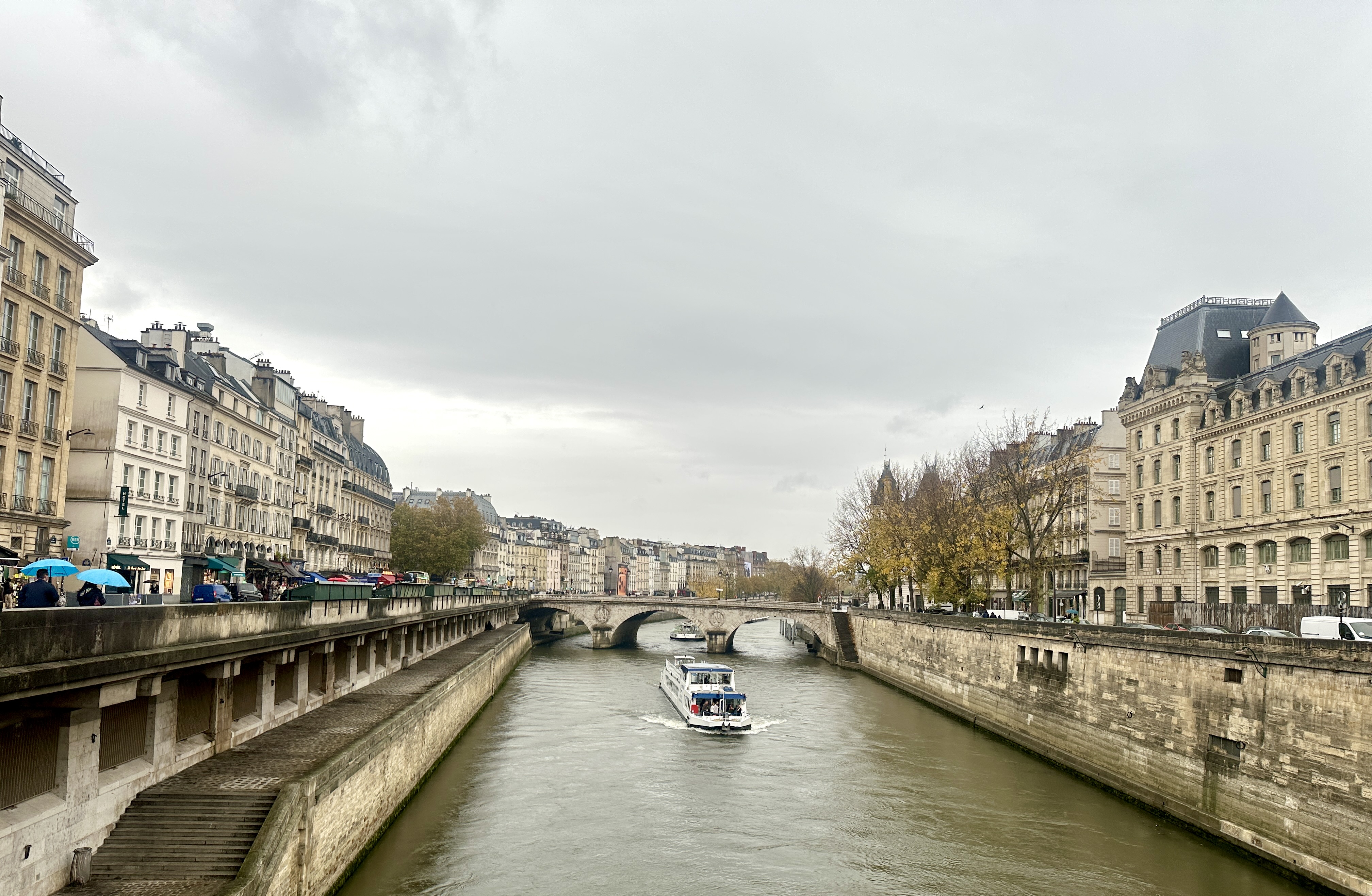
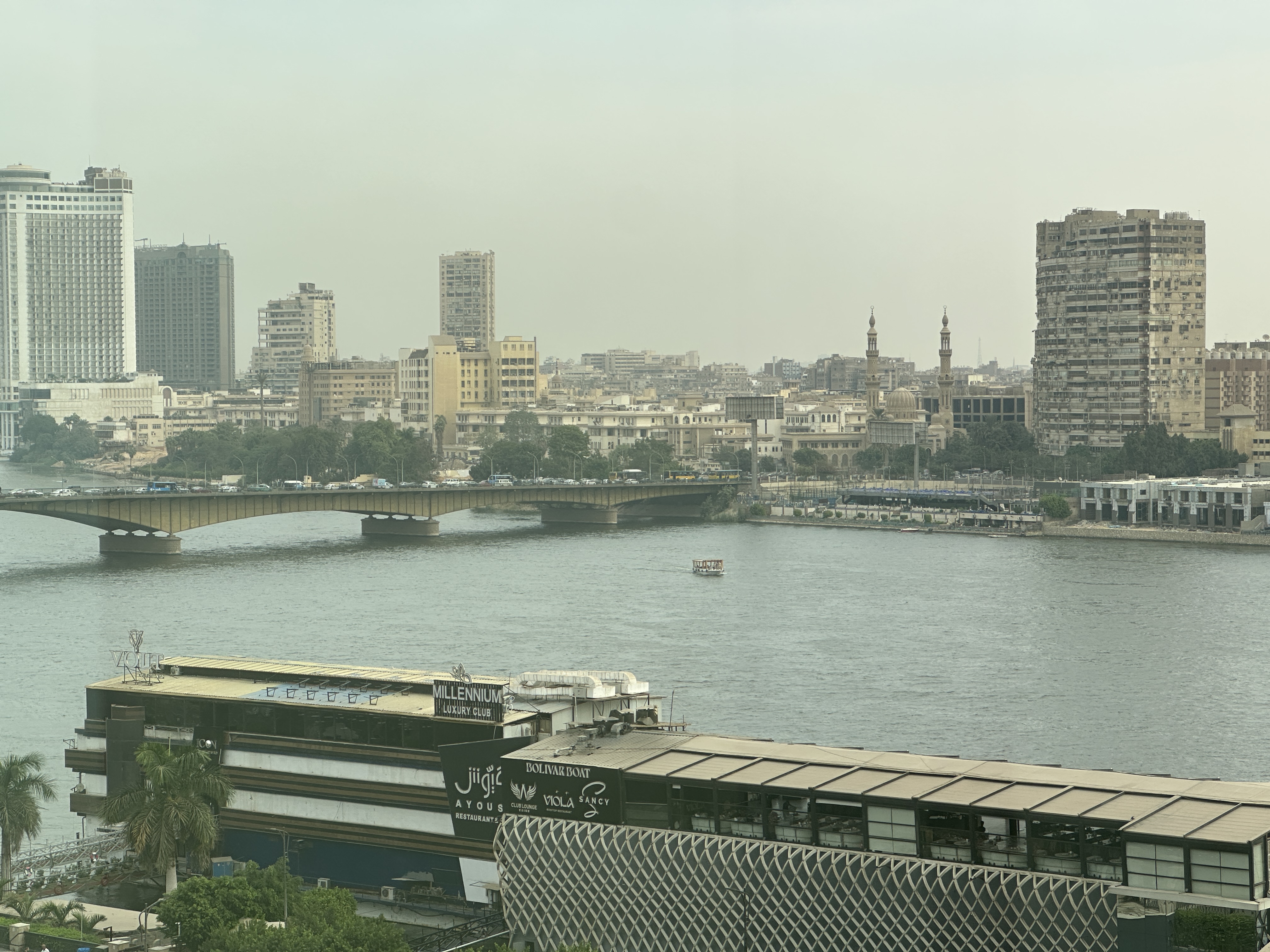
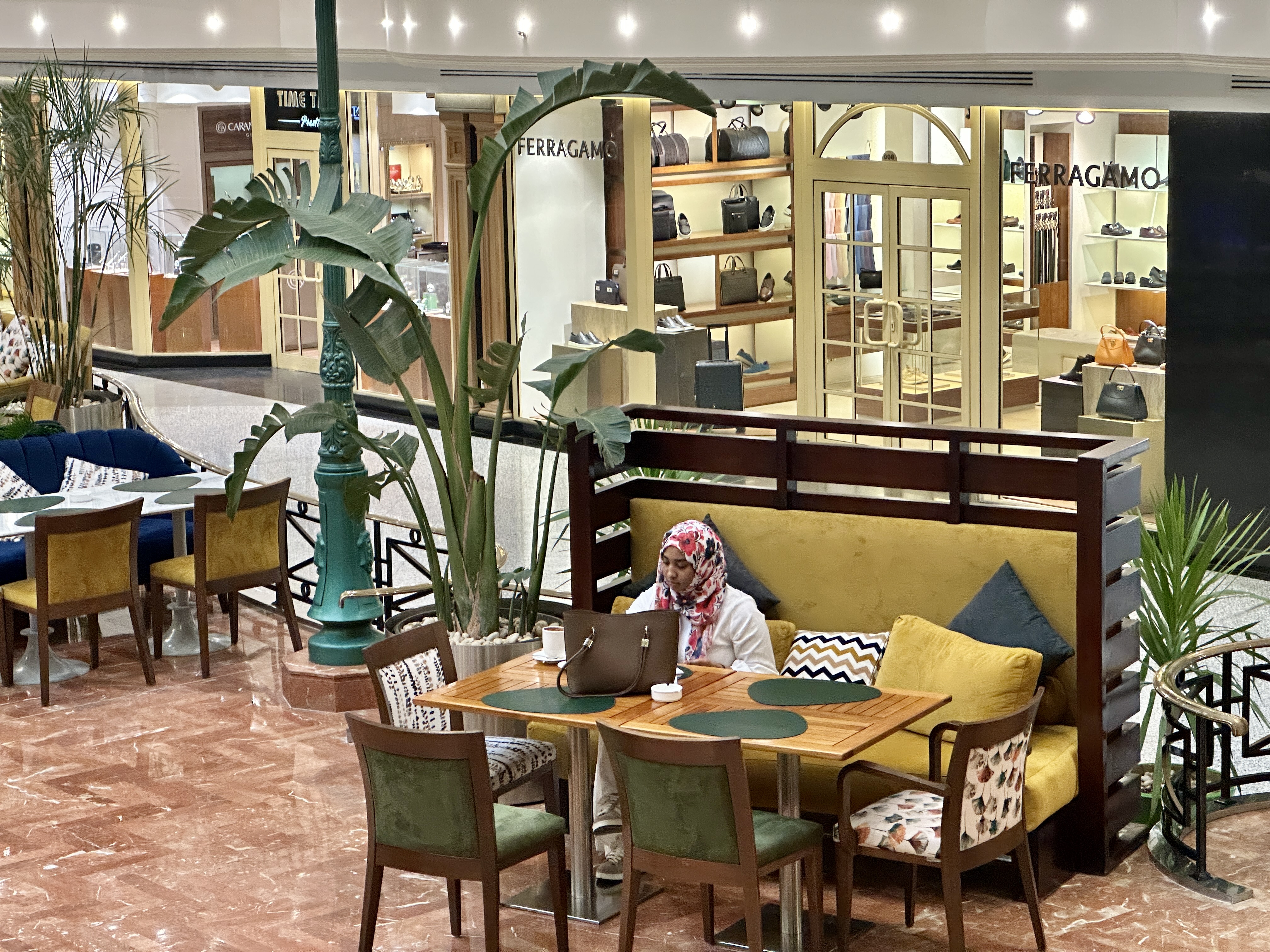
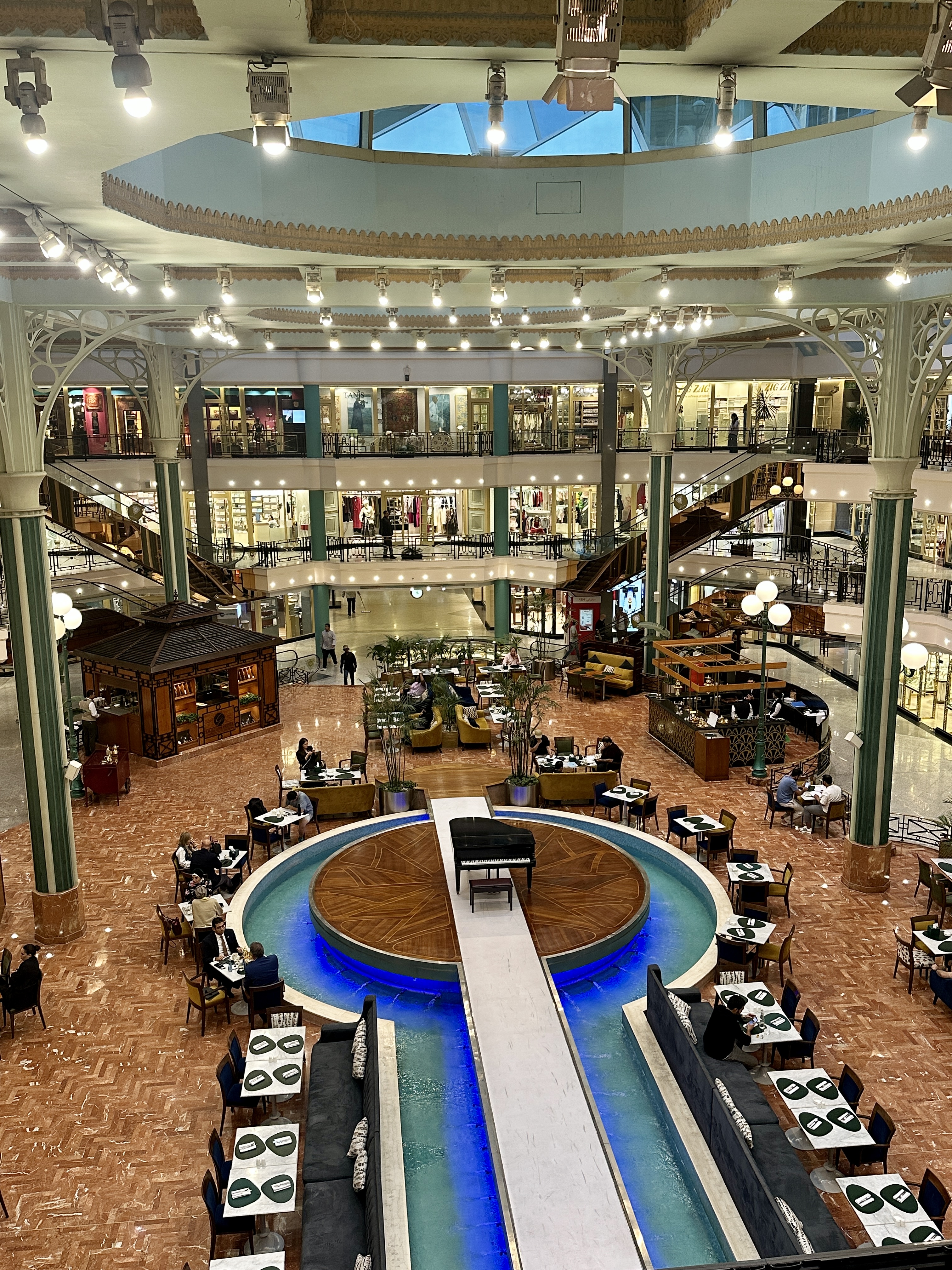
I’m writing this in the lobby of the Four Seasons hotel in Cairo, Egypt, where I’ll meet the rest of my Smithsonian Journeys group tomorrow for a twelve-day tour entitled “Ancient Egypt and the Nile.”
I’ve never visited Egypt – I’m a Nubian noob, in other words – but I’ve always wanted to see the pyramids and the Sphinx first-hand and to learn more about one of the world’s great early civilizations. Choosing Smithsonian Journeys for the trip was easy for a couple of reasons.
First, I’ve had phenomenal excursions with Smithsonian to Cusco, Machu Picchu, and the Galapagos (Sept. 2022) and to see paleolithic art in caves in France and Spain (April 2023). Smithsonian provides outstanding experts for its tours. For this trip, we’ll be joined by Daniel Warne, who has studied, worked, and excavated in Egypt for two decades and has won prestigious teaching awards.
Second, Smithsonian contracts on-the-ground tour management to Odysseys Unlimited, with whom I’ve enjoyed several wonderful trips – most recently, Japan in March 2025. (I’ll travel with Odysseys again next July, when I head to Kenya and Tanzania.)
Getting here involved planes, trains, and automobiles, but thankfully without the snowstorms, canceled flights, and freeway mishaps of the terrific John Candy/Steve Martin movie by that name. (Granted, I came close on two of the three, as I’ll discuss momentarily.)
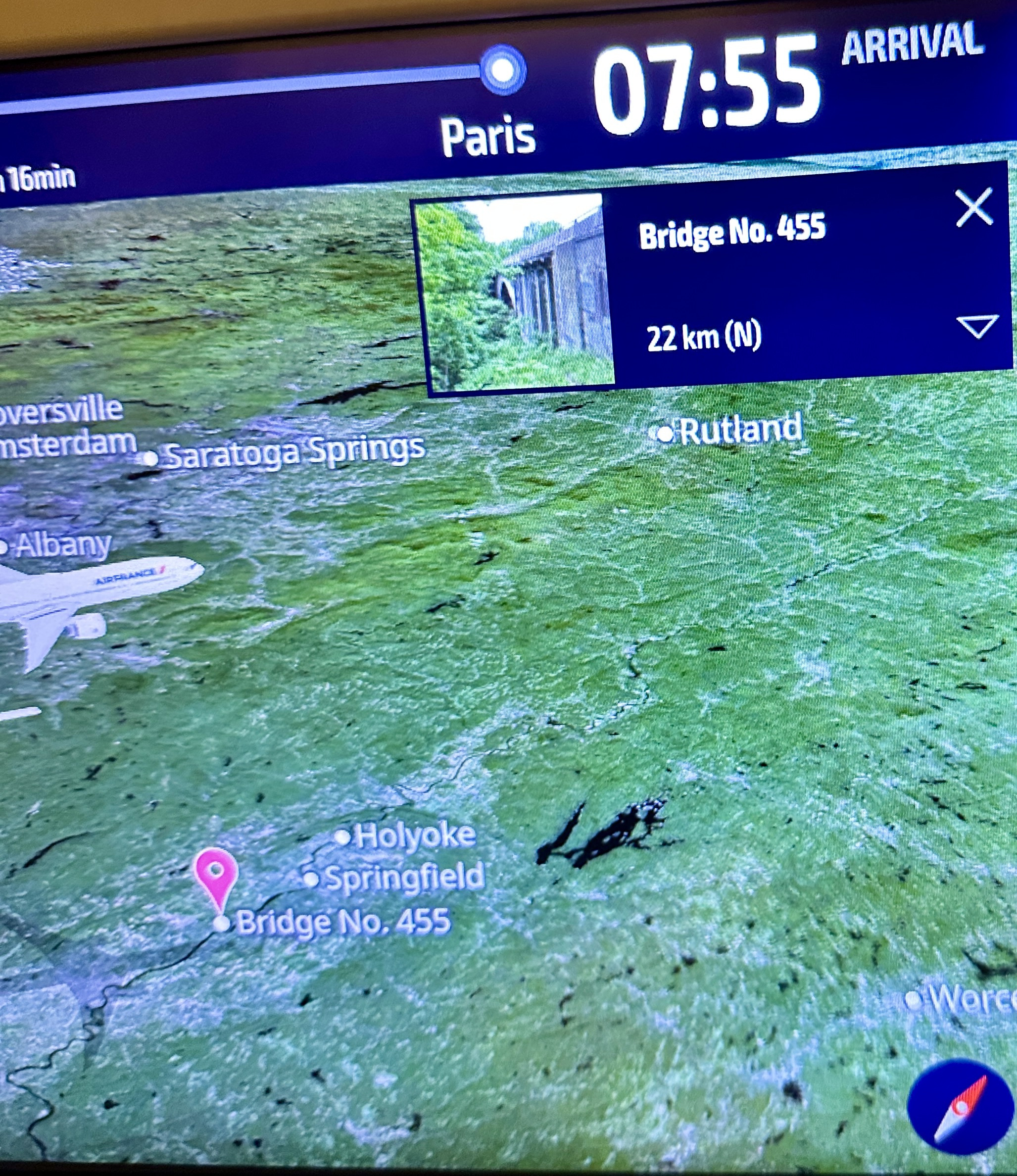
I left Dulles Airport on Halloween night, flying Air France to Paris. Shortly after takeoff I turned on the interactive flight map and was amazed to find that we were currently 20 kilometers from “Shea Stadium,” which was demolished in 2009. Perhaps Proust had taken charge of the highlights selected for the map; “Remembrance of Things Past,” indeed. I couldn’t get my phone out quickly enough to photograph Shea’s resurrection, but I did notice that the map’s “highlights” eschewed things like notable towns and geographic features, instead pointing out random bridges and stores. I’m sure there’s some French deconstructionist who could explain why, but I wouldn’t understand it anyway.
Business class on Air France was comfortable – much better than on my recent Lufthansa flights – with excellent service. I landed at Charles de Gaulle (CDG) on time at 8 the next morning and found myself a free man in Paris, unfettered (at least until my connecting flight ten hours later) and alive (albeit exhausted), to quote one of my favorite Joni Mitchell songs.
CDG supposedly had instituted a new fingerprint scan requirement a couple of days earlier, but they weren’t using the system yet when I got there, which meant the passport control lines were merely normally annoying. From passport control at Terminal 2E (CDG’s main international terminal), it’s about a 200 meter walk to the train to Paris (the B train). A round-trip ticket costs 31 Euros.
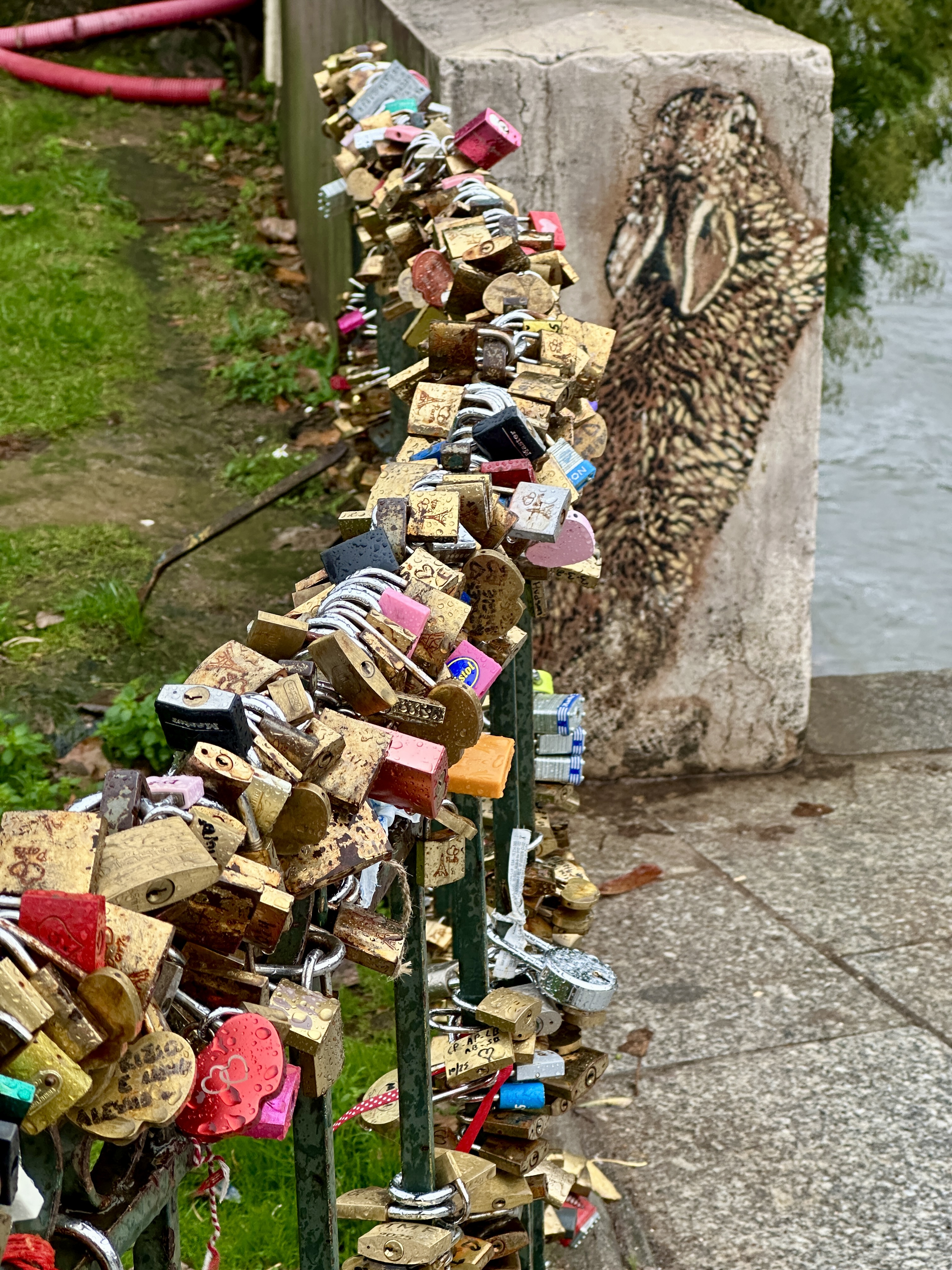
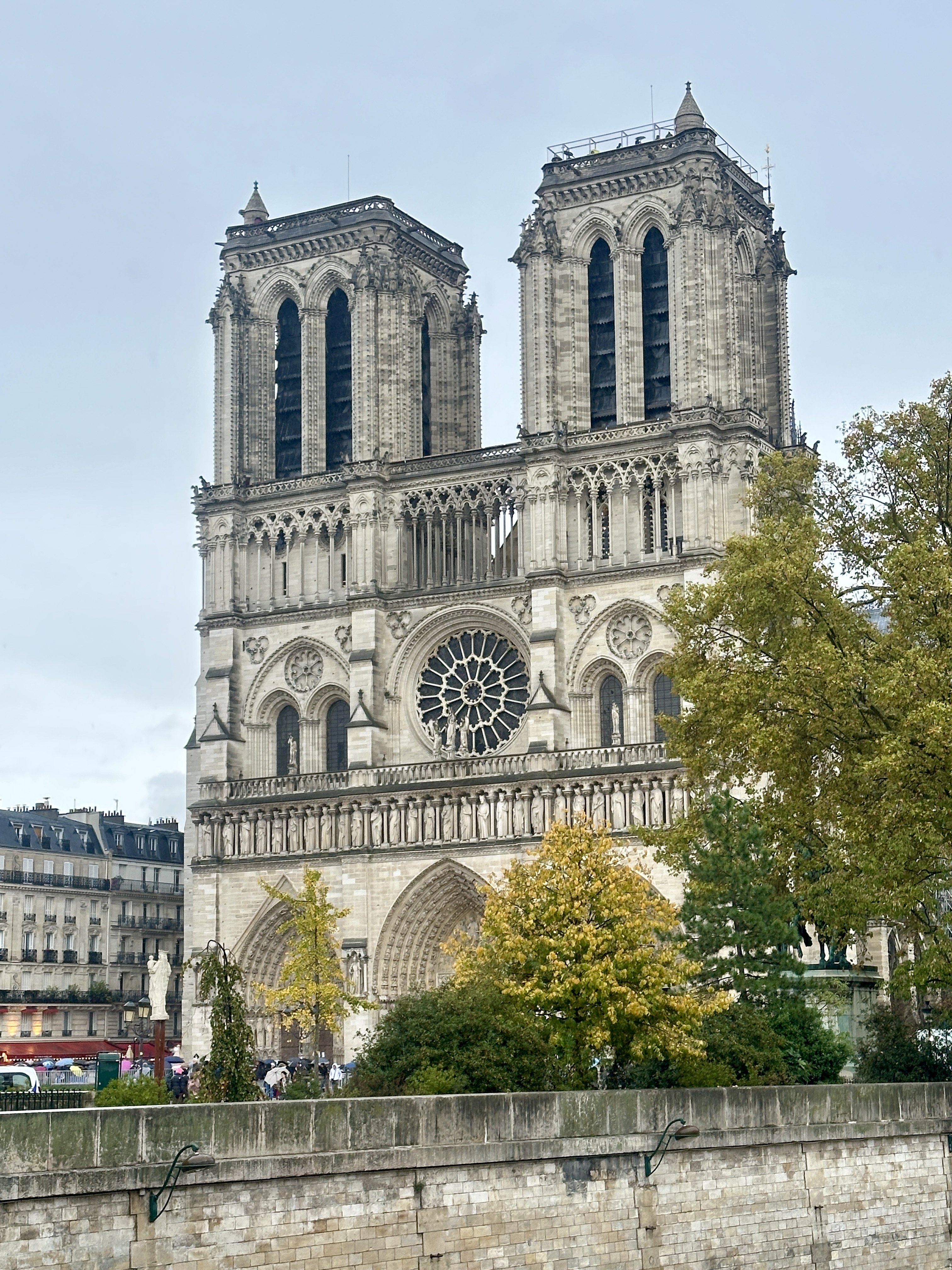
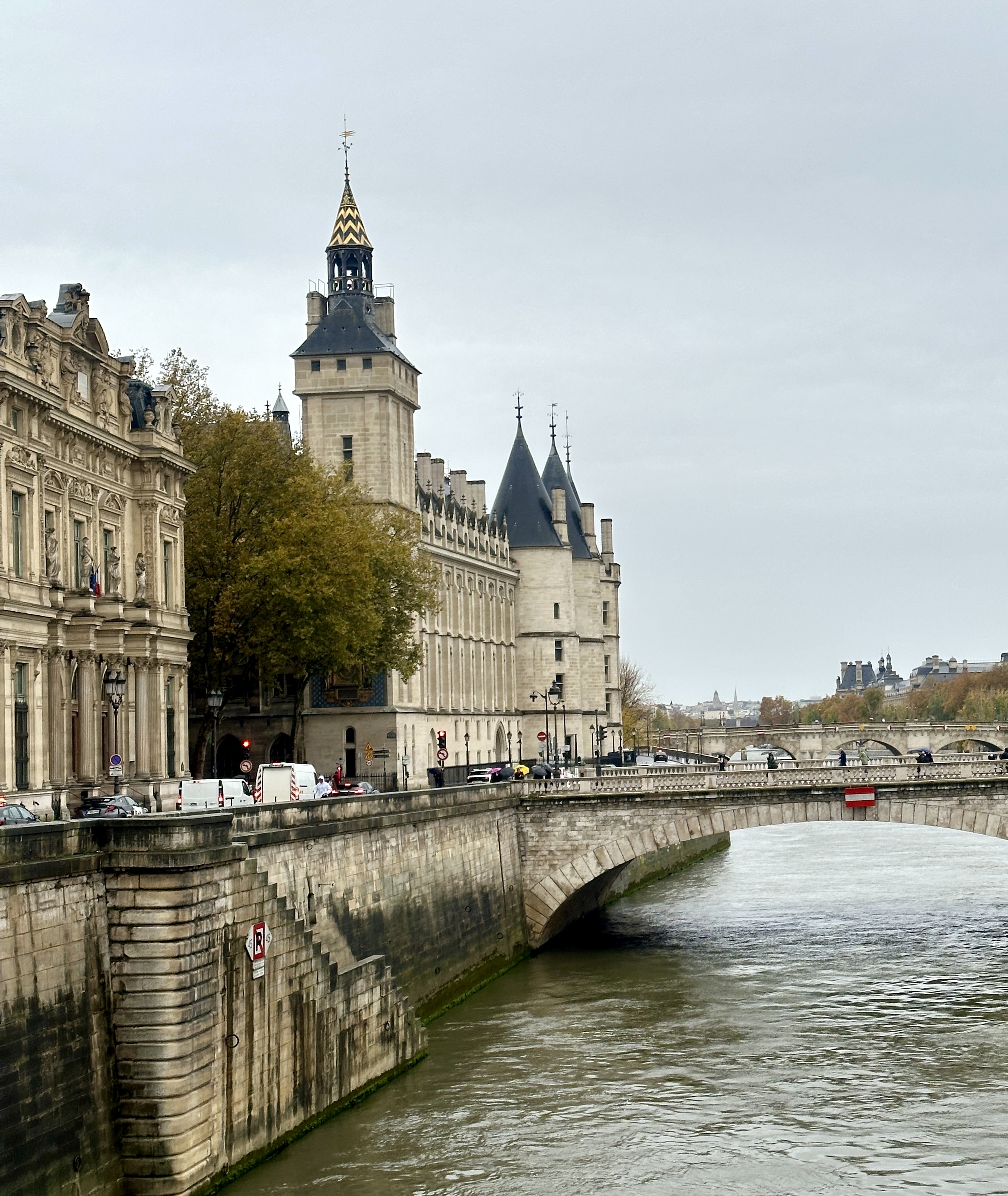
Forty minutes later, I emerged into drizzly but still beautiful Paris, getting off at the St. Michel-Notre Dame stop. There was an enormous line to visit the restored cathedral, so instead I wandered in and out of the narrow lanes near the Seine until the persistent precipitation persuaded me to head back to the airport.
After spending several hours in the overcrowded, under-catered Air France lounge, it was time to board the flight to Cairo, until it wasn’t. Apparently a bird had flown into one of the plane’s engines – at least I think that’s what the gate agent said – and maintenance personnel spent an hour making sure everything was working properly (with the engine, that is; I’m assuming the bird had moved on to avian heaven, where there are bugs and seeds aplenty and no airplanes).
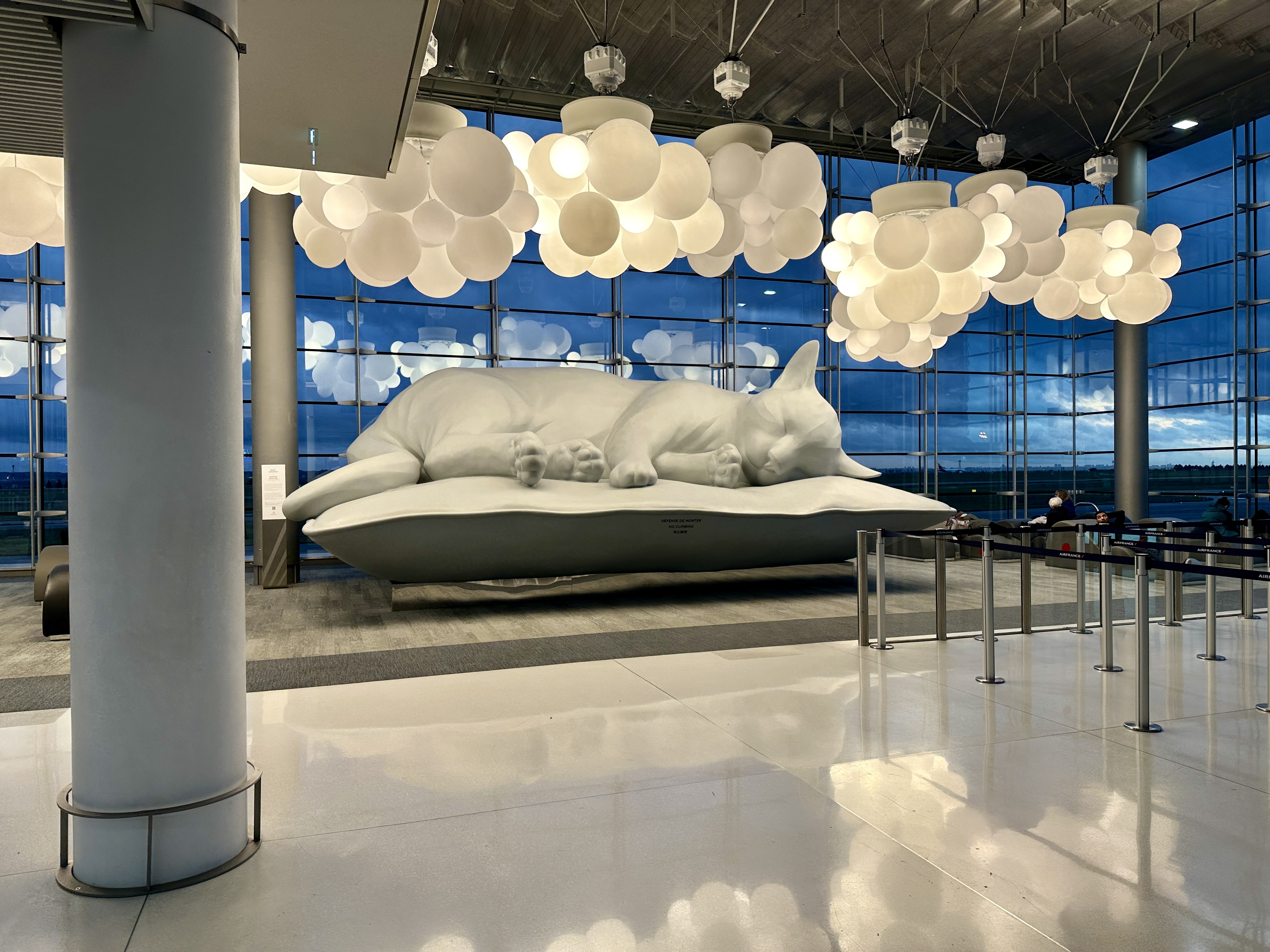
Once we took off, it was less than four hours to Cairo, where we landed around 1 a.m. Americans visiting Egypt need to get a visa either in advance or at the airport. I got mine at the airport, in a process that took perhaps 15 seconds. There’s a well-marked kiosk on the right side of the arrivals hall where you hand over $25 in cash (crisp bills only!) and they give you a visa sticker, which you bring to passport control. Plenty of agents were working despite the early hour, so there were no lines.
After collecting my luggage, I met my driver outside the terminal and enjoyed an exhilarating – it sounds better than terrifying – ride to the hotel. At two in the morning, there were few cars on the highway, but they somehow managed to form at least three lanes of traffic on a two-lane road (lane markers are purely decorative). Drivers also take great joy in pulling within inches of any car that is not moving suitably quickly – that is, every other car on the road – flashing their brights, honking furiously, and swerving in front of trucks and buses.
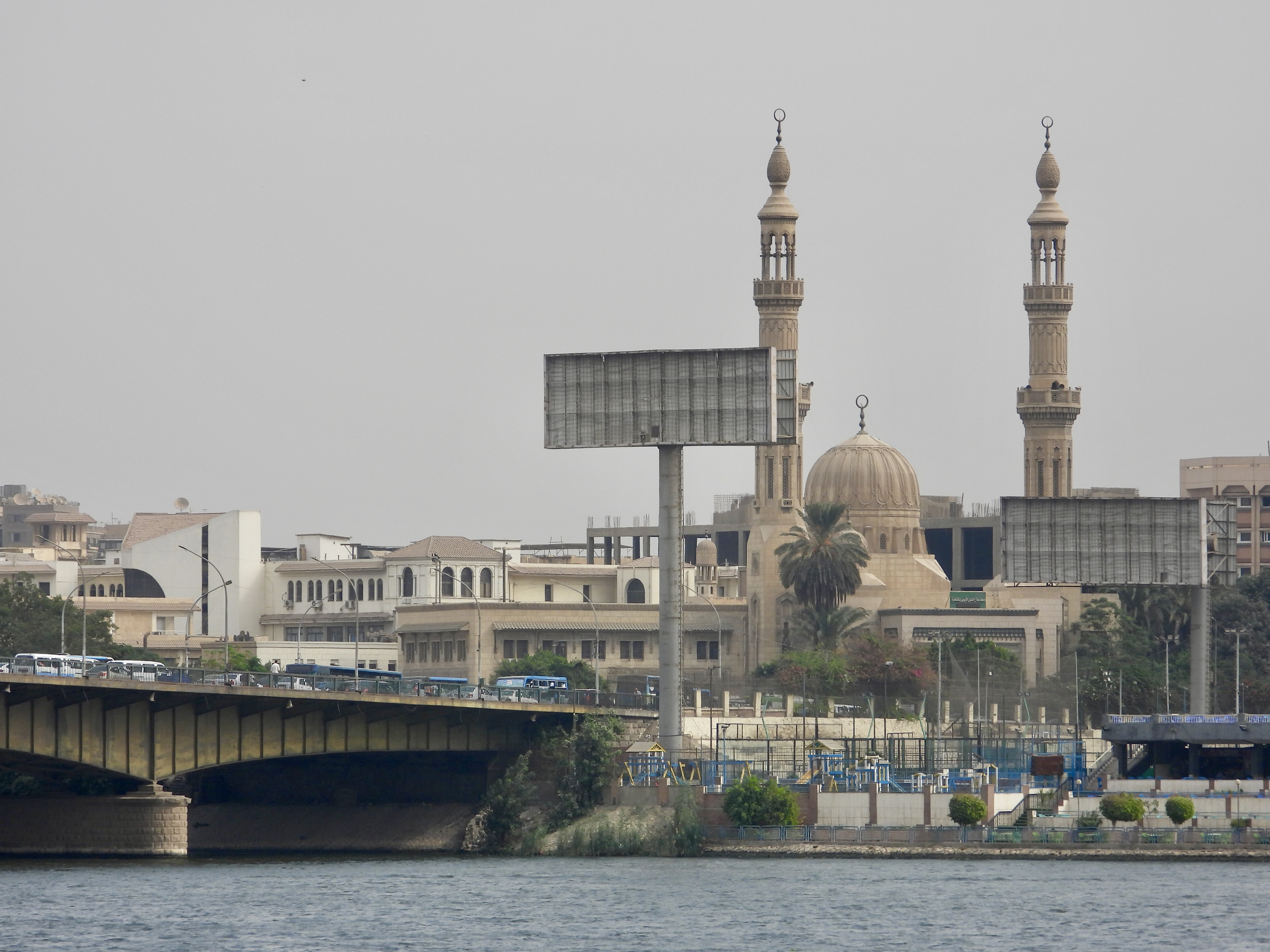
Driving in Cairo reminded me of driving in San Juan, Puerto Rico, which is equally death-defying. At least in Puerto Rico I can understand many of the curse words; my Arabic at this point is limited to “hello,” “good-bye,” and “thank you.” (How crazy are Puerto Rican drivers? Around twenty years ago I had an arbitration case in San Juan; in the cab on the way to the airport one of my associates literally screamed at least a dozen times on a 15-minute trip.)
Walking in Cairo, in contrast, reminded me of walking in Ho Chi Minh City, with one key difference: in the latter, drivers make an effort to avoid you when you are crossing the street. As is my wont, I went out for a walk after breakfast this morning. There is a major street in front of the hotel, and another one a block behind; you have to cross the one behind to reach the path along the Nile.
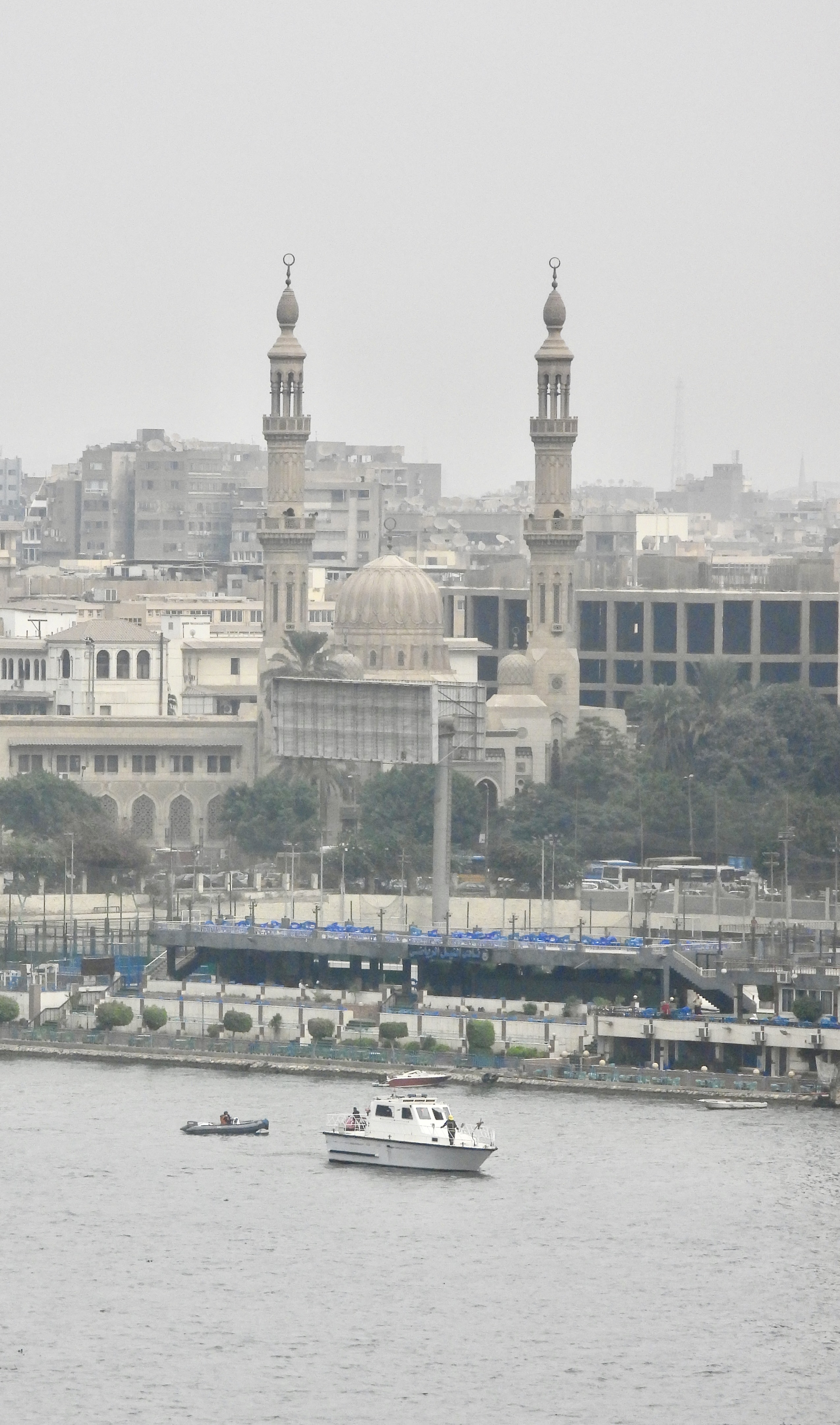
An uncharacteristic break in the traffic allowed me to get to the path, but it took nearly ten minutes to find a better-than-50-50 opening to get back across to the hotel when my walk was over (I settled for 75-25). There are no crosswalks or traffic lights; although police and military personnel stand at almost every corner, their job description evidently doesn’t include helping pedestrians who are foolish enough to find themselves in need of crossing the street.
I assure you I’m not exaggerating. The hotel has a boat tethered on the Nile with several eateries inside. It’s only a two-minute walk (not counting crossing time), but the hotel provides a car to drive you there so as not to lose any guests prior to check-out.
The (metaphorical, not traffic-related) fumes I’ve been running on are about to evanesce, so I’ll sign off for now. Time permitting, I’ll post again tomorrow with actual touristy stuff.

 PuffinlessTravel
Looking forward to hearing your impressions of the sights, Jeff! And I’m sorry to hear that conditions on the roads haven’t improved in the 25 years since I visited Cairo…terrifying is a spot on descriptor!