Talk about ending on a high note. After yesterday’s devastatingly sad visit to the Peace Memorial Park and Museum, today’s journey to the sacred island of Miyajima was the restorative I needed.
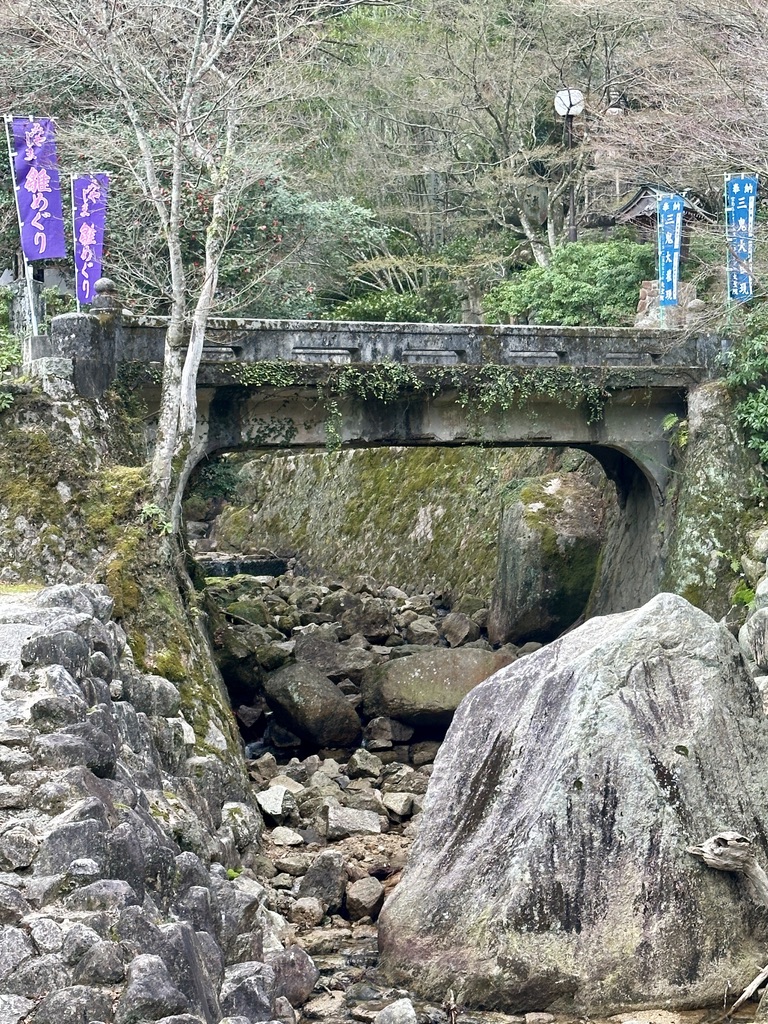
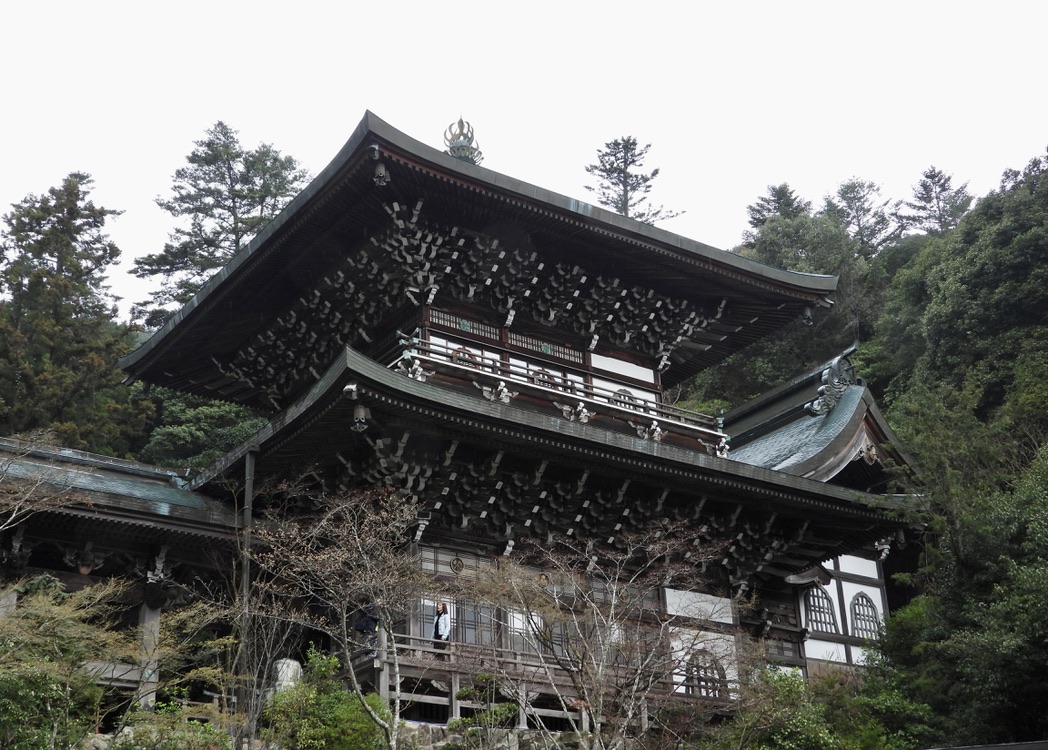
About 40 minutes by boat from a dock at the Peace Park, Miyajima is a charming, serene, beautiful island. It’s home to two ancient centers of worship: Itsukushima Shrine (Shinto, 12th century), and Daishoin Temple (Buddhist, 806). Each place incorporates aspects of the other’s religion, a welcome message of tolerance. (Many Japanese consider themselves either Buddhist or Shinto, but borrow freely from the other practice.)
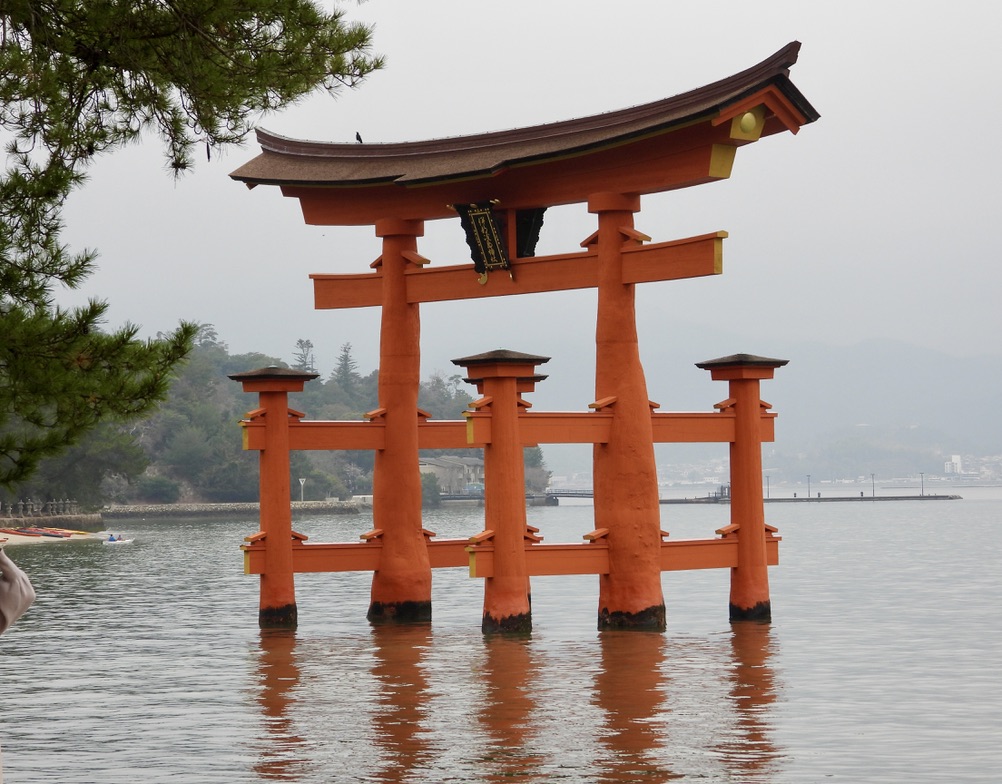
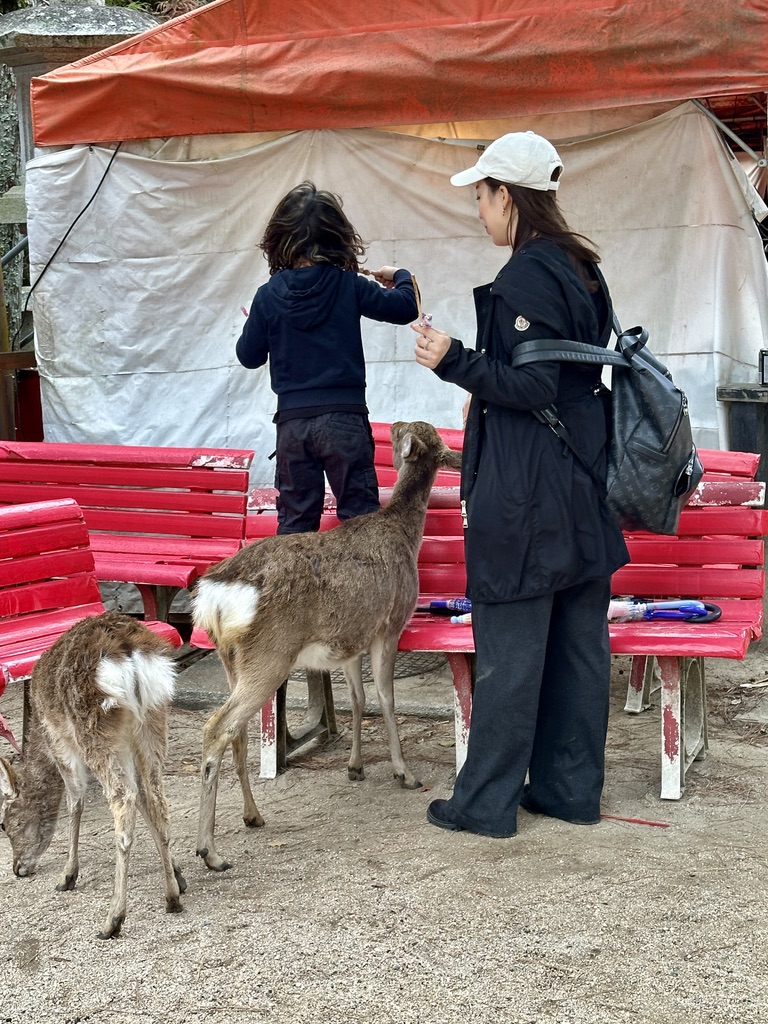
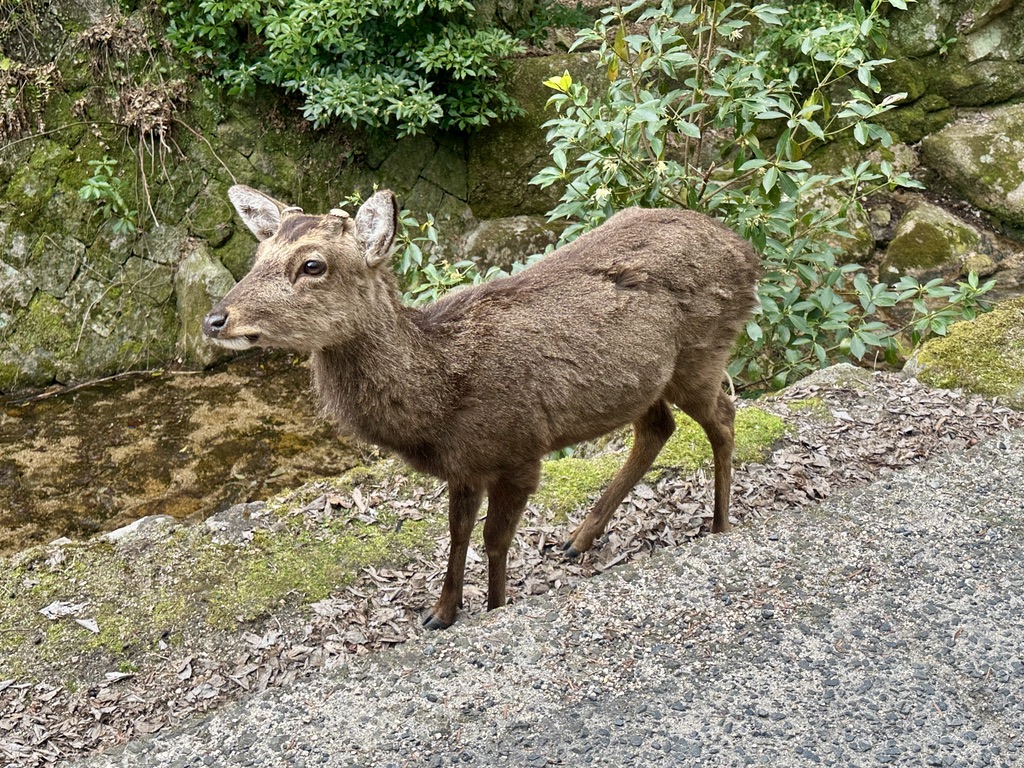
Miyajami is renowned for two other things: (1) the O-Torii Gate, which seems to float on the water during high tide but is accessible over the sea floor during low tide, and (2) far-from- servile cervids. In plain English, very cute deer that will grab food, paper, or a bag of souvenirs out of your hand if you’re not careful.
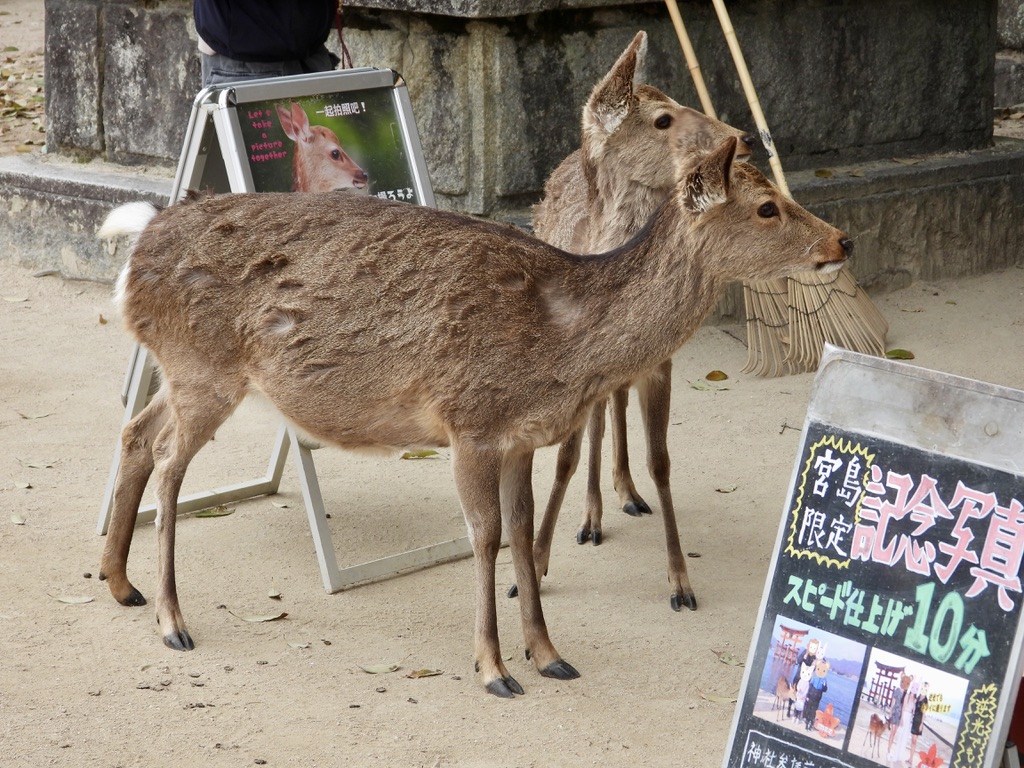
I’ll start with the deer. They’re much smaller than the ones that eat my hostas every spring. Where Maryland deer are aloof and haughty, Miyajima deer – most still half-covered in their winter coats – are entitled and ingratiating. Anything you’re carrying, especially food, is fair game. Annoying, perhaps, but they’re also, well, endearing.
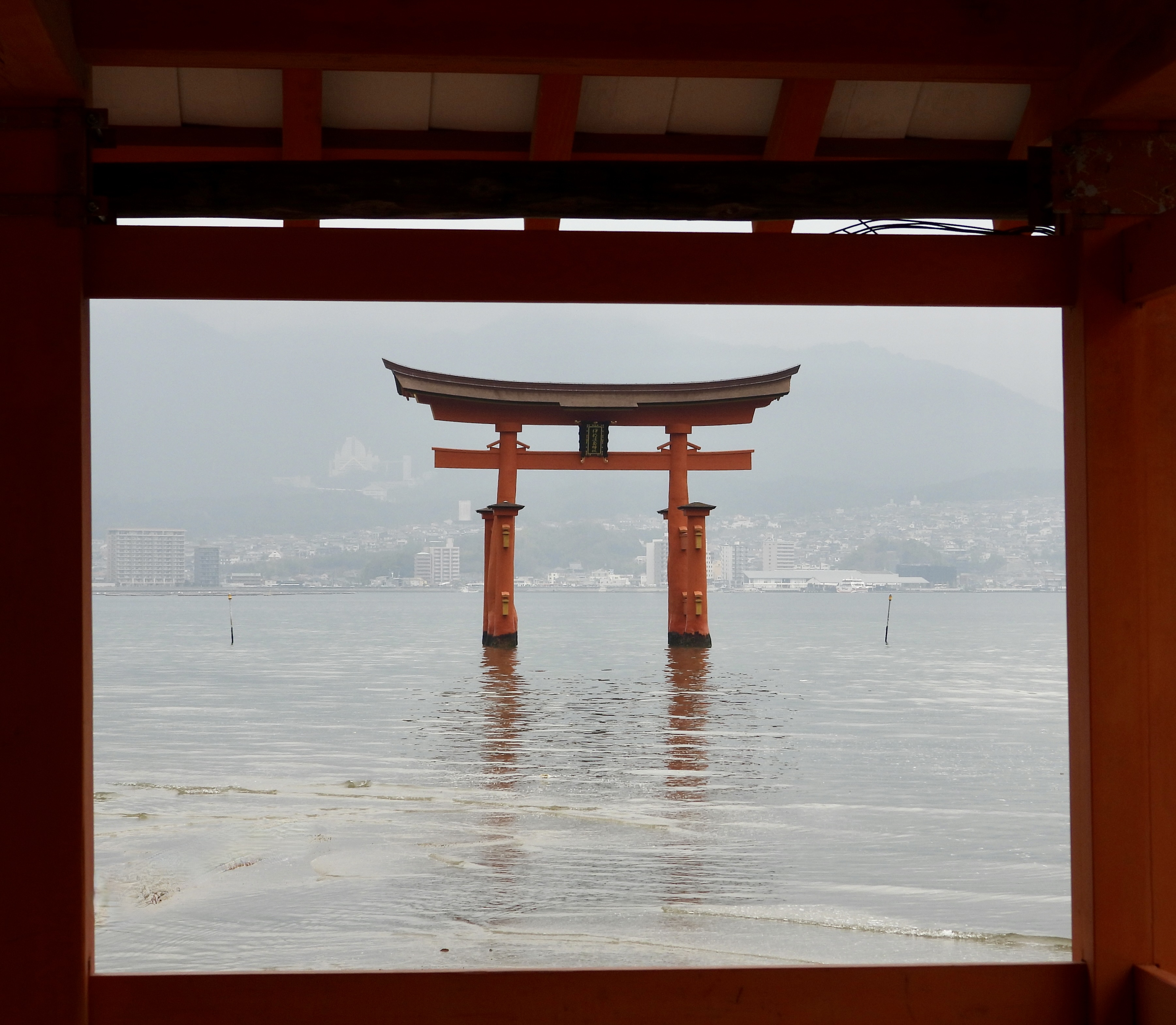
On to the O-Torii Gate. The current version – a bright vermillion, according to Wikipedia, an orangey hue to your color-challenged correspondent – is a mere 150 years old. But there’s been a great gate on the site for nearly a millennium.
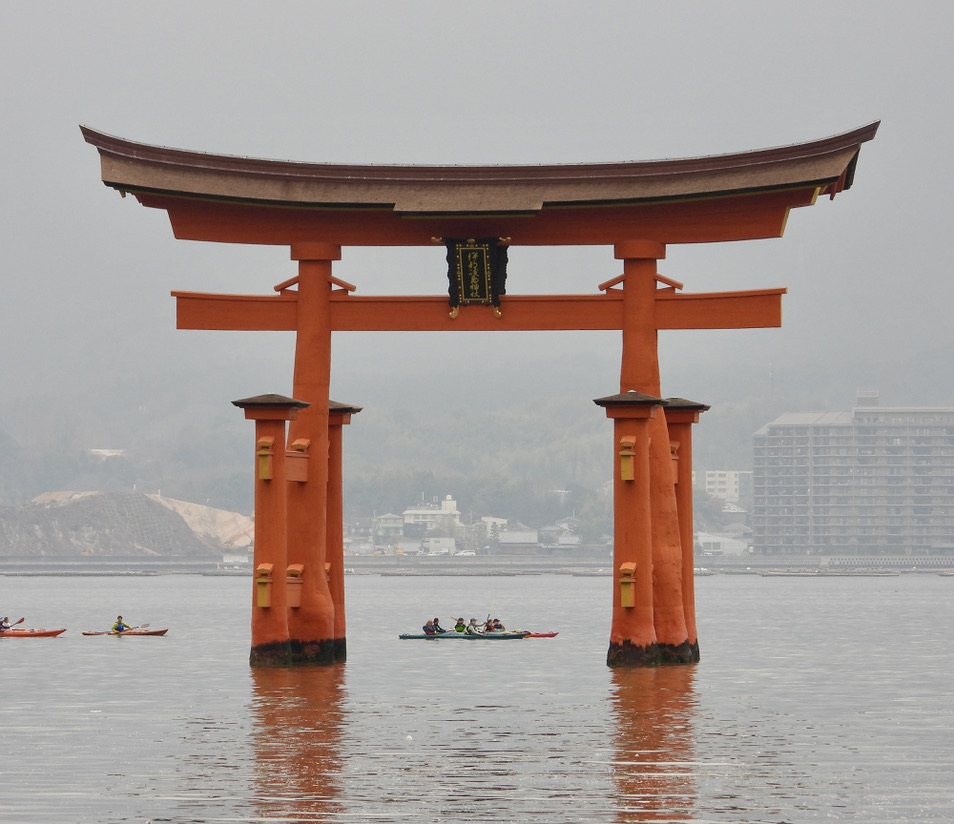
When we arrived on the island mid-morning, the gate seemed to be resting at anchor. By the time we left in mid-afternoon, crowds of people were standing around its base, having walked across the newly exposed sea floor from the nearby Itsukushima Shrine.
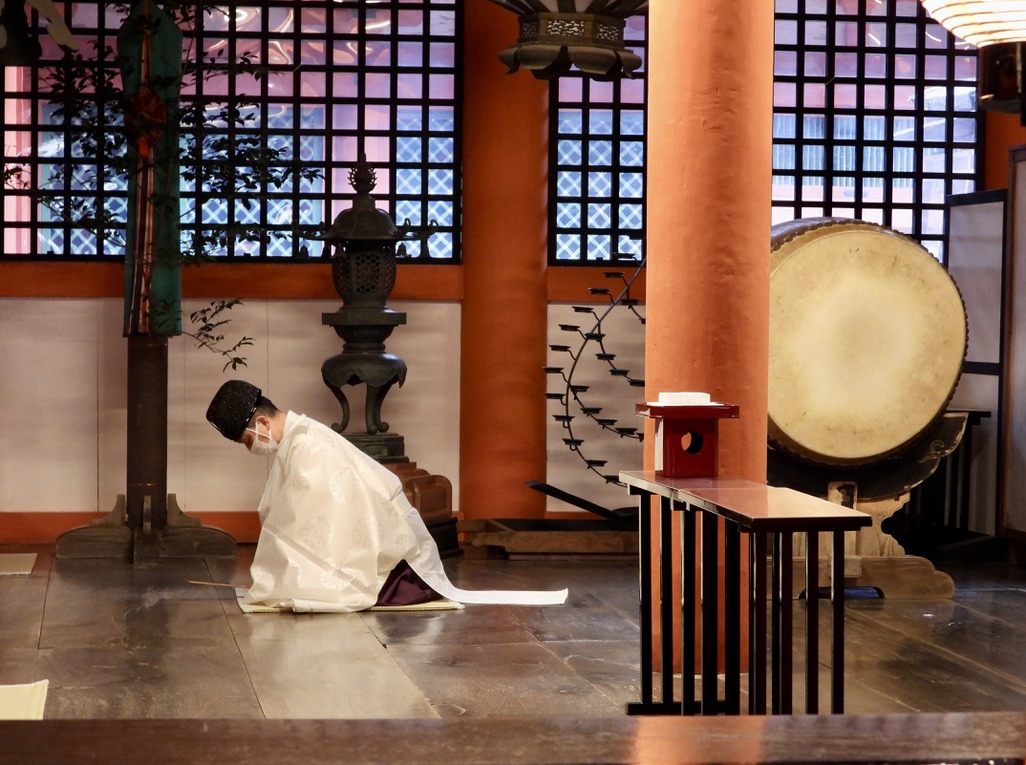
The Shrine was built at the direction of a high-ranking samurai, Taira no Kiyomori. It’s a sprawling complex that, like the O-Torii Gate, seems to float on the water at high tide.
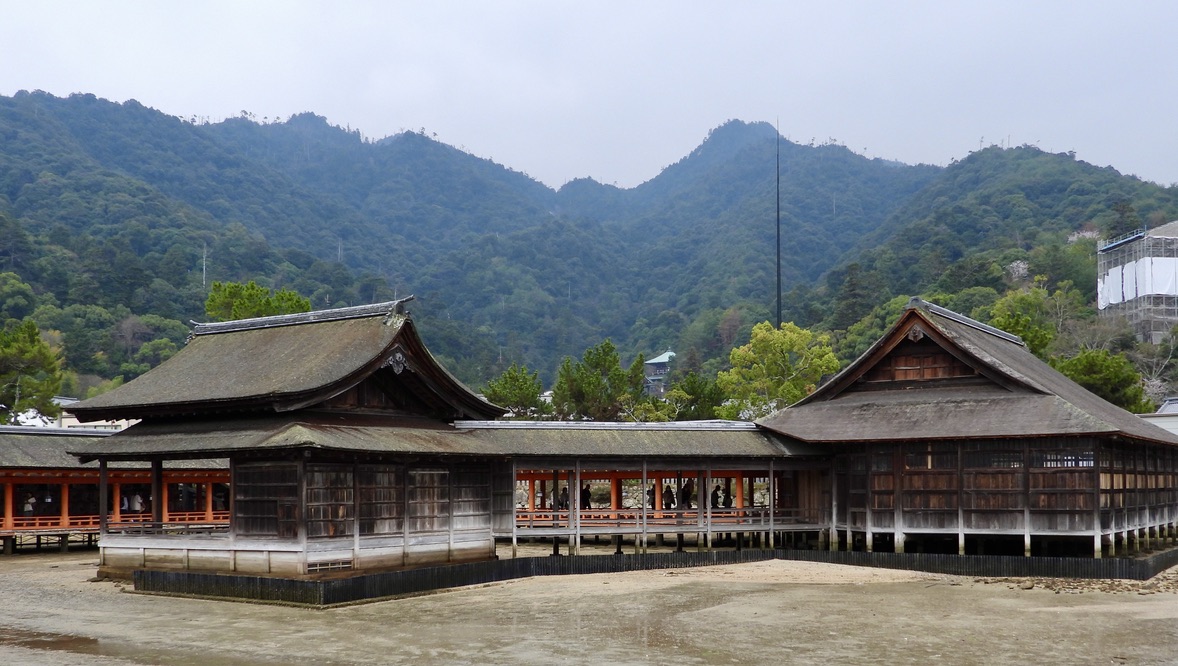
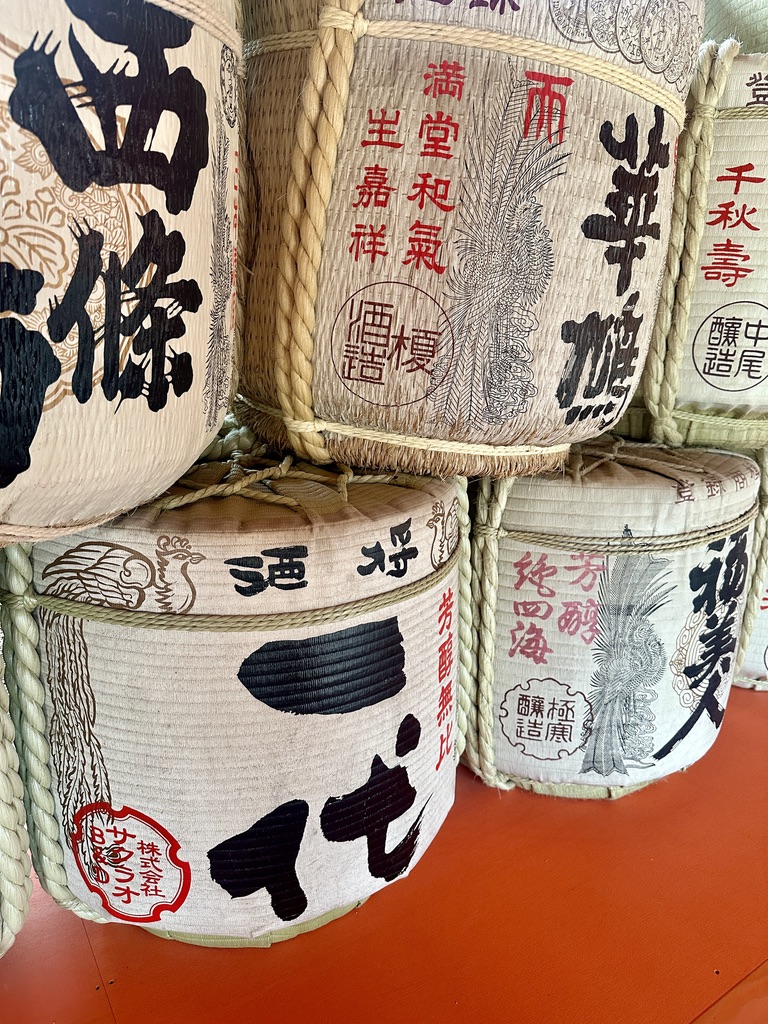
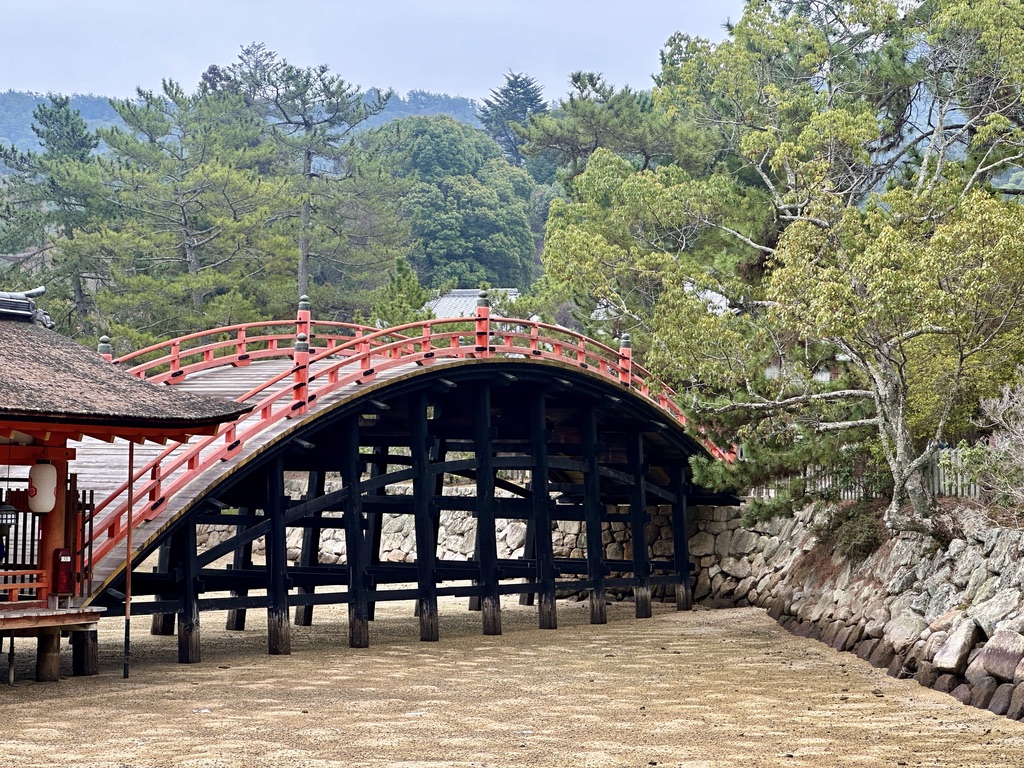
Among the Shrine’s features: delicate artwork, spacious halls, barrels of sake, a Noh theater, and an arched bridge reserved for messengers from the Emperor.
To this day, Miyajima – its name means “island dedicated to the gods,” and the island itself is considered a god – Is considered such sacred ground that no births or deaths are supposed to occur there. As pregnant women near their due dates, they are sent to the mainland to give birth. And as terminally ill patients approach their passing, they are brought to the mainland to die.
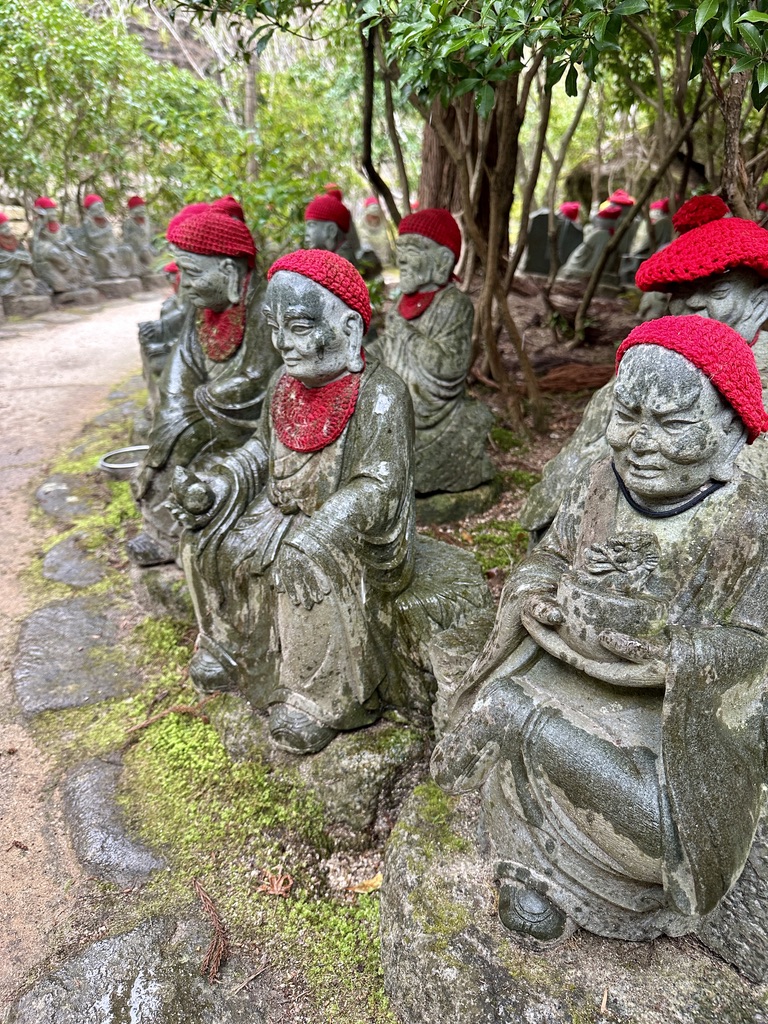
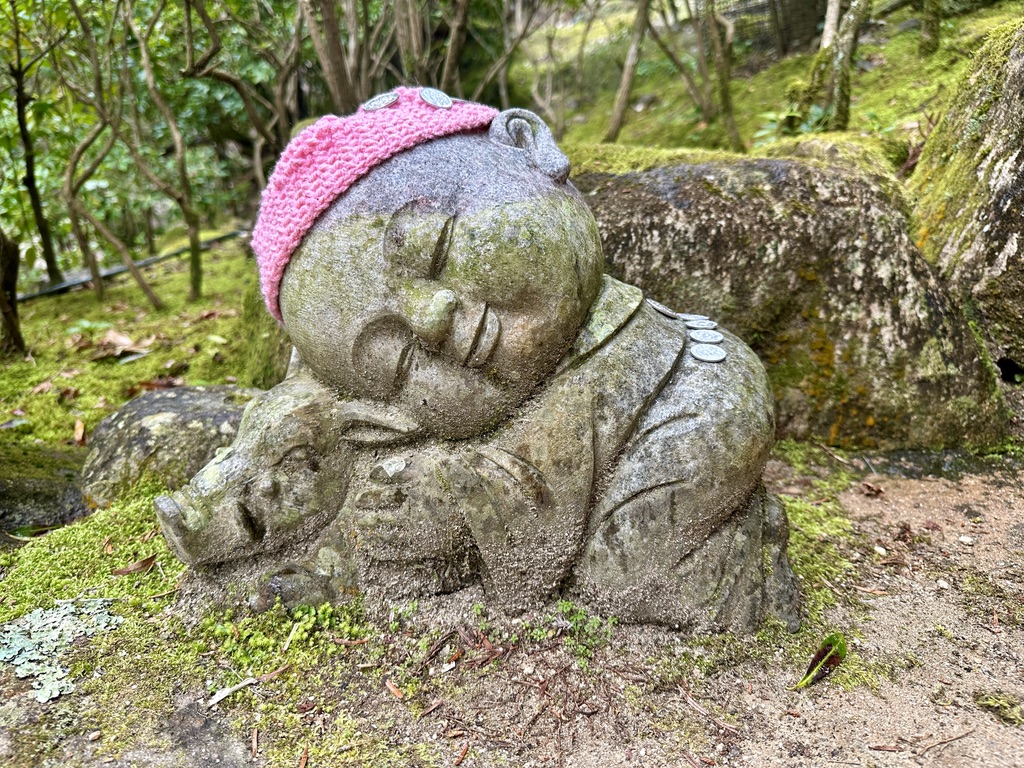
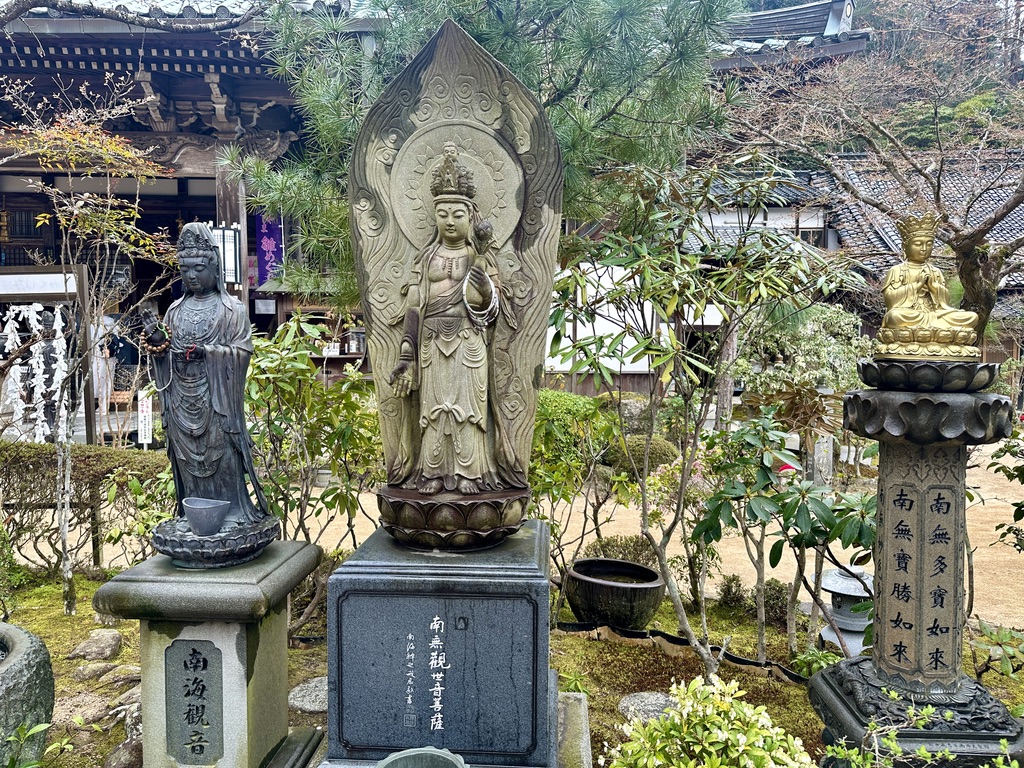
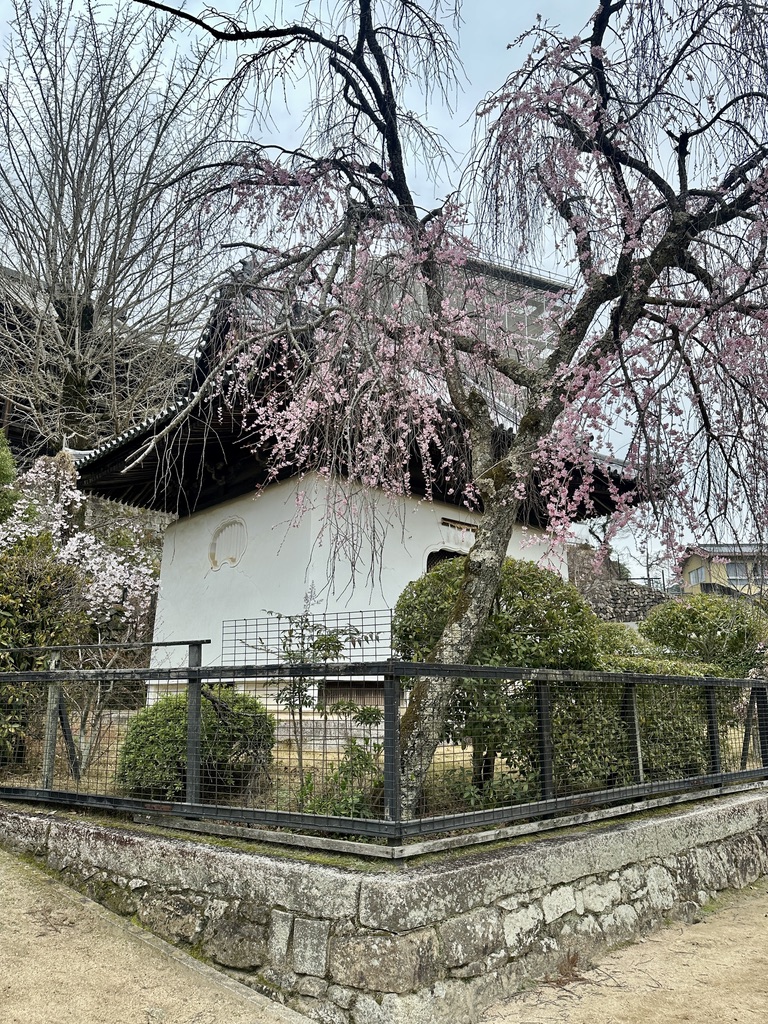
Up a gentle hill from the Shrine, the Daishoin Temple is surrounded by dozens of gnome-like statues, often dressed in red hats.
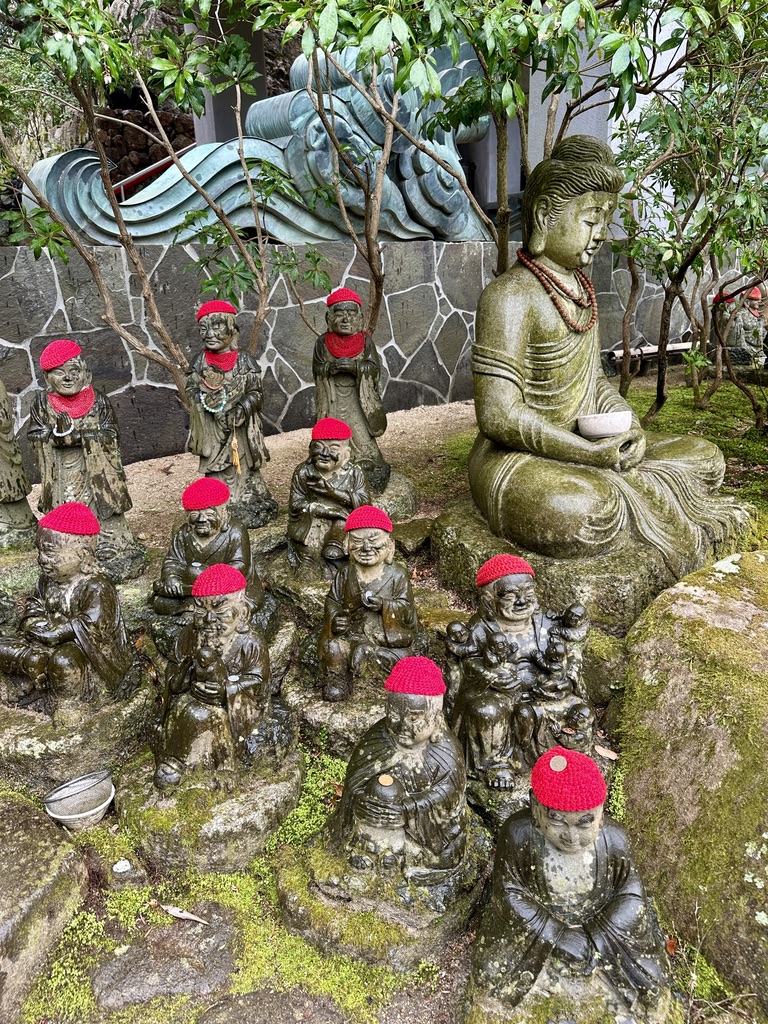
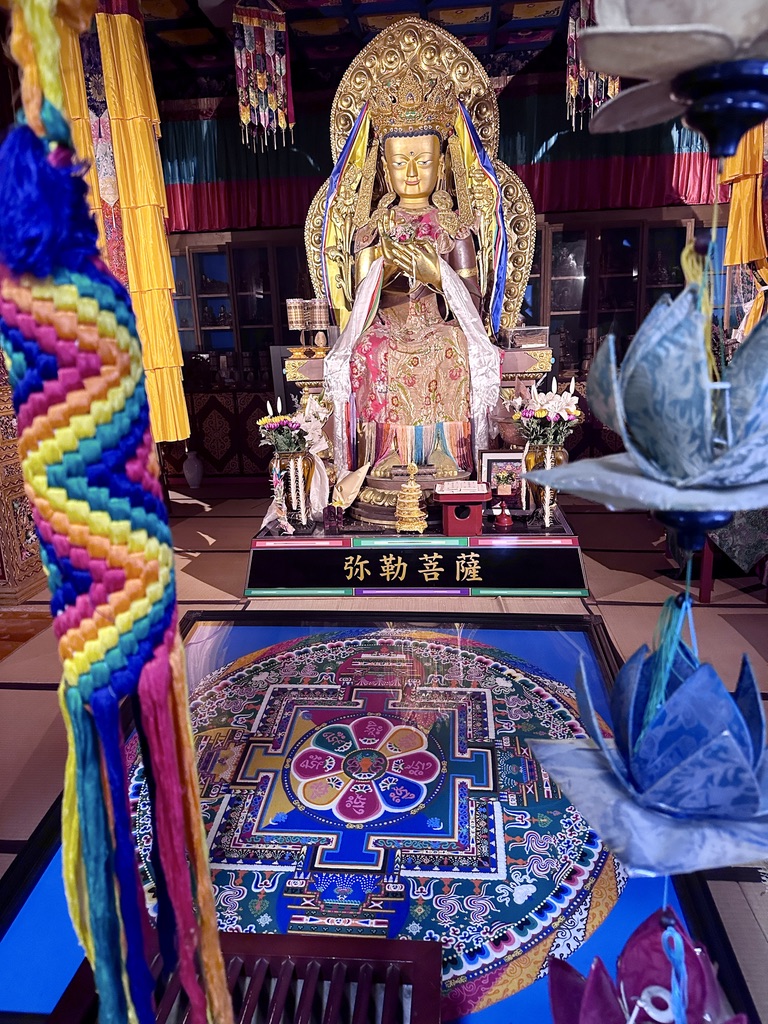
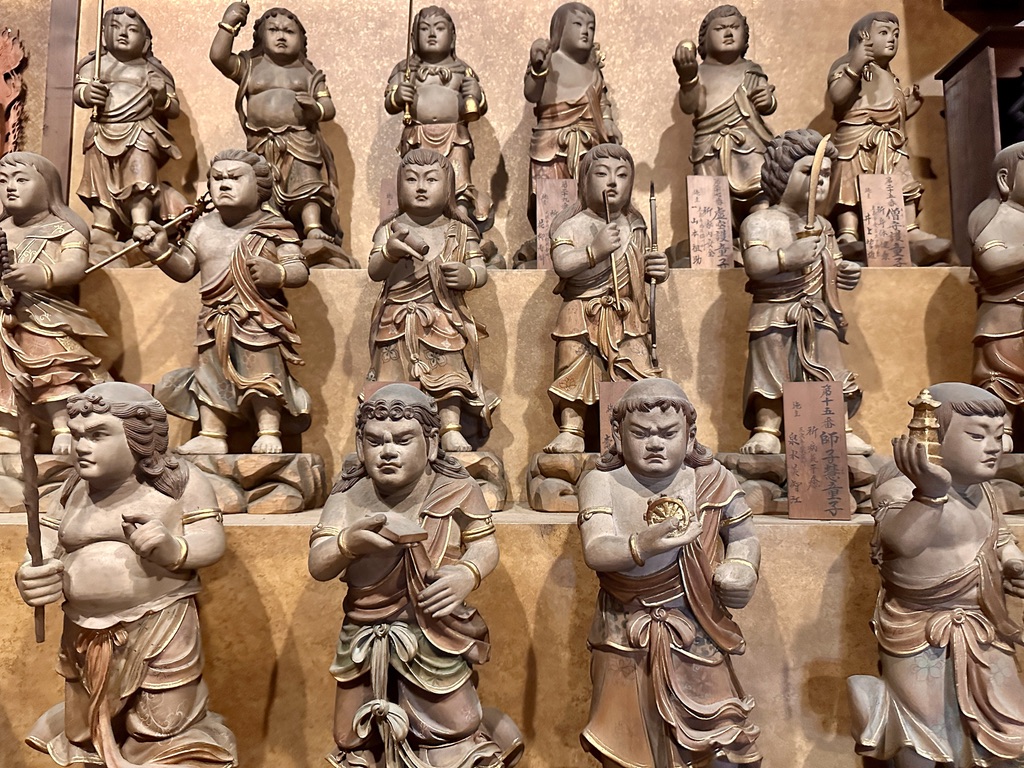
There are two main buildings. One is notable for a spectacular mandala made of colored sand; the second has rows of guardian deities reminiscent of (but much smaller than) the Rengeo-in temple in Kyoto.
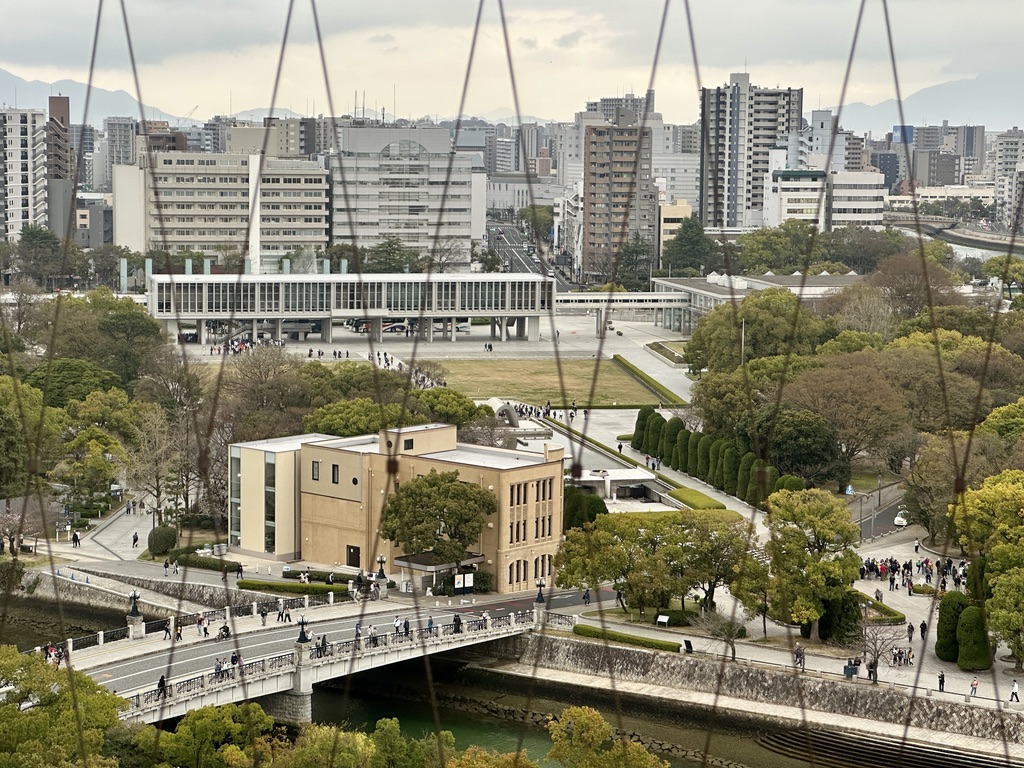
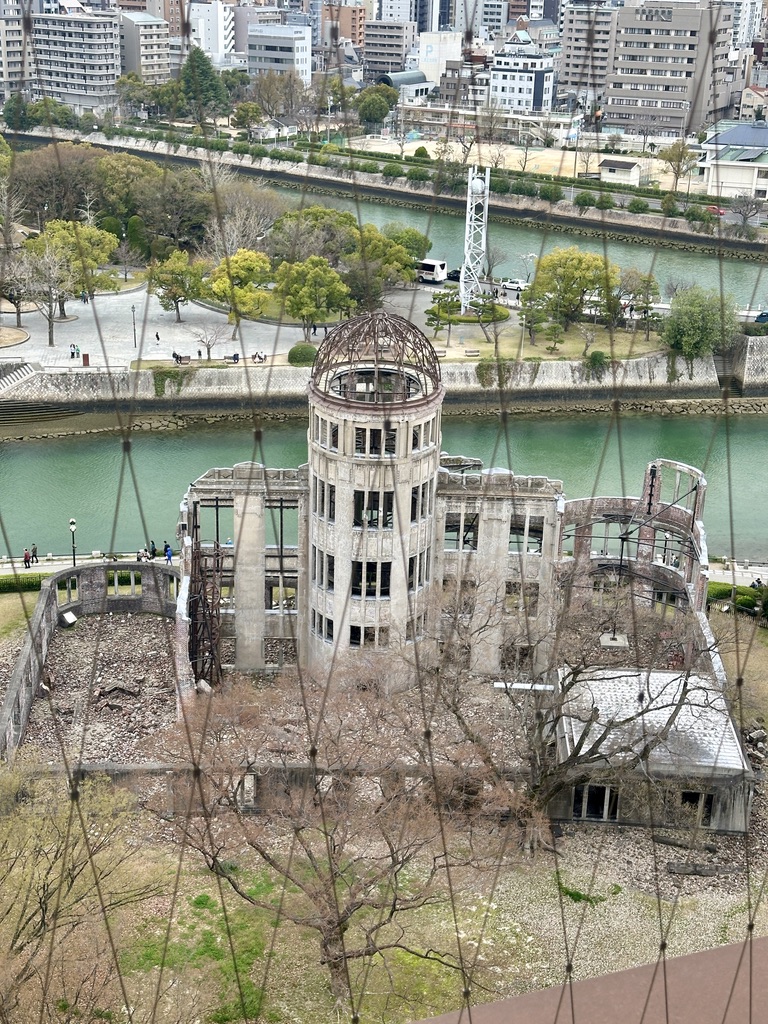
To cap off the day, Mari – once again going above and beyond, in this case literally – brought us to the Orizuru Tower, whose roof is an observation deck overlooking the Peace Park. It’s a place for reflection, for marvel, and for hope. High above the city, you can admire the views while reflecting on the memorials below.
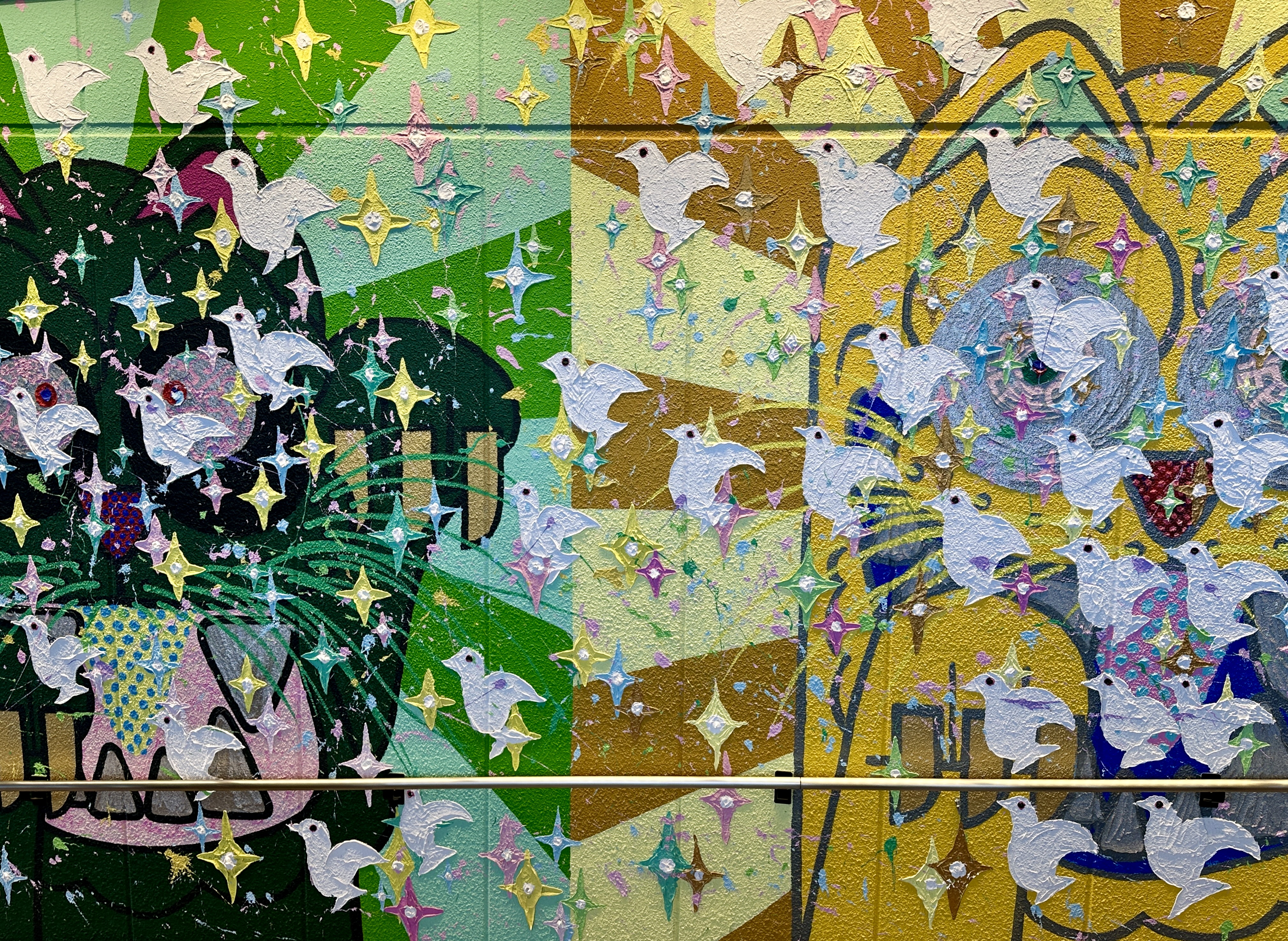
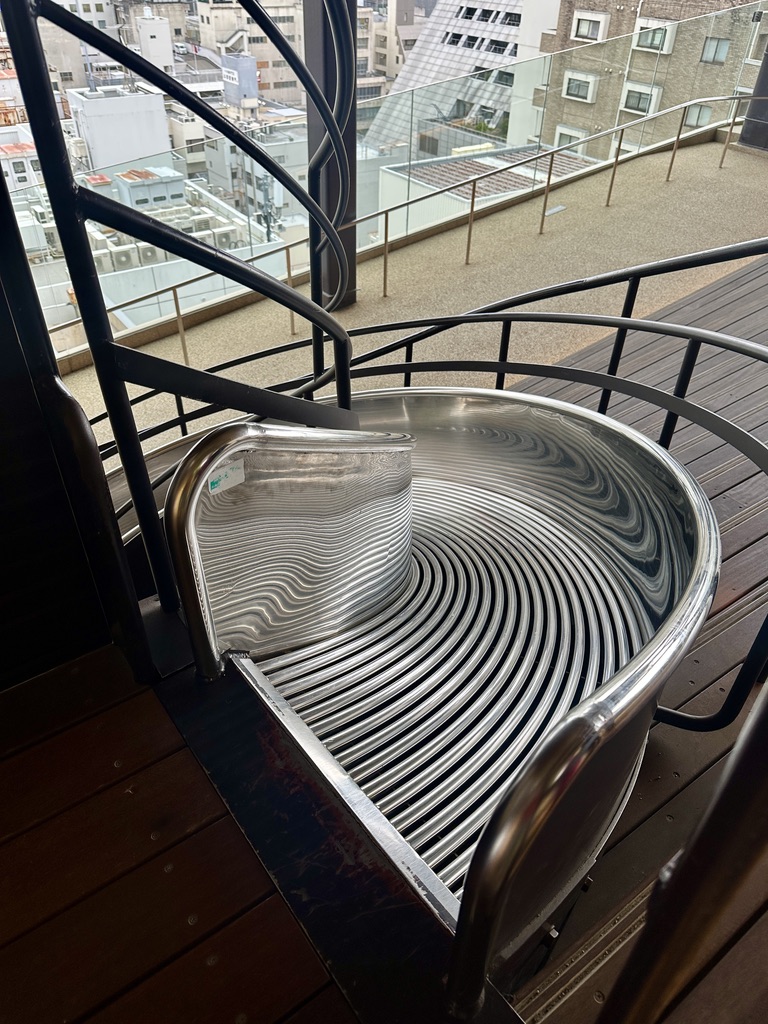
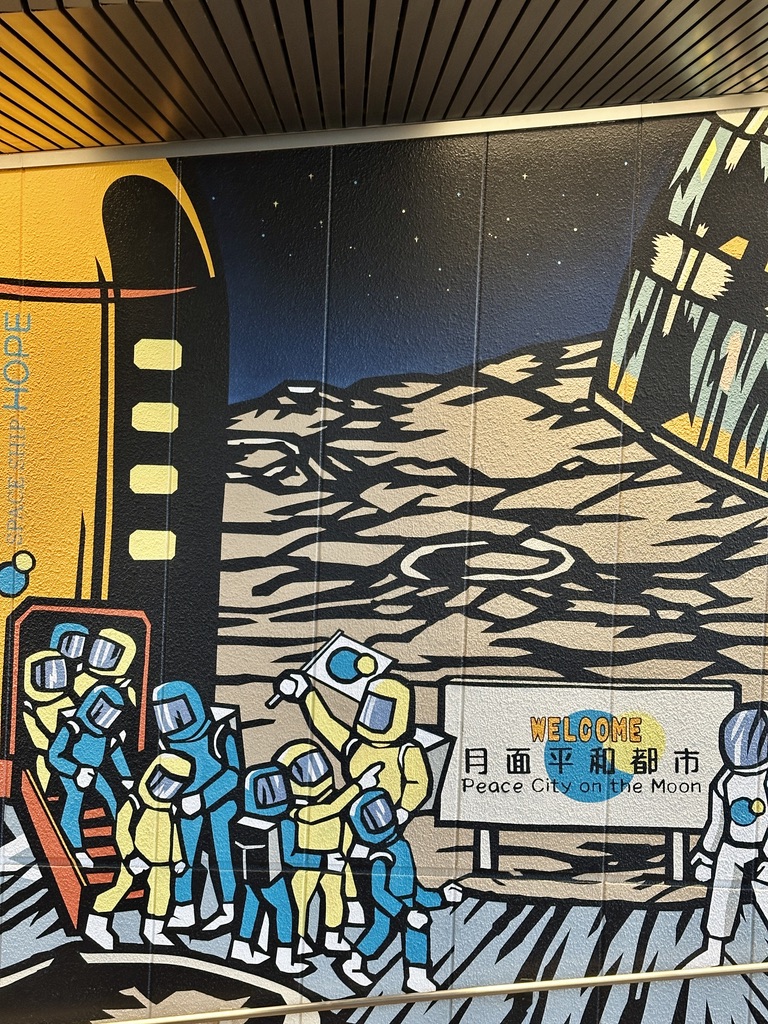
You can also walk down a corkscrewing 400-meter ramp lined with murals devoted to peace – the “2045 Nine Hopes” wall art project. You can even slide from level to level, as long as you’ve signed a waiver form.
I’m writing this after getting back from an impromptu dinner to thank Mari for her dedication, insight, kindness, warmth, and overall stellar performance as our shepherd through Japan for the past two weeks.
I’ll have more to say about Japan and our tour in a day or two. Tomorrow, I head to Tokyo by train and then home via Los Angeles. It’s been a magical, moving, magnificent trip that I’ll remember fondly for as long as I live.

 PuffinlessTravel