Kyoto, Day 2
I have been remiss. If you’ve followed this blog for a while, you know I try to cram in as many musical references as possible. Looking over the past few posts, however, I see they have been a capella, if you will. Let me remedy that forthwith:
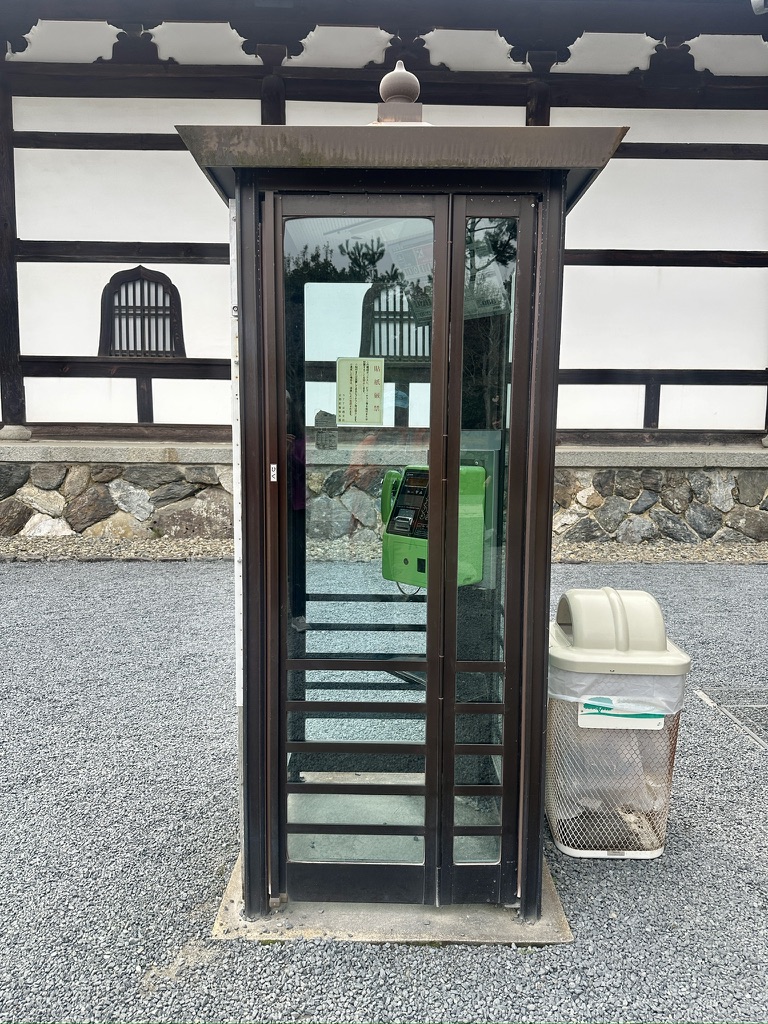
If you’re a Phoebe Bridgers fan, you might get the reference. Her gorgeous song, “Kyoto,” begins as follows:
“Day off in Kyoto / Got bored at the temple / Looked around at the 7-Eleven … / You called me from a payphone / They still got payphones.”
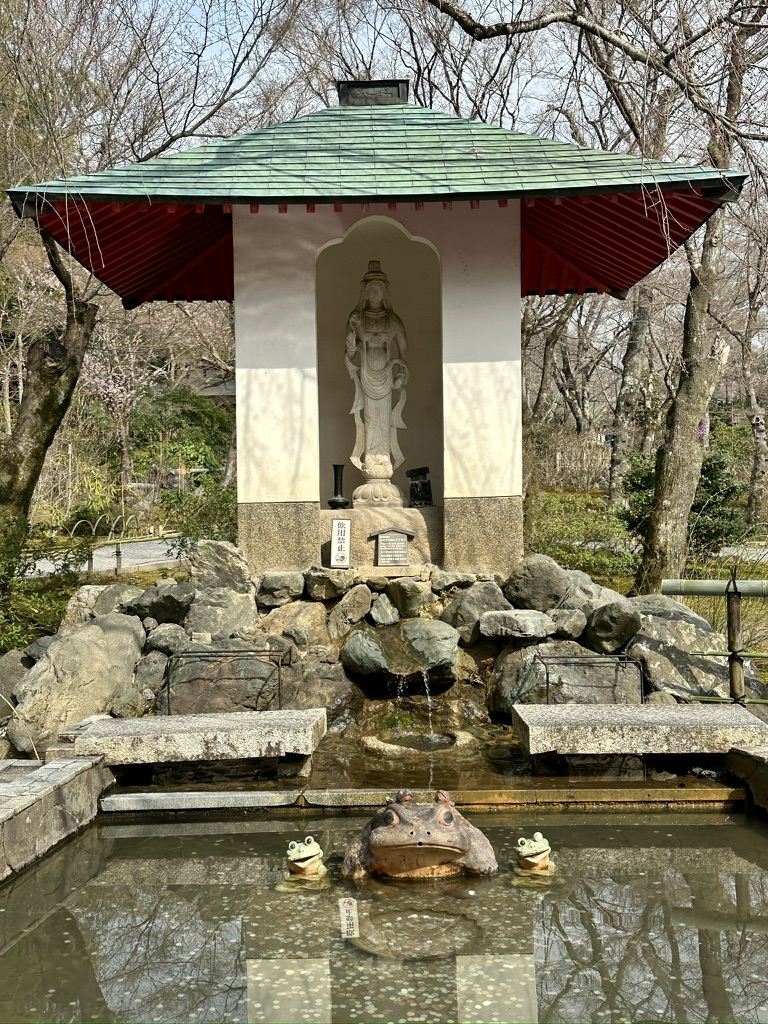
Indeed they do! (This one is outside the Tenryu-ji Zen Temple.) She got that right, and also nailed the 7-Eleven reference. 7-Elevens are all over Japan, and I’ve already spent quite a bit of time “looking around” at all the wonderful and exotic (to me) stuff they carry.
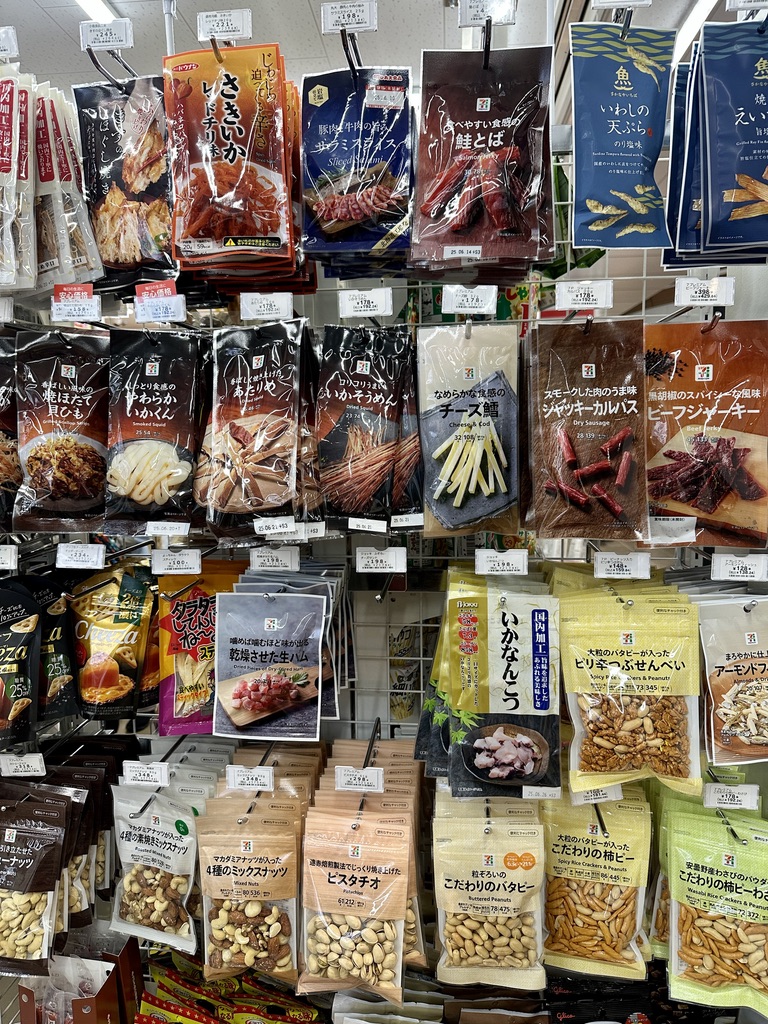
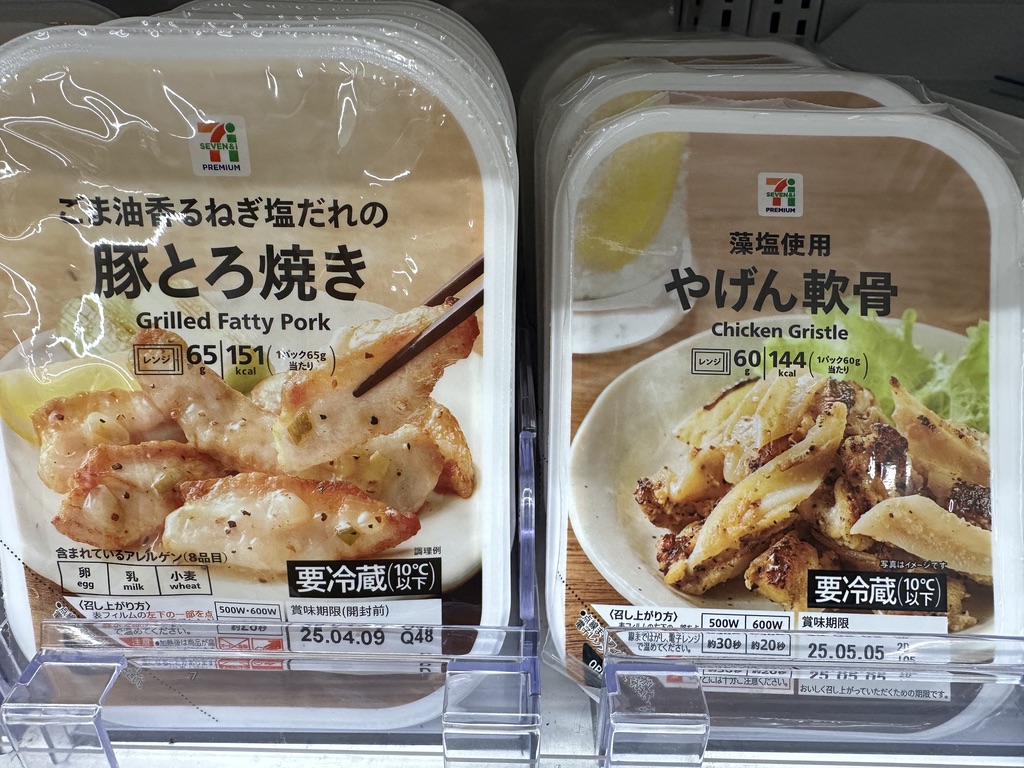
I’ll quibble with her, however, about being bored at the temple. The ones we visited today were far from boring, though I will entertain the possibility that a few of the other 1,997 in Kyoto might be more pedestrian.
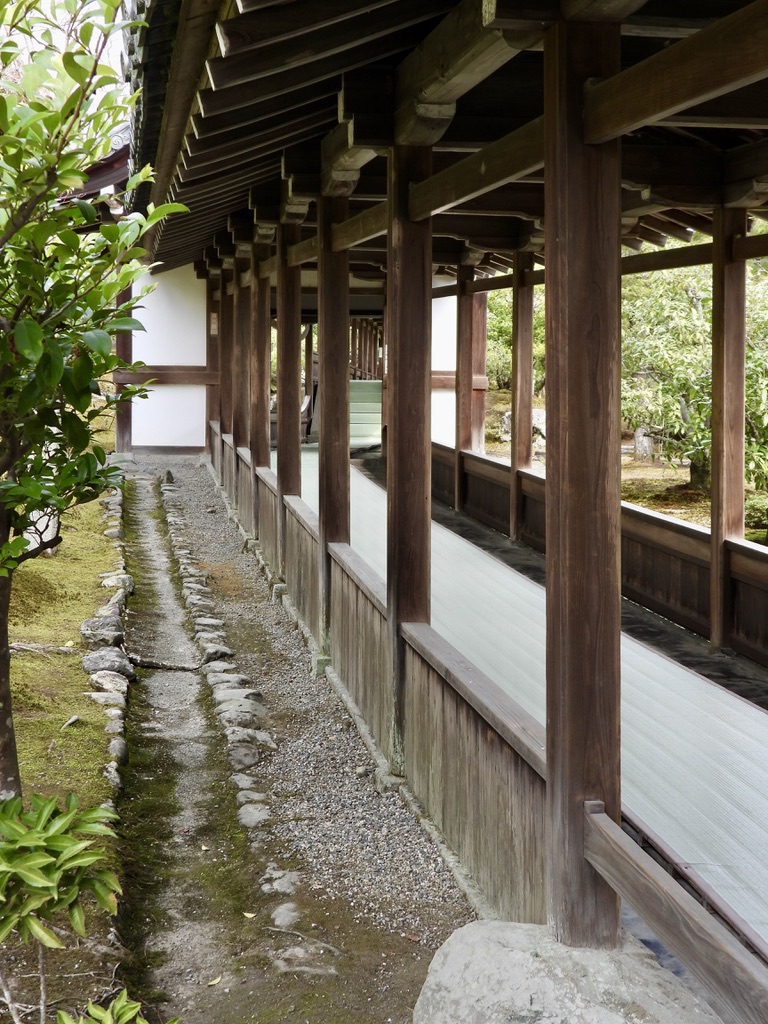
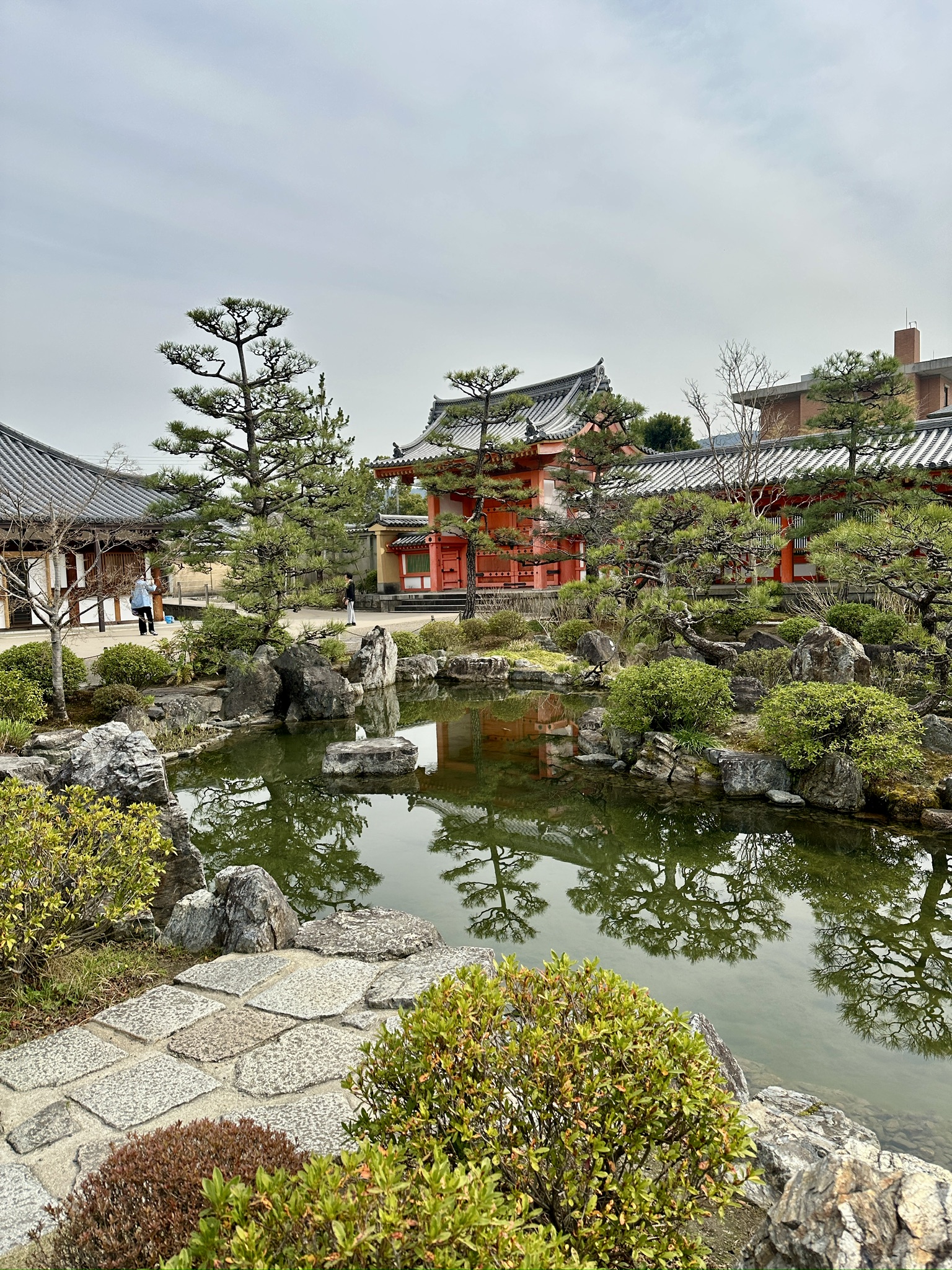
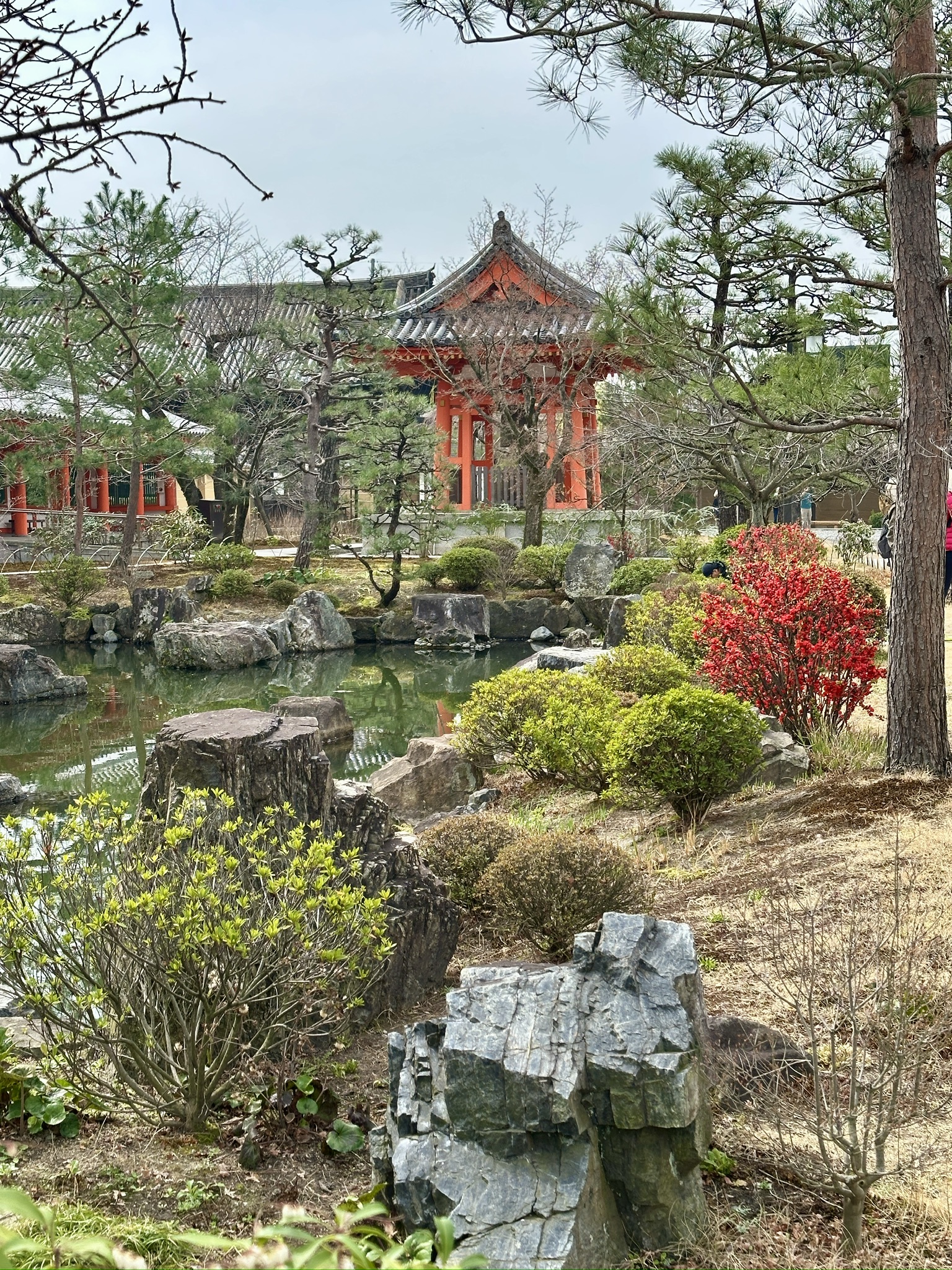
We didn’t actually go into the Tenryu-ji Zen Temple, our first stop of the day. That’s because the Temple grounds contain the gorgeous Sogenchi Garden, a UN World Heritage Site.
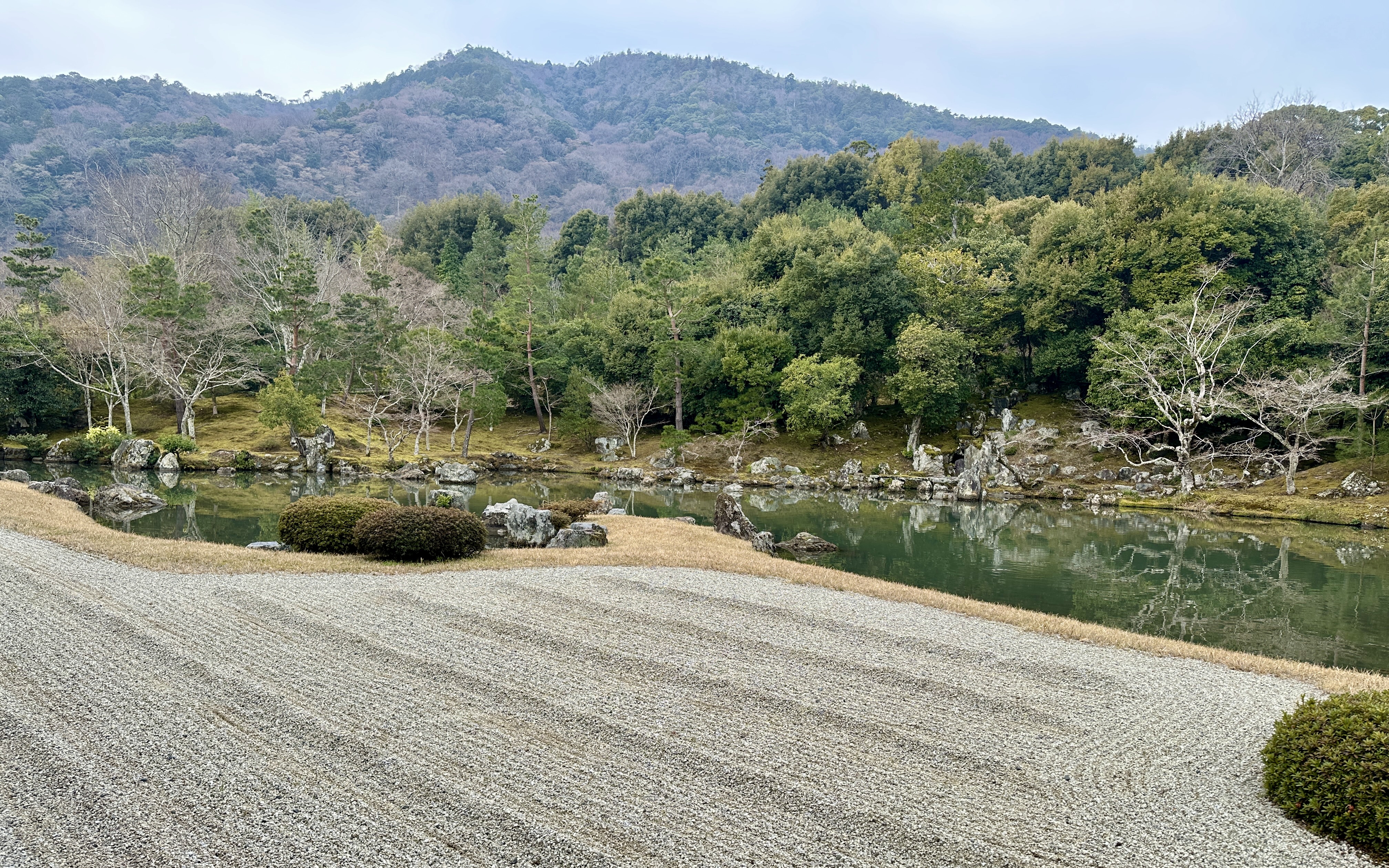
The garden was built by the founder of the temple, Muso Soseki, seven centuries ago. The design follows a technique known as Shakkei, or “borrowed landscape,” which incorporates the surrounding landscape into the composition of the garden.
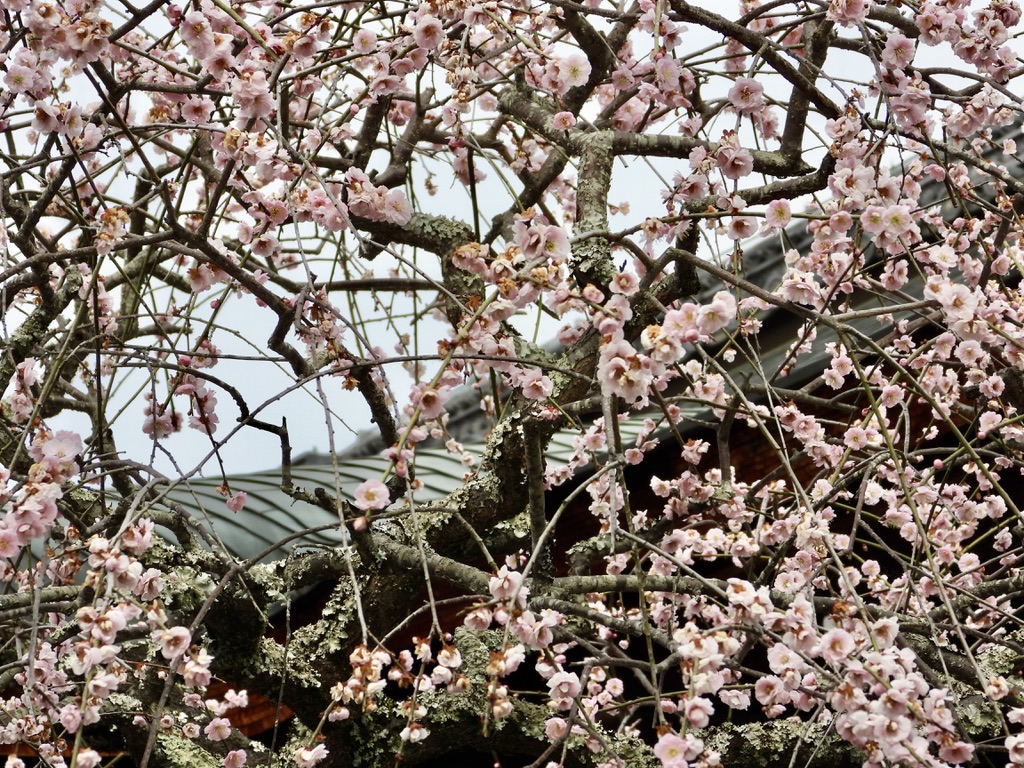
Once our guide, Mari, explained this, I readily saw how the surrounding mountains and forest are echoed in the contours of the site, including the rocks and trees.
(If you read yesterday’s post, you may recall I said that today we would visit two temples, or 0.1 percent of Kyoto’s total. I’ll correct the record; I didn’t realize yesterday that the Garden was part of a third temple, so we actually visited 0.15 percent.)
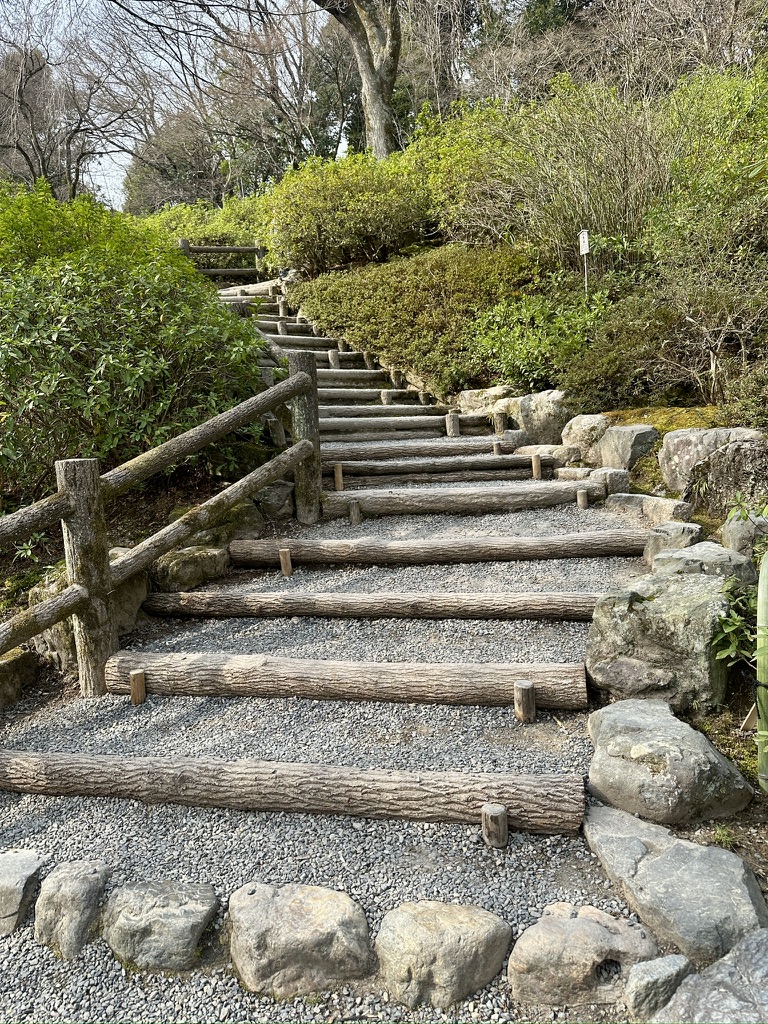
Sogenchi Garden is adjacent to the Arashiyama Bamboo Forest, a natural bamboo grove that climbs up the slope of a hill abutting the Temple grounds.
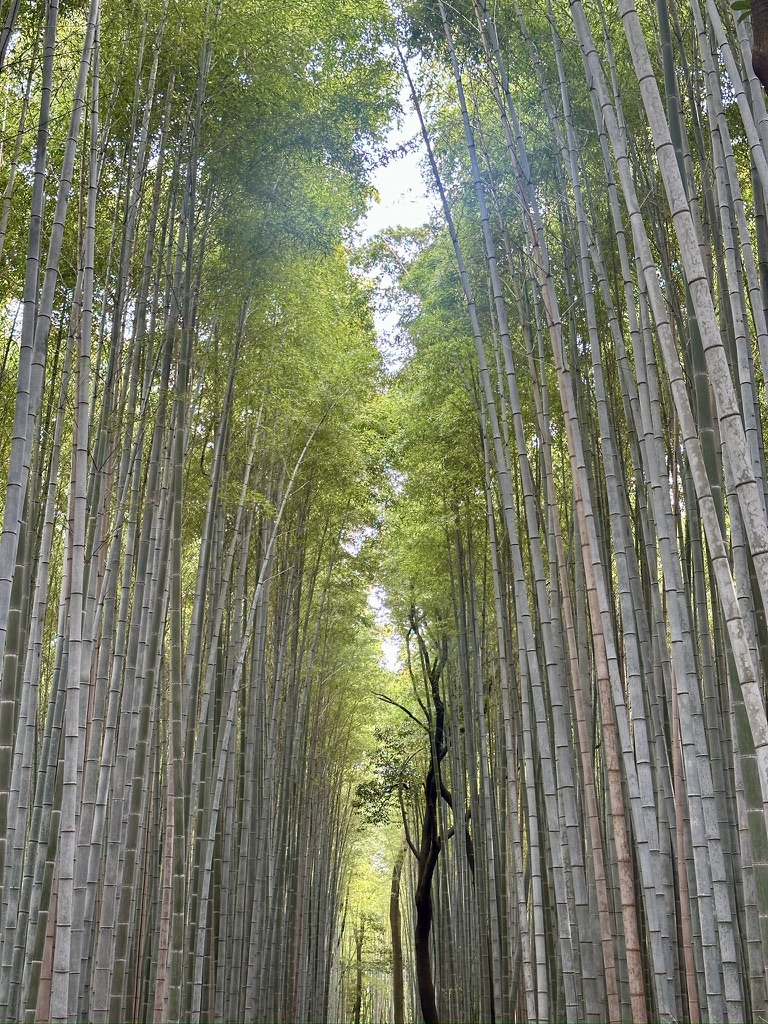
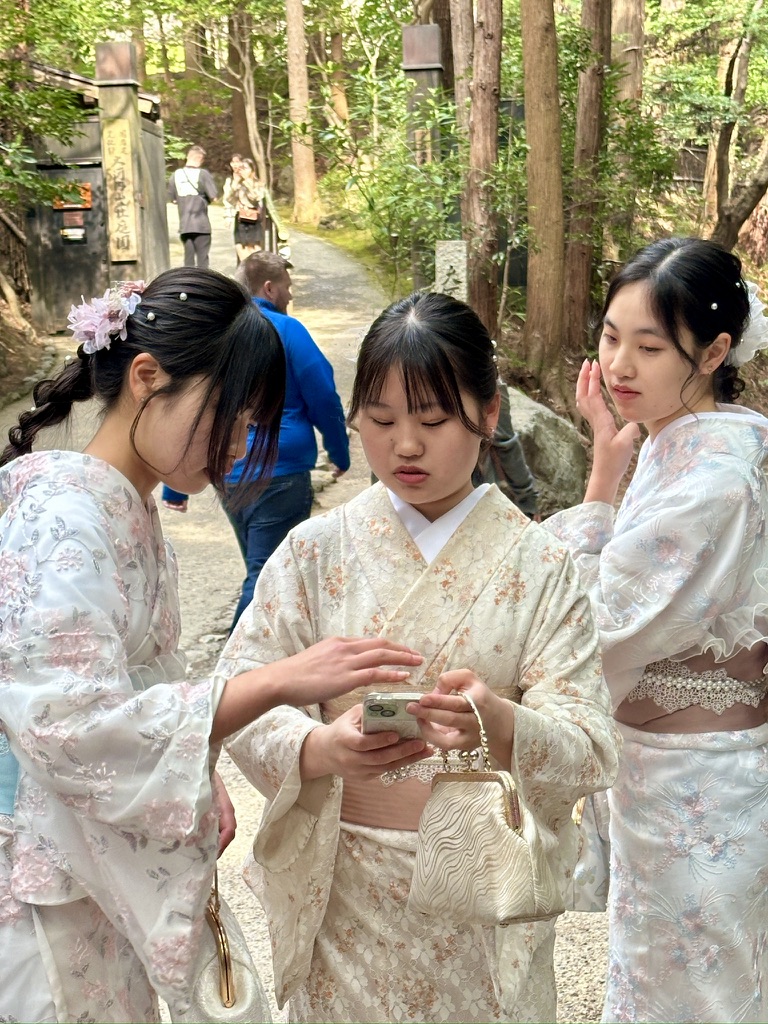
It’s a beautiful, spiritual spot, crowded but not inordinately so. We ran into three recent high school graduates wearing graceful kimonos – Japanese high schools hold graduation ceremonies in March – who were thrilled to talk to our group.
On to a different temple with a very different type of garden. Ryoanji Temple is the site of Japan’s most famous rock garden: fifteen rocks of various sizes carefully sited on a field of meticulously raked pebbles.
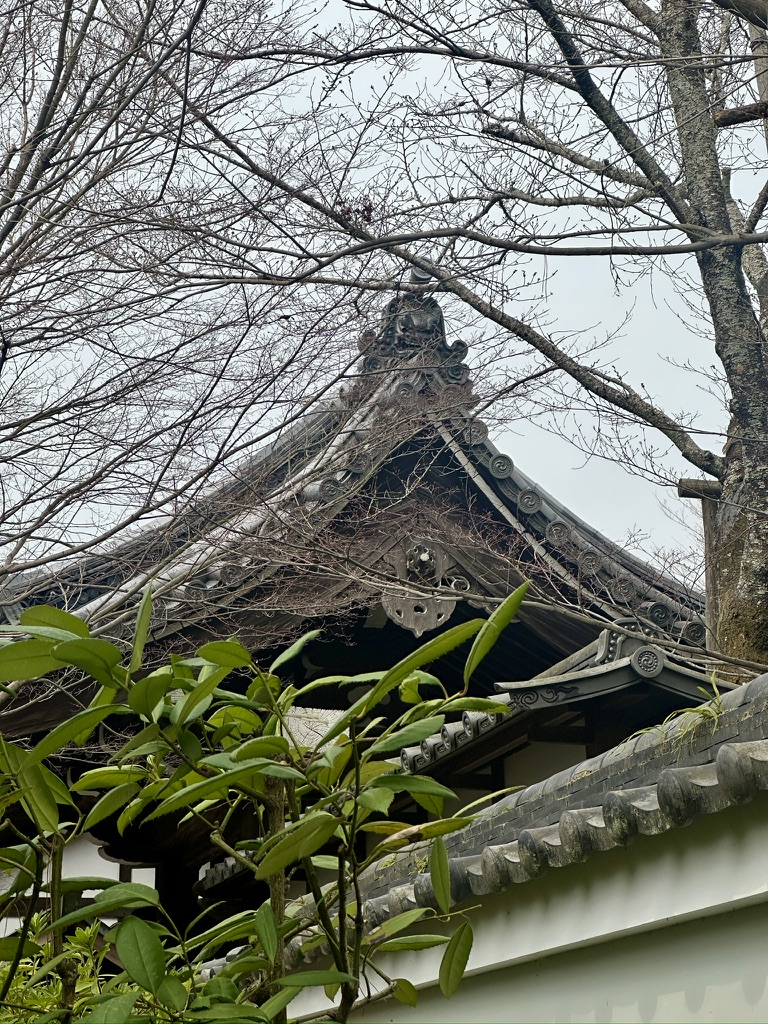
The garden is intended to facilitate meditation. There is a wooden ledge facing the garden where people can sit. I did so, closed my eyes for five minutes, and did some slow breathing exercises. I found it a deeply relaxing experience.
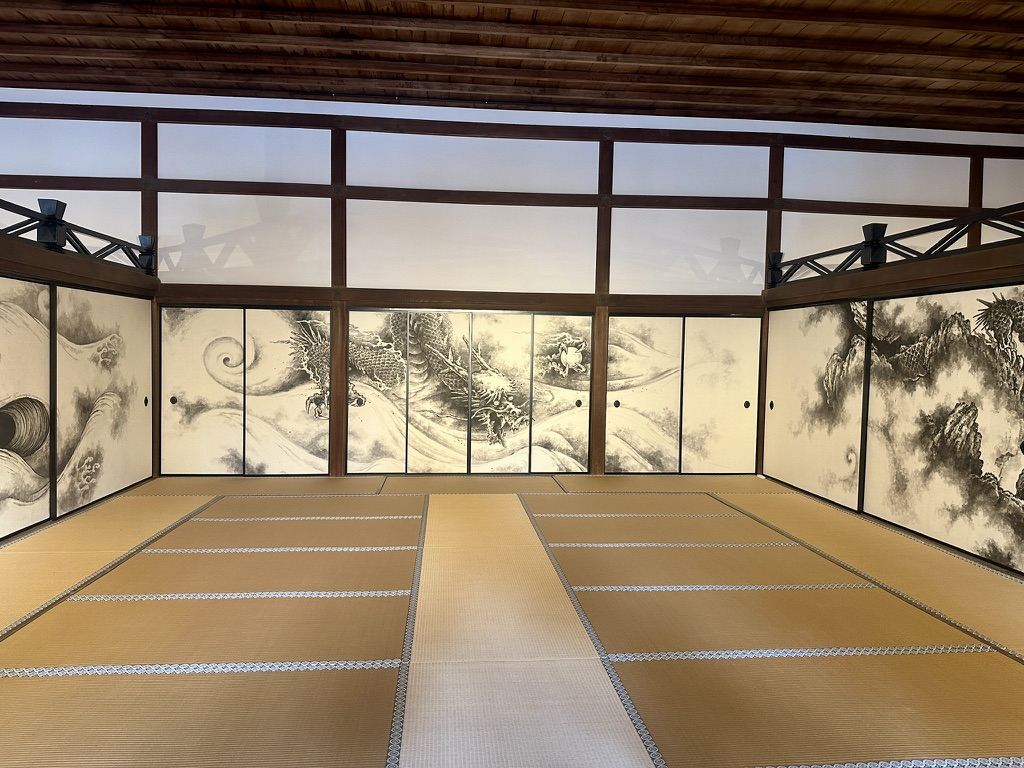
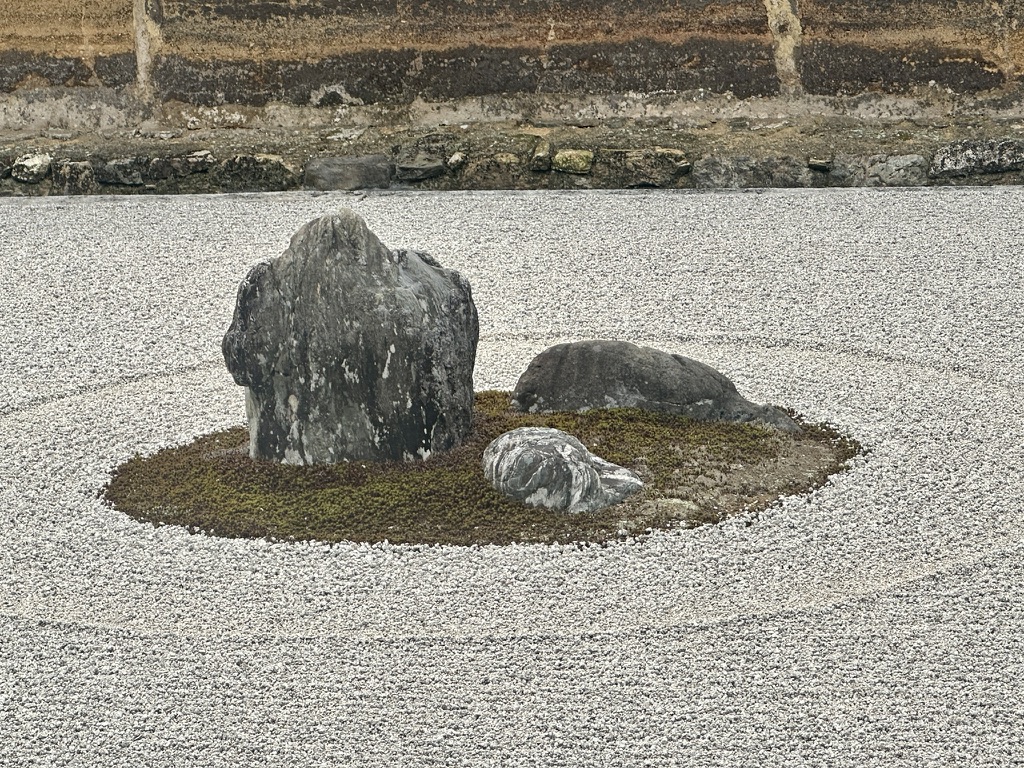
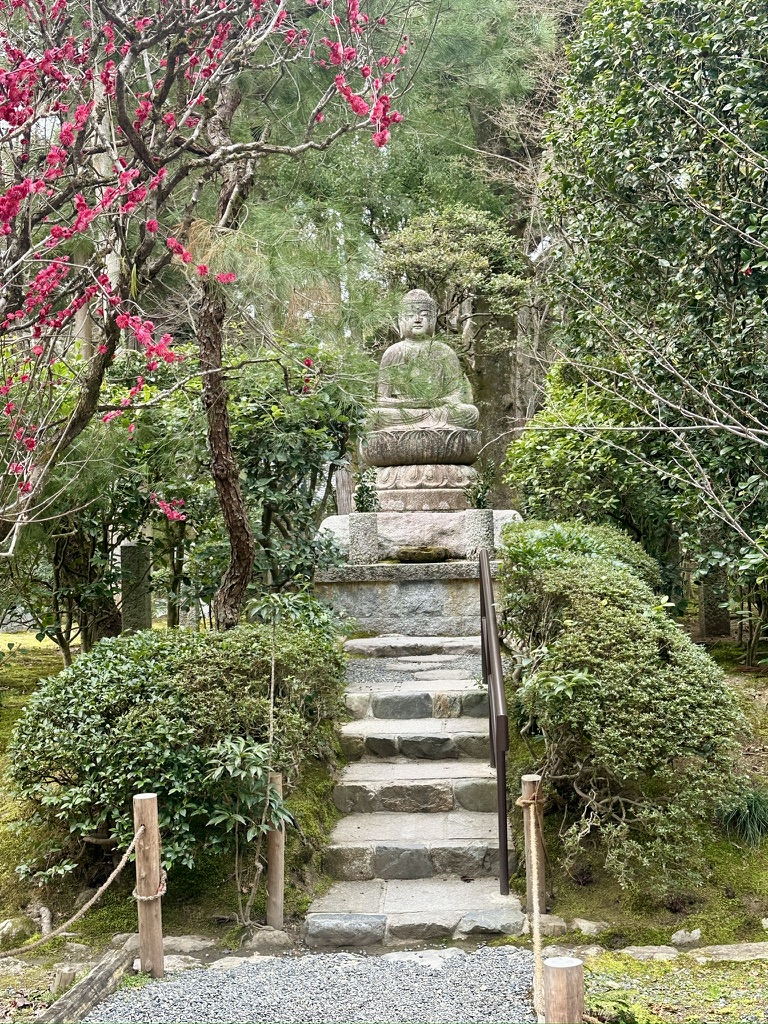
Buddhist temples in Japan, by and large, are pretty austere, at least to Western eyes. Our third stop, Kinkaku-ji Temple, is anything but.
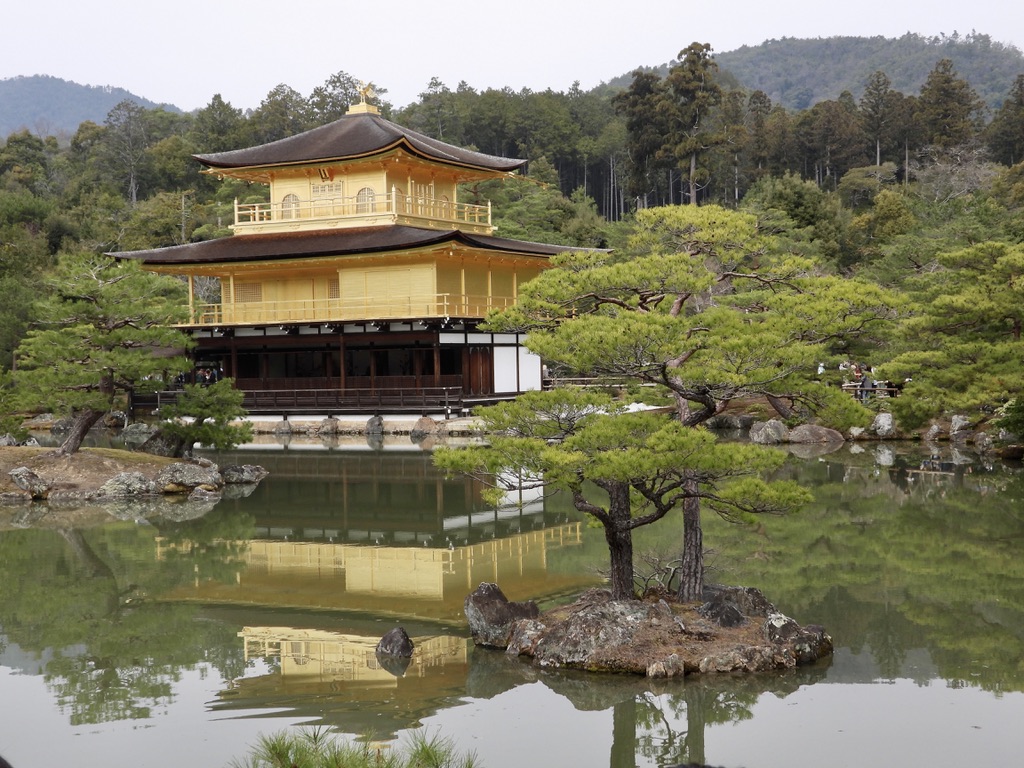
For obvious reasons, it’s known as the “Golden Temple.” Built as part of a palace in 1399 by a Shogun named Ashikaga Yoshimitsu, it was converted into a temple after he died, in accordance with his will.
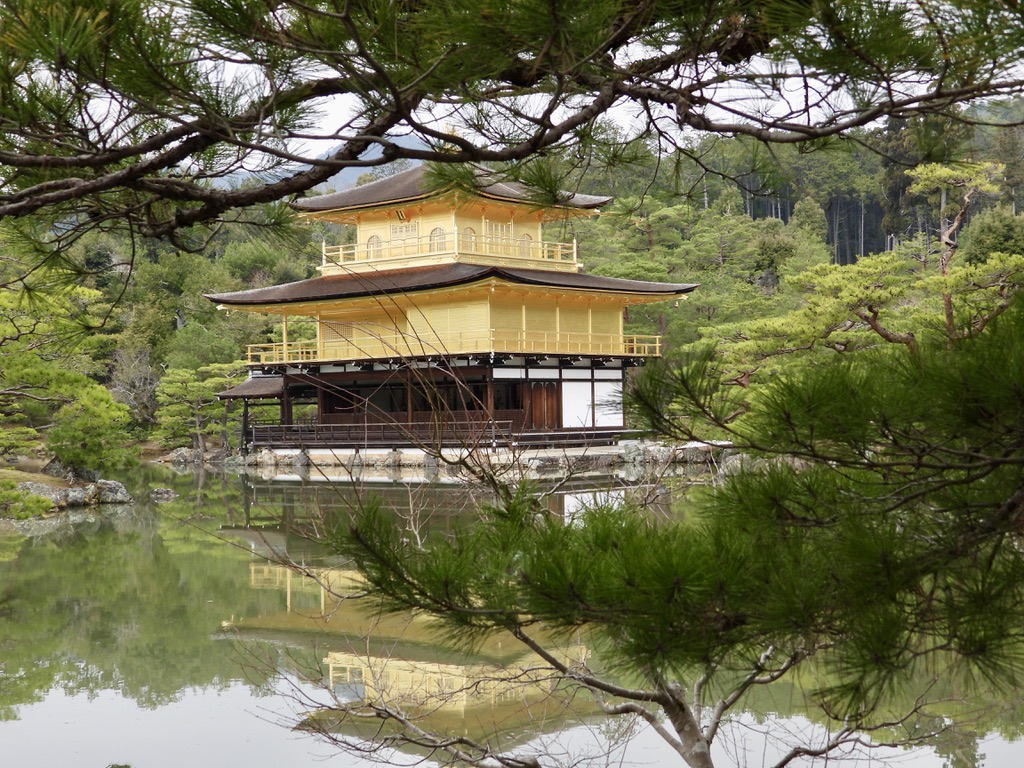
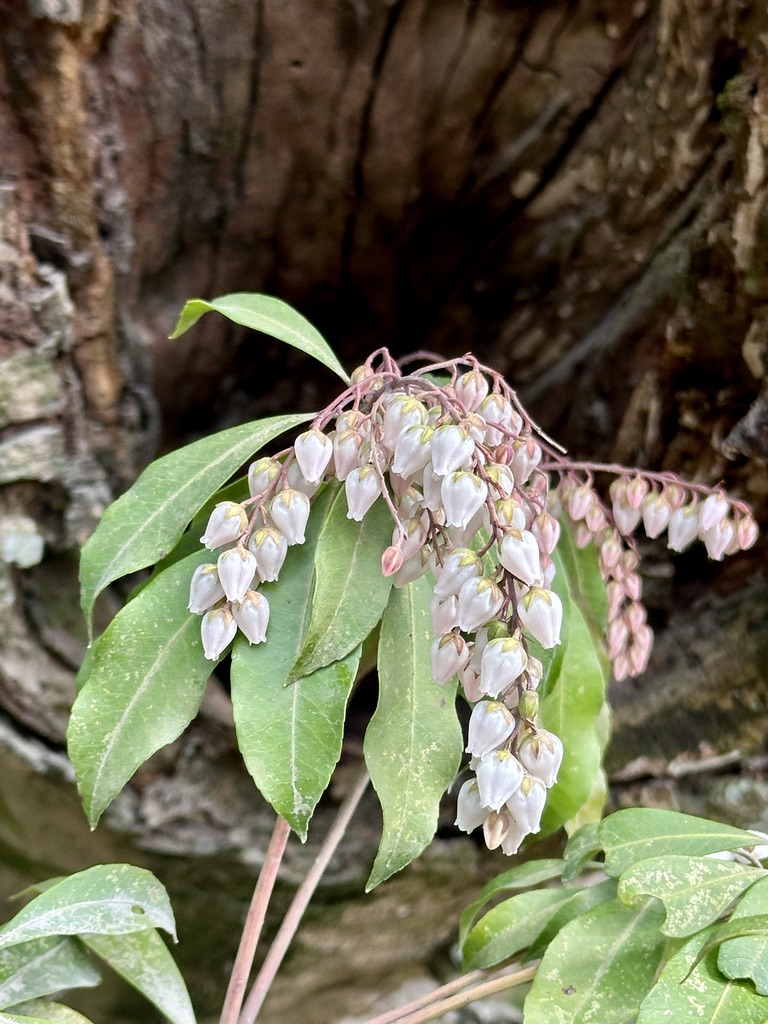
The temple overlooks a pristine lake surrounded by handsome trees, some of which were beginning to flower.
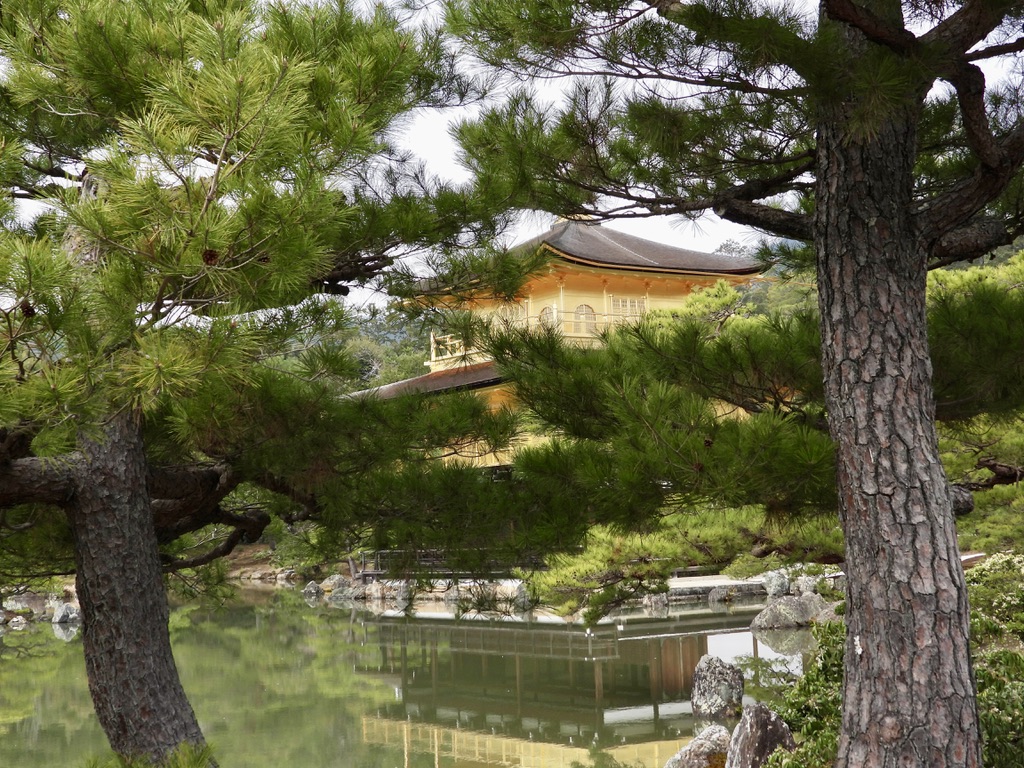
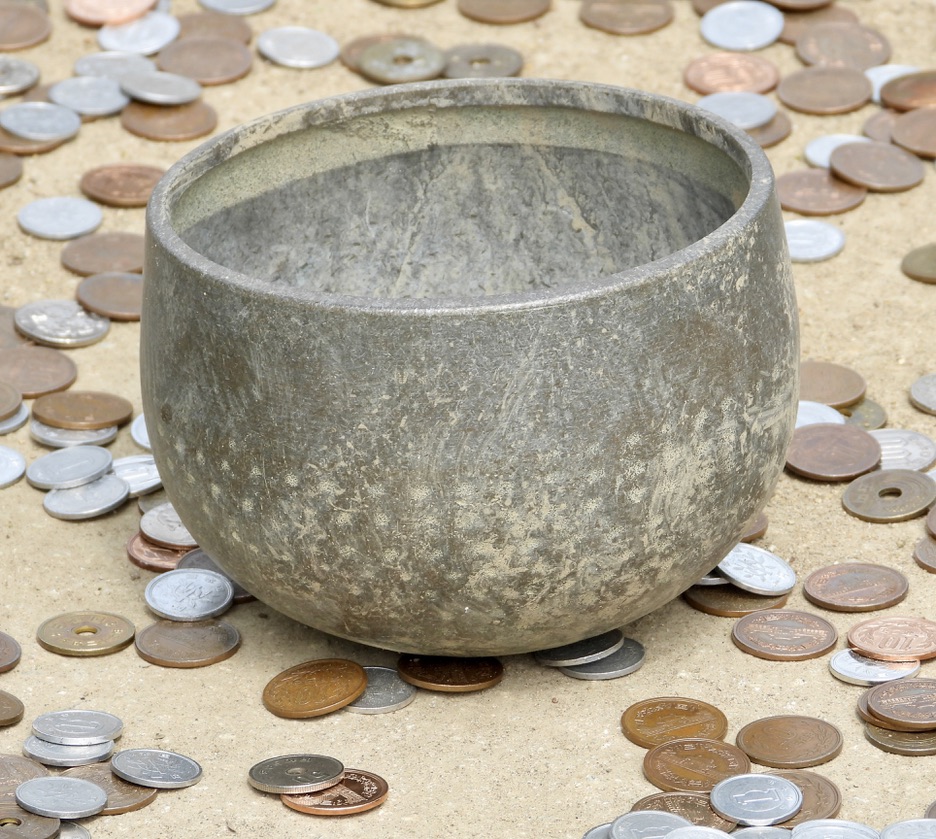
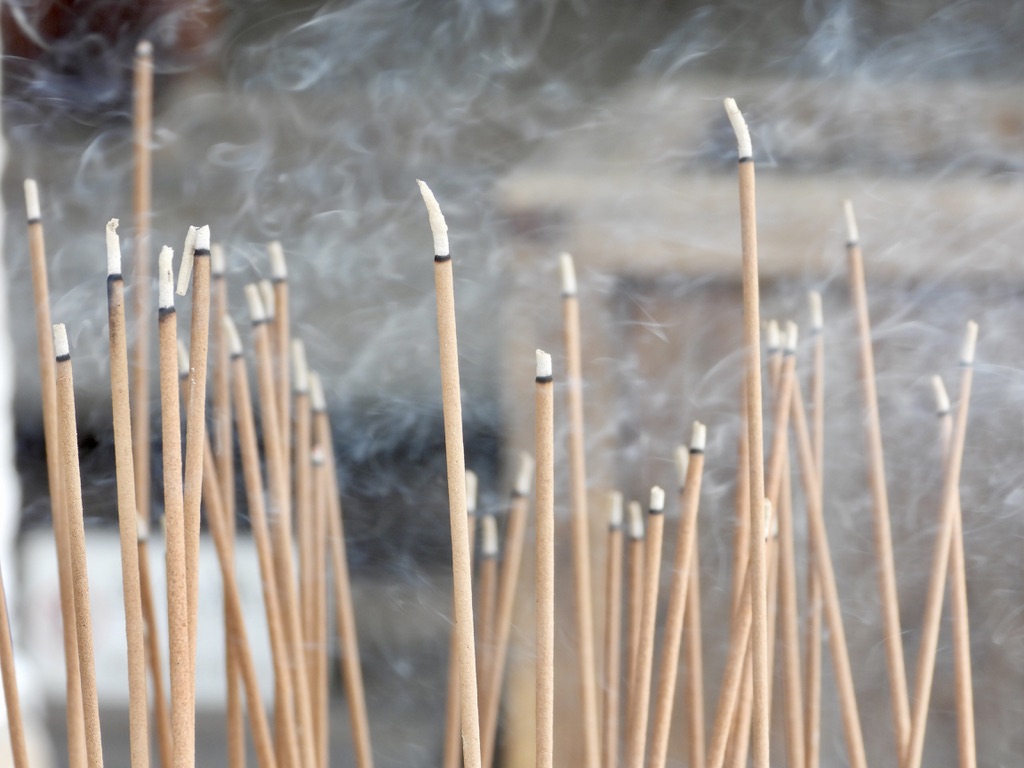
At the customary picture-to-word exchange rate, here are another three thousand words’ worth of photos to give you a sense of the beauty of Kinkaku-ji.
That ended the scheduled portion of the day. We got back to the hotel around 1:30 and grabbed some lunch at – where else? – 7-Eleven. (Warm soba noodles with vegetable tempura for me, quite satisfying.)
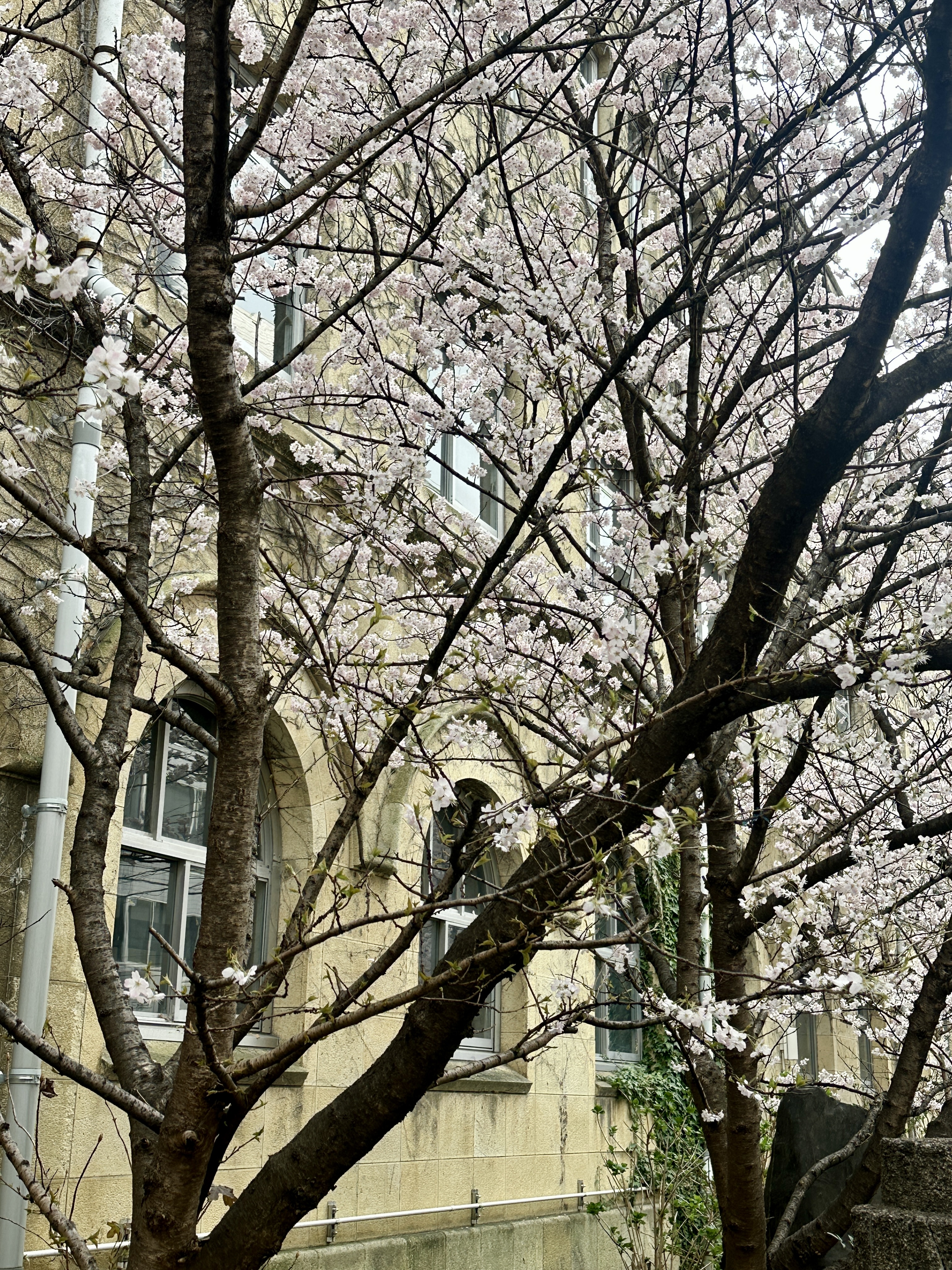
Once again going above and beyond, Mari offered to take anyone who was interested to see some early blooming cherry trees. Ten of us hopped on the Kyoto subway in search of our quarry, which we found in front of a stately 19th century building that used to house a junior high school. The school closed in 2011 because Japan is experiencing significant depopulation. People are having fewer children than they used to; the birth rate of 1.26 children per woman is far below replacement level.
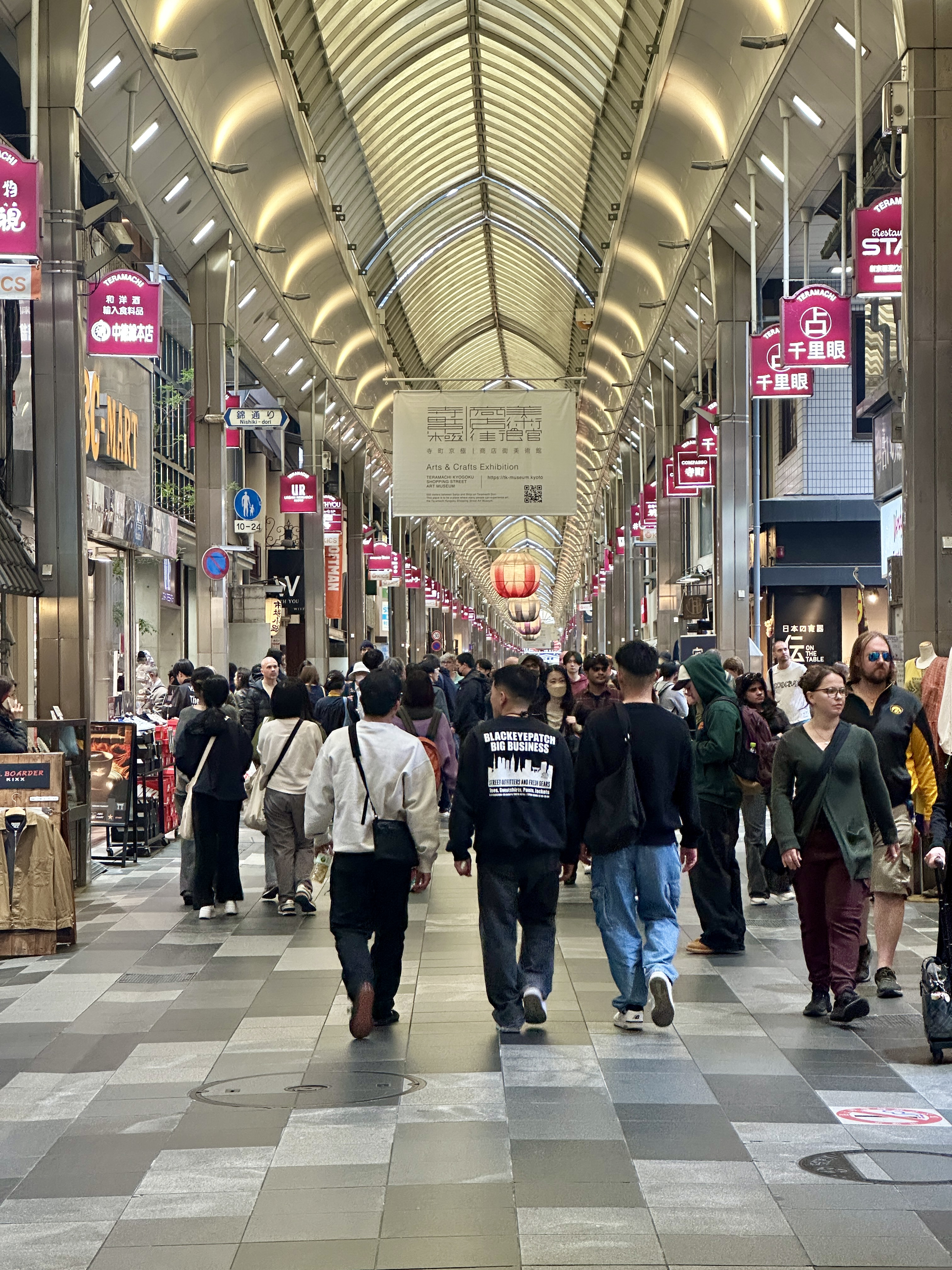
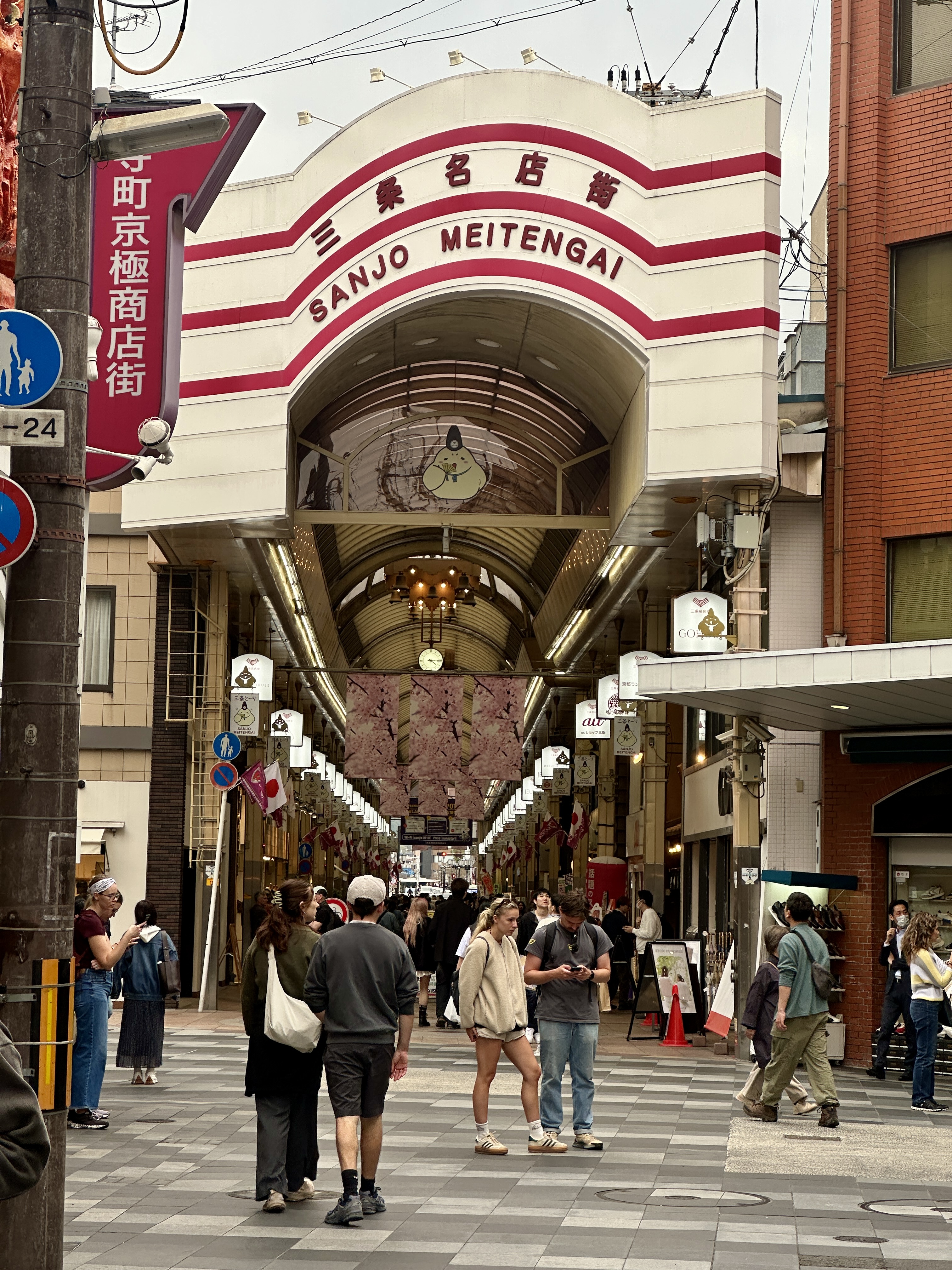
After oohing and aahing at the delicate blossoms, my sister, brother-in-law, and I headed to Teramachi Street, a covered pedestrian arcade comprising several blocks of small shops and cafes. You can find everything from vintage clothing to used records to swords to fluorescent-colored, Looney Tunes-themed drinks. I’m not much of a shopper, but I found it an enjoyable place to people-watch and gaze at curious items I have no use for.

We got back to the hotel just in time to grab a quick dinner from the food hall of Setan, a department store next to Kyoto station. Then it was off to the Gion district, an enclave for geishas (known as geiko in Kyoto), which also is famed for its traditional architecture.
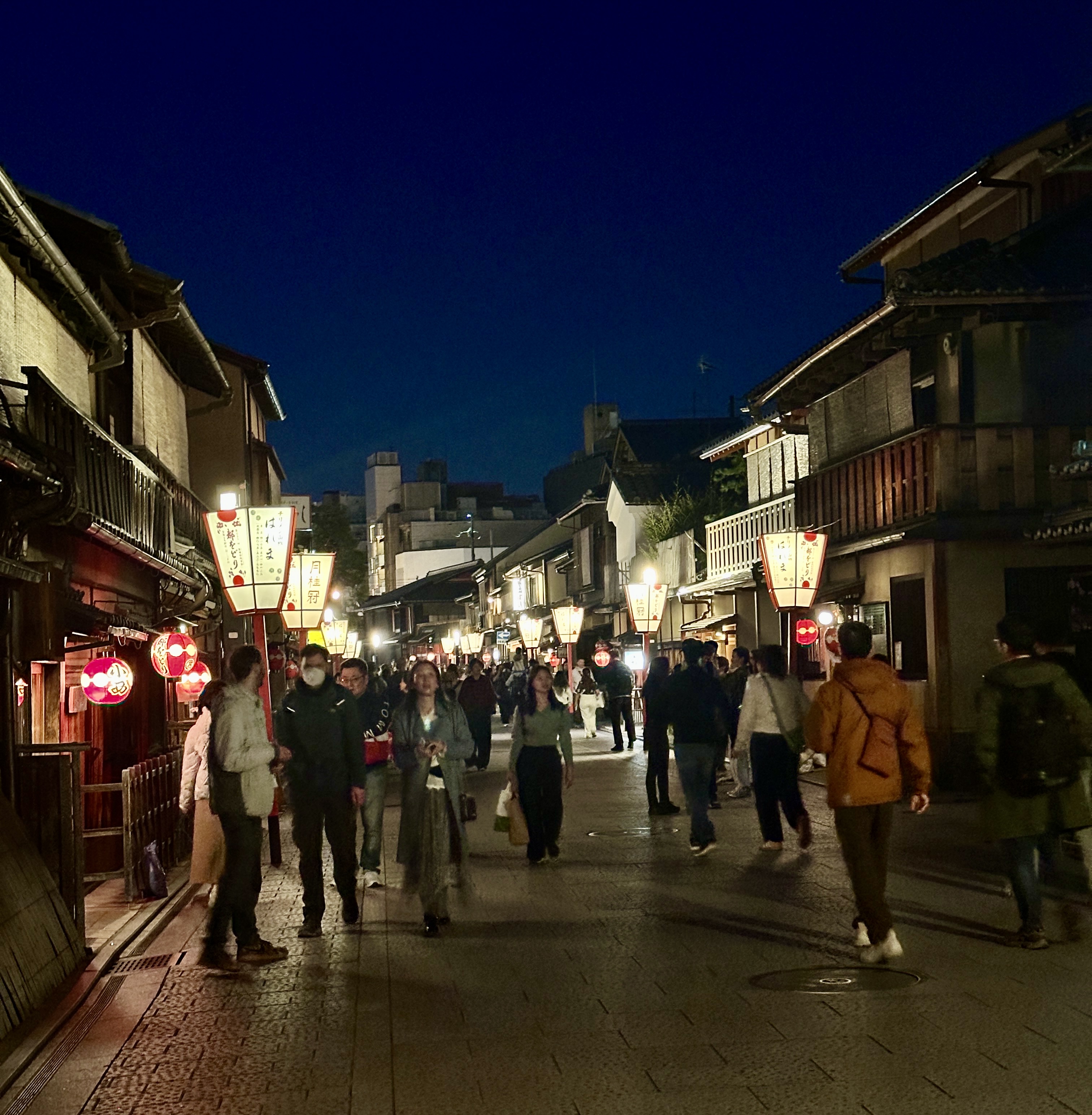
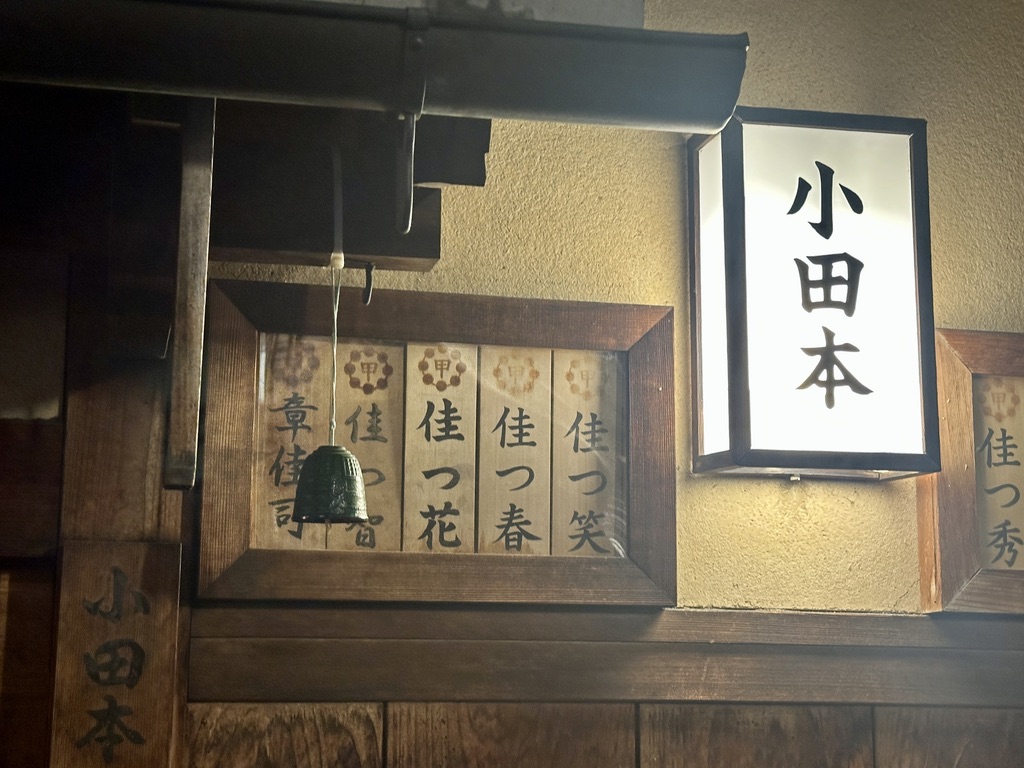
There, at a theater called Gion Corner, we saw a very good hour-long show presenting several traditional Japanese arts: the tea ceremony, koto playing (it’s a 13-string harp-like instrument found in Japan and crossword puzzles), ikebana (flower arranging), a 1200-year-old dance form called bugaku, an uproariously funny physical comedy routine called kyogen, an elegant but opaque noh performance (a form of drama found in Japan and crossword puzzles), and a gentle, expressive kyomai dance performed by two maiko (geiko in training).
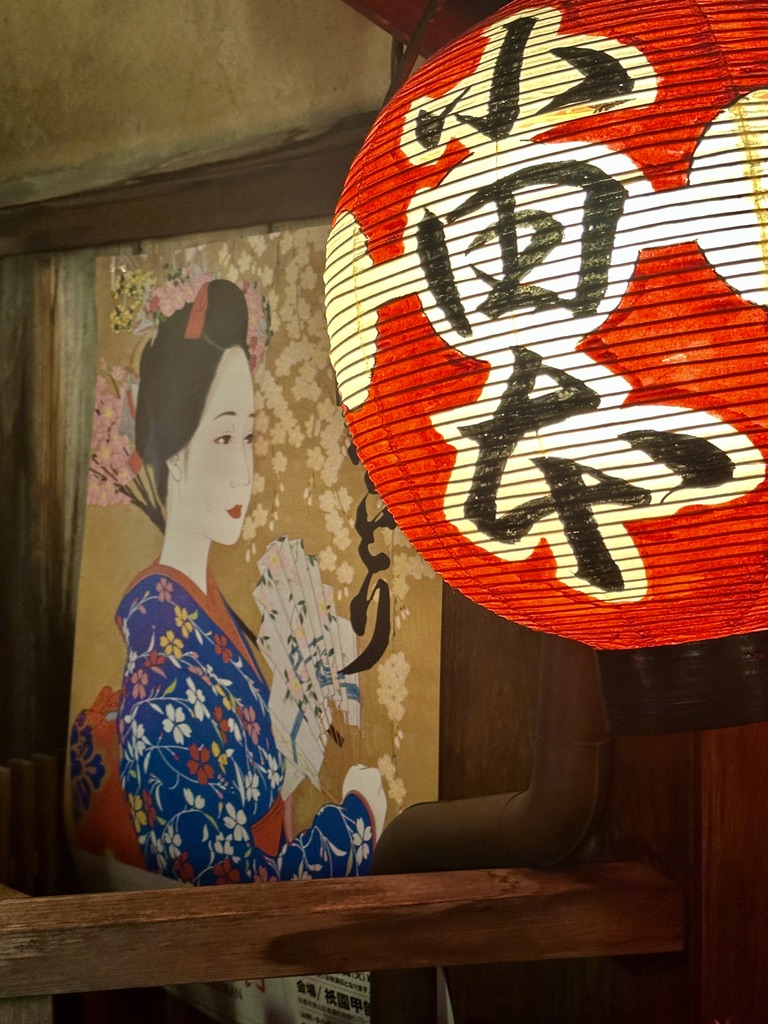
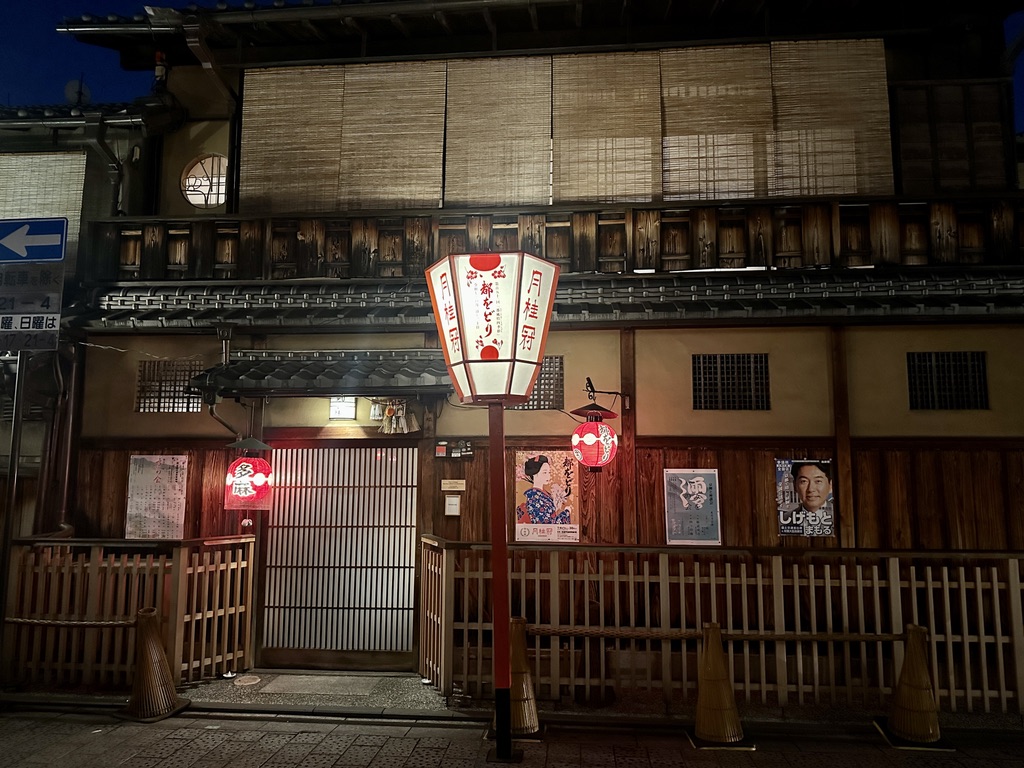
Photography wasn’t allowed in the theater, but as you can see, the surrounding area is plenty photogenic.
Kyoto, Day 3 (March 25)
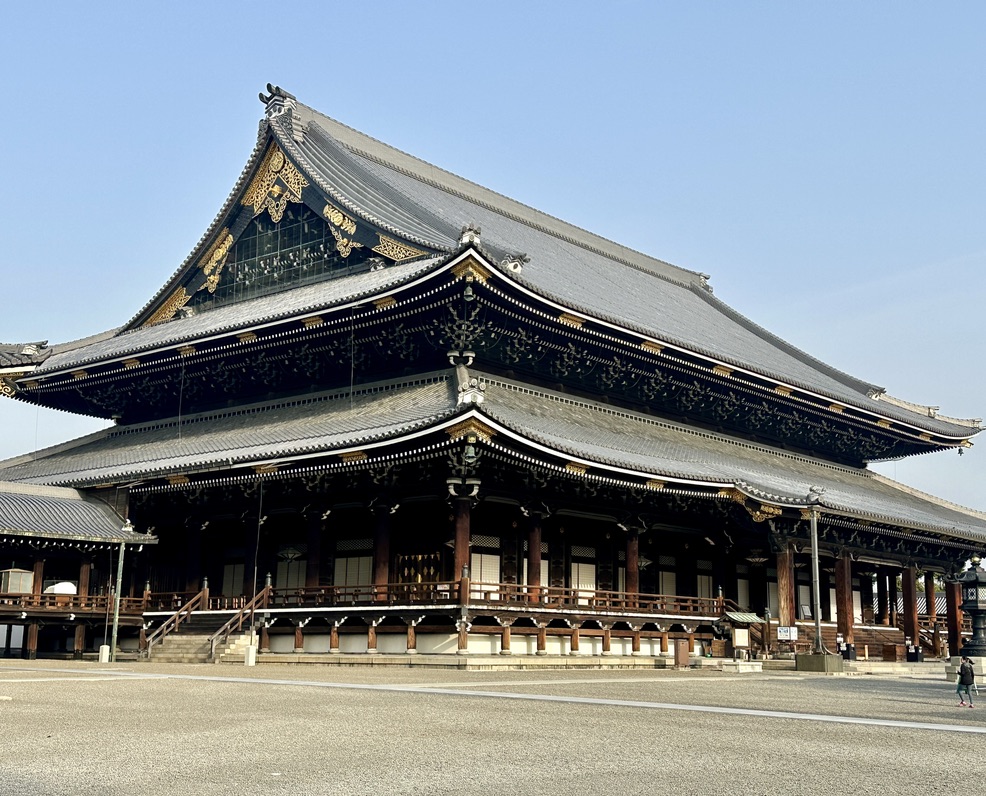
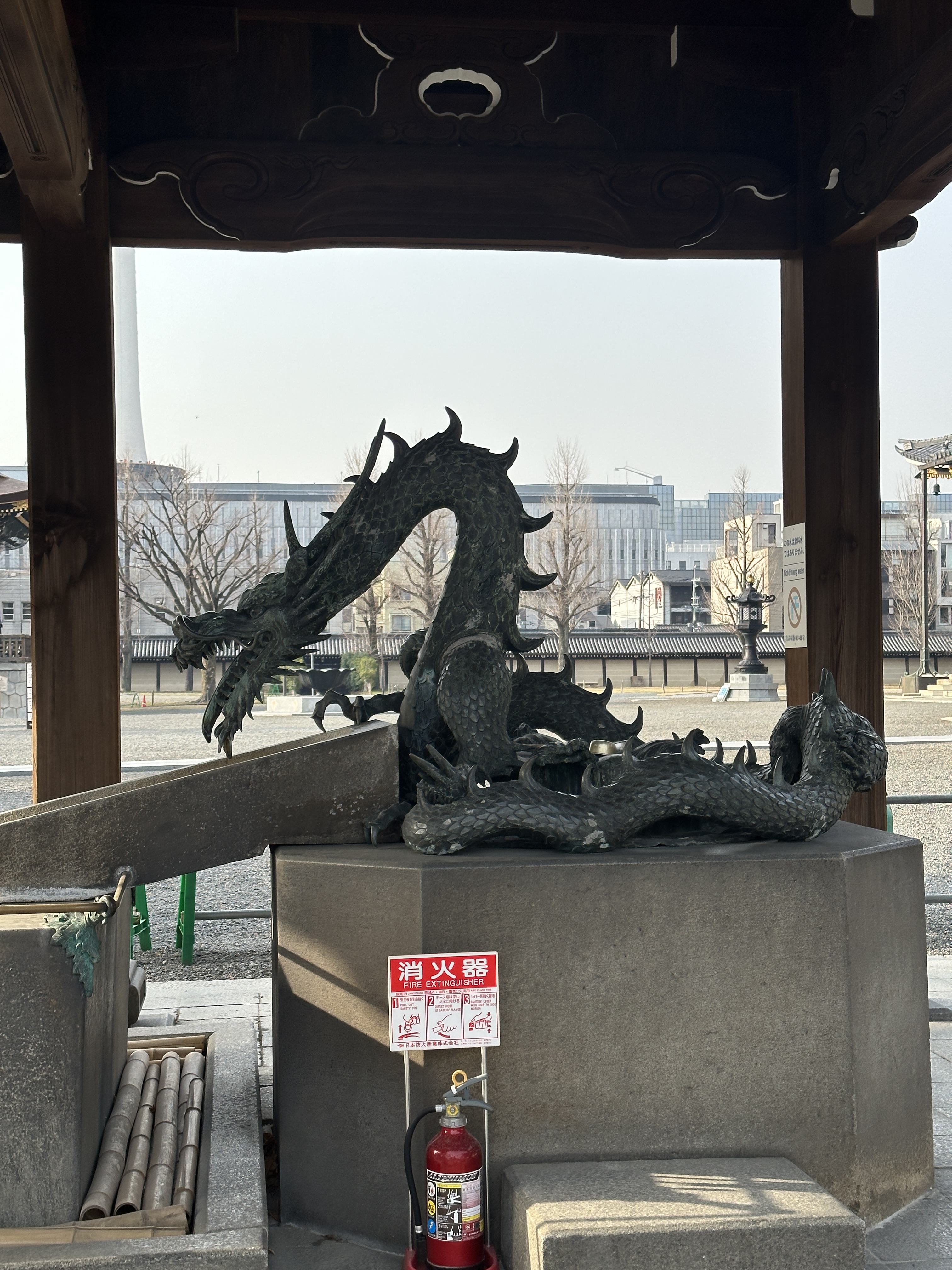
Being constitutionally incapable of sleeping past 6 a.m. when travelling, I had an early breakfast and then walked over to … another temple. Higashi Honganji is a vast temple complex less than ten minutes from our hotel and from Osaka station.
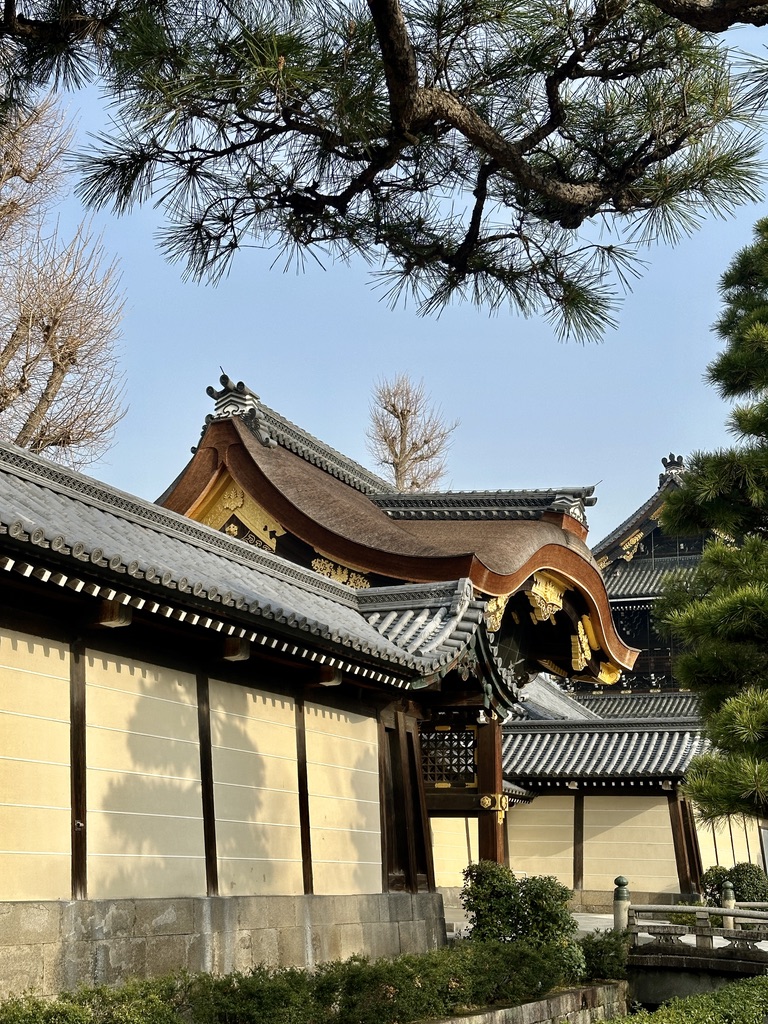
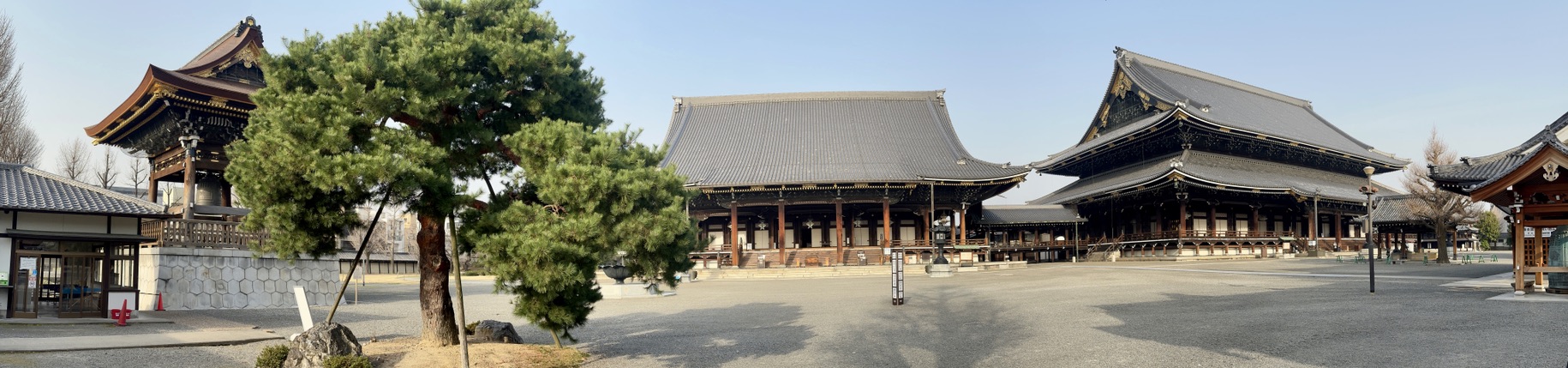
At 7:30 this morning, the courtyard was empty, and I wandered around by myself, carried along by the sound of monks chanting inside. (Entry is permitted, but I was on my phone.)
This morning’s official tour took in two of Kyoto’s most famous highlights: Rengeo-in temple, known for its 1001 statues of the Buddhist deity Kannon, and Fushimi Inari Taisha, a Shinto shrine famed for its 10,000 torii (gates).
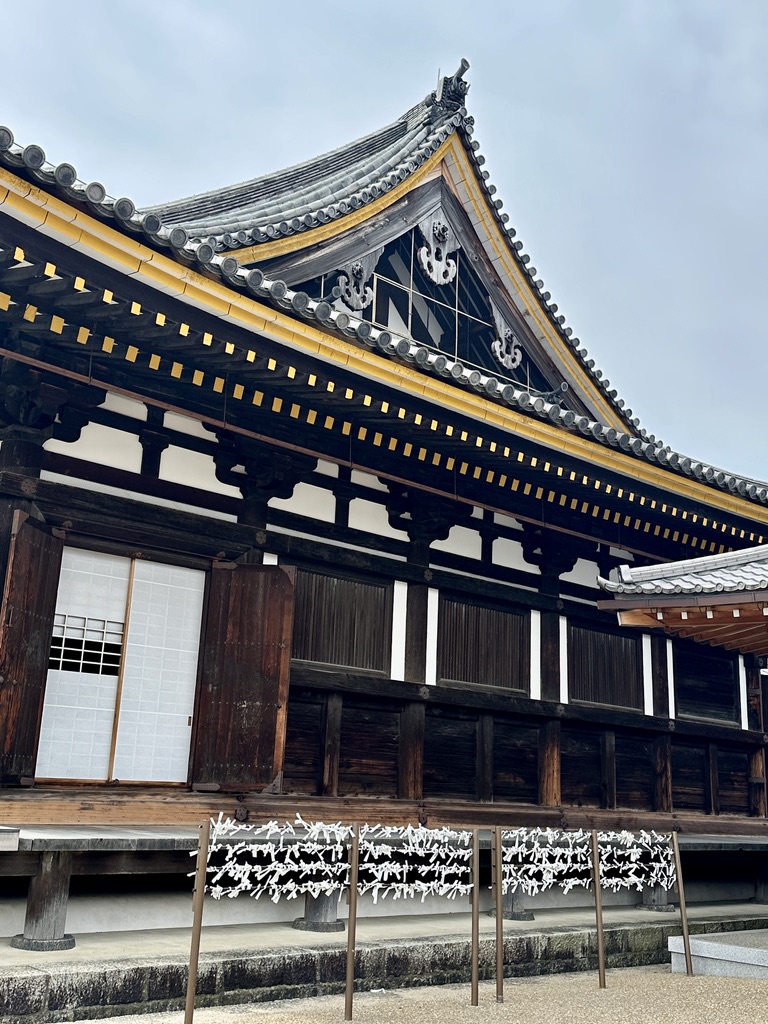
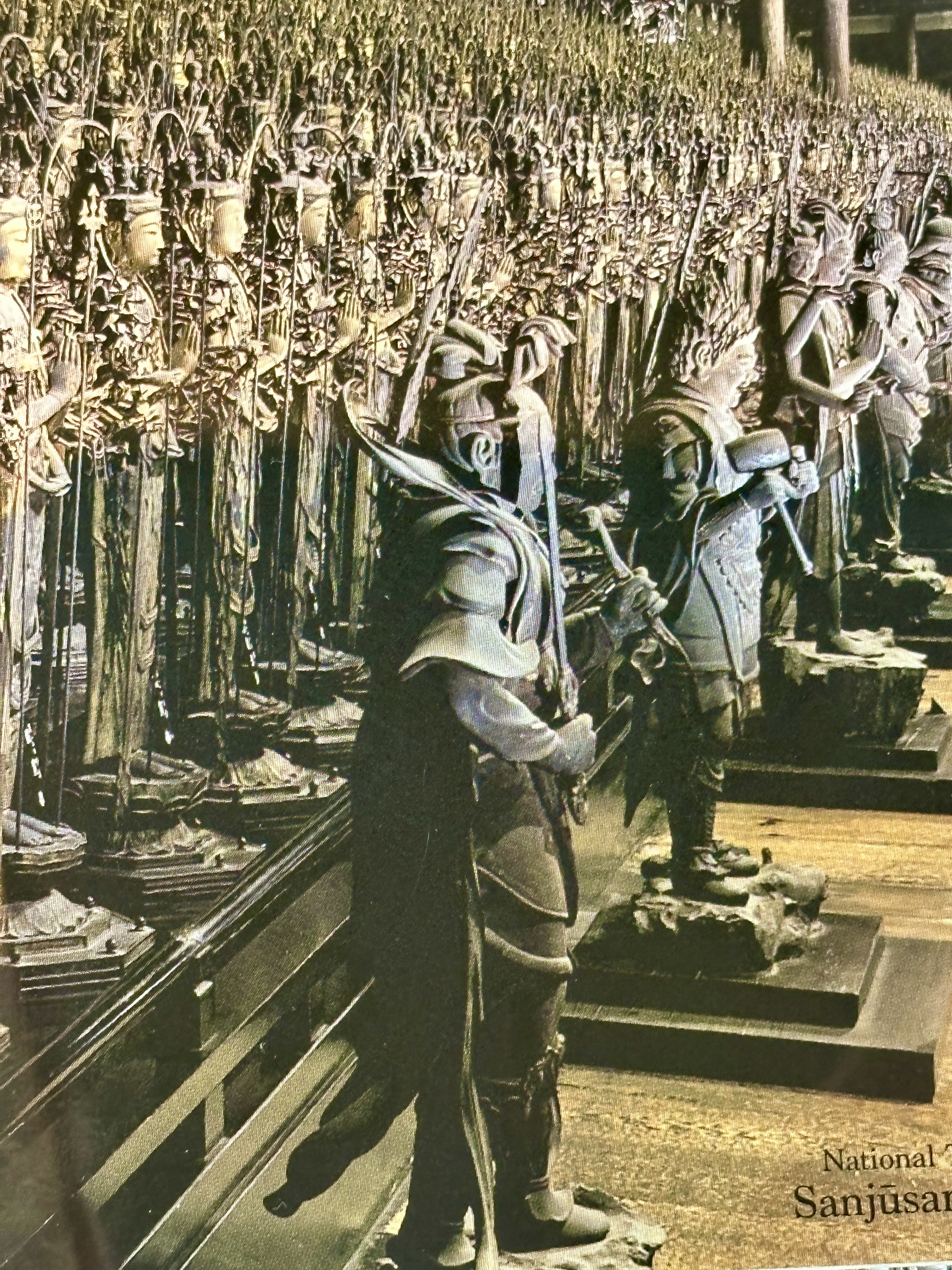
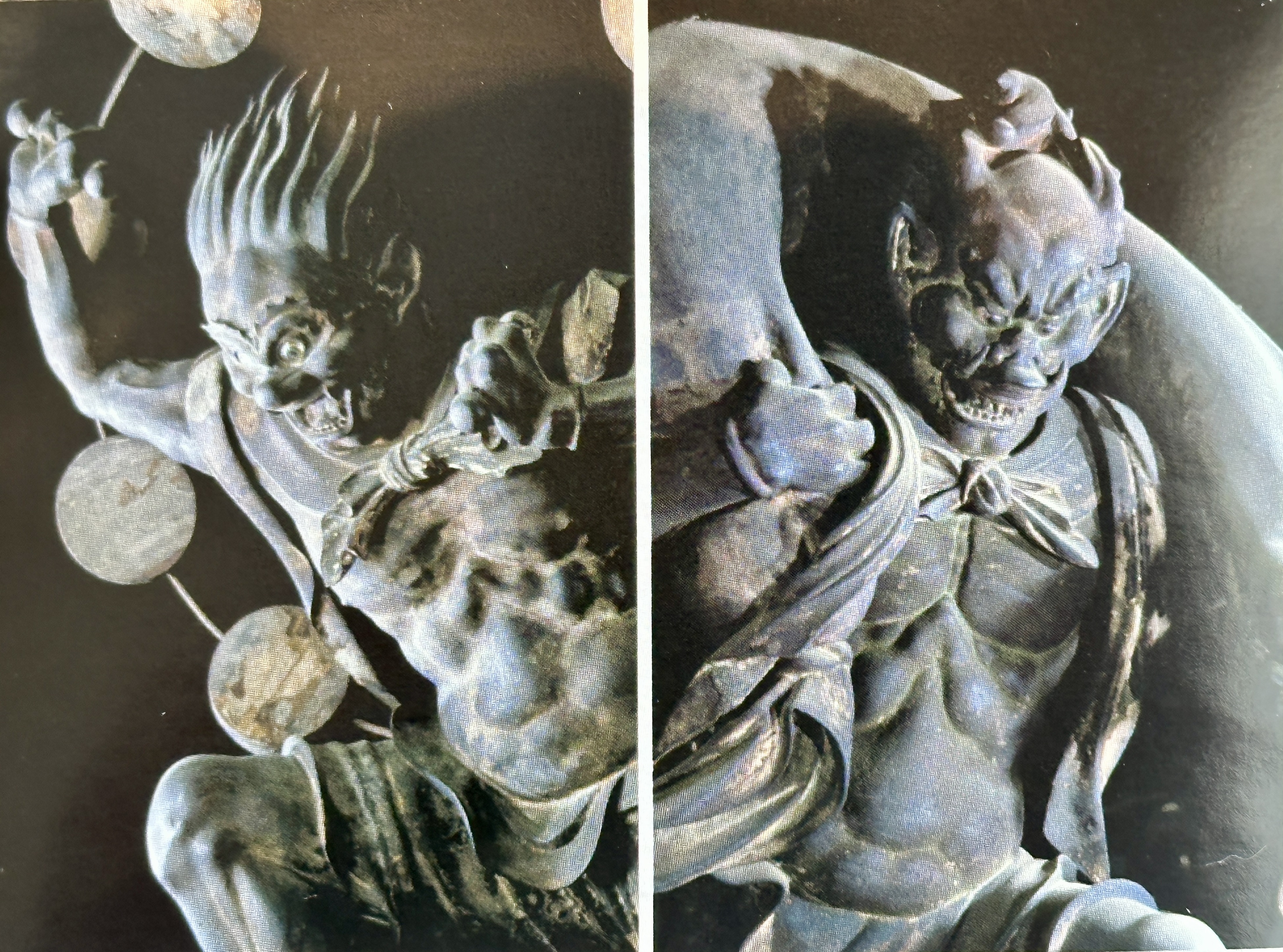
Rengeo-in is my favorite of the temples we’ve visited. Set beside a serene garden, the temple contains an enormous hall housing 1000 standing statues of the Buddhist deity, Kannon (one hundred columns with ten statues in each); one enormous, seated statue of the god flanked by twenty-eight guardian deities (including four music gods, none of which was Eric Clapton); and, at opposite ends of the guardians, the Thunder God and the Wind God.
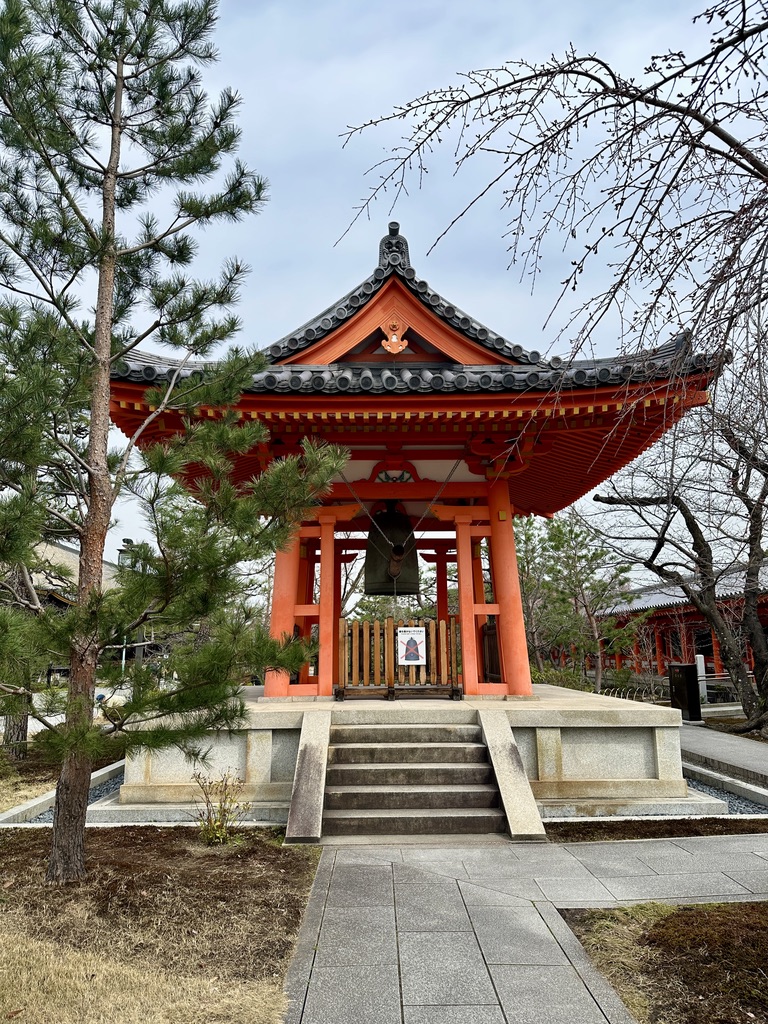
One hundred twenty-four of the thousand standing statues date to the temple’s founding in the 12th century. The remaining 876 date to the 13th century, replacing those that were destroyed in a massive fire. It took sixty craftsmen eighty years to carve the replacements.
Photos aren’t allowed inside the temple – neither are shoes, of course – so these are pictures captured from the brochure handed out at the entrance.
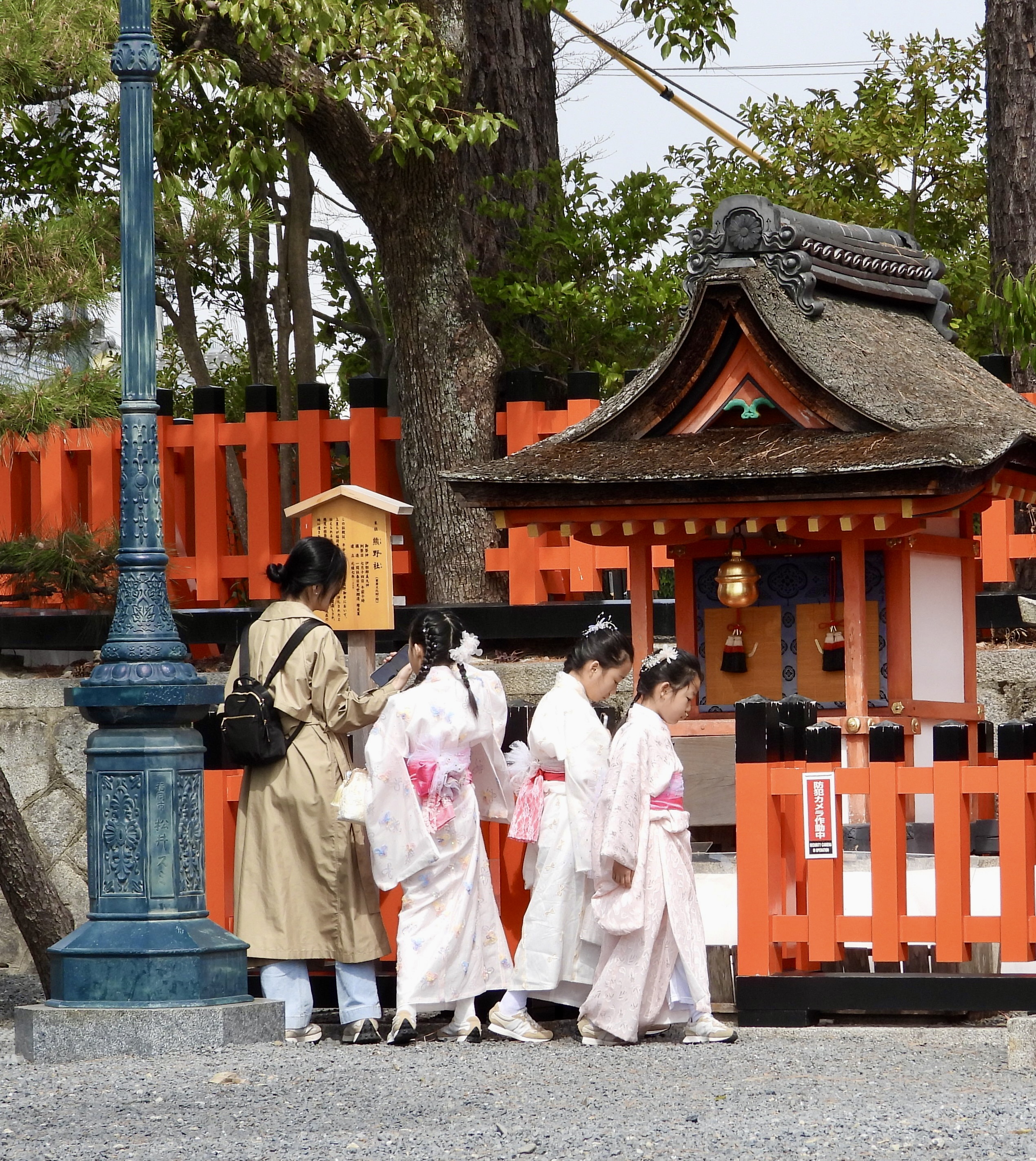
Our second stop, the shrine of Fushimi Inari Taisha, abuts a mountain at the edge of Kyoto. It was built to honor Inari, the Shinto deity of rice, agriculture, and business.
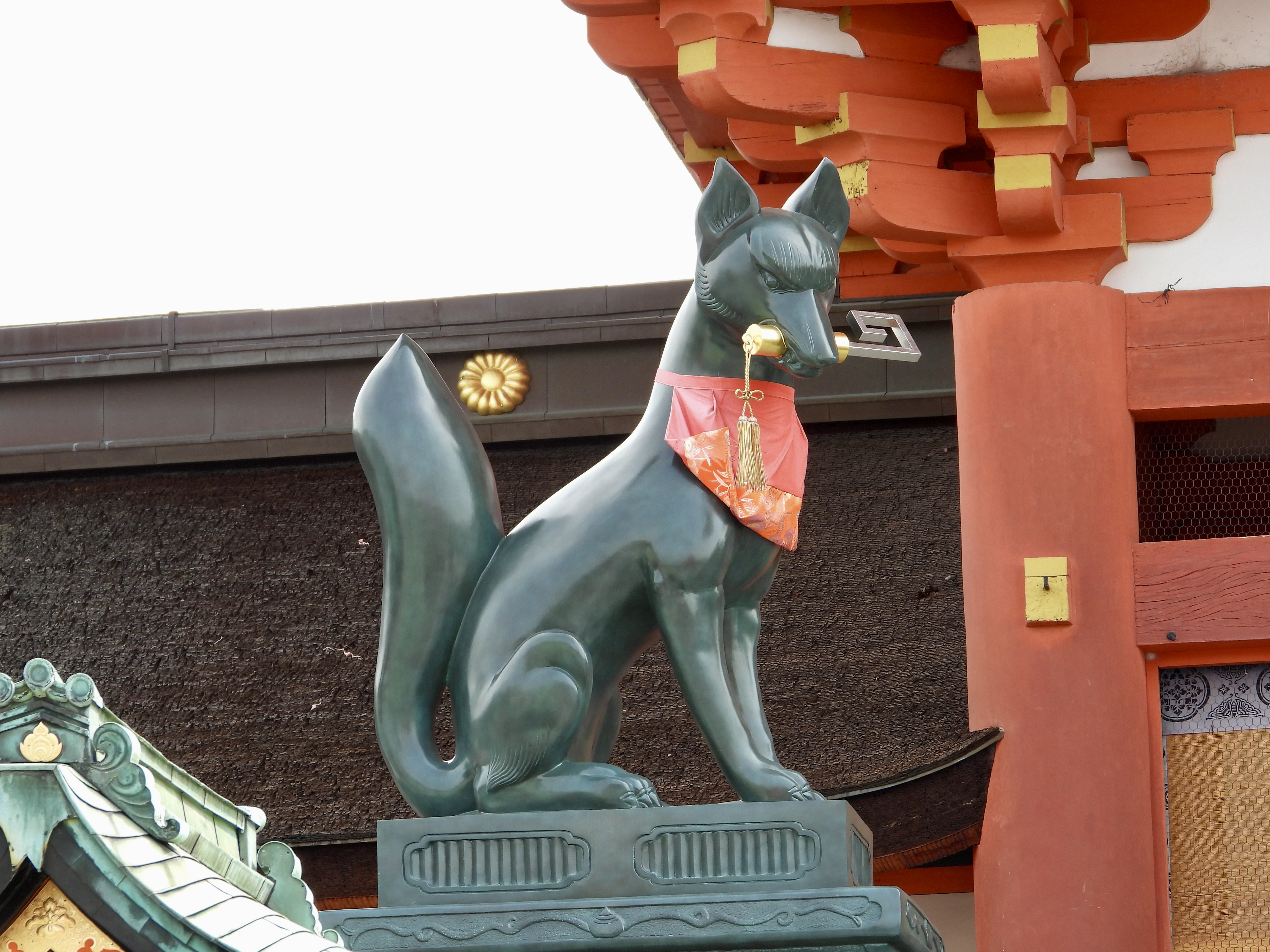
There are many statues of foxes (kitsane), considered messengers and bringers of good luck; many hold jewels or keys to the rice granary in their mouths.
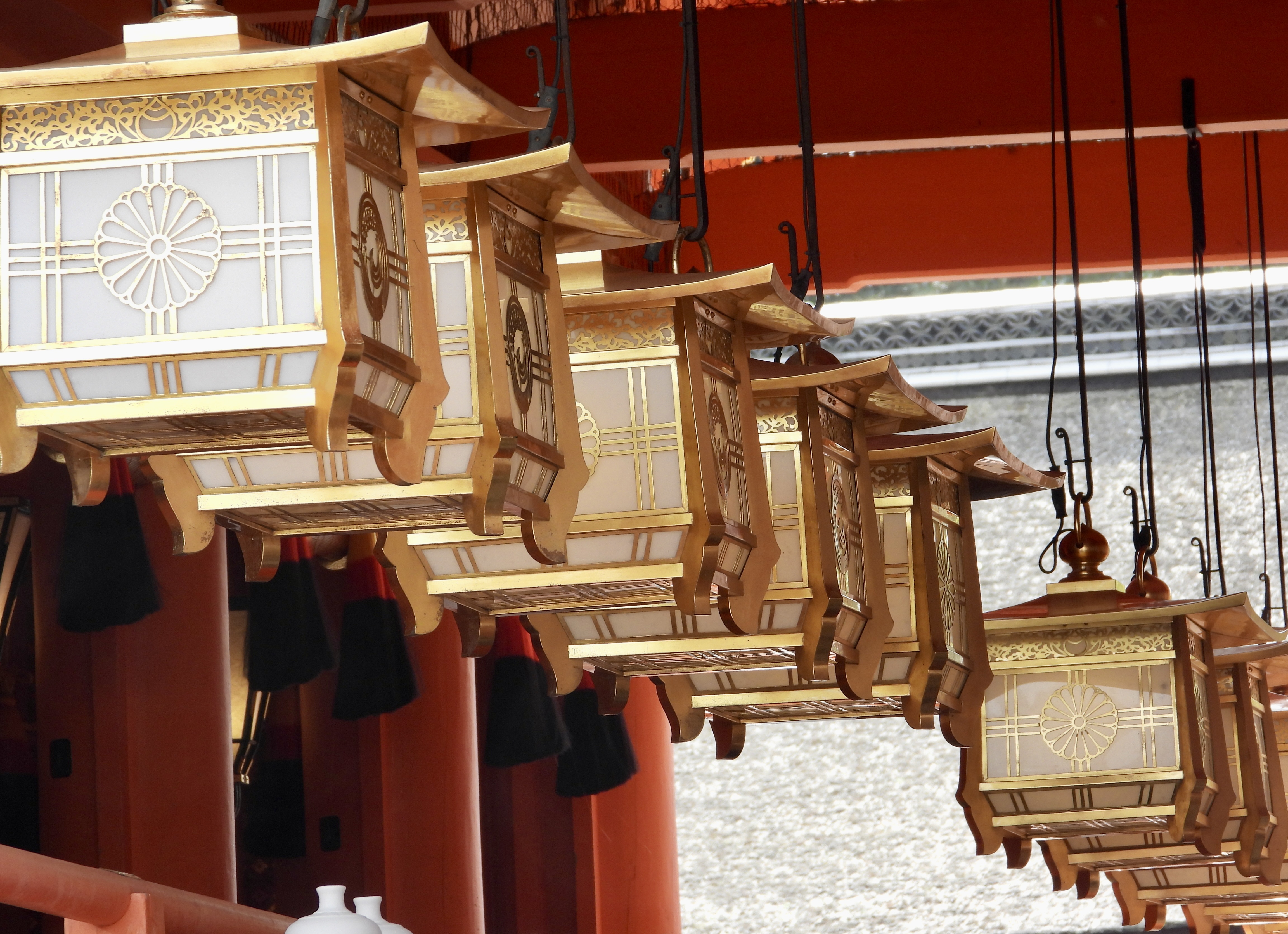
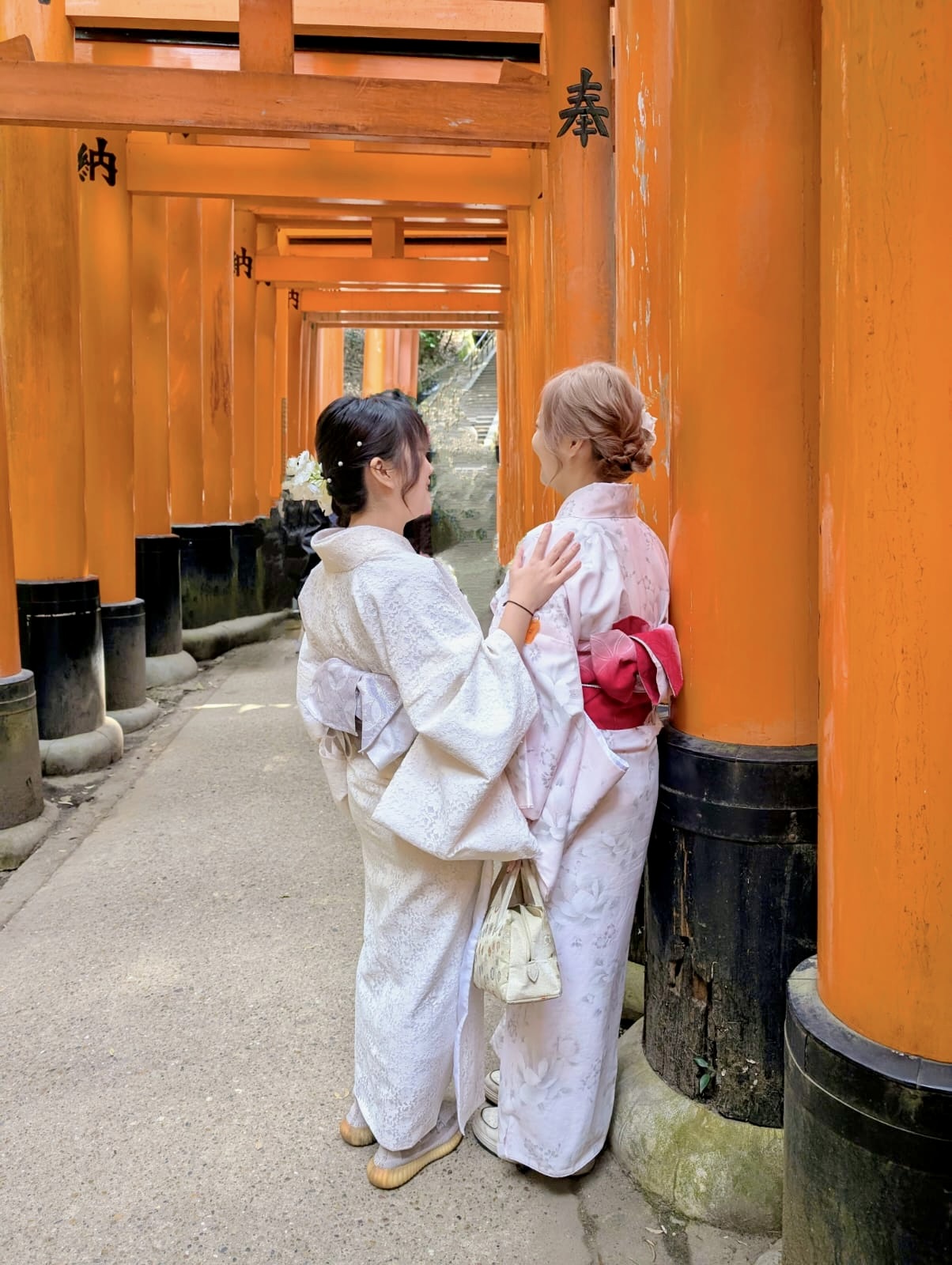
The highlight of this shrine is the “10,000 torii” – wood or stone gates donated by businesses beginning in the 17th century. Given that the shrine receives ten million visitors annually, including three million in the first three days of the new year, that’s one torii per thousand visitors which, given the crowds, sounds about right.
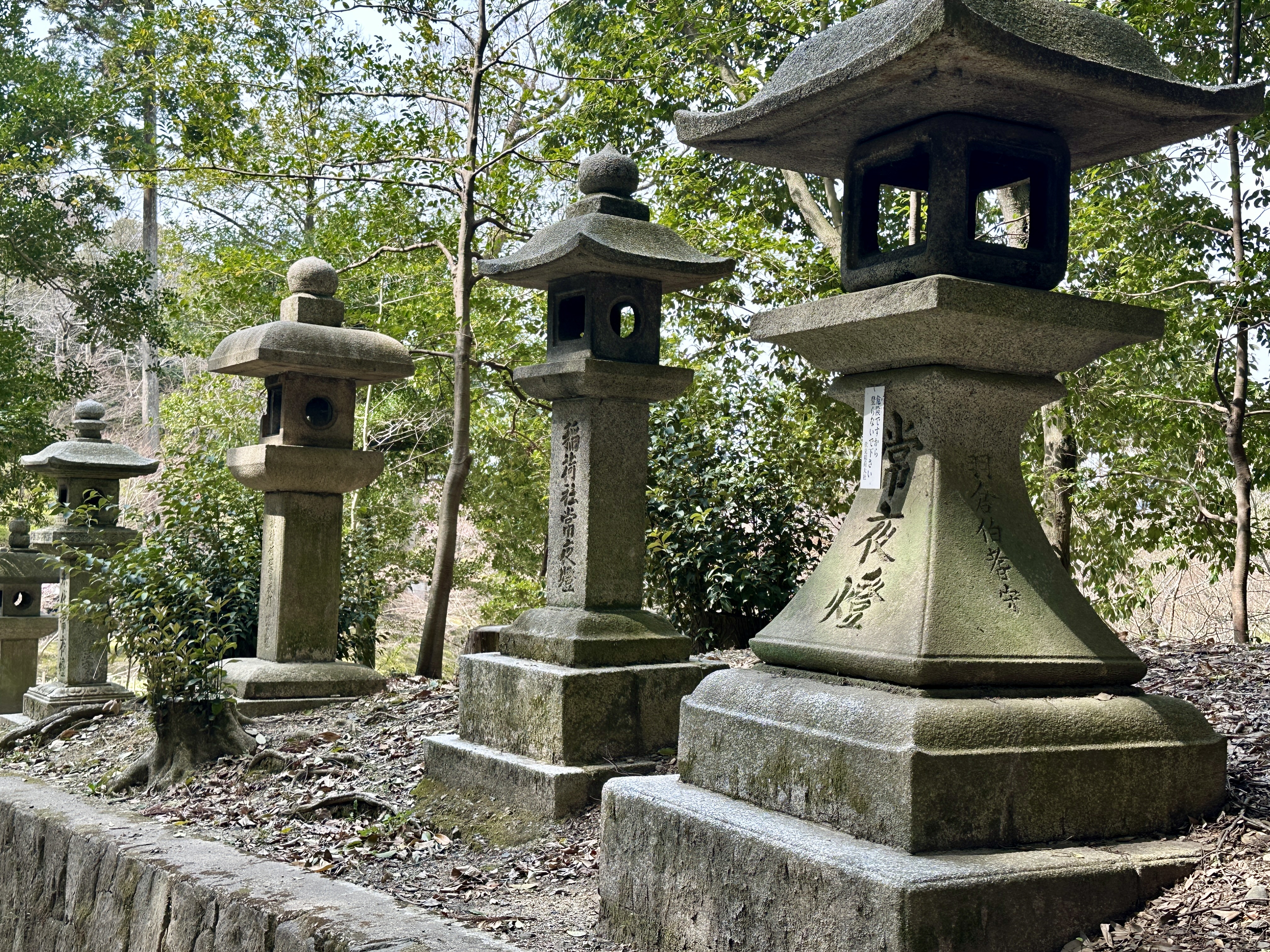
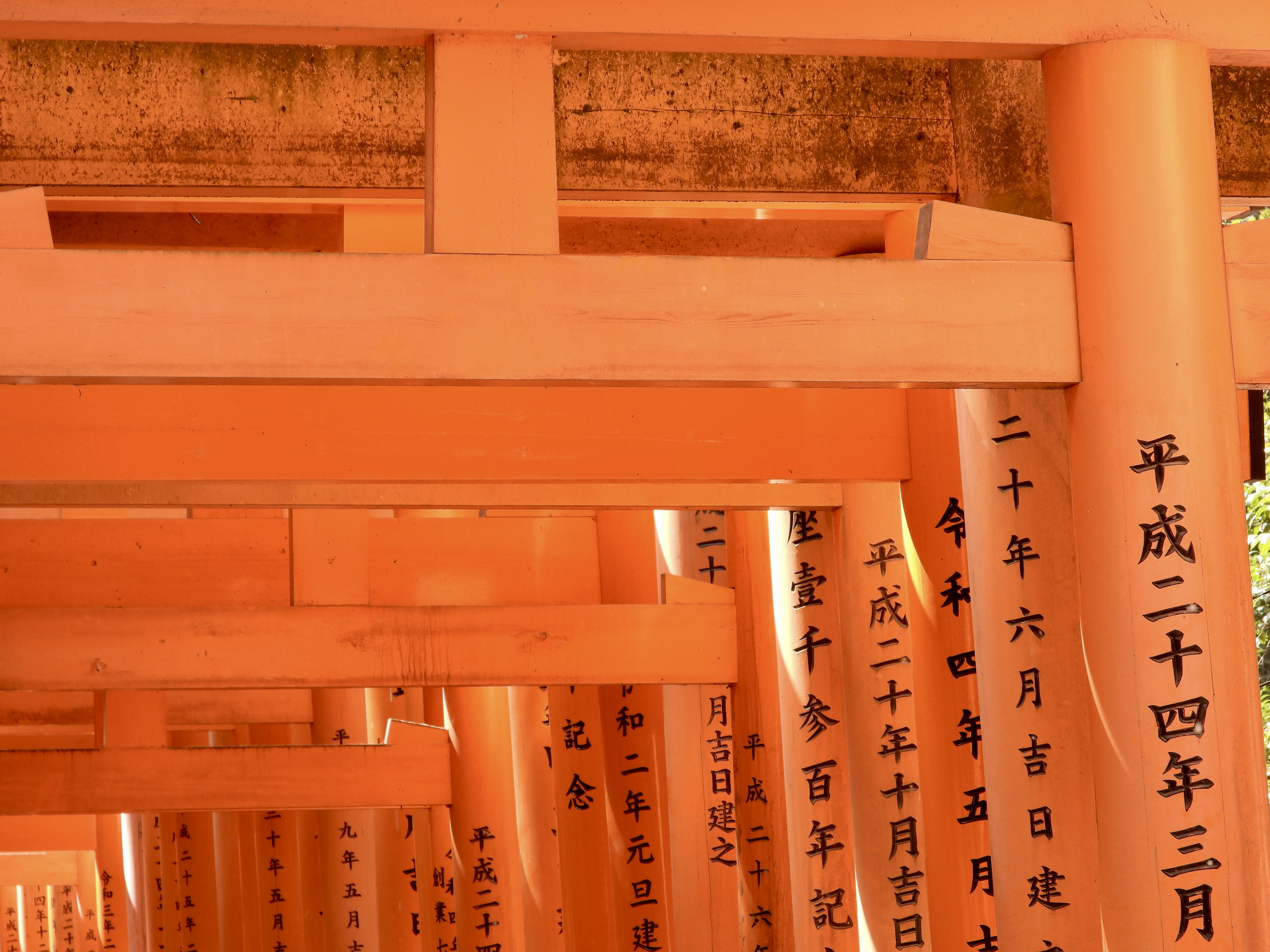
Mari, being an experienced and wise guide, took us on a route less-traveled (going up to the left instead of to the right), which occasionally afforded some room to take photos, not to mention breaths.
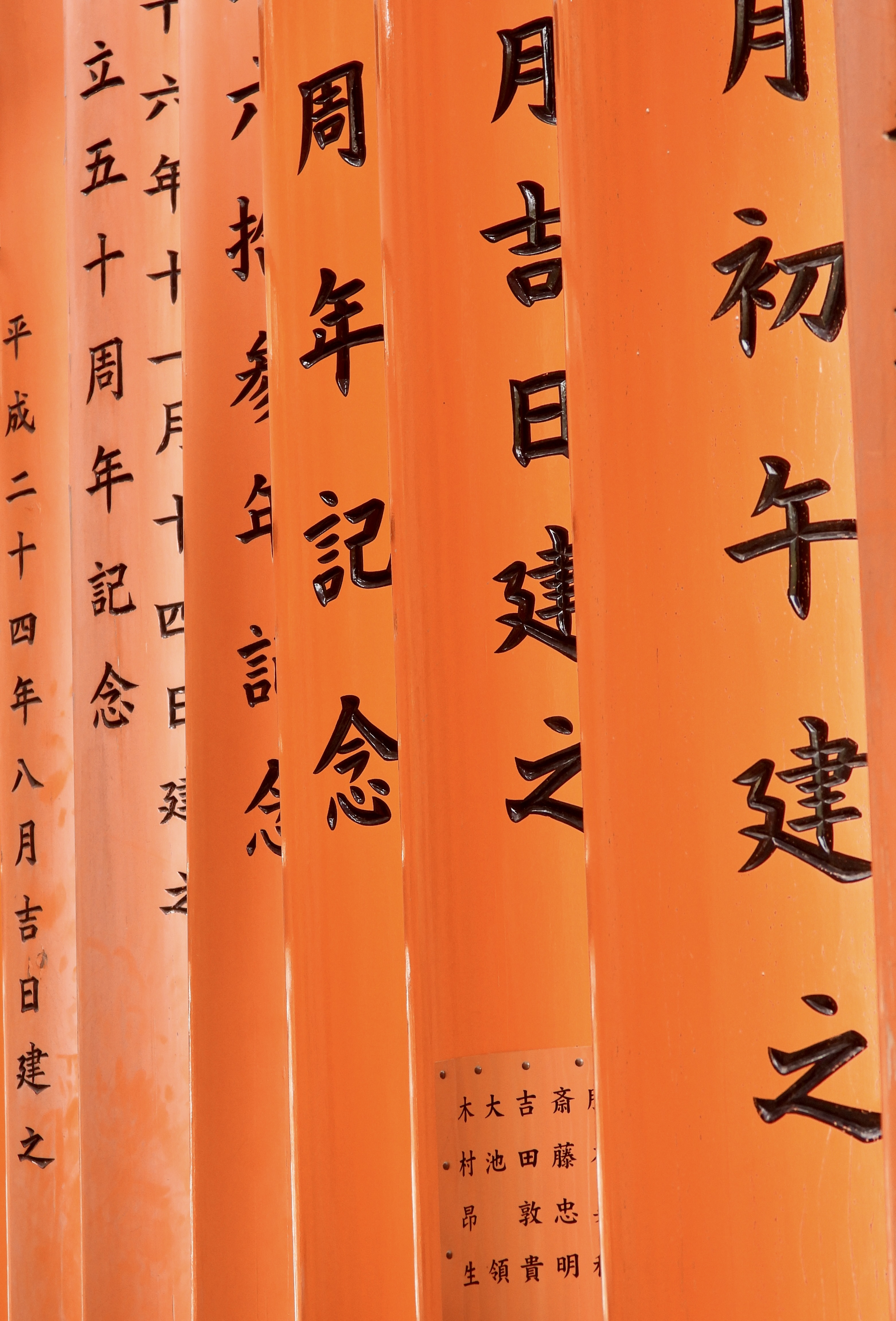
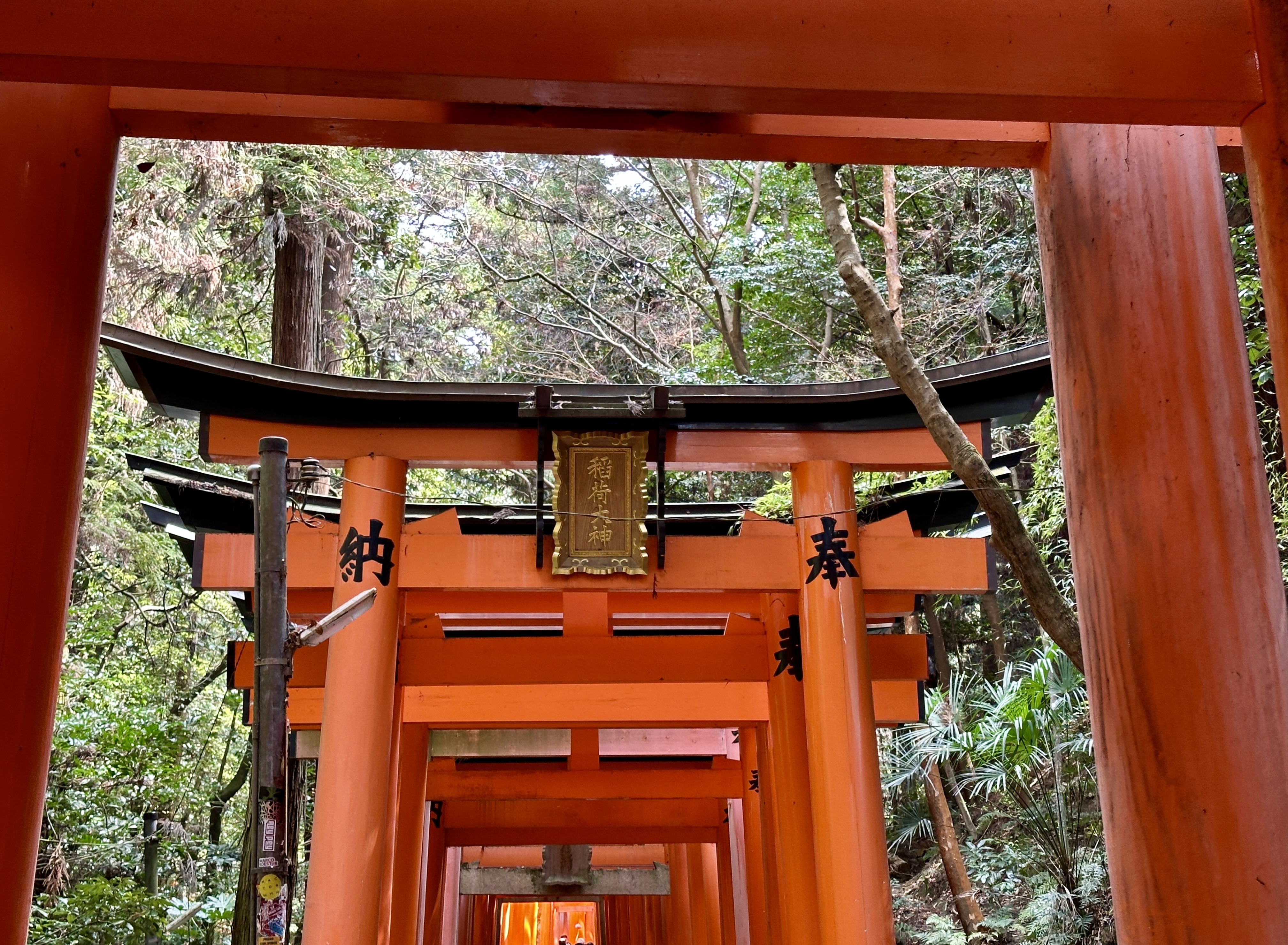
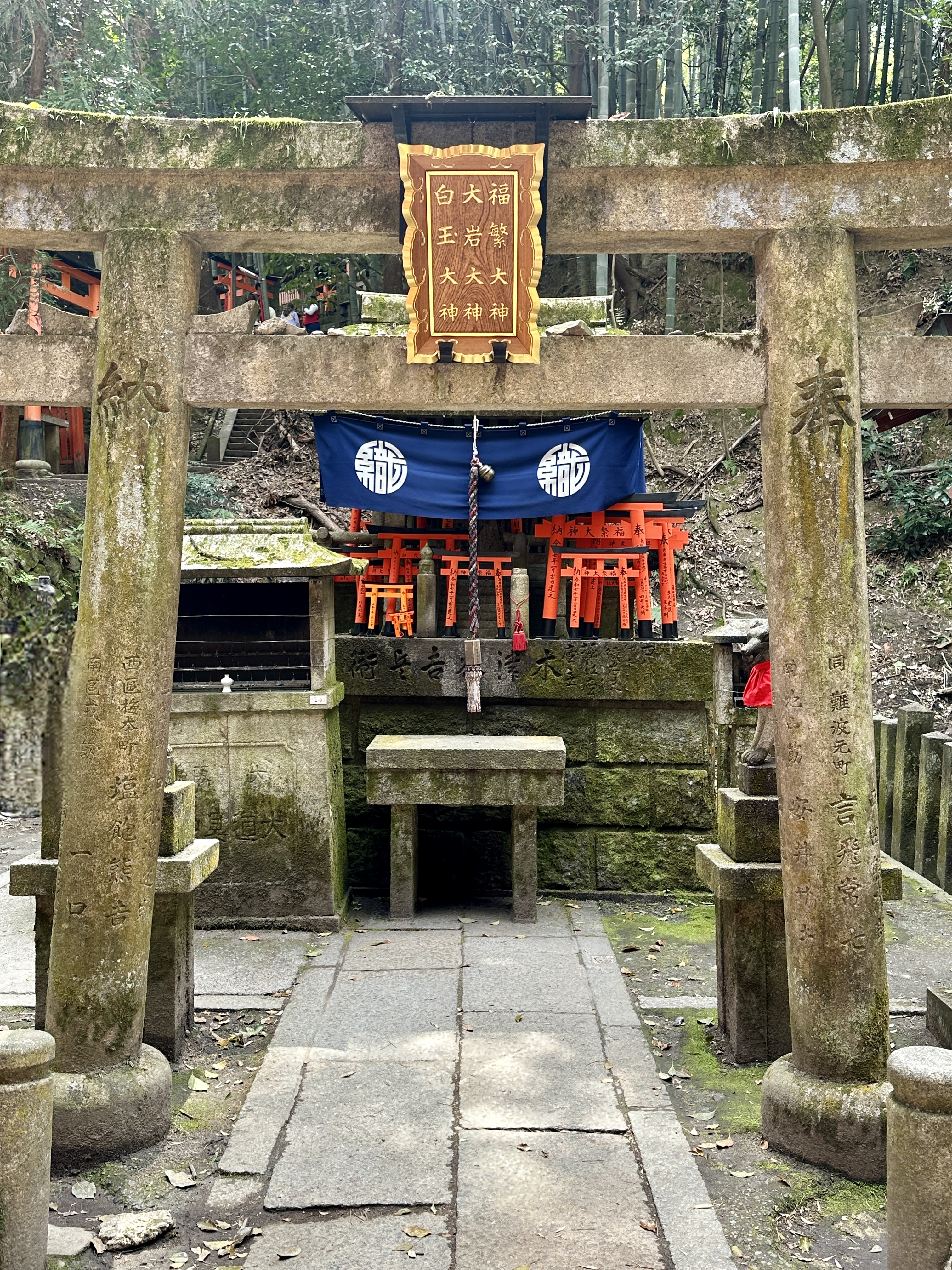
As with other major draws in Kyoto, don’t be put off by the crowds. The shrine is spectacular, so why not share its beauty with a few thousand of your fellow human beings?
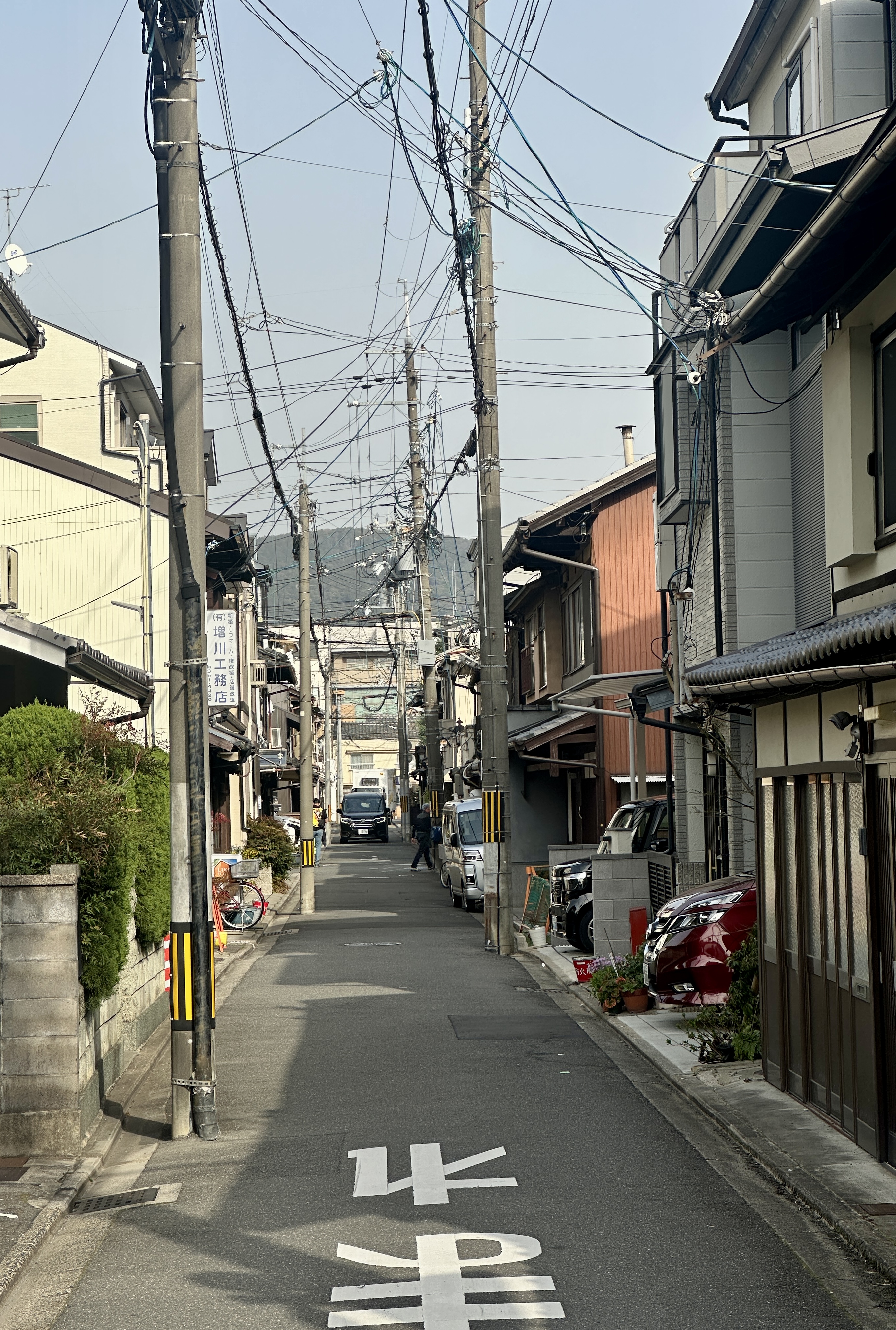
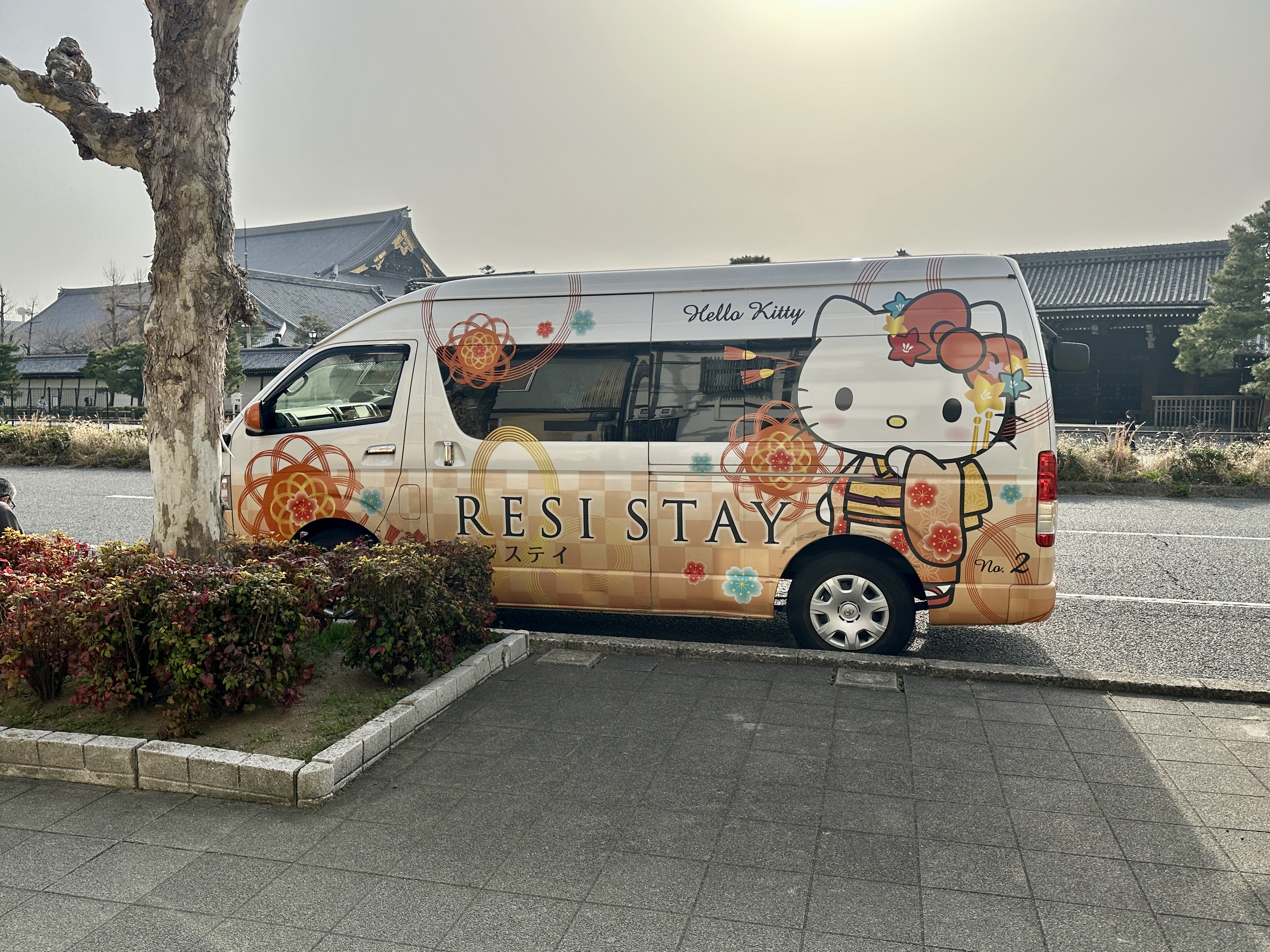
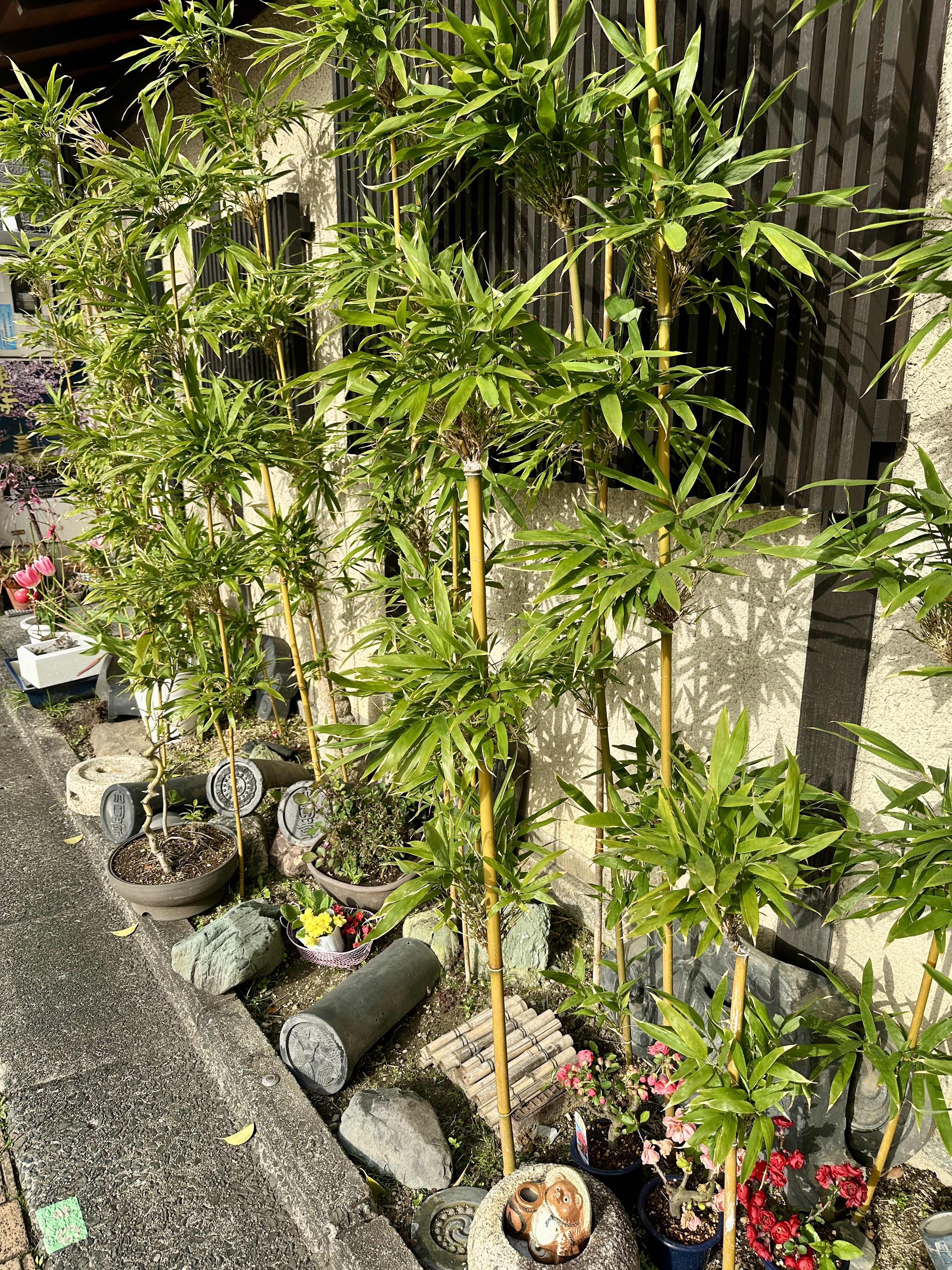
This afternoon, rather than heading to more of Kyoto’s big attractions, I decided to take a long walk down its narrow lanes and alleys.
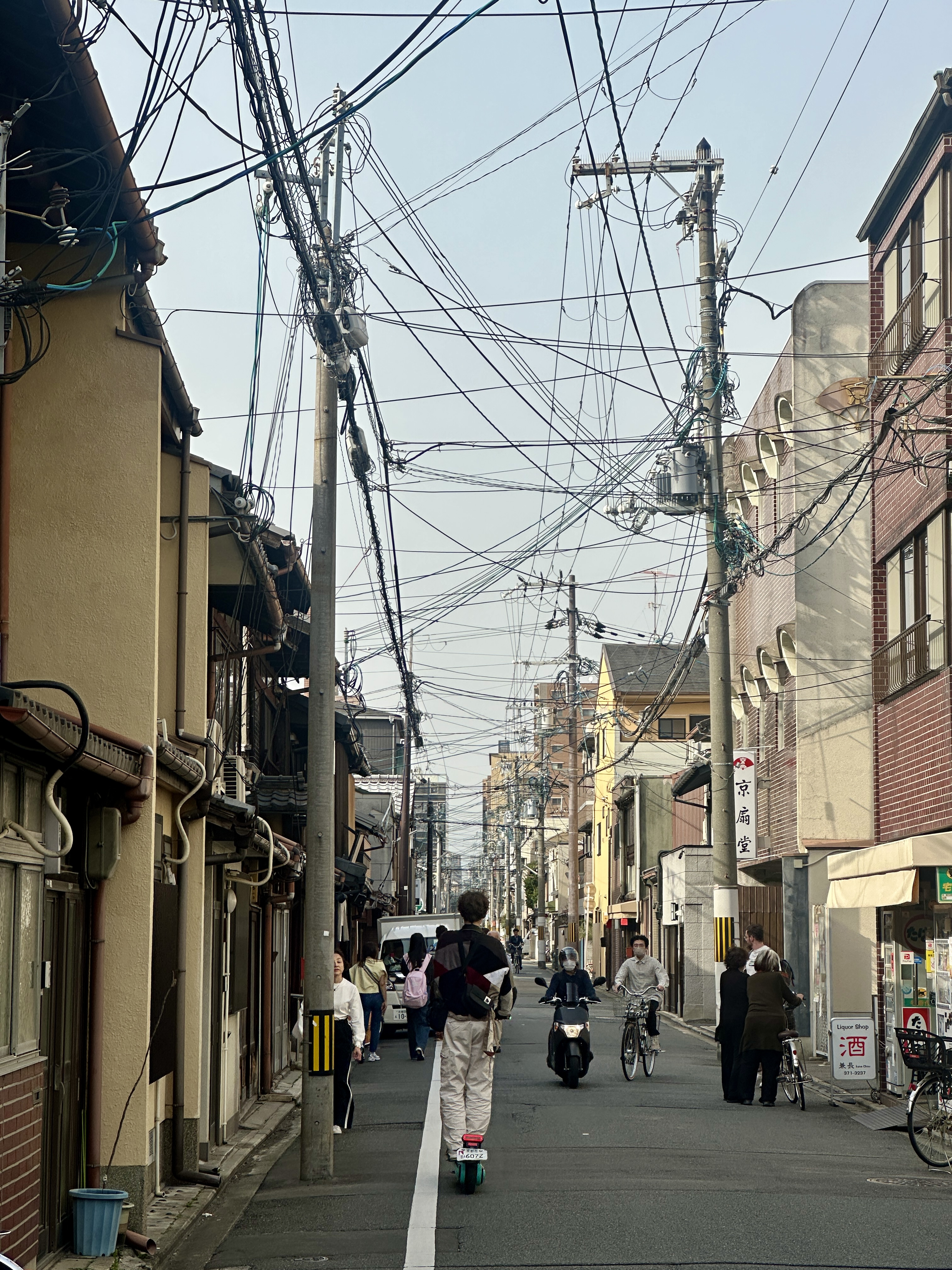
(Kyoto has plenty of broad avenues, but much of the city’s life takes place along these byways.) Shoes not only permitted, but highly recommended.
Tonight, we have our farewell dinner for those in our group who elected not to stay for the Hiroshima tour extension. (Around ten of us will spend the next two days in the “City of Peace.”)
I’m looking forward to seeing Hiroshima, but I’ll be sorry to leave this vibrant city, with its glorious temples and shrines and its hip feel. (I feel my hips (and back, and feet), but I definitely don’t have a hip feel; in fact, feeling one’s hips probably precludes having a hip feel.)
I wanted to close with another song, but there just aren’t that many tunes with Japan in the title. Shawn Mendes’s “Lost in Japan”? Nah. I wouldn’t mind being lost here, but there are no useful lyrics to quote. The Vapors “Turning Japanese”? Nope. I have developed a wonderful, warm feeling for the Japanese people and would love to be so patient, mindful, and attuned to beauty, but the lyrics have nothing to do with the title. Deep Purple’s “Woman from Tokyo”? Sorry – it’s a great song, but my woman’s from Silver Spring (not to be confused with Stevie NIcks’s beautiful “Silver Springs”). And anyway, despite REM’s advice, I’m going back to Rockville. OK, enough is enough (Donna Summer).

 PuffinlessTravel