When you’re a word nerd like me (just one of my manifold nerdly interests), you wonder whether there is any other country where two major cities are anagrams of each other, as is true with Tokyo and Kyoto. Turns out, they’re only anagrams in English: while the “kyo” character is the same in both city names, the “To” is different. Kyoto means “Capital Capital” (like capo di tutti capi) and Tokyo means “East Capitol.”
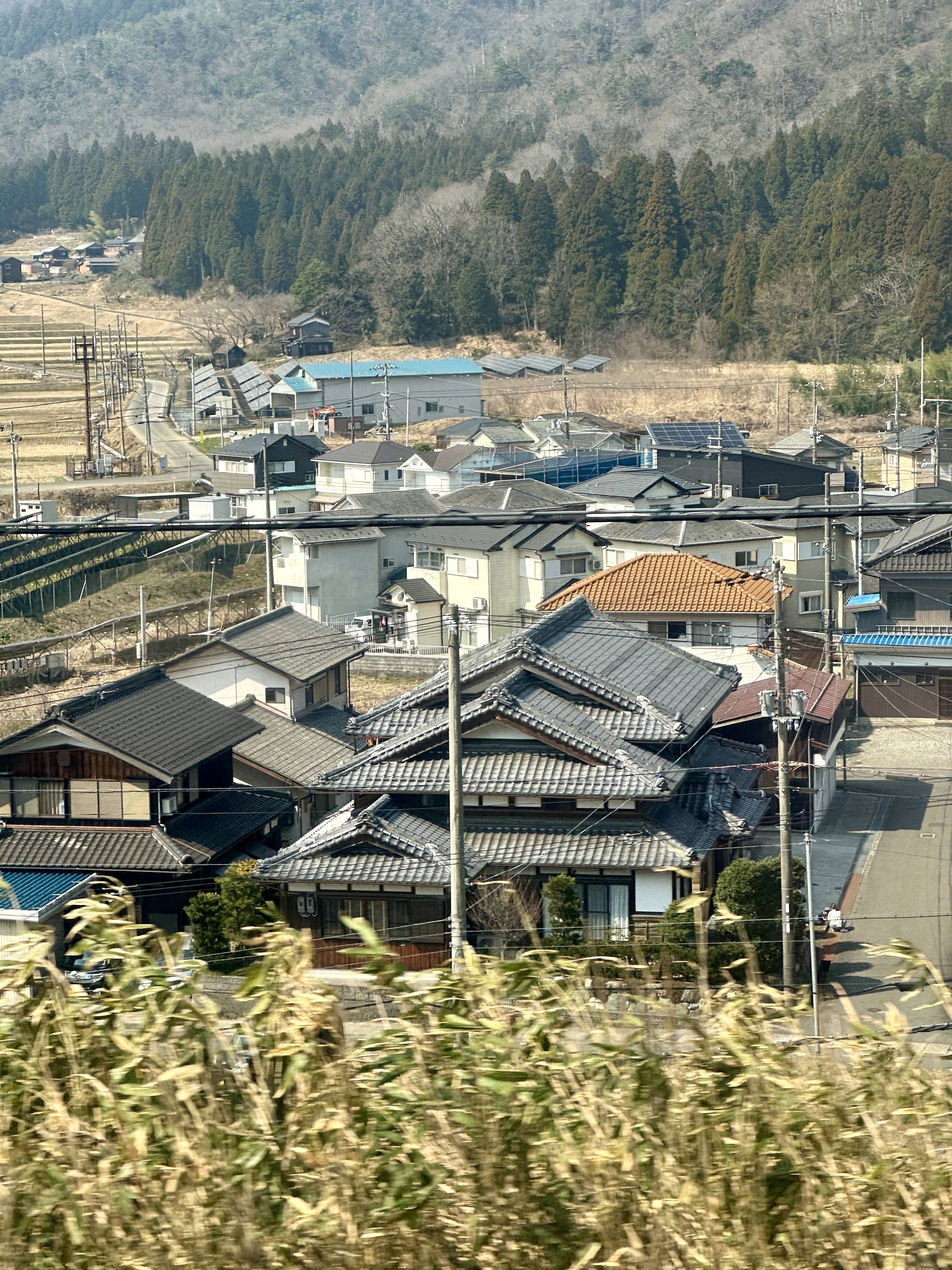
Kyoto was the capital of Japan for more than 1000 years, until the end of the Edo Period (1868), when the Shogunate ended and all power was vested in the Emperor, who lived in Edo, which was promptly renamed Tokyo. Got that? (If you’re a regular crossword solver, you’ve probably run across “Edo” one or two (hundred) times.)
End of part 1 of the history lesson. We left Kanazawa this morning on the Shinkansen, transferred at Tsuruga to an ordinary express train, and arrived at Kyoto Station a bit after 11 this morning.

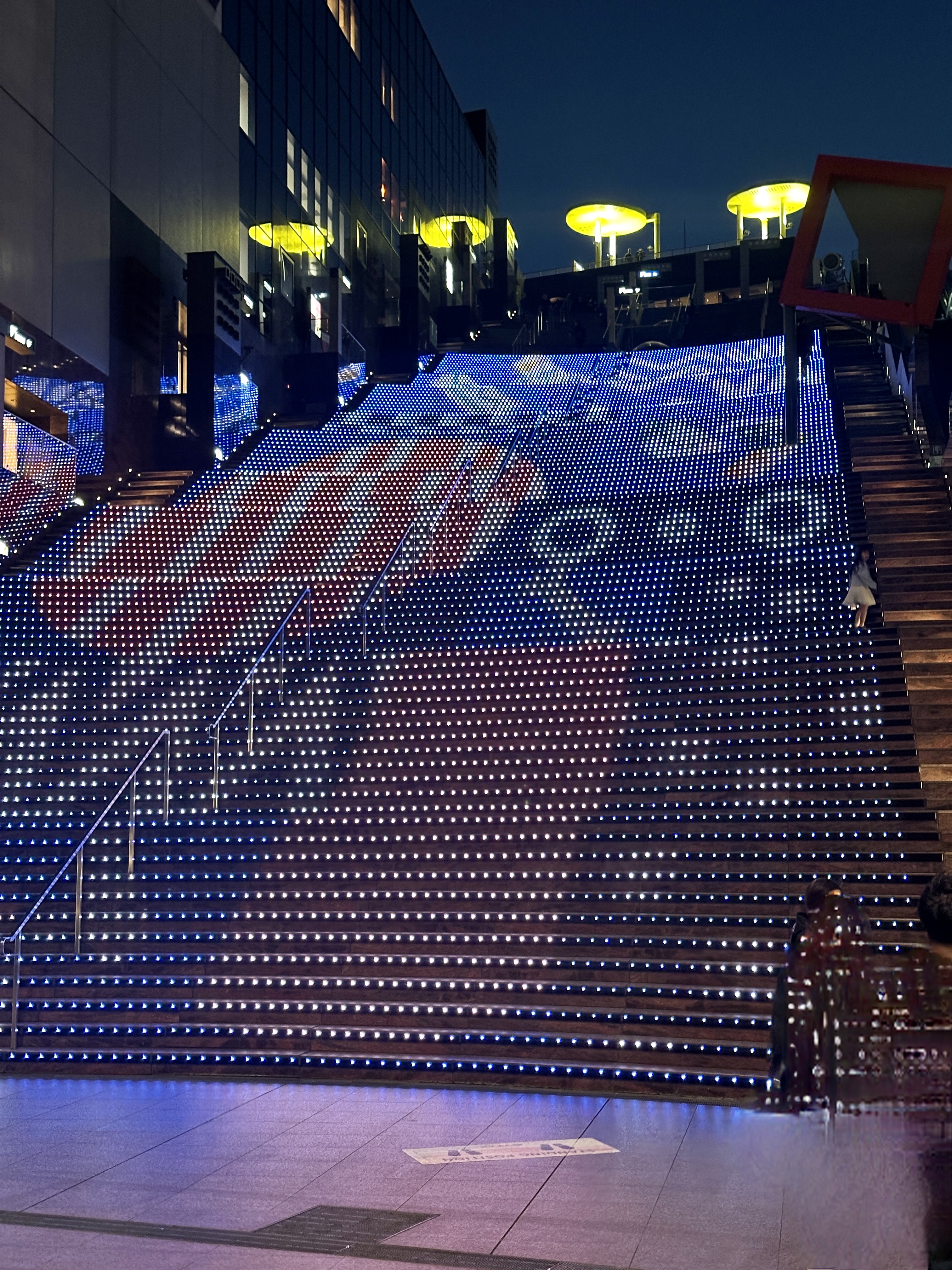
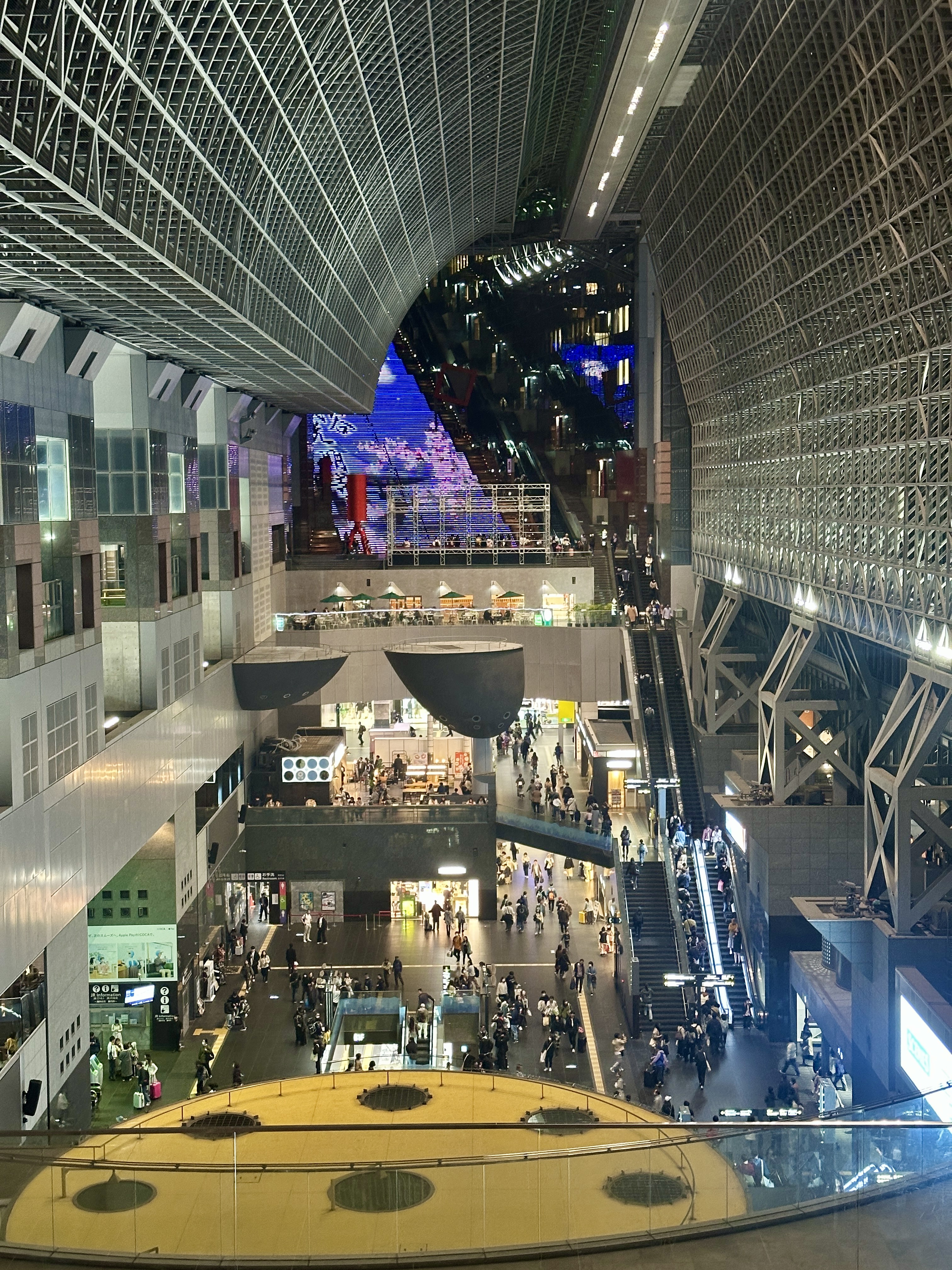
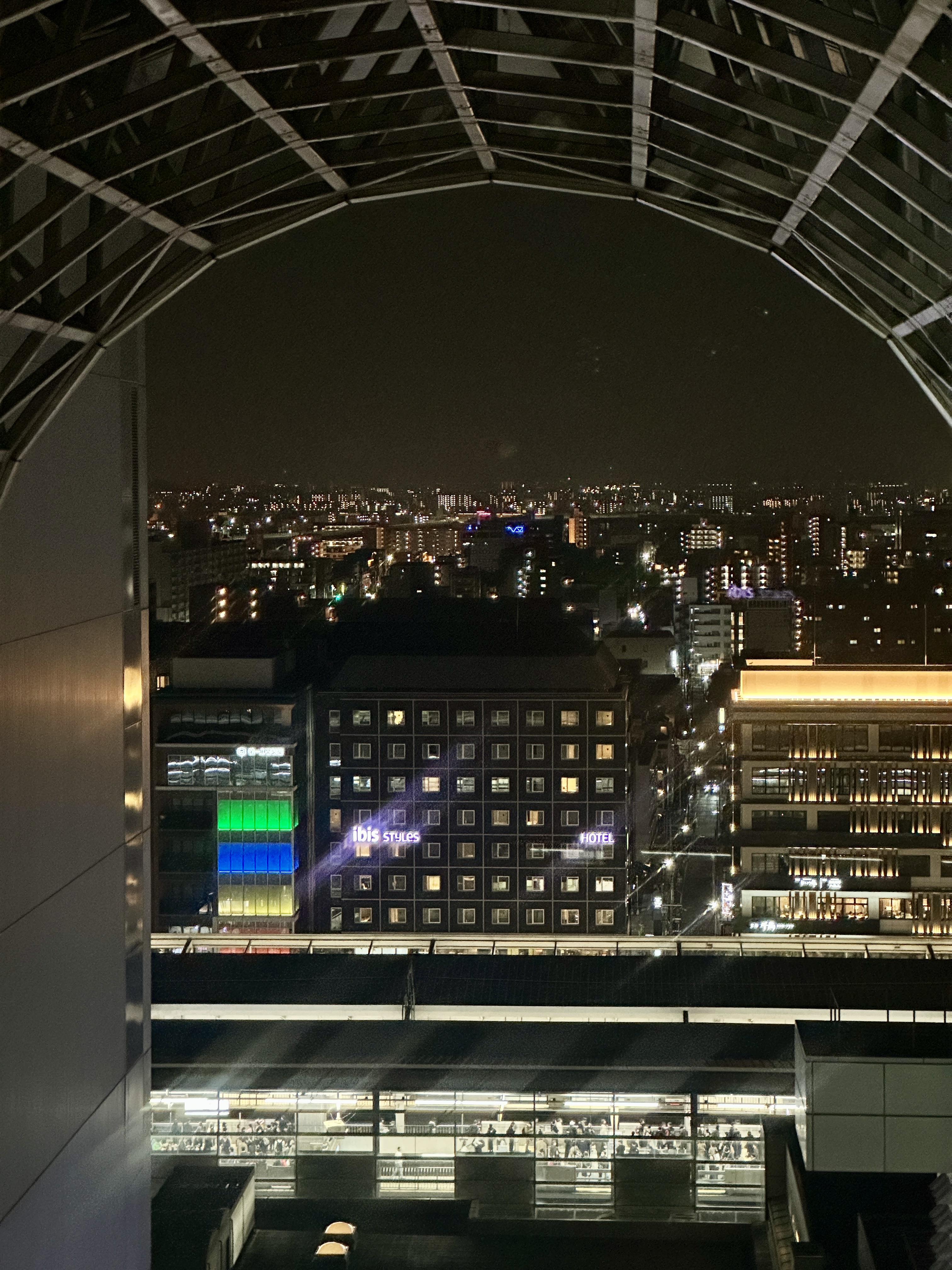
Kyoto Station is ultra-, hyper-, mega-modern. I wouldn’t be surprised to learn it serves some of the closer planets and perhaps some of the extra dimensions posited by string theory. It’s also a mob scene, but being in Japan, it’s an orderly and discreet mob scene. (At the end of this post, I’ll add a coda about the Station at night. It is spectacular.)
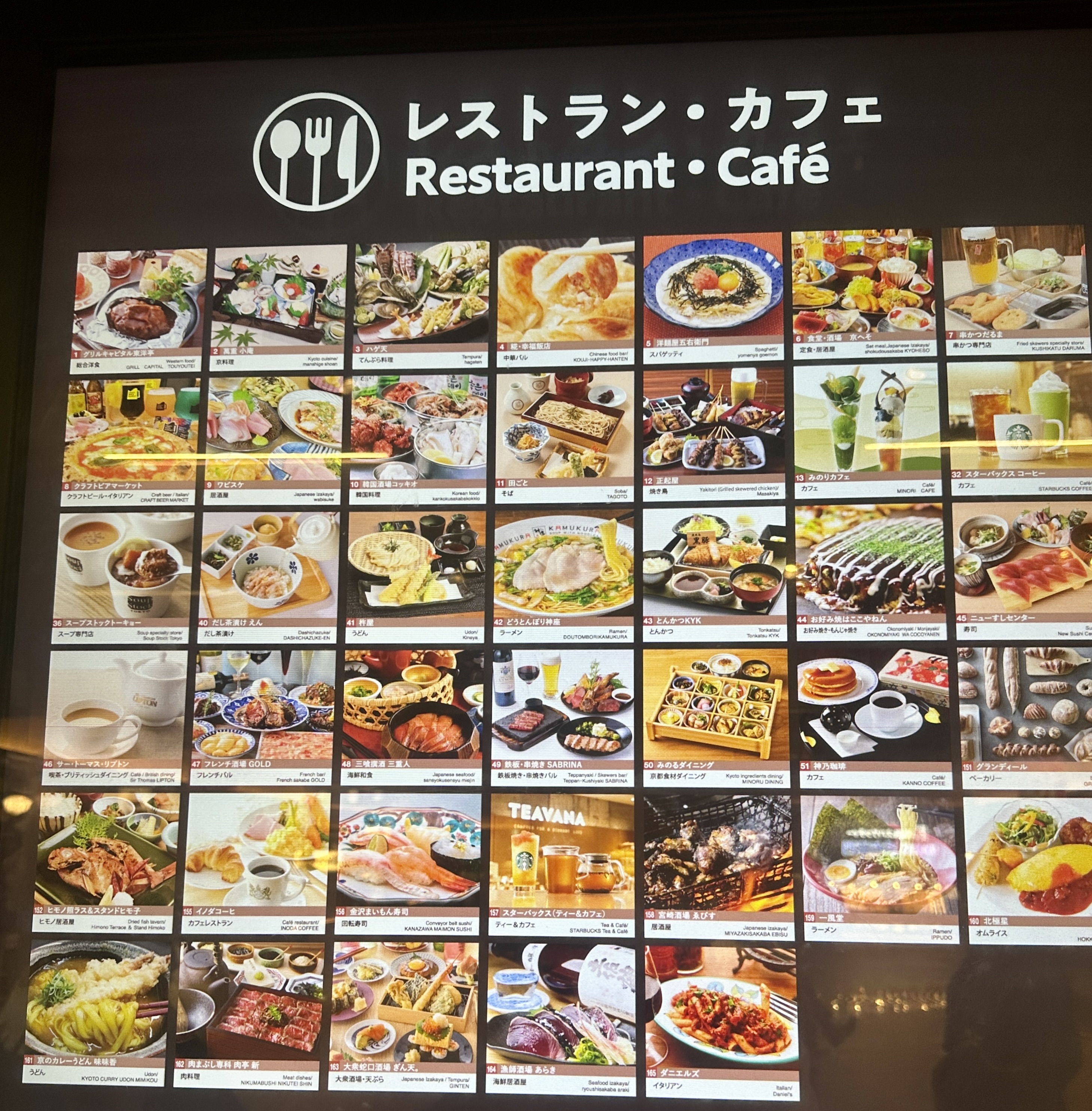
Needing to refuel before beginning our tour, we headed underground to a subterranean “food street,” home to restaurants serving every variety of Japanese food. Being a bit Japanese fooded-out at this point, I found a place serving pizza and craft beer, which was just the restorative I needed.
Our first stop this afternoon was Nijo Castle, built in 1603 at Tokugawa’s direction. (To recap, Tokugawa was the first Shogun and played a key role in unifying Japan.) The Castle remained home to the Shoguns until 1868, when the last Shogun, Tokugawa Yoshinobu, read the tea leaves (figuratively) and, after summoning all his senior vassals, announced he was turning power over to the Emperor. All things considered, it’s a darned important building in Japanese history, and it’s been registered as a UNESCO World Heritage site. End of history lesson, part 2.
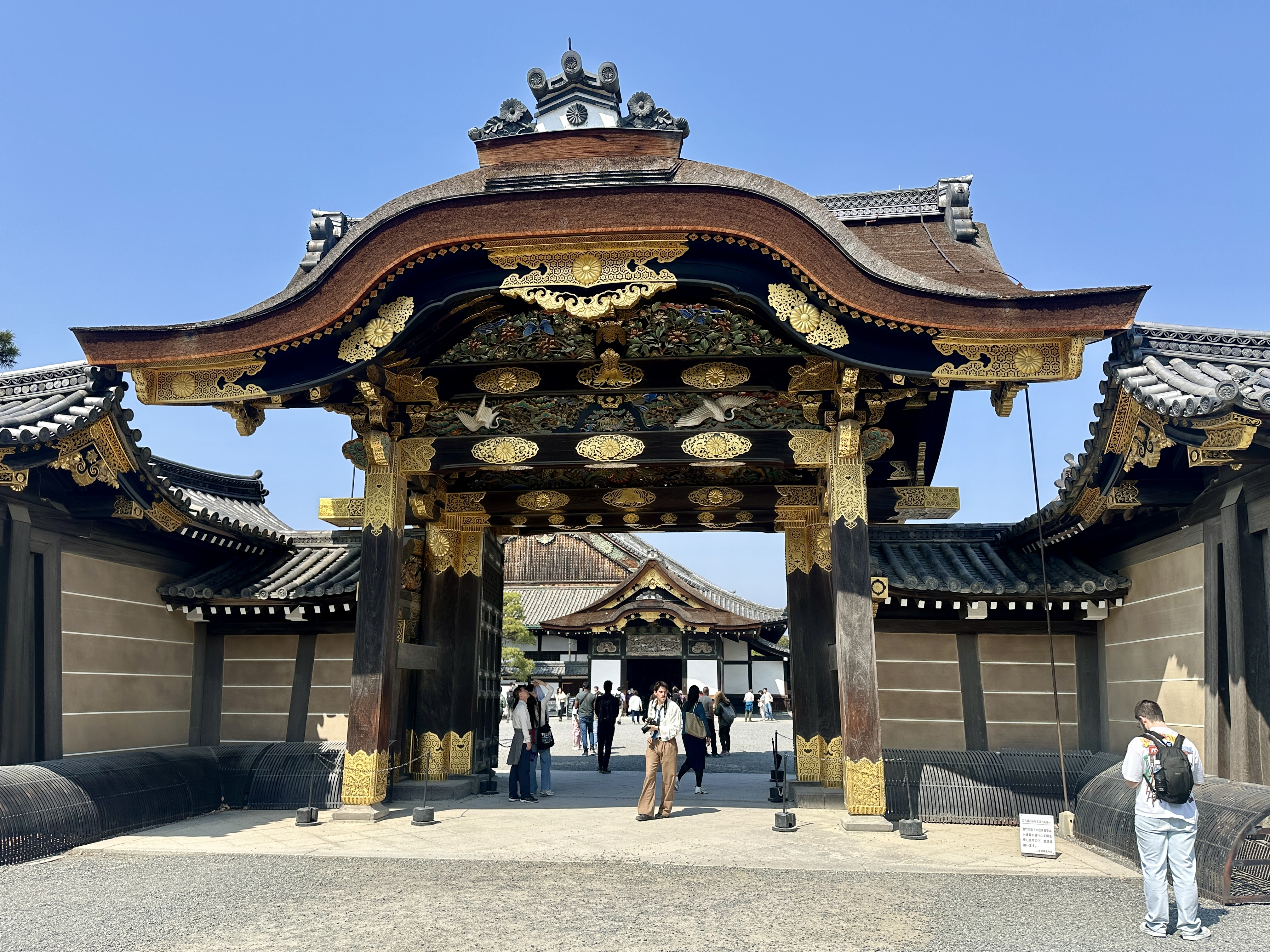
The castle is impressive outside and in, though you’ll have to take my word(s) for it about the interior, since photography is prohibited.
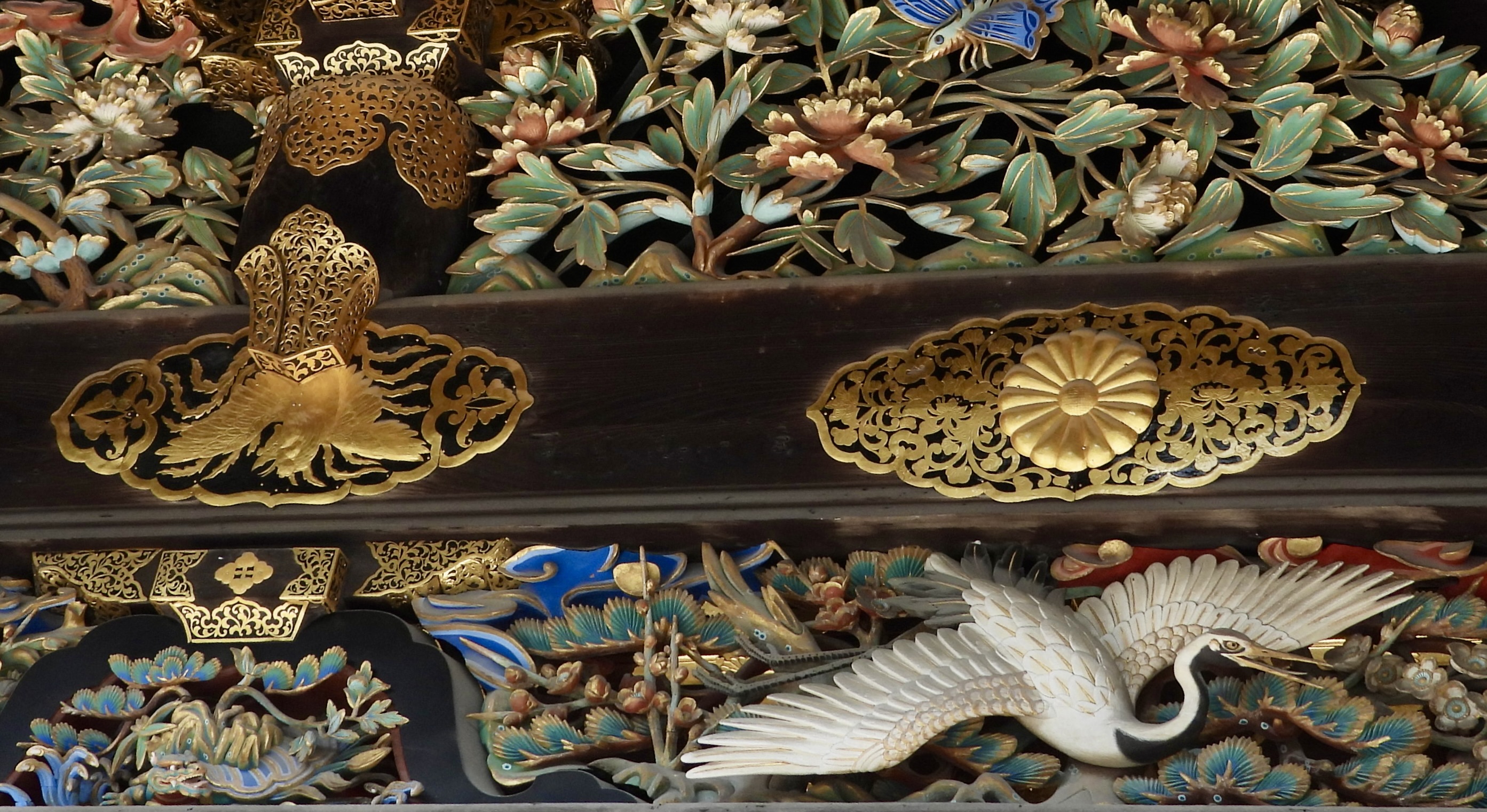
You enter the castle grounds through an ornate gate, then (after removing your shoes, of course) head inside through another, slightly less ornate gate.
The interior comprises rooms that were used by visitors cooling their heels before meeting the shogun, chambers for internal discussions, areas for sessions with the Shogun, administrative offices, and a space where messengers from the Emperor were greeted.

Each room is surrounded by gorgeous murals, mostly of traditional subjects like cherry blossoms and birds. A notable exception: the “cooling their heels” rooms, where the murals depict tigers and leopards, apparently in an effort to put visitors on edge.

Tigers and leopards, as you may know, are not native to Japan. The paintings were done based on pelts received from China, and thus are more tiger- and leopard-ish than true-to-life. Indeed, at the time, it was believed that leopards were female tigers – I guess the pelts didn’t include any gender-specific anatomy and the reasoning went something like “well, leopards are kind of like tigers but smaller, so they must be the females of the species (not that “species” was a concept anywhere in the world at that point) and tigers must be the males.” I’m not sure how they rationalized away the whole spots vs stripes thing.
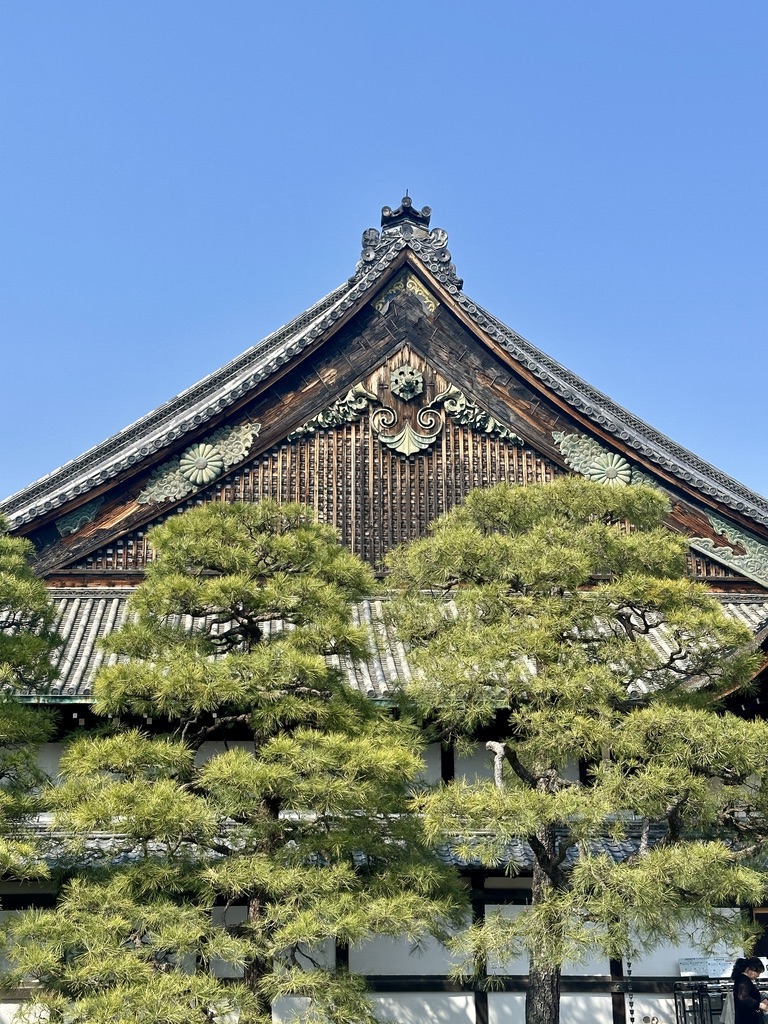
Enough about the murals. The ceilings are gorgeous as well, composed of rectangular panels in various geometric designs and pleasing hues.

There’s a nice garden out back, complete with waterfall, pond, pine trees, and the other prerequisites for Japanese garden-hood.

After leaving the Castle, we headed to the Kyoto Museum of Crafts and Design. I developed a warm feeling for the Museum immediately upon seeing its mascot, an adorable dog with an “I’m really pleased with myself” expression.
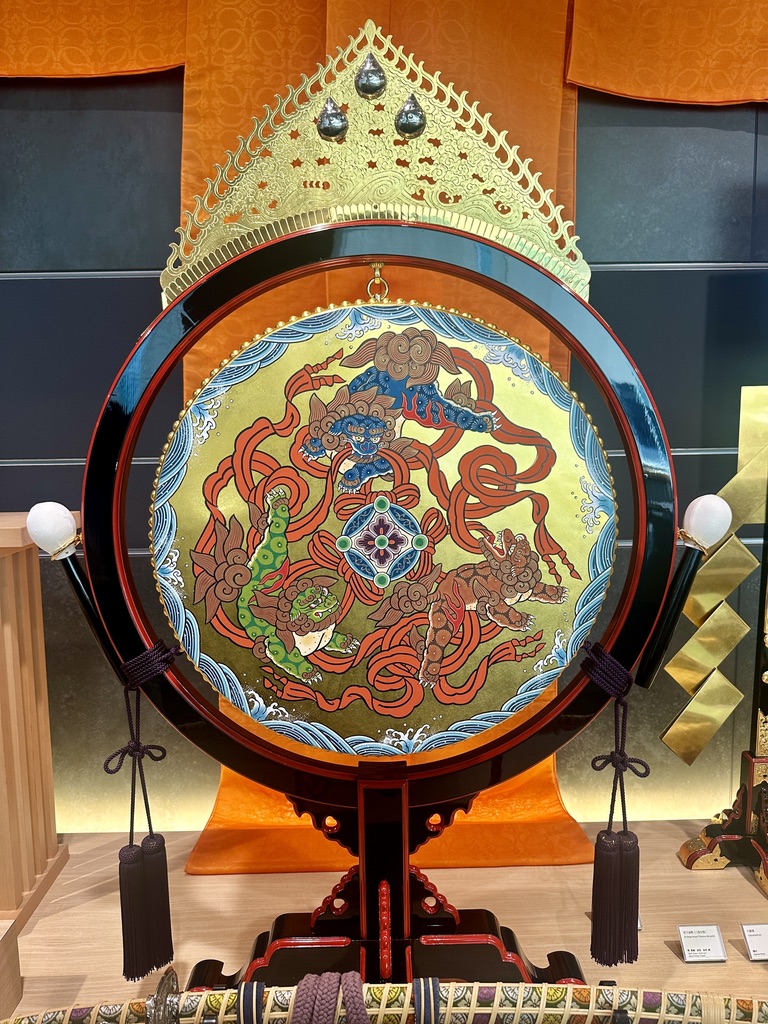
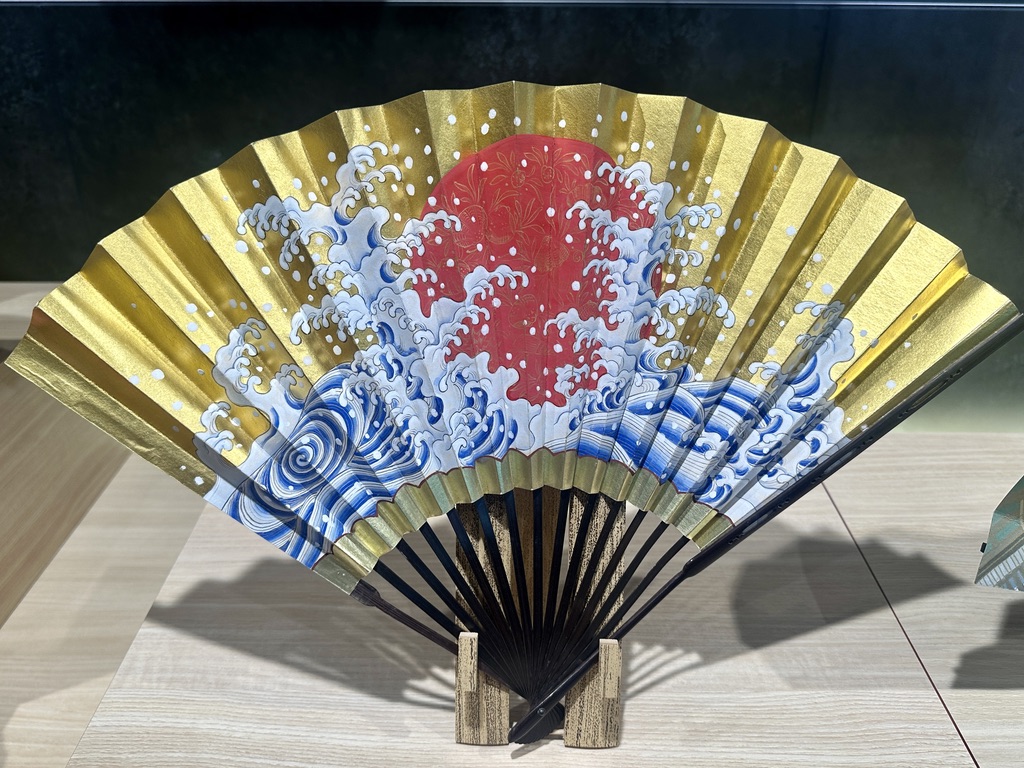
The lower level of the Museum showcases modern takes on 74 traditional Japanese crafts (woodworking, ceramics, clothing, metalwork, etc.) Part of the Museum’s mission is to promote and preserve customary techniques. The results are often breath-taking.
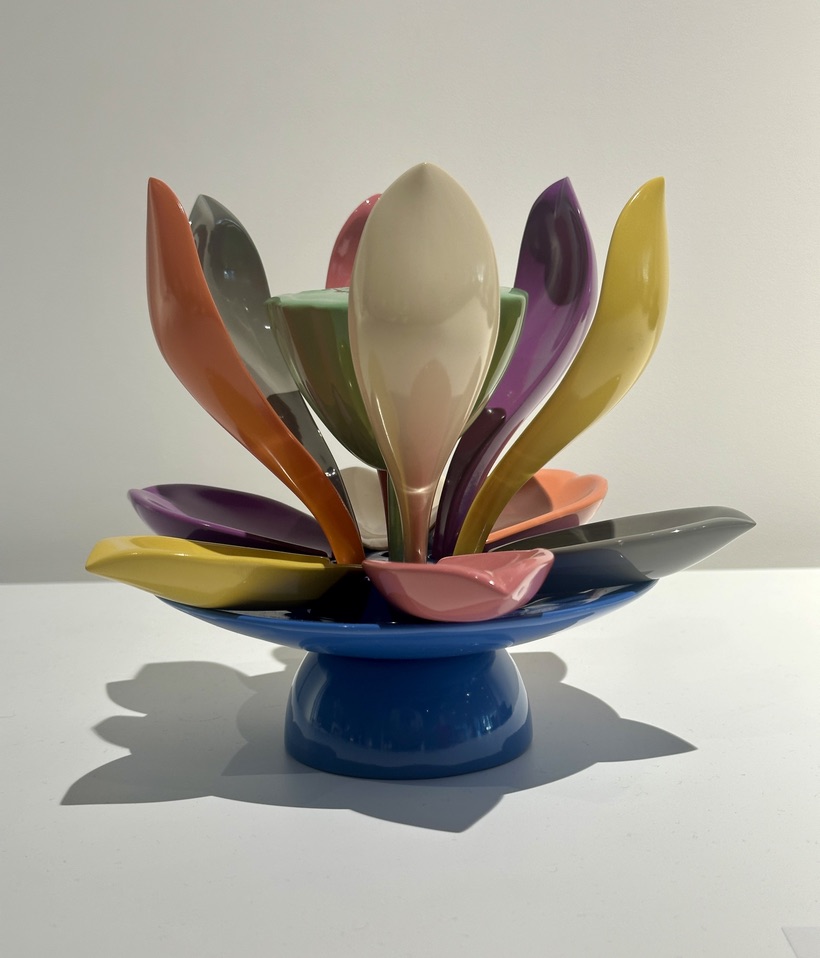
We’re staying for the next three nights in a hotel called The Thousand. The hotel is like something out of the Jetsons. All in-room controls are on a tablet, which isn’t particularly cutting edge. But walk into the bathroom: the toilet is Mensa-eligible, raising the lid automatically, lighting up, and releasing a freshening mist.
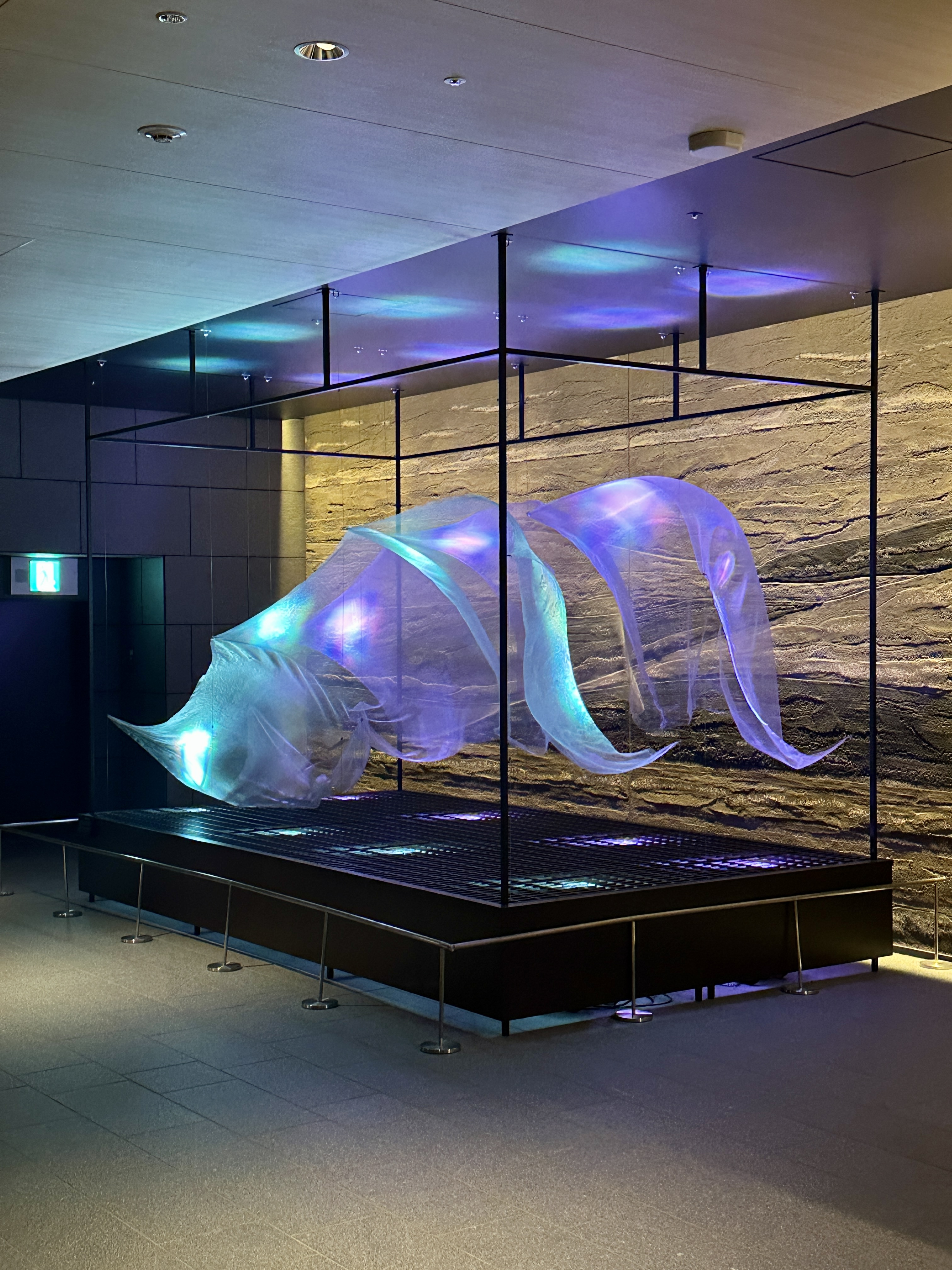
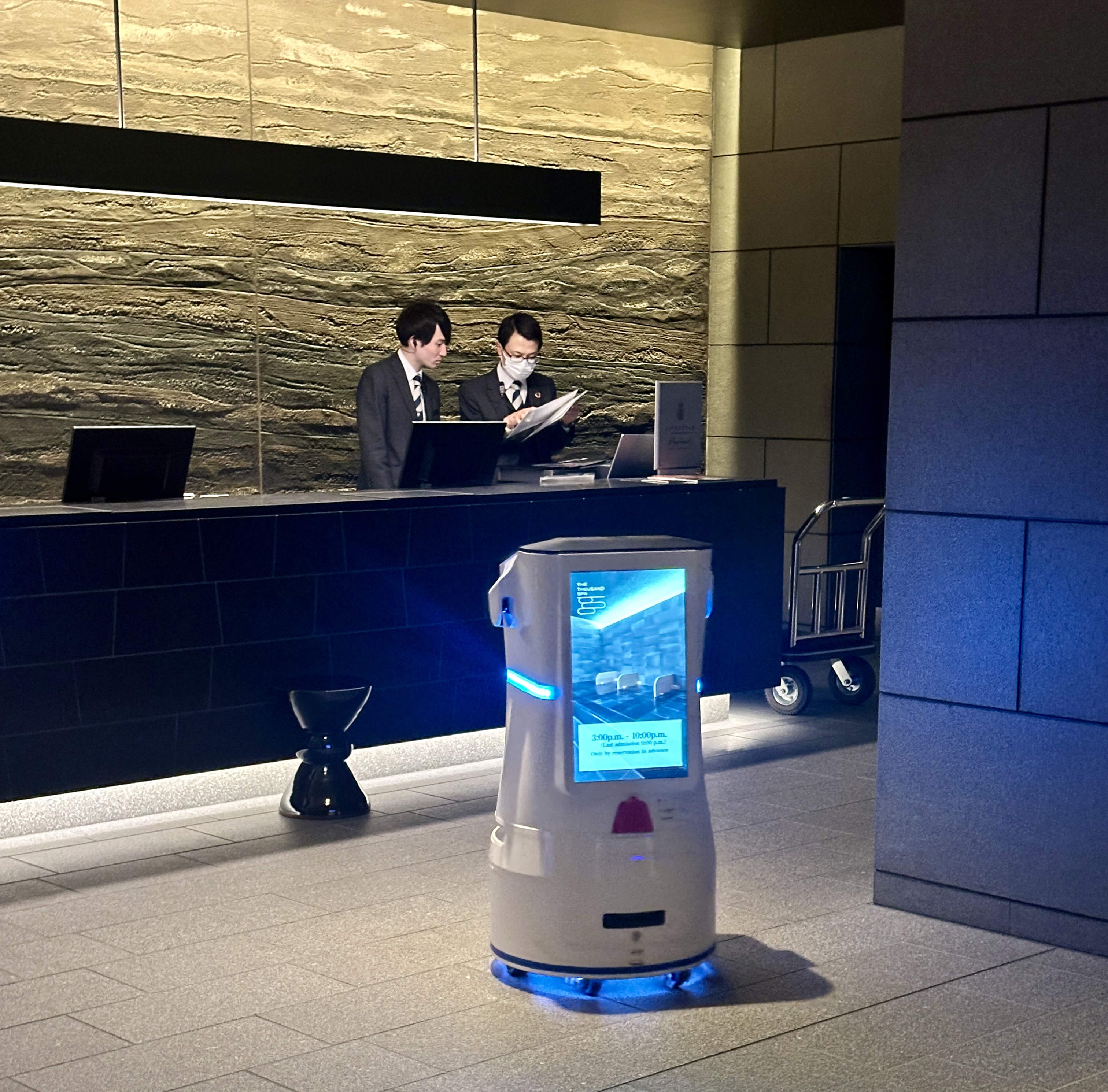
And then there’s the lobby, which could double as a museum of modern art. There’s an ethereal floating display next to the registration desk, and the stairs are used as a projection screen for all kinds of patterns and colors. Oh, by the way, there’s also a robot that answers service requests.
Coda: Kyoto Station at Night
I’ll let the pictures speak for themselves:



********
Tomorrow we visit 0.1 percent of Kyoto’s temples and shrines (two out of two thousand, to be exact). Matane.

 PuffinlessTravel