The route from Takayama to Kanazawa winds through cedar-clad, snow-blanketed mountains – and when I say “through,” that’s exactly what I mean. We traversed a succession of tunnels, some several kilometers long, separated by a few hundred meters of above-ground road. Those brief open-air passages were stunning, particularly out the left side of the bus. Alas, I was seated on the right. If you ever travel with me, keep in mind that whichever side I sit on will be (1) baking in sunshine, and (2) across the aisle from the most striking mountains/lakes/buildings.
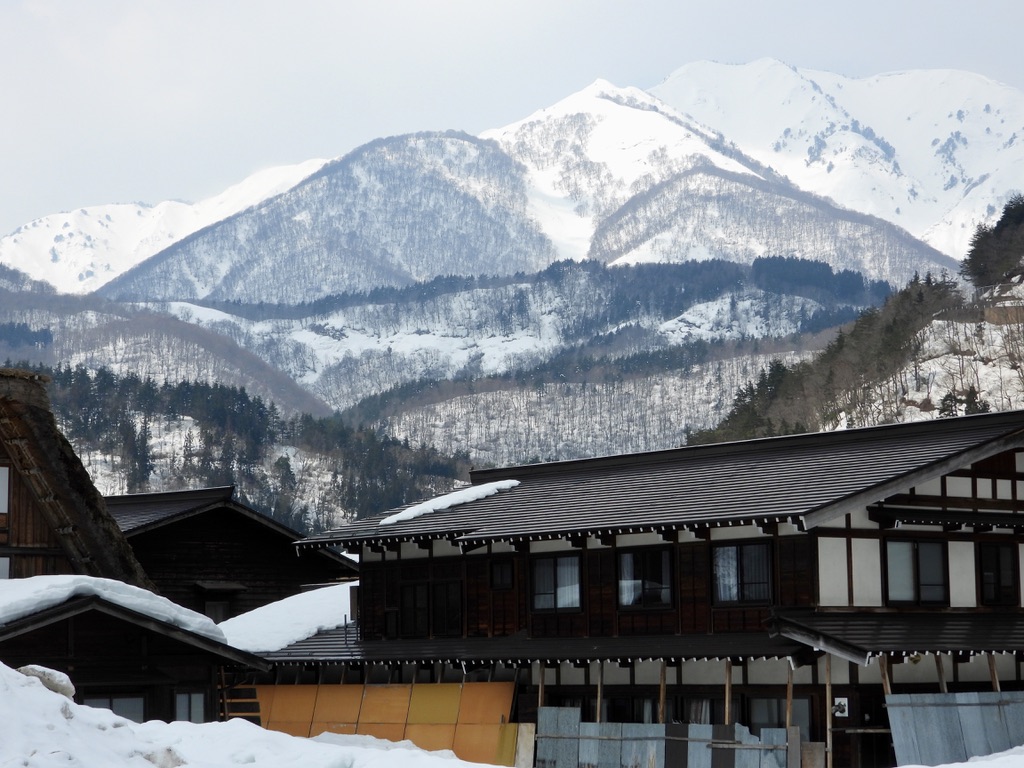

Botanically speaking, today was a day of pampas grass and kozo (paper mulberry). The pampas grass featured in our first two stops, Shirakawa-go and Gokayama. It’s used to make the thatched-roof houses (Gassho) that used to be typical of the area but have all but disappeared. (Gassho means the clasped hands used in Buddhist prayers, and the steep-roofed houses indeed resemble their namesake.)
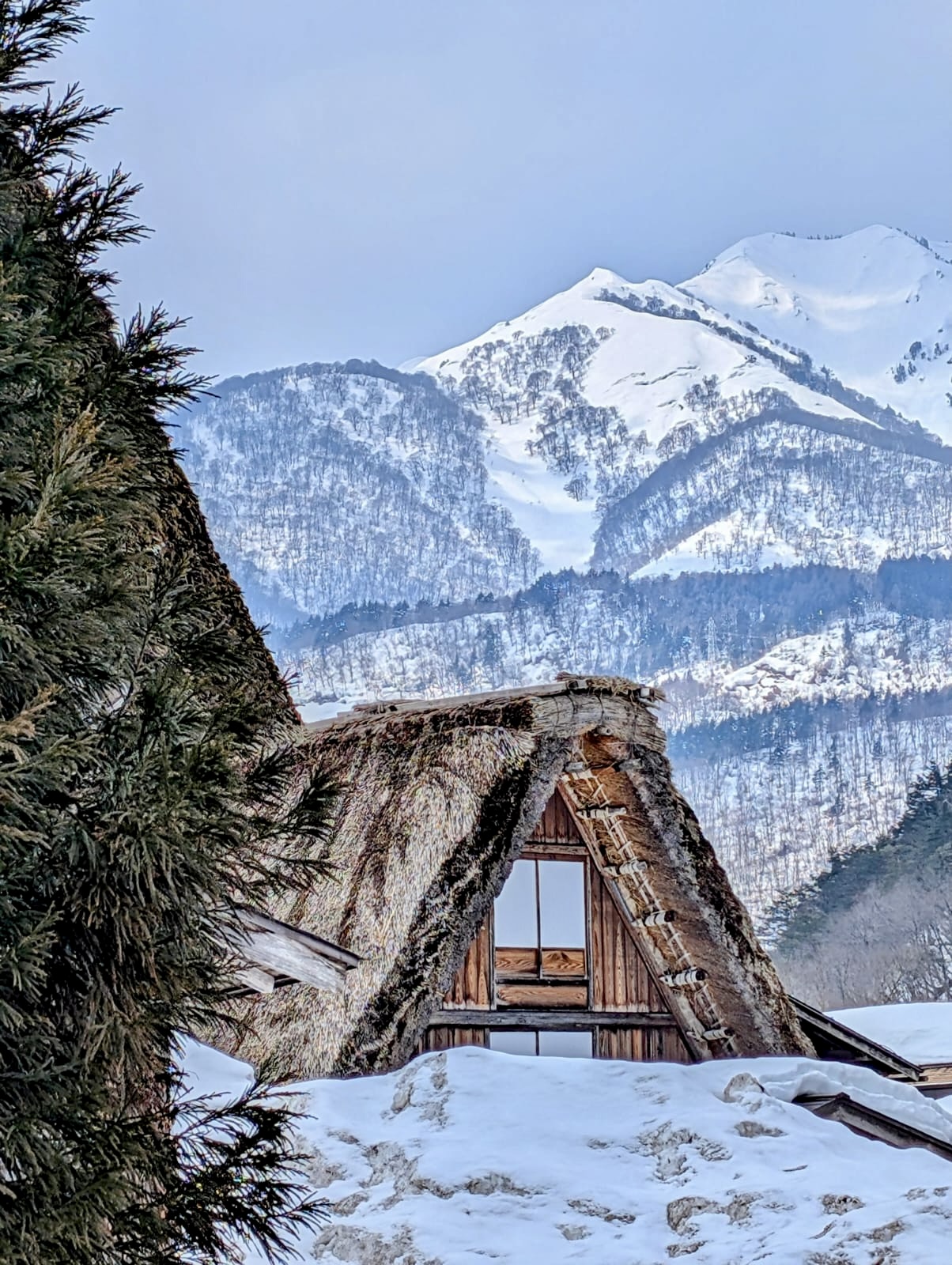
Shirakawa-go is a village of a thousand or so residents and probably the same number of daily tourists. There were fourteen tour buses in the parking lot, but don’t be put off: the town is spectacular and there’s plenty of room to walk, except when crossing the narrow suspension bridge between the parking lot and the town surrounded by a typically aggressive group of tourists from a certain large Asian country.
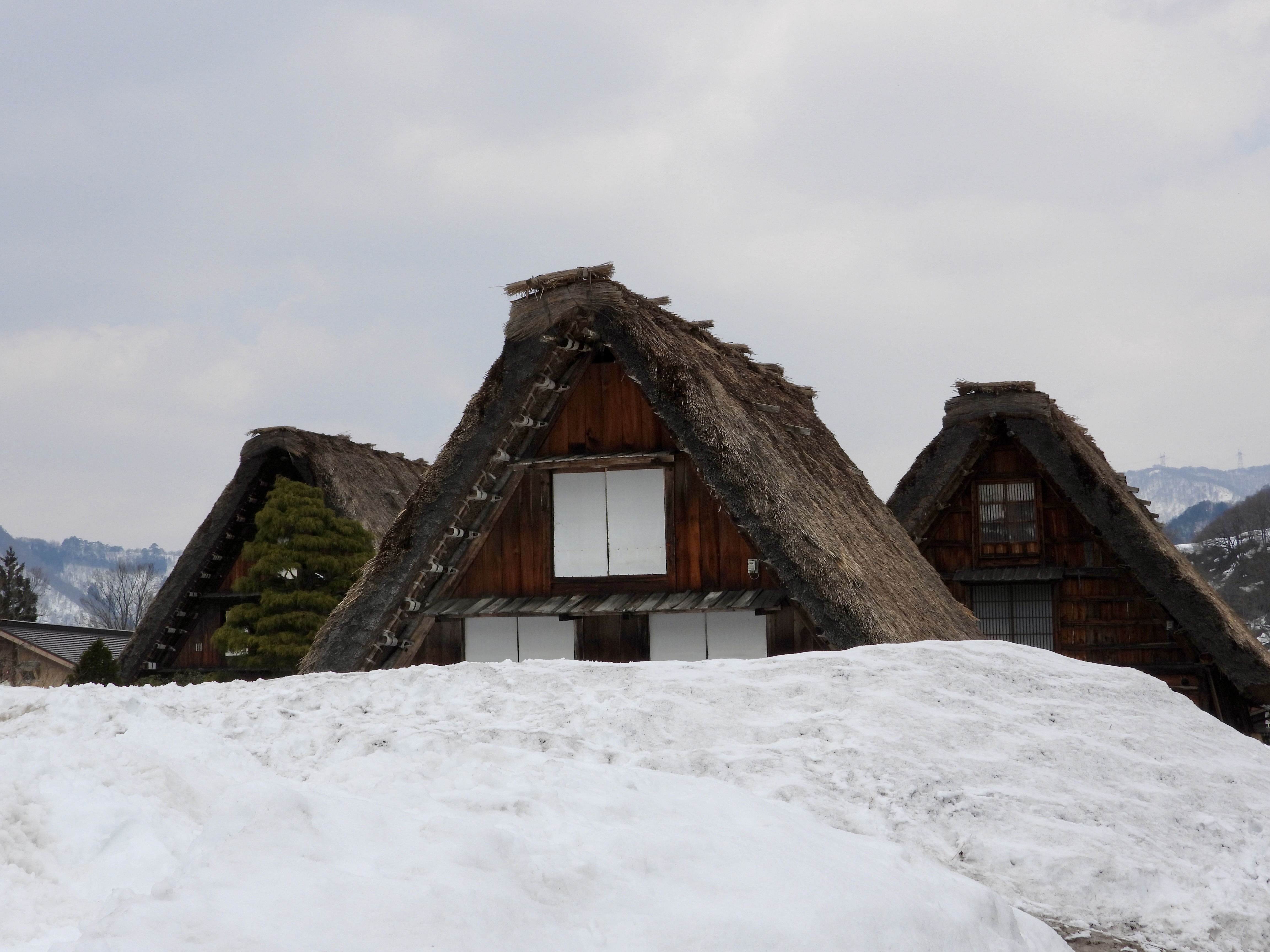
Shirakawa-go retains several dozen gassho houses, earning its designation as a UNESCO World Heritage site. The town nestles against the surrounding mountains, offering achingly beautiful views in all directions.
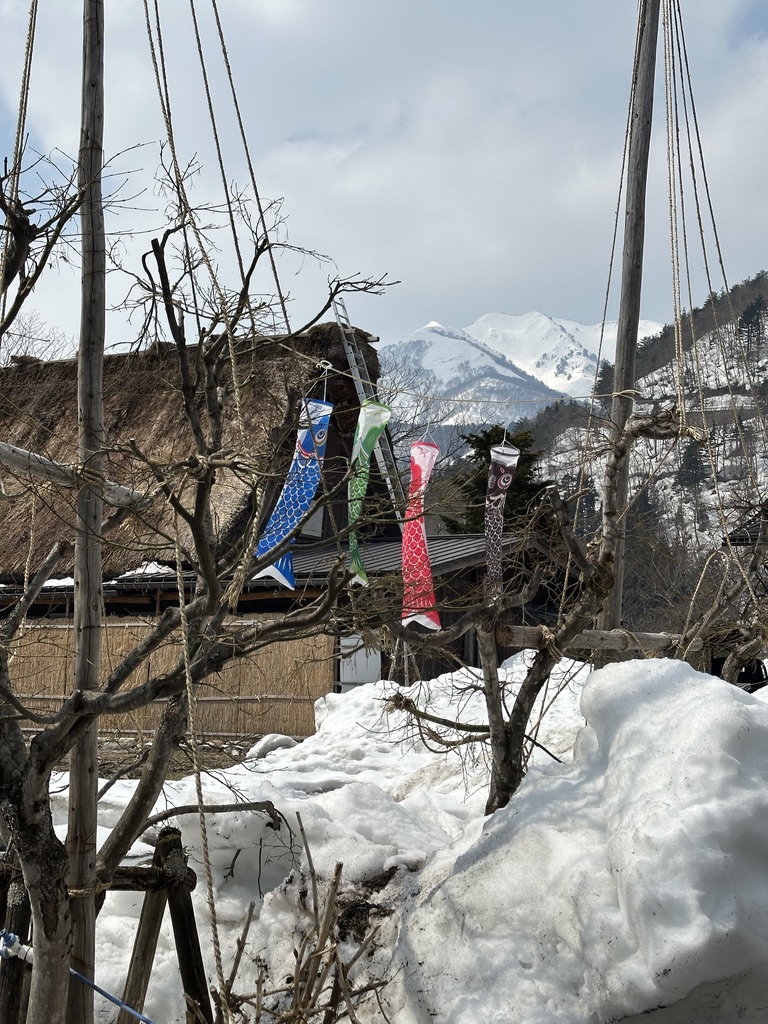

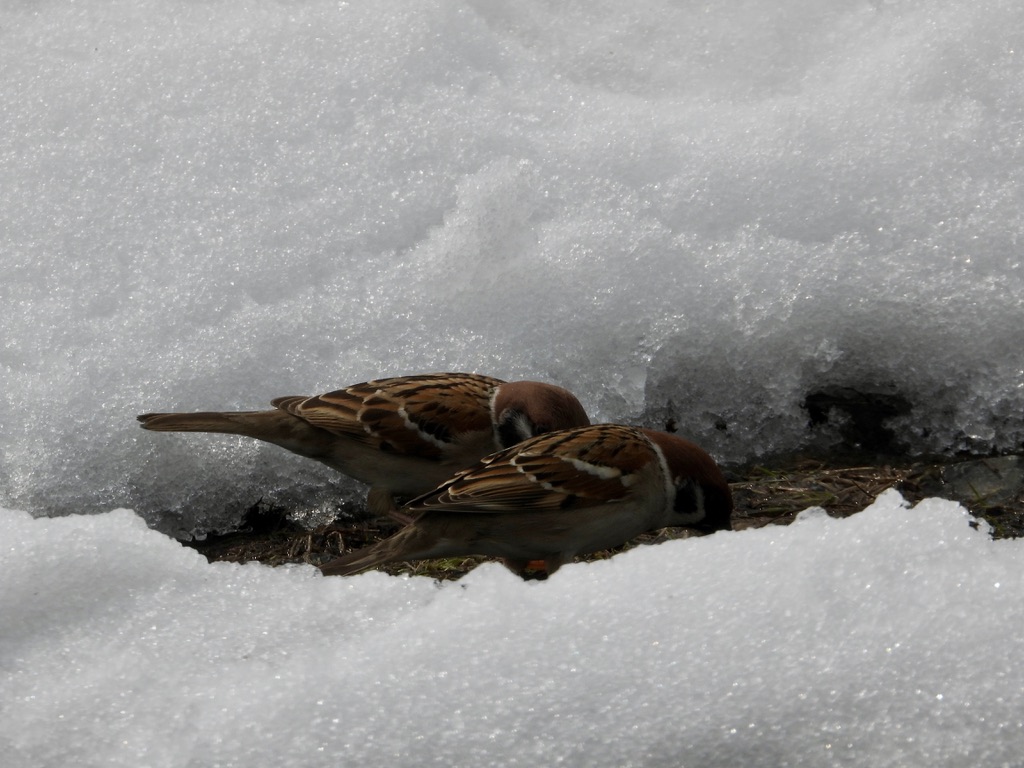
There’s an aural aspect to the town’s attraction as well: water from snowmelt burbles through the street-side culverts, and sparrows chirp happily as the deep winter snow begins to recede. (Pardon the anthropomorphism, but if much of your food supply suddenly reappeared after being buried a few feet deep for several months, you’d be happy, wouldn’t you?)


Because the houses in Shirakawa-go are private residences, you can’t enter them. Not far away, though, in Gokayama, there’s a house named Iwase-ke that’s open to the public. Iwasa-ke was declared a “national important cultural property” in 1958.

The current owners of the house are the nineteenth generation of the family that built the dwelling three centuries ago. It’s an enormous place – almost 350 square meters spread over five stories – that used to house 36 residents and servants. No nails were used in its construction; all the beams are closely joined and, in some cases, supported by ropes. One entire floor had been devoted to raising silkworms, and during the samurai period the residents also produced potassium nitrate, used in gunpowder. As with all traditional Japanese houses, there is no central heating and the floors are covered in tatami mats. You know the drill: shoes off and toes frozen.
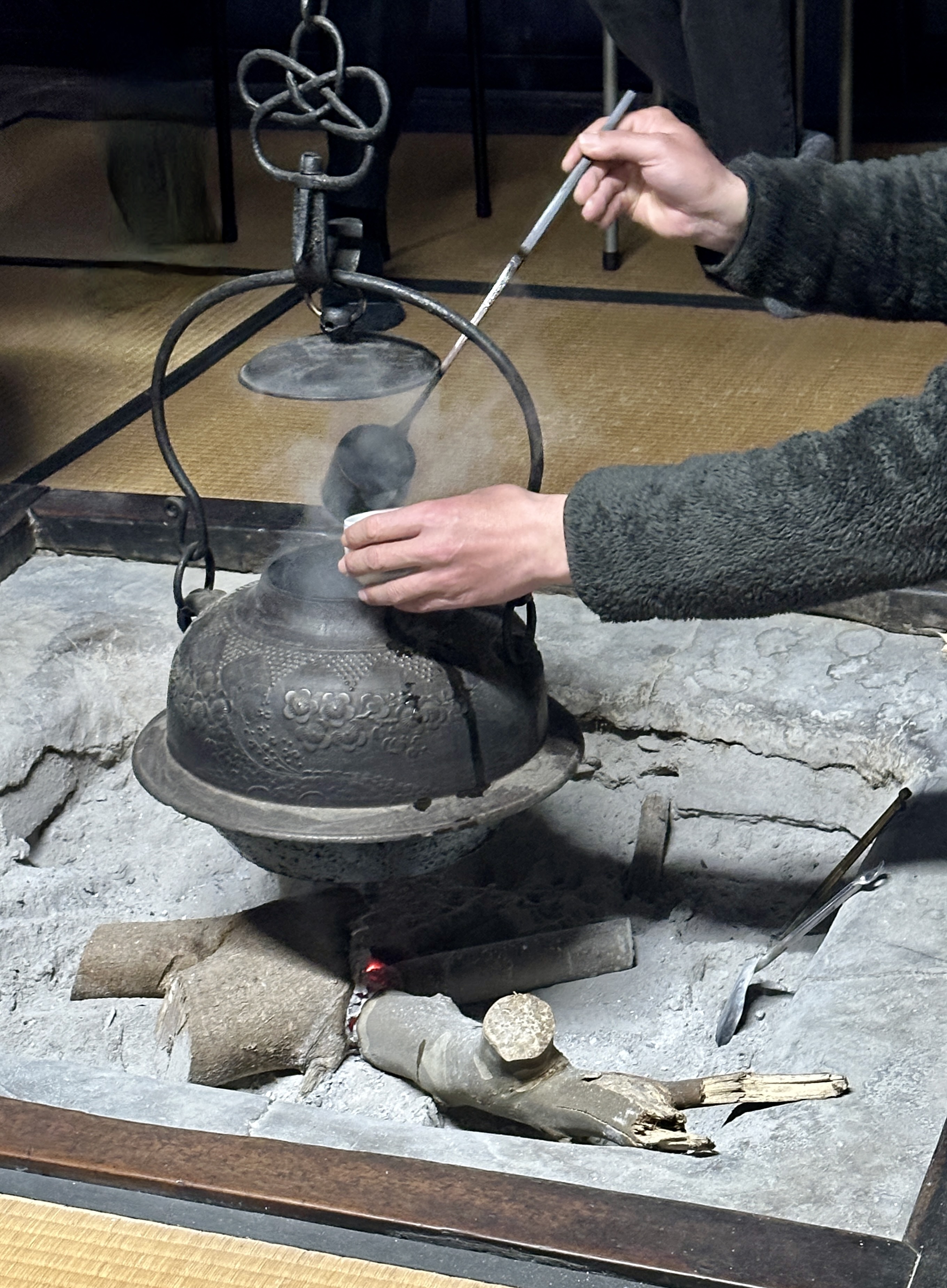

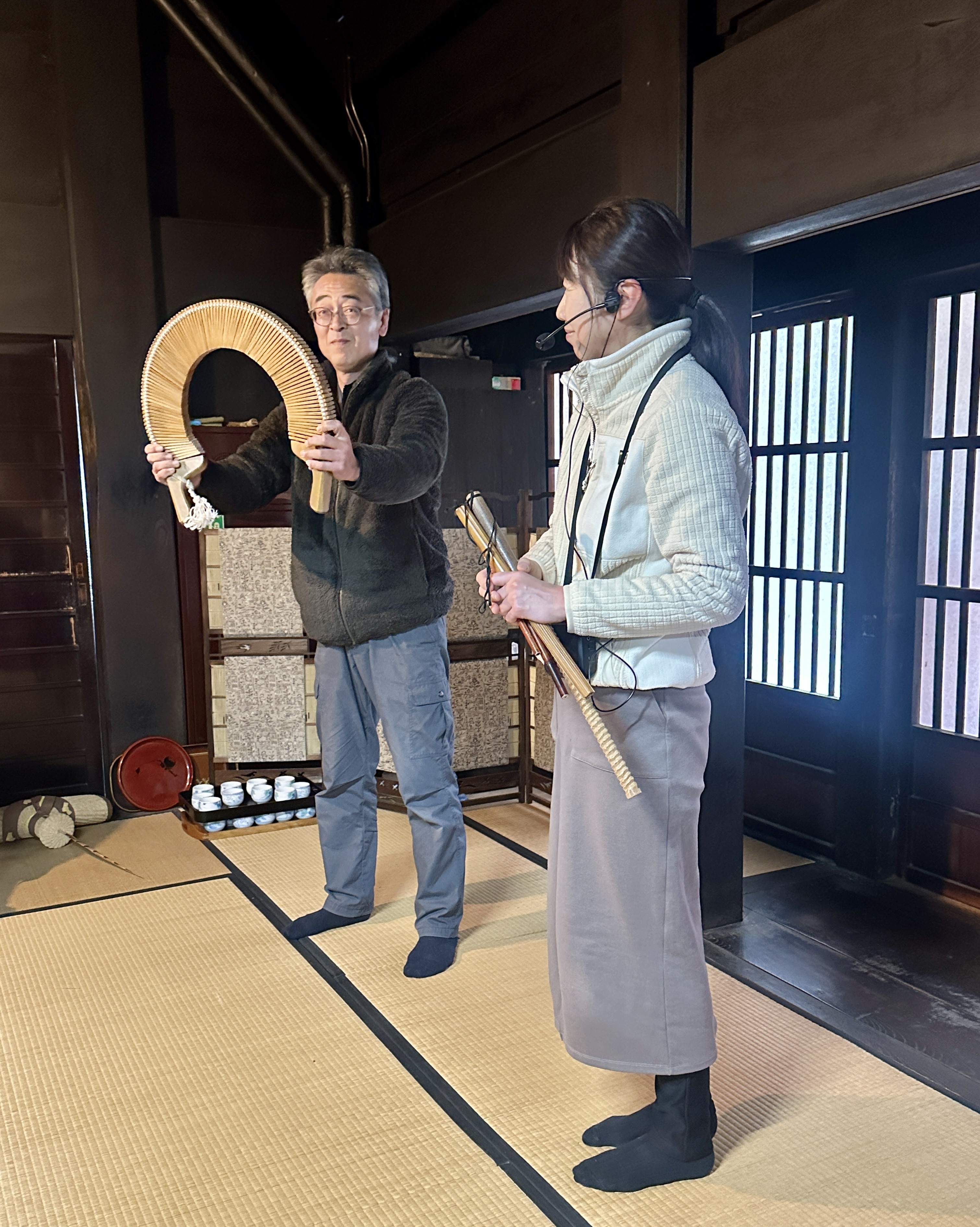
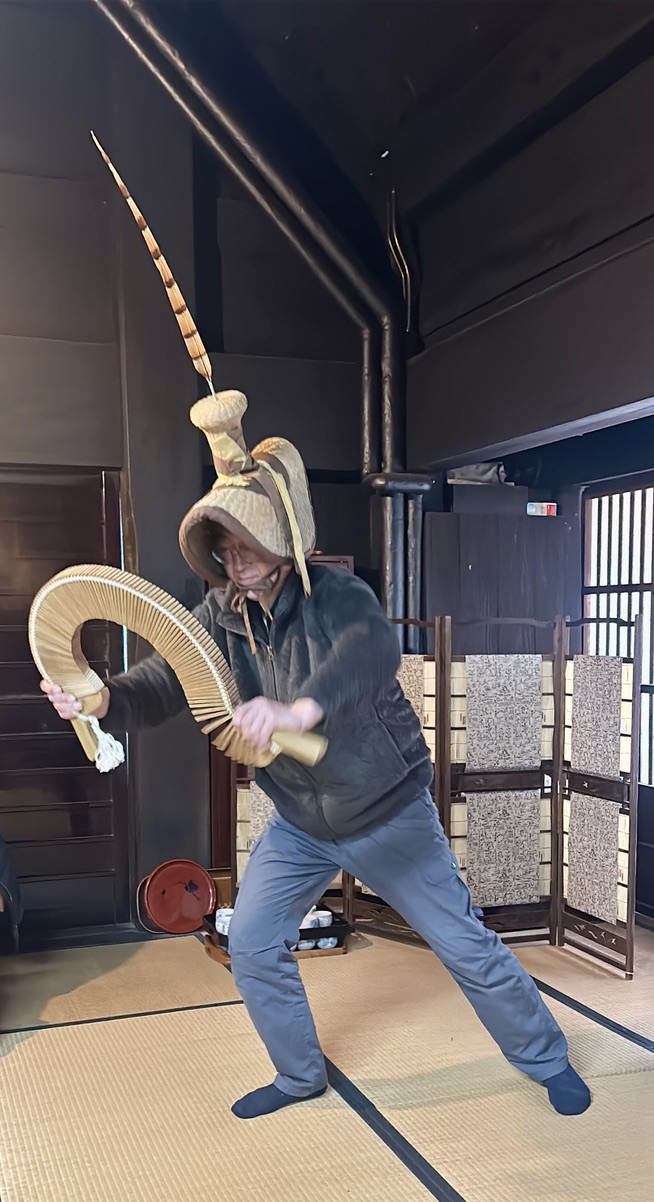
The owners welcomed us with tea, shared the history of the house, and performed a traditional Japanese folk song, Kokiriko, which dates back to the 7th century.
They said that the thatched roof must be replaced every 20 years. Given the size of Iwasa-ke, the cost of replacing just the front half is $250,000, much of which was paid for by the government.

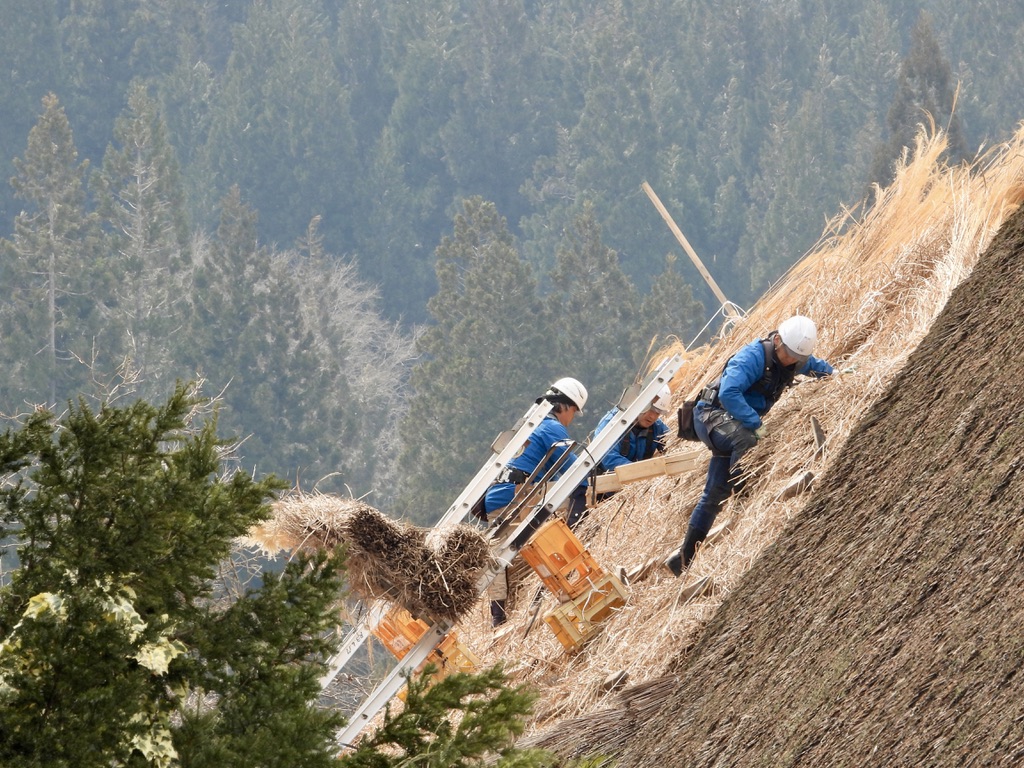
Following the presentation, we wandered around the public areas of the house, including a room where visiting samurai used to stay and the spaces once used for raising silkworms.
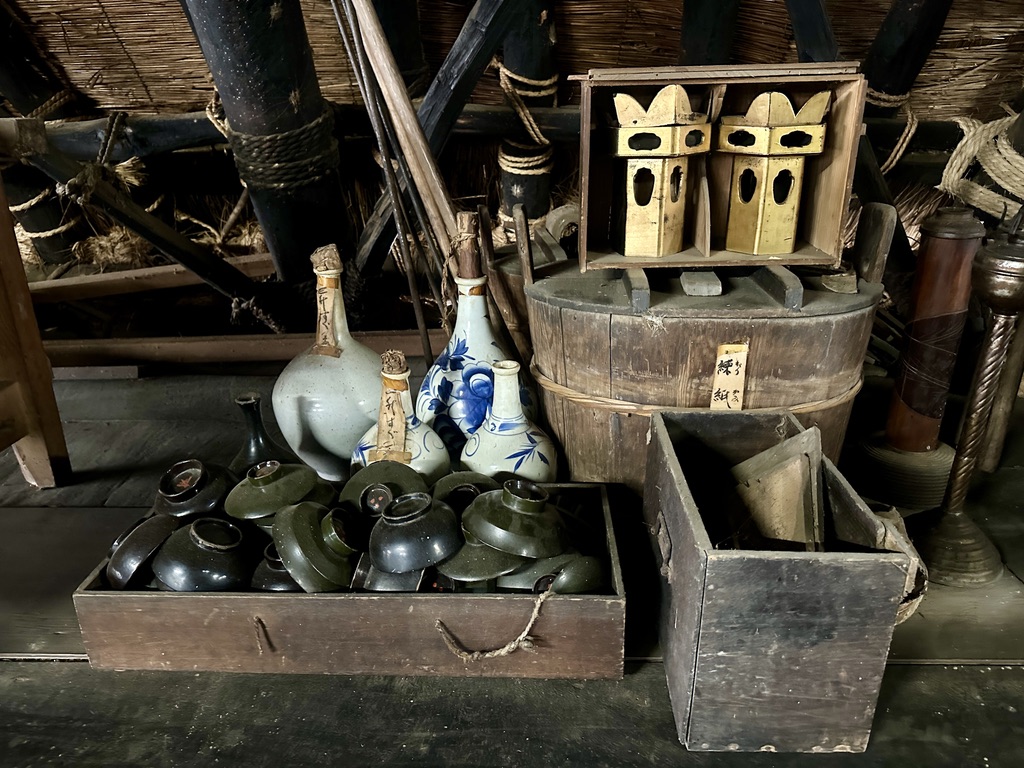
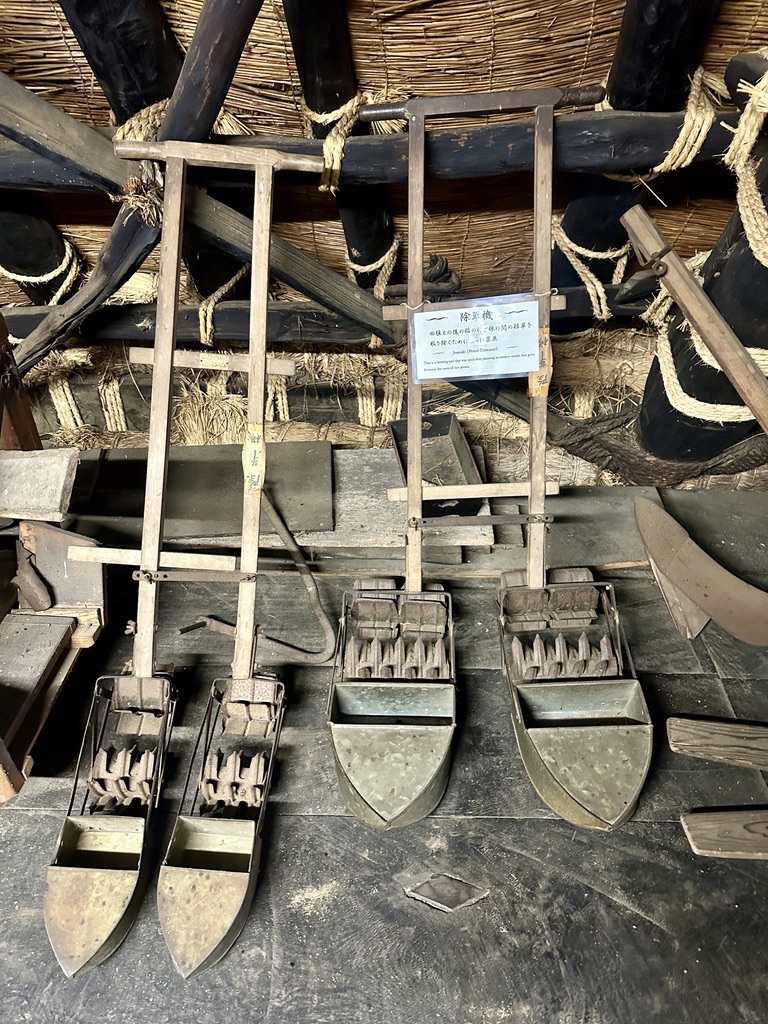
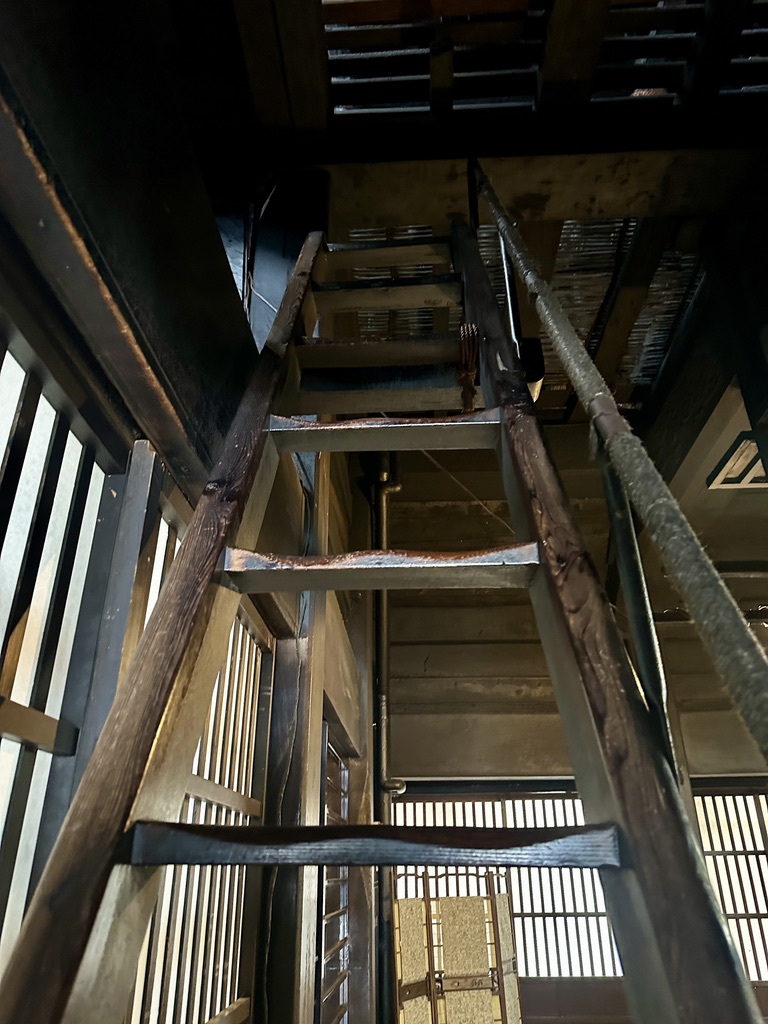
Those spaces now contain a fascinating collection of old tools. There are no stairs, so you must climb a steep ladder (in socks, of course) to reach the upper levels.
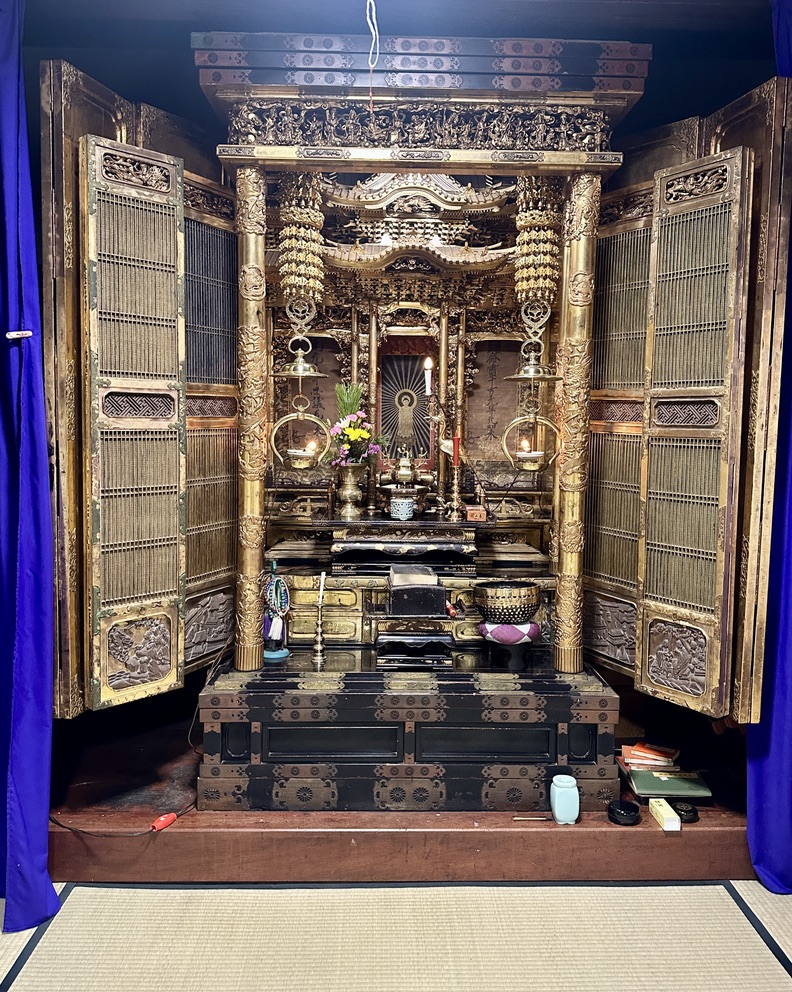
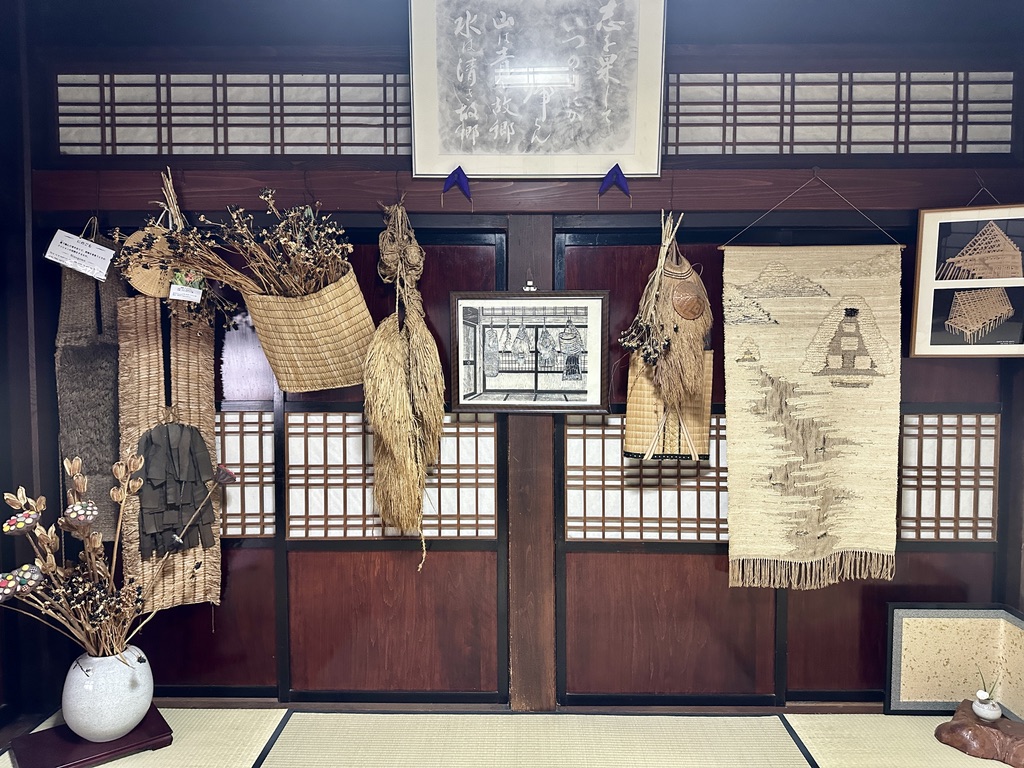
Leaving the pampas grass portion of our tour behind, we settled in for a delicious Japanese lunch before heading next door to Gokayama Washi-no-Sato to learn how washi paper is made from the kozo (paper mulberry) shrub.
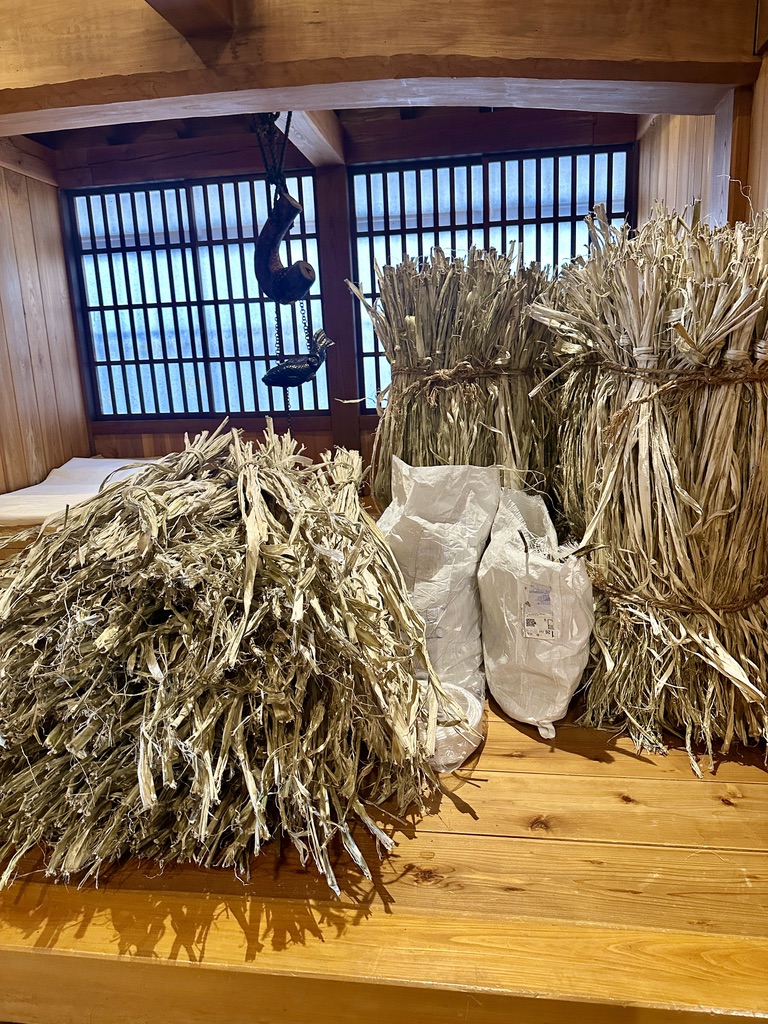
We watched a short video showing how the bark is stripped from the mulberry canes, scraped clean, and, in a series of labor-intensive steps, turned into high-quality paper used for calligraphy, screens, and a host of other applications.
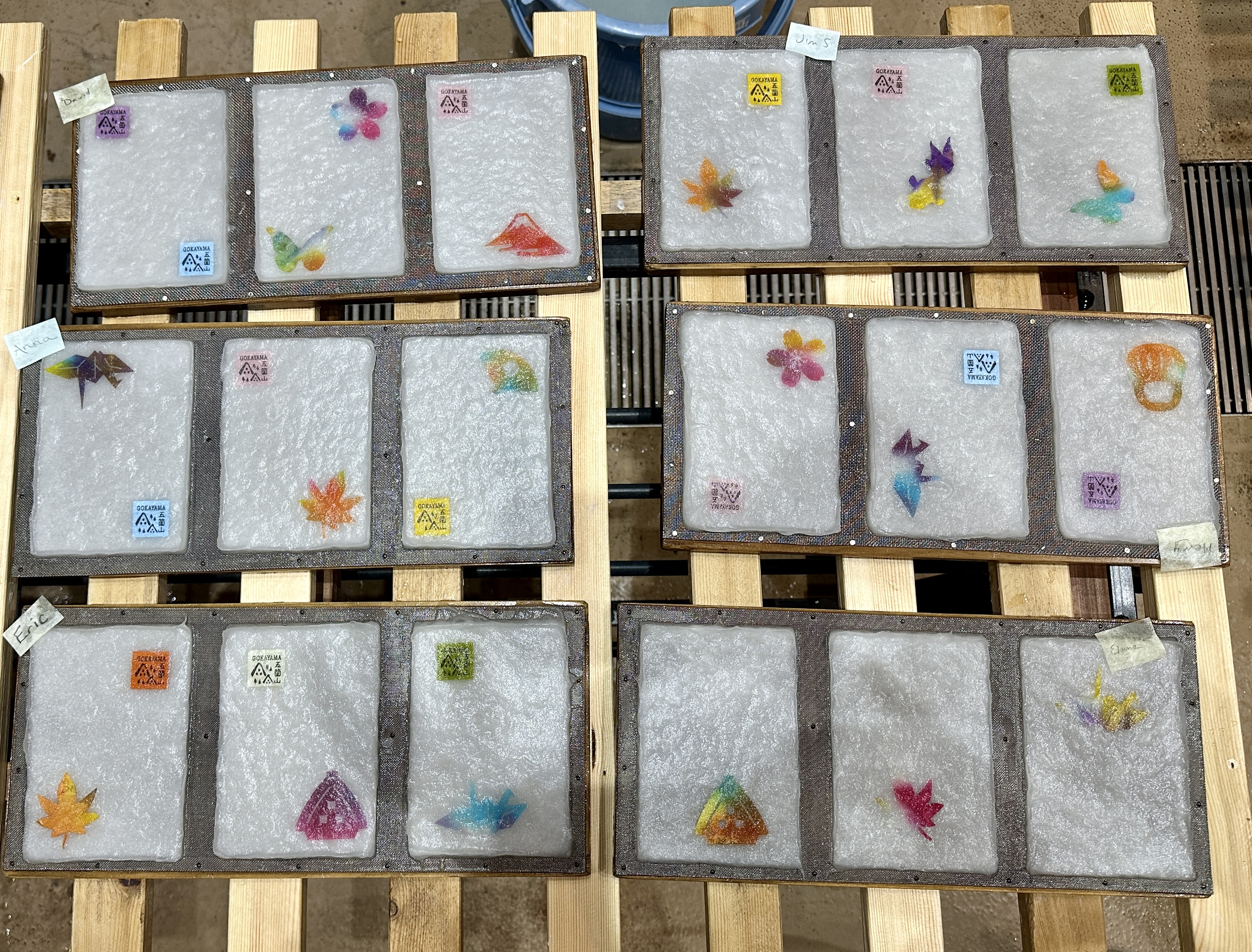
Then it was time for a literally immersive experience. After watching a short video, we rolled up our sleeves and made our own postcards by “scooping, straining, and shaking”: dipping a three-compartment wooden frame into a bath of kozo liquid, gently shaking the frame, and repeating the process two more times before affixing decorations to the nascent paper. The staff then dried and packaged the postcards for us.


With the botanical part of our day over, we drove another hour or so to Kanazawa, our home for tonight and tomorrow. We’re staying at the Nikko Kanazawa, one of a series of upscale hotels owned by Japan Airlines.

After a lovely group dinner, it’s time to call and end to a long, interesting, day filled with treats for the eyes, ears, and taste buds. As one of my fellow travelers, Kelly, said at dinner over the penultimate course of soup, “miso tired.”


 PuffinlessTravel