Mālō e lelei, as Tongans say in greeting. Literal translation: “Thank god for keeping you well.” Sure beats “’sup”!
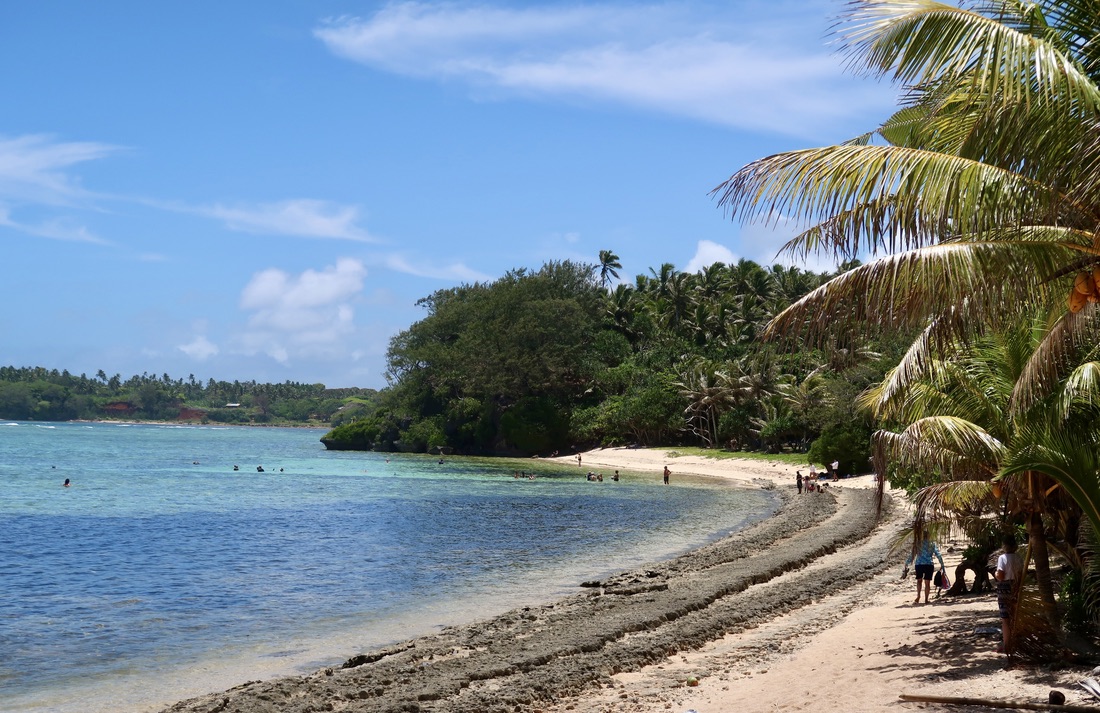
What kind of nation is Tonga? Tiny but huge, traditional but selectively modern, and economically poor but culturally rich.
Tonga comprises 171 islands dotted over 700,000 sq. km. of ocean, but the nation has only 100,000 people, most of whom live on the largest island, Tongatapu. Perhaps the largest part of Tonga is its cultural pride, unless it’s the heart of Lisa, a Tongan woman who has single-handedly raised living standards on the island of Vava’u – more on that shortly.
Much of the nation’s pride comes from the fact that, nearly unique among major South Pacific island groups, it was never colonized by Europeans. As a result it retains, realtively undiluted, the cultural identity forged over the three millenia since it was settled. It’s transitioned from a chiefdom to an absolute monarchy to a constitutional monarchy, wholly self-governing, where the royal family is cherished and respected even as most power has shifted to the legislature.
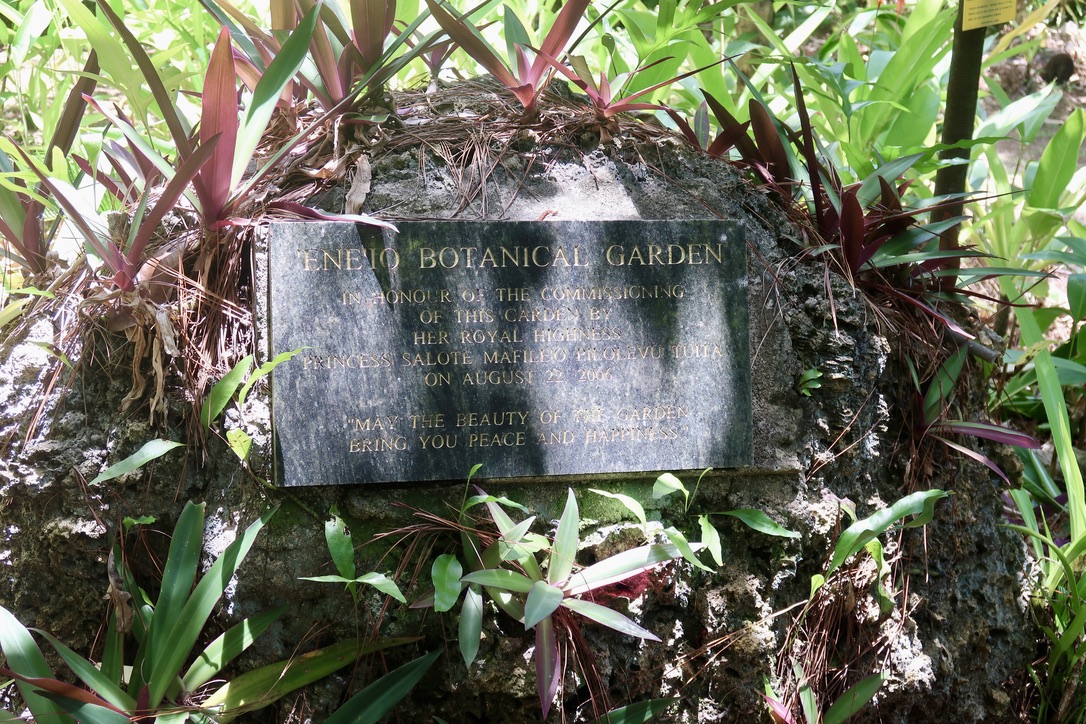
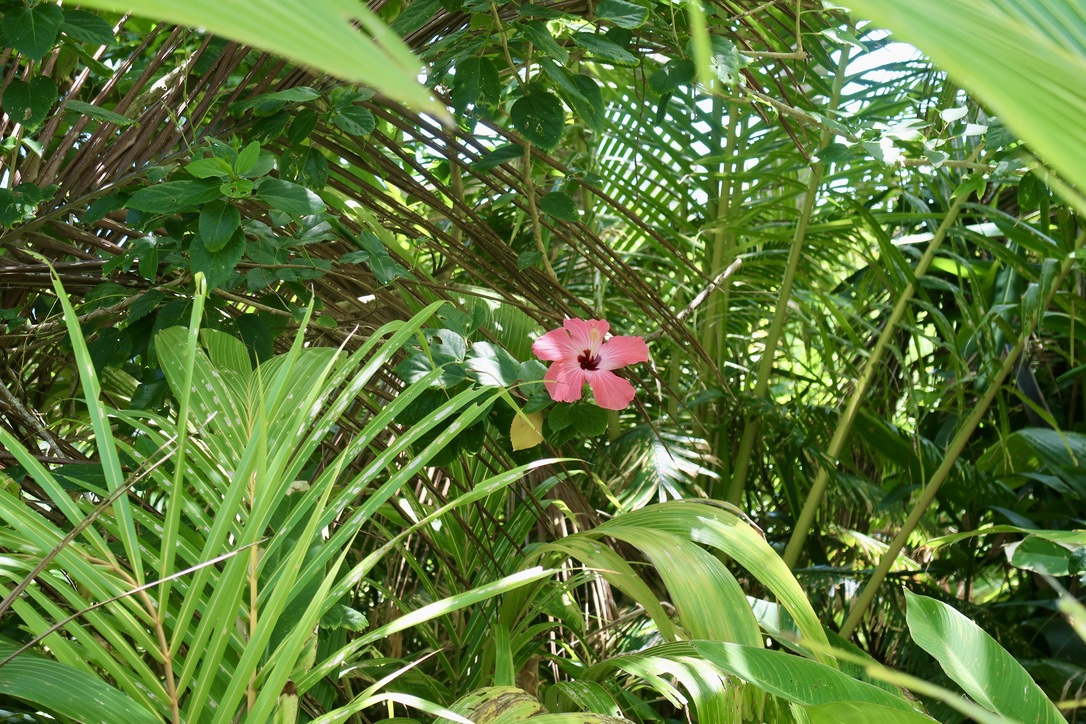
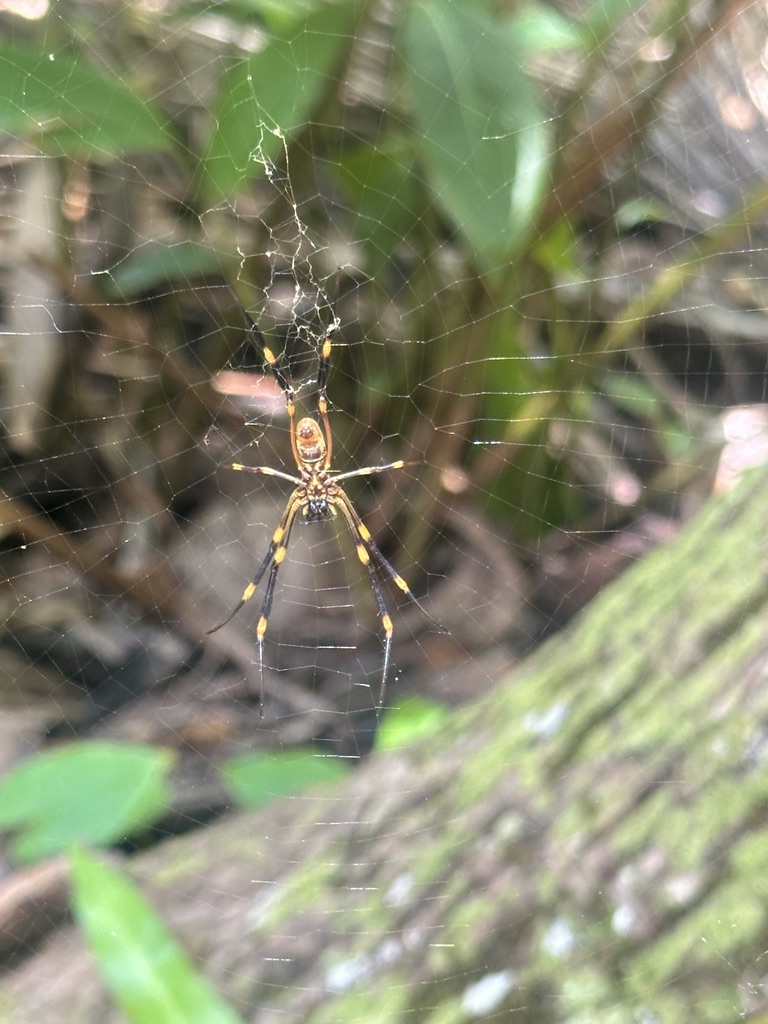
Vava’u, our home for the day, is second to Tongatapu in size and population. It’s composed of rolling hills blanketed in palms, ferns, and a variety of shrubs and small trees. We saw many of these at the ‘Ene’io Botanical Garden – 22 acres of lush vegetation, dirt paths, occasional wild pigs, not-so-occasional and disturbingly large spiders, and far-from-occasional tiny flies and mosquitos. (Bring insect repellent!)
The Garden is around 20 minutes by bus from Neiafu, the town to which we tendered. Along the way, we passed small stores, many decorated for Christmas, one-story houses (some of which had an enormous pig in the front yard), and several tiny cemeteries with enormous, flower-strewn grave markers. (Unlike Samoans, Tongans don’t bury their dead relatives in the front yard.) I tried photographing the scenes outside the bus, but the road was jarring; as the song goes, “Come on shake your body baby, do the Tonga.” (Sorry, Ms. Estefan.)
Excuse the diversion, but I had to get that pun in. As another musical legend, Joni Mitchell, sang, “We’ve got to get ourselves back to the garden.”

‘Ene’io was developed at the urging of a retired Minister of Agriculture and Fisheries, Haneli Fa’anunu, who personally guides people around the premises. He planned the facility and persuaded the royal family to support it. Unfortunately, the PA system he uses didn’t work, so we were left to explore on our own.
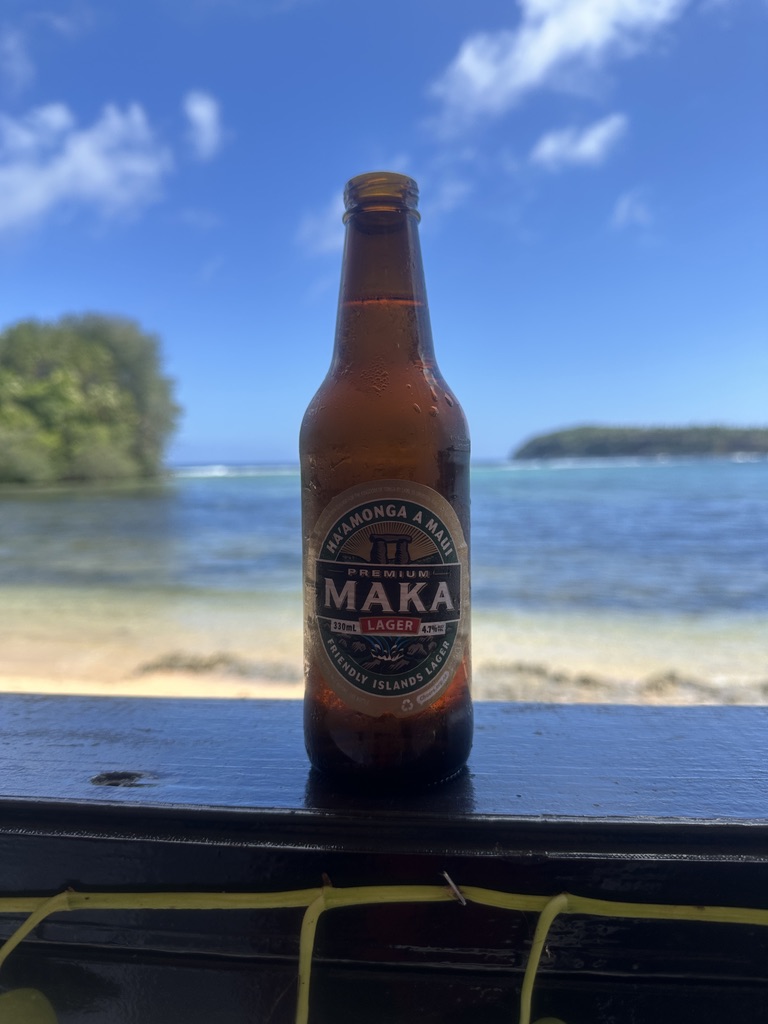
One hundred meters or so down the road from the Garden, ‘Ene’io Beach fronts a peaceful, pristine inlet. Adjacent to the beach is an open-sided building where we met Lisa, a human dynamo, holder of three advanced degrees, humanitarian, and proud proponent of all things Tongan.

First up, Lisa and a colleague demonstrated how Tongans traditionally (and still) use coconut palms, pandanus, and other local plants for daily necessities: mats, cloth, windows and doors (a rolled up palm leaf), cups, plates, baskets – all natural and all sustainable. Lisa bemoaned the popularity of plastic replacements among many Tongans and is doing her best to preserve the old, more ecologically sound, technologies.
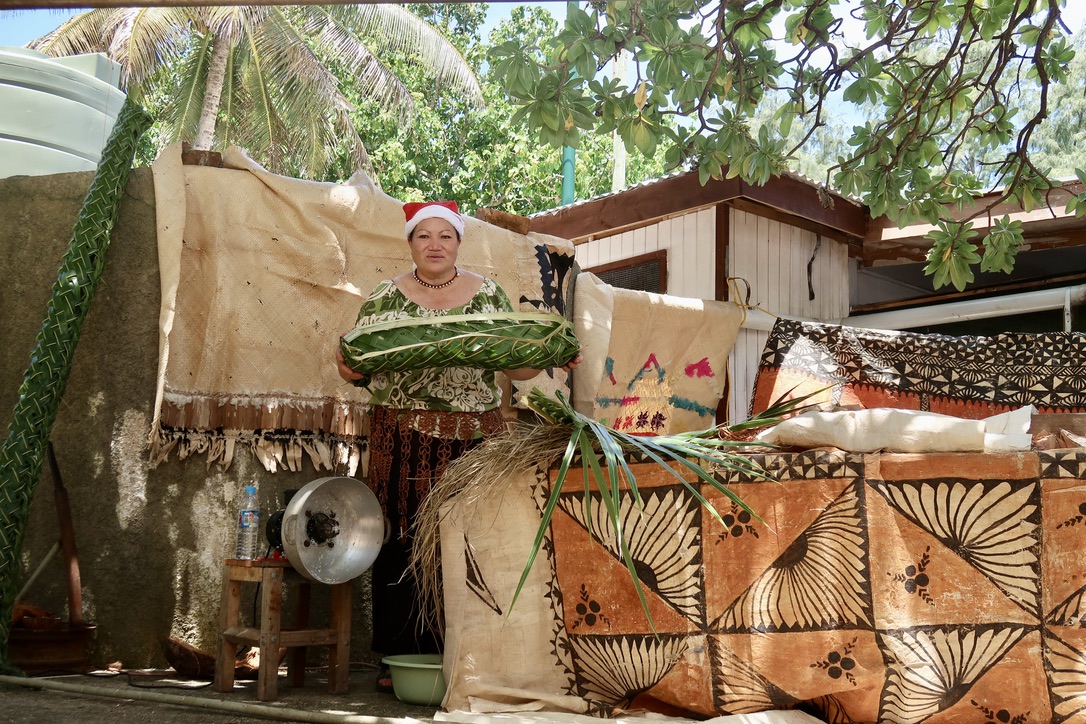
She also showed how Tongans make vanilla extract (the same way my wife does in exotic Maryland) and kava, a drink that traditionally is reserved for men. I tried a sip – unfortunately not enough to enjoy its relaxing qualities, although I was quite relaxed already given the sourroundings – and found it inoffensive but not particularly tasty.
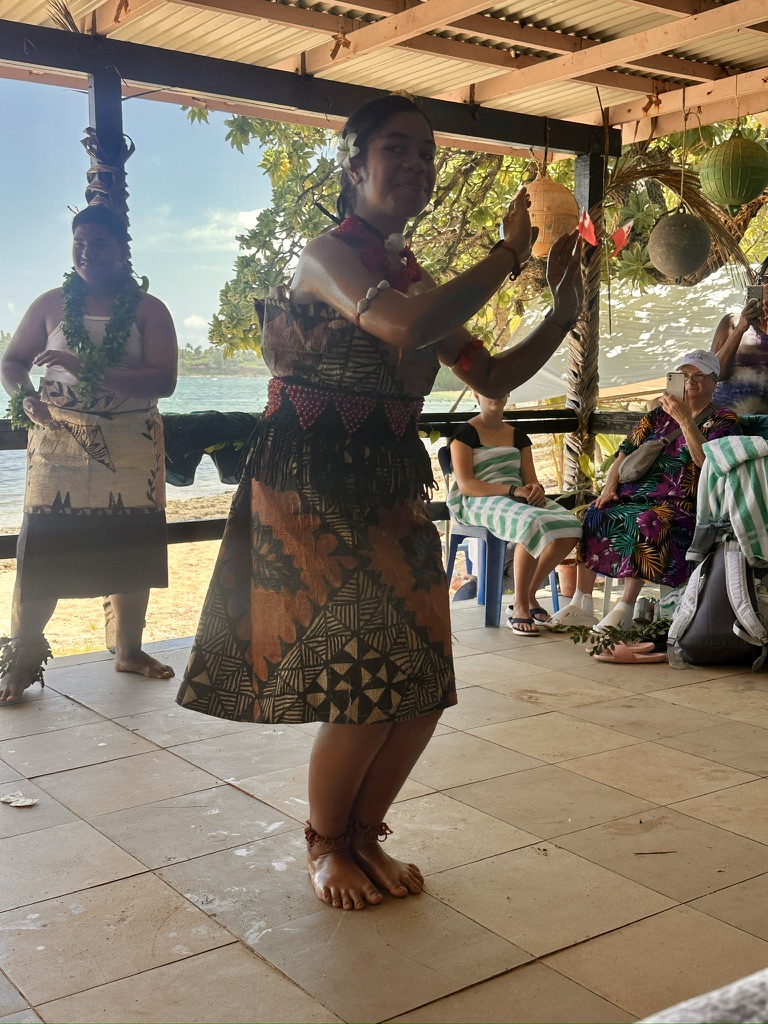
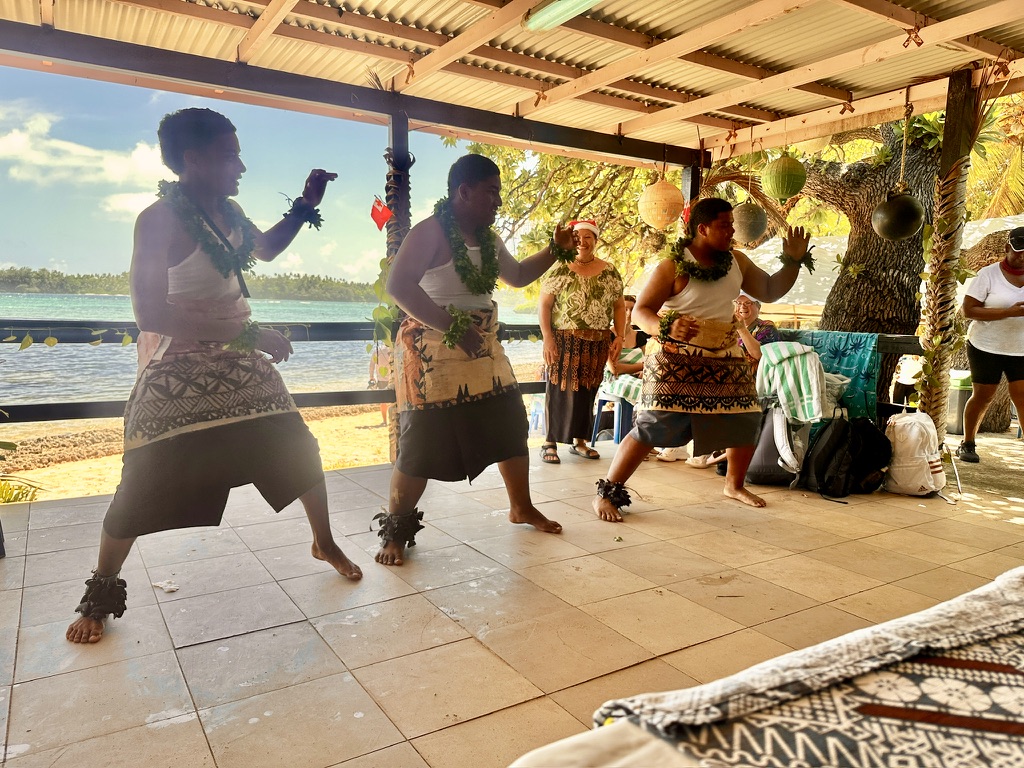
The cultural demonstration continued with girls and boys dancing, first separately and then together. Lisa illuminated the significance of the hand movements and steps and of the dances as a whole, explaining how the graceful motions of the girls and the powerful steps of the boys revealed the meaning of each dance.
I’ll close with a bit about Lisa’s humanitarian efforts. In addition to keeping her people’s traditions alive, she has used her education to obtain grants enabling everyone in the surrounding village to have access to fresh water and supporting renewed planting of the all-important pandanus trees, which had become scarce.
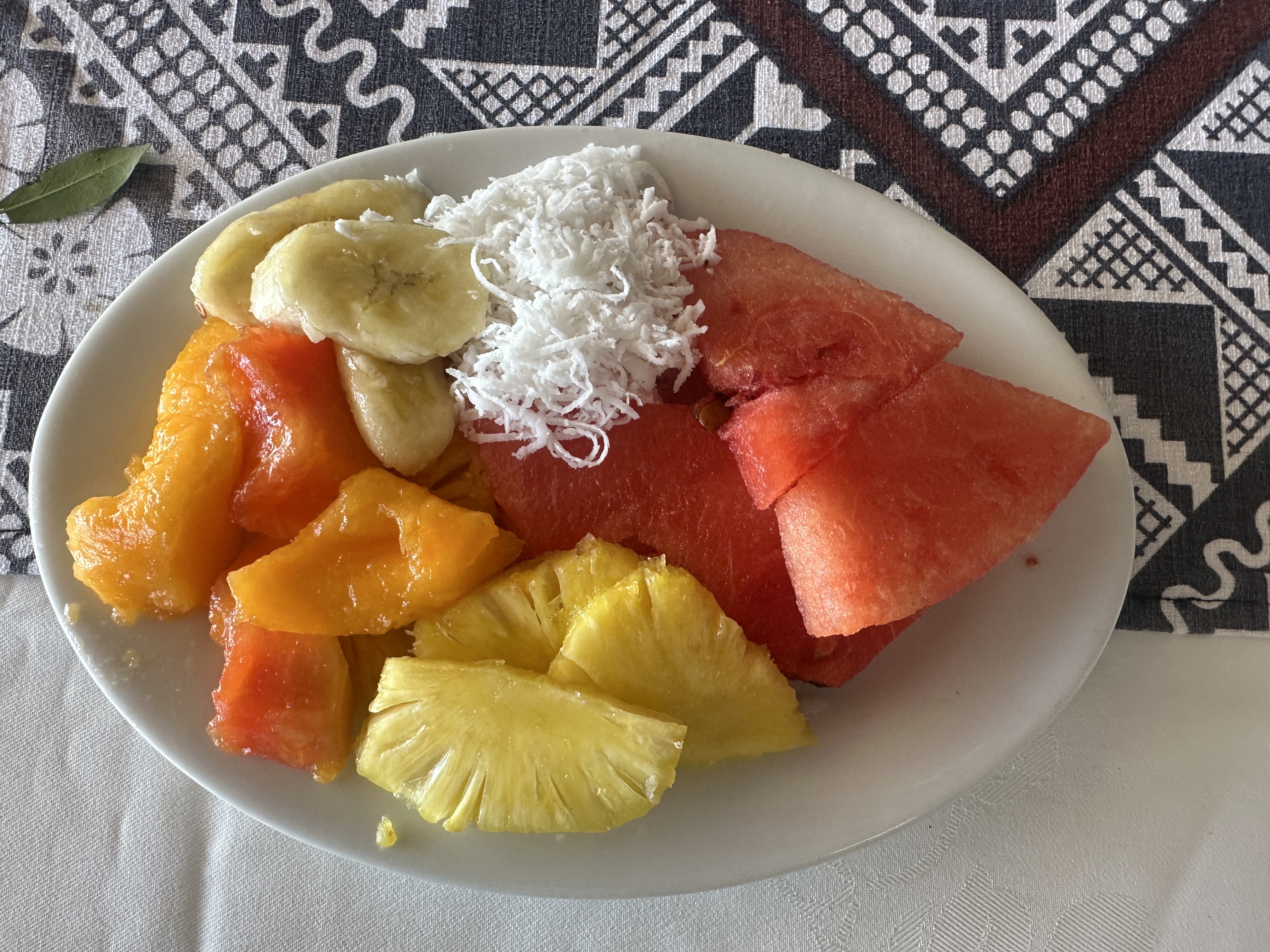
That’s the kind of nation Tonga is: poor but resourceful, traditional but a bit modern, tiny but possessing an enormnous heart.
A couple of practical notes: credit cards generally are not accepted. Many establishments take American dollars, but I was told that exchange rates vary widely. And unlike all the other ports so far, there aren’t many private tour operators hanging around the dock – only taxis.
‘Alu a and toki sio – Goodbye and see you later.

 PuffinlessTravel