Talofa (hello) from Samoa! This island shares a common language and culture with its nearby American cousin. In both cases, traditional foods and ways of life are sacred and family is venerated. Like its cousin, Samoa is verdant, laid-back, welcoming, and largely rural, though a bit more built up. Alas, neither Samoa has any of those delicious cookies.
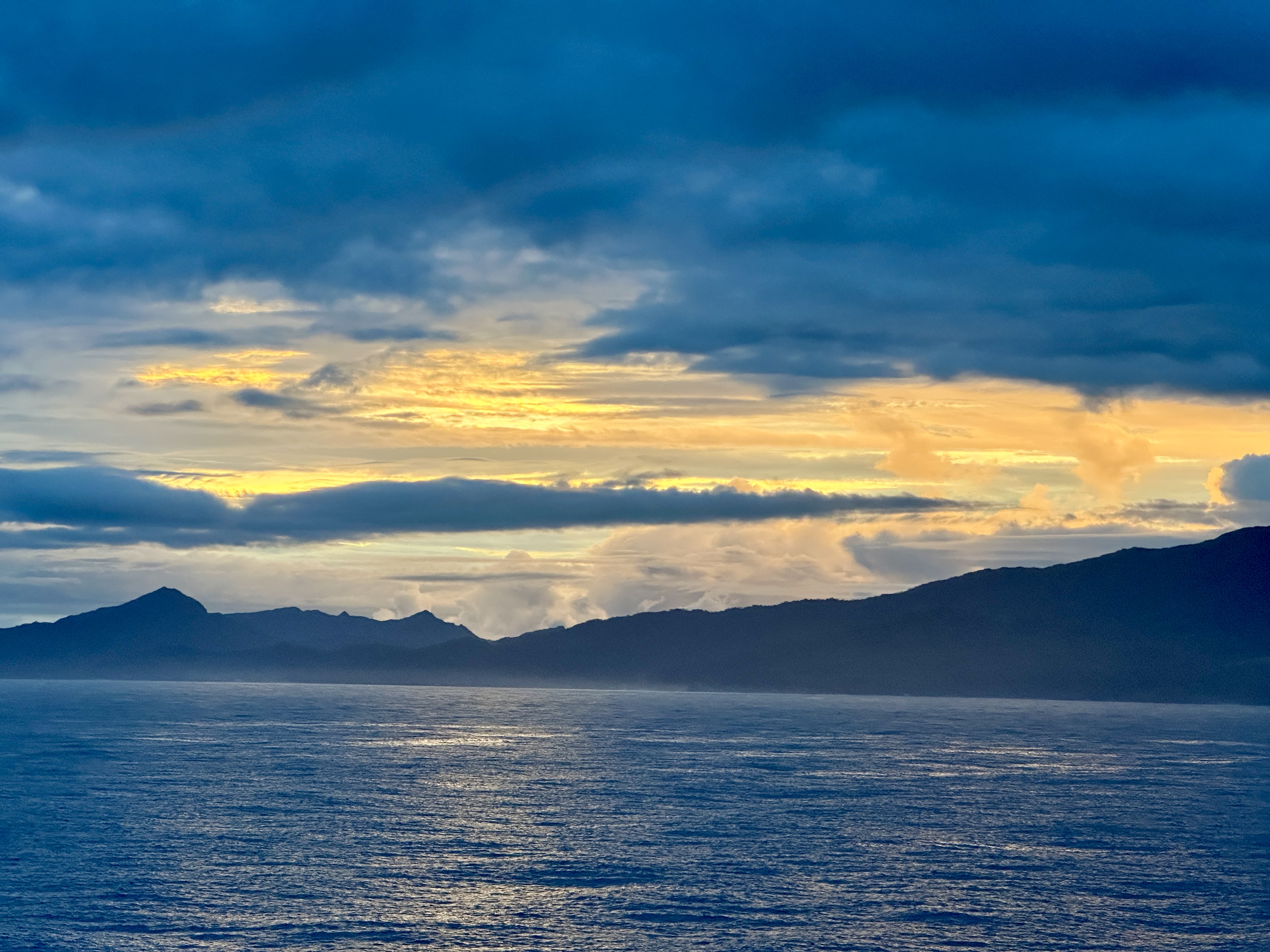
The biggest difference between the two is orientation. American Samoa understandably looks to the US. The independent country of Samoa recognizes on which side its bread(fruit) is buttered: Many Samoans live in Australia and New Zealand, and Samoa has gone to great lengths to align itself with those two nations.
How great? In 2009, Samoa changed from driving on the right to driving on the left so that it could get used cars from Australia and New Zealand rather than paying the greater expense of shipping them from the US. And in 2011, Samoa shifted from the American Samoa side of the International Date Line to the Australia-New Zealand side so that it would follow the same calendar as its two most important trading partners.
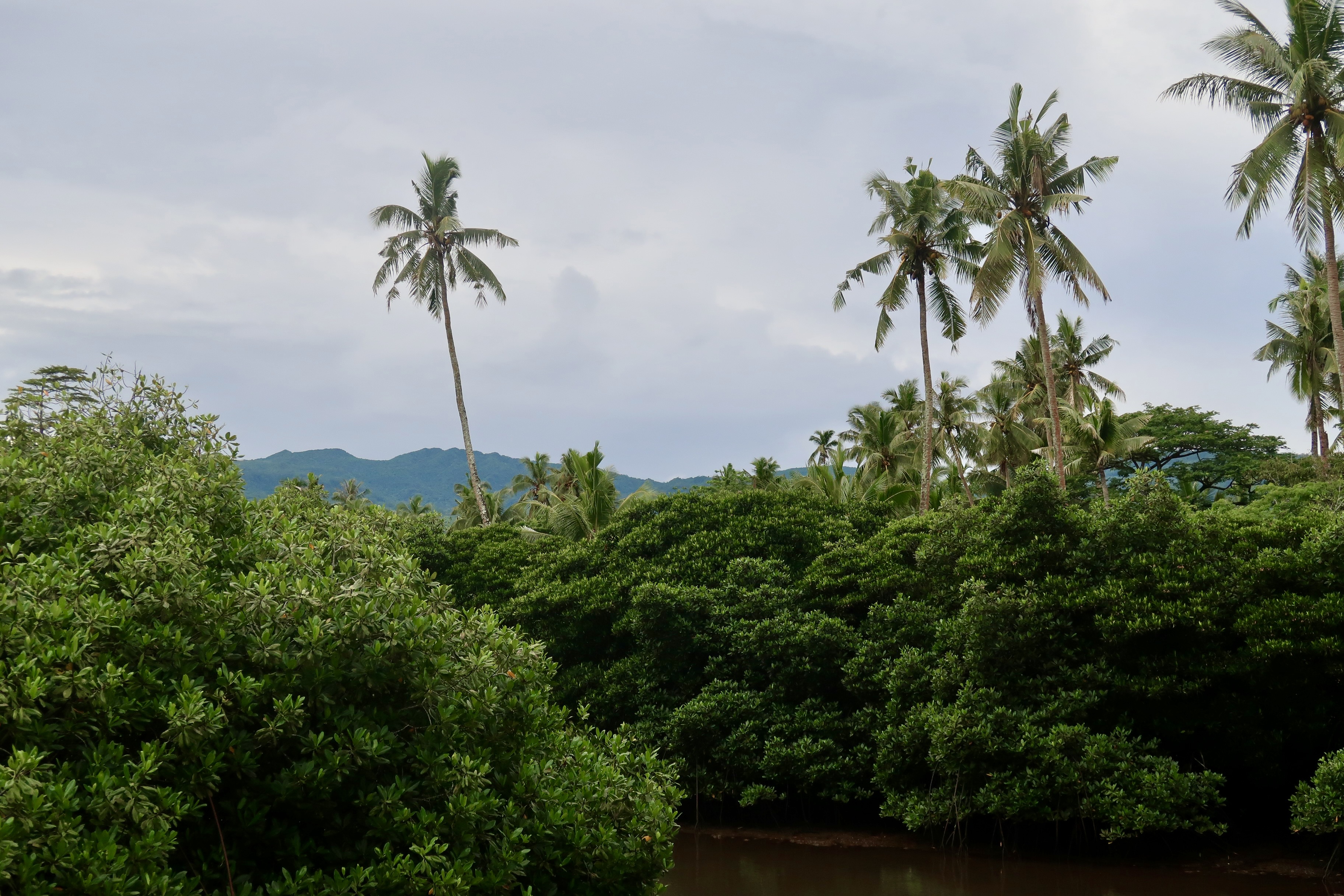
I took one of the ship’s tours today, led by a fairly senior government official, Dora, who moonlights a a tour guide to earn a little extra money. Our first stop was the town of Moata’a, which incorporates a pretty mangrove swamp. Moata’a recently was added as a point of interest not because of the swamp, but because King Charles and Queen Camllla visited the town during the October 2024 Commonwealth Heads of Government Meeting. With apologies to the Crown, I’m not at all interested in the royals, so my assessment is that a trip to Samoa need not include Moata’a.
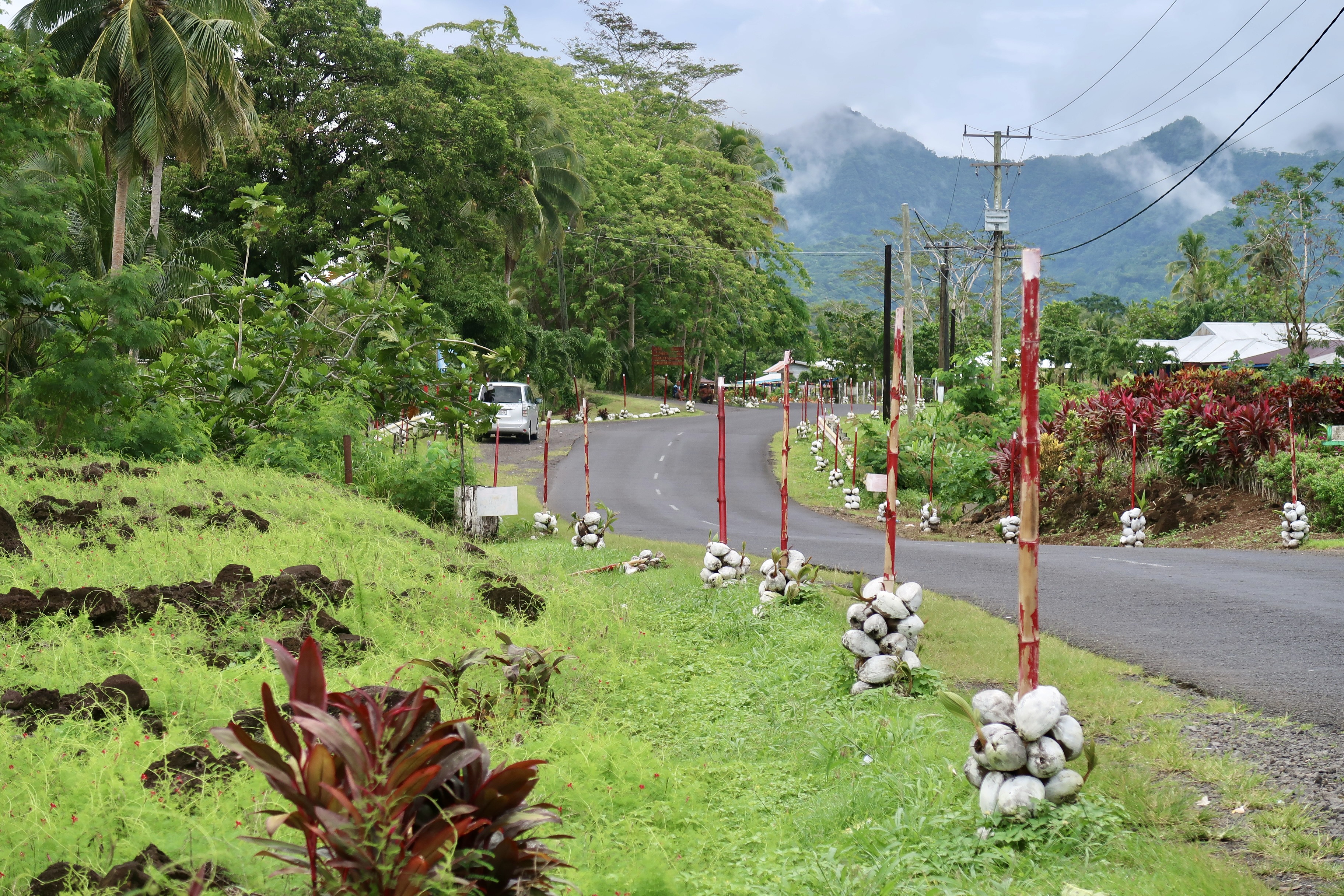
Somehow emerging from the swamp with only one mosquito bite, I was glad to get back on the bus. One beneficial byproduct of the Commonwealth meeting is that the roads are lined with beautiful plantings, flags, and white-painted coconuts piled around sticks – the latter is more attractive than it sounds!
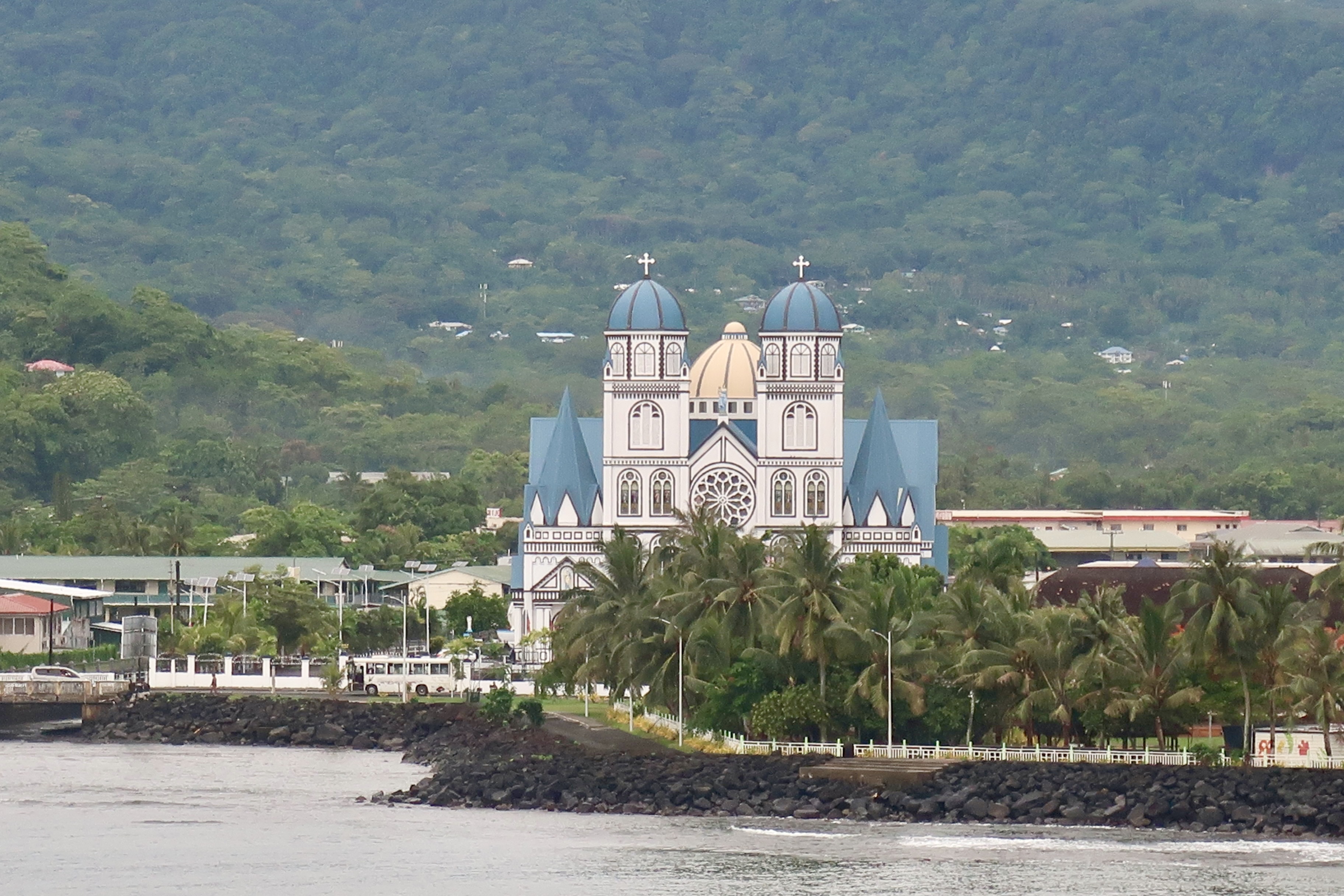
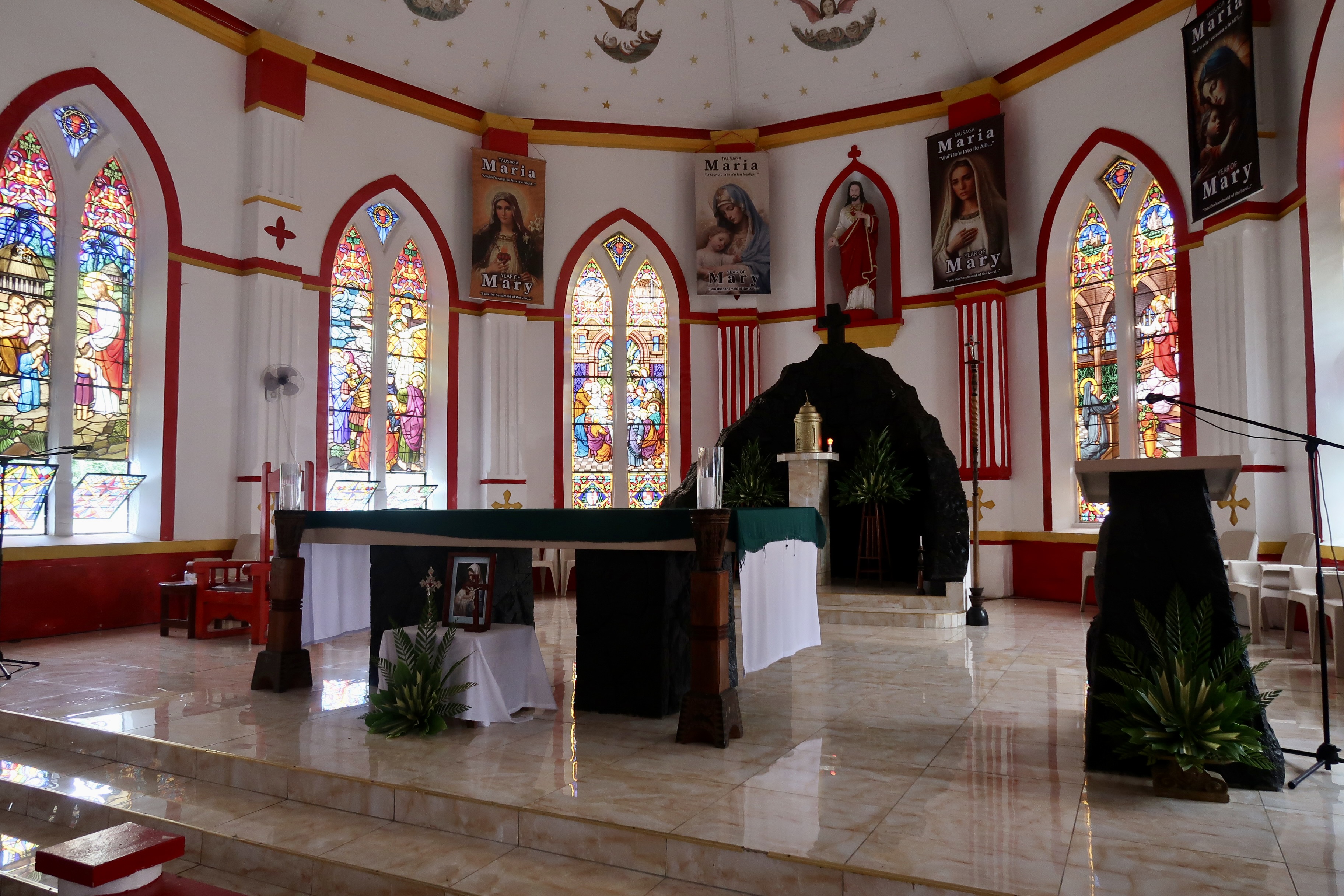
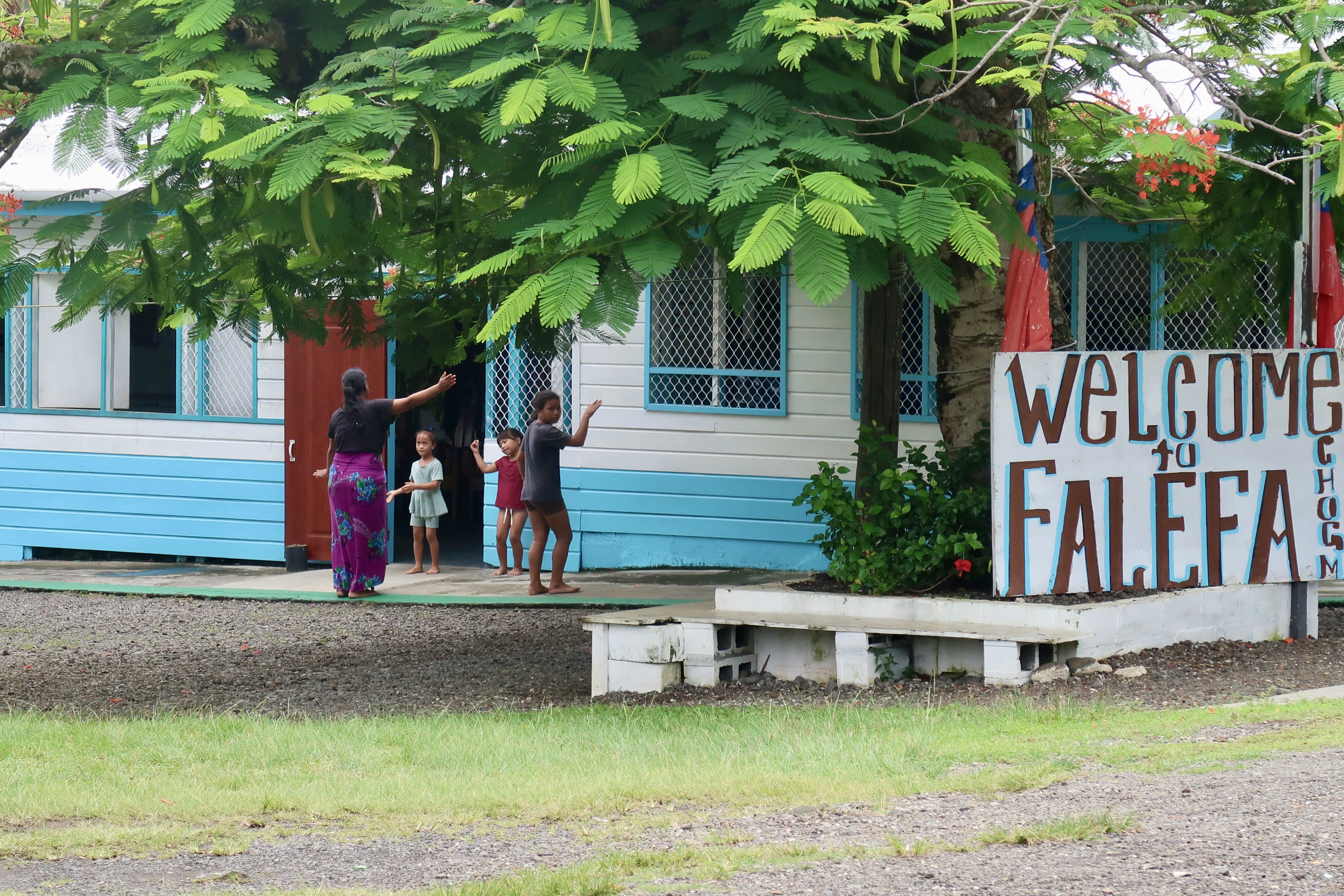
Our second stop was the Finagalo Paia o Iesu (Sacred Heart of Jesus) church in the town of Falefa. (I was getting hungry by this point and misread the sign as Falafel.) Built in 1920, the church is attractive and spacious, with a striking wood and stained glass interior.
Next up: Falefa Falls, a modest cascade just down the road from the church. To reach the falls, you have to descend around 25 steps, which aren’t difficult but do get slippery the lower you go.
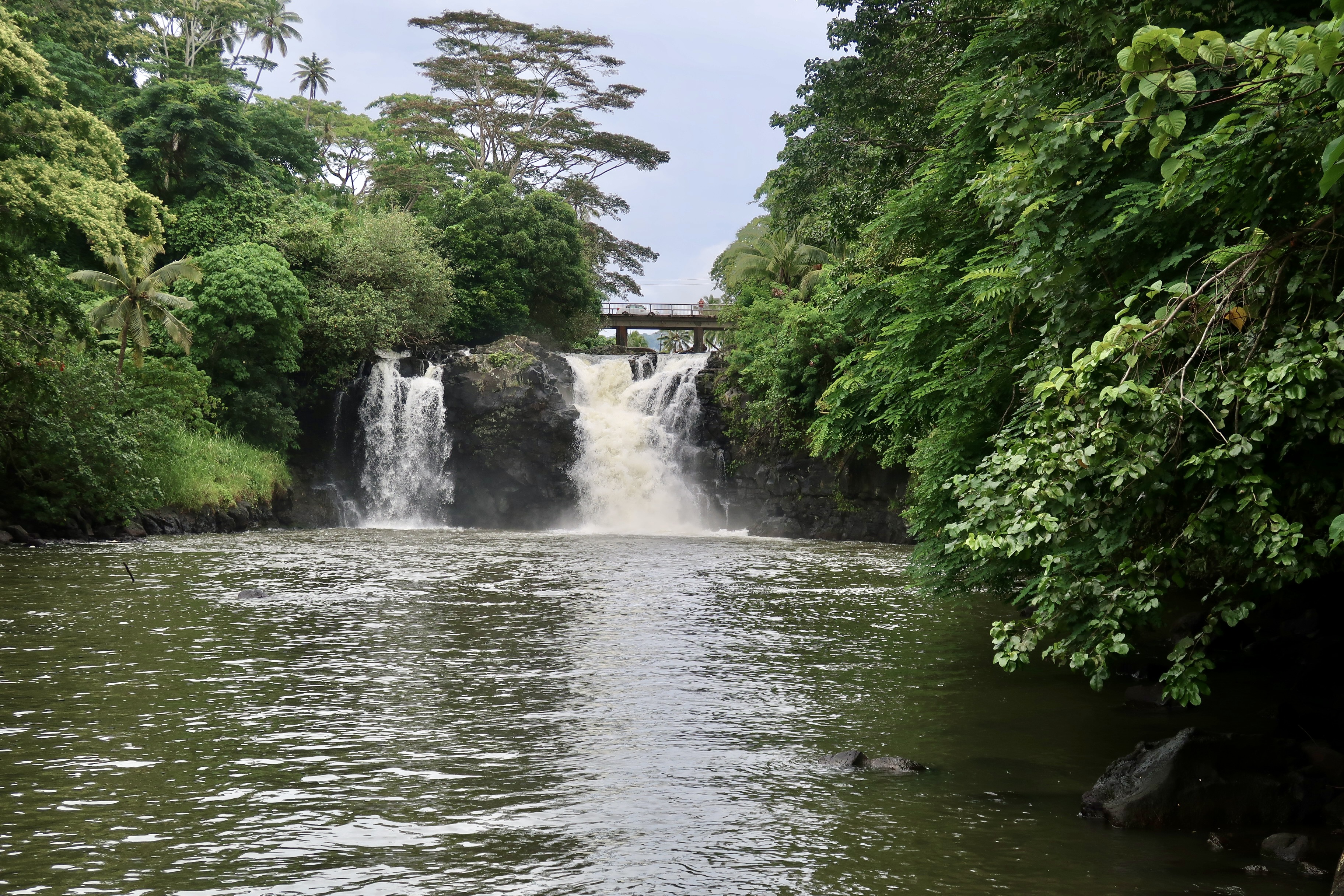
If the falls are included on a tour, they’re worth seeing. But the separate admission price ($5 US) is disproportionately steep compared to the waterfall itself.
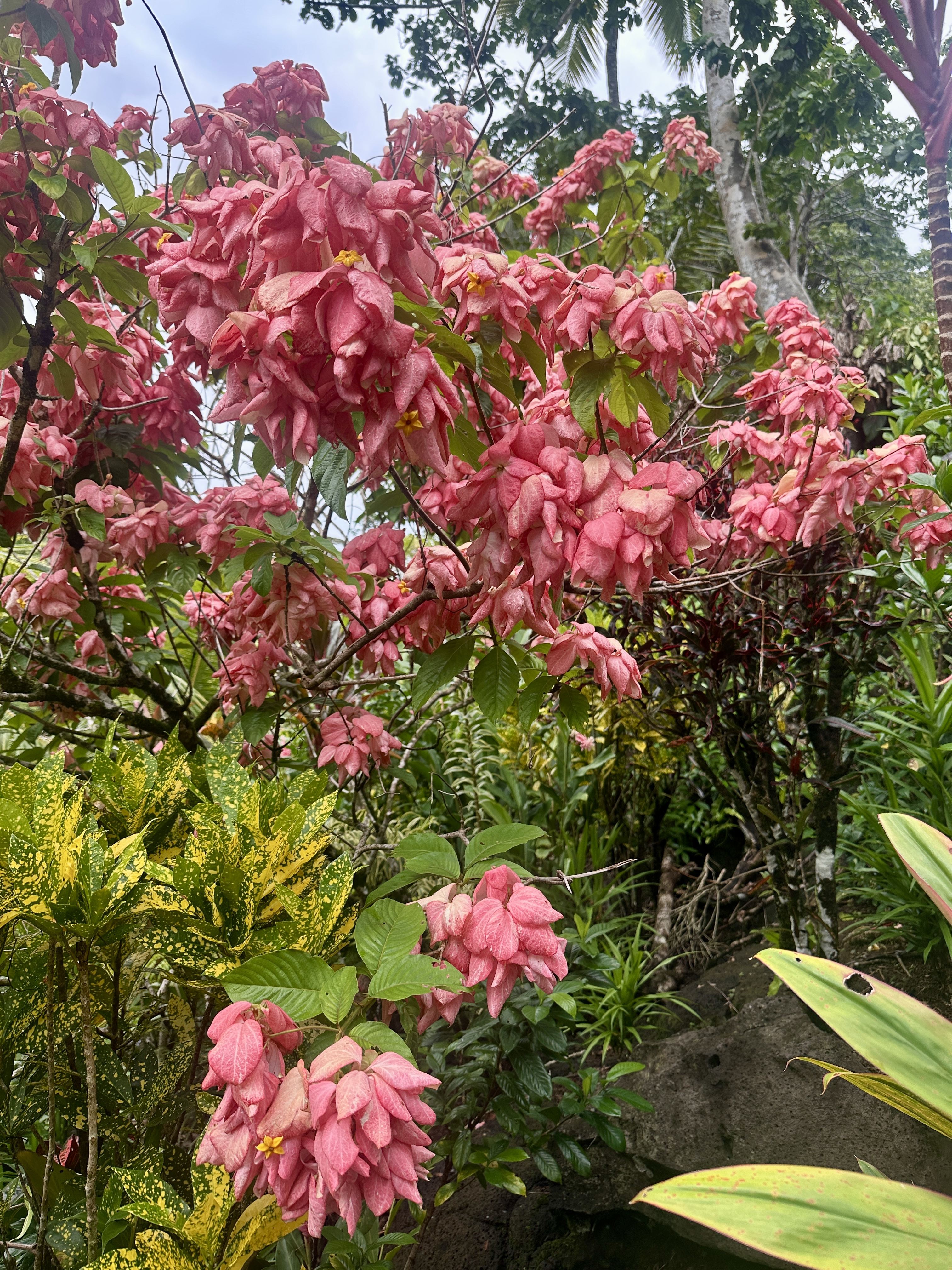
Our final scheduled stop was a garden filled with native plants, once known (and still known, in Norwegian’s tour description) as “Aggie Grey’s Gardens.” This, to me, was the highlight of the tour. The plantings are well-maintained and gorgeous, and besides, we got something to eat.
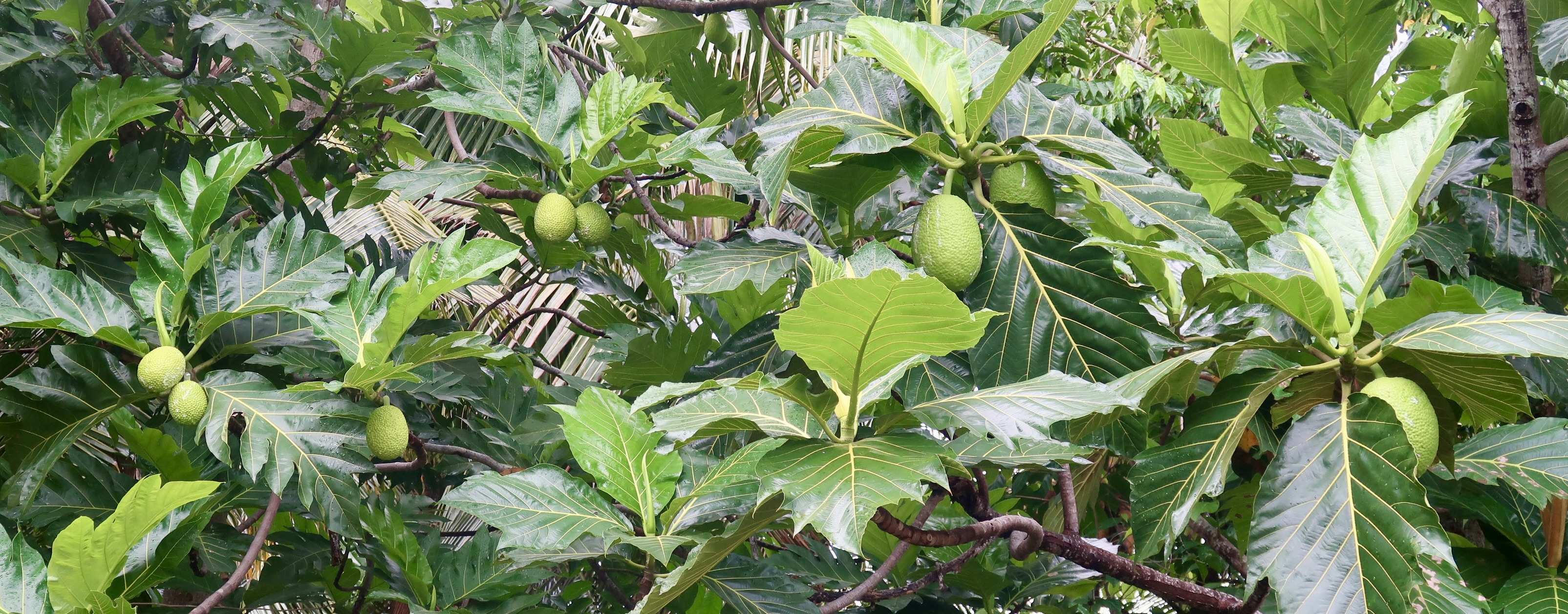
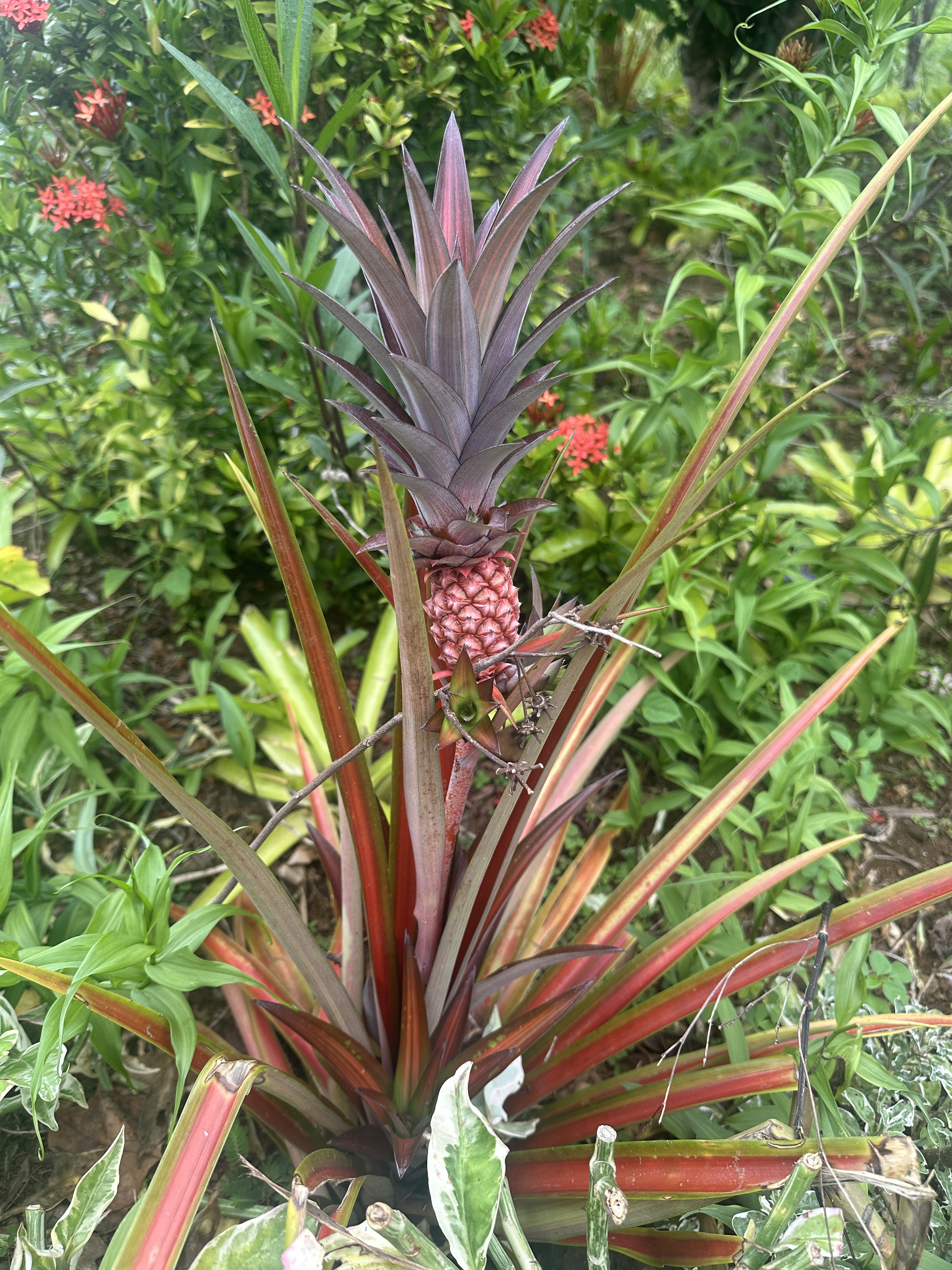
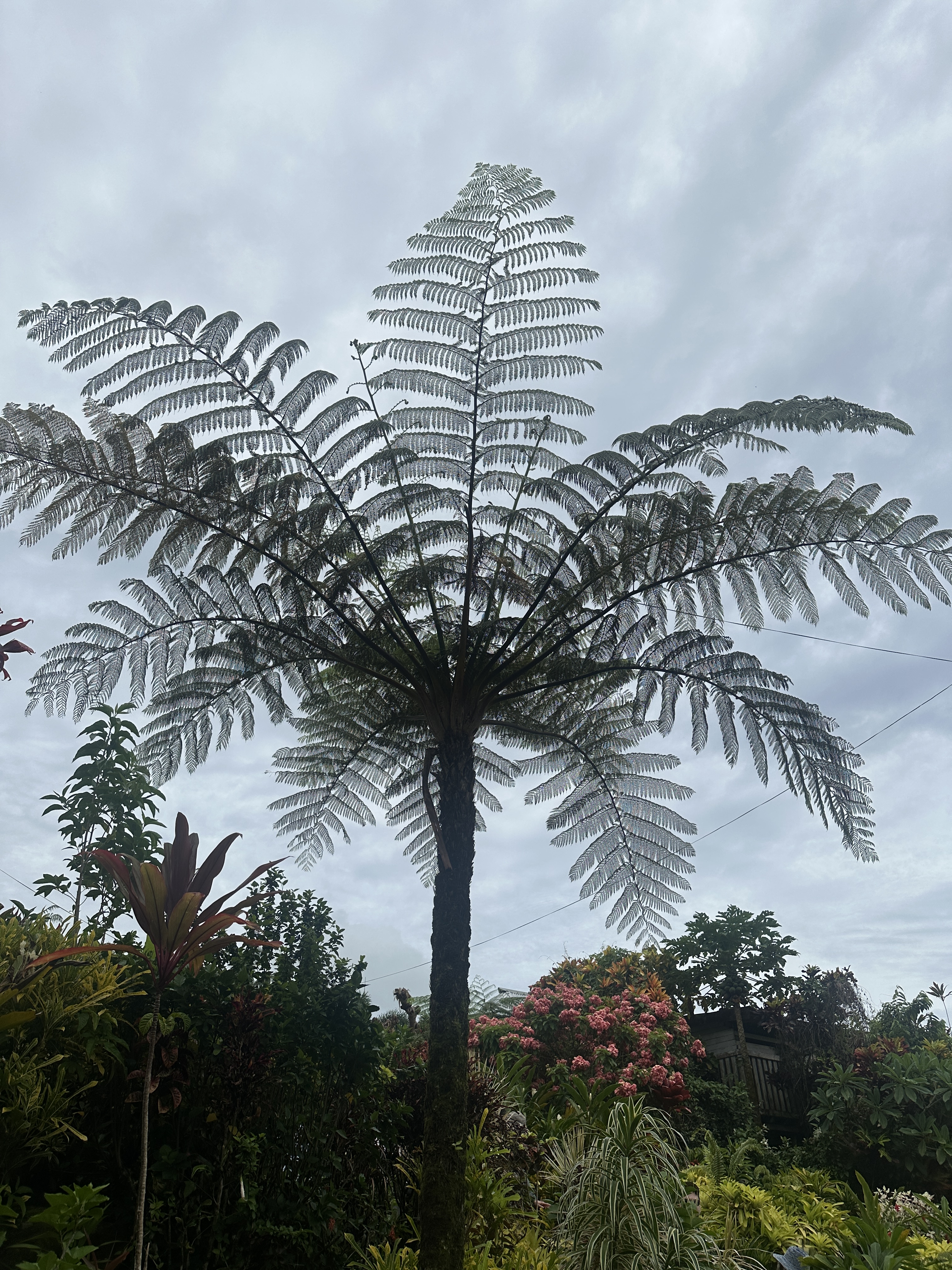
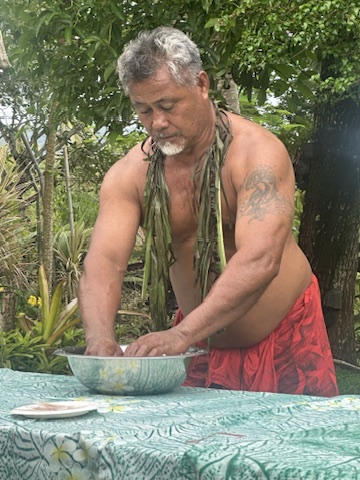
The visit to the gardens began with demonstrations of coconut husking and the preparation of coconut cream, which involves scraping the coconut meat with coconut fibers.
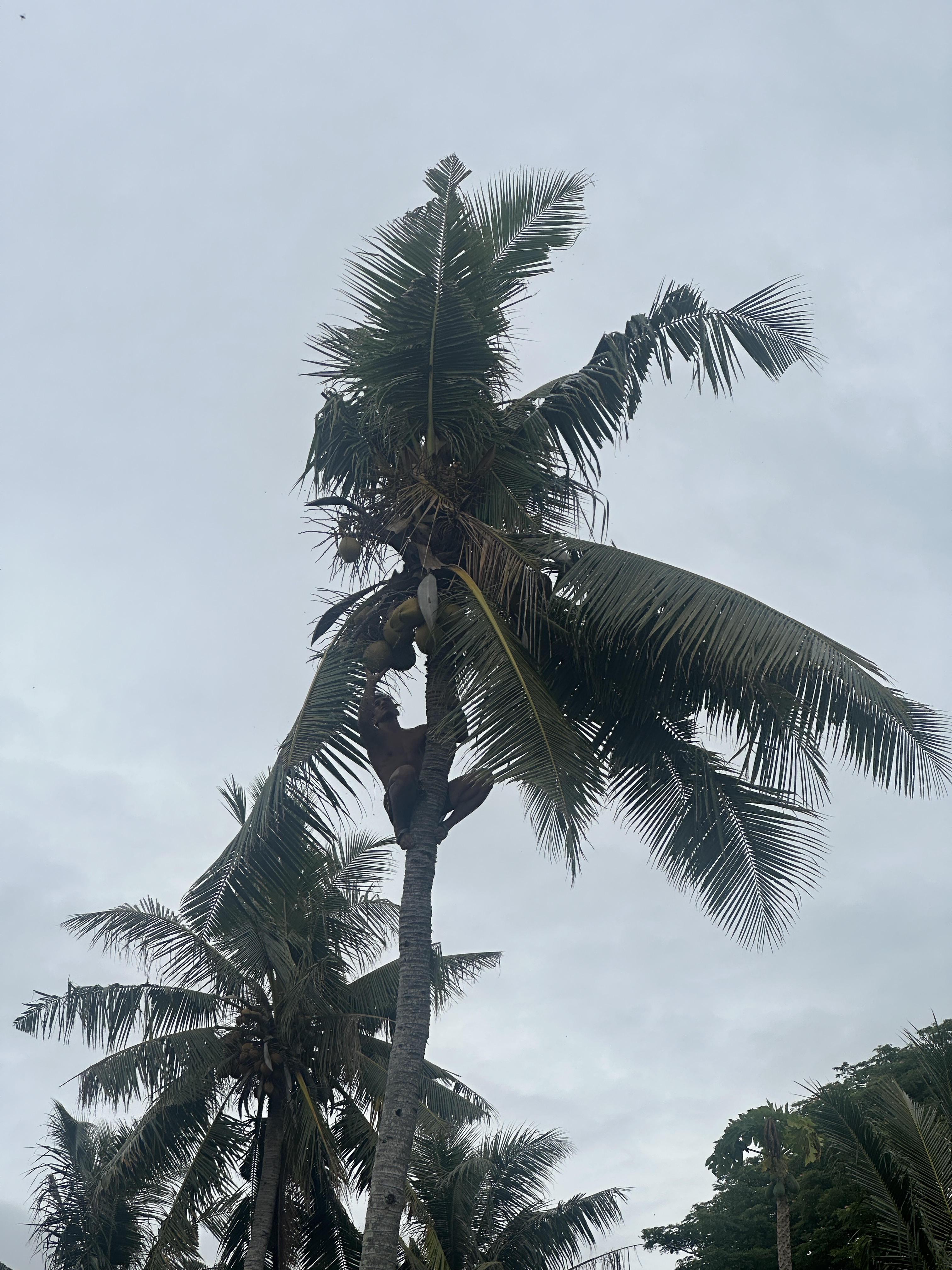
A young man also showed how coconuts are harvested by climbing the trunk anchored only by a fiber rope around his ankles. Thus “secured,” he ascended a 10-meter palm in less than 20 seconds, gathered a couple of coconuts, and was back on the ground in less than a minute. It was an amazing display of agility and strength.
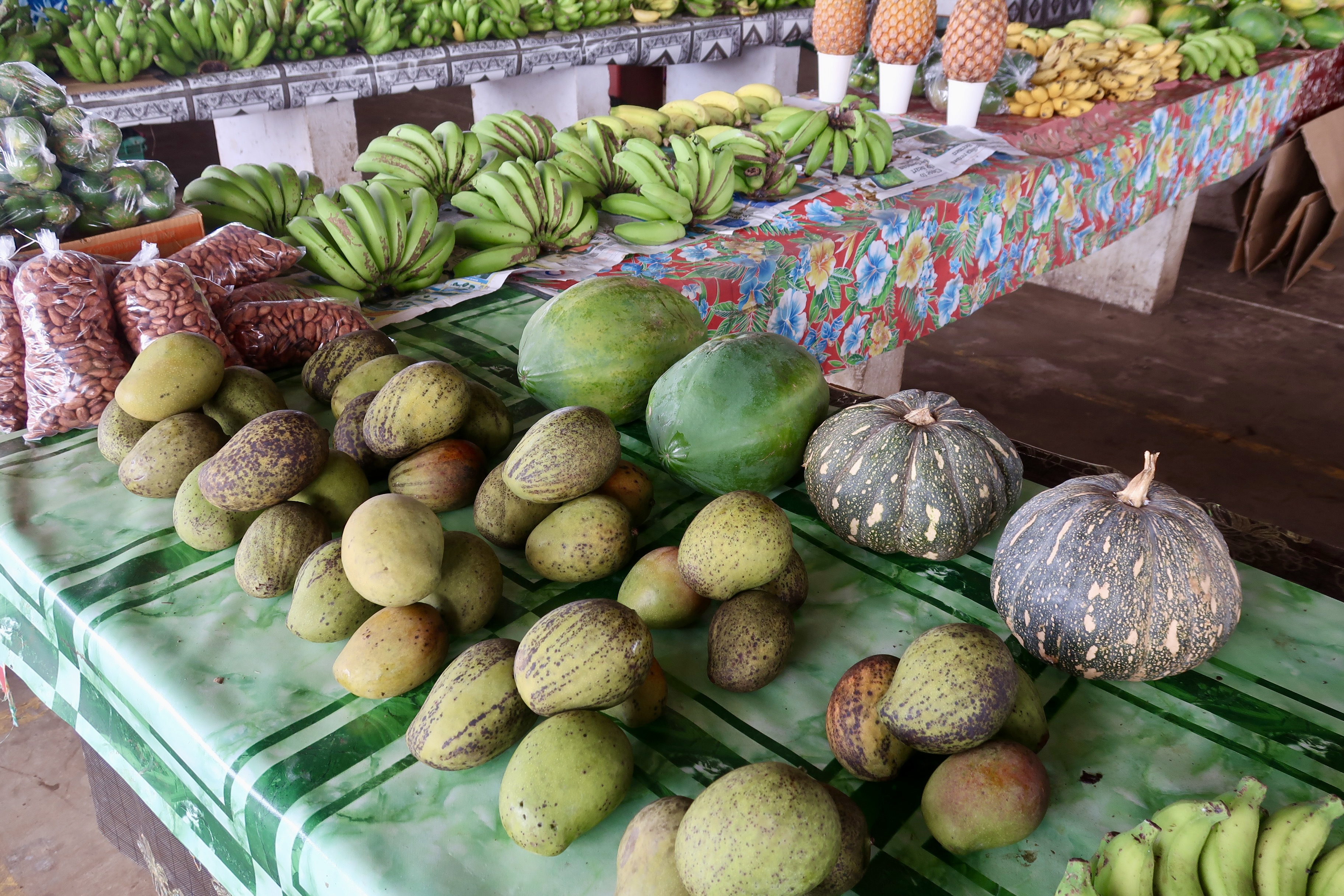
With the educational portion of the visit over, we were given tastes of fresh banana, pineapple, papaya, mango, taro, and breadfruit, the latter two soaked in coconut cream. All were delicious – the pineapple and banana were among the best I’ve ever had.
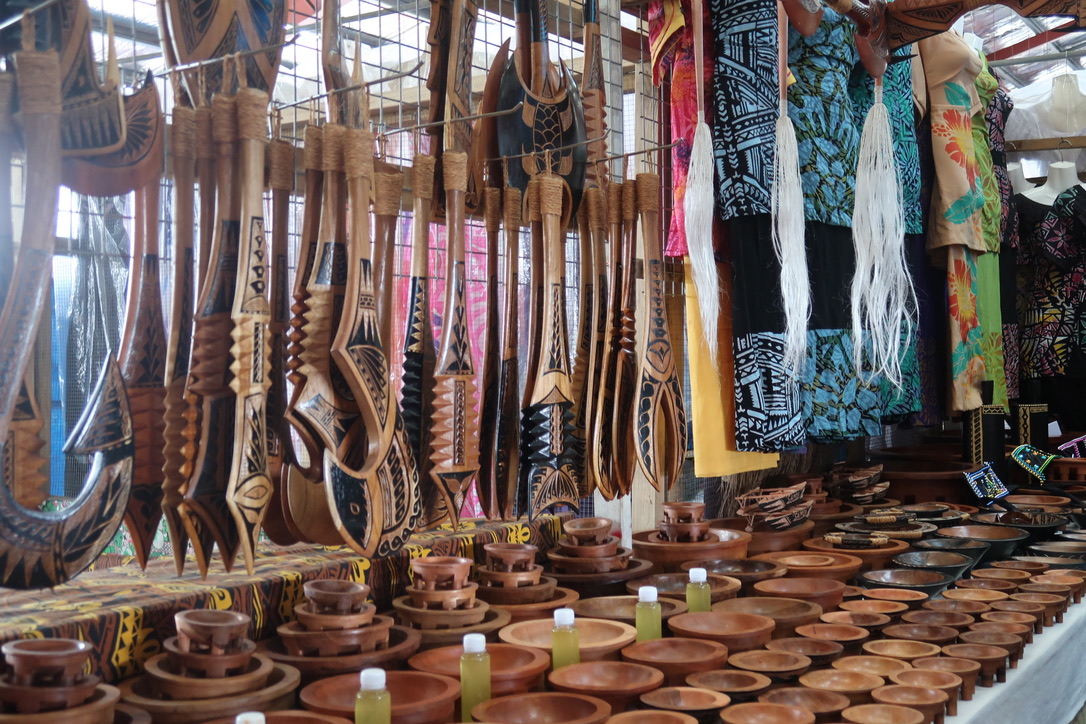
With a bit of extra time before we had to return to the ship, Dora took us on a bus tour of downtown Apia followed by a brief visit to the Old Apia Market, a large open-air building crammed with stalls selling produce, crafts, and clothing. It puts the market in Pago Pago to shame.
Although much of the tour was underwhelming, I still enjoyed the experience and leave with a warm feeling for Samoa. I’d have liked the tour even more if I’d used one of the many private companies offering identical itineraries for a fraction of what the ship charges. You can walk off the ship and take your pick of tour operators, and I’d encourage you to do so if you visit Samoa.
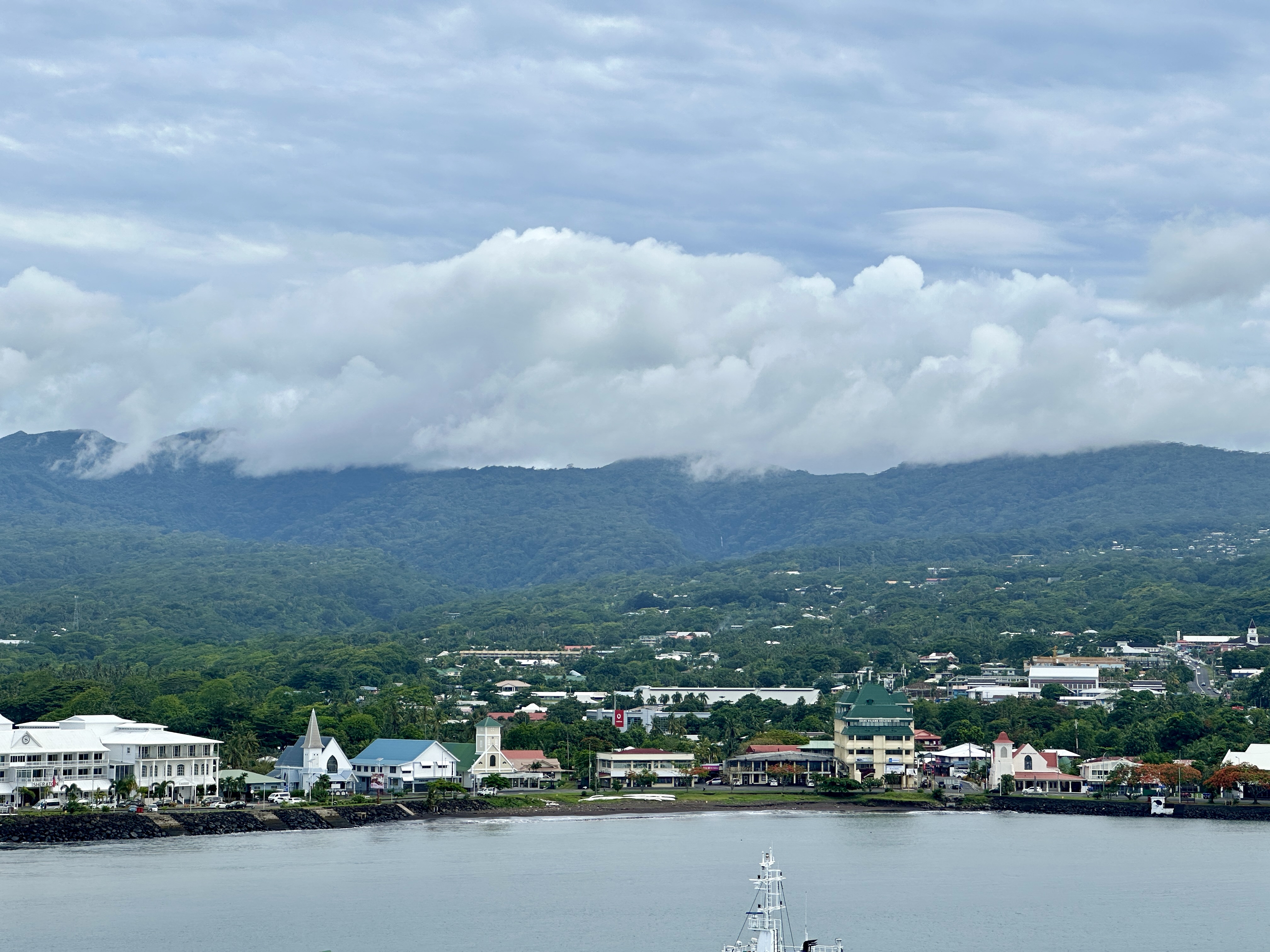
We’re currently under way to our next port of call, Tonga. Tofa (goodbye) for now!

 PuffinlessTravel