Today we visited Tutuila, the largest of American Samoa’s seven islands. To me, it’s everything a South Pacific island should be. The hillsides are beyond lush, with more shades of green than I can name, the water is flawless, the beaches are strewn with fantastical fragments of coral, and the people are welcoming, warm, and (in a laid back way) fiercely proud of their home and their heritage.

As you’d probably guess, American Samoa is a United States territory. Its inhabitants are considered “non-citizen nationals” and have no representation in Congress, despite the fact that it has the highest per-capita rate of enlistment in the US military of any American state or territory. Alone among places we’re visiting on this trip, it uses the US dollar as its currency and, even more gratifying, has actual American Diet Coke. (Tempting as that caffeinated nectar was, I opted for a local beer, Vailima, which was nothing special.)
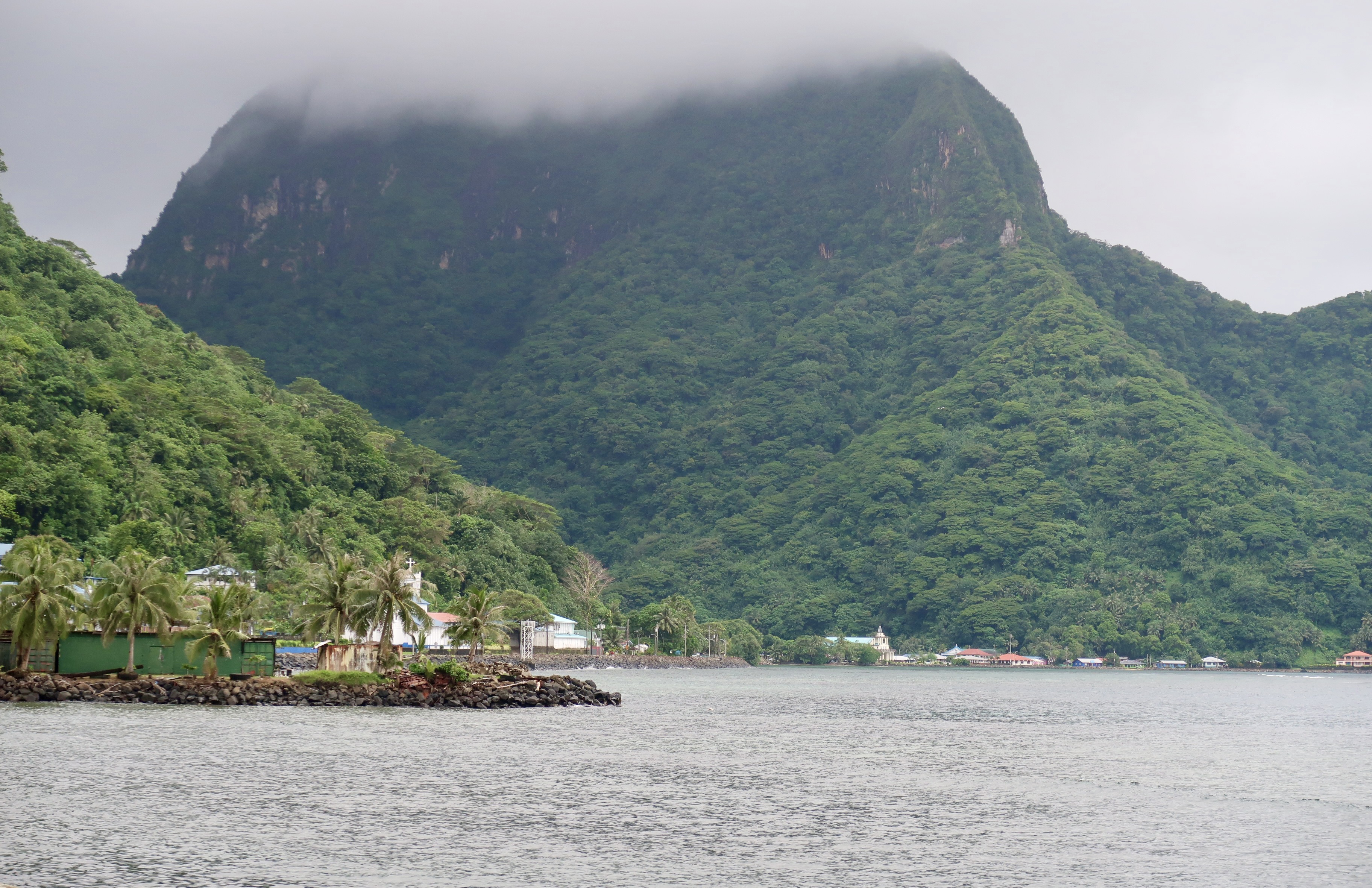
We docked in Pago Pago (the capital) in driving rain, with the leaden sky shading seamlessly into the slate-colored water. From the ship’s observation lounge, the wind sounded like a dentist’s drill boring through the deck door. I should have expected such a wet and wild greeting: the island’s highest peak, which overlooks the harbor, is called Rainmaker Mountain.
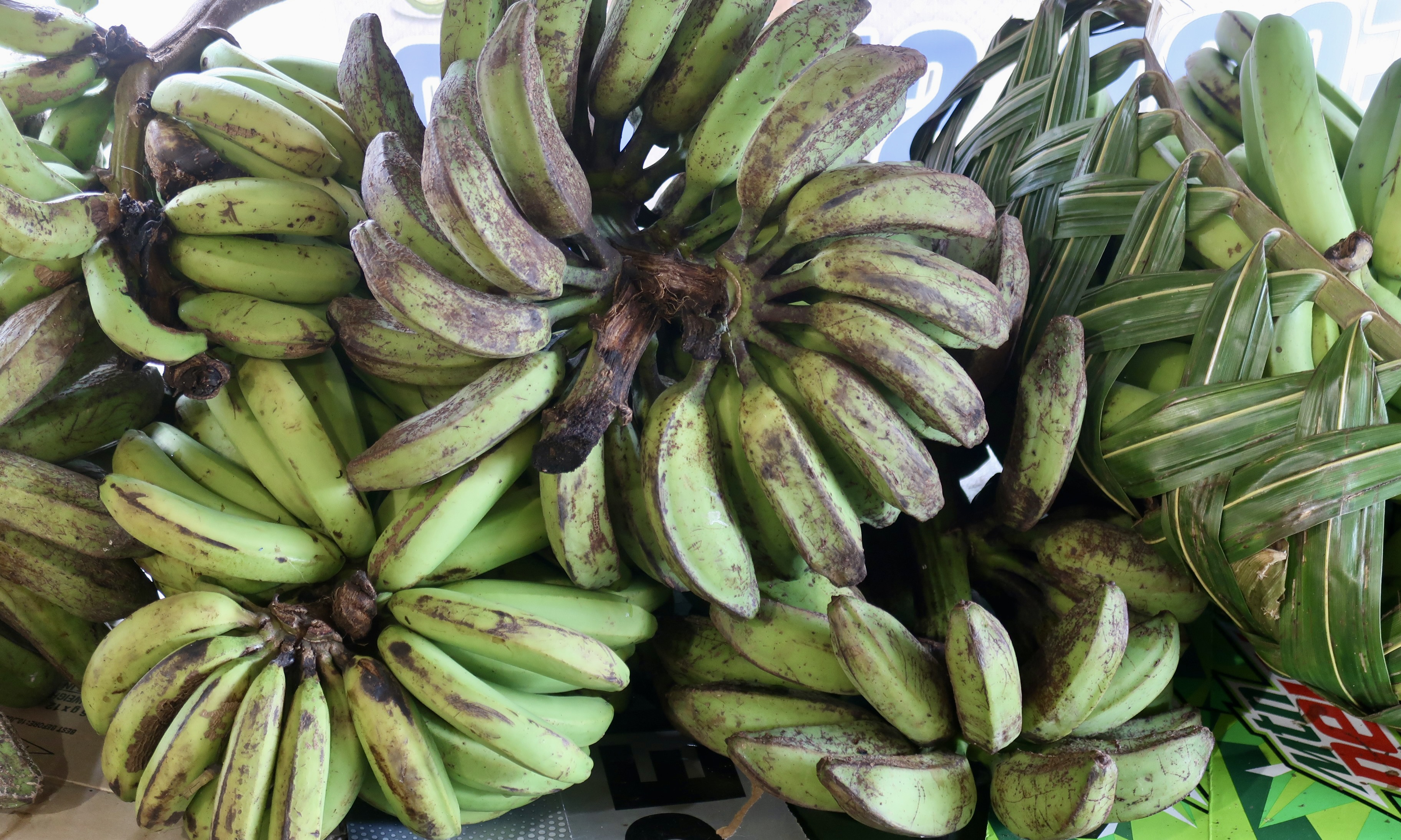
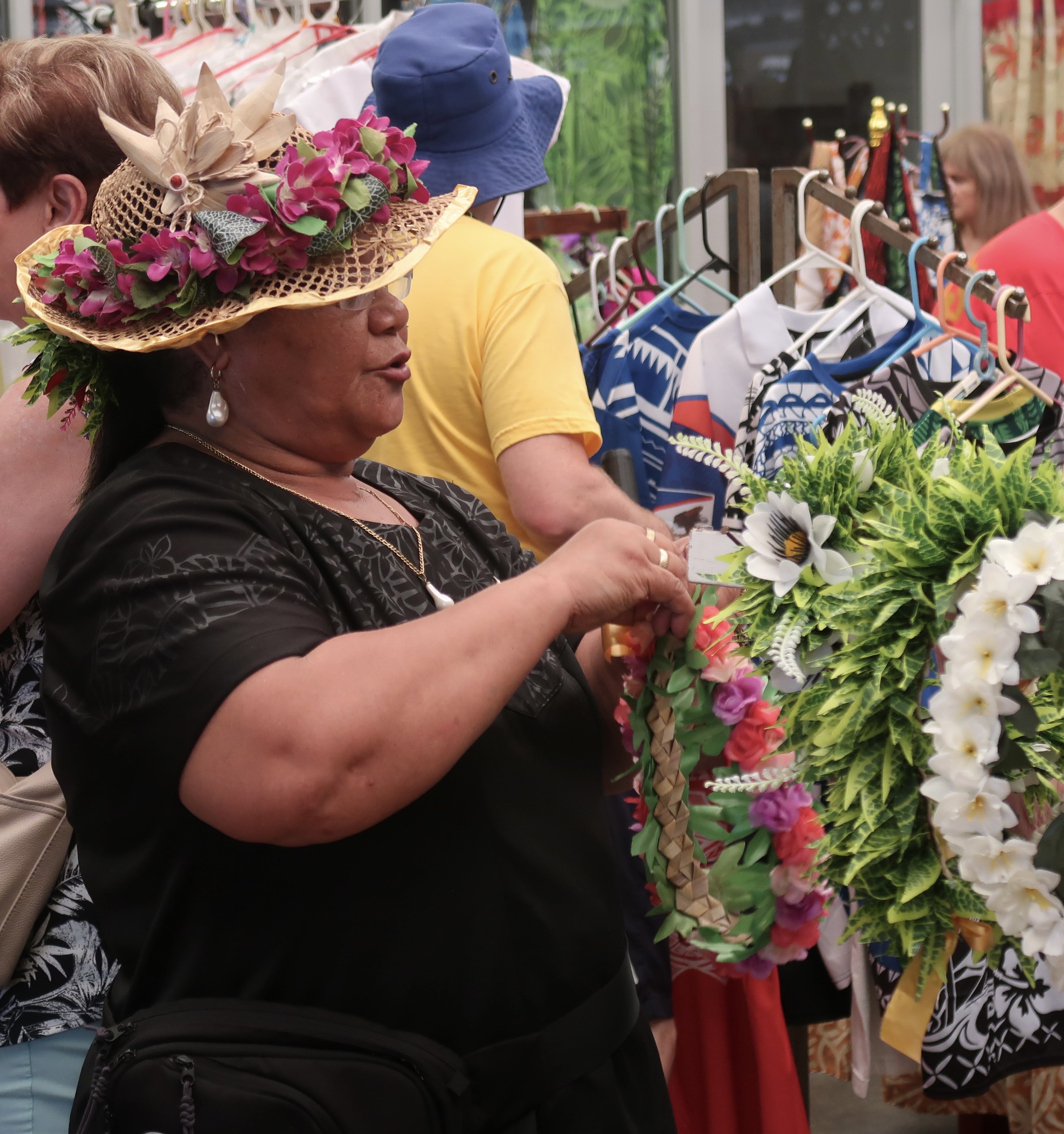
Thankfully, the rain and wind abated just before I set out on my tour of the eastern part of the island. (It returned periodically, but not for more than a few minutes at a time.) Our first stop was the Fagotogo Market, where vendors sold fresh local produce, vivid clothes, and handicrafts.
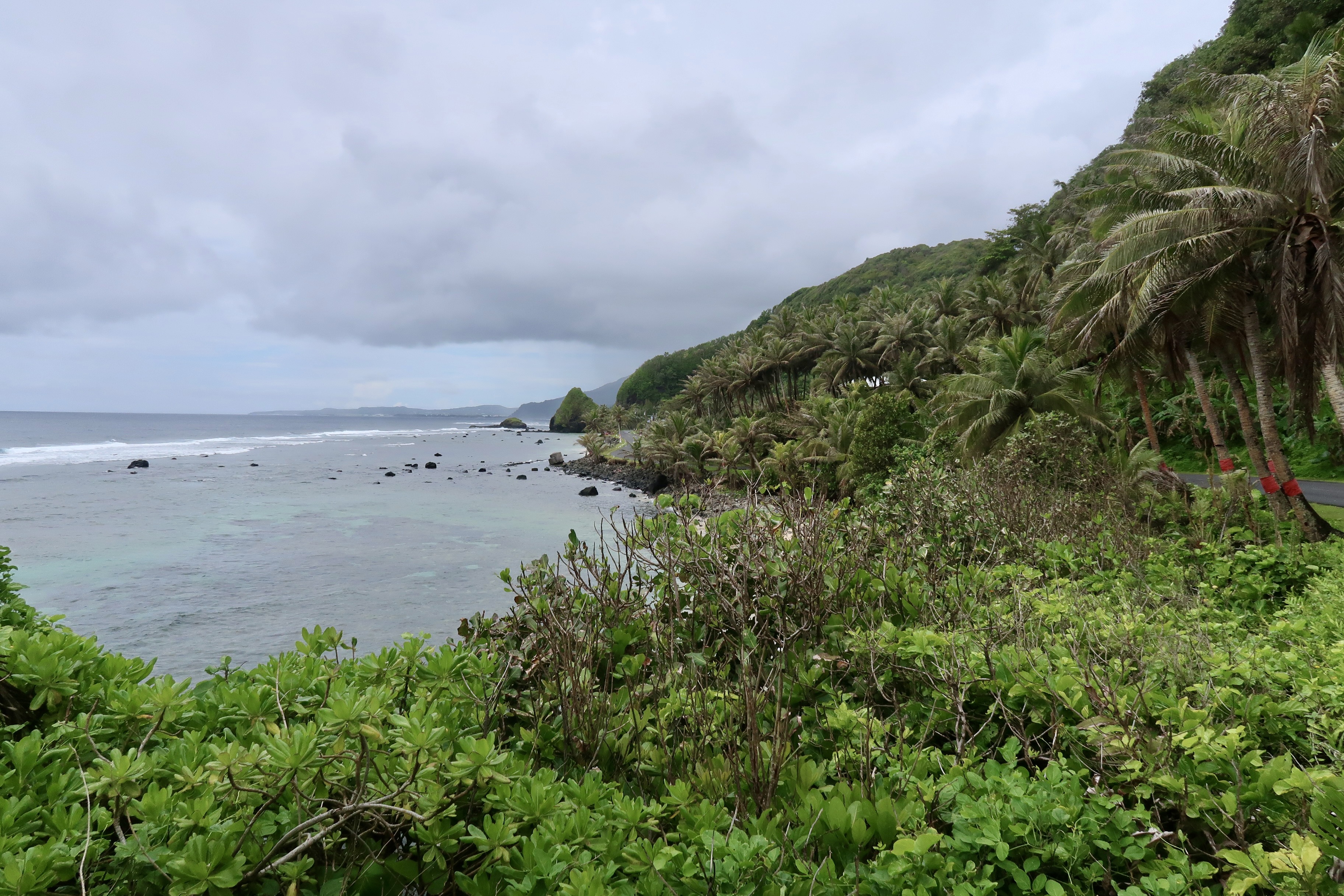
After the market, we drove past slopes covered in coconut palms, broadleaf ferns, frangipani, giant taro, and countless other sprouting, spreading, flowering, and towering plants.
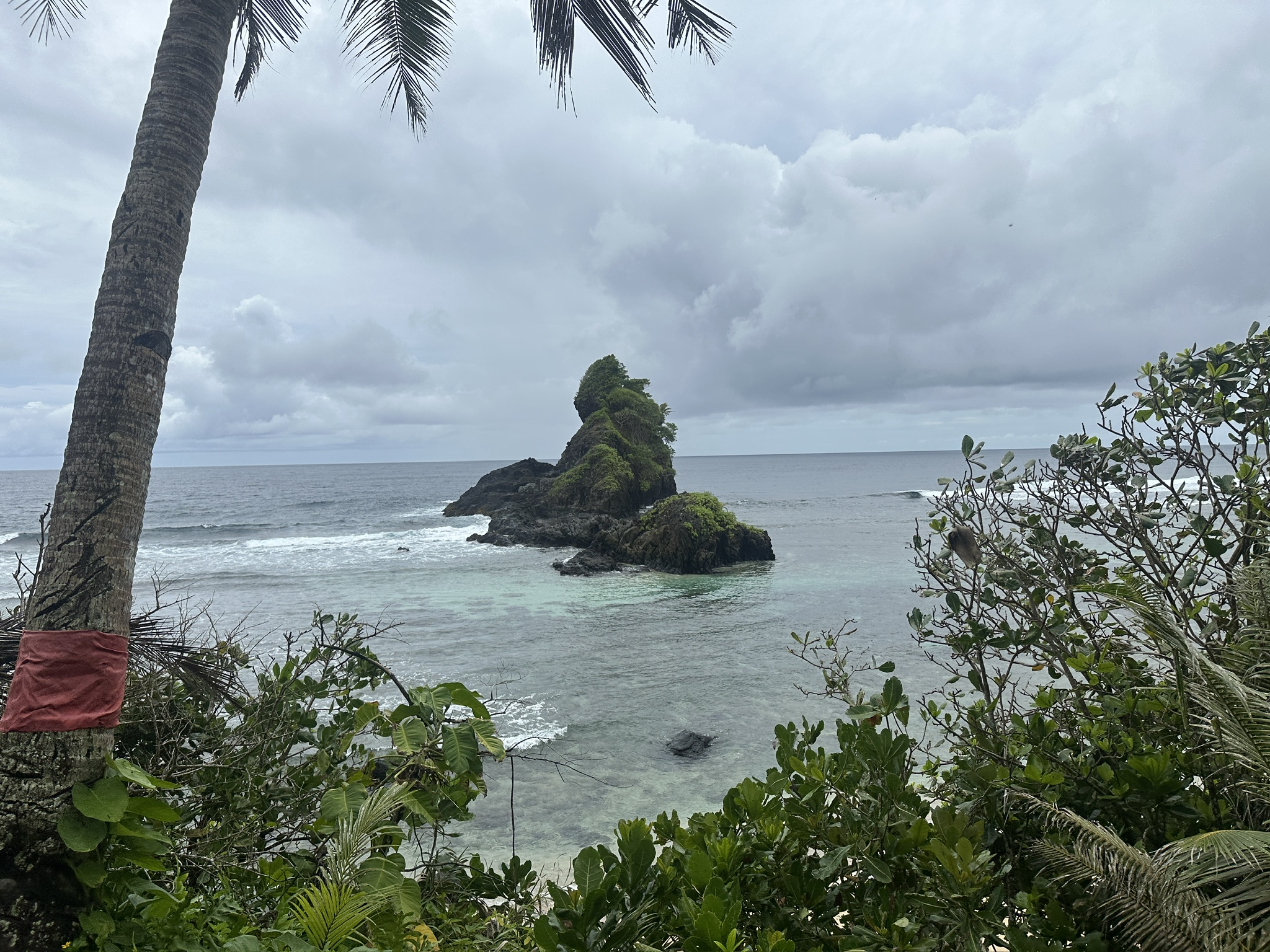
After twenty minutes or so, we stopped to take a look at “Camel Rock,” an offshore rock that – you guessed it – is supposed to resemble a camel. Other than its being somewhat hump-shaped, I saw little likeness. At least it didn’t spit.
Many of the roadside houses have grave markers in front. Our guide – more on her in a moment – told us that most Samoans want their deceased relatives nearby. As a result, although cemeteries exist, many front yards (never the back) contain tombs.
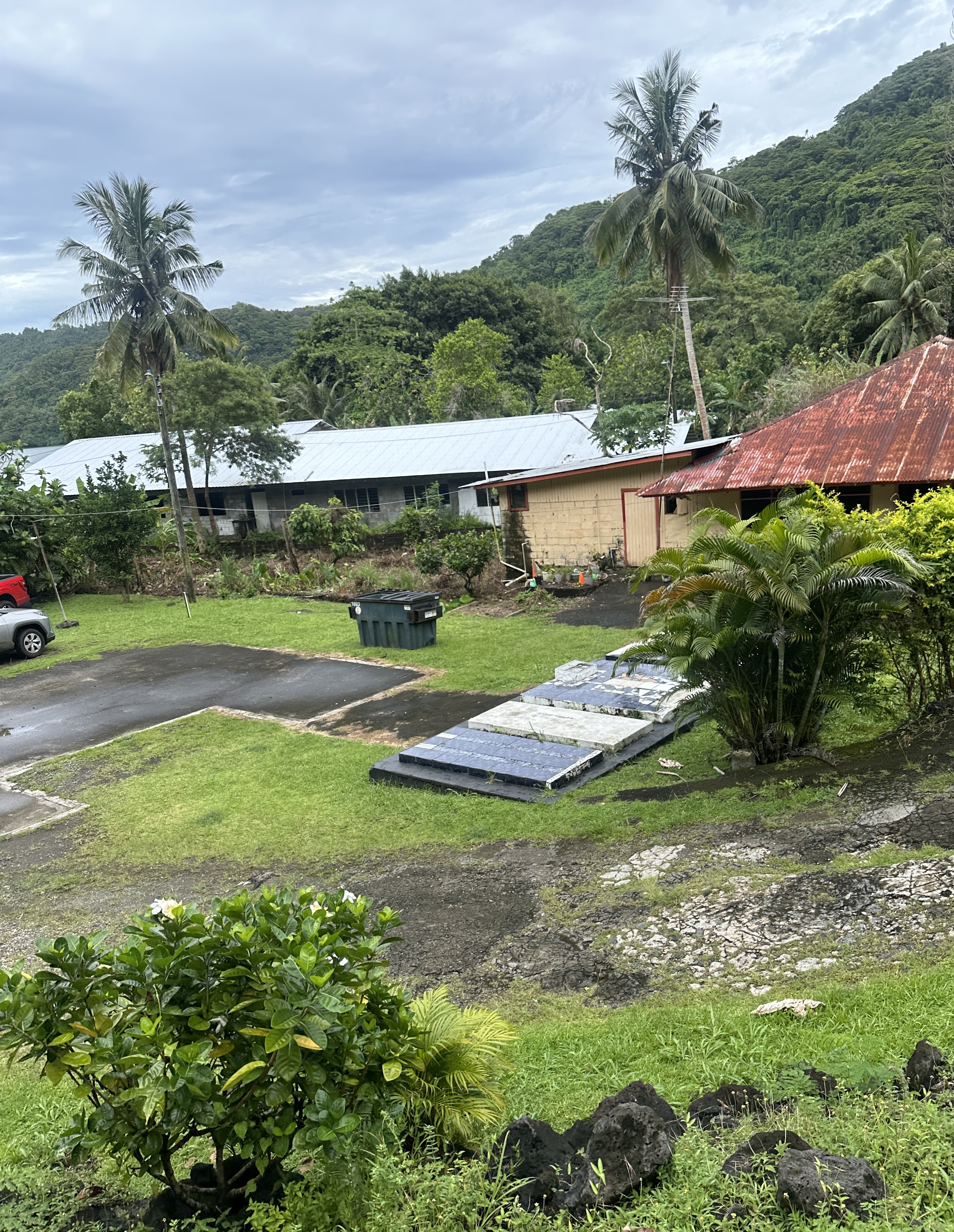
If someone sells their house, the new owner decides whether to keep the graves; if not, the seller has them excavated and moved to their new dwelling. Talk about surreal estate!
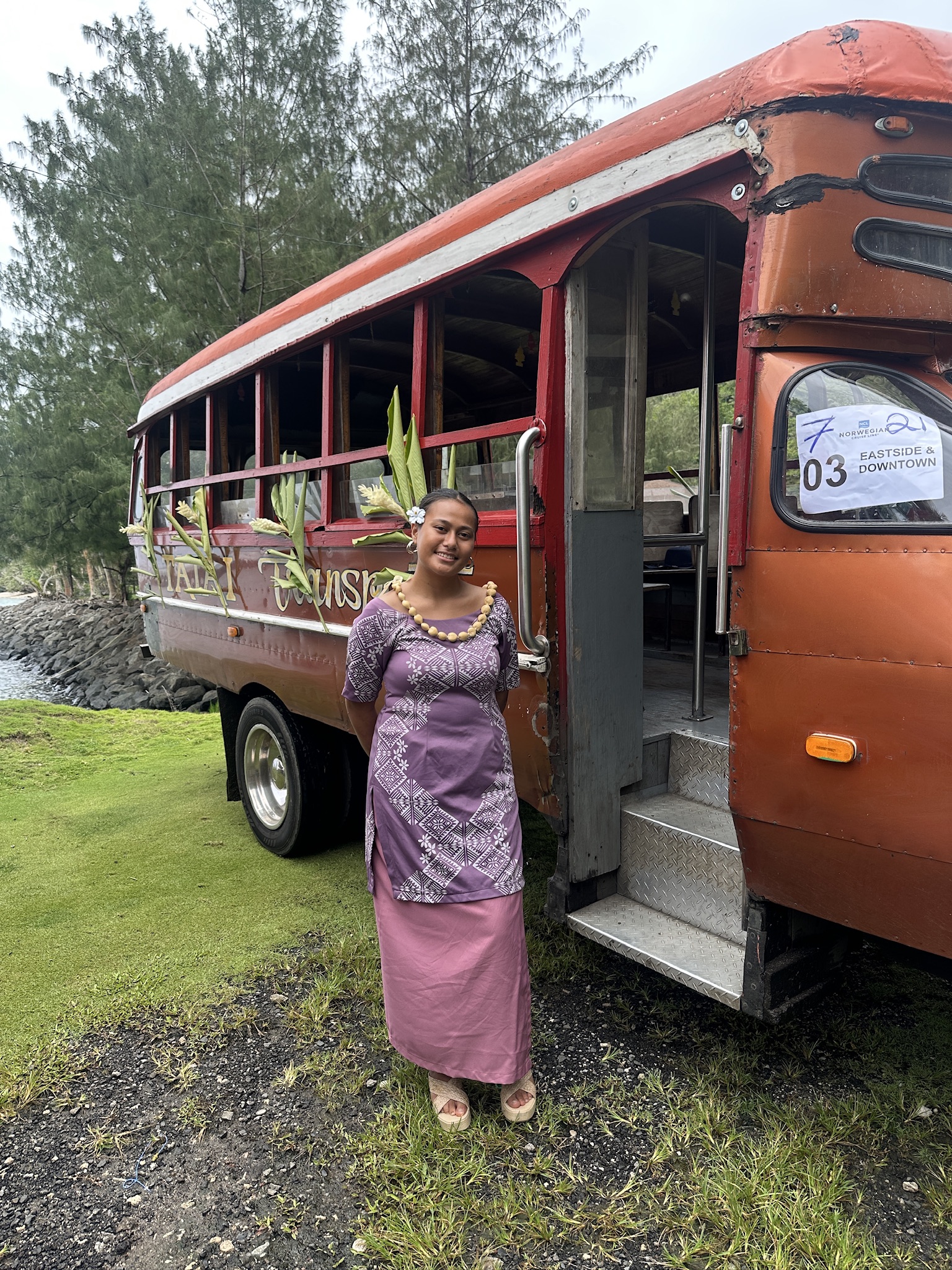
A few words about our guide, Janice Lynn. She was enthusiastic, knowledgeable, poised, a talented dancer, and … all of 15 years old! American Samoa has no professional tour guides. Instead, high school students take on these positions to earn money (which goes to their families) and practice their English. I hope and believe she has a bright future, whether in tourism or some other field.
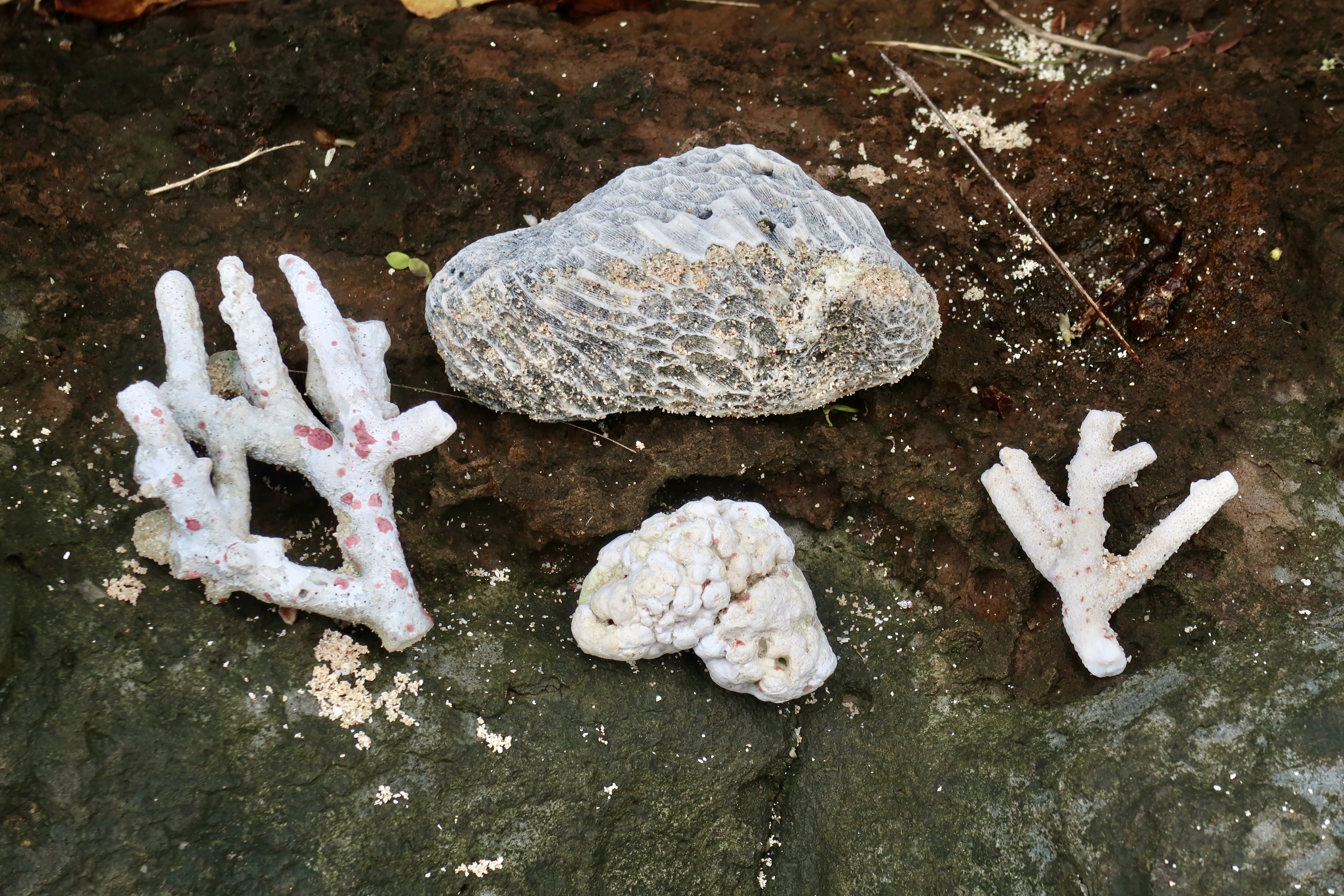
After a visit to Auasi wharf, where ferries serve a neighboring island, we made our final stop at Avaio beach, which I found fascinating. Instead of sand, the beach is made of fragments of coral, sea shells, and smooth stones, punctuated with massive black basaltic outcrops. It’s unlike anything I’ve seen before.

While at the beach, we were treated to traditional Samoan dancing, which is almost achingly expressive. The hand movements, impossibly graceful, tell stories all by themselves.

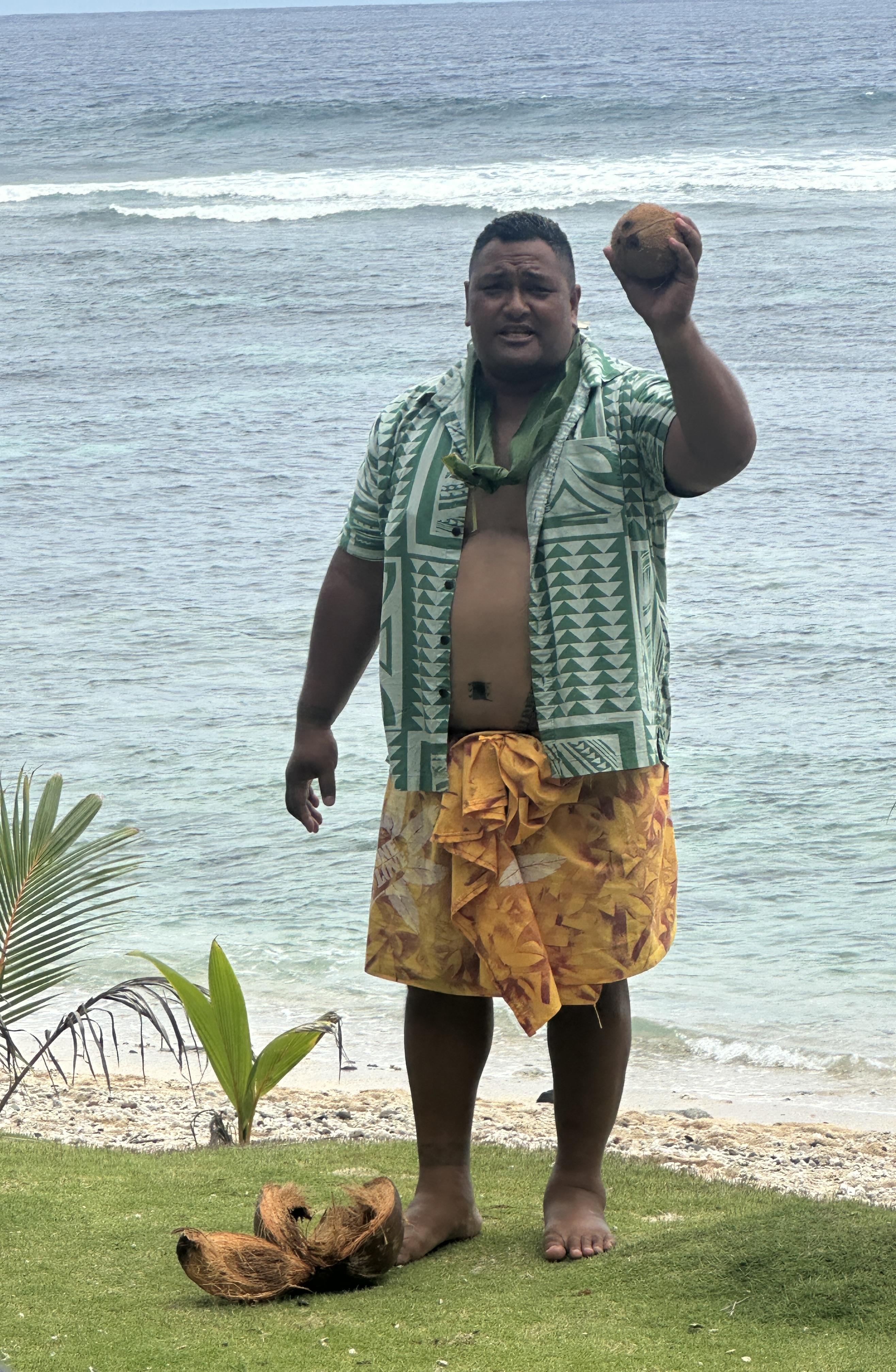
Following the dancing, a local chief named Peter demonstrated how to shuck a coconut and explained the significance of his many tattoos.
So far, American Samoa is my favorite among the several wonderful islands we’ve visited. Its natural beauty, combined with the spiritual beauty of its people, make it an absolute gem.
Tonight we cross the International Date Line – do you come here often? – which means that Monday, December 9 will not exist for me. Our next stop: Samoa of the non-American and non-Girl Scout cookie variety.

 PuffinlessTravel
I learned so much about Samoa and was struck by the similes in the boat docking paragraph.