No, it’s not the name of a law firm. It’s a charming, resilient city that’s three-to-four hours by bus from Dubrovnik, Croatia, where we docked this morning, depending on how long it takes to get across the border. (Croatia is in the EU, Bosnia and Herzegovina is not, though they’ve applied for membership. As a result, you have to clear border control in both directions.)
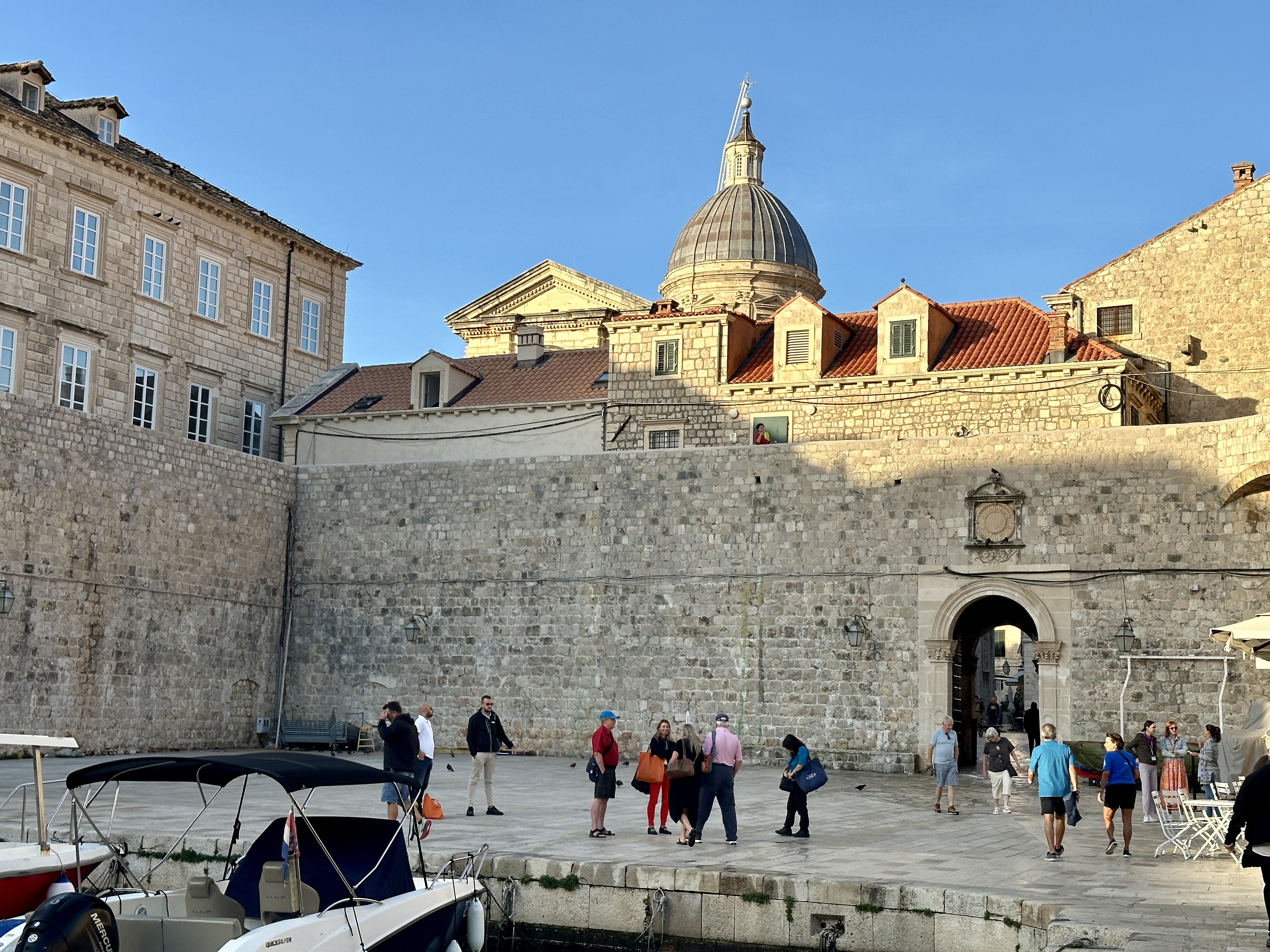
I’ll start with Dubrovnik. I was here ten years ago and would love to have spent the day wandering around the old city, a magnificent fortresss of a town surrounded by massive walls that have never been breached in their half-millenium of existence. Being a travel junkie, though, I couldn’t pass up the chance to visit some place I’ve heard a lot about but have never seen.
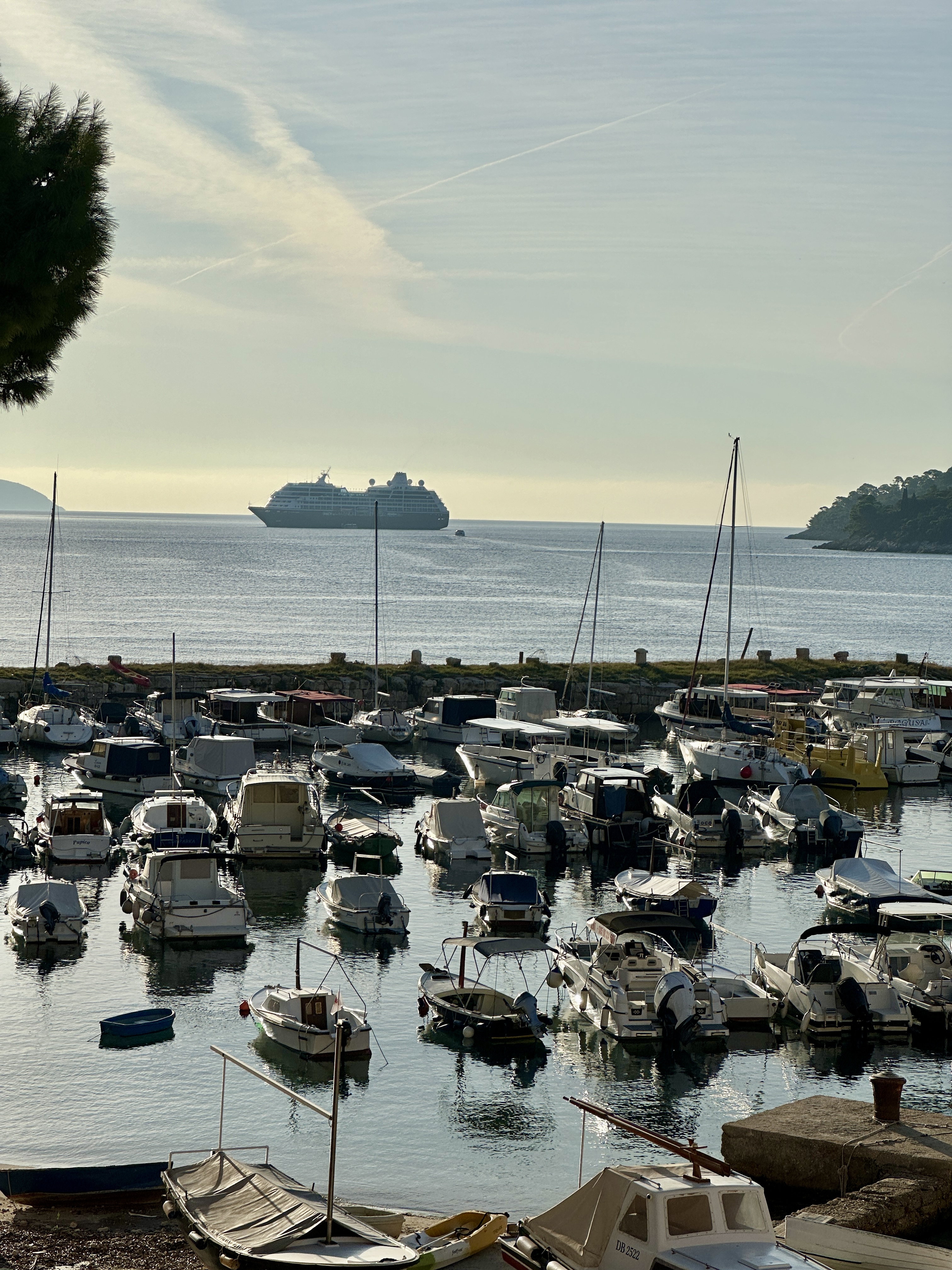
We tendered in from the ship, docking at what I’m told is “King’s Landing” from the Game of Thrones. Having decided midway through episode one that the show wasn’t for me, I lacked the excitement of some of my fellow travelers.
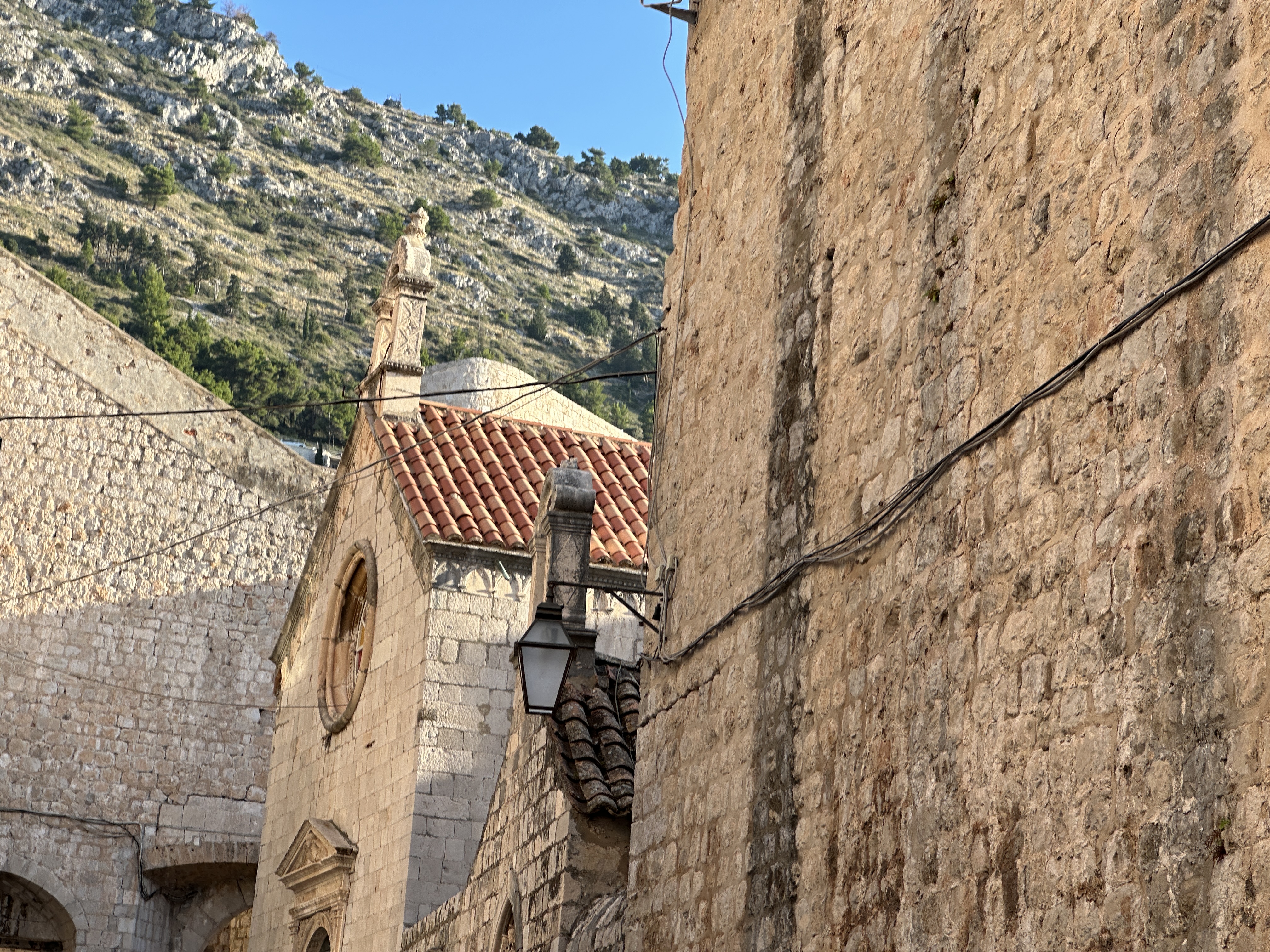
Before bringing you onto the bus with me, so to speak, I want to put in a word for our guide, Daniela Vidič. She is excellent: interesting, informative, and wonderful to talk to. She can be found through Tours by Locals and conducts several types of tours both within Dubrovnik and in the surrounding area, including our journey to Mostar. If you’re looking for a tour guide in this part of Croatia, I can’t recommend her highly enough!
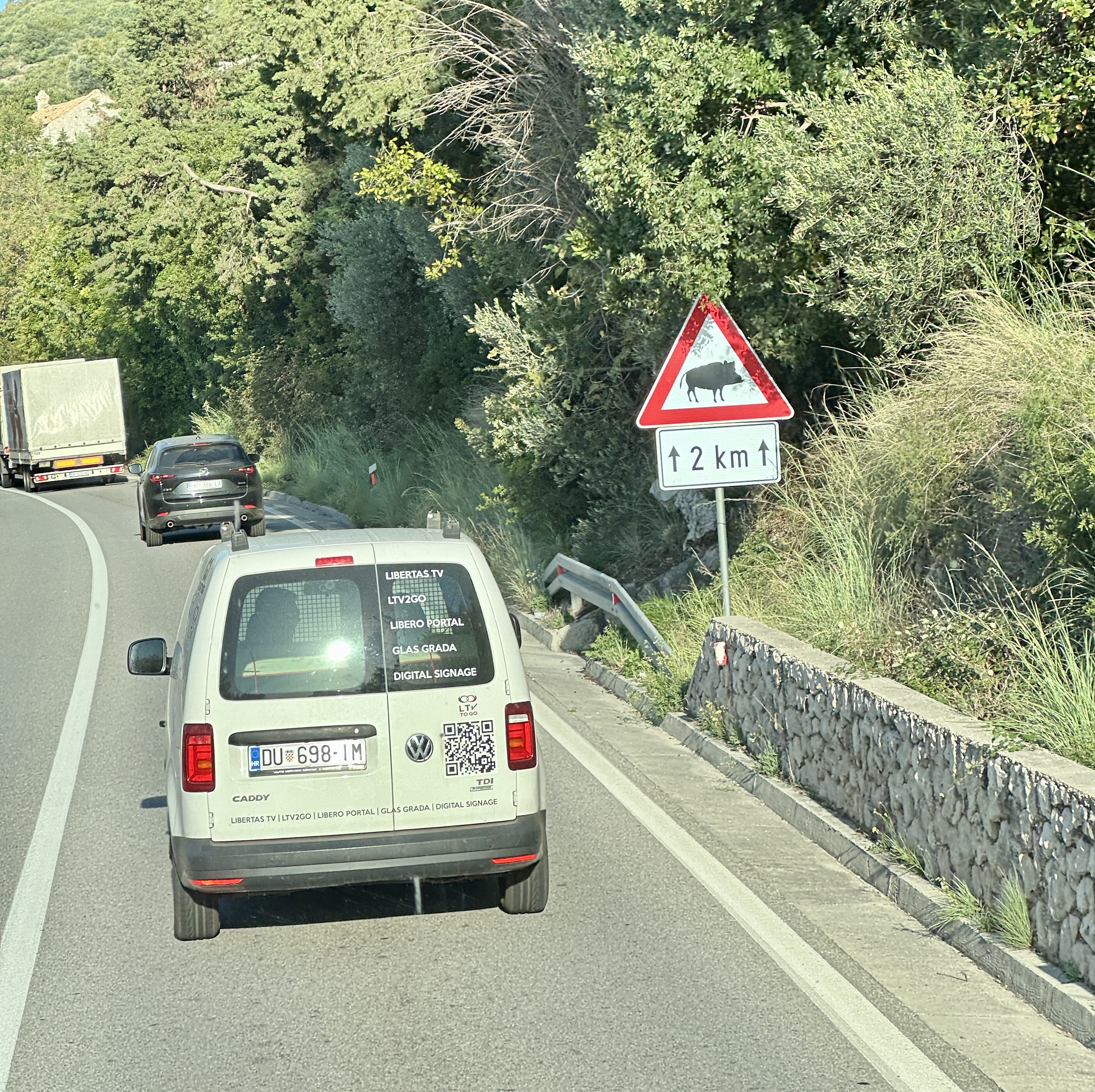
The first hour or so of our ride to Mostar followed a winding but well-maintained two-lane road with the gleaming Adriatic on one side and heavily forested mountains on the other. In fact, the mountain is so heavily forested that there are periodic signs warning people to watch for wild boars crossing the road.
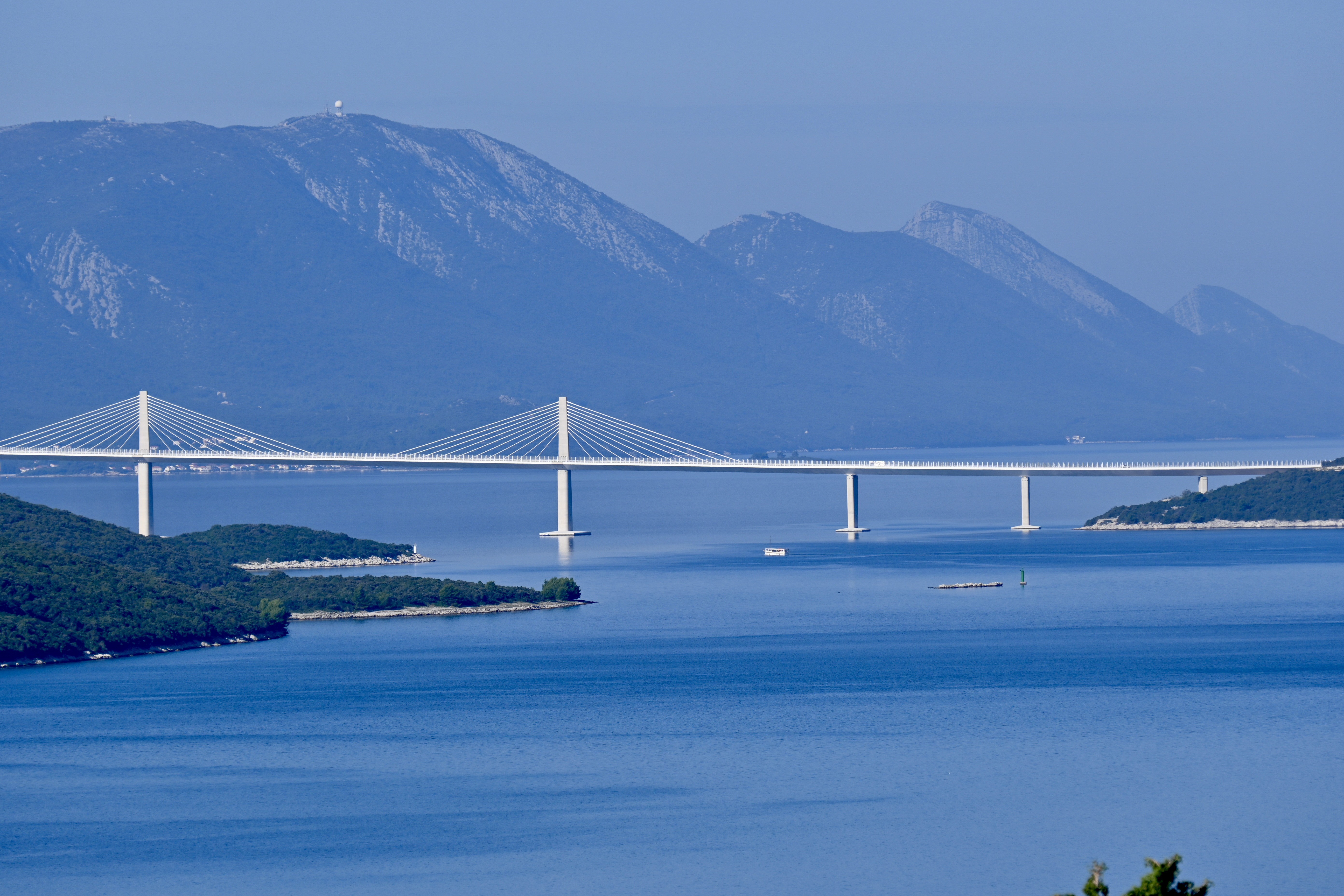
After clearing border control, we stopped in the town of Neum, the only place in Bosnia and Herzegovina that touches the coast. The main highlight of Neum is the view toward a graceful bridge that opened a couple of years ago so that Croats could travel from north to south without having to cross B-H. A subsidiary but important highlight: free, clean rest rooms.
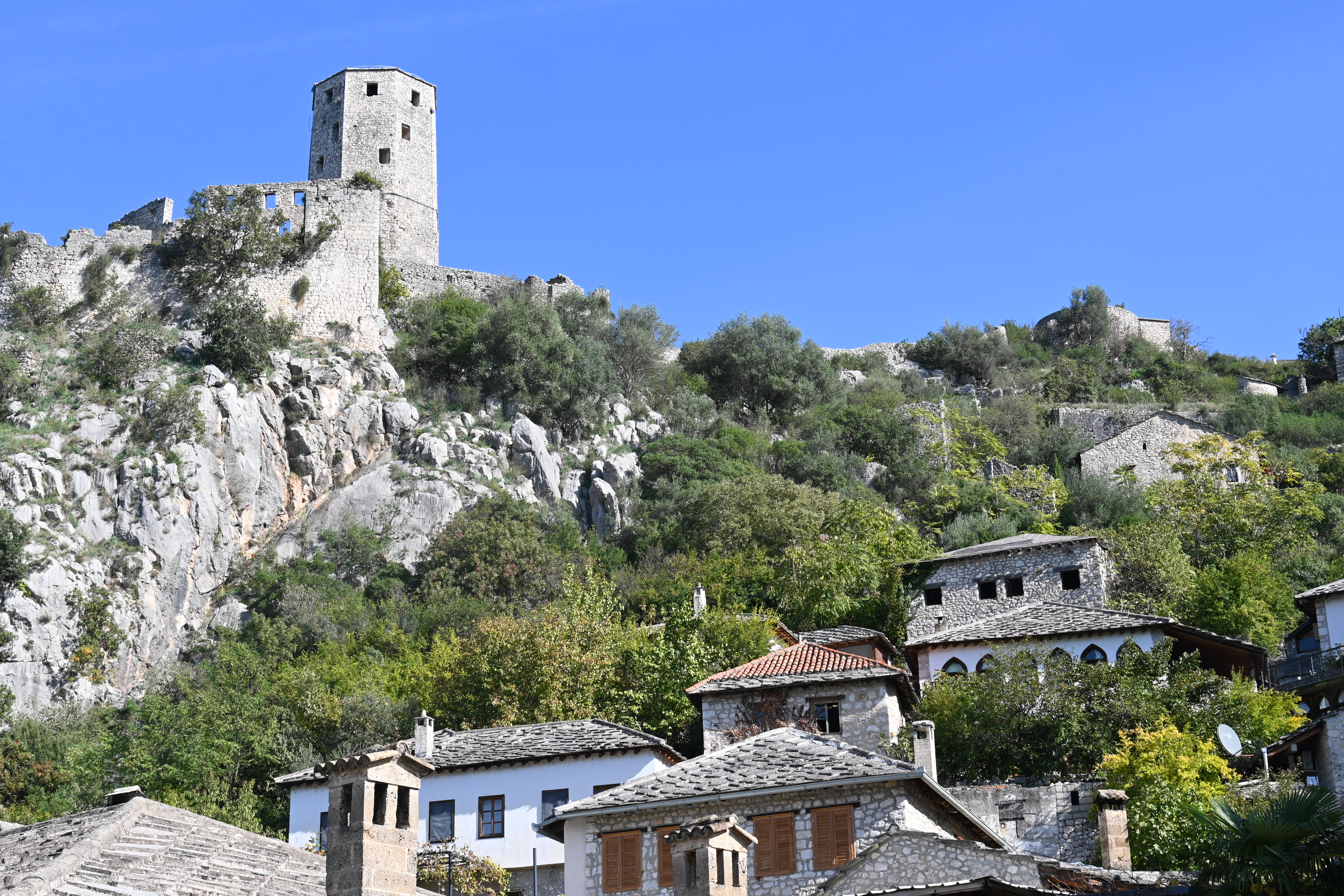
After our “comfort stop,” we drove on to Počitelj, a tiny historical village that served an important role in Ottoman times.
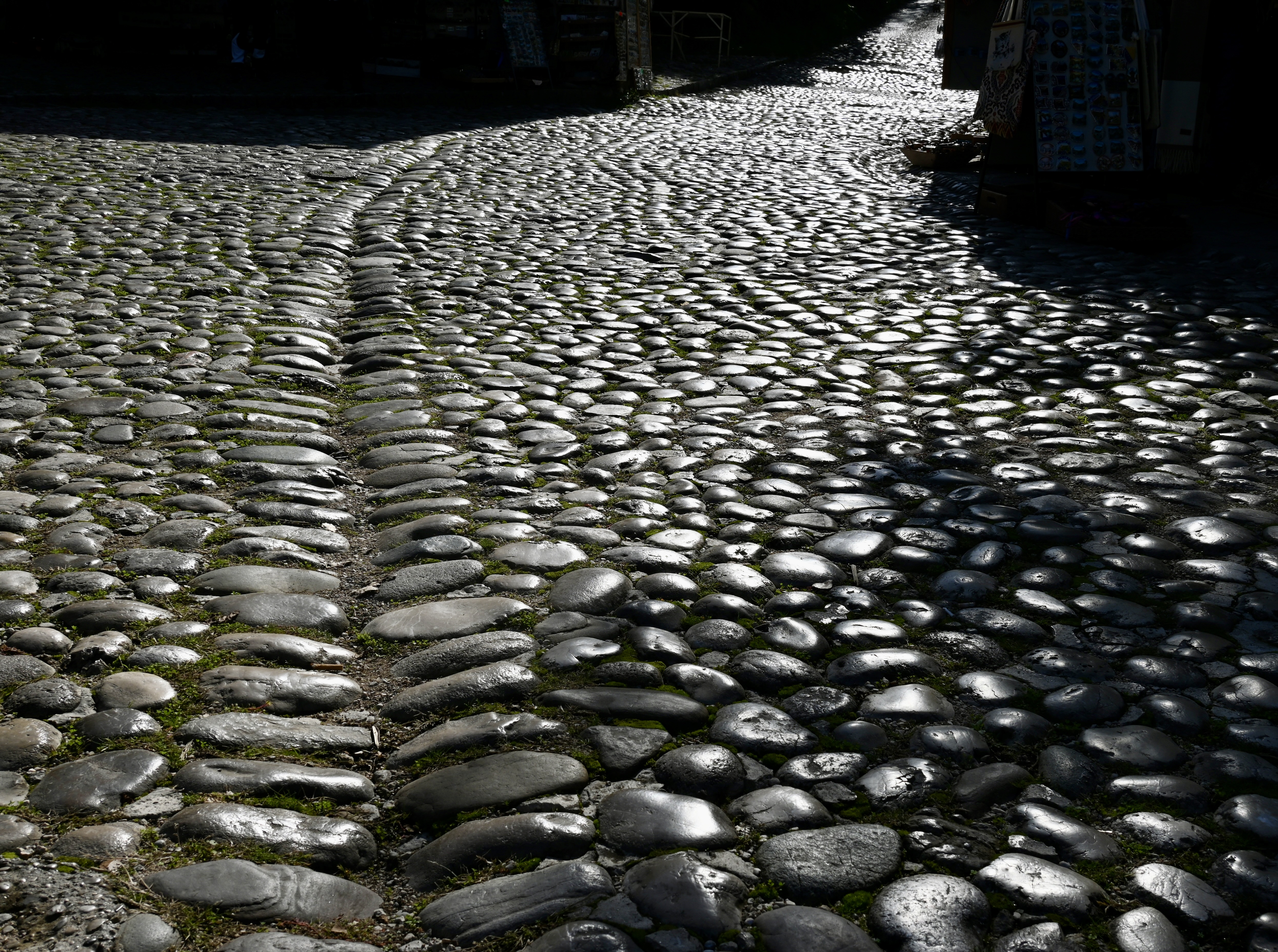
The village, which is designated a National Monument and open-air museum, sits within the town of Čaplina. It’s scenic, steep, and serene.
Our next stop was the star attraction: Mostar, which straddles the Neretva River. “Most” means bridge in the local language, and the most famous attraction of Mostar is the “Old Bridge,” which peaks 66 feet above the river.
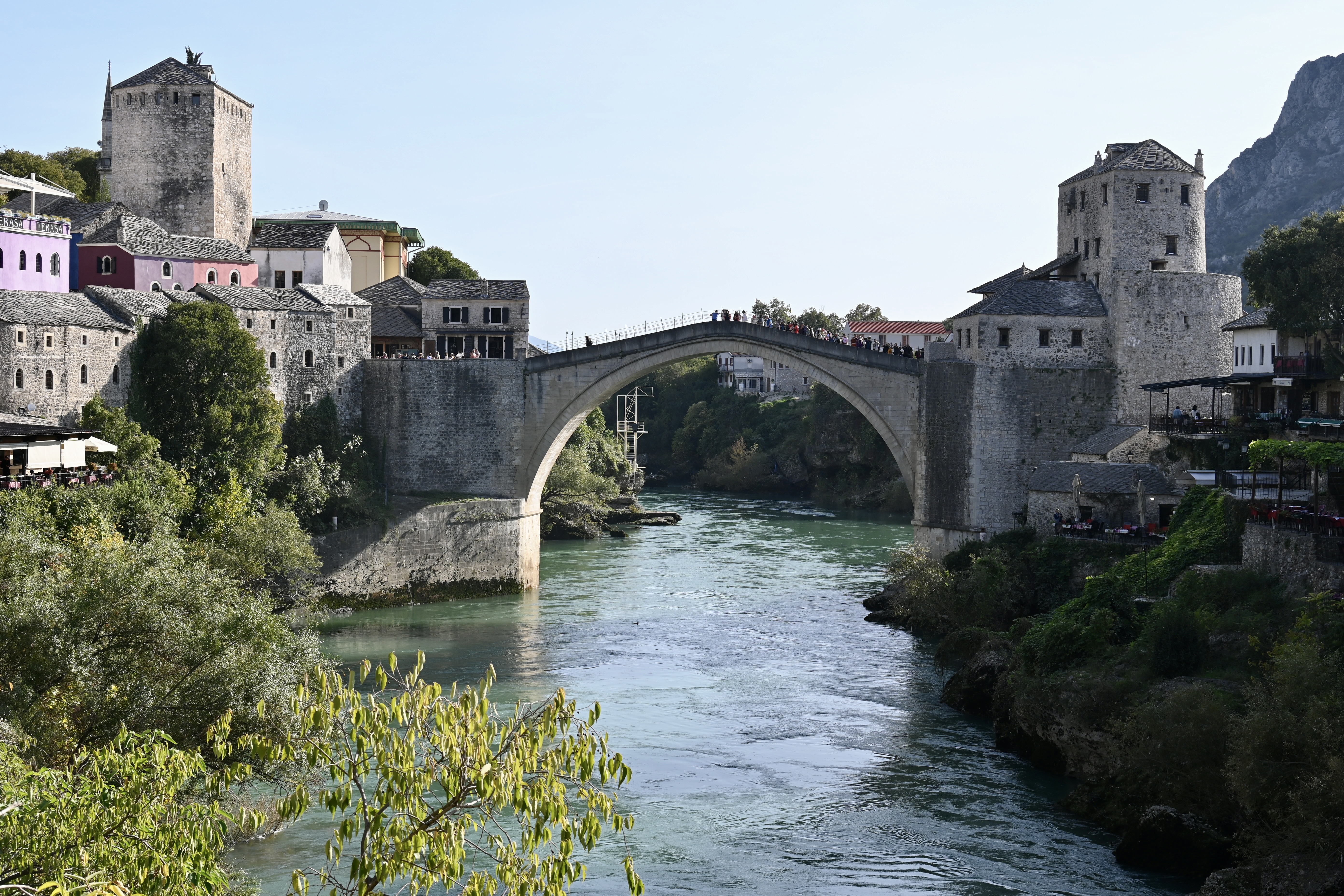
The bridge, a UNESCO World Heritage Site, was commissioned by Suleiman the Magnificent and built in 1566. Unfortunately, the bridge, like 90 percent of the surrounding city, was destroyed during the Yugoslav wars during the early-to-mid 1990s. It was rebuilt in 2004 using locally quarried stone.
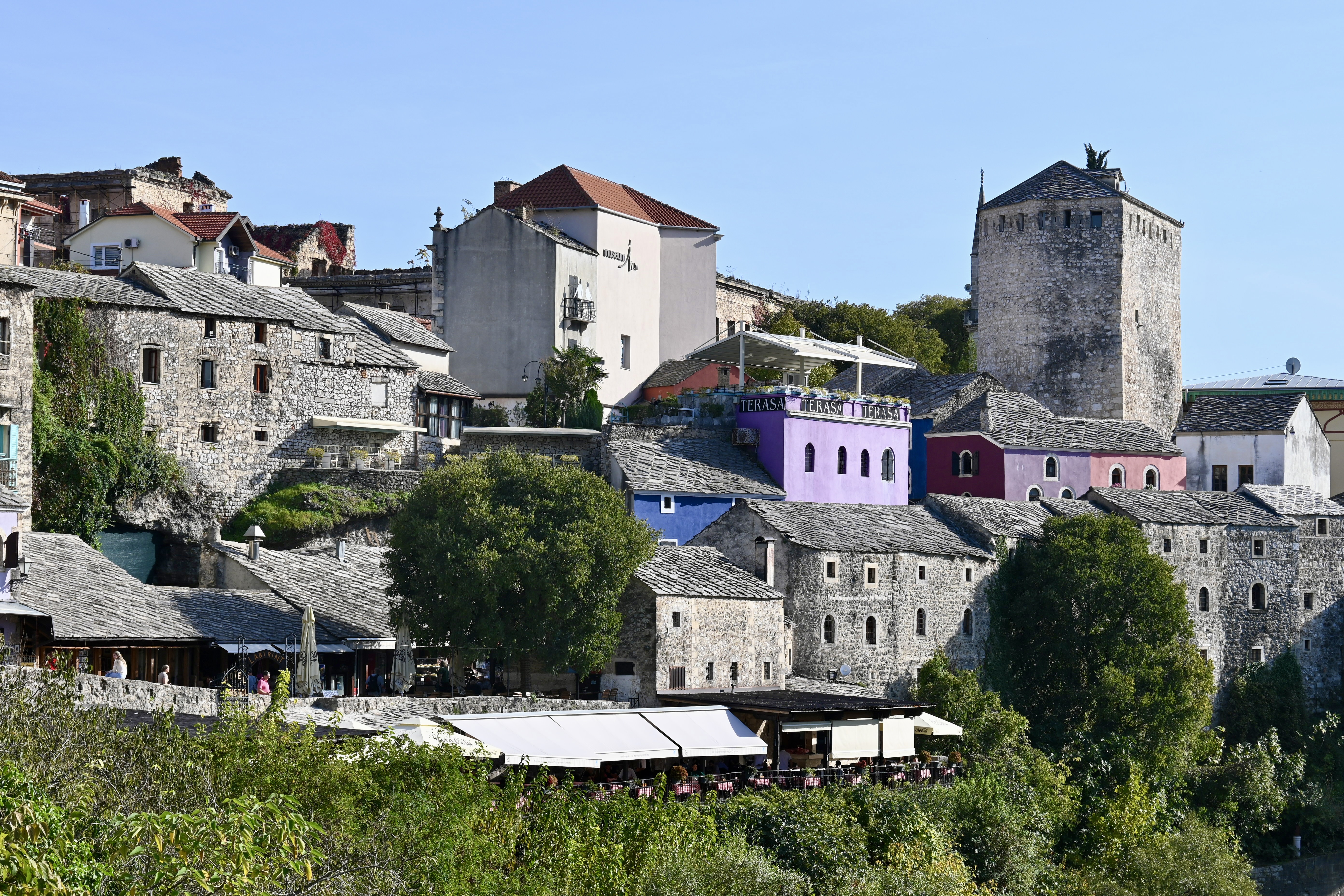
Since its construction in the 16th century, young men of Mostar have “proved their manhood” by jumping off the bridge into the river below. The river, notably, has the coldest water in Europe: 7 degrees Celsius, or around 43 degrees Fahrenheit, which, physiologically speaking, likely has a rather detrimental effect on a jumper’s manhood. (During our visit today, at least two people took the plunge, though I didn’t see either do so.)
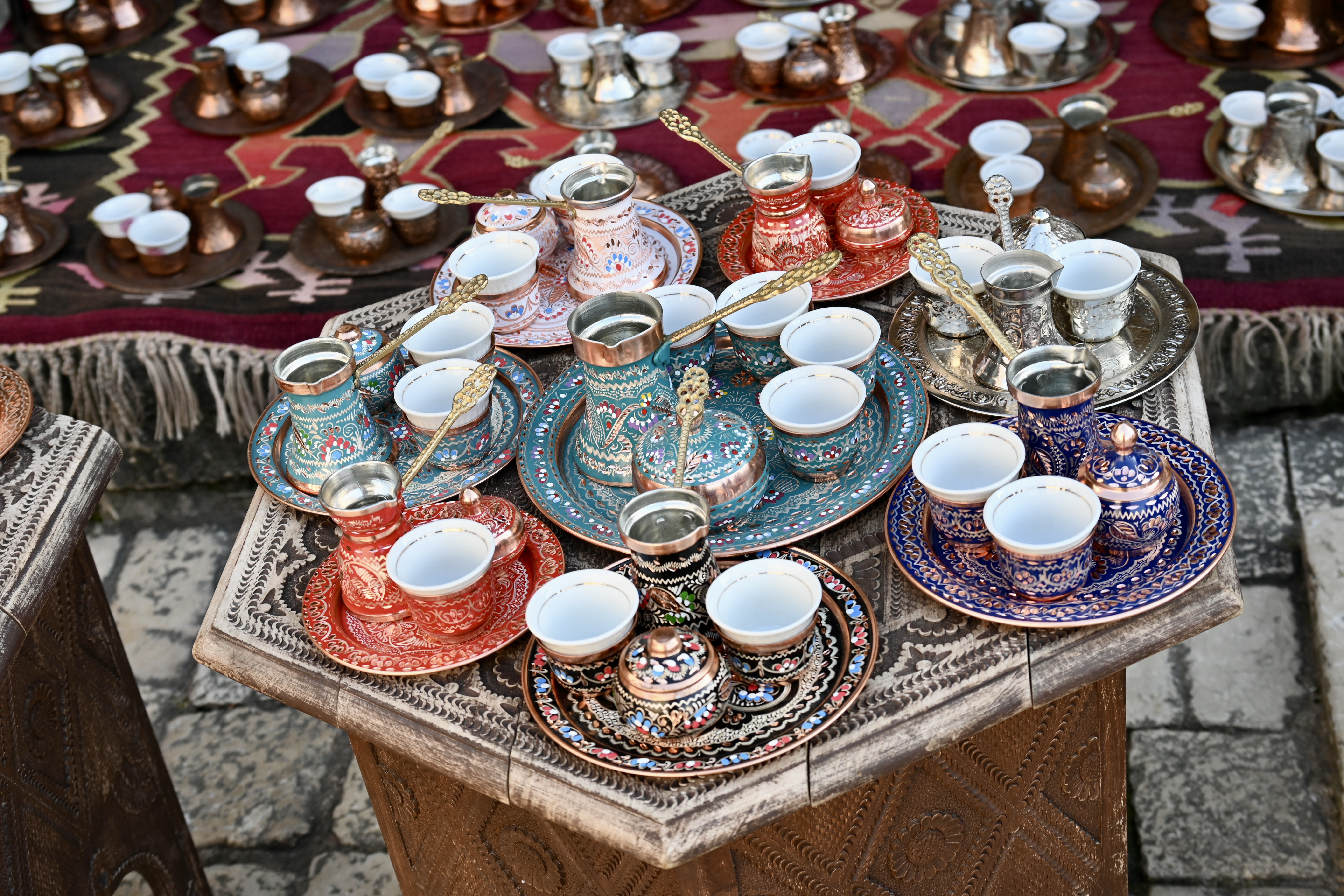
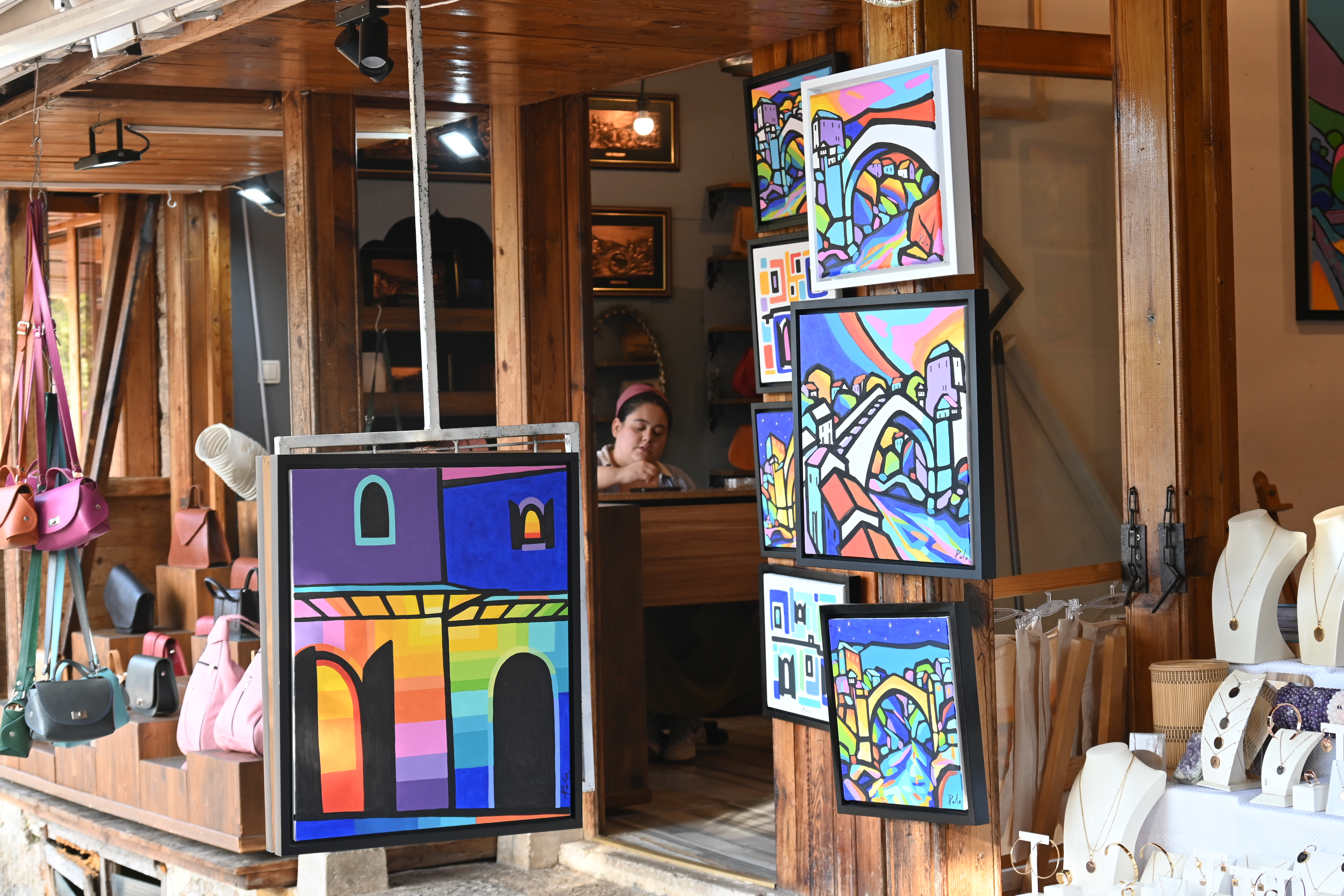
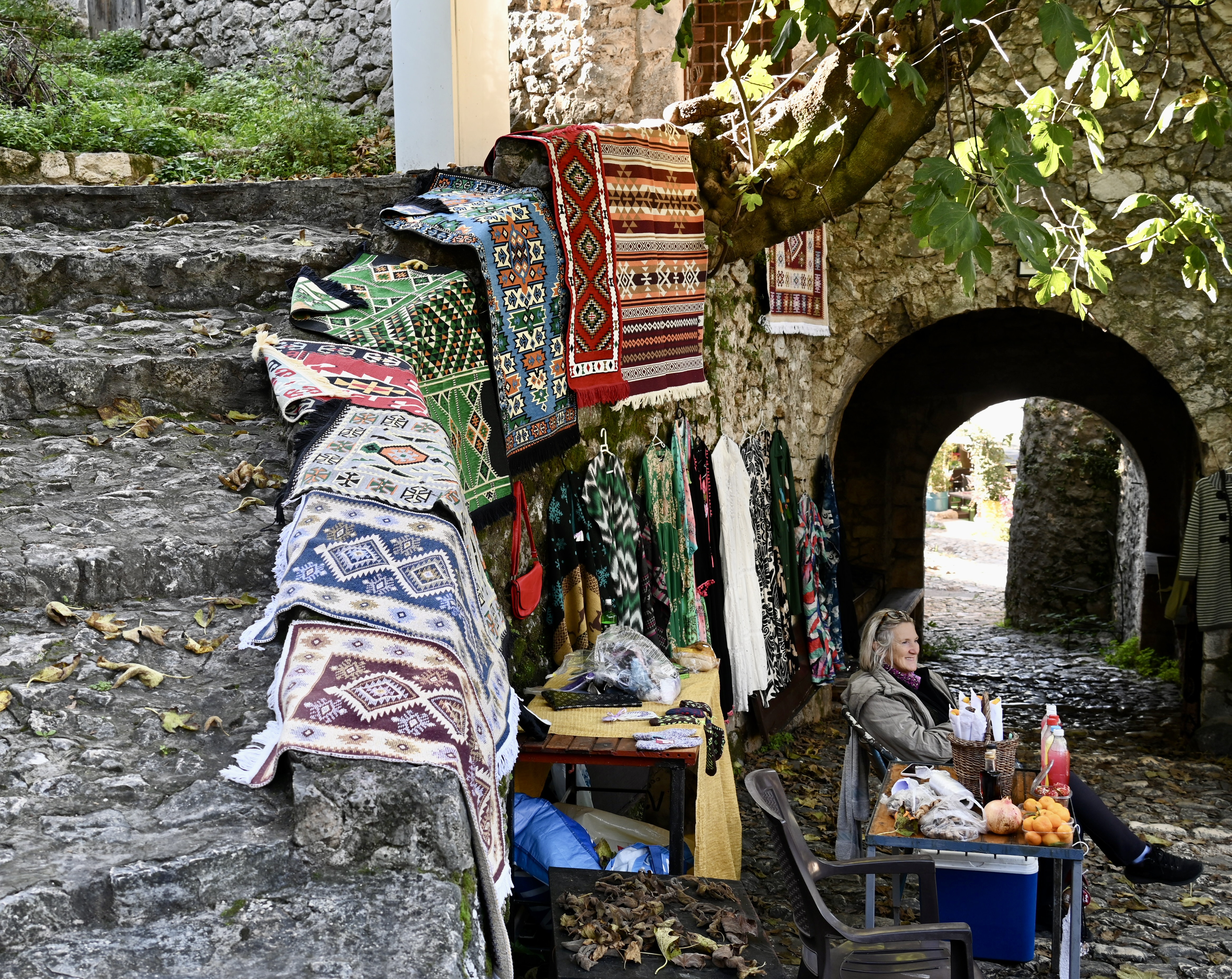
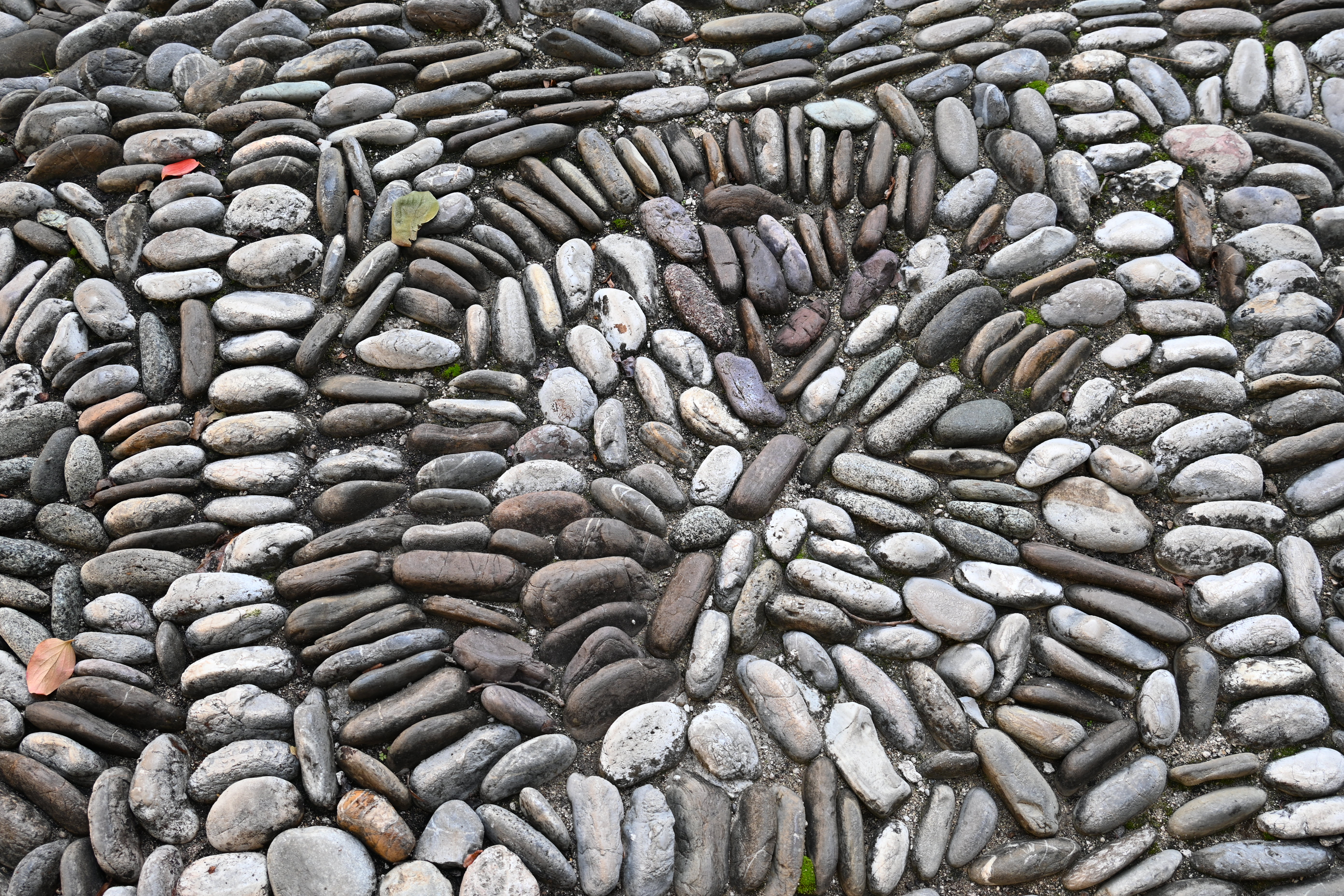
Across the bridge, a cobblestoned lane is lined with artisans’ shops; Mostar is renowned for its copperwork, jewelry, and wool products.
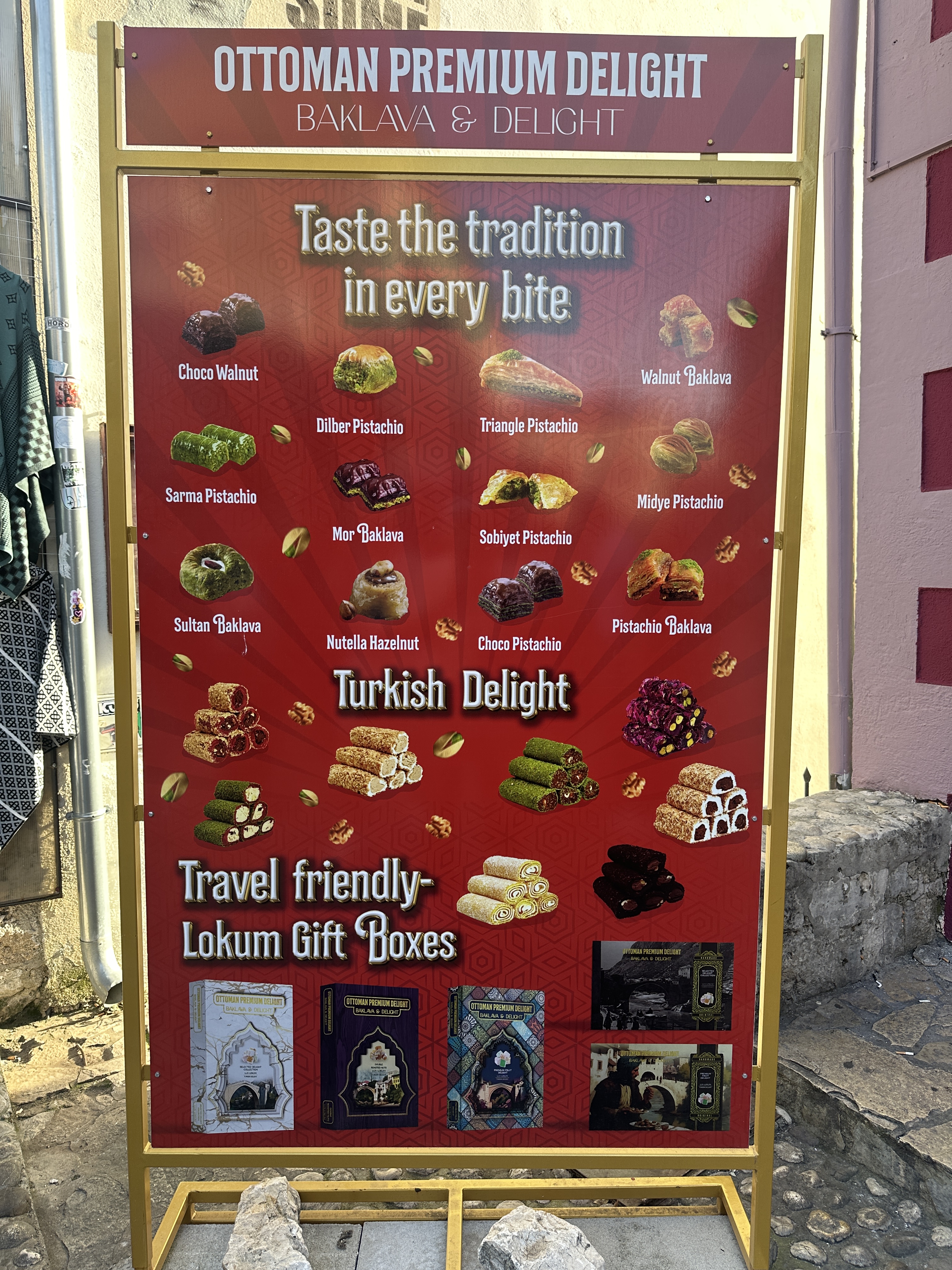
There are also lots of restaurants and gelaterias. I supported the local economy at the latter.
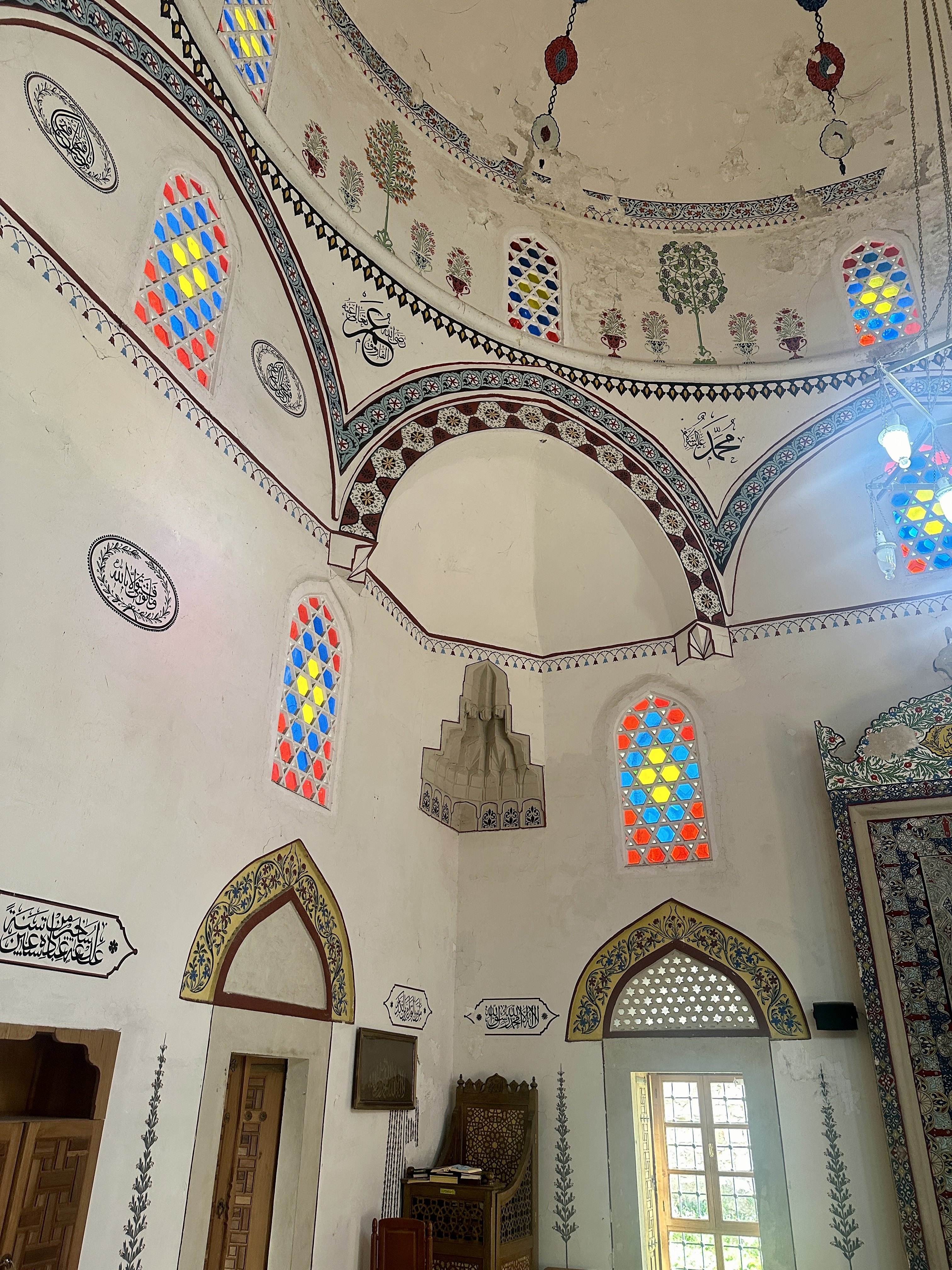
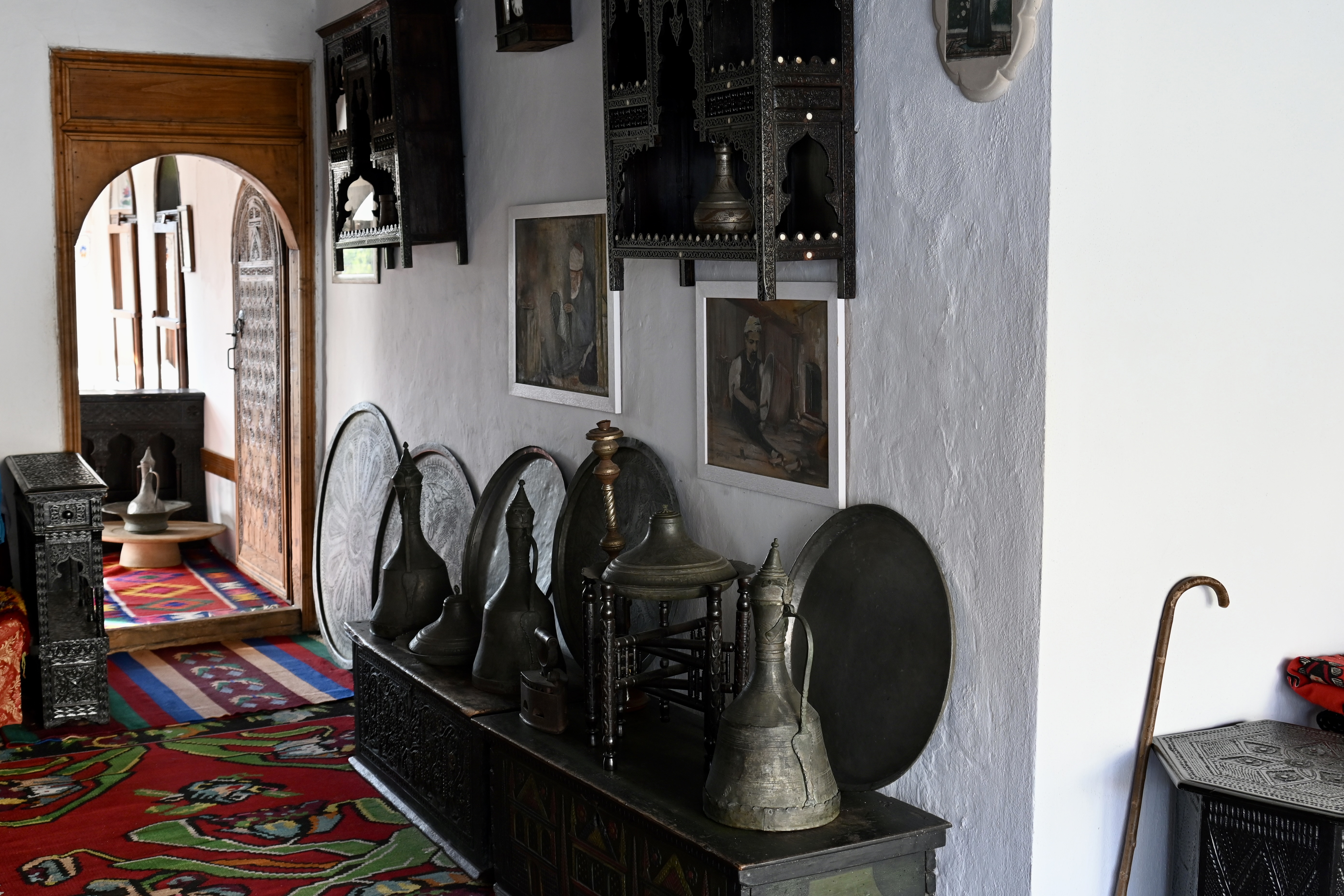
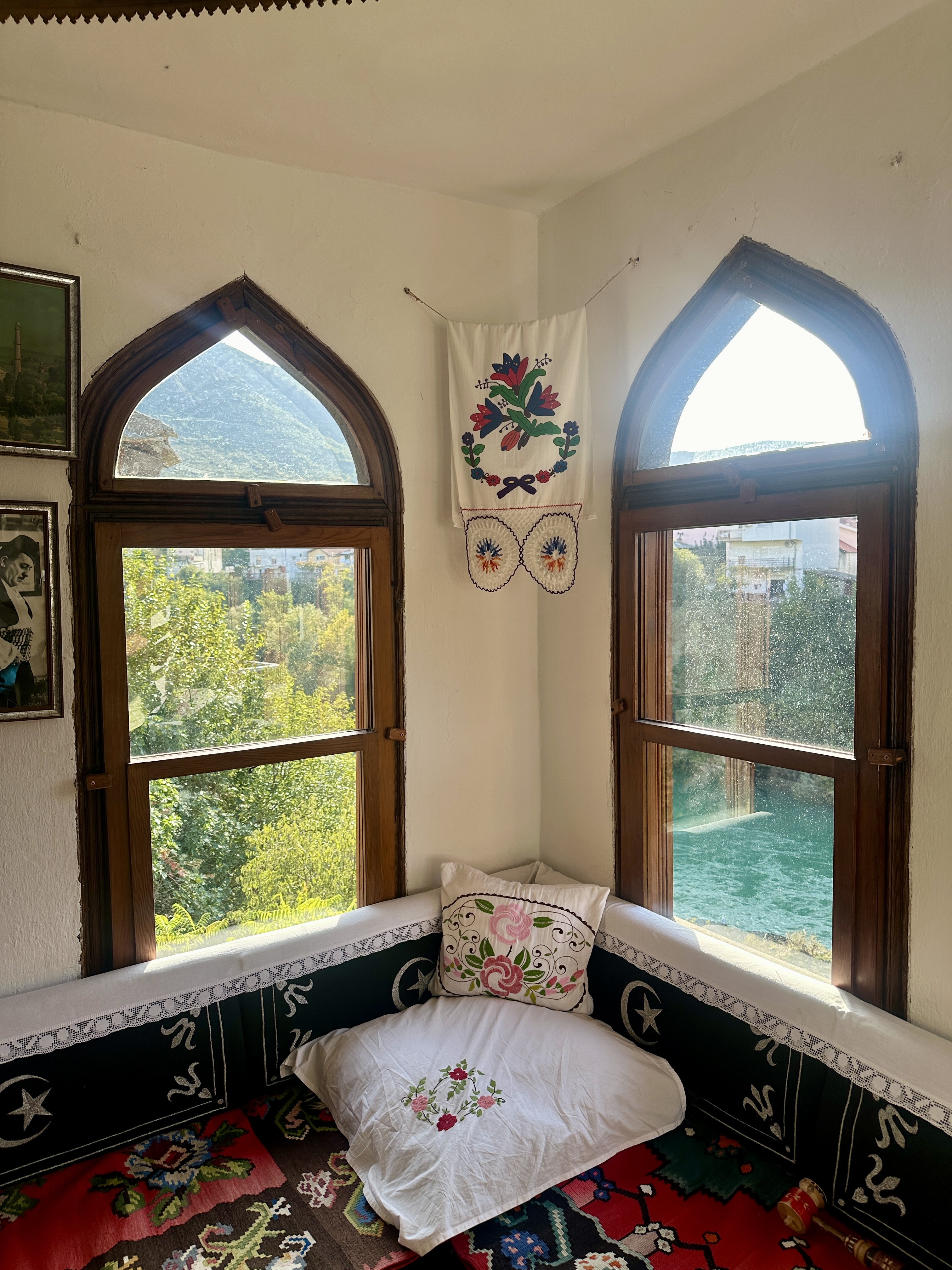
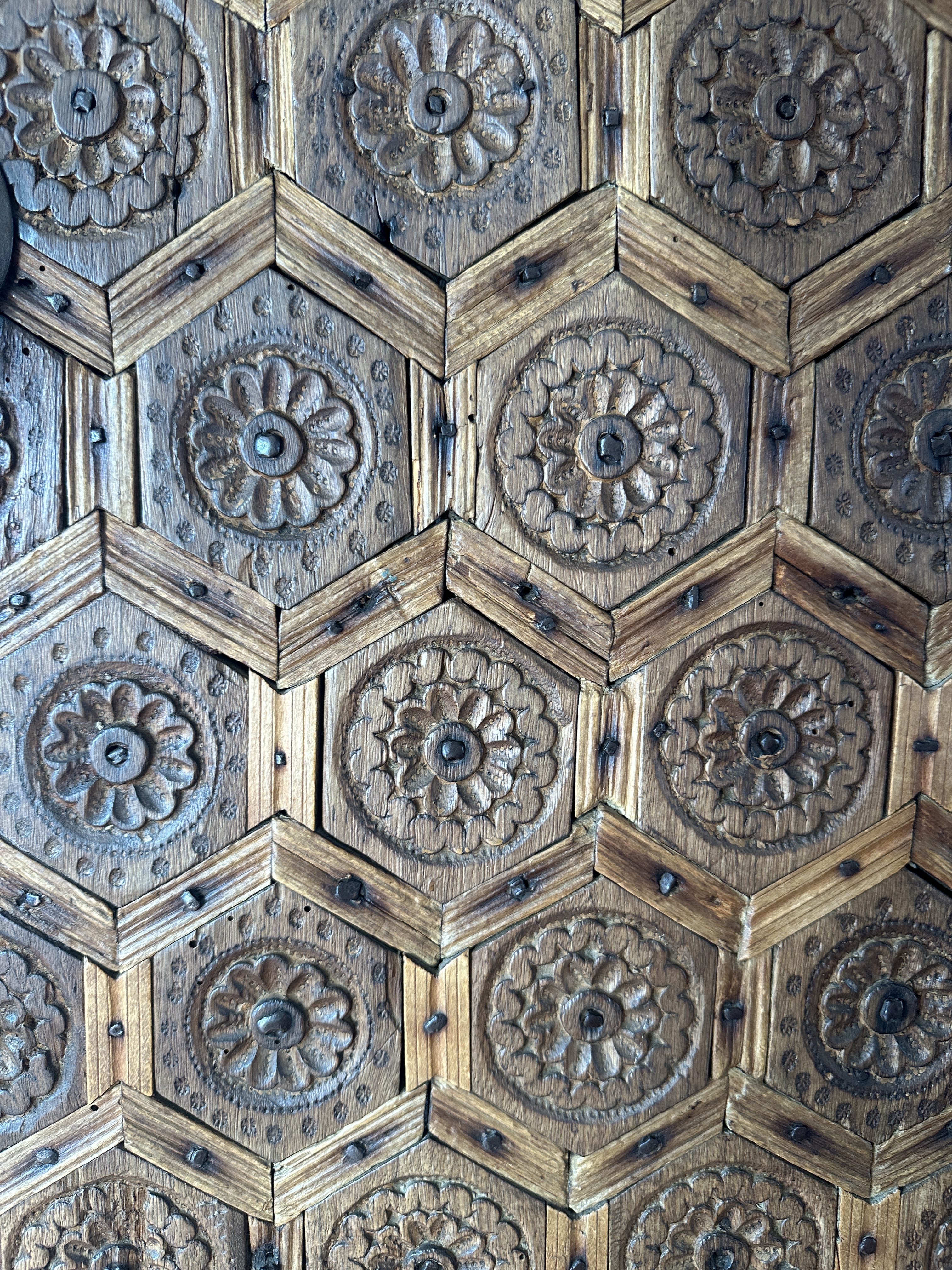
We visited a simple but elegant mosque dating back to 1618, followed by a tour of a “Turkish House” dating almost as far back.
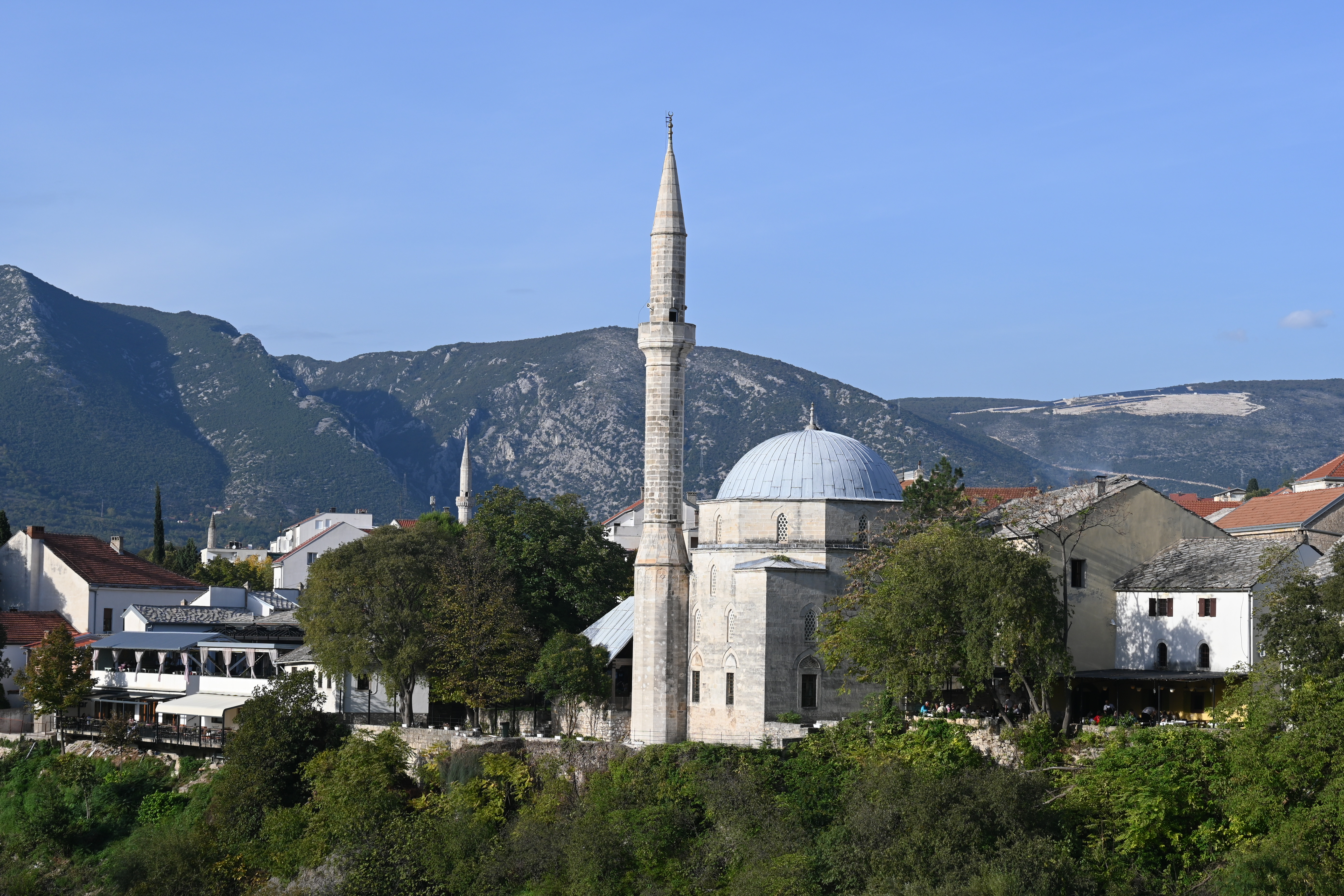
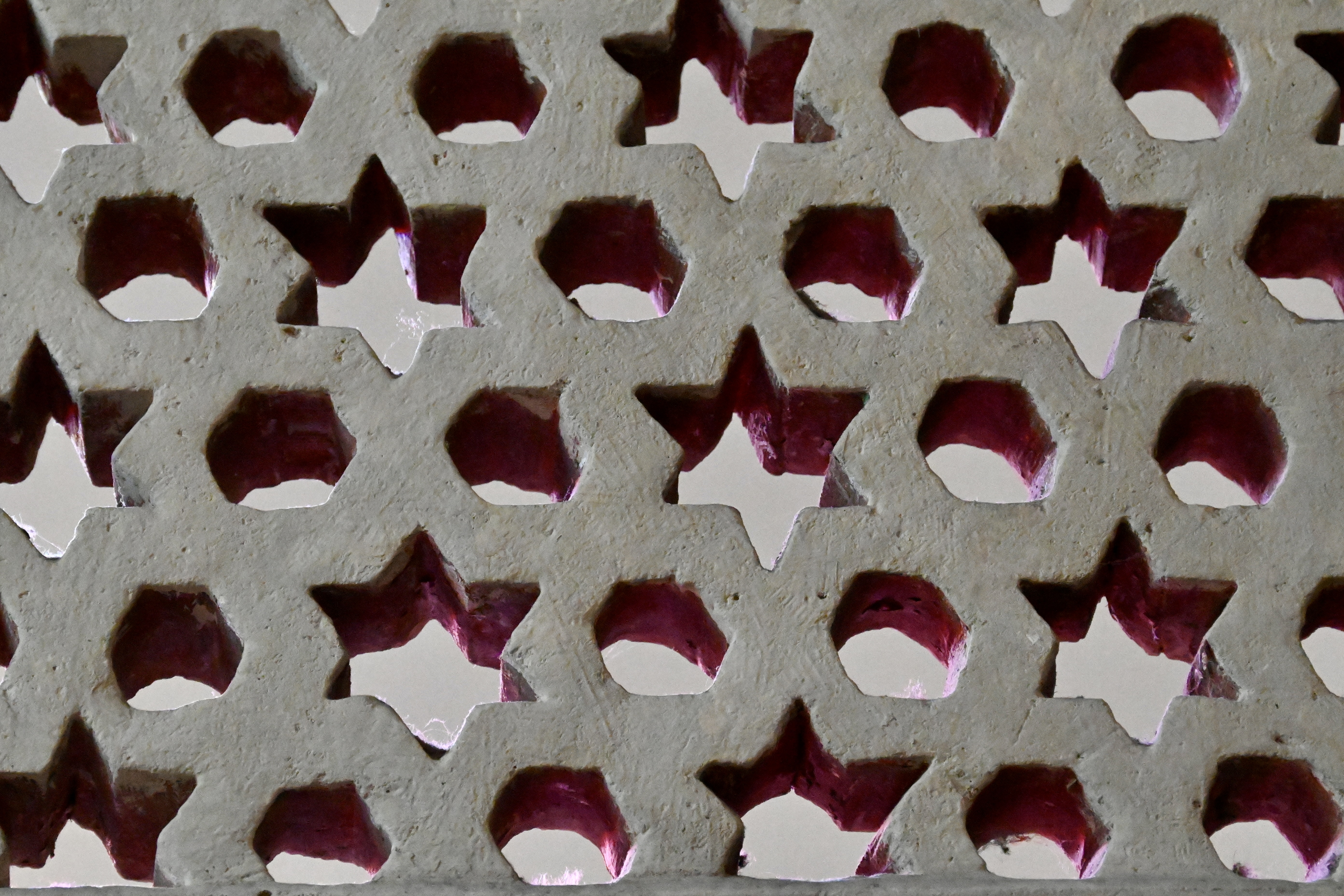
The house’s residents were Bosnians, not Turks, but the house is built in a typical Turkish style.
If you’re ever in Dubrovnik and can arrange the trip to Mostar, I’d urge you to do so. It’s a historically important, stunning town with excellent gelato.

 PuffinlessTravel
One thought on “Mostar, Bosnia and Herzegovina”