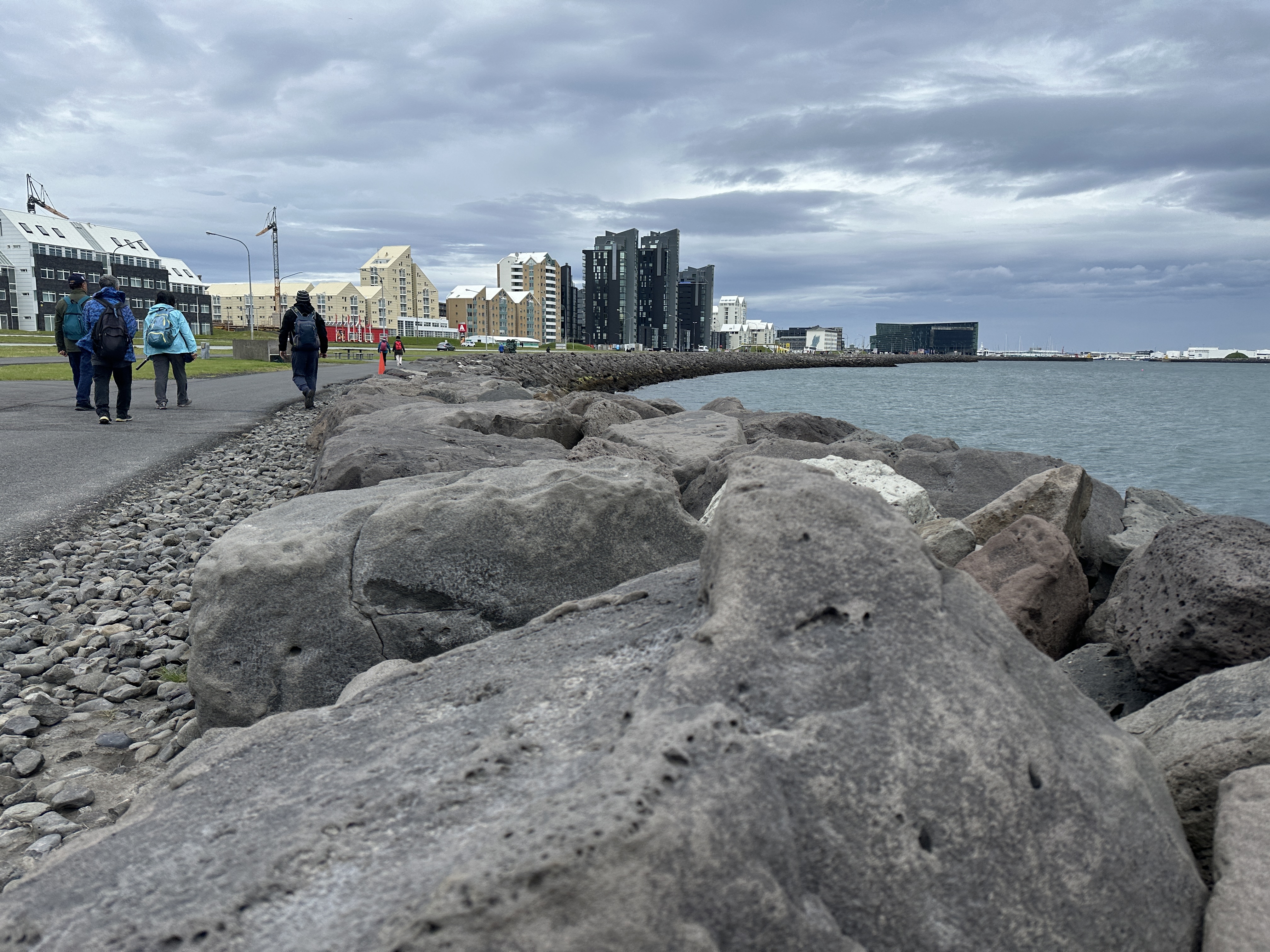
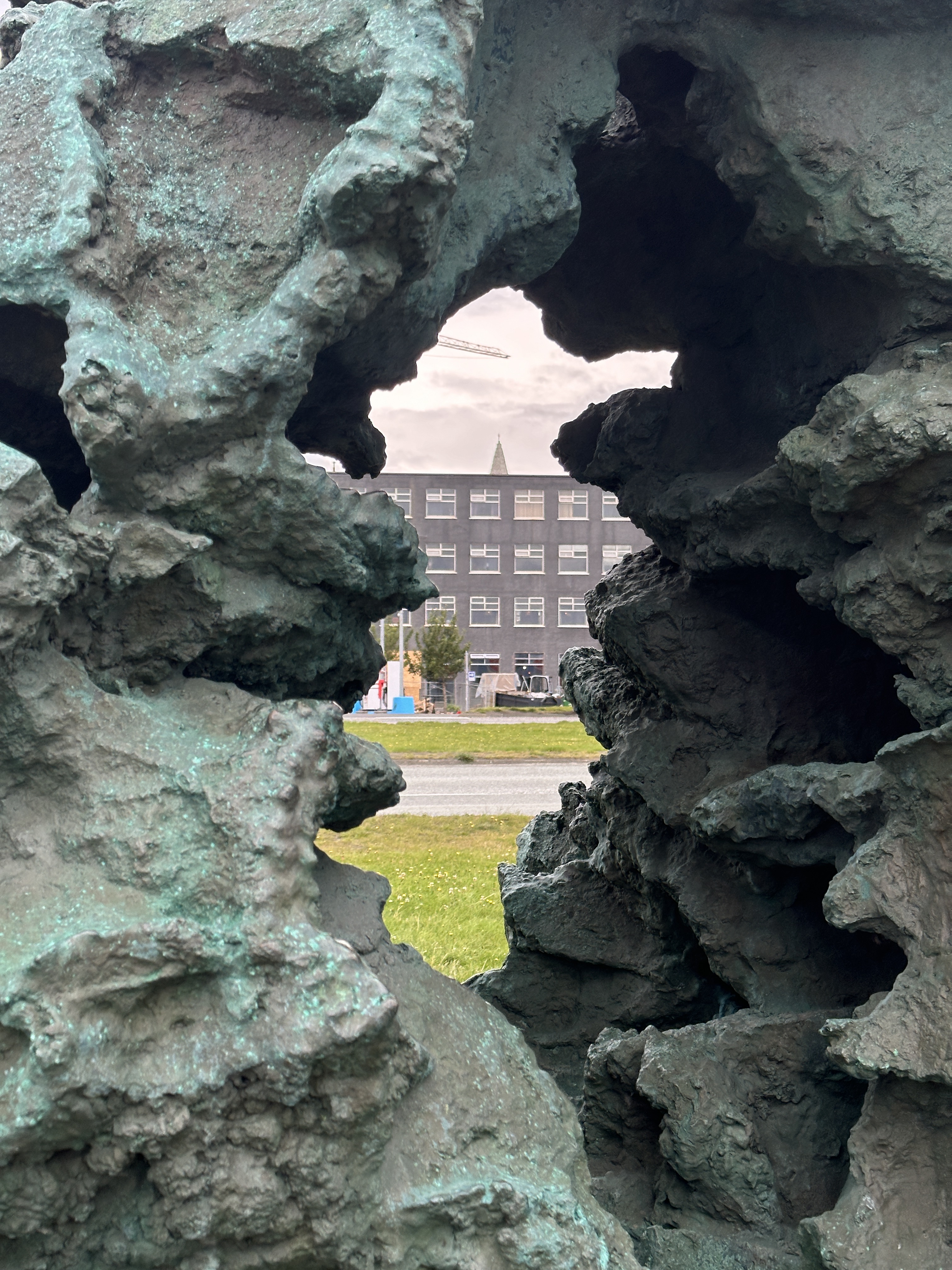
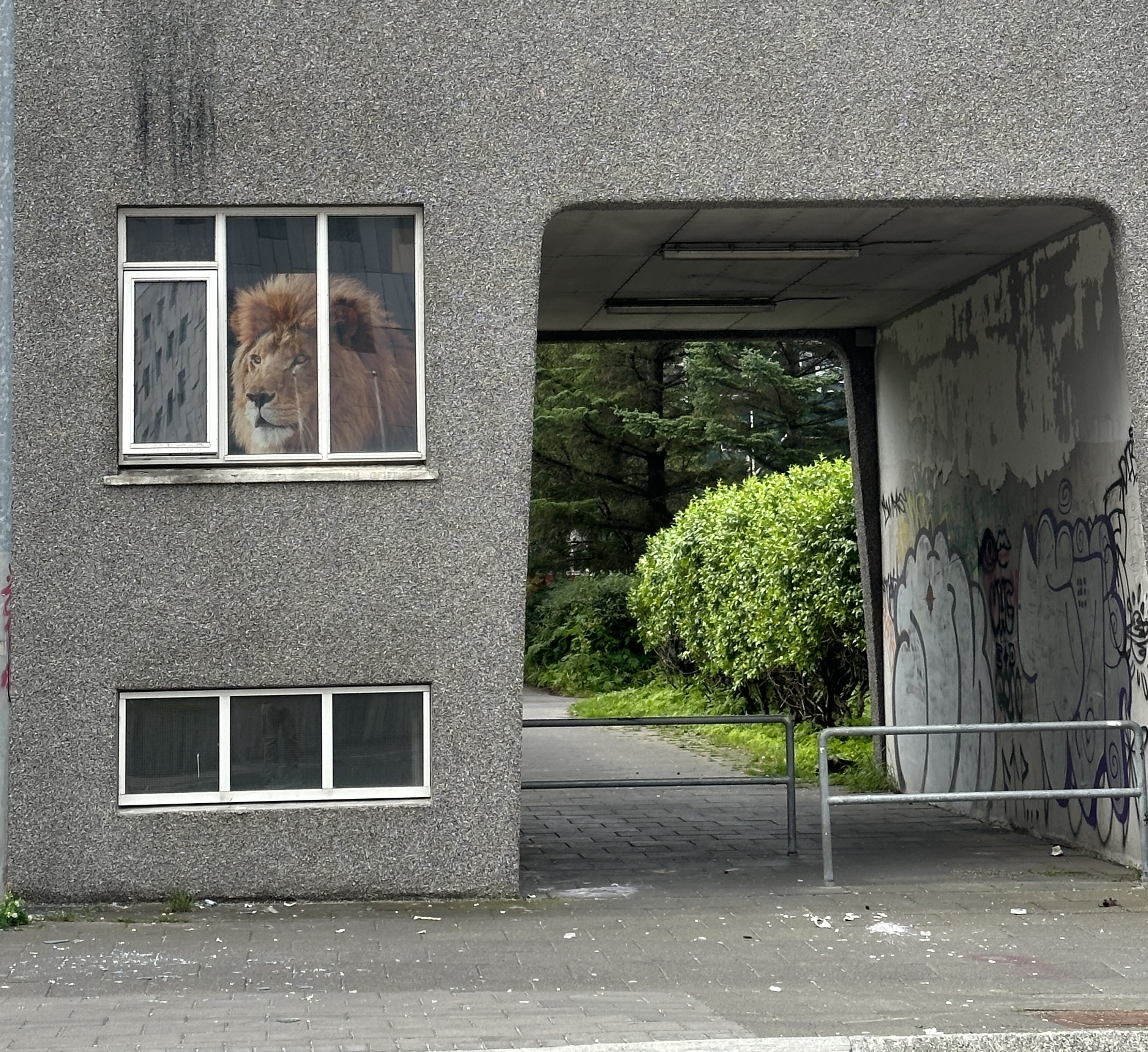
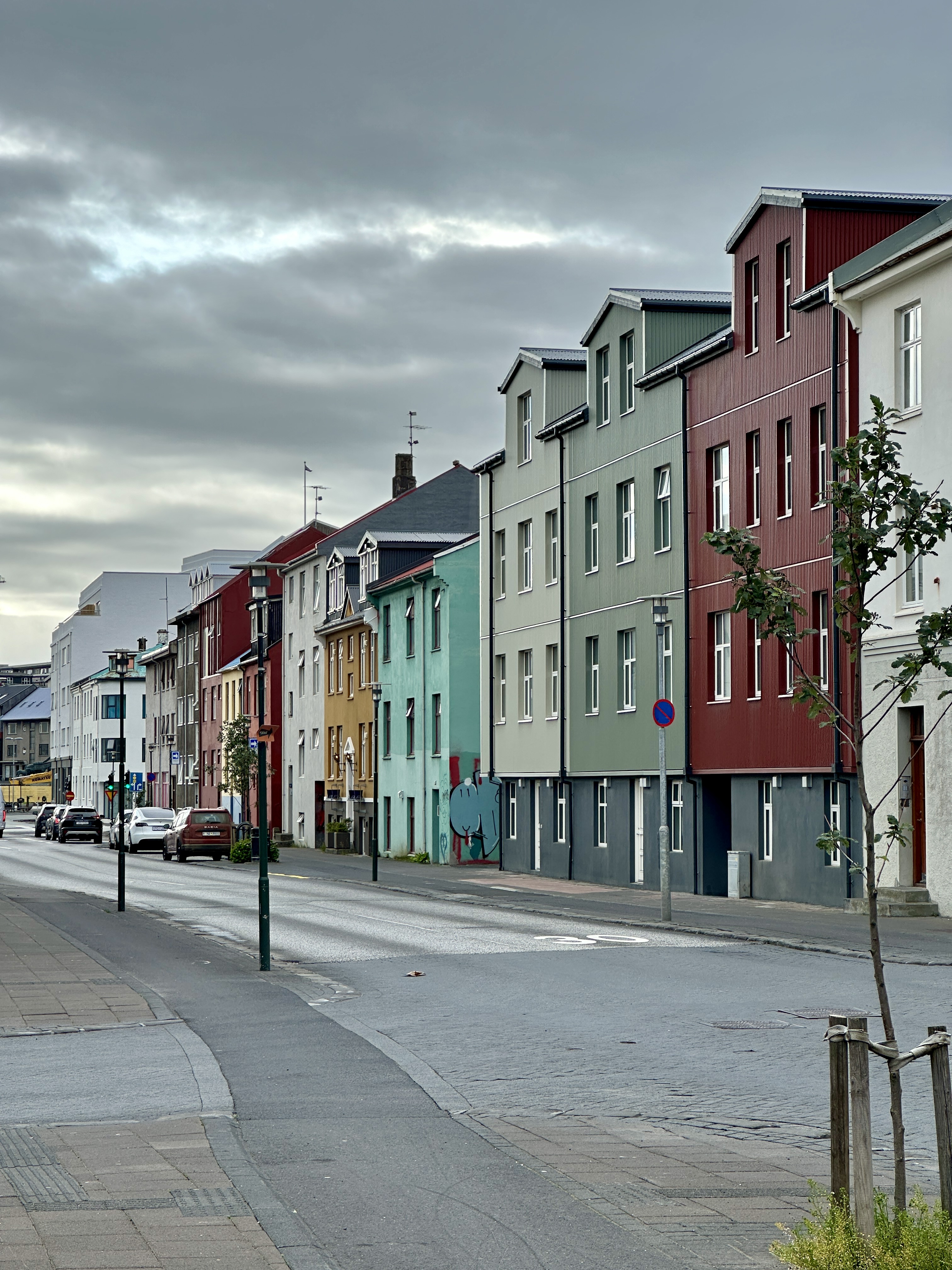
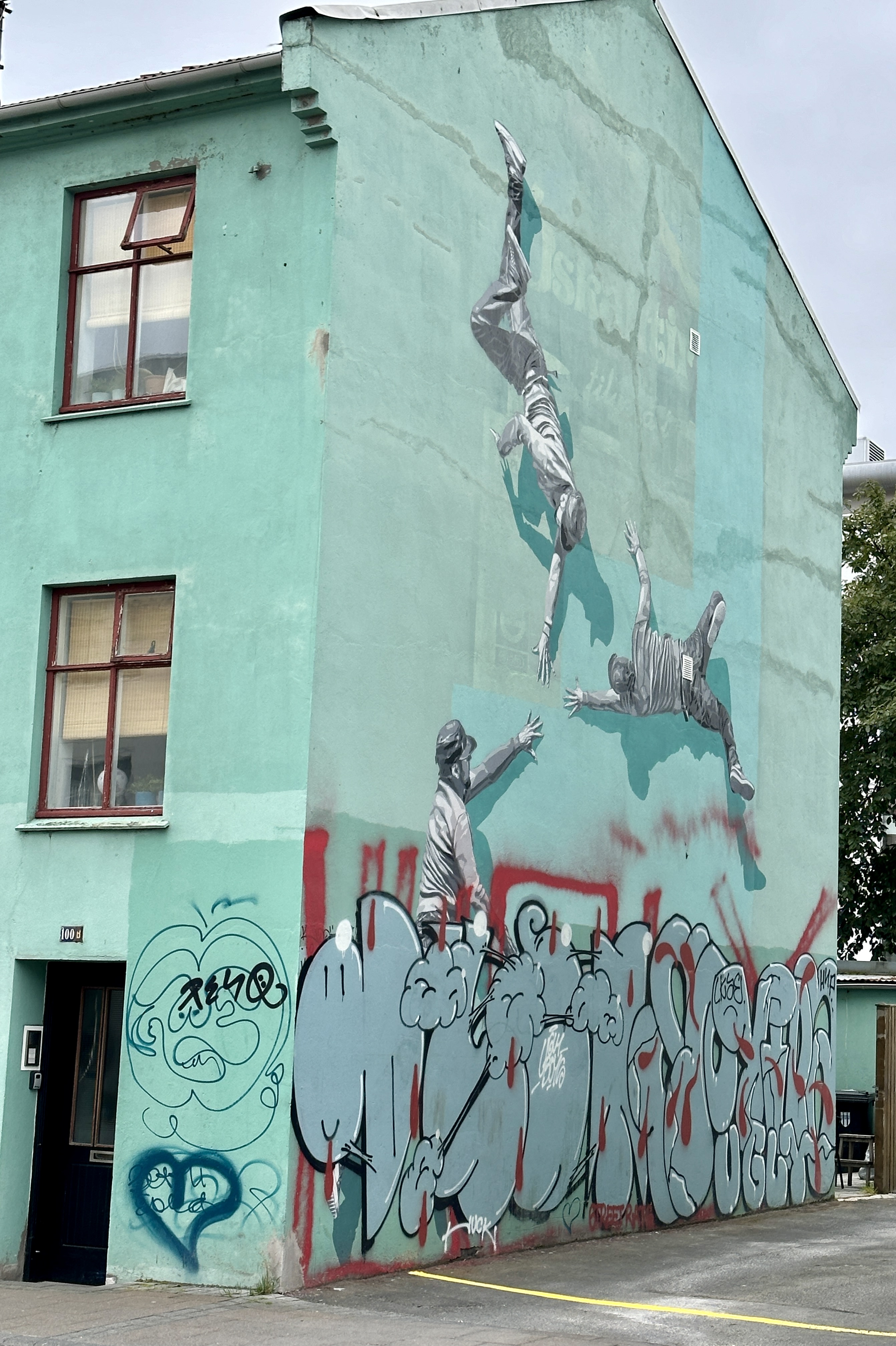
[All the pictures below were taken on a morning walk in Reykjavik before heading to the airport]
This was my third trip with Smithsonian Journeys, and like the other two, it was a winner. Great credit goes to Arctic Adventures, the company for whom Nick works. (Smithsonian tasked G Adventure with organizing the trip; in turn, G Adventure brought in Arctic Adventures.)
True to its name, the “Glaciers and Waterfalls” itinerary includes many stunning examples of both phenomena. The route passes through landscapes that range from bleakly beautiful to majestically magical. It’s easy to understand why the early settlers thought the land was occupied by trolls, elves, and other supernatural creatures.
Transportation
Nick, in addition to providing expert and entertaining commentary, drove us around in a comfortable bus equipped with fast WiFi. Each row had two seats on the left side (facing front) and one on the right. As a single traveler, I always sat on the right side.
I often warn people that the side of the bus on which I sit will be sun-baked. That’s not much of a risk in Iceland, but I do think most of the interesting sights along the road were better viewed out the left side – something to keep in mind if you take this trip.
Hotels
Much of Iceland being rural (or whatever description denotes areas that aren’t even settled enough to be considered rural), you generally don’t find luxury accommodations. Having said that, every place we stayed was clean and comfortable, and some – particularly the Fosshotel Glacier Lagoon – were quite chic.
If, like me, you prefer to sleep in a cold room, keep in mind that there’s no air-conditioning in Icelandic hotels. Every place we stayed had windows that opened, so I was able to sleep comfortably. Of course, open windows mean more noise, but that generally wasn’t a problem.
Every hotel offered a breakfast buffet. Each one was decent, containing all the basics. Some went beyond, including an incredible tray of smoked salmon at the Fosshotel Glacier Lagoon. That naturally leads into …
Food
The quality of the food throughout the trip was very good. Staples on the menu are lamb and fish (generally cod or arctic char, a mild fish that’s sort of a cross between trout and salmon). Vegetarian options are widely available.

The water everywhere in Iceland is not only safe to drink, but wonderfully pure-tasting. What a change from my trip through Southeast Asia, where you shouldn’t even brush your teeth with the water in a fancy hotel.
As in all northern European countries, alcohol is expensive. If you can find one that’s open, the state-run Vinbúðin is a bit cheaper, but prices are still 20-30 percent higher than what you’d pay in the US. These stores aren’t open on Sundays, and even on other days it seemed like most of the ones we passed were closed.
Tipping
Service workers in Iceland receive a decent wage, so tipping isn’t necessary or expected, though it’s certainly appreciated.
Language
Virtually everyone in Iceland speaks fluent English. You’ll have no language problems, other than trying to pronounce words like Vatnajokulsthjöðgarður.

What to Bring: Clothing recommendations
Iceland’s climate is unpredictable, to put it kindly. Sun yields to rain squalls and blustery winds then back to sun, often several times in the course of a day. Layers are essential. I brought short and long-sleeve tees for a base layer, a sweater or sweatshirt as a middle layer, and a windbreaker as a top layer. I recommend bringing something heavier as a top layer, perhaps a mid-weight jacket; especially in the heavy winds, I was cold. The top layer MUST be waterproof, and rain pants are essential. (I neglected to bring them and regret the oversight.)
Lightweight gloves – preferably waterproof – will come in handy, so to speak.

You’ll also want a hat, or even better, hats. I wore a baseball cap frequently, but you’ll also want a beanie or other warm hat that covers your ears. If you don’t have a hooded jacket, a rain hat would be a good idea.
My sneaker-like Merrell hiking shoes were fine for every hike except for the glacier trek. Glacier hikes require shoes that provide sturdy ankle support. I rented a pair at the place where we got crampons and ice axes (I think the cost was around 10 USD).
For much of the year, it stays light in Iceland far into the night. If you need a very dark room to sleep well, bring an eye mask.
What to bring – other recommendations
I found the camera on my iPhone up to the task of any pictures I wanted to take. If you do bring an SLR camera, a lens maxing out at 150-200 mm should be sufficient.
Good cell service is available virtually everywhere in Iceland, so you may want to have an international plan in place before arriving. Of course, WiFi is nearly ubiquitous as well, so for many people cell service may not be necessary.
I recommend downloading WhatsApp, not just for Iceland but for any non-US travel. It’s easy to use, allows for free international calling with WiFi, and is a great way to communicate with members of your tour group.
Finally, as always when traveling, bring patience, a sense of humor, and an open mind!
If you like these posts, please follow the blog – the more followers I get, the higher the blog will appear in search rankings. I write this because I love to travel and to share my experiences, and I’d like to reach as wide an audience as possible!
With that, I bid you “bless bless” (good-bye in Icelandic – how perfect is that!) for now. May all your travels be safe, fun, and enlightening!

 PuffinlessTravel