When life gives you lemons, the saying goes, make lemonade (or even better, limoncello). When life gives you weather that requires an entire day’s schedule to be scrapped, and you’re as fantastic a guide as Nick, our leader for these past seven days, you improvise like Charlie Parker and come up with awesome alternatives.
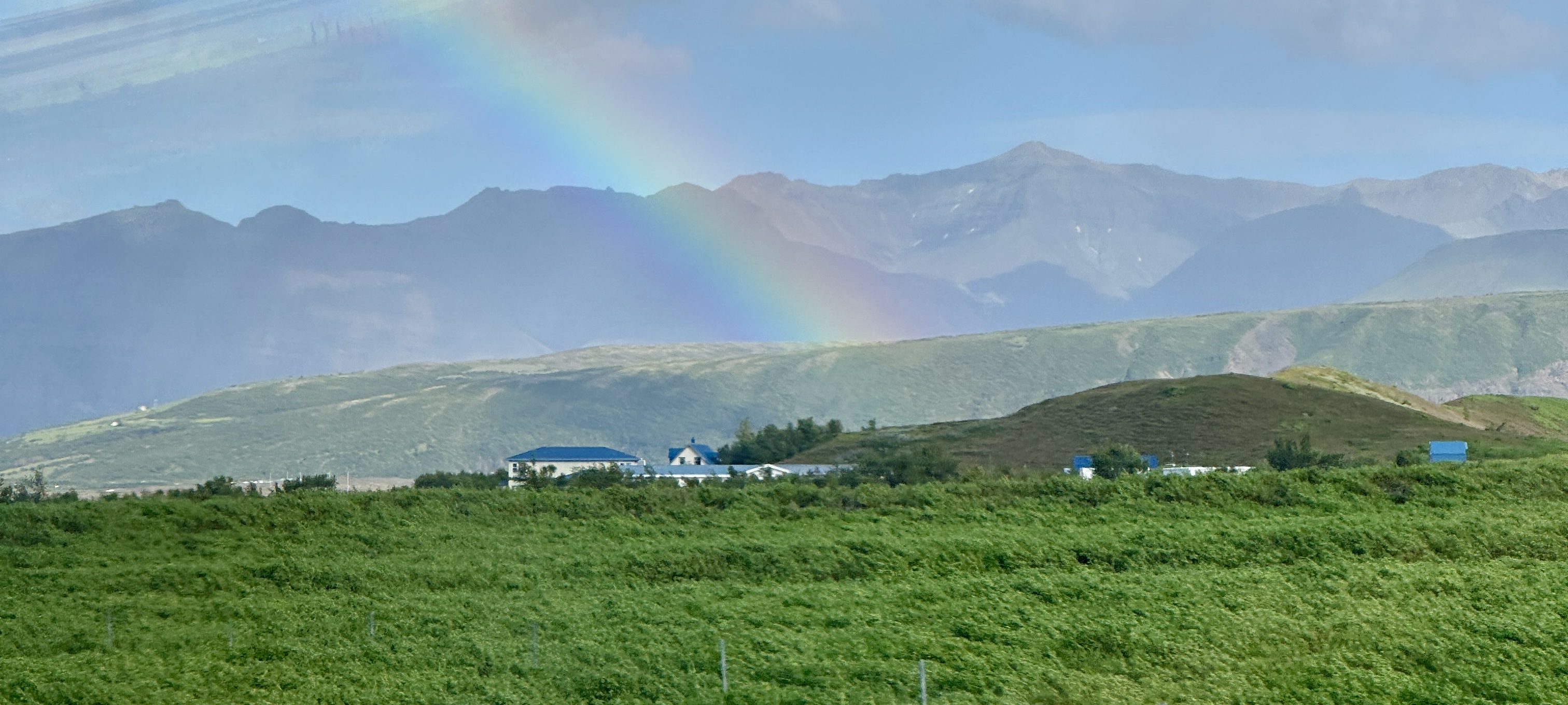
Plan A for today was to hike along a river with water heated by geothermal vents and cooled by glacial runoff. Weather conditions made the planned hike too dangerous. Cool and good-natured as always, Nick came up with a Plan B that our entire group loved.
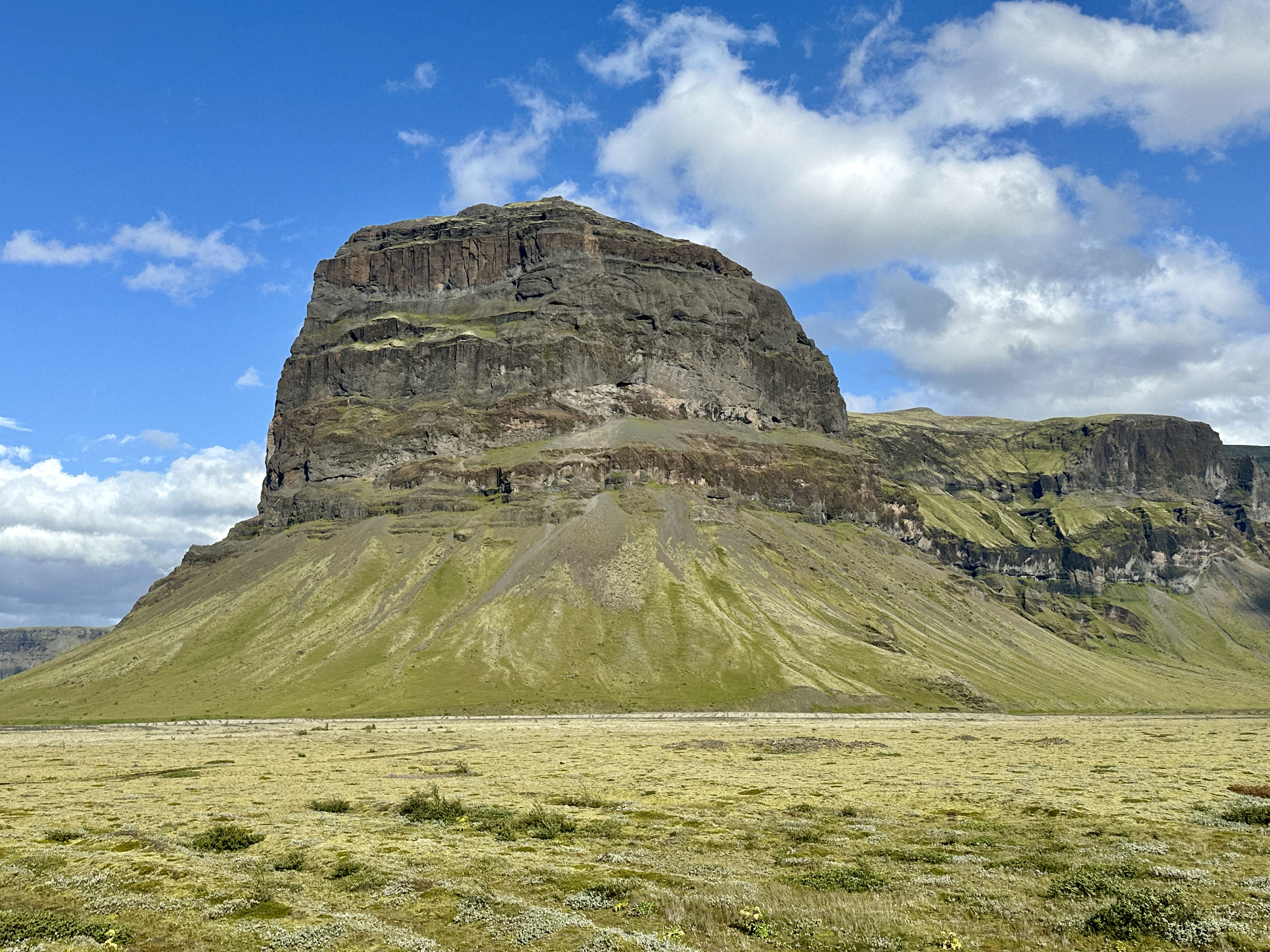
First up: a return to Vik, where we saw a lava show created by a man named Júlíus, the great-grandson of a couple who narrowly survived the devastating eruption of the Katla volcano in 1918. After much trial and error, he and his wife, Ragnhildur, developed a technique for safely melting black sand (which is ground-up basalt) back into lava.
The show began with a short film providing a bit of background on Iceland’s volcanos and dramatizing the 1918 eruption and the hair-raising escape of his great-grandparents. Then came the fascinating demonstration.
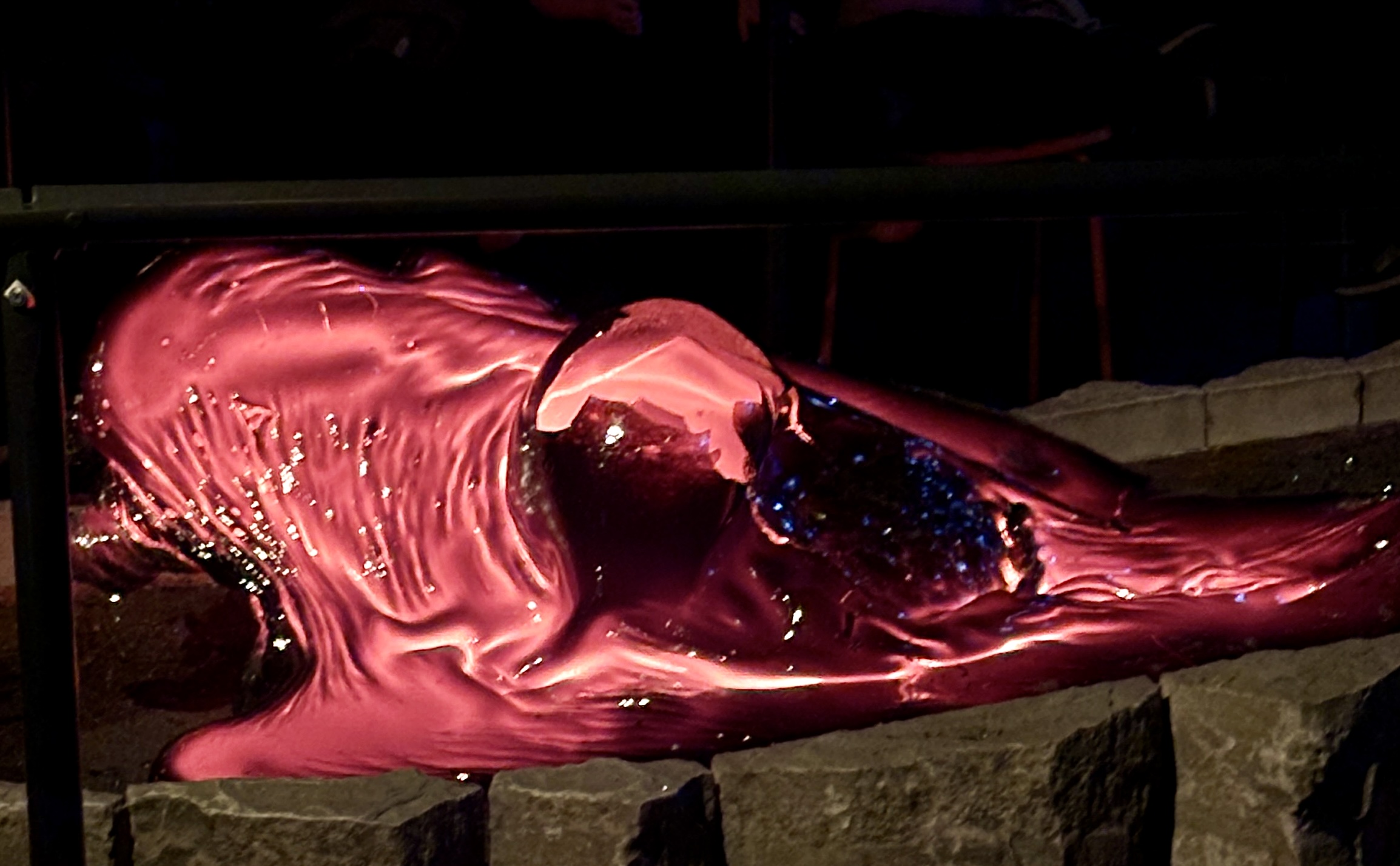
The 2000- degree F. lava was relased into a chute lined with black sand, where Júlíus demonstrated how different conditions affect the form of the cooling lava. For example, by lowering a block of ice into the lava, replicating what happens when lava flows over a glacier, he produced a glowing bubble that he then cracked open, explaining how these bubbles can retain heat for months or even years.
If you’re in Vik, it’s well worth seeing. (They also recently opened a location in Reykjavik.) You can check it out a Lavashow.com. Admission is 5900 ISK (around 43 USD) for adults and 3500 ISK (around 26 USD) for kids.

The Lava Show shares space with The Soup Company, where we enjoyed a simple, tasty lunch of soup and fresh bread. (As I’ve told you, Icelanders believe in giving things – mountains, waterfalls, businesses, etc. – obvious names.) You’ll find them at Vikurbraut 5.
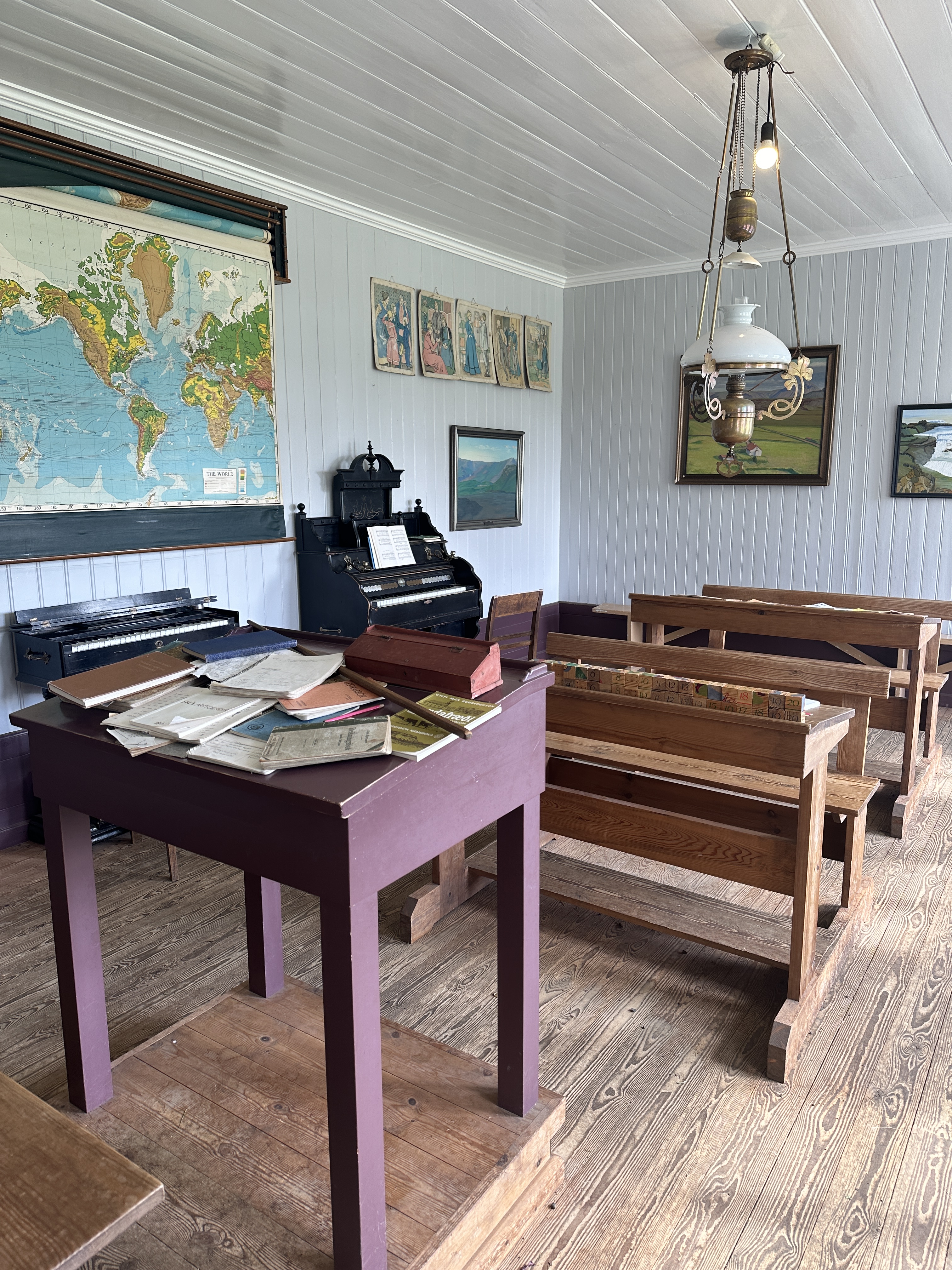
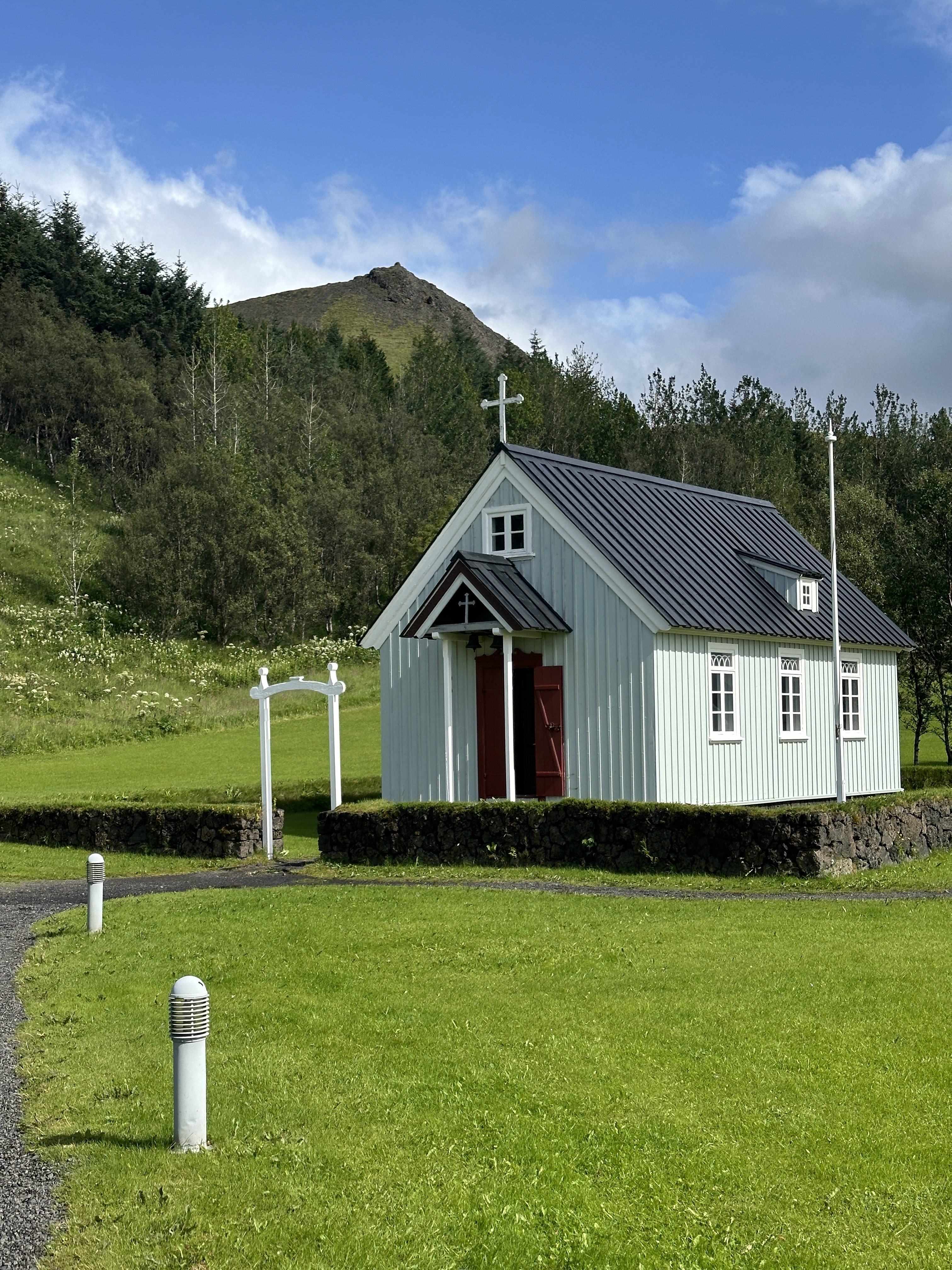
From Vik, we headed past Skógafoss (site of the 585 steps) to the Skógasfasn (Skogar Museum). (The address is Safnavegur 1. Admission starts at 2750 ISK, around 20 USD.) It’s a gem of a spot comprised of three separate exhibition spaces.
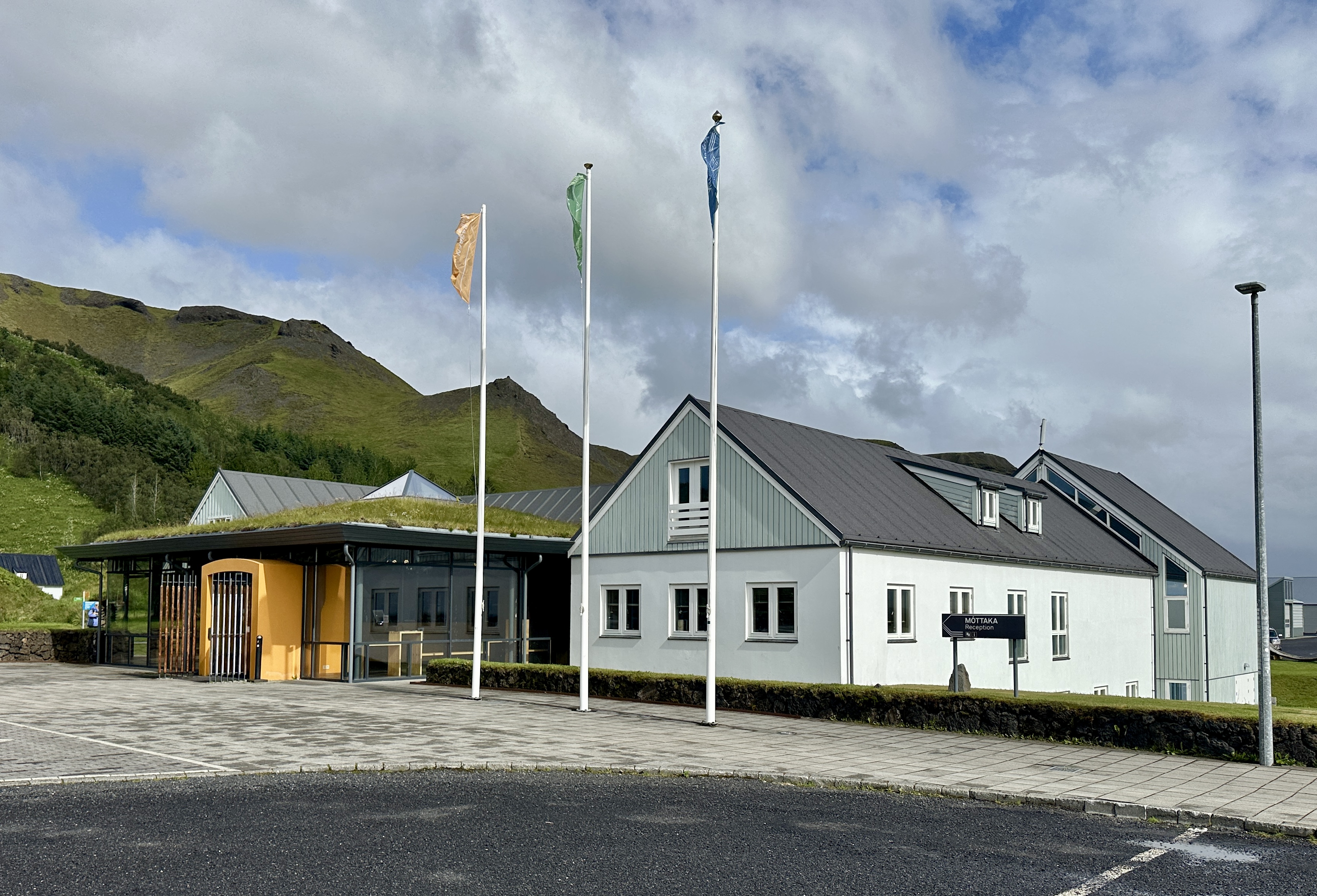
The main building houses the Folk Museum, a small building whose three levels display objects related to the area’s cultural heritage, including agriculture, fishing, handicrafts, and natural history.
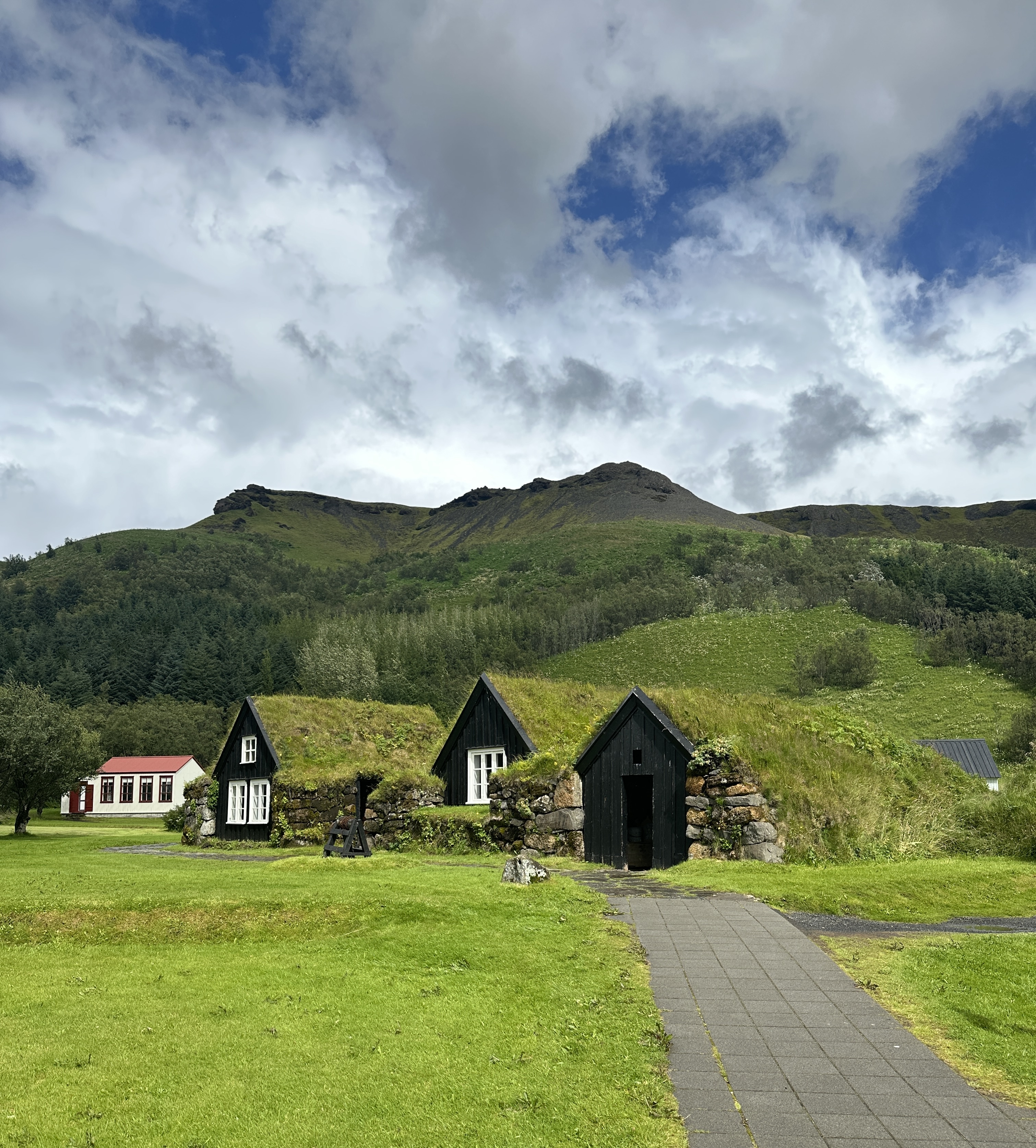
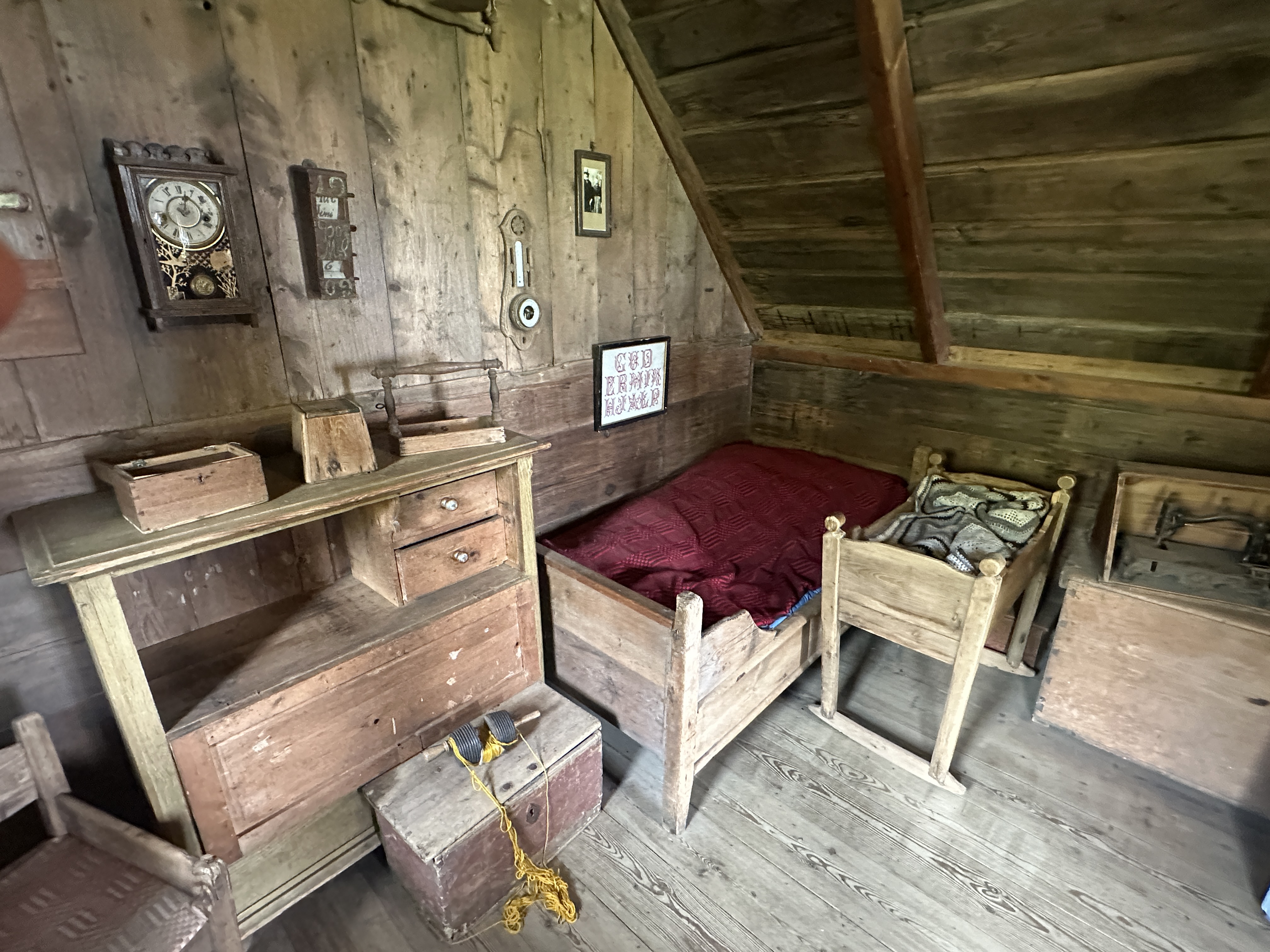
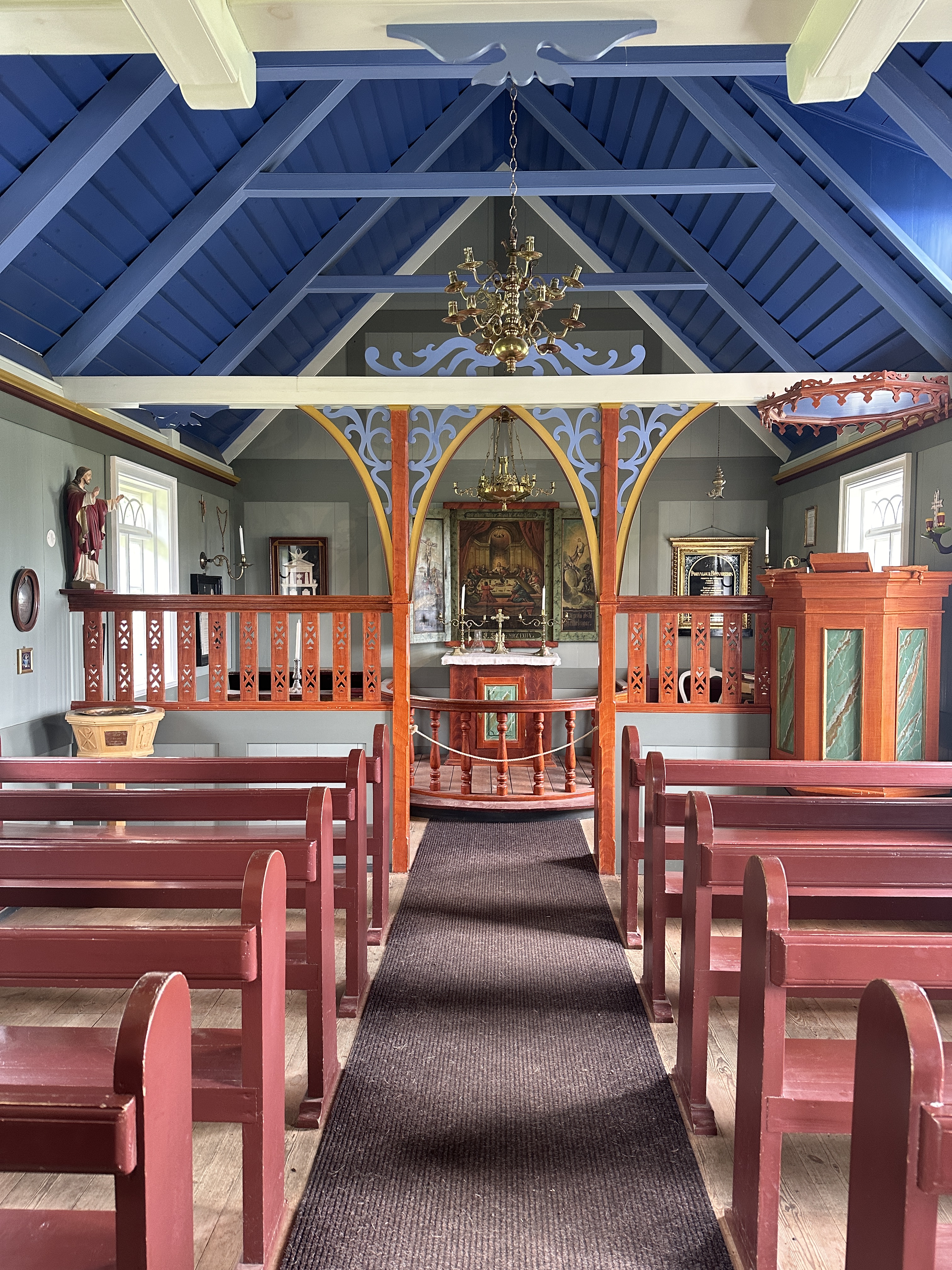
There’s also an Open Air Museum consisting of a restored church, several turf-roofed houses, and other buildings. It’s a remarkable illustration of a way of life that persisted in Icleand well into the mid-20th century.
Finally, the Technical Museum houses radios, automobiles, airplanes, and even such ancient and exotic technology as early mobile phones.

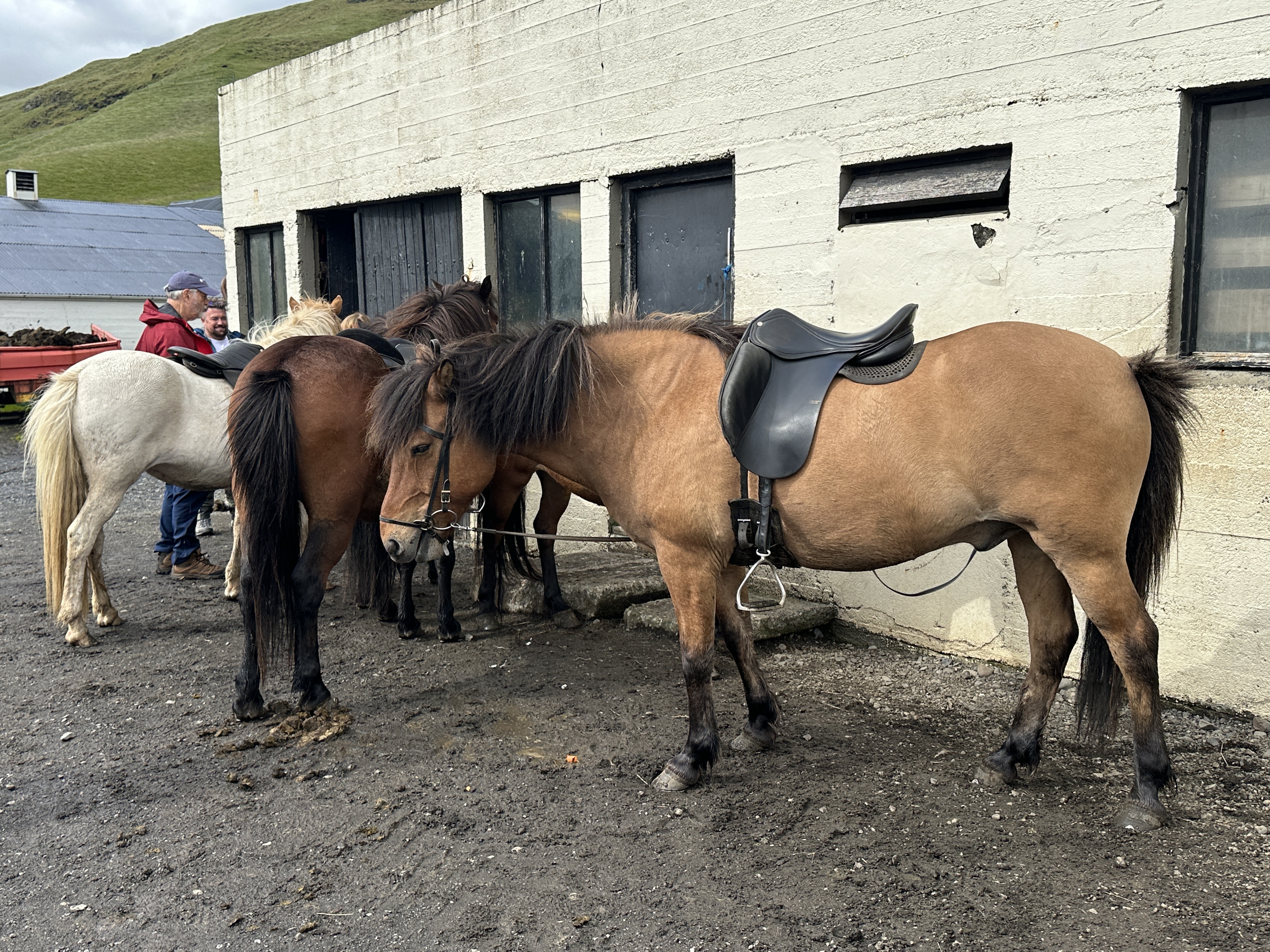
Our final stop of the day and the tour was a nearby farm where many in our group got to feed and stroke the horses. I made friends with two of the farm dogs and spent a pleasant ten minutes petting them.

I can’t close without one last shout-out to Nick. Thank you for the wonderful week. I learned a lot, laughed a lot, and had an all-around marvelous time. You’re a great tour guide and a super nice guy. I hope our paths cross again one day.
And to the rest of the group: I enjoyed meeting each and every one of you – you were wonderful travel mates. Please get in touch if you come to the DC area!
Come back tomorrow for one last post, with a trip summary and some final thoughts on this stunning country.

 PuffinlessTravel