Iceland punches well above its weight in music, so I thought today’s post should be annotated with a suggested soundtrack (not that any of the musicians on it are Icelandic; sadly, while I’ve put both Björk and Sigur Rós in crosswords, I’m not familiar with their songs).
Reynisfjara (suggested soundtrack: Blowin’ in the Wind or even better, Like a Hurricane)
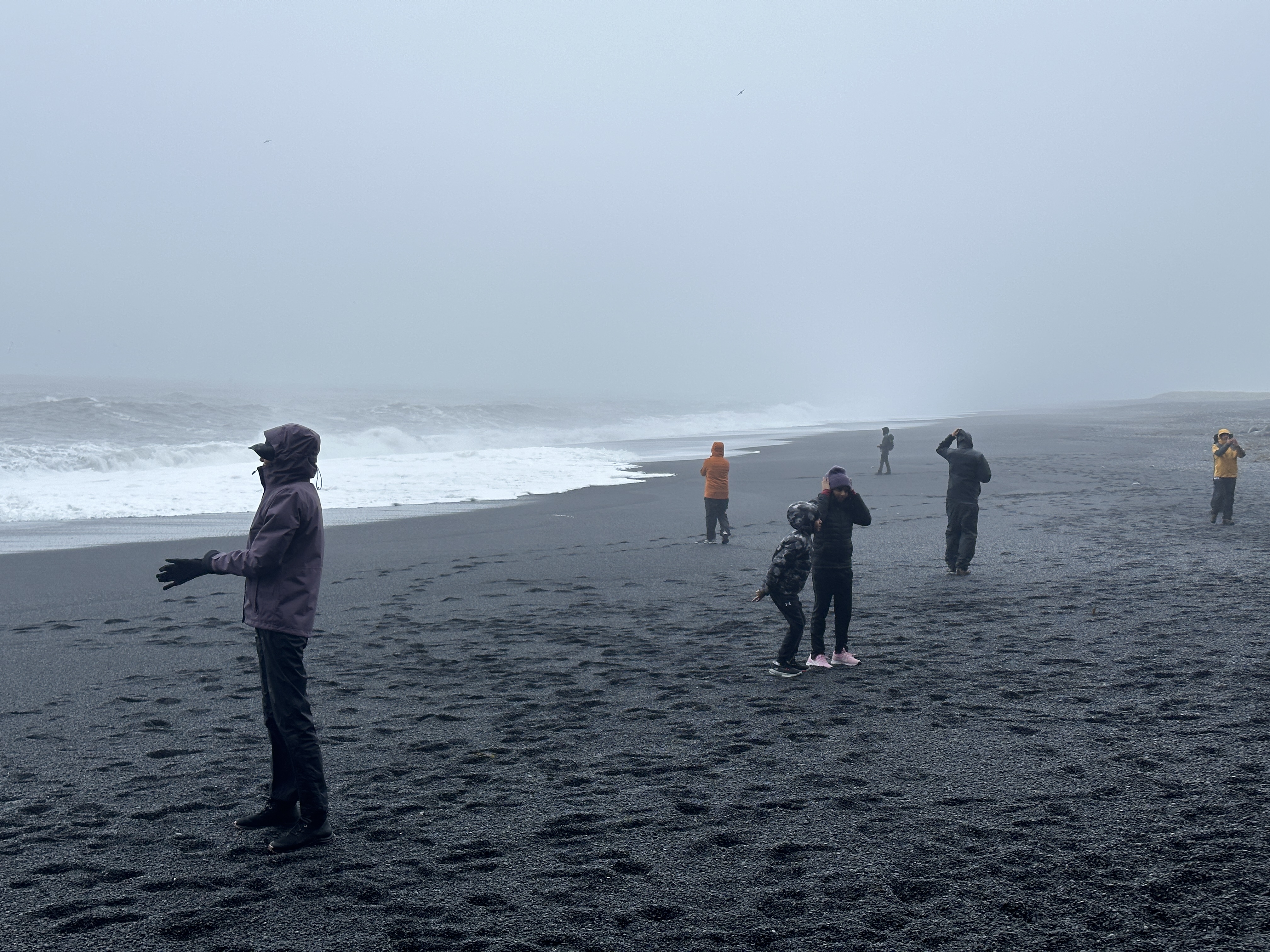
Our first stop, Reynisfjara, is a black sand beach known its towering basalt columns and pounding surf, including “sneaker waves.” You won’t be pummeled by Pumas or soaked by Sauconys, but if you’re not careful, you may be drenched by a rogue wave that races up the beach in a take-no-prisoners rush of foam.
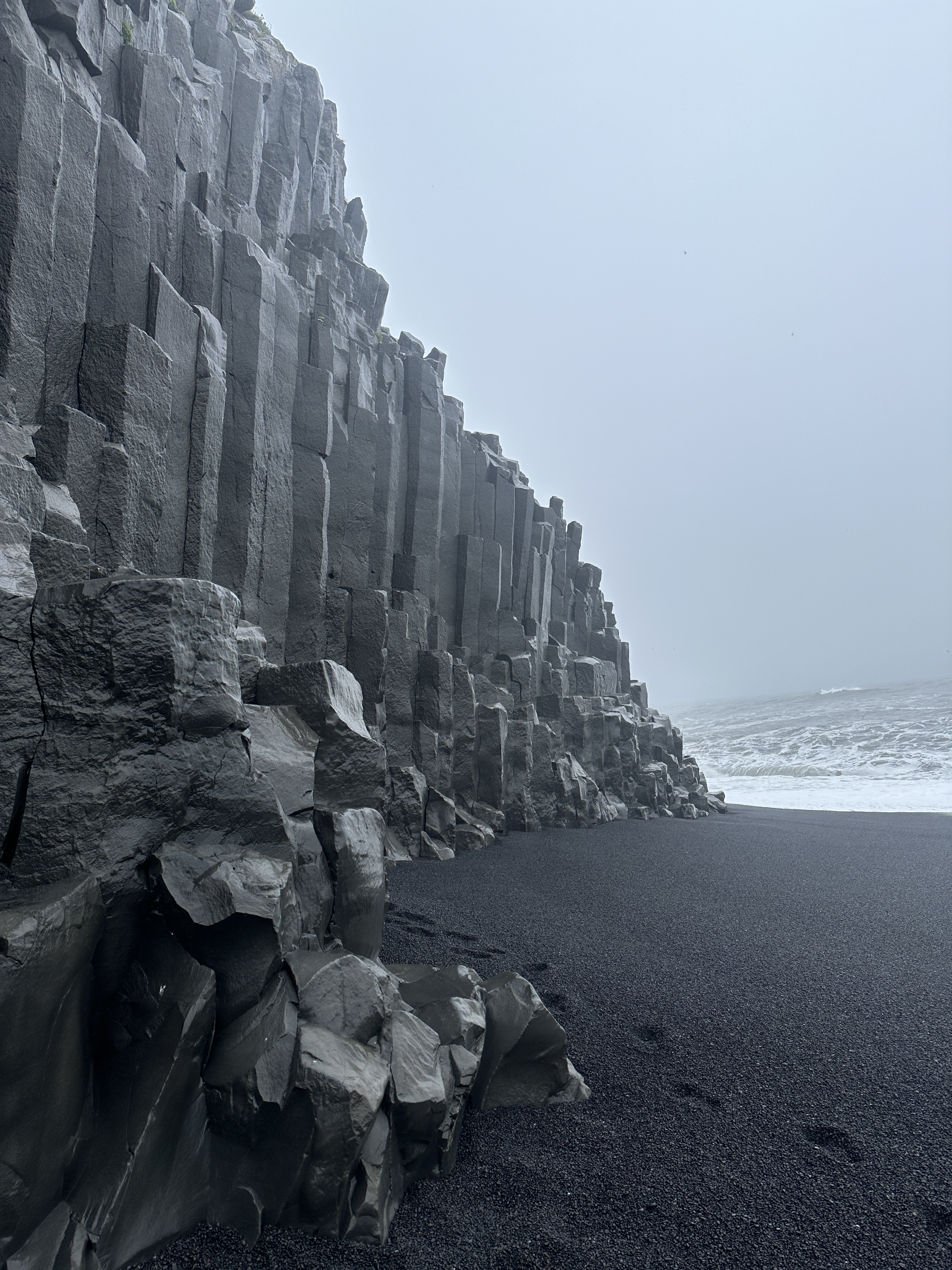
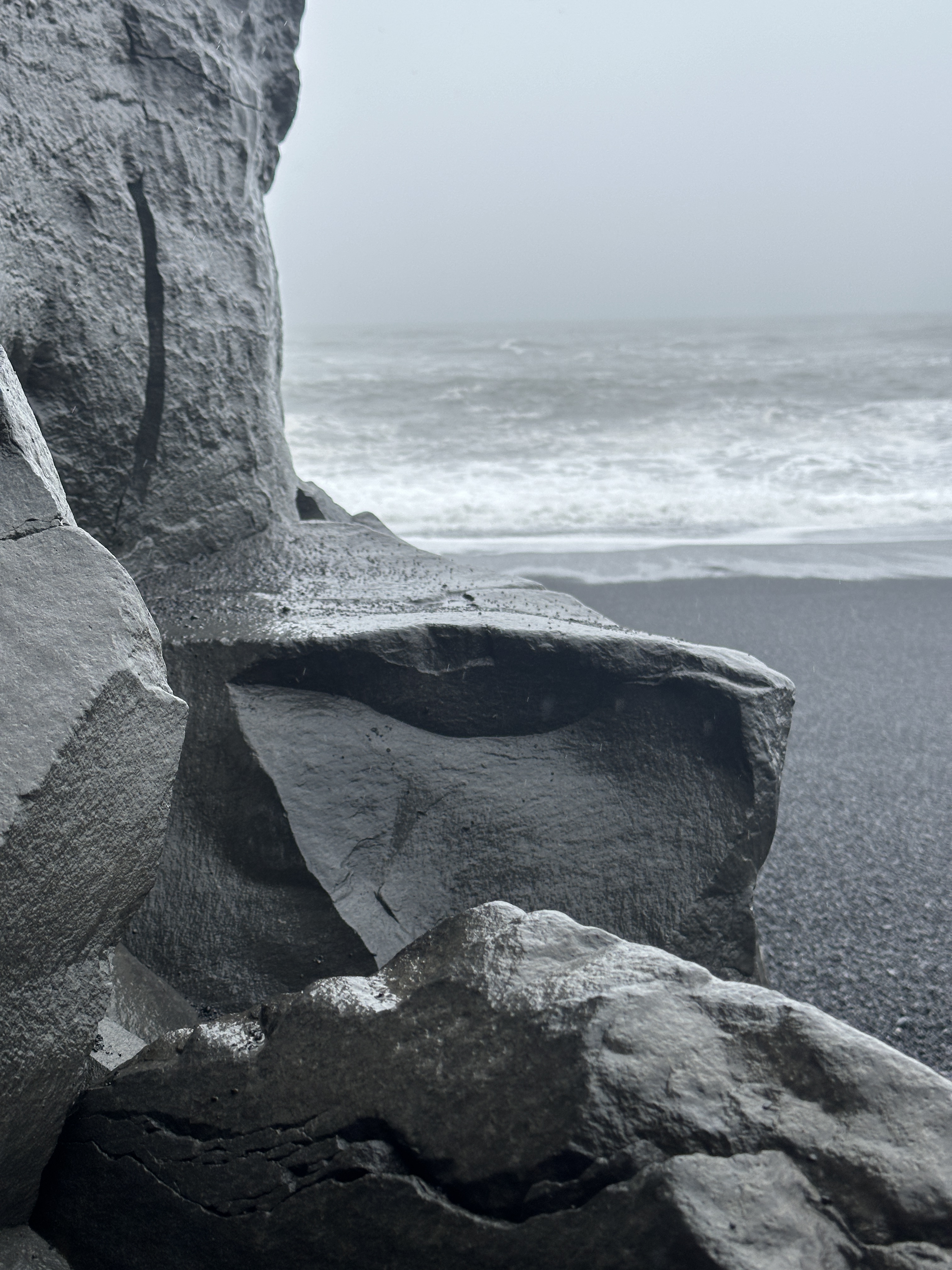
It’s a windswept, austere spot. The wall of majestic columns remind me of the Giant’s Causeway in Northern Ireland. They’re interrupted by a cavern of sorts that offers a bit of shelter from the storm (another possible addition to the soundtrack (“blackness was a virtue, the road was full of mud … men are fighting to be warm”).)
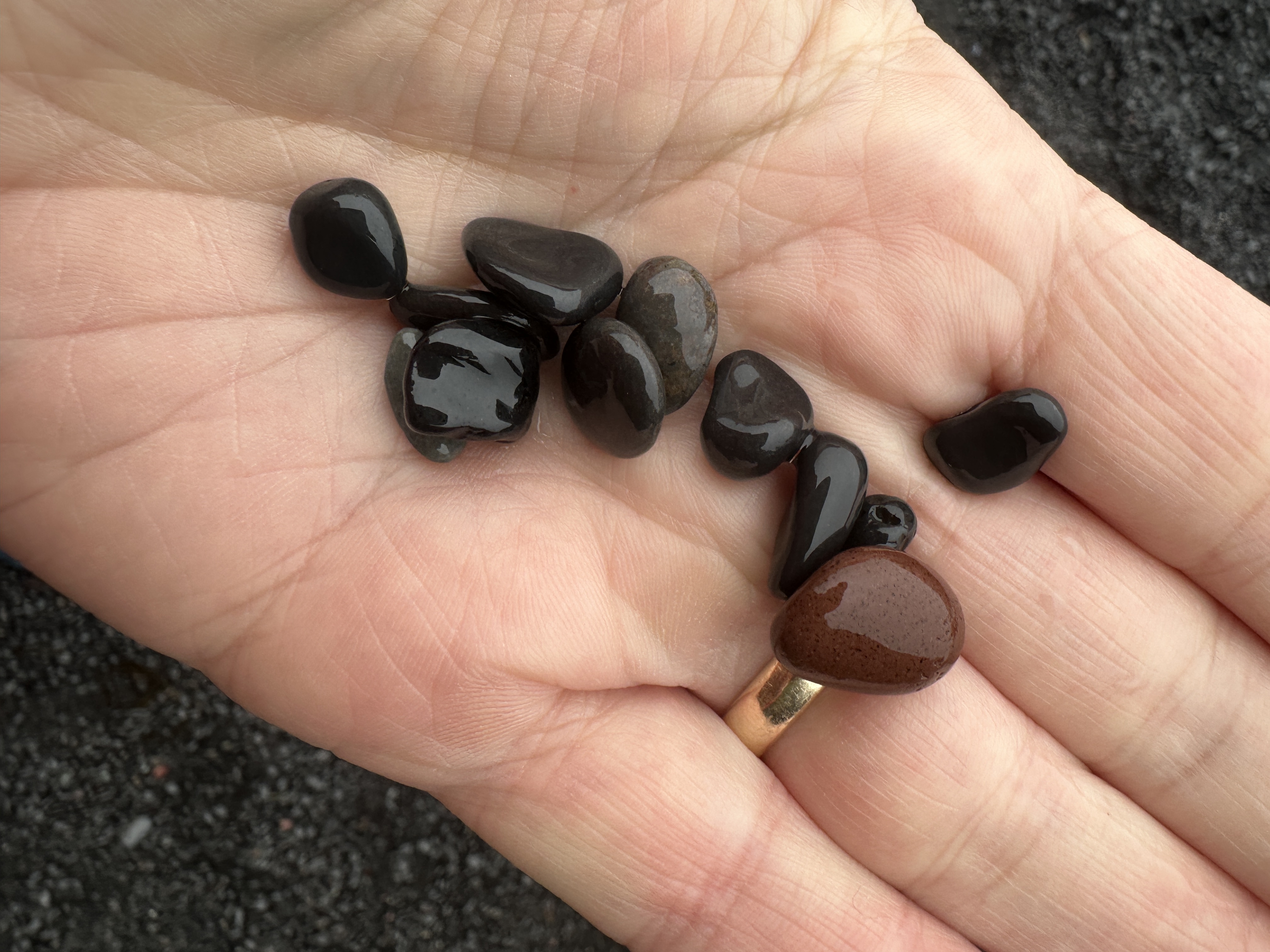
The black sand forms from ground-up basalt and obsidian. Away from the water, the beach turns from coarse sand to beautifully polished black stones.
On an overcast day (a pretty good bet), it’s a somber study in black and gray.
Eldhraun (suggested soundtrack, Lover(lava)boy and Mos(s) Def
Eldhraun (“elf lava”) is a massive lava field formed from a 1783 eruption that lasted for eight months. It covers hundreds of square kilometers – basically, from the inland horizon to the sea – in pillow-shaped boulders (fancifully thought of as elves’ houses) and spongy moss, which can be as thick as 40 centimeters.

There’s a short, circular path that allows you to walk out onto the field. It’s a staggering landscape, unlike anything I’ve seen before.
Systrafoss (suggested soundtrack: Puddle of Mudd)
Another day, another uniquely breathtaking (in two senses) waterfall. If you want to see it, head to “Kirkjubæjarklaustur in Skaftárhreppur” (thanks, Wikipedia); say that three times fast. Systrafoss cascades down the mountainside like a two-lane road. For much of its length, the falling water is divided by a rocky ridge.

We hiked up a trail of muck, mire, and irregularly spaced and sized steps to the top. I found it a tougher hike than the 585 steps yesterday, but the exertion is worth it. The descent is more challenging than the climb – adding the pull of gravity to the sloppy steps enhances the degree of difficulty. Take it slowly and you’ll be fine.

There are beautiful views along the way and from the top. If you go, head for a meal at the Kjarr Restaurant at the base of the falls, where our group enjoyed a lunch of tasty Arctic Char (unlike yesterday’s) and scrumptious ice cream with rhubarb and granola.

Fjaðrágljúfur (suggested soundtrack: Steep Canyon Rangers)
If you were able to pronounce “Kirkjubæjarklaustur in Skaftárhreppur,” then Fjaðrágljúfur shouldn’t present a problem. Neither should a hike there, at least in the downhill direction as we did it. Extending for two kilometers and reaching depths of 100 meters, this is a gorgeous chasm, complete with the requisite waterfall and churning stream. The path, which opens onto several scenic overlooks, presents no footing issues. Definitely stop by if you’re in the area.

We wrapped up the day with brief stops at two other attractions: Kirkjugólfi and Foss á Siðu.
Kirkjugolfi (suggested soundtrack: The Christians and the Pagans, by Dar Williams; it’s a great song – give it a listen if you don’t know it). Legend has it that the land at Kirkjugolfi carries a curse under which any pagan (non-Christian) will die upon entry. There’s a large grave mound called Hilishaugur, under which one Hildir Eysteinsson supposedly is buried. He was a pagan who, ignoring the curse, came onto the land of Ketill, a Christian hermit from Ireland. Perhaps the curse has been lifted, because our entire group, Christian and non-Christian alike, emerged hale and hearty.
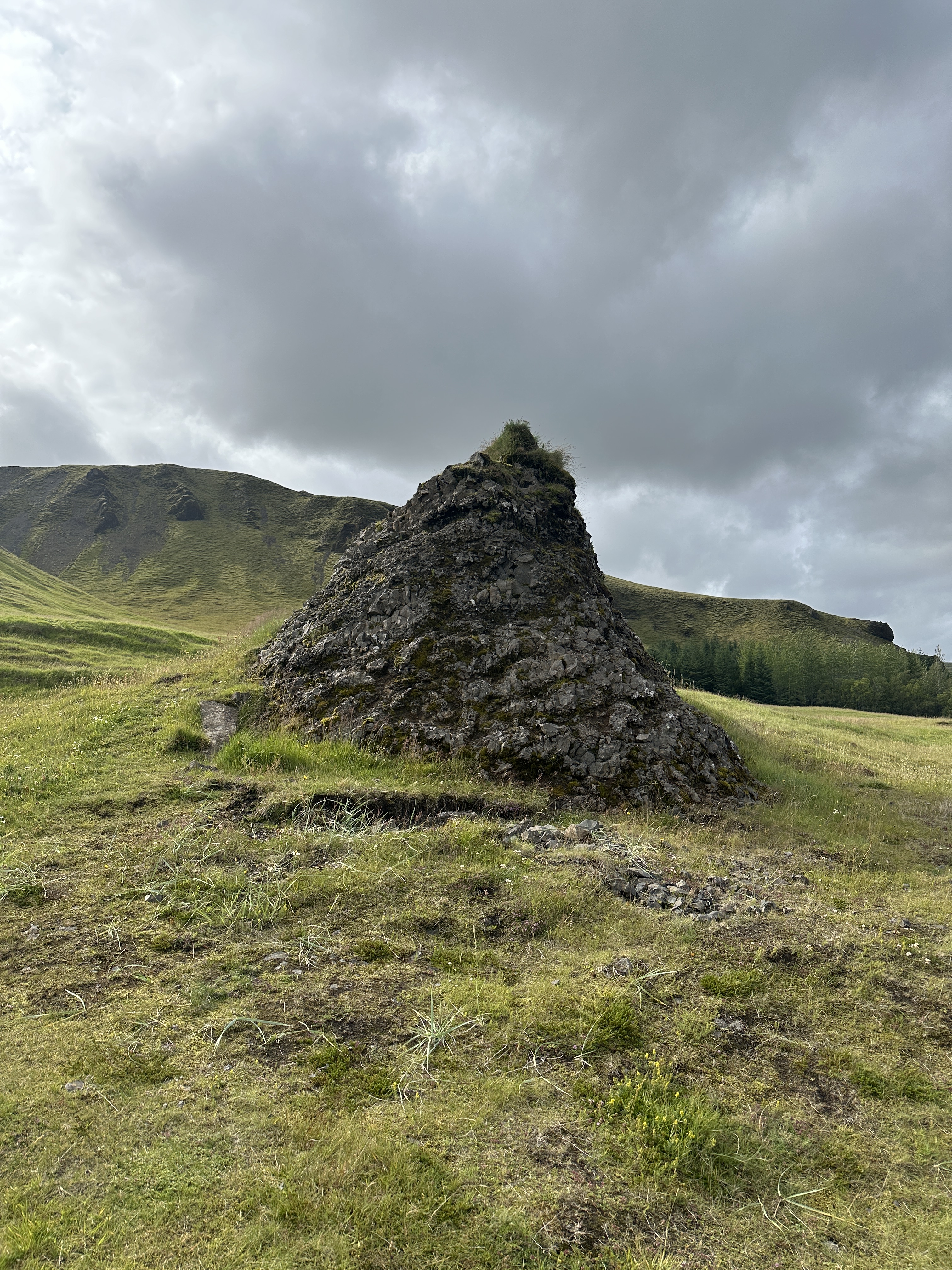
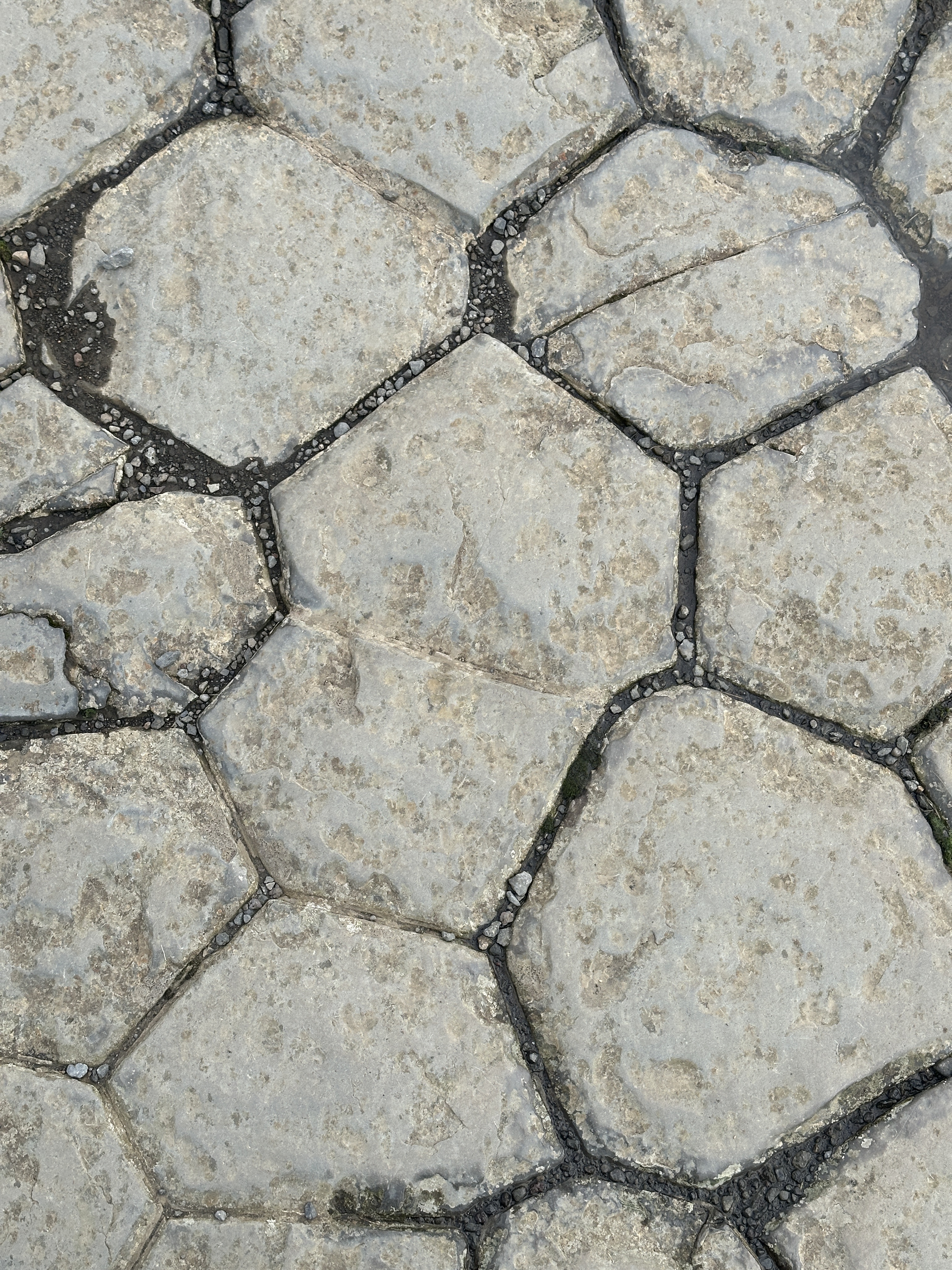
There’s also a remarkable set of eroded basalt columns (Kirkjugolfið) called the “church floor” because it looks like geometric stone tiles. It’s an intriguing illustration of nature mimicking human creations.
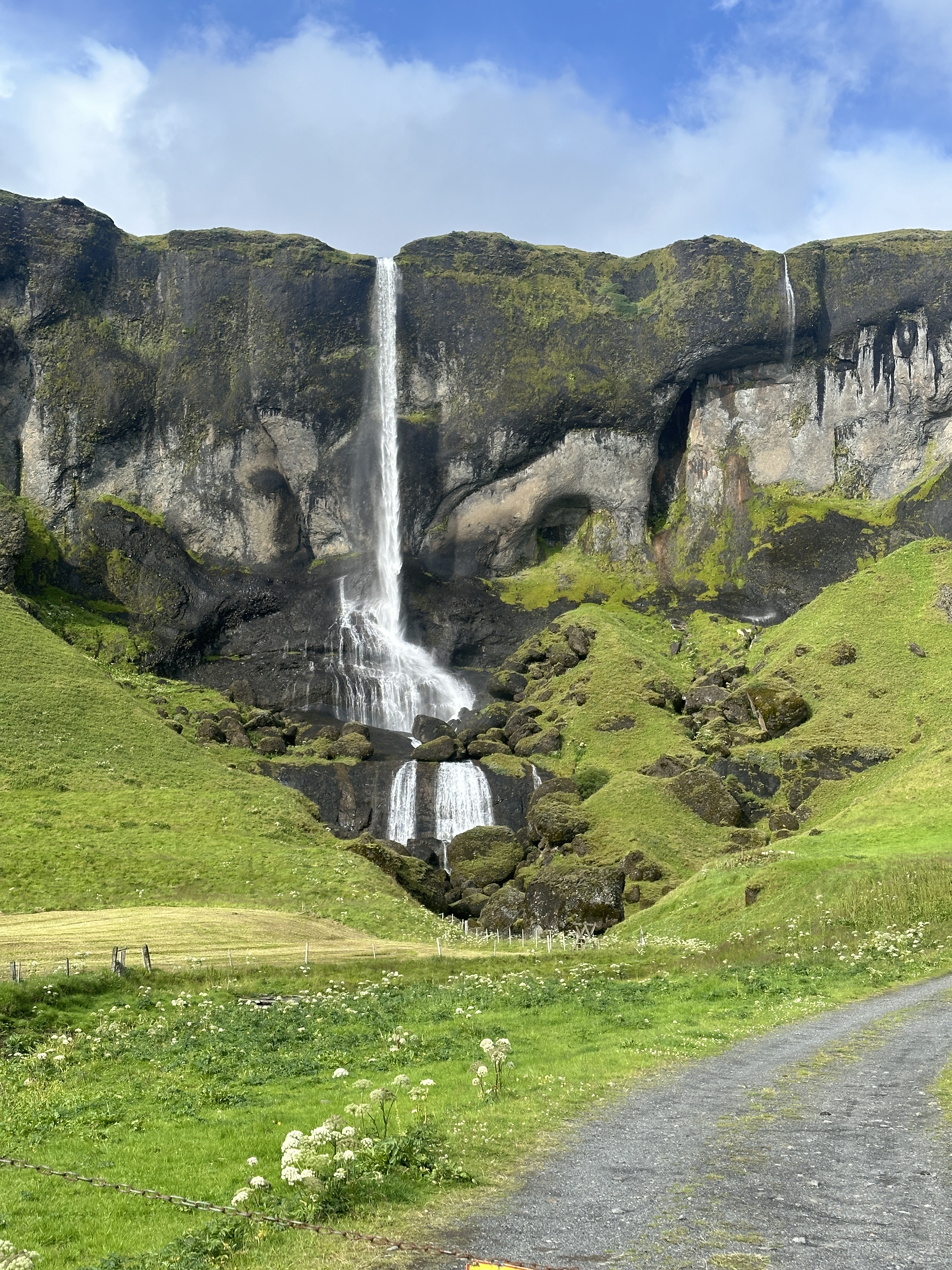
Foss á Siðu (suggested soundtrack: Hmm, I can’t come up with anything except that it’s across the road from the Hamrafoss Café and it’s on private land, so how about U Can’t Touch This) is a narrow, graceful waterfall set against a dark cliff from whose base vibrant green fields spread to each side. It’s a beautiful setting, even if the falls don’t exude the untamed power of some we have seen.
Tomorrow we head for a glacier hike (Ice Ice Baby, of course). Come back to read all about it; I promise that tomorrow’s post will proceed in a different vein.

 PuffinlessTravel