If you read this blog regularly, you know that I rarely pass up the opportunity to make an obscure musical reference. Today’s comes courtesy of Donovan, the great Scottish singer-songwriter known for trippy, mystical lyrics. Specifically, his classic hit “There Is a Mountain” describes the morning perfectly: “First there is a mountain, then there is no mountain then there is.” He probably wasn’t talking about Iceland, but the lyrics suit this morning’s weather, which involved blankets of low clouds that sometimes lifted a bit and then a minute later descended.
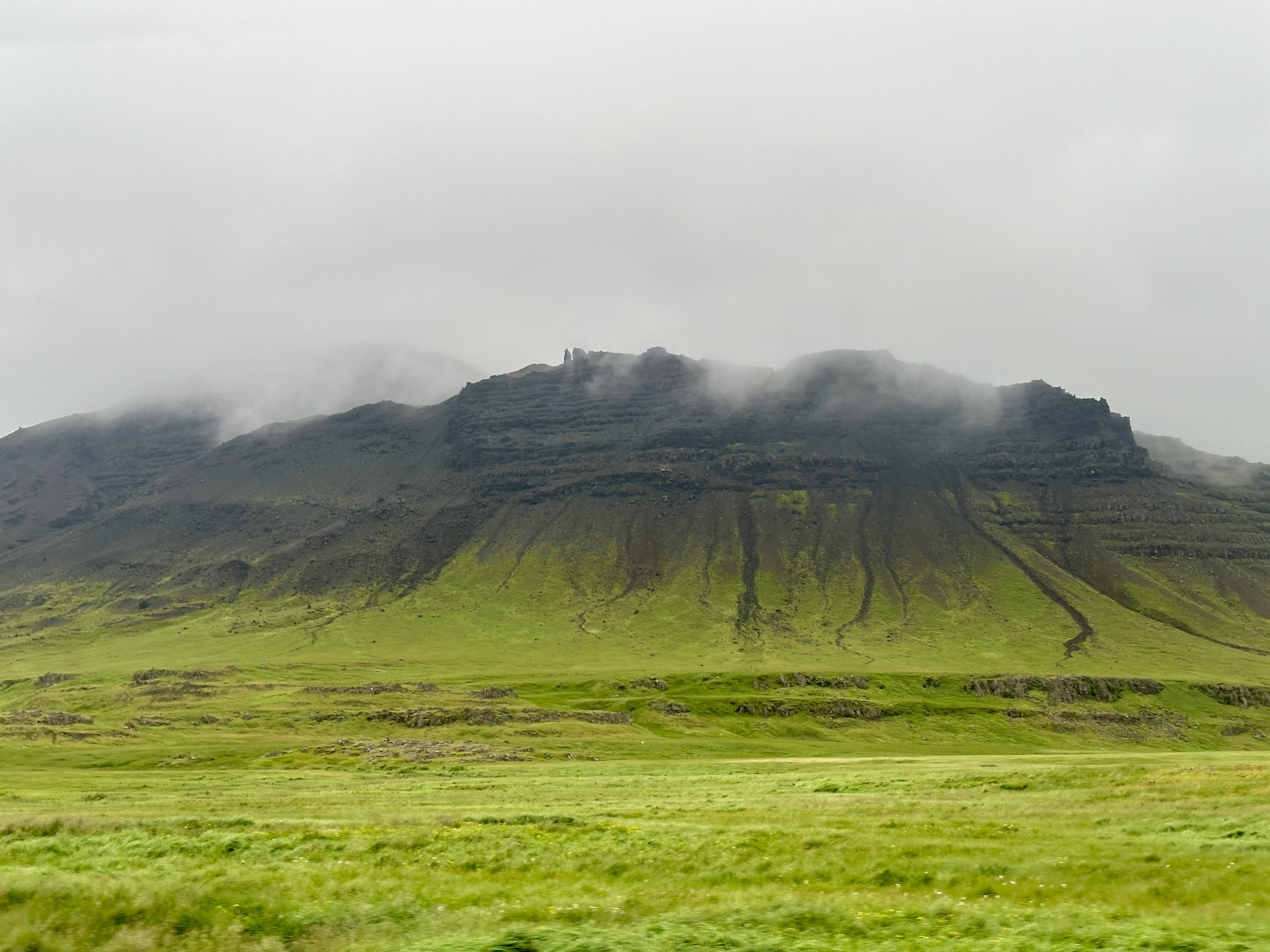

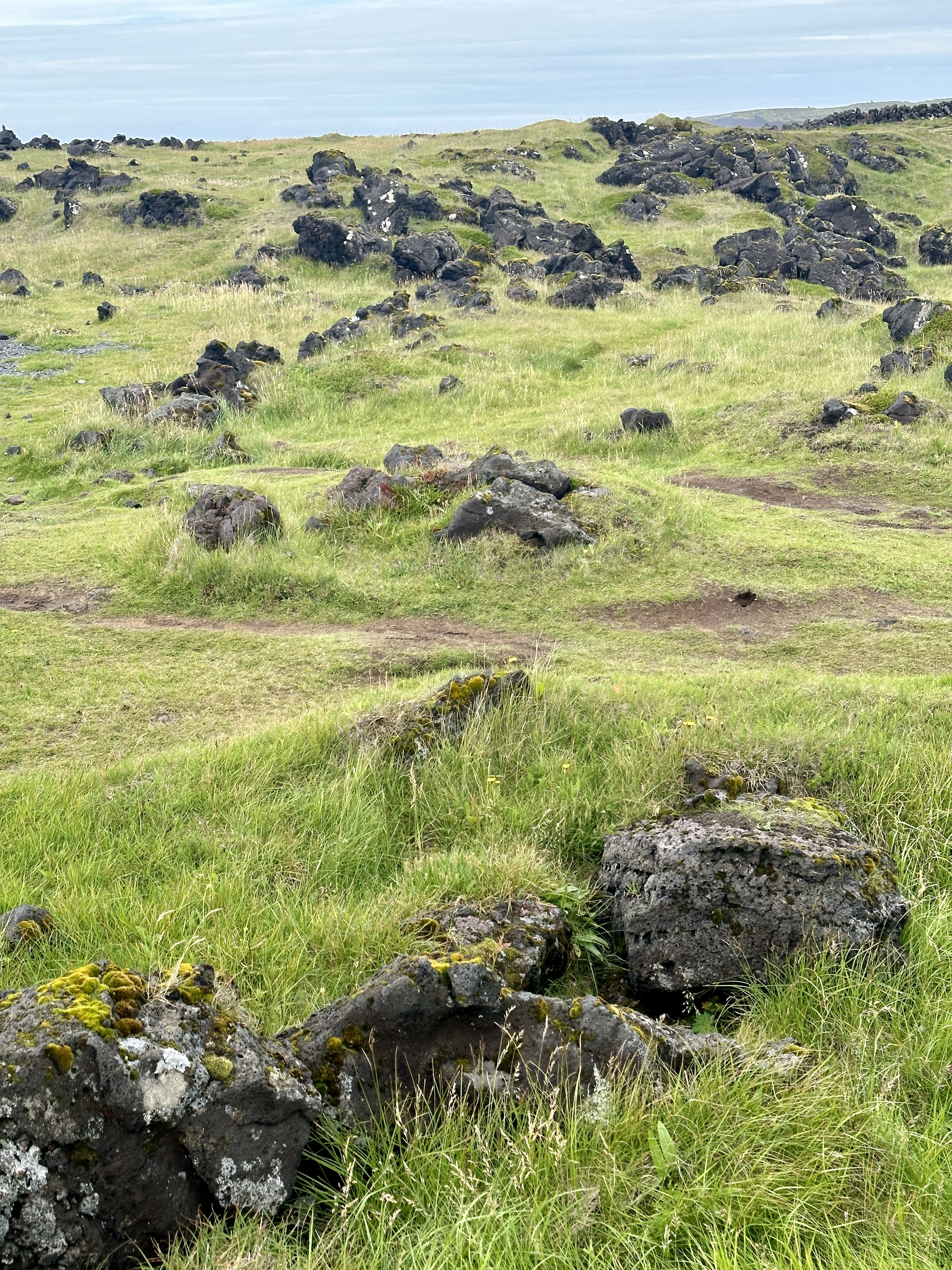
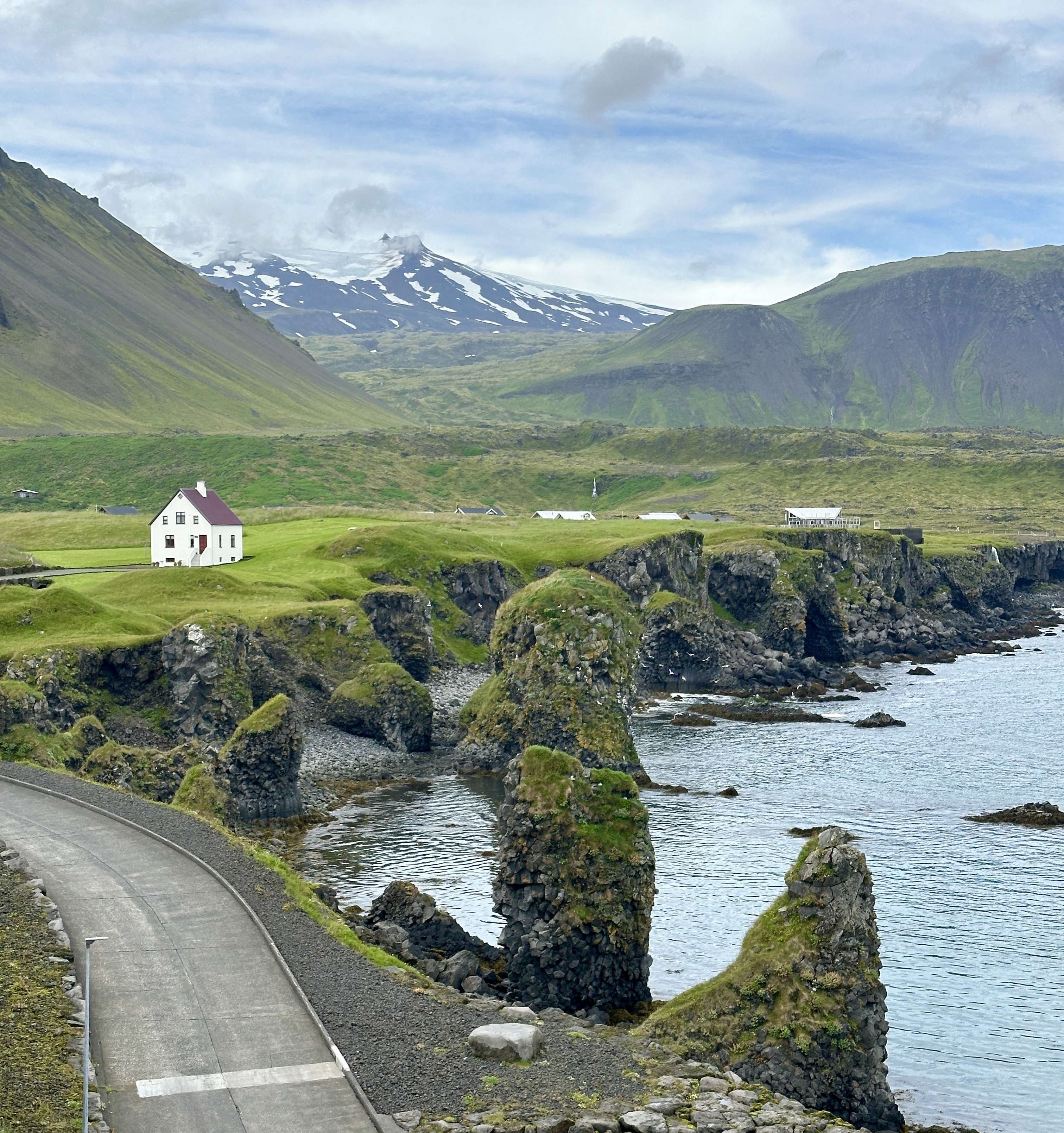
We were treated to this magic act on the drive from Bogarnes to the Snæfellsnes Peninsula, where barren, jagged mountains face on to lava fields (spongy grasses punctuated by blocks and boulders of lava and basalt) that end in commanding basalt cliffs. It’s a spectacular place.
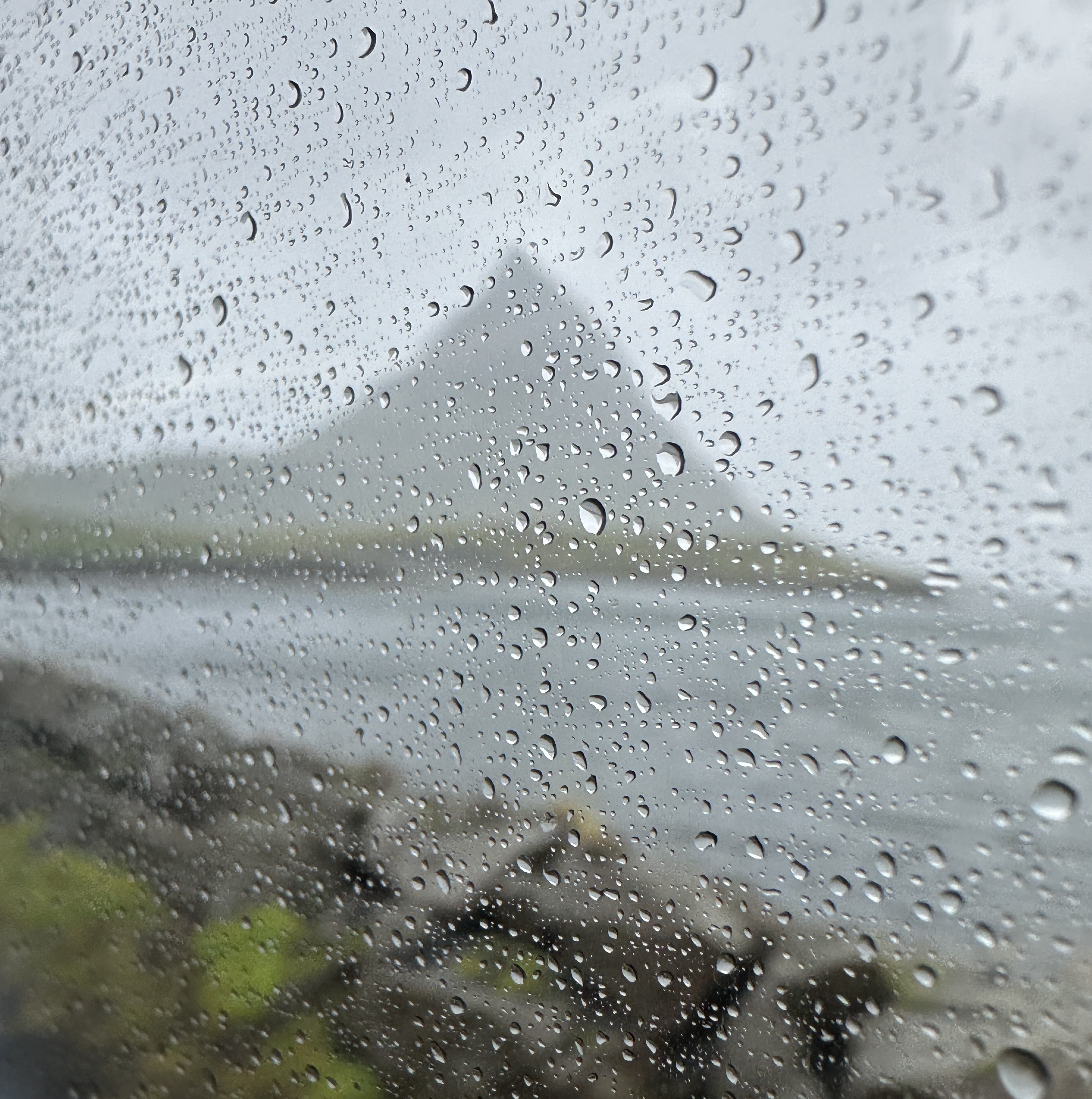
Snæfellsnes plays an important role in both Icelandic and modern mythology. Our first stop, Kirkjufell, is probably the most famous mountain in Iceland, having been featured in Game of Thrones. I must confess that I know nothing about the show; don’t hate me, but after watching half of the first episode I decided there were better uses of my time.
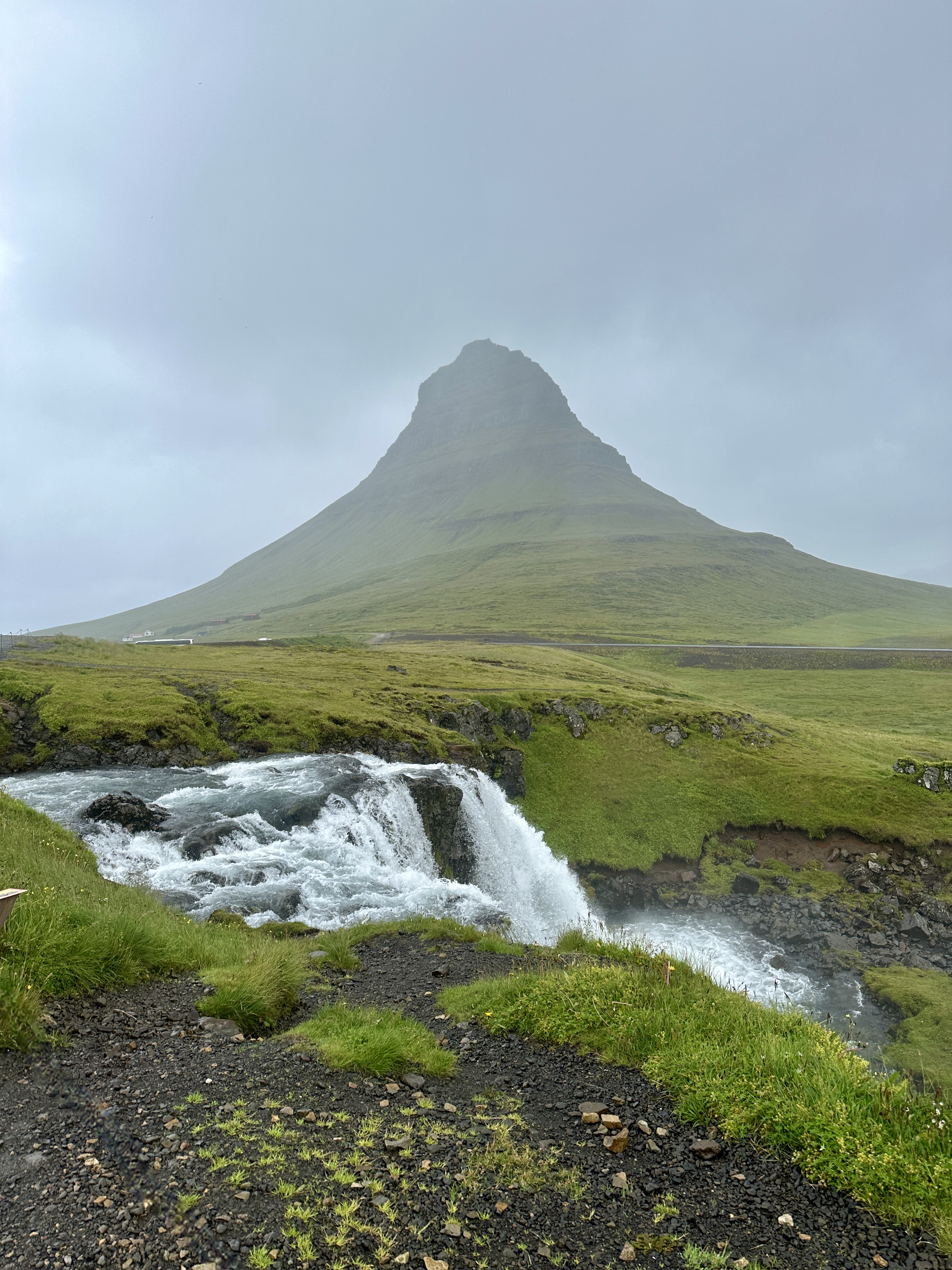
Across the road from Kirkjufell, a two-tiered waterfall (Kirkjufellsfoss) provides sound and motion in an otherwise silent and still landscape. (A note of Icelandic words: “foss” indicates a waterfall and “fell” means mountain. The letter ð is pronounced like the “th” in “that.”)

From Kirkjufell, we headed deeper into the peninsula, driving around another famous Icelandic mountain, Snæfellsjökel (“jokel” means glacier). In Icelandic mythology, this mountain hid a portal to the center of the earth, leading Jules Verne to use it as inspiration for his book.

Heading from the mythological to the real (climate change deniers notwithstanding), Snæfellsjökel’s glacier is rapidly shrinking. Maybe Donovan can update his song: “First there is a glacier, then there is no glacier – at least until the next Ice Age.”

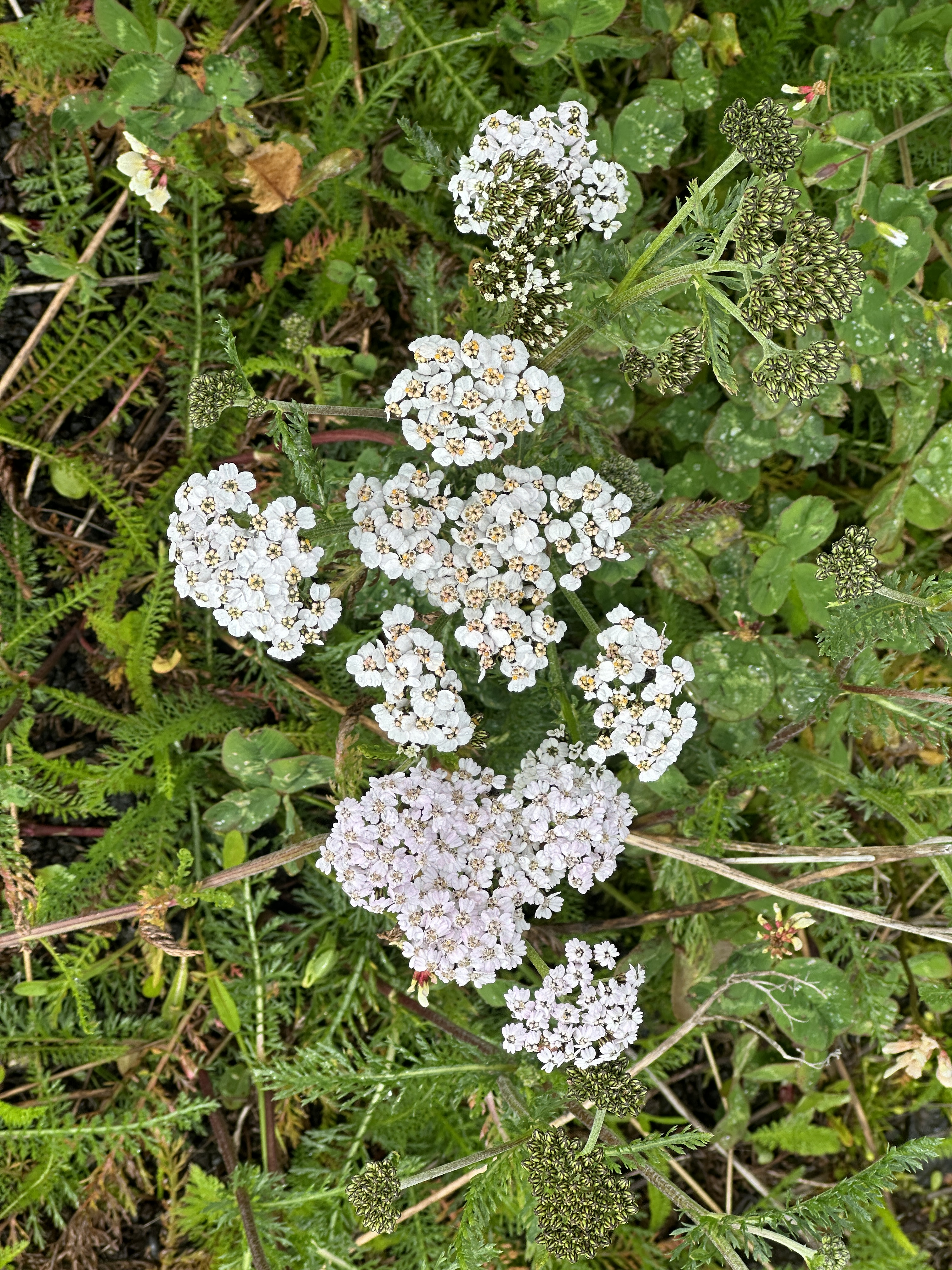
The peninsula’s lower reaches are dotted with miniature wildflowers, ground-hugging plants whose tiny blossoms break up the black lave and green scrub grass with flashes of yellow, blue, white, and other hues that my color-blind eyes cannot reliably identify. It’s a nature-lover’s paradise.

Continuing into the national park, we stopped near the Malarrif lighthouse, which overlooks dynamically crashing surf. Not far away, two rock pillars guard the coast; early settlers considered these the petrified remains of a couple of trolls.


A bit further on, there’s a statue of Balður, a half-giant who engaged in various murderous exploits.


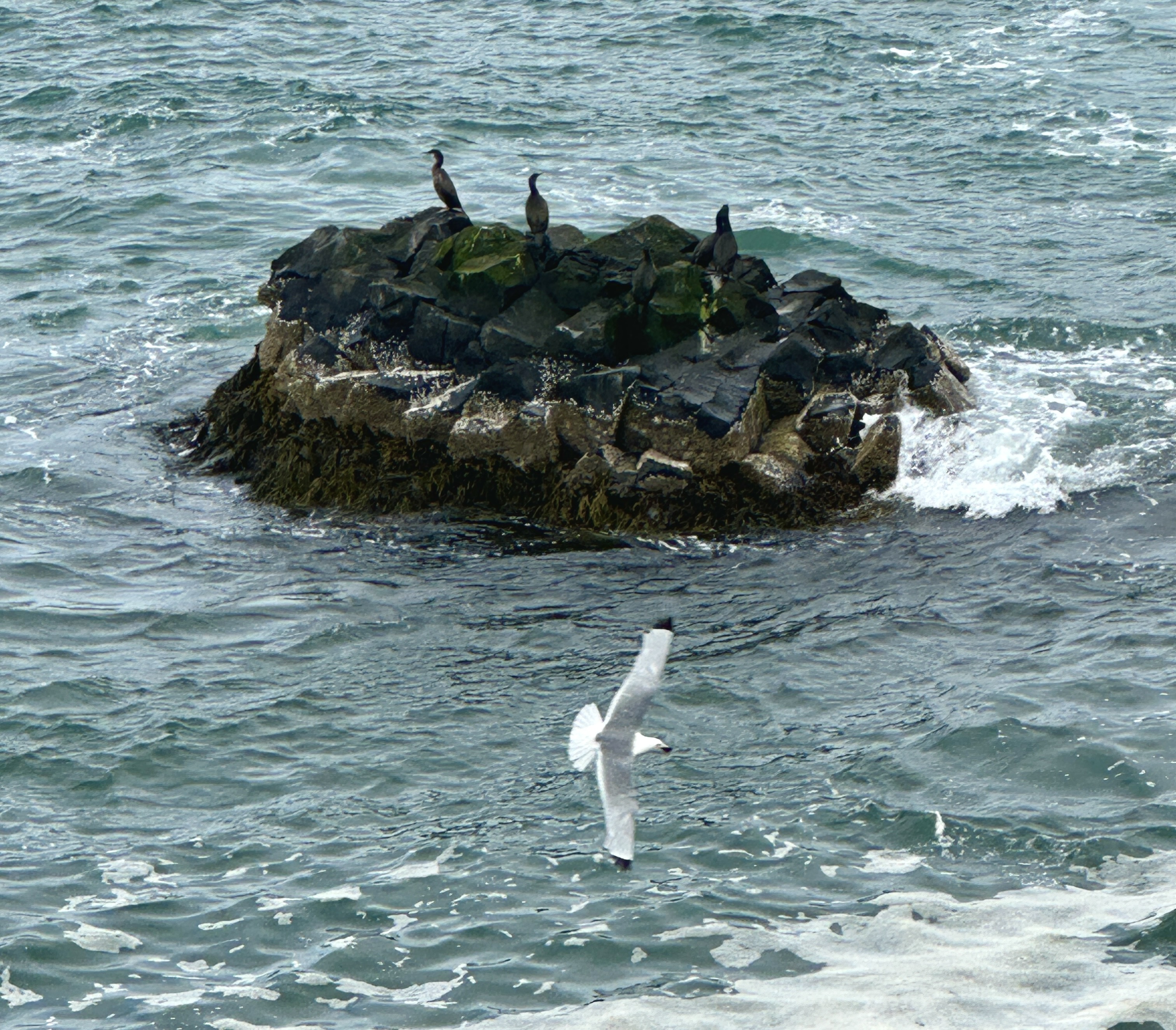
The statue rests on a cliff that serves as a nesting ground for millions of raucous gulls and a few cormorants keeping their own counsel. The waves and rock formations here are even more impressive than those by the lighthouse.

Up next: Rauðfeldsgjá, which I believe translates as “place where you will clamber over rocks into a narrow crack in the mountain along with dozens of other tourists and emerge with both feet soaking wet.” At least that was my experience.
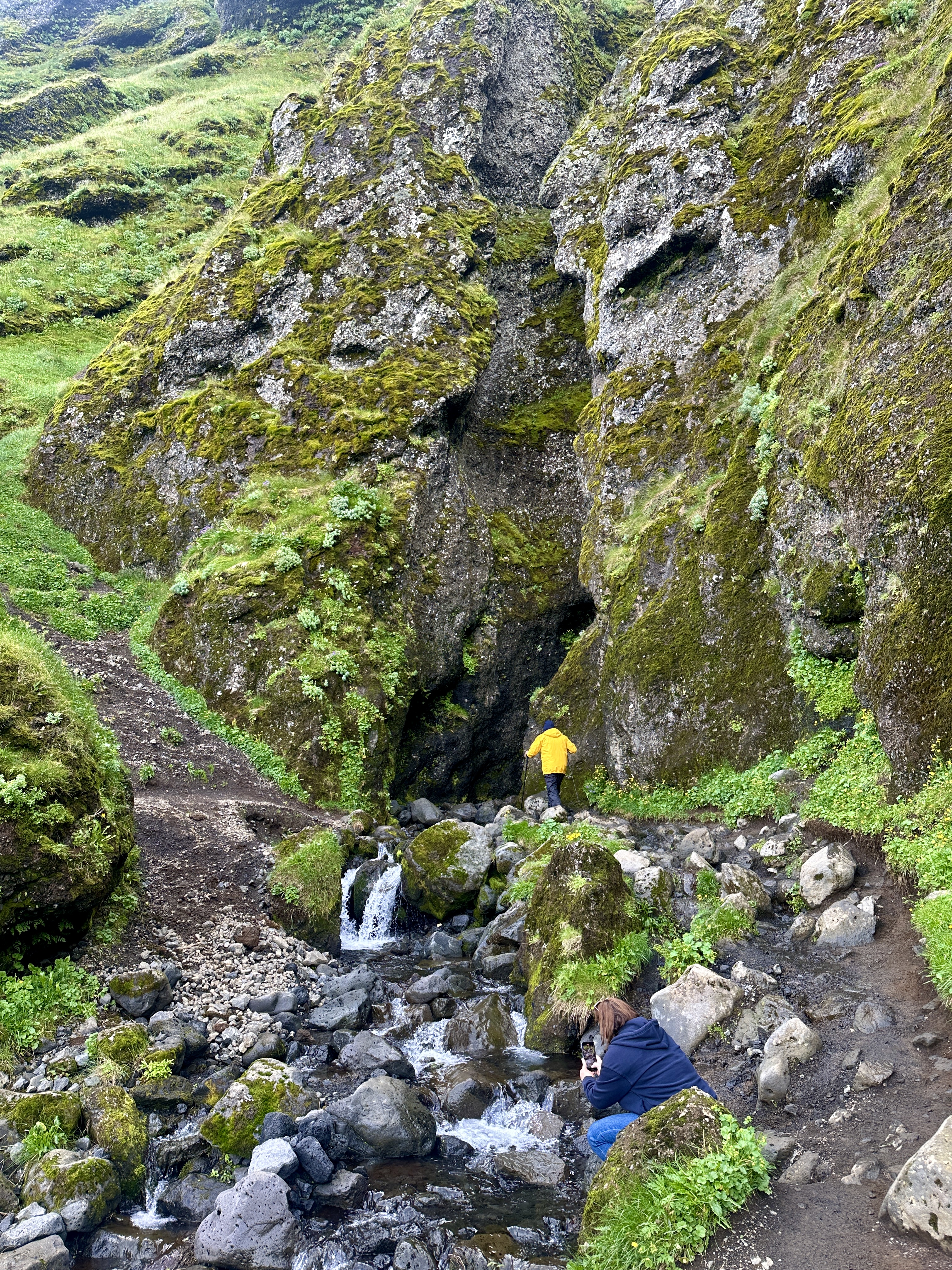
From the car park, you walk a few hundred meters up a fairly gentle but muddy grade to reach the crack. Getting inside requires stepping from rock to rock in the middle of a rapidly flowing but shallow stream. Not being blessed with mountain goat genes, I gave up after around five meters and headed back down; those in our group who ventured further in said there are a couple of spots where holes in the mountain open dramatically to the sky.
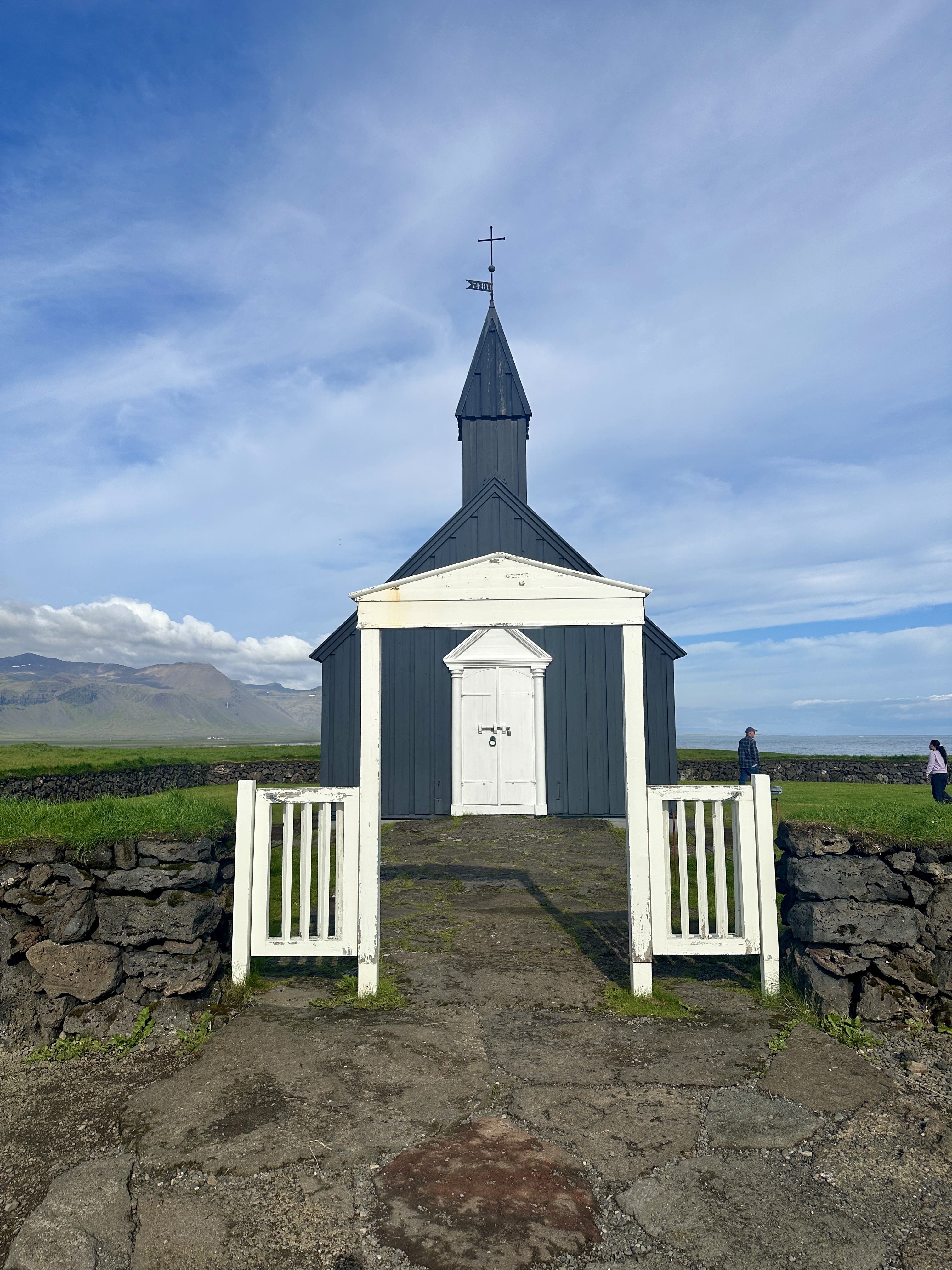
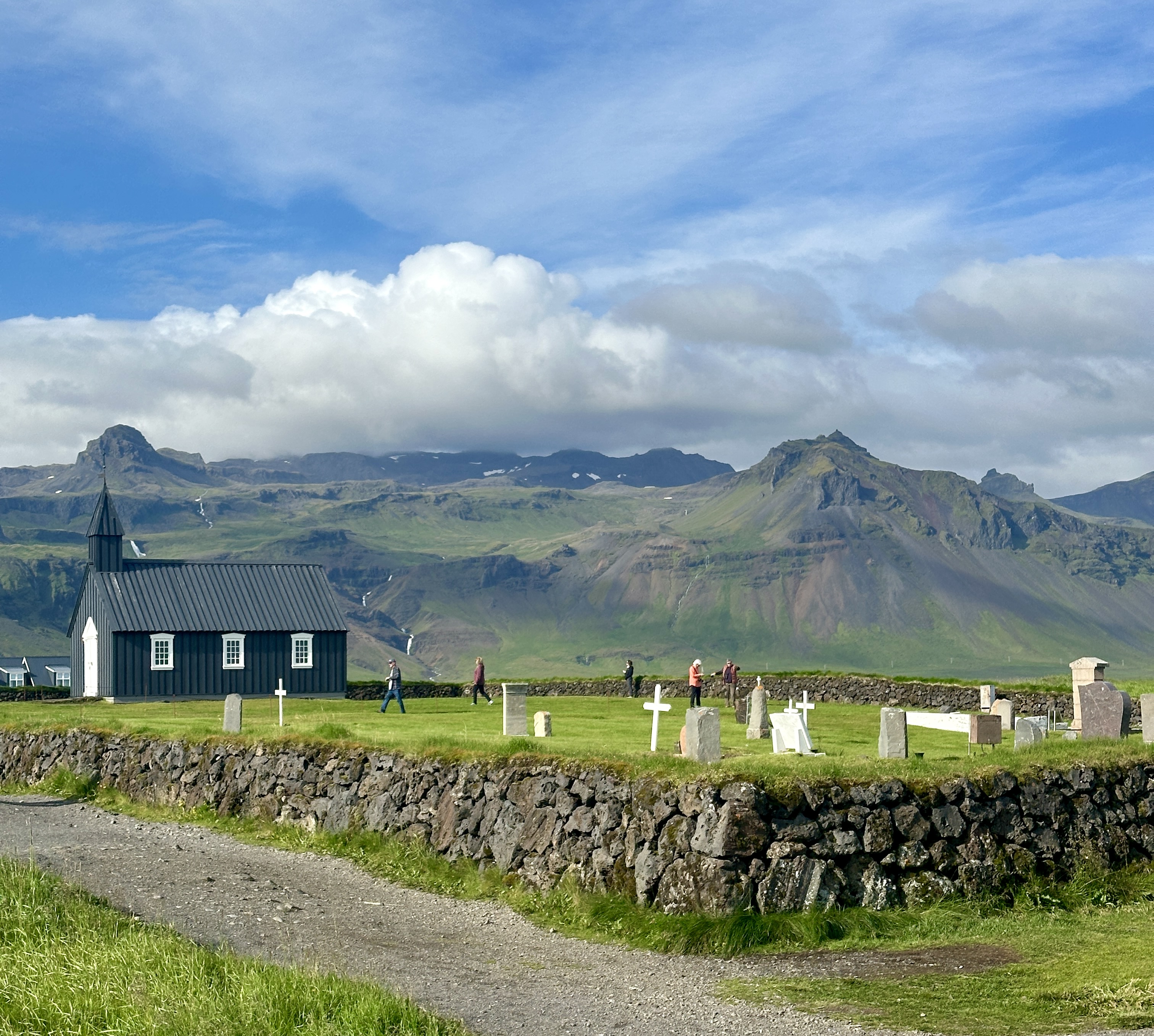
We ended the active portion of the day more gently, visiting Búðir, the “Black Church” (creatively named for its appearance; most Icelandic place names are blandly descriptive). The church, built in 1847, is no longer in use but is well-preserved. Adjacent to the church is a small cemetery, set a couple of kilometers from the mountains and just tens of meters from the sea. Not a bad place to spend eternity!
What better way to end the day than with a delicious dinner at Vegamót Café. The name bears an uncomfortable resemblance to Vegemite, but that’s where the similarity ends.

I enjoyed a scrumptious bowl of ramen with tofu and vegetables and a passable Icelandic whiskey. Tired, well-fed, and wowed by a day of gorgeous scenery, I’m writing this on the bus back to our hotel in Bogarnes. Stay tuned!


 PuffinlessTravel