Today was filled with feasts for the eyes and the stomach. I’ll serve this post to you in three courses: plates, tomatoes, and water.
Plates, Tectonic and Otherwise
An hour or so south and east of Bogarnes you can see America and Europe at the same time. (It’s a bit like seeing Russia from your window, for those who remember Susan Palin.) How is this possible? Visit Thingvellir National Park.
A couple of notes about the word Thingvellir: First, that’s not how you spell it. There is no “th” in Icelandic. Rather, there’s the letter ð, which (as mentioned in yesterday’s post) makes a hard “th” sound, as in “that.” There’s another letter that looks a bit like a capital “P” whose semicircle is flying at half mast, which makes a soft “th” sound, as in Thing. Unfortunately, my character set doesn’t include it. Second, the word isn’t pronounced as it’s spelled. Some Icelandic words, seemingly at random, turn “ll” into “tl.”

Anyway, you’re not reading this for a lesson in orthography, so let me move on. Thingvellir should mean “the place of a billion midges,” but it doesn’t. It’s the place where the Icelandic parliament (the “Althing”) met from 930 to 1798.
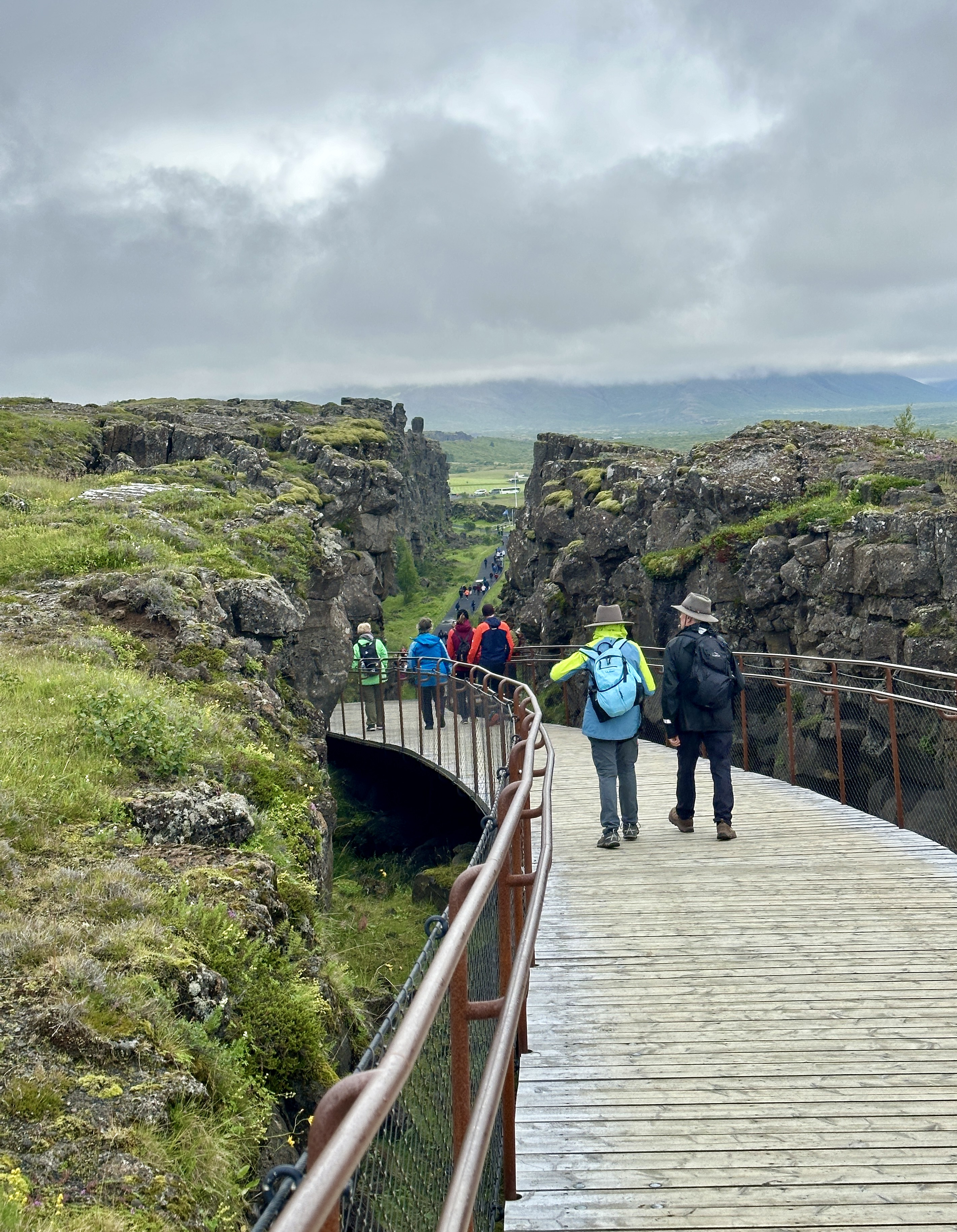
It’s also a rift valley that separates the North American and European plates, which chafe against each other along a meandering route from Iceland’s southwest to its north, wreaking geologic mischief (geysers, volcanoes, and earthquakes, oh my). This makes for some striking scenery, which you can view from a well-maintained path winding down from the visitors’ center. (It’s yet another Icelandic location where parts of Game of Thrones were filmed.)
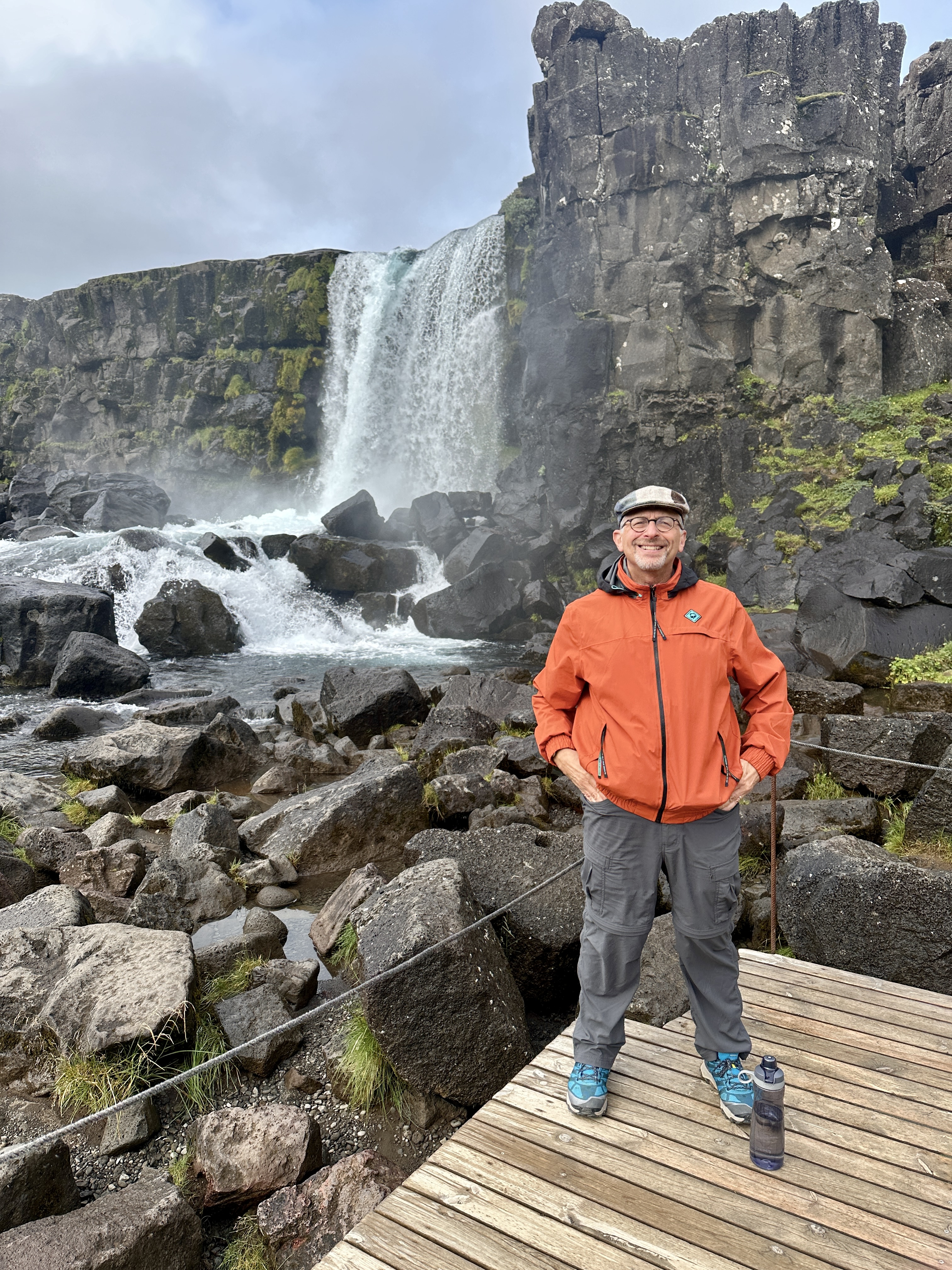
Ten minutes or so down the path, there’s a side trail that heads uphill for 150 meters to the Öxaráfoss waterfall. It’s a pretty place, but far from Iceland’s most impressive cascades (one of which we visited later in the day).
A word about the midges before I move on: they don’t bite, but they swarm pestilentially around your eyes and nose. If you’re going to visit, it’s worth bringing a hat with a mosquito net instead of leaving it in a drawer at home as I did.
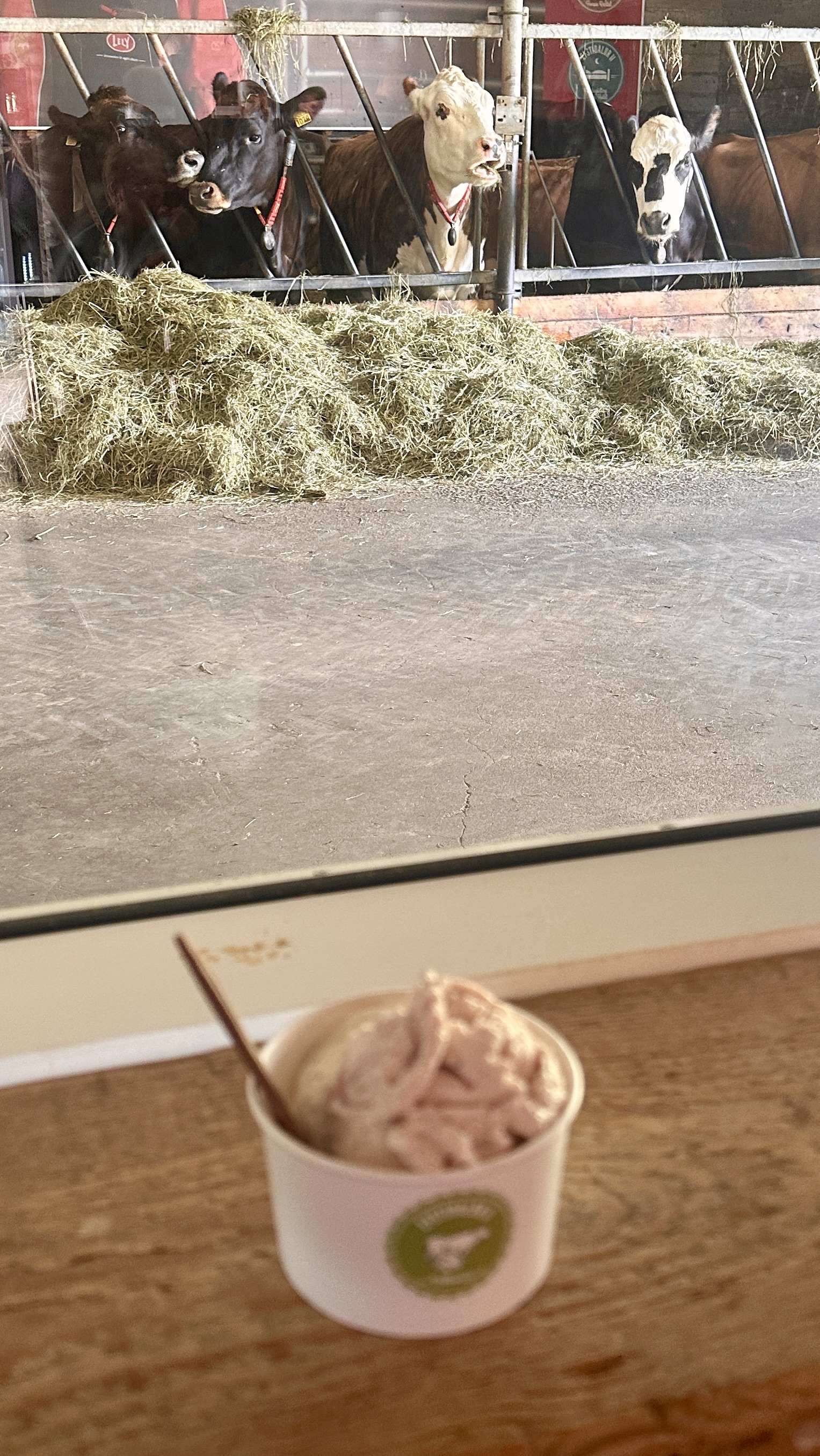
I’ll move on now from tectonic plates to salad plates. After a quick stop for ice cream at a dairy farm (as you know, it’s best to eat dessert before a meal to make sure you have enough room for it), we had a terrific lunch at Frieðheimar, a tomato farm with a simple, beautiful winery/restaurant.
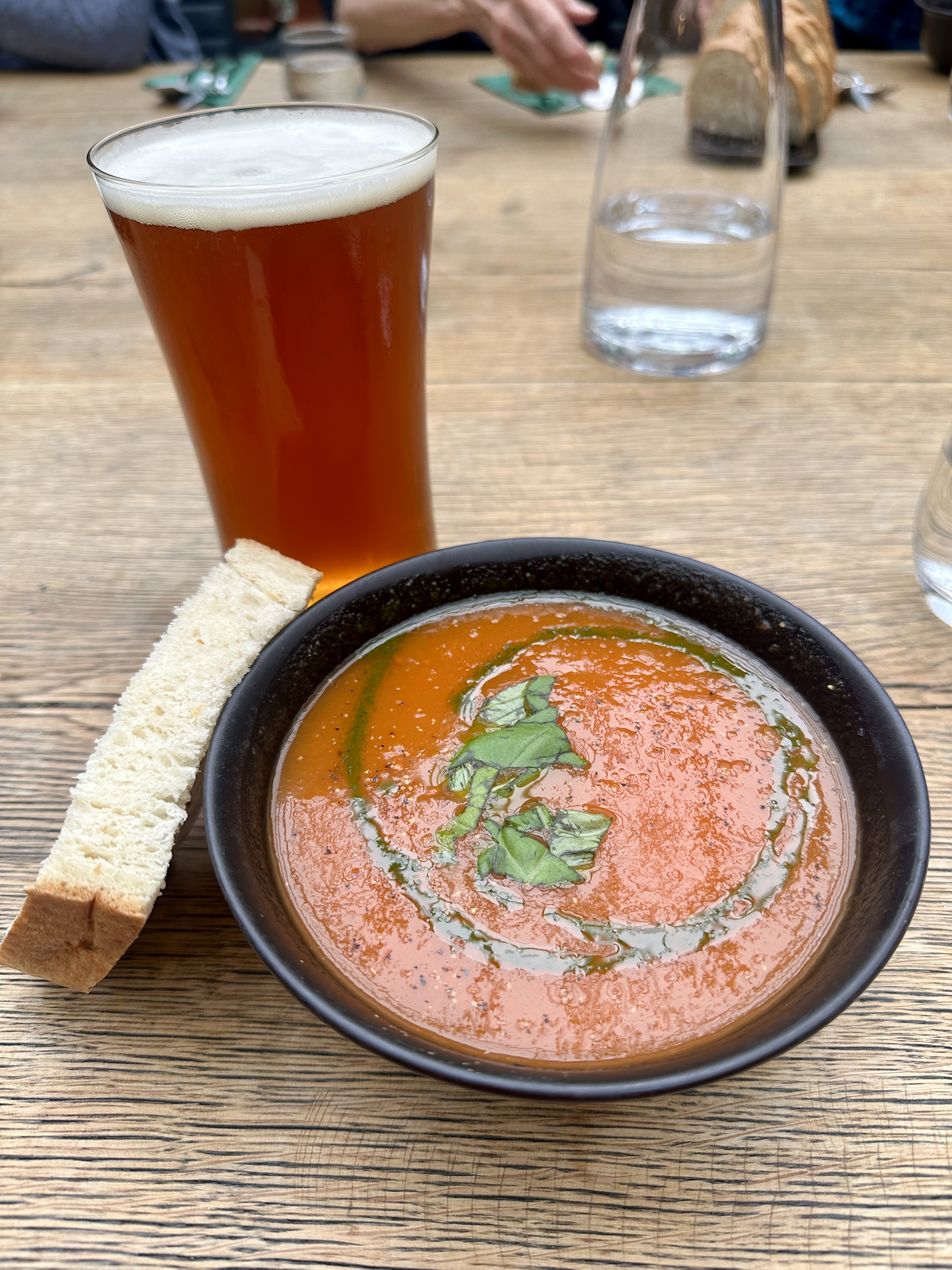
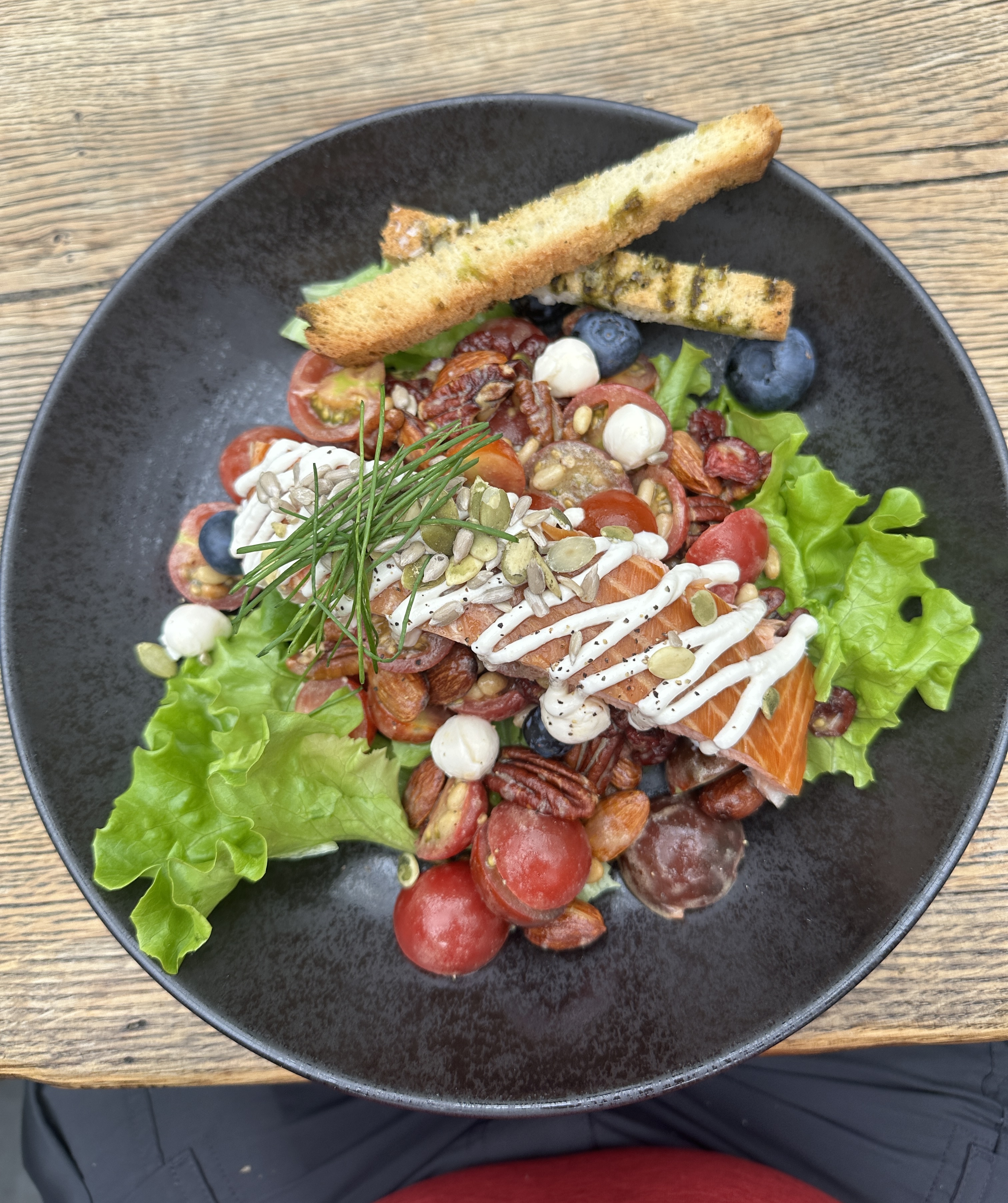
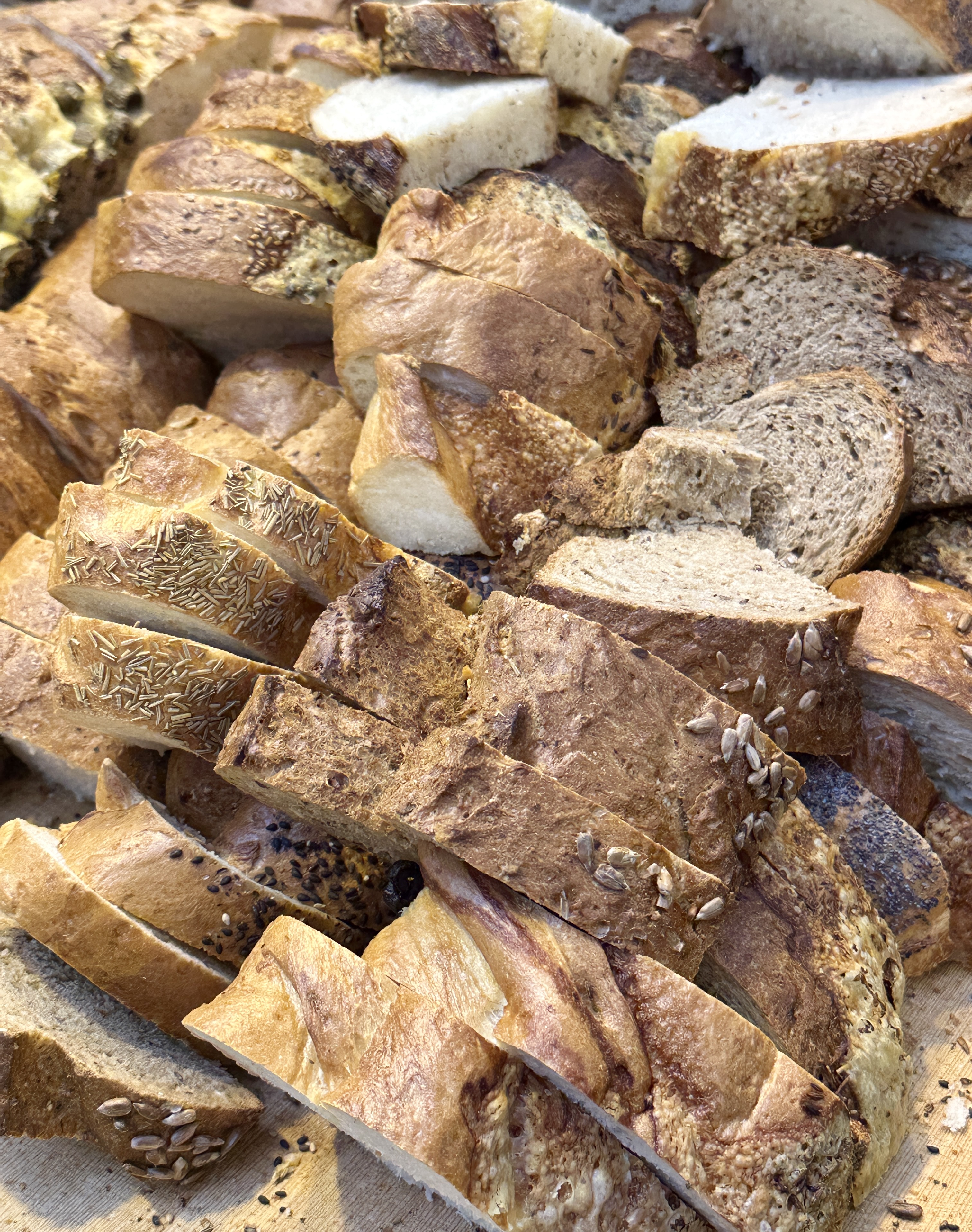
Our group had a fixed menu, but what a treat: a savory tomato soup served with freshly made bread, followed by one of the best salads I’ve ever had – cherry tomatoes as sweet as candy, mozzarella pearls, basil, pecans, and almonds, topped with a smoked filet of salmon. (There was also a vegetarian option, lamb, or duck.) I tried a tomato IPA, which was quite nice, and I’m not an IPA fan.
Following lunch, we went into one of the nine greenhouses for an explanation of the farming operation. The tomato plants are grown from seeds and produce a large volume of high-quality fruit for around a year, by which time they can reach up to 12 meters in height. (Many plants are trained sideways so they grow horizontally.)

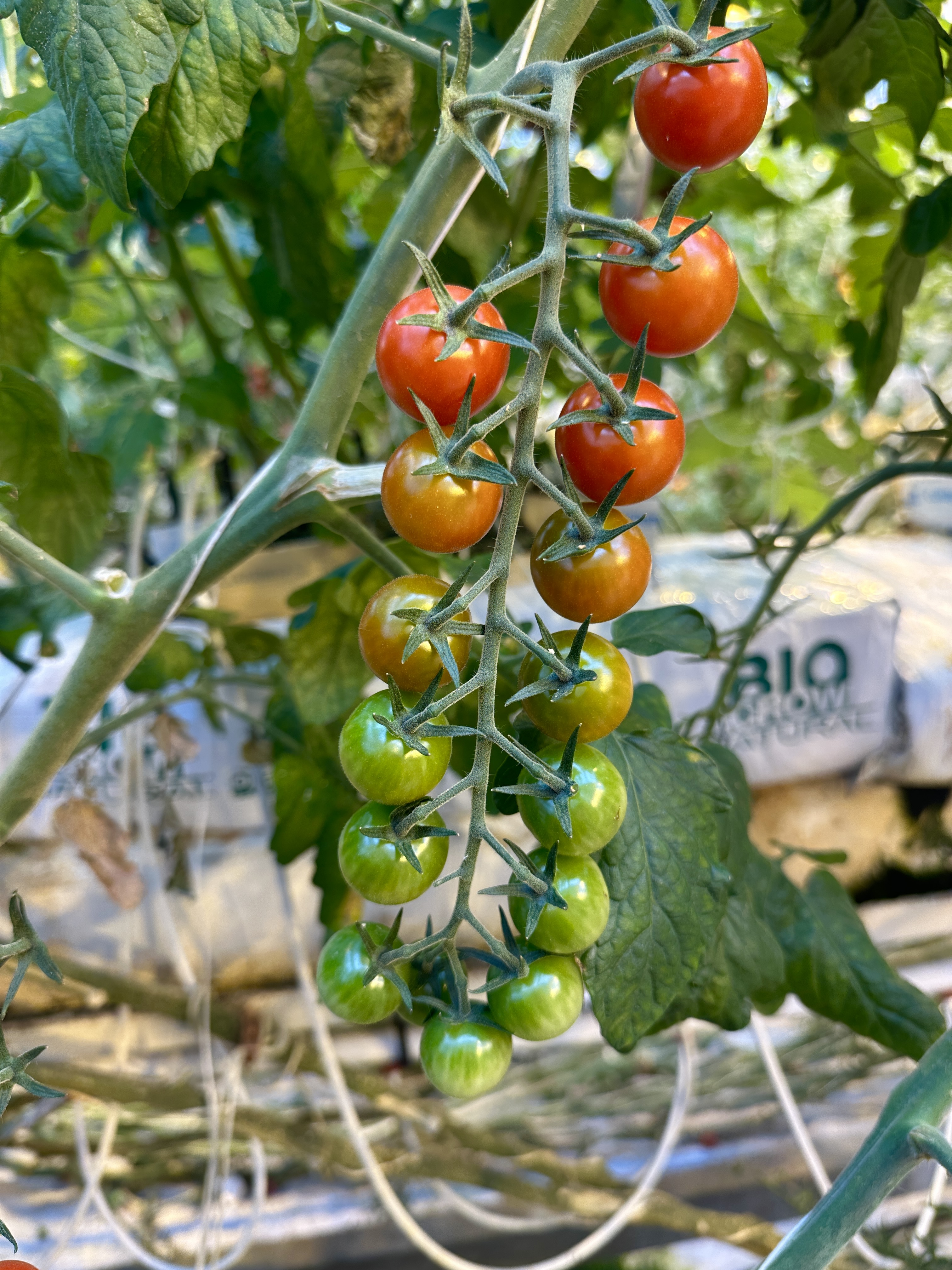
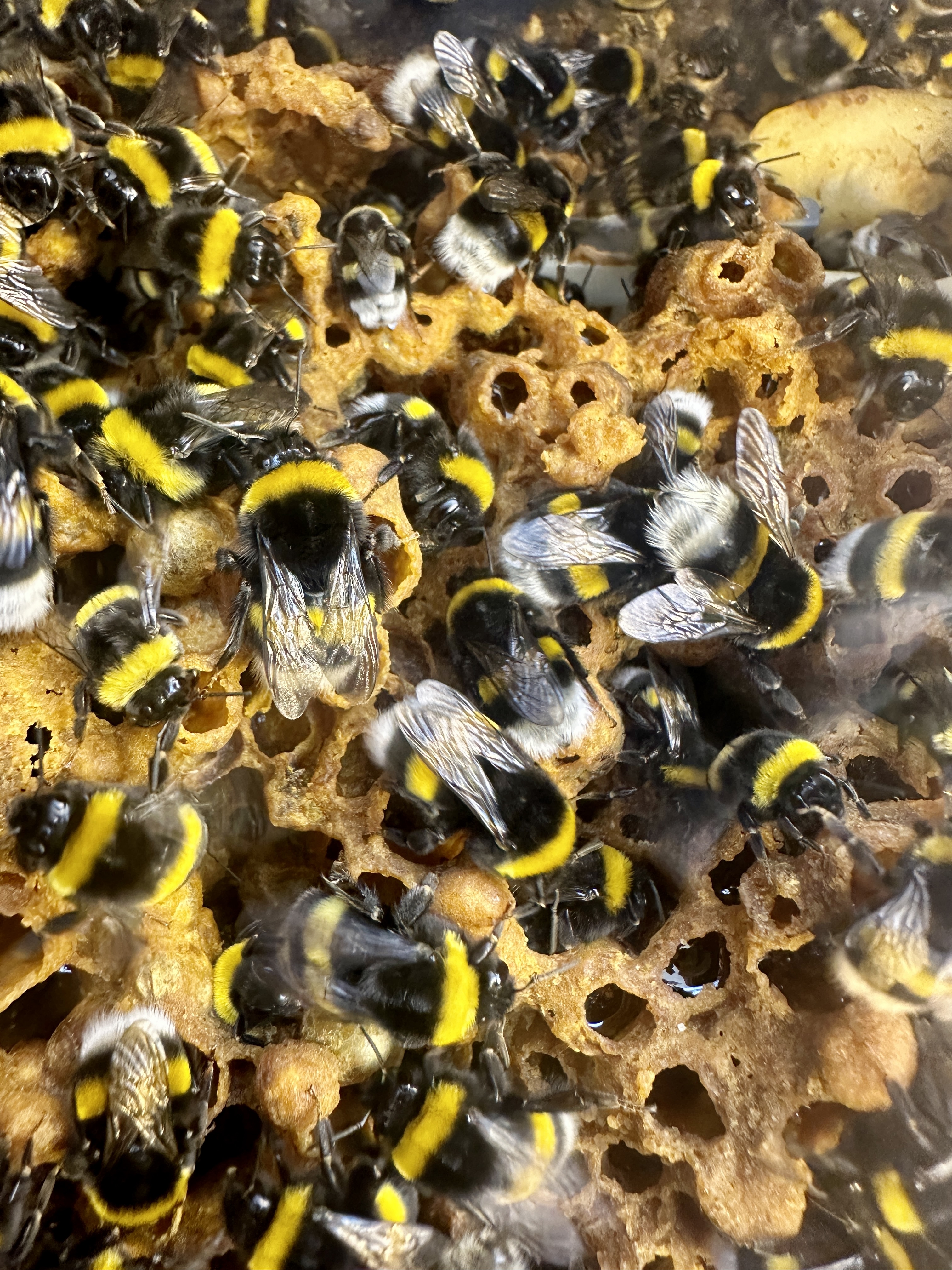
It’s an international production – the soil comes from Sri Lanka and the bumblebees that fertilize the plants come from the Netherlands. No pesticides are used, and the climate in the greenhouses is controlled by water from geothermal springs. The farmhands pick two tons of tomatoes each day – roughly 165 pounds for each of the 24 workers!
Water – hot, cold, and in-between
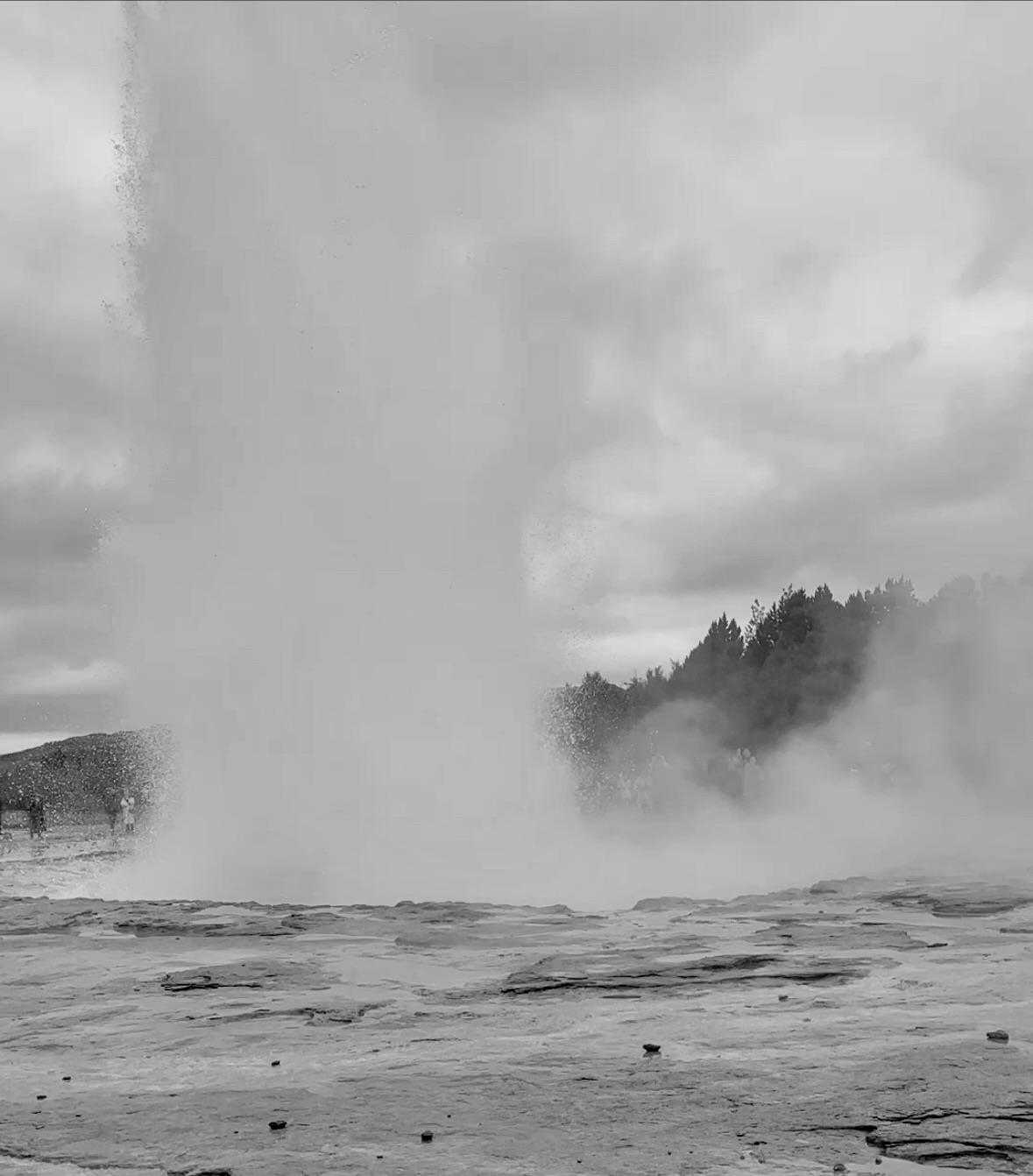
After lunch, our attention turned back to geology. First stop: Geysir Stokkar, a geyser (you probably figured that out) that erupts every 6-13 minutes, shooting water high in the air. It’s not as stirring as what you see in Yellowstone, but it’s still an impressive site.
Just down the road from the geyser is Gullfoss, a multi-tiered, powerful waterfall. This is nature at its most beautifully violent; the water plummets the last 70 meters with awesome force.
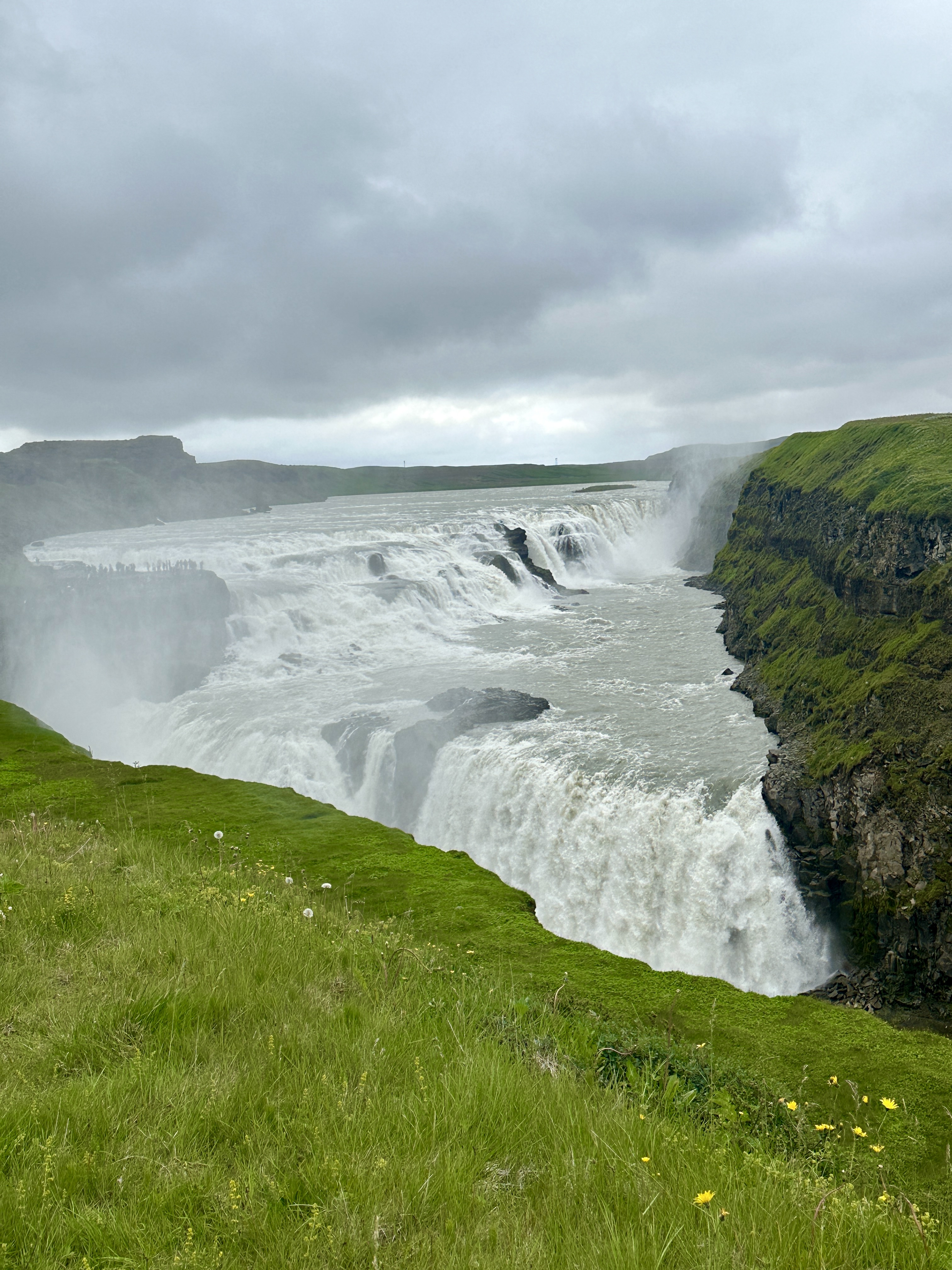
“Gull” means gold in Icelandic. Apparently, on sunny days the falls take on a golden tone. I have it on good authority that the sun occasionally does shine in Iceland, but today was not one of those instances.
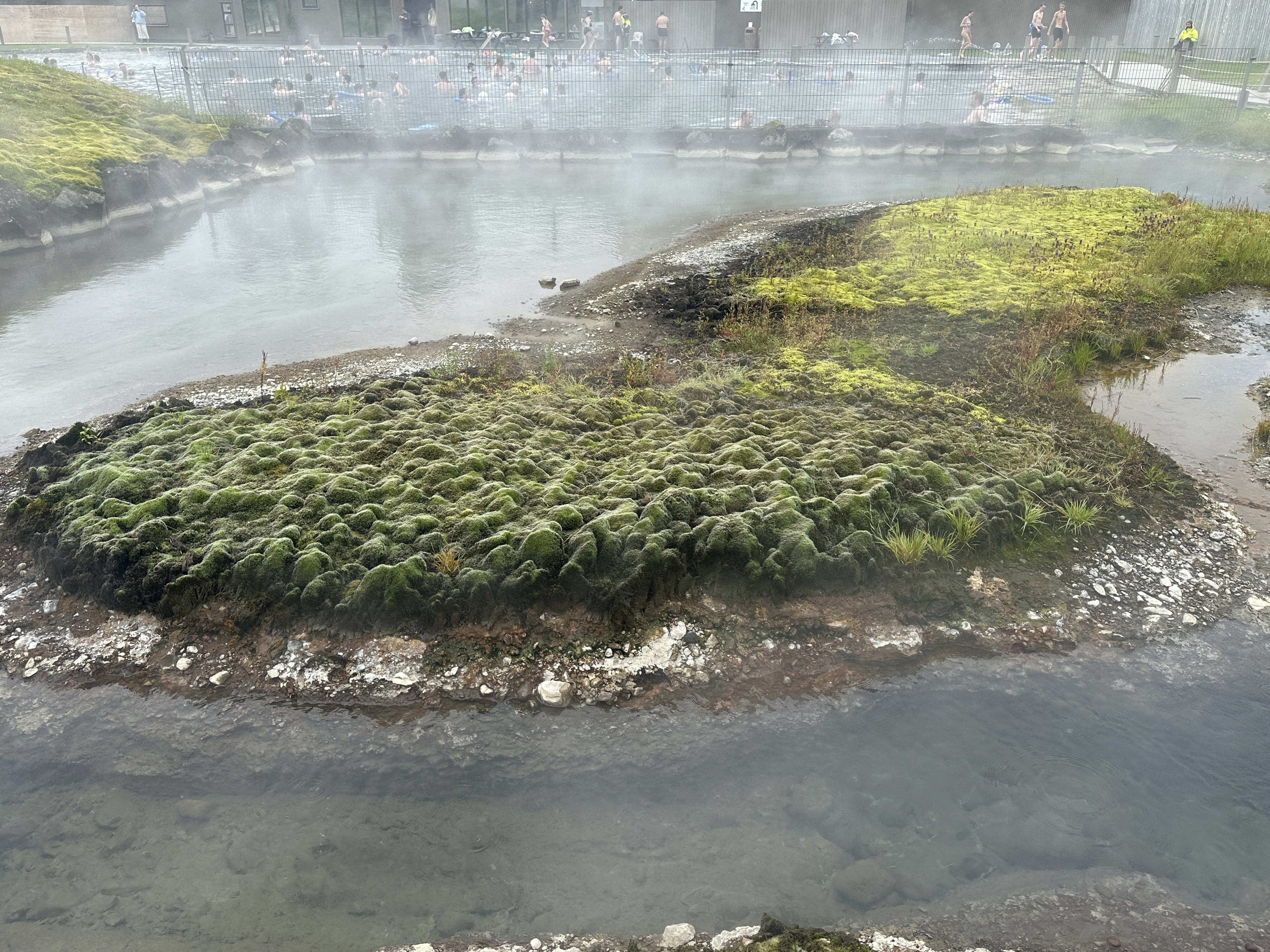
Our final stop was the “Secret Lagoon,” an aquatic expanse the size of a large swimming pool heated to around 100 degrees F. by neighboring hot springs. I didn’t go in, but the rest of our group emerged happy and relaxed.
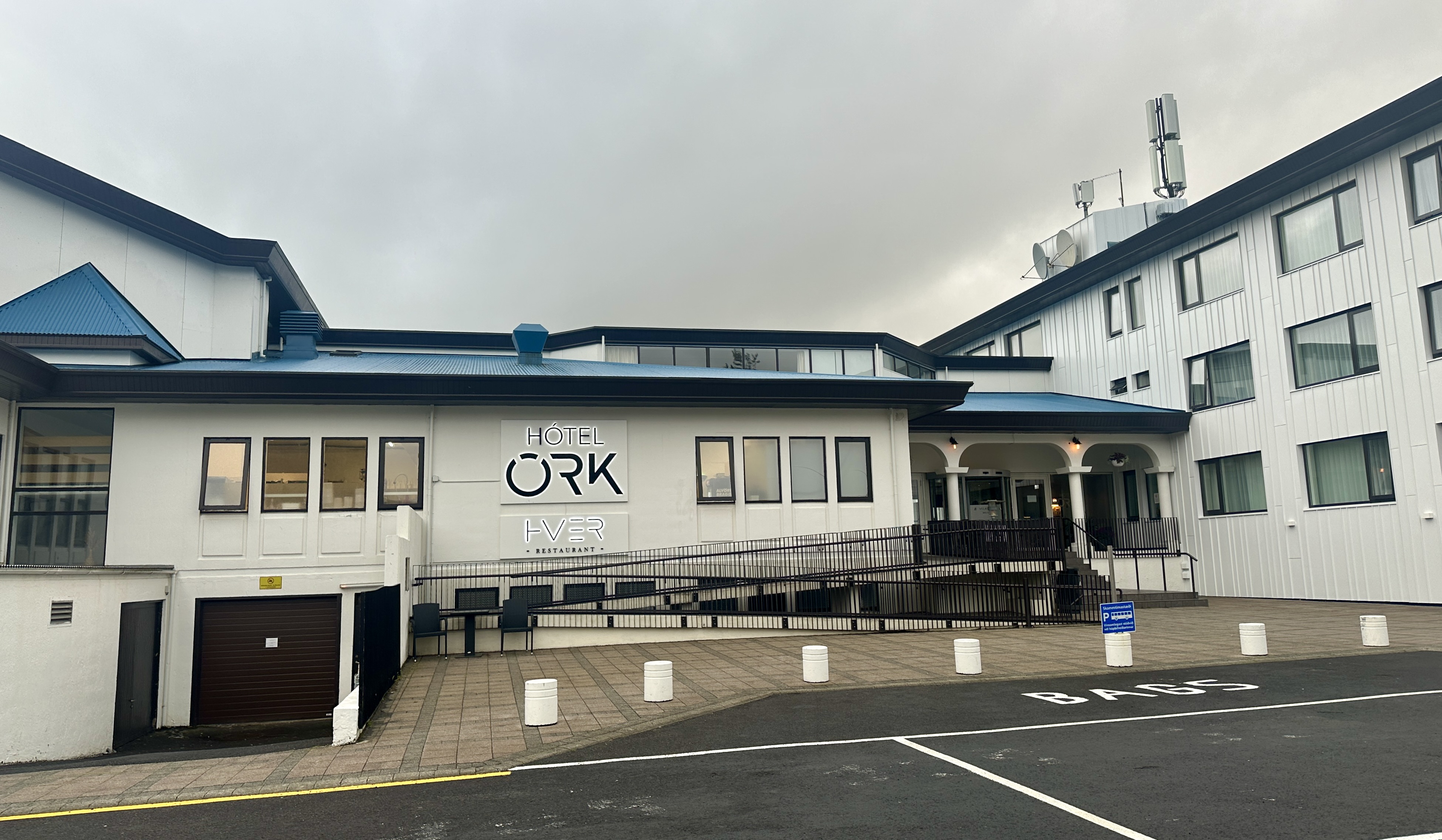
We’re staying tonight in Hveragerði, which boasts the distinction of being Iceland’s third-smallest municipality by size. That’s saying a lot! Our hotel is the modern Hótel Ork. So – nanu nanu for now; more to come soon!

 PuffinlessTravel