The road from Viñales to Cienfuegos is paved with history, culture, subterfuge, and pride – everything except much actual pavement. (That’s my last Cuban pavement comment, except to add that it’s not what it’s “cracked up” to be; I’m not sure whose asphalt for that.)
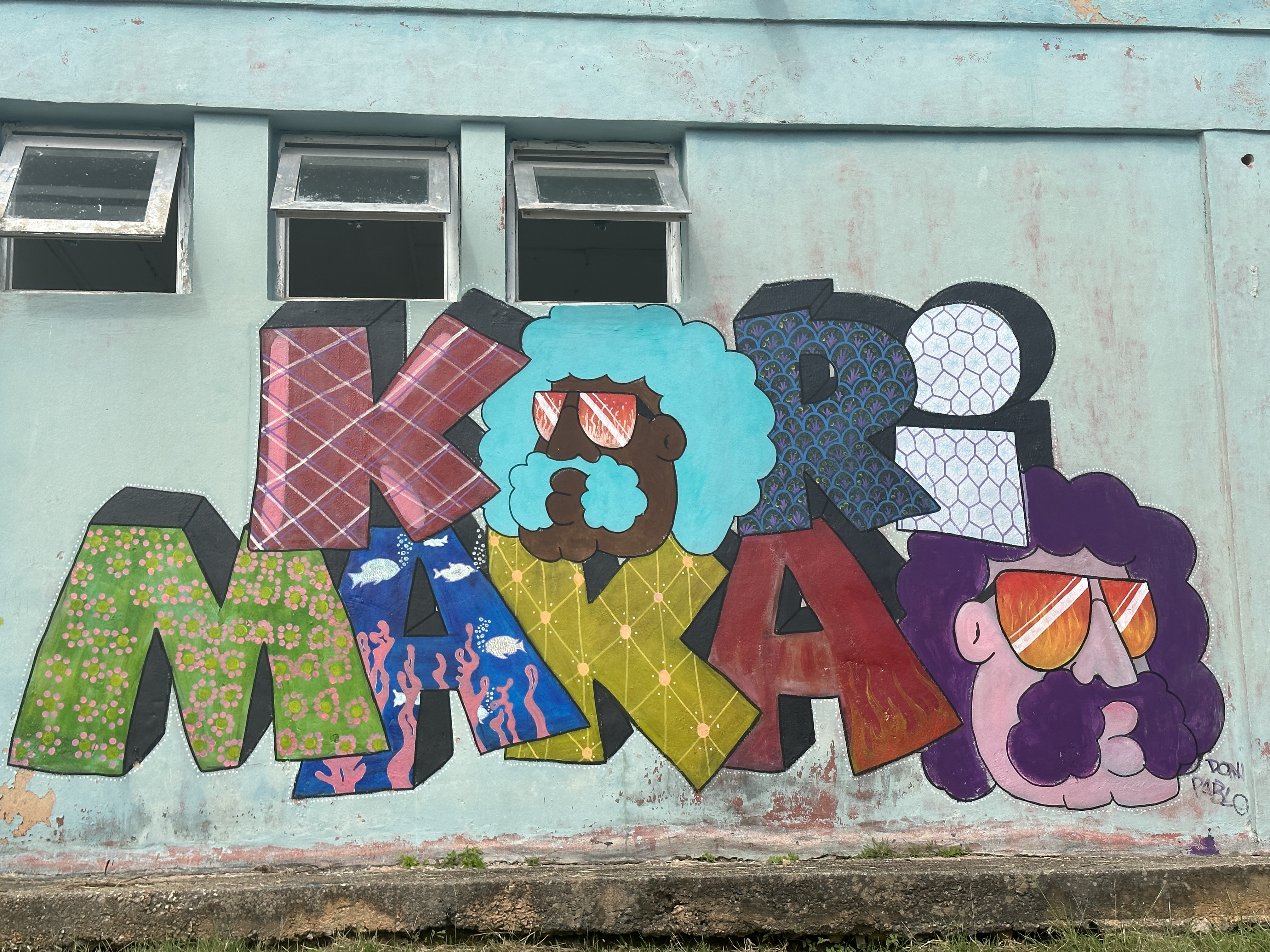
The culture part of our drive from northwest to south central Cuba was a stop at the Korimakao artistic community. This institution, situated not far from the Bay of Pigs (Girón), trains talented students from all over Cuba in singing, dancing, and painting. The center’s mission is to bring culture to remote parts of Cuba, promote traditional Cuban art forms, and commemorate the Cuban victory over the “mercenaries” of Girón. It’s privately run, but a terrific example of Cuba’s commitment to fostering the arts.

We enjoyed a vocal performance by some gifted young singers, a dance recital by two young men and two young women (followed by a dance with some volunteers from our group), and a peek at the students’ artwork. The center’s facilities are spartan, but the talent is impressive and the cultural emphasis admirable.
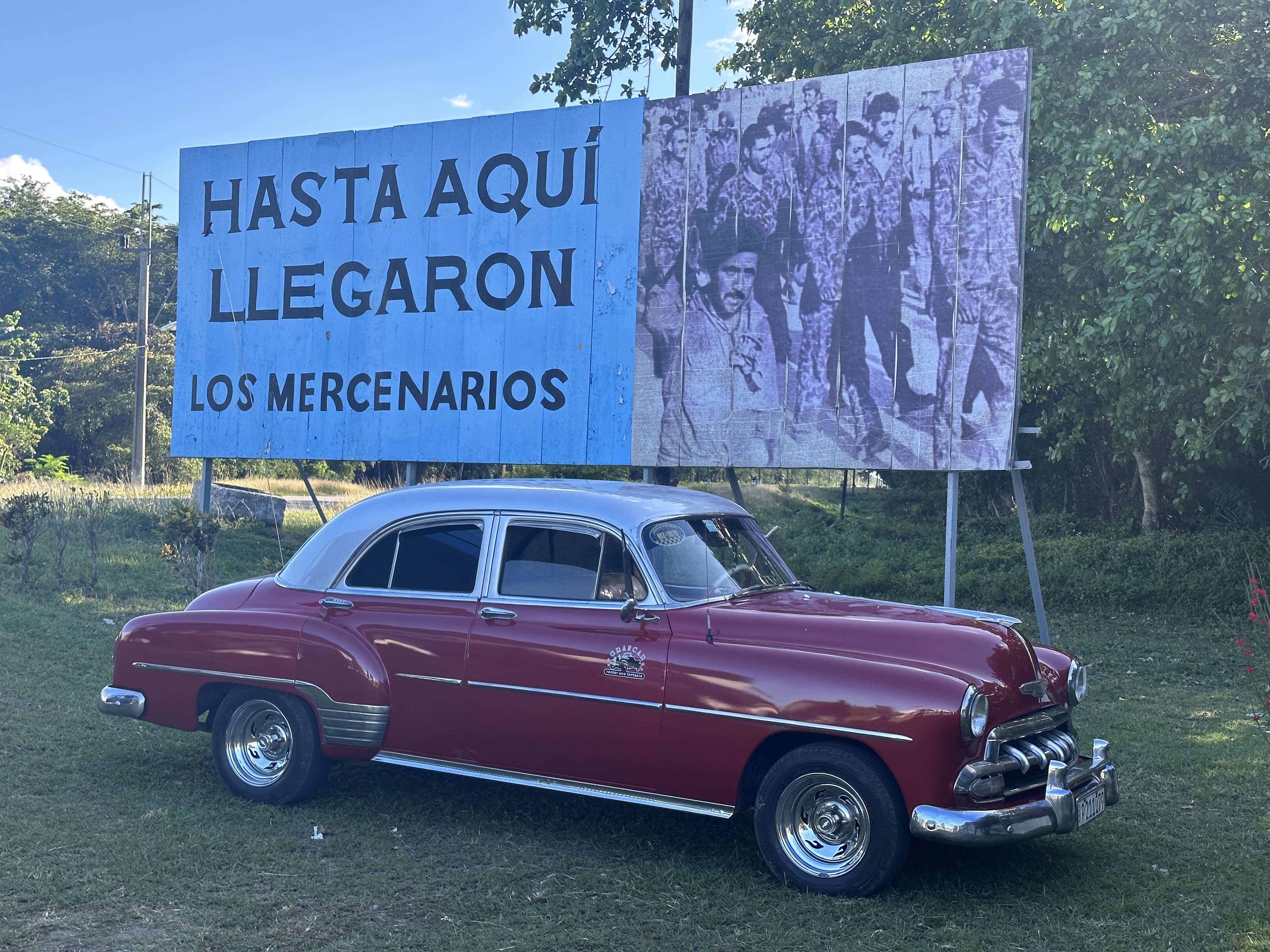
On to the history, subterfuge, and culture: namely, the ill-considered and ill-fated Bay of Pigs invasion, one of many fiascos in early post-Revolution days bearing the CIA’s fingerprints. (CIA could stand for “Cuban Interference Agency” or “Castro Interdiction Agency,” given the number of schemes – some hare-brained, some murderous, some shockingly callous – that the Langley folks dreamed up in the years after Castro’s ascension.)

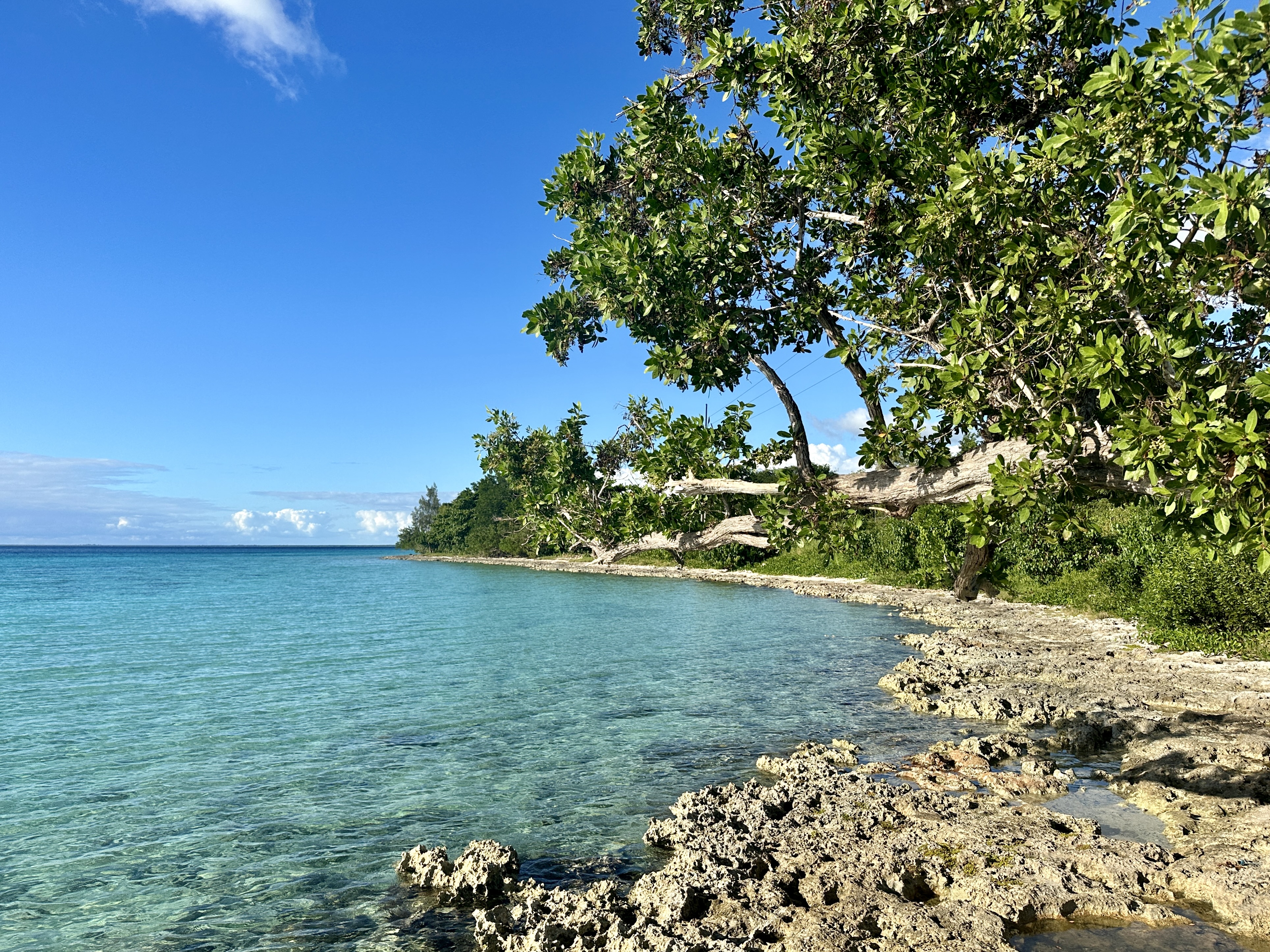
I’ll spare you the history and limit myself to a couple of comments: (1) Girón, as the Cubans call the Bay of Pigs, is a remote, idyllic spot, and (2) the CIA’s actions in Cuba were indisputably despicable, destructive, and ineffective. See here for a “greatest hits” (no pun intended) discussion of the CIA’s Cuban activities. They are a source of dismay to any freedom-loving American.
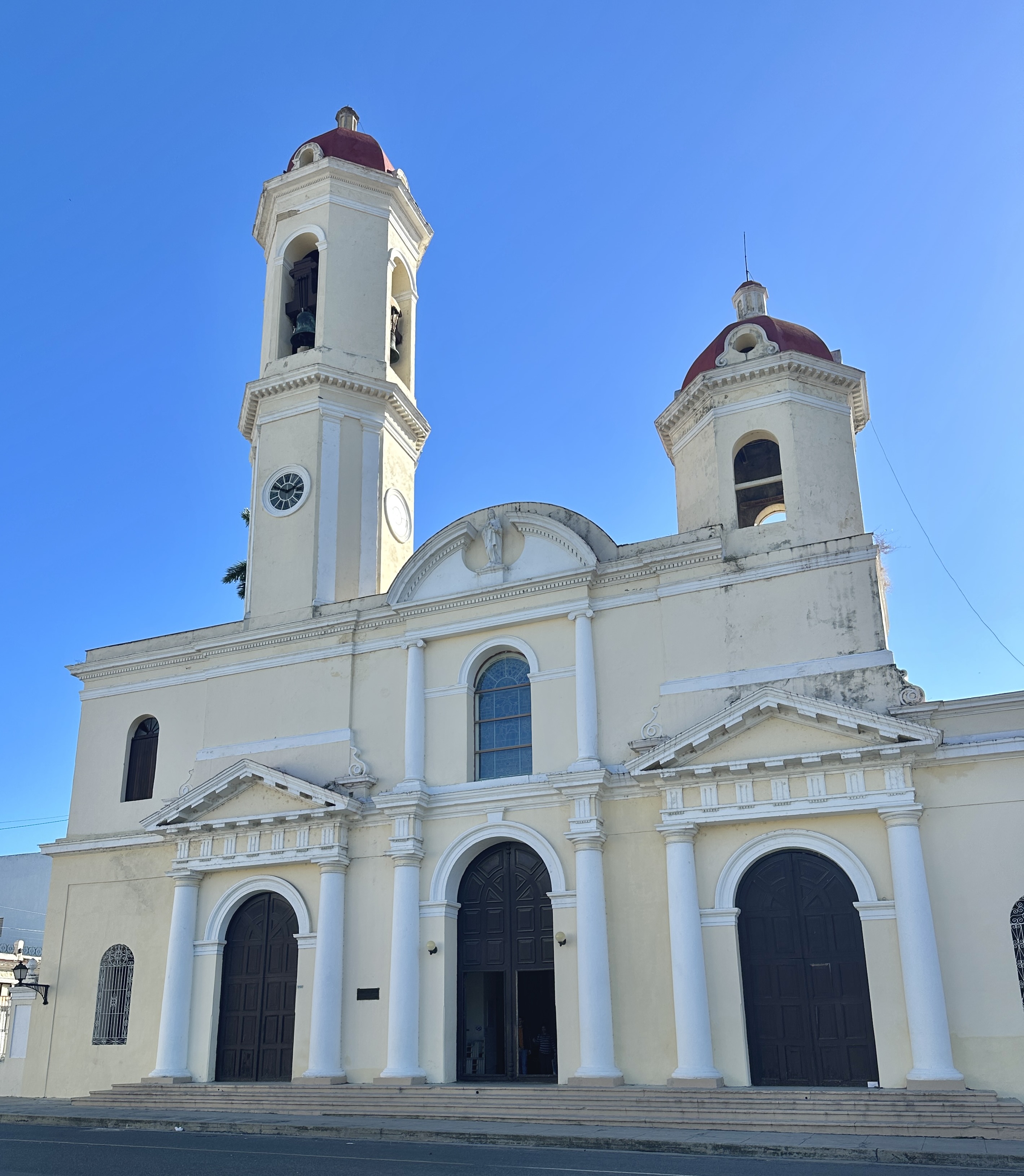
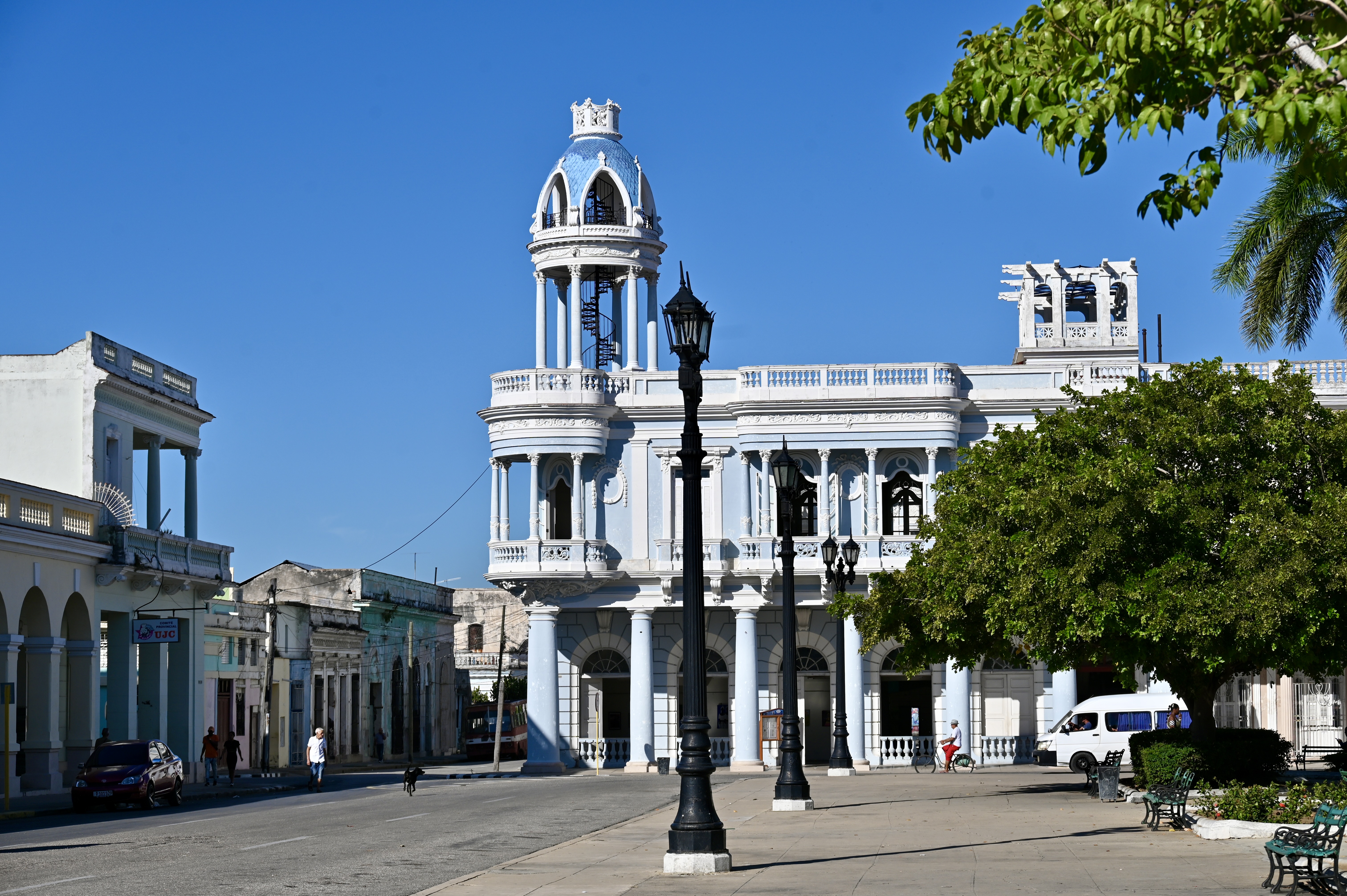
Cienfuegos is a lovely city; the gleaming white buildings and broad Prado (the main avenue in town) were a welcome tonic after spending the afternoon thinking about the Bay of Pigs.
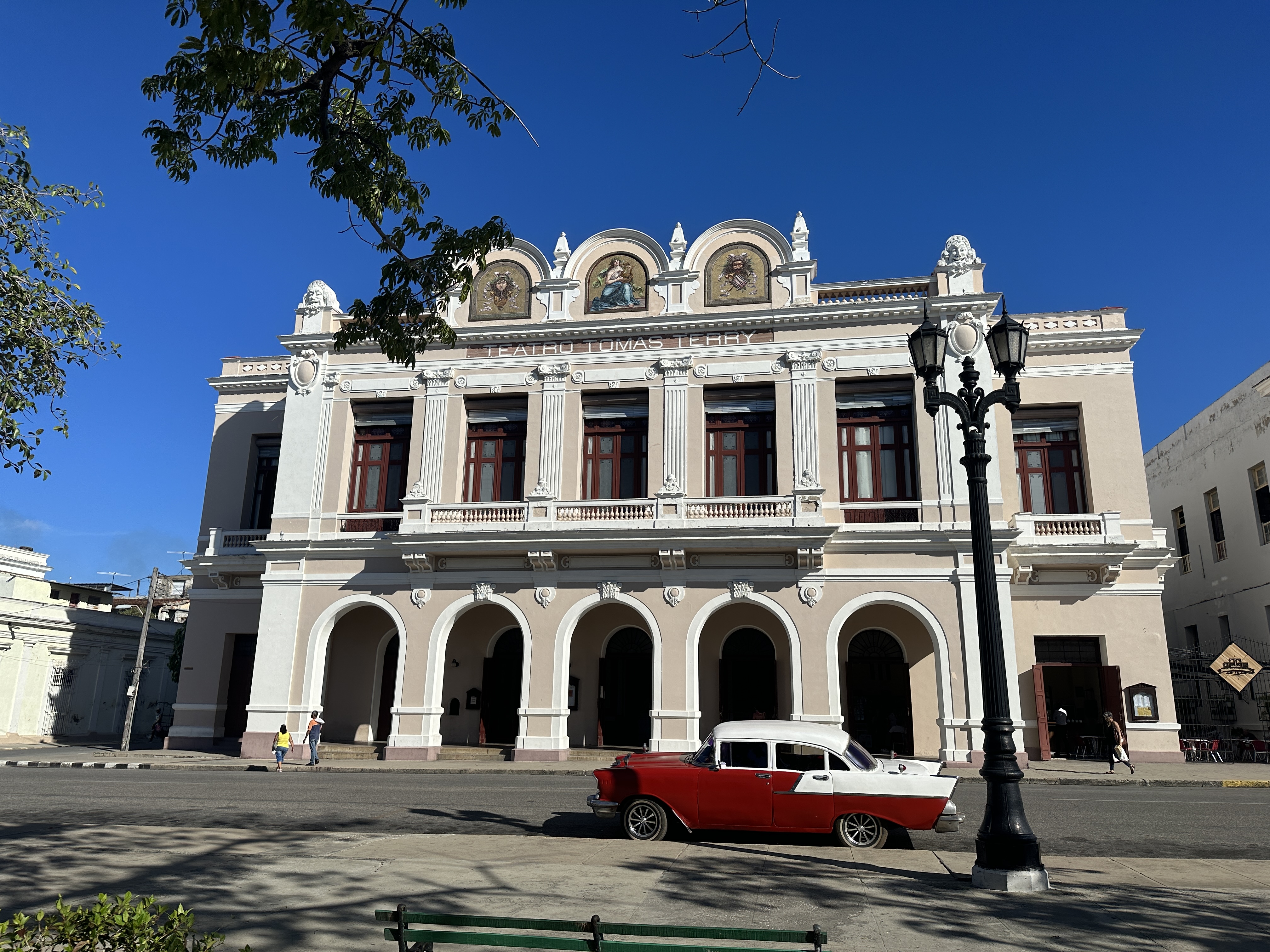
Even though Cienfuegos is a late colonial city, many buildings date from the “Republic Period” (1902-1959). Arches, pillars, baroque wrought iron, and rococo fences typify the architecture, and the beautiful main plaza is surrounded by a theater, cathedral, city hall, and other impressive buildings.
Our guest house in Cienfuegos (Hostel Roxana y Yoan) was spectacular – modern, sleek, clean, comfortable, and starring two highly entertaining dogs. Remarkably, our hosts (a husband and wife in their early 30s) and the wife’s father did all the renovations themselves over the course of five years. I spent some time talking with them after our group dinner (Roxana admonished Yoan, “despacito,” when he got in full Cuban Spanish gear). They’re a lovely couple, and their home might be the nicest casa particular in Cuba!

Next up: Trinidad, a picturesque city in south central Cuba (complete with a drunk cowboy) and a hub of the colonial sugar industry.

 PuffinlessTravel