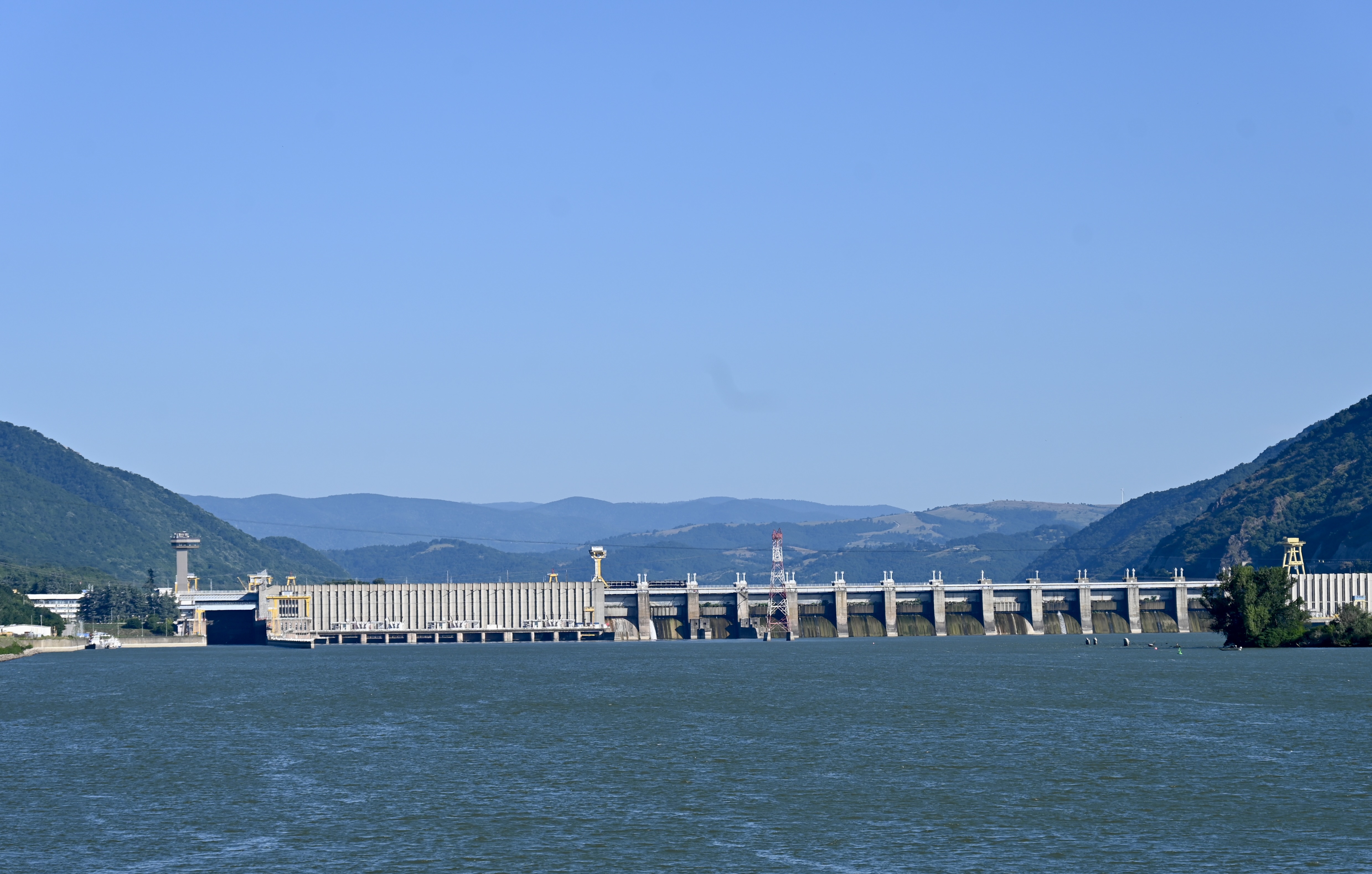
Several years ago I read Patrick Leigh Fermor’s fascinating three-volume account of his walk from Rotterdam to the Black Sea in the 1930s (“A Time of Gifts,” “Between the Woods and the Water,” and “The Broken Road,” which was completed after his death based on his notes and an early draft). He described the Iron Gates gorge on the Danube as an untamed stretch of the river that for much of the year is too treacherous to traverse.
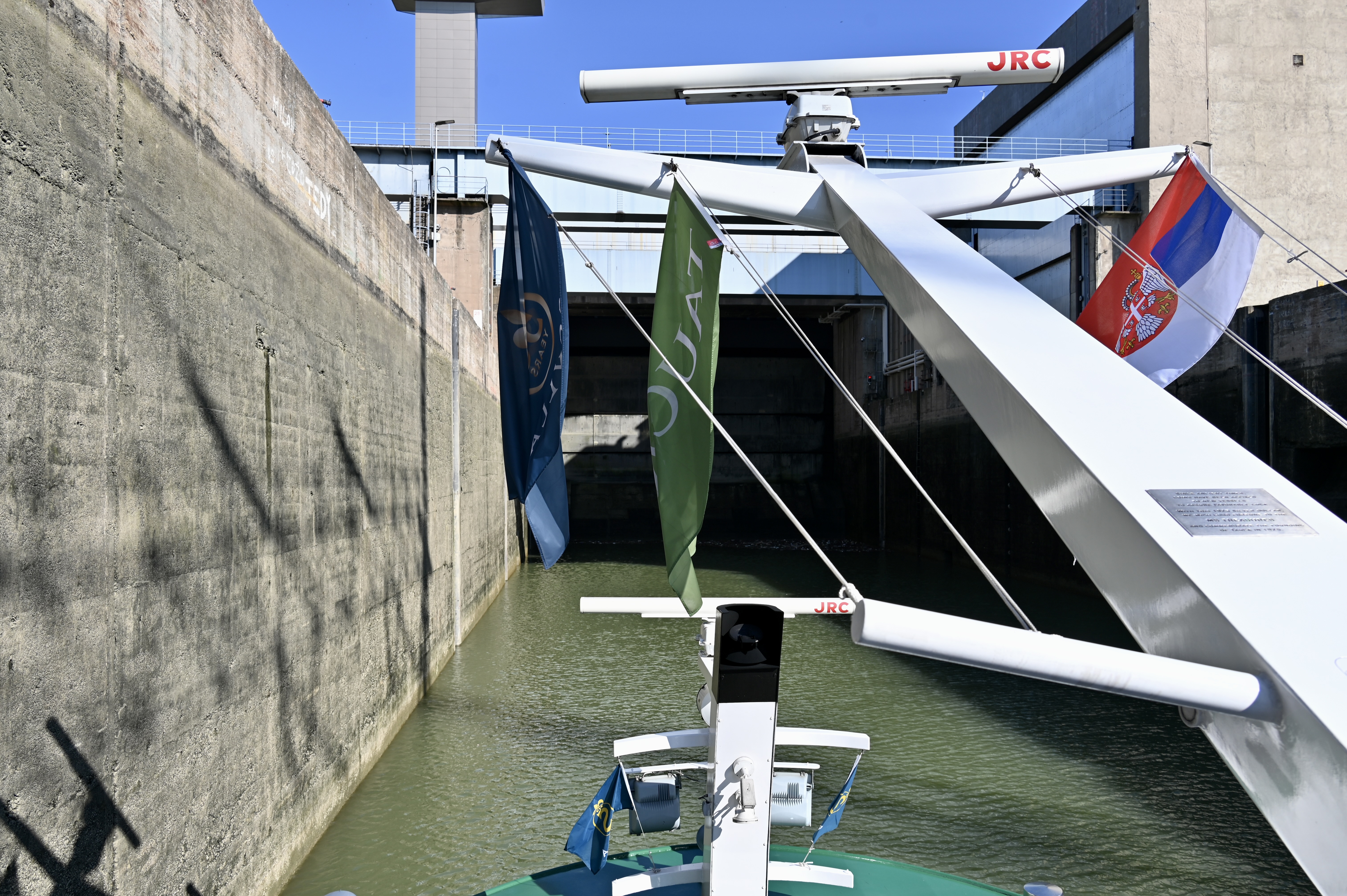
Things have changed: it’s still a beautiful part of the river, but the massive Iron Gates dam, the largest on the Danube (completed in 1972), has tamed the river and permits year-round passage. This magnificent piece of engineering consists of two locks, one raising the water level 45 feet and the next a further 35 feet.
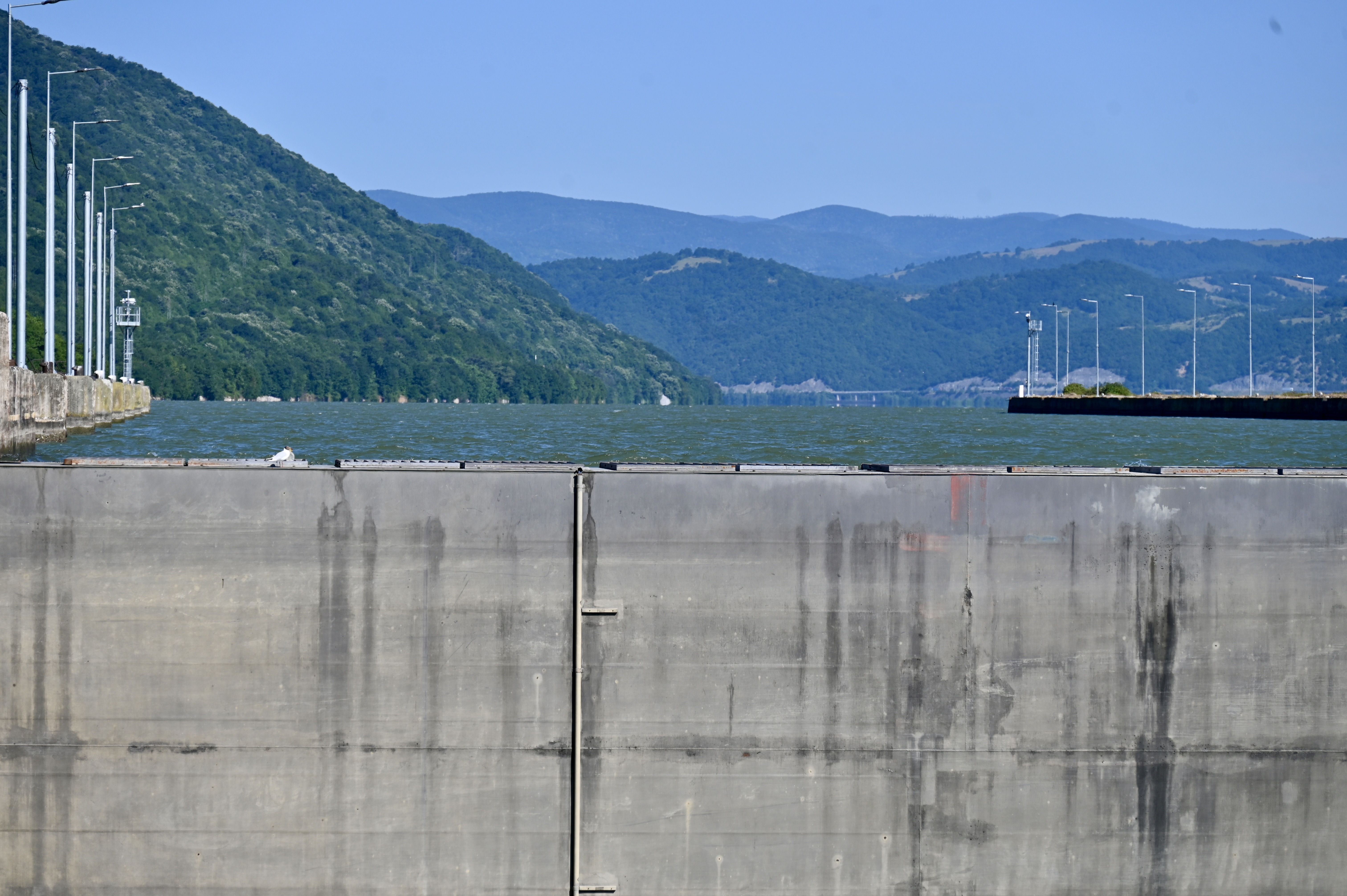
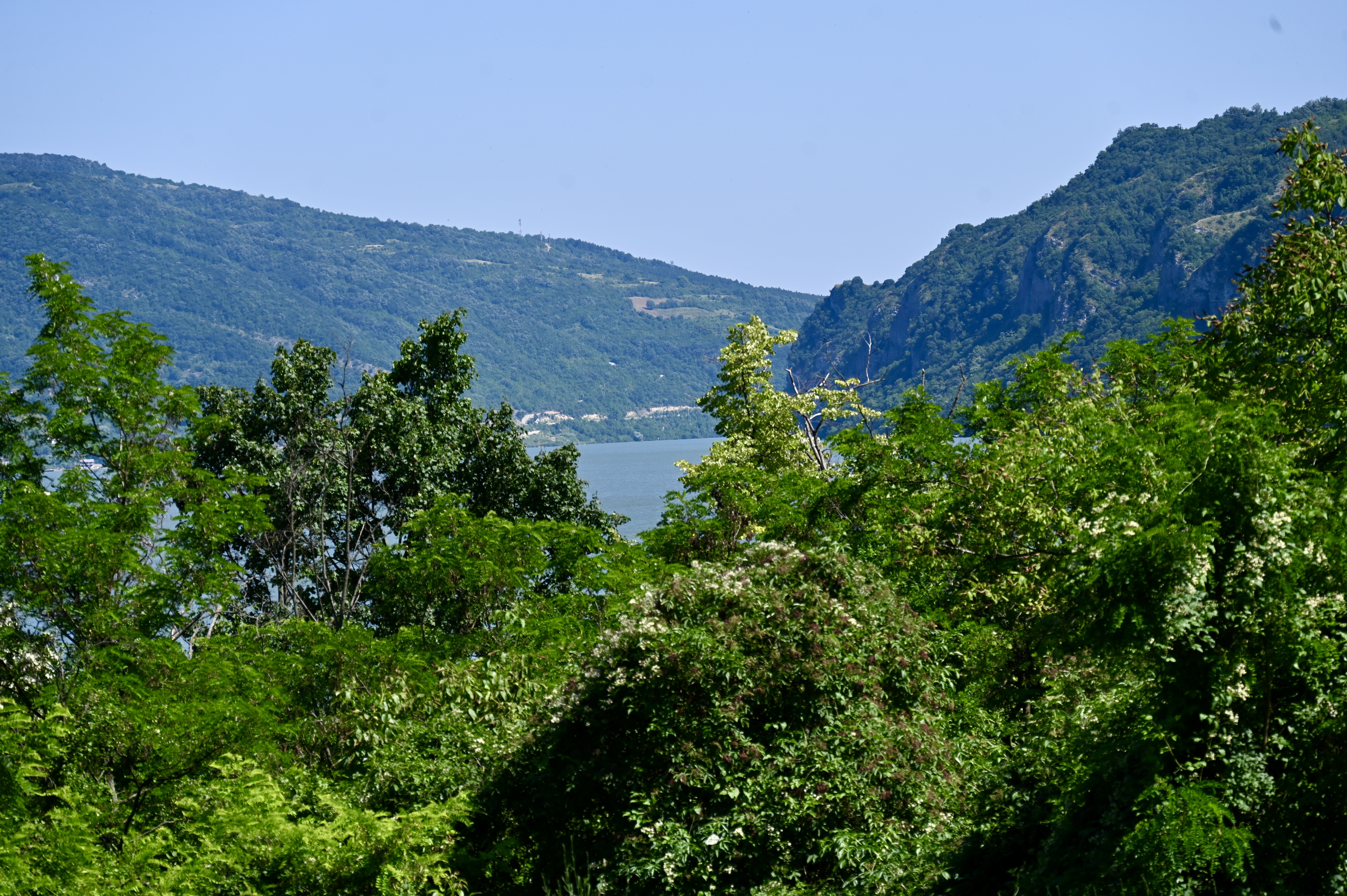
Past the gorge, the Danube flows through steep, tree-covered hills with sporadic settlements. It’s by far the most scenic section we’ve sailed on this trip; up to this point the landscape was mostly flat, agricultural land.

(I’ll say more about this in a future post, but if you want to see the fairytale villages and proud castles often associated with the Danube, Austria is the best spot. This itinerary is full of fascinating history, but until today there hasn’t been much in the way of “eye candy.”)
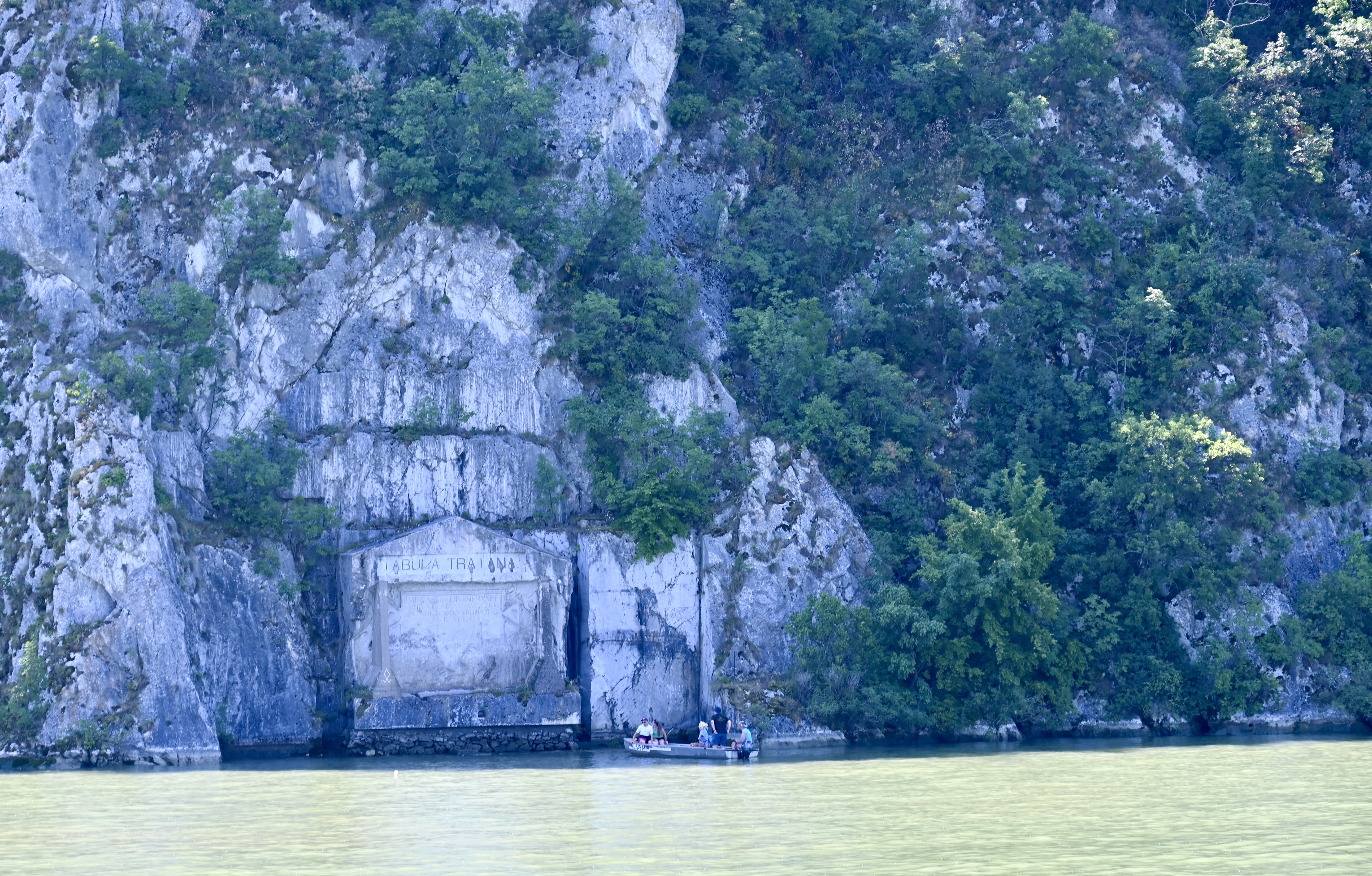
An hour or so past the Dam, there is a tablet dating from Emperor Trajan’s time, which commemorates the construction of the first bridge across the Danube – which in turn enabled the Romans to conquer what was then Dacia (now Romania).
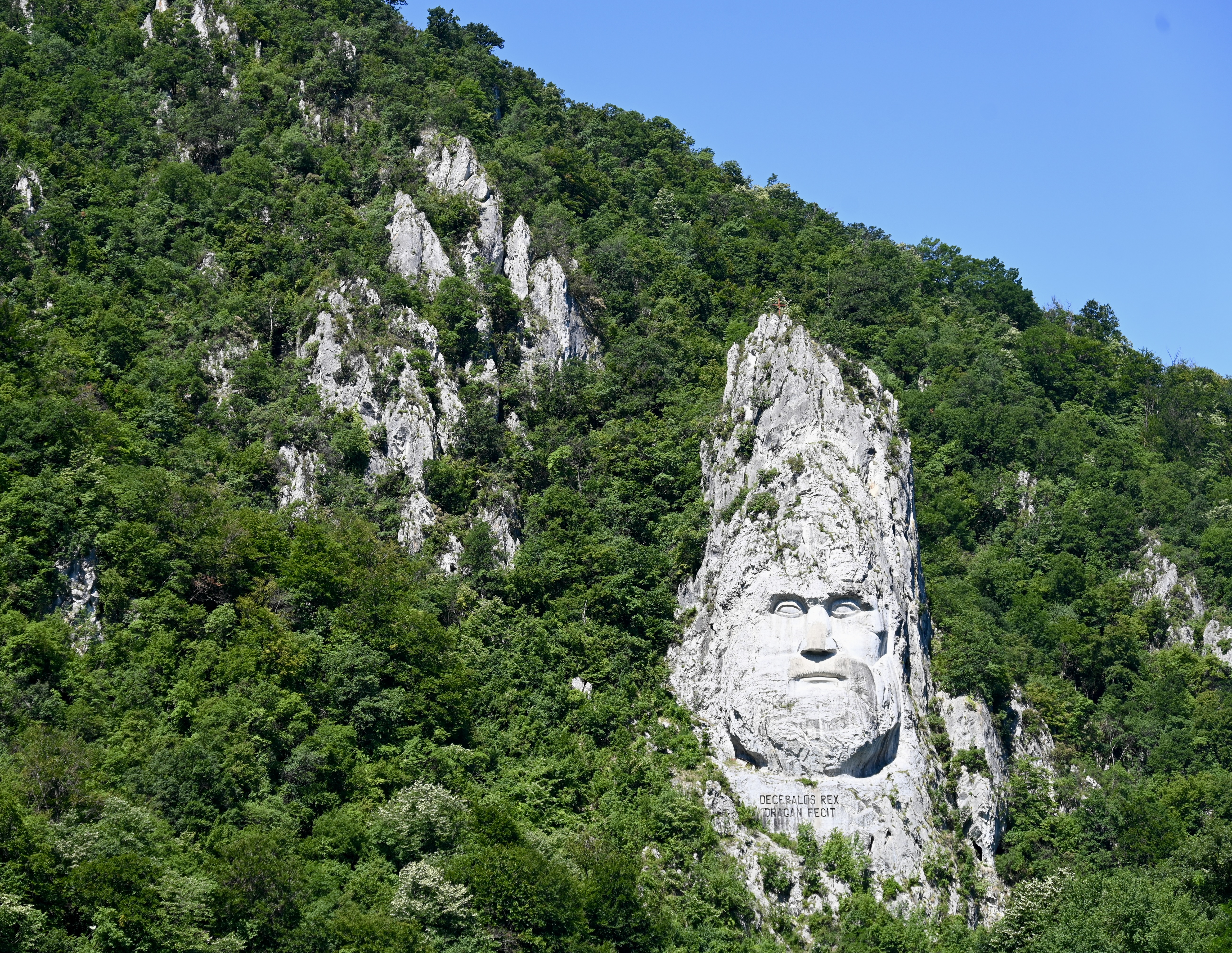
A bit further on, a Romanian sculptor, between 1994 and 2004, carved a massive sculpture of King Decebalus’s head (he was the last Dacian monarch and is a Romanian folk hero) into a cliff face – basically Romania’s equivalent of Mount Rushmore.

Our first stop in Serbia was the smallest town in the country, Donji Milanovac. It’s a vacation spot with a beach on the river, but the real attraction is a phenomenal archeological site called Lepenski Vir.

Before the Iron Gates Hydroelectric plant was constructed, which would flood the area under a new lake, archeologists did a survey of the land and found a remarkable trove of artifacts as well as an organized settlement with the outlines of trapezoidal houses. This has led some (Serbian) archeologists to proclaim it Europe’s first organized settlement, or even Europe’s first city.
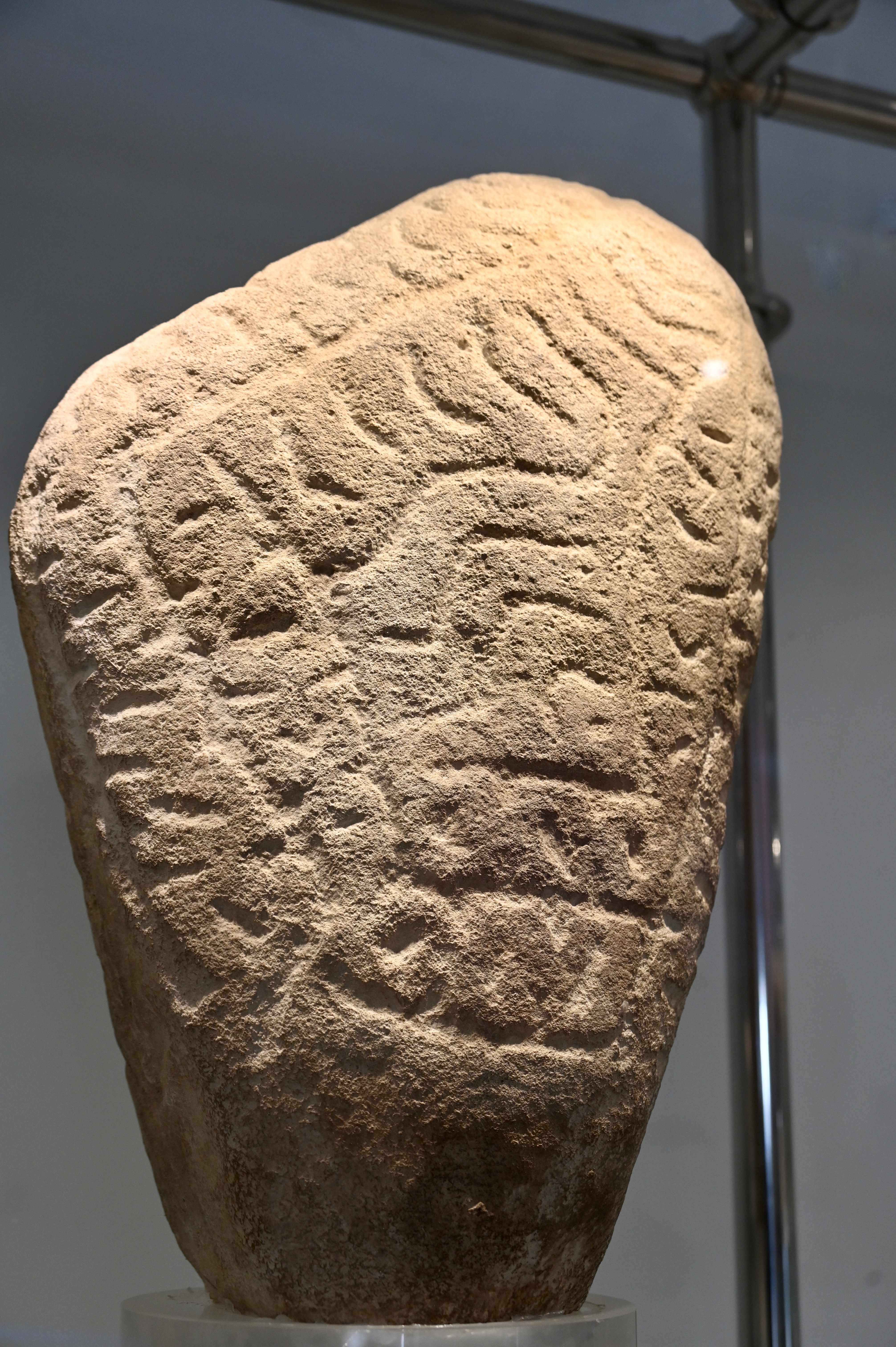
The site was occupied by seven successive settlements from approximately 9500-6000 BCE. The residents enjoyed an ample supply of fresh fish, and the hundreds of unearthed skeletons apparently all died of natural causes; there was no evidence of warfare or violence.
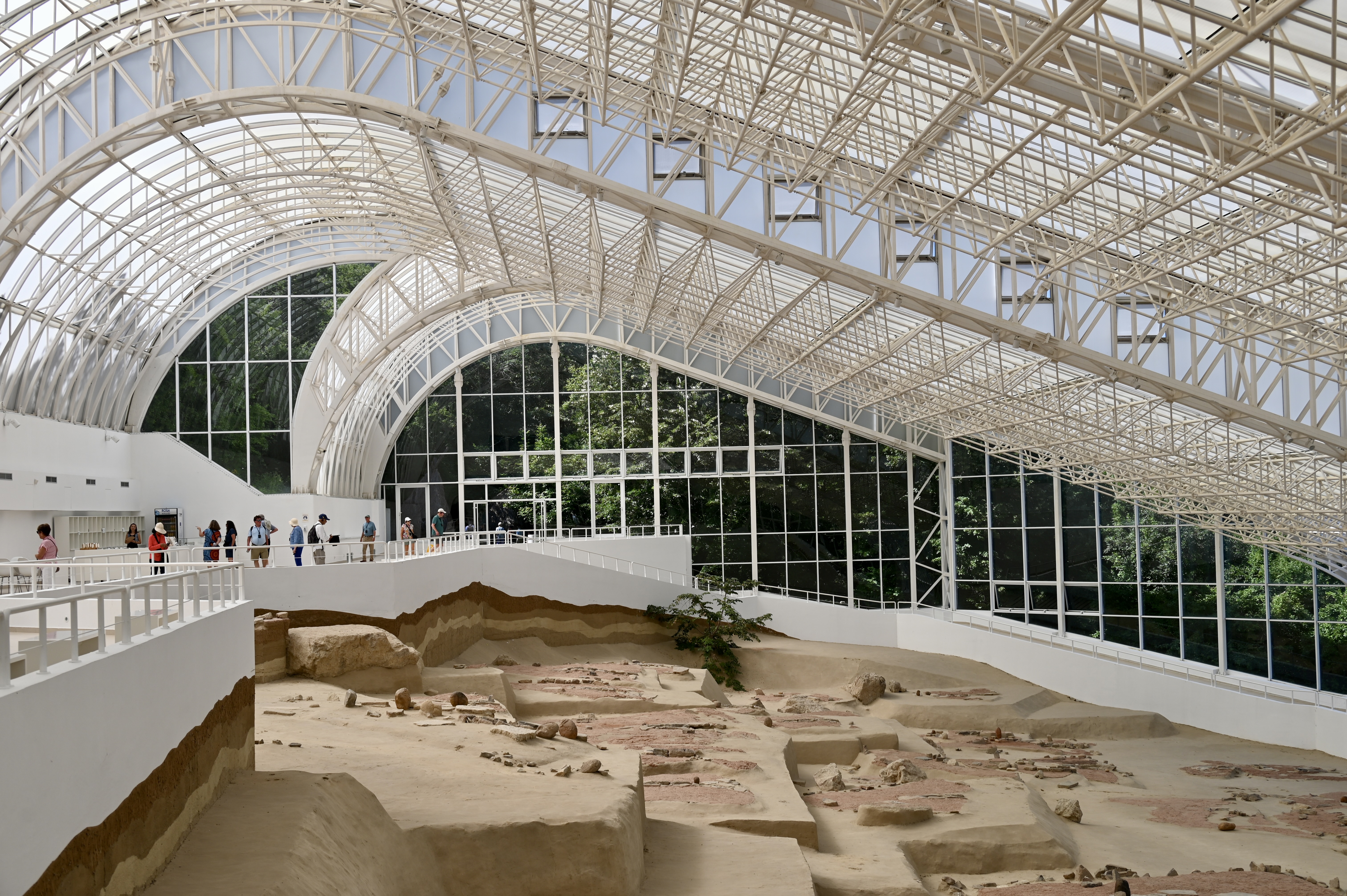
Before the area was flooded, the entire site was moved a kilometer upstream, where it is now housed in a striking, greenhouse-like structure that unfortunately functions as one would expect a greenhouse to function: it was hot as blazes inside.
Our visit kicked off with a wonderfully cheesy short film chronicling the original excavation efforts. The soundtrack was a bizarre mix of lounge jazz, horror movie music, and atonal blurts, and true to the 1960s, all the archeologists worked with cigarettes dangling from their mouths. The film itself, in other words, has become an archeological relic.
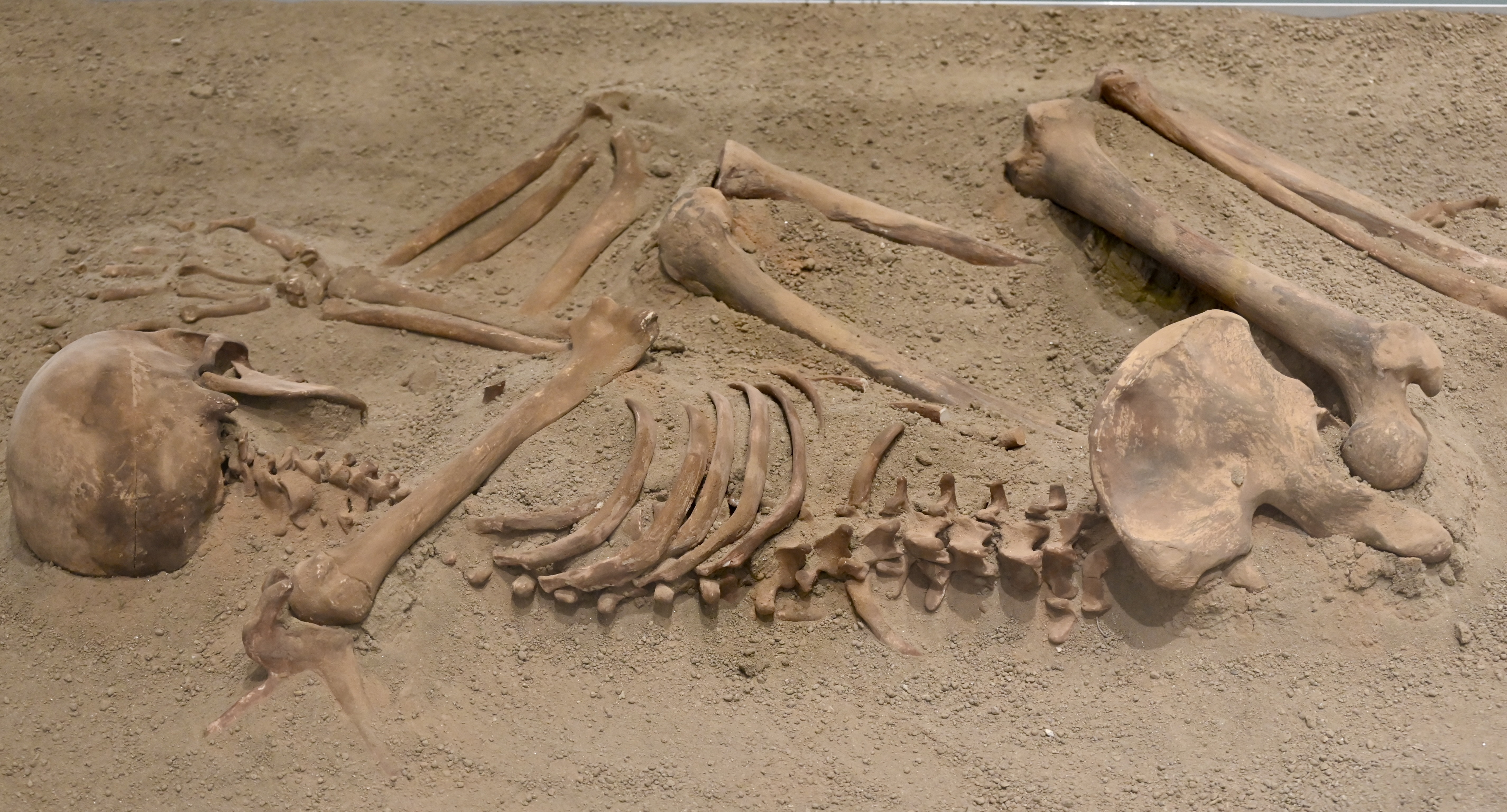
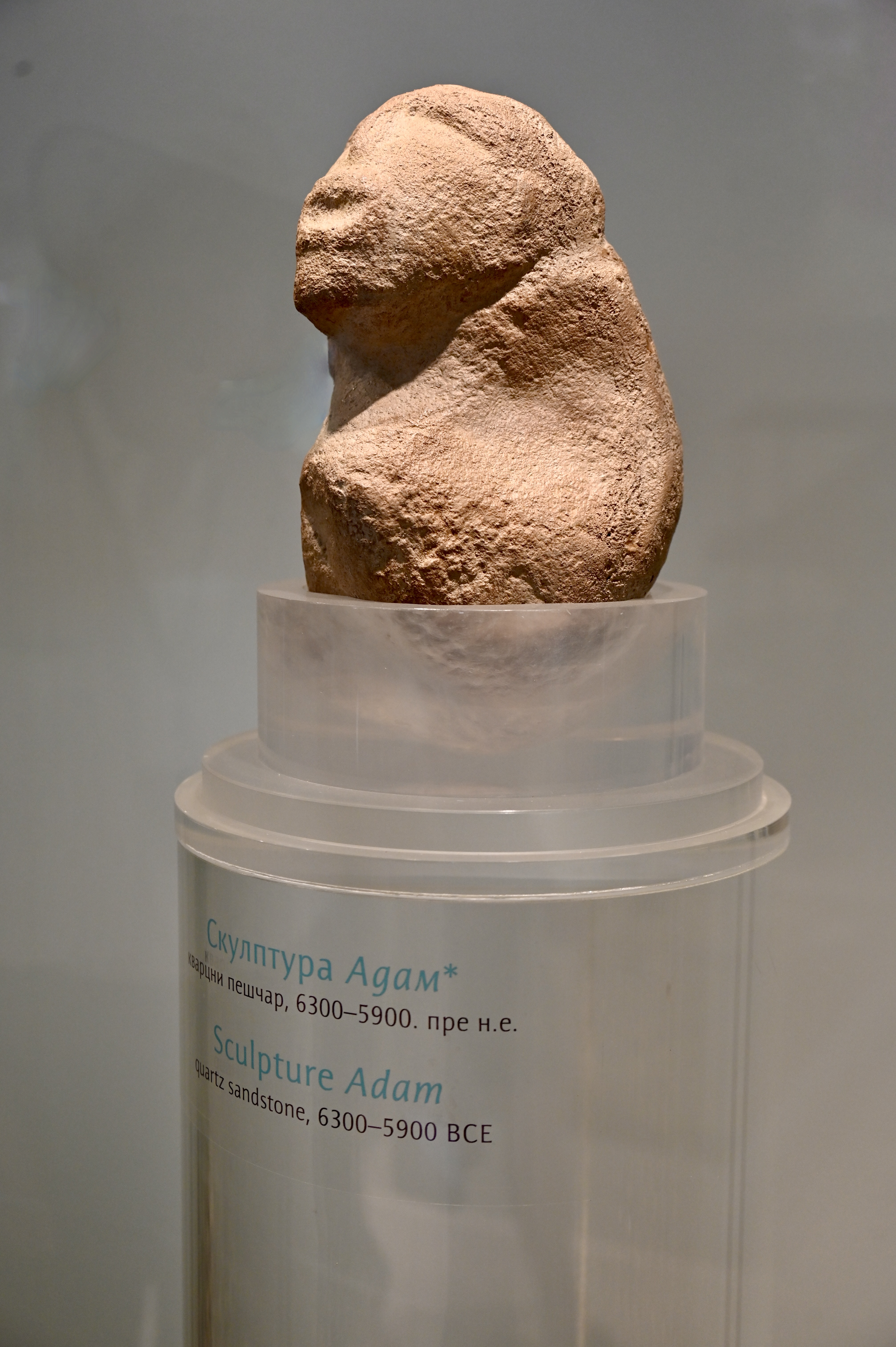
Adjacent to the (marginally air-conditioned) theater is the site itself, with the outlines of the houses clearly visible. There’s also a small (more effectively air-conditioned) room containing a wonderful collection of artifacts from the site, including pottery, jewelry, skeletons, and sculptures.
Bottom line: if you’re an archeology nerd like me (one of my many nerdy fascinations), it’s well worth a visit!
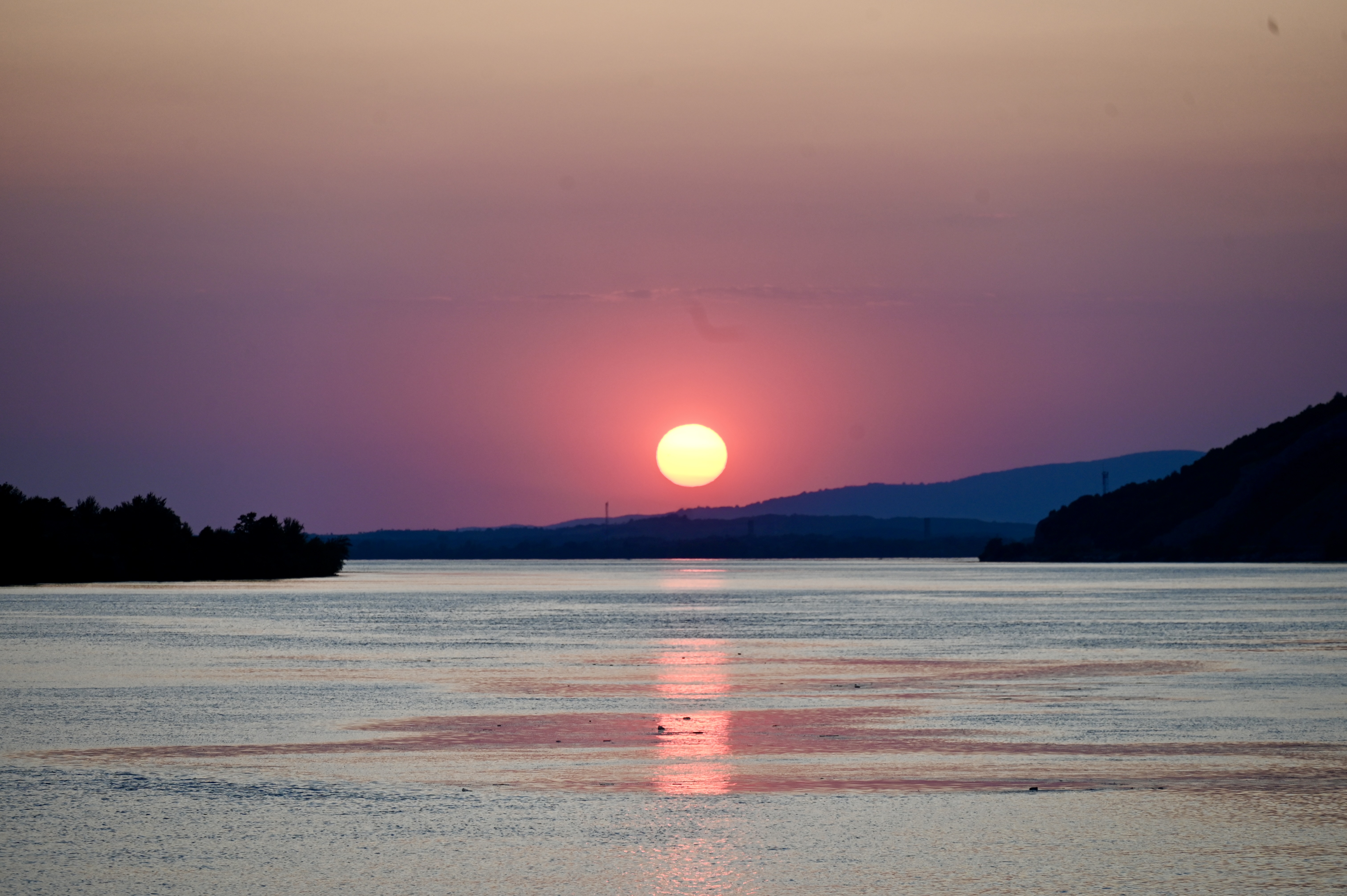
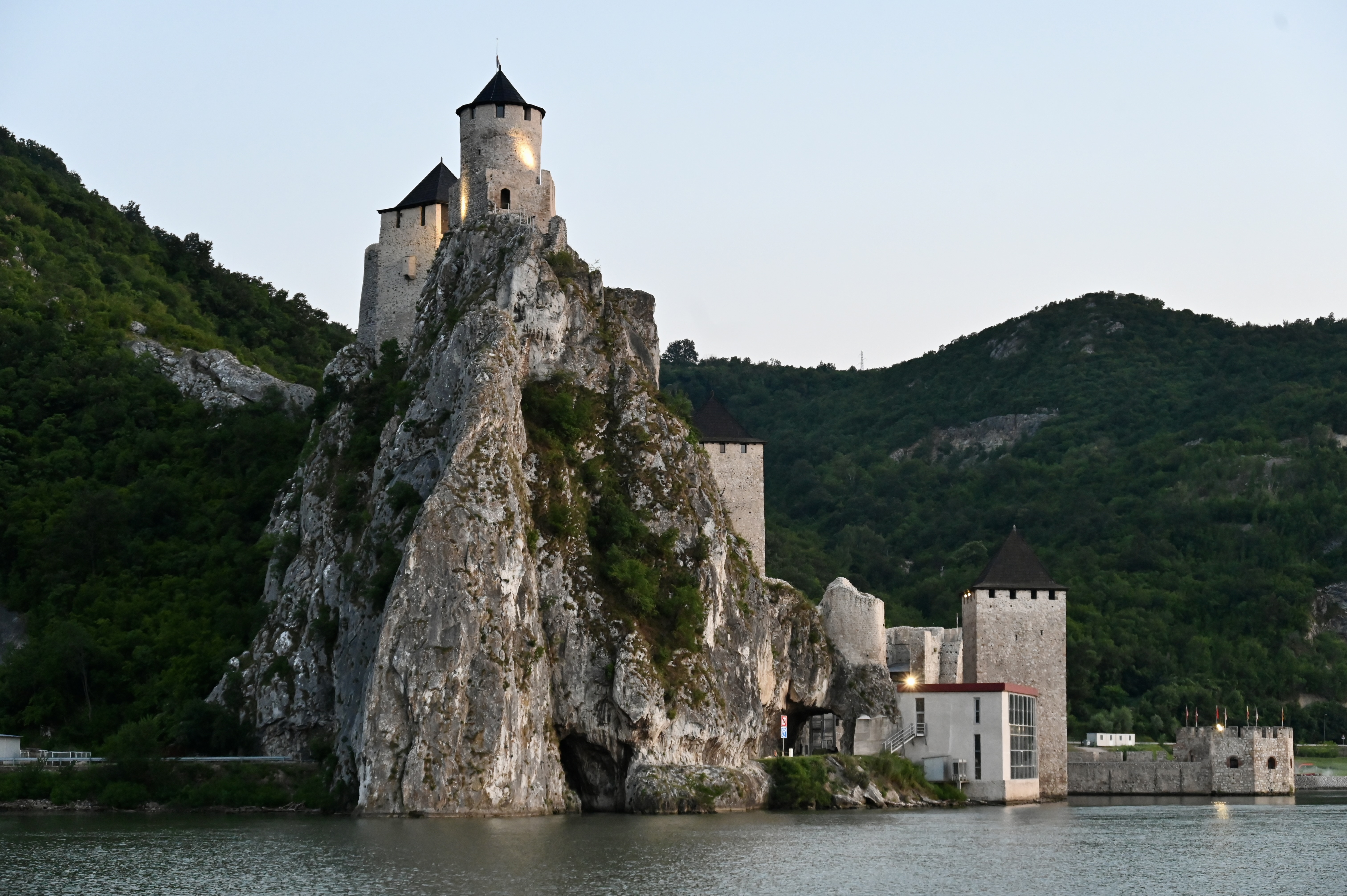
This wonderful day concluded with a trifecta: an amazing sunset, a close-up view of Golubac Fortress (a medieval fortified town that successfully repelled some 120 attacks), and a tie for first in trivia (nerds rule!).

 PuffinlessTravel
Winning the trivia contest was all you, Jeff! Readers, he’s being modest.
Winning trivia was all you, Jeff. He’s being modest, readers.
Hardly! But thanks any way.