Two hours south of Bilbao, Atapuerca is an archeological treasure trove sitting atop low, rolling hills covered in wheat fields. It served in the past as a migration route for animals, both human and otherwise, and it’s a must-see for anyone interested in human evolution and the archeological process.
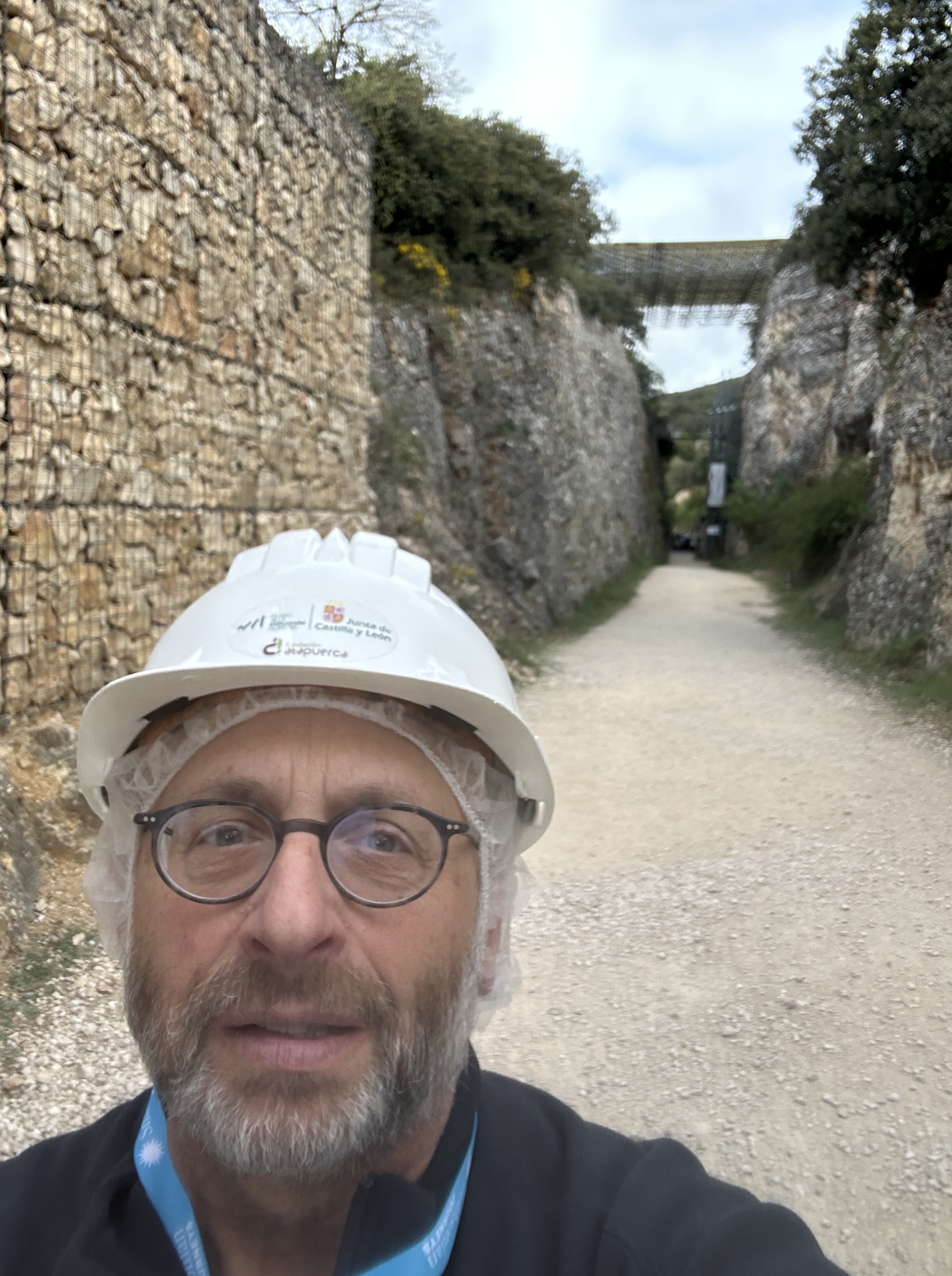
Atapuerca features multiple Neanderthal open-air habitation sites (which we didn’t see) as well as excavations of a fossil-rich area exposed by a railroad cut. To enter the excavation area, you have to don a stylish hair net (for sanitary purposes) and hard hat (for falling rock purposes). I thought this was a bit extreme, but a pebble in fact bounced off my back during our visit.
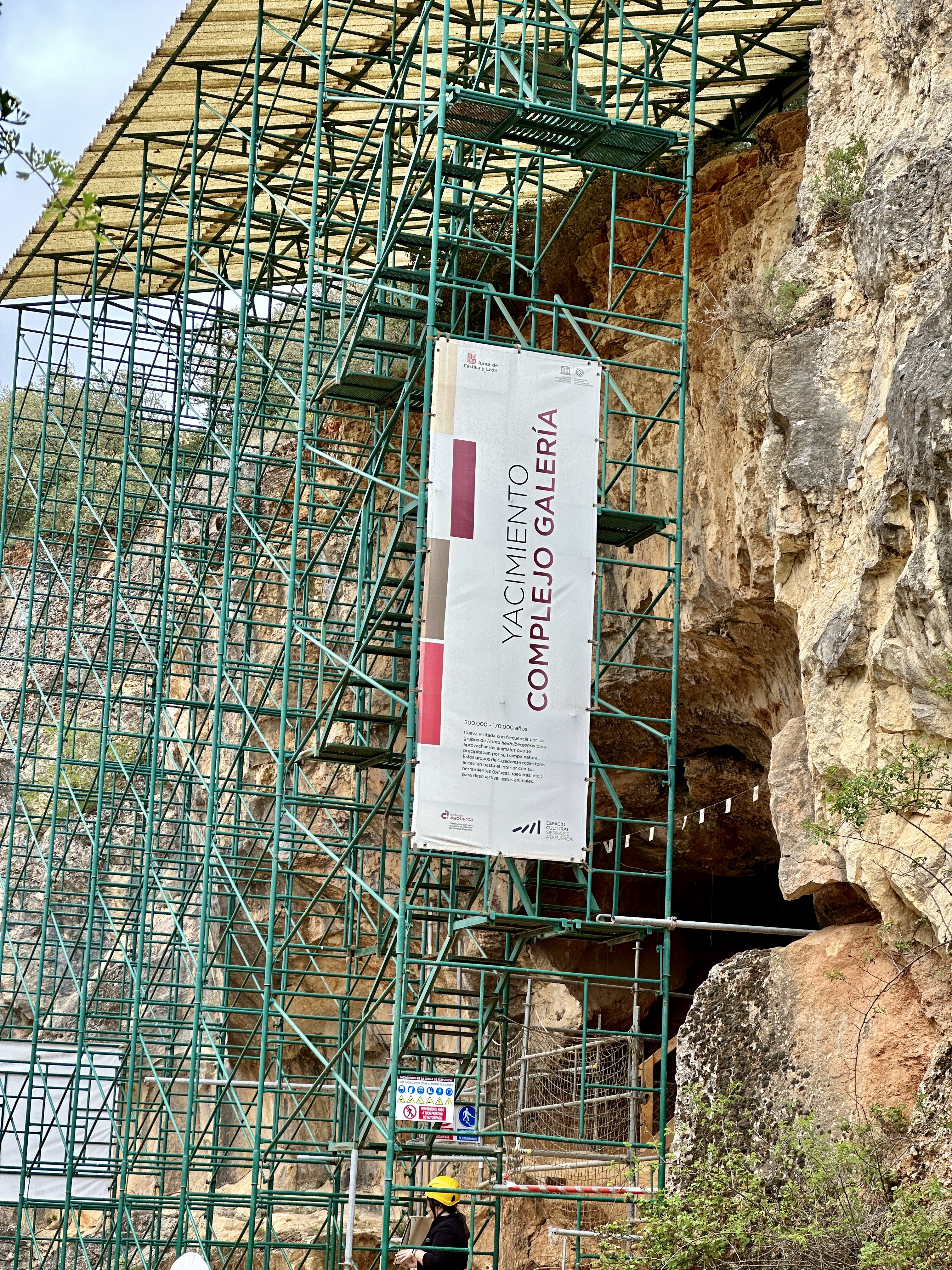
The three excavation sites we visited, Sima Del Elefante, Galeria, and Gran Dolina, have banners depicting the time frames and major biota of the various geological layers. Atapuerca is famous for revealing a rich trove of Homo heidelbergensis fossils (c. 1.3 mya) as well as the only known fossils from Homo antecessor (c. 900 kya).
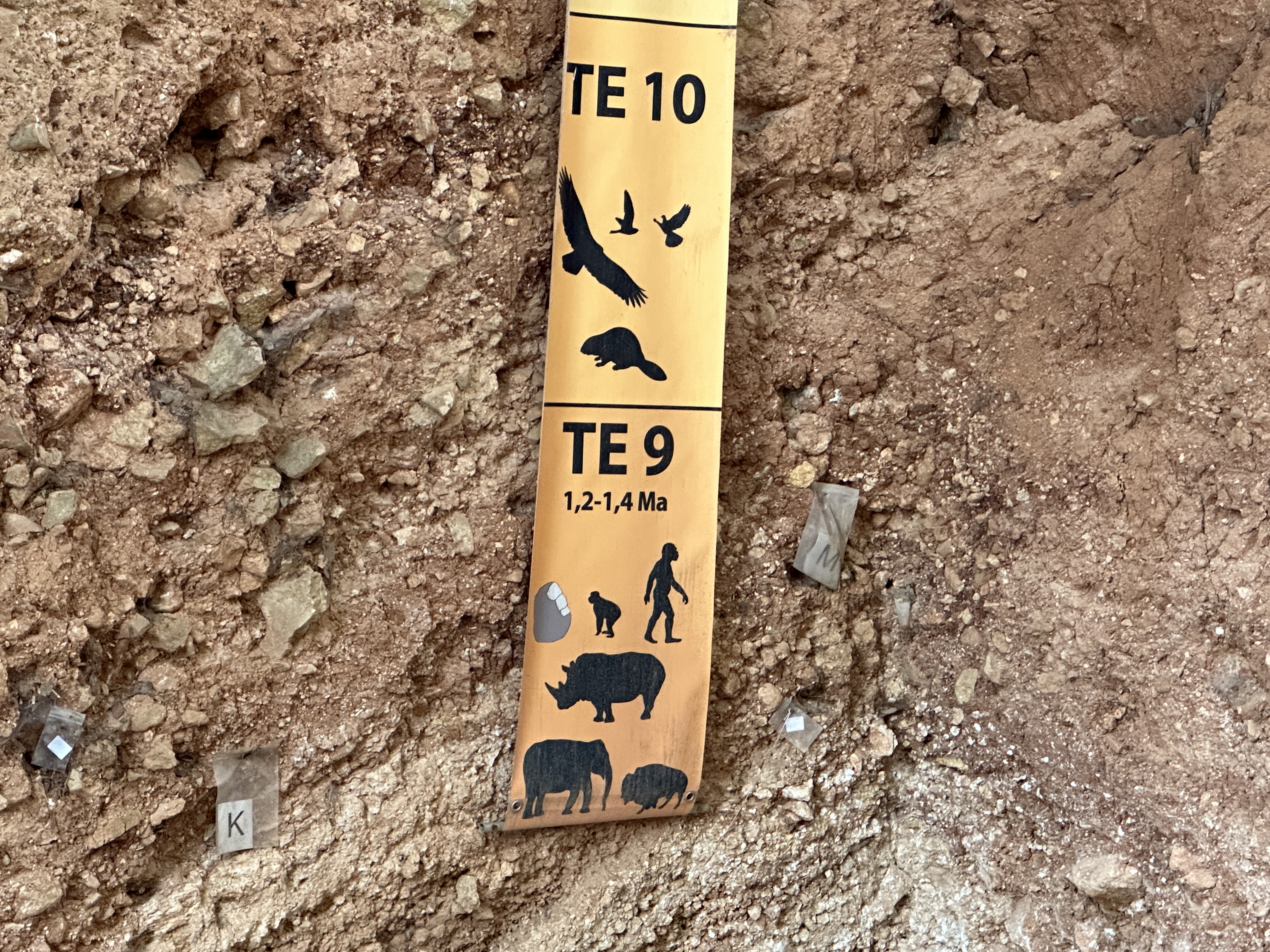
Other fossils have been found that do not appear to fit into any currently known hominid species; our guide was hopeful that further finds will enable scientists to describe a new limb on our family tree.

Finally, the site’s light and airy visitor center has explanatory panels, numerous relics, and a rather alarming/strangely comical display of an ancient human falling into the Sima de Los Huesos (the Pit of Bones).
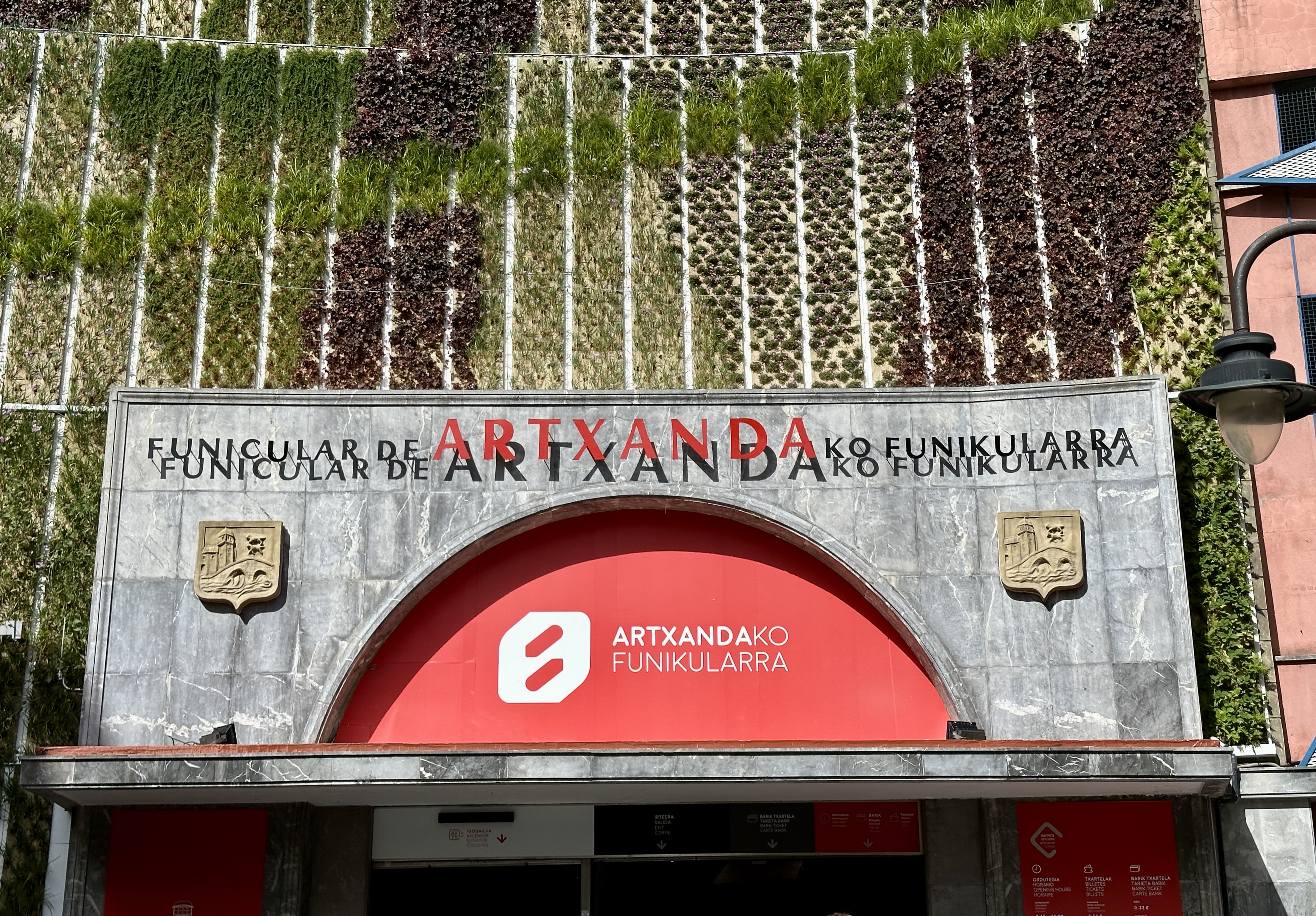
After returning to Bilbao in the late afternoon, several fellow travelers and I, hampered by unnecessarily creative directions from Google Maps, went in search of the Funicular de Artxanda. With help from several locals, we found the entrance and rode to the top of Artxanda Mountain, where there is a park offering glorious views of Bilbao’s bustle and beauty.
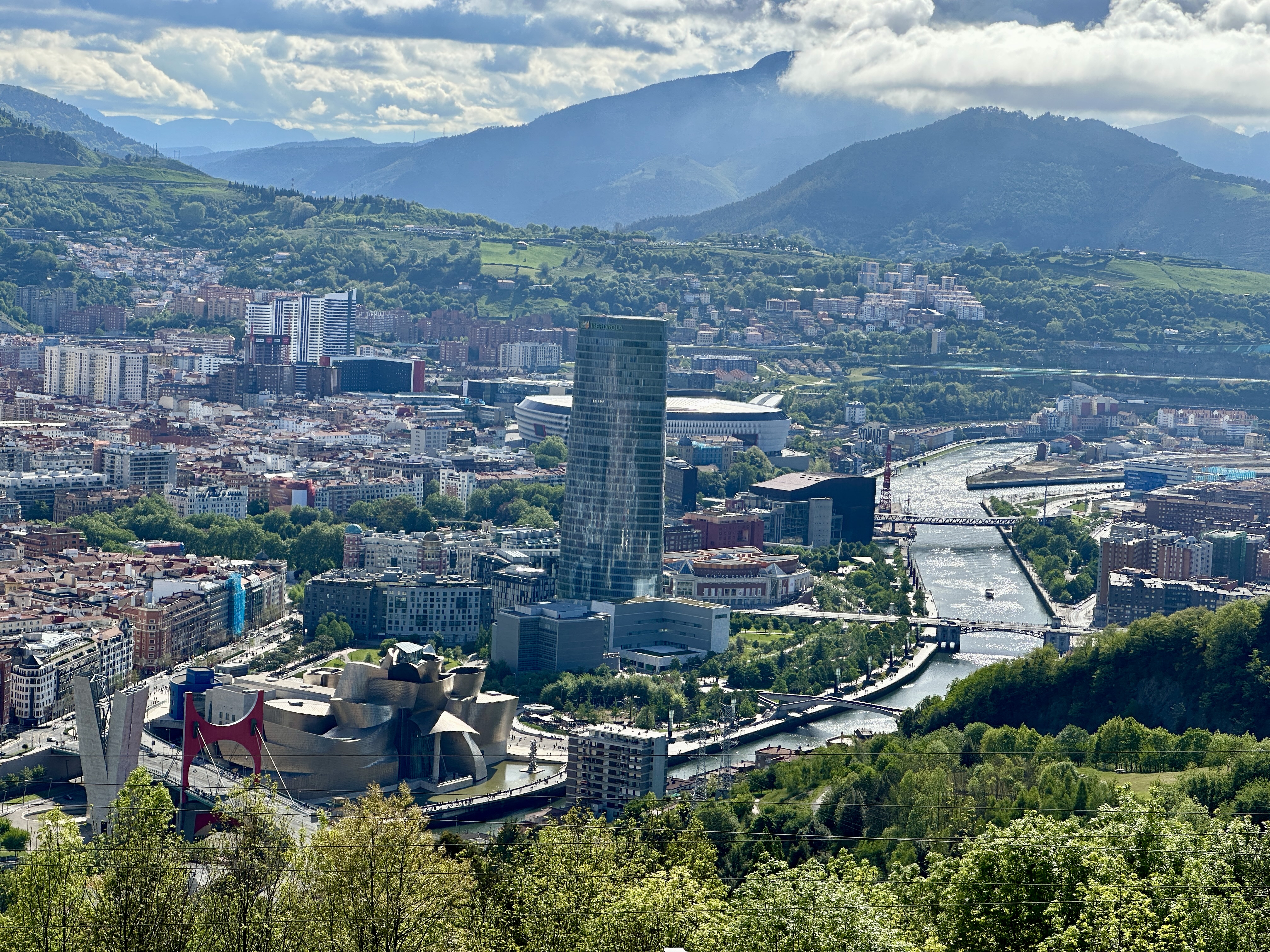
On a Sunday afternoon, the mountaintop park was teeming with kids, families, and most of all, dogs. Bilbaínos are besotted with their dogs: I can think of no more appropriate site for the Koons “Puppy” installation. That’s just one reason I fell in love with this energetic, striking, vibrant city.

This has been a wonderful week. Smithsonian Journeys did its usual exemplary job with the itinerary, accommodations, and experts. I want to give special recognition and thanks to our unflappable, funny, and endlessly resourceful tour manager, JD Kling, who took care of all the little and big details so we could enjoy ourselves without reservation. Our expert scientist on this trip, Dr. April Nowell, has a wealth of knowledge about paleolithic times and communicated it with contagious enthusiasm, humor, and skill to our relentlessly inquisitive group. Finally, many thanks to my fellow travelers: a group of accomplished, fascinating people who made this one of the best trips I’ve ever taken. I couldn’t have asked for better travelling companions!

 PuffinlessTravel
That view looks fantastic!