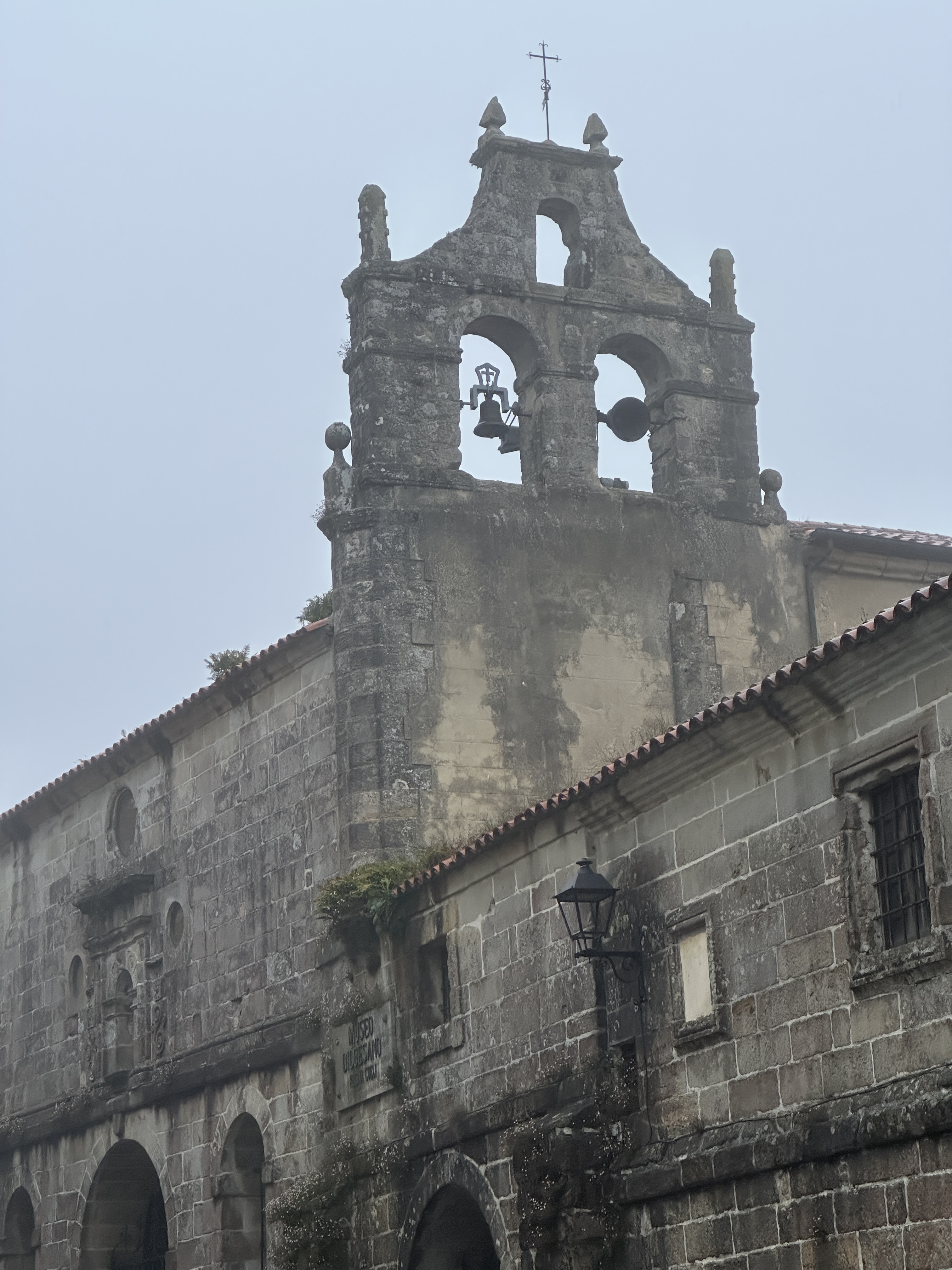
Like the Holy Roman Empire (neither holy, Roman, or an empire, “discuss” (obscure SNL reference), our first base of operations in Spain, the medieval town of Santillana Del Mar (founded in the 8th century) is an amalgamation of lies: “tres mentiras,” as the local joke goes. It’s not holy (Santa), flat (Llana) or particularly near the sea. It is, however, beautiful, featuring a 12th century Romanesque church (see yesterday’s post) and many baroque buildings.
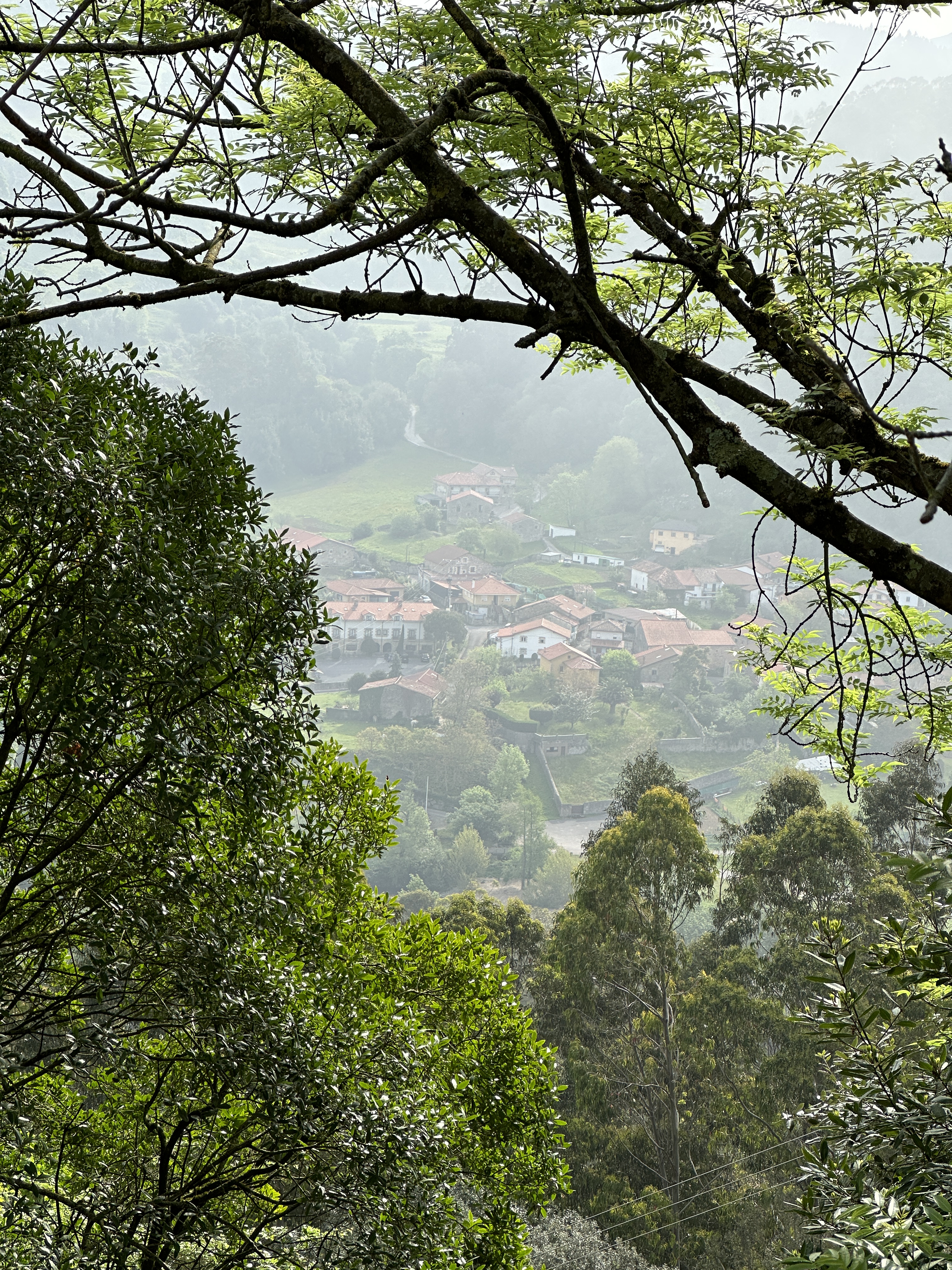
Our first stop, the caves of Monte Castillo (Castle Mountain), was perhaps 30 minutes from Santillana. There we toured two caves: Las Monedas (the coins) and El Castillo (the castle). The cave entrances are a hundred meters or so above the valley floor; the path between the two is lined with tiny, daisy-like flowers that Apple informs me are Fleabane.

The ringing of cowbells and crowing of roosters resound from the valley. No strains of “Don’t Fear the Reaper,” though – perhaps more cowbells would’ve helped (SNL reference #2).
Las Monedas gets its epithet from several centuries-old coins that someone tossed into a pit in the cave resembling a wishing well. Although the cave has only a few drawings, the rock formations are phenomenal: many of them are naturally colored red, yellow, brilliant white, or red-orange from minerals in the water, and some of them sparkle as if thousands of pinpoint mirrors were embedded in the stone. (No pictures allowed, of course.)
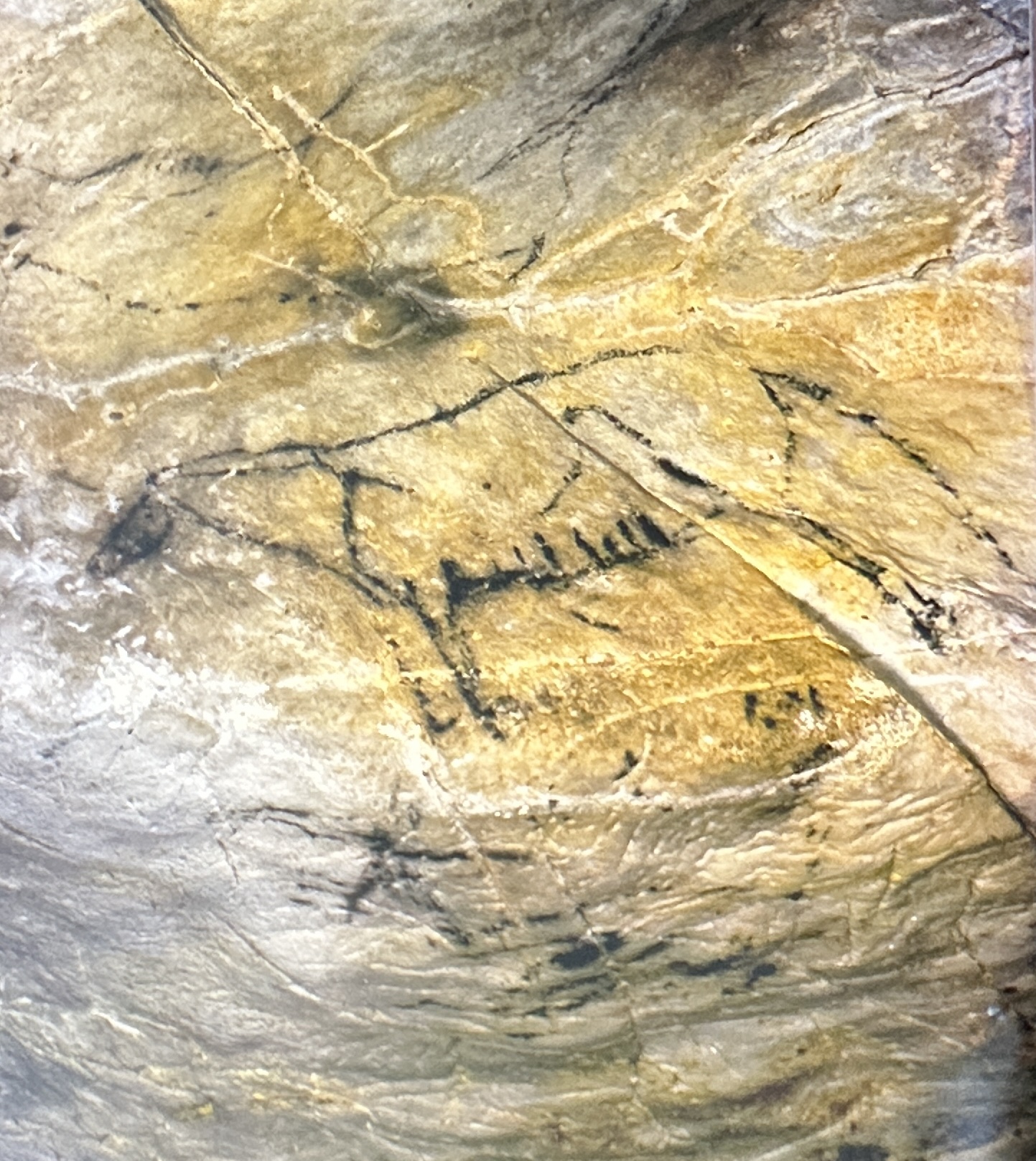
El Castillo is less showy from a geological perspective but packed with drawings of bison, horses, and deer from the Magdalenian period (12-15,000 years ago) as well as handprints dating back 35-40,000 years ago. Unlike many other caves with drawings, El Castillo was occupied over a period of 150,000 years, first by Neanderthals.
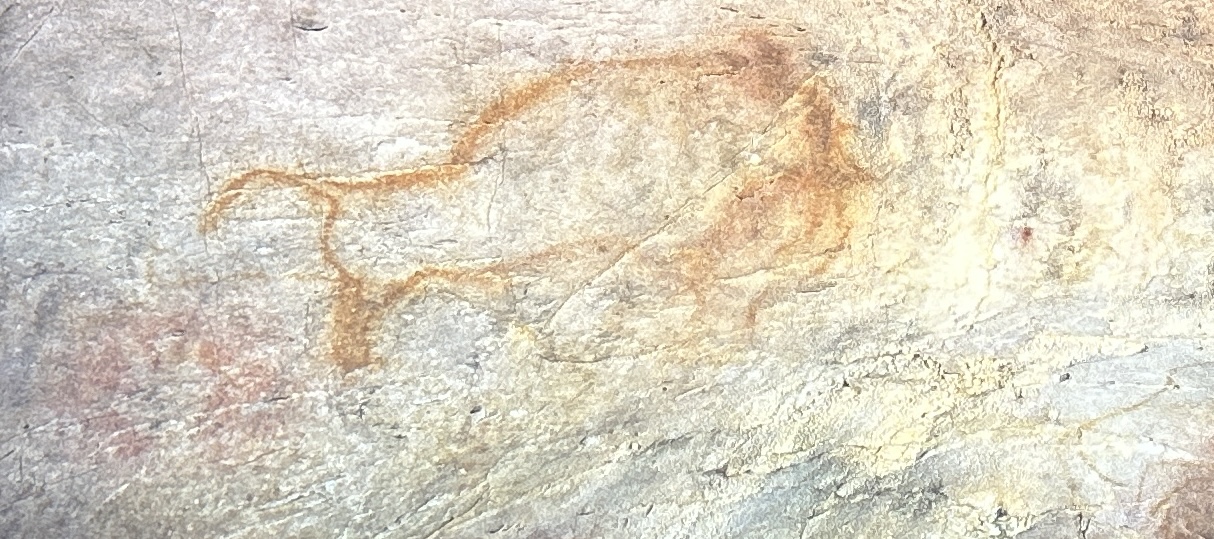
This afternoon we visited the “neo-cave” of Altamira. The original cave, like Lascaux IV, was closed to prevent further damage; the neo-cave is a faithful reproduction. I found the reproduction more convincing than Lascaux, perhaps because Lascaux was more polished. The artwork is astounding, with stark differences between large drawings from the Magdalenian and smaller, less intricate drawings from the immediately preceding Solutrean period.
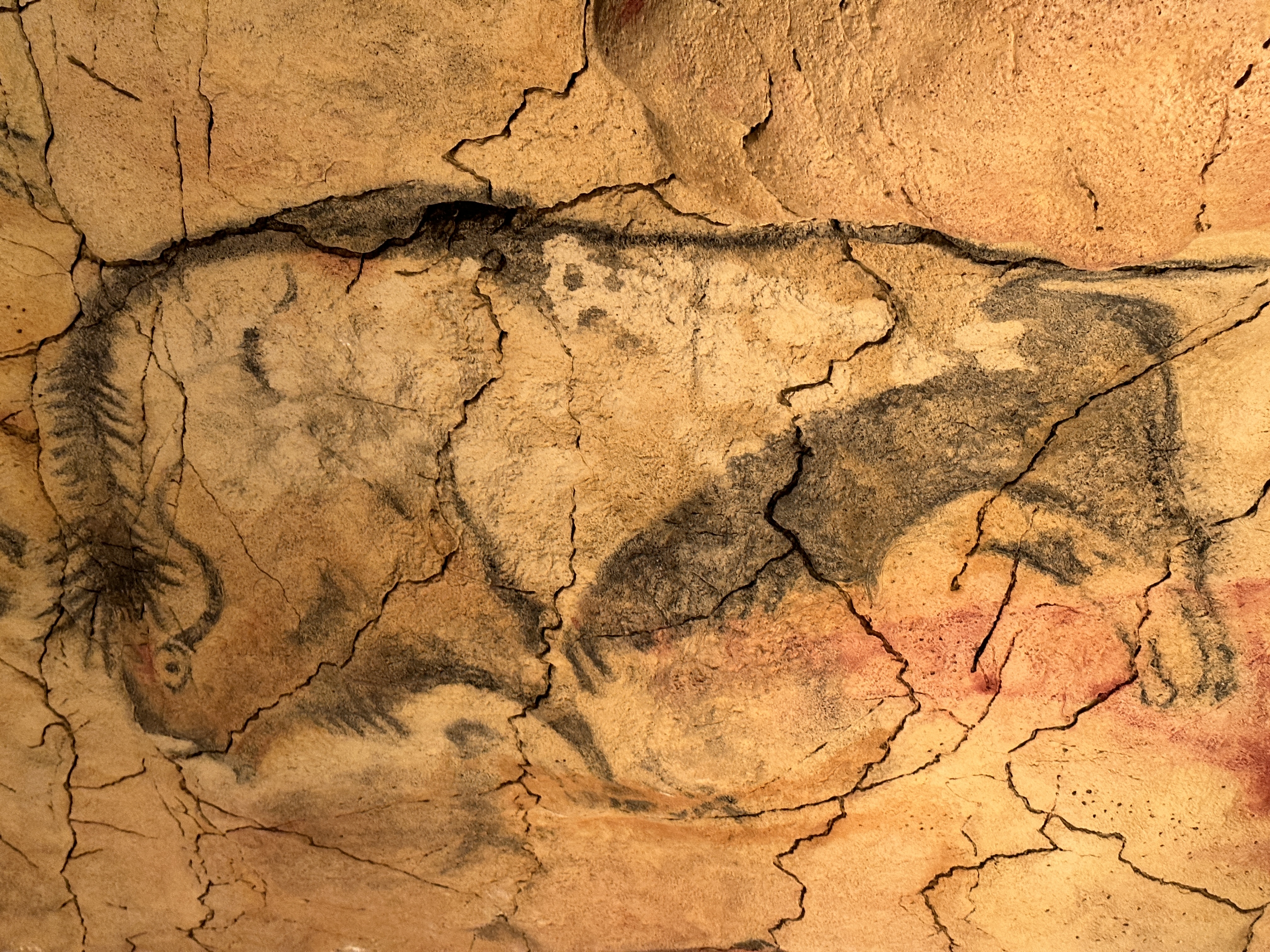
As so often, Messrs. Becker and Fagen (a/k/a Steely Dan) captured the scene beautifully:
“On the stone an ancient hand/In a faded yellow-green/Made alive a worldly wonder/Often told but never seen …/Every man and beast appeared/A friend as real as I …./They heard the call/And they wrote it on the wall/For you and me we understood.” (“The Caves of Altamira,” from Steely Dan’s unquestionably best album, “The Royal Scam.”)
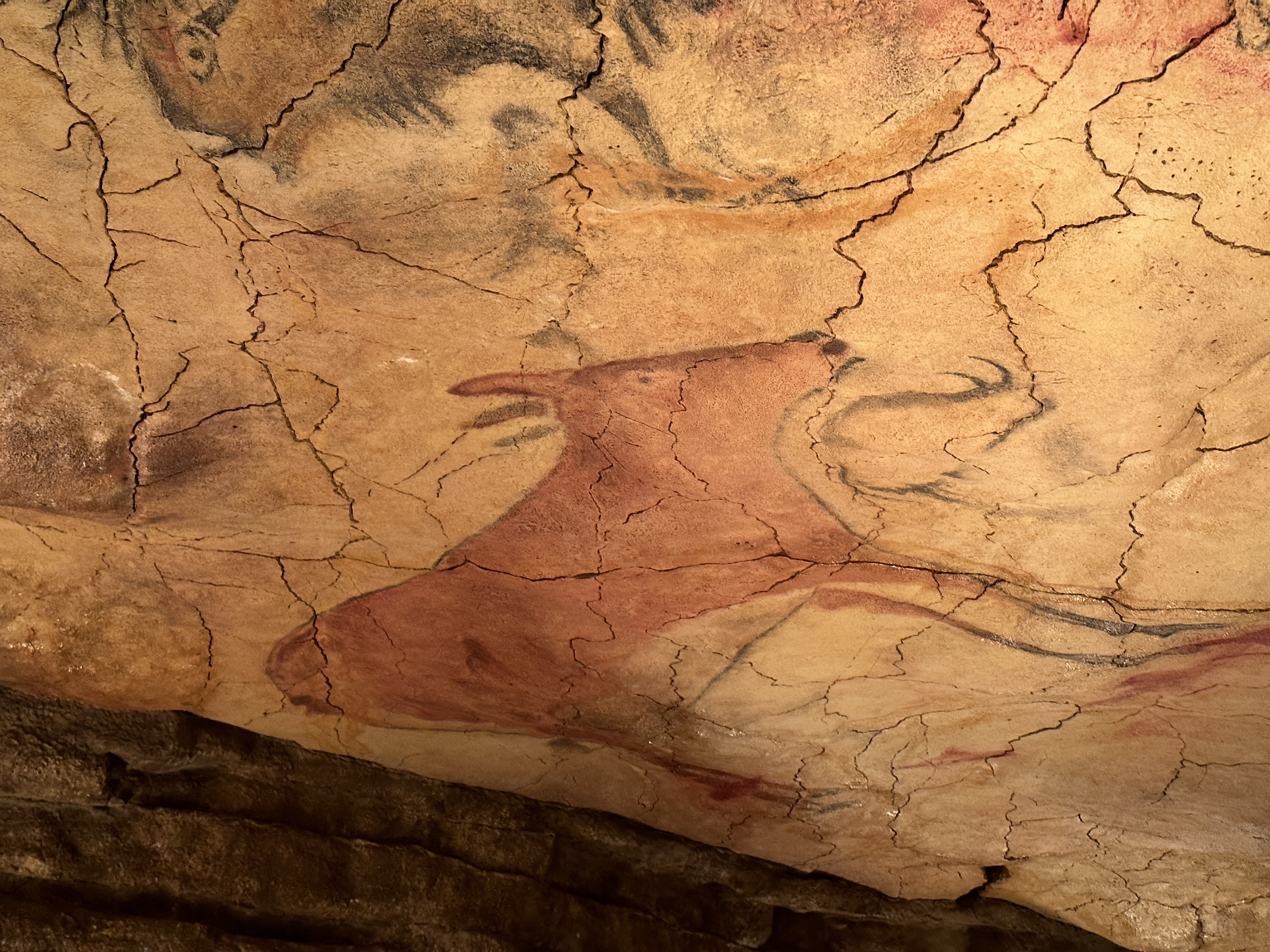
Many of the Magdalenian drawings feature gorgeously limned bison with their heads missing. After the guide admitted that archeologists do not know why the bison are headless, I suggested that the period should be renamed the Guillotinean. Alas, I suspect the archeological establishment may not be disposed to making this eminently reasonable change.

 PuffinlessTravel