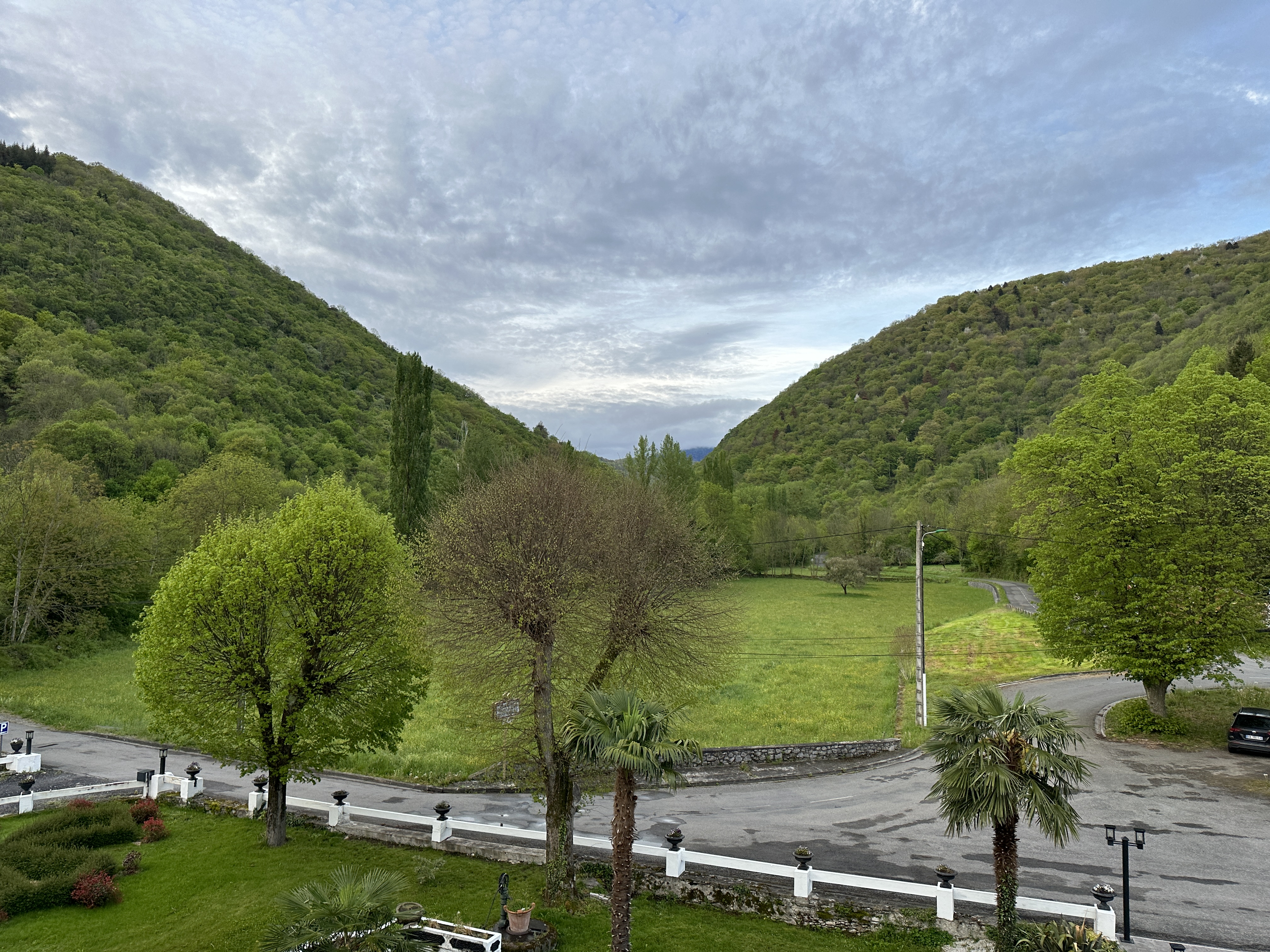
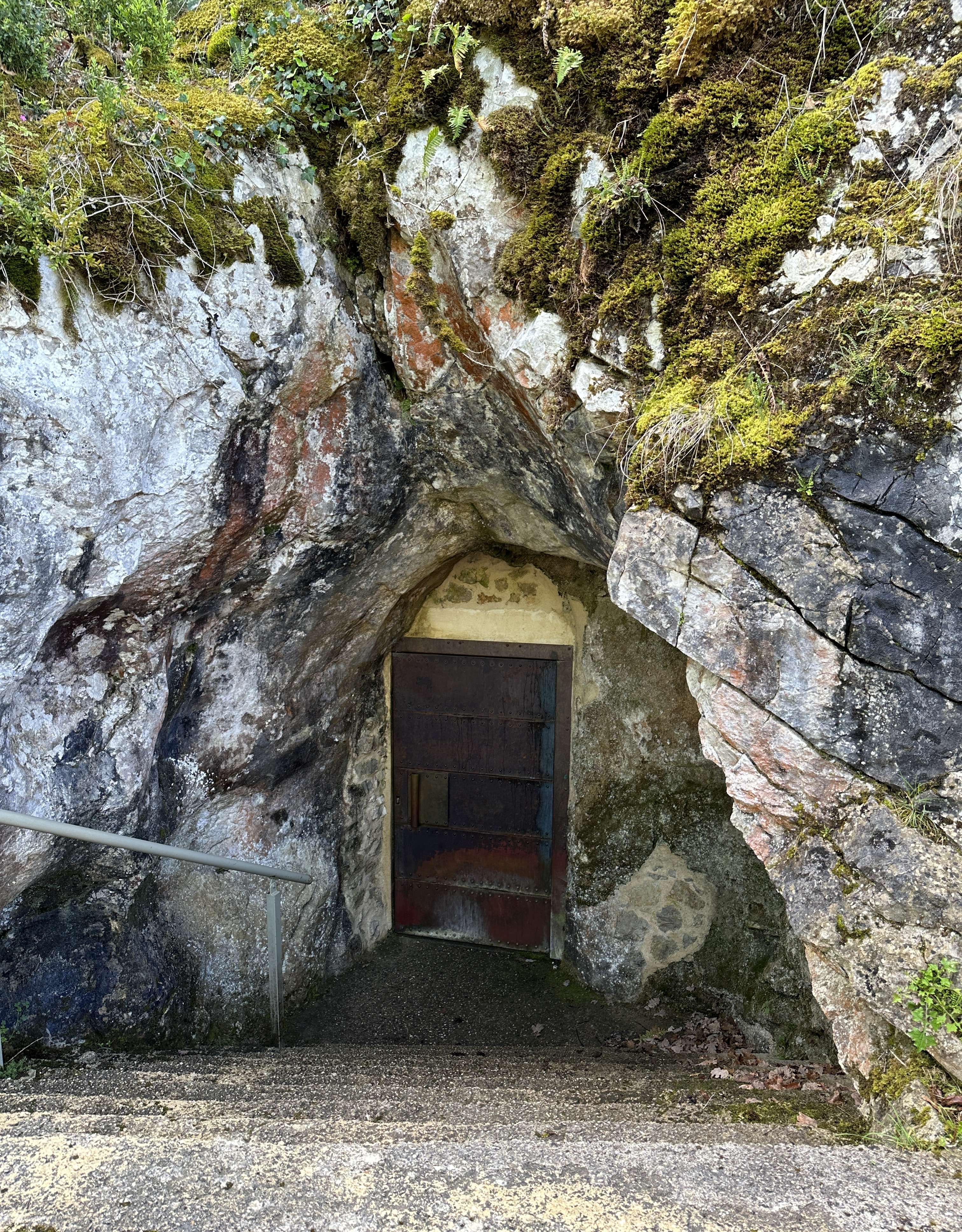
If you’ve seen one cave, you’ve seen … one cave. Each one is different, with its own geology, its own aura, its own magic. Geologically, Gargas is a distinct “species” from Pech Merle, at least to my eyes. Where Pech Merle features fantastical rock formations, the stalactites and stalagmites in Gargas reminded me of ice cream that had melted and refrozen. Curiously, many of the stalactites in Gargas are broken; why remains a mystery. Where the ceiling in Pech Merle is well above head level, the main gallery in Gargas demands constant cognizance to avoid a cranial clunk, even for my vertically modest frame.
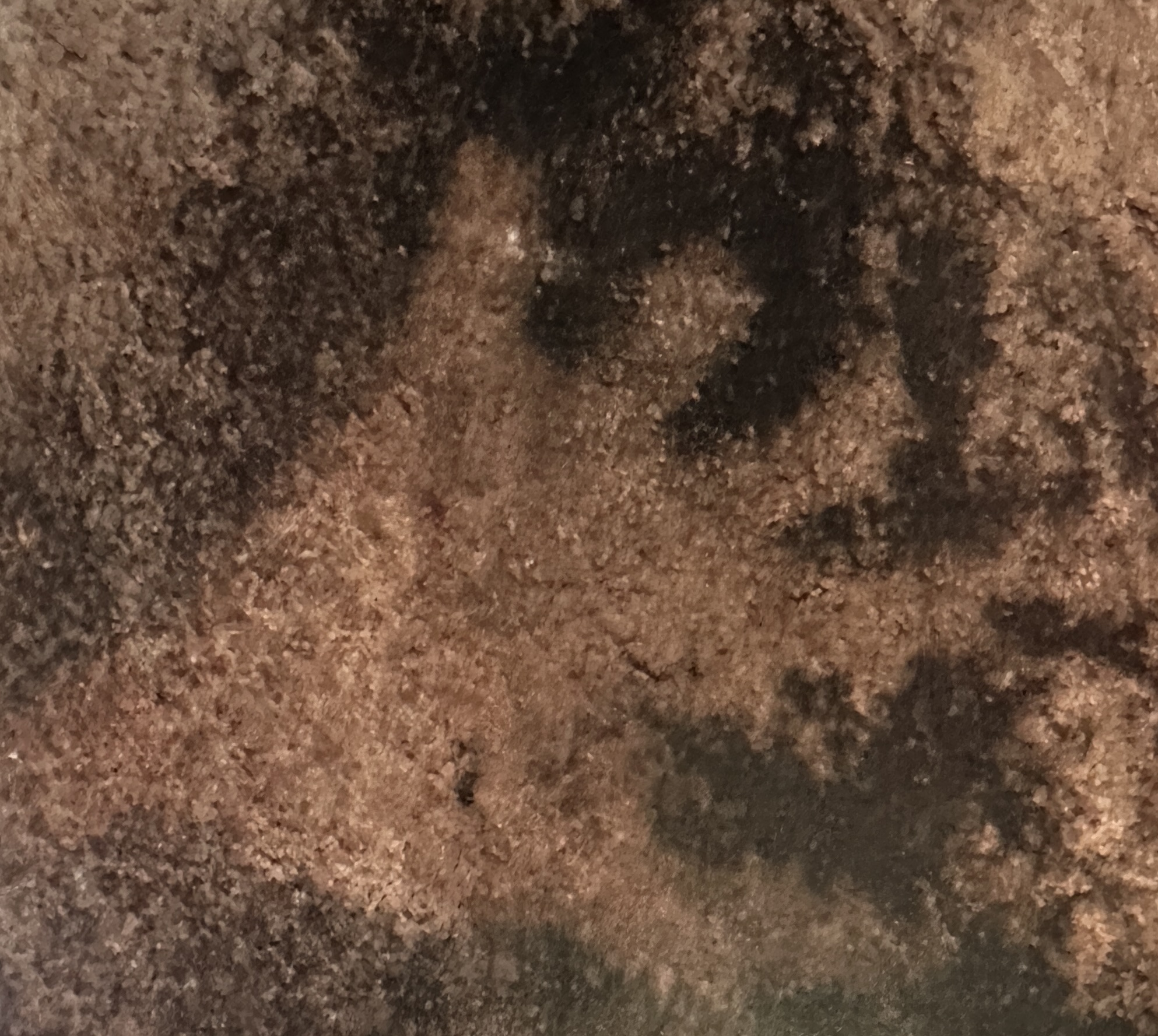
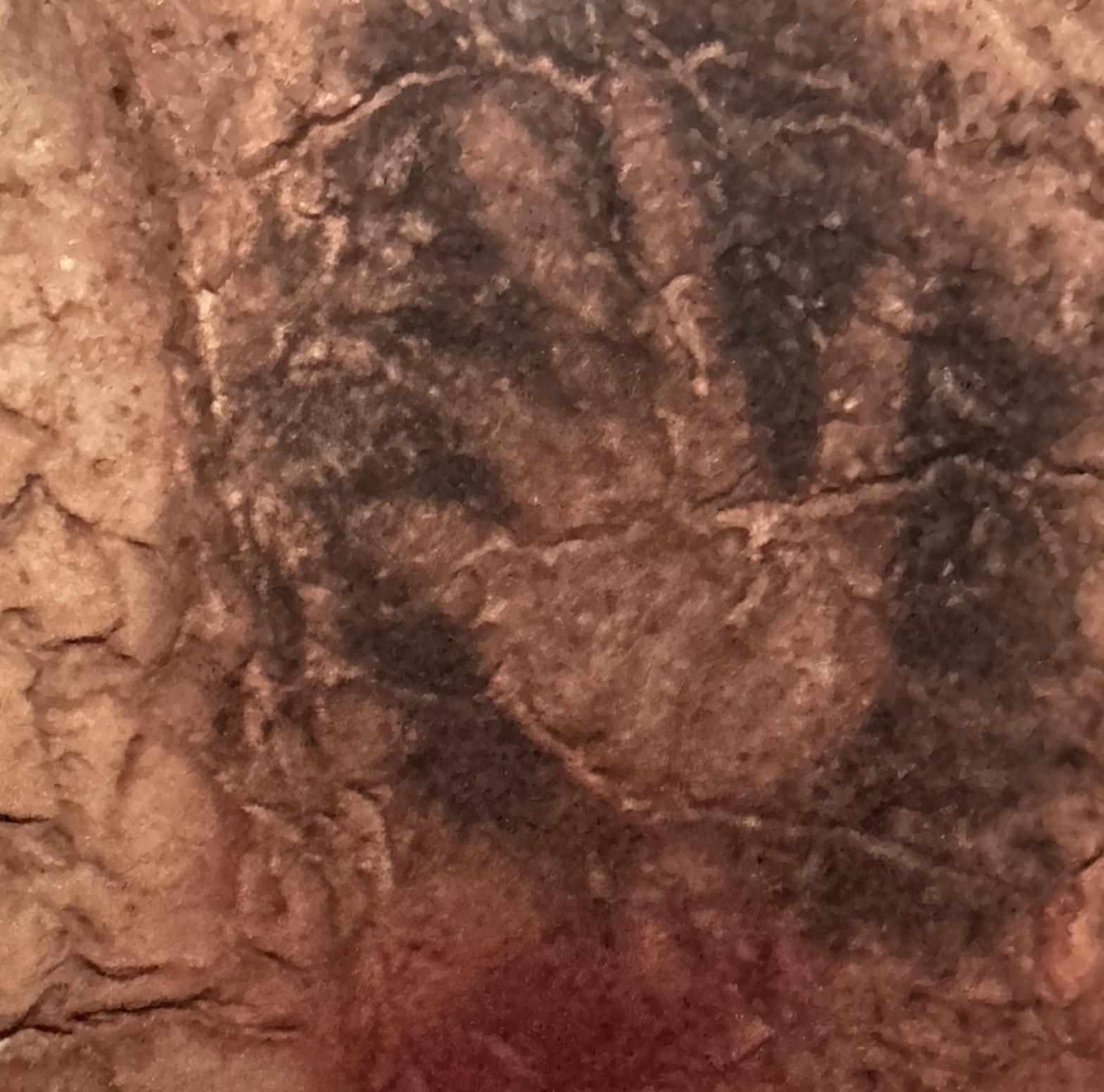
Likewise, where Pech Merle is famous for its spotted horses, mammoths, and bison, Gargas is known for hundreds of men’s, women’s, and children’s handprints, outlined in spit-painted manganese dioxide. Most curiously, while the few handprints in Pech Merle are intact, the majority of those in Gargas have fingers that disappear after the first knuckle.
As with much of paleolithic archeology, the reason(s) for the truncated fingers are speculative. At first, scientists assumed the missing digits were evidence of amputations or frostbite. Upon closer analysis, they have determined that there are 12 distinct patterns of hands (some more common than others), and that the stencils may represent some type of communication system – in effect a form of sign language in which different fingers are bent to produce different symbols.
The culmination of Gargas is the “Sanctuaire des Mains,” the “Hall of Hands,” a wall featuring eighty handprints. Unlike most other caves, where the artwork and handprints are deep underground, the Hall of Hands is opposite what would have been the original entrance to the cave (long since shut by a rock slide), and thus would have received outside light. As Winston Churchill said in a vastly different context (referring to the then-Soviet Union), it’s “a riddle wrapped in a mystery inside an enigma.” It’s also profoundly affecting, particularly to my humanistic soul.

Unfortunately, the caves of Gargas already are showing signs of environmental degradation. Most of the drawings have been partially overtaken by calcite, which coats the original cave wall in white rock. This layer cannot be removed using current technology without simultaneously removing the underlying artwork. Although our guide said restrictions on the number of visitors have prevented further damage, the caves may be off-limits if the situation destabilizes.
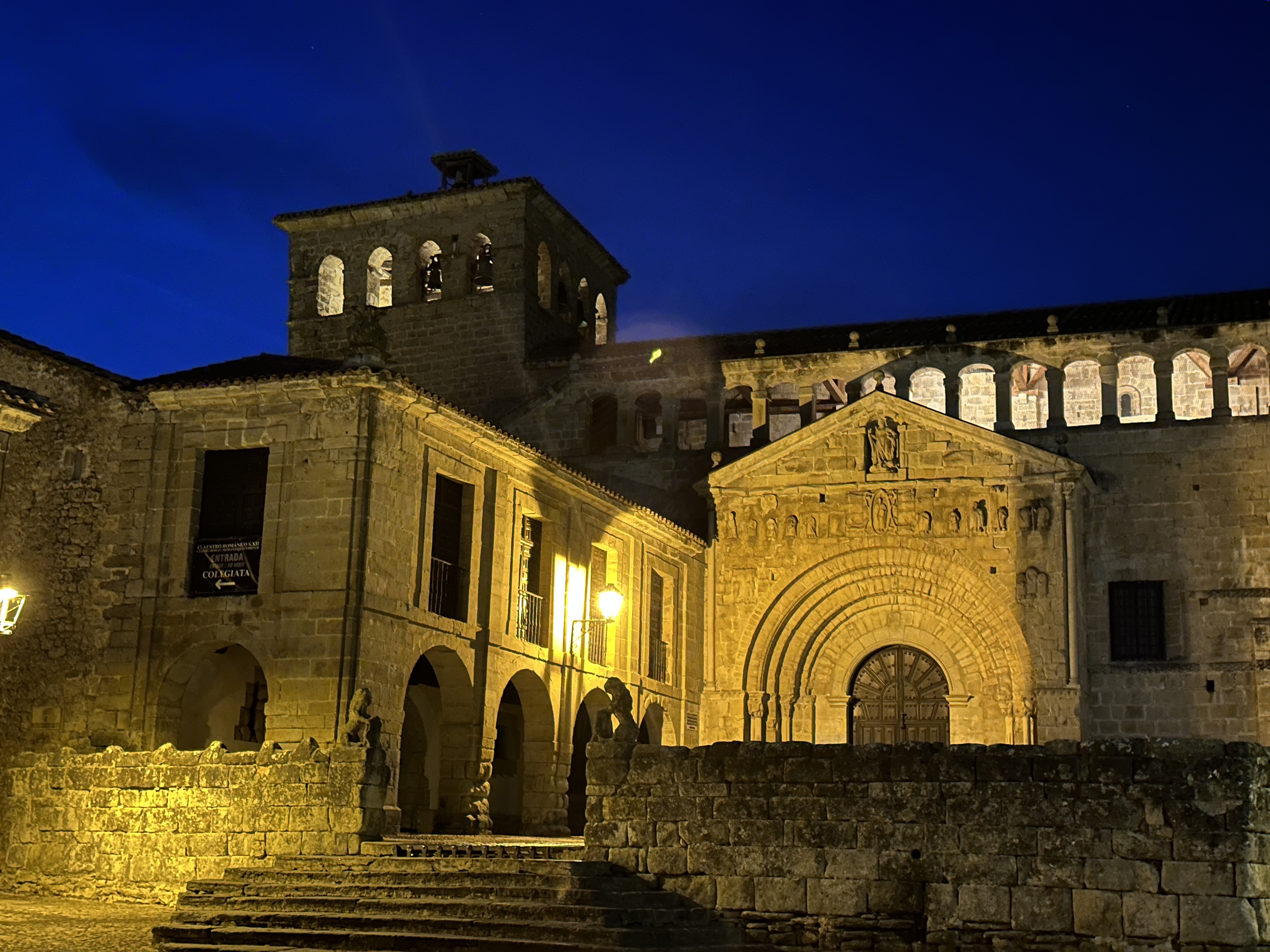
Tonight we’re staying in the Parador de Gil Blas in the medieval town of Santillana del Mar, which dates back to the 8th century. It’s just what you’d expect of a village considered one of the network of Most Beautiful Towns in Spain: ancient buildings, cobble-stoned streets, cows lowing, birds tweeting, frogs piping, and a sense of utter permanence.

 PuffinlessTravel