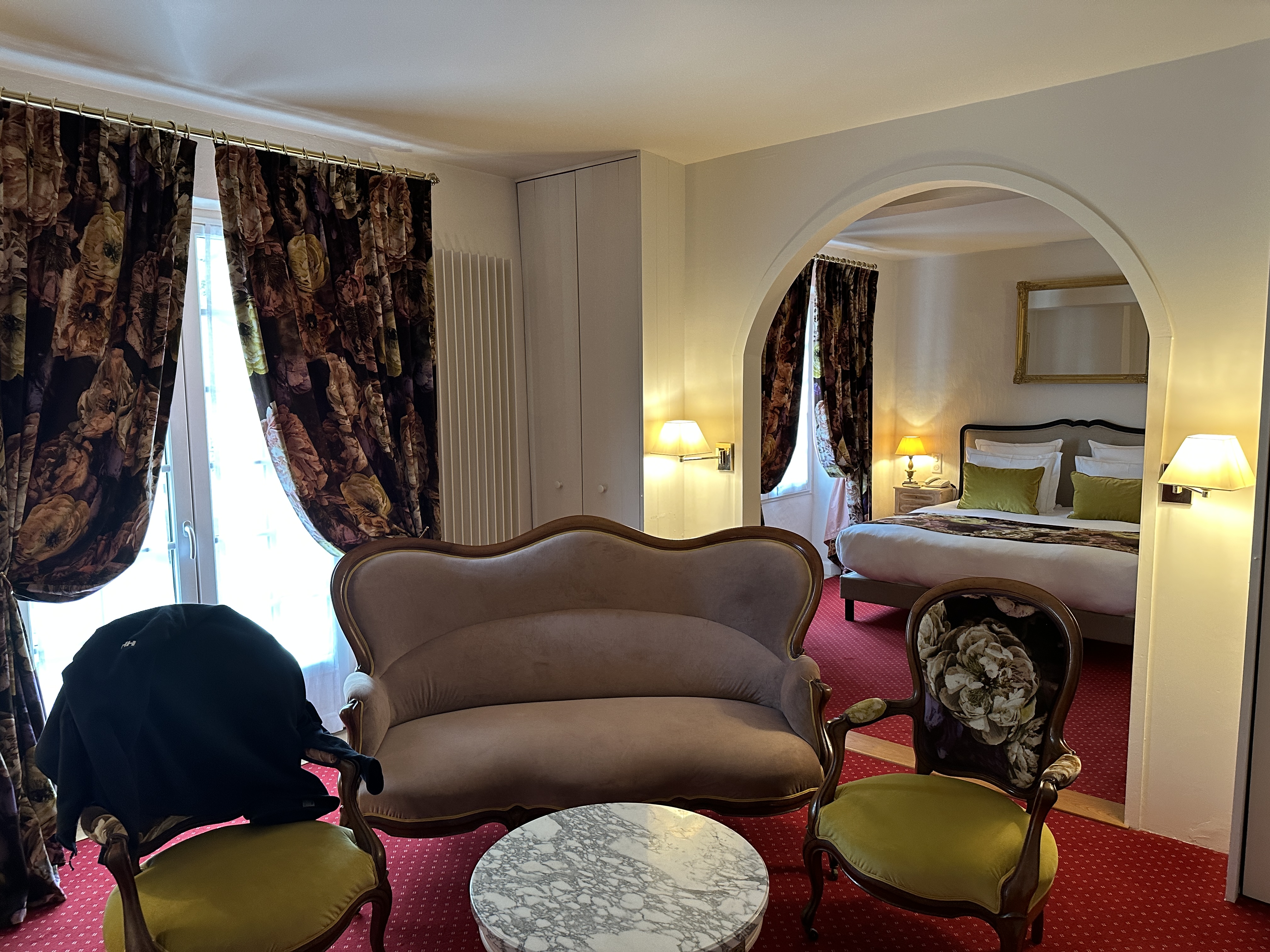
Here’s my recipe for quickly recovering from a stressful weekend: (1) check into a gorgeous room in a classy hotel in a picture book village (in this case, the delightful Le Centenaire hotel in Les Eyzies). (2) Attend a lecture by an engaging and enthusiastic lecturer (in this case, Dr April Nowell, our Smithsonian expert on paleolithic art and life). (3) Enjoy a fabulous dinner featuring three wines. Lost passport? What lost passport?
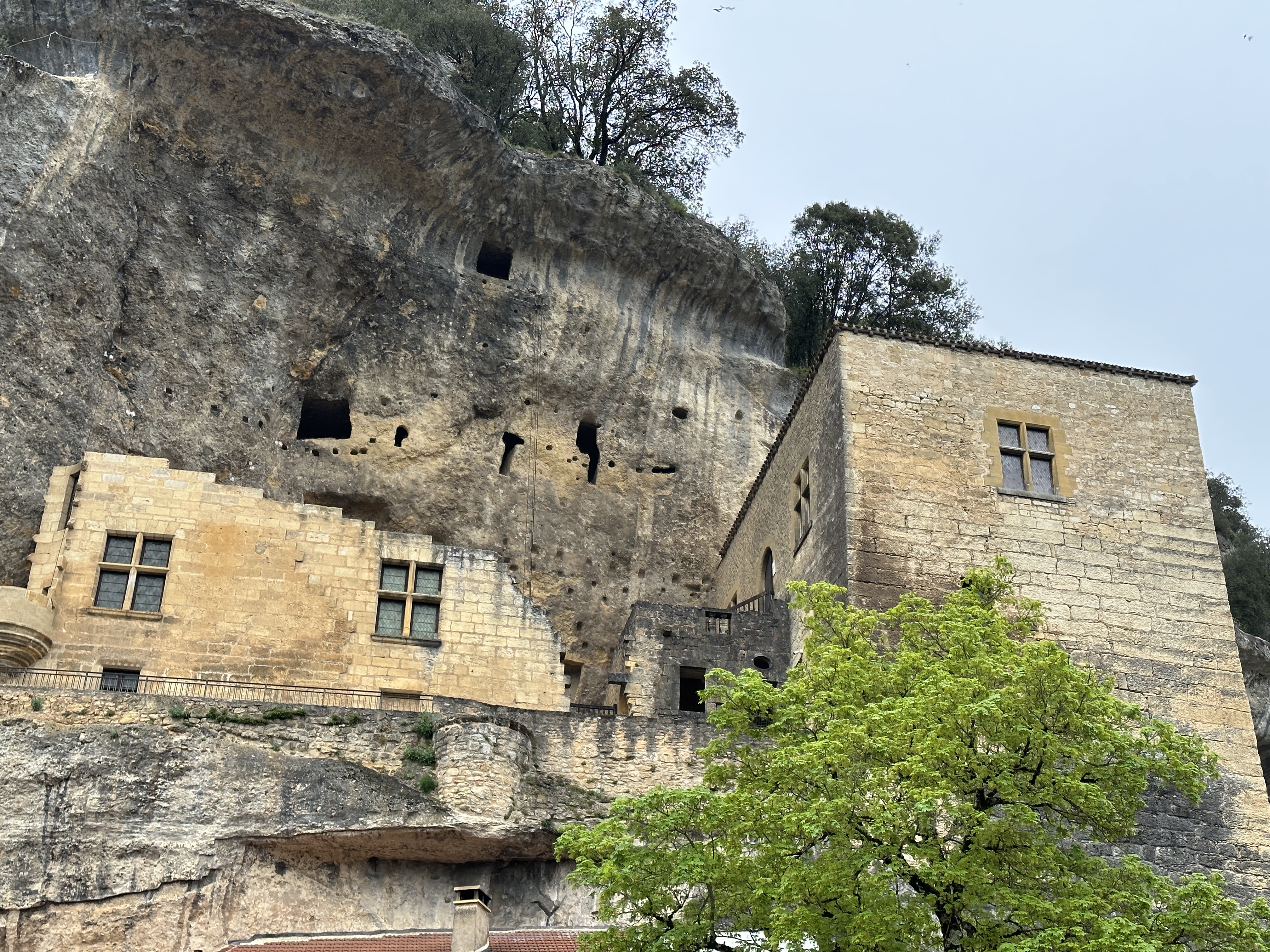
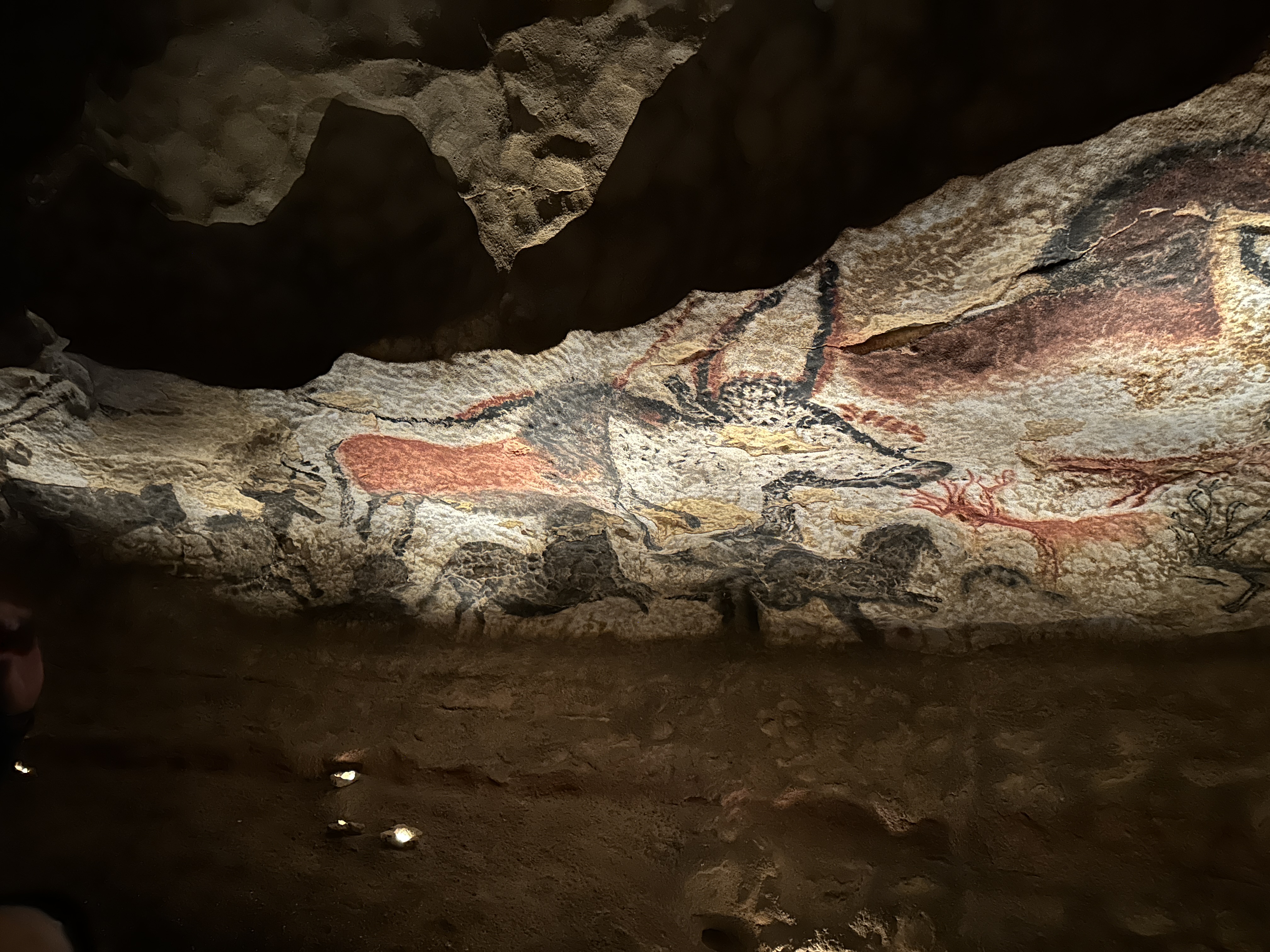
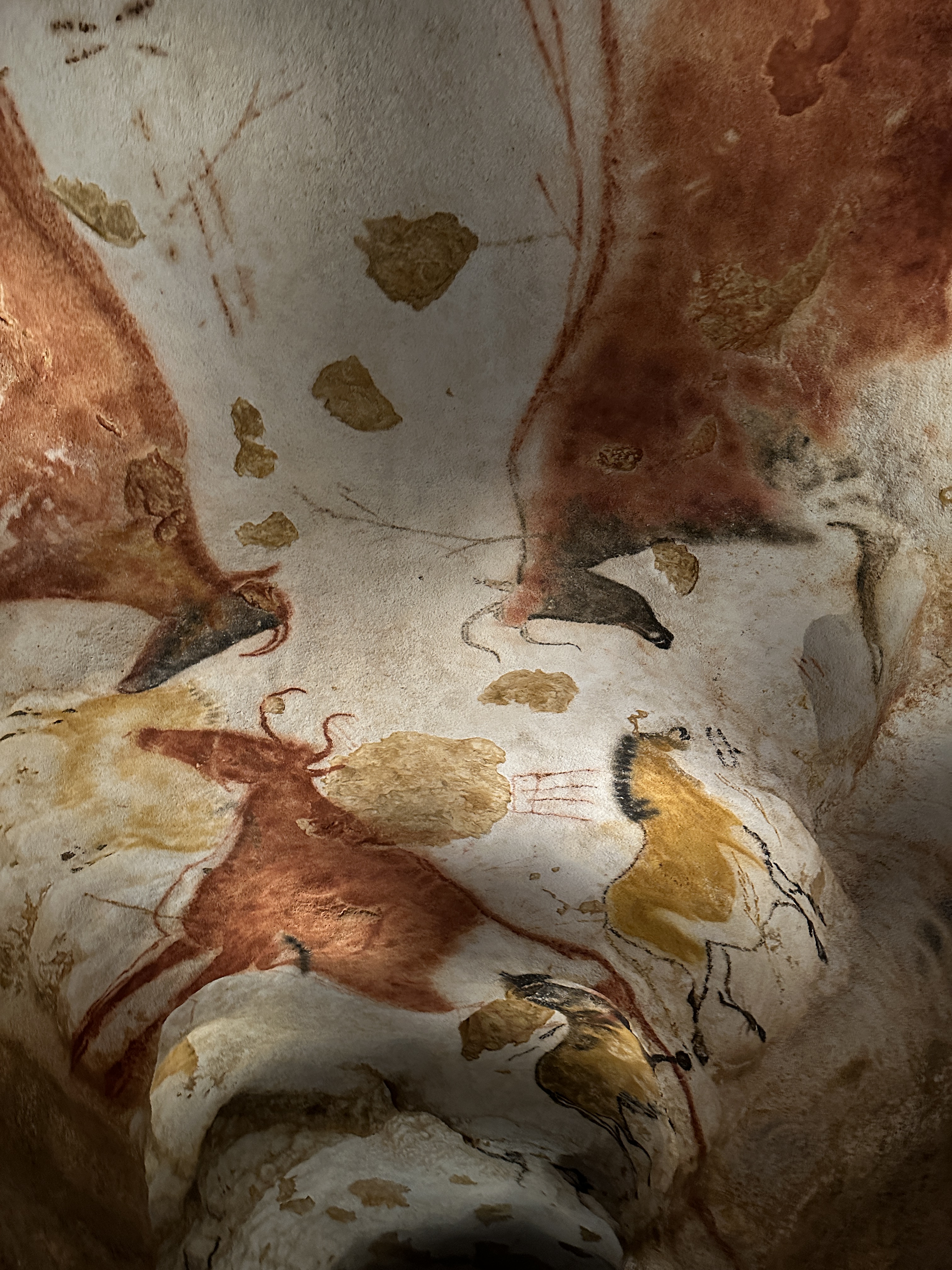
With my stress level returned to baseline levels (pretty low, thankfully), I was raring to turn the clock back 20,000 years or so. Our first stop today was Lascaux, the “Sistine Chapel of parietal [cave wall] art.” The actual cave has been closed to the public for years to prevent further degradation, but Lascaux IV, a precise reproduction, has been open since 2016.
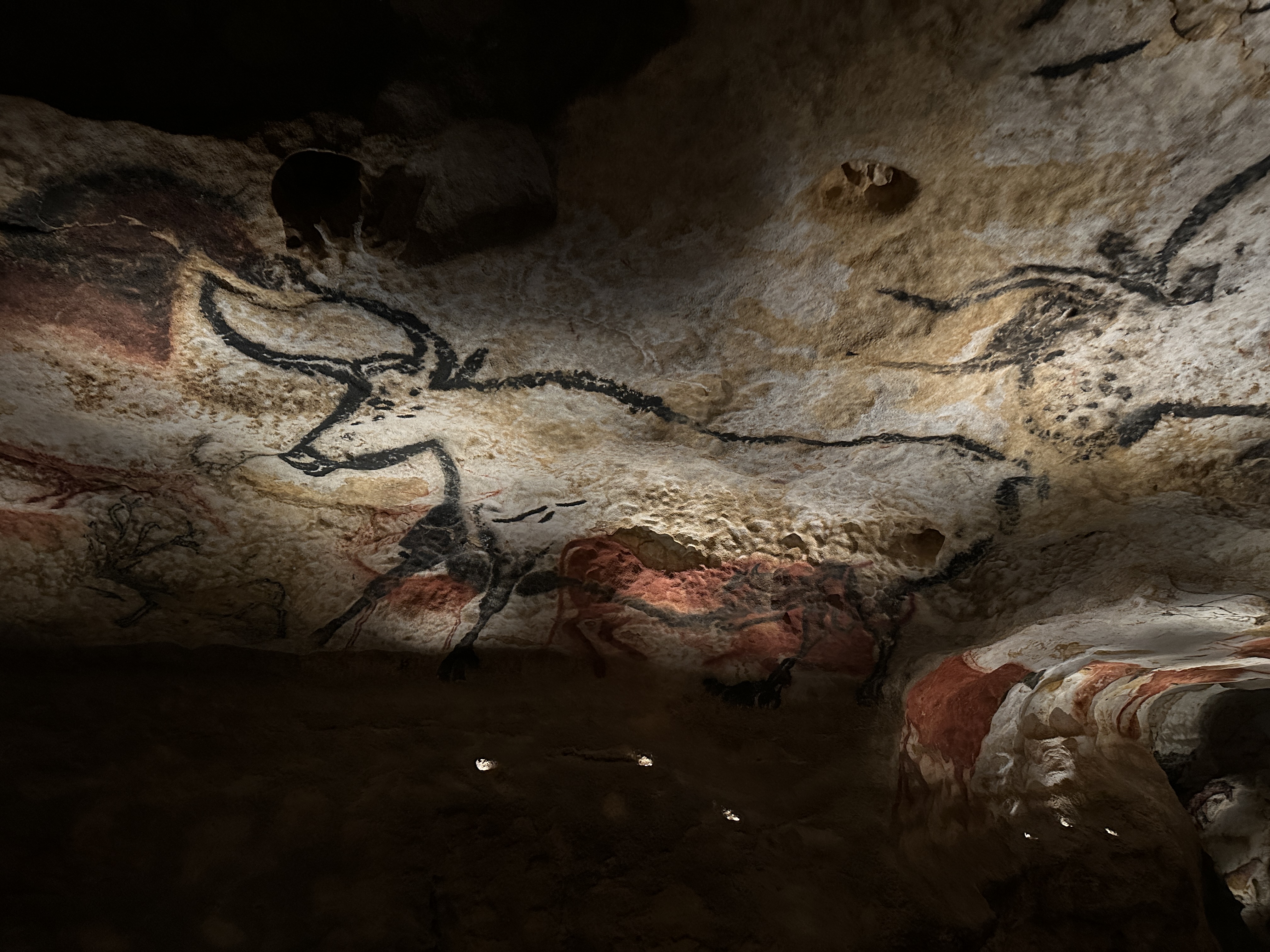
It contains all the remarkable drawings and etchings of the original, including aurochs, bison, deer, and various mythical creatures (a “unicorn” and a bird-headed man, for two). The reproduction is undeniably evocative, but the artificiality of the experience kept nagging at me.
From Lascaux we headed to Castel Merle, a prehistoric site containing numerous rock shelters. We were treated to a fascinating demonstration of paleolithic knapping and fire-making techniques, followed by a “paleolithic” lunch of salmon coated in clay then baked in a pit (the clay was removed prior to consumption) and venison.

After lunch we visited one of the rock shelters, which includes etchings of a horse (readily discernible) and a bison (not so readily discernible). As modest as this display was compared to Lascaux IV, the fact that it actually dated from so many millennia ago packed more of an emotional punch.
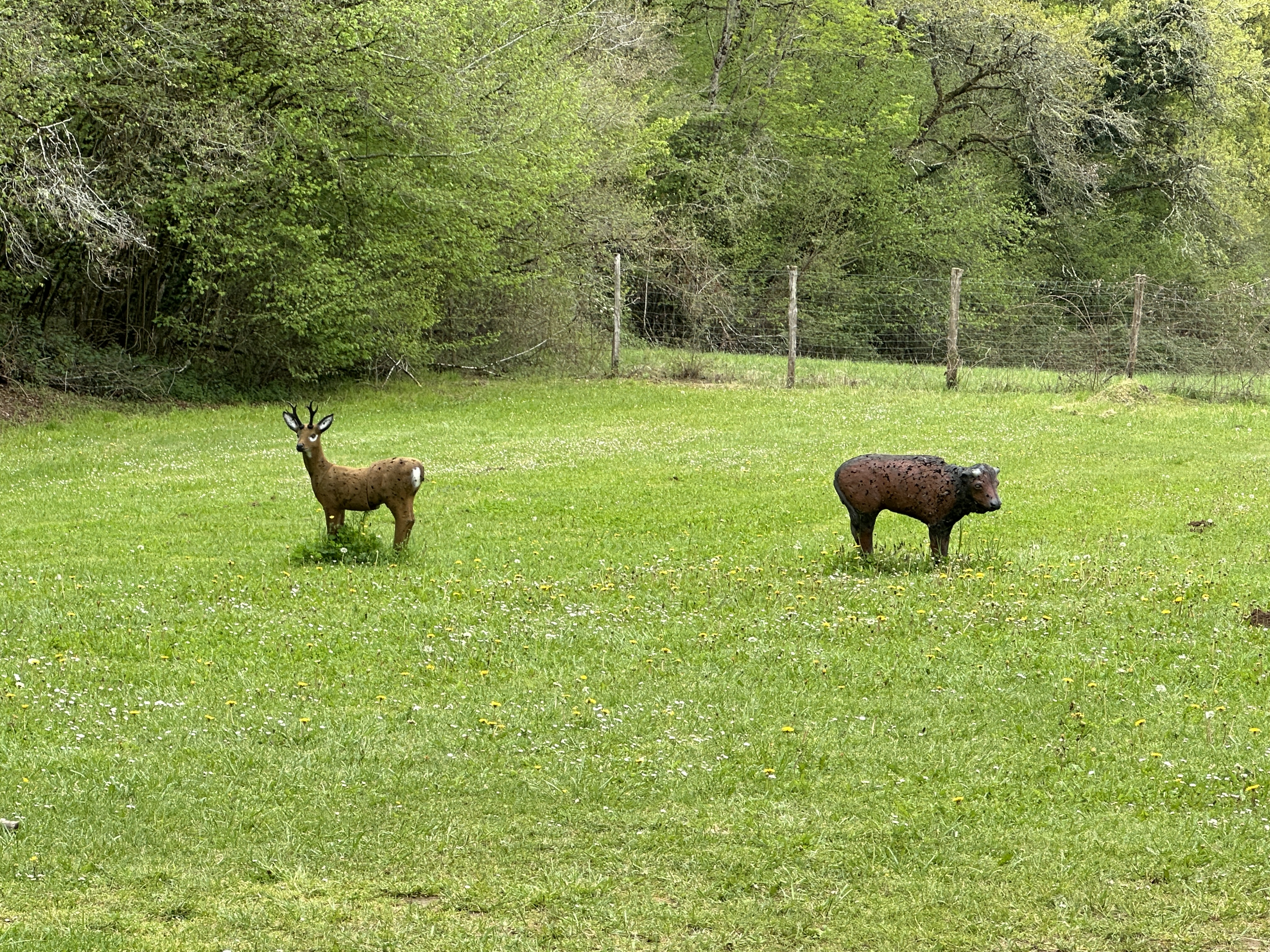
To round out our visit, we got to try our hands at using a spear thrower. I’d give myself a B for distance and power and a D for accuracy, but I will say it was a blast.
Our final stop was Rouffignac, the “cave of a hundred mammoths.” Visitors are brought by a small underground train to the major galleries, which were truly impressive, featuring hundreds of mammoths and other animals etched into the walls and ceiling. Adding to the ambience, the walls covered in marks left by cave bears’ claws; the bears predated the human artists by thousands of years. Unfortunately, photos were prohibited.

Another interesting lecture (focused on paleolithic art and the modern technology used to analyze it), another sumptuous dinner, and day is done.

 PuffinlessTravel