Before writing about today, I wanted to take a moment to comment on the sibilant, sensuous Portuguese language. On paper it looks a lot like Spanish, to the point where I can understand most signs (even if they’re not written on paper). Spoken, however, it’s both gorgeous and (to me) incomprehensible. Portuguese speakers constantly (but politely) seem to be shushing one another; if a “zh” sound can be inserted in a word, it will be. It’s a melodic, entrancing tongue.
Back to today: At the concierge’s suggestion, I took a hop on hop off bus to the Belém district. More on Belém in a moment, but first an observation about Lisbon’s hop on hop off system. In Lisbon, as elsewhere, these buses are a great way to see the city: differently colored routes (blue, red, yellow, etc.) cover almost anywhere that’s worth going. I took the Red route.

Unlike other cities (as far as I know), however, there are multiple hop on hop off operators. After walking around Belem for a couple of hours, I looked to take the bus back. I started to board a Red route bus, only to discover that not only are there three different hop on hop off operators in Lisbon, they all use the same color system for routes, drive virtually identical double-decker open air buses, and to top things off, identify their operations by color as well – and those colors overlap with the routes. Confused? I sure was.
The driver said that I had a “Gray” ticket – I said no, it’s for the Red route – and he explained that my ticket was for the Red route on the Gray operator’s buses. His Red line bus was from the Yellow operator. A few minutes later, another bus pulled up, and of course it was from the third operator (I didn’t catch the name/color). Finally, my Gray line Red bus came. It reminded me of a Marx Brothers routine; there is no “sanity clause.”
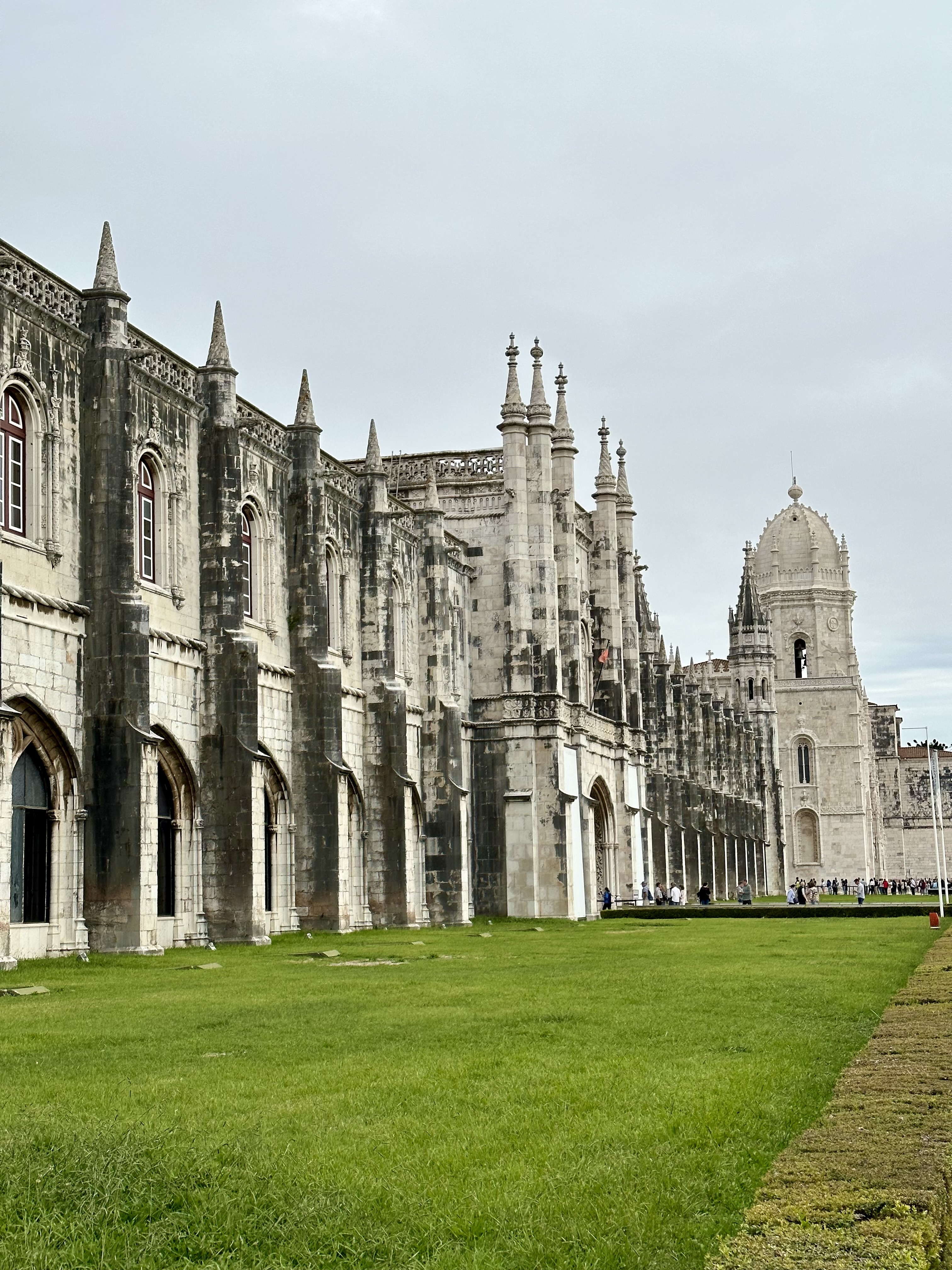
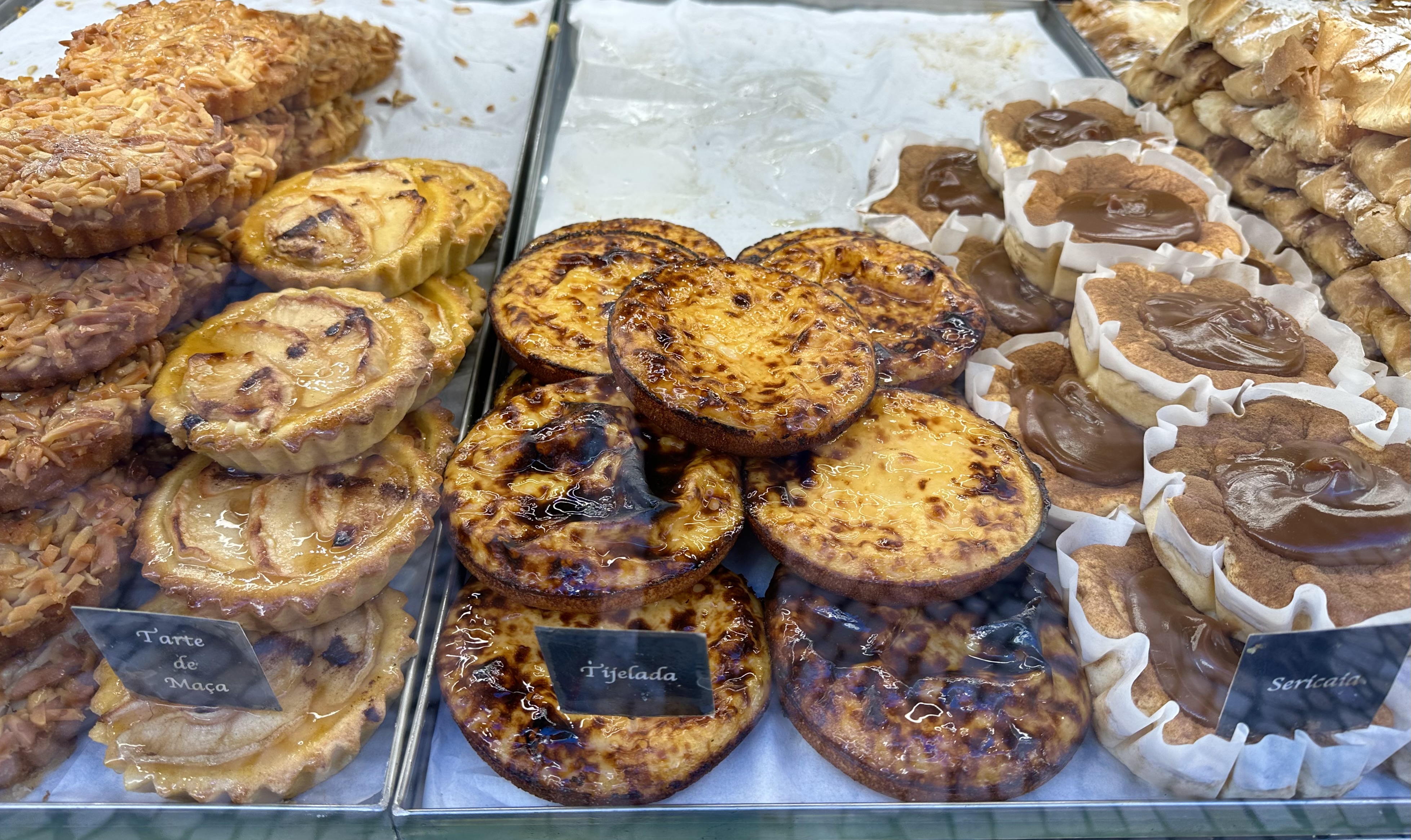
Any way, Belém: it’s filled with museums, tile-clad buildings, an impressive monastery (Mosterio Dos Jerónimos), a world-famous bakery (pasteis de nata (custard tarts) are basically the national dessert of Portugal), and many, many gelato places.
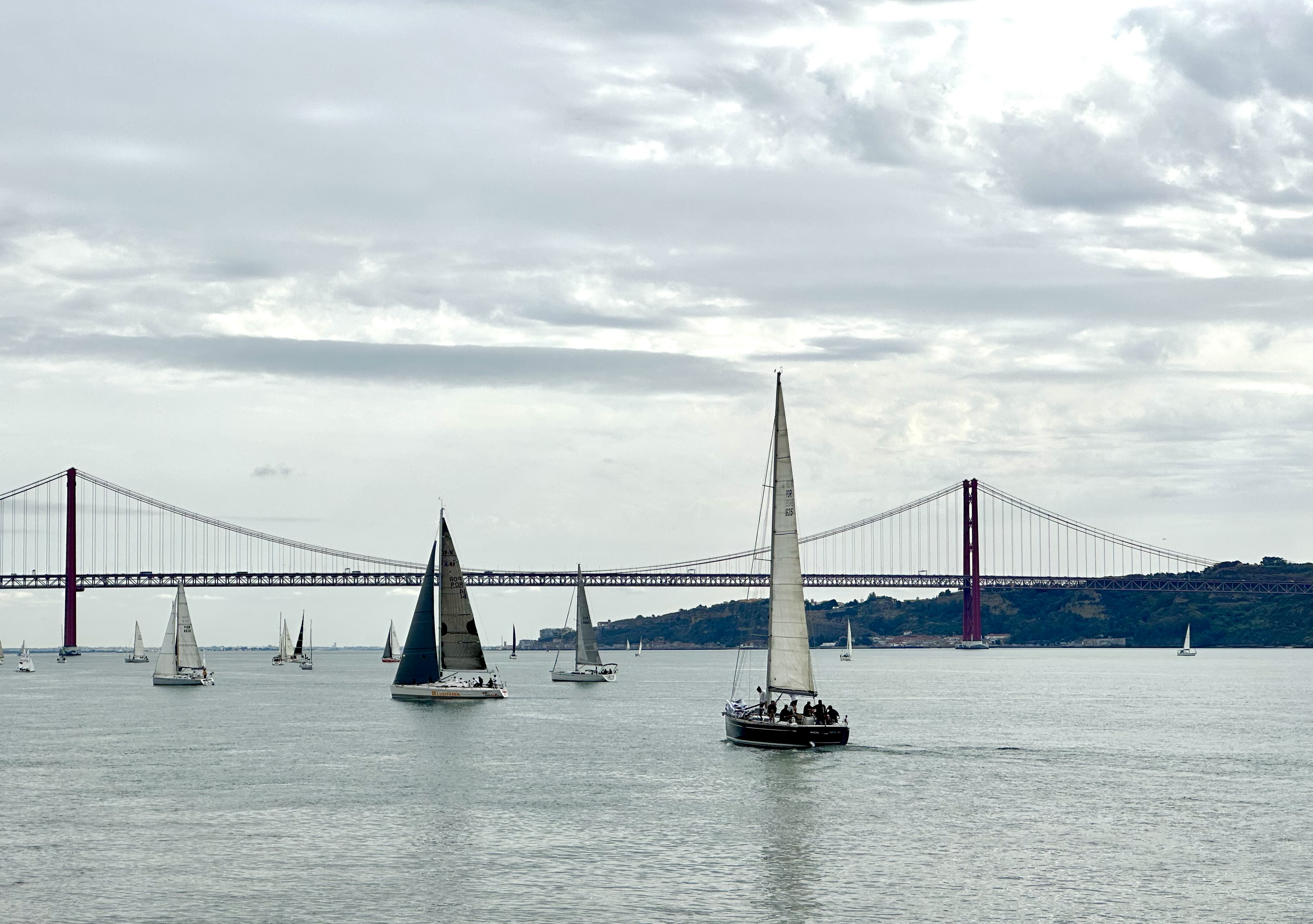
I walked along the waterfront for a few miles, taking in the gorgeous sites while sidestepping swarming bicyclists, skateboarders, Segways, and scooters. Near Belém there’s a bridge (Ponte 25 De Abril) spanning the Tagus River, which is a dead ringer for the Golden Gate bridge. It turns out both bridges were designed by the same person.
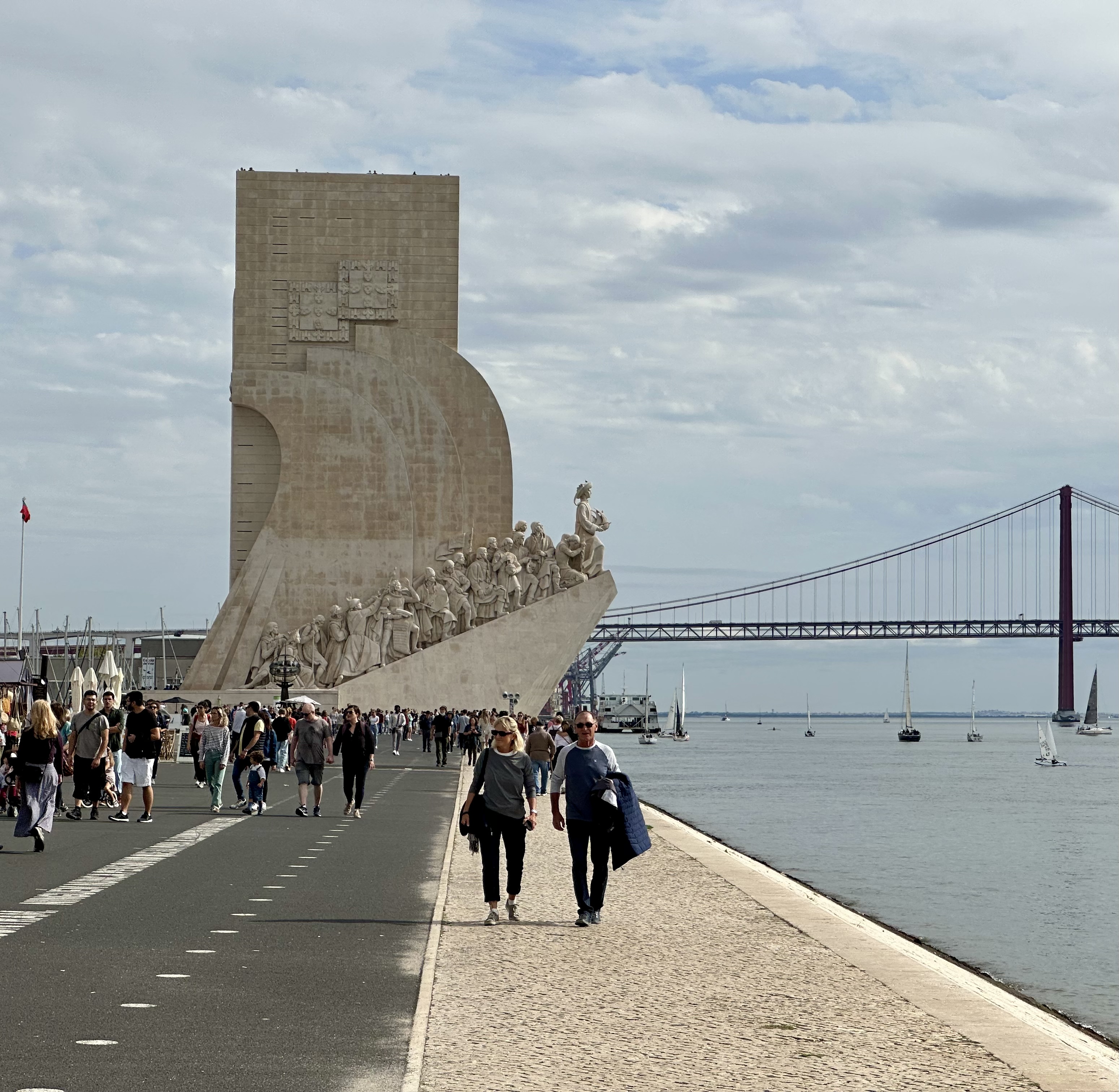
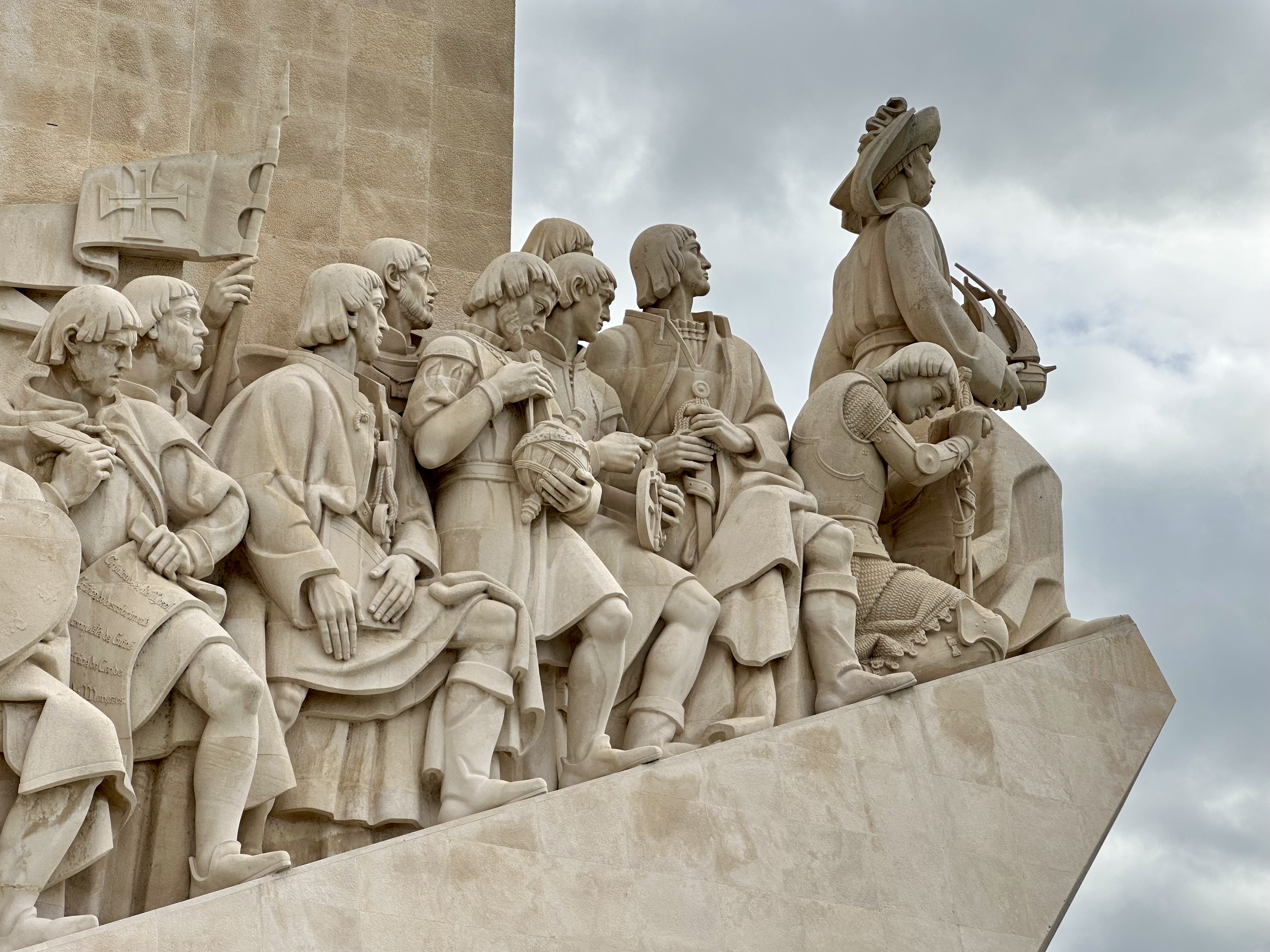
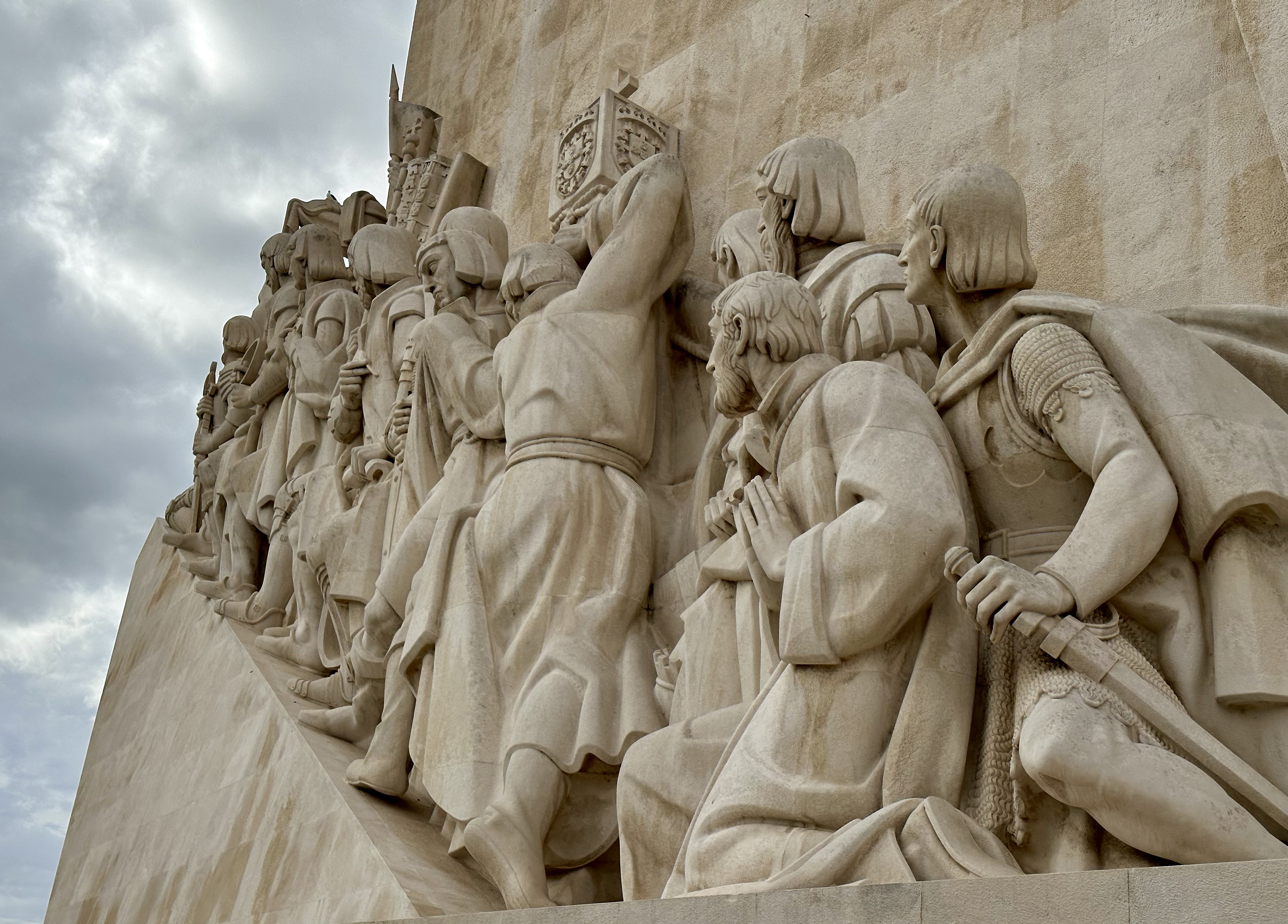
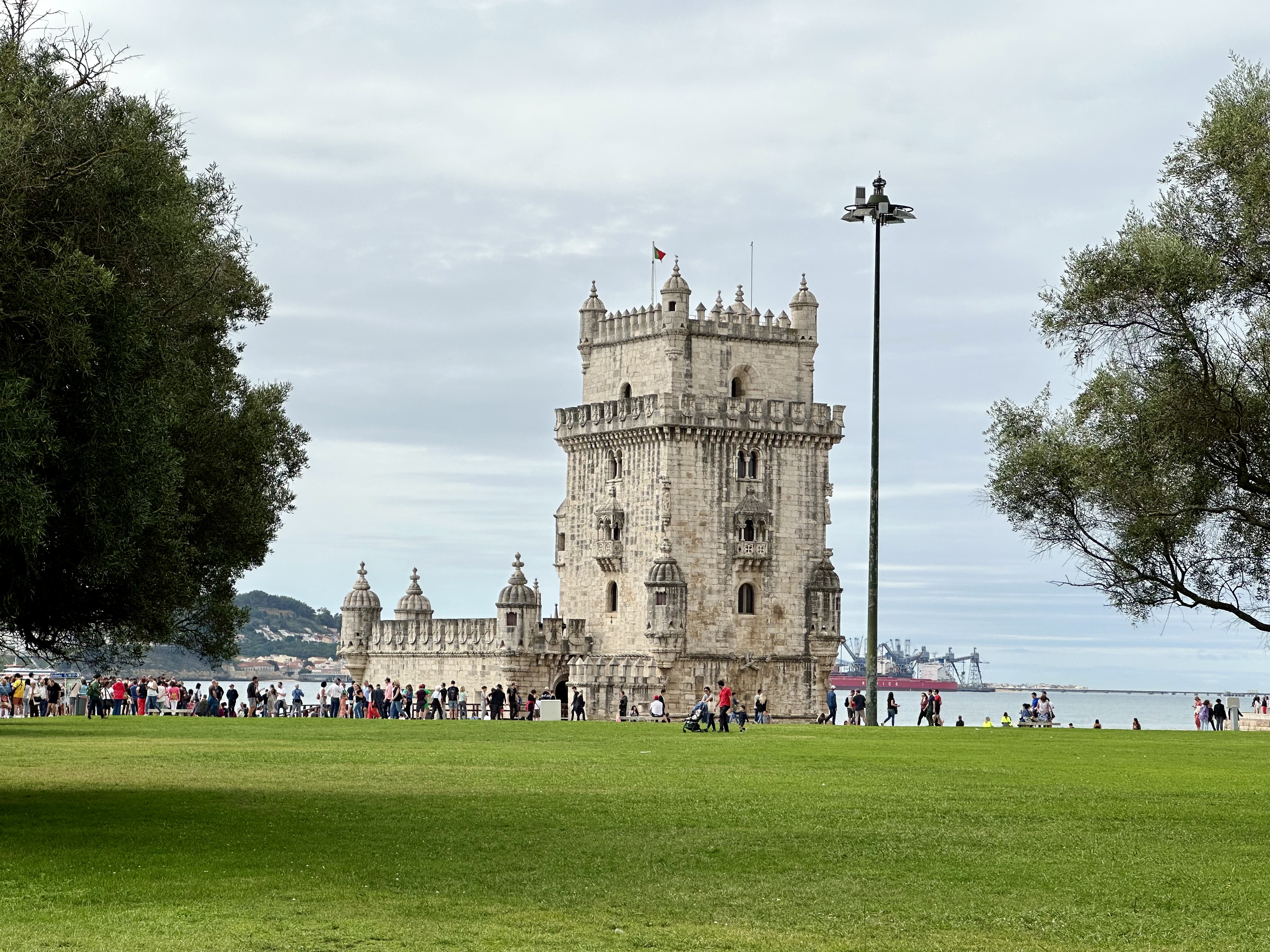
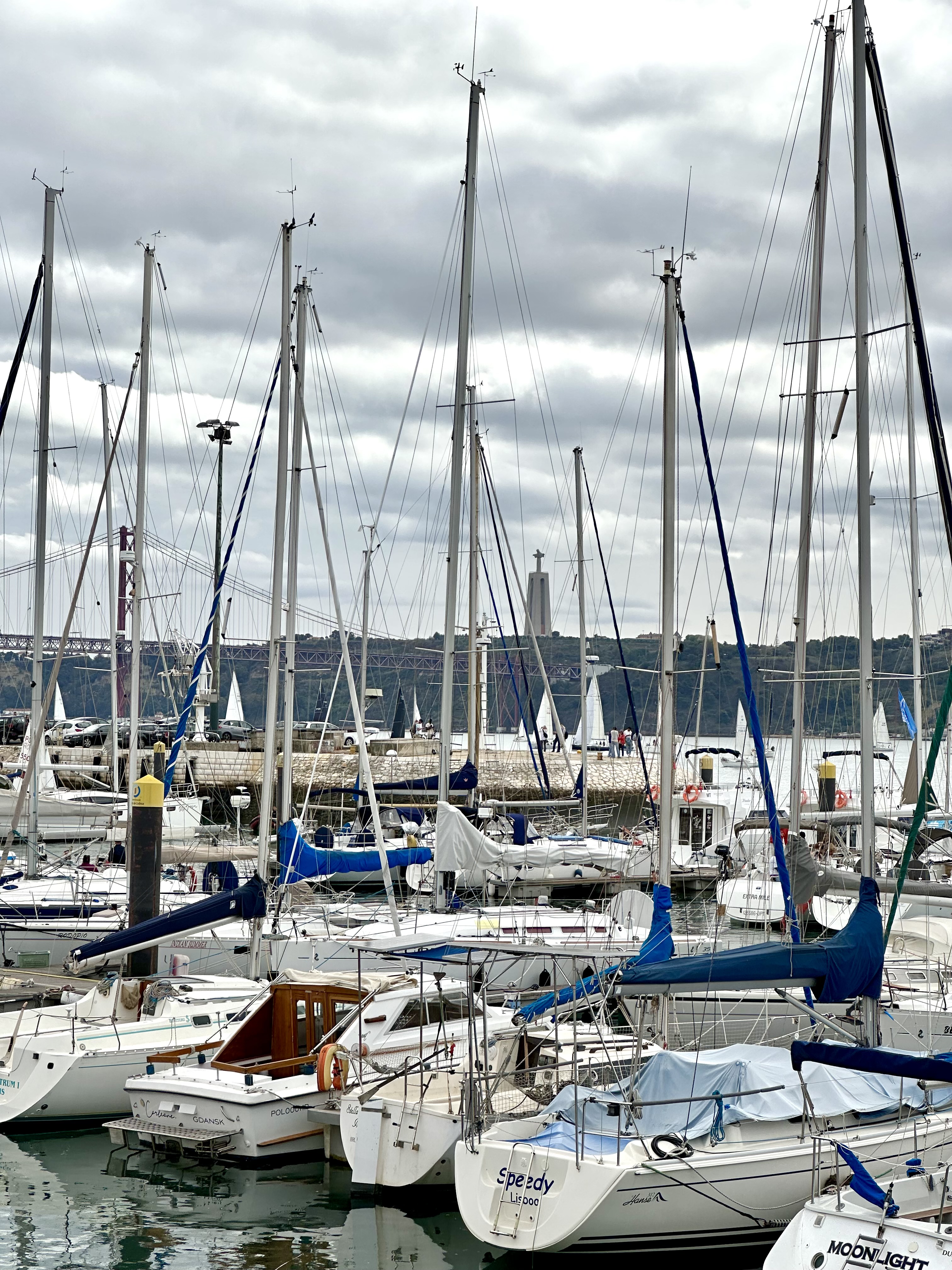
Fronting the river are the Torre De Belém (a 16th century fort from which Portuguese explorers left and returned), the Padrão Dos Descobrimentos (a monument to Portugal’s explorers), and several marinas with very nice boats indeed. Across the Tagus stands the Cristo Rei (Christ the King) monument, which is modeled on Rio De Janeiro’s Christ the Redeemer statue. On a Sunday, the river did a very good impression of the DC Beltway, but for sail boats.
After the ride back and a late lunch, we had our orientation for the river cruise. Following that, dinner (only a few short hours after lunch, but I was up for the challenge): roasted cod with onions, potatoes, green beans, and enough garlic to ward off any vampires that might drop in tonight. Eating in Lisbon isn’t exactly hardship duty!

 PuffinlessTravel