Experienced traveler that I am, I realize Normandy and Brugge are not in the British Isles. For purposes of this blog, though, I’ll adopt Celebrity Cruise’s geographical sleight of hand.
Normandy: June 23 – Normandy (D-Day Beaches). I’ve read a couple of shelves’ worth of books about World War II, but despite knowing full well what transpired on June 6, 1944 and the ensuing weeks, visiting the D-Day beaches and the American Military Cemetery in Colleville-sur-Mer proved a shockingly visceral experience, emotionally charged and awe-inspiring.
Le Havre, where our ship is docked, is roughly two hours by car from the westernmost point of the D-Day invasion (Utah Beach). Approaching the beaches, we wound along narrow lanes, passing muted green fields sprinkled with red poppies and white wildflowers, floating under a haze of blue-blossomed flax. The fields separated blink-and-they’re gone villages whose cobble-stoned, steeply-roofed houses probably have stood for centuries.

Pointe du Hoc, our first stop, is a windswept, scrub-covered expanse between Utah and Omaha beaches. Early in the morning of June 6, US Army Rangers stormed up 100 foot high clay cliffs in the face of scathing machine gun fire. Today, hulking, fraying German bunkers, gun emplacements, and pillboxes watch over the beach below, and craters left by Allied bombs are filled with tough grasses and tiny yellow wildflowers. People wander around, mostly in silence, some wearing caps commemorating their father’s or grandfather’s unit.
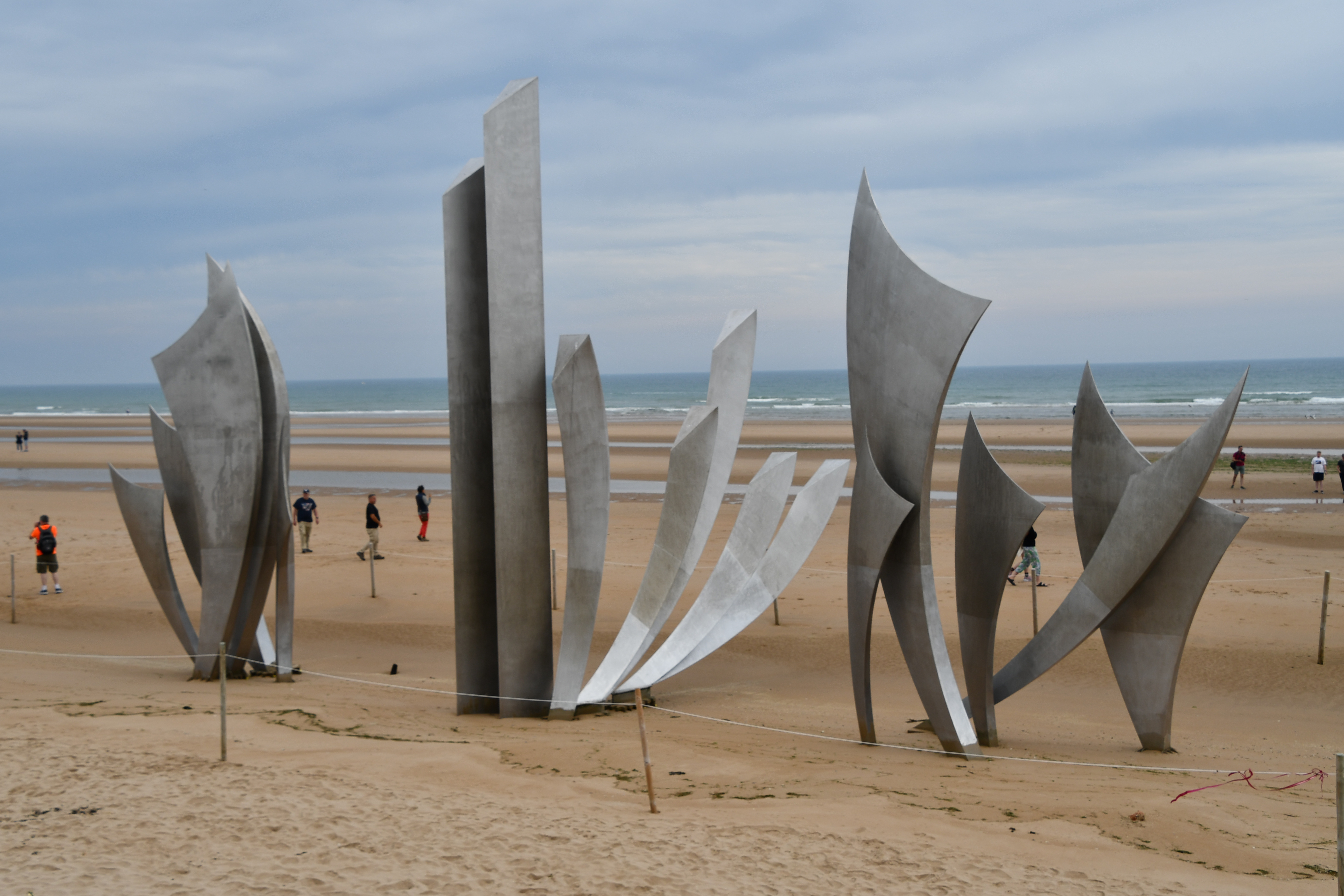
A bit farther east lies Omaha Beach, now a vacation spot of sweeping sand and gentle bluffs lined with tasteful second homes. But step onto the sand and it’s impossible to ignore the echoes from 75 years ago. The sheer serenity of the scene makes it that much more shocking to contemplate the aural and visual horrors accompanying the invasion. Two monuments commemorate the moment. A sloping “signal monument” is dedicated to the 1st Infantry Division, which was tasked with securing the beach. The second, more recent structure – the Monument of the Brave – is a swooping silvery assembly that powerfully evokes the succeeding waves of Allied forces, many falling but enough getting through to establish a beach head.
Still further east, the American Military Cemetery is a verdant field above Omaha Beach where thousands of gleaming marble crosses (and hundreds of Stars of David – the families of most Jewish soldiers killed in the invasion asked that their remains be returned home) root in mesmerizing rows. It is somber, potent, and a stern warning – may it be heeded – of the cost of allowing hatred and tribalism to run amok.

Continuing eastward, we stopped at Arromanches, where the remains of an artificial harbor built by the British (sunken caissons to break the waves and drunkenly-listing supply pontoons) stand watch a few dozen yards offshore from a beach teeming with sunbathers. The town itself is typically picturesque, though overrun with souvenir shops and over-priced restaurants. My favorite moment from the visit here is of two young children gleefully body-surfing in front of a derelict pontoon.
At dinner tonight, the couple at the next table asked if I had fun today. I didn’t. But I did come away moved, thankful, and enlightened.
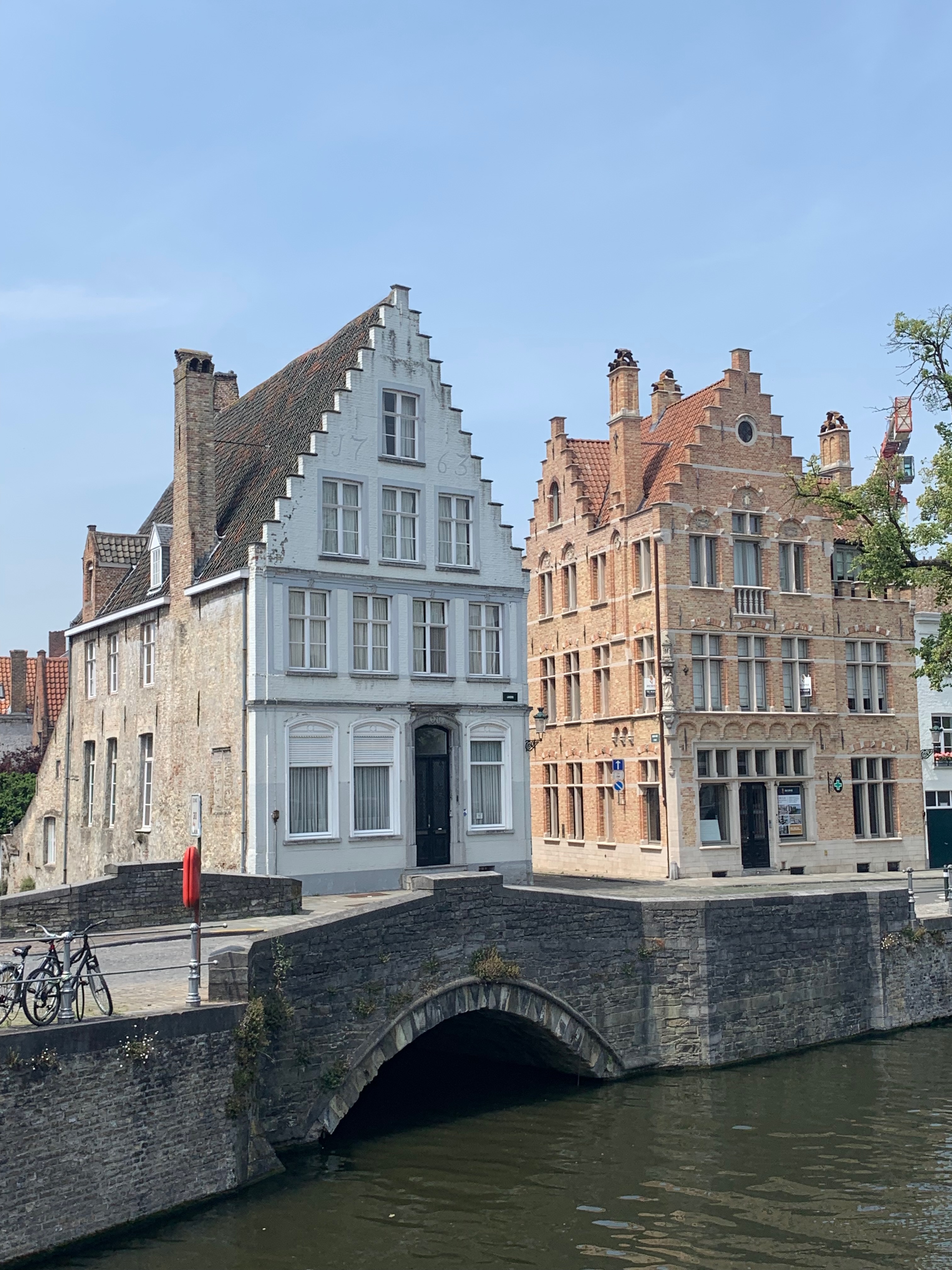
Brugge: June 25 – Our final stop! Today I took a bike trip around Brugge (pronounced Bru-ha, with a guttural “ha”) and over to the town of Damme (pronounced Damma). Much of Brugge dates back more than 600 years. It’s a charming city, with a network of narrow canals and centuries-old buildings with stairstep roof lines. (I’m sure there’s an architectural term for the style, but I haven’t a clue what it is). Most people get around on bike (only children wear helmets), using the paths paralleling the canals or peacefully sharing the road with cars. Brugge, apparently like Belgium as a whole, is a town of beer-drinkers and chocolate lovers, which may be why I saw so many comfortably plump people leisurely pedaling their way to and fro.

 PuffinlessTravel