Pity the port that follows Florence. Suffice it to say that Toulon (actually Seyne sur Mer) isn’t up to the job. Although not so distant geographically from Tuscany, this region of France (part of Provence) has an almost shockingly different vibe.
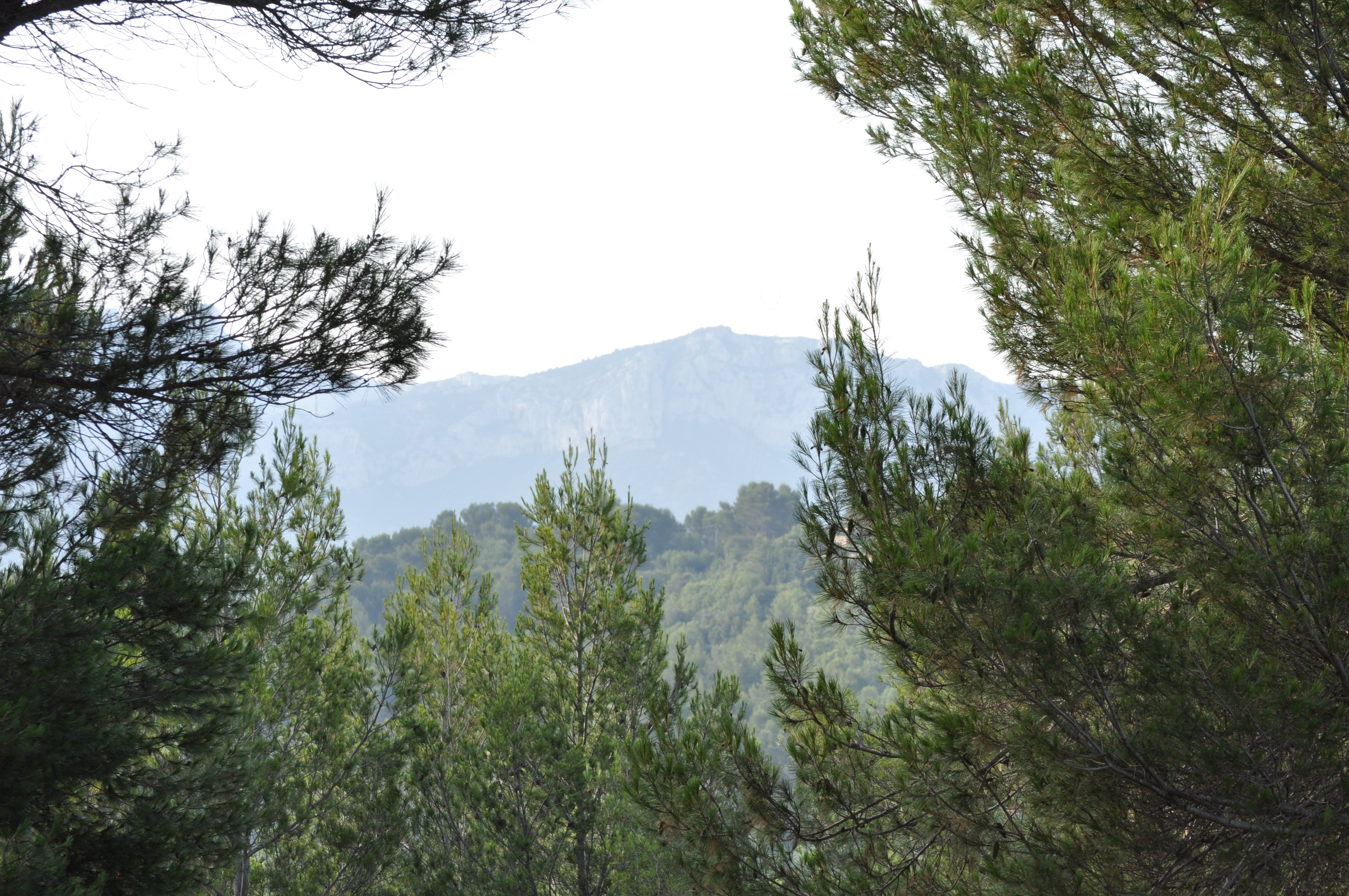
The change is physical and psychological: Tuscany is lush and welcoming while Provence is rocky, dry, and diffident. Admittedly, these are generalizations. But to me, quaint Aix-en-Provence and bustling Marseille (the two cities we visited on our tour) can’t hold a candle to the charm and history of the Italian ports.
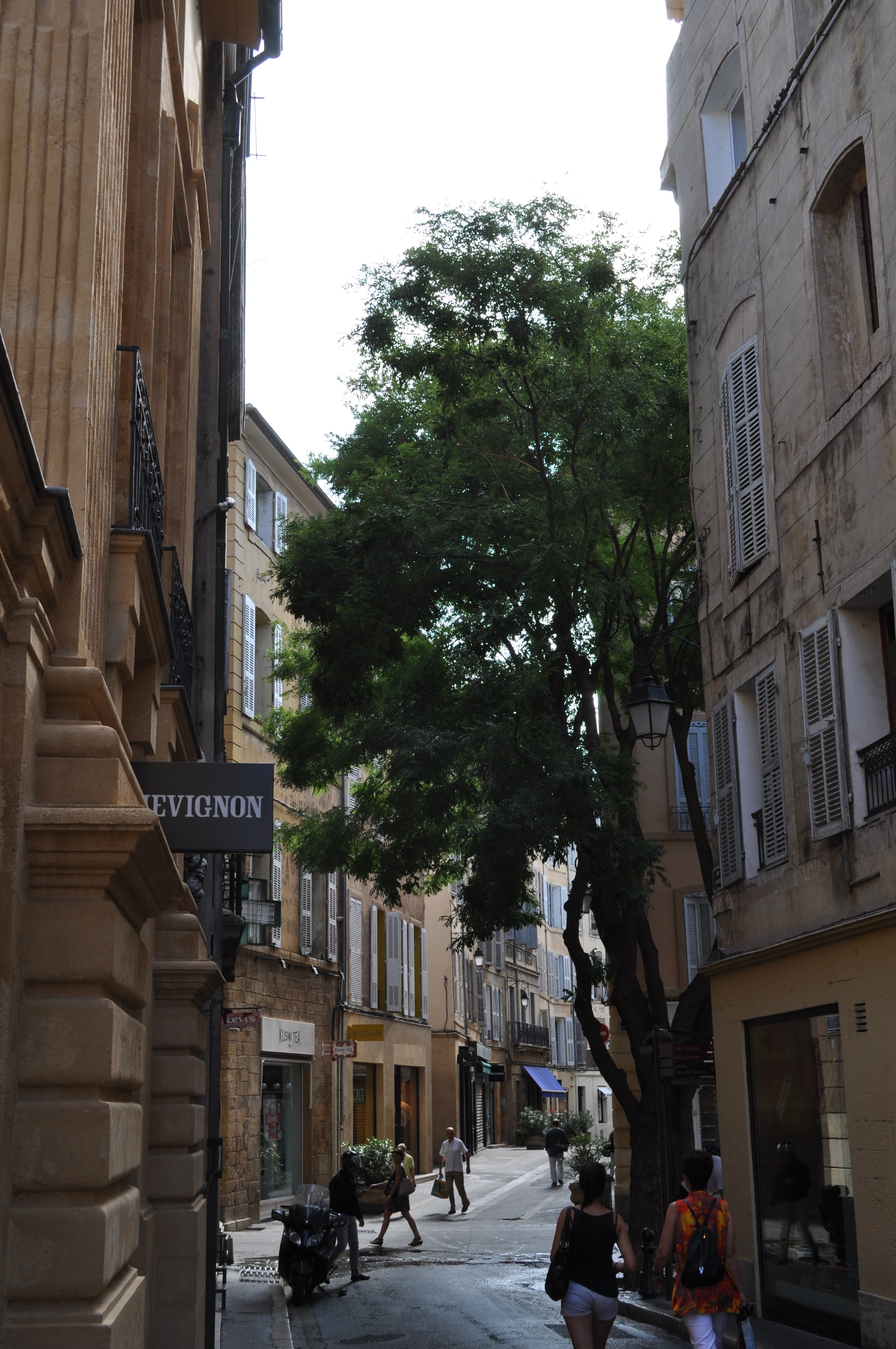
Granted, the old quarter of Aix-en-Provence is picturesque and not at all touristy. Seventeenth and eighteenth century buildings, many of which once were mansions, line the streets.
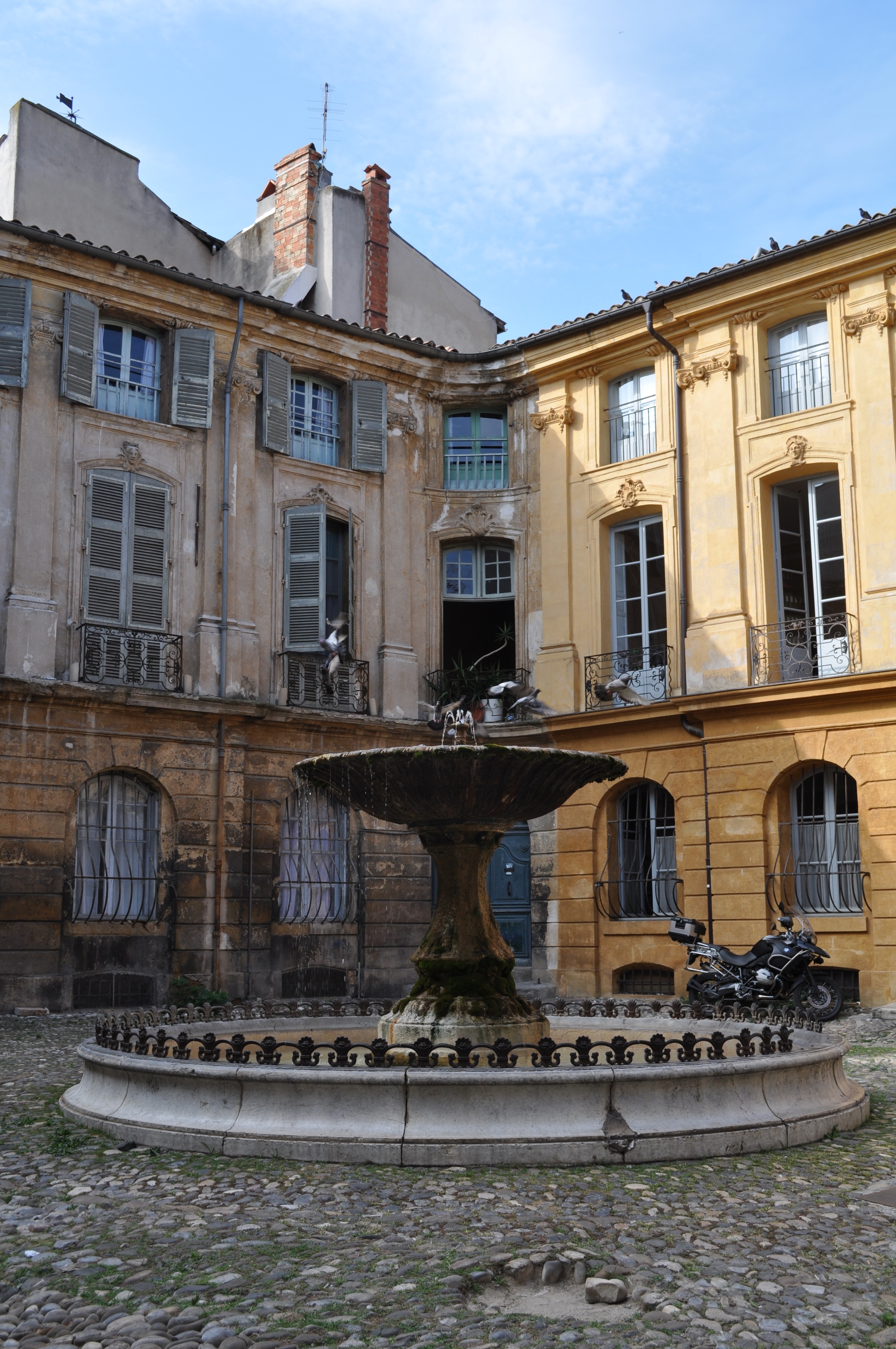
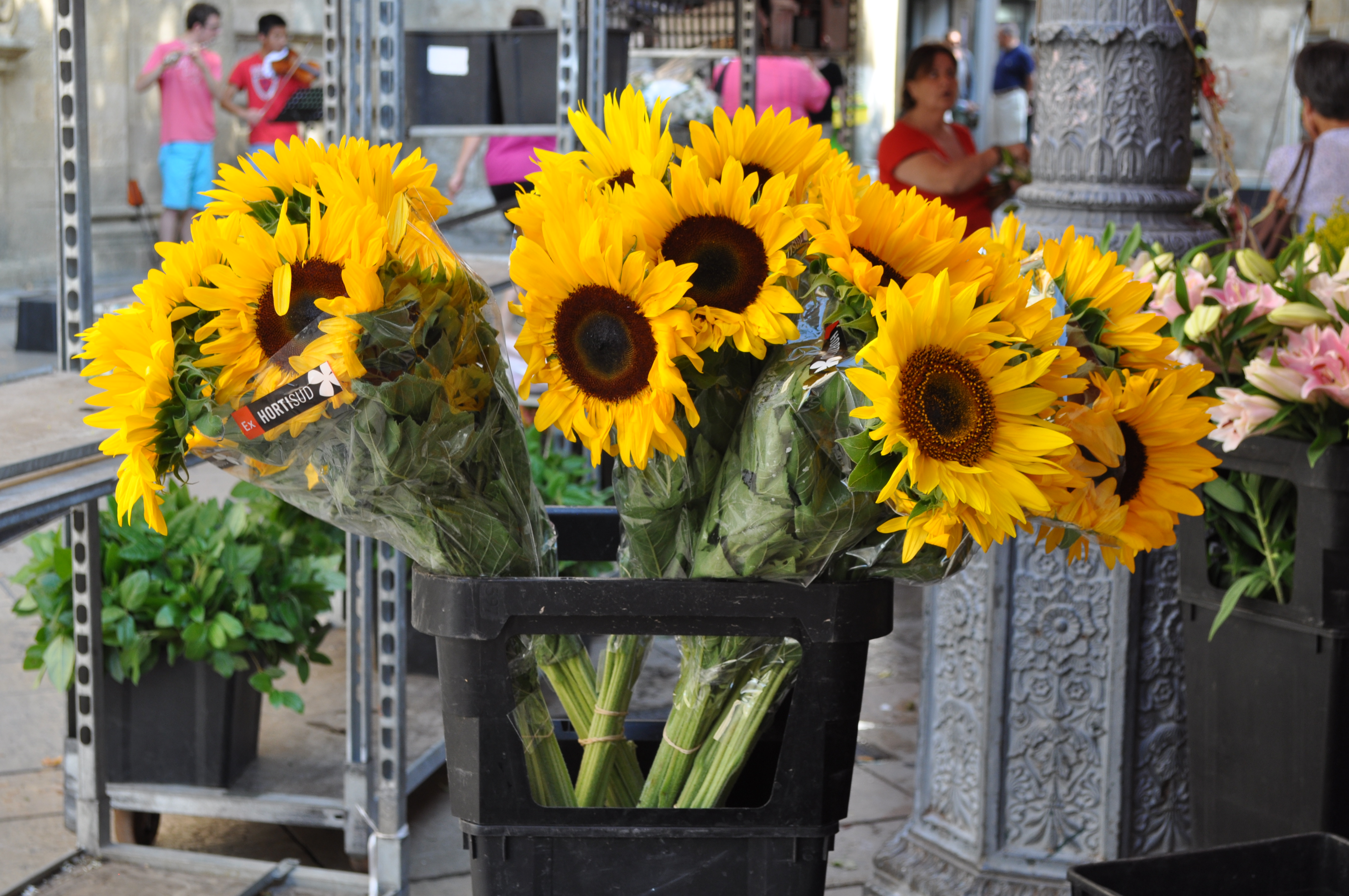
Outdoor markets offer luscious produce and brilliant flowers.
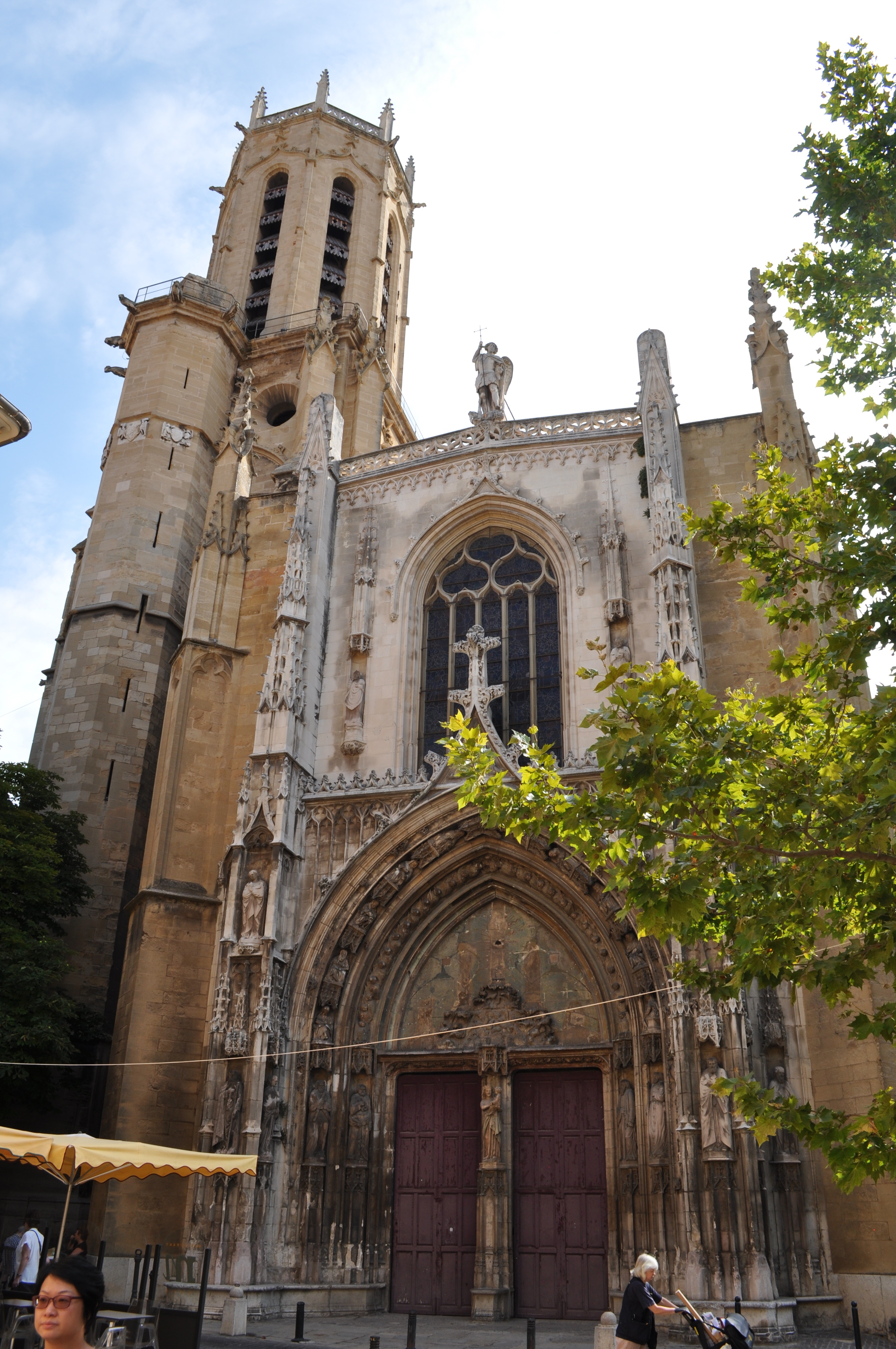
There’s also a beautiful old church, Cathedrale Saint-Sauveur.
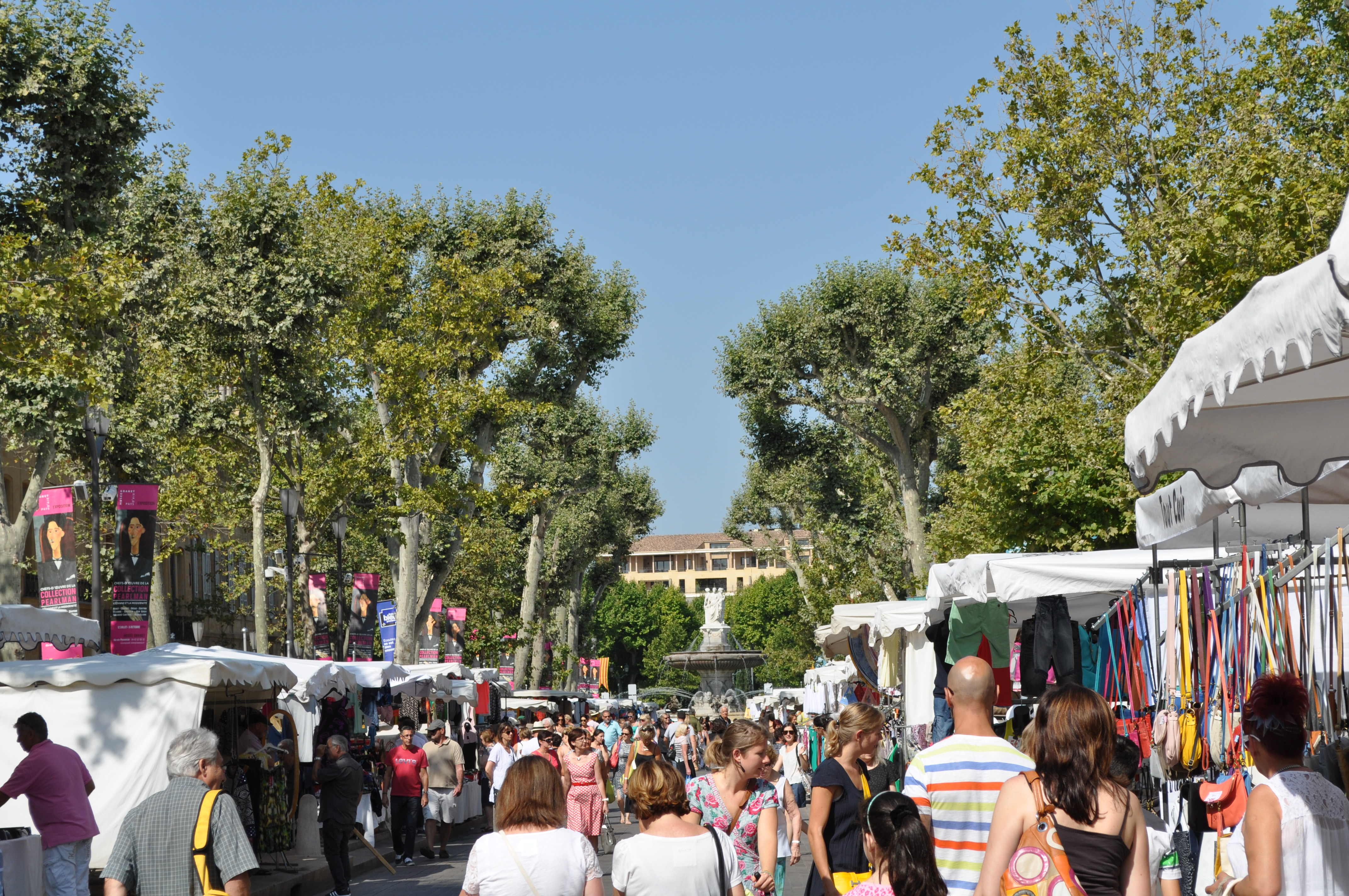
In contrast, the more modern part of Aix, while clean and bright, could be almost anywhere. When we visited, the main street (Cours Mirabeau), was occupied by a market where vendors sold shoes, purses, shoes, clothing, and more shoes. (Footwear must be particularly valued in this part of the Mediterranean; Marseille and Barcelona likewise seemed to have far more shoe stores than could be supported by a two-legged population.)
Marseille is a sprawling metropolis extending from the coast to the mountains. Even though it was settled 2600 years ago by the Greeks, there is little in the way of ruins. Most buildings date from the nineteenth century, and many weren’t erected until after World War II, when much of the downtown area was destroyed by German bombing. The architecture is pretty but unexceptional; the buildings’ interest lies principally in the ornate ironwork enclosing their balconies.
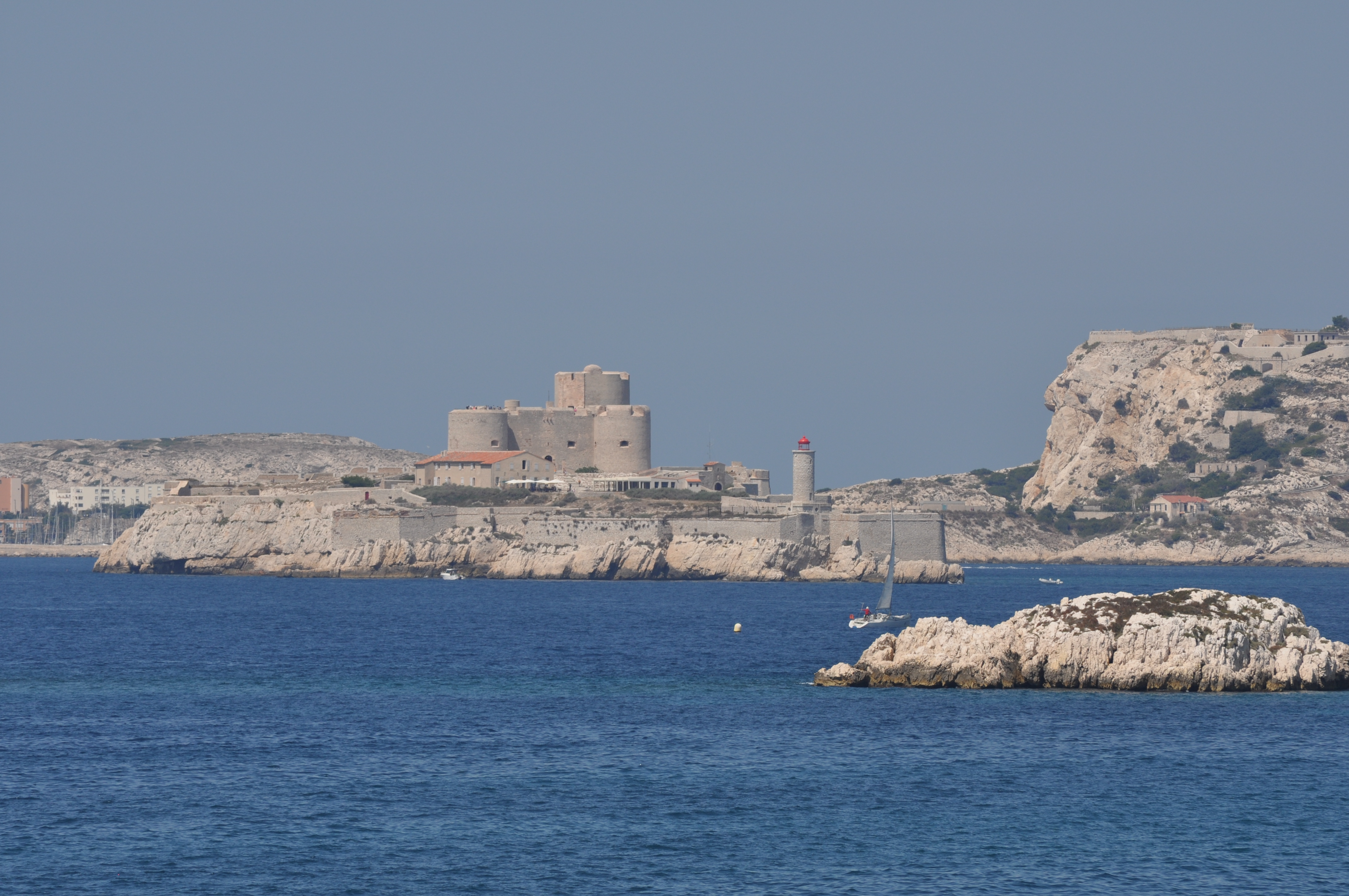
Our bus crept around the U-shaped Old Port, passing a fish market and hundreds of sail boats. There are several islands in Marseilles Bay; the fortress made famous in The Count of Monte Cristo hulks over one of them.
From the port, we climbed the Hill of the Guards to the Basilique Notre Dame de la Garde. This basilica dates to 1214.
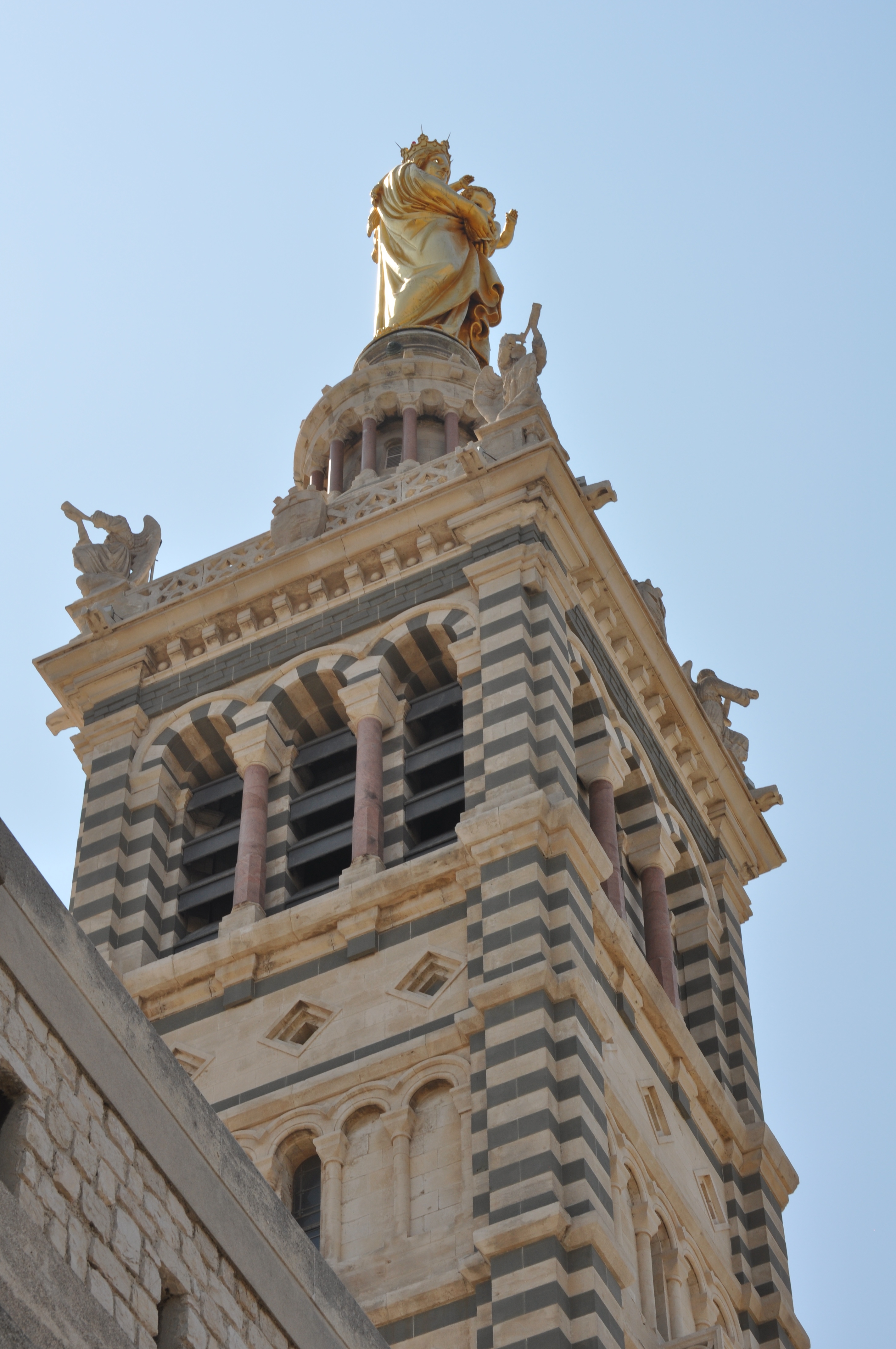
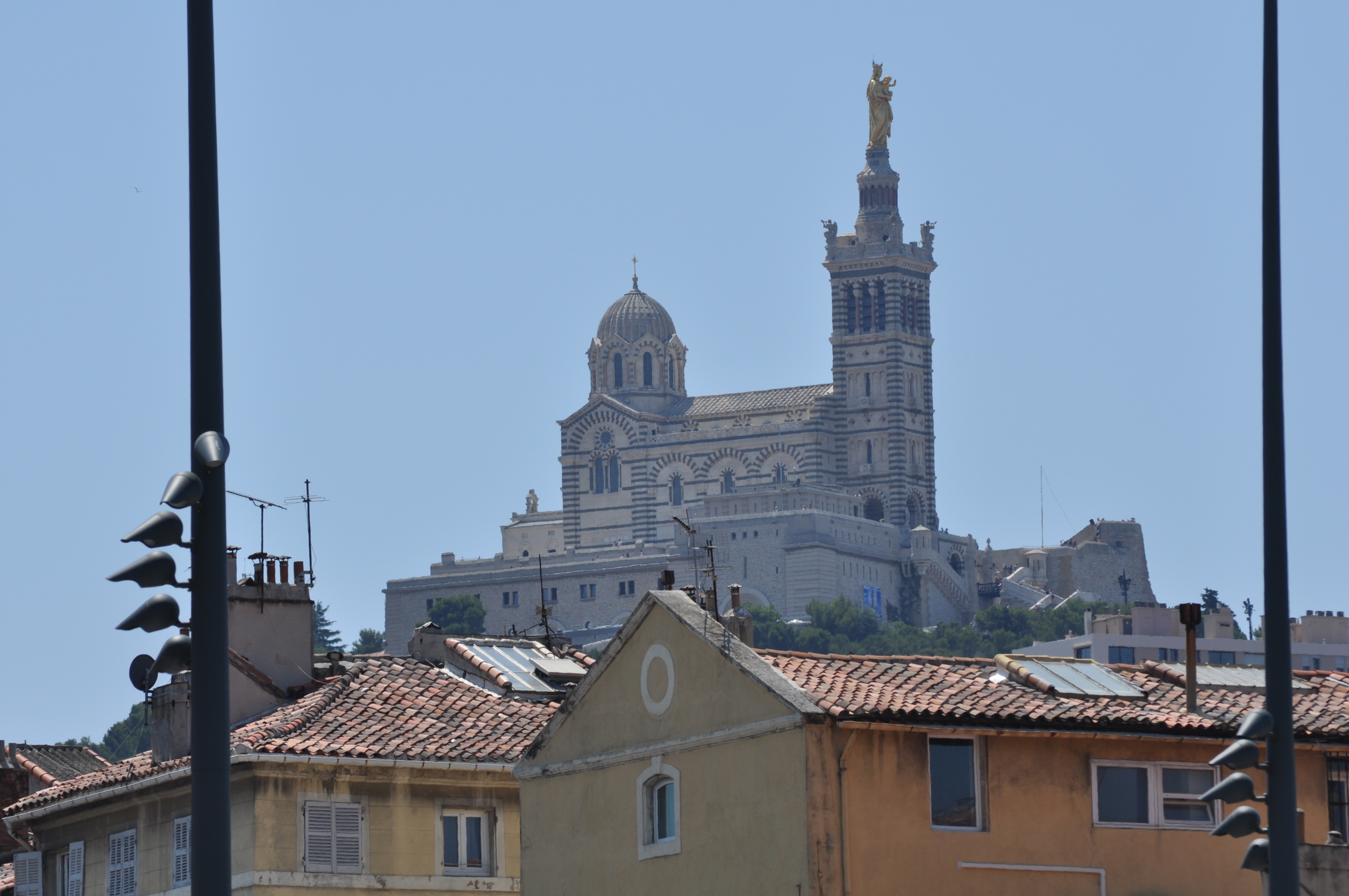
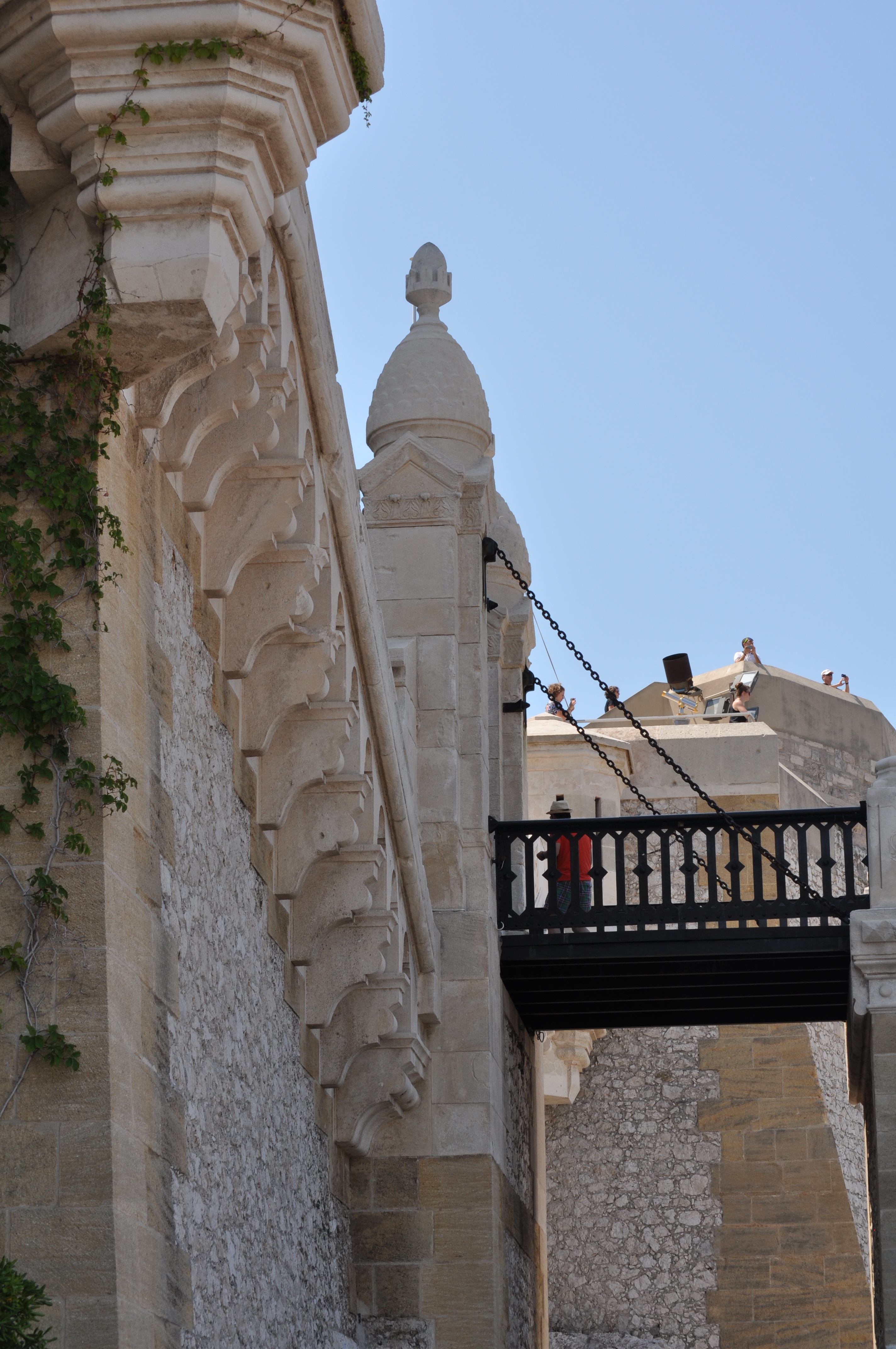
It’s gorgeous inside, but the real draw is the exterior walkway, which offers a 360-degree view of the coast, city, and mountains.
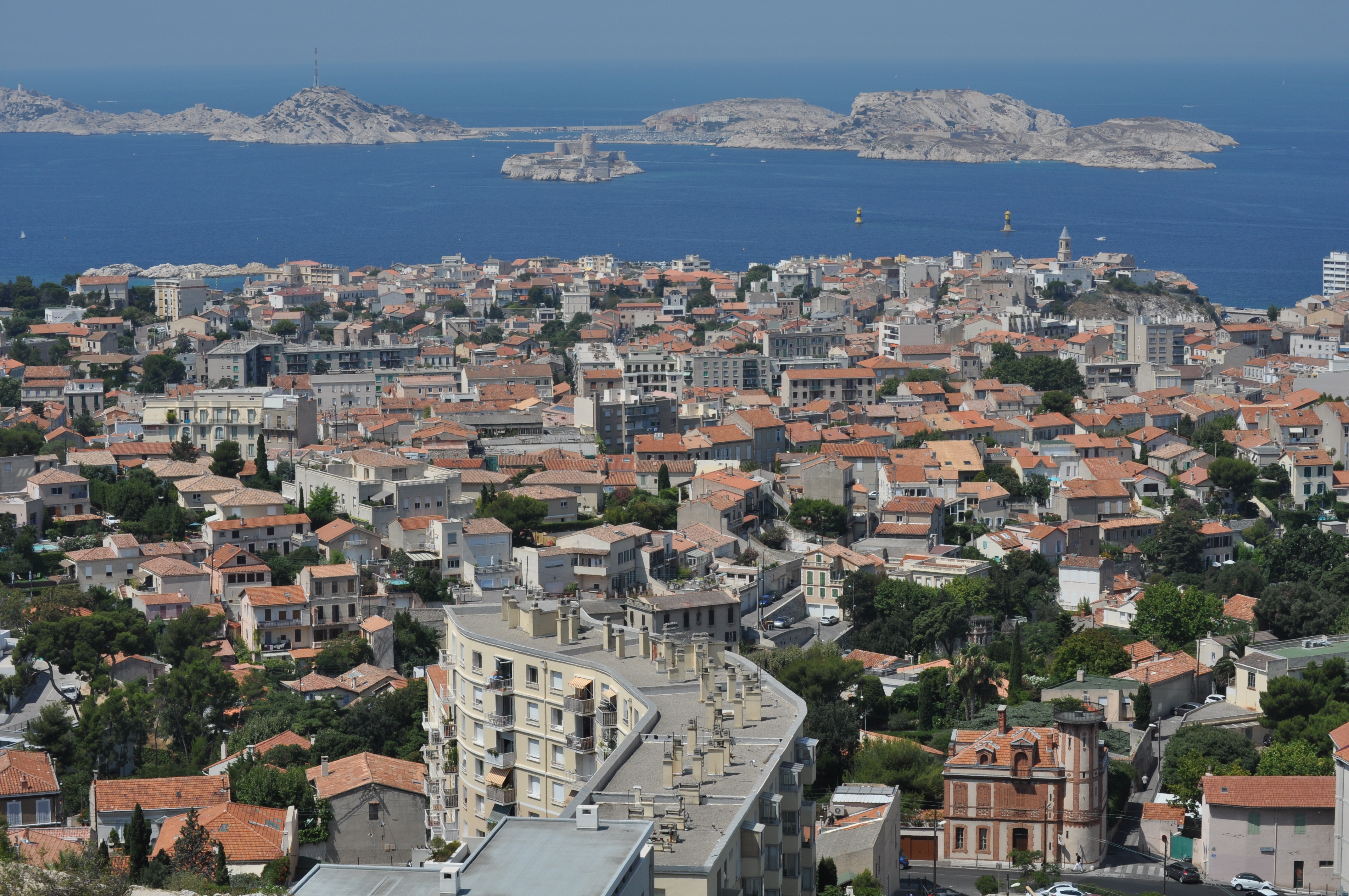
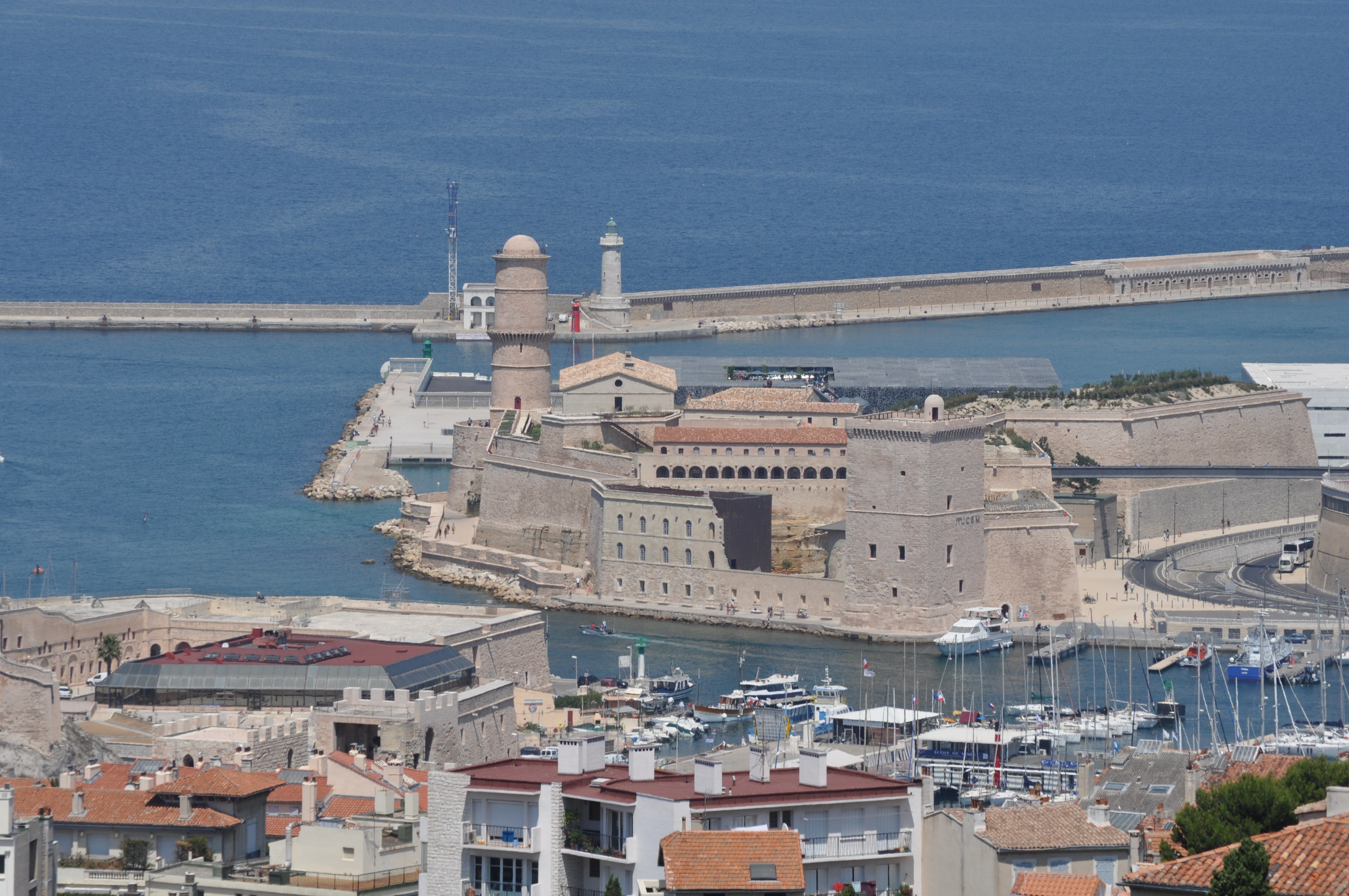
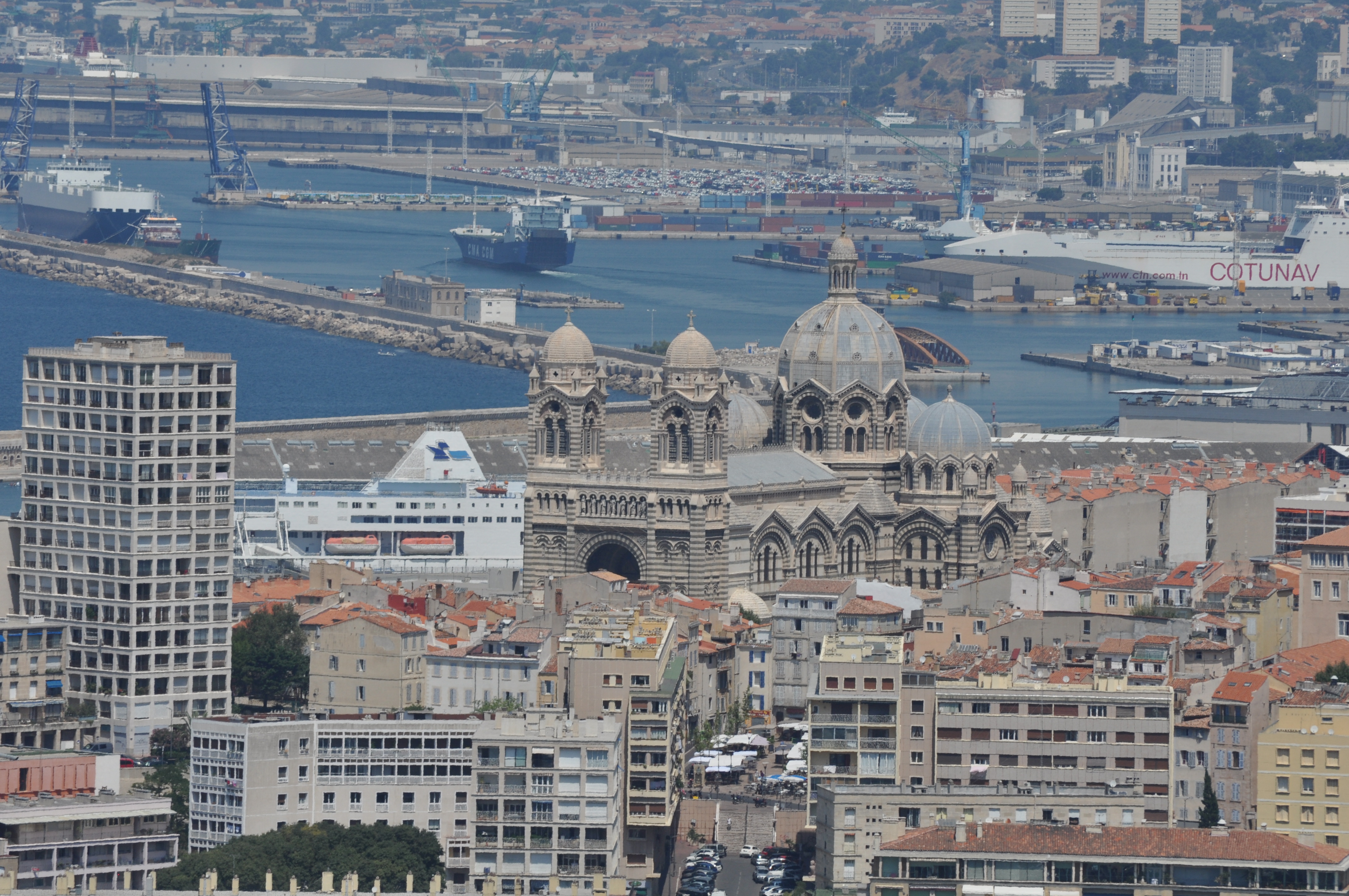
Toward the old port, there’s a beautiful vista of the twin forts guarding the harbor (Bas Fort Saint-Nicholas and Fort Saint-Jean) and a splendid Byzantine-style cathedral beyond Fort Saint-Jean (Cathedrale de la Major).
After the basilica, we wandered around downtown, passing dozens of shoe stores, patisseries, glaceries, and boulangeries. As with Aix, Marseille isn’t a tourist trap: the shops were filled with locals, and the shopkeepers neither cater to nor go out of their way to welcome visitors.

 PuffinlessTravel