Rome, they say, wasn’t built in a day, and it can’t be seen in a day either. We ping-ponged from highlight to highlight but barely scratched the surface of the Eternal City during our nearly 9-hour tour. From Rome’s port, Civitavecchia, we drove for an hour down a modern highway running through blandly scenic countryside: flat to rolling hills, corn fields and olive groves, rolled hay and the occasional cypress tree. We shared the road with pint-sized Fiats, Suzukis, Peugeots, Renaults, and Smart Cars. I saw two minivans and no SUVs, hardly surprising with gas costing ten dollars per gallon.

Our guide/driver, Mauro, insisted on being called Mike. He had lived in the US for 18 years while working for an Italian tour company, and he plans to retire soon to San Diego out of love for the States and despair over Italian taxes. Leaving the highway, Mike took us into Rome over a road first built two millennia ago. Not only does the road remain in use today, it runs alongside an ancient, still operational aqueduct.
Our tour began at the Pantheon, also known as the Basilica Santa Maria Ad Martyres. Dating back to 27 BCE and rebuilt around 150 years later, the Pantheon is an engineering miracle. Its designers constructed a precisely circular dome whose skylight is illuminated from directly overhead on the summer solstice.
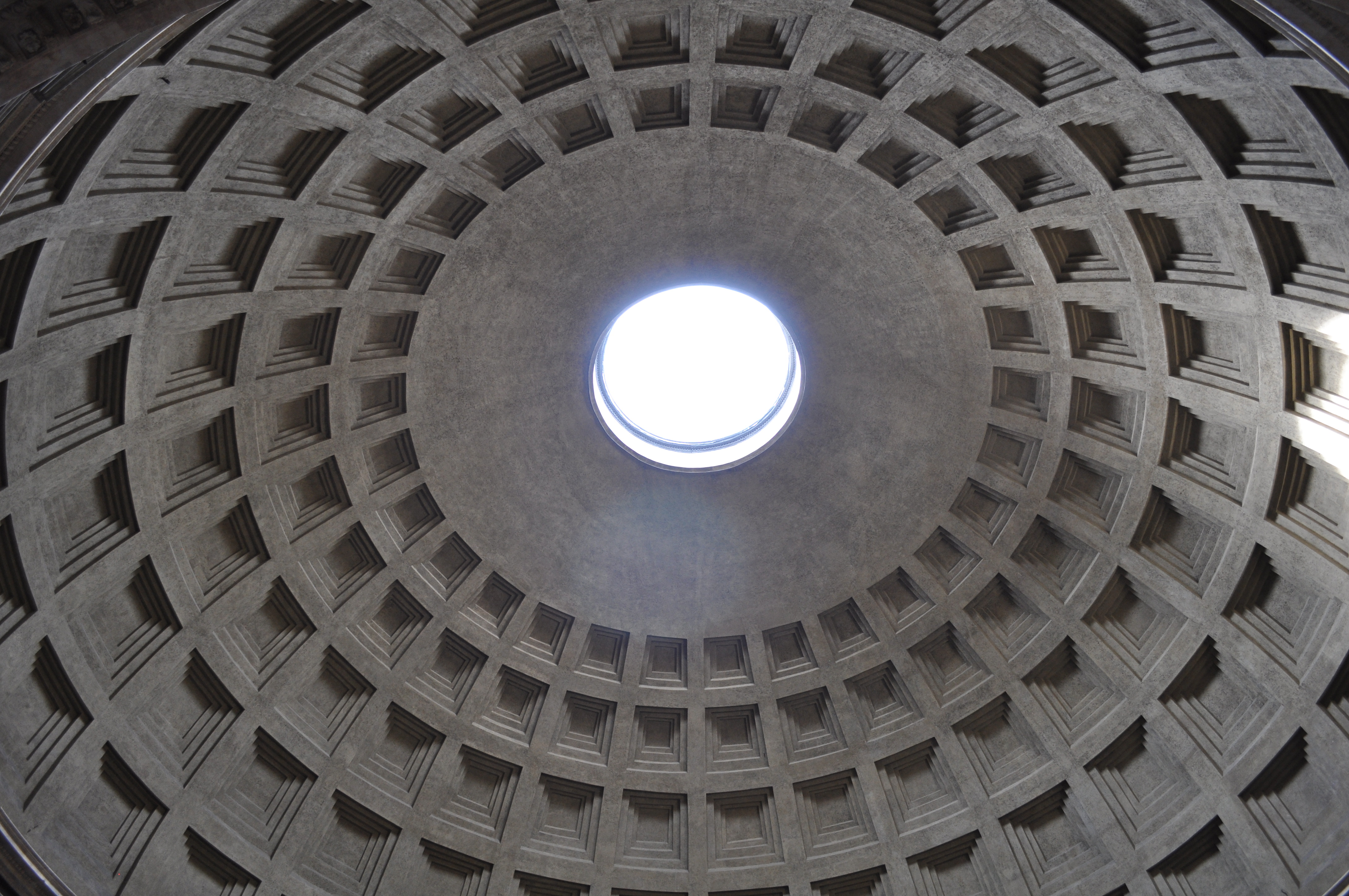
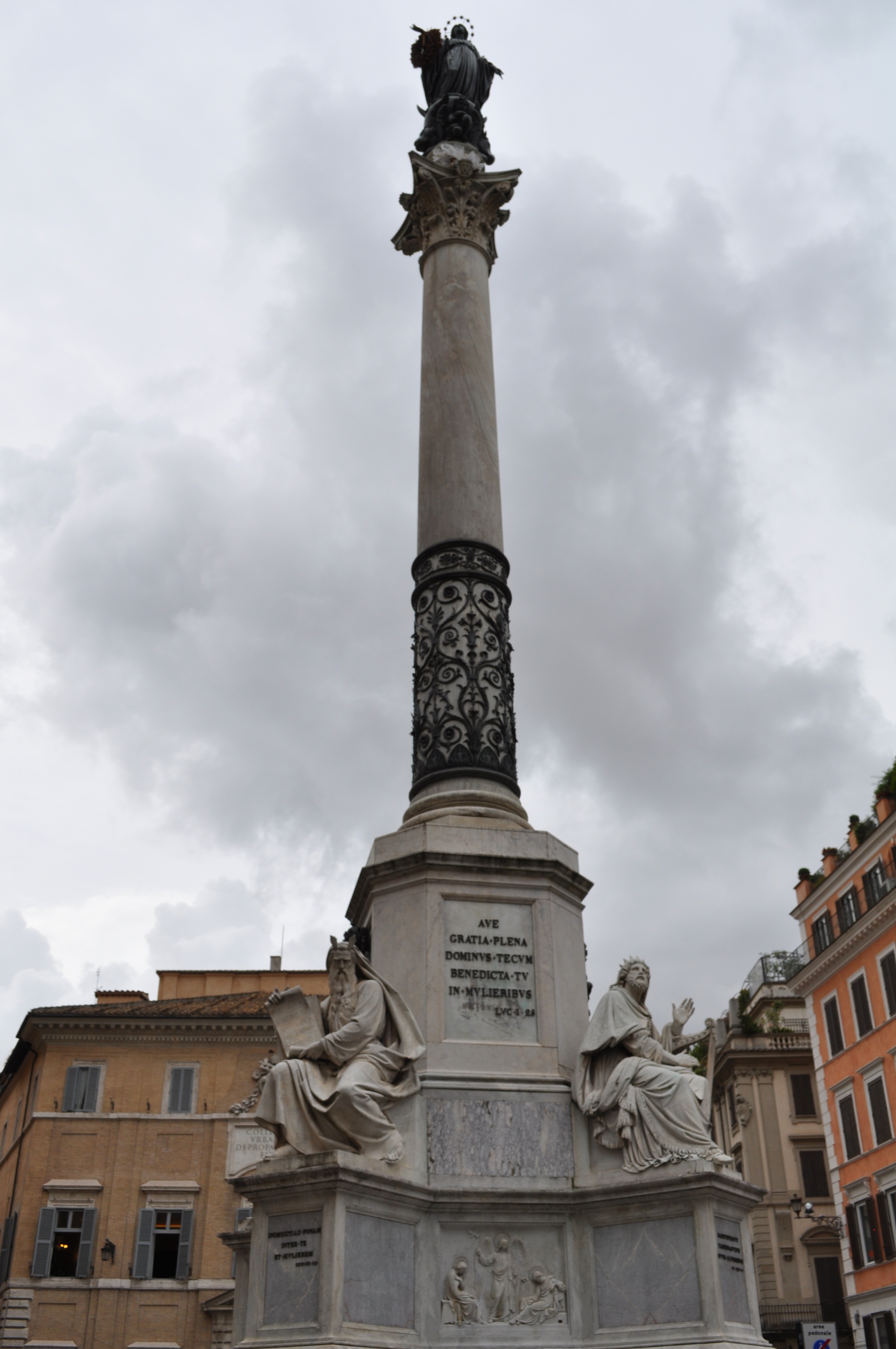
While once again known as the Pantheon, its alternate name represents the Roman practice, post-Constantine, of asserting the Church’s dominion over those pre-existing (pagan) religious edifices that they didn’t destroy. Another prime example stands in the square outside the Pantheon: after Rome’s conversion to Christianity, the Marcus Aurelius column (an elegant travertine structure) was retrofitted with a statue of St. Peter.
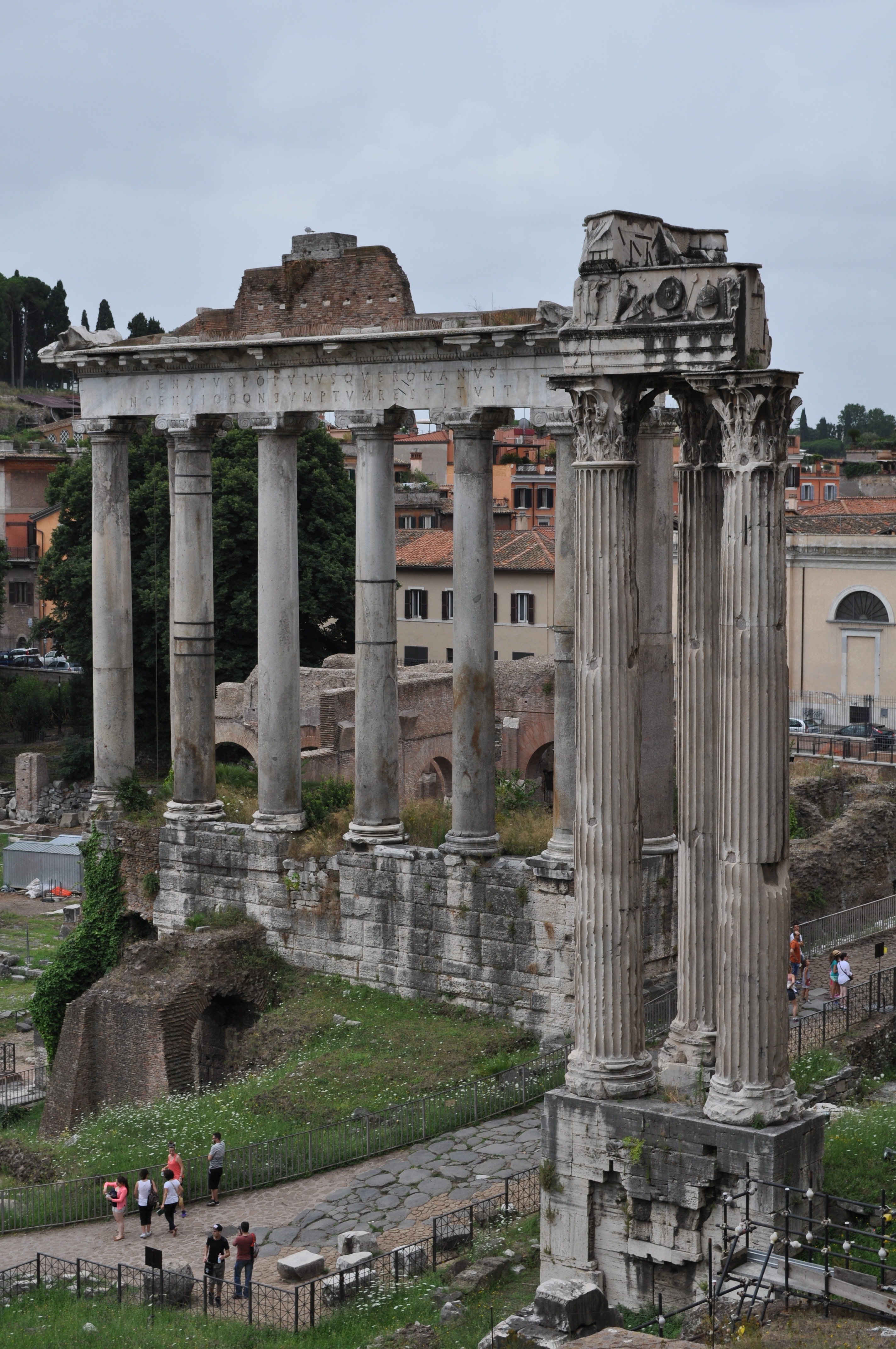
From the Pantheon, we drove down streets lined with elegant 15th and 16th century buildings, stately churches, and more than a few McDonalds before stopping for a photo opportunity near the City Parliament building. Behind this building are acres of Roman ruins in the Forum area.
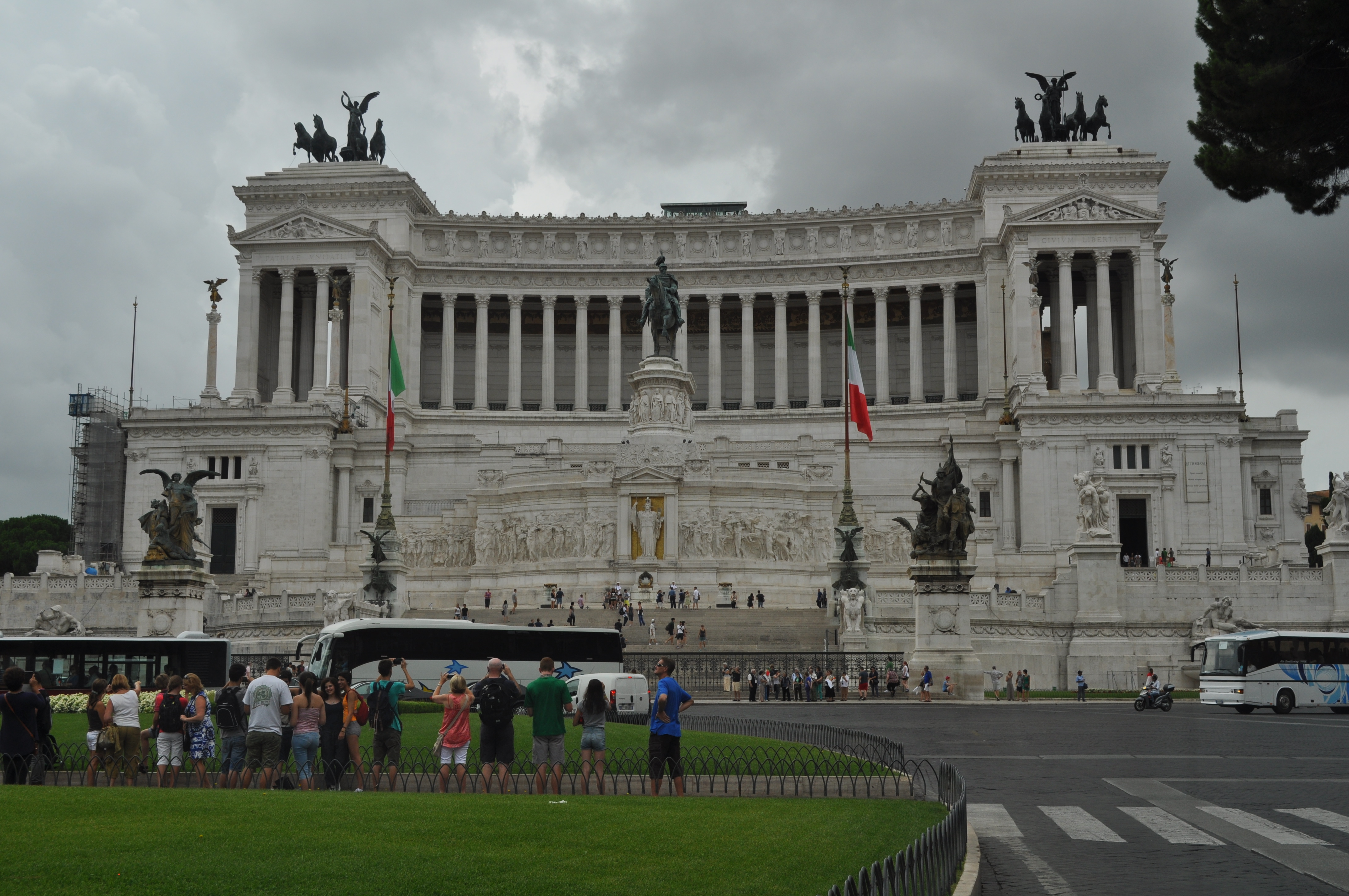
This area also abuts the gleaming, massive Vittoriano monument (completed in 1921), disparagingly called the “wedding cake.” Between the Vittoriano monument and the City Parliament building are the ruins of what our guide called the world’s first condominium (once again dating back more than two millennia) and the Ara Celli church.
Under increasingly gloomy skies, we joined the throngs touring the Colosseum. Fortunately we had advance reservations; we were able to skip the quarter-mile line of people seeking same-day tickets.
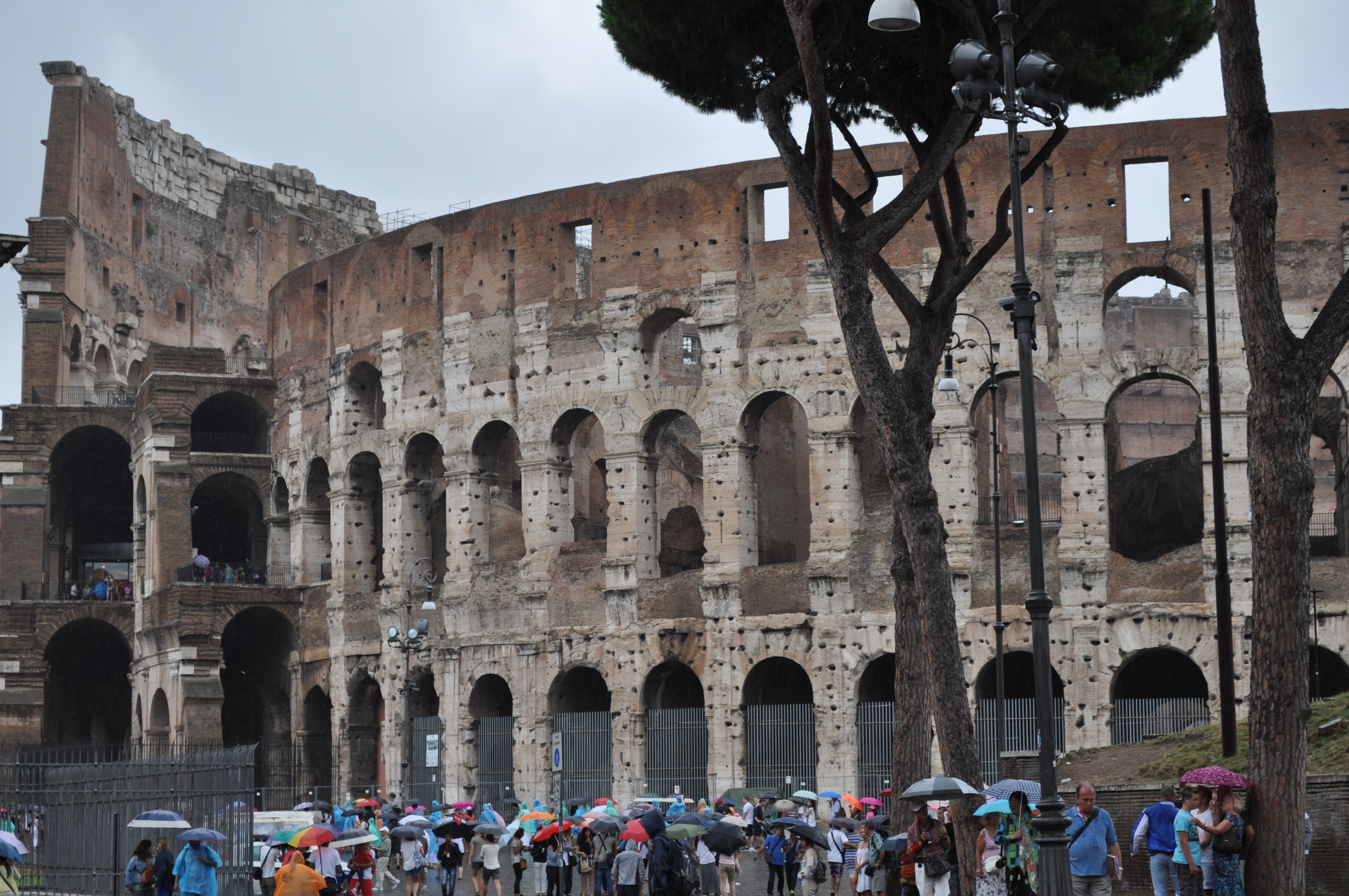
The Colosseum lives up to its name. It’s immense and imposing, and one can almost hear the bloodthirsty crowds cheering the deaths of thousands of people and millions of animals over the course of the centuries. As we reached the highest concourse, we were greeted by an enormous, reverberating thunderclap followed by an epic rainstorm that flooded the streets and continued undiminished for nearly an hour and a half.

We dashed into a restaurant called Insalata Ricca for lunch: mixed Bruschetta (tapenade, eggplant, artichoke, smoked salmon, sesame, walnuts and creamy cheese) and, of course, pizza. Italian pizza has a thinner crust than New York-style pizza (it’s more like the pizza in New Haven, or I guess New Haven pizza is closer to Italian pizza) and uses less sauce and cheese than American pizza. An individual pie is around 12 inches in diameter, but it’s no more filling than two slices of pizza in the States and has almost no grease. At any rate, the pie was delicious and our meal – lunch for 8 including ½ liter of wine, 6 pizzas, a calzone, sodas, and bottled water, came to only 78 Euros (around 110 dollars).
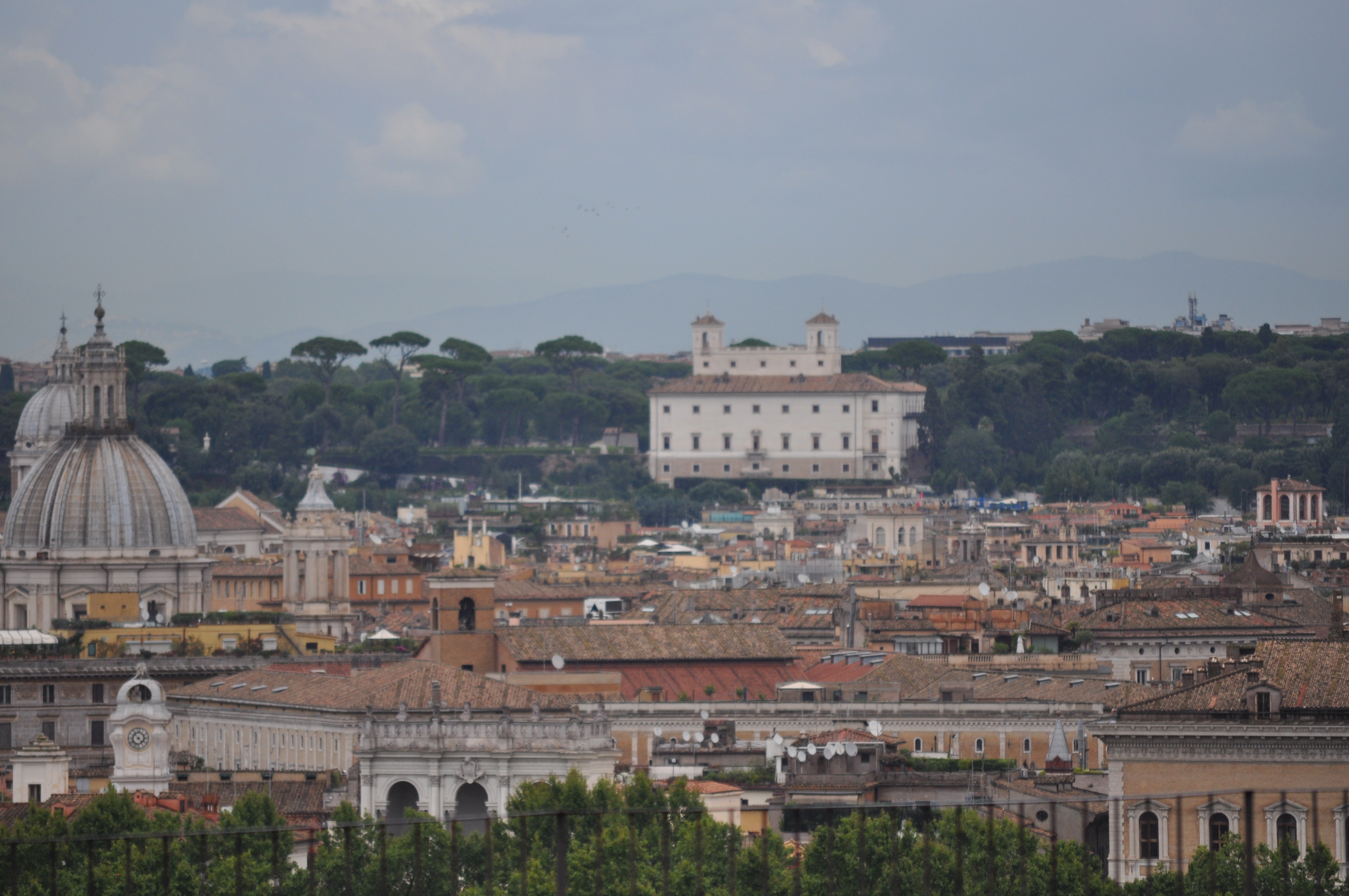
After lunch we visited the Paula fountain, which dates back to 1612 and offers terrific views of the city. The more famous (but less authentically Roman, according to our guide) Trevi fountain is out of commission for up to two years after suffering damage from a rare ice storm.
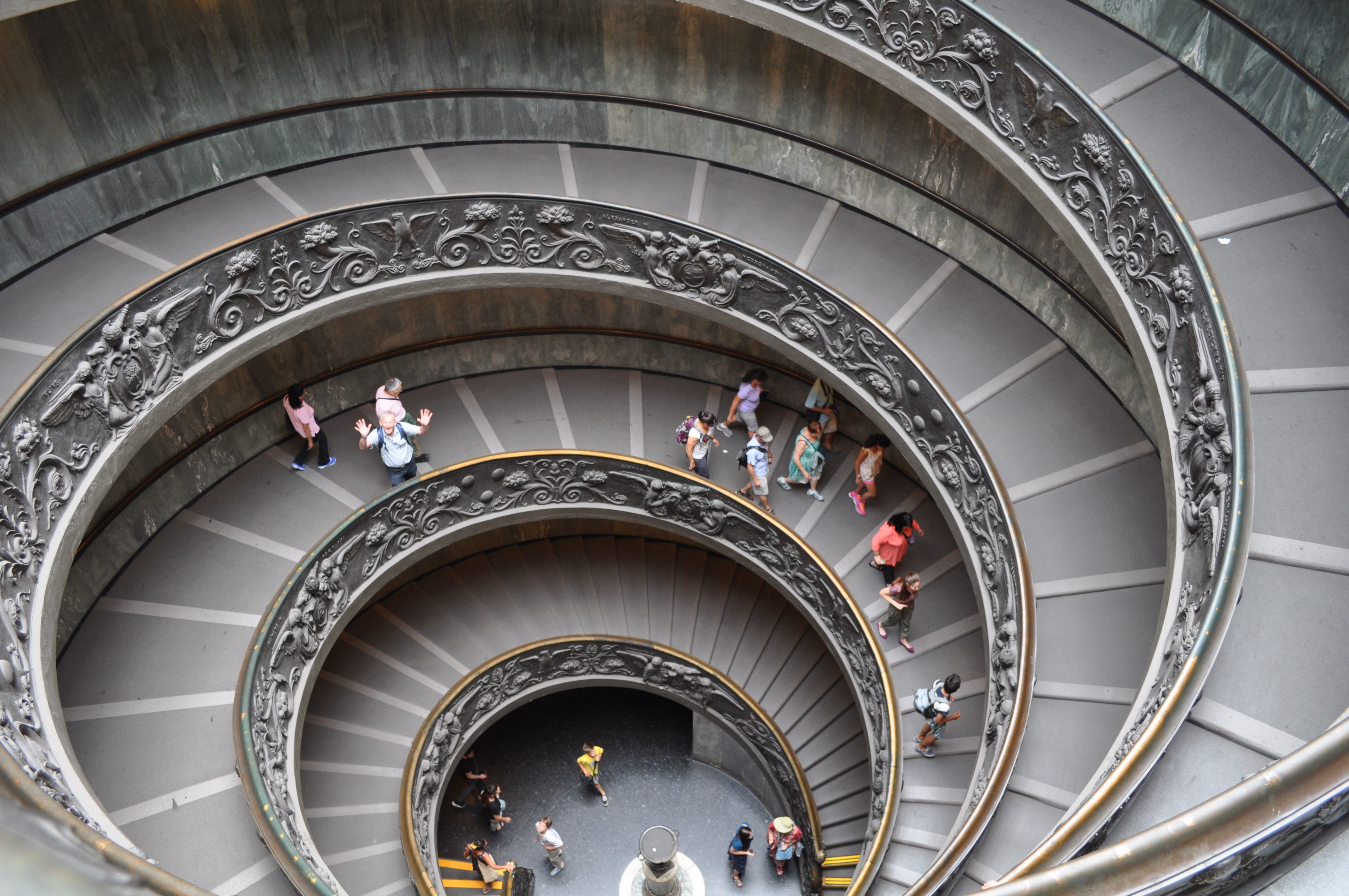
Our final stop was the Vatican. Once again, advance reservations are a must. The entrance is surprisingly modern. After negotiating the ticket line, escalators bring visitors to a large gift shop (the first of many throughout the Vatican complex) guarding the entrance to the Vatican Museum. The Museum is enormous, and we were able to visit only the three galleries leading to the Sistine Chapel – two of which had their own gift shops mid-gallery, which was a bit off-putting even to someone who’s not at all religious, let alone Catholic.
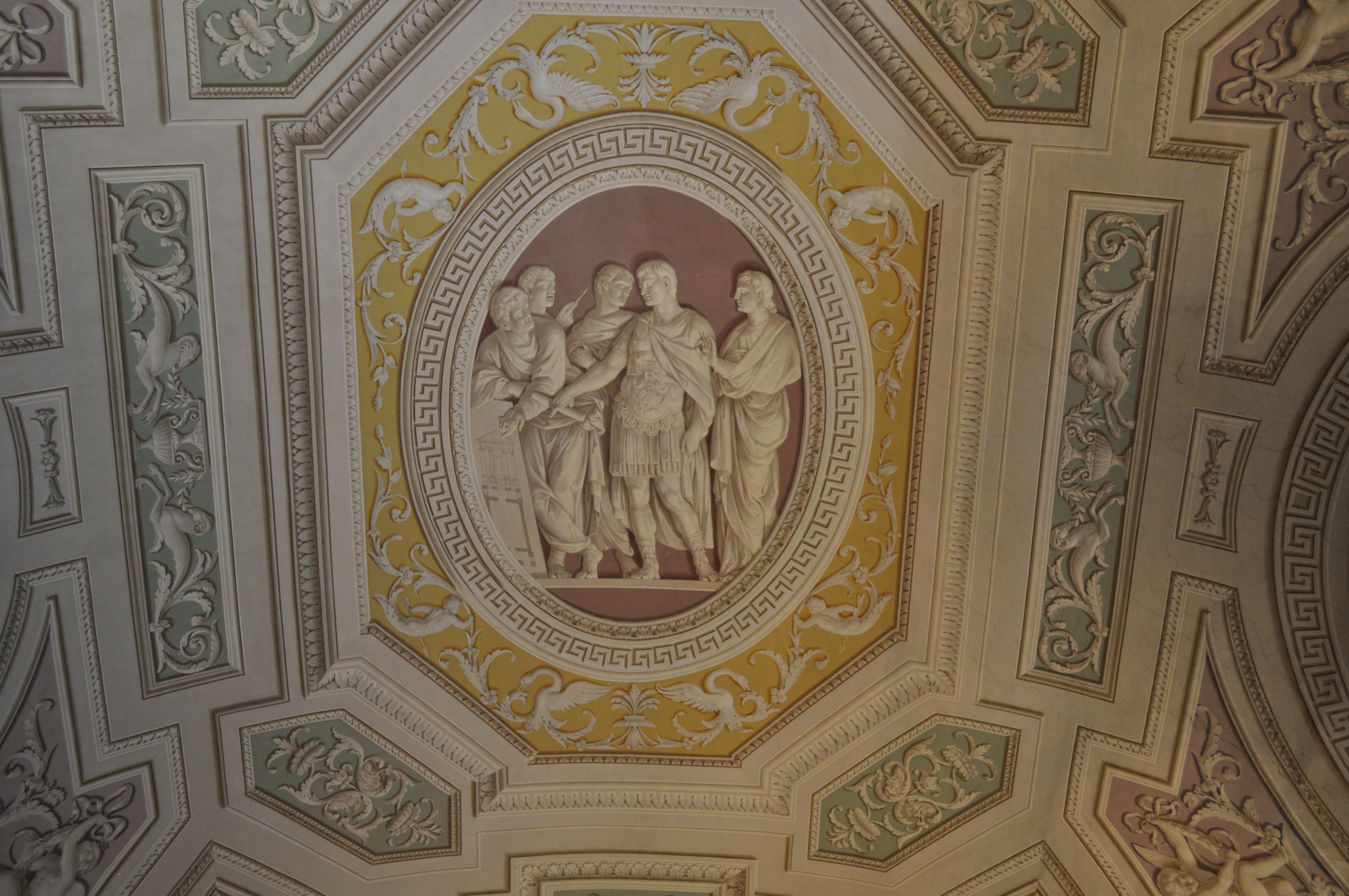
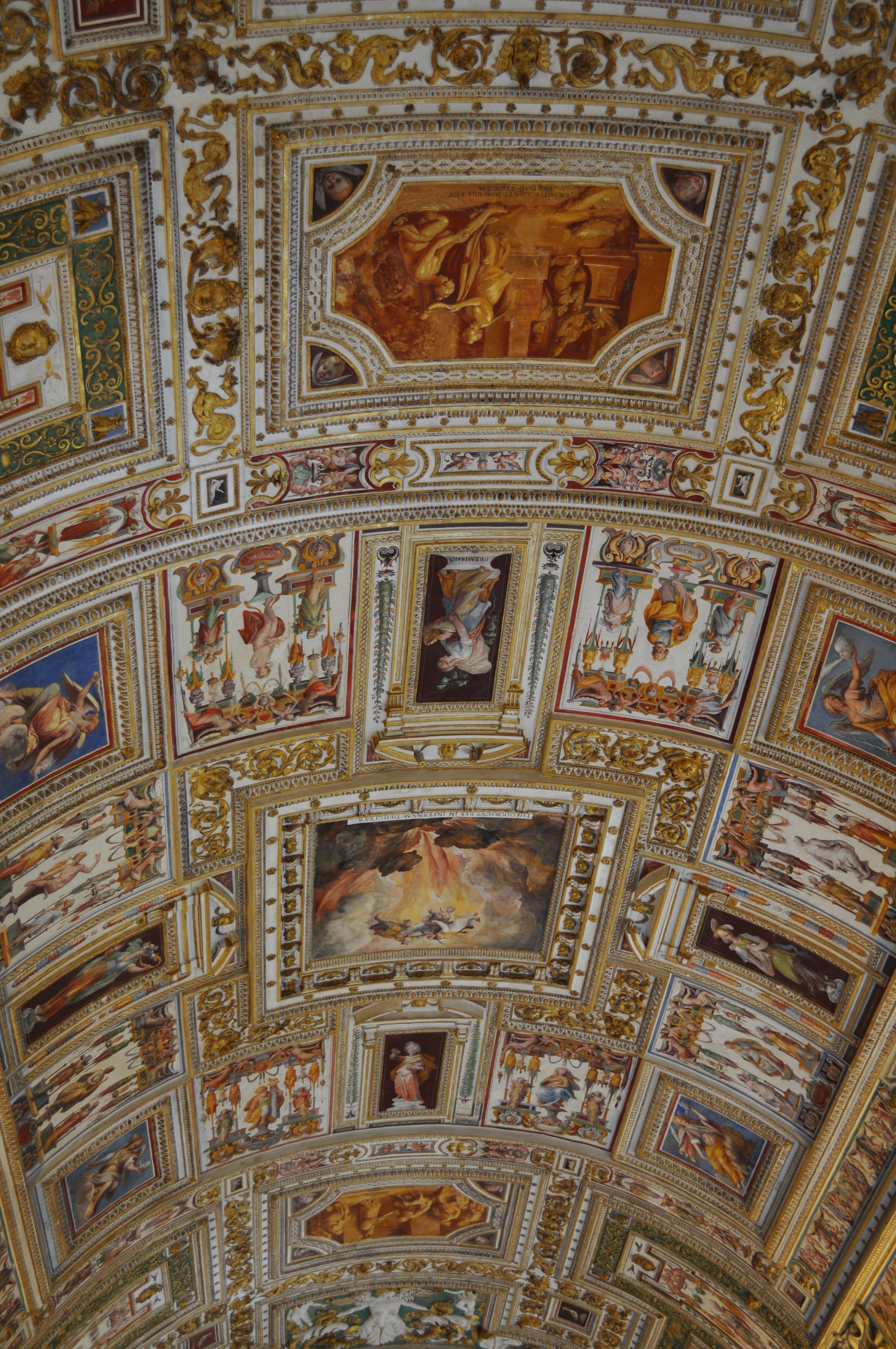
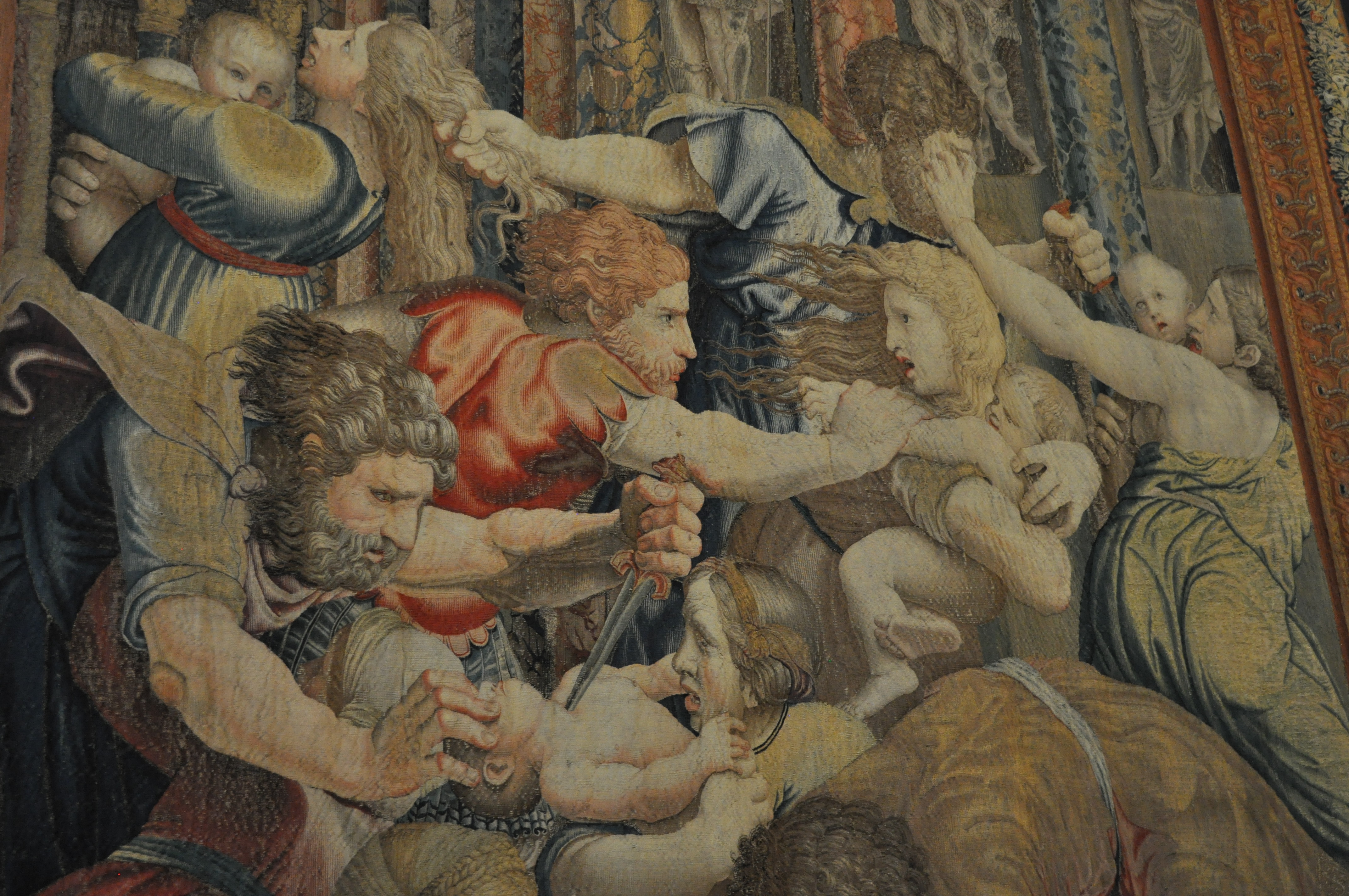
The Candelabra and Tapestry galleries and the Map Room are filled with gorgeous paintings, wall hangings, and frescoes. The tapestries are particularly impressive; their creators captured scenes of great emotional impact with wool and dye.

The Map Room is fascinating, with depictions of all the regions of Italy, sometimes in whimsical detail (including, for example, Hannibal’s elephants). The ceilings in the galleries appear to be three-dimensional reliefs, but they are actually painted; the illusion is masterful.
In truth, I enjoyed the galleries more than the Sistine Chapel. Entering the Chapel involved waiting in a long, unruly line. Inside, the Chapel is dark and jam-packed with tourists. The art is undeniably beautiful, and Michelangelo’s masterpiece is not only stirring but a remarkable testament to the physical sacrifice he must have endured. Unfortunately, the crowds markedly diminish the overall experience.
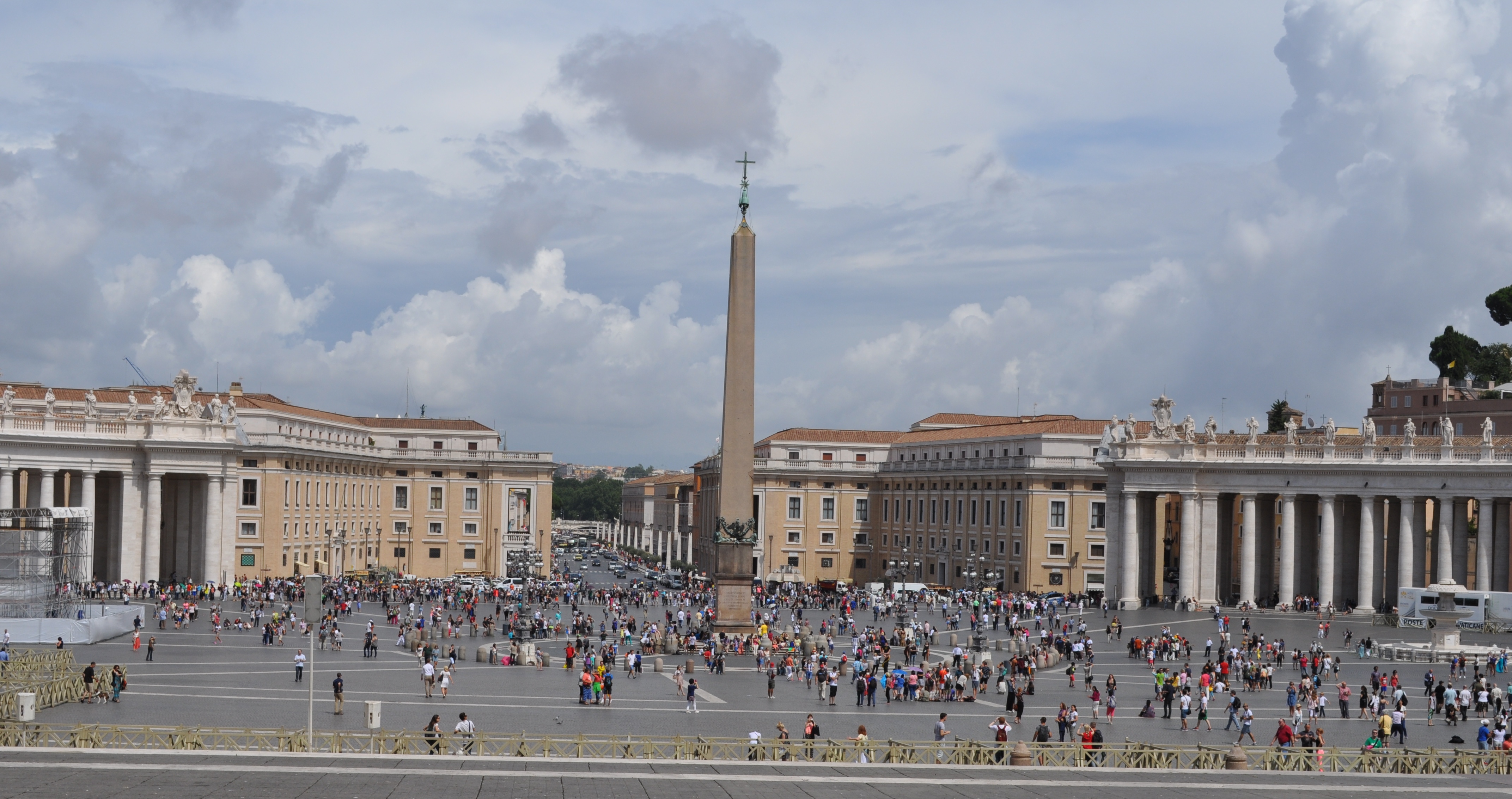
After exiting the Sistine Chapel, we took pictures of St. Peter’s square and then toured St Peter’s basilica.
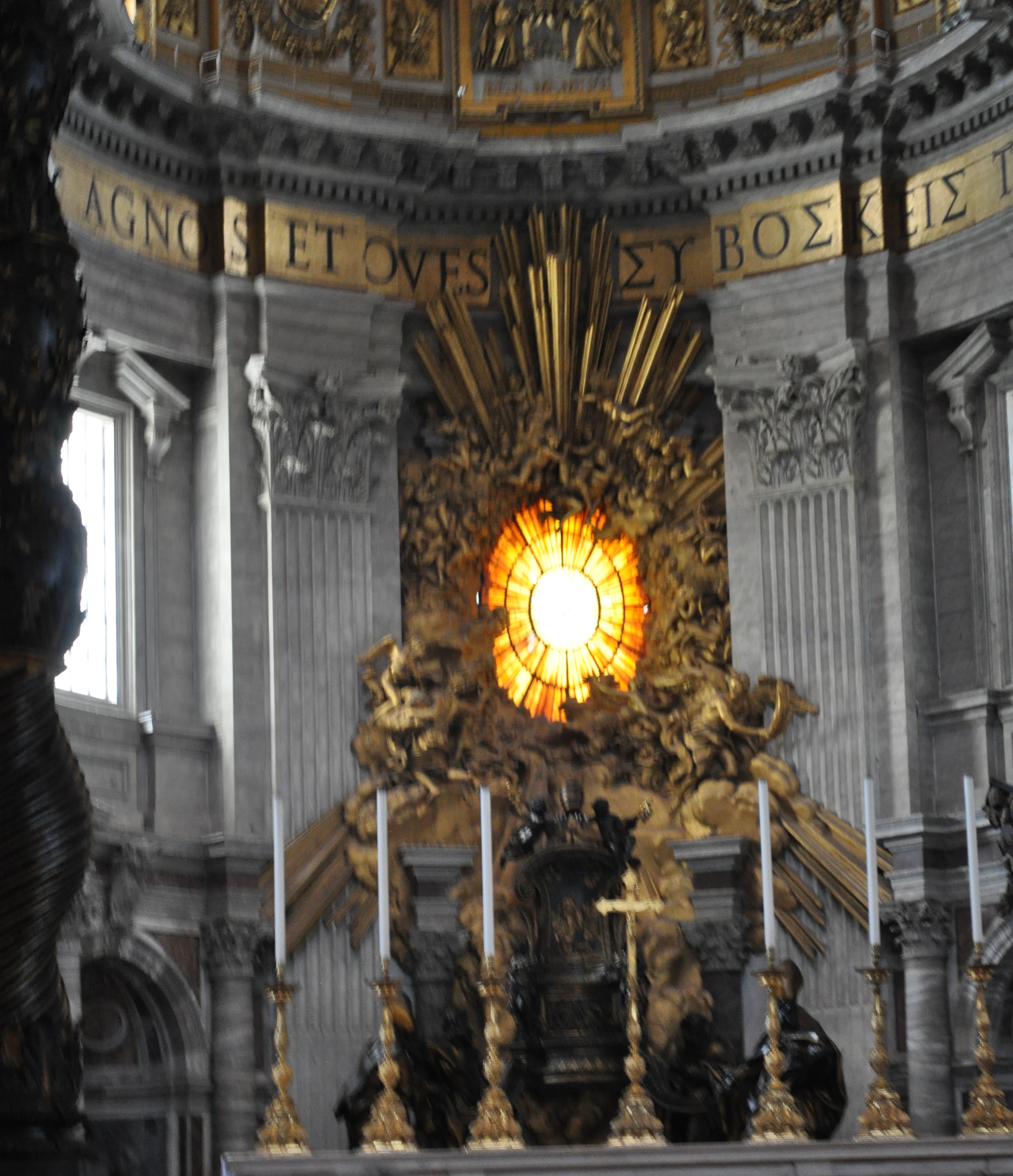
It is glorious. Expressive statues honor popes and saints, intricate mosaics replicate famous paintings and, from a normal viewing distance, are indistinguishable from the originals despite being composed of tiles. There’s even a marble window admitting shimmering light through thin panes of stone. The Basilica is a crowning achievement of religious art and architecture.


 PuffinlessTravel