Mykonos is a storybook Greek island. Blindingly white houses whose shutters match the impossibly blue sea dot the island’s gently sloping hills.
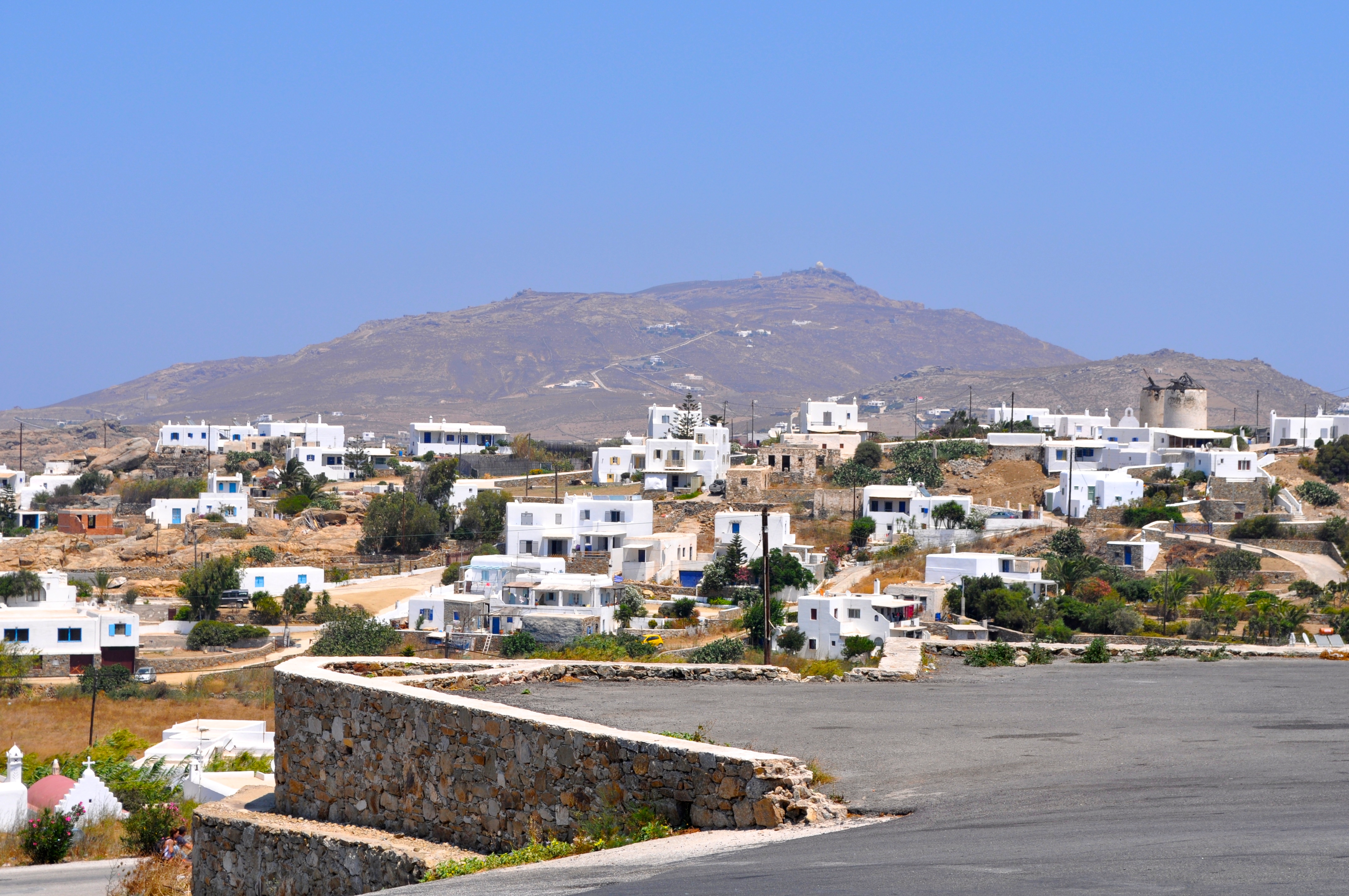
As beautiful as Mykonos is, its prime attraction for me is its proximity to the island of Delos, the largest archeological site in Greece and the mythical birthplace of Artemis and Apollo.
My tour spent two and a half hours wandering through the ruins, which stretch from 3500 years ago up to around 500 CE.

Not surprisingly, Homer singled out Delos as an important religious center in the Odyssey and in his Hymn to Apollo; there are temples galore.
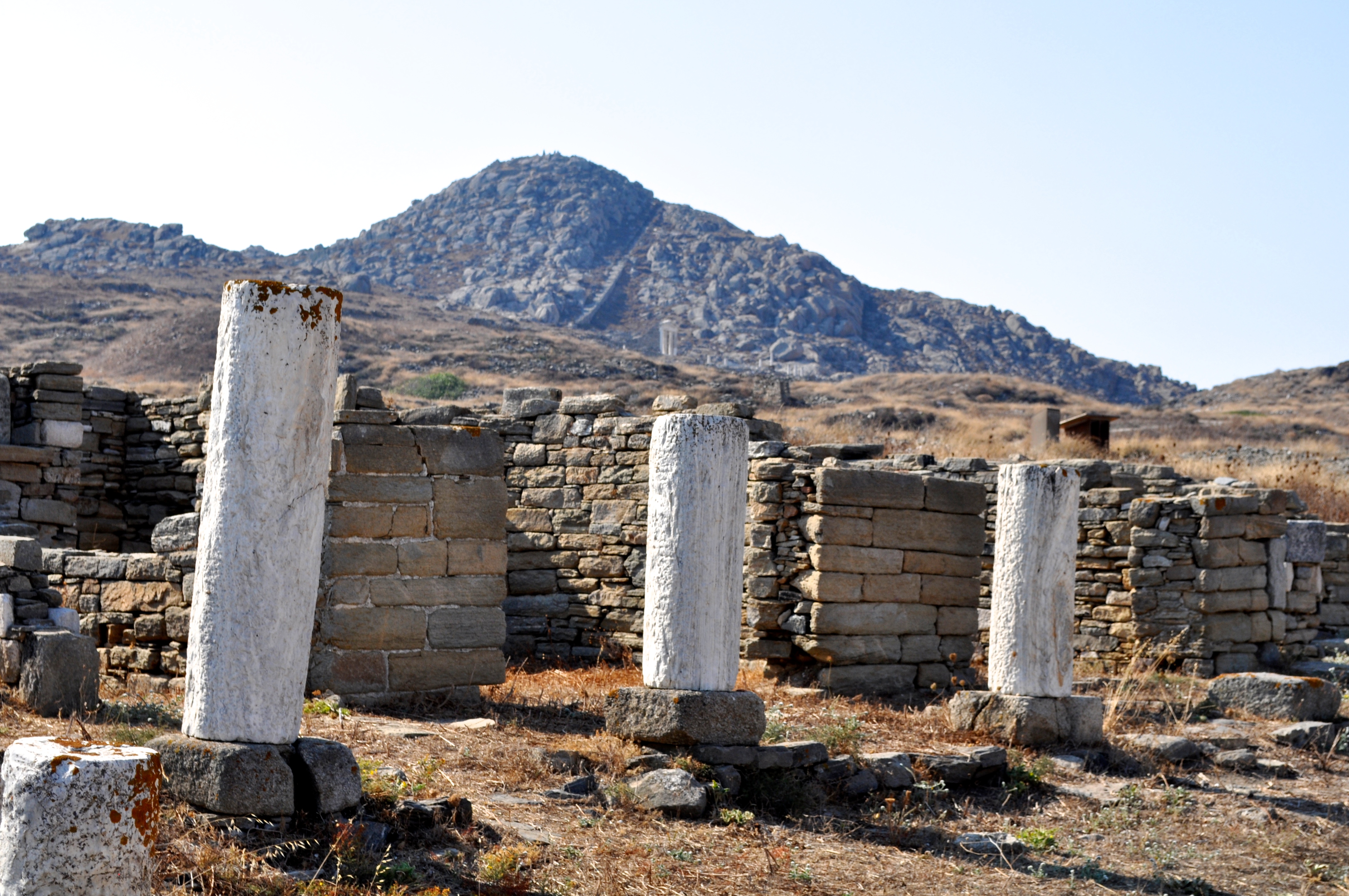
Being generally older than the ruins at Ephesus, those on Delos are less complete. Individual columns and pieces of statues stand like so many broken-toothed combs, but there’s little in the way of more nearly intact buildings.

Still, there is much to marvel at, and the island is home to a small but impressive archeological museum bursting with statues, pottery, and other artifacts excavated from the site.
Upon returning to Mykonos, we took a bus to the hillside village of Ano Mera, our guide’s home town. There we visited a small monastery filled with gold and icons and dined well at a local café (Taverna Vangelis).
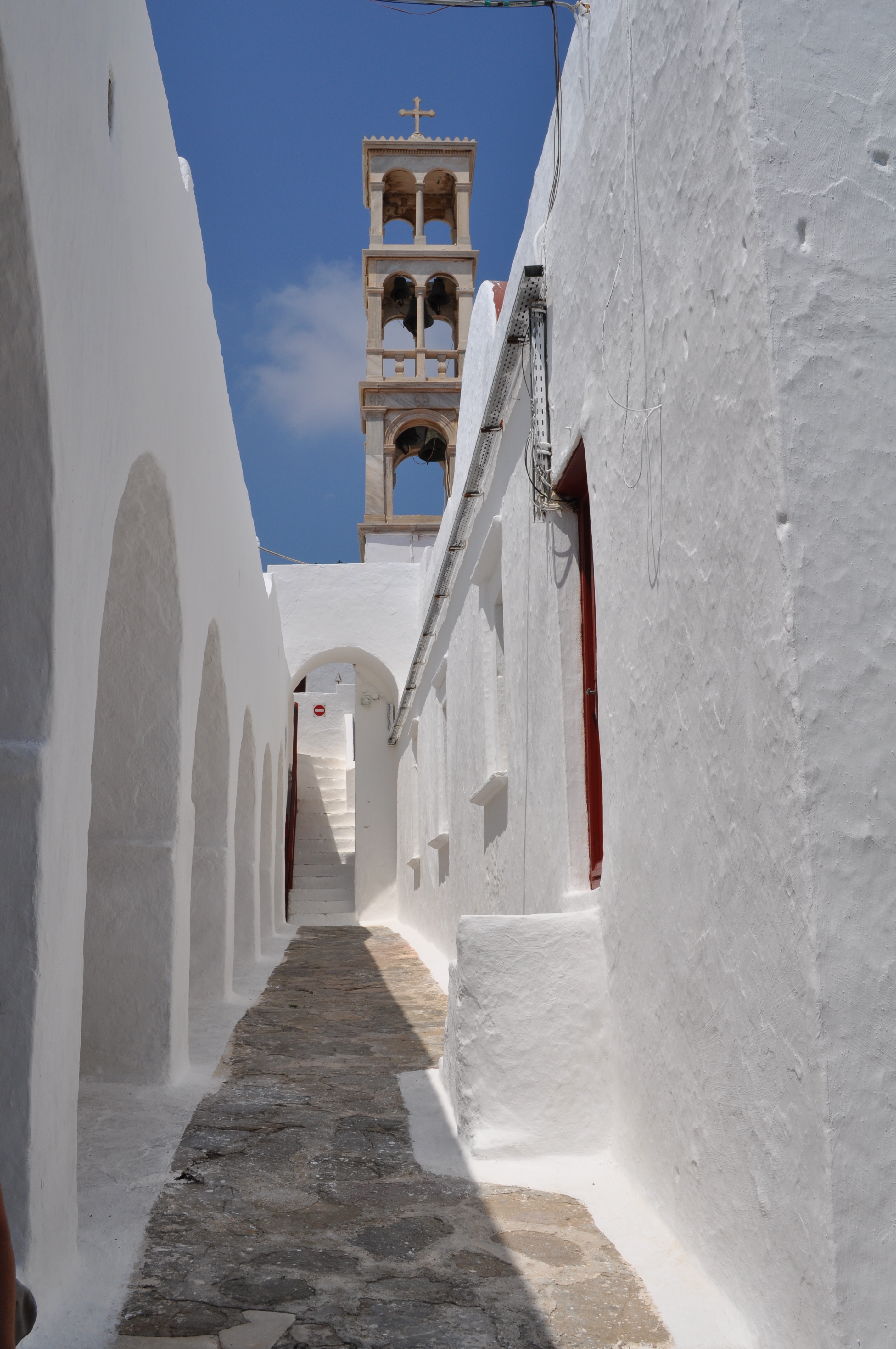
Driving through the island afforded an up-close look at the houses – freshly whitewashed, rounded-off rectangles or squares shaped roughly like loaves of bread.
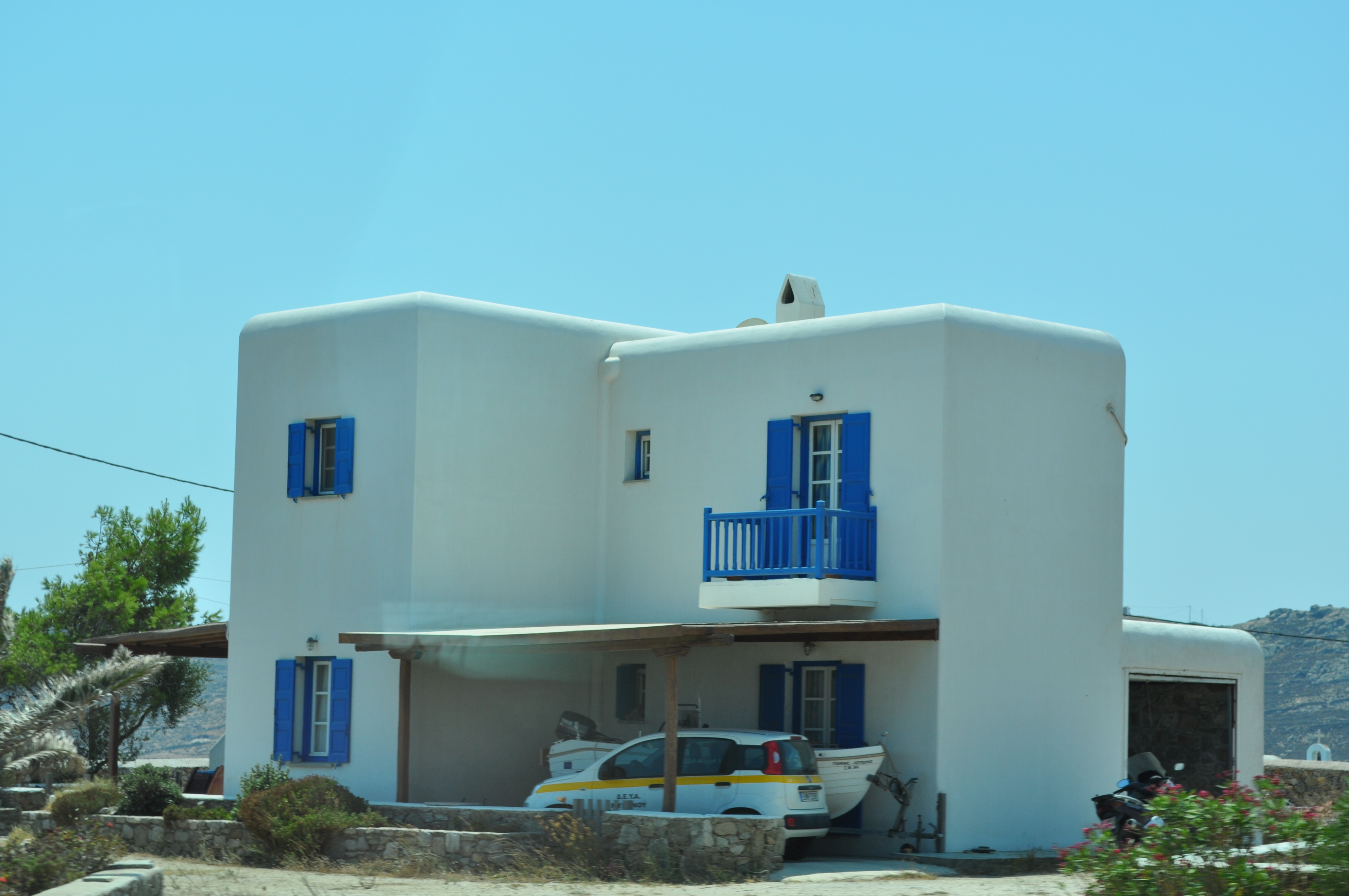
Apparently the government requires all houses to be white, and social mores compel each homeowner to reapply whitewash each Spring. Many houses have a small church in the yard to honor the homeowner’s personal saint.
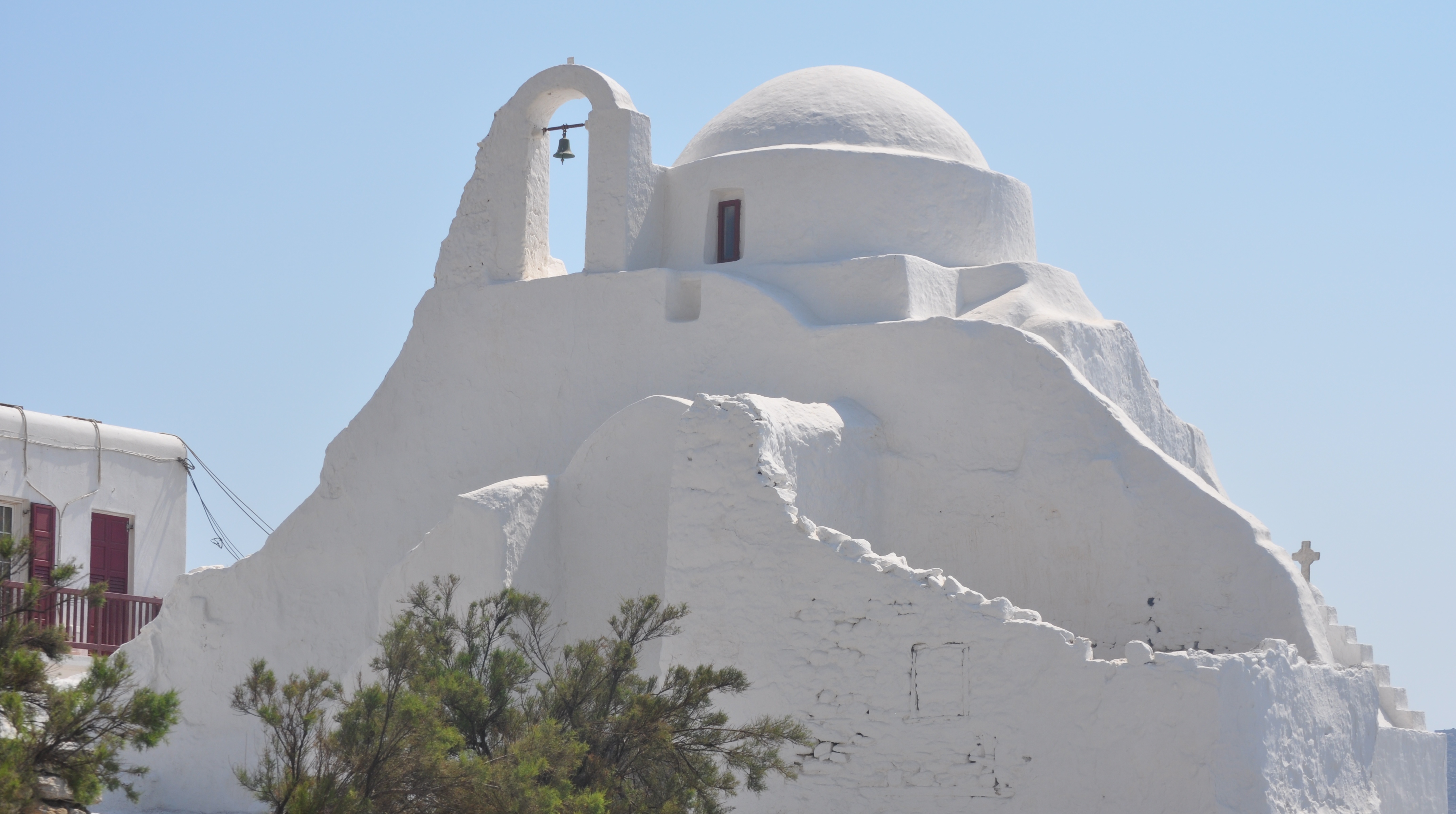
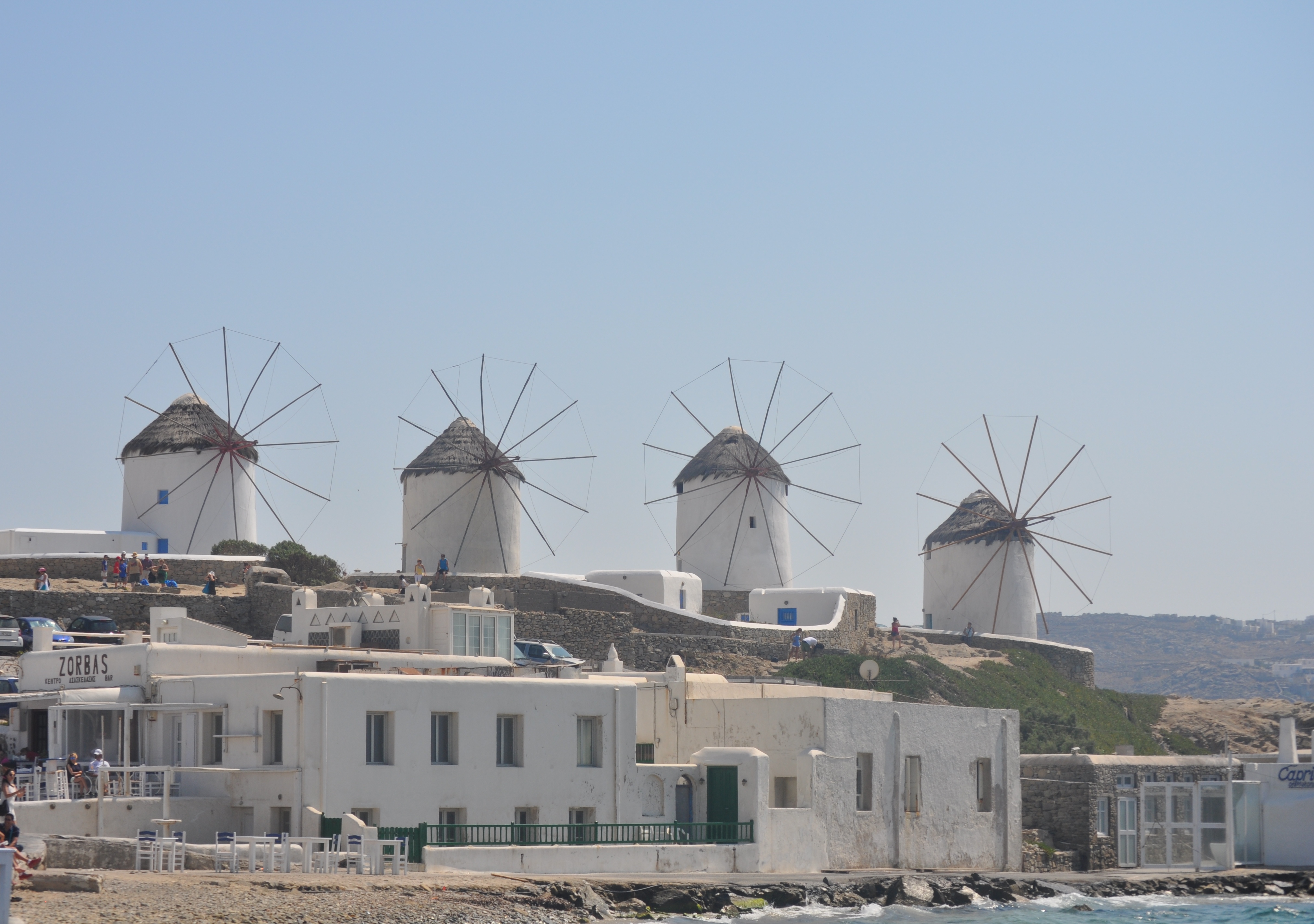
Our tour dropped us off by the old harbor of Chora, the main town on Mykonos. It’s a picturesque, sparklingly clean village filled with open-air restaurants, high-end shops, tourist emporia, an interesting church, windmills, and cats.


 PuffinlessTravel