Berlin is beautiful, vibrant, and heartbreaking, and may have the largest concentration of construction cranes in the world. Living outside Washington, D.C. it’s easy to become desensitized to in-your-face history. Berlin came crashing through the indifference – I can think of no other place so redolent of inhumanity yet so suffused with transcendent human spirit.
Our tour began in Rostok, a commercial port on the Baltic sea. Upon leaving the ship, we were herded onto trains, which was ghoulishly ironic given the setting. Three and half hours later, we pulled into Berlin, emerging onto the KuDamm – the main shopping street, to which we returned at the end of the tour so I could spend 32 Euros (roughly $48) on two t-shirts.
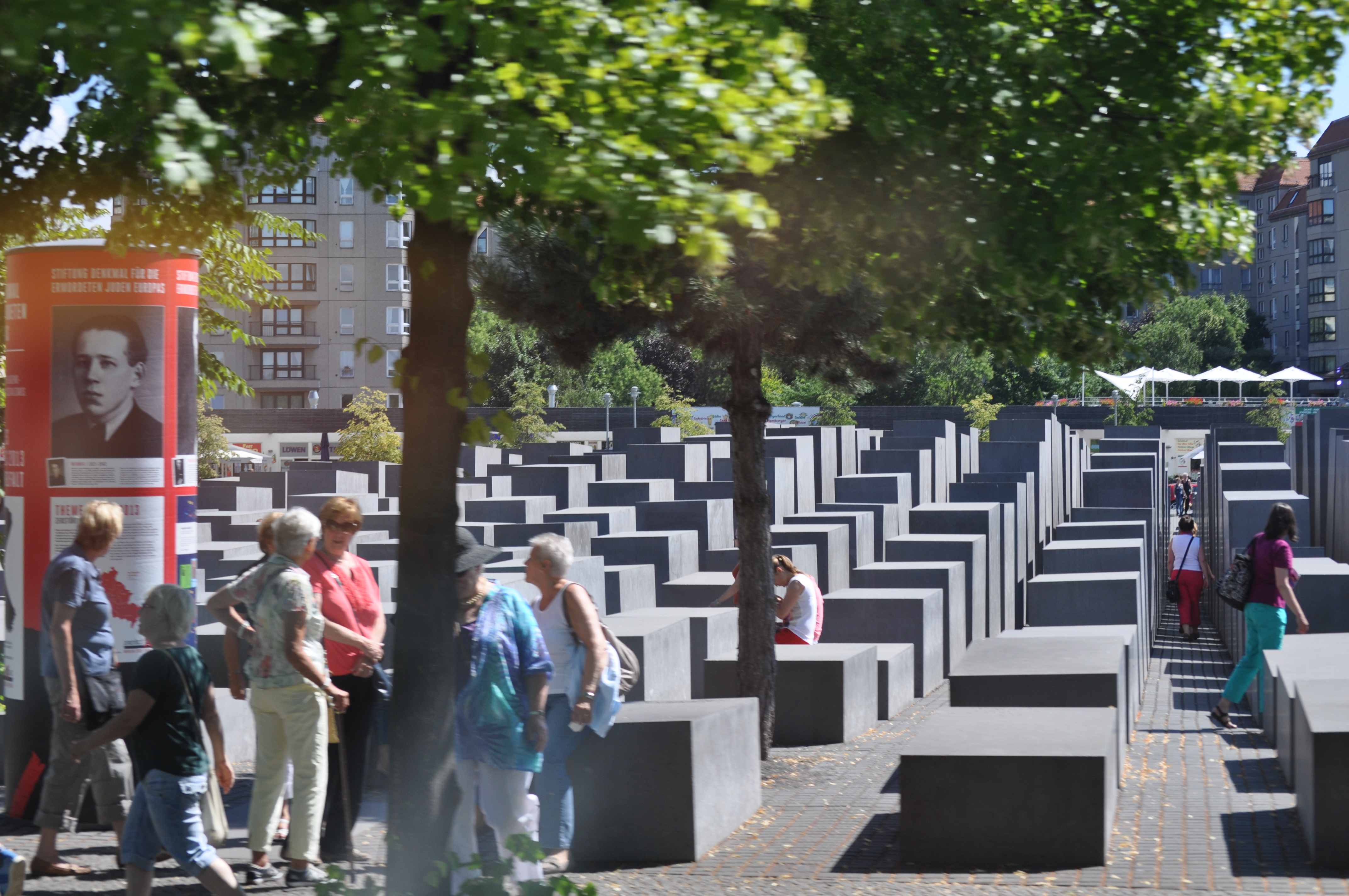
Shortly after boarding our tour bus, we passed the Holocaust Memorial, a stark park covered in more than 2,000 low, rectangular concrete slabs. It is somber and striking.
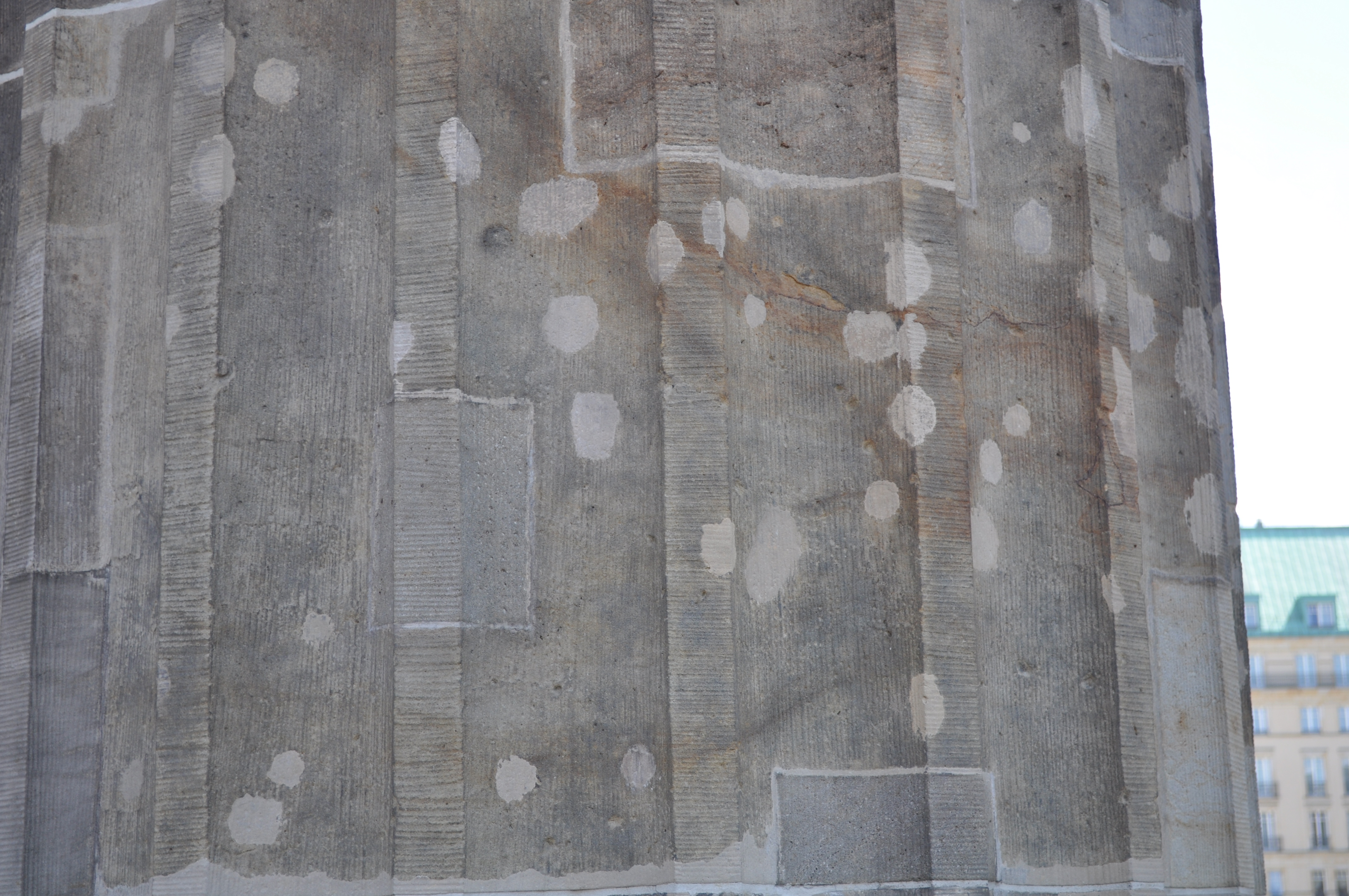
Next stop was the Brandenburg Gate, many of whose pillars feature bullet holes roughly patched with cement. Notably, the patches still haven’t faded to match the pillars, highlighting how recently the Gate was synonymous with murder and suppression.
Our tour continued past many ornate, massive, yet artistic buildings, including the Reichstag and various cathedrals and museums. One well worth seeing is the War Memorial, a small, square building whose inside is empty save for a poignant sculpture of a mother weeping over her dead child.
Next stop was the East Side Gallery – a lengthy remnant of the Berlin Wall, which has been painted by artists from around the world. Scenes range from ghastly to triumphant to humorous to devastating; unfortunately many of the panels also sport recent, ugly defacements.
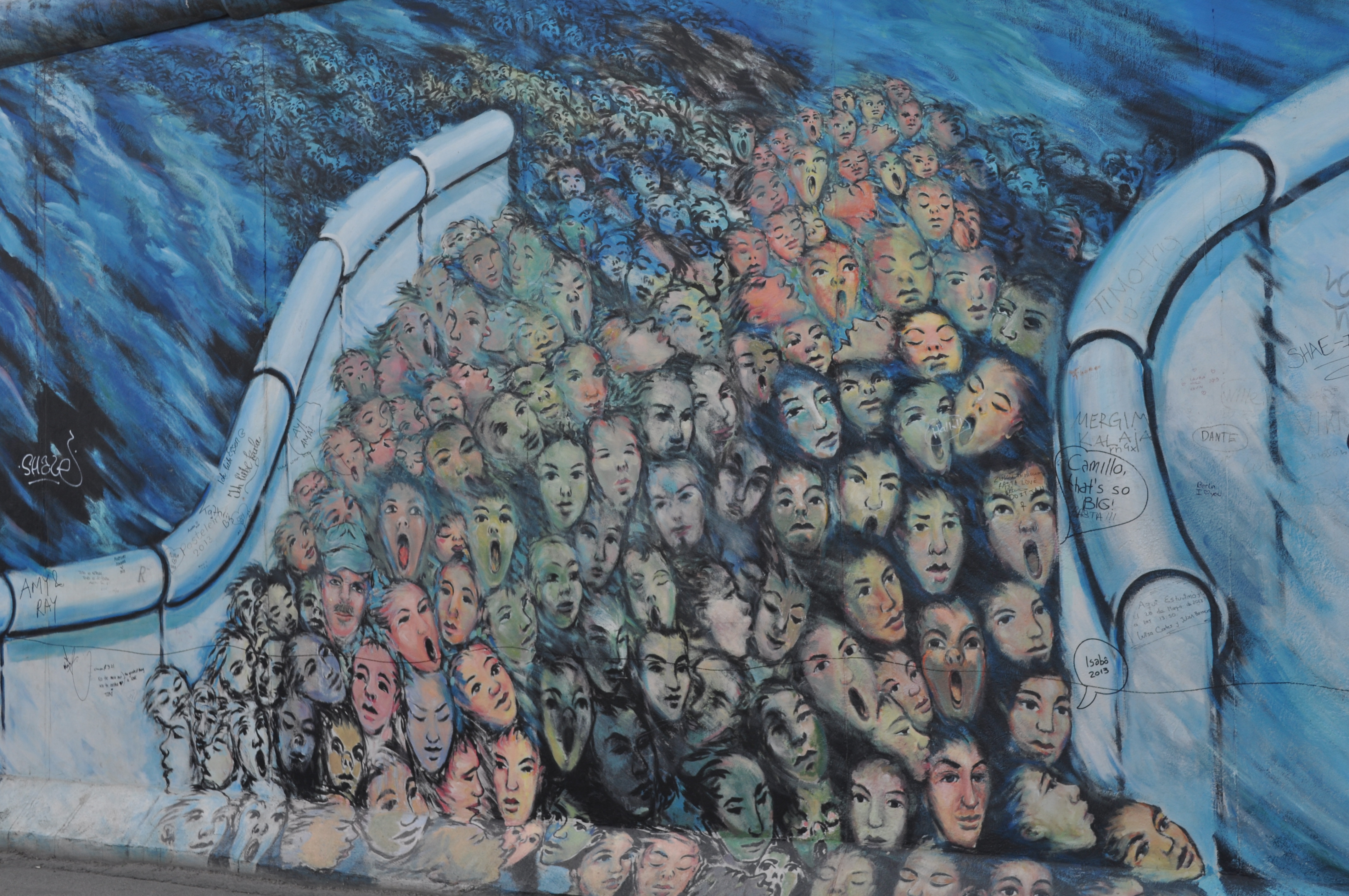
Although this is the largest segment of the Wall that remains standing, reminders of it are everywhere, with a double row of bricks in the ground marking its former contours. The re-creation of Checkpoint Charlie (spoiled by an adjacent McDonalds) and the outdoor photo gallery across from the Wall Museum further document the nightmare of separation and the shock and awe of the Wall’s removal.
As for those construction cranes: the combination of bombing during World War II and Communist aesthetic preferences (to put it delicately) caused grievous damage to or outright demolition of many of Berlin’s centuries-old buildings. To their credit, the people of reunified Berlin have elected to restore these structures to their former magnificence rather than erect modern replacements. (This holds true only for historically significant buildings: little remains of buildings constructed by the Communists other than a few concrete apartment blocks and the jarring TV tower.)
One final note: Berlin does not hide German shame and horror over the Holocaust. In addition to the Holocaust Memorial, there is a noted Jewish Museum (which I did not get to visit) as well as an extensive exhibit in the Allied Museum about German Jews who fought against the Nazis. The long train ride back to the ship was devoid of symbolism.

 PuffinlessTravel